Some homes are so grand, so packed with history, and so jaw-dropping in scale that they barely feel real. The mansions on this list were built by some of the most powerful families in history, and the good news is that you do not need an invitation to walk through their doors.
From a French Riviera villa with nine themed gardens to a Pennsylvania house built directly over a waterfall, each of these estates has a story worth knowing. Whether you are planning an international trip or a domestic road trip, this list covers 15 of the most iconic mansions in the world that are open and welcoming visitors today.
Biltmore Estate – Asheville, North Carolina, USA
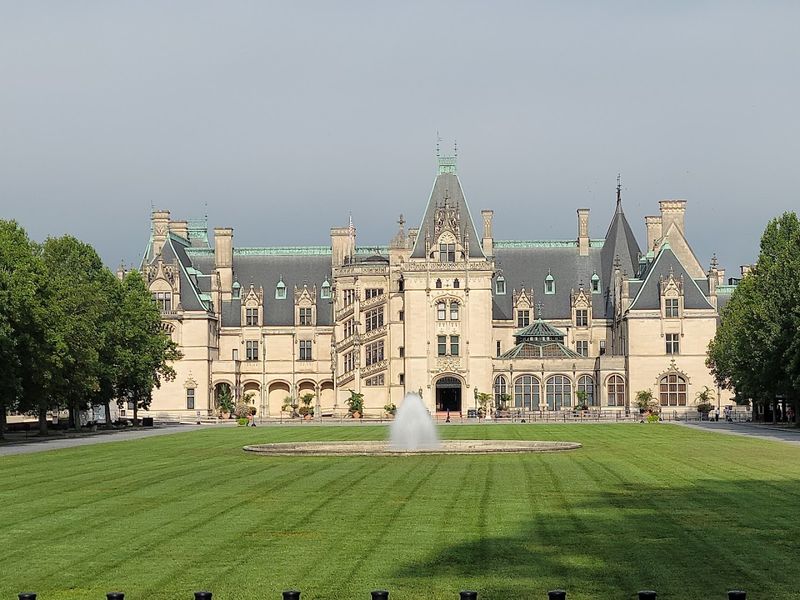
At 8,000 square feet of floor space spread across 35 bedrooms and 43 bathrooms, Biltmore Estate is the largest privately owned house in the United States, and that number alone is enough to stop most people in their tracks. George Vanderbilt commissioned the French Renaissance-style chateau in the late 1800s, and the result is something that looks more at home in the Loire Valley than the Blue Ridge Mountains.
The estate is open daily year-round and offers far more than a house tour. Gardens designed by Frederick Law Olmsted, a working winery, restaurants, trails, and seasonal events fill out the experience.
Spring visits are popular for the blooming gardens, while the holiday season transforms the estate into something especially memorable.
Ticket prices vary by season and attraction, so checking the official Biltmore site before you go is a smart move. Asheville itself is a lively city worth spending a full weekend exploring.
Hearst Castle – San Simeon, California, USA
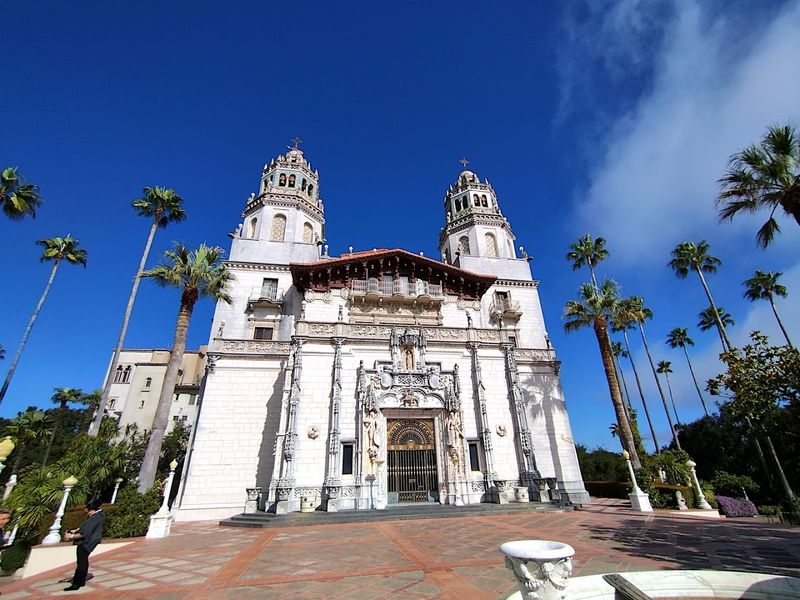
Perched on a hill above California’s Central Coast, Hearst Castle was the personal vision of newspaper magnate William Randolph Hearst, and it shows in every room. The main house, officially called Casa Grande, is a Mediterranean Revival masterpiece filled with European art, antique ceilings imported from Spanish monasteries, and rooms that feel more like museum galleries than living spaces.
The estate also includes guesthouses, terraces, two pools, and sweeping views of the Pacific. Hearst hosted Hollywood celebrities and world leaders here during the 1920s and 1930s, which gives the property an extra layer of cultural history that most visitors find genuinely fascinating.
Several guided tour options are available through the official site, covering different parts of the property. The castle is managed by California State Parks, and tour reservations are recommended because spots fill up.
Highway 1 runs right through this stretch of coast, making Hearst Castle an easy anchor for a scenic road trip.
Graceland – Memphis, Tennessee, USA
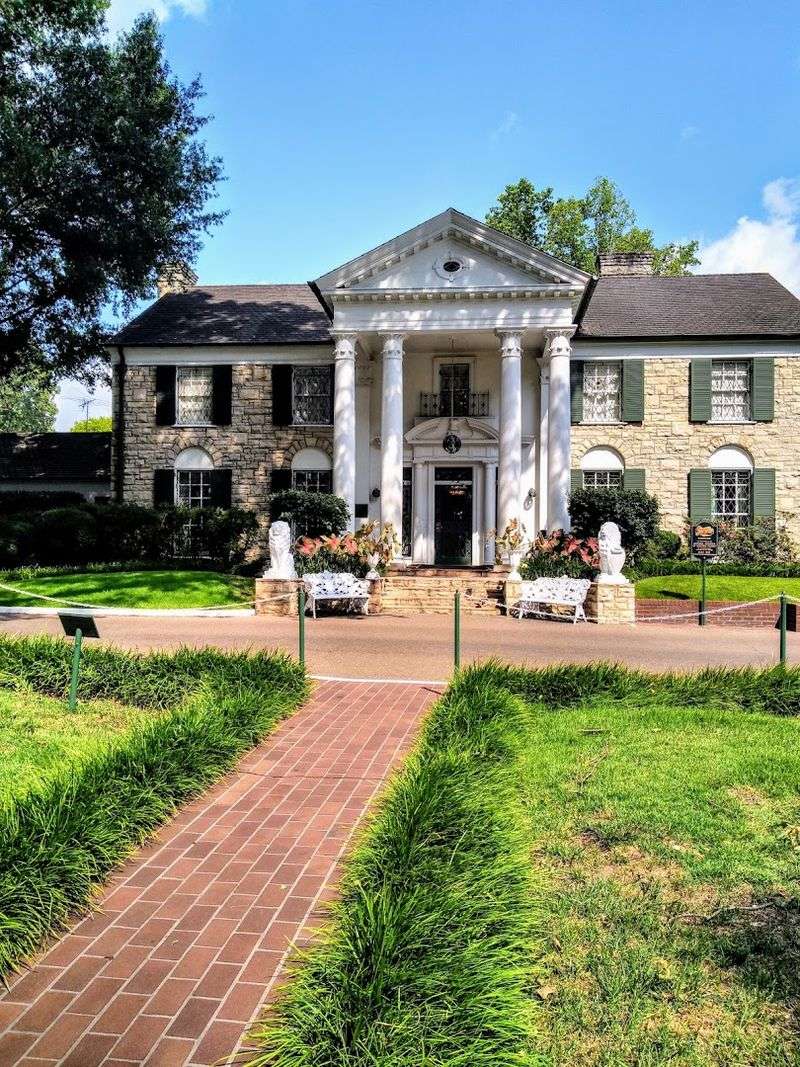
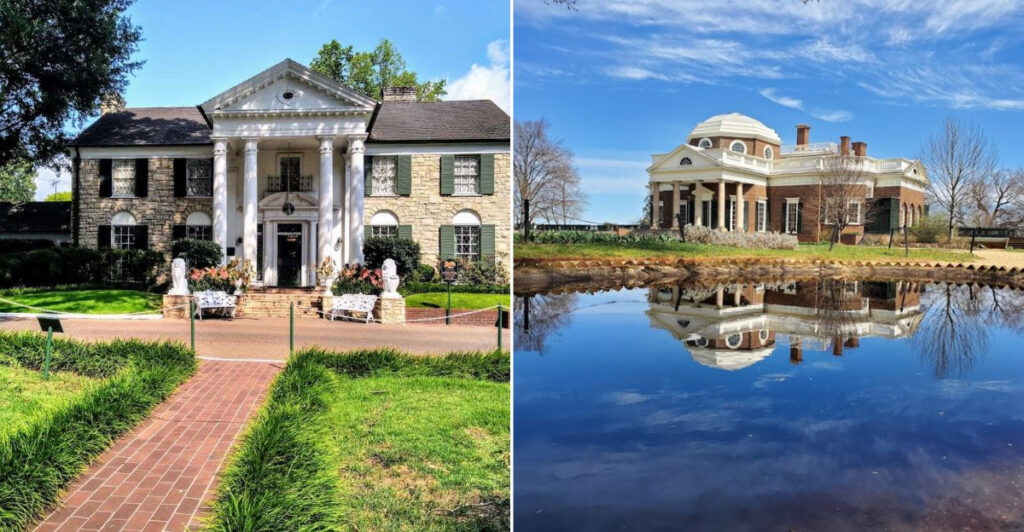
Graceland is not trying to be a palace, and that is exactly what makes it so compelling. Elvis Presley bought the property in 1957 when he was just 22 years old, and he lived there until his passing in 1977.
The house itself is a Colonial-style mansion that feels surprisingly personal, with decor choices that reflect the man who lived there rather than a decorator trying to impress guests.
The famous Jungle Room, the TV room with its three built-in screens, and the racquetball building where Elvis spent his final hours are all part of the tour experience. Graceland’s official site confirms the estate is open daily, and visitors also have access to Elvis Presley’s Memphis, a large entertainment complex directly across the street with museums, a car collection, and a restaurant.
Memphis is a city with serious music and food culture, so pairing Graceland with a broader Memphis visit makes the trip even more worthwhile.
Blenheim Palace – Woodstock, Oxfordshire, England
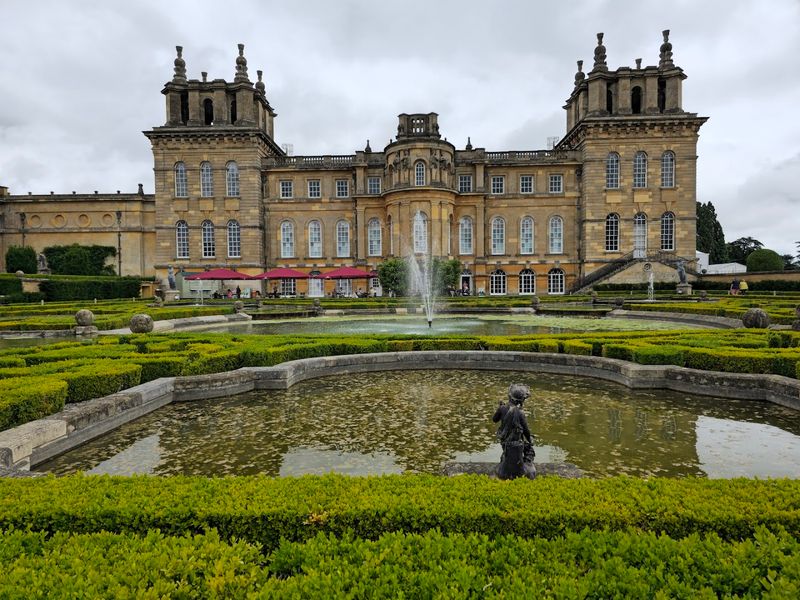
Few buildings in England carry as much historical weight as Blenheim Palace. Built in the early 18th century as a gift from Queen Anne to the Duke of Marlborough after his military victory at the Battle of Blenheim, the palace is a monumental example of English Baroque architecture that took nearly 20 years to complete.
It is also the birthplace of Winston Churchill, born here in 1874, which adds another layer of significance to an already extraordinary property. Visitors can explore the state rooms, Churchill’s birth room, formal gardens, a maze, a butterfly house, and miles of parkland.
The palace sits in Woodstock, a small market town about 8 miles north of Oxford, which makes it an easy day trip from the city.
The official site lists year-round opening times for the palace, park, and gardens, though some areas have seasonal access. Budget a full day here because the grounds alone take hours to explore properly.
The Breakers – Newport, Rhode Island, USA
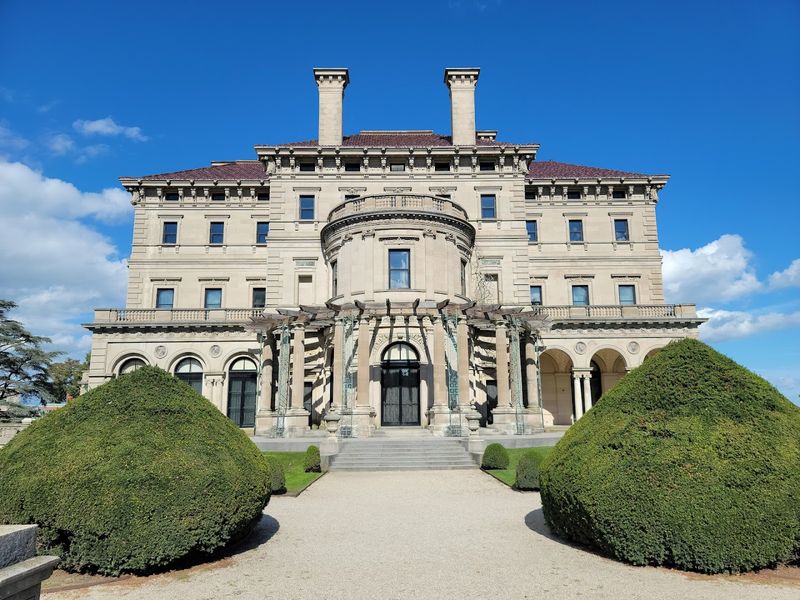
The Breakers is the crown jewel of Newport’s famous Gilded Age mansion row, and its scale is genuinely staggering. Built for Cornelius Vanderbilt II in the 1890s, the 70-room Italian Renaissance palazzo sits directly on the Atlantic Ocean, and the ocean views from the property are as dramatic as the architecture itself.
The interior is loaded with marble, mosaics, gilded ceilings, and rooms designed by the most sought-after craftsmen of the era. The Vanderbilt family used it as a summer cottage, which says everything you need to know about how the wealthiest Americans lived at the turn of the 20th century.
The Preservation Society of Newport County manages The Breakers and several other Newport mansions, and a combo ticket can get you into multiple estates in one visit.
Newport’s Cliff Walk, a free public path along the coastline, runs past the rear of The Breakers and gives you exterior views without buying a ticket. It is a great way to start or end your visit.
Mount Vernon – Mount Vernon, Virginia, USA
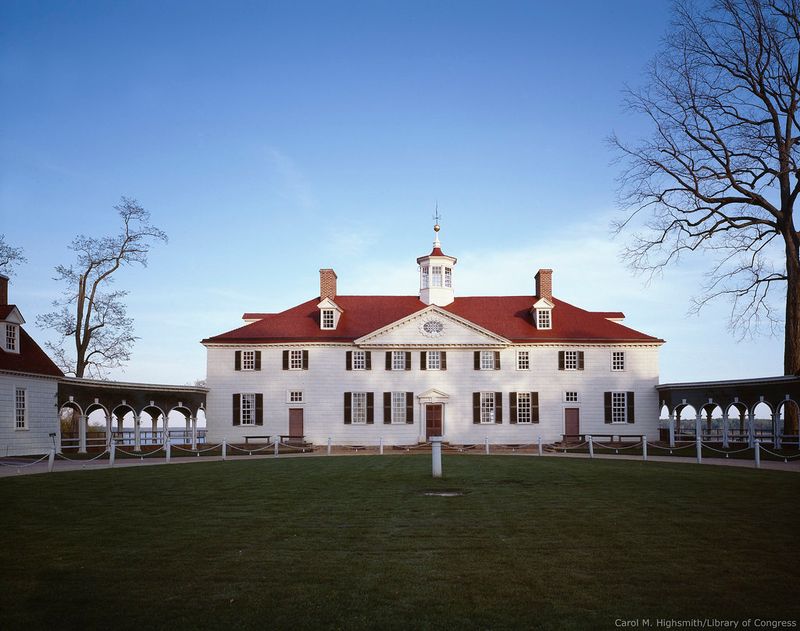
George Washington’s estate sits on a quiet stretch of land above the Potomac River in northern Virginia, about 16 miles south of Washington, D.C. The setting is calm and unhurried in a way that feels fitting for a place Washington himself chose to call home over the noise of public life.
The mansion has been carefully preserved and restored to reflect its appearance during Washington’s lifetime, and the property includes gardens, a working farm, a distillery, a gristmill, and a museum and education center. The estate is owned and operated by the Mount Vernon Ladies’ Association, which has managed the property since 1858 and keeps it in remarkable condition.
Mount Vernon is open daily throughout the year, with hours varying by season. Tickets are available online, and advance purchase is recommended during peak summer months.
The combination of American history, scenic riverside grounds, and thoughtfully presented exhibits makes this one of the most rewarding historic estate visits on the East Coast.
Monticello – Charlottesville, Virginia, USA
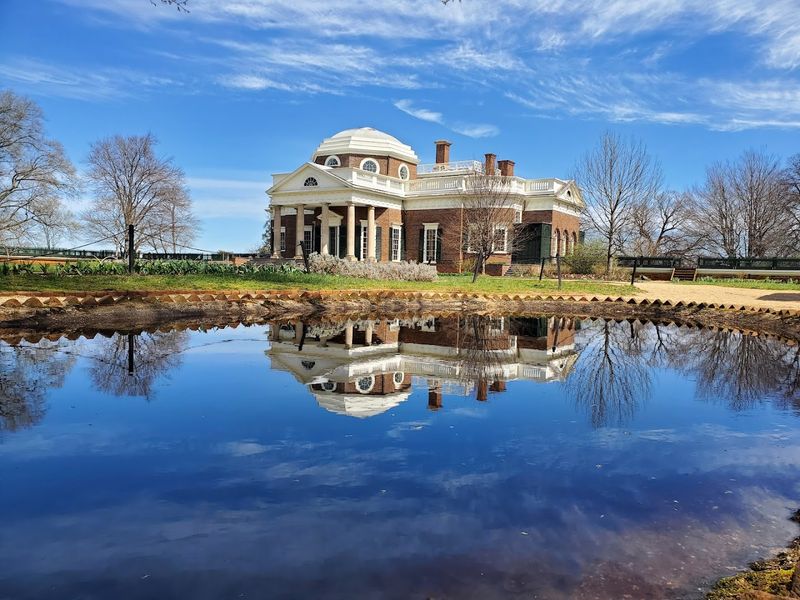
Thomas Jefferson spent more than 40 years designing, redesigning, building, and rebuilding Monticello, and the result is one of the most architecturally distinctive homes in American history. The neoclassical design, with its famous dome and careful attention to proportion, reflects Jefferson’s deep interest in European architecture, particularly the work he observed during his years in France.
What makes Monticello especially meaningful today is its commitment to presenting the full history of the plantation, including the lives of the enslaved people who built and maintained it. The Monticello organization has invested significantly in research and interpretation that goes beyond the founder mythology.
House tours are timed and require advance booking, especially during spring and summer when the site is busiest. The grounds, gardens, and museum spaces are also worth exploring separately.
Charlottesville itself is a lively college town with good restaurants and a walkable downtown area that makes a full overnight visit easy to justify.
Vizcaya Museum and Gardens – Miami, Florida, USA
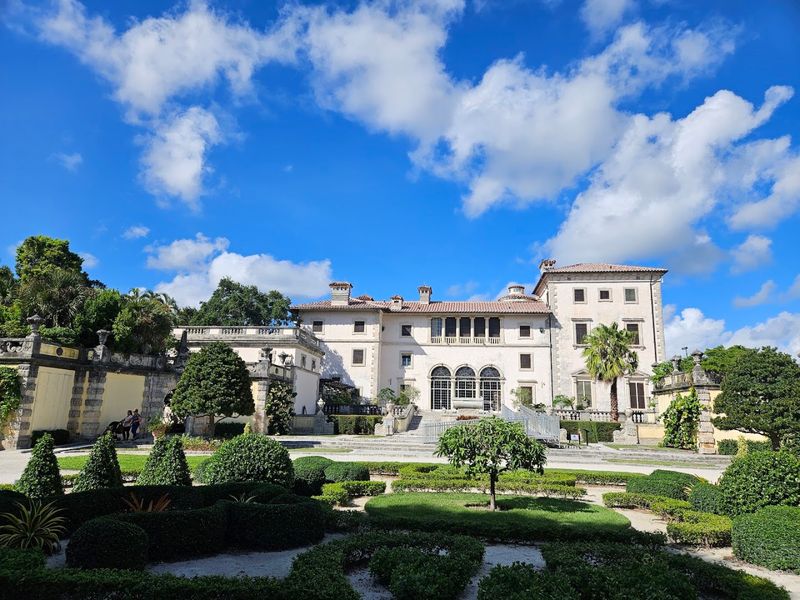
James Deering built Vizcaya between 1914 and 1922 as his winter residence, and the result is an Italian Renaissance villa sitting improbably but beautifully on the edge of Biscayne Bay in Coconut Grove. The main house contains 34 rooms filled with European antiques and decorative arts spanning four centuries, making it feel more like a European palace than a Miami vacation home.
The formal gardens are just as impressive as the interior, with fountains, grottos, sculptural details, and views across the bay to a stone barge that Deering built as a breakwater. Vizcaya is a National Historic Landmark, and it regularly hosts public events and rotating exhibitions in addition to standard estate tours.
The official site provides current ticket pricing and visitor notices, and it is worth checking before your visit since the house and gardens sometimes have separate admission options. Parking is available on site.
The surrounding Coconut Grove neighborhood is one of Miami’s oldest and most walkable, making this an easy half-day outing.
Villa Ephrussi de Rothschild – Saint-Jean-Cap-Ferrat, France
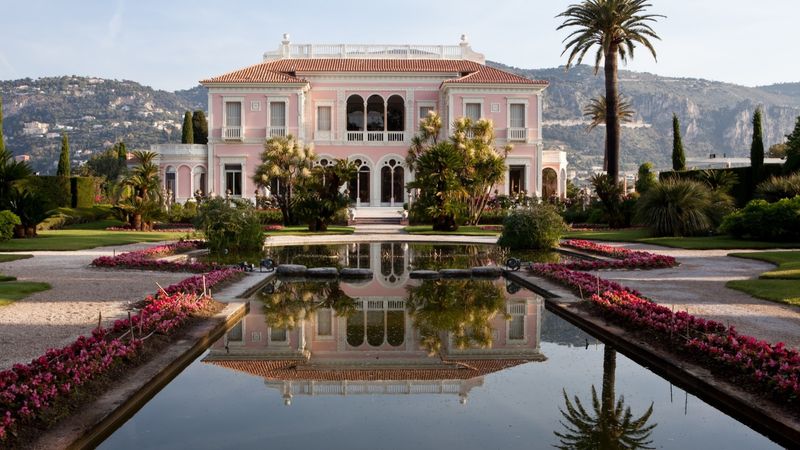
Built between 1905 and 1912 for Baroness Beatrice Ephrussi de Rothschild, this pink-walled villa on the Cap-Ferrat peninsula is one of the most visually striking estates on the entire French Riviera. The Baroness was a dedicated art collector, and the main house is filled with 18th-century French paintings, Sevres porcelain, tapestries, and furniture that reflect her extraordinary taste and resources.
Nine themed gardens surround the villa, including a Spanish garden, a Japanese garden, a Florentine garden, and a central French garden with a musical fountain that performs regularly throughout the day. The gardens alone draw visitors from across Europe.
Self-guided visits with audio guides are available, and the official site lists daily opening hours with notes about occasional exceptional closures. The Cap-Ferrat peninsula is one of the most expensive and picturesque stretches of coastline in France, and the villa sits near the tip of it with sea views on both sides.
This is a genuinely special stop on any French Riviera itinerary.
Villa Necchi Campiglio – Milan, Italy
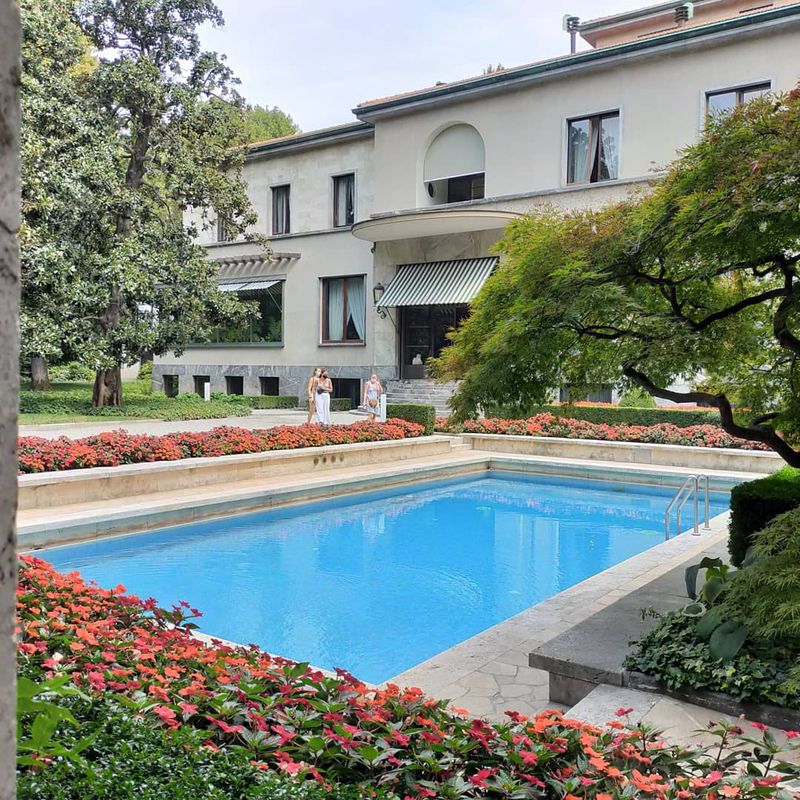
Most of the mansions on this list are built in historic styles meant to project power and tradition. Villa Necchi Campiglio takes a different approach entirely.
Built in the 1930s by architect Piero Portaluppi for the Necchi Campiglio family, the villa is a sleek, rational, modernist residence that reflects the design sensibilities of Milanese high society between the two world wars.
The interiors are preserved with their original furnishings, artworks, and details, giving visitors a clear picture of what upper-class domestic life looked like in 1930s Milan. There is also a swimming pool, a tennis court, and a garden on the property, which were considered very modern amenities at the time of construction.
The villa is now managed by Fondo Ambiente Italiano and is open Wednesday through Sunday, with last entry before closing. It is located in a quiet residential neighborhood close to the center of Milan, which makes it an easy and rewarding addition to a broader Milan visit.
Reservations are recommended.
Chatsworth House – Derbyshire, England
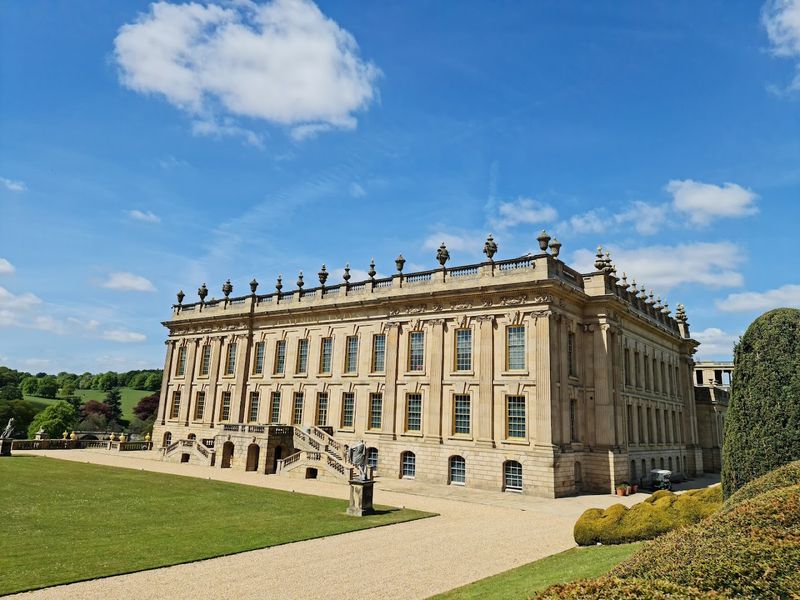
Chatsworth House has been home to the Cavendish family, the Dukes of Devonshire, since the 16th century, and the current house dates primarily from the late 17th and early 18th centuries. It is one of England’s most celebrated stately homes, with a collection of art and furniture that rivals many national museums.
The state rooms are filled with Old Master paintings, sculptures, and decorative objects accumulated over centuries, and the house itself has been expanded and remodeled multiple times to reflect changing tastes. The gardens, designed partly by the legendary Capability Brown, include a cascade, a maze, a kitchen garden, a rock garden, and a gravity-fed fountain that reaches 90 meters in height.
Chatsworth’s official site provides current opening times for the house, garden, farmyard, and other estate areas. The estate sits in the Peak District, one of England’s most scenic national parks, and the surrounding countryside makes this a rewarding multi-day destination rather than a quick stop.
Castle Howard – North Yorkshire, England
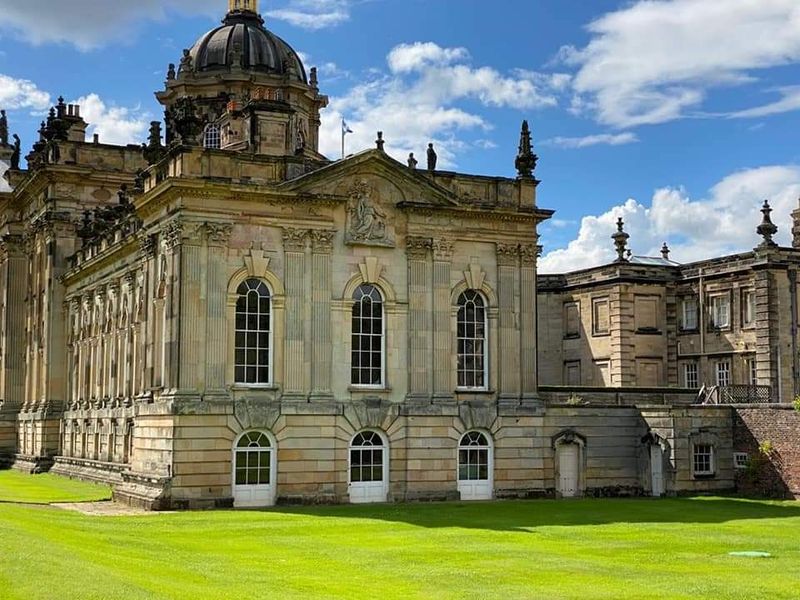
Castle Howard has one of the most recognizable silhouettes of any country house in Britain. Its central dome, dramatic Baroque facade, and sprawling grounds in the Vale of York make it look like something out of a film, which is appropriate because it has appeared in major productions including the 1981 television adaptation of Brideshead Revisited and the 2008 film version.
The house was designed by Sir John Vanbrugh and Nicholas Hawksmoor and completed in the early 18th century. It remains home to the Howard family, which gives it a lived-in quality that some of the more museum-like estates lack.
Visitors can explore the house, gardens, arboretum, fountains, a lakeside cafe, and family-friendly outdoor areas.
Castle Howard’s official site lists ticket information, current opening times, and visitor updates. It is located about 15 miles north of York, making it a natural add-on to a Yorkshire itinerary.
York itself is one of England’s most historically rich cities and well worth a separate day of exploration.
Waddesdon Manor – Buckinghamshire, England
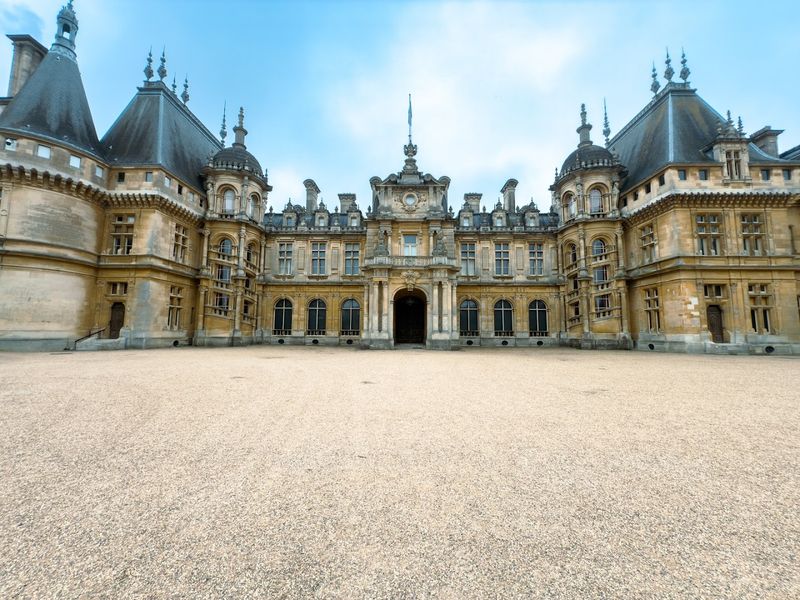
From a distance, Waddesdon Manor looks unmistakably French, and that is entirely intentional. Baron Ferdinand de Rothschild commissioned it in the 1870s in the style of a French Renaissance chateau, complete with a hilltop setting, formal gardens, and an interior filled with one of the finest collections of French decorative arts outside of France itself.
The Rothschild collection inside includes Sevres porcelain, Savonnerie carpets, Flemish paintings, and French royal furniture, some of it once owned by Marie Antoinette. The grounds include an aviary with exotic birds, walking paths, a wine cellar, and seasonal garden displays that draw visitors throughout the year.
Waddesdon is managed by the Rothschild Foundation and is open to the public Wednesday through Sunday, with additional bank holiday Mondays. The official site lists current opening times for the house and grounds.
The manor is located in Aylesbury Vale, about an hour from London by car, and makes for a very manageable day trip from the city.
Villa Carlotta – Lake Como, Italy
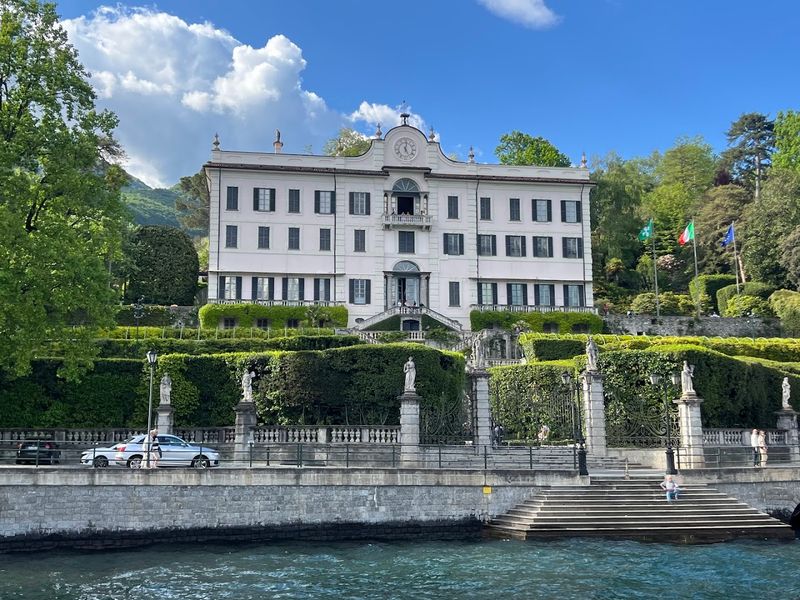
Villa Carlotta sits right on the western shore of Lake Como, and its combination of a neoclassical mansion, a museum with 19th-century sculpture and paintings, and a 7-hectare botanical garden makes it one of the most layered visitor experiences on the lake. The gardens are especially famous during spring when rhododendrons, azaleas, and camellias fill the terraces with color.
The villa was built in the late 17th century and passed through several aristocratic owners before becoming a public museum in the early 20th century. The sculpture collection inside includes works by Antonio Canova and Bertel Thorvaldsen, which would be noteworthy in any museum context, let alone a lakeside villa.
Villa Carlotta’s official visitor page lists 2026 opening dates, hours, and ticket prices, with the site typically open from late March through early November. The village of Tremezzo, where the villa is located, is accessible by ferry from Bellagio and other lakeside towns, which makes the journey part of the appeal.
Fallingwater – Mill Run, Pennsylvania, USA
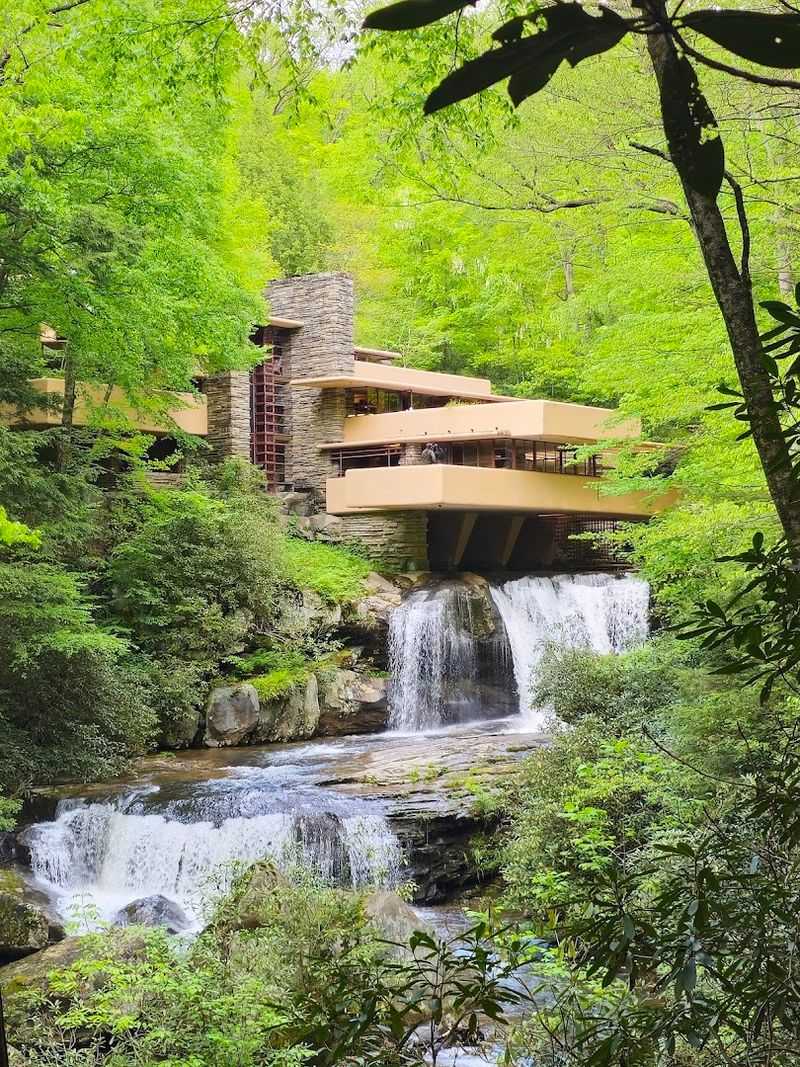
Fallingwater might be the most architecturally daring private home ever built in the United States. Frank Lloyd Wright designed it in 1935 for the Kaufmann family, and his central idea was to place the house directly over the waterfall on their property rather than beside it with a view of it.
The result is a series of cantilevered concrete terraces that seem to float above Bear Run creek in the forests of southwestern Pennsylvania.
The American Institute of Architects has called it the best all-time work of American architecture, and it appears on virtually every list of significant 20th-century buildings worldwide. The Western Pennsylvania Conservancy now owns and operates the site.
Fallingwater is open for its current tour season with several visitor experience options, ranging from standard guided tours to in-depth experiences that cover the engineering and restoration history of the house. Tickets should be booked well in advance, especially for weekend visits.
The drive through the Laurel Highlands region surrounding the site is scenic and worth the trip on its own terms.
Share this story