 Unearth The Voyage
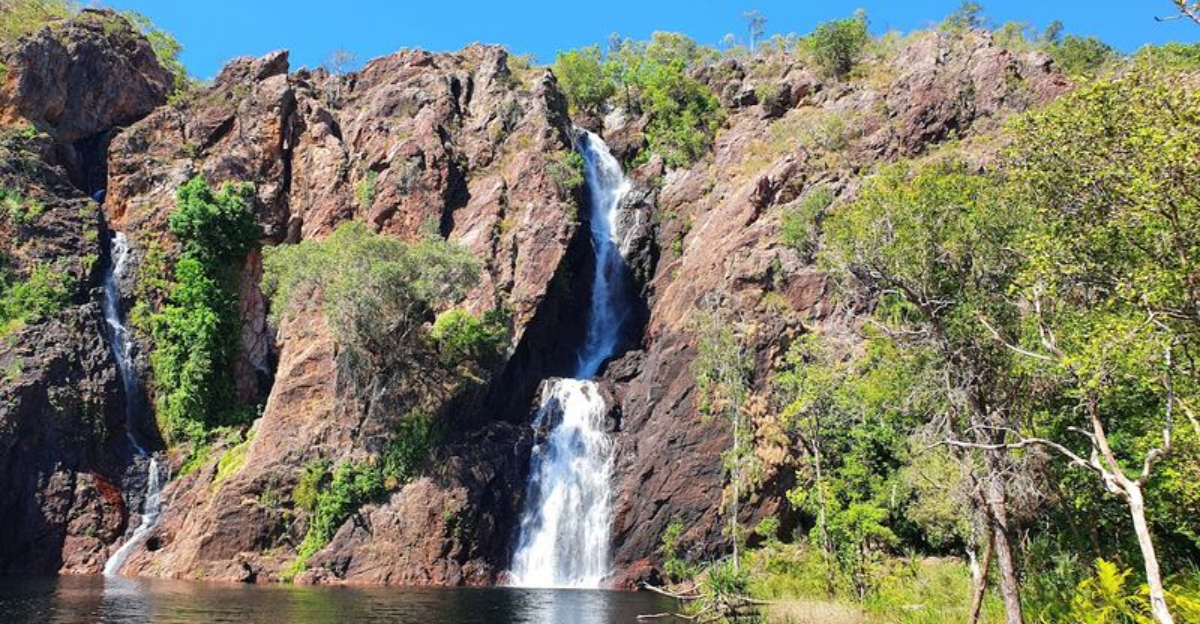
Australia is home to some of the most breathtaking landscapes on Earth, from ancient rainforests and red desert gorges to pristine beaches and alpine peaks. Its national parks protect these natural wonders while giving visitors a chance to connect with incredible wildlife and rich Indigenous culture.
Whether you are planning a road trip or a weekend getaway, exploring these parks is one of the best ways to experience the real Australia. Here are 15 national parks that belong on every nature lover’s bucket list.
1. Kakadu National Park (Northern Territory)
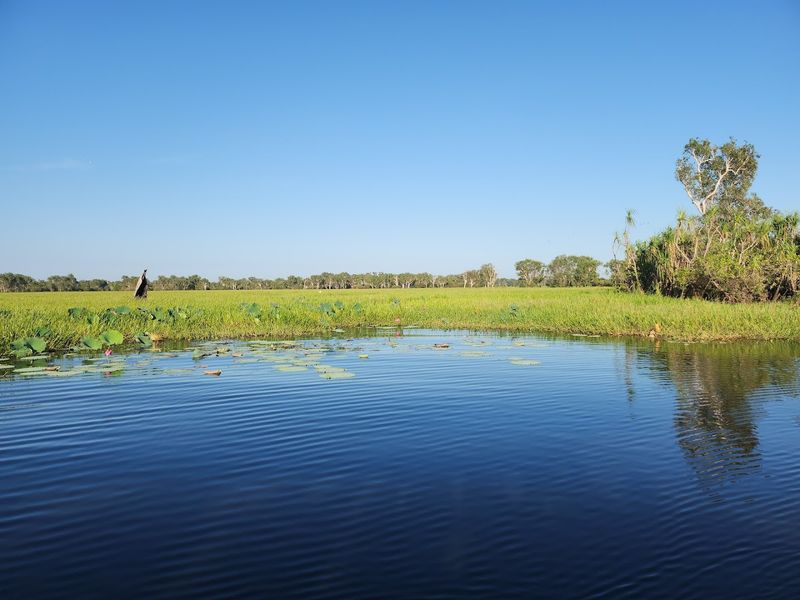
Few places on Earth can match Kakadu for sheer scale and cultural depth. Covering nearly 20,000 square kilometers, this UNESCO World Heritage site in the Northern Territory is one of Australia’s largest and most diverse national parks.
Ancient Aboriginal rock art sites here date back more than 20,000 years, offering a window into one of the world’s oldest living cultures.
Kakadu’s wetlands are a birdwatcher’s dream, home to over 280 species including jabirus and magpie geese. Saltwater crocodiles patrol the waterways, reminding visitors that this is wild country.
The seasonal waterfalls, like Jim Jim and Twin Falls, thunder dramatically during the wet season.
Visiting in the dry season (May to October) makes travel easier and wildlife viewing more rewarding. Boat cruises along Yellow Water Billabong are especially popular and offer unforgettable wildlife encounters at sunrise.
2. Uluru-Kata Tjuta National Park (Northern Territory)
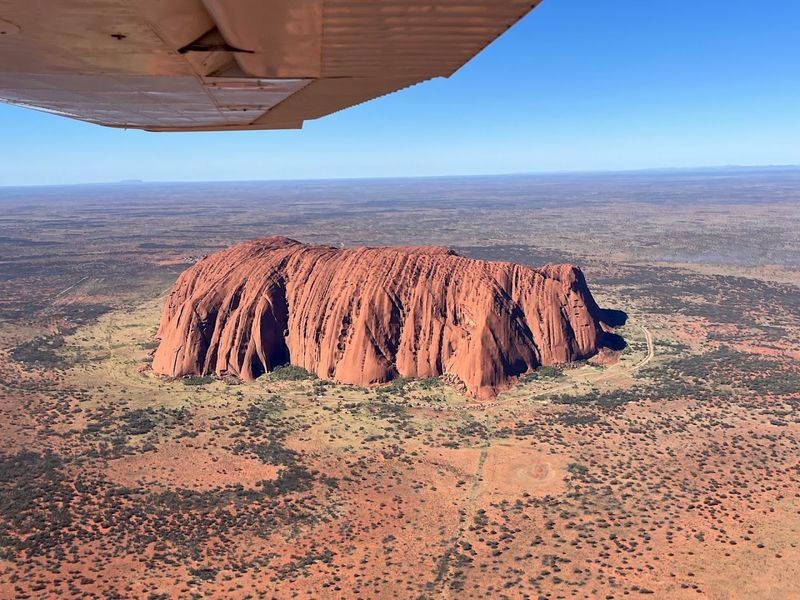
Standing 348 meters above the surrounding desert, Uluru is arguably the most recognizable natural landmark in Australia. This massive sandstone monolith changes color throughout the day, shifting from burnt orange to deep crimson as the sun rises and sets.
The sight is genuinely unforgettable, and photographs simply do not do it justice.
Nearby, the domed rock formations of Kata Tjuta (also called the Olgas) rise dramatically from the flat red earth. Both formations hold deep spiritual significance for the Anangu people, the traditional custodians of this land.
Guided cultural walks offer real insight into Tjukurpa, the Anangu law and belief system.
Climbing Uluru is now permanently closed out of respect for Indigenous wishes. Instead, visitors can walk the 10.6-kilometer base trail or join a ranger-led tour.
The park’s Cultural Centre is an excellent starting point for understanding its heritage.
3. Blue Mountains National Park (New South Wales)
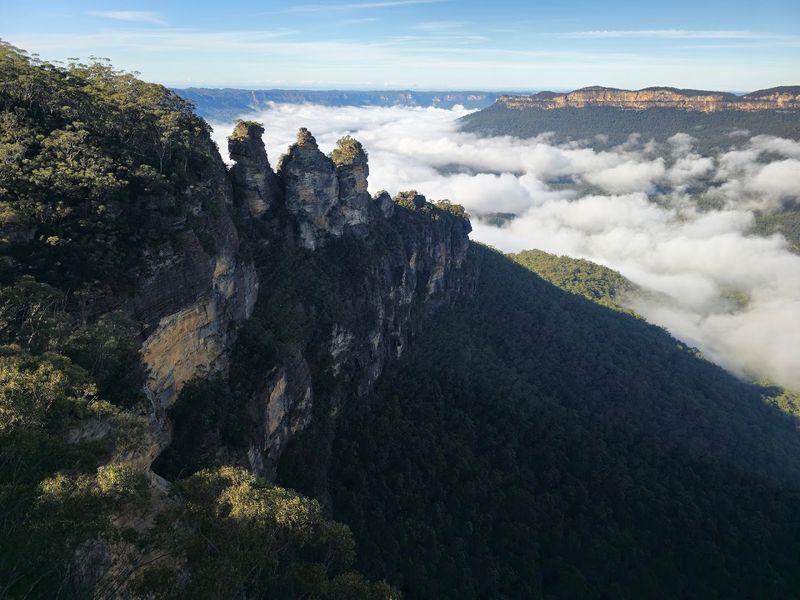
Just 90 minutes west of Sydney, the Blue Mountains offer a dramatic escape from city life. The park gets its name from the blue haze that hangs over the valleys, created by fine droplets of eucalyptus oil released by millions of gum trees.
It is a landscape that feels almost otherworldly, especially at dawn when mist fills the gorges below.
The Three Sisters at Echo Point in Katoomba are the park’s most photographed feature. According to an Aboriginal Dreamtime legend, three sisters were turned to stone to protect them from danger.
Beyond the lookout, over 140 kilometers of walking tracks wind through ancient rainforest gullies and past stunning waterfalls.
Adventure seekers can try abseiling, rock climbing, or canyoning through the park’s rugged terrain. The charming town of Leura nearby has great cafes and shops, making it a perfect base for exploring this spectacular park.
4. Daintree National Park (Queensland)
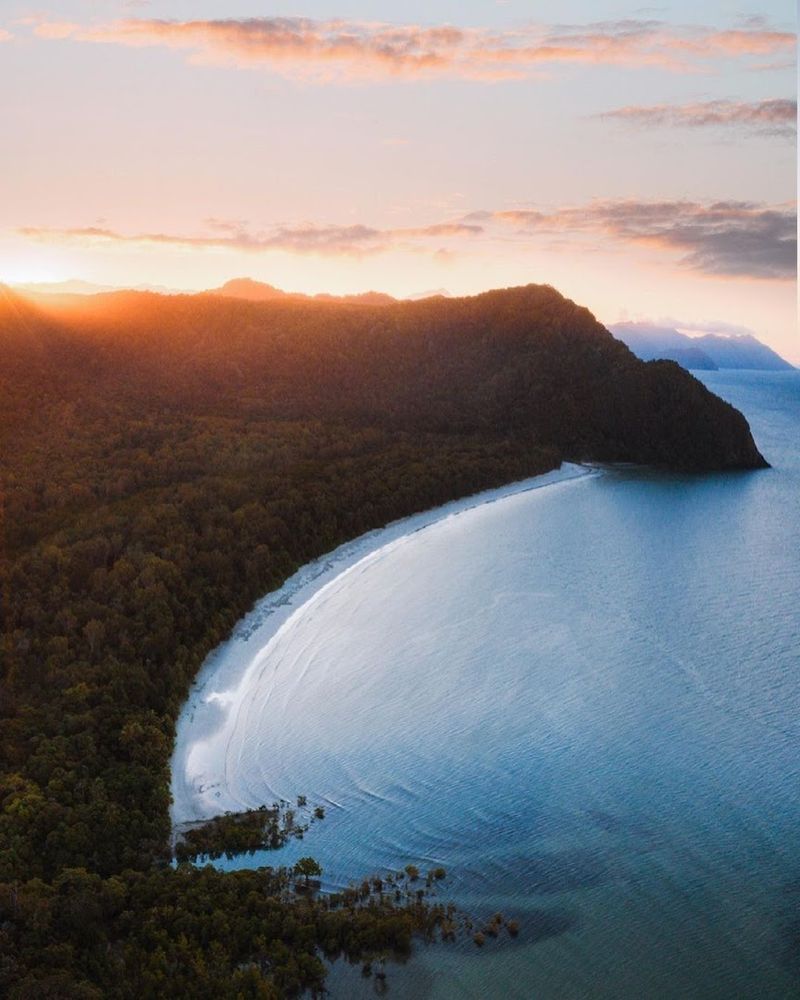
Imagine standing where two World Heritage sites collide. In Daintree National Park, ancient tropical rainforest meets the Great Barrier Reef, creating one of the most biologically rich corners on the planet.
The Daintree Rainforest is estimated to be around 135 million years old, making it older than the Amazon.
Rare and endangered species thrive here, including the southern cassowary, a large flightless bird that plays a vital role in seed dispersal. Tree kangaroos, Boyd’s forest dragons, and hundreds of bird species also call this rainforest home.
Guided night walks reveal creatures rarely seen during daylight hours.
The Daintree River cruise is a must-do, offering close-up views of crocodiles and exotic birds along the riverbank. Cape Tribulation, where the rainforest literally tumbles onto the beach, is one of Australia’s most scenic spots.
Staying at an eco-lodge here makes the whole experience even more immersive.
5. Great Otway National Park (Victoria)
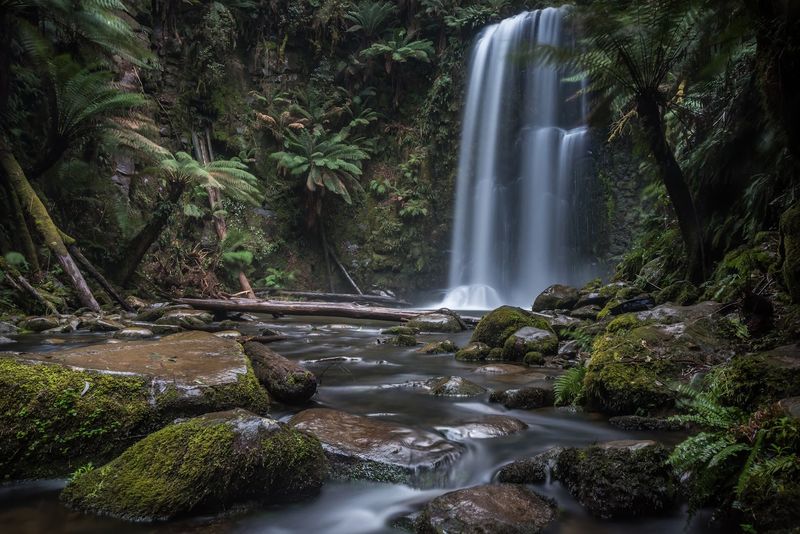
Stretching along Victoria’s southwestern coast, Great Otway National Park is a wonderfully varied landscape that surprises most first-time visitors. Ancient temperate rainforests filled with towering tree ferns sit just minutes from dramatic ocean cliffs and windswept beaches.
Driving the Great Ocean Road through this park is one of Australia’s most celebrated scenic journeys.
Maits Rest Rainforest Walk is a gentle trail that winds through a 300-year-old myrtle beech forest draped in moss and ferns. Hopetoun Falls and Beauchamp Falls are among the park’s most beautiful cascades, tucked away in cool, ferny gullies.
Wildlife lovers often spot koalas sleeping in eucalyptus trees along the roadside.
The park also includes a lighthouse precinct at Cape Otway, Australia’s oldest surviving lighthouse, which dates to 1848. Camping is available at several sites throughout the park, making it ideal for a multi-day adventure along the coast.
6. Grampians National Park (Victoria)
Rising above the flat plains of western Victoria, the Grampians (known to the local Djab wurrung and Jardwadjali peoples as Gariwerd) are a series of ancient sandstone mountain ranges that have shaped the region for thousands of years. Aboriginal rock art sites here are among the most significant in southeastern Australia, with paintings at Bunjil’s Shelter being particularly sacred.
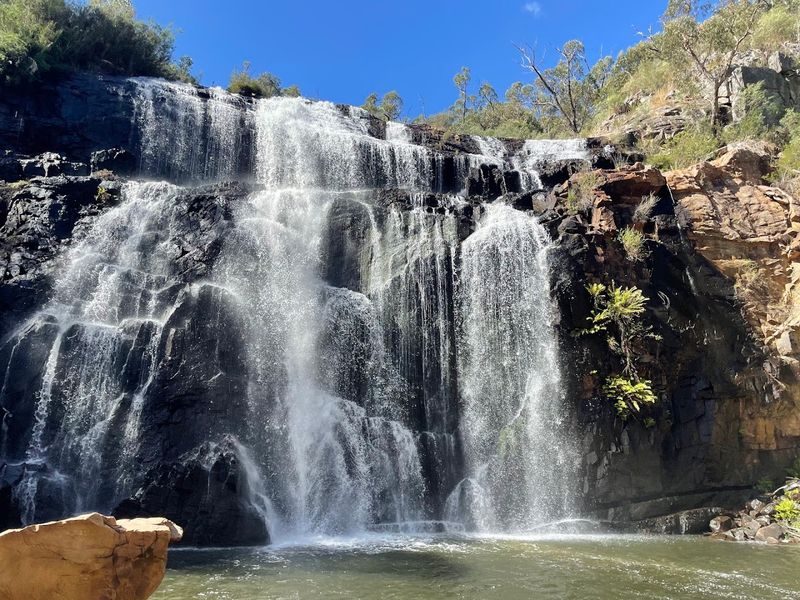
The park explodes with color during wildflower season from August to October, when over 900 plant species bloom across the ranges. MacKenzie Falls is the largest waterfall in Victoria and rewards hikers with a stunning payoff after a short walk.
Kangaroos and emus roam the park in large numbers and are often spotted roadside at dusk.
The town of Halls Gap, nestled inside the park, is a welcoming base with accommodation, restaurants, and a visitor centre. Sunrise from the Pinnacle lookout is a moment most visitors never forget.
7. Freycinet National Park (Tasmania)
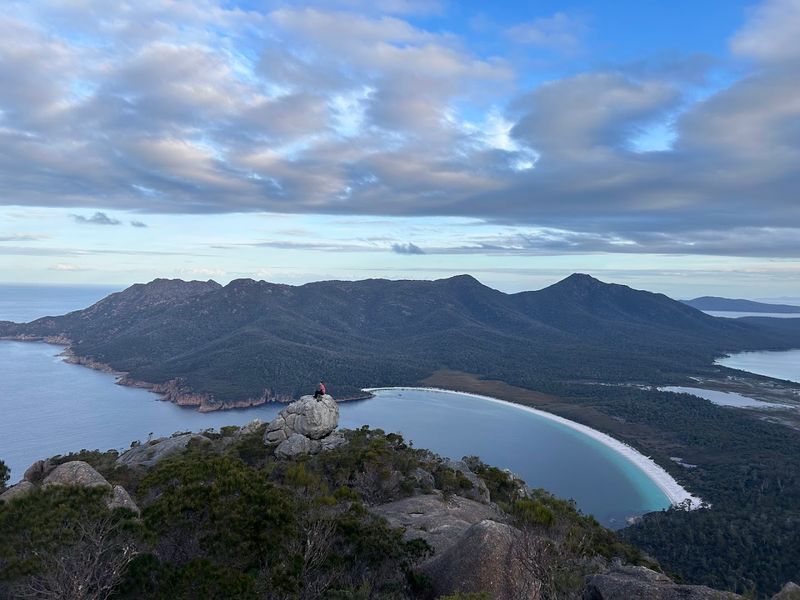
Wineglass Bay has been voted one of the top ten beaches in the world, and standing at the lookout above it for the first time, it is easy to understand why. Freycinet National Park sits on Tasmania’s east coast, where dramatic pink granite peaks called the Hazards rise sharply from the Tasman Sea.
The contrast of rose-colored rock, white sand, and brilliant turquoise water is genuinely breathtaking.
The walk to Wineglass Bay Lookout takes about 45 minutes each way and is one of the most rewarding short hikes in Australia. Those willing to push further can complete the full Wineglass Bay and Hazards Beach circuit, a more challenging 11-kilometer loop.
Paddling a kayak around the bay gives a completely different and equally magical perspective.
Friendly wallabies wander through the campground at Freycinet Lodge, and white-bellied sea eagles soar overhead. Oyster Bay, just outside the park, is famous for fresh seafood worth savoring after a day on the trails.
8. Cradle Mountain-Lake St Clair National Park (Tasmania)
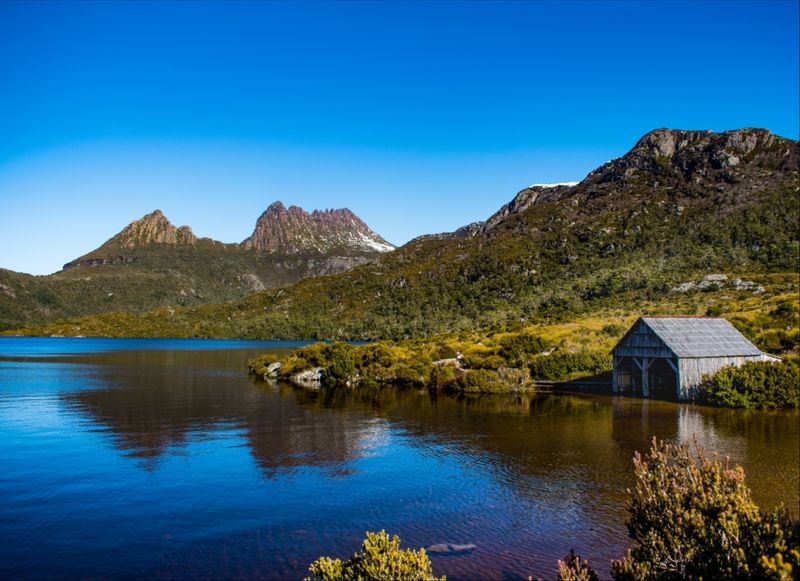
On a crisp morning, with Cradle Mountain mirrored perfectly in the still waters of Dove Lake, it becomes obvious why this park holds a special place in the hearts of Australians. Part of the Tasmanian Wilderness World Heritage Area, this park protects some of the most pristine alpine wilderness in the Southern Hemisphere.
Snow can dust the peaks even in summer, giving the landscape a moody, almost mystical quality.
The Overland Track is Australia’s most famous multi-day hike, covering 65 kilometers from Cradle Mountain to Lake St Clair over five to six days. Walkers pass through buttongrass moorlands, ancient pencil pine forests, and beside glacial tarns.
Wombats, wallabies, and Tasmanian devils are regularly spotted along the way.
For day visitors, the Dove Lake Circuit is a manageable 6-kilometer walk with jaw-dropping scenery at every turn. The park’s visitor centre at Cradle Mountain village is a great first stop for maps and wildlife information.
9. Wilsons Promontory National Park (Victoria)
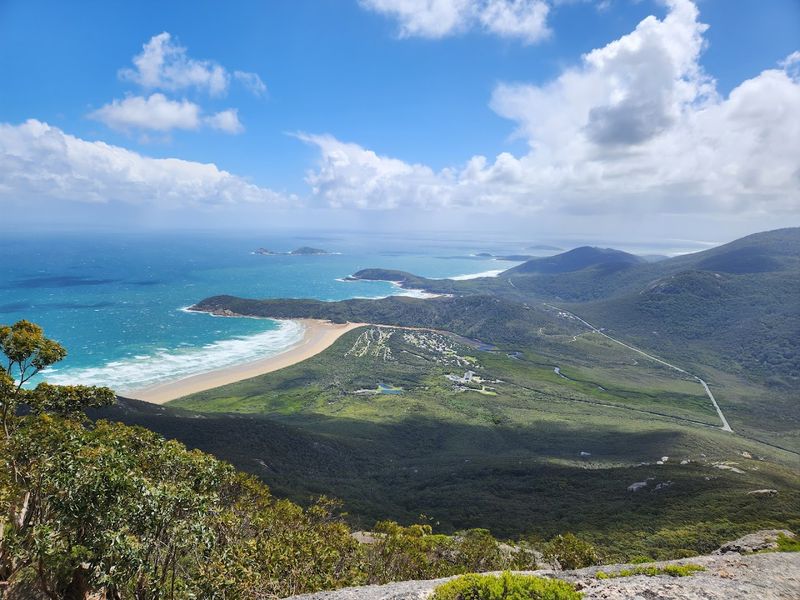
Affectionately called “The Prom” by Victorians, Wilsons Promontory National Park holds a deeply loyal fanbase among Australian hikers and beach lovers alike. Situated at the southernmost tip of mainland Australia, the park combines over 80 kilometers of walking tracks with some of the most pristine white-sand beaches in the country.
The combination of granite headlands, turquoise water, and dense forest feels almost too good to be real.
Squeaky Beach is a crowd favorite, named for the soft white quartzite sand that literally squeaks underfoot. Norman Beach is calmer and ideal for swimming and snorkeling.
Overnight hikers heading to the lighthouse at South Point are rewarded with uninterrupted ocean views and a genuine sense of remoteness.
Wildlife is a big part of the Prom’s appeal. Wombats graze fearlessly near the campground at Tidal River, and emus occasionally wander through.
Booking campsites well in advance during school holidays is strongly recommended.
10. Karijini National Park (Western Australia)
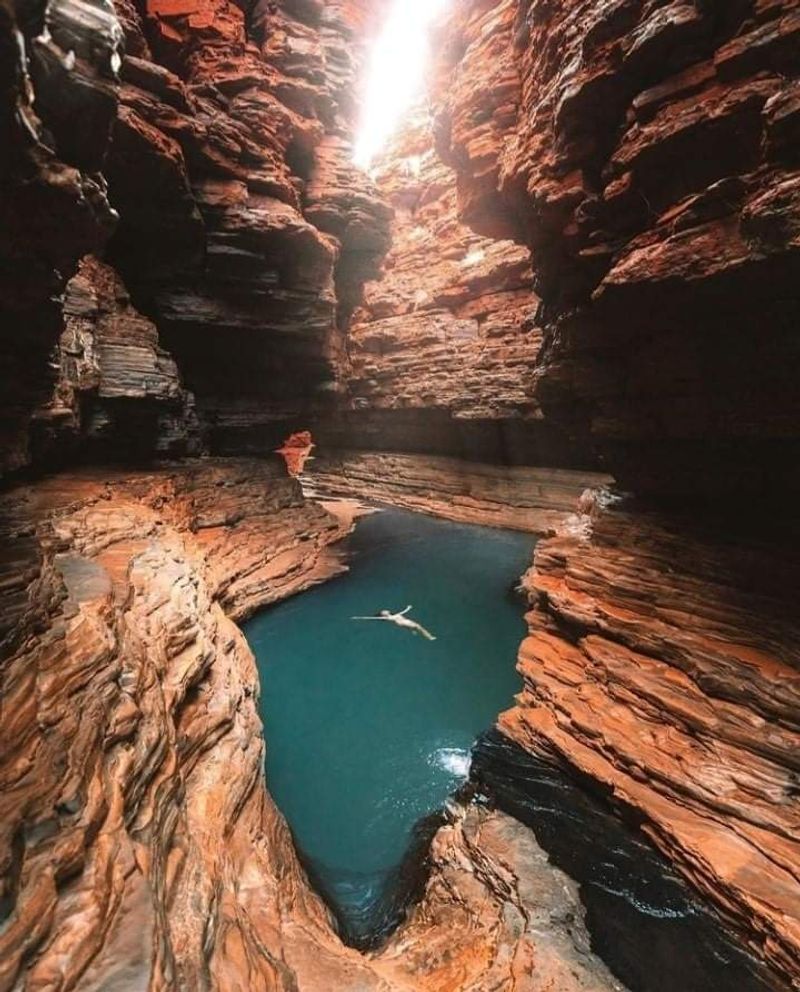
Hidden in the Pilbara region of Western Australia, Karijini is one of Australia’s best-kept secrets. The park sits on some of the oldest rock on Earth, with gorges carved over billions of years revealing vivid bands of red, orange, and purple.
Dropping into one of these narrow gorges and swimming in a cool, crystal-clear pool while ancient walls tower above is a truly humbling experience.
Hancock Gorge, Weano Gorge, and Joffre Gorge are among the most spectacular, each offering different levels of difficulty for exploration. Fortescue Falls is the park’s most accessible waterfall and flows year-round into a gorgeous swimming hole.
Some gorge walks require swimmers to traverse cold water, so wearing water shoes is a smart idea.
Stargazing at Karijini is exceptional due to minimal light pollution. The Banyjima, Kurrama, and Innawonga peoples are the traditional custodians of this remarkable land, and their connection to it runs very deep.
11. Litchfield National Park (Northern Territory)
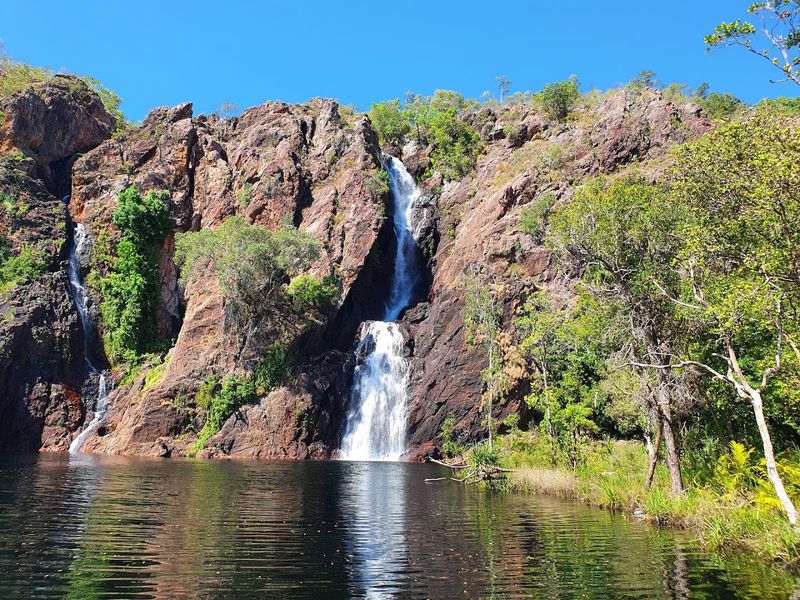
Only about 100 kilometers south of Darwin, Litchfield National Park punches well above its weight when it comes to natural spectacles. Many locals actually prefer it to the more famous Kakadu, largely because it is easier to access and offers swimming in stunning waterfalls year-round.
Florence Falls, Wangi Falls, and Tolmer Falls are among the highlights, each with their own distinct character.
One of Litchfield’s quirkiest features is its magnetic termite mounds, which can reach up to two meters tall and are always aligned north to south to regulate temperature. These flat, tombstone-like structures look like something from another planet.
The cathedral termite mounds nearby are even taller, sometimes exceeding six meters.
The park’s swimming holes are safe for most of the year, unlike many Northern Territory waterways where crocodiles are a concern. Buley Rockhole, a series of natural rock pools connected by small waterfalls, is a particularly popular spot for families and backpackers.
12. Kosciuszko National Park (New South Wales)
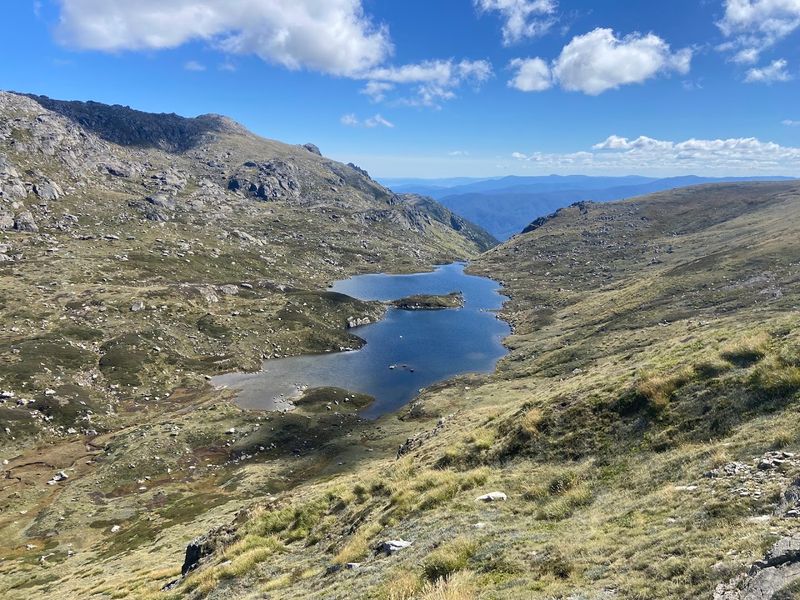
At 2,228 meters above sea level, Mount Kosciuszko is the highest peak in Australia, and reaching its summit is a bucket-list achievement for many hikers. Kosciuszko National Park surrounds this famous mountain with alpine meadows, glacial lakes, and some of the most surprising wildflower displays in the country.
During summer, the high country blooms with everlastings, billy buttons, and alpine daisies.
In winter, the park transforms into Australia’s premier ski destination. Resorts at Thredbo and Perisher attract snow sports enthusiasts from across the country, offering skiing, snowboarding, and tobogganing.
The Thredbo chairlift operates year-round and takes visitors close to the summit even in warmer months.
The Main Range Walk is a stunning full-day hike that passes glacial lakes including Blue Lake and Hedley Tarn. Trout fishing in the park’s rivers and streams is also very popular.
The Snowy Mountains Scheme, a massive engineering project nearby, adds an interesting historical layer to any visit.
13. Nambung National Park (Western Australia)
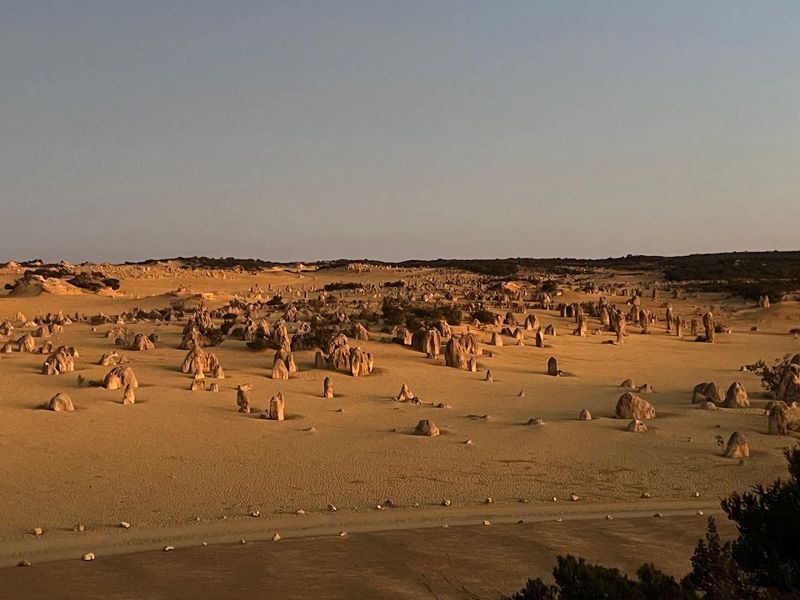
Driving through the Pinnacles Desert for the first time feels like landing on another planet. Nambung National Park, located about 200 kilometers north of Perth, is home to thousands of limestone pillars that jut eerily from the sandy desert floor.
Some stand just centimeters tall, while others reach nearly four meters, creating a surreal and haunting landscape unlike anything else in Australia.
Scientists believe the pinnacles formed over thousands of years as coastal sand dunes dissolved and were reshaped by wind and rain, leaving behind hard calcite columns. The best time to visit is at sunrise or sunset, when the low light casts long shadows between the pillars and the sand glows golden.
Wildflower season from August to October adds another splash of color to the desert surroundings.
A self-drive loop road winds through the pinnacle field, making it accessible even without hiking. The nearby town of Cervantes offers accommodation and fresh crayfish, a local specialty worth trying.
14. Port Campbell National Park (Victoria)
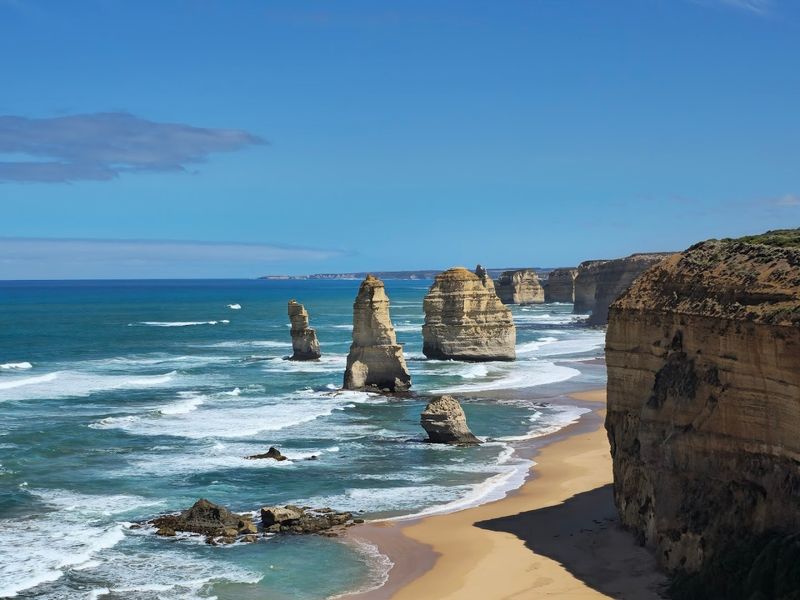
Standing at the Gibson Steps and looking out at the Twelve Apostles rising from a churning Southern Ocean is one of those moments that stops you in your tracks. Port Campbell National Park, along the Great Ocean Road in Victoria, protects a stretch of coastline shaped by relentless waves over millions of years.
The result is a series of dramatic sea stacks, arches, and gorges that attract more than two million visitors each year.
Despite the name, there are currently eight standing stacks rather than twelve, as several have collapsed over the decades. Loch Ard Gorge nearby is equally stunning and carries a haunting history from an 1878 shipwreck.
The gorge’s calm turquoise water contrasts beautifully with the sheer limestone walls surrounding it.
Helicopter flights over the coastline offer a spectacular bird’s-eye perspective. Sunrise and sunset are the best times for photography, when warm light bathes the rocks in deep amber and gold tones.
15. Flinders Chase National Park (South Australia)
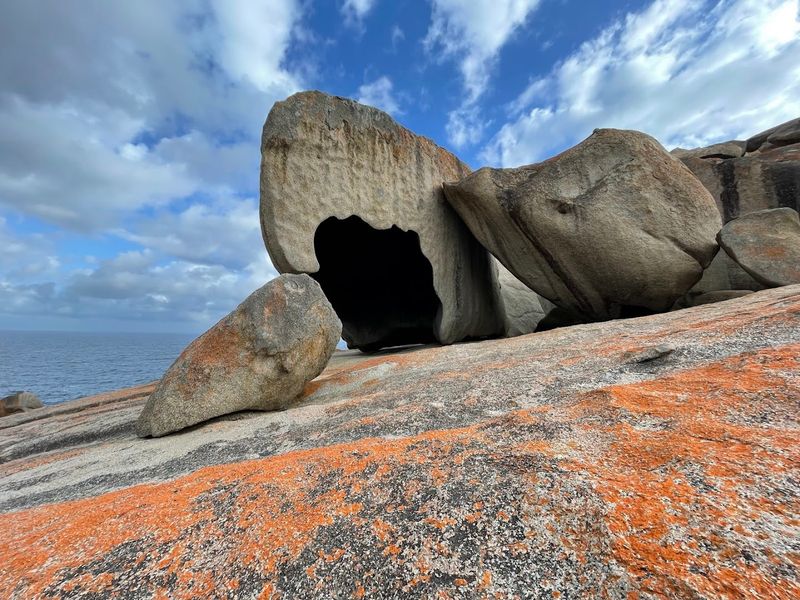
Kangaroo Island is one of Australia’s great wildlife sanctuaries, and Flinders Chase National Park at its western end is the crown jewel. The park is home to two of the island’s most iconic landmarks: Remarkable Rocks, a cluster of granite boulders sculpted into wild shapes by thousands of years of wind and sea spray, and Admirals Arch, a dramatic natural archway draped in stalactites where New Zealand fur seals laze about at the base.
Wildlife encounters here are remarkably close and personal. Kangaroos, echidnas, and Tammar wallabies roam freely throughout the park, showing little fear of visitors.
Cape Barren geese waddle along the roadsides with an air of complete confidence. After the 2020 bushfires devastated much of Kangaroo Island, the park has undergone impressive ecological recovery.
Watching the sunset from Remarkable Rocks, when the granite glows deep orange against the ocean horizon, is a memory that stays with visitors long after they leave the island.



