Some cities on Earth get so cold that exposed skin can freeze in minutes, pipes burst underground, and cars need special heaters just to start. These are not ghost towns or research outposts but real, thriving communities where people go to school, run businesses, and raise families year-round.
From the frozen plains of Siberia to the windswept tundra of northern Canada, people have found remarkable ways to survive and even celebrate life in extreme cold. Get ready to meet the toughest cities on the planet.
Yakutsk, Russia
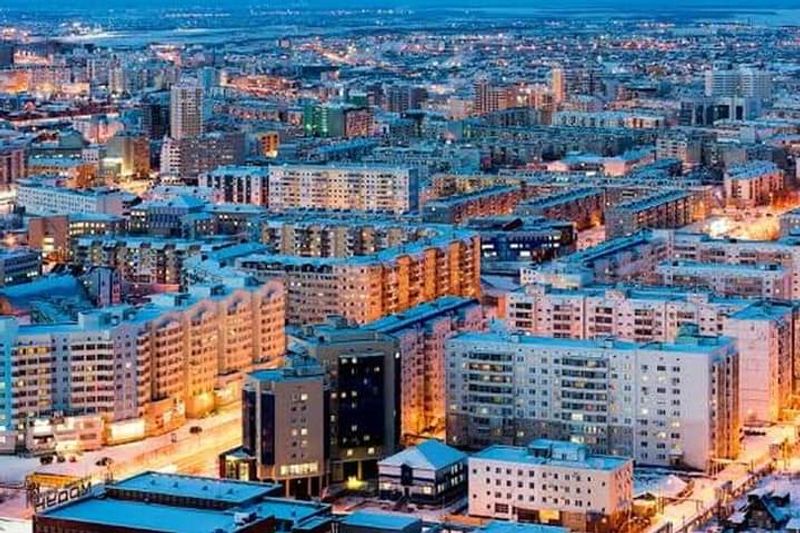
Step outside in Yakutsk on a January morning and your breath turns to ice crystals before it even leaves your lips. Widely recognized as the coldest major city on Earth, Yakutsk sits in eastern Siberia with average January temperatures hovering around -40°C (-40°F).
Historic lows have plunged below -64°C (-83°F), making it a place where cold is simply a way of life.
More than 350,000 people call this city home, and they have adapted in creative ways. Buildings are constructed on stilts to avoid melting the permafrost beneath, since the entire city sits on permanently frozen ground.
Pipes run above ground, cars stay plugged into electric heaters overnight, and locals wear layers so thick they look like walking sleeping bags.
Despite the brutal cold, Yakutsk has a surprisingly lively culture. There are universities, restaurants, theaters, and even a popular mammoth museum, since ancient frozen mammoths are regularly discovered in the surrounding region.
Locals joke that if you can handle Yakutsk winters, you can handle anything. Summers do bring warmth, with temperatures occasionally climbing above 30°C (86°F), giving residents a brief but glorious reprieve from the freeze.
Norilsk, Russia
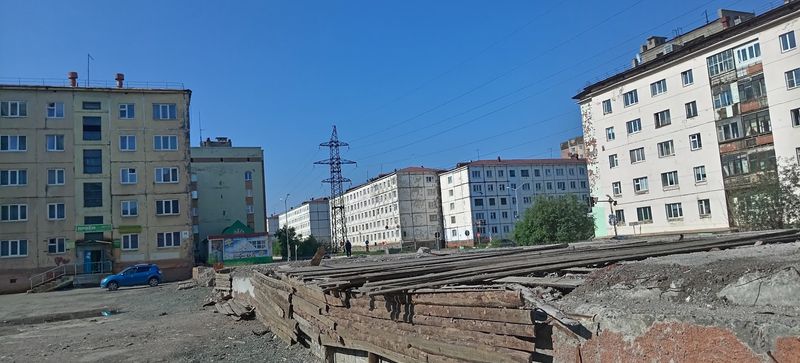
Norilsk has a reputation that precedes it: one of the most isolated, polluted, and brutally cold cities anywhere on Earth. Located above the Arctic Circle in northern Siberia, it is home to around 180,000 people who endure winter temperatures that regularly stay below -30°C (-22°F) for months at a stretch.
Snowfall can linger well into spring, and polar night means weeks without a single glimpse of sunlight.
The city was built largely by Soviet-era forced laborers and grew around one of the world’s largest nickel and palladium mining operations. That industrial past is still visible today in the heavy metal pollution that blankets parts of the surrounding landscape.
Yet despite all of this, residents have built a functioning, modern city complete with shopping centers, schools, and cultural venues.
Getting to Norilsk is not easy either. There are no roads connecting it to the rest of Russia, so residents fly in and out or travel by river during the brief summer season.
The isolation creates a tight-knit community where neighbors genuinely depend on one another. Locals often say the cold brings people together, and in Norilsk, that sense of community is very real and very strong.
Dudinka, Russia
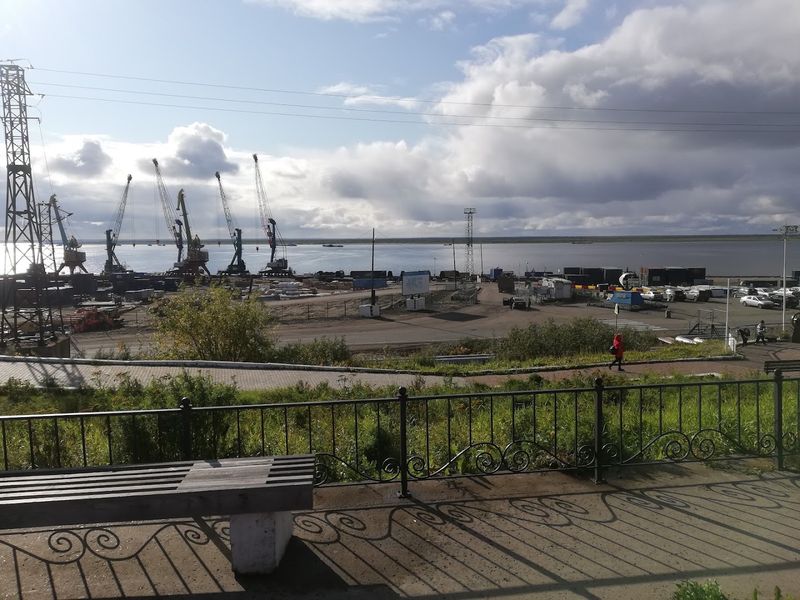
Sitting quietly on the banks of the frozen Yenisei River, Dudinka is one of the northernmost port cities in the world. With a population of around 20,000, it may be smaller than its Siberian neighbors, but its importance as an Arctic shipping hub makes it far more significant than its size suggests.
Winters here are punishing, with temperatures routinely crashing below -40°C (-40°F) and polar night lasting for weeks.
Dudinka serves as the main supply gateway for Norilsk, receiving cargo during the brief summer navigation season when the river thaws enough for icebreakers to push through. During the long winter months, the Yenisei becomes a solid, frozen highway used by locals on snowmobiles and heavy vehicles.
The city essentially operates on two completely different rhythms depending on the season.
Life in Dudinka requires serious mental toughness. The darkness of polar night can last from late November into January, and residents rely on bright indoor lighting, social gatherings, and winter festivals to keep spirits up.
The local Indigenous Nenets and Dolgans peoples have lived in this region for centuries, and their traditional knowledge of surviving Arctic conditions continues to influence daily life in the city today.
Verkhoyansk, Russia
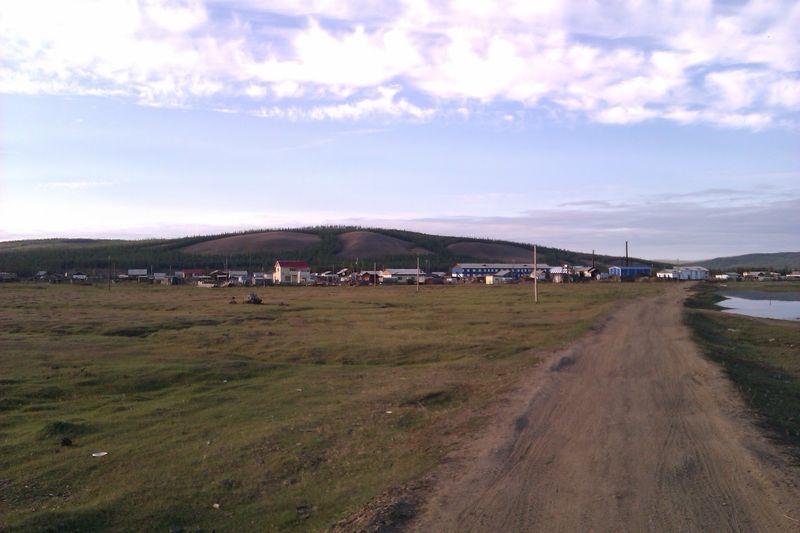
Verkhoyansk holds a record that even most geography enthusiasts do not know: it once recorded -67.8°C (-90°F), one of the lowest temperatures ever measured anywhere in the Northern Hemisphere. This tiny Siberian town, home to fewer than 1,500 people, sits in one of the most remote corners of Russia and experiences one of the wildest temperature swings on the planet.
Winters are legendarily brutal, while summers can push temperatures above 37°C (99°F).
That enormous annual temperature range, sometimes exceeding 100°C (180°F) between the coldest and warmest days, makes Verkhoyansk a scientific curiosity as much as a place to live. Researchers and adventurous travelers occasionally make the long journey here just to experience the extremes firsthand.
The town has a small school, a weather station, and a post office, which is about everything you would expect from a settlement of its size.
The local Yakut people have lived in this region for generations, relying on reindeer herding, fishing, and hunting to sustain their communities through the long winters. Their traditional fur clothing, made from reindeer and fox pelts, remains far warmer and more practical than anything a modern outdoor brand has produced.
Verkhoyansk is proof that humans can adapt to almost any conditions imaginable.
Yellowknife, Northwest Territories, Canada
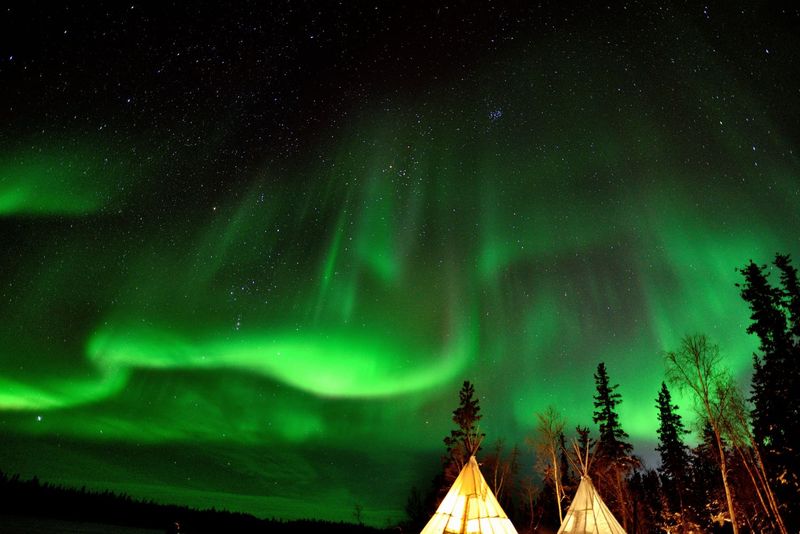
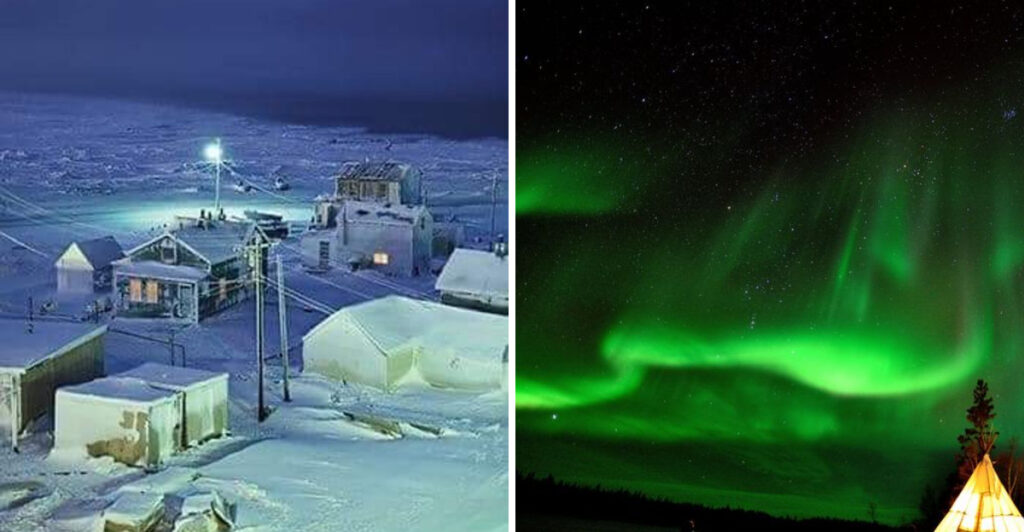
On a clear January night in Yellowknife, the sky above the frozen Great Slave Lake explodes with ribbons of green and purple light. The Northern Lights here are among the most spectacular on Earth, drawing visitors from Japan, Europe, and beyond who brave temperatures near -28°C (-18°F) just to witness the show.
For locals, the aurora is simply Tuesday night.
Yellowknife is the capital of Canada’s Northwest Territories and home to around 20,000 people. The economy runs on diamond mining, government services, and a growing tourism industry built almost entirely around winter attractions.
Ice roads across frozen lakes connect remote communities during winter, serving as critical supply routes that only function when temperatures stay cold enough.
The city has a surprisingly vibrant food scene, arts community, and nightlife for its size. Residents celebrate the cold rather than hide from it, with events like the Long John Jamboree winter festival bringing dog sled races, ice sculpture competitions, and outdoor concerts to the community each year.
Yellowknife also sits in a region of near-constant summer daylight, meaning residents swing from months of short winter days to weeks of midnight sun. Life here is never boring, and the locals would not trade it for anything.
Utqiagvik (Barrow), Alaska, United States
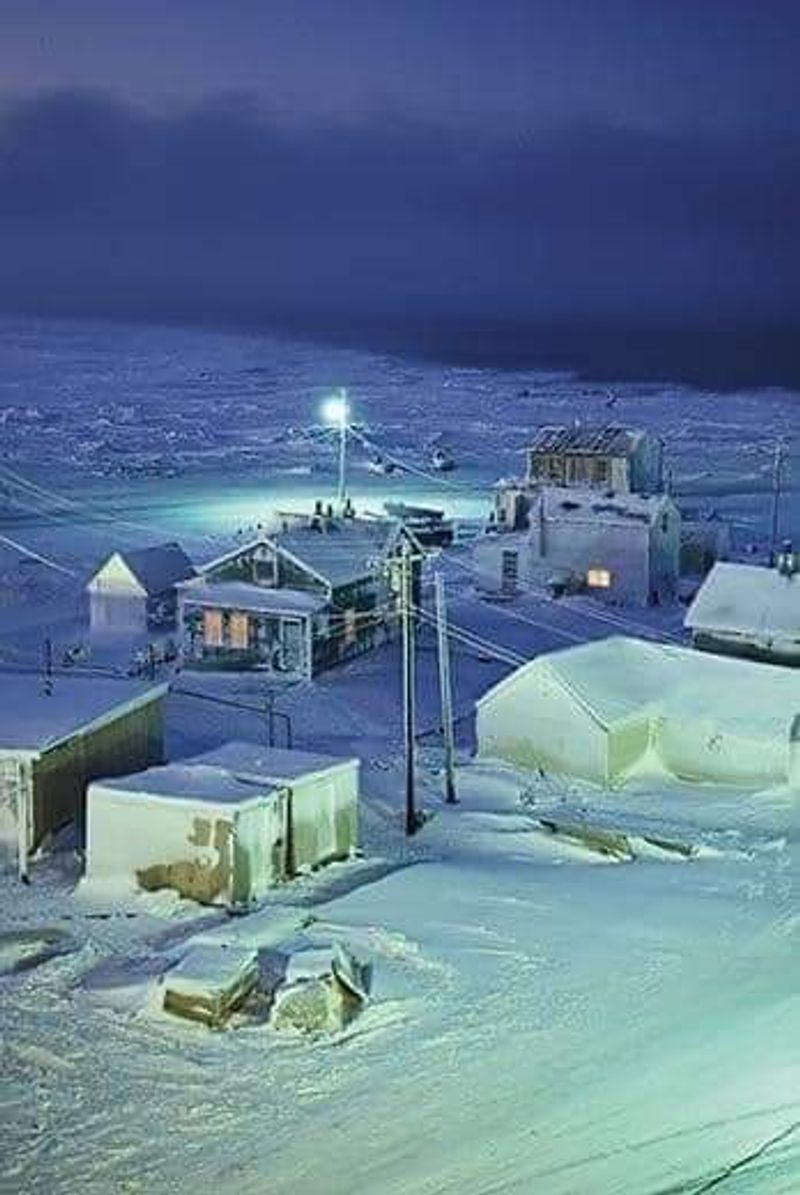
For 65 days straight each winter, the sun does not rise at all over Utqiagvik, America’s northernmost city. Located on the Arctic Ocean coast of Alaska, this community of around 5,000 people lives in complete polar darkness from late November through late January.
When the sun finally peeks above the horizon again, locals celebrate with a festival called Kivgiq, the Messenger Feast, a traditional Inupiat gathering of drumming, dancing, and feasting.
Arctic Ocean winds make temperatures feel far colder than the thermometer reads, with wind chills regularly pushing conditions to what feels like -50°C (-58°F) or below. Sea ice surrounds the coast for most of the year, and polar bears are not an unusual sight near town.
Residents keep an eye out, and some carry protection when walking near the ice edge.
The Inupiat people have called this region home for over 1,500 years, developing sophisticated techniques for hunting bowhead whales, seals, and caribou in some of the harshest conditions imaginable. Their cultural traditions remain strong today, woven into the daily life of a modern town that also has schools, a hospital, and internet access.
Utqiagvik shows that ancient knowledge and modern convenience can absolutely coexist at the top of the world.
Fairbanks, Alaska, United States
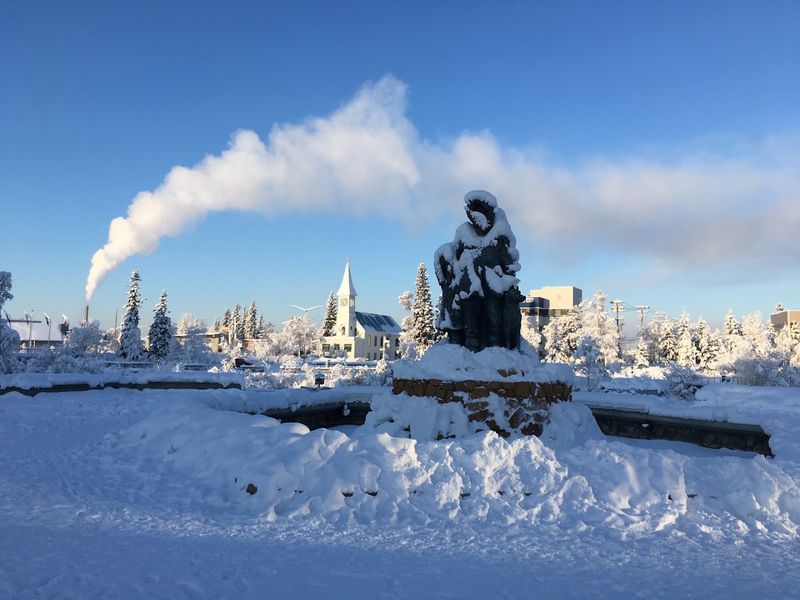
Ice fog is a weather phenomenon most people have never heard of, but Fairbanks residents know it all too well. When temperatures drop below -40°C (-40°F), tiny ice crystals form in the air and create a dense, glittering fog that hangs over the city for days at a time.
It looks magical and feels absolutely brutal, especially when your car needs a block heater just to turn over in the morning.
Fairbanks sits in Alaska’s interior, far from the moderating influence of the ocean, which means winters are shockingly cold and summers are genuinely warm. July temperatures can reach 30°C (86°F), making it one of the most extreme seasonal cities in the United States.
The population of around 32,000 enjoys a full range of winter activities including dog mushing, ice fishing, and some of the best Northern Lights viewing in Alaska.
The University of Alaska Fairbanks is a major research hub, particularly for Arctic and permafrost science, which makes sense given the city’s location. Local businesses have adapted cleverly to the cold, with many buildings connected by enclosed walkways and heated garages being standard rather than optional.
Residents take pride in their ability to function normally in conditions that would shut down most other American cities within hours.
Iqaluit, Nunavut, Canada
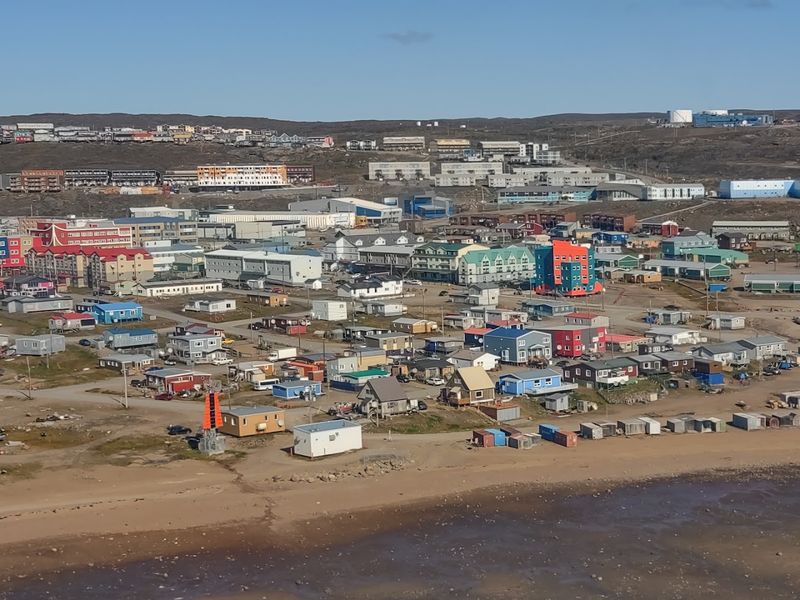
Canada’s newest and most remote territorial capital sits on Baffin Island, surrounded by frozen tundra and the icy waters of Frobisher Bay. Iqaluit is home to around 8,000 people and serves as the administrative heart of Nunavut, a territory larger than Western Europe.
Winter temperatures regularly fall below -35°C (-31°F), and powerful Arctic winds make outdoor conditions genuinely dangerous without proper gear.
The city has no road connections to the rest of Canada. Everything, from groceries to building materials, must be flown in or shipped during the brief summer sealift season, which means the cost of living is extraordinarily high.
A bag of apples can cost the equivalent of a restaurant meal in southern Canada. Despite this, Iqaluit has a strong, proud community deeply rooted in Inuit culture and traditions.
Dog sledding, ice fishing, and hunting for country food like seal and caribou remain important parts of daily life alongside modern amenities like a hospital, schools, and government offices. The Inuit Qaujimajatuqangit, or traditional Inuit knowledge system, is officially recognized in Nunavut’s government, blending ancient wisdom with modern governance.
Iqaluit is a city that holds two worlds together simultaneously, and it does so with remarkable resilience and quiet determination every single day.
Ulaanbaatar, Mongolia
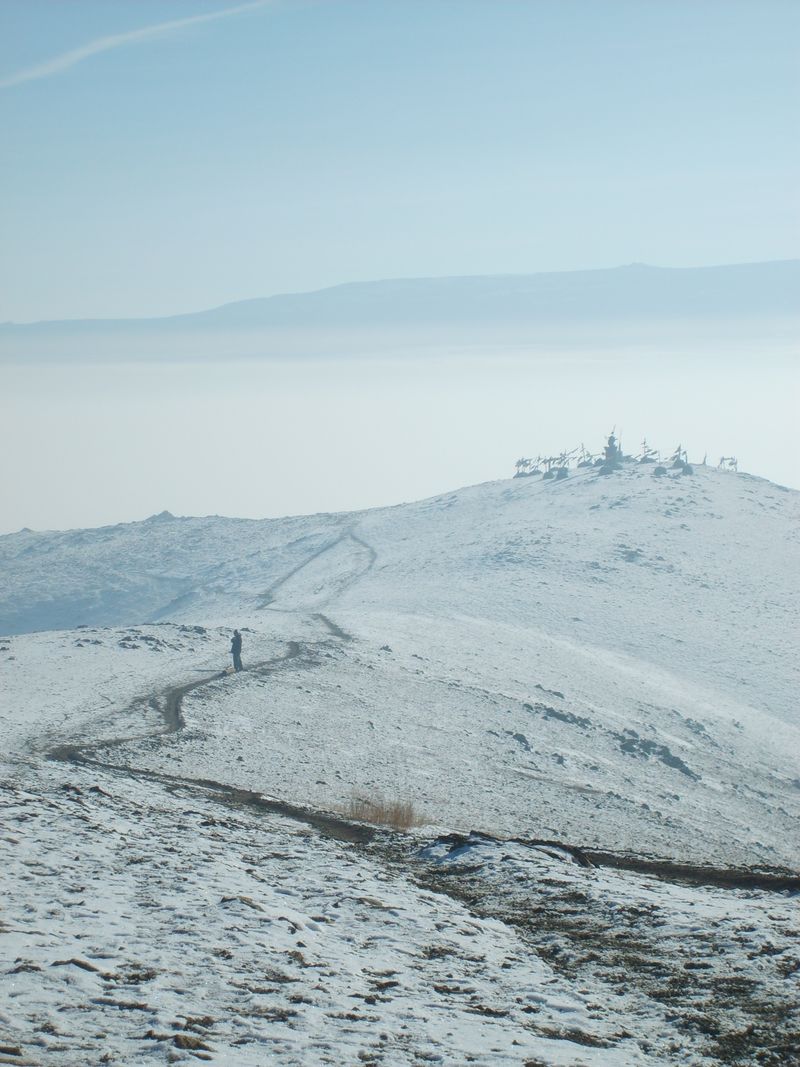
Ulaanbaatar holds a title that surprises most people who hear it: the coldest national capital city on Earth. Sitting at an elevation of about 1,350 meters (4,430 feet) on a high inland plateau, it is far from any ocean that might soften its winters.
Average January temperatures hover around -25°C (-13°F), and the city of 1.5 million people burns enormous amounts of coal to stay warm, creating a serious air pollution problem during winter months.
The surrounding steppes are home to nomadic herders who have followed their livestock across Mongolia’s vast grasslands for thousands of years. Many of these families now split their time between traditional ger (round felt tent) camps and urban apartments in Ulaanbaatar.
The outer neighborhoods of the city are lined with ger districts, where families live in traditional tents hooked up to modern utilities.
Mongolia’s extreme winters, called dzuds, can be catastrophic for nomadic herders when livestock freeze to death by the thousands. The government and international aid organizations work to support affected families during these devastating events.
Despite the cold, Ulaanbaatar has a lively arts and music scene, excellent museums dedicated to nomadic heritage, and a growing cafe culture that gives the city an unexpectedly cosmopolitan energy.
Astana, Kazakhstan
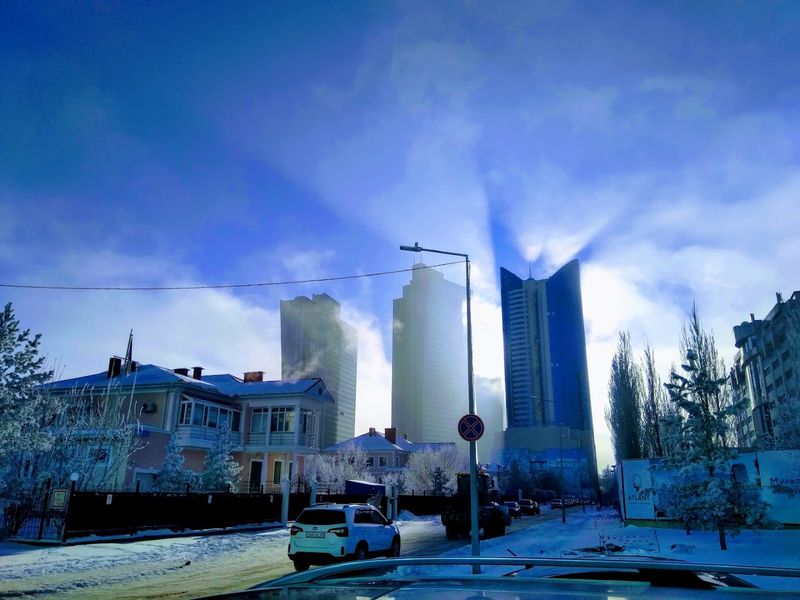
Astana looks like a city from a science fiction movie, with its gleaming futuristic towers and sweeping architectural experiments rising from the flat Kazakh steppe. But behind the polished glass and bold design lies a climate that is anything but gentle.
Strong Siberian air masses sweep across the open plains and slam into the city, bringing fierce winds, heavy snow, and temperatures that can plummet below -35°C (-31°F) during the coldest months.
Kazakhstan’s capital was moved here from Almaty in 1997, partly as a strategic political decision and partly to develop the country’s underpopulated north. Building a major capital city from scratch in one of the world’s harshest continental climates was a genuine engineering challenge.
Heated underground passages, district heating systems, and wind-blocking architectural designs help the city function through its brutal winters.
Despite the cold, Astana has grown rapidly into a city of over one million people with international embassies, world-class universities, and a booming energy sector. The government renamed it Nur-Sultan in 2019 before reverting to Astana in 2022, which caused quite a bit of confusion for map makers worldwide.
Winter celebrations, ice skating rinks, and elaborate New Year’s displays keep residents entertained even when going outside requires serious preparation and commitment.
Harbin, China
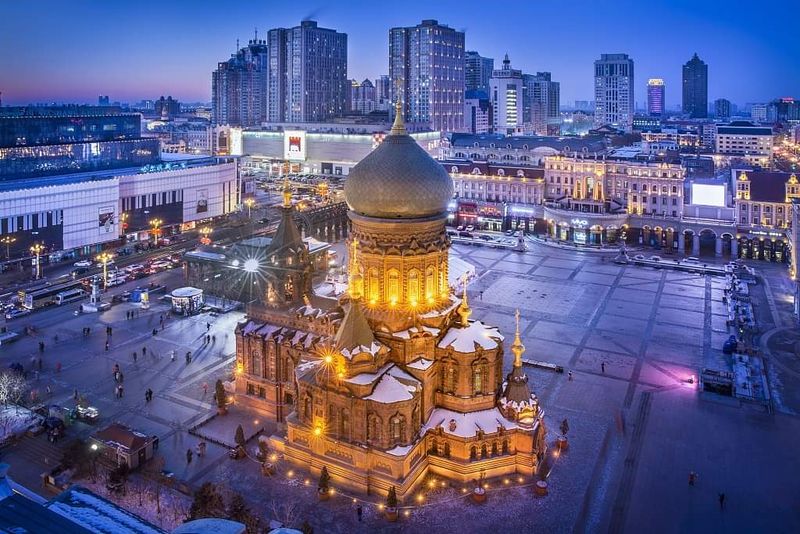
Every January, Harbin transforms an entire district into a city built completely out of ice. The Harbin International Ice and Snow Festival is one of the largest winter festivals in the world, drawing millions of visitors to see towering ice castles, frozen replicas of famous landmarks, and sculptures so detailed they look like they were carved from glass.
None of this would be possible without Harbin’s reliably bitter winters, where temperatures frequently drop below -20°C (-4°F).
Located in northeastern China near the Russian border, Harbin was heavily influenced by Russian culture during the early 20th century when thousands of Russian immigrants settled here. That heritage is still visible in the city’s Russian-style architecture, Orthodox churches, and even the local cuisine.
Harbin sausage, a smoked meat delicacy brought by Russian settlers, is now one of the city’s most beloved street foods.
With a population of around 10 million in its greater metropolitan area, Harbin is a massive, bustling city that happens to also be one of China’s coldest. Residents embrace winter with outdoor ice skating, skiing at nearby resorts, and the festival itself, which brings in billions of yuan in tourism revenue annually.
Cold weather, it turns out, can be an excellent business strategy when you lean into it hard enough.
Kiruna, Sweden
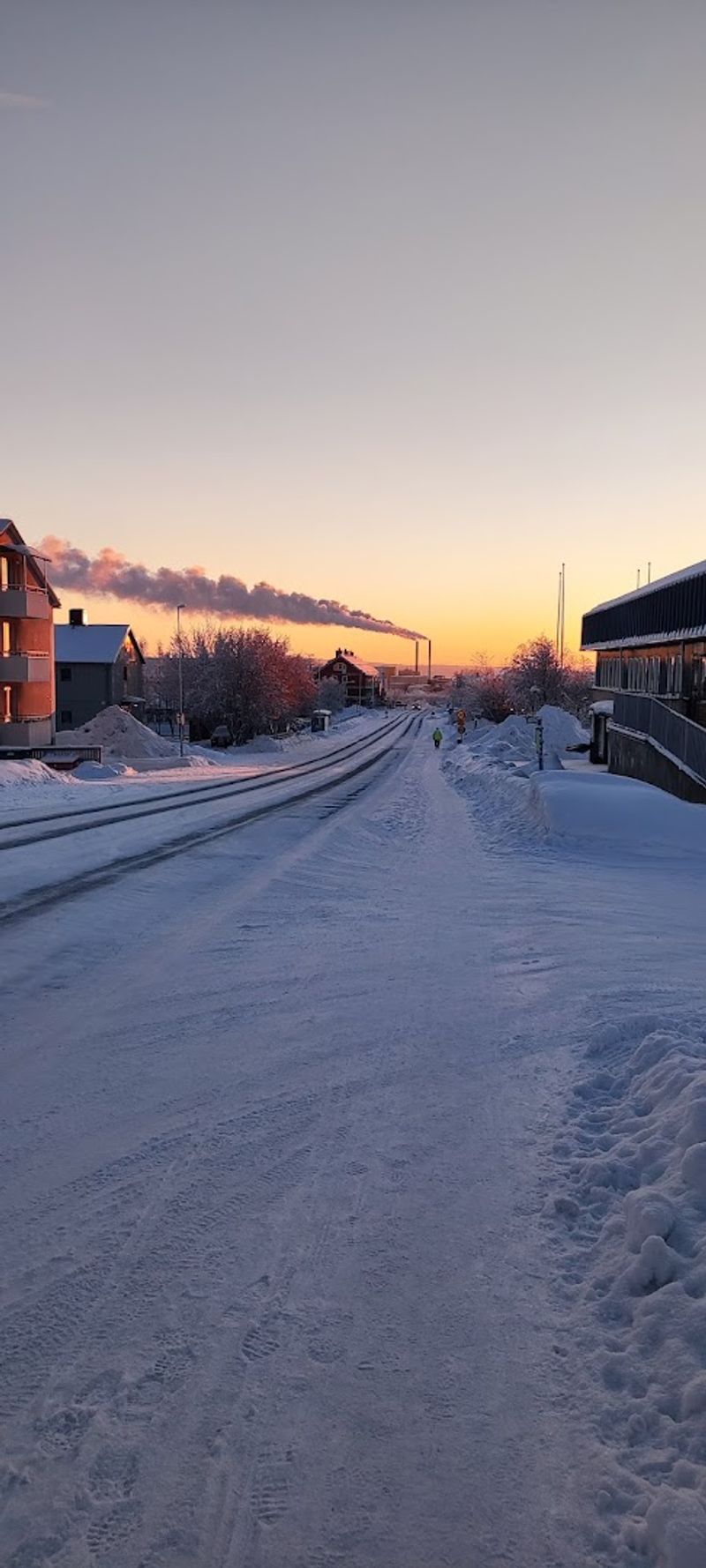
Kiruna sits so far north in Sweden that during winter, the sun barely peeks above the horizon for a few hours each day before disappearing again. Located about 145 kilometers (90 miles) above the Arctic Circle in Swedish Lapland, it is the country’s northernmost city and one of its most unusual.
Kiruna is also slowly moving, literally, as the entire city is being relocated piece by piece to prevent it from collapsing into the massive iron mine beneath it.
The LKAB iron mine beneath Kiruna is one of the largest and most productive iron ore mines in the world, and the underground mining operations have caused the ground to shift and crack beneath the original city center. Buildings, including the famous church, have been carefully dismantled and reassembled at a new location a few kilometers away.
It is one of the most ambitious urban relocation projects ever attempted anywhere on Earth.
Beyond its geological drama, Kiruna is a beloved destination for winter tourism. The nearby Icehotel in Jukkasjarvi, built fresh from river ice each year, attracts guests from around the world who pay to sleep in frozen rooms.
Dog sledding, snowmobile safaris, and Northern Lights tours round out a winter experience that feels like stepping into a snow globe with very good wifi.
Murmansk, Russia
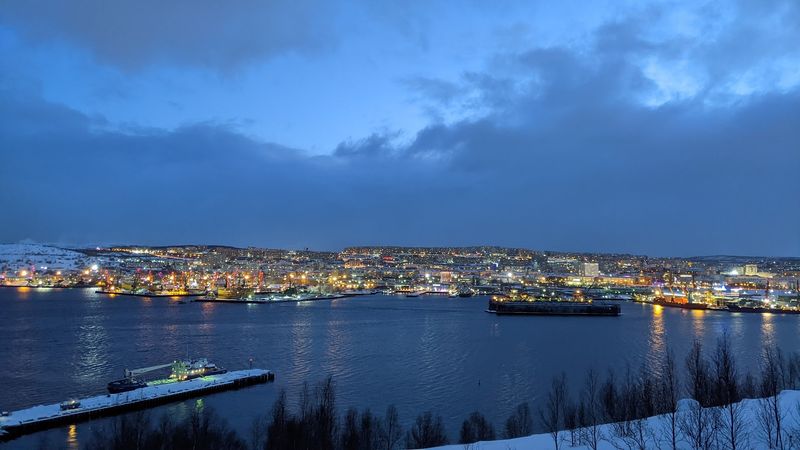
Murmansk has a quirk that sets it apart from most other Arctic cities: its port never fully freezes. Thanks to the warming influence of the North Atlantic Current, the Kola Bay remains ice-free year-round, making Murmansk one of the most strategically important ports in Russia.
That does not mean the city is warm by any standard. Winters are long, dark, and well below freezing, with polar night lasting from late November to mid-January.
With a population of around 280,000, Murmansk is the largest city in the world located above the Arctic Circle. It was a critical Allied supply port during World War II, receiving convoys of weapons and food from Britain and the United States through some of the most dangerous waters on Earth.
The city honors that history with a massive monument called Alyosha, a 35-meter concrete soldier overlooking the bay.
During polar night, residents deal with the darkness through a mix of humor, community events, and an almost competitive cheerfulness that outsiders find both admirable and slightly baffling. The city has a lively theater scene, good restaurants, and a famous nuclear icebreaker museum where visitors can tour a decommissioned atomic-powered vessel.
Murmansk proves that even the darkest winters cannot dim a city’s spirit when the community is determined enough.
International Falls, Minnesota, United States
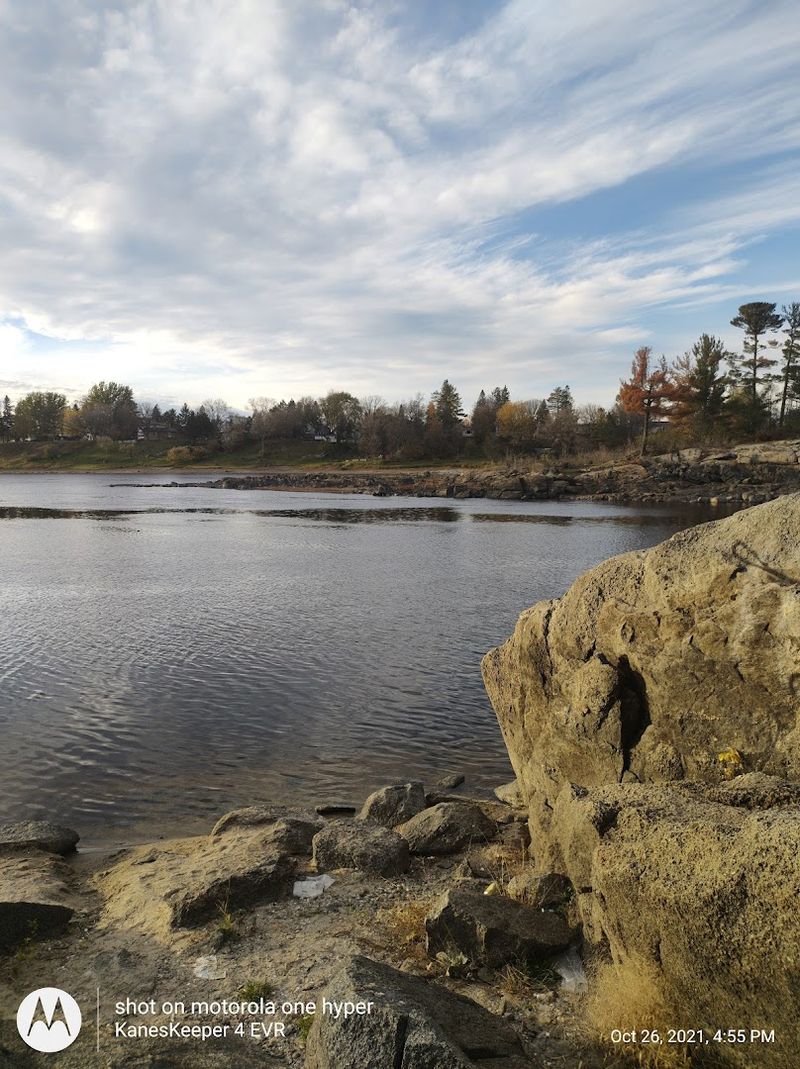
The self-proclaimed Icebox of the Nation takes its frosty nickname very seriously. International Falls, Minnesota, a small town of about 6,000 people on the Canadian border, has officially trademarked the title and fought off a challenge from a rival Minnesota town that dared to claim the same bragging rights.
When your biggest claim to fame is extreme cold, you protect it fiercely.
Average January temperatures hover around -16°C (3°F), and the town regularly records some of the lowest overnight temperatures in the contiguous United States. The Rainy River freezes solid each winter, and the surrounding Voyageurs National Park becomes a playground for ice fishing, snowmobiling, and cross-country skiing.
The frozen lakes and wilderness attract outdoor enthusiasts who specifically seek out cold-weather adventures.
Far from sulking about the weather, International Falls throws a full-on winter celebration called Icebox Days each January, complete with frozen turkey bowling, a freeze yer gizzard blizzard run, and other events that make the cold feel like a party. Paper manufacturing, cross-border trade with Fort Frances, Ontario, and tourism keep the local economy humming.
International Falls is the kind of small town that turns its biggest challenge into its greatest asset, and it does it with a smile and a very good coat.
Novosibirsk, Russia
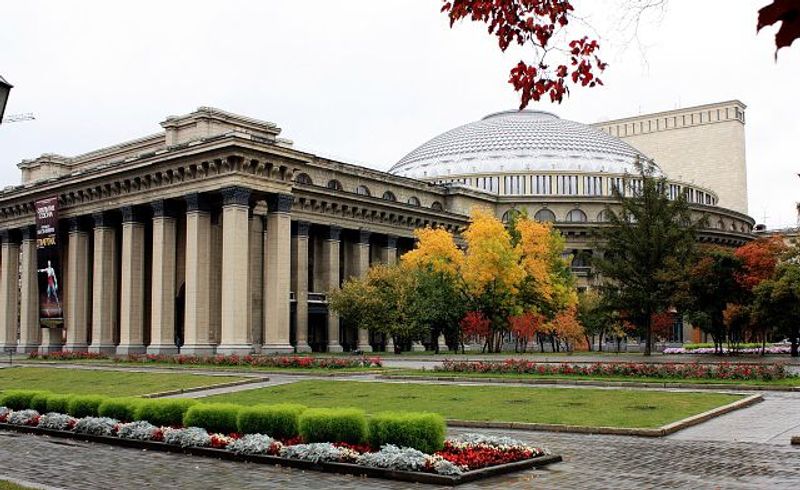
Russia’s third-largest city often gets overlooked in conversations about extreme cold, overshadowed by the more dramatic records of Yakutsk or Verkhoyansk. But Novosibirsk, with a population of nearly 1.7 million, endures winters that would shut down most major world cities in a matter of days.
Temperatures regularly fall below -20°C (-4°F), and the city sits deep in western Siberia where continental air masses bring relentless cold from November through March.
What makes Novosibirsk remarkable is not just the cold but the sheer scale of normal life happening inside it. The city has a world-class opera and ballet theater that is larger than Moscow’s Bolshoi, a major research district called Akademgorodok filled with universities and scientific institutes, and a thriving restaurant and cafe culture.
People dress in serious winter gear and get on with their days without much fuss.
Akademgorodok, built in the Soviet era to concentrate scientific talent in Siberia, remains one of Russia’s most important research centers and houses dozens of institutes covering everything from nuclear physics to economics. The contrast between cutting-edge science and bone-cracking cold is uniquely Novosibirsk.
Locals tend to be pragmatic and dry-humored about their winters, often pointing out that at least the cold keeps the mosquitoes away for most of the year.
Share this story