Deep in rainforests, on remote islands, and tucked into rugged mountain ranges, some communities have lived almost entirely cut off from the modern world. These groups have kept their languages, traditions, and ways of life intact for thousands of years, often without electricity, roads, or outside contact.
Their stories are fascinating, mysterious, and sometimes a little humbling. They remind us that there is more than one way to live on this planet.
Sentinelese – North Sentinel Island, India
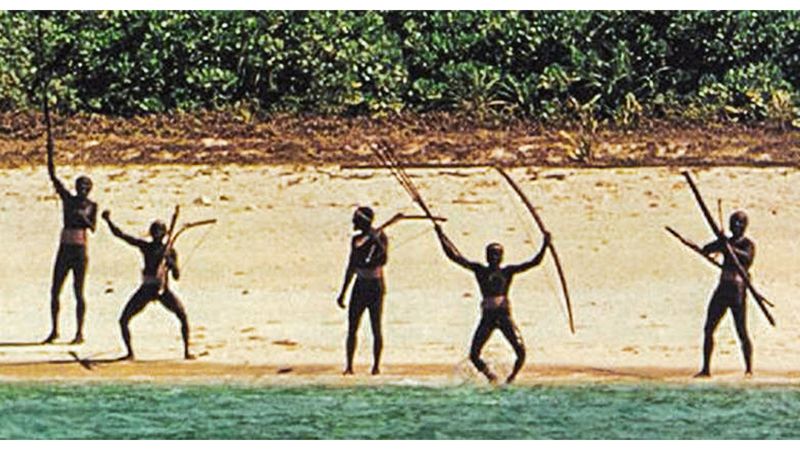
No people on Earth guard their privacy quite like the Sentinelese. Living on North Sentinel Island in the Bay of Bengal, they have resisted every attempt at contact for thousands of years, sometimes dramatically, by firing arrows at approaching boats and helicopters.
Researchers estimate the group has lived there for up to 60,000 years.
India’s government has made it illegal to go within three miles of the island. This law exists not just to respect their wishes, but also to protect them.
Because the Sentinelese have had almost no contact with the outside world, they have little immunity to common diseases like the flu, which could be deadly for them.
Their population is unknown, with estimates ranging from a few dozen to several hundred people. Nobody knows exactly what language they speak, what their social structure looks like, or what they call themselves.
What is known is that they are skilled hunters and fishermen who have no interest in outsiders. Their fierce independence has made them one of the most talked-about Indigenous groups in the world.
They are proof that choosing your own path, even if that path says “stay away,” is a powerful act.
Mashco Piro – Peru
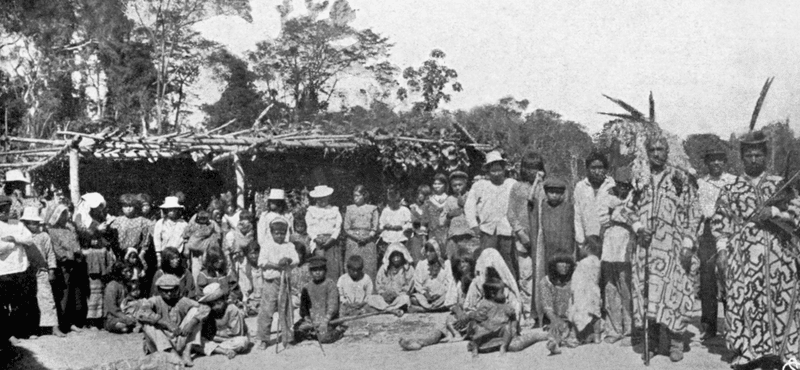
Somewhere deep in Peru’s Madre de Dios region, one of the largest uncontacted Indigenous groups on the planet goes about its daily life. The Mashco Piro are believed to number in the hundreds, possibly more than 750 people, making them one of the biggest isolated communities researchers know about.
That fact alone is remarkable.
They occasionally appear along the banks of the Manu River, sometimes signaling to nearby communities or even requesting food. These brief appearances are closely watched by Indigenous rights organizations and the Peruvian government, both of which discourage any attempt to engage with them.
The concern is real: outside diseases could spread through their population with devastating speed.
The Mashco Piro are believed to have withdrawn from contact after brutal experiences during the rubber boom of the 19th and early 20th centuries, when Indigenous peoples across the Amazon were enslaved and killed. Their choice to remain isolated is likely a direct response to that trauma.
Understanding that history adds a layer of depth to every story about them. They are not simply hiding.
They are protecting themselves, and they have very good reasons for doing so. Their story is one of survival and quiet, determined resistance.
Kawahiva – Brazil
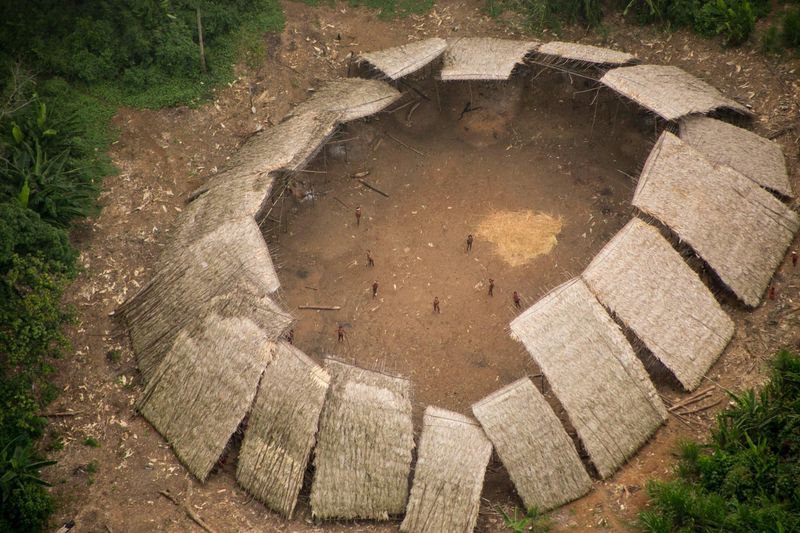
Tracking the Kawahiva is like following a ghost through the jungle. This nomadic group moves constantly through remote parts of the Brazilian Amazon, leaving behind only temporary shelters made from palm leaves and traces of fires.
They carry everything they need, traveling light and staying ahead of anyone who might follow them.
Footage captured by Brazil’s Indigenous affairs agency FUNAI in 2011 gave the world a rare glimpse of the Kawahiva: a small group of men, women, and children walking quickly through the forest. The video, released publicly years later, was striking.
It showed a community that was clearly aware of outsiders and equally clearly wanted nothing to do with them.
Illegal logging is the biggest threat to the Kawahiva today. As trees are cut down around their territory, their space shrinks and their ability to remain hidden becomes harder.
Activists and Indigenous rights groups have pushed Brazil to better protect their land, with some success. A protected territory has been partially established, though enforcement remains a challenge.
The Kawahiva remind us that the destruction of a forest is not just an environmental issue. It is a human rights issue that affects real people living real lives right now, deep in the trees.
Awá – Brazil
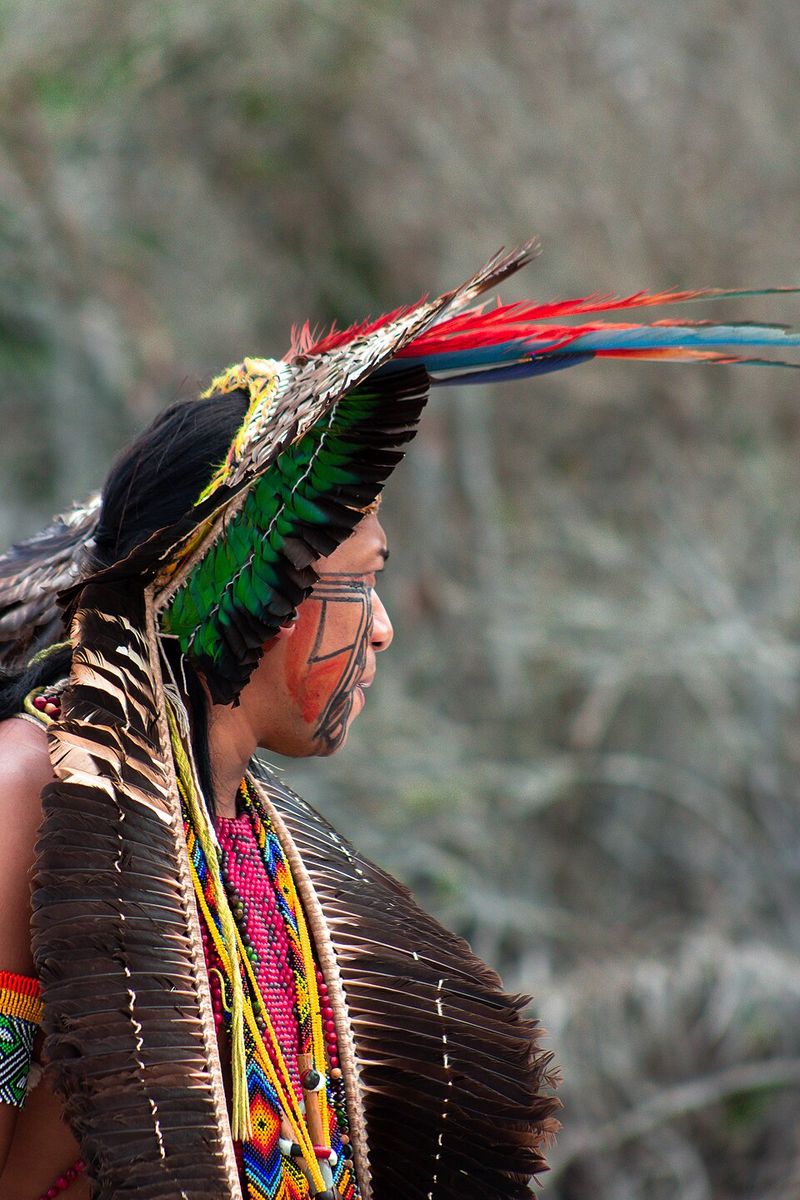
Survival International once called the Awá the most endangered tribe on Earth, and that title was not handed out lightly. Living in the Maranhao state of Brazil, the Awá have faced relentless pressure from illegal loggers, ranchers, and settlers who have pushed into their forest home.
Some communities have made contact with the outside world, while others remain voluntarily isolated, determined to live on their own terms.
The Awá who have had contact with Brazilian authorities describe a deep connection to the forest. They are expert hunters and foragers, and many families raise orphaned animals as companions, from monkeys to deer.
That relationship with wildlife reflects how thoroughly their culture is woven into the natural world around them.
In 2014, after years of campaigning by Indigenous rights groups, the Brazilian government launched a major operation to remove illegal settlers from Awá territory. It was one of the largest such operations in the country’s history and marked a turning point in the fight to protect their land.
But the pressure has not fully stopped. The Awá continue to need legal protection and public awareness to survive.
Their story is a reminder that “endangered” is not a word that only applies to animals.
Korubo – Brazil
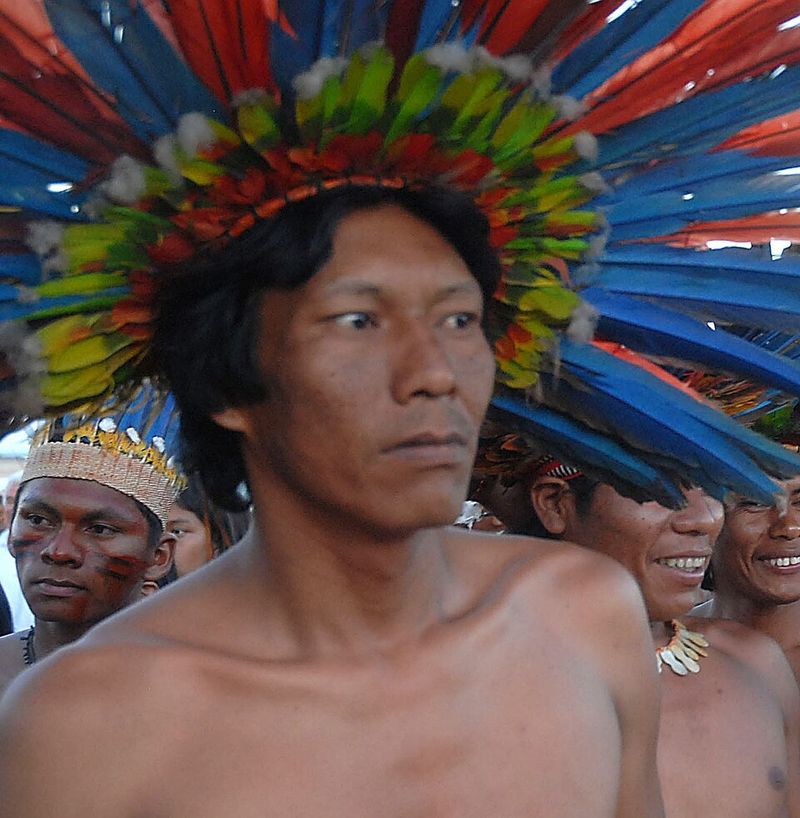
The nickname says a lot: the Korubo are sometimes called the “club people” because of the heavy wooden clubs they have historically carried and used in confrontations with outsiders. Living in Brazil’s Javari Valley, one of the most protected Indigenous territories on Earth, the Korubo have had a complicated history with outside contact that ranges from violent clashes to cautious interaction.
Some Korubo groups made contact with FUNAI agents in the 1990s and have since maintained limited communication with Brazilian authorities. Others remain completely isolated, continuing a life of hunting, fishing, and gathering in the deep forest.
The distinction between contacted and uncontacted groups within the same people is a reminder that Indigenous communities are not monolithic. They make individual and collective choices.
The Javari Valley, where the Korubo live, is home to more isolated Indigenous groups than anywhere else on Earth. Protecting it is considered a top priority by Brazilian law and by international human rights organizations.
The Korubo’s story includes real tragedy, including violent deaths on both sides during early contact attempts, but it also includes moments of extraordinary courage and curiosity. Their ongoing presence in the Javari Valley is a testament to how deeply rooted a people can be in their land.
Massaco – Brazil
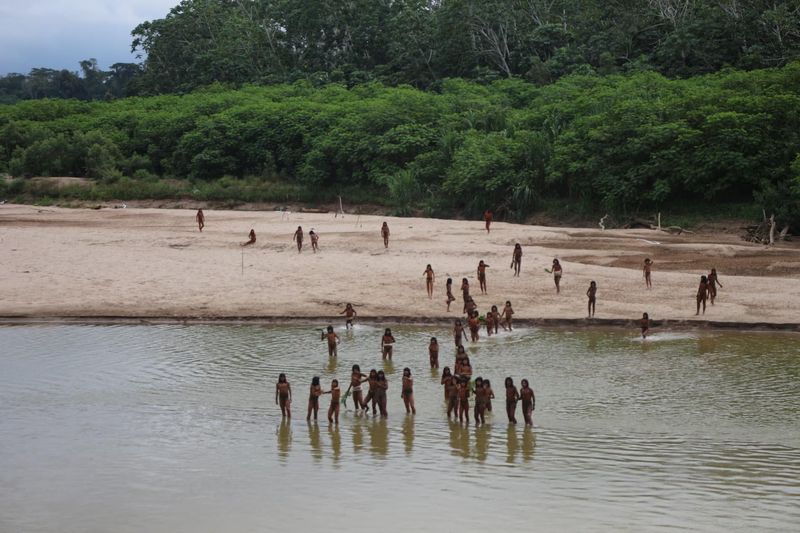
Most of what the world knows about the Massaco comes from above. Aerial surveys conducted by FUNAI have captured images of their large communal longhouses and cleared garden plots carved into the Amazon forest near the Massaco River in Rondonia state.
No sustained ground contact has ever been made with this group, and Brazil’s policy is to keep it that way.
What the aerial photographs reveal is surprisingly detailed. The Massaco appear to maintain organized agricultural areas alongside their hunting and gathering lifestyle.
The size of their settlements suggests a population that is not tiny. Some researchers estimate their numbers could be in the hundreds, though precise figures are impossible to confirm without contact.
The Massaco are considered one of the better-documented uncontacted groups precisely because aerial observation has been possible. Their territory is legally protected under Brazilian law, but illegal logging and agricultural expansion remain constant threats to the surrounding region.
The story of the Massaco is also a story about how technology, when used carefully, can help protect people without disturbing them. A camera on a plane can gather information that protects a community’s future without anyone having to set foot in the forest uninvited.
That is a genuinely thoughtful approach to a very complicated situation.
Piripkura – Brazil
Two people. For years, the entire known surviving population of the Piripkura in voluntary isolation consisted of just two individuals: a man named Baita and his nephew Tamandua.
FUNAI agents made brief, peaceful contact with them in 2018, confirming they were alive and continuing their nomadic life in Mato Grosso state. The encounter was quiet, careful, and deeply moving.
The Piripkura as a larger group once had more members, but violence, disease, and land invasion have taken a devastating toll. What remains is a fragile thread of survival.
Their territory was granted temporary legal protection after the 2018 contact, and advocates have pushed for that protection to be made permanent. Every renewal of that protection is a small but significant victory.
Baita and Tamandua’s continued existence in the forest, on their own terms, is one of the most striking stories in the entire conversation about isolated peoples. They carry with them an entire language, a set of traditions, and a way of knowing the forest that exists nowhere else on Earth.
Losing them would mean losing something irreplaceable. Their story is not just about two people surviving.
It is about what it means to hold on to who you are when the world around you is disappearing.
Flecheiros – Brazil
“People of the Arrow” is not a nickname chosen randomly. The Flecheiros, who live within Brazil’s Javari Valley Indigenous Territory, are known for their remarkable skill with long bows and arrows, which they have used to warn off outsiders who venture too close.
Their message has always been clear: you are not welcome here, and we mean it.
Very little is known about the Flecheiros beyond what can be observed from a safe distance. They are believed to be made up of multiple smaller communities rather than one unified group.
Their territory overlaps with that of other isolated peoples in the Javari Valley, making the region one of the most complex and carefully managed Indigenous territories anywhere in the world.
The Javari Valley itself is enormous, roughly the size of Austria, and serves as a kind of refuge for dozens of isolated groups. Brazil’s FUNAI maintains monitoring outposts around its edges to prevent unauthorized entry.
For the Flecheiros, those outposts are the closest thing to a neighbor they have from the outside world. Their story is one of active, intentional separation, and the arrows are not just weapons.
They are a boundary line, a statement, and a form of communication all at once. Respect it, and everyone stays safe.
Matsés Isolated Groups – Peru and Brazil
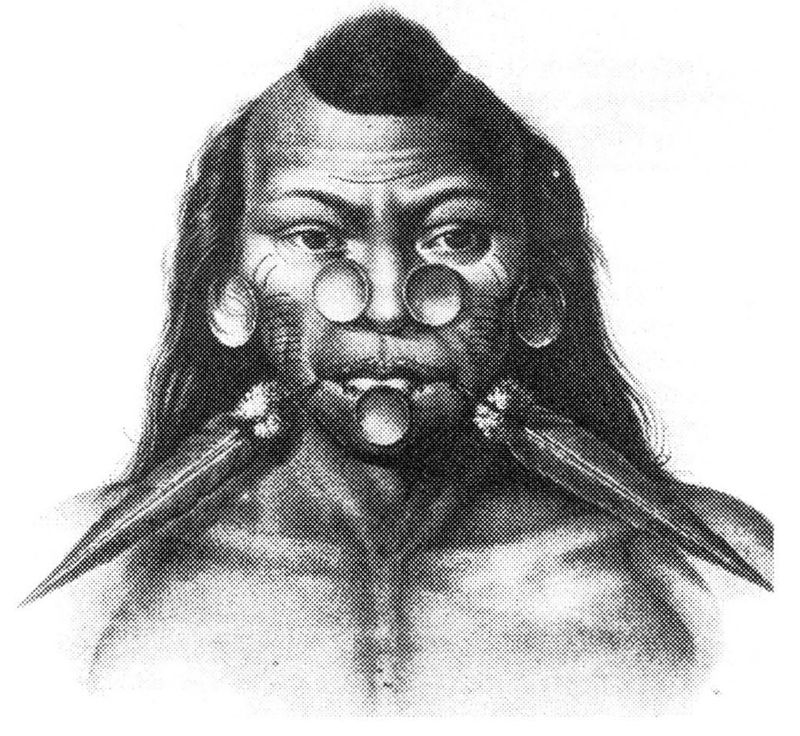
The Matsés are a fascinating case study in the spectrum of Indigenous contact. As a whole, the Matsés people have had significant interaction with the outside world since the 1960s, including contact with missionaries and later with anthropologists and health workers.
But within their broader territory, smaller splinter groups have chosen a different path entirely, avoiding all sustained interaction with modern society.
These isolated Matsés subgroups live in the border region between Peru and Brazil, a stretch of Amazon jungle that is both remote and increasingly threatened by illegal fishing, logging, and drug trafficking. The challenges facing them are not abstract.
Real dangers move through those forests, and the isolated groups must navigate them without the support structures that contacted communities have access to.
What makes the Matsés situation particularly interesting is how it illustrates that “contact” is not a single event but a long, ongoing process with no guaranteed outcome. Some Matsés communities have thrived after engaging with the outside world.
Others have suffered from disease, land loss, and cultural disruption. The isolated groups may be watching those outcomes from the forest and drawing their own conclusions.
Their caution is not ignorance. It might actually be wisdom earned from observing their relatives up close.
Hongana Manyawa (Togutil) – Halmahera, Indonesia
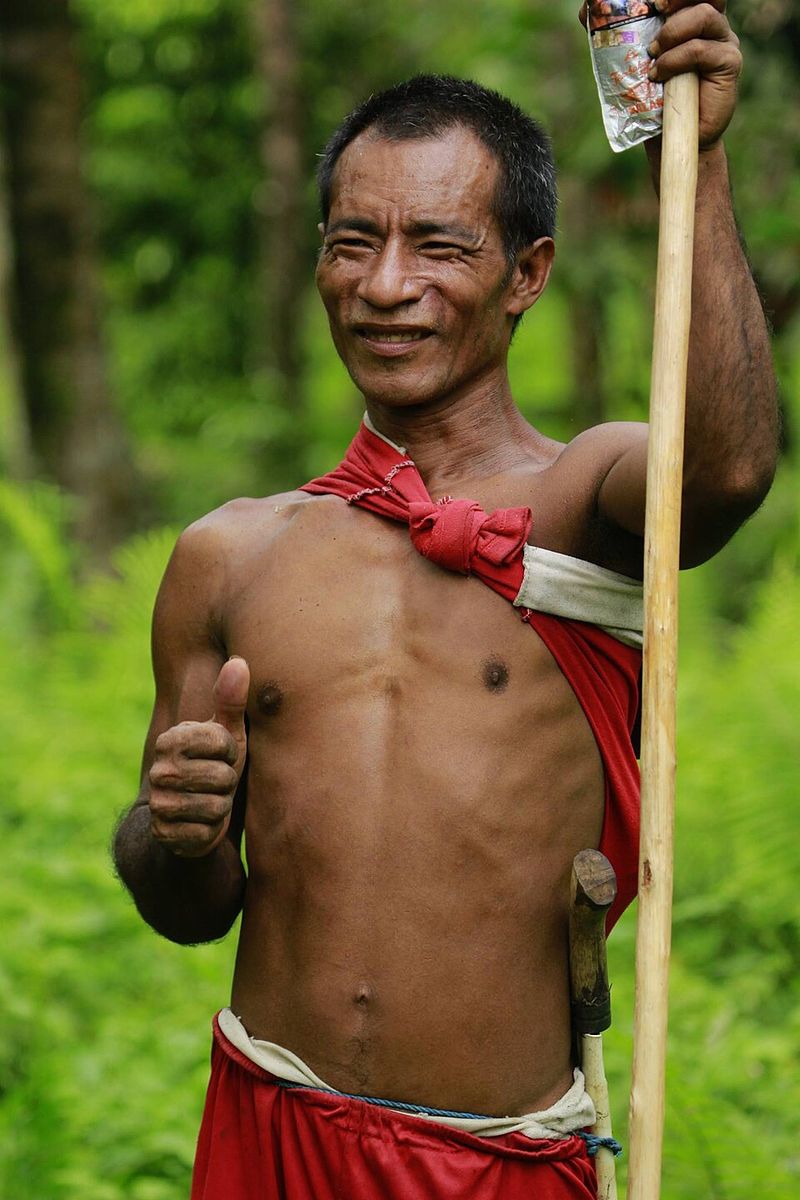
On the island of Halmahera in Indonesia’s North Maluku province, the Hongana Manyawa, whose name means “People of the Forest,” have lived deep in the jungle for generations. Some communities have made contact with Indonesian authorities and nearby settlements, while others continue to live in near-complete isolation, moving through the forest and relying on its resources for everything they need.
The Hongana Manyawa face a threat that is very 21st century: nickel mining. Halmahera sits on enormous deposits of the metal, which is in high demand for electric vehicle batteries.
Mining operations have expanded rapidly across the island, cutting into forest that the Hongana Manyawa have called home for centuries. The irony is sharp.
The minerals that power “green” technology are being extracted from land that belongs to one of the world’s most ecologically connected peoples.
Advocacy groups have raised alarms about the speed of mining expansion and its impact on both the forest ecosystem and the people who depend on it. Some Hongana Manyawa communities have spoken out about the destruction they are witnessing.
Others, still isolated, have no voice in those conversations at all. Their situation is one of the clearest examples of how global economic forces reach even the most remote corners of the planet.
Ruc – Vietnam
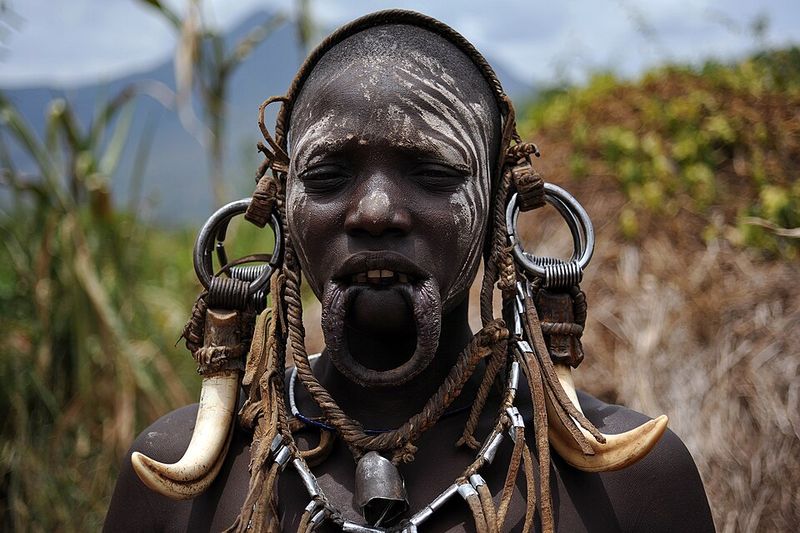
Imagine growing up in a cave, not as a tourist attraction, but as your actual home. The Ruc people of central Vietnam’s Quang Binh province did exactly that for generations, living in the limestone caves of the Phong Nha-Ke Bang region and surviving almost entirely off the forest.
Their isolation was so complete that Vietnamese authorities did not know they existed until 1959, when soldiers stumbled upon them by accident.
After that first contact, the Vietnamese government attempted to relocate the Ruc to settled villages, encouraging them to farm and integrate into broader society. The transition was difficult.
Many Ruc struggled to adapt to sedentary life and returned to the forest whenever possible. Their attachment to the caves and the jungle was not just cultural.
It was deeply practical. They knew how to survive there in ways that village life did not teach.
Today, the Ruc number only a few hundred people, and their community sits at a crossroads between two very different worlds. Their cave-dwelling past has been documented by researchers and journalists, and their story has sparked interest in Vietnam’s complex tapestry of ethnic minority groups.
While much has changed for the Ruc over the past six decades, their history is a vivid reminder that human adaptability takes many surprising forms.
Zo’é – Brazil
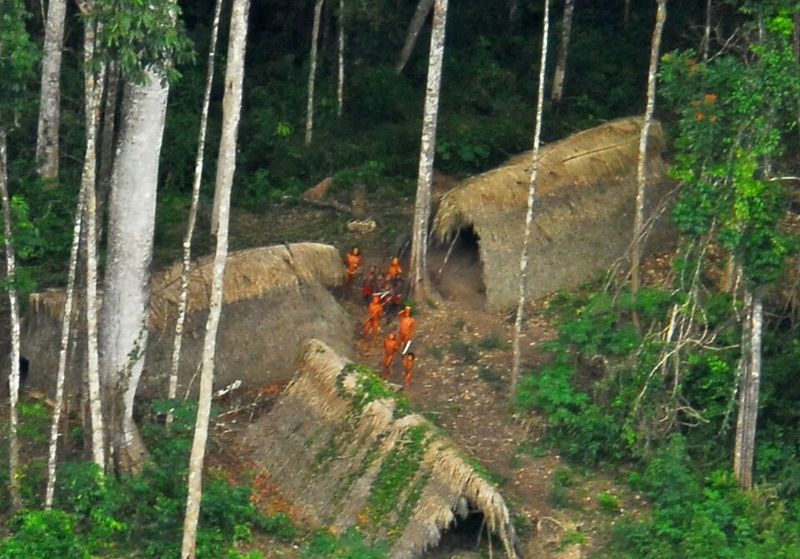
One of the most visually distinctive Indigenous groups in the Amazon, the Zo’e are known for the large wooden plugs, called poturu, that they wear through their lower lips. Both men and women wear them, and the plugs grow larger as a person ages.
It is one of the first things outsiders notice, and it reflects just how different their cultural values and aesthetics are from anything in the modern world.
The Zo’e remained largely unknown until the late 1980s, when missionaries made contact with them. That contact had serious consequences.
Within a short period, several Zo’e died from respiratory illnesses they had no immunity to. The Brazilian government stepped in, expelled the missionaries, and established strict regulations around all future contact.
It was a painful lesson learned at a terrible cost.
Today, the Zo’e number around 300 people and live in the Para state of Brazil. Interactions with outsiders are carefully controlled, and any researchers or health workers who visit must follow strict protocols.
Their rainforest territory is legally protected, and their community appears to be stable and growing. The Zo’e are a success story in the careful management of contact, though “success” feels like an incomplete word when measured against what was lost in those early years.
Carabayo – Colombia
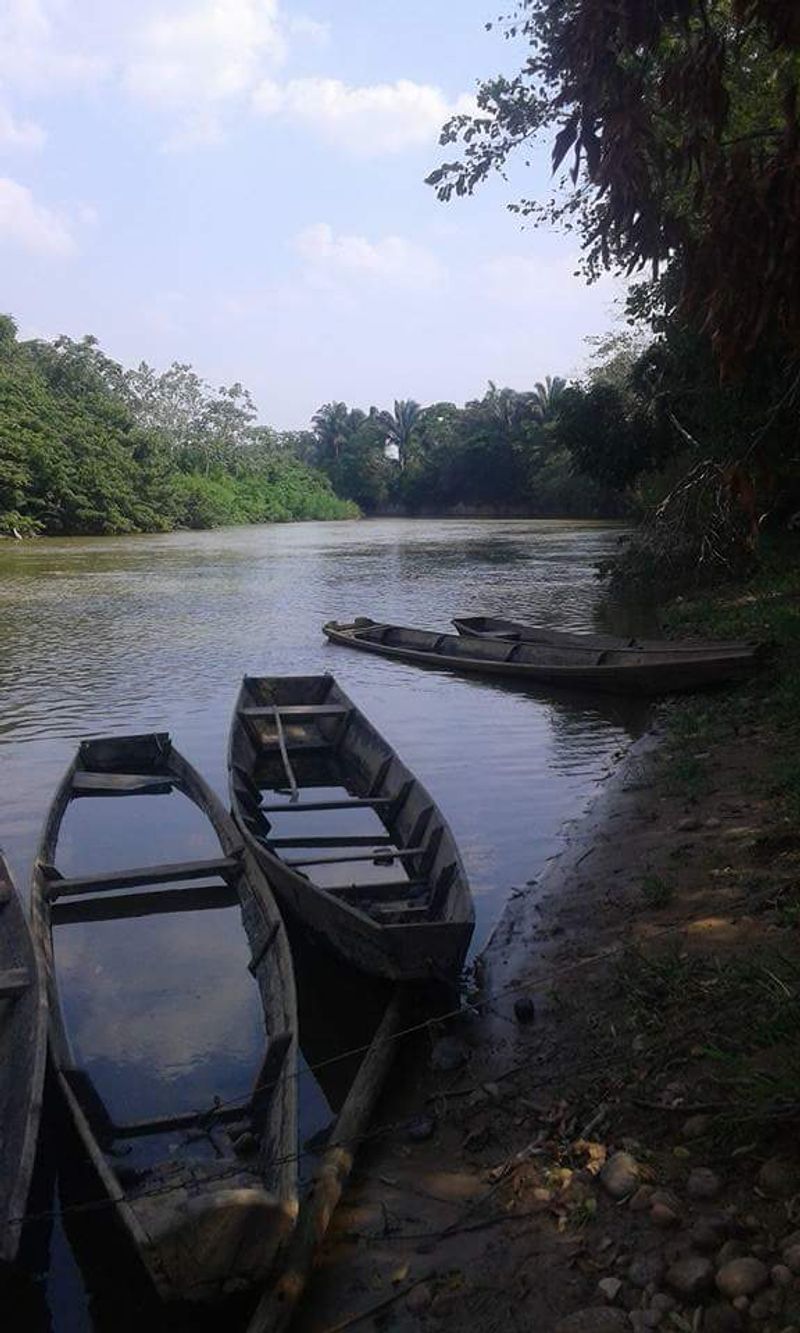
Colombia’s Amazon holds one of the continent’s most carefully guarded secrets: the Carabayo. Living within the Amazonia National Park near the Rio Puro, the Carabayo are known to Colombian authorities primarily through aerial sightings and traces left behind in the forest.
No official contact has been made, and Colombian law actively prohibits it.
Historical records suggest that outsiders have tried to contact the Carabayo before, with disastrous results. Reports from the 19th and early 20th centuries describe violent encounters, some of which were triggered by the brutal rubber trade that terrorized Indigenous communities across the Amazon.
The Carabayo’s extreme wariness of outsiders almost certainly has roots in that history of exploitation and violence.
Colombia has taken a firm legal stance on protecting the Carabayo’s right to voluntary isolation. The Inter-American Commission on Human Rights has also weighed in, calling on Colombia to maintain and strengthen those protections.
It is a rare case where international legal bodies are actively involved in shielding a community that does not even know those bodies exist. The Carabayo live completely outside the systems that are working to protect them, which is both poignant and oddly hopeful.
Someone out there is paying attention, even if the Carabayo have no idea.
Uncontacted Communities of the Javari Valley – Brazil
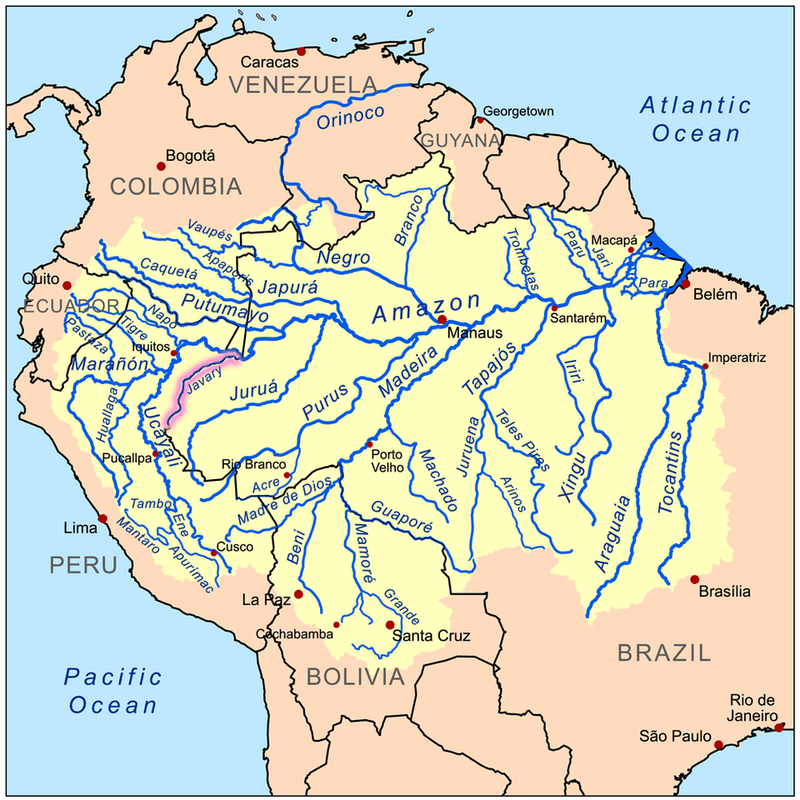
If there is one place on Earth that could be called the last great refuge of isolated humanity, it might be Brazil’s Javari Valley. Roughly the size of Austria and tucked into the western corner of the Brazilian Amazon near the borders of Peru and Colombia, the Javari Valley is home to at least 16 confirmed isolated Indigenous groups, with possibly more still unknown to the outside world.
Brazil’s FUNAI maintains a network of monitoring outposts around the valley’s edges, staffed by agents whose job is to detect and deter illegal intrusions. It is dangerous, underfunded work.
In 2022, British journalist Dom Phillips and Indigenous expert Bruno Pereira were killed in the Javari Valley while researching threats to isolated communities. Their deaths shocked the world and drew urgent attention to how vulnerable these groups and their defenders truly are.
The sheer concentration of isolated peoples in the Javari Valley makes it unlike anywhere else on Earth. Each group within it represents a completely distinct language, culture, and body of ecological knowledge.
Losing any one of them would be like watching a library burn. The Brazilian government’s commitment to protecting the valley has wavered at times under political pressure, but international advocacy continues to push for stronger enforcement.
The Javari Valley is not just a place. It is an argument for what the world could choose to protect.
Share this story