 Unearth The Voyage
Europe is home to some of the most breathtaking churches ever built — and each one tells a story that goes far beyond stone and glass. From towering Gothic spires to golden Byzantine domes, these buildings have been inspiring wonder for centuries.
Whether you’re a history buff, an architecture fan, or just someone who appreciates truly stunning places, this list will make you want to book a flight immediately. Get ready, because these 15 churches are seriously hard to believe.
Sagrada Família – Barcelona, Spain
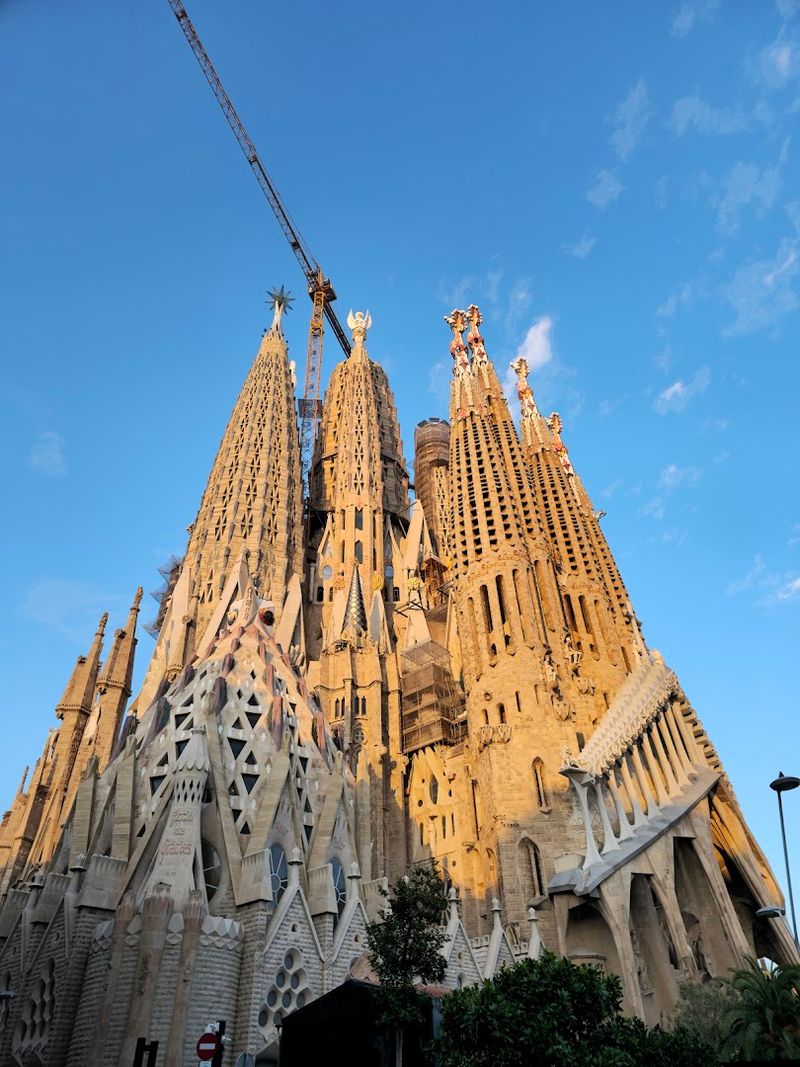
No building on Earth quite prepares you for the moment Sagrada Família comes into view. Designed by the eccentric genius Antoni Gaudí, this church looks like nature itself decided to build a cathedral — all curving stone, dripping spires, and organic shapes that seem alive.
Construction kicked off in 1882, and remarkably, it’s still going strong today, with completion expected around 2026.
The exterior alone could keep you staring for hours. Towers rise like giant sandcastles carved by the sea, covered in symbolic sculptures that tell biblical stories from top to bottom.
Every surface has meaning — nothing is decorative just for the sake of it.
Step inside and the magic only deepens. Columns branch upward like a forest of stone trees, and sunlight pours through stained glass windows in rivers of red, orange, and gold.
The whole interior glows like the inside of a kaleidoscope. Gaudí described the building as his greatest work, and honestly, it’s hard to argue.
Sagrada Família doesn’t just push the limits of architecture — it completely rewrites them. Visiting feels less like touring a church and more like walking through a dream someone forgot to wake up from.
St. Peter’s Basilica – Vatican City
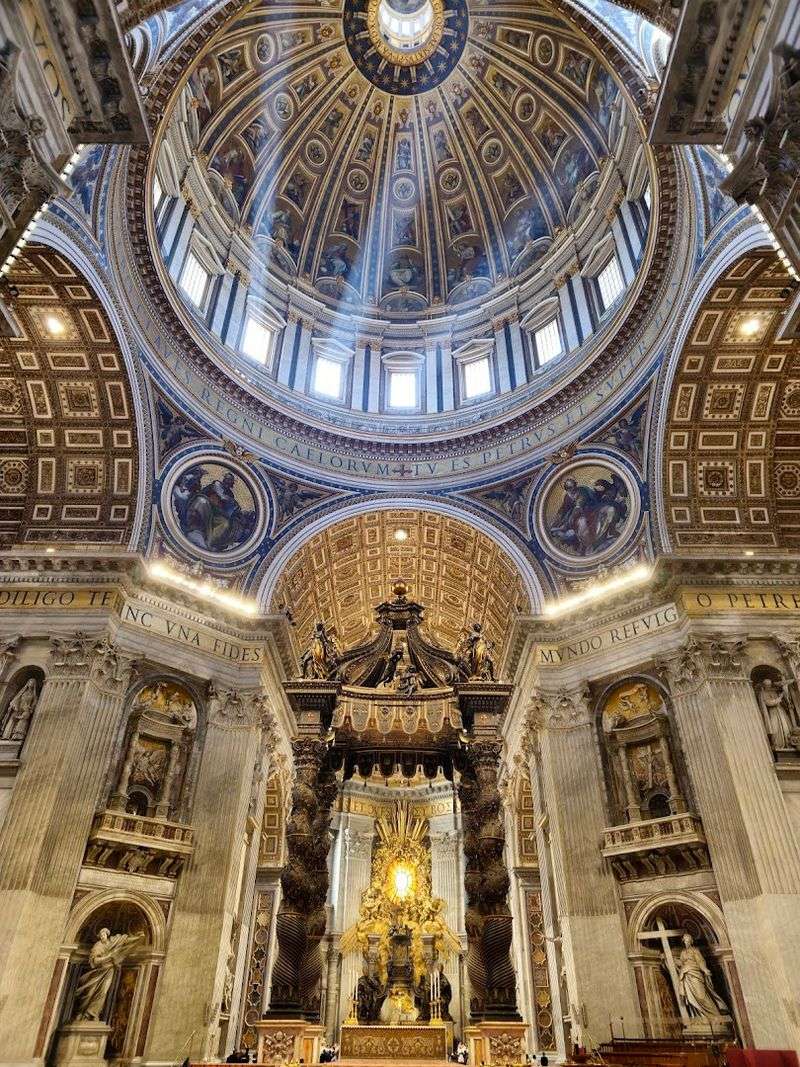
Standing in St. Peter’s Square and craning your neck upward at that impossibly large dome is a humbling experience most visitors never forget. Built over the site where the Apostle Peter is said to be buried, this basilica is the spiritual center of the Catholic world — and its sheer scale makes sure you feel every ounce of that weight the moment you walk in.
Michelangelo designed the dome, Bernini created the stunning colonnade outside, and the interior is packed with masterpieces at every turn. The Pietà — Michelangelo’s marble sculpture of Mary holding Jesus — sits quietly behind glass, somehow both heartbreaking and beautiful at the same time.
Fun fact: the basilica is so large that painted marks on the floor show where other famous churches would fit inside it.
Climbing to the top of the dome rewards visitors with a panoramic view of Rome that stretches for miles. Down below, the piazza fills daily with pilgrims, tourists, and curious travelers from every corner of the globe.
Whether you’re religious or not, St. Peter’s Basilica delivers an experience that’s genuinely difficult to put into words. It’s enormous, historic, and utterly unforgettable.
Notre-Dame Cathedral – Paris, France
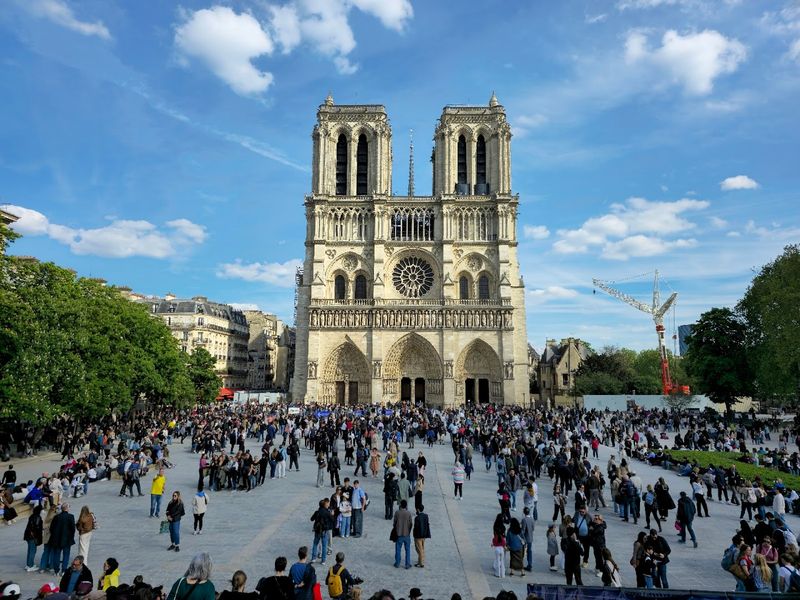
Paris has no shortage of gorgeous landmarks, but Notre-Dame hits differently. There’s something deeply emotional about standing in front of those twin towers, knowing this cathedral has watched over the city since the 12th century — through revolutions, wars, and the devastating fire of 2019 that shocked the entire world.
Restoration crews have been working tirelessly ever since, and the cathedral is once again welcoming visitors.
The Gothic architecture here is textbook perfect — flying buttresses, pointed arches, gargoyles peering down from the rooftops like stone gossips. Inside, three enormous rose windows filter colored light across ancient stone floors in patterns that shift throughout the day.
The oldest parts of the building date back to 1163, meaning generations upon generations have stood in exactly the same spot you’re standing.
Victor Hugo’s novel “The Hunchback of Notre-Dame” made this cathedral a literary legend long before it became a global tourist destination. That cultural layer adds something extra to every visit — you’re not just seeing a church, you’re stepping into a story.
Notre-Dame is proof that great buildings carry the weight of human history in their walls, and that sometimes, the most powerful things are the ones worth fighting to save.
Duomo di Milano – Milan, Italy
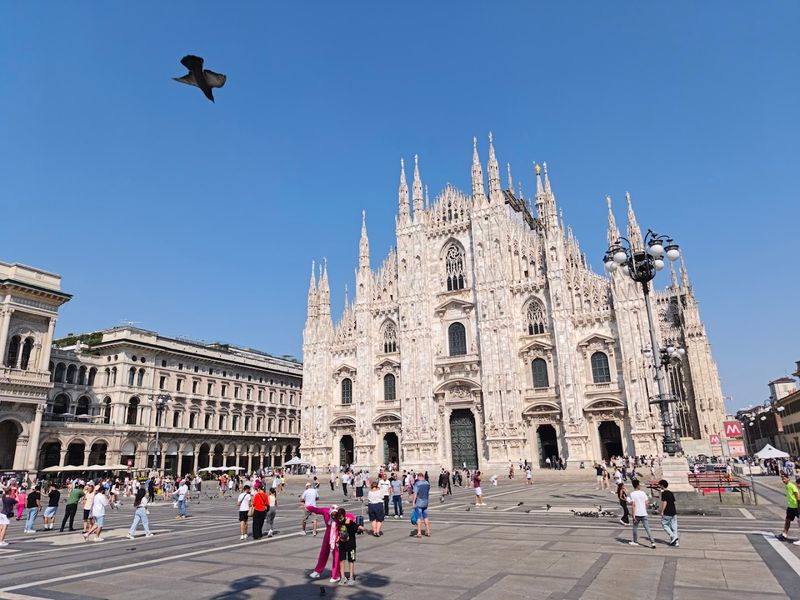
Six hundred years of construction — and it shows in the best possible way. Milan’s Duomo is a Gothic overachiever, covered in roughly 3,400 statues, 135 marble spires, and more decorative detail than your eyes can process in a single visit.
It’s the kind of building that makes you wonder how humans with no power tools managed to pull it off.
The real highlight? Walking on the rooftop.
You can stroll right among the spires, getting nose-to-nose with centuries-old carvings while the city of Milan sprawls beneath you. On a clear day, the Alps are visible in the distance — a backdrop so dramatic it feels staged.
Most people stand up there with their mouths slightly open, which is completely understandable.
Inside, the cathedral shifts in tone entirely. Towering columns line a nave that feels almost impossibly tall, and the stained glass windows are among the largest in the world, casting the whole space in soft, shifting color.
A small but fascinating detail: the floor is made of white marble and black stone in intricate geometric patterns. Every corner of this cathedral rewards attention.
Milan might be famous for fashion, but the Duomo is the city’s most timeless outfit.
Hallgrímskirkja – Reykjavík, Iceland
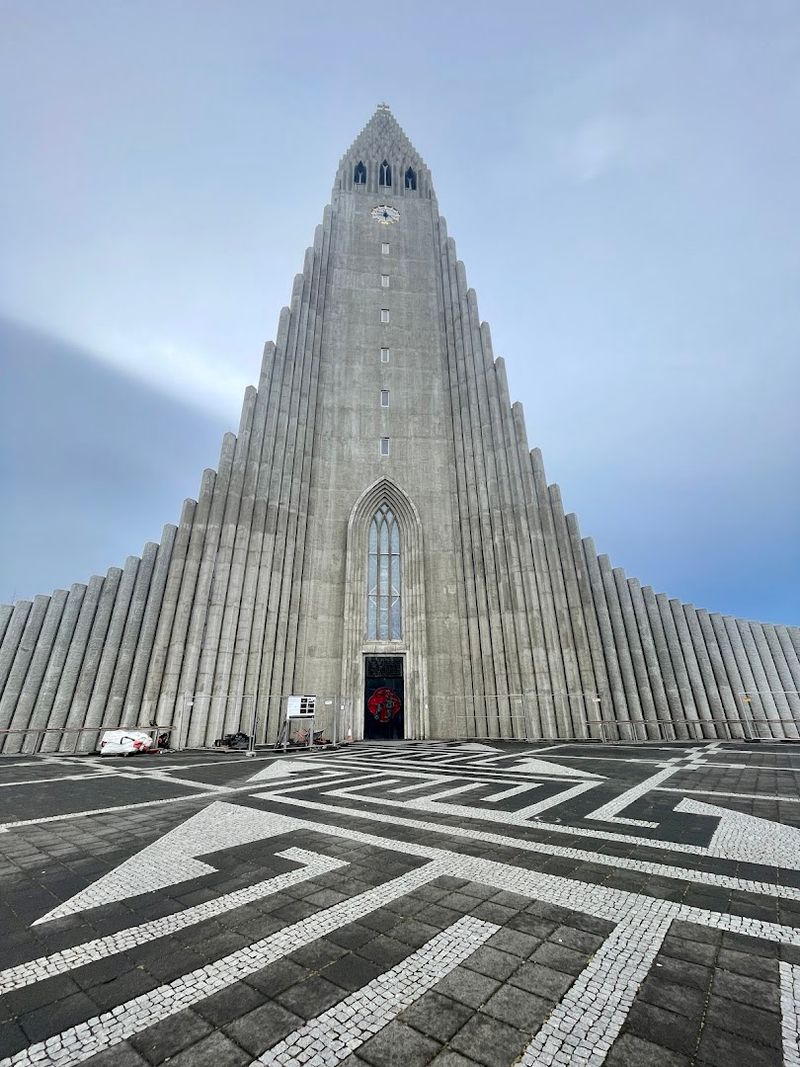
Iceland does nothing by halves, and its most famous church is proof. Hallgrímskirkja rises above Reykjavík like a rocket ship designed by a Viking — all sharp angles, stepped concrete columns, and a tower that pierces the sky at 74 meters tall.
It was inspired by the basalt lava columns found all over Iceland’s volcanic landscape, which explains why it looks unlike any other church you’ve ever seen.
Construction took 41 years to complete, finally finishing in 1986. The result is a building that feels both ancient and futuristic at the same time — a neat trick that very few architects manage to pull off.
Standing in front of it on a grey Icelandic afternoon, with low clouds rolling in from the Atlantic, is genuinely cinematic.
The interior is the opposite of flashy. Clean white walls, a simple nave, and a massive pipe organ with 5,275 pipes that fills the space with sound during concerts.
The tower elevator takes visitors up to a viewing platform with panoramic views over Reykjavík’s colorful rooftops and out toward the surrounding mountains and sea. Hallgrímskirkja is a church that feels perfectly at home in a country where volcanoes, geysers, and the Northern Lights are just part of everyday life.
Cologne Cathedral – Cologne, Germany
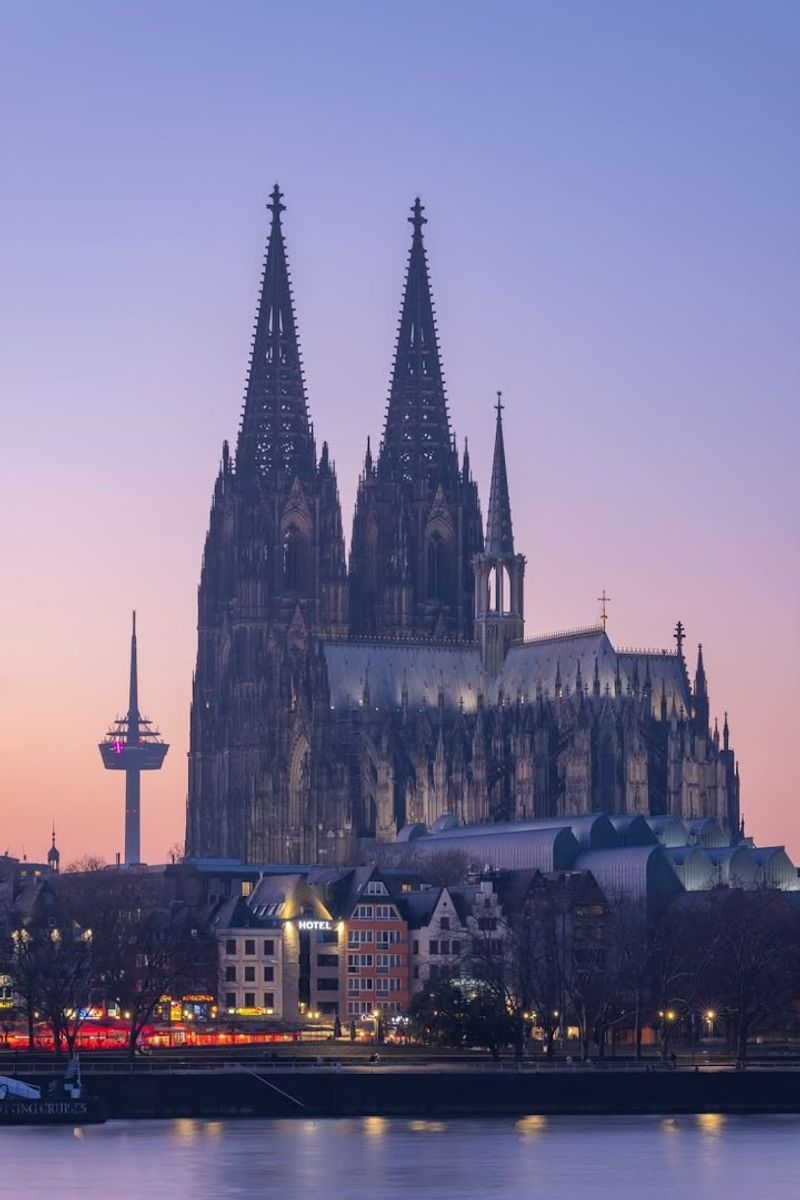
Cologne Cathedral has been staring down at the Rhine River for over 600 years, and it still manages to stop people in their tracks. Those twin spires — each standing 157 meters tall — were the tallest structures in the world when they were completed in 1880.
For a brief, glorious period, this cathedral was the biggest building on the planet. That’s a flex that still holds up.
Construction began in 1248, but funding ran dry and the project stalled for centuries. A medieval crane sat unfinished on the tower for so long that it became part of the city’s coat of arms.
When building finally resumed in the 19th century, workers used the original medieval blueprints — which had somehow survived. That kind of dedication to a vision is almost unbelievable.
Inside, the cathedral is all soaring arches and filtered light, with a treasury full of extraordinary religious artifacts. The Shrine of the Three Kings — said to contain the remains of the Biblical Magi — is one of the most important relics in medieval Christianity.
Germany’s most visited landmark draws around six million visitors every year, and yet somehow, standing beneath those spires still feels like a private moment between you and something much bigger than yourself.
St. Mark’s Basilica – Venice, Italy
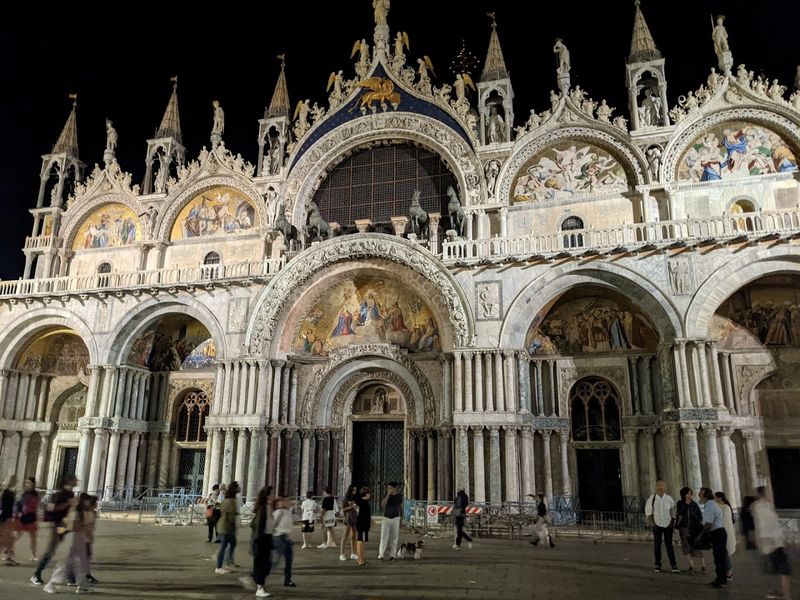
Gold. Everywhere, gold.
St. Mark’s Basilica in Venice is so richly decorated that stepping inside feels like entering a treasure chest that someone forgot to close. The ceiling mosaics alone cover over 8,000 square meters, shimmering with scenes from the Bible in a palette that ranges from deep crimson to blinding gold leaf.
It’s sensory overload in the most spectacular way possible.
The basilica was originally built in 832 AD to house the remains of St. Mark the Evangelist, which were smuggled out of Alexandria, Egypt, hidden — according to legend — under layers of pork to discourage Muslim guards from searching the cargo. History has never been boring.
The current building dates mostly from the 11th century and blends Byzantine, Gothic, and Romanesque styles into something entirely its own.
Outside, five arched portals face the famous Piazza San Marco, each covered in intricate carvings and mosaics that have been restored and added to over centuries. The bronze horses above the main entrance are actually replicas — the originals, stolen from Constantinople in 1204, are kept safely inside.
Venice itself is a marvel, but St. Mark’s Basilica is the jewel at its center, glittering unapologetically in the Adriatic light.
Mont Saint-Michel Abbey – France
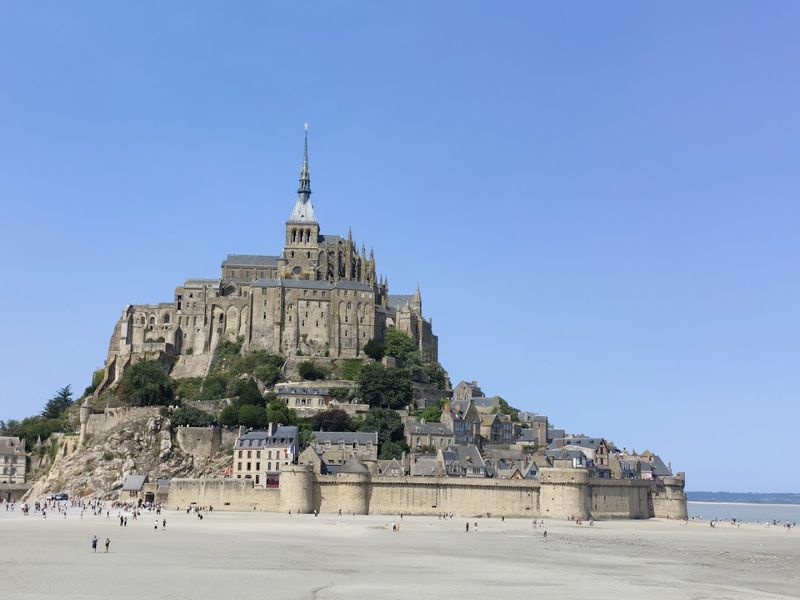
Imagine a medieval abbey sitting on top of a rocky island, surrounded by one of the world’s most extreme tidal ranges — where the sea retreats for miles and then rushes back in faster than a person can run. That’s Mont Saint-Michel, and yes, it’s exactly as dramatic as it sounds.
The whole thing looks like it was pulled directly from a fantasy novel, which is probably why millions of people make the pilgrimage to Normandy just to see it.
The abbey itself dates back to the 8th century, though most of what visitors see today was built between the 11th and 16th centuries. Getting there involves crossing a causeway, then navigating narrow, winding streets packed with shops, restaurants, and fellow wide-eyed tourists.
The climb to the abbey at the top is steep, but the views from up there — across the bay toward the horizon — make every step worth it.
At high tide, the island is completely surrounded by water, cutting it off from the mainland in a way that feels genuinely medieval. At low tide, people can walk across the sandy flats with a guide, experiencing the landscape the way pilgrims did centuries ago.
Mont Saint-Michel is one of those places that photographs beautifully but hits entirely differently in person.
St. Stephen’s Cathedral – Vienna, Austria
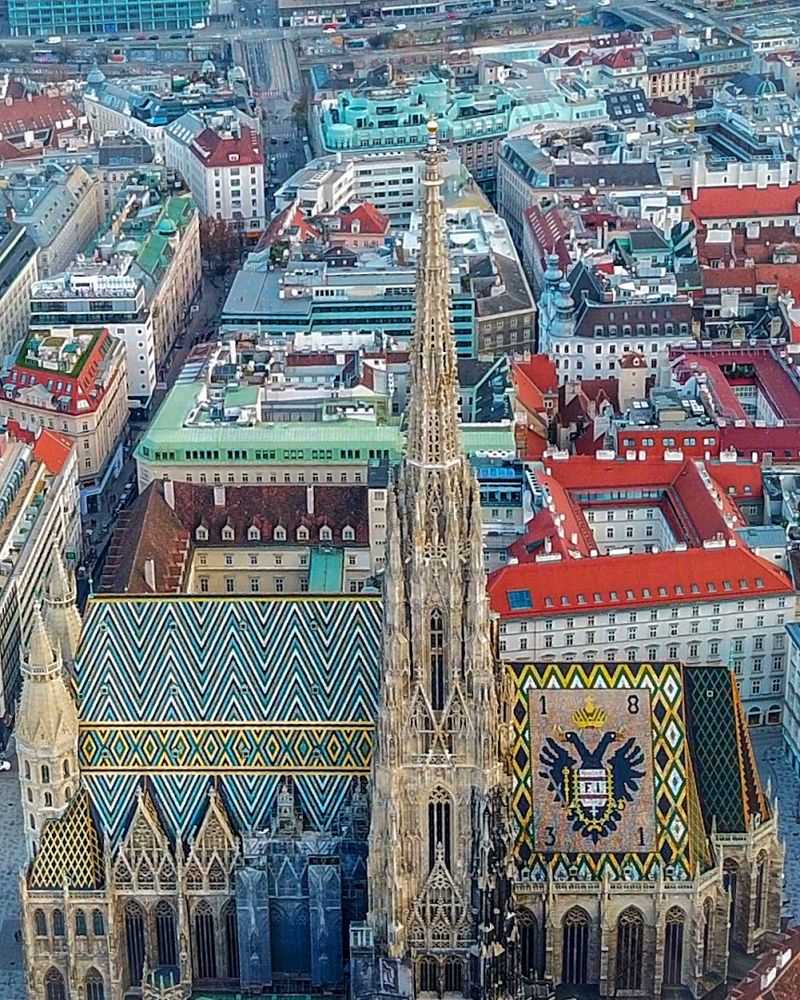
Vienna’s St. Stephen’s Cathedral has one of the most recognizable rooftops in all of Europe — a dazzling geometric mosaic of green, yellow, and black tiles arranged in zigzag patterns that include the double-headed Habsburg eagle and the city’s coat of arms. It looks less like a church roof and more like a giant piece of medieval street art, and it’s been turning heads since the 15th century.
The cathedral’s South Tower rises 136 meters above the city and can be climbed for sweeping views over Vienna’s rooftops. The North Tower, by contrast, was never finished — supposedly because funds ran out — and now houses a massive bell called the Pummerin, one of the largest bells in Europe.
Locals ring it on New Year’s Eve, a tradition that draws crowds every year.
Inside, St. Stephen’s is a masterpiece of Gothic architecture, with an intricately carved pulpit, a stunning high altar, and a network of catacombs beneath the floor that hold the remains of thousands of plague victims and Habsburg royalty. Mozart was married here in 1782, and his funeral was held here too.
For a building that has witnessed so much history, it wears its age remarkably well.
Florence Cathedral (Duomo) – Florence, Italy
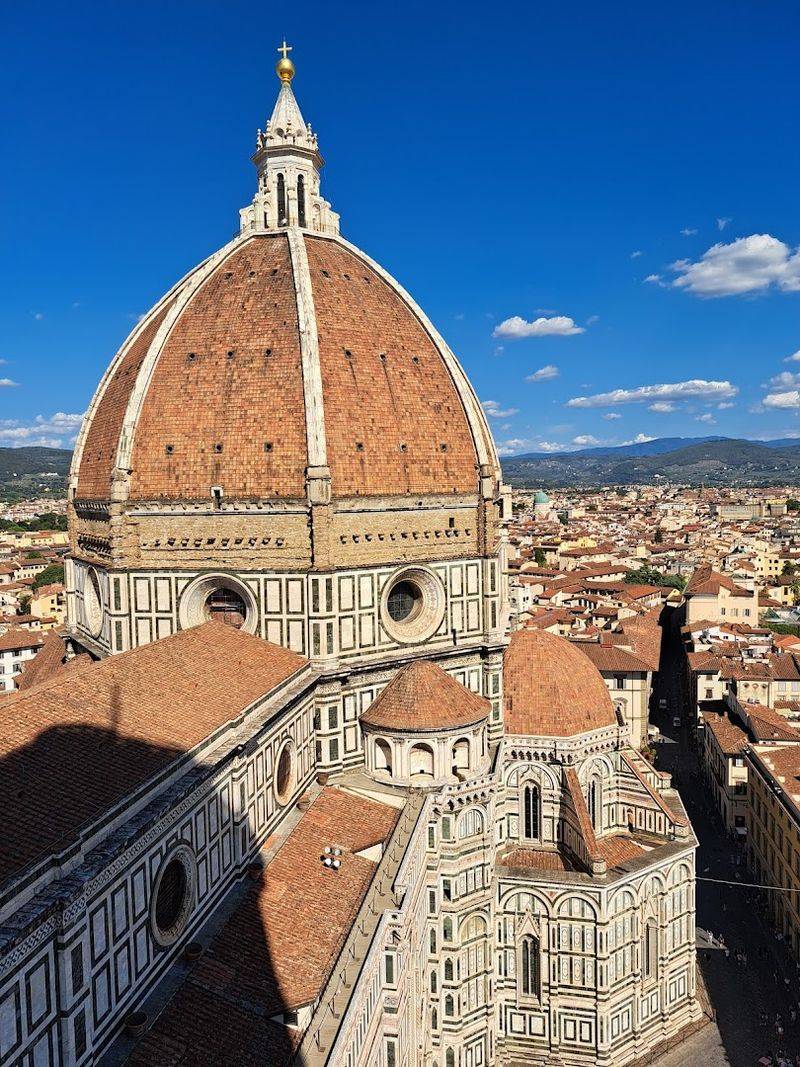
In the early 1400s, the city of Florence had a problem: a massive hole in the roof of their unfinished cathedral and absolutely no idea how to cover it. The gap was so wide — 44 meters across — that no one in Europe knew how to build a dome that large without it collapsing under its own weight.
Then along came Filippo Brunelleschi, who essentially invented a new way of building and changed architecture forever.
The result is the iconic terracotta dome that still defines Florence’s skyline today. It remains the largest brick dome ever constructed, and Brunelleschi achieved it without using a traditional wooden support frame — a technique that baffled engineers for generations.
Climbing the 463 steps to the top puts you right up against the dome’s inner frescoes, painted by Giorgio Vasari, before emerging onto a platform with panoramic views over the city’s rust-colored rooftops.
The cathedral’s facade is a riot of pink, white, and green marble panels, and the adjacent Baptistery features bronze doors so beautiful that Michelangelo reportedly called them the Gates of Paradise. Florence’s Duomo isn’t just impressive — it’s a monument to human stubbornness, creativity, and the refusal to say something can’t be done.
Sacré-Cœur – Paris, France
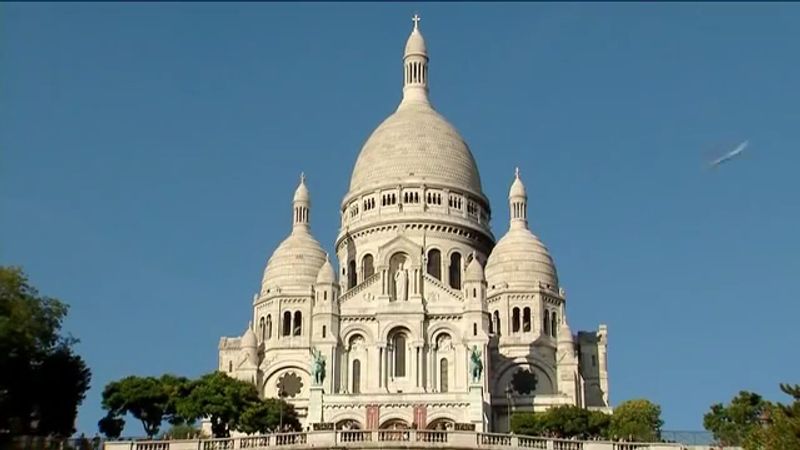
Perched at the very top of Montmartre — the highest point in Paris — Sacré-Cœur glows brilliant white against the city skyline like a lighthouse that somehow ended up in the middle of a capital city. Built from travertine stone that actually whitens when it rains, the basilica seems to get brighter with every passing year, which is either poetic or just excellent geology, depending on your perspective.
Construction started in 1875 and was completed in 1914, though it wasn’t officially consecrated until 1919 — after World War I. The Romanesque-Byzantine design was a deliberate departure from Paris’s dominant Gothic style, and it caused quite a controversy at the time.
Today, it’s one of the most beloved landmarks in the city, partly because the climb up the hill to reach it is half the experience.
The view from the steps of Sacré-Cœur is genuinely one of the best in Paris — a sweeping panorama across rooftops, boulevards, and the glittering Seine that stretches all the way to the horizon on a clear day. Inside, a massive golden mosaic of Christ dominates the apse, and the atmosphere is calm and contemplative despite the thousands of visitors passing through daily.
Montmartre’s artistic history makes this spot feel extra special.
Church of Our Lady Before Týn – Prague, Czech Republic
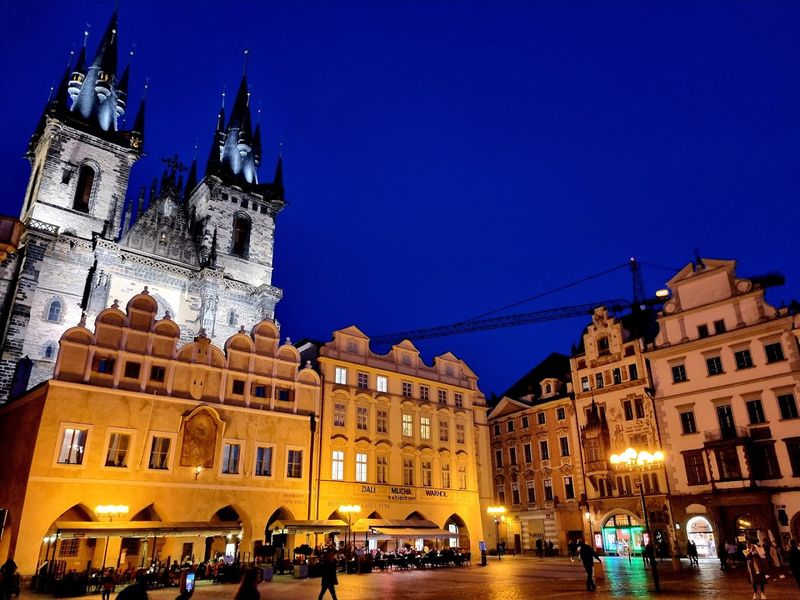
Two jagged Gothic spires shoot up from the middle of Prague’s Old Town Square like something a dark fairy tale architect dreamed up on a stormy night. The Church of Our Lady Before Týn is one of those buildings that looks almost too dramatic to be real — especially at dusk, when the spires catch the last of the light and the square below fills with the warm glow of street lamps.
The church dates back to the 14th century and was the main church of Prague before the Hussite Wars. For a period, a large golden chalice — symbol of the Hussite movement — hung between the towers.
When the Catholic Habsburgs took over, the chalice was melted down and turned into a halo for the Virgin Mary statue that replaced it. Religious politics, medieval style.
Getting inside is surprisingly tricky — the entrance is tucked behind an arcade of buildings facing the square, so many tourists admire the exterior without ever realizing they can explore within. The interior is darker and more intimate than the soaring exterior suggests, filled with Baroque altars, Gothic details, and the tomb of Tycho Brahe, the famous Danish astronomer who spent his final years in Prague.
Worth every minute of the hunt to find the door.
Aachen Cathedral – Aachen, Germany
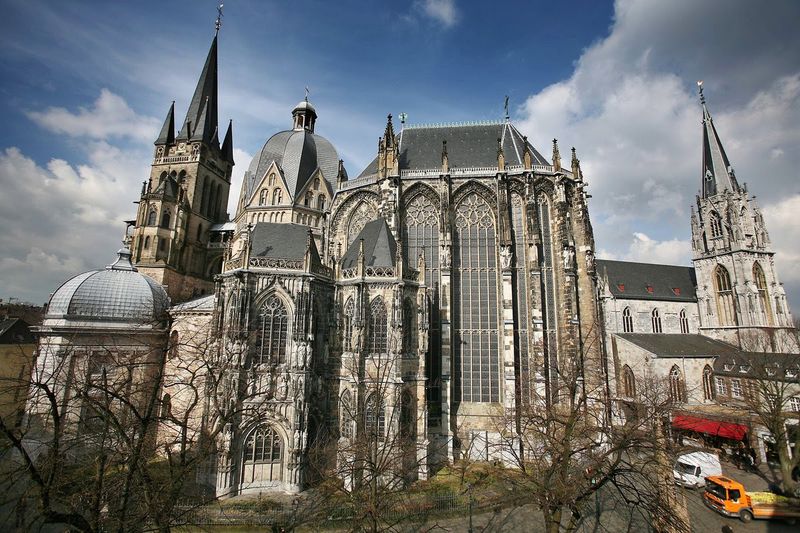
Charlemagne built his palace chapel in Aachen back in 805 AD, and what remains today is one of the oldest and most historically loaded churches in all of Europe. The original Carolingian octagon — the core of the cathedral — is so well preserved that standing inside it genuinely feels like time travel.
Charlemagne himself is buried here, which means this building has been a pilgrimage destination for well over a thousand years.
Over the centuries, Gothic additions were built around the original chapel, creating a fascinating architectural patchwork that tells the story of European history through its walls. The cathedral treasury holds some of the most important medieval relics and artifacts in existence, including Charlemagne’s throne — a plain marble seat on which over 30 Holy Roman Emperors were crowned between 936 and 1531.
Aachen Cathedral was the first site in Germany to be listed as a UNESCO World Heritage Site, receiving the designation in 1978. The interior glows with Byzantine-inspired mosaics, golden chandeliers, and a soaring Gothic choir that was added in the 14th century to house the growing number of pilgrims.
It may not have the Instagram presence of some flashier churches on this list, but Aachen Cathedral quietly holds more history per square meter than almost anywhere else in Europe.
Meteora Monasteries – Greece
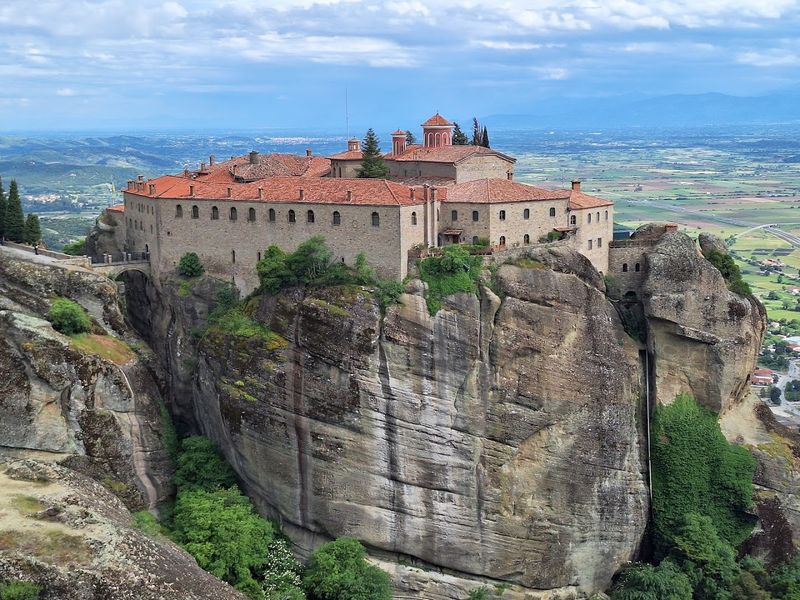
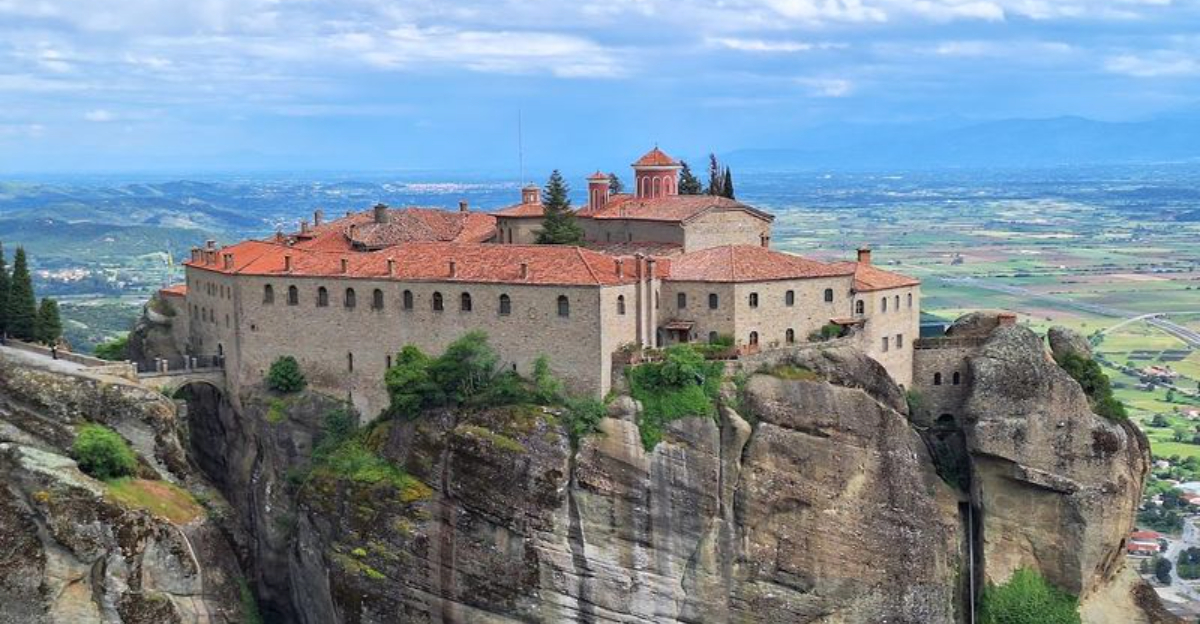
Somewhere in central Greece, monks decided the best place to build their monasteries was on top of massive sandstone pillars rising hundreds of meters above the valley floor. Whether this was for spiritual solitude, protection from invaders, or just an extraordinary sense of adventure, the result is one of the most surreal sights in all of Europe.
Meteora — which means “suspended in the air” in Greek — absolutely earns its name.
There were once 24 monasteries clinging to these rocks. Today, six remain active and open to visitors, each one requiring a climb up carved stone steps or a walk across narrow bridges to reach.
For centuries, the only way up was by rope ladder or a net that monks would haul up by hand — a detail that makes modern-day tourists feel considerably less brave about their uphill walk.
The monasteries date back to the 14th century and still house working communities of monks and nuns. Inside, Byzantine frescoes cover the walls and ceilings in vivid scenes that have survived for hundreds of years.
The views from each monastery are staggering — layers of rock, forest, and mist stretching out in every direction. Meteora was named a UNESCO World Heritage Site in 1988 for both its natural landscape and its cultural significance.
It belongs on every European bucket list.
St. Mark’s Church – Zagreb, Croatia
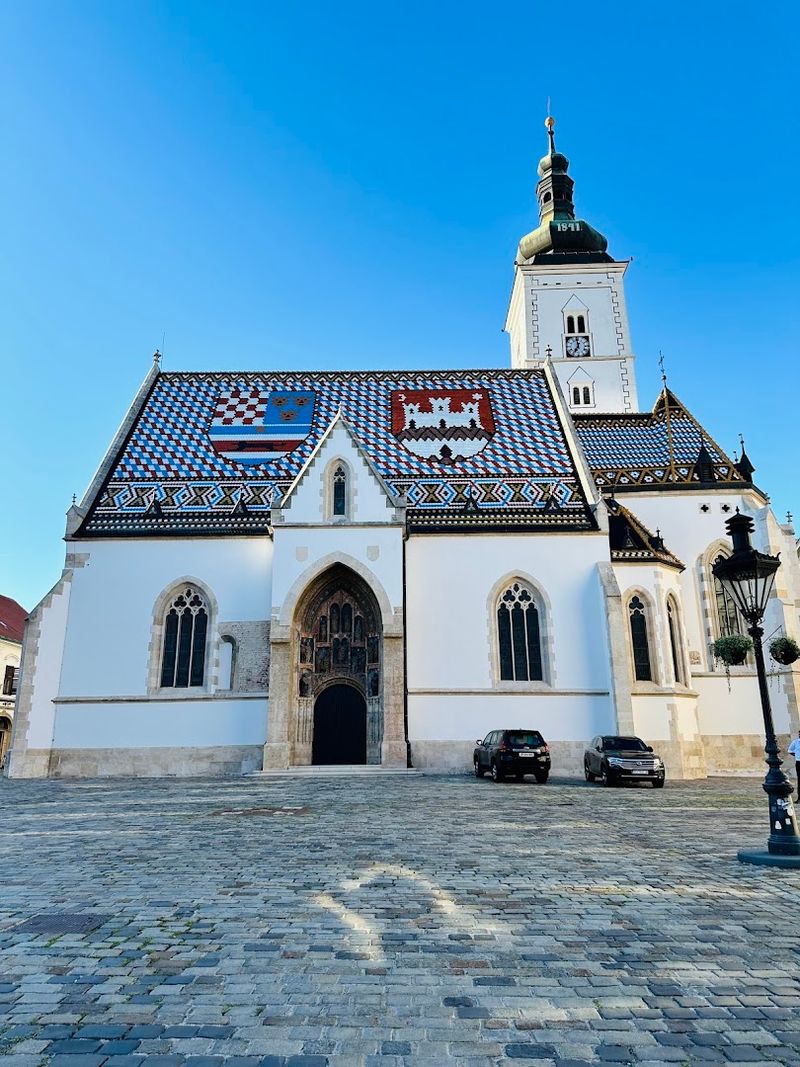
Not every jaw-dropping church needs to be the size of a football stadium. St. Mark’s Church in Zagreb proves that sometimes a single detail can do more work than an entire Gothic cathedral full of flying buttresses.
The roof is the star here — a stunning mosaic of glazed tiles arranged into two coats of arms: one representing the historic Kingdom of Croatia, Dalmatia, and Slavonia, and the other representing the city of Zagreb itself. It’s heraldry as roofing material, and it works brilliantly.
The church sits in St. Mark’s Square, the political heart of Zagreb, surrounded by government buildings and a relaxed atmosphere that feels a world away from the tourist rush of more famous European capitals. Dating back to the 13th century, the building has been modified and restored multiple times, but the colorful roof — installed in its current form in the 1880s — is what everyone comes to photograph.
The interior is modest compared to the show-stopping exterior, but it contains notable frescoes and sculptures by Croatian artists Ivan Meštrović and Jozo Kljaković, both major figures in 20th-century Croatian art. St. Mark’s Church is a reminder that great architecture isn’t always about scale — sometimes it’s about one perfectly executed idea that makes an entire city proud.
Zagreb’s crown jewel fits neatly in the palm of your hand.



