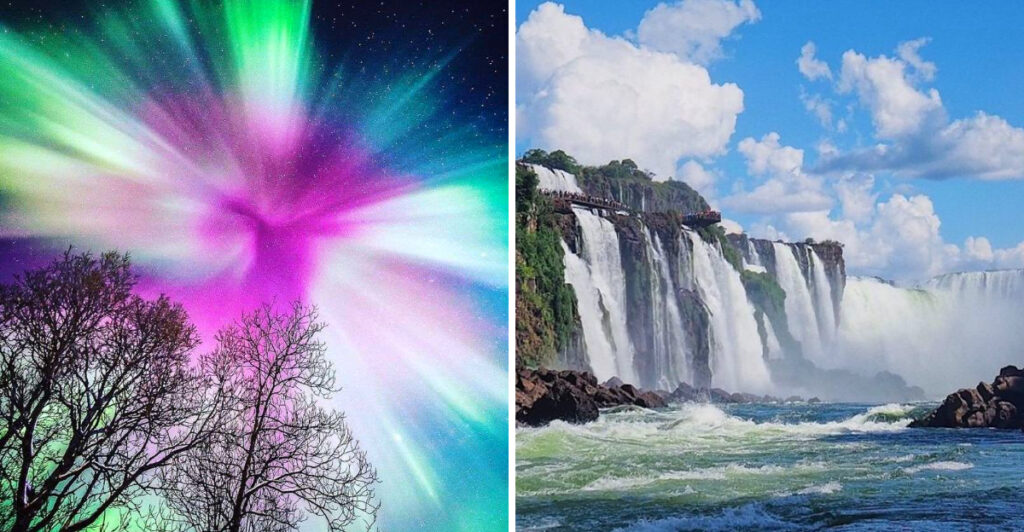
Some destinations are beautiful. Others are so spectacular they seem almost unreal.
From roaring waterfalls and glowing lakes to towering mountains and wildlife migrations visible from space, these places showcase nature at its most dramatic. If you are looking for landscapes that leave visitors speechless, these are among the greatest natural performances on Earth.
Iguazu Falls — Argentina and Brazil
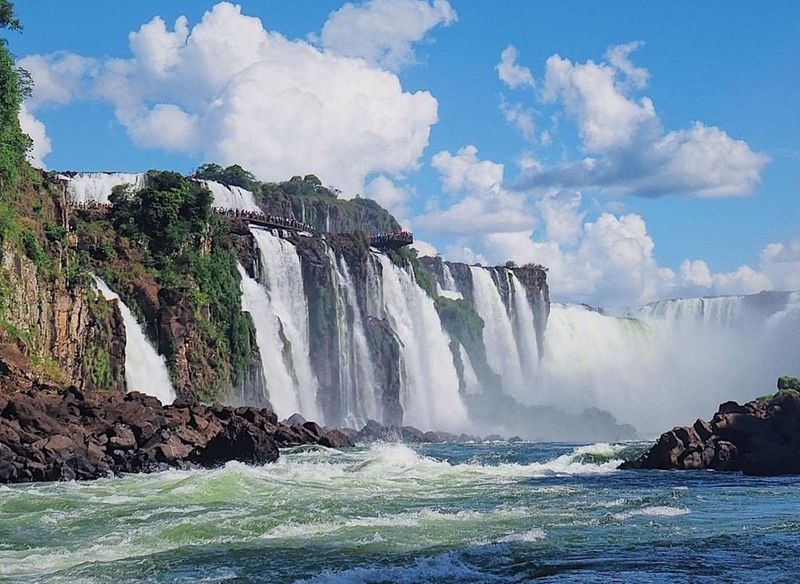
Standing at the edge of Devil’s Throat, you feel the ground shake before you even see the water. Iguazu Falls stretches nearly two miles wide, making it significantly larger than Niagara Falls.
Hundreds of individual cascades thunder through dense rainforest, sending mist shooting high into the sky.
The falls sit right on the border between Argentina and Brazil, and both countries offer national parks with walking trails and viewing platforms. Argentina’s side puts you close enough to feel the spray on your face.
Brazil’s side gives you a sweeping panoramic view of the entire system.
Toucans, coatis, and giant butterflies share the trails with visitors, making the surrounding jungle just as thrilling as the falls themselves. The best time to visit is between November and March when water levels peak.
Rainbows appear almost every afternoon, arching across the mist like nature’s own light show.
Boat tours take adventurous visitors right beneath the cascades for a completely soaking but unforgettable experience. Few places on Earth deliver this level of raw, overwhelming power.
Iguazu Falls does not just impress — it absolutely stuns.
Serengeti National Park — Tanzania
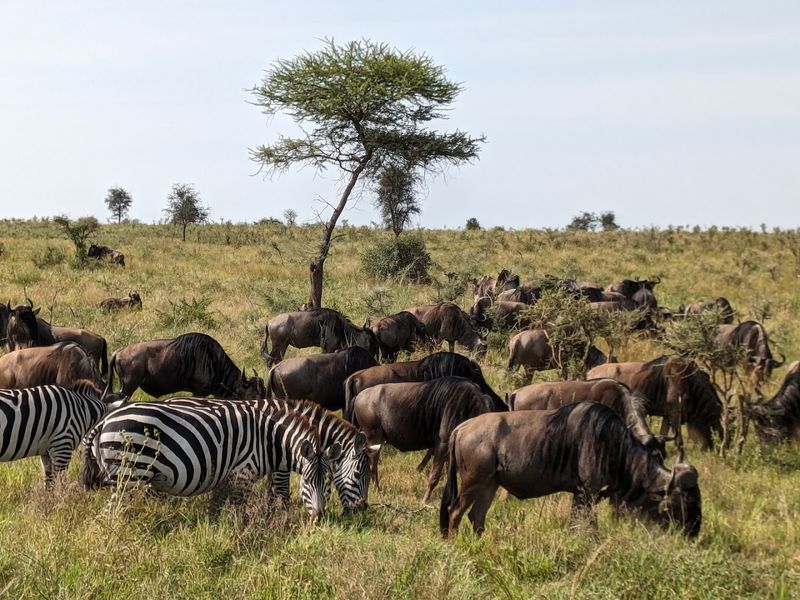
Picture nearly two million animals moving across an open plain — dust rising, hooves pounding, predators circling at the edges. That is the Great Migration, and nothing else on Earth comes close to matching its scale.
The Serengeti hosts this extraordinary event every single year without fail.
Wildebeest, zebras, and gazelles travel in enormous herds following seasonal rains and fresh grass. The journey covers roughly 1,800 miles in a continuous loop through Tanzania and Kenya.
River crossings are the most dramatic moments, where crocodiles wait patiently in churning water.
Outside migration season, the Serengeti still delivers remarkable wildlife encounters. Lions laze under acacia trees, cheetahs sprint across open ground, and elephants move through golden grassland in slow, dignified groups.
The park covers nearly 5,700 square miles of protected land.
Hot air balloon safaris offer a breathtaking bird’s-eye view of the plains at sunrise. Game drives at dawn and dusk give visitors the best chance of spotting predators in action.
The Serengeti operates on nature’s schedule, not ours, and that unpredictability is exactly what makes every visit feel genuinely thrilling.
Aurora Borealis — Arctic Regions
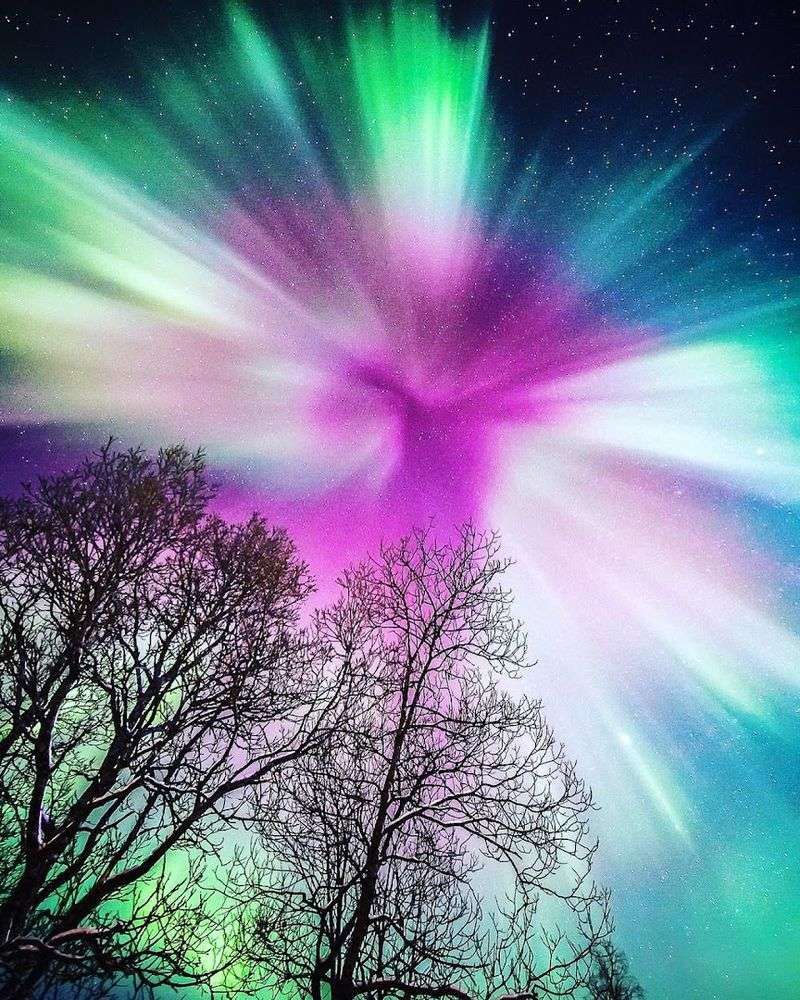
No photograph fully prepares you for the moment the sky starts to move. The Aurora Borealis — better known as the Northern Lights — is one of those rare natural events that makes grown adults gasp out loud.
Swirling curtains of green, purple, and red light ripple across polar skies in complete silence.
The phenomenon happens when charged particles from the sun collide with gases in Earth’s atmosphere. The result is a light show that changes shape and color every few seconds.
Norway, Iceland, Finland, Canada, and Alaska all offer excellent viewing conditions during winter months.
Auroras are most visible on clear, dark nights far from city lights. The peak viewing season runs from late September through March.
Some travelers book dedicated aurora-hunting tours with guides who track solar activity and weather forecasts to maximize chances of a sighting.
Staying in glass-roofed cabins has become a popular option, letting visitors watch the lights from a warm bed. Temperatures can drop well below freezing, so layering up properly is essential.
The Northern Lights have inspired myths, legends, and artwork for thousands of years — and one look at a vivid display makes it easy to understand why.
Victoria Falls — Zambia and Zimbabwe
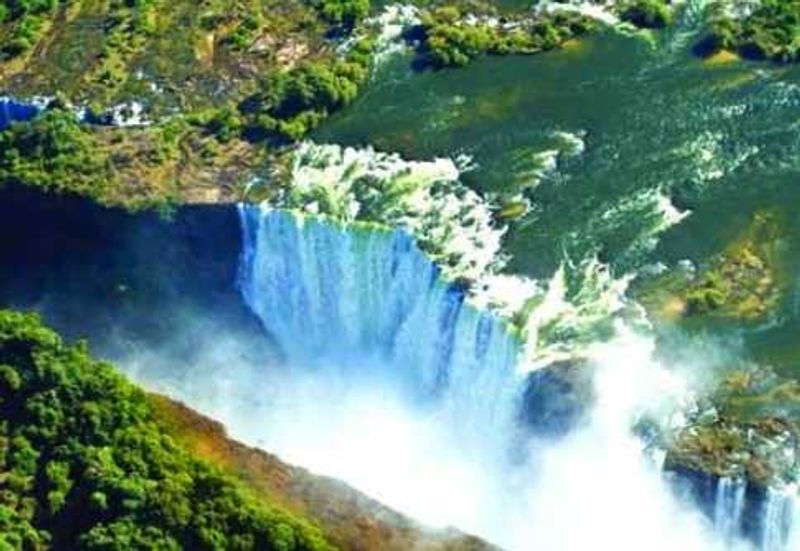
Locals call it ‘Mosi-oa-Tunya,’ which translates to ‘The Smoke That Thunders,’ and the name is absolutely earned. Victoria Falls is one of the largest waterfalls on Earth, stretching more than a mile wide and dropping over 350 feet into a narrow gorge.
The spray cloud can be spotted from nearly 30 miles away.
Sitting on the border between Zambia and Zimbabwe, the falls can be explored from both sides. Zimbabwe’s Rainforest Walk brings visitors within arm’s reach of the cascades.
Zambia’s side offers Devil’s Pool, a natural rock pool right at the waterfall’s edge where brave swimmers dangle their feet over the drop during low water season.
The surrounding national parks protect elephants, hippos, crocodiles, and hundreds of bird species. Sunset river cruises on the Zambezi River offer a peaceful contrast to the thunderous falls just upstream.
White-water rafting through the gorge below is considered one of the most intense rafting experiences anywhere in the world.
The best views come from the air on microlight flights or helicopter tours. Victoria Falls operates at peak flow between February and May.
No matter when you visit, the sheer force of this waterfall demands complete respect.
Grand Canyon — Arizona, United States
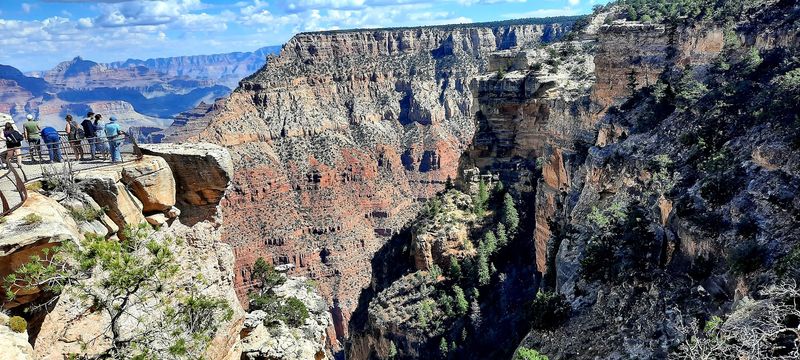
The Grand Canyon is one of those places where your brain genuinely struggles to process what your eyes are seeing. Stretching 277 miles long and reaching depths of over a mile, it is simply enormous.
The Colorado River carved this masterpiece over five to six million years, exposing nearly two billion years of Earth’s geological history in its layered walls.
Sunrise and sunset are the magic hours here. The canyon walls shift through shades of gold, orange, red, and deep purple as the light changes.
Photographers line up along the South Rim well before dawn to catch the first rays hitting the rock faces.
Hiking trails range from easy rim walks to multi-day backcountry adventures descending to the canyon floor. The Bright Angel Trail is the most popular route down, but heat and elevation make it more challenging than it looks.
Carrying plenty of water is not optional — it is survival.
Mule rides, white-water rafting on the Colorado River, and helicopter tours all offer different ways to experience the canyon’s scale. The North Rim gets far fewer visitors and provides a quieter, more remote atmosphere.
Whatever angle you choose, the Grand Canyon rewards you with views that feel genuinely impossible.
Ha Long Bay — Vietnam
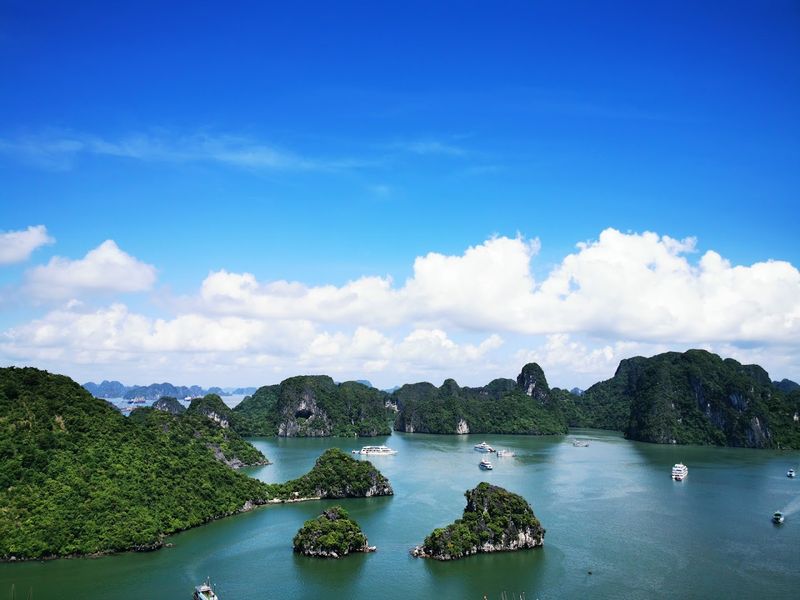
Roughly 1,600 limestone islands and islets jut straight out of Ha Long Bay’s emerald waters, creating a seascape that looks like it belongs in a fantasy novel. The name translates to ‘Bay of the Descending Dragon,’ and Vietnamese legend says the formations were created by a dragon sent to protect the coast.
Science credits millions of years of erosion — but the legend is more fun.
UNESCO recognized Ha Long Bay as a World Heritage Site twice, once for its scenery and again for its geological significance. Cruising through the bay on a traditional wooden junk boat is the classic way to explore.
Mornings are especially magical when mist clings to the limestone peaks and the water sits completely still.
Hidden caves tucked inside the karsts are among the bay’s best surprises. Hang Son Doong, the world’s largest cave, sits not far away in the same region.
Kayaking through narrow channels and into hidden lagoons completely enclosed by rock walls is an experience that stays with visitors for life.
Ha Long Bay is busiest between March and May when weather is calm and visibility is excellent. Choosing a smaller cruise boat means quieter waters and fewer crowds.
The bay rewards slow exploration far more than a rushed day trip.
Torres del Paine National Park — Chile
Wind in Torres del Paine does not politely ask permission — it arrives without warning and nearly knocks you sideways. That wild, unpredictable energy is part of what makes this Patagonian park feel so alive.
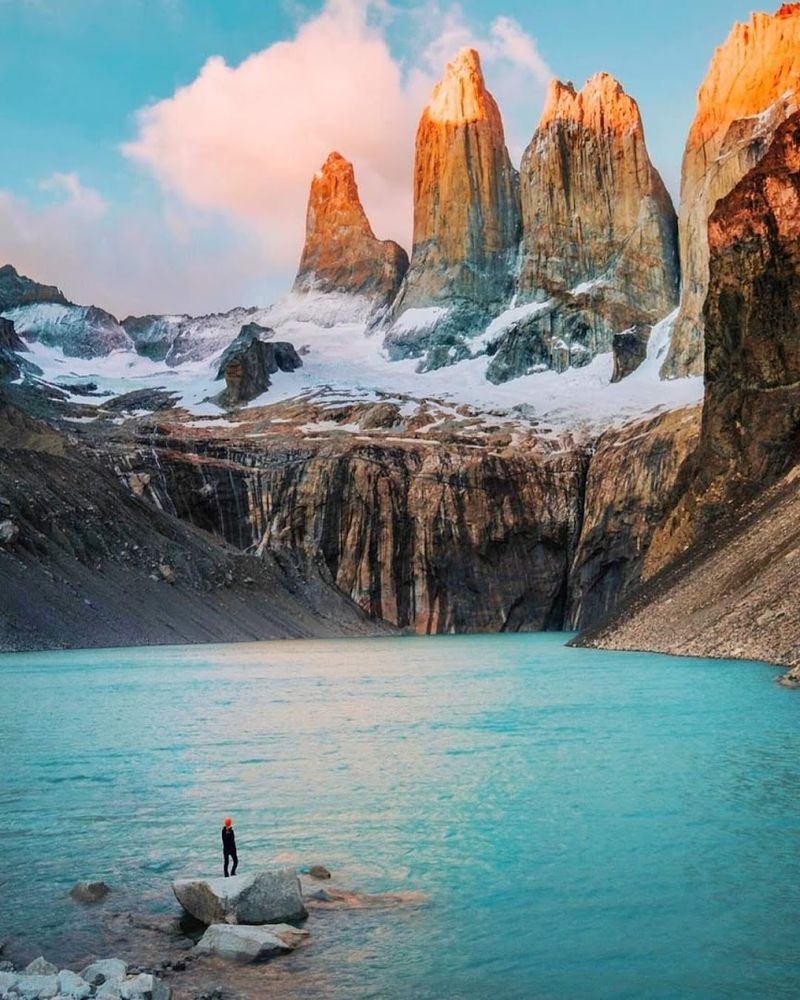
The famous granite towers, which give the park its name, shoot nearly 9,000 feet into the sky with almost vertical faces.
The park sits in Chile’s southern Patagonia region, covering nearly 700,000 acres of mountains, glaciers, lakes, and open steppe. Glaciers calve loudly into turquoise lakes, sending waves rippling across the surface.
The color of those lakes — brilliant blues and greens fed by glacial meltwater — is genuinely difficult to believe without seeing it firsthand.
The W Trek and the full Circuit are the two main hiking routes, taking between four and nine days to complete. Refugios and campsites are scattered along the trails, making multi-day treks accessible even for moderately experienced hikers.
Pumas, guanacos, condors, and rheas share the landscape with trekkers.
Weather changes rapidly here, sometimes cycling through sunshine, rain, sleet, and fierce wind all within a single hour. Layered clothing and waterproof gear are non-negotiable.
Torres del Paine rewards those who come prepared with some of the most dramatic mountain scenery anywhere on the planet.
Great Barrier Reef — Australia
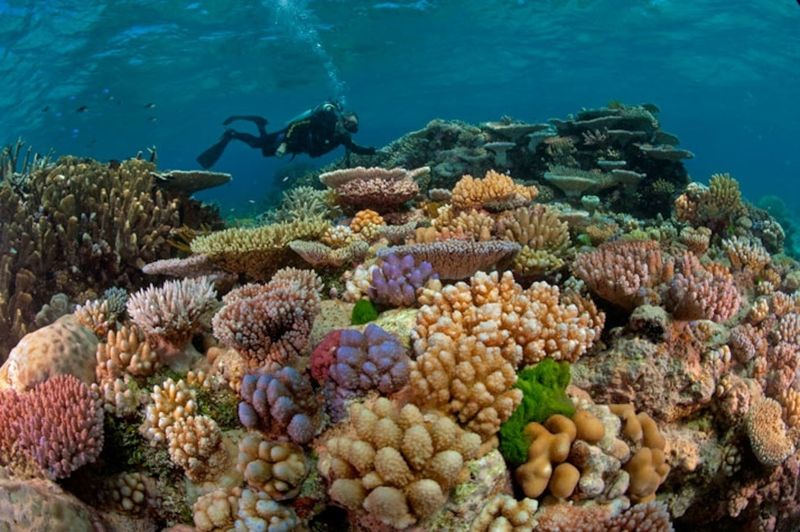
Stretching over 1,400 miles along Australia’s northeastern coast, the Great Barrier Reef is so large it can be seen from space with the naked eye. It is the world’s largest coral reef system, built by trillions of tiny coral polyps over thousands of years.
The sheer scale of life packed into this ecosystem is almost incomprehensible.
More than 1,500 species of fish, 4,000 types of mollusk, and six of the world’s seven sea turtle species call the reef home. Snorkeling or scuba diving here feels like floating through the world’s most colorful aquarium.
Visibility in the water can exceed 65 feet on calm days, revealing entire coral cities below.
The reef faces serious threats from climate change, with warming ocean temperatures causing coral bleaching events. Visiting responsibly — using reef-safe sunscreen, never touching the coral, and choosing eco-certified tour operators — makes a real difference.
Scientists and conservation groups work continuously to protect and restore damaged sections.
Cairns and the Whitsunday Islands are the most popular access points. Liveaboard dive trips allow visitors to reach outer reef sections far from crowds.
Even a single snorkeling session here leaves most people with an overwhelming appreciation for the ocean’s incredible complexity and beauty.
Plitvice Lakes National Park — Croatia
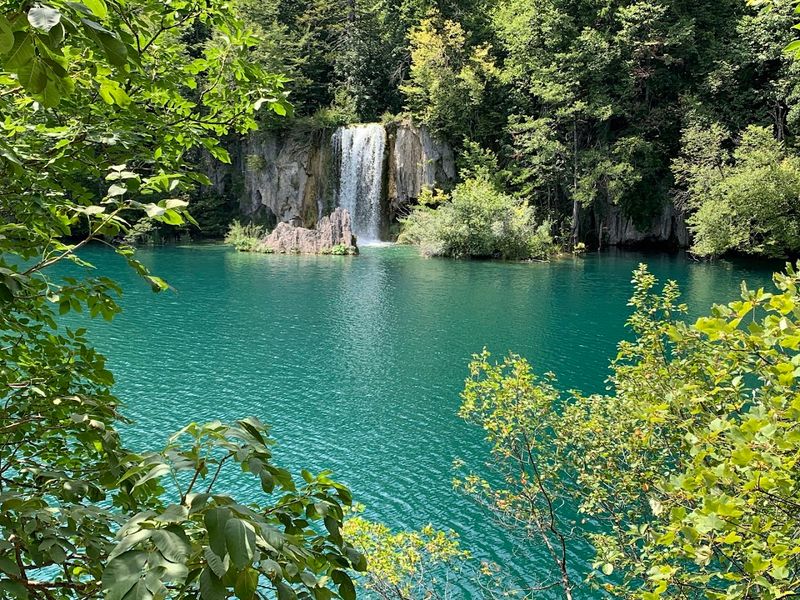
The water at Plitvice Lakes is so clear and so brilliantly colored that first-time visitors often stop mid-trail just to stare. Sixteen terraced lakes cascade into one another through a series of waterfalls, all connected by wooden boardwalks that float just above the water’s surface.
Walking through here feels like stepping into a scene from a nature documentary.
The lakes get their extraordinary turquoise and emerald colors from dissolved minerals and microorganisms. The formations are created by travertine, a type of limestone deposited by the flowing water over thousands of years.
The landscape is technically still growing and changing, adding tiny amounts of new travertine every year.
Croatia’s oldest and most visited national park became a UNESCO World Heritage Site in 1979. The park is divided into upper and lower lake sections, each offering different trail lengths and difficulty levels.
Boat rides across the largest lake and shuttle buses help connect the sections.
Spring brings the highest waterfalls, swollen by snowmelt from surrounding mountains. Autumn turns the surrounding forest into a blaze of orange and gold, reflecting in the still lake surfaces.
Visiting early in the morning or during shoulder season in April or October gives you the best chance of experiencing this magical place without massive crowds.
Galapagos Islands — Ecuador
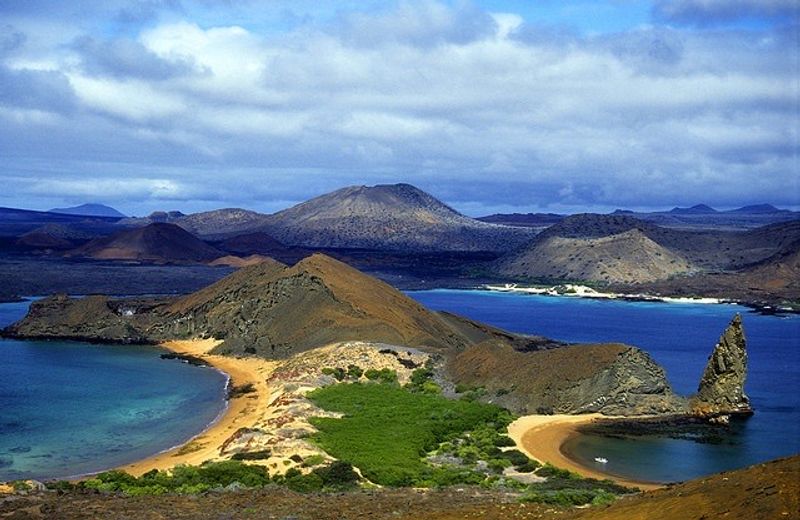
Giant tortoises that can live for over 150 years roam freely here, completely unfazed by the humans standing just a few feet away. That fearlessness is one of the most striking things about the Galapagos Islands — the wildlife simply has no reason to be afraid.
These islands have been isolated from the mainland long enough that many species evolved in total independence.
Located roughly 600 miles off the coast of Ecuador in the Pacific Ocean, the Galapagos consist of 18 main islands and dozens of smaller islets. The unique wildlife here directly inspired Charles Darwin’s theory of natural selection after his 1835 visit.
Marine iguanas, blue-footed boobies, Galapagos penguins, and flightless cormorants are just a few of the species found nowhere else on Earth.
Snorkeling with sea lions, swimming alongside marine iguanas, and watching albatrosses take flight from clifftops are experiences most travelers call life-changing. The Ecuadorian government strictly limits visitor numbers to protect the fragile ecosystem.
All tourists must be accompanied by licensed naturalist guides.
The best time to visit depends on what you want to see, as different species breed and gather at different times of year. Both the dry season and the wet season offer extraordinary wildlife encounters.
The Galapagos consistently ranks among the world’s top natural destinations for good reason.
Yosemite National Park — California, United States
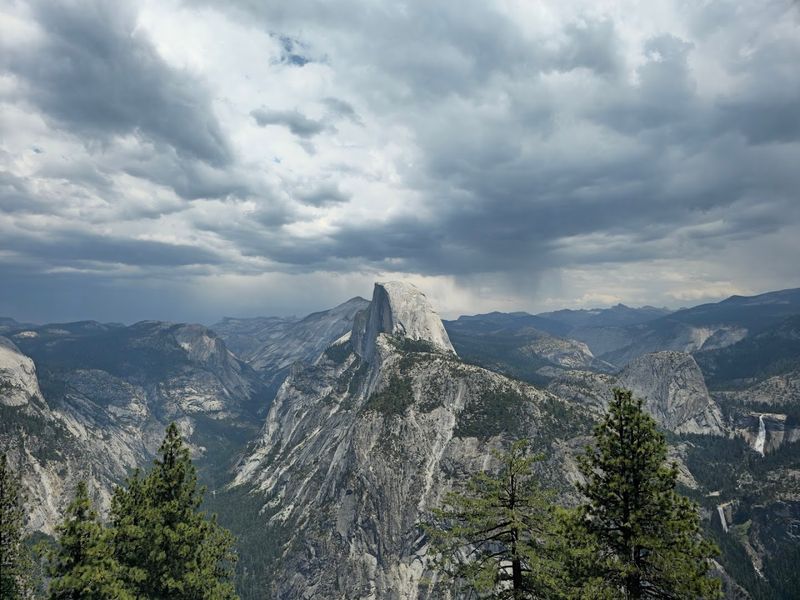
El Capitan rises 3,000 feet straight up from the valley floor, a single vertical granite wall so massive it creates its own weather. Rock climbers spend days scaling its face while hikers below crane their necks trying to spot them.
Yosemite Valley is one of the most photographed places in America, and every angle seems to produce a postcard-worthy shot.
Yosemite National Park in California’s Sierra Nevada range covers nearly 1,170 square miles. Giant sequoias in the Mariposa Grove are among the largest living things on Earth by volume.
Yosemite Falls, one of the tallest waterfalls in North America, roars loudest in spring when snowmelt feeds its upper and lower sections.
John Muir, the famous naturalist and conservationist, campaigned fiercely to protect Yosemite in the late 1800s. His efforts helped establish the national park system that protects wild places across the United States today.
Muir’s writing described the valley as a temple built by nature, and that description still rings true.
Half Dome’s distinctive shape dominates the eastern end of the valley and draws thousands of hikers each summer. Permits are required for the final cable section near the summit.
Yosemite in winter, blanketed in snow with far fewer visitors, offers a completely different and equally stunning version of this remarkable landscape.
Komodo National Park — Indonesia
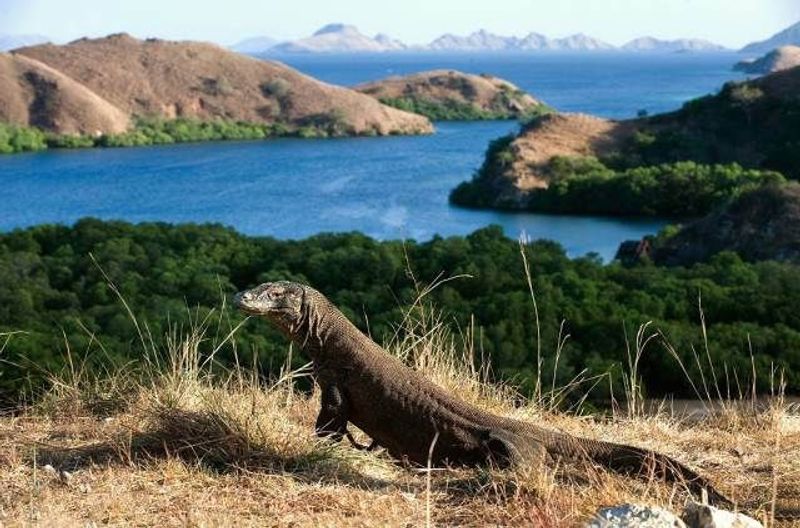
Komodo dragons look like something that escaped from the prehistoric era and forgot to leave. Growing up to ten feet long and weighing over 150 pounds, these are the world’s largest living lizards.
They hunt deer, pigs, and water buffalo using a combination of sharp claws, serrated teeth, and venom that prevents blood from clotting.
Komodo National Park in eastern Indonesia protects around 5,700 Komodo dragons spread across three main islands — Komodo, Rinca, and Padar. The park also encompasses some of the most biodiverse marine waters on Earth.
Manta rays, pygmy seahorses, and over 1,000 species of fish inhabit the surrounding reefs.
Padar Island offers one of the most spectacular hikes in all of Indonesia, climbing to a ridge with panoramic views of three bays, each with different colored sand — white, pink, and black. The pink sand beach on Komodo Island is caused by fragments of red coral mixed into the sand.
It is one of only a handful of pink beaches in the world.
Boat trips between the islands are the main way to get around, and liveaboard diving expeditions are popular with serious divers. Rangers accompany all visitors who walk near the dragons for safety.
Komodo National Park became a UNESCO World Heritage Site in 1991, and it earns that status from both above and below the waterline.
Lencois Maranhenses National Park — Brazil
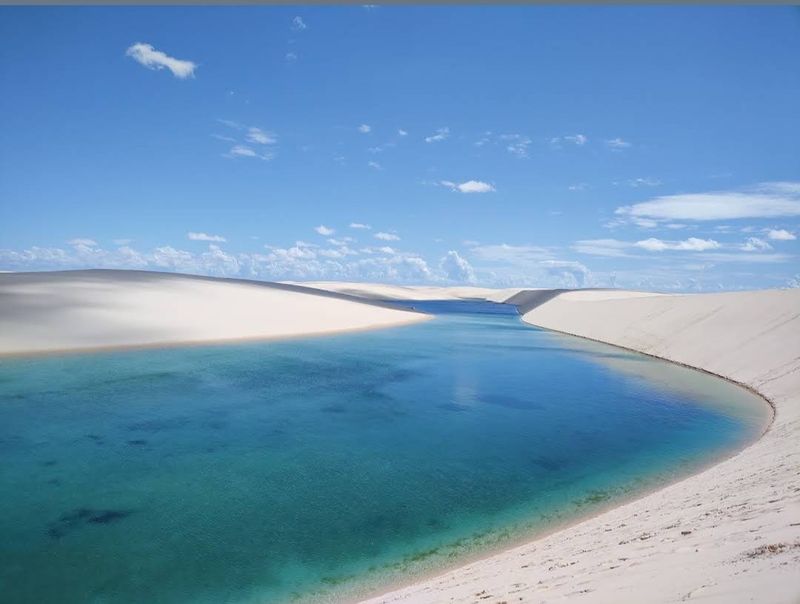
For most of the year, this place looks exactly like a Saharan desert — endless white sand dunes rolling toward the horizon with nothing but blue sky above. Then the rainy season arrives, and something extraordinary happens.
Thousands of crystal-clear freshwater lagoons fill the spaces between the dunes, turning the landscape into something that seems physically impossible.
Lencois Maranhenses National Park sits in northeastern Brazil and covers roughly 600,000 acres of coastal dunes. Despite its desert appearance, the park receives enough rainfall between January and June to fill those lagoons every year.
The water is surprisingly clean and warm, and locals swim in the lagoons regularly.
The best time to visit is between July and September when the lagoons are at their fullest. The most famous lagoon, Lagoa Azul, glows an almost unreal shade of turquoise.
Small fish actually survive in the lagoons year-round, somehow enduring the dry season buried in the sand and reviving when the water returns.
Getting to the park involves traveling to the small town of Barreirinhas, which serves as the main base. Guided tours by 4×4 vehicles and boat trips along the Preguicas River are the main ways to explore.
Lencois Maranhenses is genuinely one of South America’s most surreal and underrated natural wonders.
Giant’s Causeway — Northern Ireland
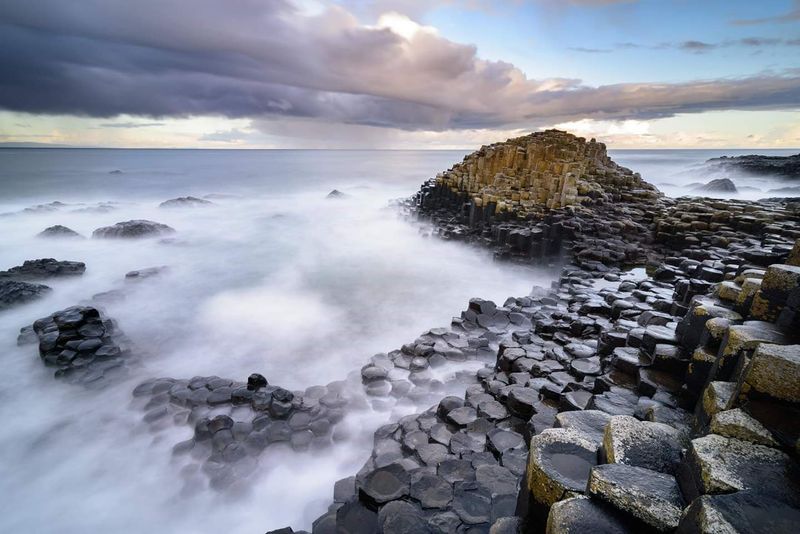
Around 40,000 hexagonal basalt columns fit together so precisely that people genuinely assumed giants must have built them. The legend says the Irish giant Finn McCool constructed the causeway to walk to Scotland for a fight with a rival giant.
Geologists have a less dramatic explanation involving a volcanic eruption 60 million years ago, but the legend has stuck around for centuries.
Located on the northeastern coast of Northern Ireland, Giant’s Causeway became the country’s first UNESCO World Heritage Site in 1986. The columns formed when molten lava cooled and contracted, cracking into the distinctive hexagonal shapes.
Most columns are six-sided, though some have four, five, seven, or eight sides.
The tallest columns in the Grand Causeway section reach about 39 feet high. Walking across the tops of the columns feels both surreal and slightly precarious, especially when Atlantic waves crash nearby.
The coastal path above the causeway offers sweeping views of the formations from above.
The visitor center built into the hillside provides excellent geological and cultural context before you head down to the rocks. Nearby Dunluce Castle perched dramatically on a clifftop adds another layer of atmosphere to the area.
Giant’s Causeway rewards visitors who explore beyond the main platform and walk the full clifftop trail in both directions.
Raja Ampat — Indonesia
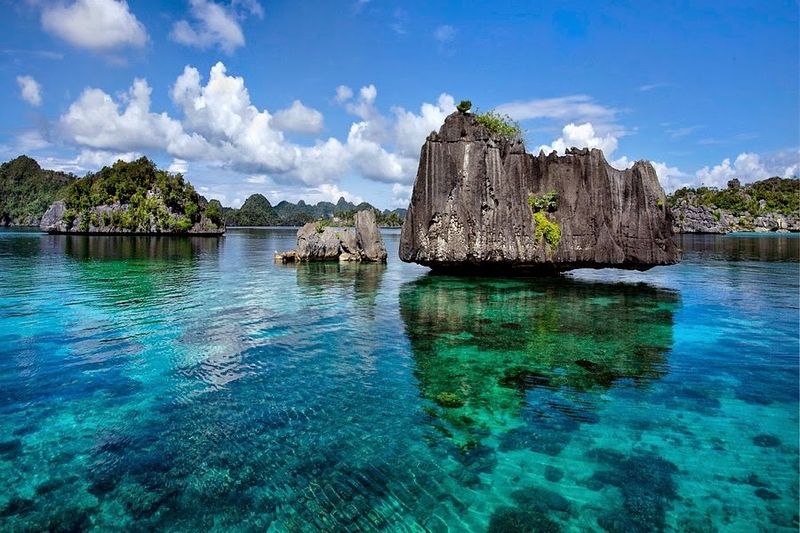
Scientists surveying Raja Ampat’s waters found more species of coral and fish in a single location than anywhere else ever recorded on Earth. That is not marketing language — it is a scientific fact that repeatedly surprises the researchers who study it.
Raja Ampat sits at the center of the Coral Triangle, the most biodiverse marine region on the planet.
Located off the western tip of Papua in eastern Indonesia, Raja Ampat consists of over 1,500 small islands, cays, and shoals. The name means ‘Four Kings,’ referring to the four main islands of Waigeo, Batanta, Salawati, and Misool.
Above water, the landscape is just as striking, with mushroom-shaped limestone islands covered in dense jungle rising from glassy seas.
Diving and snorkeling here reveal a world of staggering variety. Wobbegong sharks rest on the seafloor, pygmy seahorses cling to sea fans, and manta rays glide through open water in large groups.
Even snorkeling in just a few feet of water near the islands delivers encounters most divers spend years chasing elsewhere.
Access requires flying to Sorong and then taking a ferry or speedboat to the islands. Liveaboard dive boats are the best way to reach the most remote and pristine sites.
Tourism here is deliberately kept low-key to protect the ecosystem, which means Raja Ampat remains one of the few places on Earth that still feels genuinely untouched.
Share this story