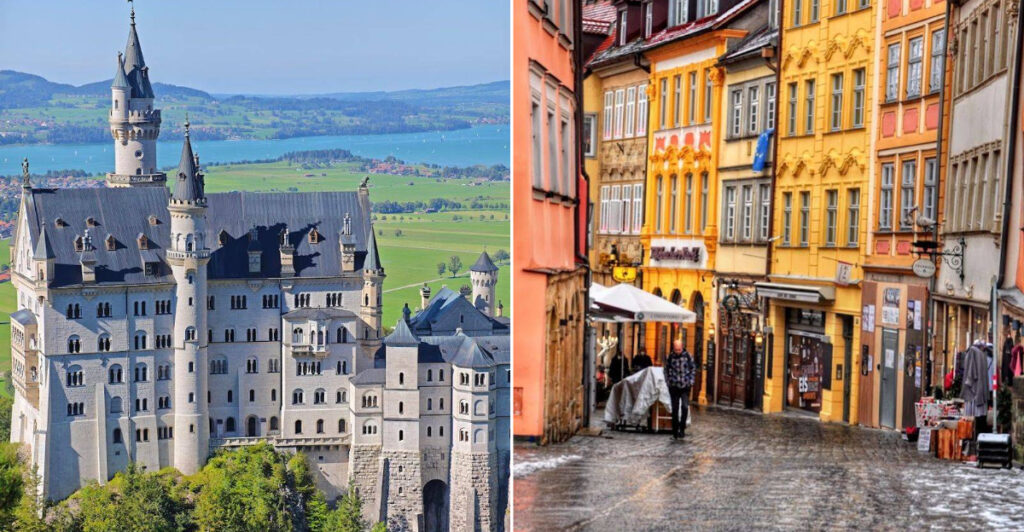
Germany is packed with castles, cathedrals, and cobblestone streets that most travelers never get to see because they spend all their time in Berlin, Munich, or Hamburg. The country’s real charm hides in smaller towns, forested valleys, and hilltop fortresses that have been quietly collecting history for centuries.
From a Roman city gate that has survived nearly 2,000 years to a mountain park with a giant Hercules on top, Germany’s lesser-known landmarks are absolutely worth the detour. Pack your bags, because this list is about to take you well off the tourist trail.
Wartburg Castle – Eisenach, Thuringia
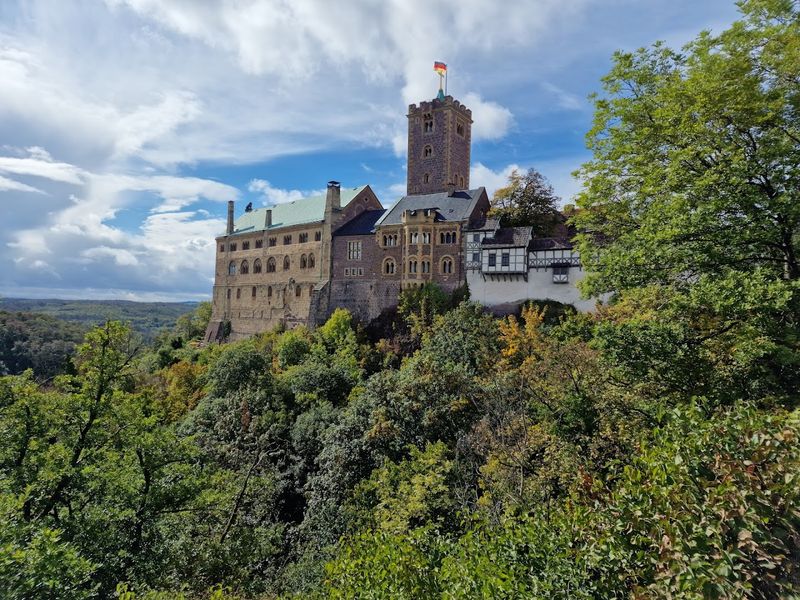
Martin Luther once hid here and translated the entire New Testament. That alone should make Wartburg Castle one of the most fascinating stops in Germany.
Sitting above Eisenach like a stone crown over the Thuringian Forest, this castle has been collecting jaw-dropping history for nearly a thousand years.
What makes Wartburg extra special is how many different eras it represents at once. Medieval court culture, the Protestant Reformation, German Romantic nationalism, and 19th-century restoration all left their mark on this single hilltop.
You can walk through rooms that feel like chapters in a very long and dramatic book.
The official Wartburg site confirms the castle opens 365 days a year, which is a serious bonus for spontaneous travelers. Sweeping views over the Thuringian Forest seal the deal.
Whether you are a history lover or just someone who appreciates a seriously photogenic fortress, Wartburg delivers on every level.
Quedlinburg Old Town – Saxony-Anhalt
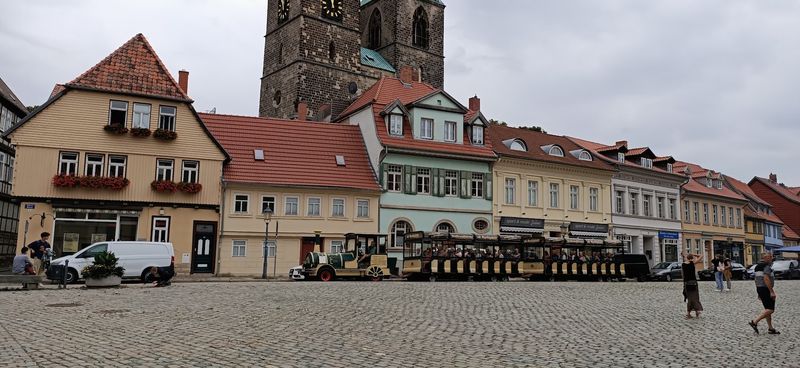
Some towns are landmarks. Quedlinburg is basically an entire landmark that happens to have people living inside it.
With over 2,000 half-timbered houses spanning eight centuries, this UNESCO-listed town in Saxony-Anhalt is one of the most atmospheric places in all of Germany.
Walking through Quedlinburg feels like the streets themselves have been posing for postcards since the Middle Ages. Leaning timber facades, uneven cobblestones, and a castle hill looming above the rooftops create a setting that no movie set could convincingly replicate.
The Collegiate Church up on the hill adds serious gravitas to the whole picture.
During the Ottonian period, Quedlinburg was a major political and religious center, which explains why so much important architecture survived here. It is not a reconstructed old town or a theme-park version of history.
It is the real thing, and it has been quietly waiting for visitors who bother to look beyond the big cities.
Maulbronn Monastery – Baden-Württemberg
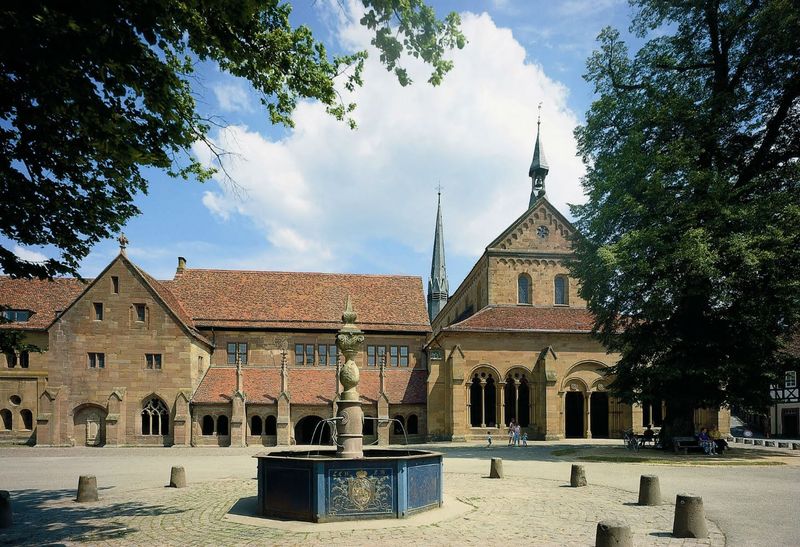
Maulbronn Monastery is the kind of place that makes you wonder how an entire medieval world ended up so perfectly intact. Recognized as the most completely preserved medieval Cistercian monastery complex north of the Alps, this UNESCO World Heritage Site in Baden-Württemberg is genuinely extraordinary.
The complex is not just one building. It is a full self-contained world of cloisters, courtyards, Gothic arches, chapels, and surrounding structures that once housed an entire religious community.
Every corner tells you something about how monks organized their daily lives, their work, and their worship across the medieval centuries.
The architecture manages to feel both grand and surprisingly human-scaled. You can wander through spaces that still carry the texture of centuries without needing a history degree to appreciate them.
Visitor information is available on the official monastery site, so this is very much a working tourist destination rather than a forgotten ruin. Highly recommended for architecture lovers of all ages.
Burg Eltz – Wierschem, Rhineland-Palatinate
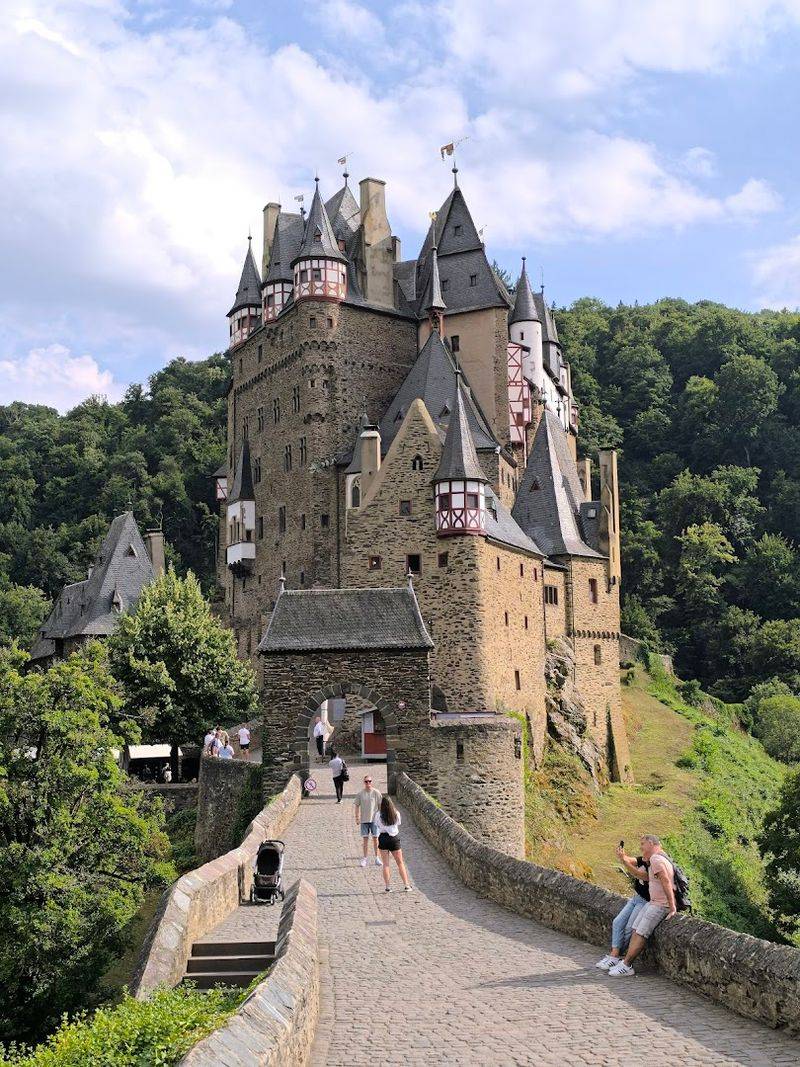
Burg Eltz is the castle that other castles wish they could be. Tucked into a forested valley near the Moselle region rather than planted on some exposed cliff, it has a secretive, almost mythological quality that most German castles simply cannot match.
Unlike many historic fortresses that were heavily rebuilt or bombed during various conflicts, Burg Eltz kept its medieval character remarkably intact. The towers, timber details, and stone walls look like they belong to a story rather than a history textbook.
That combination of authenticity and setting is genuinely rare.
The official Burg Eltz visitor page lists the 2026 season running from March 29 to November 1, with guided tours, the inner courtyard, and the treasury all included in one ticket. Because it is seasonal, planning ahead is essential.
But for anyone who visits, this is one of those landmarks that earns its reputation without any argument. Worth every bit of effort to get there.
Neuschwanstein Castle – Schwangau, Bavaria
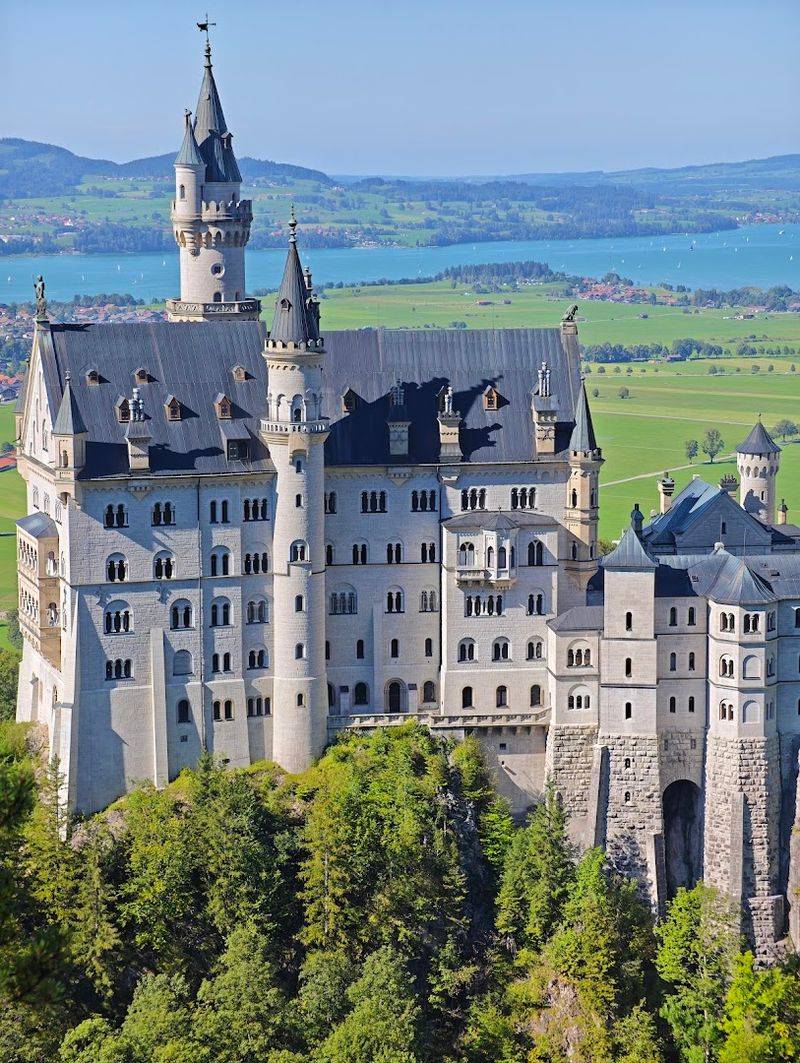
Yes, Neuschwanstein is famous. But famous does not mean it belongs only on tourist brochures.
Perched above Schwangau near the Bavarian Alps, this 19th-century fantasy castle built for King Ludwig II is so dramatically over-the-top that it earns its spot on this list through sheer spectacle alone.
Ludwig II was not exactly a practical ruler, but he had serious taste in architecture. The castle was never fully completed during his lifetime, which somehow makes it even more interesting.
It is a monument to one man’s extraordinary, slightly unhinged vision of medieval romance.
The official Hohenschwangau ticket site lists guided tours daily in 2026, with specific holiday closures including December 24, 25, 31, and January 1. The Bavarian Palace Administration strongly recommends buying tickets well in advance because visitor demand is intense year-round.
Get your ticket early, arrive before the crowds, and let the Alps do the rest of the work for you.
Hohenzollern Castle – Near Hechingen, Baden-Württemberg
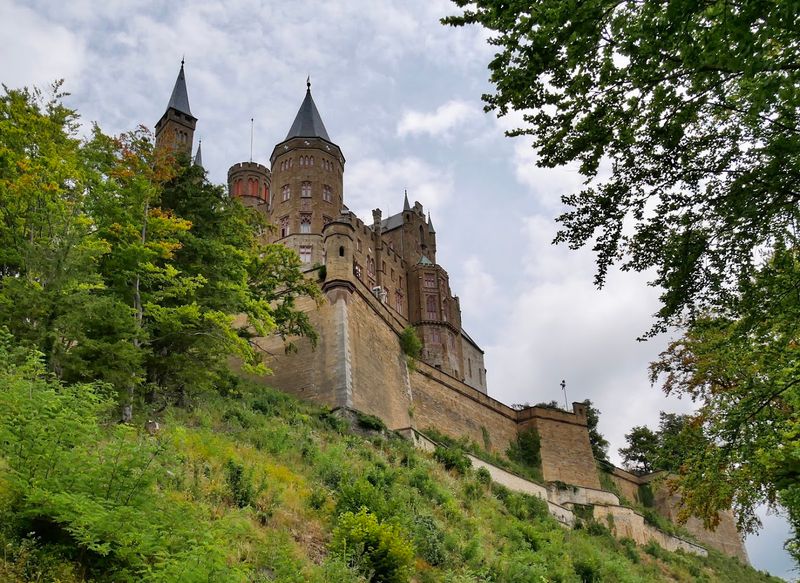
Three castles have stood on Mount Hohenzollern over the centuries, and the current one is the most theatrical of them all. Rebuilt between 1850 and 1867, this commanding fortress is still privately owned by the Hohenzollern family, which makes it feel like a royal residence rather than a museum piece.
The silhouette of Hohenzollern Castle from a distance is genuinely hard to beat. Towers and battlements rise above a forested mountain, and on a misty day the whole thing looks like it has been lifted from a 19th-century painting.
The views from the top are equally cinematic, stretching across the Swabian hills in every direction.
The official castle website publishes specific closure dates and seasonal exceptions, so checking the calendar before visiting is a smart move. This is a great choice for travelers who want grand royal interiors, sweeping hilltop panoramas, and a castle that feels both historically loaded and refreshingly remote.
A strong contender for the most dramatic stop in Baden-Württemberg.
Porta Nigra – Trier, Rhineland-Palatinate
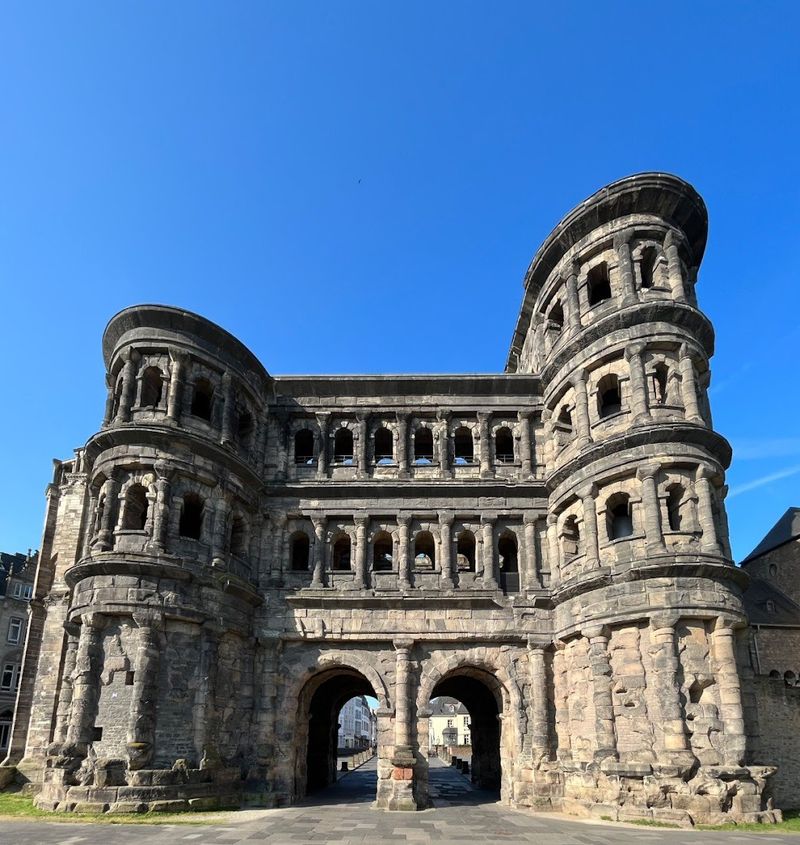
One moment you are walking through a perfectly normal German city, and then suddenly there is a nearly 2,000-year-old Roman gate standing right in front of you. That is the Porta Nigra experience in Trier, and it never gets old no matter how many times you encounter it.
Trier is already one of Germany’s most historically layered cities, but the Porta Nigra is its undeniable centerpiece. As the best-preserved Roman city gate north of the Alps, it is part of Trier’s UNESCO-recognized Roman heritage and a landmark that puts the entire city’s ancient past into sharp physical focus.
The blackened sandstone walls carry the weight of Roman engineering and centuries of weathering in equal measure. You can walk right up to it, study the massive stones, and appreciate just how much ambition went into building something that was designed to last.
For anyone even remotely interested in Roman history, Trier and its Porta Nigra are absolutely non-negotiable stops.
Regensburg Stone Bridge – Bavaria
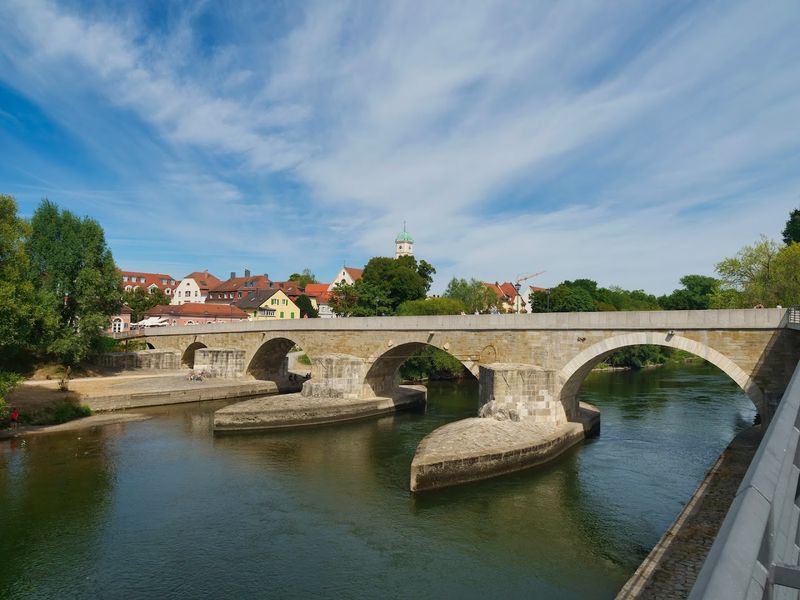
Built starting in 1135, the Regensburg Stone Bridge holds the title of oldest preserved bridge in Germany, and it still has the nerve to look great after nearly 900 years. Regensburg itself is often skipped by travelers who zoom straight from Munich to the Rhine, which is honestly their loss.
The bridge connects the Old Town with Stadtamhof and gives visitors one of the best unobstructed views of Regensburg’s medieval skyline. The cathedral towers frame the background perfectly, and the Danube does its best scenic work right here.
It is the kind of view that makes you stop mid-step to appreciate it.
Because this is an outdoor city landmark rather than a ticketed museum, there are no opening hours to stress about. You can visit at dawn, at dusk, or whenever your travel schedule permits.
Regensburg’s entire old town is a UNESCO World Heritage Site, so once you cross that bridge, more history awaits on every corner.
Bamberg Old Town – Bavaria
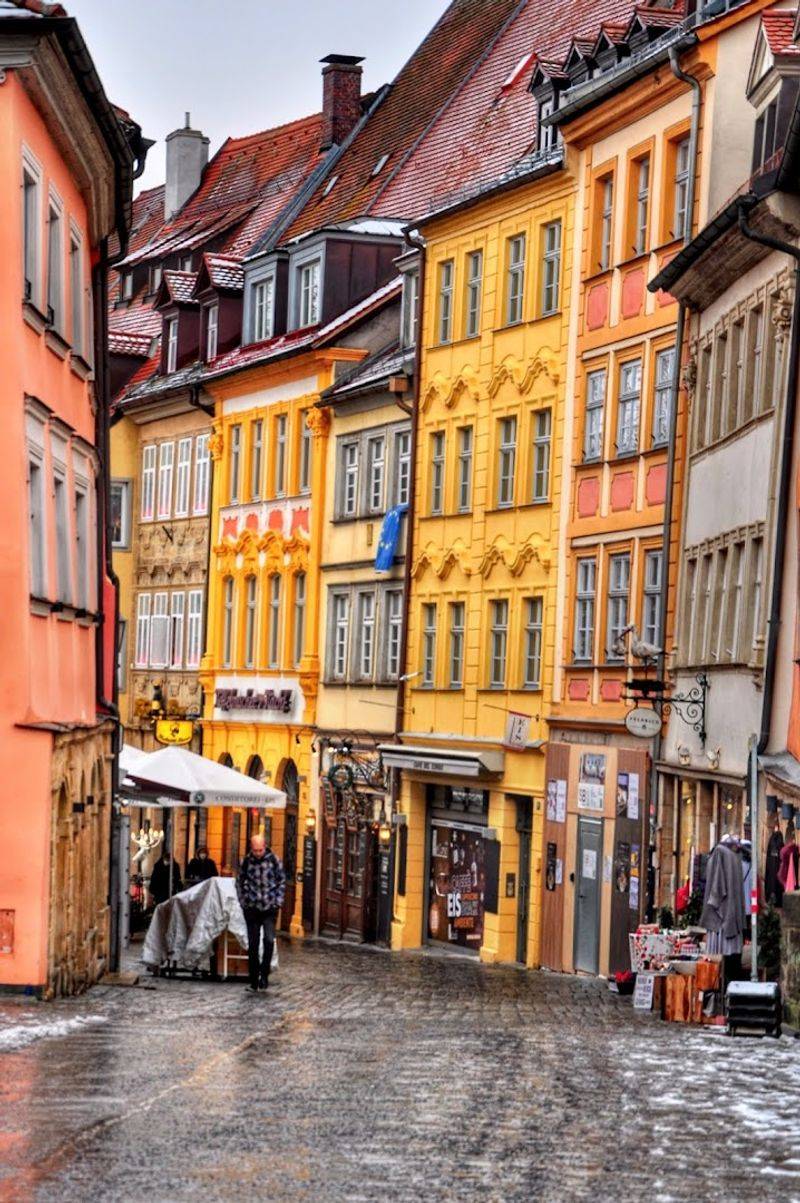
Bamberg’s Old Town Hall literally stands on an island in the middle of a river because the bishop and the townspeople could not agree on where to build it. That kind of stubborn compromise produced one of the most photogenic spots in Bavaria, so fair enough.
The city layers medieval lanes, baroque facades, river views, and seven hills topped with churches into a destination that rewards slow exploration. Germany’s official tourism site highlights Bamberg as a UNESCO World Heritage Site, pointing out gems like Little Venice and the historic gardeners’ district alongside the famous cathedral area.
Bamberg is also quietly famous for its smoked beer, a regional specialty that most visitors discover with great delight. But beyond the pints, the real draw is how effortlessly the whole old town functions as one giant landmark.
You do not need a single museum ticket to have an extraordinary afternoon here. Just walk, look up, and let the city do its thing.
Rammelsberg Mine and Museum – Goslar, Lower Saxony
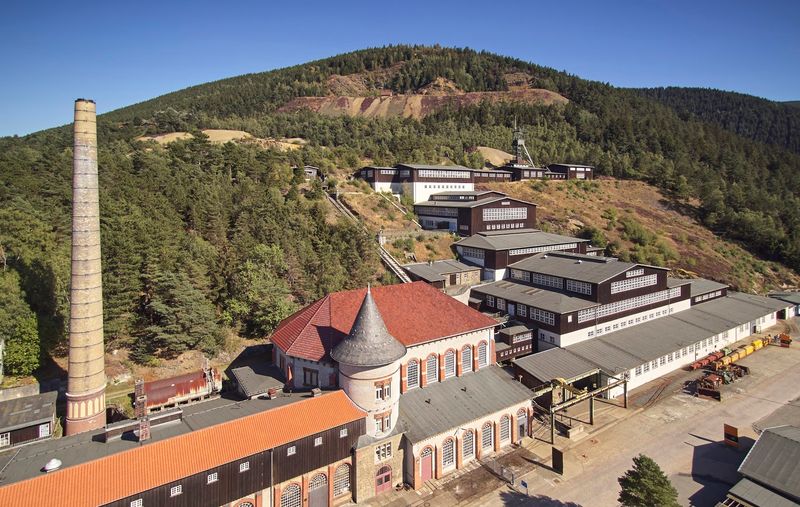
Not every great German landmark is a castle or a cathedral. Rammelsberg Mine near Goslar ran as an active ore mine for over 1,000 years, making it one of the longest-operating mines in world history before it closed in 1988.
That is a seriously impressive run.
Today it functions as a UNESCO World Heritage museum that takes visitors through the full story of mining, labor, technology, and regional wealth. The underground tours are genuinely fascinating, especially for anyone who wants to understand how industrial heritage shaped entire communities across Lower Saxony and beyond.
Goslar’s tourism site describes Rammelsberg as an ancient industrial site transformed into a journey through Germany’s mining heritage. The official Rammelsberg site provides current opening hours, so this remains a fully operational visitor destination rather than a crumbling relic.
Paired with a walk through Goslar’s gorgeous medieval old town, a visit here makes for one of the most well-rounded and unexpected days in northern Germany.
Erfurt’s Old Synagogue and Medieval Jewish Heritage – Thuringia
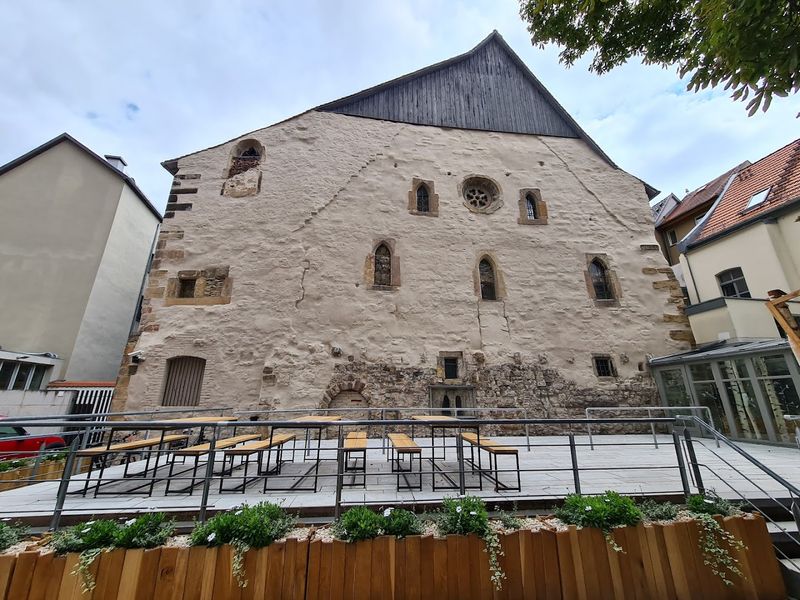
Erfurt’s Old Synagogue began construction around 1094, making it one of the oldest, largest, and best-preserved medieval synagogues in Europe. That is a statement that deserves a moment of quiet appreciation before you even walk through the door.
In September 2023, UNESCO awarded World Heritage status to Erfurt’s medieval Jewish heritage ensemble, which includes the Old Synagogue, a medieval mikveh, and the Stone House. The recognition was long overdue.
Together, these sites tell a story of a thriving Jewish community that existed here centuries before much of European history gets uncomfortable to talk about.
The Old Synagogue is open Tuesday through Sunday according to its official visitor information page, making it straightforward to plan around. Erfurt itself is a beautifully preserved Thuringian city that does not get nearly enough attention from international travelers.
Adding this UNESCO ensemble to any itinerary through central Germany is not just a good idea. It is the kind of visit that genuinely stays with you.
Lorsch Abbey and King’s Hall – Hesse
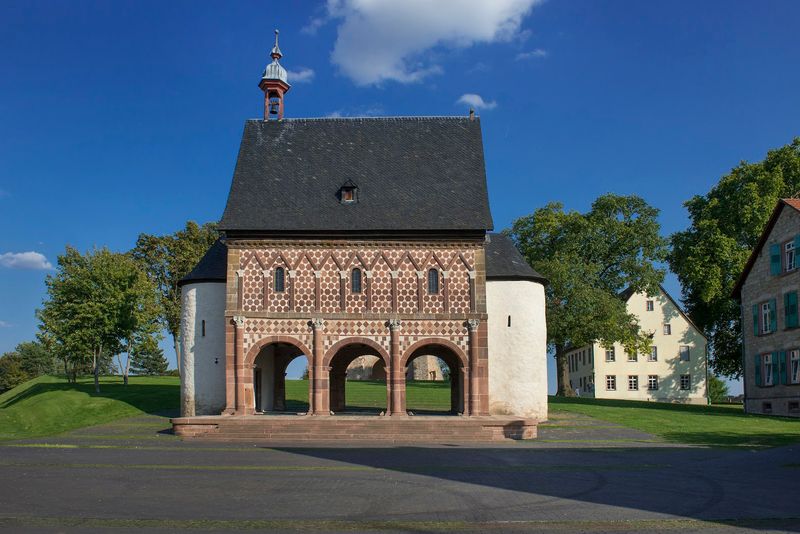
The King’s Hall at Lorsch Abbey is one of those landmarks that looks almost too elegant for its age. Built probably in the mid-9th century, it is the last remaining above-ground section of the Carolingian abbey, and it has a refined architectural confidence that feels centuries ahead of its time.
The German World Heritage association describes it as a late Carolingian structure of exceptional historical significance. The striped stonework and arched openings of the facade give it a character that stands completely apart from the heavier Romanesque buildings that came after it.
Seeing it in person is a genuinely surprising experience.
Practically speaking, the King’s Hall can be viewed freely from the outside at any time, while the upper floor is accessible only through a public guided tour. That makes Lorsch an easy addition even for travelers on a tight schedule.
For anyone building a road trip through Hesse, this quiet but remarkable survivor of the Carolingian world is well worth a stop.
Historic Centers of Stralsund and Wismar – Mecklenburg-Vorpommern
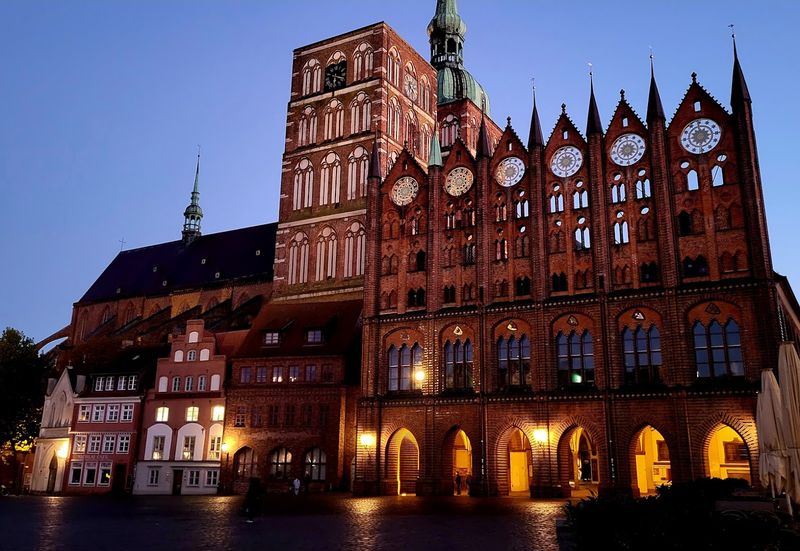
Germany’s Baltic coast plays by completely different architectural rules. Stralsund and Wismar are built in Brick Gothic, a style that trades pale limestone for bold red brick and produces churches so tall and self-assured they practically dare you to look away.
UNESCO describes these two towns as major trading centers of the Hanseatic League during the 14th and 15th centuries. Swedish rule during a later period added another fascinating layer to their identity, and that layered history is still readable in the streets, harbors, and market squares today.
These are not museum towns. People actually live and work here.
The Stralsund tourism site notes that the World Heritage exhibitions in both towns are open daily and free to enter, which is a refreshing bonus. Even without entering a single building, wandering the old streets, harbor areas, and church exteriors delivers a landmark experience that feels entirely different from the castles and Alpine scenery dominating southern Germany.
The Baltic coast has its own excellent argument for your attention.
Upper Middle Rhine Valley – Between Bingen/Rüdesheim and Koblenz
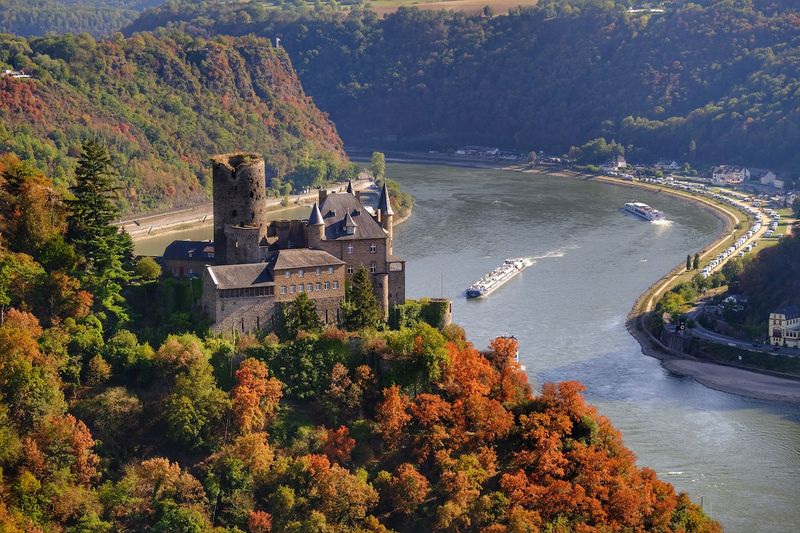
The Upper Middle Rhine Valley has more castles per kilometer than anywhere else on Earth. UNESCO confirms over 40 castles and palaces along this 65-kilometer stretch, and the official World Heritage site calls it the highest castle density worldwide.
That is not a boast. That is just the Rhine being the Rhine.
This is not simply a scenic boat route. The valley is a full cultural landscape of vineyards, river legends, steep cliffs, centuries-old trade routes, and towns that have been strategically important since Roman times.
The Loreley rock, the town of Bacharach, and Marksburg near Braubach each deserve their own afternoon.
For a landmark-focused trip, picking a section between St. Goar and Bacharach gives you castle sightlines, riverside walking, and easy access to wine stops without overwhelming yourself. A boat journey along this stretch is one of the most effortlessly rewarding experiences in Germany.
The scenery does most of the heavy lifting, and it does it brilliantly.
Bergpark Wilhelmshöhe and the Hercules Monument – Kassel, Hesse
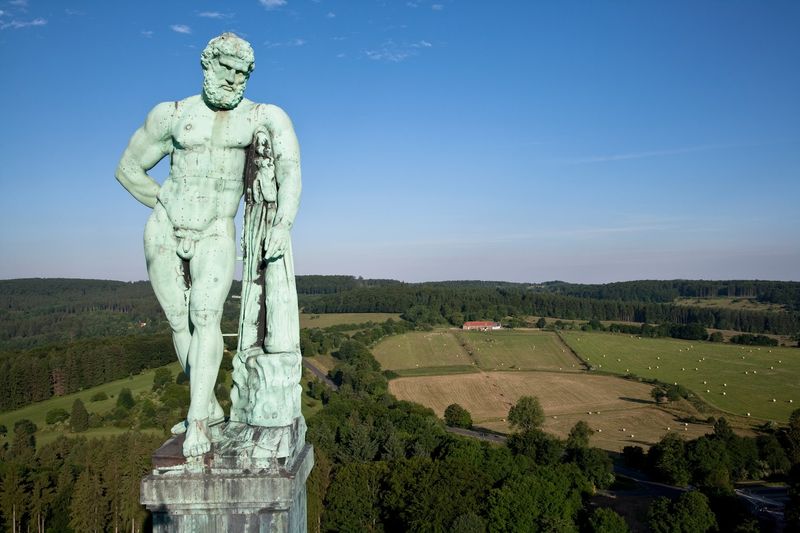
At the top of a forested hill in Kassel stands a copper statue of Hercules so large that eight people can stand inside the club he is holding. That detail alone should convince you that Bergpark Wilhelmshöhe is not your average park visit.
UNESCO describes the park’s water displays as beginning in 1689, with cascades descending the long hillside below the Hercules monument in a sequence of fountains, waterfalls, and pools that required serious 17th-century engineering ambition. Kassel’s official tourism site calls it Europe’s largest mountain park, which gives you a sense of the scale involved.
What makes Bergpark genuinely special is how it refuses to fit neatly into any single category. It is not quite a garden, not quite a sculpture park, and not quite a nature reserve.
It is all three at once, spread across a dramatic hillside with museums, palaces, and mythological symbolism woven throughout. For a grand finale to any Germany trip, this one lands with the force of a Herculean club swing.
Share this story