 Unearth The Voyage
Not every unforgettable travel experience comes with a long queue and a souvenir shop. Some of the world’s most remarkable landmarks are tucked away from tourist hotspots, waiting quietly for curious explorers to find them.
These hidden gems offer history, beauty, and a sense of discovery that the big-name attractions simply can’t match. If you’re ready to go off the beaten path, these 15 landmarks will reward you in ways you’ll never stop talking about.
Melnik Earth Pyramids — Bulgaria’s Natural Sculptures
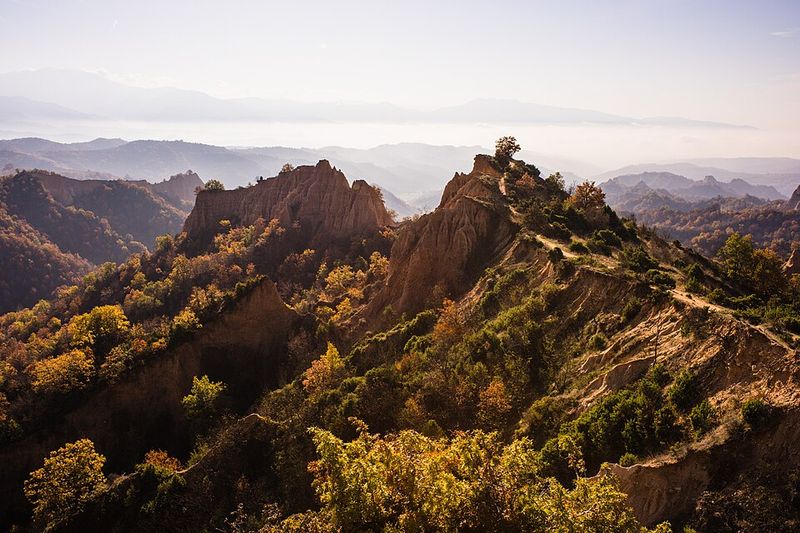
Imagine standing in front of a landscape that looks like a fantasy artist designed it after a very productive dream. The Melnik Earth Pyramids in southwestern Bulgaria are exactly that — towering sandstone columns, some reaching 100 meters high, sculpted by wind and rain over thousands of years.
They rise dramatically from the earth like nature’s own monument park.
The pyramids sit near Melnik, Bulgaria’s smallest town, which adds a charming, almost storybook quality to the visit. Local vineyards produce wine that pairs perfectly with a long afternoon of exploring the formations.
The surrounding flora has a Mediterranean character, making the whole scene feel unexpectedly warm and lush for the Balkans.
Trails wind between the columns, and you can spend hours wandering without bumping into crowds. The best light hits in the late afternoon when golden tones bring out the rich ochre hues of the rock.
Pack sturdy shoes and a camera, and plan to linger — this is the kind of place that makes you forget time entirely.
Herculaneum — A Quiet Roman Time Capsule
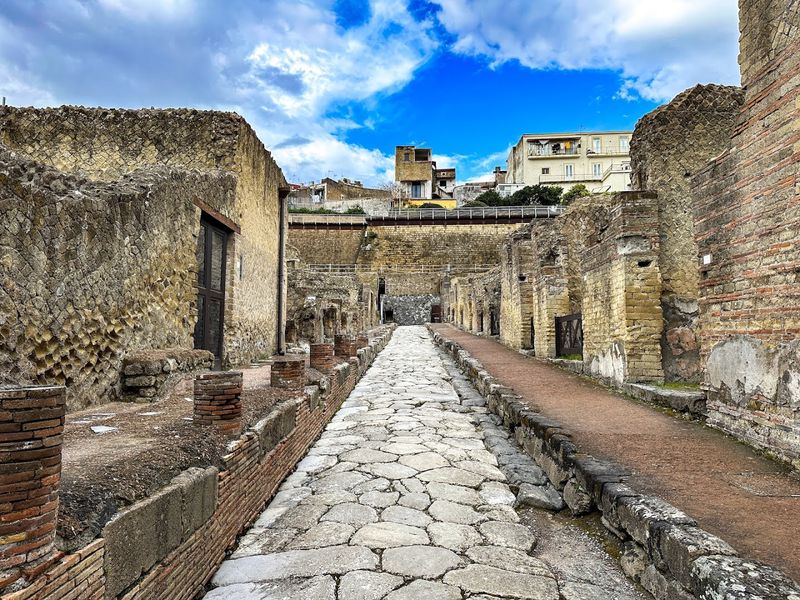
Everyone knows Pompeii, but Herculaneum is the better-kept secret hiding right next door. Buried by the same catastrophic eruption of Mount Vesuvius in 79 AD, Herculaneum was actually preserved in remarkable detail because it was sealed under a thick layer of volcanic material rather than ash.
That difference matters enormously when you’re exploring it today.
Wooden beams, mosaic floors, and even painted walls have survived here in ways that would be impossible at most ancient sites. You can peer into what were once actual homes, shops, and public baths and genuinely feel the texture of everyday Roman life.
The site is compact enough to explore in a few hours, yet rich enough to hold your attention the entire time.
Because Pompeii absorbs most of the tourist crowds, Herculaneum often feels refreshingly uncrowded. That quietness makes the experience more personal — you’re not shuffling through in a pack, you’re actually absorbing history at your own pace.
Combine both sites in a day trip from Naples, but don’t make the mistake of skipping this one. Herculaneum earns its place as one of Italy’s most underrated wonders.
Parigala (“Fairy Castle”) — Azerbaijan’s Cliffside Enigma
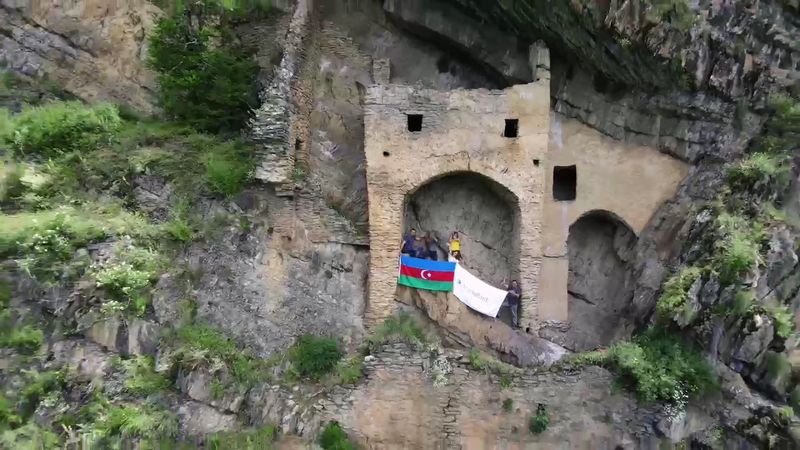
Clinging to a sheer cliff face in the Caucasus foothills, Parigala looks less like a real place and more like something from a legend — which, fittingly, is exactly how locals describe it. The name translates loosely to “Fairy Castle,” and the structure has inspired centuries of folklore about its origins.
Some say monks built it, others claim it was a refuge for a woman fleeing danger.
Nobody knows for certain who constructed Parigala or precisely when, and that mystery is a big part of its appeal. Getting there requires serious effort — rough terrain, steep paths, and no tourist infrastructure to smooth the journey.
But those who make it describe the sense of arrival as one of the most rewarding feelings in travel.
The views from the cliff are extraordinary, stretching across forested valleys and mountain ridges that feel entirely untouched. Azerbaijan as a travel destination is still relatively off the radar for most Western tourists, which means Parigala sees a tiny fraction of the visitors it deserves.
If you enjoy landmarks that feel genuinely discovered rather than simply visited, this cliffside enigma belongs on your list.
Callanish Stones — Scotland’s Mystical Megaliths
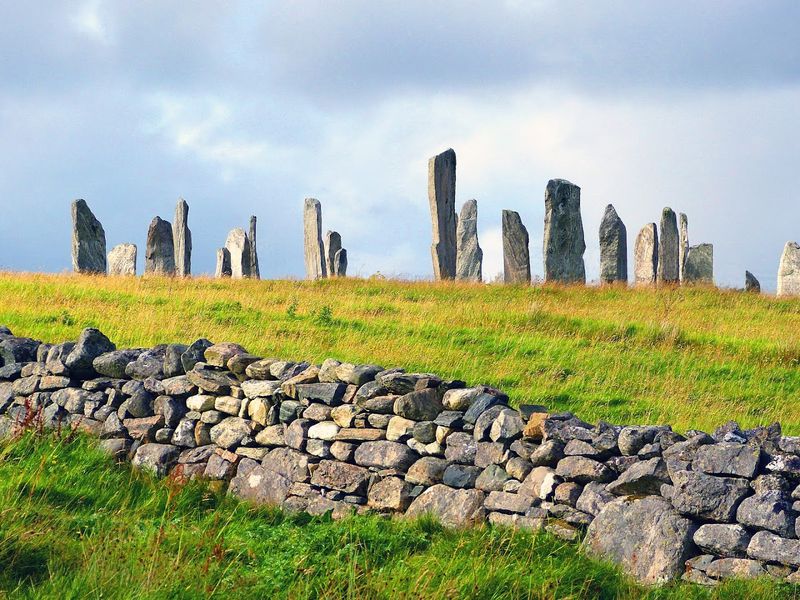
Few ancient sites on Earth carry the atmospheric weight of the Callanish Stones on Scotland’s Isle of Lewis. Erected around 2700 BC — predating Stonehenge — these towering megaliths are arranged in a striking cross-like pattern that aligns with lunar cycles and celestial events.
Standing among them on a misty morning feels less like tourism and more like trespassing on something sacred.
The stones rise from open moorland with the Atlantic Ocean visible in the distance, creating a setting that’s simultaneously bleak and beautiful. Unlike Stonehenge, there are no fences keeping you at arm’s length.
You can walk directly between the stones, run your hand along their rough surfaces, and take a moment to genuinely ponder who placed them here and why.
Callanish is free to visit and open year-round, with a small visitor centre nearby offering useful historical context. The Isle of Lewis itself is worth exploring — rugged, wild, and deeply atmospheric.
Plan for changeable weather, because the Scottish Hebrides don’t do predictable skies. Bring a waterproof jacket and an open mind, and let Callanish do the rest.
Salina Turda — Romania’s Subterranean Wonder
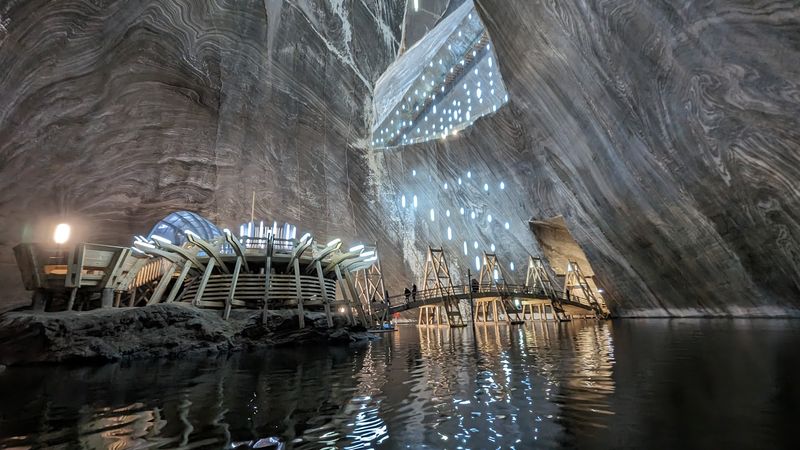
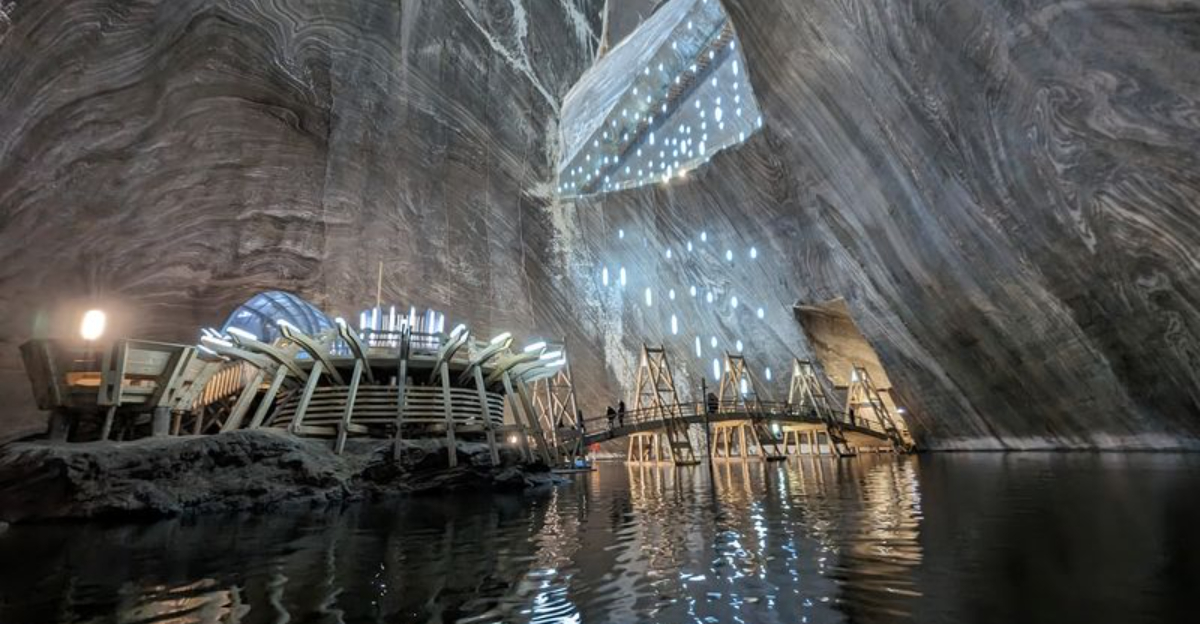
Step into a salt mine and suddenly find yourself staring at a Ferris wheel — yes, underground. Salina Turda in Transylvania, Romania, is one of those places that sounds made-up until you’re actually standing inside it, jaw dropped.
Carved deep into the earth over centuries of salt mining, the caverns have been transformed into a genuinely jaw-dropping subterranean attraction.
The main chamber, Rudolph Mine, stretches over 50 meters deep and features a calm salt lake where visitors can rent boats. The air inside is rich with minerals, and some people visit specifically for the health benefits of breathing it in.
The dramatic lighting turns rough stone walls into something that feels almost cinematic.
Getting there is straightforward — Salina Turda sits near the city of Cluj-Napoca and is well-signposted. Wear layers, because the temperature underground stays cool year-round regardless of the season.
You won’t find many landmarks that blend history, wellness, and sheer weirdness this effectively.
Ciudad Perdida — Colombia’s Lost City
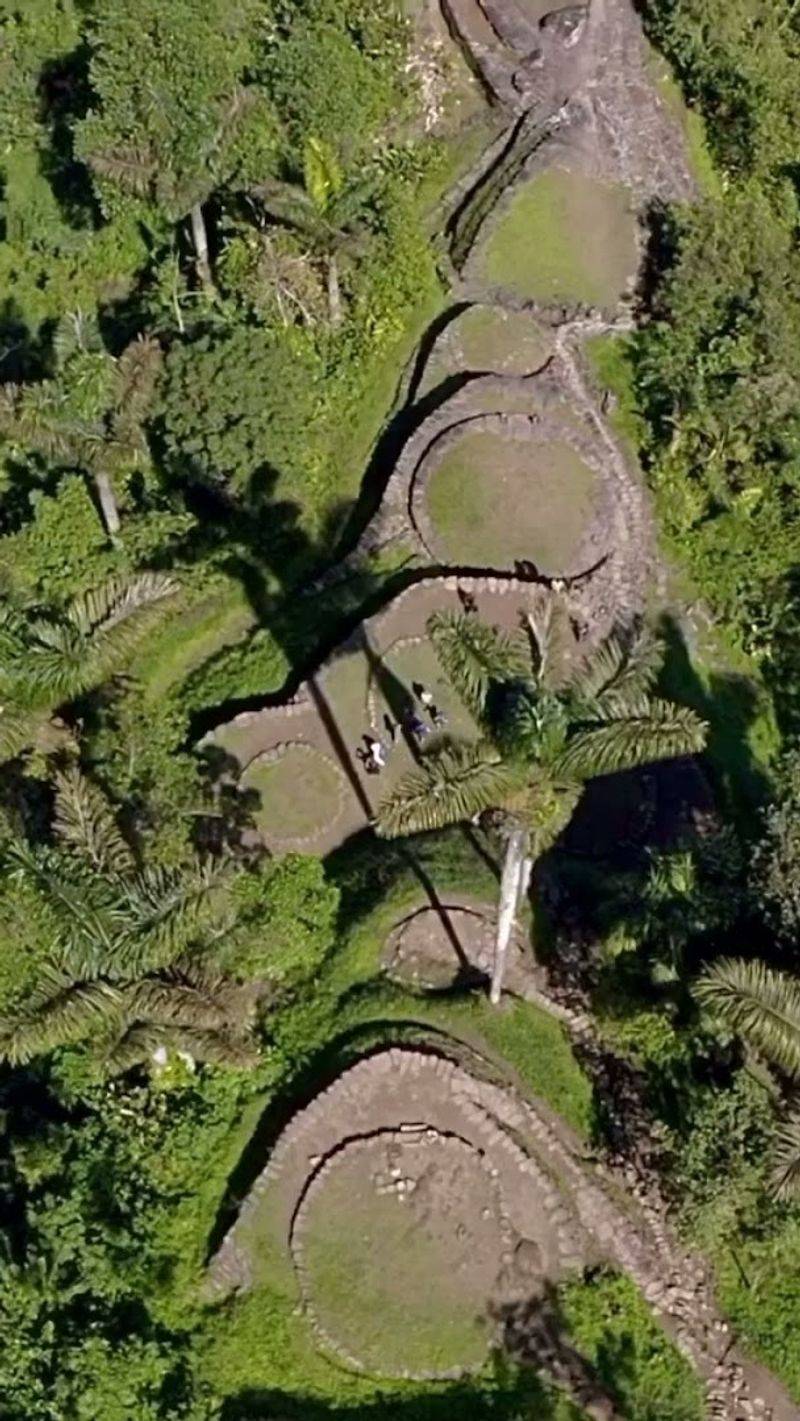
Older than Machu Picchu by roughly 650 years, Ciudad Perdida sits hidden in Colombia’s Sierra Nevada mountains and rewards only those willing to earn it. There is no shortcut here — reaching the Lost City requires a four-to-six-day guided trek through dense jungle, river crossings, and steep terrain.
That physical commitment is exactly what makes the arrival so extraordinary.
Built by the Tairona civilisation around 800 AD, the site features terraced plazas, stone staircases, and circular platforms carved into the mountainside. Indigenous Kogi and Arhuaco communities still consider the area sacred and live nearby, adding profound cultural context to the experience.
Guides will explain the spiritual significance of the site in ways that no guidebook fully captures.
The trek itself is part of the experience — jungle birds, waterfalls, and remote mountain villages punctuate the journey. Temperatures swing dramatically between hot and humid in the lowlands and cool and misty near the summit.
Tour operators in Santa Marta organise the trip, and going with a licensed guide is mandatory. Ciudad Perdida isn’t a casual detour — it’s a full commitment that pays off in memories that last decades.
Derinkuyu Underground City — Turkey’s Subterranean Maze
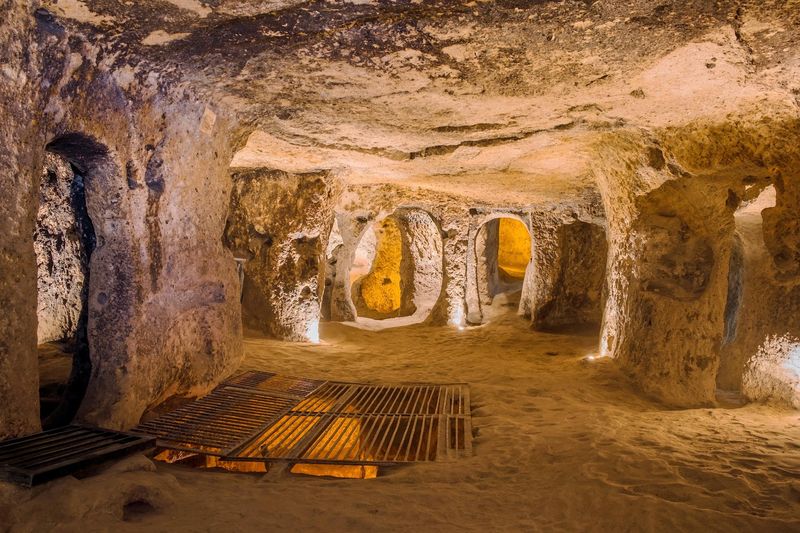
Somewhere beneath the fairy-chimney landscape of Cappadocia lies a city that most people walk right over without realising. Derinkuyu is a fully functioning underground settlement carved into soft volcanic rock, stretching at least eight levels deep and once capable of housing up to 20,000 people.
The scale of what ancient people achieved here, entirely by hand, is genuinely staggering.
Narrow tunnels connect rooms that served as sleeping quarters, kitchens, stables, wine cellars, and even churches. Huge circular stone doors could be rolled across passages to seal sections off in case of attack — a feature that feels more like a film set than a real historical artifact.
Ventilation shafts run throughout the complex, funneling fresh air down to the deepest levels.
Derinkuyu is open to the public and located near the town of the same name in Nevsehir province. Visiting in warmer months is popular, but the underground temperature stays around 13 degrees Celsius all year, so a light jacket is always a good idea.
If you’re prone to claustrophobia, some sections may test you — but pushing through is absolutely worth it for the story alone.
Aogashima Island — Japan’s Double Volcano Village
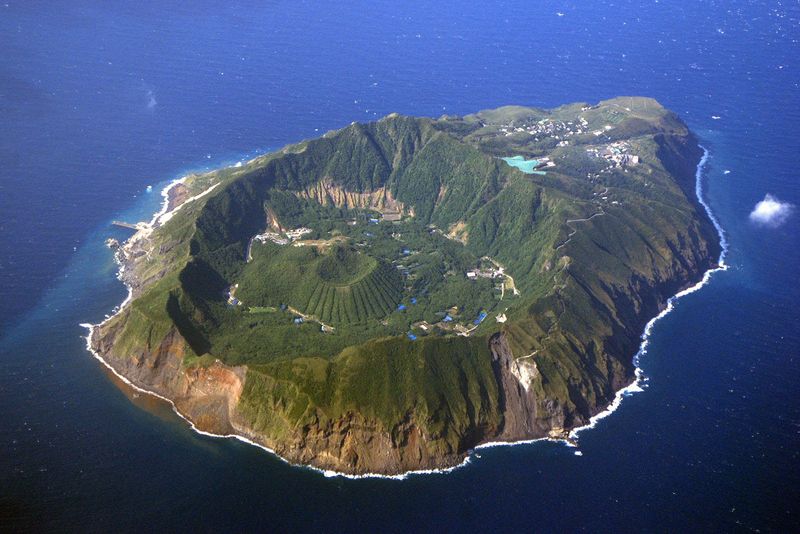
There is a village in Japan where people literally live inside a volcano — and it might be the most remote community in the entire country. Aogashima Island sits about 360 kilometres south of Tokyo in the Philippine Sea, and its small population of around 170 residents call the interior of a double-caldera volcano home.
Getting there involves either a helicopter or a boat that only operates when weather allows, which it frequently does not.
The island’s dramatic geography is unlike anywhere else — steep outer walls drop to the ocean while the inner crater cradles farmland, a community centre, and even a small sauna powered by volcanic heat. Walking the rim trail rewards you with views that feel completely disconnected from the modern world.
There are no hotels in the conventional sense, so accommodation requires advance planning through local guesthouses.
Aogashima is not easy to visit, and that’s precisely the point. The effort filters out casual visitors and leaves the island genuinely peaceful.
Locals are welcoming to the few travellers who make it, and the sense of arriving somewhere truly off-grid is hard to replicate. For adventurous travellers who’ve seen most of Japan’s famous sights, Aogashima is the ultimate next chapter.
Giant’s Causeway — Northern Ireland’s Basalt Marvel
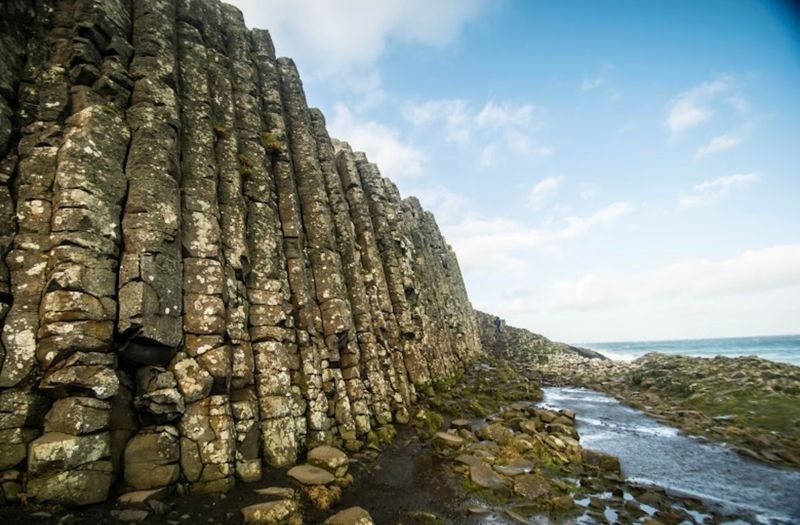
Forty thousand interlocking hexagonal basalt columns stretching into the North Atlantic — and yet somehow, the Giant’s Causeway still manages to surprise people who thought they knew what to expect. Northern Ireland’s only UNESCO World Heritage Site was formed around 60 million years ago by volcanic activity, but local legend tells a much better story involving two giants and a disputed rivalry across the Irish Sea.
The columns vary in height, some rising over 12 meters, and their geometric precision looks so deliberate that it’s easy to understand why ancient people credited supernatural forces. Walking across them feels surreal — each step lands on a natural six-sided platform, and the sound of waves crashing around you adds to the drama.
The coastal path leading to and from the causeway is equally spectacular.
The visitor centre sits at the top of a cliff and offers exhibits on both the geology and the folklore. Entry to the causeway itself is free — you only pay if you use the centre or the shuttle bus.
Arrive early in the morning or during shoulder season to avoid the larger crowds. The Giant’s Causeway rewards patience, and the view at golden hour is something genuinely difficult to describe with words.
Skara Brae — Scotland’s Prehistoric Village
Older than Stonehenge. Older than the Egyptian Pyramids.
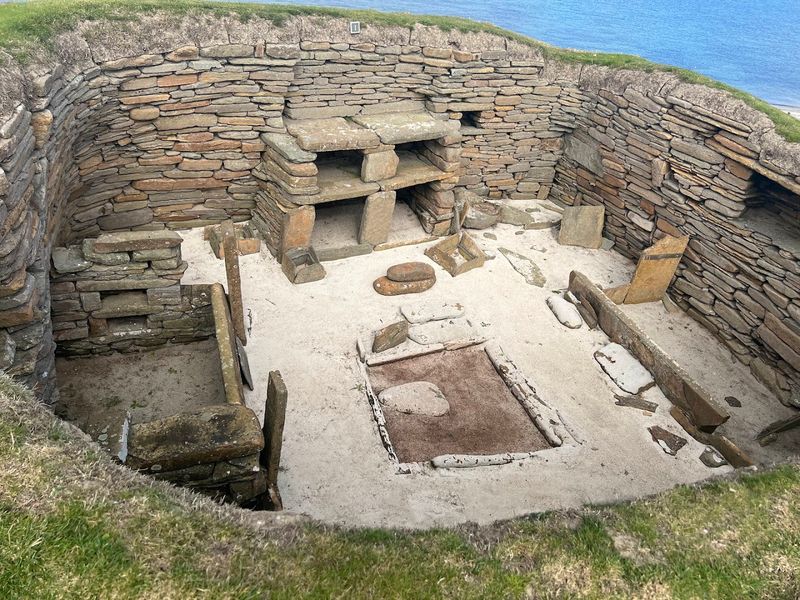
Skara Brae on the Orkney Islands is a Neolithic village so well preserved that you can peer into stone houses and see the original furniture — beds, shelves, and hearths — still standing after 5,000 years. It was only uncovered in 1850 when a powerful storm stripped away the grass covering it, as if the earth had been keeping a secret all along.
Walking along the viewing path above the settlement gives you a direct view into eight interconnected stone houses, connected by covered passageways that sheltered residents from Orkney’s brutal winters. The detail is extraordinary — researchers have found traces of pigment, tools, and jewellery that paint a vivid picture of daily life in the Neolithic period.
It’s not a ruin in the usual sense; it’s a snapshot.
The site is managed by Historic Environment Scotland and includes a replica house you can actually enter. Combining Skara Brae with the nearby Ring of Brodgar and Maeshowe makes for a full day of prehistoric wonder.
Orkney is a long way from most of Scotland’s tourist trail, but that distance is the whole point. Skara Brae earns its reputation as one of the most remarkable ancient sites in the world.
Jvari Monastery — Georgia’s Spiritual Mountaintop
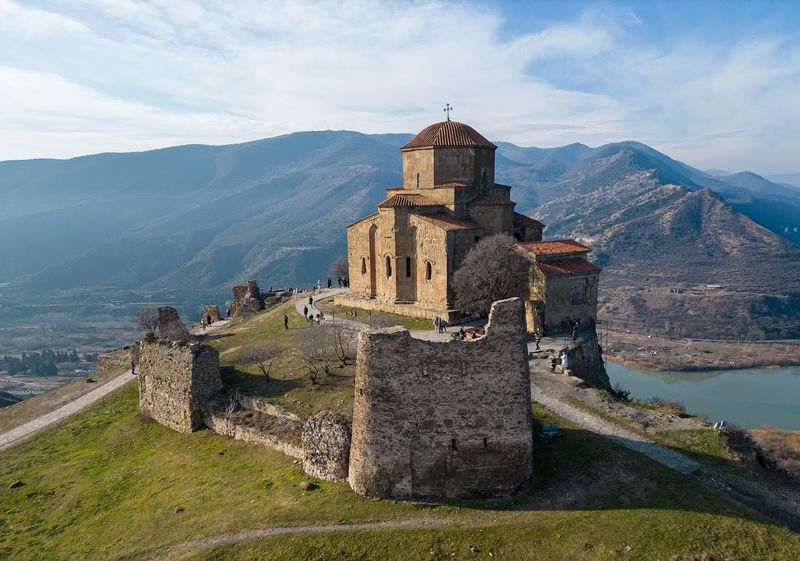
Perched on a rocky hilltop above the ancient town of Mtskheta, Jvari Monastery has been watching over the confluence of two rivers for over 1,400 years. Built in the 6th century, it’s one of the earliest examples of Georgian Christian architecture and a UNESCO World Heritage Site — yet it sees a fraction of the visitors that crowd similar sites across Europe.
That quiet is a rare gift.
The view from the monastery’s exterior is reason enough to make the climb. The Mtkvari and Aragvi rivers meet directly below, their waters visibly different in colour as they merge, set against a backdrop of layered mountain ridges.
Georgian poet Mikheil Lermontov immortalised this view in verse, and standing there makes it easy to understand why.
The interior is simple and solemn — candlelit, fragrant with incense, and deeply atmospheric. Services are still held regularly, and visiting during one adds a layer of authenticity that no audio guide can replicate.
Mtskheta is a short drive from Tbilisi, making Jvari an easy day trip from the capital. Go in the late afternoon when the light turns golden and the valley below seems to glow.
Georgia is one of Europe’s most underrated travel destinations, and Jvari is a compelling reason why that needs to change.
Skagway Historic District — Alaska’s Gold Rush Legacy
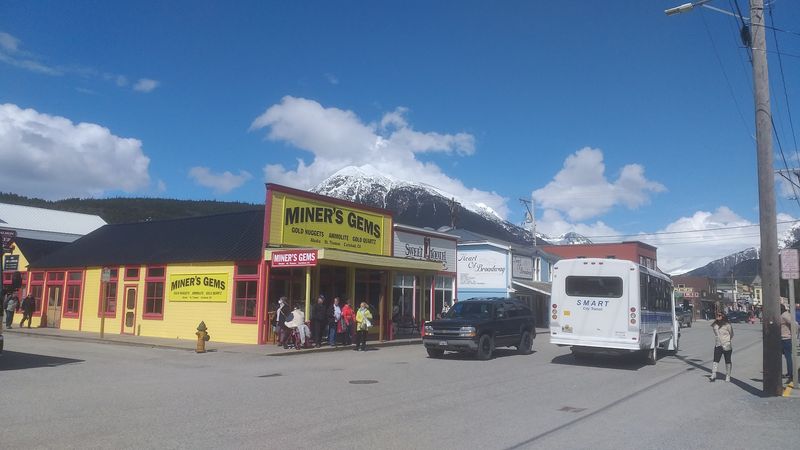
In 1898, Skagway was a boomtown of 10,000 desperate gold-seekers practically overnight. Today, the same wooden boardwalks and false-fronted storefronts that lined those chaotic streets are still standing, preserved as part of the Klondike Gold Rush National Historical Park.
Walking through downtown Skagway feels genuinely like stepping into a sepia photograph that someone forgot to fade.
The buildings aren’t recreations — they’re the real thing, maintained and protected because the town’s remote Alaskan location meant development largely passed it by after the gold rush ended. The Red Onion Saloon still operates.
The Trail of ’98 Museum fills in the human drama behind the history. And the infamous Chilkoot Trail, which thousands of prospectors once hauled their gear over, is still hikeable today.
Most visitors arrive by cruise ship and spend only a few hours, which means staying overnight unlocks a quieter, more authentic version of the town. The surrounding mountain scenery is extraordinary in every season, and the White Pass and Yukon Route railway offers one of the most dramatic train rides in North America.
Skagway is small, remote, and completely singular — a place where history hasn’t been polished smooth but left wonderfully rough around the edges.
Suzhou Classical Gardens — China’s Oasis of Harmony
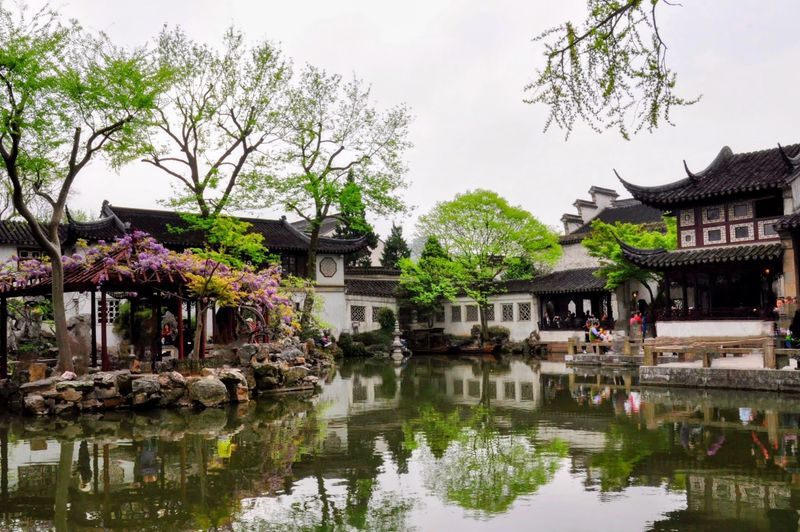
Tucked behind whitewashed walls in the canal city of Suzhou, these classical gardens are masterclasses in the art of controlled beauty. Designed over centuries by scholars, poets, and retired officials, each garden is a miniature universe — rocks, water, plants, and architecture arranged to evoke specific emotions and philosophical ideas.
The Humble Administrator’s Garden and the Lingering Garden are UNESCO-listed and among the finest examples of Chinese landscape design in existence.
What makes Suzhou’s gardens special isn’t just their appearance — it’s the intention behind every element. A strategically placed rock represents a mountain.
A still pond reflects the sky to create a sense of infinite space. Moon gates frame views like paintings.
Every corner turned reveals a new composition that feels simultaneously natural and perfectly deliberate.
Suzhou sits just 30 minutes from Shanghai by high-speed train, making it one of China’s most accessible day trips. The gardens are quieter on weekday mornings, especially outside the summer peak season.
Hiring a guide who understands the symbolism transforms the experience from a pleasant walk into a genuinely illuminating one. These gardens reward slow, attentive visitors — the kind who pause, look carefully, and let the details reveal themselves over time.
Gede Ruins — Kenya’s Forgotten Swahili Settlement
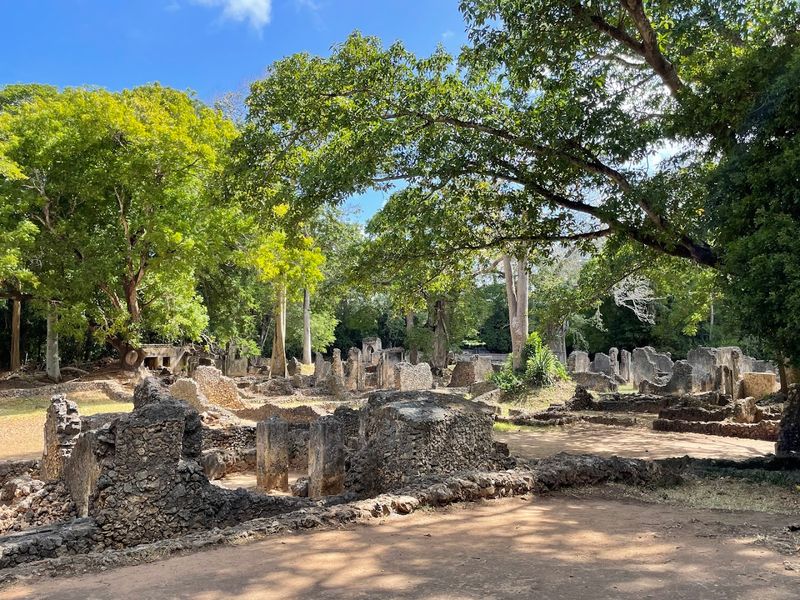
Deep in the coastal forest near Malindi, Kenya, a Swahili town that once housed thousands of people now stands silent, slowly being reclaimed by trees. The Gede Ruins date back to the 13th century and include mosques, a palace, pillar tombs, and merchant houses — evidence of a prosperous trading settlement that simply vanished from historical records, leaving behind more questions than answers.
That mystery gives the site an eerie, compelling energy that’s hard to shake.
Sykes monkeys and golden-rumped elephant shrews wander between the ancient walls, indifferent to the history surrounding them. The forest canopy filters the equatorial sunlight into something soft and cathedral-like, which makes the ruins feel both ancient and alive.
Interpretive signs throughout the site explain what each structure likely was and how the town functioned at its peak.
Gede sits within the Arabuko-Sokoke Forest Reserve, one of the largest remaining coastal forests in East Africa, so combining a ruins visit with a forest walk or birdwatching is an easy and rewarding option. Entry fees are modest, and the site is rarely crowded.
For travellers exploring Kenya’s coast beyond the beach resorts, Gede offers something genuinely different — a place where history, nature, and mystery overlap in the most unexpected way.



