 Unearth The Voyage
Certain landmarks do more than anchor skylines. They distill centuries of ambition, struggle, and pride into silhouettes the whole world recognizes at a glance.
As you explore these places, you are really stepping into living chapters of national stories. Let this guide be your passport to the meanings behind the monuments you think you already know.
Eiffel Tower — France
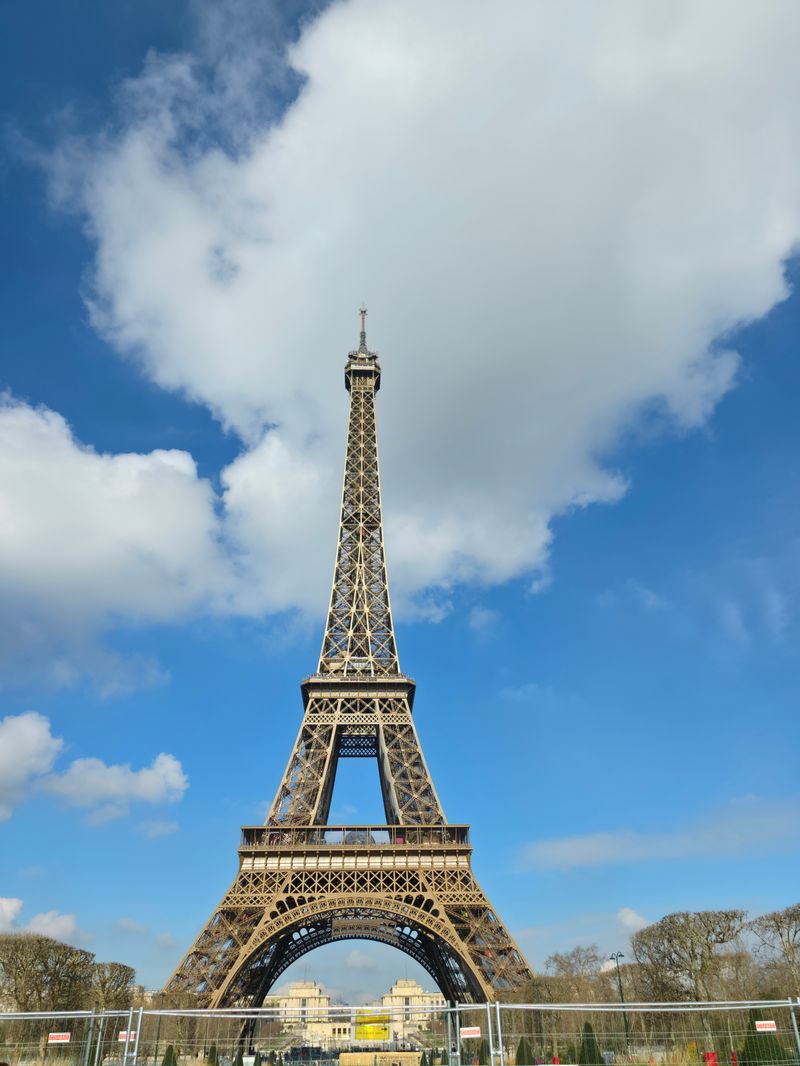
You look up and the latticework blooms against the Paris sky, a feat of engineering that never stops feeling audacious. Built for the 1889 World’s Fair, the Eiffel Tower was France announcing its modern confidence in iron and imagination.
Locals call it the Iron Lady, a nickname that hints at resilience, grace, and unabashed flair.
From its platforms, the city spreads in an elegant geometry of boulevards, bridges, and zinc rooftops. Standing here, you sense France’s drive to experiment and astonish, the same streak that fueled Impressionism and aviation.
By night, the sparkle shows a playful side, reminding you that national pride can be stylish as well as steadfast.
What began as a temporary showpiece became the emblem of a culture in love with beauty and ideas. You hear languages mixing beneath it, but the story remains clearly French: an embrace of innovation married to romance.
Every year, millions arrive for the view and leave with something deeper, a feeling that creative courage defines France.
Statue of Liberty — USA
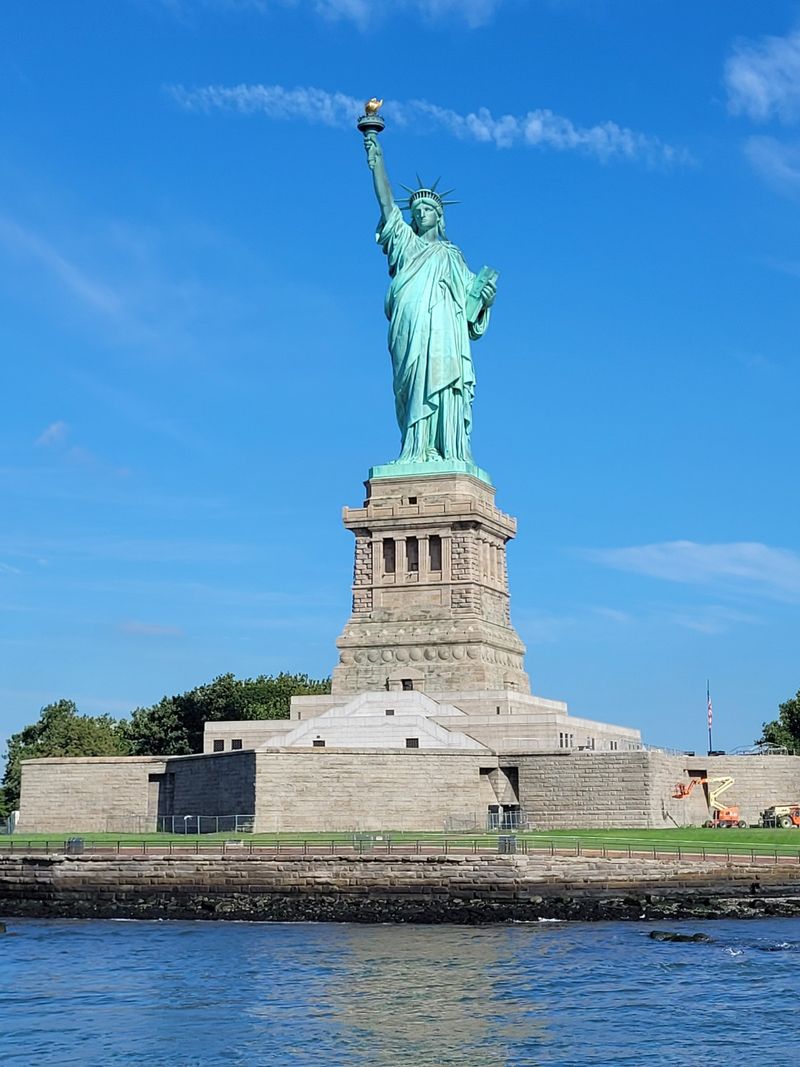
Approaching New York Harbor, the statue appears first as a silhouette, then as an idea you can almost touch. Gifted by France in 1886, Lady Liberty embodies a promise the United States made to itself and the world.
The torch is not just flame but invitation, asking newcomers to step into opportunity.
For generations, immigrants read the statue as a welcome sign and a compass. You can stand on Liberty Island and feel that history hum through the copper skin, weathered and steadfast.
The crown’s windows stare out over restless water, a reminder that liberty is a journey, not a finished destination.
As debates shift and decades turn, the statue’s meaning deepens rather than fades. It captures the American story as aspiration bound to responsibility.
When you look up, you see ideals rendered in metal and scale, a national identity anchored in freedom and the courage to expand who we include.
Taj Mahal — India
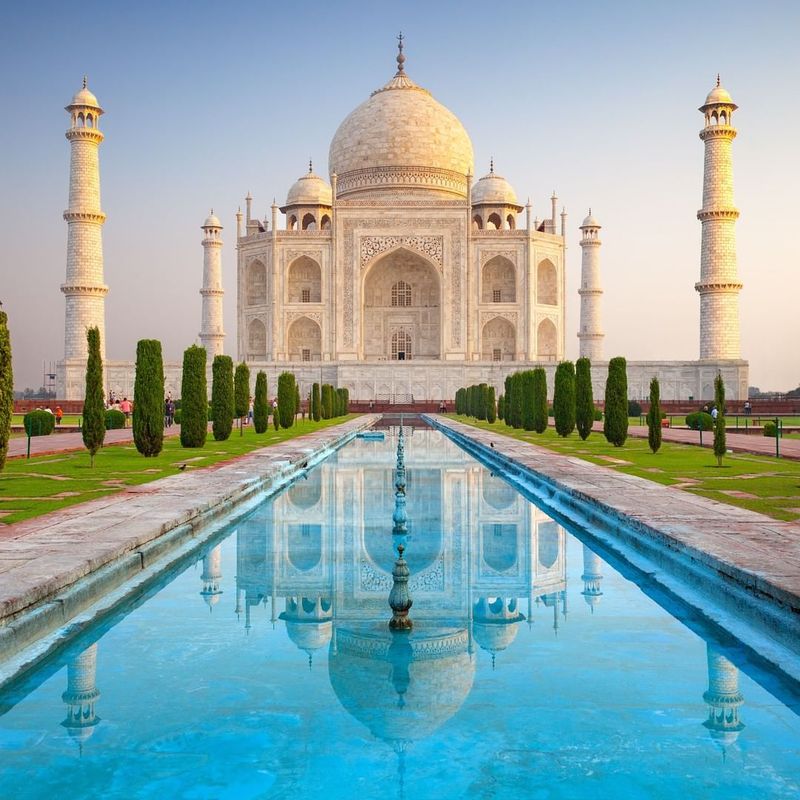
At sunrise, the Taj Mahal floats like a mirage, pale marble soaking up blush light. Built by Shah Jahan for Mumtaz Mahal, it is a mausoleum and a love letter, precise as geometry yet tender as memory.
You trace the pietra dura inlays and feel the patience of artisans across centuries.
India’s complexity gathers in this symmetry: Mughal craft, Persian gardens, and local artisanship braided together. Stand in the central chamber and sound folds on itself, a hush that suggests devotion and mastery.
The dome frames sky as if beauty were a kind of prayer that belongs to everyone.
For travelers, the Taj defines India’s artistic confidence and spiritual breadth. Its image represents endurance through change, a unifying beacon across languages and faiths.
You leave believing elegance can be a national argument, quietly insisting that love and skill are sovereign forces.
Machu Picchu — Peru
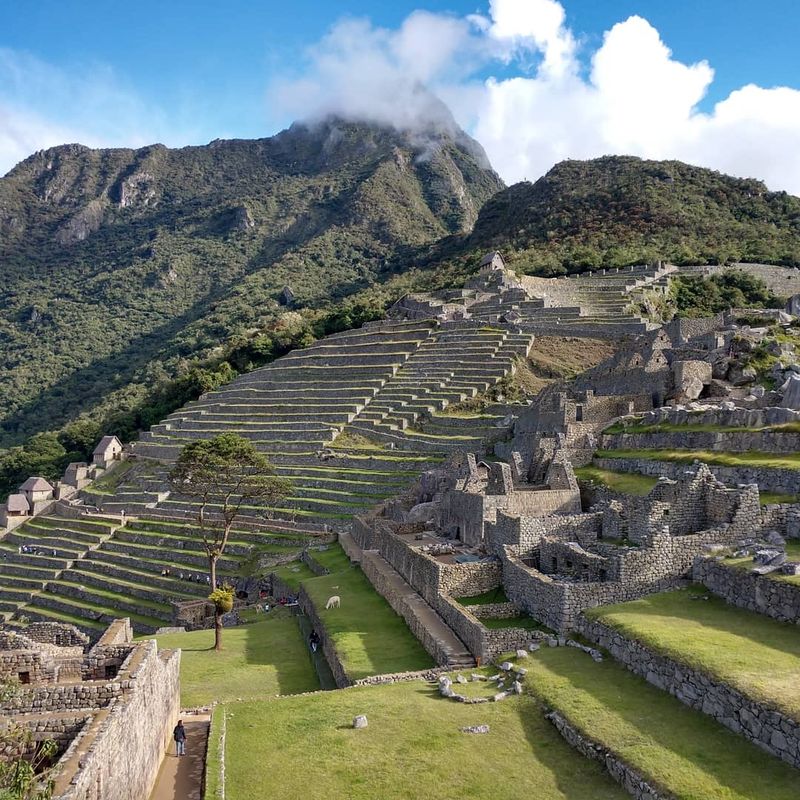
Machu Picchu rises from cloud and ridge like a thought made of stone. The Inca shaped terraces and temples to align with mountains and sky, turning landscape into calendar and sanctuary.
You walk narrow paths and feel the altitude thin distractions into wonder.
Peru’s indigenous heritage breathes here, resilient and meticulous. Stones fit without mortar, a precise logic that shrugs off time.
The view toward Huayna Picchu reminds you that knowledge can be encoded in vistas, and identity can be a choreography of earth and effort.
As a UNESCO treasure, the site connects Peru’s past to a present full of cultural confidence. Guides speak of astronomy and agriculture while mist drifts like incense.
You leave with legs aching and perspective widened, convinced that ingenuity at 2,400 meters helped shape a nation below.
Great Wall of China — China
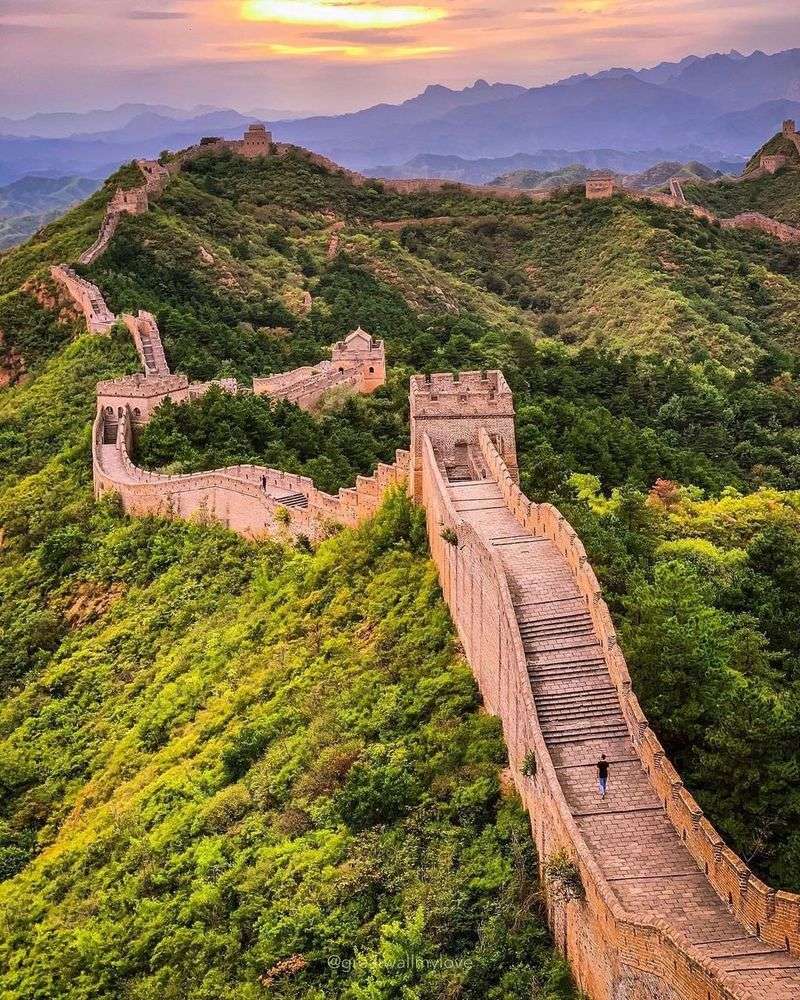
The wall climbs and falls like a dragon breathing across ridgelines, ancient stones warmed by wind and sun. Built and rebuilt over dynasties, it folds defense, logistics, and endurance into one relentless line.
You climb a tower and feel centuries of vigilance gathered in the view.
Here, China’s sense of continuity becomes tangible. The wall is not only barrier but message, a statement about patience and collective will.
Footsteps echo on worn steps, and you understand how work spread across generations can knit a sprawling land together.
In photographs it looks distant, but on site it feels intimate, textured by lichen and hand-hewn blocks. You carry away a lesson that identity can be constructed stone by stone.
The Great Wall endures as an emblem of perseverance, an outline of history scrawled across mountains.
Acropolis & Parthenon — Greece
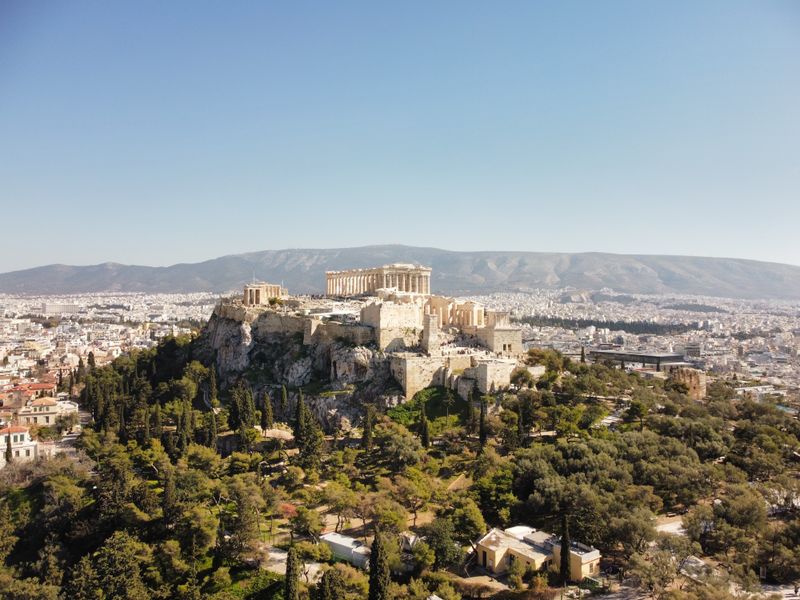
The Acropolis lifts Athens toward the Attic sky, a limestone stage for ideas that shaped the West. The Parthenon’s columns hold rhythm like a poem, Doric lines that refuse to age.
You stand amid shards of history and hear debates about virtue and citizenship echo in the wind.
Greece threads democracy, philosophy, and theater into this hill of temples. The marble glows honey colored, defying time and conflict, a reminder that beauty can also be argument.
From the summit, the city sprawls modern and messy, yet tethered to principles born here.
Walking down, you realize national pride can be rigorous rather than loud. Greece claims its heritage not as relic but as living curriculum.
The Acropolis teaches that identity is a practice, honed over centuries, measured in stone and thought.
Sydney Opera House — Australia
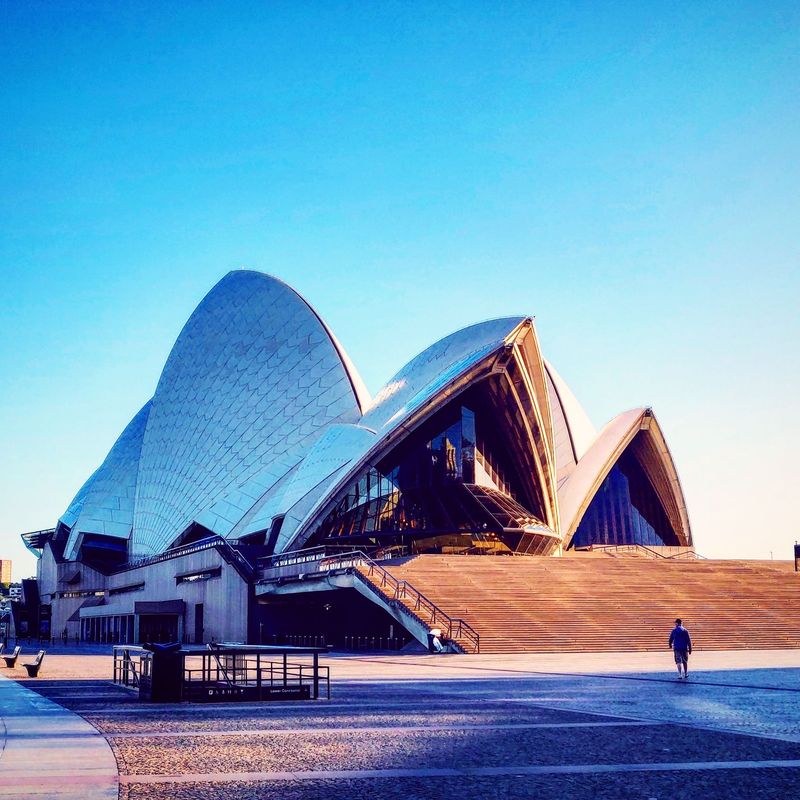
The sails lift from Bennelong Point as if the harbor itself decided to perform. Jorn Utzon’s design made risk look effortless, turning concrete and tile into sea foam and movement.
You walk the concourse and feel a country leaning into creativity with ocean breezes at its back.
Inside, the program spans opera, dance, and daring new work, a stage for a multicultural nation. The shells mirror boats and shoreline, stitching architecture to landscape.
Standing here, you sense Australia’s confidence in art as diplomacy and welcome.
By day it gleams; by night it glows like a lantern for ideas. Visitors come for the icon and stay for the energy that spills into the harbor precinct.
The Opera House has become shorthand for Australian identity, coastal, inventive, and open to the world.
Christ the Redeemer — Brazil
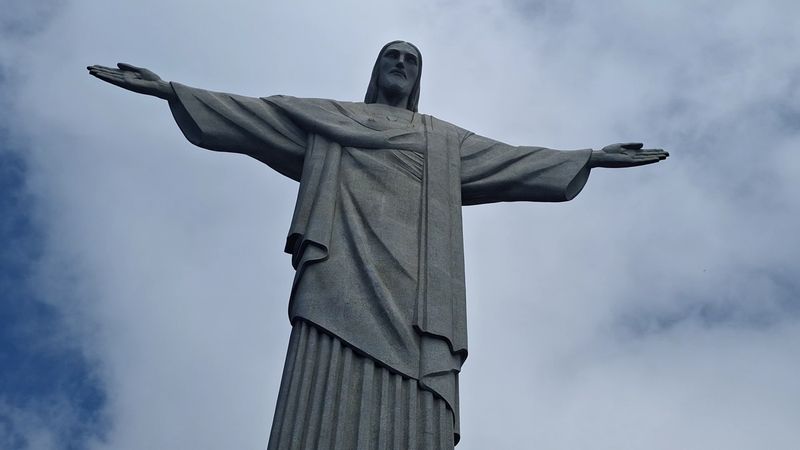
From Corcovado, the statue opens its arms over a city arranged like a postcard. Concrete becomes compassion as Christ the Redeemer watches bays, favelas, and beaches with equal regard.
You ride the train through Tijuca Forest and step into light that feels ceremonial.
Brazil’s spiritual warmth gathers here, a blend of faith, hospitality, and exuberance. The icon frames Rio’s drama of granite and sea, somewhere between blessing and embrace.
Standing beneath the outstretched arms, you grasp how unity can be an attitude as much as a policy.
Tourists mimic the pose and locals look up with quiet pride. The monument is as much meeting point as sculpture, a shorthand for national generosity.
In a city of rhythms, it keeps slow time, reminding everyone that welcome is a Brazilian art.
Stonehenge — United Kingdom
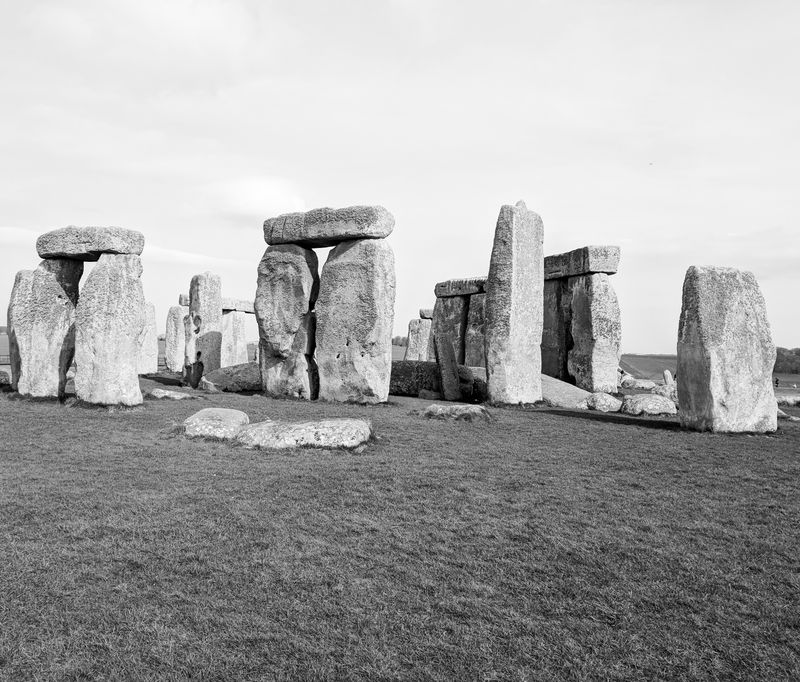
In the Salisbury Plain, stones stand like sentinels against low sky and weather. The circle resists easy explanations, which may be the point.
You walk the perimeter path and feel time fold, prehistoric intention humming beneath the turf.
Britain’s identity has threads older than empire, older than language. Stonehenge is one such thread, a ritual device and cosmic clock in one enigmatic form.
The quiet carries a seriousness that modern noise cannot dislodge.
As research evolves, so do stories, but the monument’s authority endures. You leave with questions sharpened, not dulled, a national lesson about patience with mystery.
In a place known for storytelling, the stones still get the last word.
Minar-e-Pakistan — Pakistan
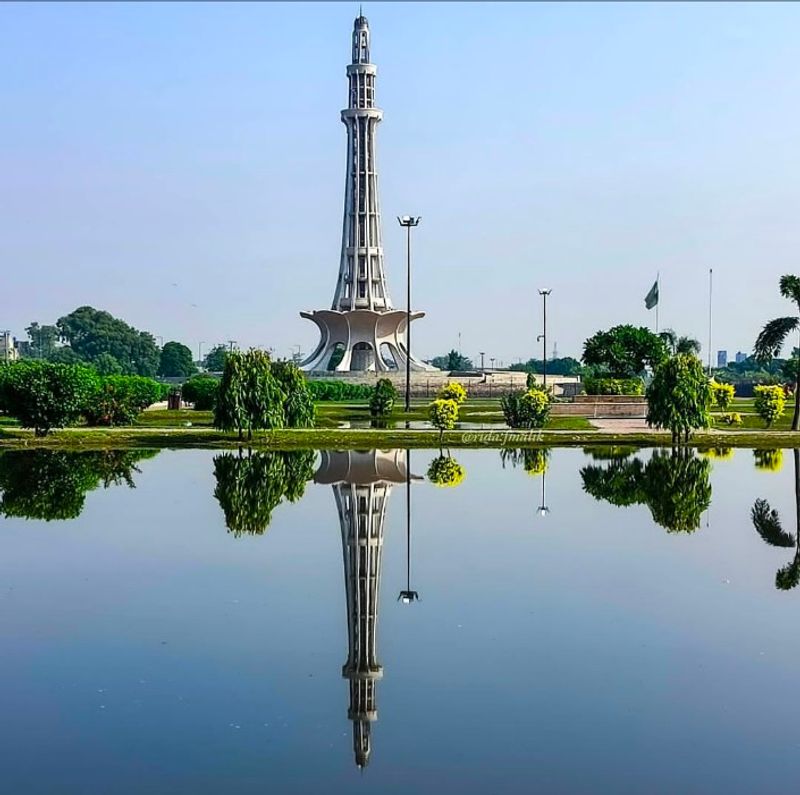
Rising from Iqbal Park, the Minar-e-Pakistan marks a decisive statement in history. Here, the Lahore Resolution set a course toward nationhood, and the tower’s profile keeps that resolve visible.
You feel ceremony in the air even on ordinary evenings, with families strolling and flags fluttering.
The design blends Mughal motifs with modern lines, a handshake between heritage and aspiration. From the base, inscriptions speak plainly about purpose and sacrifice.
Climb up and the city spreads in patterns of markets and mosques, a reminder that everyday life is the nation’s heartbeat.
For Pakistanis at home and abroad, the minar anchors memory and ambition. It is where independence becomes a place you can visit, not just a date.
Standing here, you see unity as an ongoing project, carried by people who gather, remember, and look ahead.
National Monument (Monas) — Indonesia
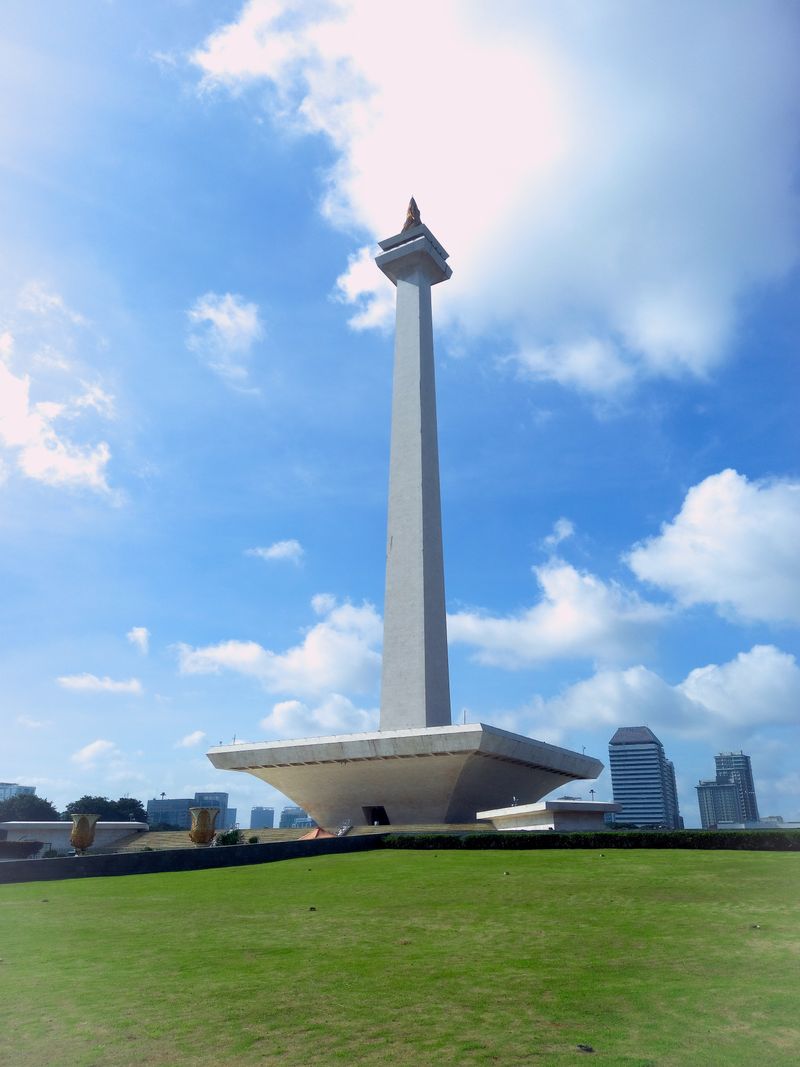
Monas pierces Jakarta’s sky with clean lines and a flame of gold leaf. The monument condenses Indonesia’s long struggle for independence into a vertical exclamation.
You walk Merdeka Square and feel the capital’s pulse, crowded, hopeful, and always in motion.
Inside, the museum traces resistance and nation building, voices threaded through artifacts. The obelisk’s simplicity reads as strength, a steady counterpoint to city traffic.
From the observation deck, you scan a metropolis that mirrors the country’s scale and diversity.
On national holidays, the grounds turn into a civic living room. Families picnic, flags ripple, and speeches sketch tomorrow’s tasks.
Monas remains a clear symbol of sovereignty, a landmark that says Indonesia writes its own future.
Azadi Tower — Iran
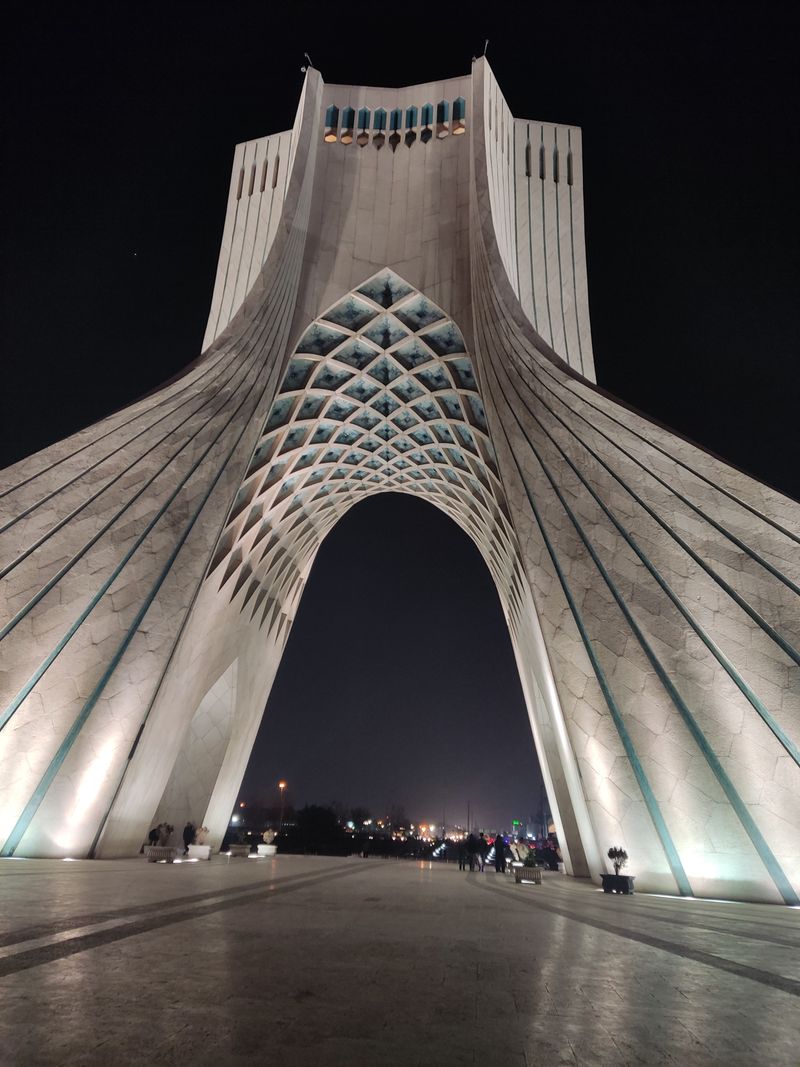
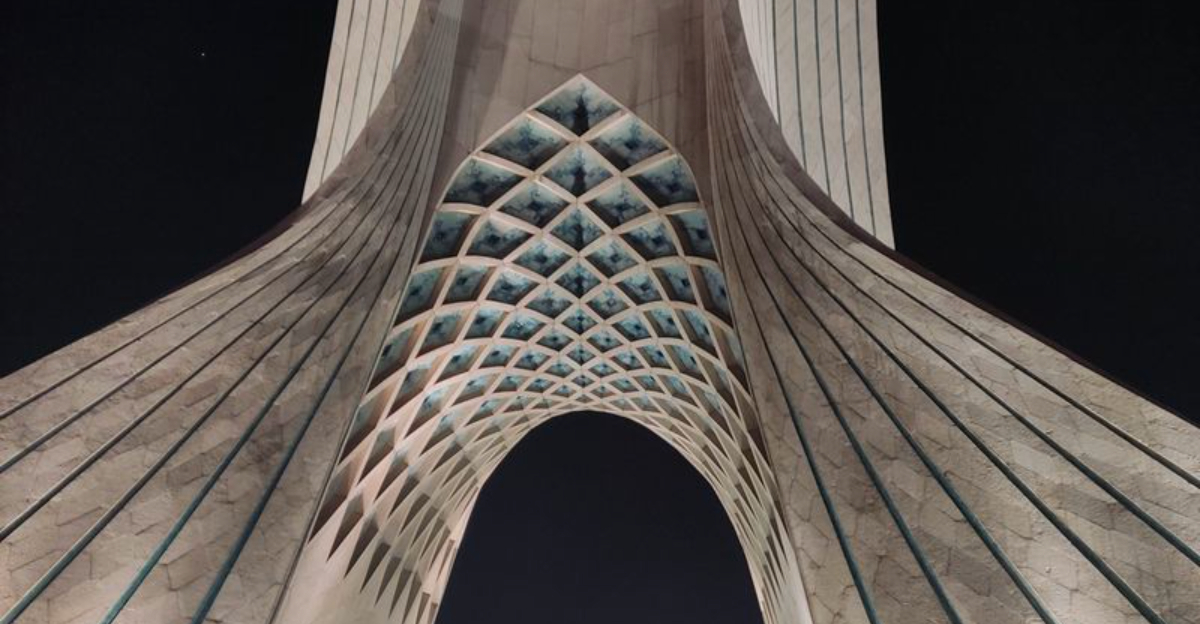
Azadi means freedom, and the tower shapes that word into stone and space. Built in 1971 to mark 2,500 years of Persian history, it blends pre Islamic and modern design into one proud gesture.
You stand beneath the arch and feel the city flow like a river around you.
The geometry reads Persian at every angle, from pointed ribs to tilework that catches late light. Tehran’s drivers circle as if tracing calligraphy at scale.
The tower acts as gate and compass, orienting visitors to a deep cultural well.
Protests, celebrations, and everyday commutes share this ground, giving the landmark layered memory. You sense a dialogue between heritage and reinvention, both insistent.
Azadi remains a focal symbol of national identity, pivoting between past and present without losing balance.
Statue of Unity — India
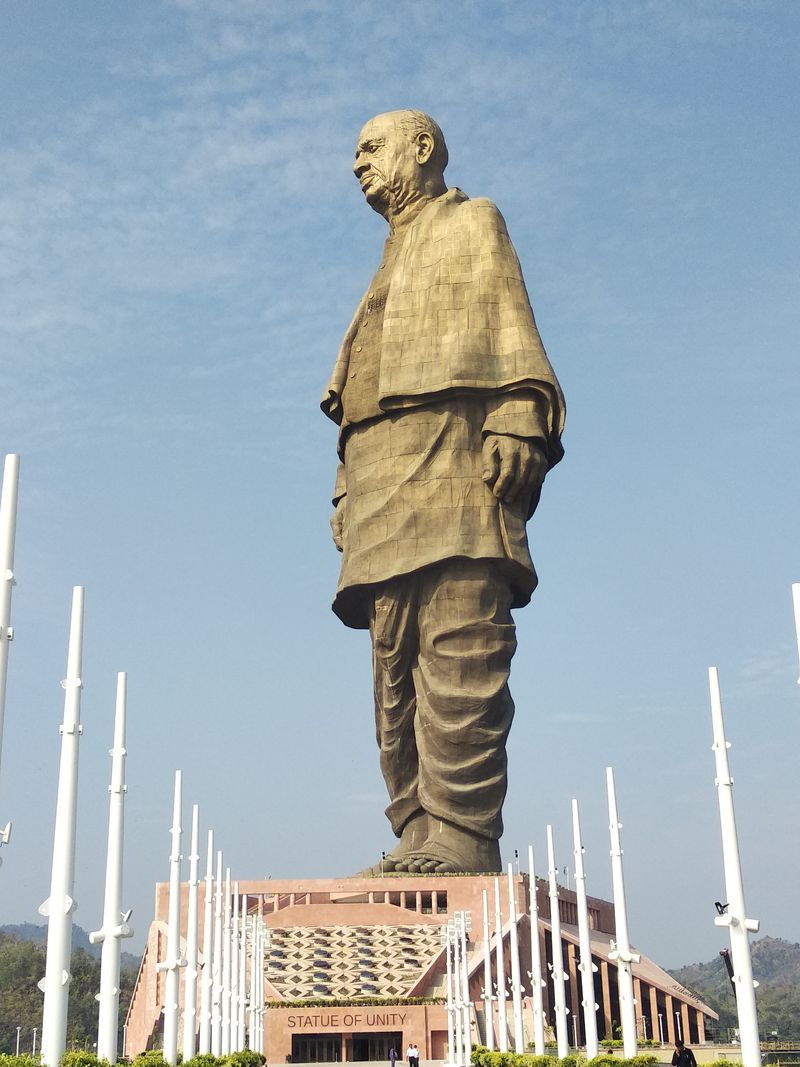
The figure of Sardar Patel rises with a steadiness that feels deliberate and calm. At 182 meters, the Statue of Unity declares scale as message, unity as measurable height.
You approach across bridges and platforms that make the river part of the spectacle.
Patel’s role in integrating princely states becomes visible in bronze folds and firm stance. Exhibits narrate negotiations and nation making, while viewing galleries frame the Narmada’s sweep.
The site turns history into a promenade, inviting you to walk through the idea of cohesion.
As a contemporary monument, it pairs engineering bravado with political memory. Crowds arrive from across India, bringing accents and stories that widen the portrait.
Standing below, you feel a modern emblem of identity taking its place beside older icons.
Colosseum — Italy
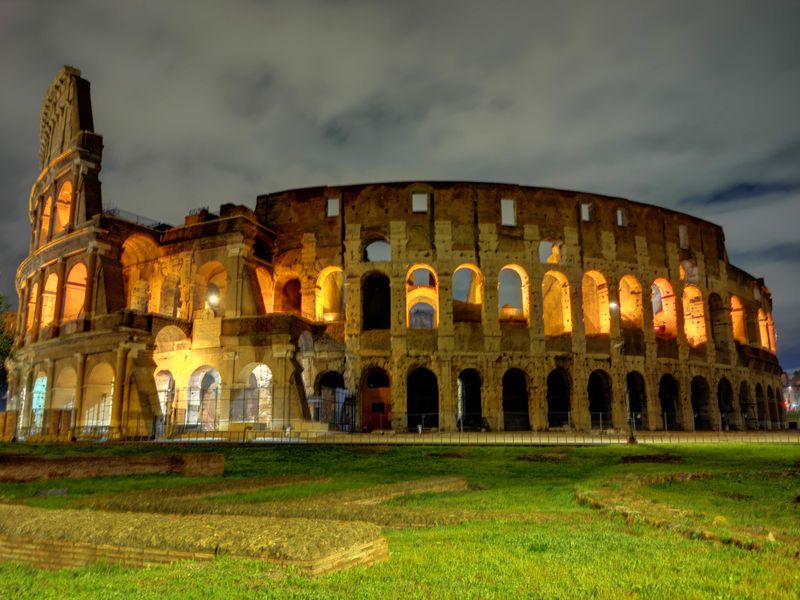
Rome’s amphitheater opens its rings like a fossilized heartbeat. The Colosseum compresses empire, spectacle, and survival into arches that still frame the sky.
You trace travertine scars and imagine crowds rising as one voice.
Italy’s story includes grandeur and vulnerability, and both resonate here. Earthquakes, looting, and restoration mark the stone like footnotes.
Yet the structure holds, turning ruin into resilience, an honest emblem of a culture that edits but preserves.
Outside, street life flows with scooters and banter, a modern chorus to ancient rhythms. Step inside and the acoustics make your footsteps significant.
The Colosseum remains shorthand for Italy’s reach and resourcefulness, a stage where history keeps performing.
Sagrada Família — Spain
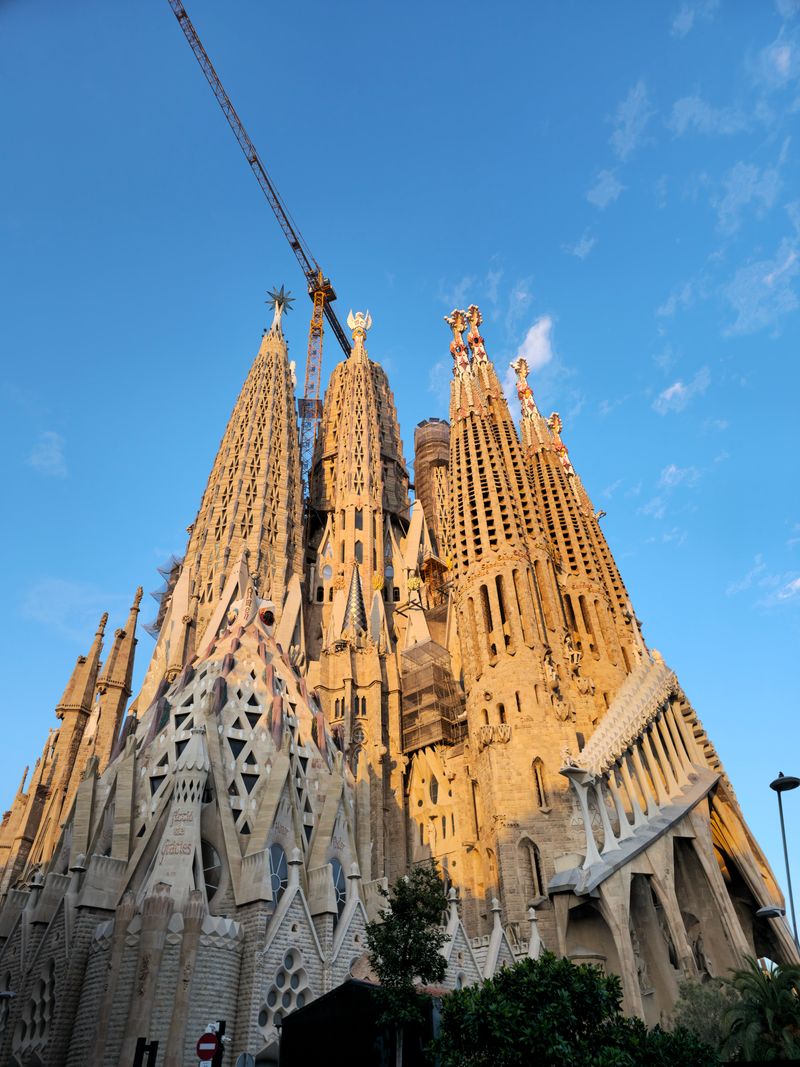
Gaudi’s basilica looks grown rather than built, a forest of stone reaching toward light. Facades read like illuminated manuscripts, each carving a line of faith and nature.
You enter and the nave becomes canopy, stained glass washing color like music.
Spain’s identity threads innovation through tradition, and Sagrada Familia proves the weave. Construction continues, cranes nodding like metronomes of patience.
The building owns time instead of racing it, turning delay into devotion.
Outside, Barcelona hums with design studios and tapas chatter. The basilica stands both Catalan and universal, a symbol of spiritual curiosity and craft.
You leave feeling that unfinished can still be definitive, and beauty can double as national voice.



