 Unearth The Voyage
Some places on our planet stand out not just for their beauty, but for their incredible stories and lasting impact on human history and nature. UNESCO World Heritage Sites represent the world’s most remarkable cultural treasures and natural wonders, chosen because they hold universal value that transcends borders and time.
From ancient temples carved into cliffsides to wildlife sanctuaries teeming with life, these landmarks remind us of human creativity, resilience, and our connection to the natural world.
Great Wall of China — China
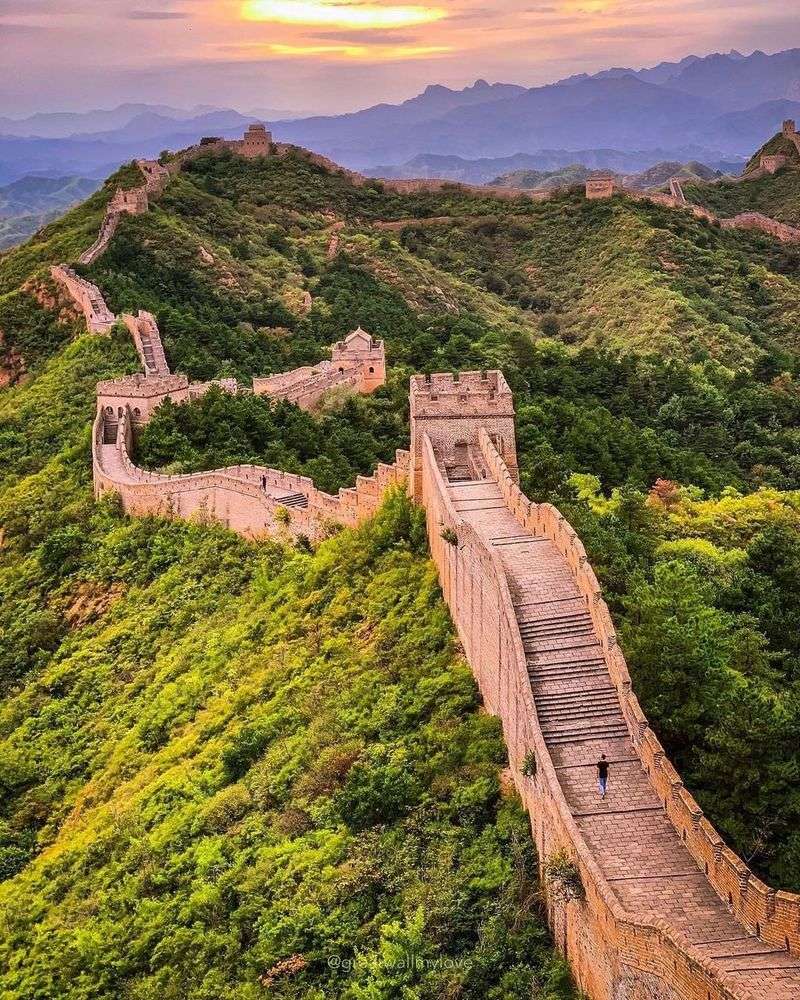
Imagine a wall so massive it stretches over 21,000 kilometers—that’s roughly half the circumference of Earth. The Great Wall of China wasn’t built in a day or even a century; it took more than 2,000 years and countless dynasties to complete this architectural marvel.
Originally designed to keep out invading forces from the north, the wall became a symbol of Chinese determination and strategic brilliance.
Walking along its ancient stones today, visitors encounter watchtowers, garrison stations, and fortifications that reveal sophisticated military planning. The wall winds through deserts, mountains, and grasslands, adapting to every terrain it crosses.
Each brick tells a story of the workers—soldiers, peasants, and prisoners—who labored under harsh conditions.
What makes the Great Wall truly exceptional is how it represents centuries of cultural and political evolution. Different sections reflect the architectural styles and defensive needs of various dynasties.
It’s not just a wall; it’s a timeline of Chinese civilization carved into the landscape, showcasing engineering genius that still impresses modern architects and historians worldwide.
Machu Picchu — Peru
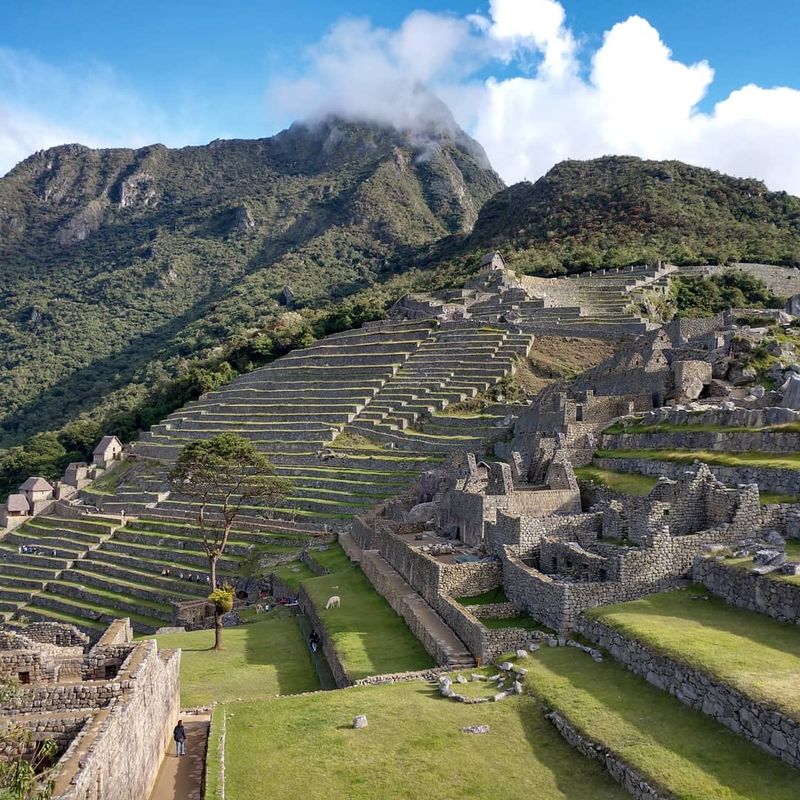
High above the Urubamba River, a lost city emerges from the clouds like something out of a dream. Machu Picchu remained hidden from the outside world until 1911, when explorer Hiram Bingham stumbled upon its moss-covered stones.
The Inca built this citadel in the 15th century without using wheels, iron tools, or even mortar—yet the stones fit together so perfectly that you can’t slide a knife blade between them.
The site’s terraces cascade down steep slopes, demonstrating advanced agricultural techniques that prevented erosion and maximized crop yields. Temples align with astronomical events, proving the Inca’s deep understanding of celestial movements.
Water channels still function today, channeling mountain springs through a sophisticated hydraulic system.
Standing among these ruins, you can feel the spiritual energy that made this place sacred. Scholars believe Machu Picchu served as a royal estate and religious retreat rather than a fortress.
Its remote location and architectural harmony with the surrounding peaks create an atmosphere that transcends time, offering a window into a civilization that thrived in one of the world’s most challenging environments.
Taj Mahal — India
Love transformed into architecture—that’s the simplest way to describe the Taj Mahal. Emperor Shah Jahan commissioned this masterpiece in 1632 after his beloved wife Mumtaz Mahal died during childbirth.
For 22 years, over 20,000 artisans worked to create what many consider the world’s most beautiful building.
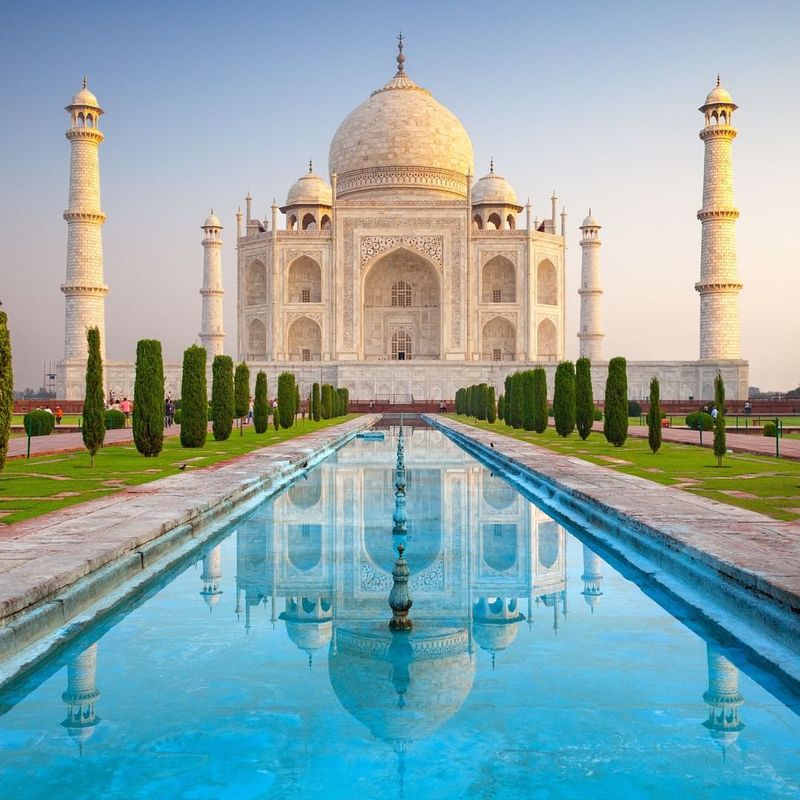
The entire structure is clad in white marble that seems to change color throughout the day, glowing pink at sunrise and golden at sunset. Precious stones—jade, crystal, turquoise, and sapphire—form intricate floral patterns across the walls.
The dome rises 73 meters high, and four minarets frame the mausoleum with perfect symmetry.
Beyond its stunning appearance, the Taj Mahal represents the pinnacle of Mughal architecture, blending Persian, Islamic, and Indian design elements. The gardens follow the Islamic concept of paradise, with water channels dividing them into four parts.
Every detail, from the calligraphy inscriptions to the lattice screens, demonstrates exceptional craftsmanship. This monument proves that grief can inspire creation, transforming personal loss into a gift that continues inspiring millions of visitors who walk through its gates each year.
Petra — Jordan
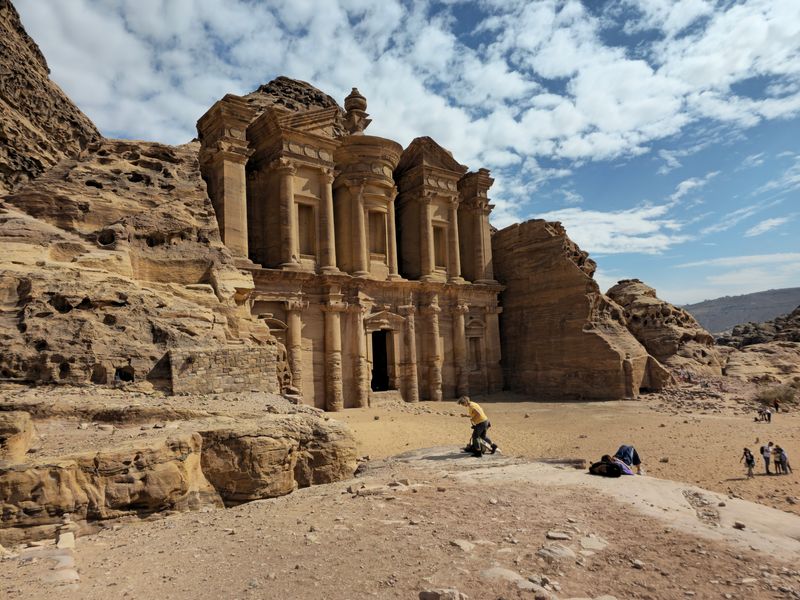
Carved straight from rose-colored cliffs, Petra looks like nature and human hands collaborated on an art project. The Nabataeans, master traders who controlled lucrative spice routes, established their capital here around 300 BCE.
They didn’t just build on rock—they sculpted entire buildings into it, creating a city that would endure for millennia.
The Treasury, Petra’s most famous facade, greets visitors after they walk through a narrow canyon called the Siq. This entrance alone builds anticipation, with towering walls closing in overhead before suddenly revealing the monument’s elaborate columns and statues.
But Petra contains much more than this single structure—hundreds of tombs, temples, and dwellings spread across the valley.
What truly impresses is the Nabataeans’ hydraulic engineering. In one of Earth’s driest regions, they designed dams, cisterns, and channels that collected every drop of seasonal rainfall.
This water management system supported thousands of residents and passing caravans. The sandstone’s natural pink and orange hues shift throughout the day, creating a constantly changing landscape that photographers adore.
Petra’s isolation helped preserve it, making it feel like stepping through a portal into the ancient world.
Acropolis of Athens — Greece
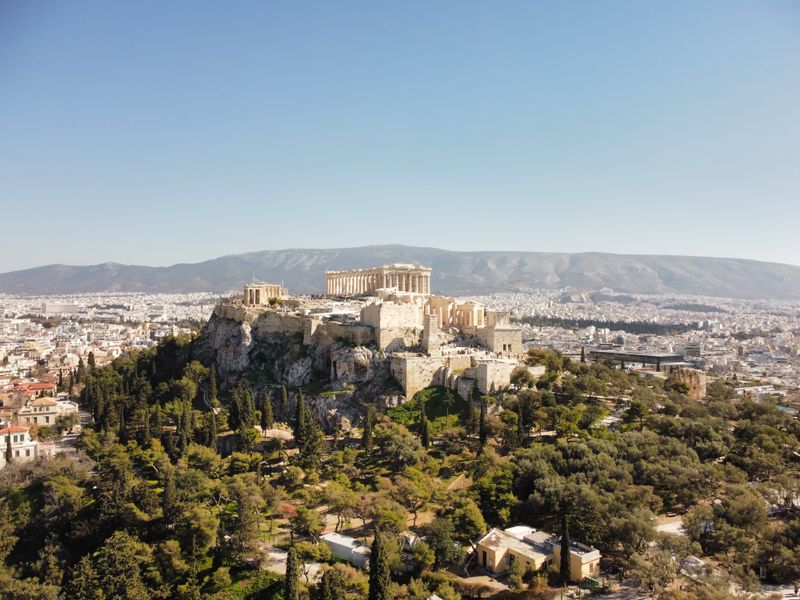
Democracy, philosophy, and drama all found their roots on this rocky hill overlooking Athens. The Acropolis served as the city’s religious and civic heart for thousands of years, with the Parthenon dominating its summit since 438 BCE.
Built to honor Athena, the goddess of wisdom and warfare, this temple exemplifies the mathematical precision and artistic vision that defined classical Greek architecture.
The Parthenon’s columns aren’t actually straight—they curve slightly to correct optical illusions that would make perfectly straight lines appear warped. Ancient architects understood human perception so well that they built subtle imperfections to achieve visual perfection.
Inside once stood a massive gold-and-ivory statue of Athena, though it’s long since disappeared.
Beyond the Parthenon, the Acropolis contains the Erechtheion with its famous Caryatid columns shaped like women, and the Temple of Athena Nike. These structures survived wars, earthquakes, and centuries of neglect.
Standing here, you’re walking where Socrates, Plato, and Aristotle once walked, where ideas that shaped Western civilization first took form. The Acropolis isn’t just ancient ruins—it’s the birthplace of concepts we still value today: civic participation, rational inquiry, and artistic excellence.
Alhambra — Spain
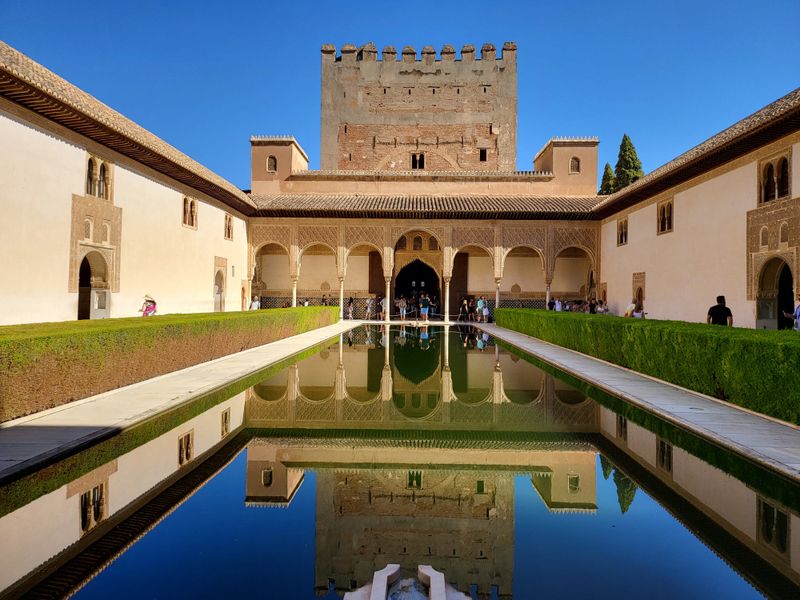
Step into the Alhambra and you’ll understand why people call it a glimpse of paradise on Earth. This palace-fortress complex crowns a hill in Granada, representing the final flowering of Islamic culture in Spain before the Reconquista.
The Nasrid sultans who built it in the 13th and 14th centuries created spaces where water, light, and decoration merge into something magical.
Every surface seems to shimmer with geometric patterns, Arabic calligraphy, and floral motifs. The stucco work is so delicate it resembles lace carved from stone.
Courtyards feature reflecting pools that mirror the buildings, doubling the visual splendor. The Court of the Lions, with its famous fountain supported by twelve marble lions, creates a serene atmosphere that invites contemplation.
What makes the Alhambra especially fascinating is how it blends defensive military architecture with refined palace living. Thick walls and towers protected the inhabitants, while inside, gardens bloomed and fountains sang.
The acoustics in certain rooms allow whispers to carry across great distances—a feature that served both romantic and practical purposes. After the Christian conquest, new rulers added Renaissance elements, creating a unique cultural fusion that tells Spain’s complex history in stone, tile, and water.
Yellowstone National Park — USA
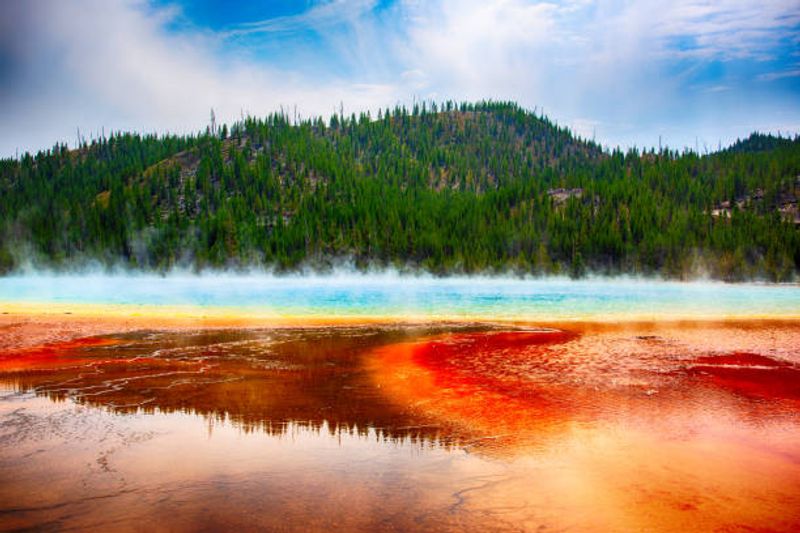
Earth’s plumbing system puts on quite a show at Yellowstone, where geysers shoot boiling water skyward and hot springs paint the ground in psychedelic colors. Established in 1872 as the world’s first national park, Yellowstone sits atop a supervolcano that fuels its extraordinary geothermal features.
Old Faithful, the park’s most famous geyser, erupts roughly every 90 minutes with remarkable regularity.
But Yellowstone offers more than just geothermal wonders. Vast forests, alpine rivers, and sprawling meadows create habitats for grizzly bears, wolves, bison, and elk.
The reintroduction of wolves in 1995 triggered a cascade of ecological changes, demonstrating how apex predators shape entire ecosystems. Herds of bison roam freely, sometimes causing traffic jams when they decide to walk down the middle of roads.
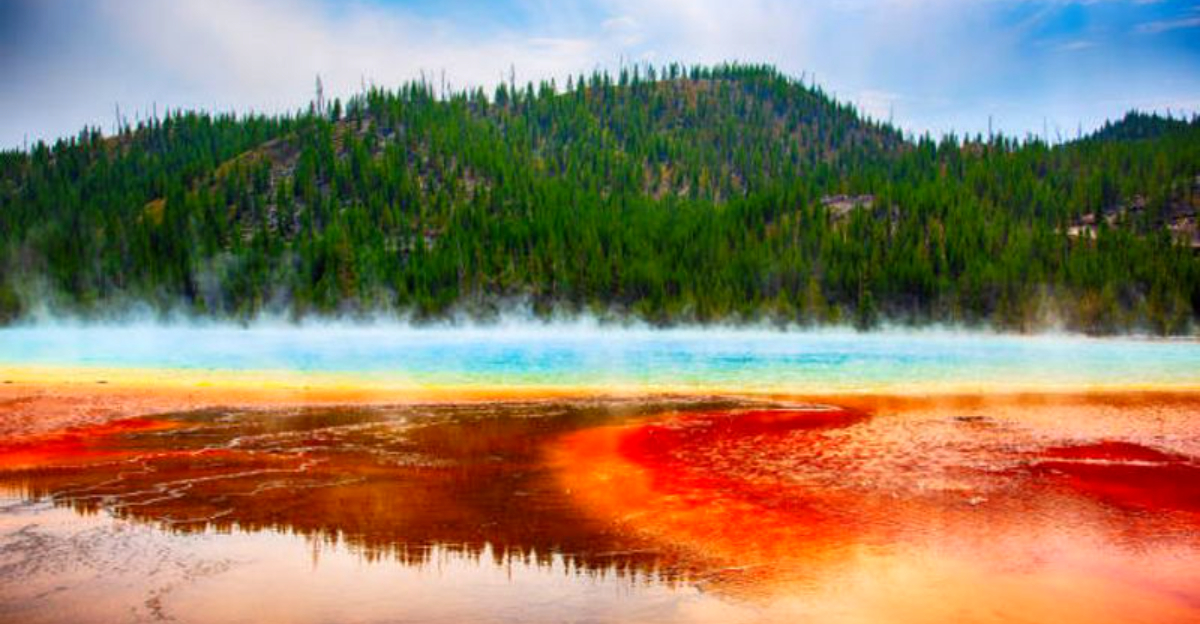
The park’s prismatic hot springs—like Grand Prismatic Spring—owe their rainbow colors to heat-loving bacteria that thrive in different temperature zones. These microorganisms have helped scientists understand how life might exist in extreme environments on other planets.
Yellowstone’s protected status ensures that future generations can witness these natural phenomena. It’s a living laboratory where geology, biology, and ecology intersect in spectacular ways, reminding us why preserving wild places matters.
Serengeti National Park — Tanzania
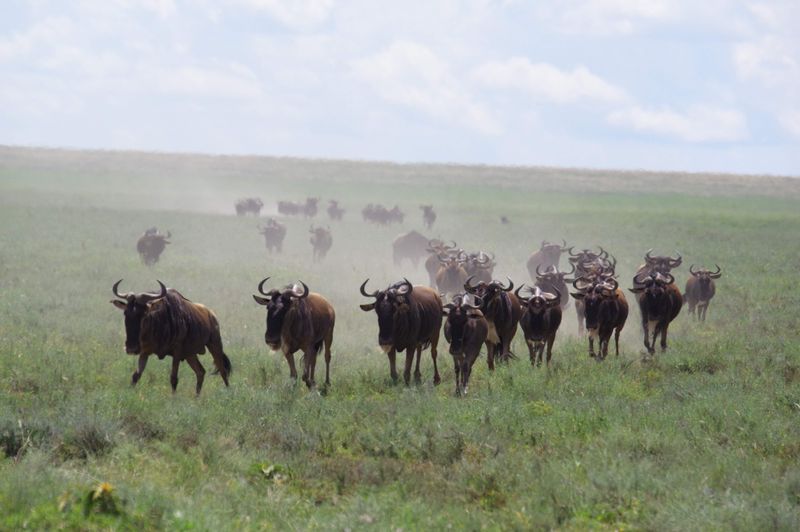
Every year, over a million wildebeest thunder across the Serengeti in one of nature’s most spectacular displays. This Great Migration follows the rains in an endless loop, with zebras and gazelles joining the journey.
Predators shadow the herds—lions, leopards, cheetahs, and hyenas all waiting for opportunities. It’s survival and death playing out on a massive stage.
The Serengeti’s name comes from the Maasai word meaning endless plains, and standing amid its grasslands, you understand why. Horizons stretch in every direction, broken only by scattered acacia trees and rocky outcrops called kopjes.
These granite islands provide homes for lions and leopards that use them as lookout points. The landscape seems timeless, offering a glimpse of Africa as it existed before human development reshaped so much of the continent.
What makes the Serengeti ecologically crucial is its intact ecosystem. Large predator populations remain stable because their prey animals still migrate freely.
The park demonstrates how interconnected species depend on each other and their environment. Protecting this wilderness ensures that evolution continues its work, uninterrupted by human interference.
For visitors, watching a cheetah sprint across the plains or hearing lions roar at dusk creates memories that last forever.
Historic Centre of Rome — Italy
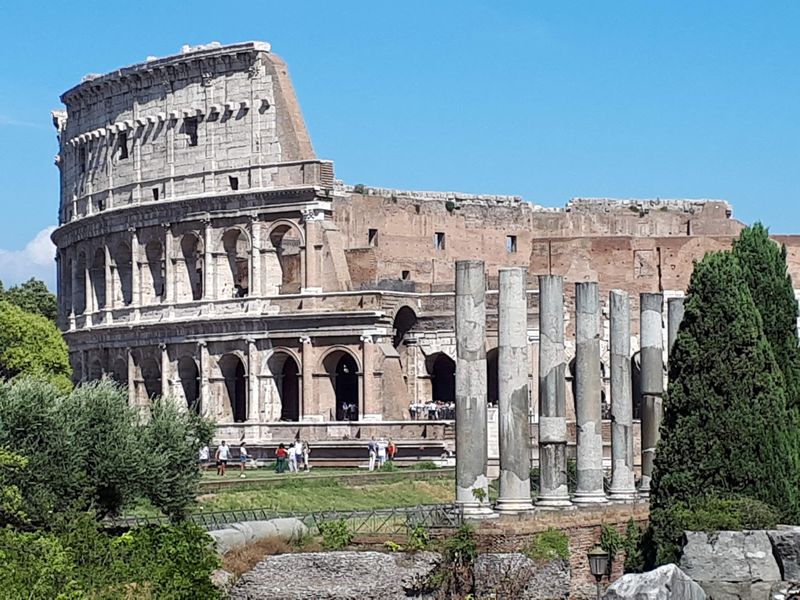
All roads once led to Rome, and walking through its historic center, you can still feel the empire’s pulse. The Colosseum looms as a reminder of when 50,000 spectators gathered to watch gladiatorial combat and wild animal hunts.
Nearby, the Roman Forum’s ruins reveal where senators debated, merchants traded, and citizens gathered to hear news that would shape the known world.
Rome’s historic center isn’t a museum—it’s a living city where ancient, medieval, and modern layers stack on top of each other. The Pantheon, built nearly 2,000 years ago, still has the world’s largest unreinforced concrete dome.
Its oculus opens to the sky, letting rain fall directly onto the marble floor. Churches occupy former pagan temples, and Renaissance palaces rise above Roman foundations.
What UNESCO recognized is how Rome preserves architectural and political innovations that influenced civilizations worldwide. Roman engineering gave us aqueducts, roads, and concrete construction.
Roman law forms the basis for legal systems across Europe and beyond. Walking these streets means tracing the roots of Western civilization.
Every fountain, column, and cobblestone connects to stories of emperors, artists, and ordinary people whose choices echo through history to reach us today.
Borobudur — Indonesia
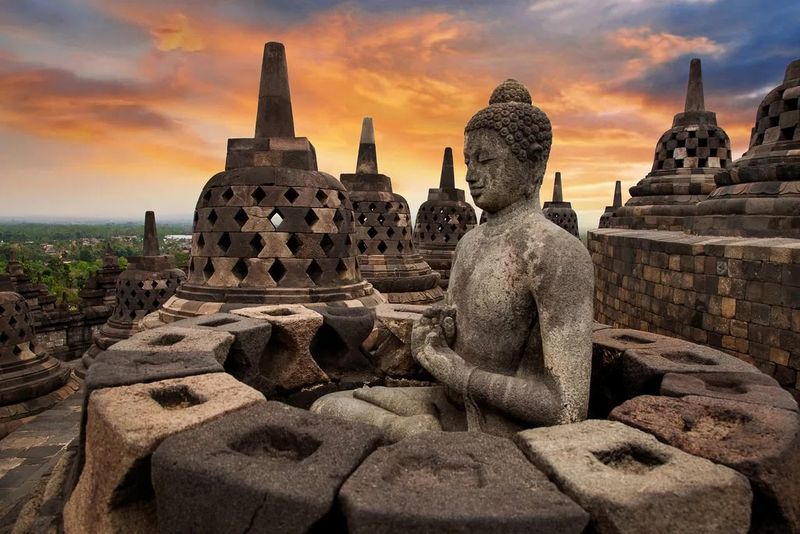
Rising from Java’s lush landscape like a stone mountain, Borobudur is the world’s largest Buddhist monument. Built in the 8th and 9th centuries without using mortar, this temple consists of over two million stone blocks fitted together with incredible precision.
Volcanic eruptions and earthquakes buried it under ash and jungle for centuries until its rediscovery in the 1800s sparked one of history’s most impressive restoration projects.
The temple’s design follows Buddhist cosmology, with pilgrims walking a path that spirals upward through three levels representing earthly desires, transitional forms, and finally spiritual enlightenment. Relief panels along the walls tell stories from Buddhist texts, creating a visual journey through teachings and moral lessons.
Over 500 Buddha statues sit in meditation poses, each one carved from volcanic rock.
What makes Borobudur architecturally remarkable is its mandala shape when viewed from above—a geometric pattern representing the Buddhist universe. The upper terraces feature bell-shaped stupas, each containing a Buddha statue visible through latticed openings.
At dawn, when mist rises from the surrounding jungle and volcanic peaks appear in the distance, Borobudur creates an atmosphere of profound peace. It’s a masterpiece that combines religious devotion, artistic skill, and engineering brilliance into something that transcends its stone construction.
Historic Sanctuary of Machu Picchu — Peru
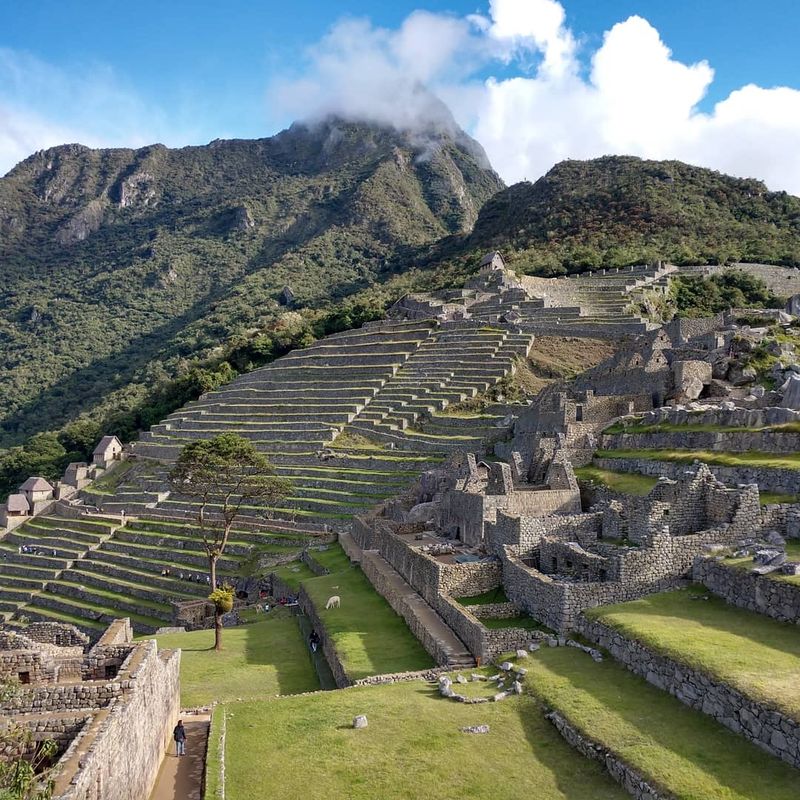
Beyond the famous citadel itself, the broader Machu Picchu Sanctuary encompasses an entire cultural landscape shaped by Inca ingenuity. This protected area includes agricultural terraces, ceremonial sites, and sections of the Inca Trail that connected the citadel to other settlements.
The Inca didn’t just build in the mountains—they transformed them into productive, sustainable environments.
The terraces demonstrate sophisticated understanding of microclimates and soil management. Different elevations allowed cultivation of various crops, from potatoes at higher altitudes to corn in warmer zones.
Stone channels directed water from mountain springs to irrigate these fields, and the system still functions centuries later. The Inca Trail winds through cloud forests and past smaller ruins, showing how this civilization connected distant outposts through an extensive road network.
What UNESCO recognized is how the sanctuary preserves not just buildings but an entire way of life. Sacred sites dot the landscape, aligned with solar events and mountain peaks the Inca considered divine.
The surrounding ecosystem supports rare orchids, spectacled bears, and the Andean condor. Protecting this area means preserving both cultural heritage and biodiversity.
It demonstrates how ancient peoples lived in harmony with challenging environments, creating solutions that modern sustainable agriculture still studies and admires today.
Galápagos Islands — Ecuador

Charles Darwin called them a living laboratory, and the Galápagos Islands still earn that title today. These volcanic islands, scattered across the Pacific Ocean 1,000 kilometers from Ecuador’s coast, host creatures found nowhere else on Earth.
Giant tortoises lumber through highlands, marine iguanas dive for algae, and blue-footed boobies perform comical mating dances. Each island developed its own unique species, demonstrating evolution in action.
Darwin’s 1835 visit here sparked ideas that revolutionized biology. He noticed that finches on different islands had different beak shapes adapted to available food sources.
This observation helped him develop the theory of natural selection. Today, scientists continue studying how isolation and environmental pressures drive evolutionary changes.
The islands remain relatively pristine because their remoteness protected them from extensive human settlement.
What makes the Galápagos scientifically invaluable is how ongoing evolution can be observed and measured. Researchers have documented changes in finch populations within just a few generations, depending on rainfall and seed availability.
The islands’ volcanic origins mean new land still forms, creating fresh habitats for colonization. Strict conservation rules now protect this natural treasure, limiting visitor numbers and human impact.
For anyone interested in how life adapts and diversifies, the Galápagos offers unmatched opportunities to witness nature’s creativity.
Medina of Fez — Morocco
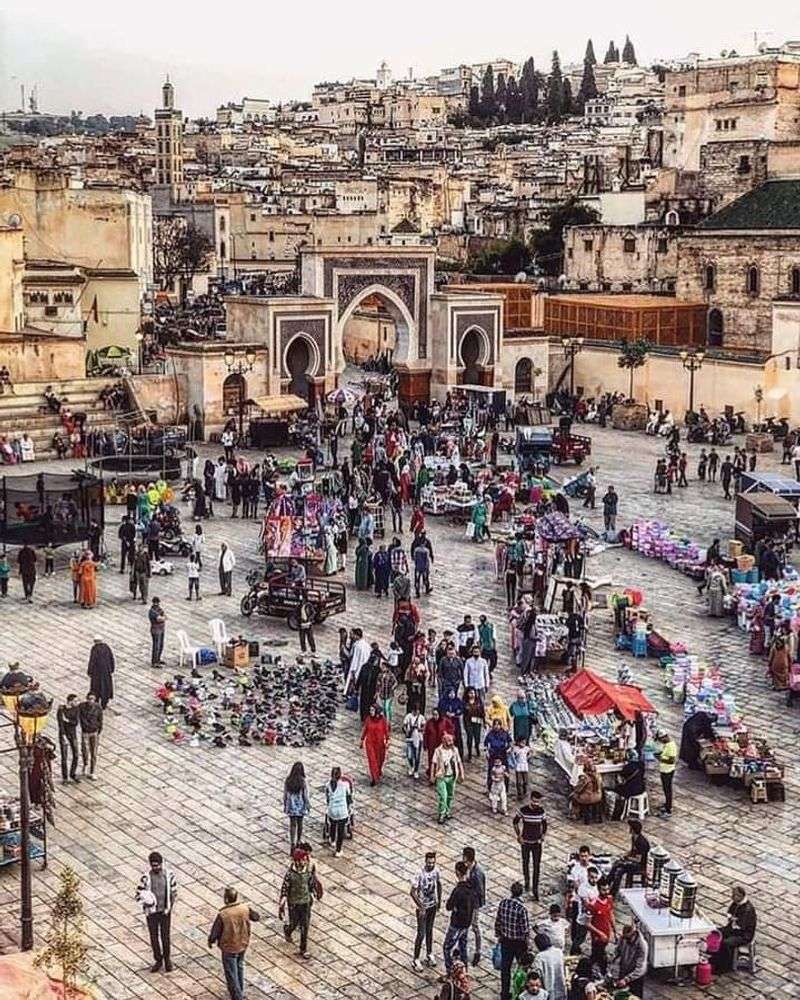
Getting lost in Fez’s medina isn’t a mistake—it’s practically a requirement. This walled urban area, founded in the 9th century, contains over 9,000 narrow alleyways that twist and turn without apparent logic.
Cars can’t enter most of the medina, so donkeys still carry goods through passages barely wide enough for two people to pass. The medieval city functions much as it has for centuries.
Fez became a center of Islamic learning and culture, with the University of al-Qarawiyyin, founded in 859 CE, often cited as the world’s oldest continuously operating educational institution. Artisan quarters specialize in traditional crafts—leather tanning, metalwork, pottery, and textile weaving.
The famous tanneries still use ancient methods, with workers standing in stone vessels filled with natural dyes. The sight and smell create an unforgettable sensory experience.
What UNESCO recognized is how Fez preserves urban planning and social structures from medieval Islamic civilization. Neighborhoods organized around mosques, fountains, and communal ovens fostered tight-knit communities.
Elaborate tile work decorates religious schools and palaces, showcasing geometric patterns and calligraphy that represent Islamic artistic traditions. Walking through Fez means stepping back in time while watching a living city continue its daily rhythms, proving that heritage doesn’t have to be frozen in museums to remain meaningful.
Old City of Jerusalem and its Walls — Israel/Palestine
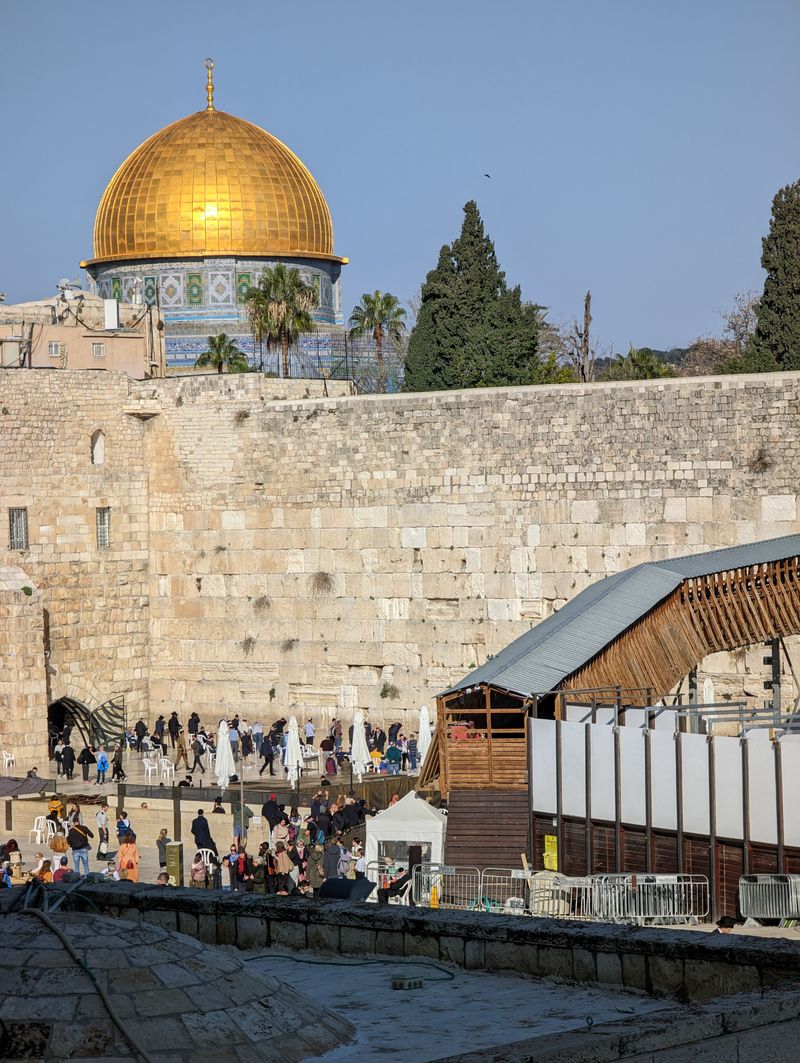
Few places on Earth carry as much spiritual weight as Jerusalem’s Old City. Enclosed within 16th-century walls built by Suleiman the Magnificent, this square kilometer contains sites sacred to Judaism, Christianity, and Islam.
The Western Wall draws Jewish worshippers who place prayer notes between ancient stones. The Church of the Holy Sepulchre marks where Christians believe Jesus was crucified and buried.
The Dome of the Rock’s golden dome shines above the spot where Muslims believe Muhammad ascended to heaven.
Walking the Via Dolorosa, pilgrims follow the path Jesus reportedly took to his crucifixion, stopping at stations along the way. The narrow streets overflow with religious bookstores, souvenir shops, and restaurants serving Middle Eastern cuisine.
Different quarters—Jewish, Christian, Muslim, and Armenian—each maintain distinct character and traditions. Church bells, calls to prayer, and Hebrew prayers create a constant soundtrack.
What makes Jerusalem’s Old City so complex is how layers of history and competing claims overlap in such a small space. Archaeological excavations reveal civilizations going back thousands of years.
Every stone seems to connect to some pivotal moment in religious or political history. UNESCO recognition acknowledges both the site’s universal importance and the need to protect it amid ongoing conflicts.
For believers and history enthusiasts alike, Jerusalem offers an intense, sometimes overwhelming encounter with humanity’s spiritual heritage.
Mont-Saint-Michel and its Bay — France
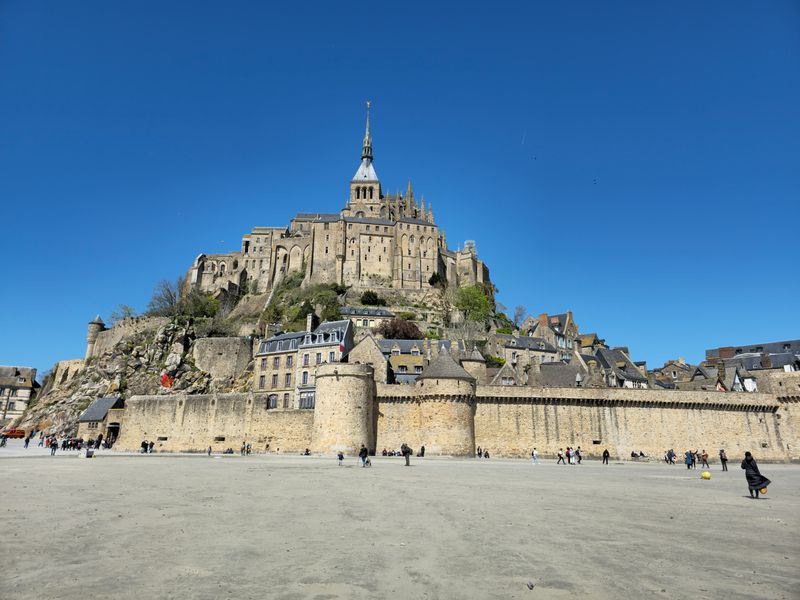
When tides rush in around Mont-Saint-Michel, the medieval abbey transforms into an island fortress seemingly floating between sea and sky. Built on a rocky outcrop off Normandy’s coast, this architectural marvel has drawn pilgrims for over a thousand years.
The Gothic abbey church crowns the summit, reached by climbing through a fortified village that clings to the steep slopes. During high tide, water surrounds the mount completely, cutting it off from the mainland.
Medieval builders faced enormous challenges constructing on this site. They had to transport materials across tidal flats and build on uneven bedrock.
The result combines military architecture with religious devotion—defensive walls protect the lower levels while soaring spires reach heavenward above. Narrow streets wind upward past shops and restaurants occupying buildings that have served pilgrims for centuries.
The bay surrounding Mont-Saint-Michel experiences some of Europe’s highest tides, with water levels changing by up to 15 meters. These tides create quicksand and strong currents that once trapped unwary travelers.
Today, a causeway provides safe access, though recent restoration work aims to preserve the island’s maritime character. The abbey’s silhouette against sunrise or sunset creates one of France’s most iconic images.
It demonstrates how human determination can create beauty in the most challenging locations, blending natural drama with architectural ambition into something unforgettable.



