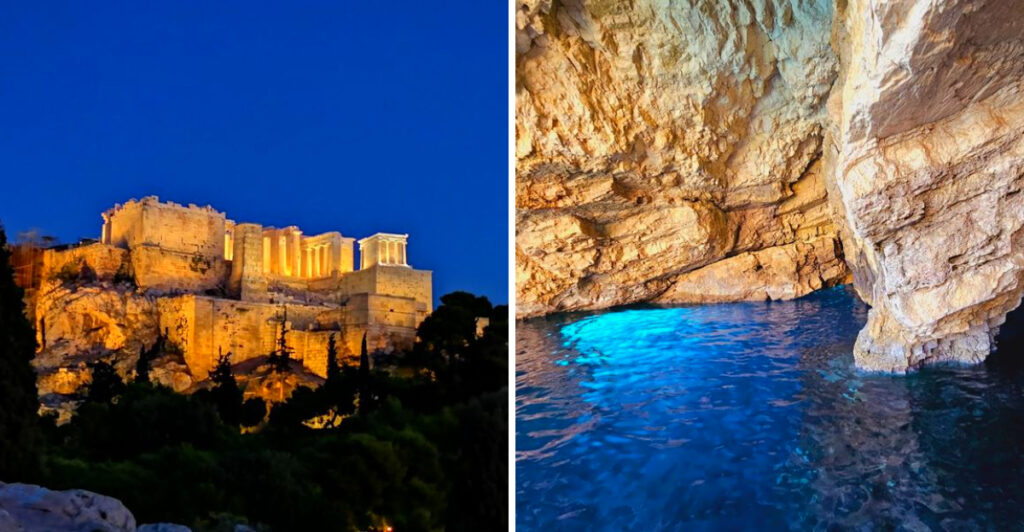
Greece is a country where history, myth, and breathtaking scenery come together in one extraordinary place. From ancient temples built thousands of years ago to volcanic islands with jaw-dropping views, every corner of this Mediterranean nation tells a story.
Whether you are a history lover, a nature enthusiast, or simply someone chasing a good sunset, Greece has something that will leave you speechless. Here are 15 legendary landmarks that keep travelers coming back to this remarkable country year after year.
Acropolis of Athens and Parthenon
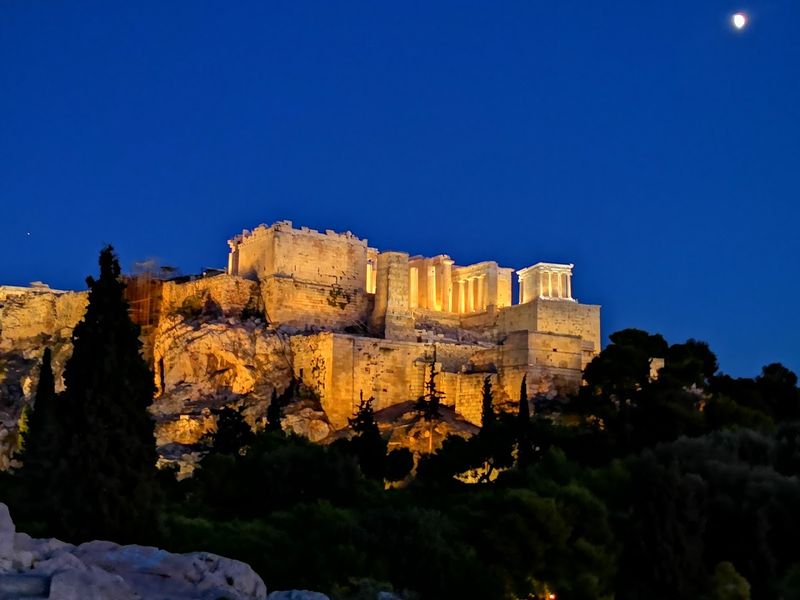
Few places on Earth carry the kind of weight that the Acropolis does. Perched high above Athens, this ancient citadel has been watching over the city for over 2,500 years.
The moment you spot it from the streets below, you understand why travelers fly thousands of miles just to stand beneath its columns.
The Parthenon, dedicated to the goddess Athena, is the crown jewel of the site. Built with remarkable mathematical precision, its columns are slightly curved to create an optical illusion of perfect straightness.
Ancient Greeks were basically architectural geniuses before it was cool.
Walking through the Acropolis is a full sensory experience. The worn marble steps, the sweeping panoramic views of Athens, and the sheer scale of the structures make history feel alive and tangible.
The on-site Acropolis Museum nearby houses thousands of recovered artifacts and is worth every minute of your time. Visiting early in the morning helps you avoid the midday crowds and brutal summer heat.
Comfortable shoes are a must since the marble surfaces can be surprisingly slippery.
Meteora Monasteries
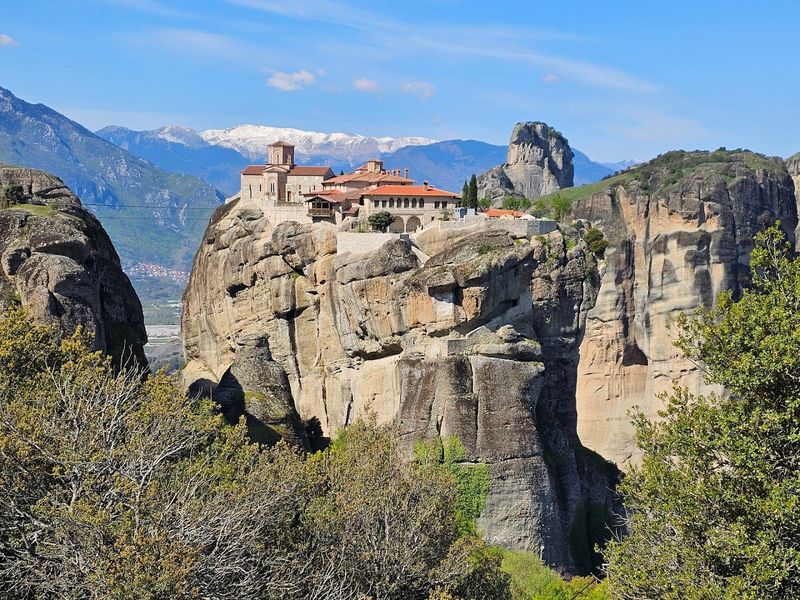
Imagine waking up inside a monastery that sits on top of a massive rock pillar hundreds of meters above the ground. That is everyday life at Meteora, and it is every bit as surreal as it sounds.
Located in central Greece near the town of Kalambaka, this UNESCO World Heritage Site looks like something pulled straight from a fantasy novel.
Monks began building these extraordinary structures in the 14th century, seeking complete isolation from the outside world. Early residents had to be hauled up by rope and basket, which honestly sounds both terrifying and oddly adventurous.
Today, carved stone staircases make access far less dramatic but no less awe-inspiring.
Six monasteries remain active out of the original twenty-four. Visitors can explore several of them, admiring Byzantine frescoes, ancient manuscripts, and jaw-dropping cliff-edge views.
Modest dress is required, so pack a scarf or long skirt if needed. Sunset is arguably the best time to visit, when golden light paints the rock formations in warm amber tones.
Renting a bicycle from Kalambaka town is a fun and affordable way to travel between the monasteries at your own pace.
Santorini Caldera
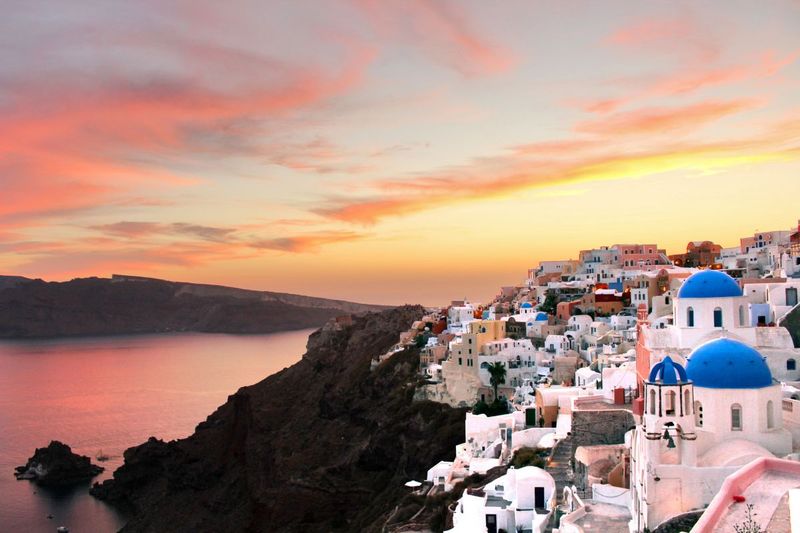
About 3,600 years ago, one of the most powerful volcanic eruptions in recorded history reshaped this island forever. What remains is the Santorini caldera, a stunning crescent-shaped bay that has become one of the most photographed places on the entire planet.
The dramatic cliffs, the electric blue water, and those famous white-washed buildings make it almost unfair to look at.
The village of Oia sits right at the northern tip of the caldera and draws enormous crowds every evening for its legendary sunsets. Tourists line the castle walls with cameras ready, and honestly, the hype is completely justified.
The sky turns shades of pink, orange, and purple that no filter could ever improve.
Staying in a cliffside cave hotel in Fira or Oia offers an experience unlike anything else. These carved-into-the-rock rooms come with private terraces and views that will make you want to cancel your return flight.
Budget travelers can still enjoy the caldera views from free public lookout points scattered along the cliff paths. Taking the donkey path or cable car down to Ammoudi Bay for fresh seafood is a classic Santorini experience that should not be skipped.
Delphi and Temple of Apollo
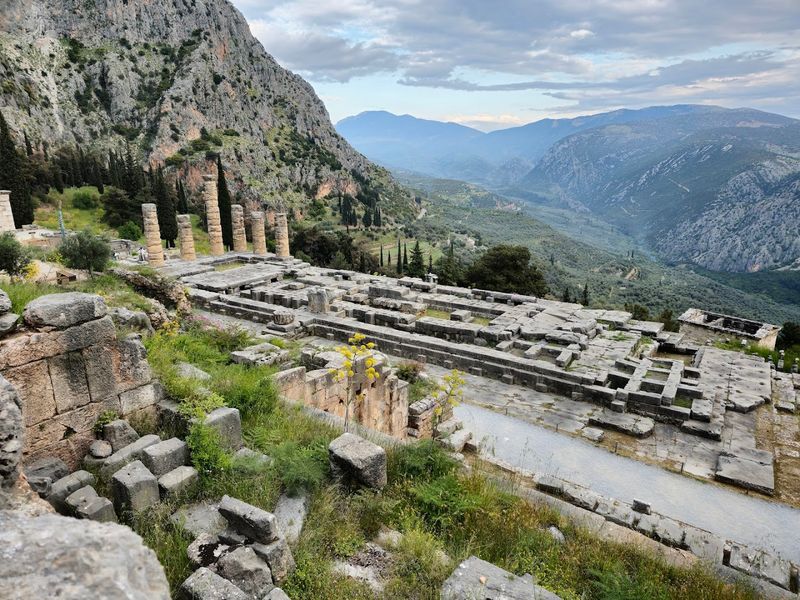
The ancient Greeks believed Delphi was the literal center of the world, and standing among its ruins today, you can almost feel why. Carved into the slopes of Mount Parnassus, this sacred site was home to the famous Oracle, a priestess who supposedly delivered prophecies from the god Apollo himself.
Kings and generals traveled enormous distances just to hear her words.
The Temple of Apollo is the spiritual heart of the complex. Though much of it lies in ruins, several columns still stand, framing dramatic views of the surrounding valley below.
The atmosphere here is genuinely mysterious, especially on quieter mornings when the tour groups have not yet arrived.
Beyond the temple, the site includes a well-preserved ancient theater and a stadium that once hosted the Pythian Games, a major athletic festival second only to the Olympics. The Delphi Archaeological Museum nearby is outstanding and houses the famous Charioteer of Delphi, a bronze statue so detailed it looks almost alive.
Delphi sits about two and a half hours from Athens by bus, making it a very doable day trip. Arriving early gives you the best light for photos and a more peaceful exploration experience overall.
Mount Olympus
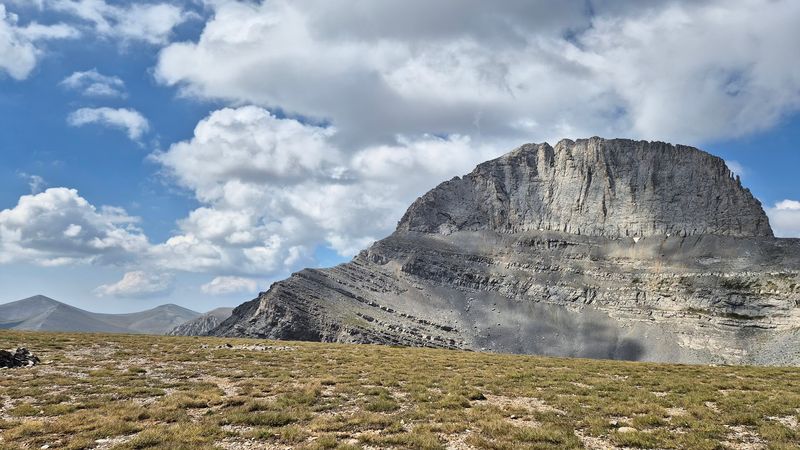
No mountain in the world carries quite the same mythological resume as Mount Olympus. According to ancient Greek belief, this was where Zeus, Hera, Athena, and the rest of the twelve Olympian gods made their home.
Today, it is Greece’s highest peak and one of its most popular hiking destinations, drawing climbers from across the globe.
Rising to 2,918 meters at its highest point, known as Mytikas, the mountain offers a serious physical challenge and a spectacular reward. The trails pass through dense forests of black pine, open alpine meadows, and eventually bare rocky ridgelines with sweeping views that stretch to the sea on clear days.
The town of Litochoro at the base of the mountain serves as the main gateway for hikers and has plenty of guesthouses, restaurants, and equipment rental shops. Most hikers tackle the summit over two days, spending the night at one of the mountain refuges.
July and August offer the most reliable weather for reaching the top. Non-hikers can still enjoy the lower forested trails and the dramatic gorge near Litochoro without any technical difficulty.
The national park surrounding the mountain is also home to a rich variety of wildlife and rare plant species.
Palace of Knossos in Crete
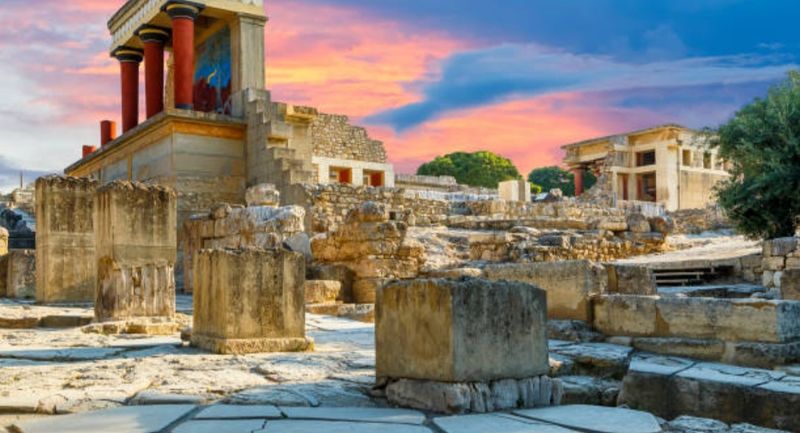
Step onto the grounds of Knossos and you are standing inside Europe’s oldest known palace complex. Built by the Minoan civilization around 2000 BC, this sprawling site on the island of Crete predates classical Greece by over a thousand years.
It is connected to one of mythology’s most famous monsters: the Minotaur, a half-man half-bull creature said to roam its labyrinthine halls.
Archaeologist Arthur Evans excavated and partially reconstructed the palace in the early 20th century, which is why some sections appear surprisingly vivid and colorful compared to most ancient ruins. The reconstructed red columns and painted frescoes give visitors a genuine sense of how grand and sophisticated this civilization truly was.
Highlights include the Throne Room, believed to be one of the oldest throne rooms in Europe, and the stunning fresco of the Prince of the Lilies. The site can get very crowded during peak summer months, so booking a guided tour in advance is a smart move.
A knowledgeable guide transforms the confusing maze of rooms and corridors into a coherent and fascinating story. Knossos is just a short bus ride from the Cretan capital of Heraklion, making it an easy and essential stop on any Crete itinerary.
Ancient Olympia
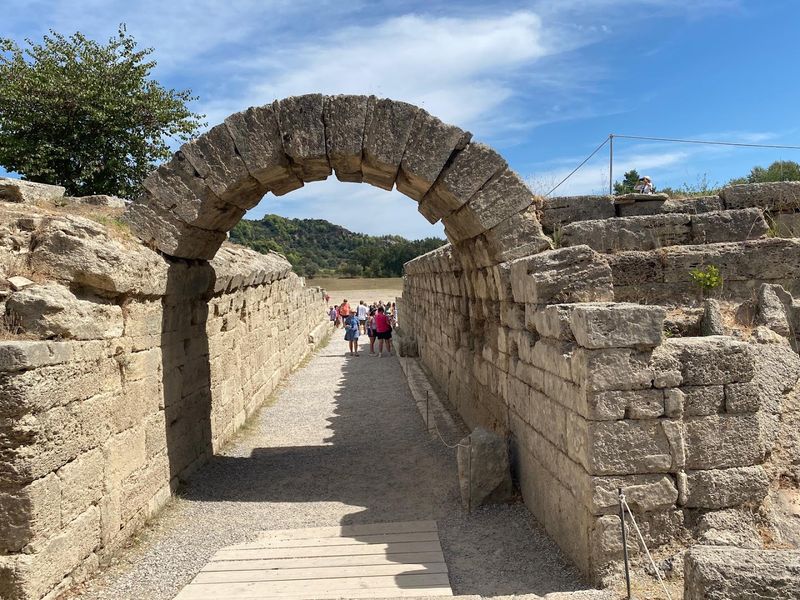
Every four years, the world stops to watch the Olympic Games, and it all started right here. Ancient Olympia, tucked into a peaceful valley in the western Peloponnese, is the birthplace of one of humanity’s most enduring traditions.
Athletes first competed on this ground over 2,700 years ago, and the original stadium still stands, waiting for visitors to sprint across its ancient track.
The site is enormous and packed with remarkable ruins. The Temple of Zeus once housed one of the Seven Wonders of the Ancient World: a colossal gold and ivory statue of the king of the gods.
Though the statue is long gone, the massive fallen columns of the temple remain, scattered dramatically across the ground like giant stone logs.
The Archaeological Museum of Olympia, located just beside the ruins, is one of the finest in Greece. It houses the original sculptures from the Temple of Zeus pediments and the stunning Hermes of Praxiteles statue.
Walking through the museum after exploring the ruins helps everything click into place visually. The site is best visited in spring or autumn when temperatures are comfortable for long outdoor walks.
Olympia town itself is charming and has good tavernas for a post-exploration meal.
Temple of Poseidon at Cape Sounion
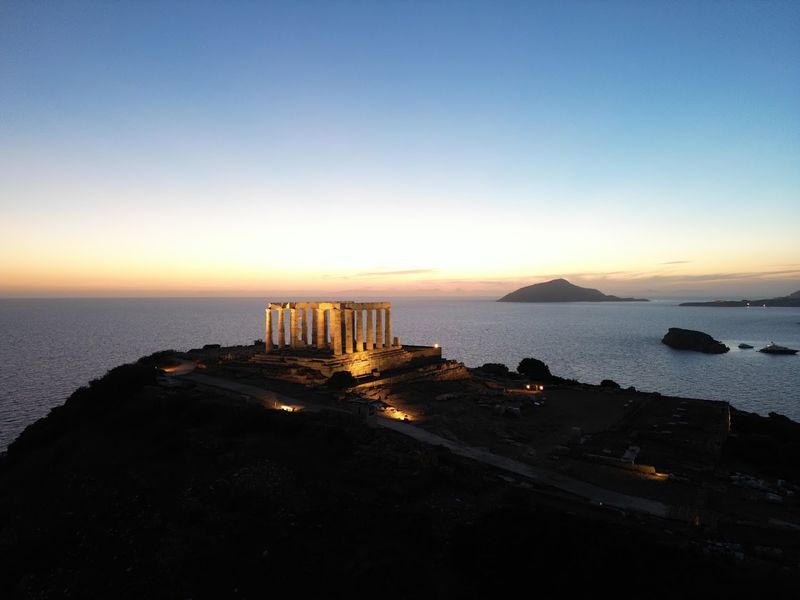
Perched at the southern tip of the Attica peninsula, the Temple of Poseidon at Cape Sounion has been guiding sailors home for nearly 2,500 years. Ancient Greek seafarers would have spotted this gleaming marble structure from their ships and known they were approaching Athens.
That combination of practical landmark and sacred monument is pretty hard to top.
Built in 444 BC, the same period as the Parthenon, the temple features 15 of its original 34 columns still standing. Lord Byron, the famous English poet, was apparently so moved by the site that he carved his name into one of the columns.
Defacing ancient monuments is absolutely not recommended today, but it does make for a great historical footnote.
The real magic happens at sunset, when the white marble columns glow against a sky on fire with color and the sea below turns a deep, dramatic blue. Cape Sounion sits about 70 kilometers from Athens and is easily reached by bus or rental car.
The coastal road from Athens to Sounion is one of the most scenic drives in the country. Bring a picnic, arrive an hour before sunset, and find a spot along the cliff path for an evening you will genuinely never forget.
Mykonos Windmills
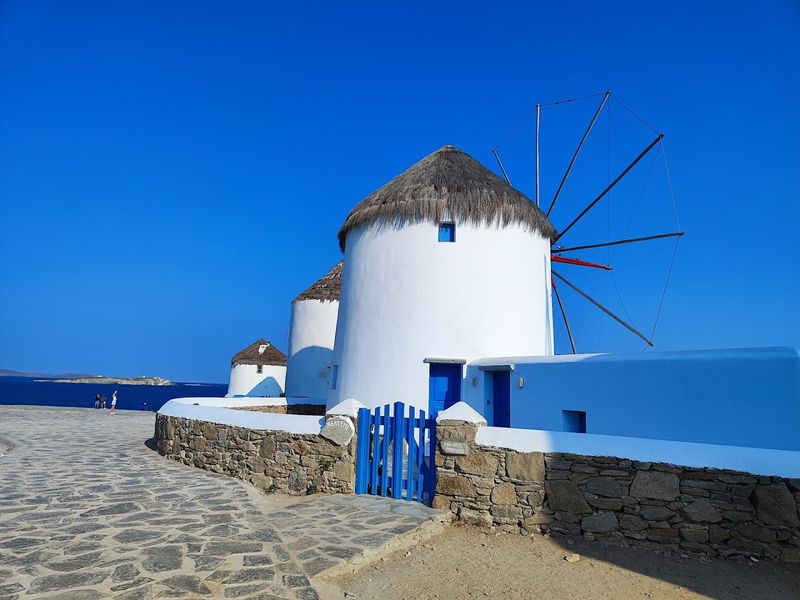
Seven white windmills standing on a breezy hill above a sparkling blue harbor: that image is practically the official postcard of Greek island life. The windmills of Mykonos have been photographed millions of times, yet seeing them in person still delivers a genuine thrill.
They are the kind of landmark that makes you stop mid-stride and just stare.
Built by the Venetians in the 16th century, these windmills were once the economic engine of the island, grinding wheat and barley brought in by trading ships. At their peak, there were around 16 windmills operating on the island.
Today, seven remain near the Chora neighborhood, and one has been converted into a small museum explaining their history and mechanics.
The best time to visit is late afternoon, when the light turns golden and the windmills cast long shadows across the hillside. The area around the windmills overlooks Little Venice, a row of colorful buildings built right on the water’s edge with balconies hanging over the sea.
Grabbing a drink at one of the waterfront bars in Little Venice while watching the windmills catch the breeze is a genuinely relaxing experience. Mykonos has a reputation for lively nightlife, but this quieter corner of the island has a charm all its own.
Navagio Beach Shipwreck Beach in Zakynthos
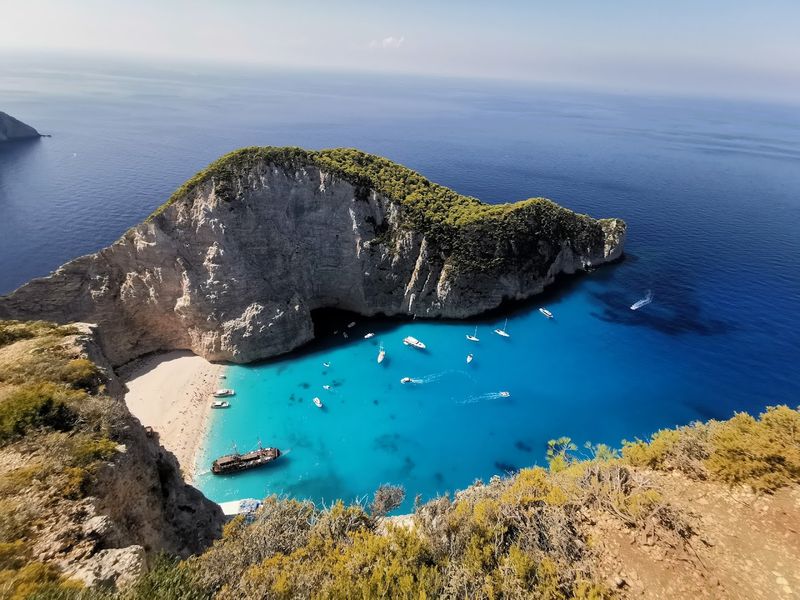
There is a beach in Greece where a shipwreck sits half-buried in white sand, surrounded by towering limestone cliffs and water so blue it looks digitally enhanced. Navagio Beach, also known as Shipwreck Beach, is one of those rare places that genuinely looks better in real life than in photographs, which is saying a lot given how extraordinary the photos already are.
The MV Panagiotis ran aground here in 1980, reportedly carrying contraband cigarettes when it got caught in a storm. Whether that story is entirely true is debated, but the shipwreck it left behind has become one of the most iconic images in all of Greek tourism.
The rusting hull against the white sand and turquoise water creates a contrast that is almost absurdly beautiful.
The beach is only accessible by boat, which adds a genuine sense of adventure to the visit. Boat tours depart regularly from Porto Vromi and Zakynthos Town, with some offering glass-bottom boats for viewing the sea life below.
The beach can get extremely crowded in July and August, so going in May, June, or September gives you a far more enjoyable experience. There is also a famous cliff viewpoint above the beach that offers a stunning panoramic perspective without getting on a boat.
Vikos Gorge
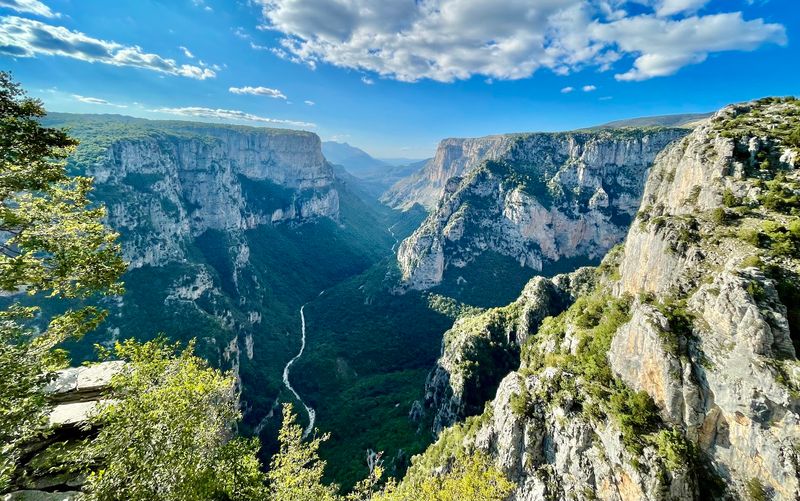
The Guinness World Records once recognized Vikos Gorge as the deepest gorge in the world relative to its width, and standing at the rim looking down, you will have absolutely no trouble believing that claim. Located in the Zagori region of northwestern Greece, this stunning natural landmark drops over 900 meters at its deepest point and stretches for about 12 kilometers.
It is a place that makes you feel genuinely small in the best possible way.
The gorge runs through the Vikos-Aoos National Park, one of Greece’s most beautiful and least crowded protected areas. The Voidomatis River flows along the gorge floor, its water so clear and cold that it almost looks artificial.
Hikers who complete the full trail through the gorge are rewarded with some of the most spectacular scenery in the entire country.
The traditional stone villages of Monodendri and Papingo serve as the main starting and ending points for the gorge trail. These villages are architectural gems in their own right, with old stone houses, arched bridges, and a pace of life that feels refreshingly unhurried.
The Zagori region as a whole remains one of Greece’s best-kept secrets, attracting serious hikers and nature lovers rather than typical beach tourists. Visiting in spring when wildflowers bloom along the trail edges makes the experience even more memorable.
Ancient Epidaurus Theatre
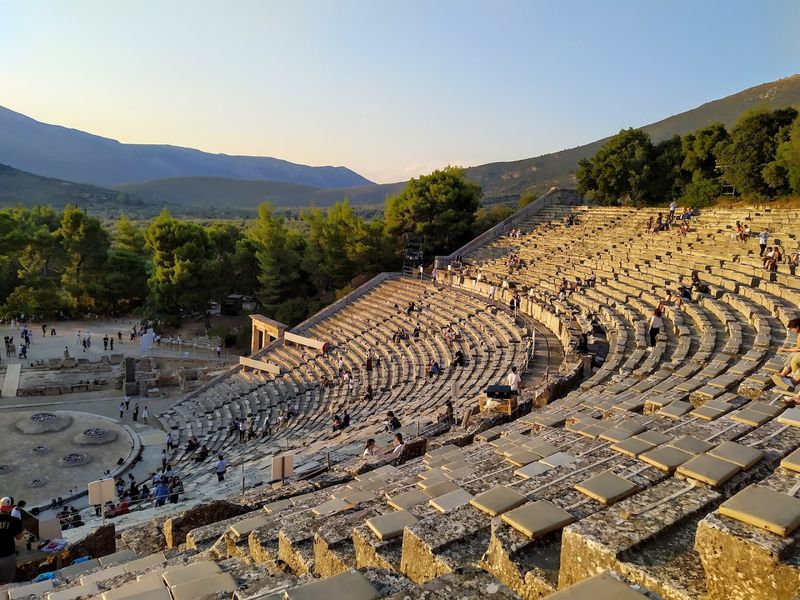
Drop a coin at the center of the stage and hear it clearly from the very back row, 55 tiers away. That is the famous acoustics test that visitors perform at the Theatre of Epidaurus, and it works every single time without microphones, speakers, or any modern technology.
Built around 340 BC, this theater is considered the finest example of ancient Greek theater architecture ever constructed.
Designed by architect Polykleitos the Younger, the theater could seat around 14,000 people and was built with such mathematical care that sound travels evenly to every seat. Researchers have spent years studying how this was achieved, and the answers involve both the slope of the seating and the limestone material used in construction.
Ancient acoustical engineering was apparently far ahead of its time.
What makes Epidaurus truly special is that it remains a living, working venue. The Athens and Epidaurus Festival hosts performances of ancient Greek tragedies and comedies here every summer, allowing visitors to experience the theater exactly as it was meant to be used.
Attending an evening performance under the stars with 14,000 fellow audience members is one of the most atmospheric cultural experiences Greece offers. The site is located in the Peloponnese, about two and a half hours from Athens, and is often combined with a visit to nearby Mycenae.
Rhodes Old Town
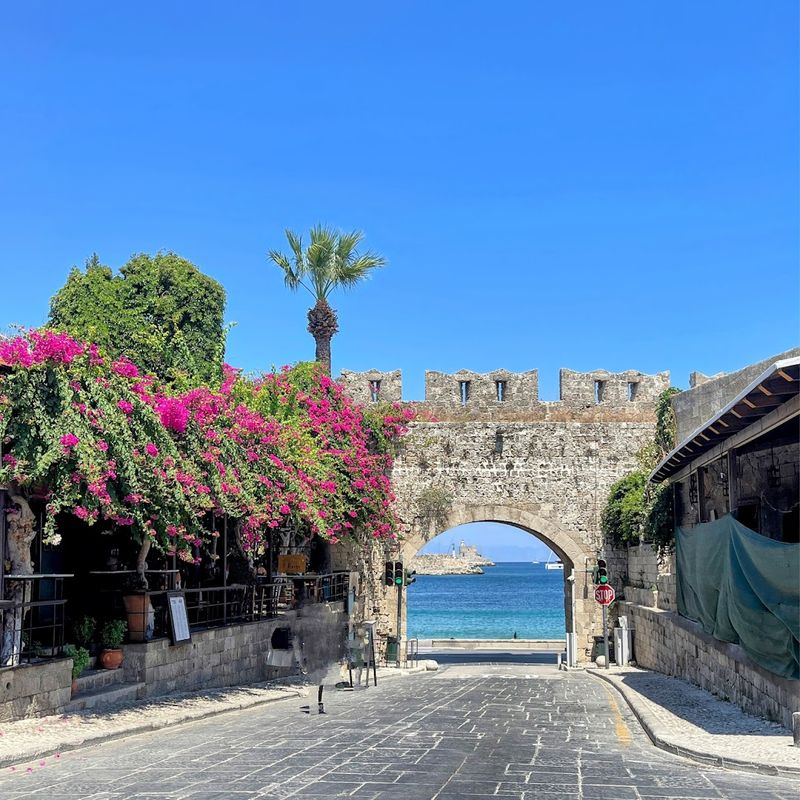
Walking through the gates of Rhodes Old Town feels less like entering a tourist attraction and more like accidentally stumbling through a time portal. The medieval city, built by the Knights of Saint John in the 14th century, is one of the best-preserved fortified towns in all of Europe.
Its massive stone walls, some up to four meters thick, have survived earthquakes, sieges, and centuries of wear and still stand impressively intact.
The Street of the Knights is the most famous road in the old town, a perfectly preserved medieval boulevard lined with the grand inns that once housed knights from different European nations. Walking its smooth cobblestones on a quiet morning, with golden light filtering between the old stone buildings, is a genuinely cinematic experience.
The Palace of the Grand Master at the top of the street is enormous and worth a full hour of exploration inside.
Beyond the famous landmarks, the old town rewards slow wandering. Narrow alleys open unexpectedly into small squares with fountains and cafes.
Local artisan shops sell handmade ceramics, jewelry, and leather goods. Rhodes Old Town is a UNESCO World Heritage Site and receives thousands of visitors in summer, but its winding streets are large enough to absorb the crowds without feeling overwhelmed.
Evening visits after dinner are especially magical when the stone walls glow under warm streetlights.
Samaria Gorge in Crete
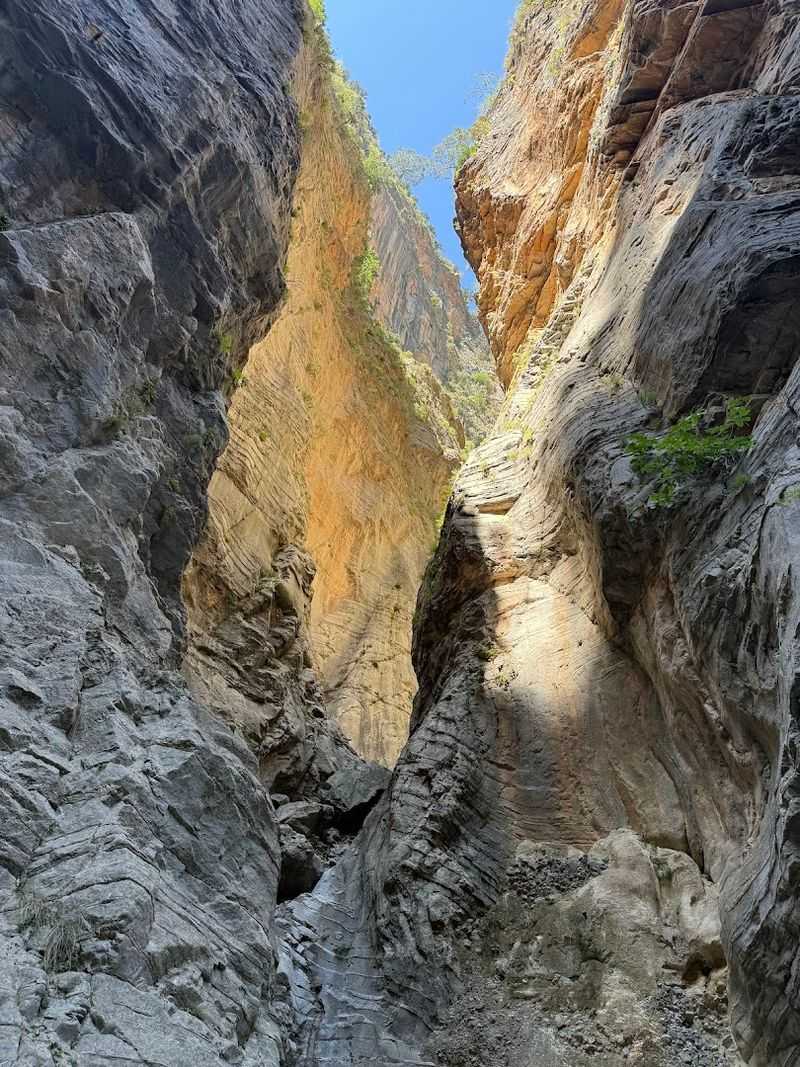
At roughly 16 kilometers long, Samaria Gorge is one of the longest gorges in Europe and one of the most celebrated hiking routes in the entire Mediterranean. Carved by thousands of years of water erosion through the White Mountains of Crete, the gorge descends from an altitude of 1,230 meters all the way down to the Libyan Sea.
The hike is challenging, rewarding, and absolutely unforgettable in equal measure.
The trail passes through dense cypress forests, open rocky plateaus, and the abandoned village of Samaria before reaching the most dramatic section: the Iron Gates. Here, the gorge narrows to just four meters wide while the walls on either side soar to 300 meters above.
Walking through this narrow passage feels like being swallowed by the mountain itself.
The hike typically takes between four and seven hours depending on your pace. Sturdy hiking shoes, plenty of water, and an early start are all non-negotiable for this trail.
The gorge is open from May to October and closes during winter due to flooding risk. At the end of the trail, the village of Agia Roumeli sits right on the sea, where boats take hikers to nearby coastal towns.
Jumping into the cool Libyan Sea after a full day of hiking is one of the most satisfying moments any traveler can experience in Greece.
Blue Caves of Zakynthos
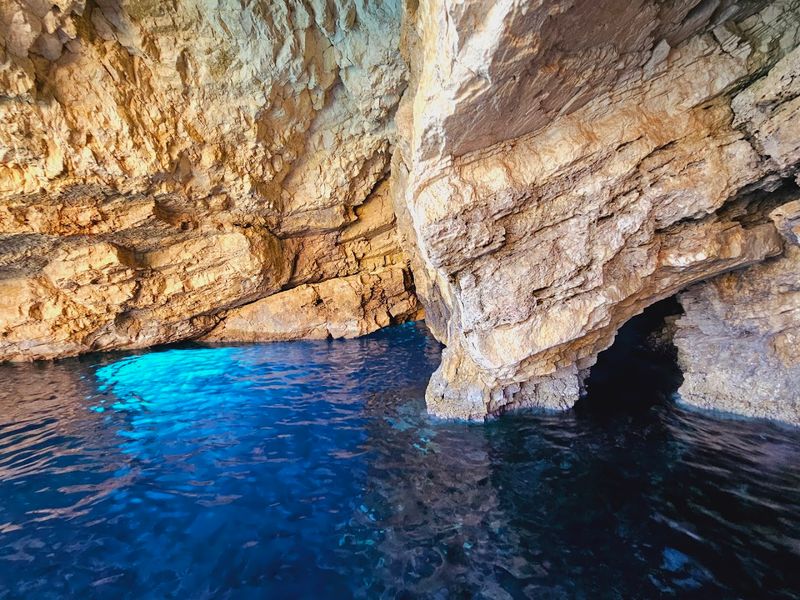
There is a moment inside the Blue Caves of Zakynthos when the sunlight hits the water just right and the entire cave seems to glow from below. The water turns an electric, almost supernatural shade of blue that no photograph fully captures.
It is one of those travel experiences where you find yourself questioning whether what you are seeing is actually real.
The caves are formed from white limestone cliffs along the northern coastline of Zakynthos, near Cape Skinari. Sunlight enters through underwater openings and reflects off the white sea floor, creating that legendary blue luminescence.
The effect is strongest between 10 AM and noon when the sun is positioned perfectly to flood the caves with light.
Access is exclusively by small boat, with tours departing from Cape Skinari and taking visitors inside several caves along the cliff face. Snorkeling around the cave entrances is a popular option for those who want to experience the glowing water from beneath the surface.
The combination of white cliffs, blue water, and the play of light inside the caves makes this one of the most visually striking natural attractions in all of Greece. Visiting outside the peak summer months means smaller boat groups and a more personal experience.
The nearby village of Agios Nikolaos is a lovely spot for lunch after your cave adventure.
Share this story