 Unearth The Voyage
When you stand in the shadow of something huge, it’s easy to think you’ve seen “big.” Then you learn about the kinds of structures that make a skyscraper feel ordinary. Some are so vast they reshape skylines, swallow districts, and stretch farther than your eyes can comfortably track.
These builds are not just feats of engineering. They change how you think about distance, weight, and what humans can pull off with enough time and money.
A single site can operate like its own city. Another can run for miles under solid rock, built to survive pressure that would crush most plans.
If you’re curious which creations push the limits the hardest, you’re in the right place. Here are the mega structures that turn scale into something almost unreal.
1. AvtoVAZ Main Assembly Building (Tolyatti, Russia) – Mega-factory scale
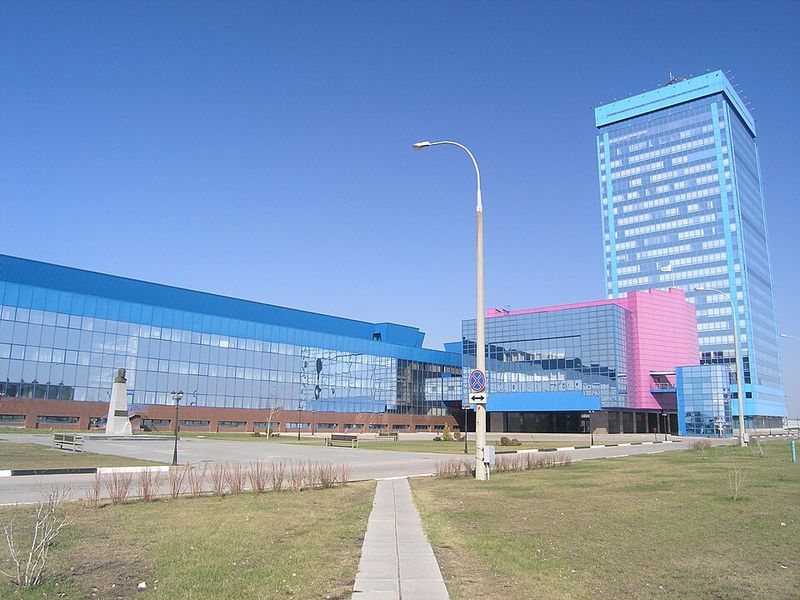
AvtoVAZ Main Assembly Building holds the title for the largest building footprint on Earth, and when you see the numbers, it’s wild. We’re talking millions of square meters of floor area dedicated to churning out cars.
Walking from one end to the other would probably take you longer than your morning commute. The sheer scale makes most other factories look like garden sheds.
This isn’t just a workplace; it’s a sprawling industrial universe where thousands of workers assemble vehicles day and night.
I once tried to imagine what it would be like to navigate this place on foot. You’d need a map, a compass, and maybe a packed lunch.
The building stretches so far that different sections might as well be different zip codes.
What makes AvtoVAZ truly mind-boggling is how it redefines what we think a single structure can be. It’s not just big – it’s a whole ecosystem of manufacturing under one roof, pumping out vehicles at a scale that feels almost impossible to grasp.
2. Iran Mall (Tehran, Iran) – Largest shopping-mall complex by floor area
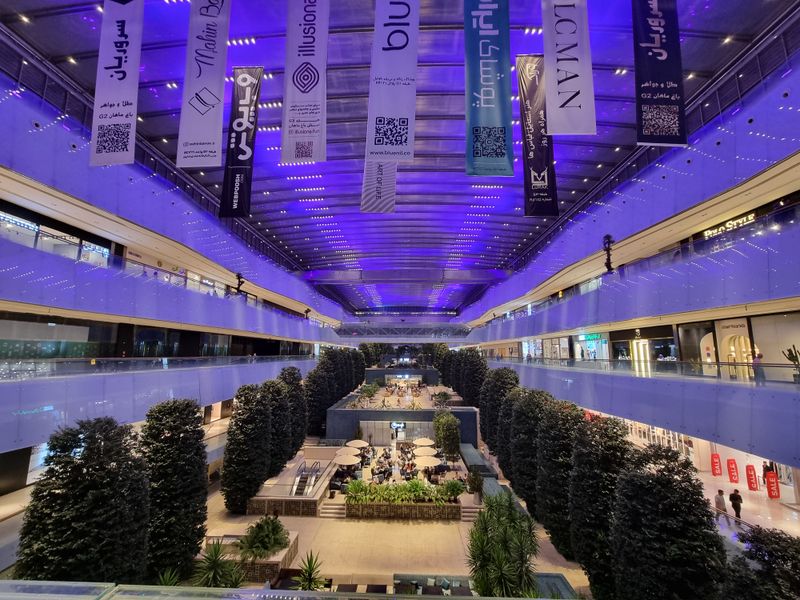
Shopping malls are supposed to be big, but Iran Mall takes that concept and cranks it up to eleven. With about 1,950,000 square meters of floor area, this place isn’t just a mall – it’s practically a small city dedicated to retail therapy.
You could spend days wandering through it and still discover new corners.
The numbers alone are staggering. To put it in perspective, you could fit dozens of football fields inside and still have space left over for a food court the size of a small town.
It’s the kind of place where getting lost isn’t just possible, it’s practically guaranteed.
What really gets me is how much planning went into creating something this colossal. Every shop, every hallway, every escalator had to be mapped out to handle the sheer volume of people and merchandise.
It’s retail engineering on a scale that feels almost surreal.
Iran Mall isn’t just about shopping. It’s about creating an experience so vast that visitors can lose themselves in it.
Whether you’re there for fashion, food, or just to marvel at the size, this mega-complex redefines what a shopping destination can be.
3. New Century Global Center (Chengdu, China) – A whole ‘indoor world’
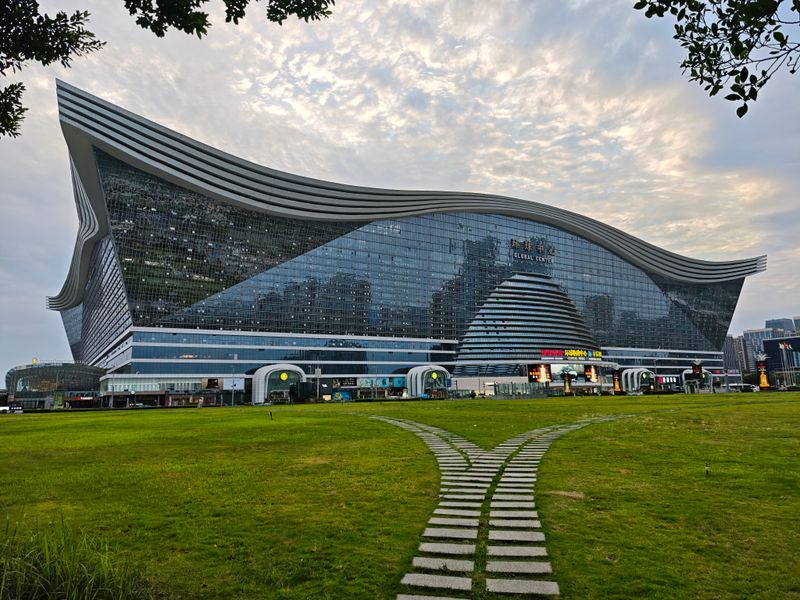
Some buildings are just offices or hotels, but New Century Global Center decided to be everything at once. This mega-structure packs roughly 1,760,000 square meters of floor area into one sprawling complex.
Hotels, offices, shopping, entertainment – it’s all there, and it’s all massive.
What blows my mind is the sheer variety crammed into this single building. You could check into a hotel, catch a movie, go shopping, and attend a business meeting without ever stepping outside.
It’s like someone built an entire neighborhood and then put a roof over it.
The scale is hard to grasp until you see it in person. The building is so enormous that it has its own indoor beach and water park, complete with artificial sun and waves.
Yes, you read that right – an indoor beach inside an office building.
New Century Global Center isn’t just a building; it’s an entire world under one roof. It challenges every assumption you have about what’s possible in architecture.
When you think about the logistics of keeping something this size running smoothly, it’s almost dizzying. This is what happens when ambition meets concrete and steel.
4. Dubai International Airport Terminal 3 (Dubai, UAE) – One of the largest buildings by floor space
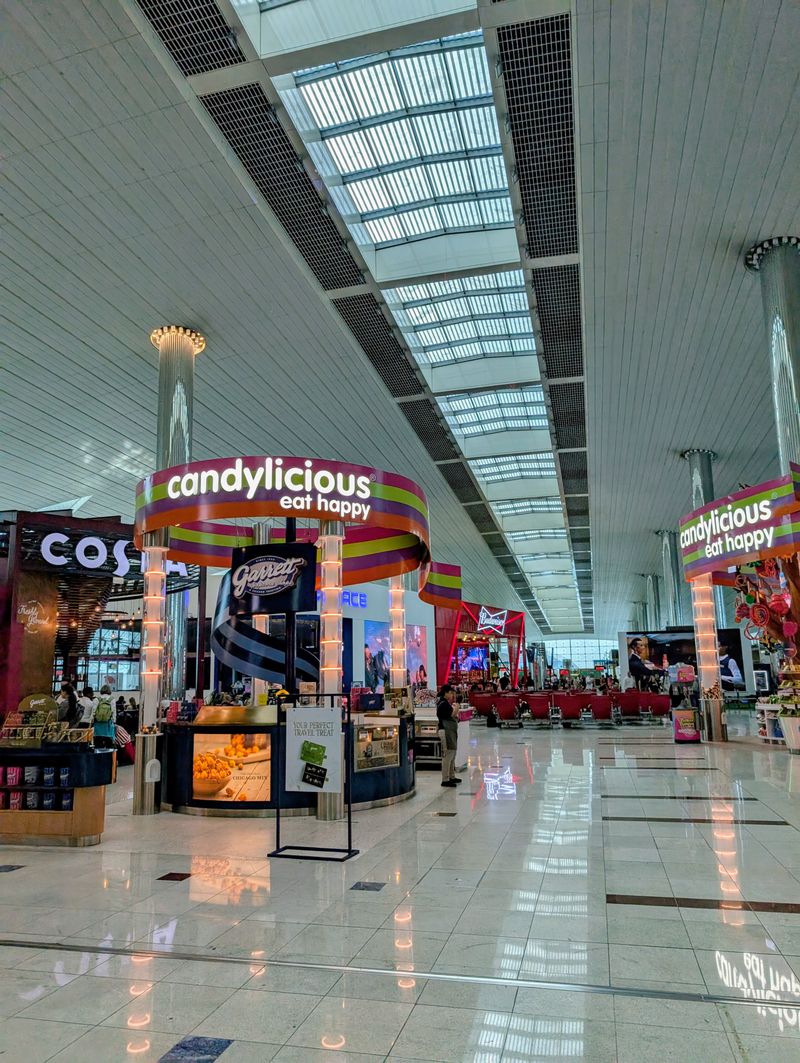
Airports are big by nature, but Terminal 3 at Dubai International takes it to a whole new level. With about 1,713,000 square meters of floor area, this terminal is gigantic even by airport standards.
It’s the kind of place where you might need to budget extra time just to walk from security to your gate.
I’ve been through some large airports, but the scale of Terminal 3 is something else entirely. The corridors seem to stretch on forever, lined with shops, restaurants, and lounges.
It’s less like a terminal and more like a small city designed to move millions of passengers every year.
What really stands out is how efficiently it handles the chaos of international travel. Despite its size, the design keeps things flowing smoothly.
You never feel like you’re in a cramped space, even when it’s packed with travelers from around the globe.
Terminal 3 proves that bigger can actually be better when it’s done right. It’s not just about having more space—it’s about creating an environment where people can move, shop, and relax without feeling overwhelmed.
This terminal redefines what an airport can be.
5. Abraj Al Bait (The Clock Towers complex) (Mecca, Saudi Arabia) – A ‘capacity monster’
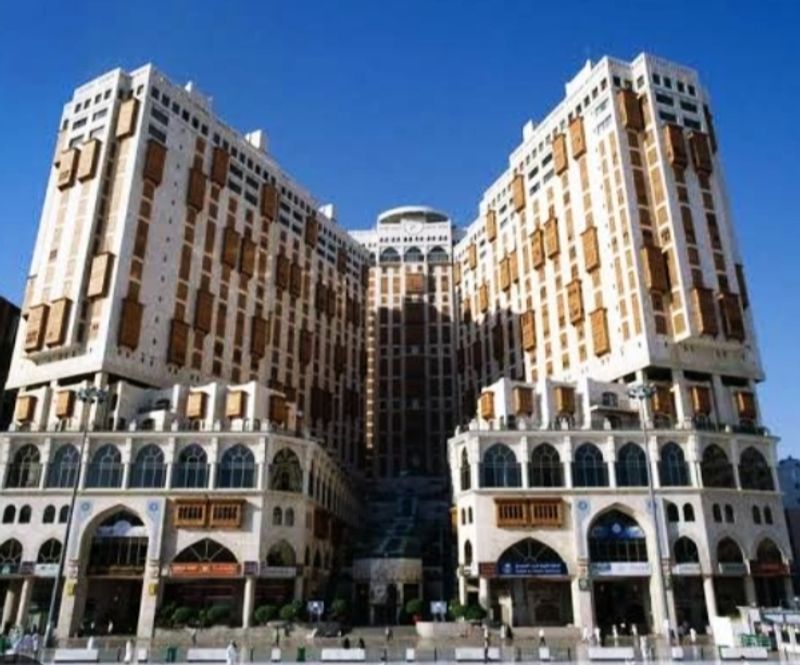
When you build something to accommodate millions of pilgrims, you don’t mess around with scale. Abraj Al Bait Clock Towers complex boasts a gross floor area around 1,575,815 square meters, making it one of the largest building complexes on the planet.
It’s designed to host a staggering number of people, and it shows.
The famous Makkah Clock Royal Tower is the crown jewel of this complex, visible from miles away. But the real story is what’s inside – hotels, shopping, prayer areas, and more, all packed into these towering structures.
It’s a vertical city built to serve one of the world’s most important religious sites.
What gets me is the sheer ambition behind it. Building something this massive in the heart of Mecca required incredible planning and engineering.
Every square meter had to serve a purpose, from housing pilgrims to providing services for the millions who visit each year.
Abraj Al Bait isn’t just about size, it’s about capacity and function on an almost incomprehensible scale. When you think about the logistics of keeping this complex running during peak pilgrimage seasons, it’s mind-blowing.
This is architecture built for humanity at its largest gatherings.
6. Boeing Everett Factory (Everett, Washington, USA) – Largest building by interior volume
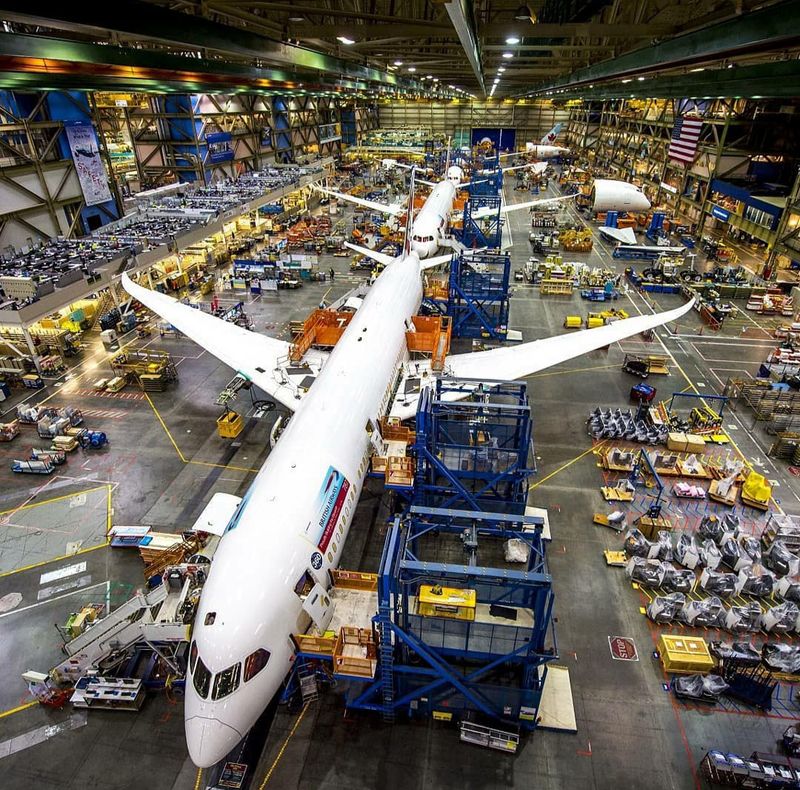
If you measure big by how much air a building holds, Boeing Everett Factory wins hands down. With roughly 472 million cubic feet of interior volume, this place is the undisputed champion.
It’s so enormous that clouds have reportedly formed inside on humid days.
The factory was built to assemble the largest commercial aircraft in the world, and it shows. Walking through it feels surreal, the ceilings are so high and the floor so vast that perspective gets warped.
You could fit entire neighborhoods inside and still have room for a few city blocks.
I’ve always been fascinated by how they manage to build airplanes in a space this big. The logistics alone are staggering.
Every tool, every part, every worker has to be coordinated across an area that feels more like a small country than a factory.
Boeing Everett Factory proves that sometimes you need ridiculous amounts of space to build something incredible. It’s not just a factory, it’s a monument to industrial ambition.
When you think about the volume of air enclosed inside, it’s almost impossible to visualize. This is what happens when engineering meets the need for truly massive scale.
7. Aalsmeer Flower Auction (Aalsmeer, Netherlands) – A building that runs the global flower trade
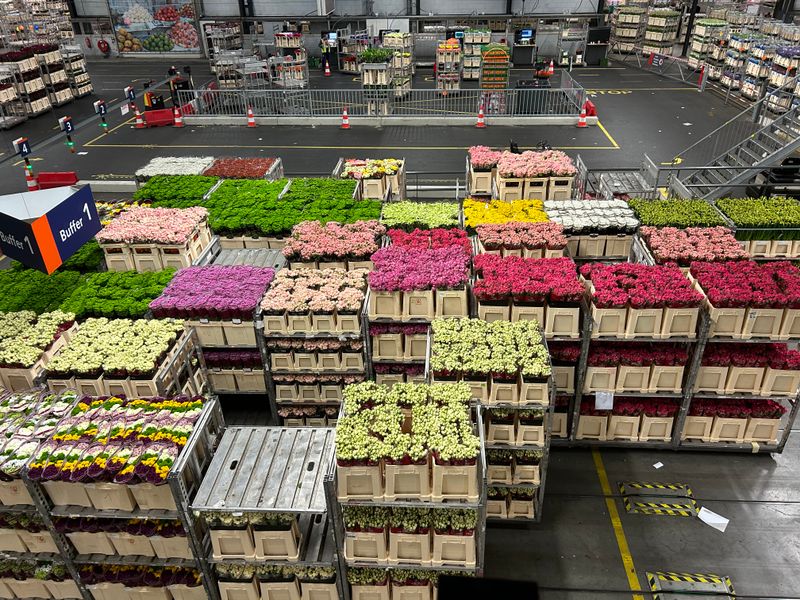
Flowers might seem delicate, but the building that handles the world’s largest flower trade is anything but. Aalsmeer Flower Auction covers around 999,000 square meters, making it one of the biggest single-story buildings on Earth.
It’s not just big, it’s the beating heart of the global flower industry.
Every day, millions of flowers pass through this massive facility. The auction operates with military precision, moving blooms from growers to buyers at breakneck speed.
The sheer volume of flowers handled here is staggering, if you lined them all up, they’d probably stretch around the world.
What really strikes me is how specialized this building is. It’s not a generic warehouse, it’s designed specifically for the unique needs of the flower trade.
Temperature control, logistics, auction halls – everything is optimized for keeping flowers fresh and moving them quickly.
Aalsmeer Flower Auction shows that big buildings aren’t always about flashy architecture. Sometimes they’re about function and efficiency on a scale that’s hard to comprehend.
This is where beauty meets business, and the scale of both is absolutely massive. It’s a reminder that even the most delicate products need colossal infrastructure to reach the world.
8. Three Gorges Dam (Hubei, China) – The world’s largest power station (installed capacity)
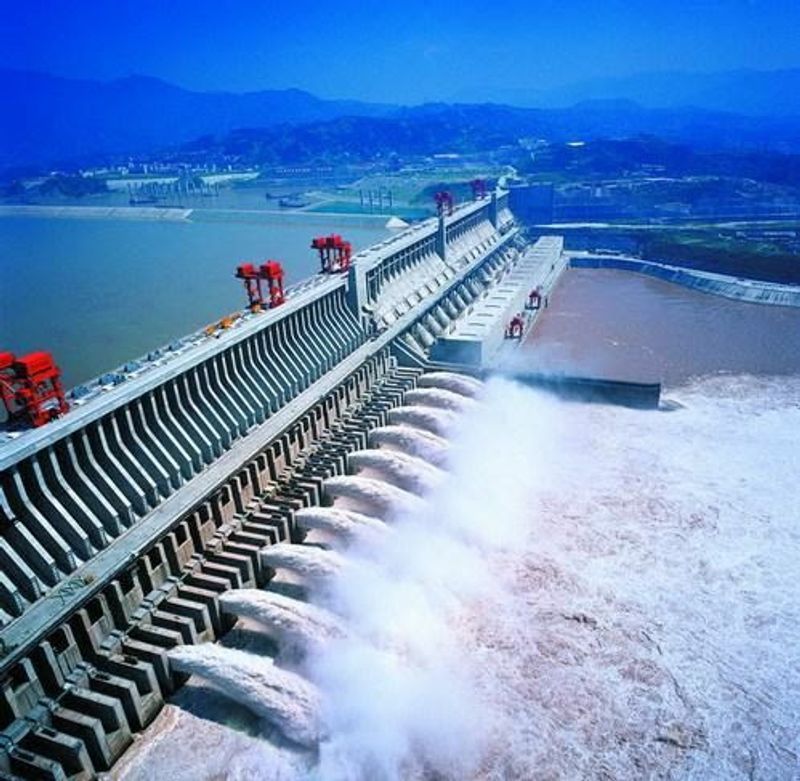
Dams operate on a scale that makes most buildings look like toys, and Three Gorges Dam is the king of them all. Stretching about 2,335 meters long and standing 181 meters high, it’s a concrete giant that tamed one of the world’s mightiest rivers.
The power station alone has an installed capacity of 22,500 megawatts.
The numbers are so big they almost lose meaning. This dam creates a reservoir that stretches for hundreds of kilometers, displacing entire communities and reshaping the landscape.
It’s not just a structure, it’s a force of nature bent to human will.
What blows my mind is the engineering required to pull this off. Pouring that much concrete, managing water flow, generating electricity, it’s all happening at a scale that feels almost impossible.
The dam doesn’t just produce power; it controls floods and enables navigation for one of the world’s busiest rivers.
Three Gorges Dam is a testament to what humans can achieve when we think really, really big. It’s controversial, massive, and absolutely awe-inspiring.
When you stand next to it, the scale is overwhelming. This is infrastructure on a level that redefines what’s possible.
9. Danyang–Kunshan Grand Bridge (China) – Longest bridge on Earth
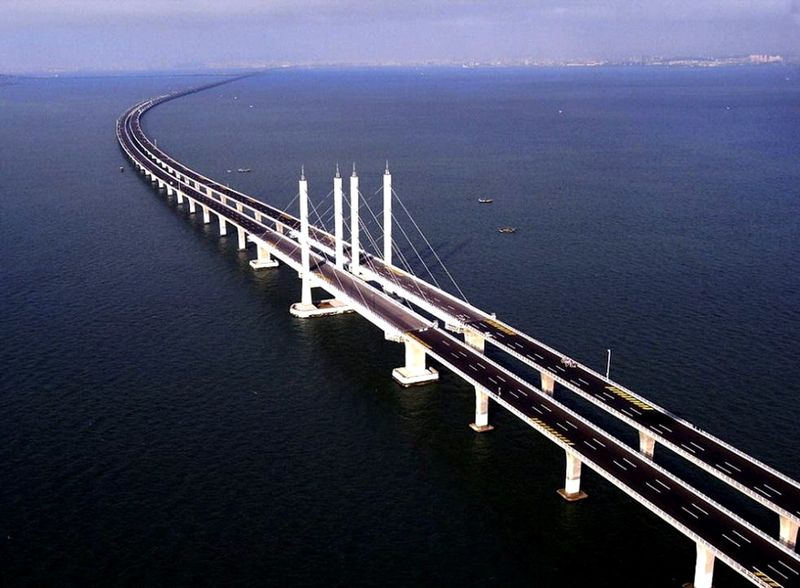
Bridges are supposed to connect two points, but Danyang-Kunshan Grand Bridge takes that idea and stretches it to absurd lengths. At about 164.8 kilometers long, it’s the longest bridge on Earth.
That’s over 100 miles of continuous structure, which is just bonkers when you think about it.
This bridge is part of the Beijing-Shanghai High-Speed Railway, and it cuts across lowlands, rivers, and everything in between. The engineering required to build something this long without it collapsing or sagging is mind-boggling.
Every meter had to be perfectly calculated and constructed.
I once tried to imagine what it would be like to drive or ride across this bridge. You’d be on it for so long that you might forget you’re even on a bridge.
It’s not just a crossing, it’s a journey in itself.
Danyang-Kunshan Grand Bridge proves that sometimes the most impressive structures are the ones that just keep going. It’s not flashy or tall, but its sheer length is what makes it unforgettable.
This is what happens when you need to connect distant places and refuse to let geography get in the way. Pure determination in concrete and steel.
10. Gotthard Base Tunnel (Switzerland) – Longest and deepest railway tunnel
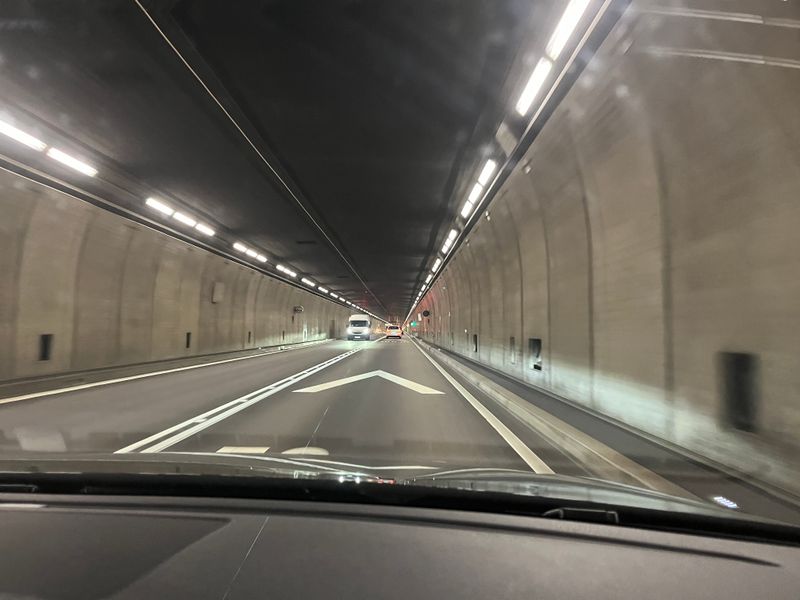
Sometimes the most impressive structures are the ones you can’t see from the surface. Gotthard Base Tunnel runs about 57.1 kilometers through the Swiss Alps, making it the longest railway tunnel in the world.
It’s also one of the deepest, burrowed through solid rock deep beneath the mountains.
Building this tunnel was an engineering nightmare in the best possible way. Drilling through the Alps required cutting-edge technology, years of work, and incredible precision.
One wrong calculation and the whole thing could have been a disaster. Instead, it’s a triumph of human ingenuity.
What really gets me is how it completely changed travel through the Alps. Before this tunnel, crossing the mountains was slow and complicated.
Now, trains zip through in a fraction of the time, connecting northern and southern Europe like never before.
Gotthard Base Tunnel is proof that big doesn’t always mean tall or wide, sometimes it means deep and long. It’s a hidden giant, invisible from above but absolutely massive in scope and impact.
When you ride through it, you’re traveling through one of the most ambitious construction projects in human history. That’s pretty incredible.
11. Large Hadron Collider (France/Switzerland) – Largest particle accelerator
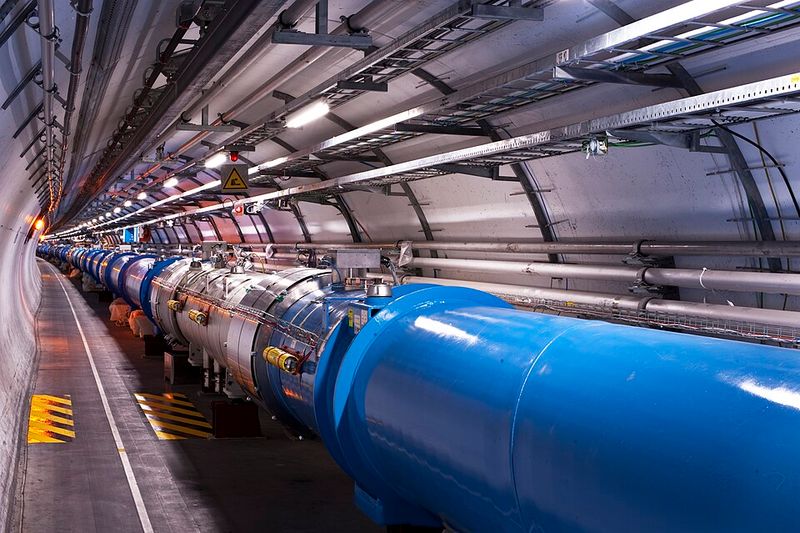
Most mega-structures are about moving people or making things, but the Large Hadron Collider is built to smash particles together at insane speeds. With a circumference of about 26.7 kilometers, this underground ring is the largest and most powerful particle accelerator ever built.
It’s science on a scale that feels like science fiction.
The LHC sits beneath the border of France and Switzerland, buried deep underground. Scientists use it to recreate conditions from fractions of a second after the Big Bang.
Yes, they’re literally smashing atoms to understand the universe. The scale of ambition matches the scale of the structure.
What blows my mind is the precision required. We’re talking about accelerating particles to nearly the speed of light in a tunnel this long, and everything has to be perfect.
The slightest error could ruin experiments that took years to plan.
The Large Hadron Collider isn’t just big, it’s pushing the boundaries of what we know about reality itself. It’s a reminder that sometimes the biggest structures are built not for commerce or travel, but for pure discovery.
This is humanity at its most curious and ambitious, building something massive to answer the tiniest questions.
12. Burj Khalifa (Dubai, UAE) – Tallest building in the world
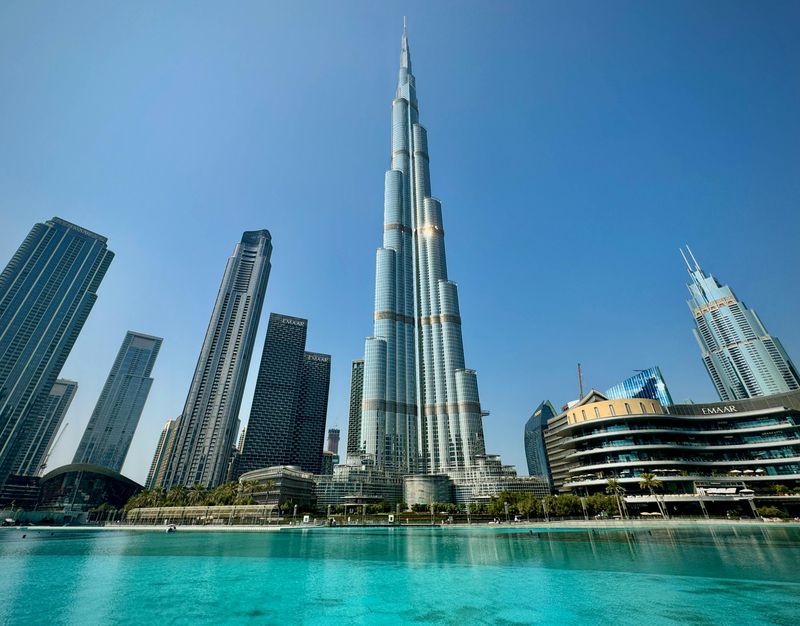
When you think of a mega-structure, Burj Khalifa is probably the first thing that comes to mind. At 828 meters tall, it’s the tallest building in the world, and it dominates the Dubai skyline like nothing else.
It’s not just tall – it’s ridiculously, almost impossibly tall.
Standing at the base and looking up is a surreal experience. Your brain struggles to process how high it actually goes.
The building keeps rising and rising until it becomes a needle piercing the sky. It’s a monument to human ambition and engineering prowess.
What really amazes me is how they built something this tall without it toppling over. The engineering required to handle wind, earthquakes, and the sheer weight of all that steel and concrete is staggering.
Every floor had to be perfectly balanced and reinforced.
Burj Khalifa isn’t just the tallest building, it’s an icon of what’s possible when you refuse to accept limits. It’s been featured in movies, visited by millions, and photographed from every angle imaginable.
This is the building that redefined skyscrapers and proved that we can always build higher if we’re willing to dream big enough.
13. Merdeka 118 (Kuala Lumpur, Malaysia) – Second-tallest building
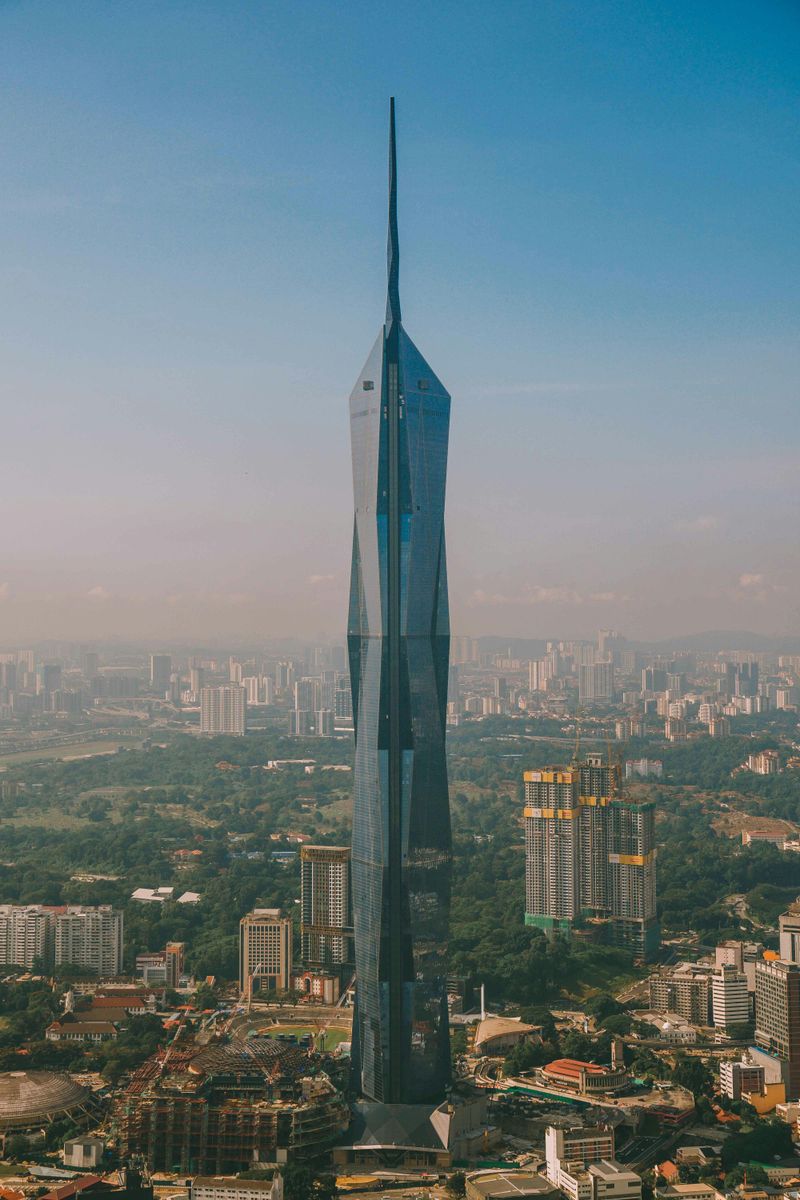
Burj Khalifa might get all the glory, but Merdeka 118 is giving it a run for its money. At 678.9 meters tall, this Malaysian giant is the second-tallest building in the world, and it’s absolutely stunning.
It’s proof that the race to build higher isn’t over, not by a long shot.
Completed recently, Merdeka 118 brought a new level of ambition to Kuala Lumpur’s skyline. The building is sleek, modern, and designed to make a statement.
It’s not just about height, it’s about creating an architectural landmark that represents Malaysia’s growth and ambition.
What strikes me is how quickly the competition for tallest buildings keeps evolving. Just when you think one building will hold the record forever, another one comes along to challenge it.
Merdeka 118 is a reminder that human ambition knows no limits.
This tower isn’t just tall, it’s a symbol of what modern engineering can achieve. Every meter of height required careful planning, cutting-edge materials, and a whole lot of determination.
When you see it rising above the city, it’s impossible not to feel impressed. This is what happens when you aim for the sky and actually reach it.
14. Narendra Modi Stadium (Ahmedabad, India) – Largest stadium by capacity
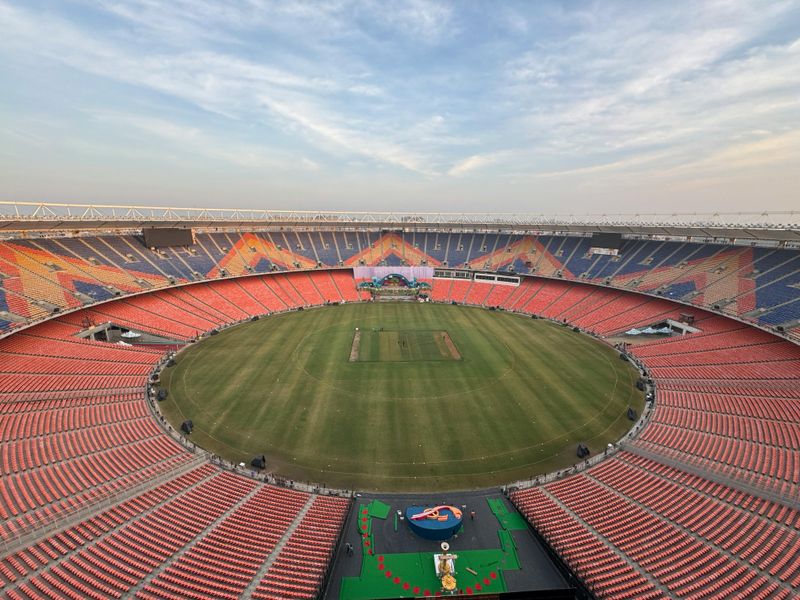
Some structures are big because of how many people they can hold, and Narendra Modi Stadium is the heavyweight champion in that category. With a capacity of 132,000, it’s the largest stadium in the world.
Imagine trying to find your seat in a crowd that size, good luck with that.
This stadium was built for cricket, and it shows. The design maximizes sightlines and ensures that even the cheapest seats offer a decent view of the action.
When it’s packed, the roar of the crowd is deafening. It’s not just a stadium, it’s an experience.
What really impresses me is the logistics of managing that many people. Getting everyone in and out safely, providing food and facilities, handling security – it’s a massive undertaking.
This stadium is a city unto itself on game day.
Narendra Modi Stadium proves that big isn’t just about height or floor space, it’s also about bringing people together. When 132,000 fans fill those seats, the energy is electric.
This is where sports become spectacle, and the scale of the venue matches the passion of the fans. It’s a monument to the power of shared experiences.
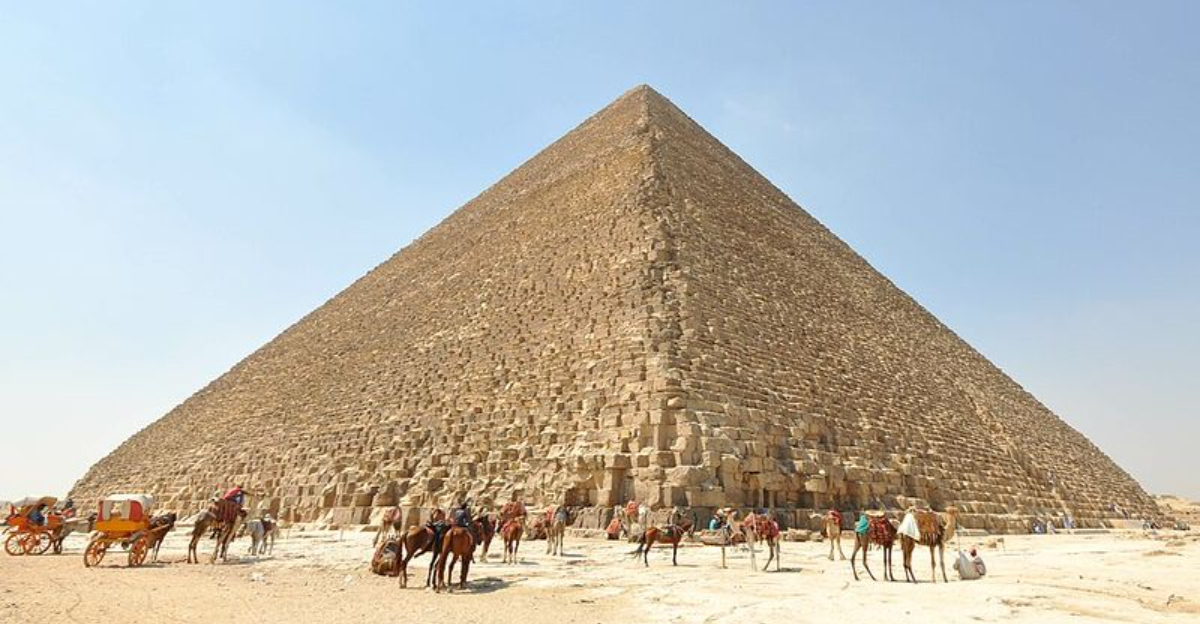
15. Great Pyramid of Giza (Egypt) – The ancient heavyweight
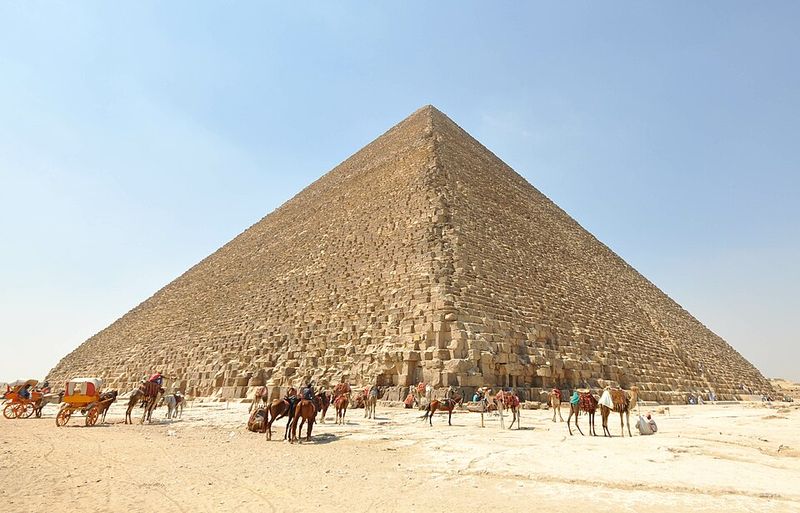
Long before modern engineering and steel skyscrapers, the Great Pyramid of Giza was already playing in the mega-structure league. Originally standing 146.6 meters tall with an estimated volume of 2.6 million cubic meters, this ancient wonder is still mind-blowing thousands of years later.
It’s proof that humans have always dreamed big.
What’s truly incredible is how they built it without modern tools or technology. Every block of stone had to be quarried, transported, and placed with precision.
The sheer labor and ingenuity required is almost impossible to comprehend. This wasn’t just construction, it was a civilization-defining achievement.
I’ve always been fascinated by how the pyramids have stood the test of time. While modern buildings crumble after decades, the Great Pyramid has endured for millennia.
It’s a testament to the skill and determination of its builders.
The Great Pyramid isn’t just a relic, it’s a reminder that the desire to build something massive and lasting is deeply human. It’s the original mega-structure, and it still commands respect and awe.
When you stand before it, you’re looking at history, ambition, and engineering genius all rolled into one incredible monument.



