 Unearth The Voyage
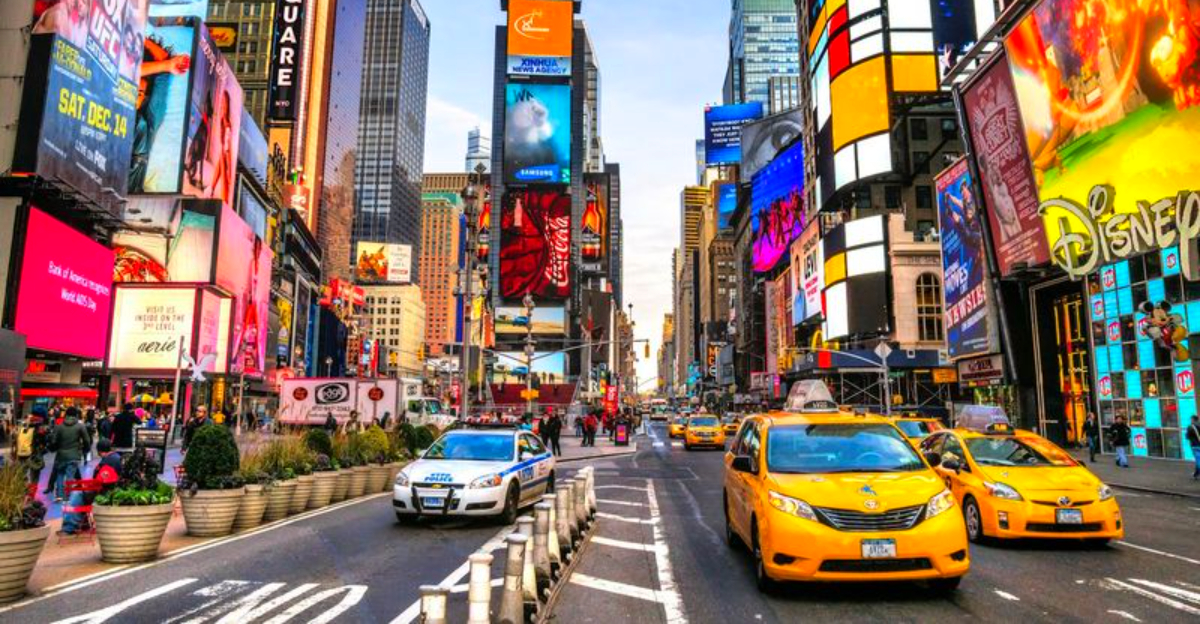
Some streets are more than just roads — they are living, breathing landmarks that have shaped history, culture, and pop culture for generations. From the glittering lights of Las Vegas to the ancient stones of Jerusalem, the world’s most famous streets each tell a story worth hearing.
Whether you are a seasoned traveler or just dreaming of your next adventure, these iconic streets belong on every bucket list. Get ready to explore the roads that have captured the imagination of millions.
Champs-Élysées — Paris, France
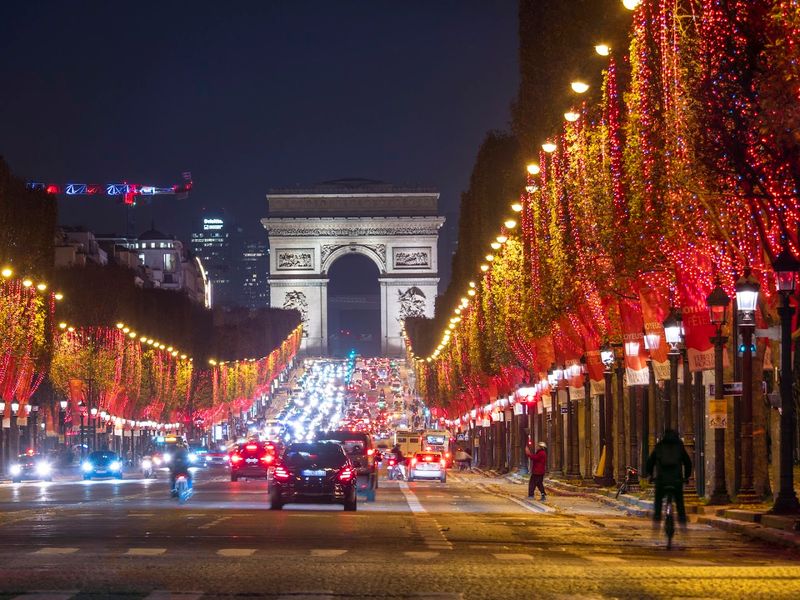
Picture the most elegant street you can imagine — then double it. The Champs-Élysées in Paris has been dazzling visitors since the 17th century, stretching nearly 2 kilometers between Place de la Concorde and the iconic Arc de Triomphe.
It is often called the most beautiful avenue in the world, and honestly, the title is hard to argue with.
The boulevard is lined with designer boutiques, grand cafés, cinemas, and theaters that make window shopping feel like a sport. Every July 14th, Bastille Day transforms the avenue into a spectacular military parade route, drawing enormous crowds.
The Tour de France cycling race also finishes its final stage here each summer — a tradition that sends sports fans into a frenzy.
Christmas lights turn the Champs-Élysées into a magical winter wonderland every December, making it equally stunning year-round. Visiting at night, when the golden streetlights reflect off the pavements, is something truly unforgettable.
Wear comfortable shoes, bring your camera, and budget extra time — because once you arrive, leaving feels nearly impossible.
Broadway — New York City, USA
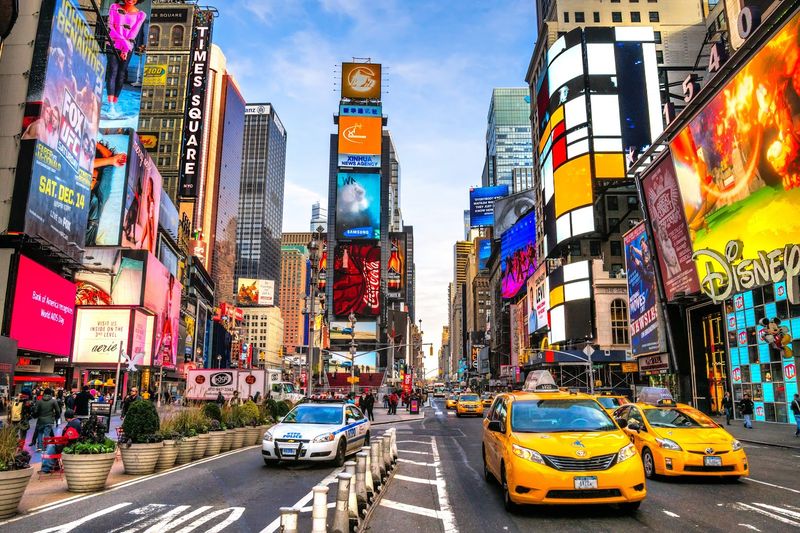
The lights are always on along Broadway, and the energy never really sleeps. Running diagonally through the entire length of Manhattan, Broadway is the beating heart of American theater — a street where dreams are performed live, eight shows a week.
For over a century, this avenue has set the global standard for musical theater and live stage productions.
The stretch near Times Square is where the magic truly concentrates. Iconic theaters like the Majestic, the Shubert, and the Gershwin have hosted legendary shows including The Phantom of the Opera, Hamilton, and West Side Story.
Tickets sell out fast, so booking ahead is always a smart move for visitors hoping to catch a performance.
Even if theater is not your thing, just standing in Times Square and absorbing the sensory overload of giant billboards, yellow cabs, and street performers is an experience in itself. Broadway is also a shopping and dining destination, with countless restaurants and stores nearby.
Fun fact: the word “Broadway” comes from the Dutch word “Breede Weg,” simply meaning “broad way” — a pretty straightforward name for a street with such an outsized personality.
Fifth Avenue — New York City, USA
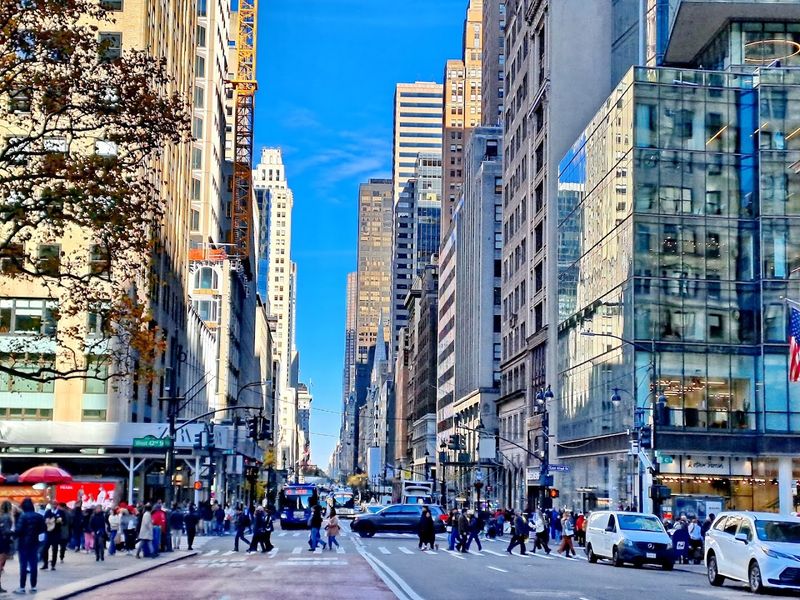
If money had a home address, it might just be Fifth Avenue. Stretching the full length of Manhattan, this legendary street is lined with flagship stores from Tiffany and Co., Gucci, Prada, and Saks Fifth Avenue — making it one of the most expensive retail corridors on the planet.
The holiday window displays alone draw millions of visitors every November and December.
Beyond the shopping, Fifth Avenue is packed with cultural and architectural landmarks. The Empire State Building towers over Midtown, while St. Patrick’s Cathedral offers a stunning contrast of Gothic stonework against a backdrop of gleaming skyscrapers.
The Metropolitan Museum of Art anchors the upper stretch of the avenue along Central Park.
Speaking of Central Park — Fifth Avenue runs alongside its entire eastern edge, giving the street an almost unfair advantage in the scenery department. Joggers, cyclists, and picnickers spill out from the park while shoppers stream past on the opposite sidewalk.
The contrast between nature and city ambition is what makes Fifth Avenue feel genuinely alive. Whether you are there to spend money or just admire the architecture, this street always delivers something worth remembering.
Abbey Road — London, England
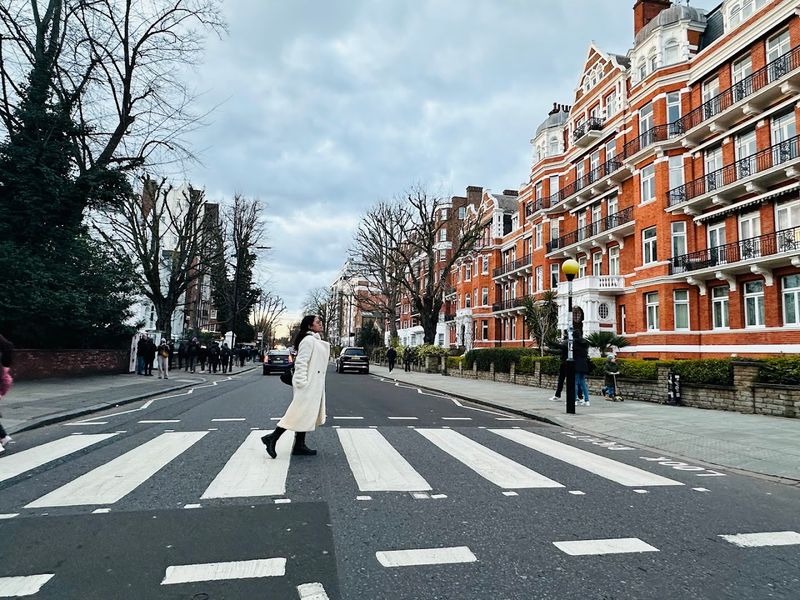
Four lads walked across a zebra crossing in 1969, and somehow that single photograph turned a quiet London street into one of the most visited spots in the world. Abbey Road in St. John’s Wood, northwest London, owes its global fame entirely to the Beatles — specifically their final studio album, whose cover features John, Ringo, Paul, and George mid-stride across the crossing.
Today, fans from every corner of the globe make the pilgrimage to recreate that iconic shot. The zebra crossing is monitored by a live webcam, meaning your crossing attempt might be watched by thousands of people online in real time.
The nearby Abbey Road Studios, where the Beatles recorded most of their catalog, still operates as a working recording studio and welcomes visitors outside its famous gates.
The wall beside the studio entrance is covered in fan graffiti and messages — a constantly evolving tribute that the studio has chosen to preserve rather than paint over. Beyond the Beatles connection, the surrounding neighborhood of St. John’s Wood is charming, leafy, and worth exploring at a leisurely pace.
Bring a friend to photograph your crossing, and try not to hold up traffic too long.
Las Ramblas — Barcelona, Spain
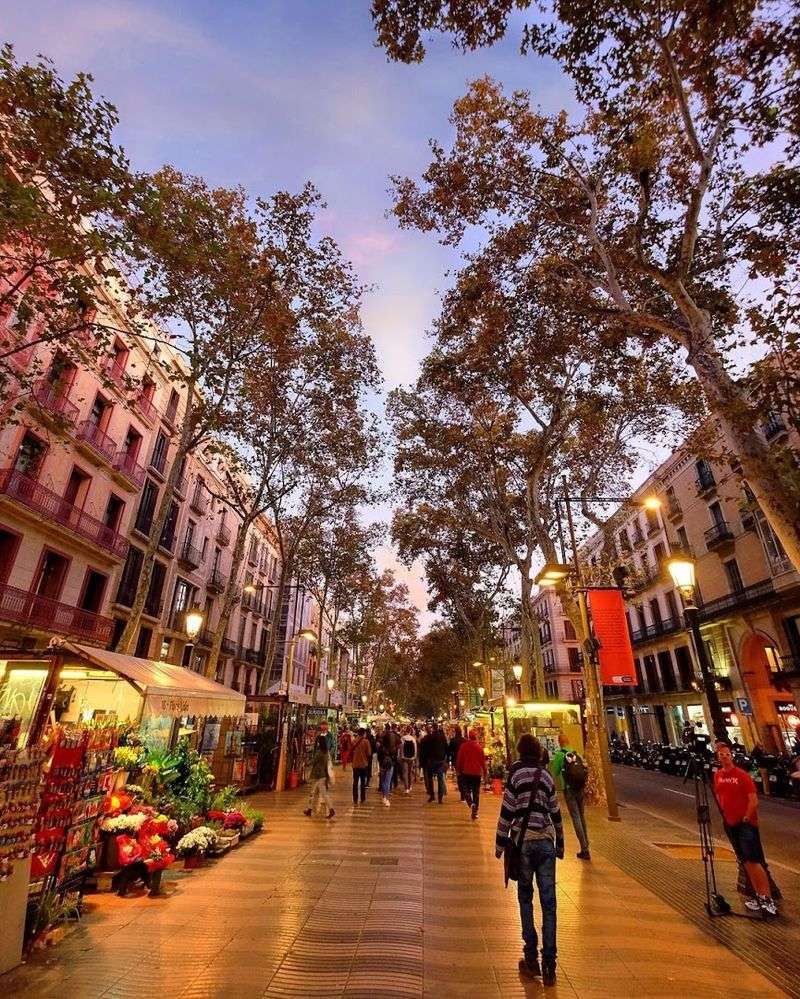
Barcelona’s most famous street moves like a living parade. Las Ramblas is a tree-lined pedestrian boulevard stretching about 1.2 kilometers from Plaça de Catalunya down to the Christopher Columbus monument near the waterfront.
It is the kind of street where you can spend an entire afternoon without accomplishing a single planned task — and somehow feel completely satisfied about it.
Street performers, artists, and human statues compete for attention alongside flower stalls, fresh juice vendors, and souvenir markets. The famous Boqueria Market, just off Las Ramblas, is one of Europe’s most celebrated food markets and an absolute must-visit for anyone who loves eating well.
Colorful tiles, arched passageways, and the smell of fresh coffee spilling from nearby cafés add to the sensory richness of the walk.
One practical tip: keep a close eye on your belongings, as Las Ramblas is also well-known for pickpockets targeting distracted tourists. Staying alert does not mean you cannot enjoy yourself — it just means you will leave with both your memories and your wallet intact.
Visit in the evening when the heat softens and the atmosphere shifts into something more relaxed, lively, and genuinely magical.
Lombard Street — San Francisco, USA
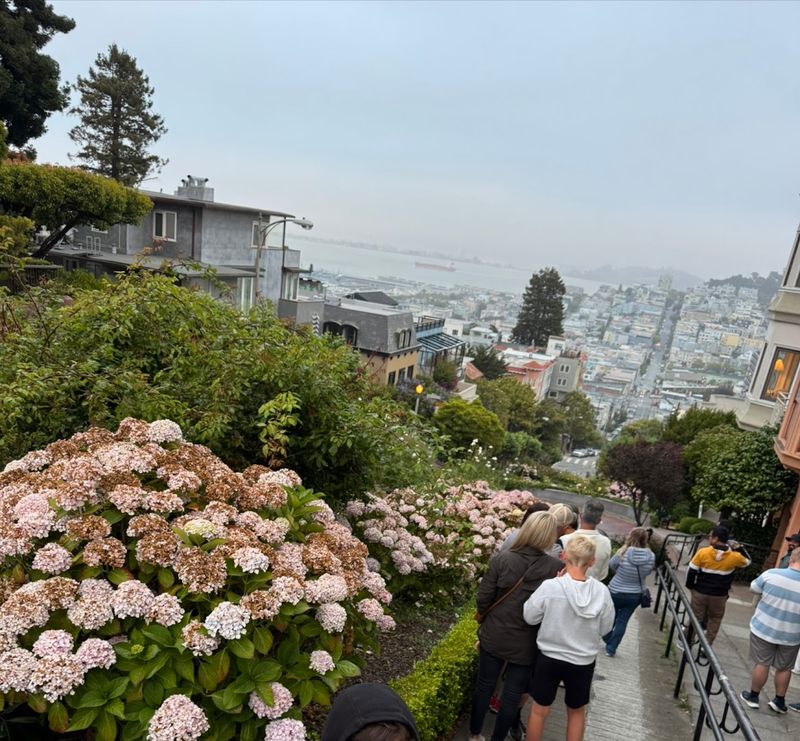
No other street in the world looks quite like Lombard Street from above. Tucked into the Russian Hill neighborhood of San Francisco, this one-block stretch of road zigzags down a steep hill in eight tight hairpin turns, all surrounded by manicured flower gardens and handsome brick-paved lanes.
It has earned its nickname — the crookedest street in the world — with tremendous style.
The turns were actually designed in the 1920s to reduce the dangerous steepness of the original road, which had a 27-degree grade. Clever engineering turned a problem into a tourist attraction that now draws over two million visitors annually.
Cars inch their way down the winding descent at just 5 mph, while pedestrians walk a parallel staircase lined with hydrangeas for an equally dramatic view.
The best photographs are taken from the bottom of the hill looking up, or from the top looking down toward the bay. Arrive early in the morning to avoid the crowds and catch the flowers in their best light.
The surrounding neighborhood is also worth exploring — nearby Coit Tower and the waterfront are just a short walk away. Lombard Street is proof that even a traffic solution can become a work of art.
The Royal Mile — Edinburgh, Scotland
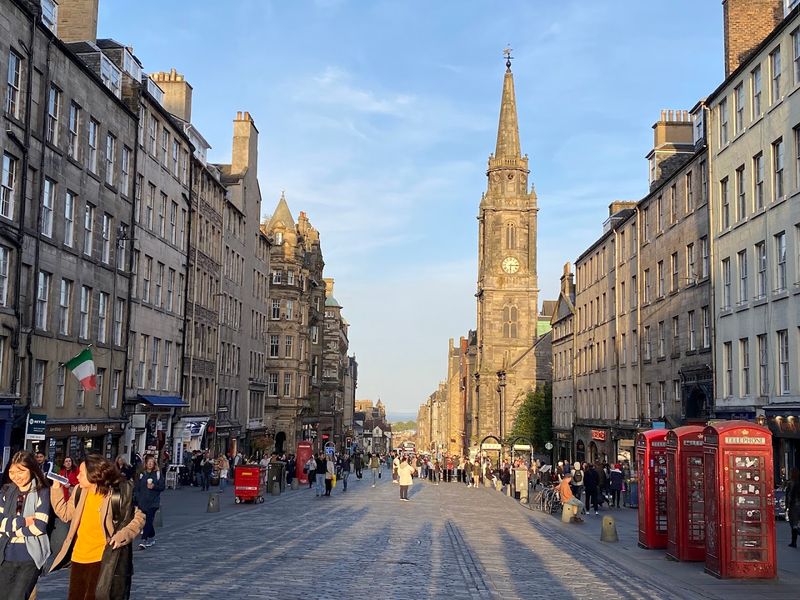
Walking the Royal Mile feels like stepping directly into a history book — except the pubs are real and the haggis is hot. This ancient street forms the spine of Edinburgh’s Old Town, running almost exactly one Scottish mile from the magnificent Edinburgh Castle at the top to the Palace of Holyroodhouse at the bottom.
Every cobblestone seems to have a story attached to it.
Medieval closes — narrow alleyways branching off the main street — hide courtyards, hidden bars, and tiny museums that reward curious explorers. The street is lined with tartan shops, whisky boutiques, and traditional Scottish restaurants serving up dishes that range from the adventurous to the comforting.
Street performers, bagpipers, and costumed characters add a theatrical quality to everyday foot traffic.
During the Edinburgh Festival Fringe every August, the Royal Mile transforms into the world’s largest outdoor arts venue, packed with performers handing out flyers and putting on impromptu shows at every corner. Even outside festival season, the atmosphere is rich and layered.
Visiting the Castle at the top of the hill is non-negotiable — the views over the city from its battlements are genuinely breathtaking. The Royal Mile is one of those streets that rewards slow, curious walkers above all others.
Hollywood Boulevard — Los Angeles, USA
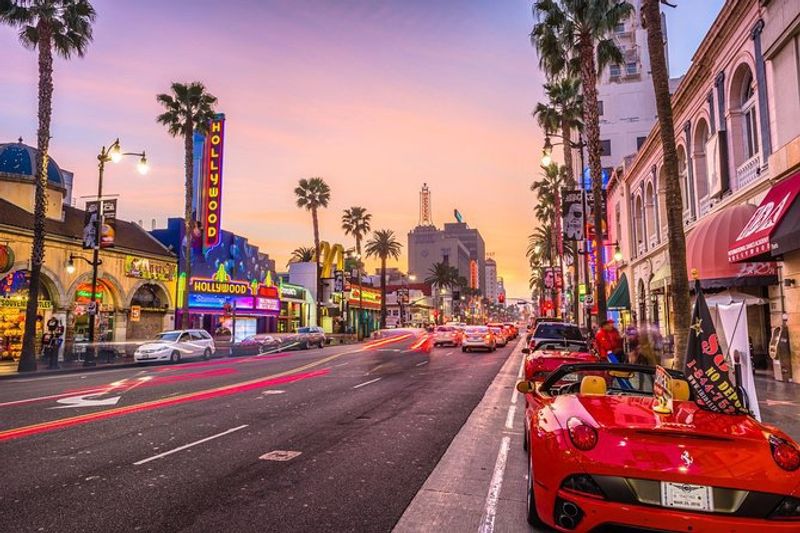
Stars literally cover the ground on Hollywood Boulevard — over 2,700 of them, embedded in the sidewalk as part of the famous Hollywood Walk of Fame. Each pink terrazzo star honors an actor, musician, director, or other entertainment figure, and finding your favorite celebrity’s star feels like a personal treasure hunt through the heart of the entertainment world.
The TCL Chinese Theatre is one of the boulevard’s most photographed landmarks, famous for its forecourt filled with celebrity handprints and footprints set in concrete. Nearby, the Dolby Theatre hosts the Academy Awards every year, adding another layer of glamour to the street’s already star-studded reputation.
Costumed characters dressed as superheroes and film icons patrol the sidewalk, eager to pose for photos — for a tip, of course.
Hollywood Boulevard has had its rough patches over the decades, but recent revitalization efforts have made it a more enjoyable destination. The Hollywood Museum, housed in the historic Max Factor Building, is a hidden gem packed with movie memorabilia spanning nearly a century of filmmaking.
Visit on a weekday morning for a calmer experience, or lean into the weekend crowds and embrace the spectacle. Either way, Hollywood Boulevard delivers an experience that feels unmistakably American.
Shibuya Crossing — Tokyo, Japan
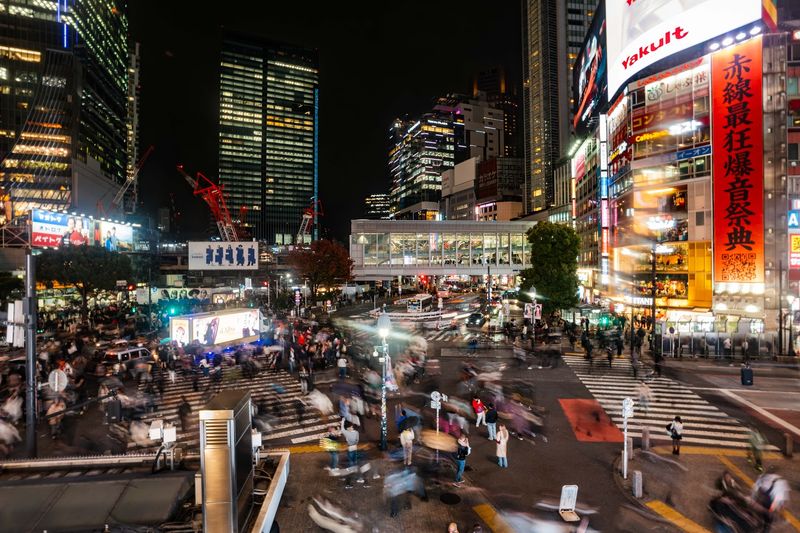
Every few minutes, the traffic lights around Shibuya Crossing turn red in all directions at once — and then the human flood begins. Hundreds of people surge across the intersection simultaneously from every angle, somehow avoiding collisions with the practiced grace of a choreographed performance.
It is the busiest pedestrian crossing in the world, handling an estimated 2,500 people per crossing cycle during peak hours.
The surrounding landscape of giant LED screens, neon advertisements, and towering department stores creates an electric atmosphere unlike anything else on earth. Starbucks operates a famous second-floor café overlooking the crossing, where visitors can sit with a coffee and watch the spectacle below — a modern form of people-watching taken to an extreme level.
The area buzzes with energy day and night, but the crossing truly comes alive after dark when the lights reflect off the pavement.
Shibuya is also a major shopping and dining district, with countless restaurants, fashion stores, and entertainment venues packed into the surrounding blocks. The nearby Shibuya Sky observation deck offers a stunning bird’s-eye view of the entire intersection.
Whether you cross it, photograph it from above, or simply stand at the edge and absorb the organized chaos, Shibuya Crossing is an experience that stays with you long after you leave Tokyo.
Khao San Road — Bangkok, Thailand
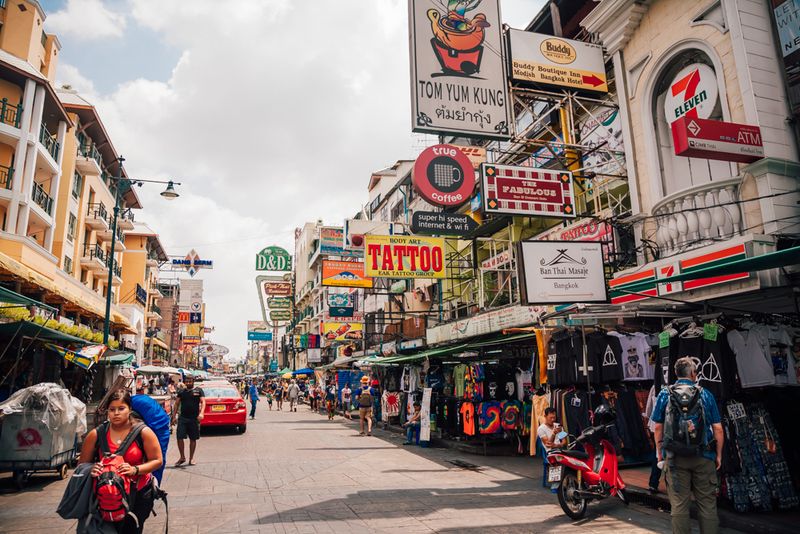
Somewhere between a street, a market, a party, and a dream, Khao San Road defies easy description. For decades, this short but legendary road in central Bangkok has served as the unofficial headquarters of Southeast Asian backpacker culture, welcoming budget travelers from every country imaginable with open arms and suspiciously cheap pad thai.
By day, the street hums with activity — vendors sell everything from fake student ID cards to handmade jewelry, while travel agencies offer bus tickets to every corner of Thailand. Massage parlors, second-hand bookshops, and smoothie stands compete for sidewalk space in a cheerful, chaotic tangle.
The smells of street food — grilled skewers, mango sticky rice, and fresh coconut — hang in the air from morning to midnight.
After dark, Khao San Road shifts gears entirely. Open-air bars blast music into the street, fire dancers perform for crowds of tourists, and the energy builds into a full-on celebration that often runs until sunrise.
It is loud, colorful, overwhelming, and absolutely unforgettable. Even travelers who prefer quieter experiences tend to spend at least one evening here, swept up in the contagious enthusiasm of the crowd.
Khao San Road is the kind of place that feels like a rite of passage for anyone exploring Asia.
Via Monte Napoleone — Milan, Italy
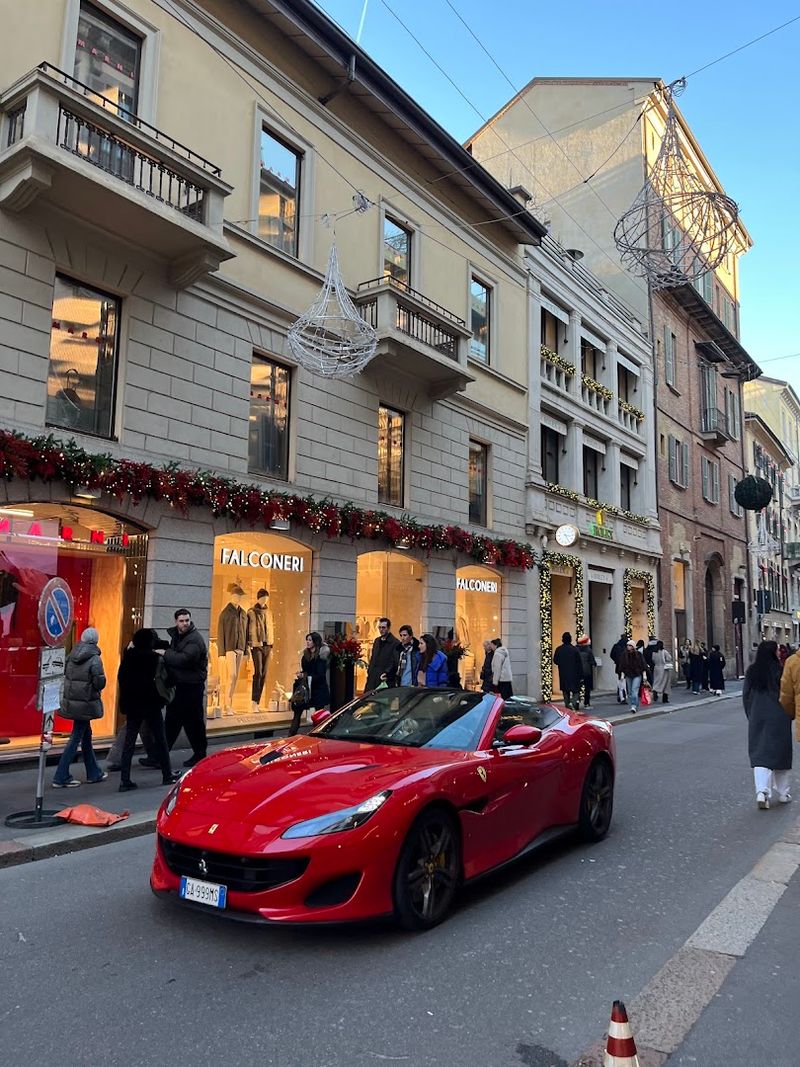
Fashion does not just live in Milan — it has a permanent address on Via Monte Napoleone. This elegant street sits at the center of the Quadrilatero della Moda, Milan’s legendary fashion district, and it reads like a who’s who of the world’s most prestigious designer brands.
Versace, Valentino, Prada, Armani, Bulgari — the storefronts here are practically a museum of luxury.
The street itself is beautiful, lined with historic 18th and 19th century buildings whose elegant facades provide a refined backdrop for some of the most expensive real estate in European retail. Window shopping here is a legitimate pastime, and even without spending a single euro, a slow stroll down Via Monte Napoleone feels indulgent and aspirational.
The atmosphere is polished, unhurried, and impeccably dressed at all times.
Milan Fashion Week twice a year transforms the surrounding streets into a runway of sorts, with photographers, models, and industry insiders spilling out of showrooms and boutiques. Nearby streets like Via della Spiga and Corso Venezia are equally stunning and worth adding to your walking route.
For coffee breaks, the neighborhood cafés serve espresso with a level of seriousness that only Italy can manage. Via Monte Napoleone is less a shopping street and more a statement about beauty, craft, and ambition.
Nevsky Prospect — St. Petersburg, Russia
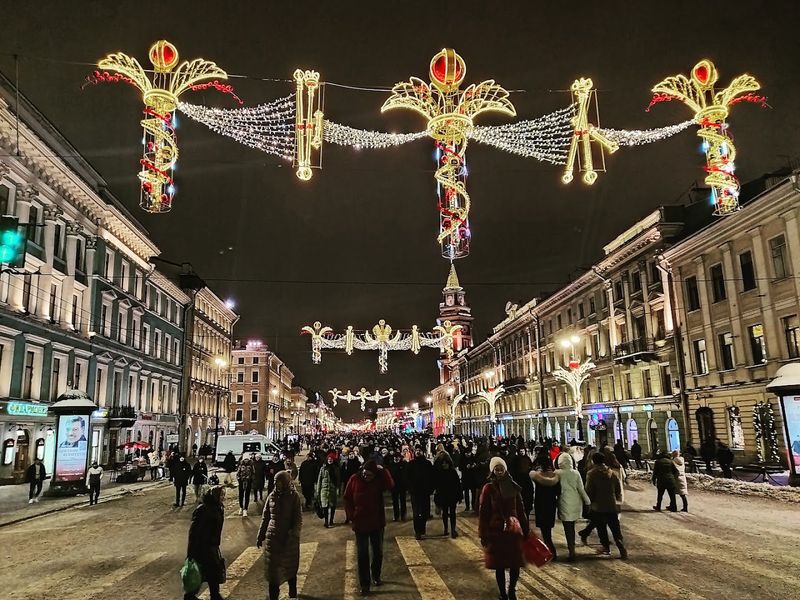
Built on the orders of Peter the Great in the early 18th century, Nevsky Prospect was designed to be grand — and it absolutely delivers. Stretching nearly 4.5 kilometers through the heart of St. Petersburg, this imperial avenue is lined with some of the most spectacular architecture in all of Europe, blending Baroque, Neoclassical, and Art Nouveau styles in a way that makes every block feel like a gallery.
The Kazan Cathedral, with its sweeping colonnade inspired by St. Peter’s Basilica in Rome, dominates the middle section of the avenue and is one of Russia’s most visited religious sites. Nearby, the ornate Church of the Savior on Spilled Blood rises in a burst of colorful onion domes just a short walk from the main boulevard.
The Russian Museum and the Hermitage — one of the world’s greatest art collections — are both easily accessible from Nevsky Prospect.
Elegant bookshops, historic restaurants, and grand department stores fill the spaces between the landmarks, giving the avenue a lively, lived-in quality that pure tourist streets sometimes lack. Visiting in the summer during White Nights, when the sky barely darkens past midnight, is particularly magical.
Nevsky Prospect is not just a street — it is the soul of an entire city expressed in stone, light, and centuries of ambition.
Via Dolorosa — Jerusalem, Israel
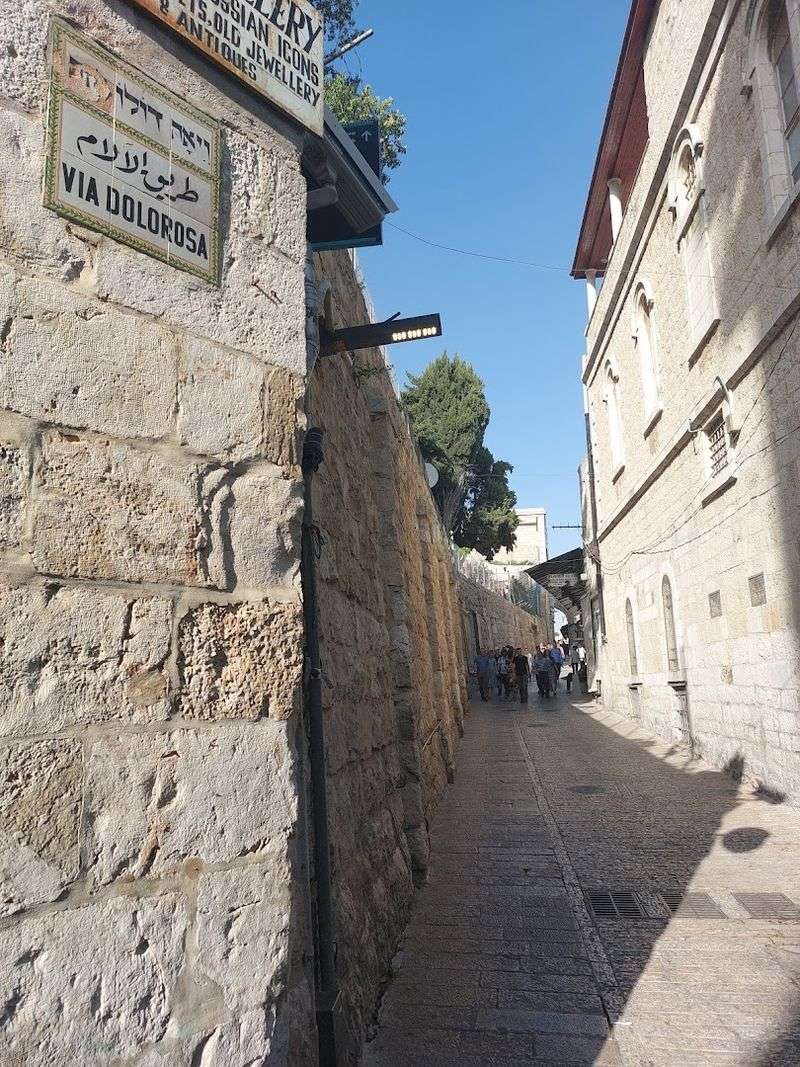
Few streets carry the emotional and spiritual weight of Via Dolorosa. Winding through the ancient stone alleyways of Jerusalem’s Old City, this sacred path is believed by Christians to mark the route Jesus walked on the way to his crucifixion.
Every step along its roughly 600-meter length carries centuries of faith, grief, and devotion.
The route is divided into 14 Stations of the Cross, each marking a moment from the Passion narrative. Small plaques and chapels indicate each station along the way, and every Friday, Franciscan friars lead a formal procession through the street that pilgrims from around the world are welcome to join.
The experience is deeply moving regardless of one’s personal beliefs — the weight of history alone is palpable in every worn stone underfoot.
The street itself is narrow, bustling with market activity, and flanked by ancient buildings that have witnessed millennia of human history. Vendors sell religious souvenirs, spices, and local crafts alongside the sacred route, creating a unique blend of the spiritual and the everyday that is entirely unique to Jerusalem.
The Via Dolorosa ends at the Church of the Holy Sepulchre, one of Christianity’s holiest sites and an architectural treasure worth exploring at length. This is a street that demands quiet reflection.
Jinli Street — Chengdu, China
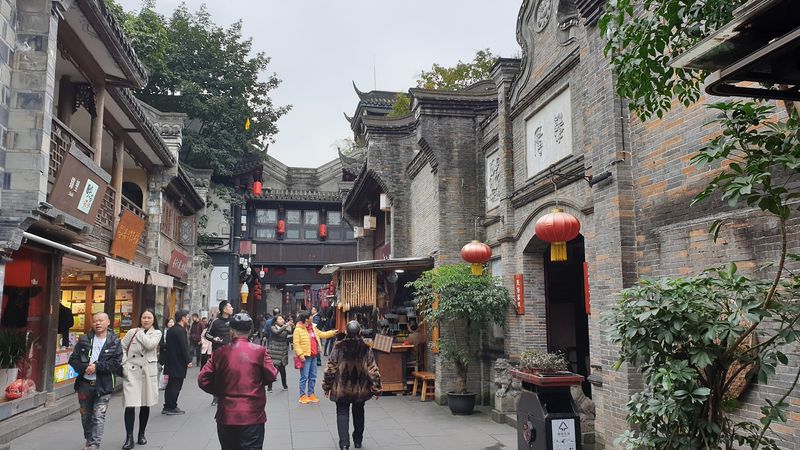
Red lanterns sway overhead, the smell of spicy Sichuan street food fills the air, and the sound of traditional Chinese music drifts from open doorways — welcome to Jinli Street, one of Chengdu’s most beloved historic thoroughfares. With roots stretching back more than 1,800 years to the Qin Dynasty, this pedestrian street has been restored to its Qing-era glory and turned into a vibrant cultural destination.
The architecture alone is worth the visit — wooden storefronts, upturned eaves, and ornate carved details line both sides of the walkway, creating a beautifully preserved snapshot of ancient Chinese urban life. Shops sell handcrafted souvenirs, silk products, and traditional toys, while food stalls serve up local Chengdu specialties including dan dan noodles, rabbit head (a local delicacy), and sweet rice cakes.
Jinli Street also celebrates the history of the Three Kingdoms period, a fascinating chapter of Chinese history that the Chengdu region is deeply proud of. Small museums and cultural exhibits tucked between the shops add educational depth to what might otherwise be a purely commercial experience.
The street is at its most atmospheric after sunset, when the lanterns glow warmly against the darkening sky. Chengdu is also famous for its giant pandas, so pairing a Jinli visit with a trip to the Panda Research Base makes for a perfect day out.
The Las Vegas Strip — Las Vegas, USA
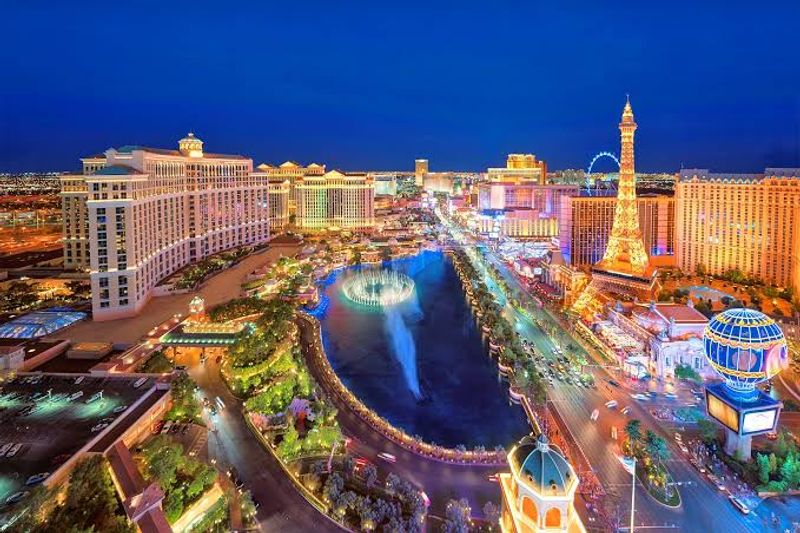
Nothing on earth prepares you for your first look at the Las Vegas Strip after dark. A nearly 7-kilometer stretch of Las Vegas Boulevard South, the Strip is home to some of the largest and most extravagant resort hotels ever built — places like the Bellagio, Caesars Palace, the MGM Grand, and the Venetian, each one a self-contained universe of entertainment, dining, and spectacle.
The Bellagio’s famous fountain show, which choreographs jets of water to music in front of the hotel’s shimmering lake, is free to watch and runs every 15 to 30 minutes throughout the evening. Street performers, themed architecture inspired by Paris, Egypt, and ancient Rome, and an almost surreal density of neon light make walking the Strip feel like touring several countries at once without ever leaving Nevada.
Beyond gambling, the Strip offers world-class restaurants run by celebrity chefs, Broadway-caliber shows, high-end shopping malls, and nightclubs that attract internationally renowned DJs. The sheer scale of everything — the hotels, the signs, the crowds, the ambition — is genuinely jaw-dropping on first encounter.
Wear comfortable shoes because the Strip is much longer than it looks from any single vantage point. Las Vegas is one of those places where the reality actually exceeds the reputation, which is no small achievement.



