 Unearth The Voyage
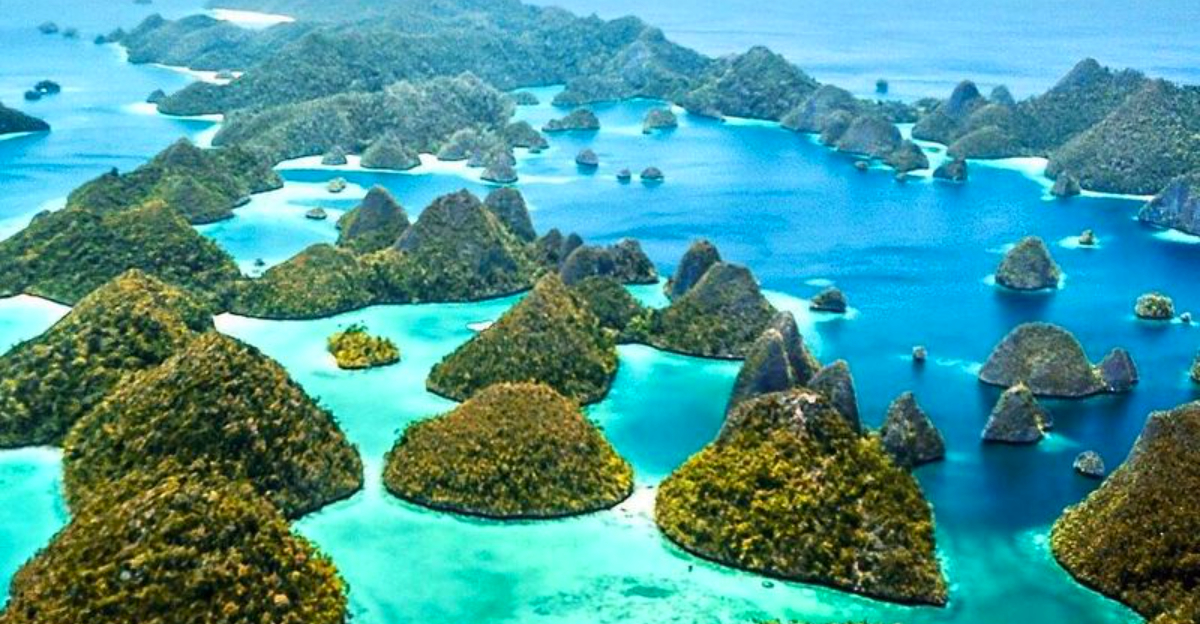
Scattered across our planet’s oceans are collections of islands so beautiful they barely seem real. Archipelagos offer some of the most spectacular landscapes on Earth, from turquoise lagoons and volcanic peaks to granite boulders and Arctic wilderness.
Whether you crave tropical warmth or dramatic Nordic scenery, these island clusters deliver nature at its most photogenic and unforgettable.
The Maldives
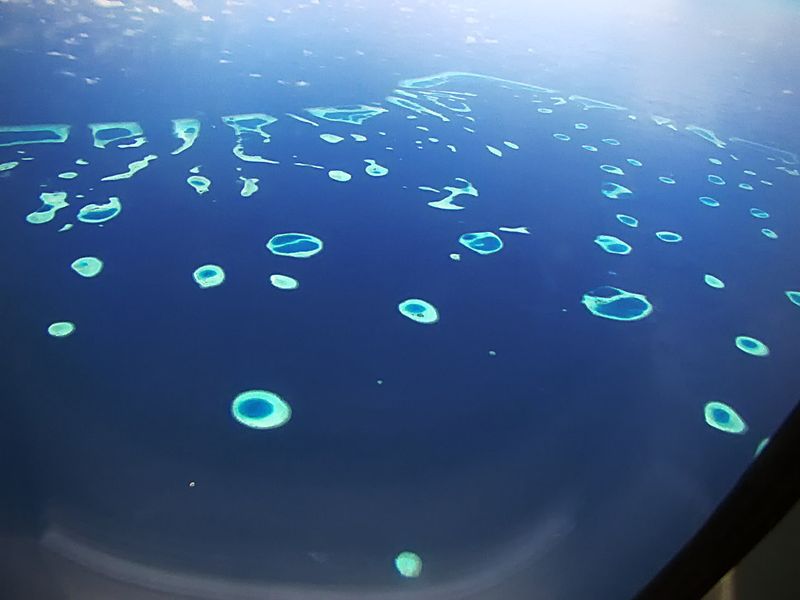
Turquoise water here does not casually exist, it performs. The Maldives is a country of coral islands grouped into 26 atolls, and it basically invented the phrase “overwater bungalow energy.” Picture yourself waking up with the ocean literally beneath your bed, fish swimming under glass floor panels while you sip morning coffee.
Each atoll feels like its own miniature universe. The water shifts from pale aqua to deep sapphire depending on the depth.
Coral reefs wrap around islands like protective necklaces, sheltering marine life that ranges from tiny clownfish to graceful manta rays.
Most islands measure just a few hundred meters across. Walking the perimeter takes maybe ten minutes, which sounds limiting until you realize the real attraction stretches in every direction underwater.
Snorkeling here means entering a world where sea turtles glide past unbothered and reef sharks cruise the shallows.
The Maldives sits low, really low. Highest natural point?
About two meters above sea level. This makes sunsets particularly dramatic since nothing blocks the horizon.
Sky and sea blend into one continuous canvas of orange, pink, and gold every single evening without fail.
Seychelles
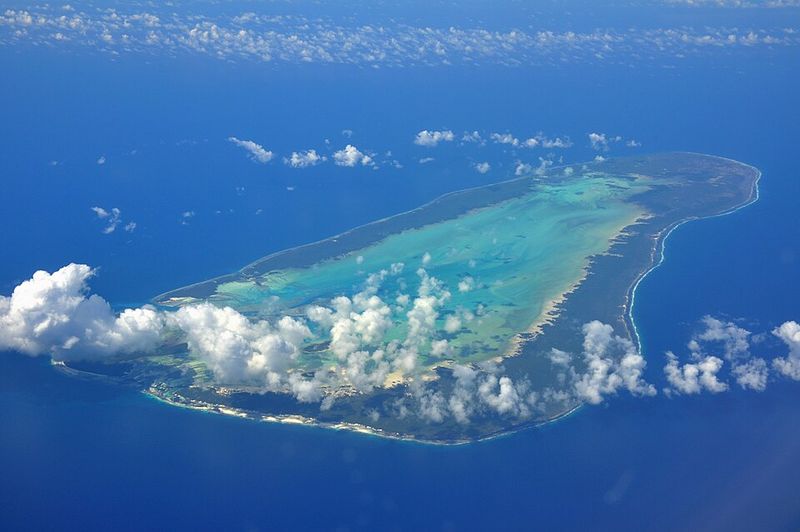
Granite boulders the size of living rooms sit on beaches like nature’s art installation. The Seychelles is an archipelago nation made up of about 115 islands, and yes, it looks exactly like your friend’s “no filter” vacation photo.
These aren’t ordinary rocks either; they’re ancient granite formations sculpted by wind and waves into smooth, rounded shapes that photographers dream about.
Palm trees lean at impossible angles over sand so white it almost hurts to look at midday. The water clarity reaches absurd levels, allowing you to spot fish from fifty feet away.
Anse Source d’Argent regularly tops “world’s best beach” lists, and one visit explains why.
Beyond postcard perfection, Seychelles protects rare species found nowhere else. The Vallée de Mai forest shelters the coco de mer palm, producing the largest seed in the plant kingdom.
Giant Aldabra tortoises roam freely, some older than your grandparents.
Island hopping here means ferry rides between dramatically different landscapes. Mahé offers mountain hikes and capital city buzz.
Praslin brings that famous beach vibe. La Digue slows everything down with bicycle transport and zero traffic lights.
Galápagos Islands
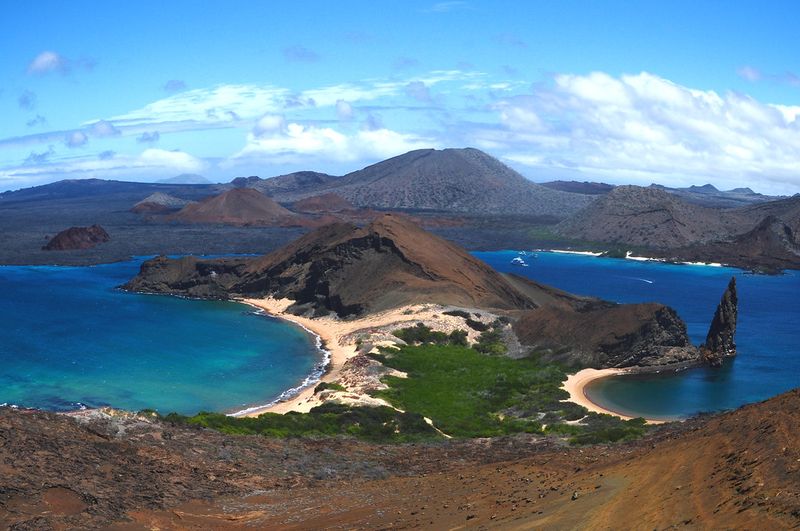
The wildlife here has zero interest in your personal space, and honestly, I respect the confidence. The Galápagos are a protected archipelago belonging to Ecuador, famously wild and heavily conserved, with 127 islands, islets, and rocks noted by UNESCO.
Sea lions sprawl across park benches like they own the place, because they basically do.
Charles Darwin visited in 1835 and the islands blew his mind enough to reshape scientific thinking forever. Giant tortoises lumber along trails, some weighing over 500 pounds and living past 100 years.
Blue-footed boobies perform their distinctive mating dance, lifting bright blue feet in a move that’s both ridiculous and mesmerizing.
Marine iguanas, found nowhere else on Earth, dive into cold ocean waters to graze on algae. They sneeze out excess salt afterward in tiny explosive bursts.
Penguins waddle around the equator here, the only place this happens naturally, thanks to cool currents from Antarctica.
Strict visitor rules protect this ecosystem. Guided tours keep humans on designated paths.
No touching wildlife, no leaving trash, no taking souvenirs. The regulations work, preserving an environment where animals behave as if humans are just another curious species passing through.
Raja Ampat
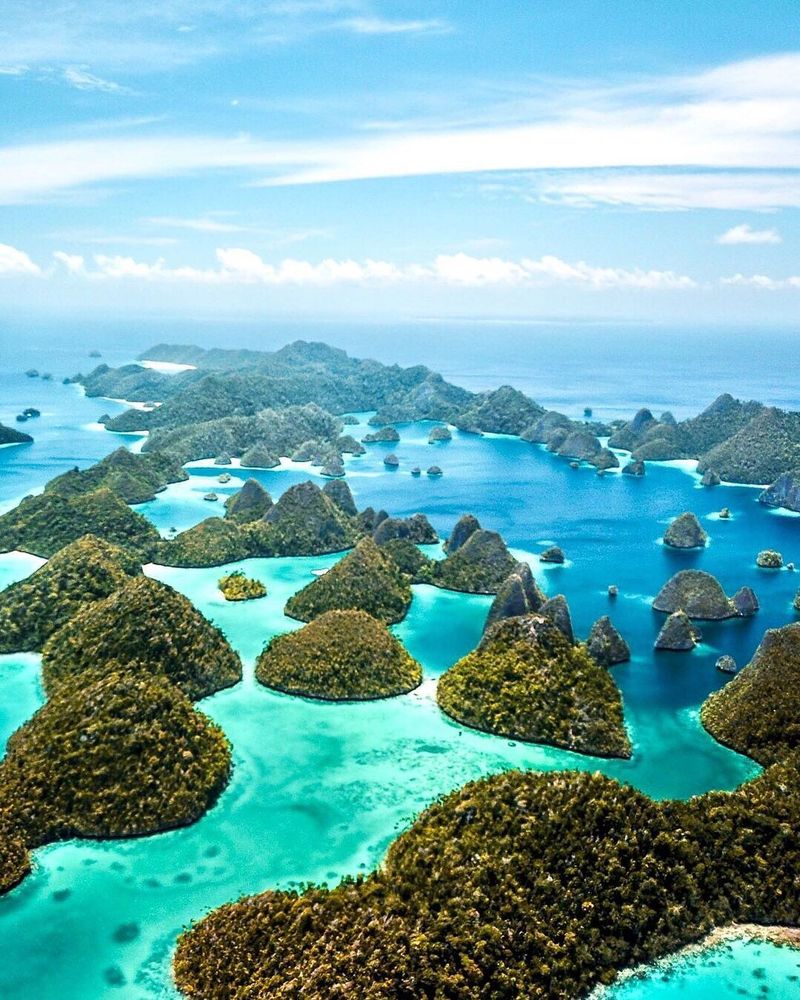
If you have ever wanted to snorkel inside a nature documentary, this is your cue. Raja Ampat, in Indonesia’s West Papua, includes more than 1,500 islands and sits in the Coral Triangle, a region celebrated for marine biodiversity.
Scientists have recorded over 1,600 fish species and 600 coral species here, numbers that make other reefs jealous.
Limestone karst islands rise dramatically from turquoise water, their tops covered in jungle so thick it looks painted on. Hidden lagoons appear between islands, accessible only through narrow channels at certain tides.
Kayaking through these passages feels like entering secret worlds.
The coral reefs explode with color. Purple soft corals wave in currents next to orange sponges and yellow crinoids.
Schools of fish move in synchronized clouds, changing direction simultaneously like they share one brain. Manta rays glide through cleaning stations where smaller fish remove parasites.
Getting here requires effort. Multiple flights to Sorong, then boat transfers to island resorts or liveaboard dive boats.
Limited infrastructure keeps crowds manageable and the environment pristine. Most visitors come specifically for diving or snorkeling, and the underwater world delivers beyond expectations every single time.
Lofoten Islands
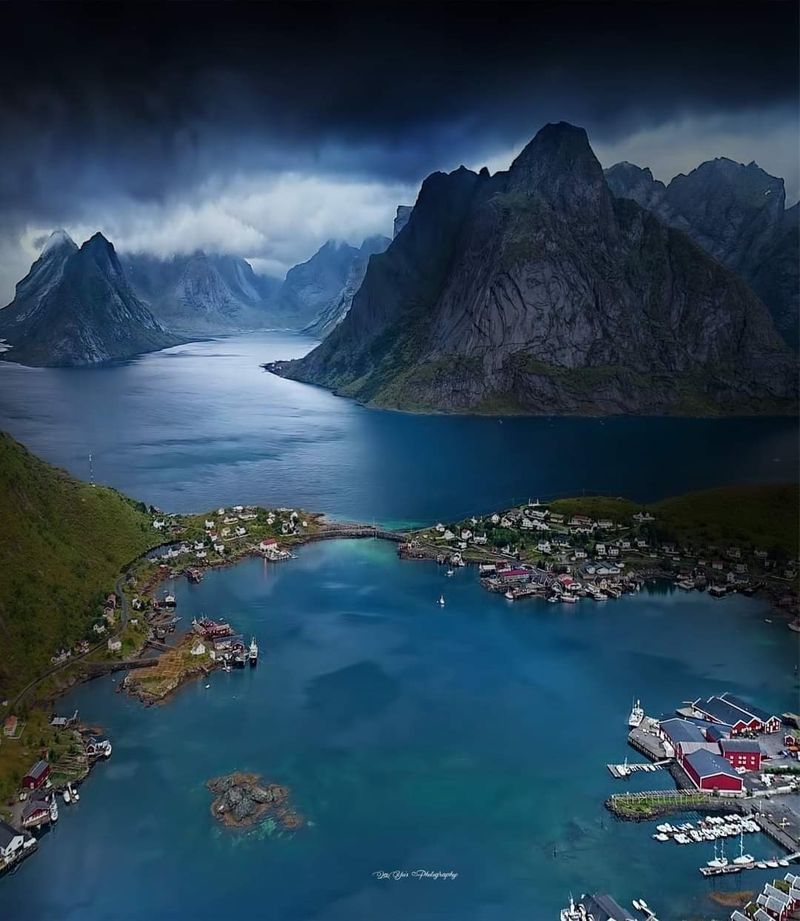
Sharp peaks, fishing villages, and Arctic light that makes even a basic phone camera look talented. Lofoten is an island group in northern Norway, sitting within the Arctic Circle and stretching roughly 110 km according to Britannica.
Mountains shoot straight up from the sea in jagged profiles that look like someone took scissors to the horizon.
Red fishing cabins called rorbuer line the harbors, built on stilts over the water. These traditional structures now serve as tourist lodging, offering front-row seats to some of Europe’s most dramatic coastal scenery.
Stockfish dries on wooden racks, a preservation method used here for over a thousand years.
Winter brings the northern lights dancing across dark skies in green and purple ribbons. Summer delivers midnight sun, where daylight persists 24 hours and sleep schedules become optional suggestions.
The light quality during these seasons attracts photographers from everywhere, chasing that perfect golden hour that lasts for hours.
Hiking trails wind between peaks and beaches. Reinebringen offers killer views after a steep climb.
Kvalvika Beach hides between mountains, reachable only on foot. The landscape feels raw and powerful, shaped by ice ages and Atlantic storms into something unforgettable.
Faroe Islands
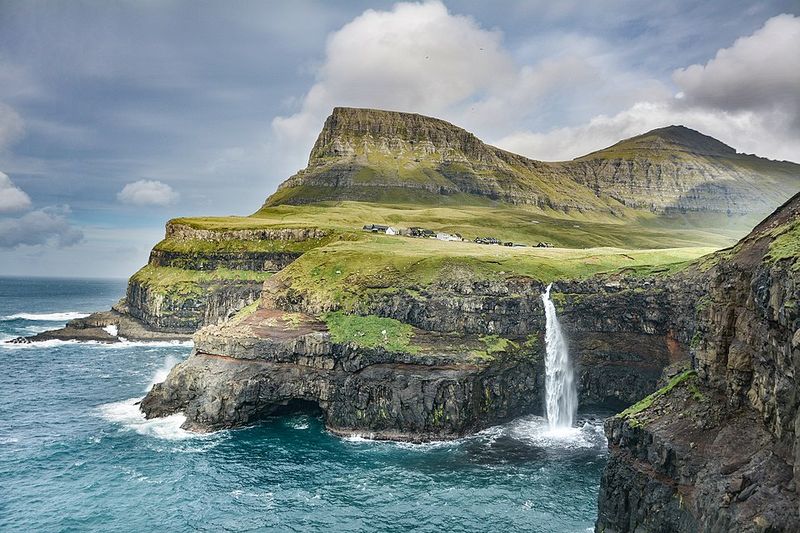
The Faroe Islands feel like the weather is the main character and you are just visiting its set. This North Atlantic archipelago is made up of 18 major islands and is an autonomous territory within the Kingdom of Denmark.
Fog rolls in without warning, rain arrives sideways, and sunshine breaks through dramatically like a movie scene.
Grass-roofed houses blend into hillsides so completely they almost disappear. Sheep outnumber people significantly, grazing on slopes so steep it seems physically impossible.
Waterfalls tumble directly into the ocean from cliffs that drop hundreds of meters.
Villages cling to coastlines and fjord edges, connected by tunnels blasted through mountains and bridges spanning wild channels. Tórshavn, the capital, feels like a small town where everyone knows everyone.
Traditional wooden buildings with black tar exteriors and turf roofs line narrow streets.
Birdlife thrives on these cliffs. Puffins nest in burrows during summer, their colorful beaks and waddling walk providing endless entertainment.
Gannets dive-bomb the sea hunting fish. The isolation and harsh conditions created ecosystems adapted to survive whatever the North Atlantic throws at them, which is considerable and constant.
Svalbard
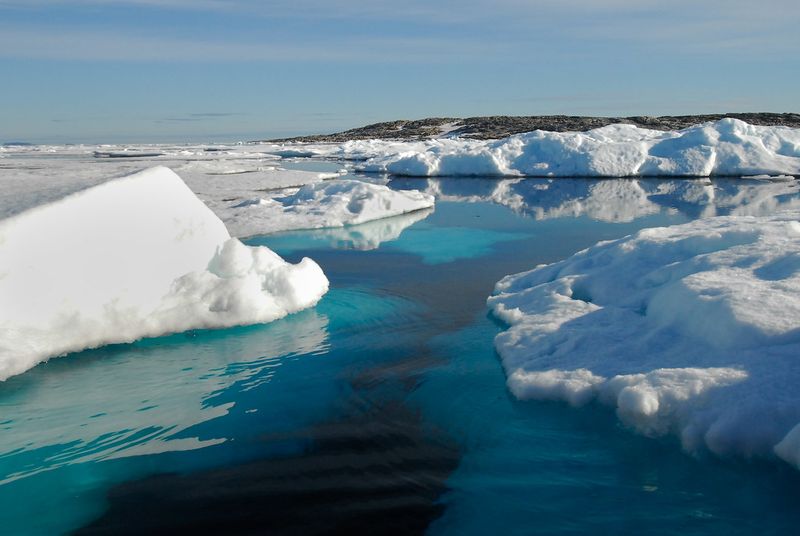
Polar bears live here, so the vibe is “beautiful” with a side of “stay alert.” Svalbard is a Norwegian Arctic archipelago where about 60% is covered by glaciers, and the scenery is pure high-latitude drama. Visitors are legally required to carry firearms outside settlements, which tells you everything about who really runs this place.
Glaciers calve into fjords with thunderous cracks, sending icebergs drifting through steel-blue water. Mountains rise barren and snow-covered, their geology exposed in layers of rock spanning millions of years.
The landscape feels ancient and indifferent to human presence.
Longyearbyen serves as the main settlement, hosting about 2,000 people from over 50 countries. The Global Seed Vault sits in a mountain here, storing backup copies of crop seeds from worldwide.
Snowmobiles outnumber cars because snow covers ground most of the year.
Winter brings polar night when the sun never rises for months. Summer flips this with midnight sun creating endless daylight.
Arctic foxes scavenge near town. Reindeer, smaller than mainland cousins, graze on sparse vegetation.
Walruses haul out on beaches. Every wildlife encounter carries weight because survival here demands serious adaptation.
The Azores
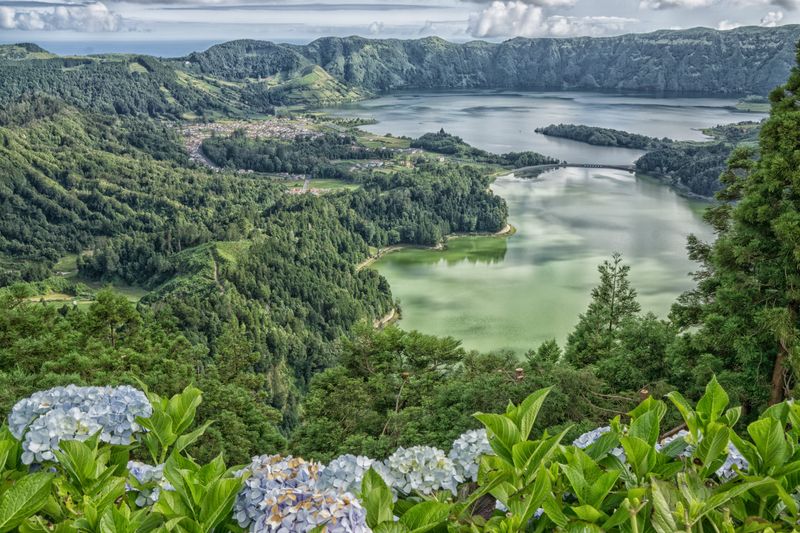
Volcanoes, crater lakes, and that lush green look that screams “yes, it rains and yes, it is worth it.” The Azores are nine volcanic islands in the North Atlantic and part of Portugal. Lagoa das Sete Cidades shows off twin lakes in one crater, one blue and one green, separated by a narrow bridge.
Hydrangeas bloom everywhere in summer, lining roads in explosions of blue and purple. The volcanic soil and regular rain create conditions where plants grow with aggressive enthusiasm.
Tea plantations thrive here, the only ones in Europe, producing leaves with distinctive Atlantic flavor.
Hot springs bubble up in various locations, some developed into spas, others just warm pools in the landscape. Furnas offers geothermal cooking where locals bury pots of stew in hot ground for hours.
The result tastes like earth and tradition combined.
Whale watching trips depart regularly, seeking sperm whales, blue whales, and dolphins that frequent these waters. The mid-Atlantic location makes the Azores a crossroads for marine life.
Hiking trails cross between volcanic peaks, through forests, and along dramatic coastlines where waves crash against black lava rock with relentless power.
The Whitsunday Islands
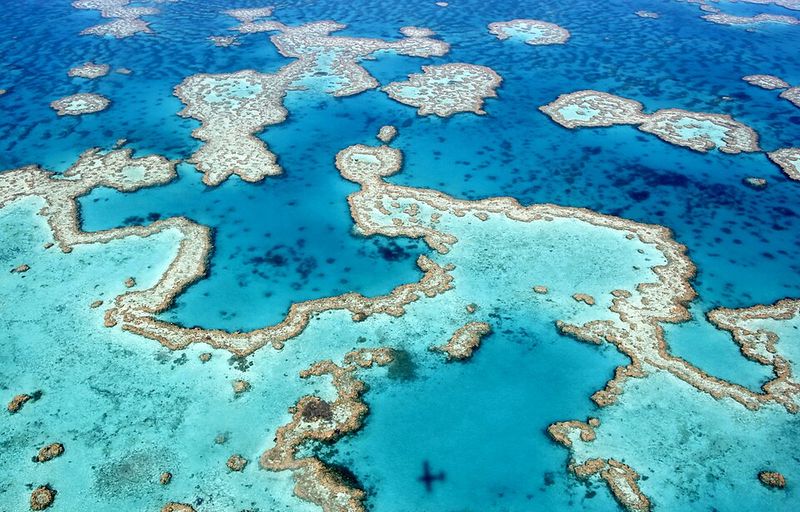
You know a place is serious when the sand becomes a headline. The Whitsundays sit in the heart of the Great Barrier Reef region, and the area is known as a sanctuary for vulnerable reef species, with famous stops like Whitehaven Beach.
That sand is 98% pure silica, so fine and white it squeaks under your feet.
Hill Inlet offers the money shot where tides shift sand and water into swirling patterns of white and turquoise. The view from the lookout stops conversations mid-sentence.
Sailing is the classic way to explore, with boats anchoring in protected bays each evening.
Coral reefs surround the islands, part of the Great Barrier Reef system stretching along Queensland’s coast. Snorkeling reveals gardens of hard and soft corals hosting tropical fish in every color combination imaginable.
Sea turtles surface to breathe, then dive back to graze on seagrass beds.
Most islands are uninhabited national parks. A few host resorts ranging from backpacker-friendly to seriously luxurious.
The warm climate, protected waters, and reliable trade winds create perfect conditions for sailing, swimming, and generally pretending your regular life doesn’t exist for a while.
The Cyclades
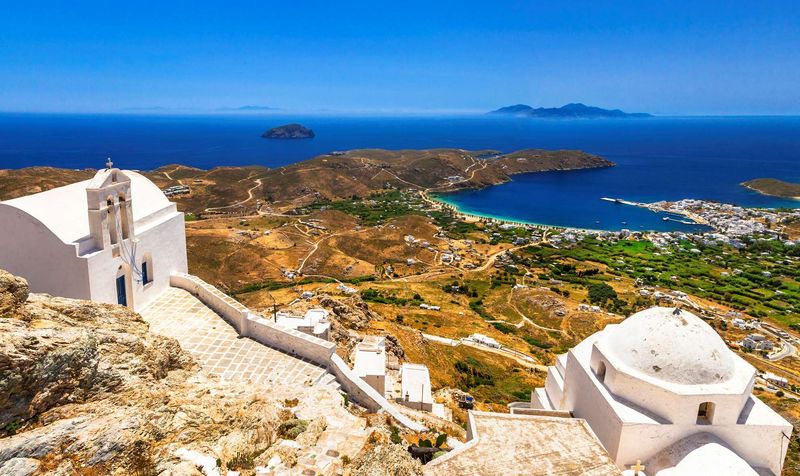
Whitewashed villages, blue domes, and the Aegean doing the absolute most. Britannica describes the Cyclades as a group of about 30 islands in southeastern Greece.
Santorini’s caldera views have launched a thousand Instagram accounts, but the other islands deserve equal attention.
Mykonos brings party energy and windmills. Paros offers marble quarries that supplied ancient sculptures.
Naxos grows excellent produce and maintains a more laid-back vibe. Each island has its own personality despite sharing that signature Cycladic architecture.
Churches dot hillsides, their blue domes matching the sky and sea in a color scheme that feels both intentional and inevitable. Narrow streets wind between cubic buildings, designed to confuse pirates in centuries past.
Bougainvillea cascades over walls in shocking pink explosions.
Greek island food hits different when you’re eating it with views. Fresh octopus grilled with lemon, tomato salads with local cheese, wine from volcanic soil grapes.
Ferries connect the islands, turning island hopping into a feasible adventure. Each arrival brings new beaches, different tavernas, and variations on that perfect Aegean light that makes everything look better.
Stockholm Archipelago
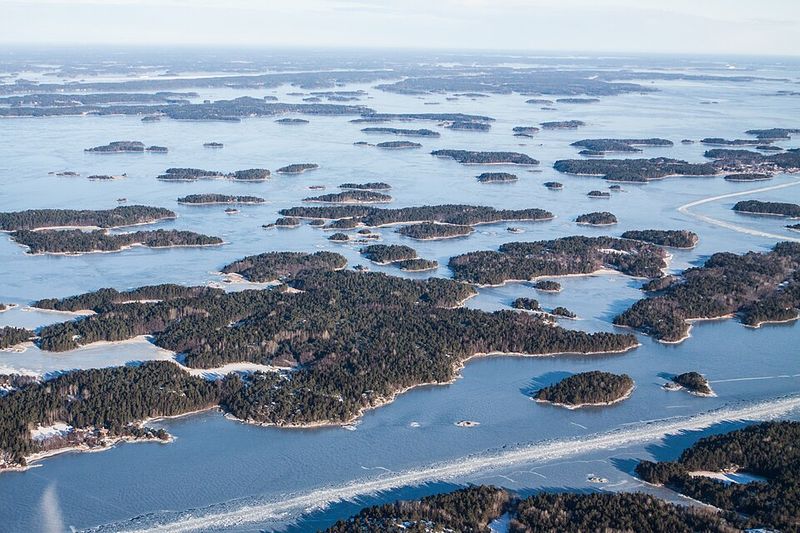
Imagine finishing a city coffee and then hopping a boat into island calm like it is a normal Tuesday. Stockholm’s archipelago is said to have about 30,000 islands, skerries, and rocks, stretching east into the Baltic Sea.
Some islands host permanent communities, others just a single summer cottage, many remain completely wild.
Ferry rides from downtown Stockholm take you through this maze of land and water. Pine trees grow wherever soil allows.
Smooth granite rocks slope into the sea, worn by ice ages and polished by waves. Red wooden cottages, the classic Swedish design, dot the landscape.
Summer brings endless daylight and Swedes escaping to island cabins for swimming, sauna, and simplicity. Many islands lack electricity and running water, which is somehow the entire point.
Kayaking between islands reveals hidden coves and channels navigable only at certain tides.
Winter transforms the archipelago when ice connects islands into a temporary solid landscape. Some hardy souls ice skate between islands, carrying safety gear because ice conditions change.
The seasonal shifts create completely different archipelagos depending on when you visit, each version beautiful in its own particular Baltic way.
San Juan Islands
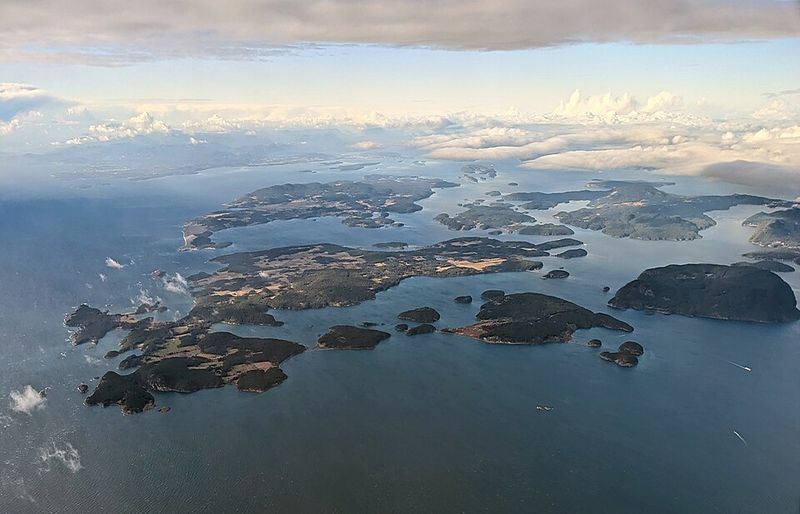
This is the Pacific Northwest in its best mood: salty air, evergreen shores, and orcas if you are lucky. Britannica notes the San Juan Islands are an archipelago of more than 170 islands in northwestern Washington.
Three main islands get most visitors: San Juan, Orcas, and Lopez, each with distinct character.
Orcas Island offers Mount Constitution, the highest point in the islands, with views stretching to Canada and the Cascade Mountains. San Juan Island has the town of Friday Harbor plus two historic military camps from the bizarre Pig War of 1859.
Lopez keeps things mellow with farm stands and waving cyclists.
Whale watching boats search for the resident orca pods that hunt salmon in these waters. Seeing a dorsal fin slice through the surface never gets old.
Harbor seals haul out on rocks. Bald eagles perch in massive nests.
The marine ecosystem thrives thanks to strong tidal currents bringing nutrients.
Getting there requires a Washington State Ferry from Anacortes, a journey that’s half the experience. Cars line up, passengers grab coffee, and the boat weaves between islands for about an hour.
The pace slows immediately upon arrival, replaced by island time and that particular Pacific Northwest beauty.
Hawaiian Islands
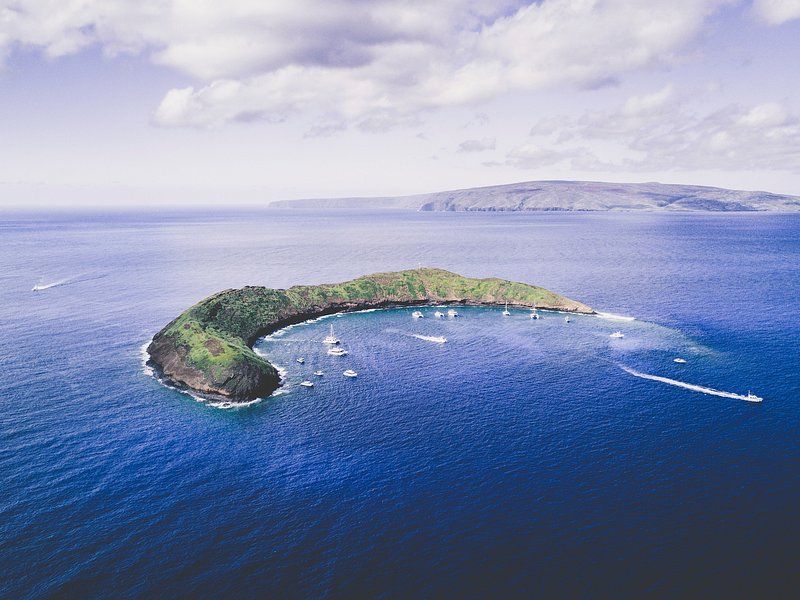
Volcanoes built this place, and they did not do it quietly. NOAA describes the Hawaiian Islands as an archipelago that includes more than 100 islands, atolls, and reefs stretching over 1,500 miles, formed by volcanic activity.
The Big Island still grows as Kilauea adds new land when lava hits the ocean.
Each island offers different experiences. Oahu brings Waikiki beaches and Pearl Harbor history.
Maui delivers the Road to Hana and Haleakalā sunrise. Kauai shows off the Na Pali Coast and Waimea Canyon.
The Big Island has active volcanoes, black sand beaches, and coffee farms.
Hawaiian culture runs deep here, from hula and language to traditional navigation methods and land management. Respect for the aina, the land, shapes island life.
Locals share the aloha spirit while also protecting their home from overtourism impacts.
Surfing was invented here, and the north shores still produce legendary waves each winter. Snorkeling reveals tropical fish and sea turtles in coral gardens.
Hiking trails cross lava fields, rainforests, and volcanic craters. The diversity packed into these islands, from snow-capped mountains to tropical beaches, defies expectations and delivers adventures for every preference.
Andaman and Nicobar Islands
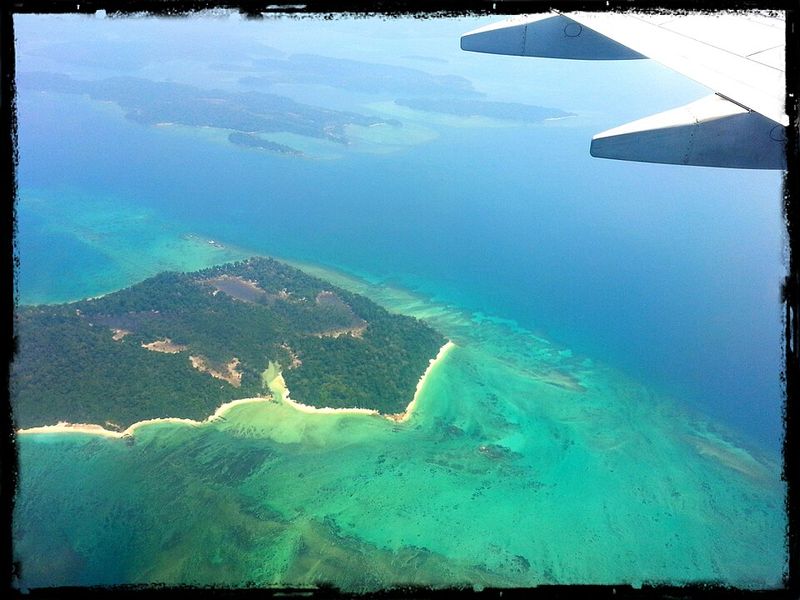
If your ideal trip includes jungle edges meeting bright water, file this under “dangerous daydream material.” Britannica describes this Indian union territory as two island groups forming an arc along the southeastern edge of the Bay of Bengal. Radhanagar Beach on Havelock Island regularly wins “best beach in Asia” awards for good reason.
Dense tropical forests cover island interiors, home to species found nowhere else. The Andaman tribes maintain protected territories where outside contact is restricted or forbidden.
This isolation preserved unique cultures and ecosystems that would have disappeared otherwise.
Underwater, the coral reefs compete with anywhere on Earth for marine diversity. Elephant Beach offers easy snorkeling access to gardens of coral hosting angelfish, parrotfish, and occasional reef sharks.
Scuba diving reveals walls dropping into deep blue, covered in soft corals and swarming with fish.
Getting here requires flights to Port Blair, then ferries to outer islands. Infrastructure remains relatively basic, keeping crowds manageable.
The combination of tropical forest, pristine beaches, and protected marine areas creates an environment that feels genuinely remote. This remoteness is the point, preserving beauty that more accessible places lost long ago.
Fernando de Noronha
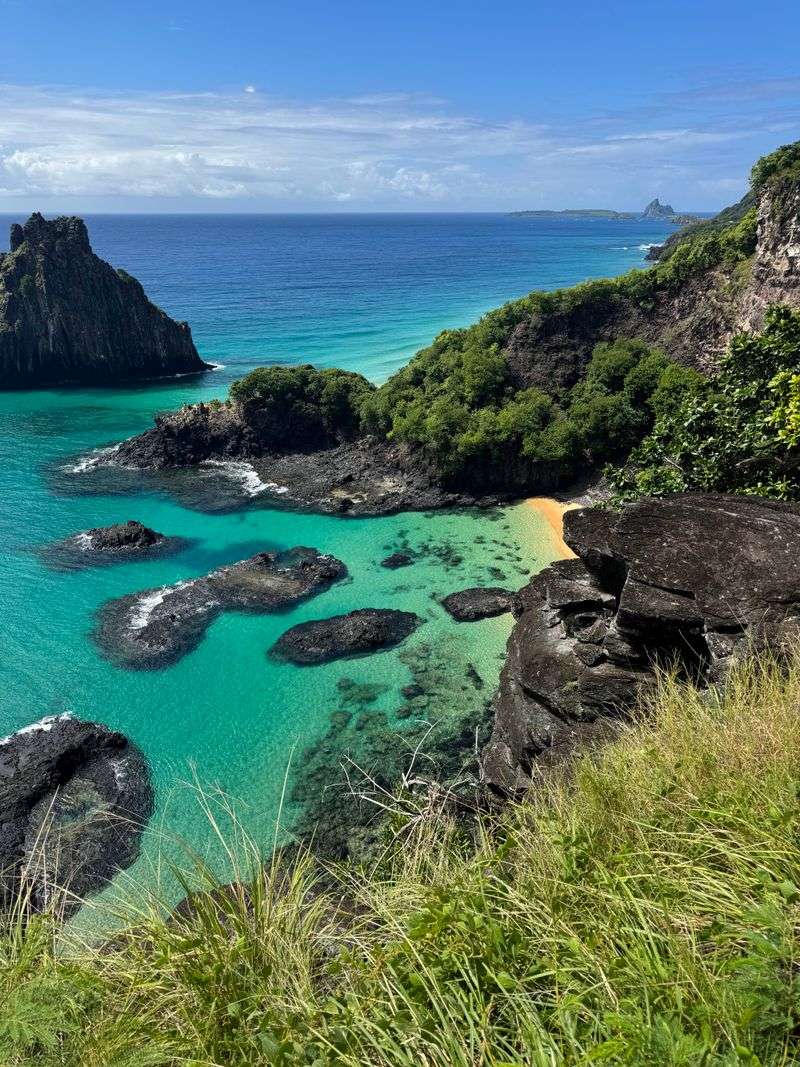
Brazil brought its A-game here: big blue water, serious marine life, and rules that keep it special. UNESCO lists the Fernando de Noronha Archipelago and Rocas Atoll as a World Heritage site for its biodiversity value.
Daily visitor limits and environmental fees ensure the islands don’t get loved to death.
Spinner dolphins arrive each morning in the Baía dos Golfinhos, sometimes hundreds at once, spinning and playing in the protected bay. Sea turtles nest on beaches.
Sharks cruise the shallows. The marine protected area status means fishing is restricted and wildlife thrives.
Praia do Sancho consistently ranks among the world’s best beaches. Reaching it requires descending a ladder through a rock crevice, which naturally limits crowds.
The reward is pristine sand, clear water, and excellent snorkeling right from shore.
Only one main island is inhabited, with strict building codes maintaining the landscape. Most visitors stay a few days, exploring beaches, hiking trails, and taking boat trips.
The environmental consciousness here shows what’s possible when conservation gets prioritized over development. The islands remain stunning precisely because growth stayed controlled and nature stayed central.



