 Unearth The Voyage
From bustling city landmarks to awe-inspiring national parks and cultural icons, the United States is packed with attractions that draw millions of visitors every single year. These places capture the incredible diversity of American history, innovation, natural beauty, and entertainment, making them must-see stops for travelers from around the world.
Whether you’re planning your first big road trip or looking for your next adventure, knowing where the crowds gather is a great place to start. Below are 15 of the most popular attractions that consistently wow visitors and keep them coming back for more.
Times Square (New York, NY)
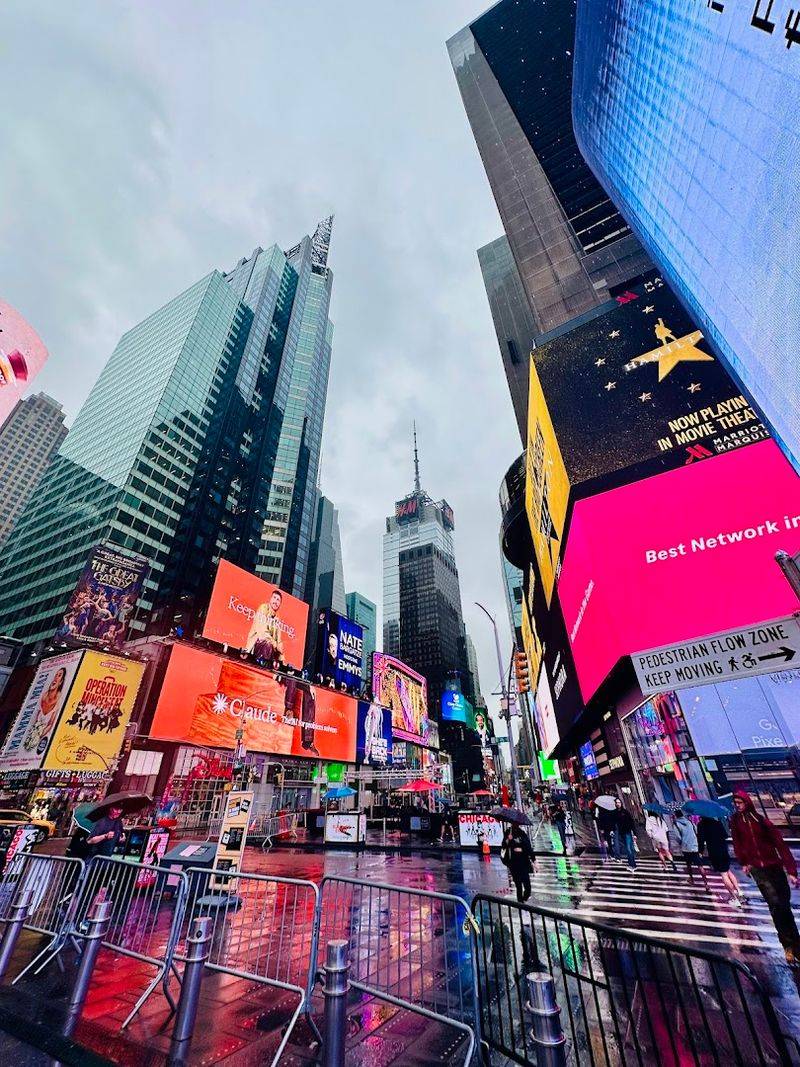
Fifty million people a year can’t be wrong — Times Square is the undisputed king of American public attractions. The blazing billboards, the honking taxis, the smell of roasted nuts from street carts — it hits all your senses at once.
There’s honestly nothing else quite like it on the planet.
By day, street performers juggle, dance, and charm passersby from every corner. After dark, the square transforms into a sea of color so bright you almost forget it’s nighttime.
Broadway marquees compete with massive digital screens in a glittery battle for your attention.
First-time visitors often stop dead in their tracks, mouths open, trying to take it all in. The area is packed with shopping, world-famous restaurants, and entertainment options around every turn.
Whether you spend an hour or an entire afternoon, Times Square delivers an experience that feels genuinely larger than life.
Central Park (New York, NY)
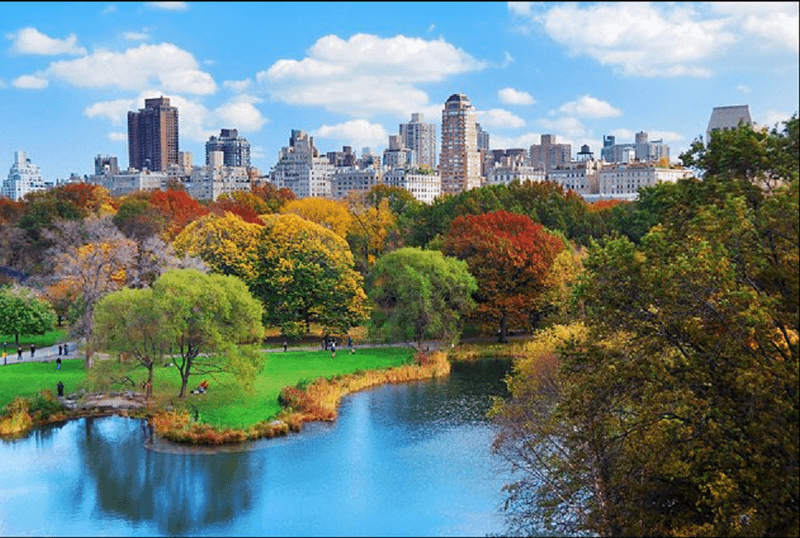
Right in the middle of one of the world’s most hectic cities, Central Park sits like a giant exhale. Spanning 843 acres, it offers meadows, woodlands, lakes, and hidden gardens — all surrounded by Manhattan’s towering skyline.
It’s a contrast so striking that it feels almost surreal.
Around 42 million people visit each year, and it’s easy to see why. You can rent a rowboat, catch an outdoor Shakespeare performance, or simply spread out on the Great Lawn and watch the clouds drift by.
The Bethesda Fountain alone has been featured in so many films that it feels like visiting an old friend.
Joggers, dog walkers, families, and tourists all share the space with surprising harmony. Winter turns it into a snow-globe scene, while fall coats the trees in gold and red.
No matter what season you visit, Central Park finds a way to be exactly what you need it to be.
Las Vegas Strip (Las Vegas, NV)
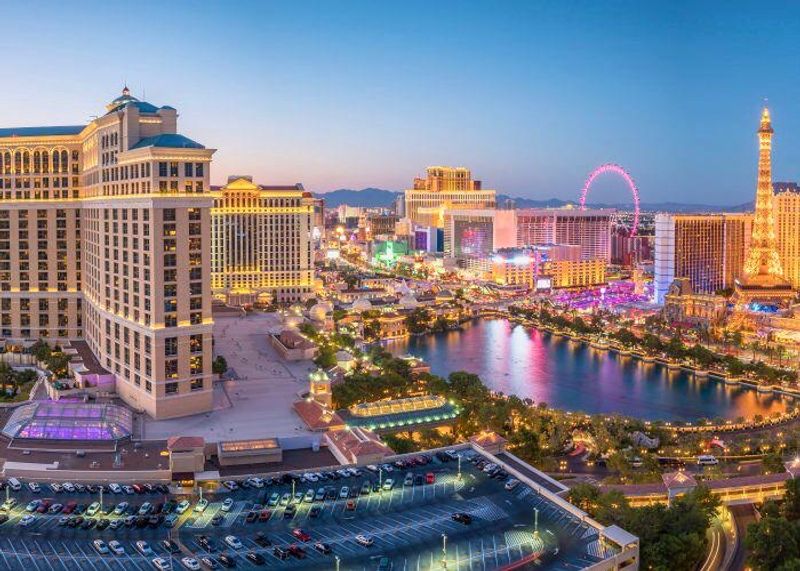
Nothing on Earth prepares you for your first walk down the Las Vegas Strip at night. The sheer scale of the neon, the fountains, the themed mega-resorts — it’s like someone turned the volume on entertainment up to eleven and broke the knob.
Roughly 40 million visitors arrive annually, and most of them leave with stories they’ll tell for years.
Beyond gambling, the Strip is home to some of the world’s best live shows, celebrity chef restaurants, and luxury shopping experiences. The Bellagio’s famous fountain show runs for free every 15 to 30 minutes, drawing massive crowds without costing a single dollar.
Even window-shopping along this stretch feels like a full-blown event.
Each resort has its own distinct personality — from the Egyptian-themed Luxor to the Venetian’s indoor canals. Street performers, acrobats, and costumed characters add a carnival-like energy to every sidewalk.
The Strip is one of those places where you blink and suddenly it’s 3 a.m., and somehow that feels completely acceptable.
National Mall & Memorial Parks (Washington, D.C.)
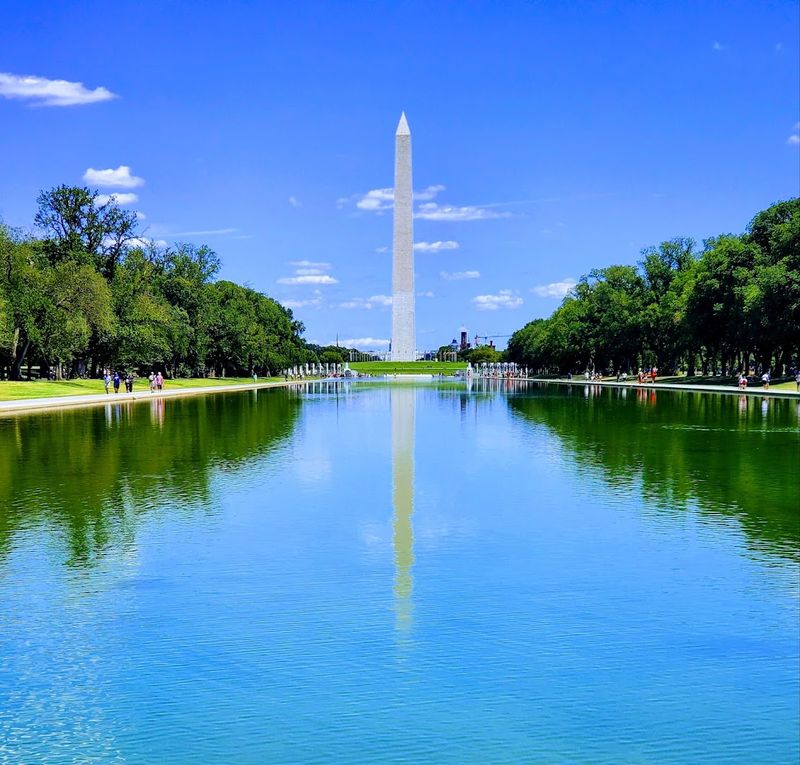
Sometimes called “America’s Front Yard,” the National Mall is where the country gathers to remember, celebrate, and reflect. Stretching roughly two miles from the Capitol Building to the Lincoln Memorial, it’s lined with monuments and museums that carry enormous historical weight.
Standing at the base of the Washington Monument and looking down the reflecting pool is one of those moments that genuinely gives you chills.
The Smithsonian Institution’s museums — all free to enter — are among the greatest cultural treasures in the world. You can spend hours in the National Air and Space Museum, then walk next door to explore natural history or American history.
There’s enough content here to fill an entire week of visits without running out of things to discover.
Seasonal events like the National Cherry Blossom Festival transform the Mall into a pink-tinged paradise every spring. Protests, inaugurations, and concerts have all taken place on this hallowed ground.
For anyone wanting to understand what America stands for — its triumphs and its struggles — the National Mall is the place to start.
Walt Disney World Resort (Orlando, FL)
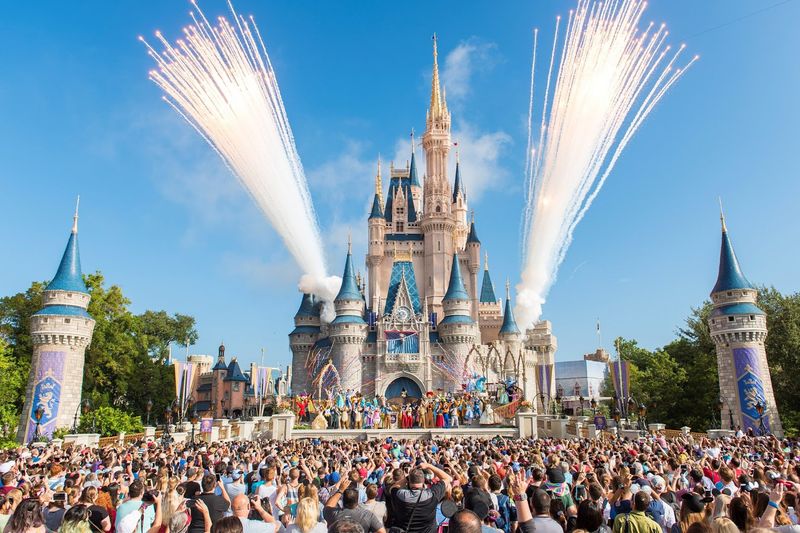
There’s a reason Walt Disney World is often called “the most magical place on Earth” — and it’s not just clever marketing. The sheer ambition of a resort that spans 40 square miles, contains four major theme parks, and employs over 70,000 people is genuinely mind-blowing.
Tens of millions of guests visit annually, and many return year after year chasing that same sense of wonder.
Magic Kingdom’s Cinderella Castle remains one of the most photographed structures in the United States. EPCOT takes visitors on a globe-trotting cultural journey, while Hollywood Studios and Animal Kingdom round out a lineup that truly has something for every type of traveler.
Even adults without kids find themselves grinning on classic rides they first experienced as children.
Disney’s obsessive attention to detail is legendary — cast members are trained to maintain the illusion of the story at every turn. Seasonal events like Mickey’s Not-So-Scary Halloween Party and the EPCOT International Food and Wine Festival add fresh reasons to return.
Walt Disney World isn’t just a theme park; it’s an experience carefully engineered to feel timeless.
Grand Canyon National Park (Arizona)
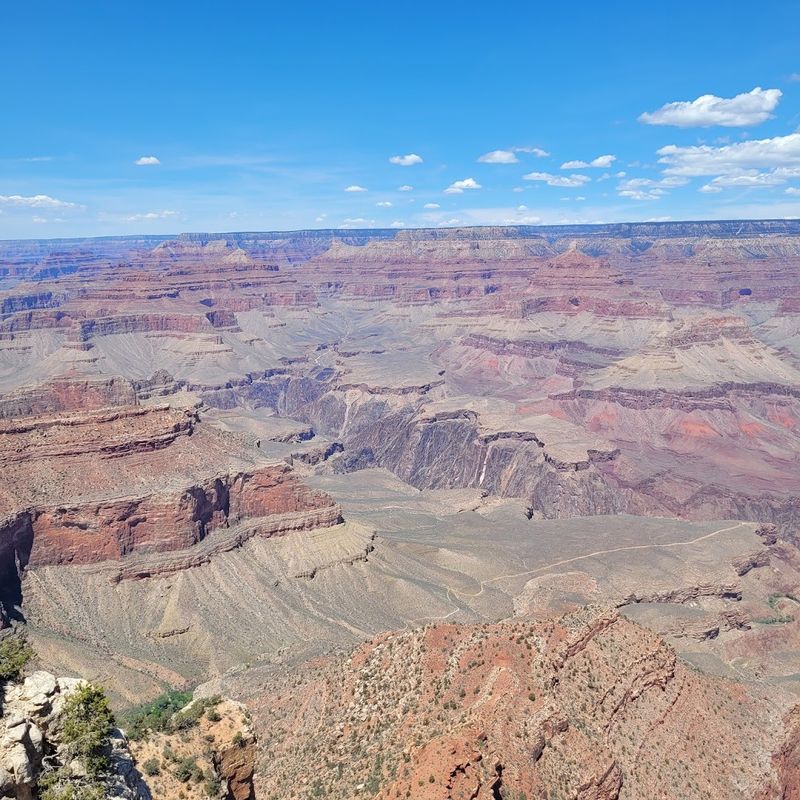
Words genuinely struggle to describe the Grand Canyon. You can look at a thousand photos and still be completely unprepared for the moment you step to the rim and peer down at one of the most staggering landscapes on the planet.
Carved over millions of years by the Colorado River, the canyon stretches 277 miles long and plunges over a mile deep.
Around 4 to 5 million visitors make the trip each year, and most of them admit the experience is humbling in a way they didn’t expect. Hiking trails range from easy rim walks to multi-day backpacking adventures into the canyon’s depths.
The Bright Angel Trail offers a challenging but rewarding route down to the river, with stunning views at every switchback.
Sunrise and sunset are peak viewing times, when the canyon’s colors shift dramatically from orange to purple to deep crimson. Ranger programs, mule rides, and helicopter tours offer different perspectives for every comfort level.
The South Rim stays open year-round, while the North Rim’s higher elevation means a shorter season but dramatically fewer crowds.
Yosemite National Park (California)
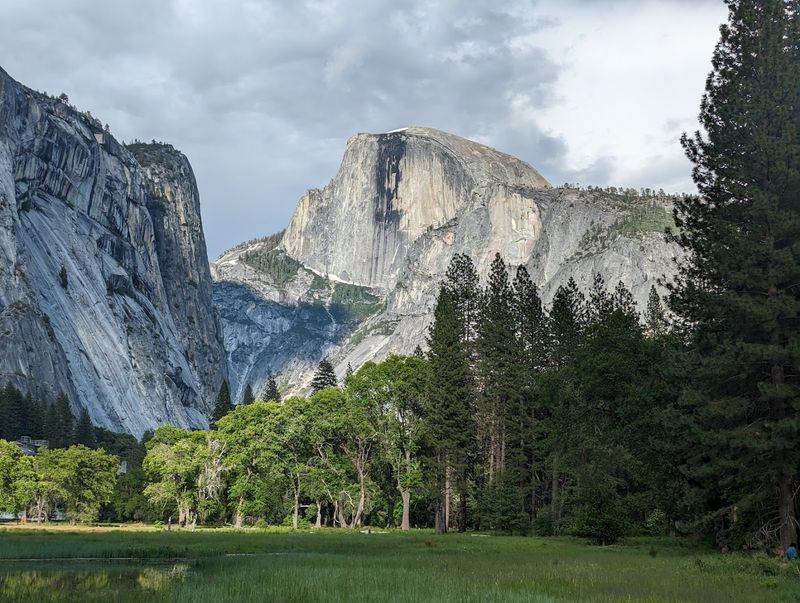
Yosemite has a way of making you feel very small and very lucky at the same time. The granite walls of El Capitan rise nearly 3,000 feet straight up from the valley floor, and watching a tiny climber inch their way to the top is both terrifying and awe-inspiring.
About 4 million visitors come each year to experience this Sierra Nevada masterpiece firsthand.
Yosemite Falls is one of the tallest waterfalls in North America, and its roar during spring snowmelt is powerful enough to feel in your chest. Meadows bloom with wildflowers in May and June, drawing photographers who camp out at dawn for perfect shots.
Mirror Lake earns its name with flawless reflections of the surrounding peaks on calm mornings.
Half Dome’s iconic rounded summit is a bucket-list hike, though it requires a permit during peak season to manage the crowds. Beginner-friendly valley walks like the Lower Yosemite Fall Trail are equally rewarding and far less strenuous.
Yosemite’s mix of accessible beauty and extreme adventure makes it one of the most universally beloved parks in the entire national park system.
Statue of Liberty & Ellis Island (New York, NY)
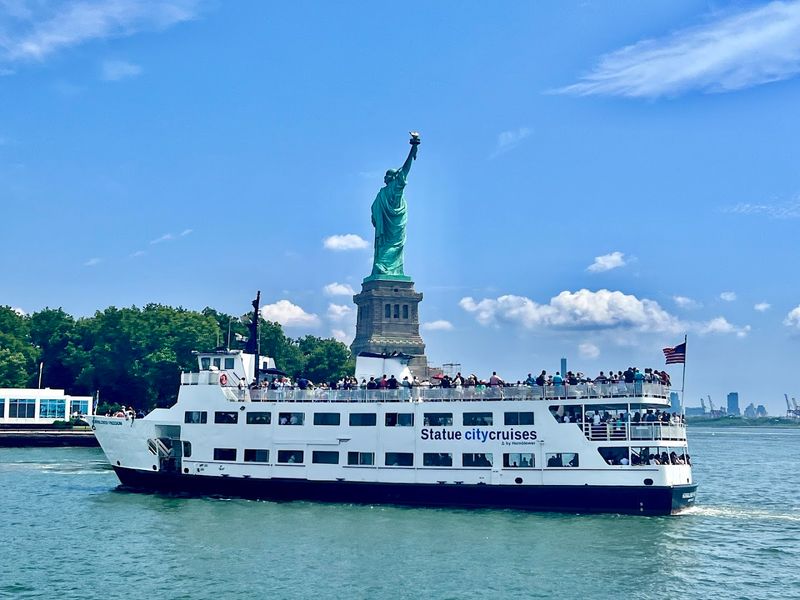
Standing 305 feet tall on her own pedestal, Lady Liberty has been welcoming visitors — and symbolically, the world — since 1886. Getting there requires a ferry from either Battery Park in Manhattan or Liberty State Park in New Jersey, and the ride alone offers some of the best skyline views you’ll find anywhere.
Once you arrive, the scale of the statue up close is something photos simply cannot capture.
Ellis Island, just a short ferry hop away, adds an emotional layer to the visit. Between 1892 and 1954, over 12 million immigrants passed through its Great Hall seeking a new life in America.
The immigration museum inside the restored building tells those stories with remarkable detail, and many visitors find their own family names listed in the records.
Crown access tickets sell out months in advance, so planning ahead is essential. Even without climbing to the crown, the pedestal observation deck and grounds offer unforgettable views and photo opportunities.
Together, these two sites form one of the most historically meaningful and visually stunning experiences the entire East Coast has to offer.
Golden Gate Bridge (San Francisco, CA)
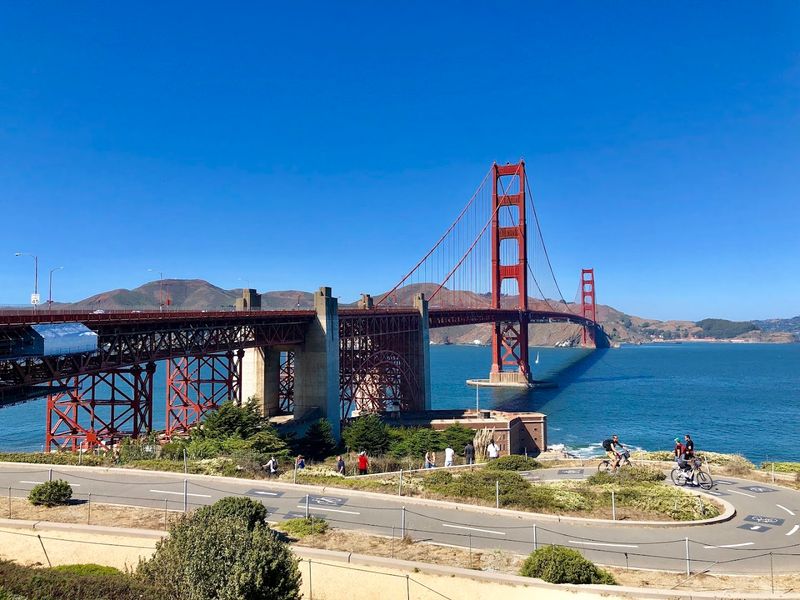
Painted in a shade officially called “International Orange,” the Golden Gate Bridge has been turning heads since it opened in 1937. At the time of its completion, it was the longest suspension bridge in the world — a record it held for 27 years.
Today it remains one of the most photographed structures on Earth, and honestly, every single photo still manages to look stunning.
Walking or biking across the 1.7-mile span is an experience that mixes exhilaration with vertigo in the best possible way. The wind whips off the bay, the cables hum above you, and the views of San Francisco and Marin County stretch out in both directions.
On clear days, you can spot Alcatraz Island sitting in the middle of the shimmering bay.
Vista Point on the Marin County side offers the classic postcard view that most people recognize instantly. Sunset visits are particularly popular, when the bridge glows warm against the fading California sky.
Whether you’re crossing it on foot, cycling across, or admiring it from a boat tour below, the Golden Gate never disappoints — fog or no fog.
Mall of America (Bloomington, MN)
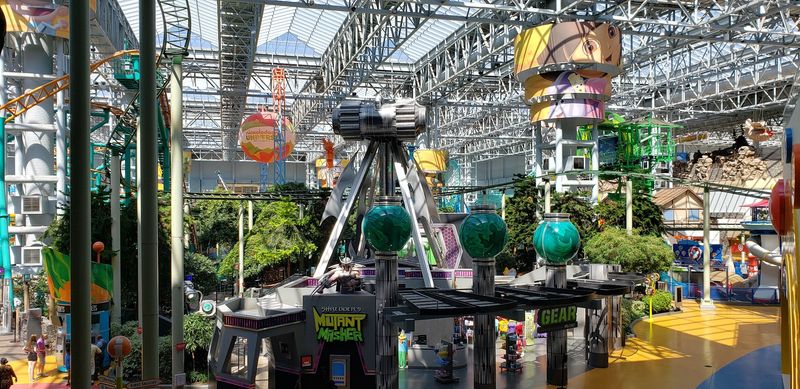
Forget everything you think you know about shopping malls — the Mall of America operates on an entirely different level. This place has its own zip code, a seven-acre indoor amusement park, an aquarium, a miniature golf course, and over 500 stores.
Around 40 million people visit each year, which is more than the combined populations of North Dakota, South Dakota, Iowa, and Montana.
Nickelodeon Universe sits at the center of the mall, featuring roller coasters, log flumes, and rides that loop around while shoppers watch from the upper floors. SEA LIFE Minnesota Aquarium lets visitors walk through a tunnel surrounded by sharks and rays.
It’s one of those rare places where parents and kids are equally entertained, which is no small feat.
Even if shopping isn’t your priority, the events calendar keeps things interesting year-round — from celebrity appearances to seasonal festivals and concerts. The mall is also a surprisingly affordable destination since parking and most attractions have entry options at various price points.
Minnesota winters might be brutal outside, but inside the Mall of America, it’s always 70 degrees and buzzing with energy.
Millennium Park (Chicago, IL)
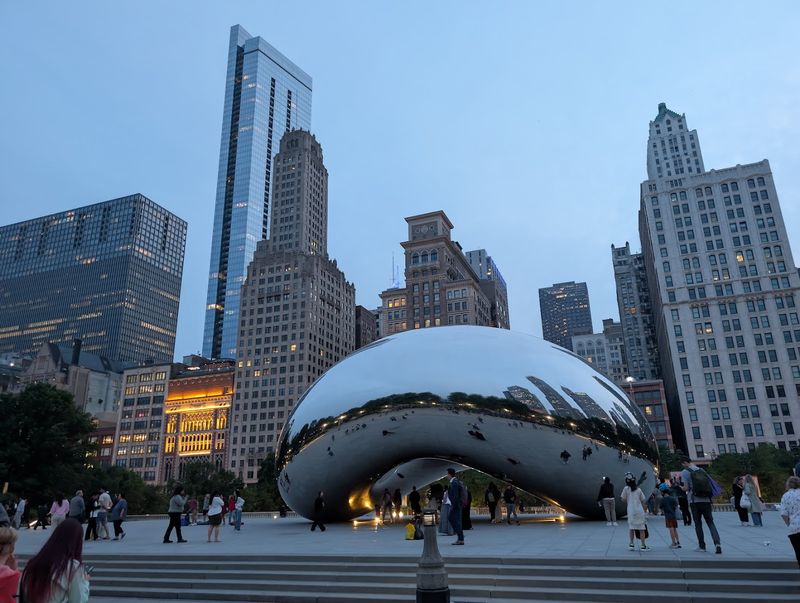
Cloud Gate — better known as “The Bean” — has become one of the most irresistible photo subjects in the entire country. The giant mirrored sculpture reflects the Chicago skyline in a warped, funhouse-mirror way that makes every single angle look interesting.
Opened in 2004, Millennium Park transformed what was once a railroad yard into one of the most vibrant public spaces in America.
Beyond The Bean, the Crown Fountain features two 50-foot glass towers that project faces of Chicago residents and periodically shoot water from their mouths — a quirky, crowd-pleasing feature that kids absolutely love. The Jay Pritzker Pavilion hosts free outdoor concerts during summer, with a lawn that fills up with blanket-toting music fans of every age.
Great Lawn picnics before a symphony performance might be Chicago’s most underrated experience.
Winter brings ice skating on the McCormick Tribune Ice Rink, which is free to use (skate rentals are available for a small fee). Lurie Garden blooms beautifully in spring and summer with native Illinois plants and peaceful walking paths.
Admission to the park itself is always free, making it one of the most accessible world-class attractions in the country.
Faneuil Hall Marketplace (Boston, MA)
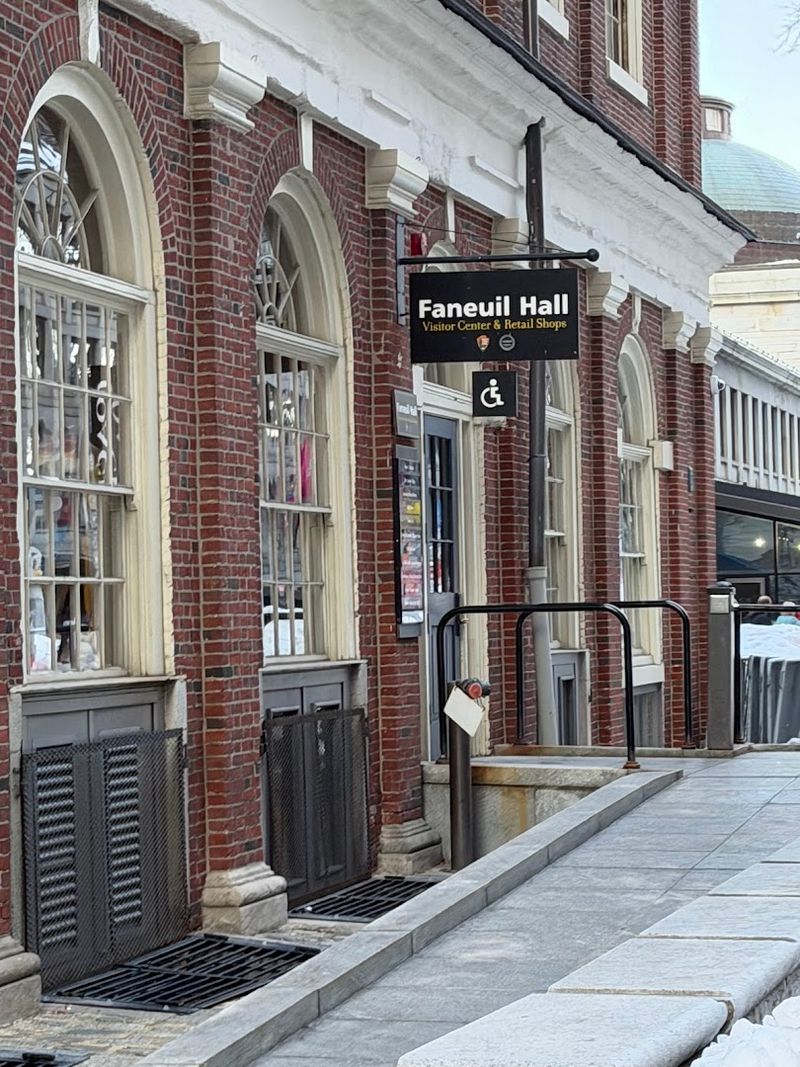
Boston’s Faneuil Hall has been the center of public life since 1742, making it one of the oldest and most historically charged marketplaces in the entire country. Samuel Adams once gave speeches here that helped ignite the American Revolution — and now people stop by for clam chowder in a bread bowl, which feels like a worthy legacy.
The juxtaposition of colonial history and modern food stalls is genuinely charming.
The Quincy Market building next door stretches an entire block and houses dozens of food vendors, local artisan shops, and casual eateries under one roof. Street performers set up outside year-round, ranging from acrobats and musicians to magicians who pull off tricks that leave adults just as baffled as kids.
The energy shifts from lively lunch crowds to a more festive evening vibe as the sun goes down.
Located right along the waterfront and steps from the Freedom Trail, Faneuil Hall makes an ideal anchor for a full day of Boston exploration. Seasonal events like holiday markets and outdoor festivals keep the atmosphere fresh throughout the year.
It’s one of those rare spots that manages to feel both deeply historic and completely alive at the same time.
Union Station (Washington, D.C.)
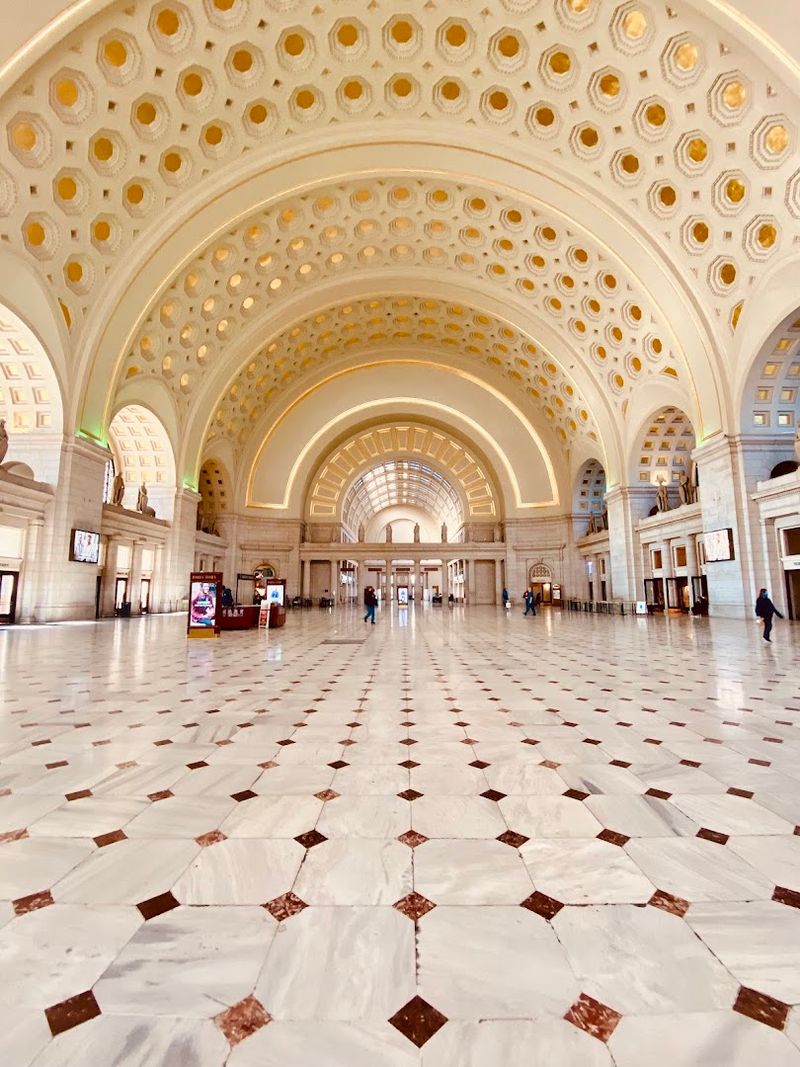
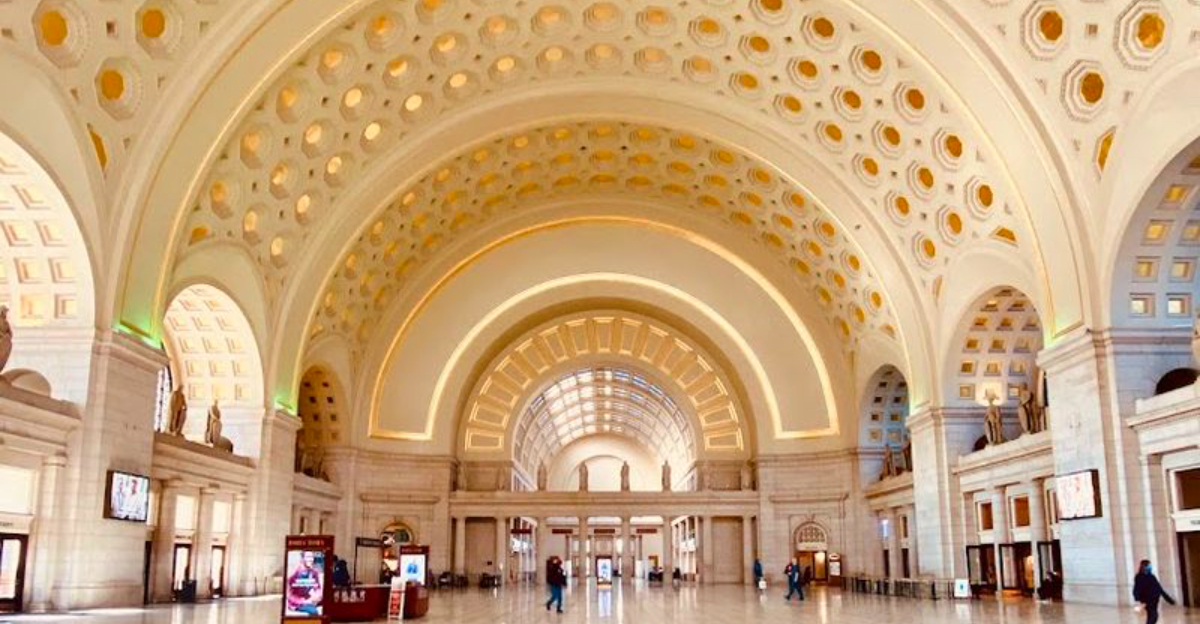
Union Station opened in 1907, and its grand Beaux-Arts architecture still commands attention the moment you walk through its doors. The main hall’s 96-foot barrel-vaulted ceiling is so breathtaking that first-time visitors often stop mid-step to stare upward.
It processes around 40 million visitors annually — more than many major theme parks — which says everything about its magnetic pull.
Beyond being a working train hub serving Amtrak and regional commuter lines, the station houses over 65 shops and restaurants spread across multiple levels. The lower food court offers an impressive variety of dining options, from quick bites to sit-down meals that fuel travelers before long journeys.
Architecture buffs could spend hours studying the coffered ceilings, Roman-inspired archways, and ornate detailing throughout the building.
Its location just steps from the U.S. Capitol makes it a natural first stop for visitors arriving in Washington by train.
Special exhibits, seasonal pop-up markets, and holiday decorations transform the space throughout the year. Union Station proves that a transportation hub can be just as culturally significant and visually stunning as any dedicated tourist attraction in the capital.
Balboa Park (San Diego, CA)
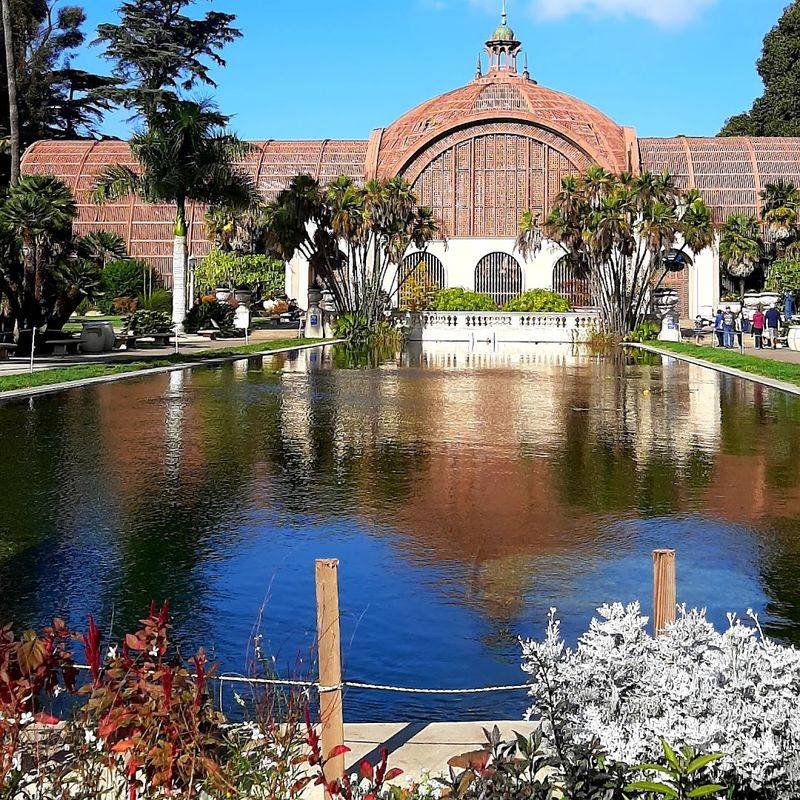
Balboa Park is the kind of place that makes San Diego residents quietly smug — because not every city has 1,200 acres of gardens, museums, and cultural institutions all in one walkable location. The park’s Spanish Colonial Revival architecture gives it a storybook quality, with ornate towers and tiled courtyards that look like they belong in a different century.
Over 13 million visitors arrive each year to explore what many consider California’s crown jewel of public spaces.
The San Diego Zoo, one of the most celebrated zoos in the world, calls Balboa Park home. Beyond the zoo, the park contains 17 museums covering everything from aerospace to fine art to natural history.
The Fleet Science Center is particularly popular with families, offering hands-on exhibits and an IMAX dome theater that delivers genuinely jaw-dropping experiences.
Free organ concerts have been held at the Spreckels Organ Pavilion every Sunday since 1915 — a tradition that’s both delightful and slightly unbelievable. Botanical gardens, walking trails, and performance venues round out a lineup that keeps visitors busy from morning to evening.
Parking can be competitive on weekends, so arriving early or using the free tram system is a smart strategy.
Golden Gate Park (San Francisco, CA)
Stretching three miles long and half a mile wide, Golden Gate Park quietly outshines even its famous bridge neighbor in terms of sheer variety. More than 24 million people visit annually, drawn by everything from world-class museums to bison paddocks — yes, actual bison — roaming a paddock near the park’s western edge.
San Francisco locals treat it like a second backyard, and honestly, that’s exactly what it is.
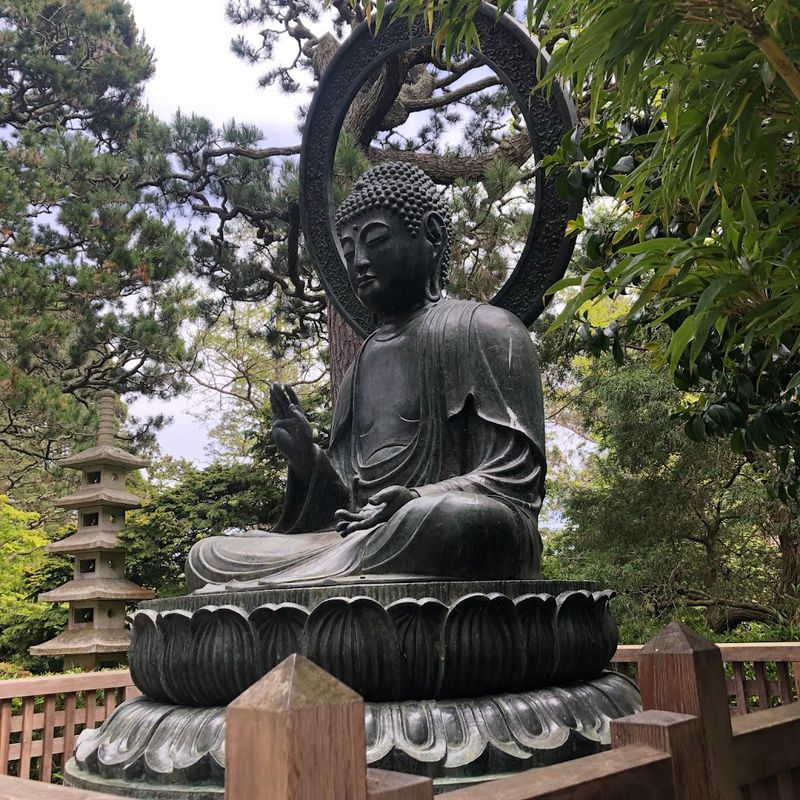
The de Young Museum houses an impressive collection of American art, while the California Academy of Sciences next door contains a planetarium, an aquarium, and a four-story rainforest ecosystem all under one living roof. The Japanese Tea Garden is the oldest public Japanese garden in the United States, offering a serene escape with koi ponds, pagodas, and traditional tea service.
Stow Lake offers paddle boat rentals for a relaxing afternoon on the water.
Every Sunday, a large section of John F. Kennedy Drive closes to cars, transforming into a car-free zone for cyclists, skaters, and pedestrians.
The park hosts Outside Lands, one of the country’s biggest music festivals, every August. Whatever you’re in the mood for — art, nature, music, or simply a long walk under towering trees — Golden Gate Park delivers without missing a beat.



