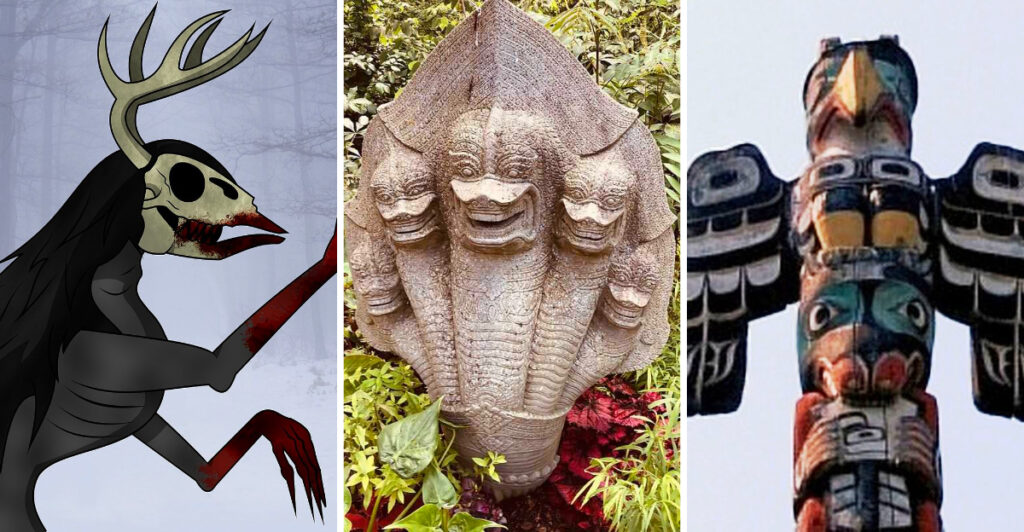
Long before science explained the unknown, people across every corner of the globe invented extraordinary creatures to make sense of the world around them. From the frozen peaks of the Himalayas to the misty shores of Scotland, these legends were passed down through generations, shaping cultures, religions, and art in ways that still echo today.
What is remarkable is that many of these creatures never truly faded away. They live on in movies, books, video games, and the quiet corners of our imagination, reminding us that humans have always craved mystery.
Whether you grew up hearing bedtime stories about shape-shifting foxes or sea monsters lurking in the deep, chances are at least one of these fifteen legendary beings has crossed your path. Prepare to meet some of the most fascinating, fearsome, and unforgettable creatures mythology has ever conjured.
1. Dragon – China
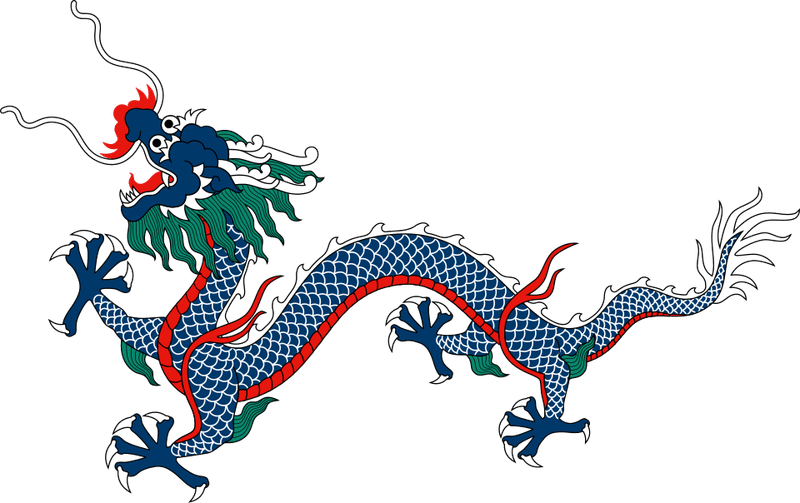
Unlike the fire-breathing, treasure-hoarding beasts of Western legend, the Chinese dragon is something far more noble. Known as “long” in Mandarin, these creatures were symbols of imperial power, good luck, and control over water and weather.
Emperors claimed to be descendants of dragons, and the dragon became the official symbol of the Chinese throne for centuries.
Chinese dragons typically have no wings yet fly freely through the sky, which separates them entirely from their European cousins. They are associated with rivers, seas, and rainfall, making them protectors of agriculture and life itself.
Dragon dances performed during Lunar New Year celebrations trace directly back to this reverence. Interestingly, the number nine is sacred to Chinese dragons because it is the luckiest number in Chinese culture, and imperial dragons were traditionally depicted with exactly 81 scales, which is nine multiplied by nine.
2. Phoenix – Ancient Greece and Egypt

Few symbols in human history carry as much emotional weight as the phoenix. This legendary bird, said to live for hundreds of years before bursting into flames and being reborn from its own ashes, appears in both ancient Greek texts and Egyptian mythology under the name “Bennu.” The Bennu was connected to the sun god Ra and the city of Heliopolis.
Greek historian Herodotus wrote about the phoenix around 450 BCE, describing it as a rare bird from Arabia that carried its dead parent to the Temple of the Sun in Egypt. Whether that story was believed literally or treated as allegory, it stuck around for millennia.
Today the phoenix represents resilience, transformation, and survival after hardship. Cities like Atlanta and San Francisco have used the phoenix as their official symbol, both having rebuilt themselves after devastating fires in their histories.
3. Kraken – Scandinavian Folklore
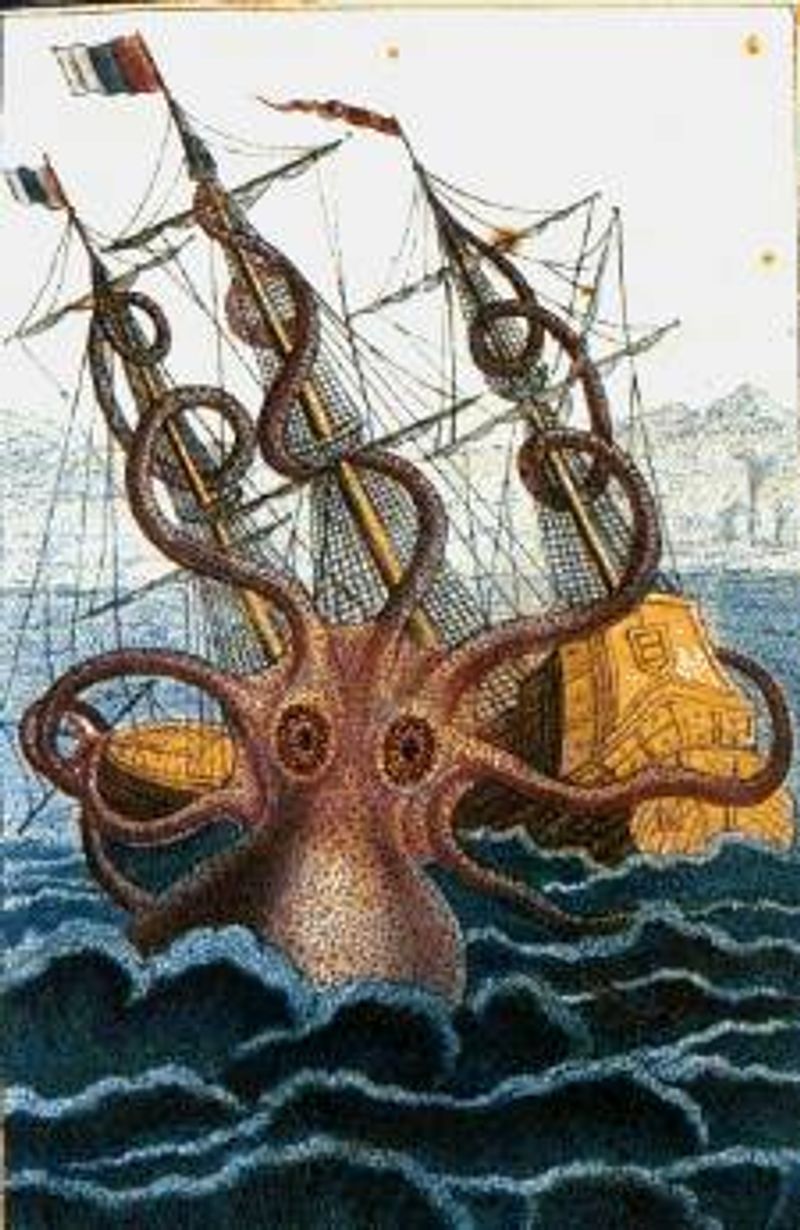
Sailors have always feared the deep, and the Kraken gave that fear a name. Described in Scandinavian folklore as a colossal sea creature capable of dragging entire ships beneath the waves, the Kraken appeared in Norwegian texts as far back as the 13th century.
Bishop Erik Pontoppidan of Norway wrote a detailed account of it in 1752, estimating its body to be about a mile and a half in circumference.
Most historians believe the Kraken legend was inspired by real sightings of giant squid, which can grow up to 43 feet long and were genuinely terrifying to sailors who encountered their massive tentacles at the ocean surface.
The Kraken has never really left popular culture. Alfred Lord Tennyson wrote a poem called “The Kraken” in 1830, and the creature has appeared in everything from Pirates of the Caribbean to modern video games, always representing the terrifying unknown beneath the sea.
4. Kitsune – Japan
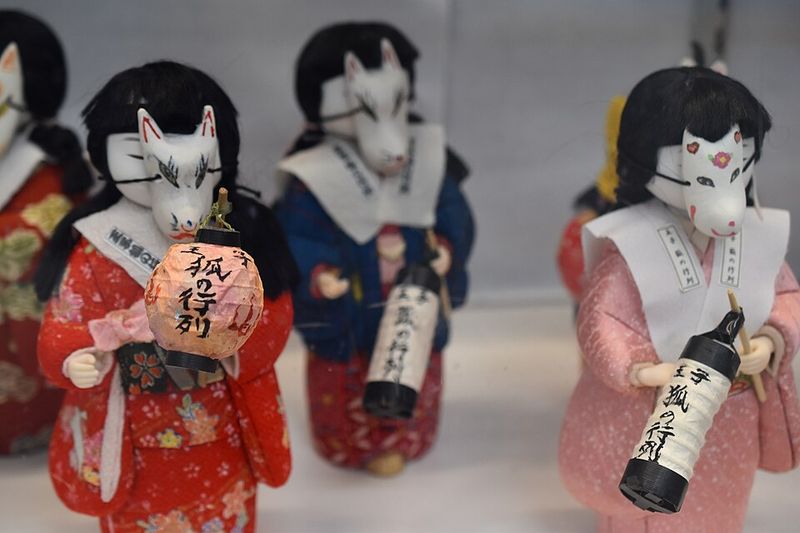
In Japanese folklore, not all foxes are what they seem. The Kitsune is a magical fox spirit that grows more powerful with age, eventually developing multiple tails, up to nine in total.
A nine-tailed Kitsune is considered among the most powerful beings in Japanese mythology, possessing intelligence and magical abilities that far surpass ordinary creatures.
Kitsune are deeply connected to Inari, the Shinto deity of rice, agriculture, and prosperity. Stone fox statues guard thousands of Inari shrines across Japan to this day, serving as messengers between humans and the divine.
Some Kitsune stories are warm and protective, while others portray them as cunning tricksters who delight in misleading travelers.
What makes the Kitsune particularly compelling is its duality. The same creature can be a devoted guardian or a mischievous deceiver depending on the story.
This complexity has made Kitsune one of the most enduring figures in Japanese art, anime, and literature.
5. Banshee – Ireland
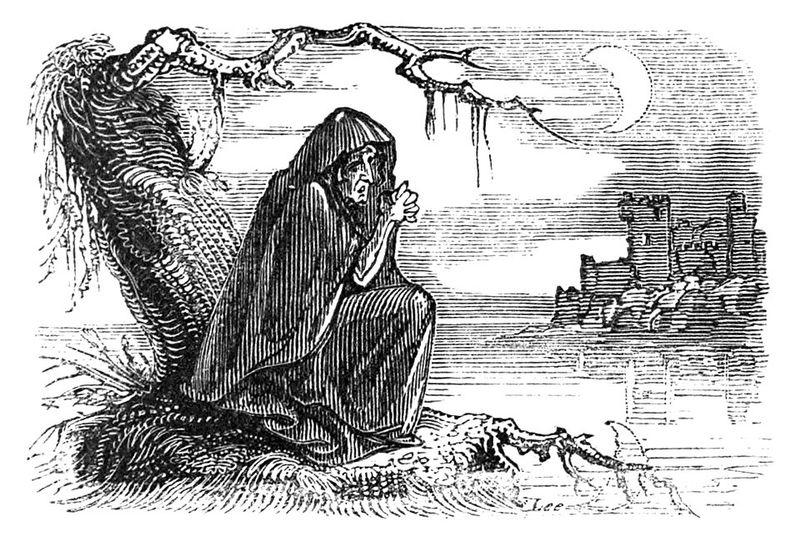
Hearing a wail in the Irish night was once considered the worst possible omen. The Banshee, from the Irish “bean sidhe” meaning “woman of the fairy mound,” was believed to appear near a family home and cry out mournfully to signal that someone inside would soon die.
Her scream was not a curse but a warning, a kind of supernatural grief announcement.
Traditionally, only certain old Irish families of pure Gaelic descent were said to have their own Banshee. The O’Neills, O’Briens, O’Connors, O’Gradys, and Kavanaghs were among the families believed to be followed by one.
Seeing her was considered almost as alarming as hearing her.
Descriptions of the Banshee vary across regions. Some accounts describe her as a beautiful young woman, others as a haggard old crone.
In some stories she washes the bloodied clothes of those about to die, a figure both terrifying and strangely compassionate in her mournful duty.
6. Yeti – Himalayan Folklore
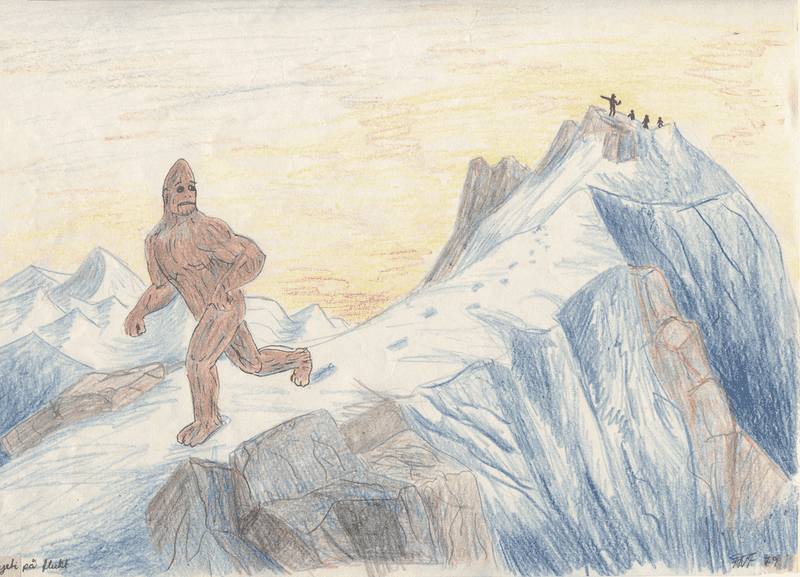
High in the Himalayas, where the air is thin and the peaks touch the clouds, stories of a massive snow creature have persisted for centuries. The Yeti, sometimes called the Abominable Snowman, is deeply embedded in the folklore of Sherpa and Tibetan communities, who regarded it as a powerful and sometimes dangerous spirit of the mountains rather than simply an animal.
The word “Yeti” comes from the Tibetan “Yeh-Teh,” roughly meaning “animal of rocky places.” Western interest exploded in 1951 when British mountaineer Eric Shipton photographed large, mysterious footprints in the snow near Mount Everest. Those photographs sparked decades of expeditions and debate.
In 2017, a study published in the journal Proceedings of the Royal Society B analyzed supposed Yeti samples and found they matched known bear species native to the region. Still, for many Himalayan communities, the Yeti remains something more than biology can explain.
7. Thunderbird – Indigenous Peoples of North America
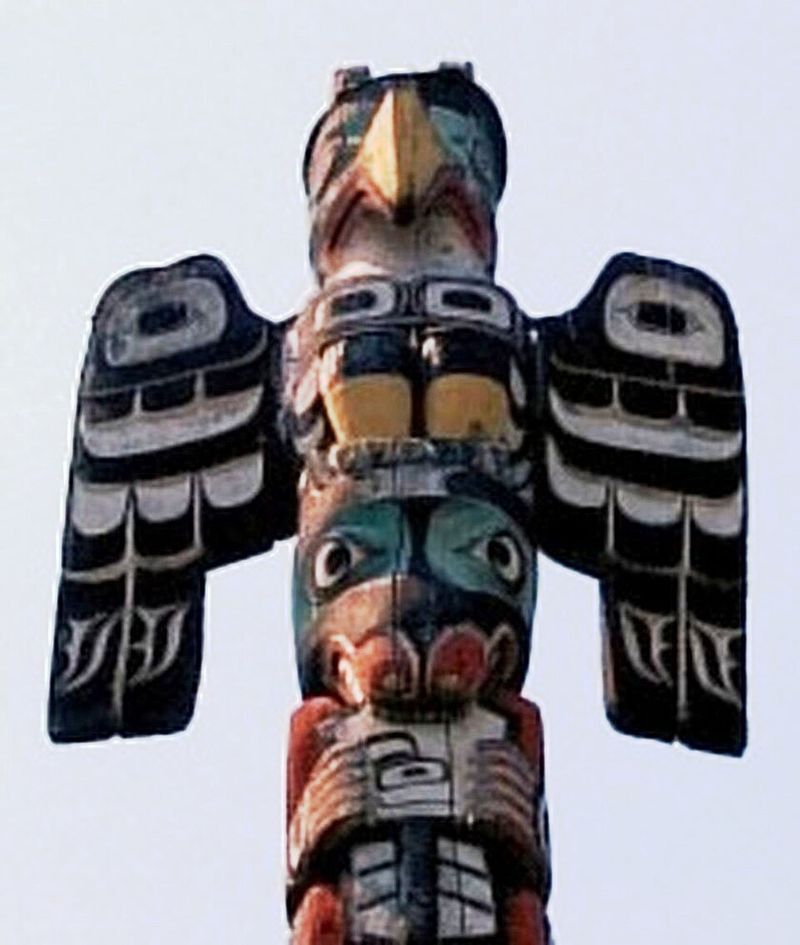
Across dozens of Indigenous nations in North America, from the Pacific Northwest to the Great Plains, the Thunderbird stands as one of the most powerful supernatural beings ever described. This enormous bird was said to create thunder by flapping its wings and produce lightning by opening and closing its eyes.
It was not merely a weather phenomenon but a living, thinking force.
Different nations have their own distinct traditions surrounding the Thunderbird. Among the Ojibwe, it was a protector that battled underwater spirits called Underwater Panthers.
Among the Kwakwaka’wakw of the Pacific Northwest, the Thunderbird appears prominently in totem poles and ceremonial regalia, representing supreme power.
What is striking is how widespread the Thunderbird concept is across unconnected cultures spanning thousands of miles. Some researchers believe the legend may have roots in ancient memories of very large prehistoric birds, including the teratorns, extinct vulture-like raptors with wingspans exceeding 11 feet.
8. Anansi – West Africa
Anansi is no ordinary spider. Born from Ashanti oral tradition in Ghana, this trickster figure is one of the most beloved characters in West African and Caribbean folklore.
Anansi is credited with something extraordinary: he did not just trick people, he tricked the Sky God Nyame himself to obtain all the stories in the world, making him the keeper of human knowledge and narrative.
The story goes that Nyame demanded an impossible price for his stories, including a python, a leopard, and a swarm of hornets. Anansi used his cleverness to capture each one, winning the bargain and becoming the god of stories.
This is why many West African storytelling traditions begin with an invocation of Anansi.
When enslaved Africans were brought to the Caribbean, Anansi stories traveled with them, evolving into a symbol of resistance and survival. His tales appear in Jamaican folklore as “Anansi stories” and inspired Neil Gaiman’s novel “Anansi Boys.”
9. Roc – Middle Eastern and Persian Folklore
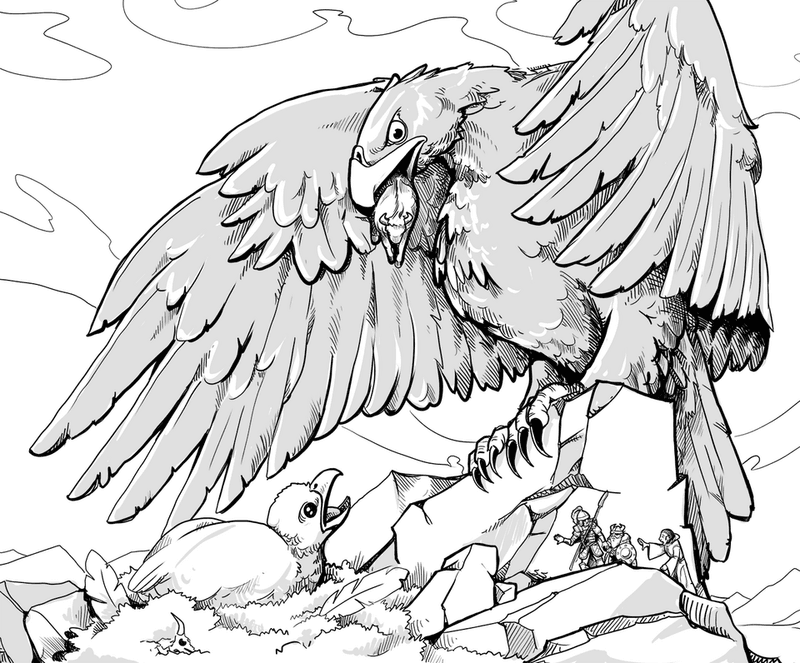
Roc, the legendary giant raptor of Middle Eastern and Persian mythology that appears in One Thousand and One Nights, better known in the West as Arabian Nights. Sinbad the Sailor famously encounters the Roc during his voyages, describing an egg so massive it resembles a dome.
Marco Polo mentioned the Roc in his 13th-century travels, claiming people in Madagascar had described a bird capable of seizing elephants. Scholars believe the Roc legend may have been inspired by the now-extinct Elephant Bird of Madagascar, which stood nearly 10 feet tall and was the heaviest bird ever known to have lived.
The Roc represents the awe-inspiring scale of the natural world as imagined by ancient storytellers. When you consider that enormous birds genuinely did exist in the ancient world, the legend becomes far less fantastical than it first appears.
10. Qilin (Kirin) – China
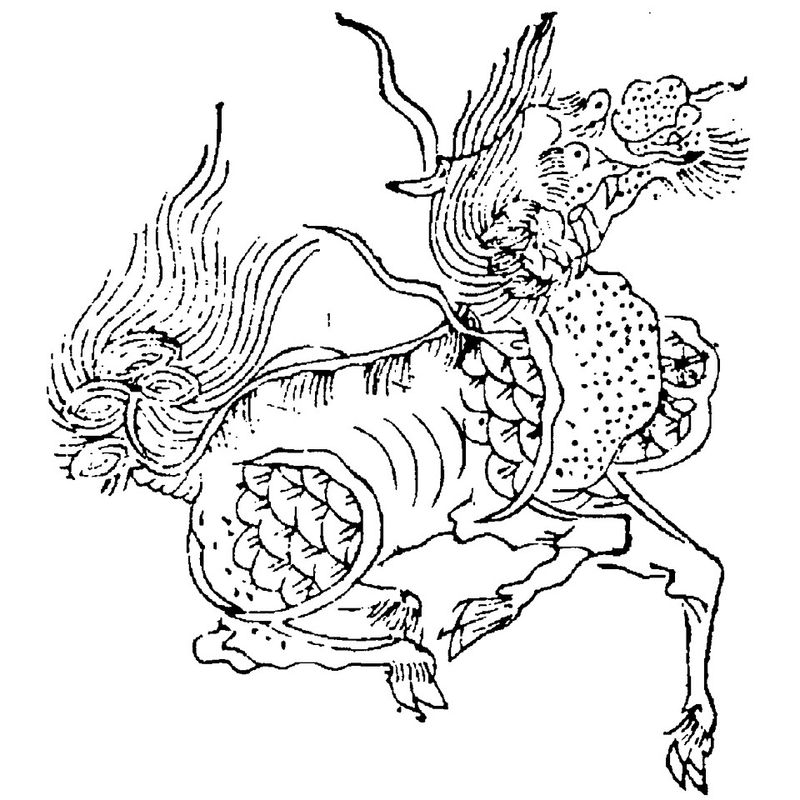
Of all the creatures in Chinese mythology, the Qilin may be the most purely good. This chimeric being, combining features of a dragon, deer, ox, and fish, was said to appear only during the reign of a wise and just ruler.
Its arrival was considered one of the greatest possible omens, a sign that heaven approved of the person in power.
The Qilin was so gentle it would not crush a single blade of grass underfoot and refused to eat any living thing. Flames surrounded its body, yet they never burned.
It was essentially the Chinese equivalent of a unicorn, though far more complex in appearance and symbolism.
When the famous explorer Zheng He returned from East Africa in the early 1400s, he brought back a giraffe for the Chinese emperor. The court immediately declared it a Qilin, interpreting the exotic animal as a divine blessing on the emperor’s rule.
It remains one of history’s more charming cases of wishful identification.
11. Minotaur – Ancient Greece
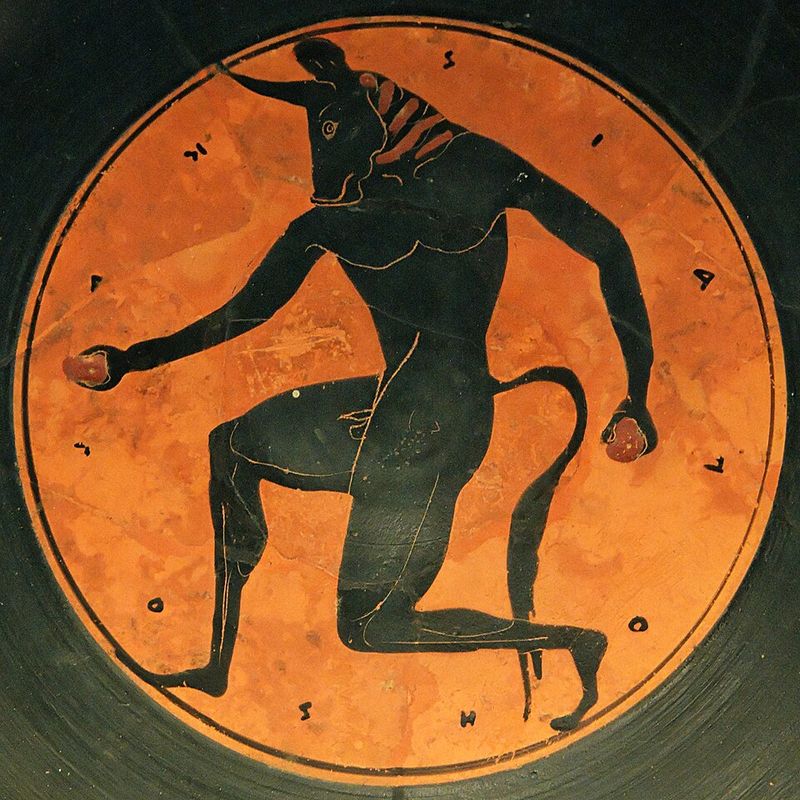
Half man, half bull, entirely terrifying. The Minotaur of ancient Greek mythology lived at the center of a vast labyrinth beneath the palace of Knossos on the island of Crete, built by the legendary craftsman Daedalus at the command of King Minos.
Every nine years, Athens was forced to send seven young men and seven young women into the maze as tribute, where the Minotaur awaited them.
The hero Theseus volunteered to enter the labyrinth and, with the help of Ariadne’s thread to mark his path, managed to slay the creature and find his way back out. The story is one of the oldest hero narratives in Western literature, recorded by multiple ancient Greek authors including Plutarch.
Archaeologists have found evidence that the Palace of Knossos was genuinely enormous and maze-like, with hundreds of interconnected rooms. Some historians believe the Minotaur legend may preserve a memory of actual Minoan bull-leaping rituals practiced there thousands of years ago.
12. Chupacabra – Puerto Rico and Latin America
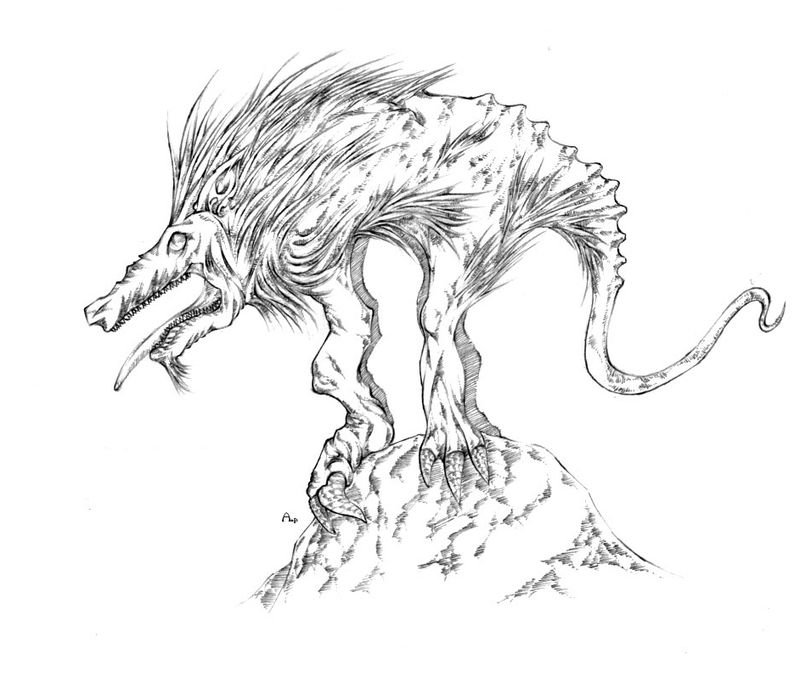
The Chupacabra is one of the youngest entries in the global mythology hall of fame, but it spread with remarkable speed. The name means “goat-sucker” in Spanish, and the legend exploded in 1995 in Puerto Rico after a series of livestock were found dead, drained of blood with strange puncture wounds.
Panic spread quickly across rural communities.
Early eyewitness descriptions painted the creature as reptilian, roughly the size of a small bear, with spines running down its back and glowing red eyes. Later sightings in Texas and Mexico described something more like a hairless dog or coyote, which DNA testing eventually confirmed in several cases.
What makes the Chupacabra culturally fascinating is how quickly it became a shared legend across Latin America and beyond. It tapped into genuine rural anxieties about unexplained livestock deaths and government secrecy.
Whether cryptid or misidentified animal, the Chupacabra remains a vivid example of how modern myths are still being born.
13. Wendigo – Algonquian Indigenous Traditions
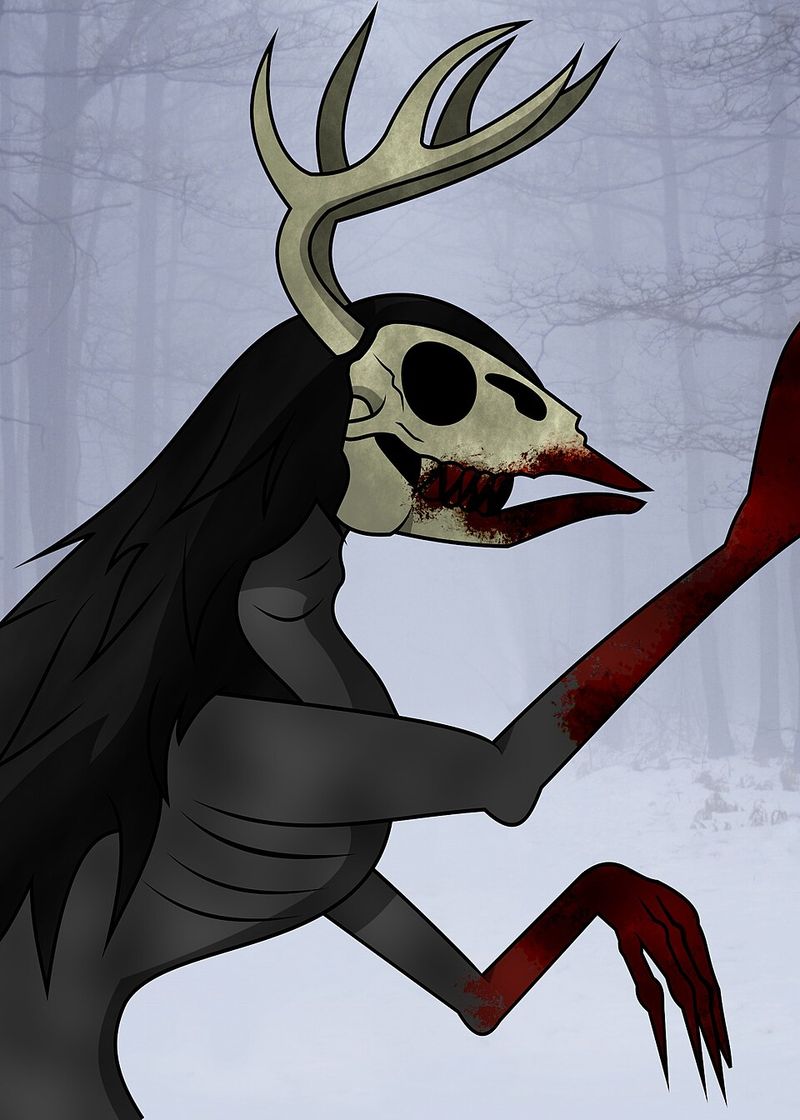
Few creatures in world mythology inspire the specific kind of dread that the Wendigo does. Rooted in the oral traditions of Algonquian-speaking peoples across the northern Great Lakes and Canada, the Wendigo was associated with winter, starvation, and cannibalism.
It was described as a towering, emaciated being with an insatiable hunger that grew larger the more it ate, never finding satisfaction.
The Wendigo was not just a monster story. It served an important social function, warning communities about the dangers of extreme selfishness and the taboo of cannibalism during desperate winter conditions.
Wendigo psychosis, a culture-bound syndrome documented by anthropologists, described individuals who believed they were transforming into a Wendigo.
Today the Wendigo has been absorbed into horror fiction and popular culture, appearing in TV shows like Supernatural and Hannibal and in Stephen King’s work. However, many Indigenous scholars have raised concerns about the commercialization of a figure that carries serious spiritual and cultural weight in living communities.
14. Naga – Hindu and Buddhist Traditions
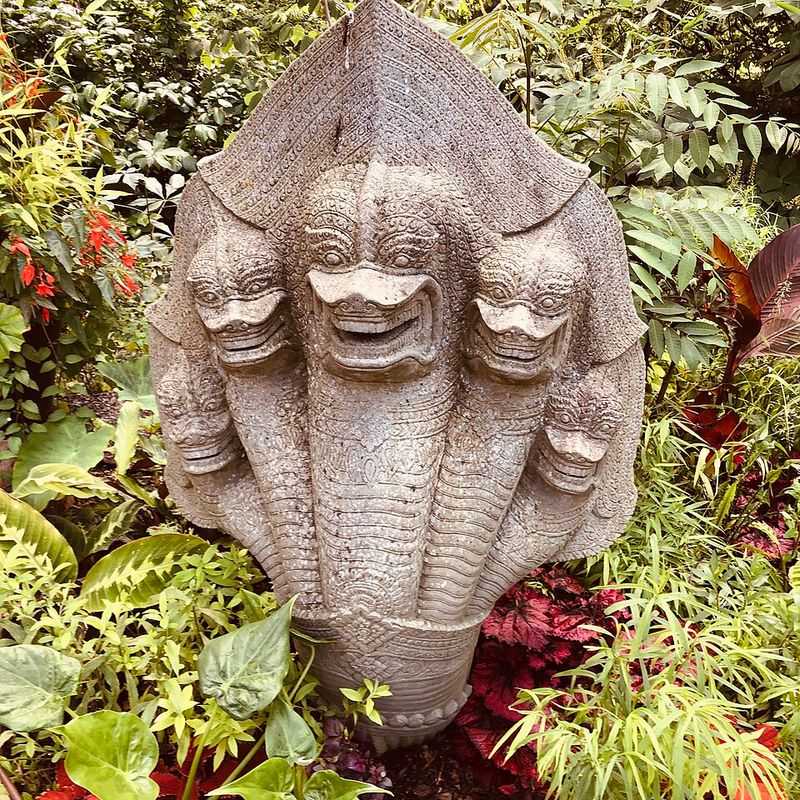
Across South and Southeast Asia, serpent deities known as Nagas occupy a central place in both Hindu and Buddhist cosmology. These beings are neither purely good nor purely evil.
They are powerful, ancient, and deeply tied to water, fertility, and the underworld. Temples across Cambodia, Thailand, India, and Nepal feature Naga imagery prominently in their architecture.
In Hindu tradition, the god Vishnu rests on the cosmic serpent Shesha between cycles of creation. In Buddhism, a great Naga named Mucalinda sheltered the meditating Buddha from a storm by spreading his hood over him.
These are not background characters but central figures in foundational religious stories.
The famous temple complex of Angkor Wat in Cambodia features Naga balustrades lining its entrance causeways, and the Naga remains a national symbol of protection in both Cambodia and Laos. Few mythical creatures have maintained such active religious significance for so many consecutive centuries.
15. Selkie – Scotland

Off the rocky coasts of Orkney and Shetland, the sea was never just water. It was full of Selkies, creatures that lived as seals beneath the waves but could shed their skins and walk on land as humans.
The stories surrounding them are among the most emotionally complex in all of Celtic folklore, blending longing, love, and loss in ways that feel surprisingly modern.
A common Selkie tale involves a fisherman who hides a Selkie woman’s seal skin, trapping her on land where she becomes his wife. She eventually finds her skin and returns to the sea, sometimes leaving children behind on the shore.
These stories have been interpreted as metaphors for forced marriage, displacement, and the ache of belonging to two worlds at once.
Selkie legends were so embedded in Orcadian culture that some families claimed actual Selkie ancestry. The stories survive today in novels, films, and folk songs, including the 2009 animated film Song of the Sea, which introduced the legend to a new generation worldwide.
Share this story