 Unearth The Voyage
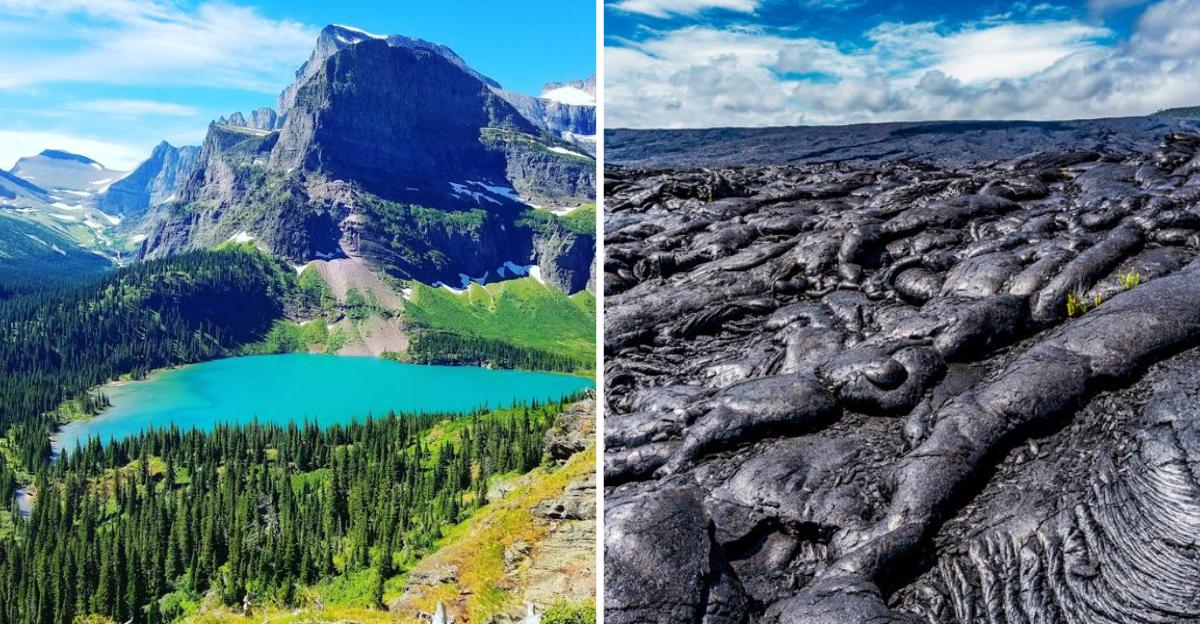
The United States is packed with some of the most jaw-dropping natural scenery on the planet. From towering mountains to glowing desert canyons, every corner of the country holds something truly spectacular.
Whether you are a seasoned hiker or someone who just loves a good road trip, these landmarks will leave you speechless. Get ready to explore 15 of the most breathtaking natural wonders the U.S. has to offer.
Grand Canyon — Arizona
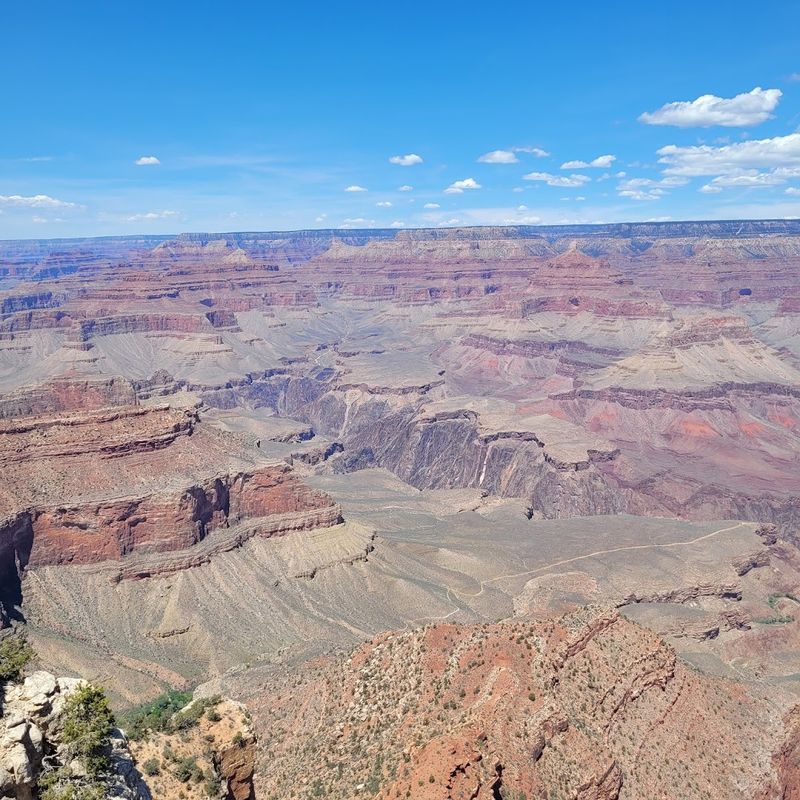
Standing at the rim of the Grand Canyon feels like the Earth just opened up and decided to show off. Stretching 277 miles long and reaching depths of over a mile, this geological masterpiece took around 5 to 6 million years to form.
The Colorado River carved its way through layers of ancient rock, exposing a timeline of Earth’s history that scientists still study today.
Visitors can explore the South Rim year-round, while the North Rim offers a quieter, more remote experience. Hiking trails range from easy rim walks to the grueling Bright Angel Trail that descends into the canyon itself.
Pack plenty of water — the heat at the bottom is no joke.
Sunrise and sunset are the best times to visit. The shifting light turns the canyon walls into a stunning palette of reds, purples, and golds.
Whether you peer over the edge or raft the Colorado River below, the Grand Canyon never fails to take your breath away. It is one of those rare places that actually exceeds every expectation you had before arriving.
Yellowstone National Park — Wyoming
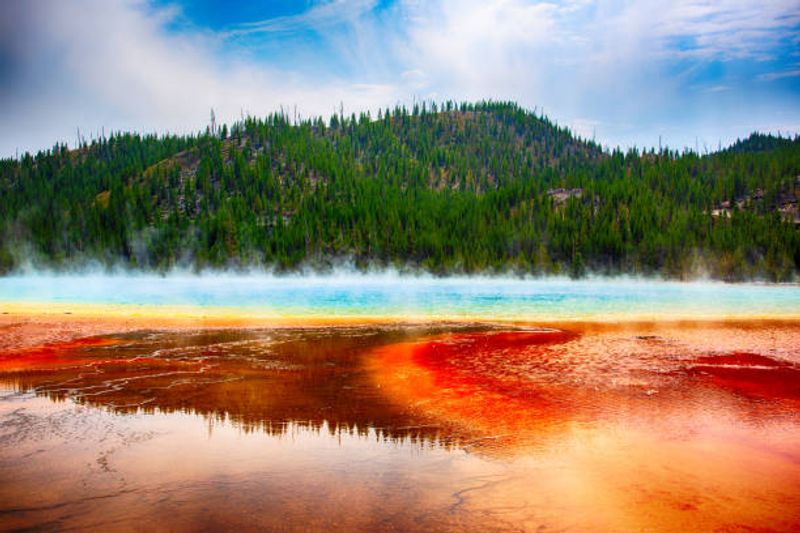
Yellowstone is basically Earth doing its own science experiment — and you get a front-row seat. Sitting on top of one of the world’s largest supervolcanoes, the park is packed with geysers, bubbling mud pots, and brilliantly colored hot springs.
Old Faithful erupts roughly every 90 minutes, sending scalding water over 100 feet into the air with almost clockwork reliability.
The Grand Prismatic Spring is another showstopper. Its vivid rings of orange, yellow, and green come from heat-loving bacteria living in the water.
Seen from above, it looks like something painted by an extremely ambitious artist with a very large canvas.
Wildlife is everywhere here. Bison roam freely across meadows, wolves howl in the distance, and grizzly bears make occasional appearances near trails.
Always keep a safe distance and follow park guidelines. Yellowstone spans parts of Wyoming, Montana, and Idaho, covering over 2.2 million acres of wild, untamed land.
Whether you come for the geysers or the grizzlies, you will leave with stories worth telling for years.
Yosemite Valley — California
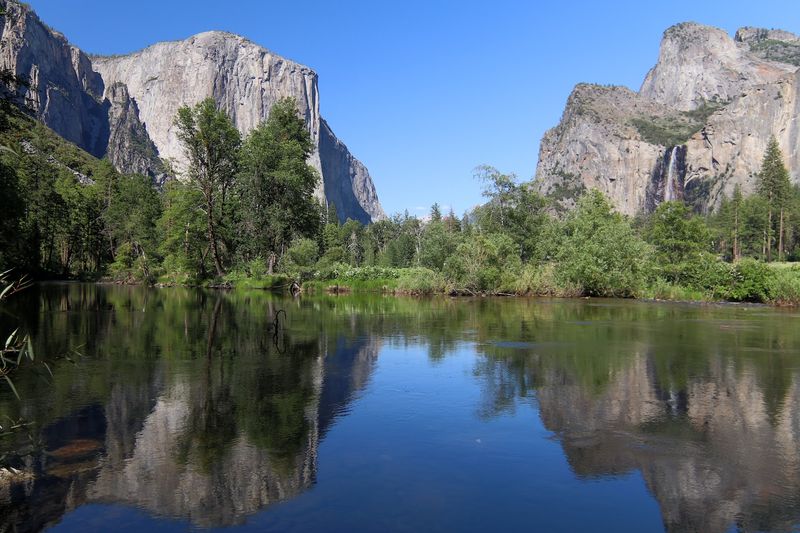
Few places on Earth can match the dramatic scenery packed into Yosemite Valley’s seven-mile stretch. El Capitan, a sheer granite wall rising nearly 3,000 feet, draws rock climbers from around the world who spend days scaling its face.
Meanwhile, Yosemite Falls plunges over 2,400 feet in total, making it one of the tallest waterfalls in North America.
Spring is the magic season here. Snowmelt sends waterfalls roaring at full force, meadows burst into color, and the whole valley feels electrically alive.
Summer brings crowds, so arriving early in the morning is a smart move if you want iconic views without shoulder-to-shoulder tourists.
Half Dome is another must-see — a massive rounded granite dome that looks like it was sliced clean in half by a giant. The hike to its summit is challenging but wildly rewarding.
John Muir, the famous naturalist, called Yosemite Valley the grandest of all special temples of Nature. After one visit, it is very hard to argue with him.
Photography lovers especially will find it nearly impossible to put the camera down.
Niagara Falls — New York
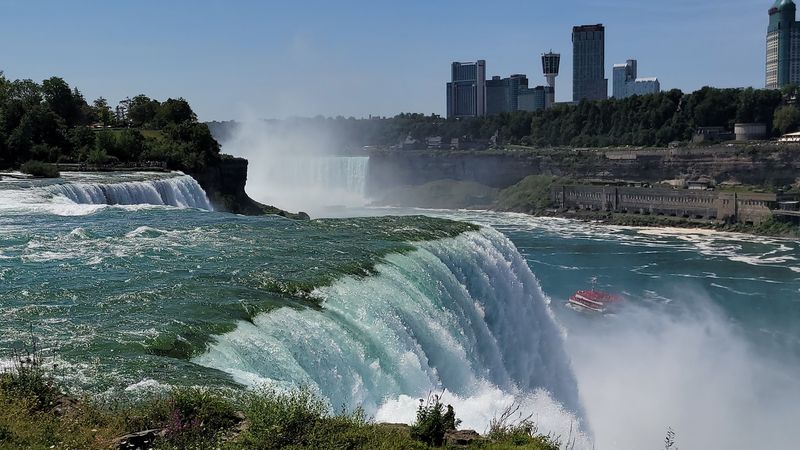
You can hear Niagara Falls before you ever see it. The roar of over 3,160 tons of water crashing over the edge every single second is something your body feels as much as your ears hear.
Straddling the border between New York and Canada, Niagara is actually made up of three separate waterfalls: Horseshoe Falls, American Falls, and Bridal Veil Falls.
The Maid of the Mist boat tour is the most thrilling way to experience the falls up close. You will get soaked — that is basically guaranteed — but the view from the water looking up at that thundering curtain of white is absolutely worth it.
Ponchos are provided, though they only do so much.
The falls are stunning at night too, when colorful lights illuminate the rushing water. Winter transforms the area into a frozen wonderland, with ice formations building up along the banks.
Fun fact: Niagara Falls has been a popular honeymoon destination since the early 1800s, and it is easy to understand why. There is something undeniably romantic about standing next to one of the most powerful waterfalls on the planet.
Antelope Canyon — Arizona
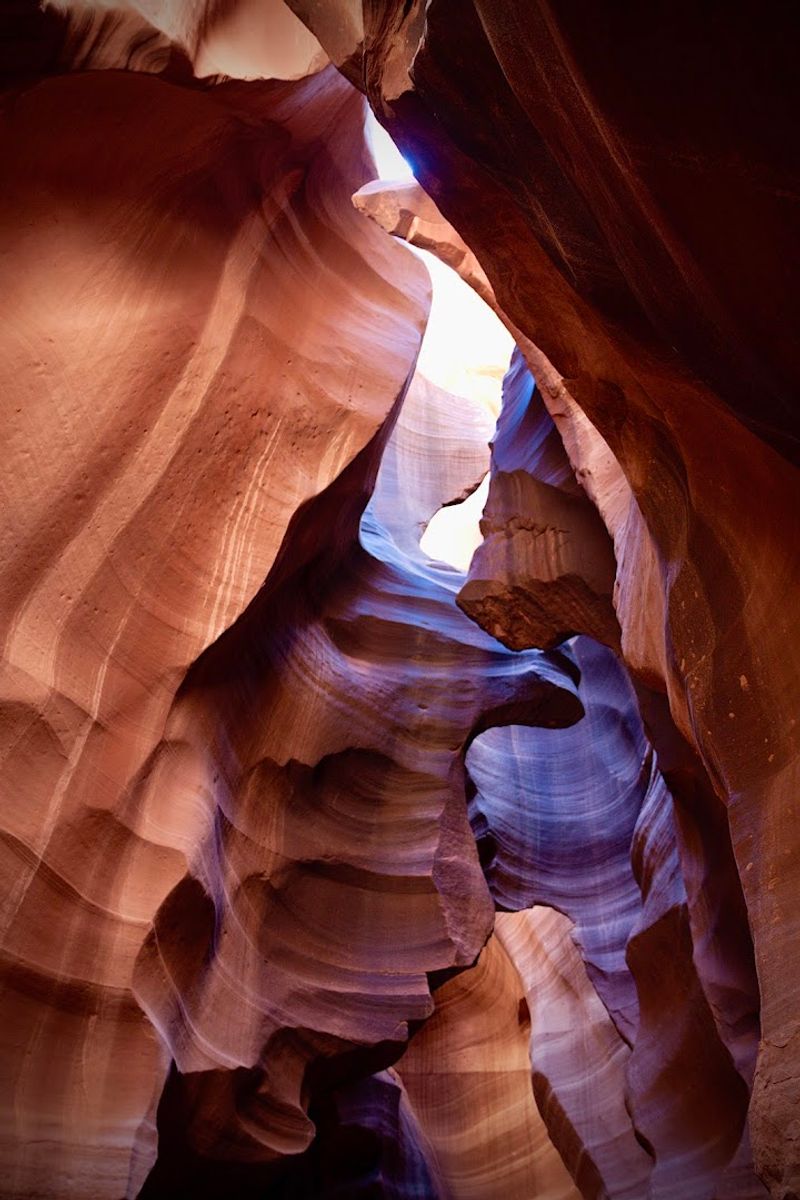
Antelope Canyon looks like it was sculpted by a very patient artist who had millions of years to work with. Located on Navajo land near Page, Arizona, this slot canyon was carved by flash floods rushing through narrow sandstone passages over thousands of years.
The result is a series of wavy, layered walls that glow in shades of orange, red, and purple depending on the time of day.
Light beams are the main attraction. Around midday during summer months, shafts of sunlight pierce through the narrow opening above and illuminate floating dust particles, creating an almost magical, dreamlike effect.
Photographers wait months to book tours timed specifically for those light beam moments.
There are two sections: Upper Antelope Canyon, which is easier to walk through, and Lower Antelope Canyon, which involves ladders and tighter squeezes but rewards visitors with equally stunning views. Tours are guided and led by members of the Navajo Nation, who share the history and cultural significance of the land.
Visiting respectfully and following your guide is both required and genuinely appreciated. Antelope Canyon is proof that water and time can create art far beyond anything human hands could manage.
Great Smoky Mountains — Tennessee/North Carolina

There is a reason the Great Smoky Mountains are the most visited national park in the entire country — actually, there are several reasons, and they all involve stunning scenery. The blue-gray mist that drifts between the peaks gives the mountains their name, and it creates an atmosphere that feels ancient and almost mystical.
On a quiet morning, the view from Clingmans Dome can stop you mid-sentence.
Spring here is a wildflower explosion. Over 1,500 species of flowering plants bloom across the park, earning it a designation as an International Biosphere Reserve.
Firefly season in late spring draws huge crowds, as synchronous fireflies flash in coordinated patterns — a rare natural phenomenon found in very few places worldwide.
Black bears are the park’s unofficial mascots. Sightings are surprisingly common, especially along Cades Cove, a scenic loop road that also offers views of historic homesteads.
The park straddles the border of Tennessee and North Carolina, making it accessible from multiple directions. Best of all, there is no entrance fee, which makes it one of the most welcoming natural landmarks in America.
Great scenery should not require a password or a premium subscription.
Denali — Alaska
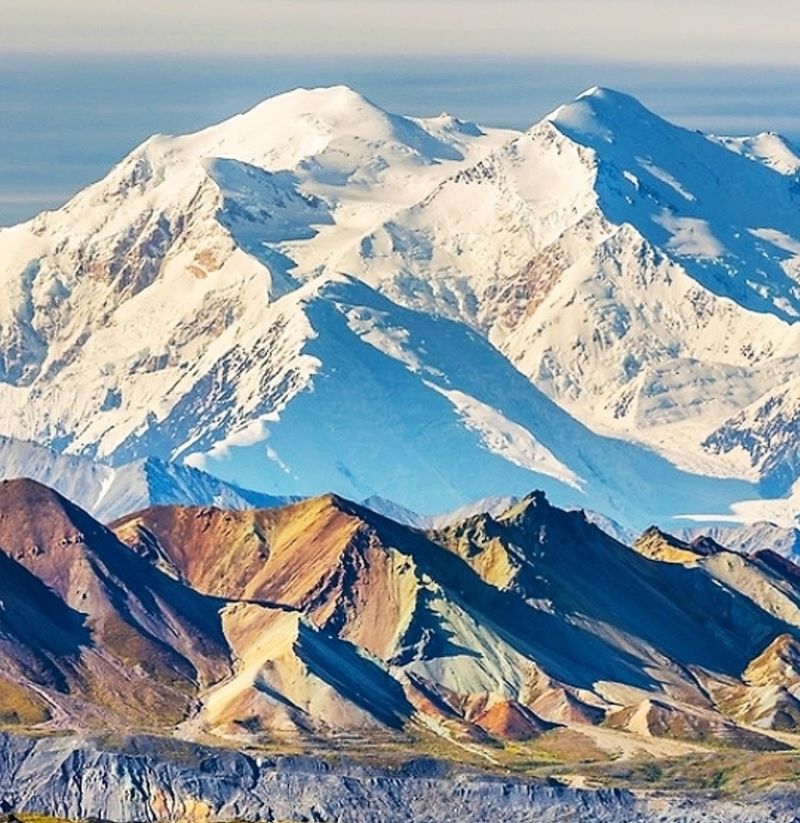
At 20,310 feet above sea level, Denali is the tallest mountain in North America — and it does not let you forget it. The sheer vertical rise of Denali from base to summit is actually greater than that of Mount Everest, which makes it one of the most technically challenging climbs on Earth.
Only about half of the climbers who attempt the summit actually reach it.
You do not have to be a mountaineer to be amazed, though. Denali National Park surrounds the peak with six million acres of raw Alaskan wilderness.
Grizzly bears, wolves, caribou, and moose roam freely across tundra and boreal forest. The park has only one road, which limits traffic and keeps the experience feeling genuinely remote.
Flightseeing tours are incredibly popular and offer views of glaciers and the summit that most people could never reach on foot. On clear days, Denali is visible from Anchorage, over 130 miles away.
The mountain creates its own weather systems, meaning clear views are never guaranteed — which makes spotting the full peak feel like a special gift from the Alaskan wilderness itself. Come prepared for cold, unpredictable conditions no matter the season.
Arches National Park — Utah
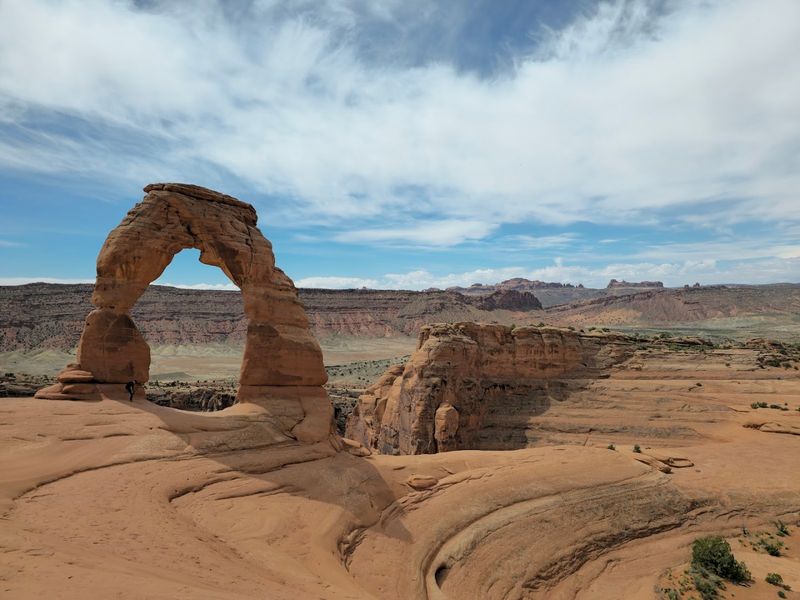
Imagine a desert where nature decided to build its own art gallery — that is essentially Arches National Park. With over 2,000 natural sandstone arches spread across 76,000 acres of red Utah desert, this park holds the highest concentration of natural arches anywhere on the planet.
The most famous, Delicate Arch, stands 52 feet tall and has become one of the most iconic images in the American West.
The arches formed over millions of years as water, ice, and erosion slowly wore away the Entrada Sandstone. They are still changing today — arches occasionally collapse, and new ones slowly form.
It is a reminder that even the most solid-looking landscapes are always in motion, just on a timeline humans rarely notice.
Hiking to Delicate Arch takes about three miles round trip and is moderately challenging, with an exposed slickrock section near the end that rewards hikers with a jaw-dropping reveal. The Windows section offers easier access to multiple large arches.
Stargazing at Arches is world-class thanks to minimal light pollution, and the park has been designated a Dark Sky Park. Bring a headlamp and stay after sunset — the night sky here is genuinely extraordinary.
Glacier National Park — Montana
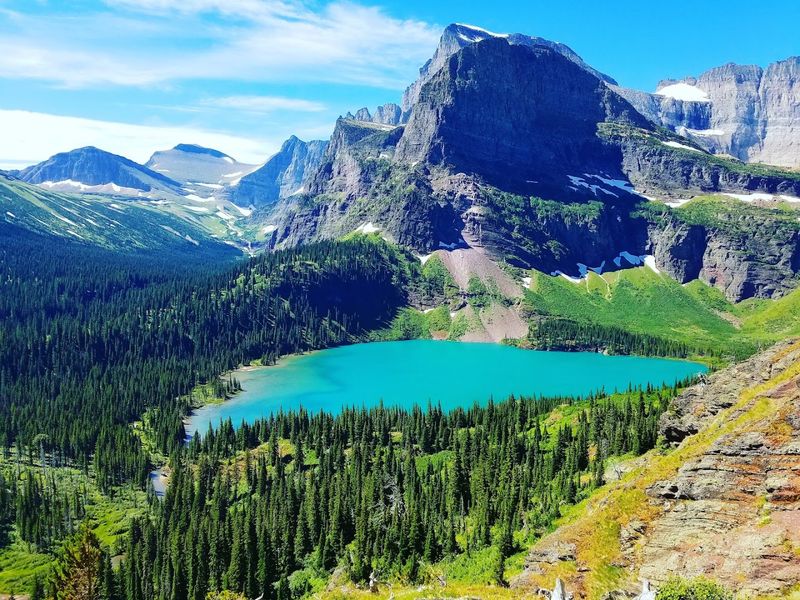
Glacier National Park is the kind of place that makes you wonder why you ever spent a vacation anywhere else. Tucked into the northern Rocky Mountains of Montana along the Canadian border, the park features over 700 miles of hiking trails, 130 named lakes, and some of the most rugged alpine scenery in the country.
The Going-to-the-Sun Road alone is worth the trip — a 50-mile mountain highway with views that will make your passenger grab the dashboard.
The park’s glaciers are its most urgent attraction. There were around 150 glaciers here in 1910 when the park was established.
Today, fewer than 25 remain due to climate change, and scientists predict they could disappear within decades. Visiting now means witnessing something genuinely irreplaceable.
Wildlife encounters are a regular part of the Glacier experience. Mountain goats perch on impossibly steep cliffs, grizzly bears dig for roots in open meadows, and bighorn sheep cross the roads without a second thought.
Lake McDonald, with its colorful pebbled shore and mirror-calm surface, is a photographer’s dream. Summer is the best time to visit since many high-elevation trails are buried in snow until late June.
Book lodging early — this park fills up fast for good reason.
White Sands National Park — New Mexico
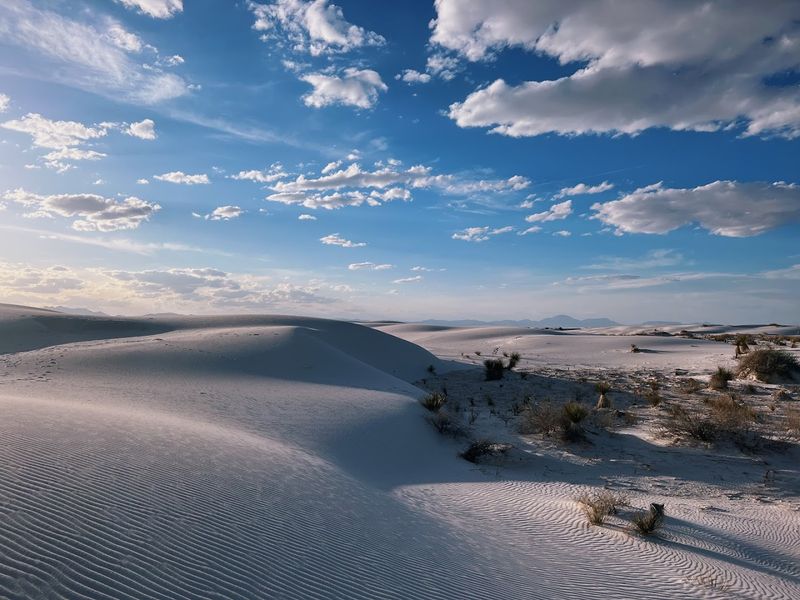
White Sands looks like someone dumped an enormous amount of powdered sugar across the New Mexico desert — except this blindingly white landscape is made entirely of gypsum sand, a mineral rarely found in dune form anywhere else on Earth. Covering 275 square miles, it is the largest gypsum dune field in the world, and walking across it feels genuinely surreal.
The sand stays cool even in summer because gypsum does not absorb heat the way regular sand does. That means you can walk barefoot across the dunes without burning your feet, which is a surprisingly delightful surprise for first-time visitors expecting the usual desert experience.
Sunset turns the white dunes a warm shade of pink that is almost too pretty to be real.
Sledding down the dunes is one of the most popular and surprisingly fun activities in the park. Plastic sleds are sold at the visitor center, and even adults completely abandon their dignity on the way down.
The park is surrounded by White Sands Missile Range, so it occasionally closes temporarily for military testing. Check the schedule before visiting to avoid a disappointing detour.
Guided full-moon walks are also offered seasonally and are absolutely worth planning around.
Redwood National and State Parks — California
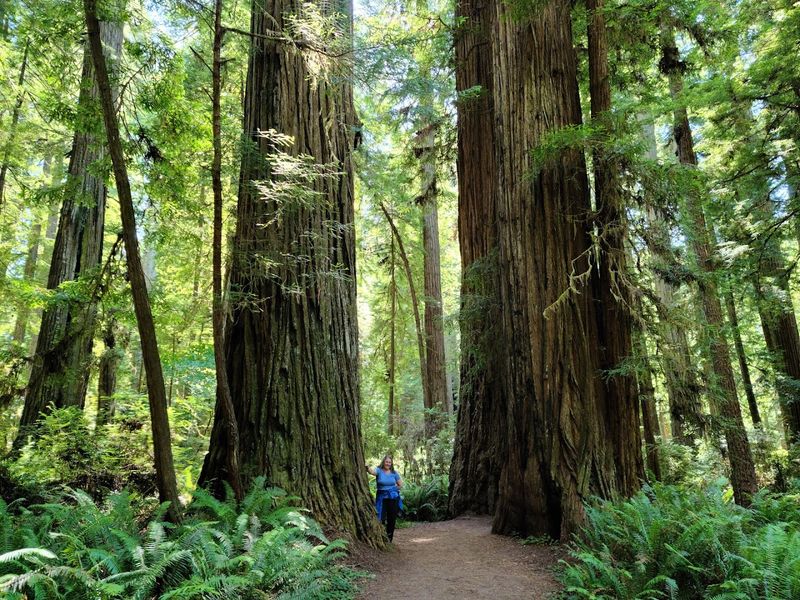
Walking through a redwood forest is one of the quietest, most humbling experiences nature has to offer. The trees here are not just tall — they are incomprehensibly tall.
The tallest known living tree on Earth, Hyperion, stands at 380 feet and lives somewhere in these parks. Its exact location is kept secret to protect it from too many visitors trampling its roots.
Coast redwoods can live over 2,000 years, meaning some of these trees were already ancient when the Roman Empire was still standing. Their bark is thick and fire-resistant, helping them survive centuries of California wildfires.
Standing at the base of one and looking up is a reliable way to feel wonderfully small.
The Avenue of the Giants is a 31-mile scenic drive through old-growth redwood groves that offers easy access to the forest without strenuous hiking. Elk Prairie is another highlight, where Roosevelt elk graze peacefully in open meadows surrounded by towering trees.
Fern Canyon, with its walls draped entirely in five-finger ferns, was used as a filming location for Jurassic Park 2 — so yes, it looks exactly as prehistoric as you would imagine. Plan for cool, foggy weather year-round along the northern California coast.
Hawaii Volcanoes National Park — Hawaii
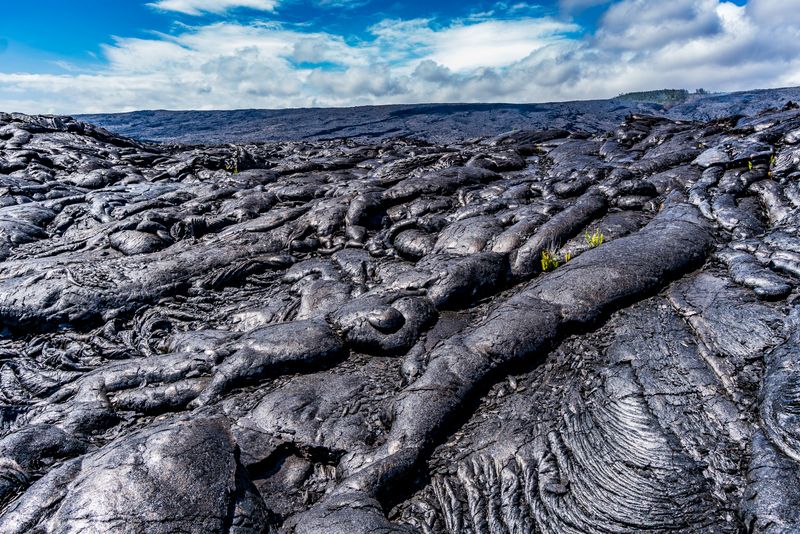
Not many places on Earth let you watch a new island being born in real time, but Hawaii Volcanoes National Park on the Big Island does exactly that. Kilauea, one of the world’s most active volcanoes, has been erupting almost continuously since 1983.
Lava flows have added hundreds of acres of new land to the island’s coastline over the decades — the ground here is literally growing.
The Kilauea Caldera is the dramatic centerpiece of the park. On clear nights, the glow of molten lava reflecting off volcanic gases creates an eerie, otherworldly red light that illuminates the sky above the crater.
The Chain of Craters Road winds down to the coast, passing through hardened lava fields that look like something from another planet entirely.
Hiking through lava tubes is another unforgettable experience. Thurston Lava Tube is a short, easy walk through a cave formed by flowing lava that cooled on the outside while the molten interior drained away.
The park also features rare native Hawaiian plants and birds found nowhere else on Earth. Always check current eruption and air quality conditions before visiting, as volcanic smog — locally called vog — can affect visibility and breathing in certain areas.
Mount Rainier — Washington
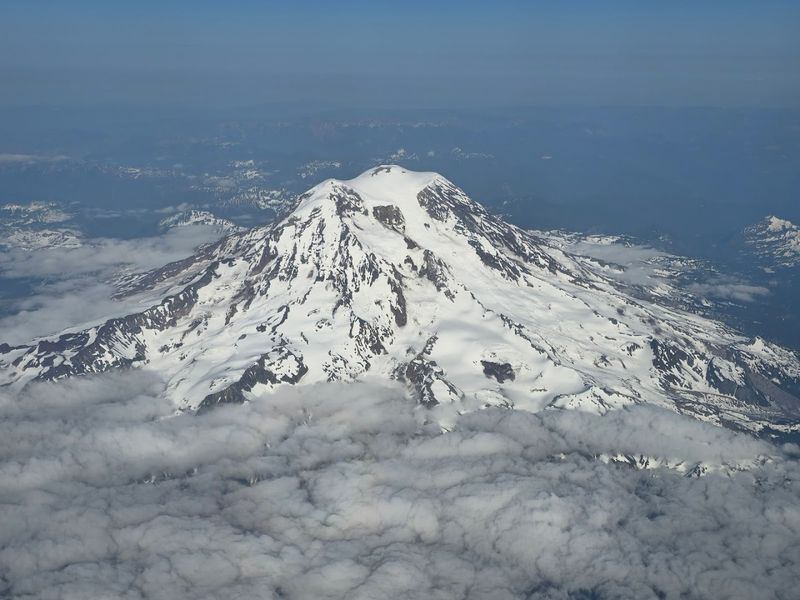
On a clear day in Seattle, Mount Rainier appears on the horizon like a floating white island in the sky — so massive and so perfectly shaped that it almost does not look real. Standing at 14,411 feet, it is the tallest peak in the Cascade Range and one of the most heavily glaciated mountains in the contiguous United States.
Its 25 major glaciers hold more snow and ice than all other Cascades peaks combined.
Summer at Paradise — yes, that is actually the name of a famous area in the park — is one of Washington’s most spectacular seasonal events. Sub-alpine wildflower meadows explode into color, with lupine, paintbrush, and avalanche lilies covering the hillsides in waves of purple, red, and white.
The views of the summit from those meadows are absolutely postcard-worthy.
Mount Rainier is also considered one of the most dangerous volcanoes in the world due to its size, proximity to major cities, and the massive lahars — volcanic mudflows — that would result from an eruption. Scientists monitor it constantly.
Despite that slightly sobering fact, the mountain draws over two million visitors each year who come for the hiking, climbing, snowshoeing, and scenery. The danger somehow makes it feel even more magnificent.
Death Valley — California/Nevada
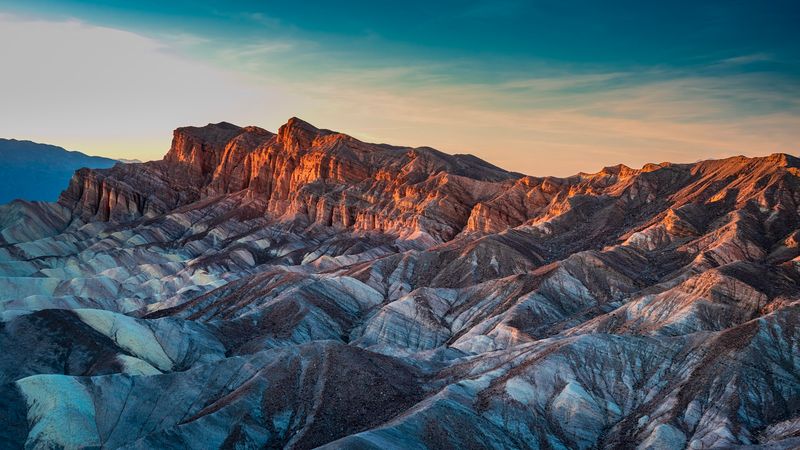
Death Valley holds the record for the hottest air temperature ever reliably recorded on Earth — 134 degrees Fahrenheit in July 1913. That fact alone makes most people want to visit from a very safe, air-conditioned distance.
But there is something undeniably magnetic about a place this extreme, and the landscapes here are far more varied and visually stunning than the name might suggest.
Badwater Basin sits at 282 feet below sea level, making it the lowest point in North America. The salt flat there stretches for miles, its cracked white surface creating geometric patterns that look like nature’s own mosaic tile work.
Mesquite Flat Sand Dunes, Zabriskie Point, and Artists Palette — a hillside streaked with purple, pink, and green minerals — all add to the valley’s surprising visual range.
Winter and spring are the ideal seasons to visit. Temperatures drop to comfortable levels, and in rare wet years, the valley floor explodes with wildflowers in what locals call a super bloom.
Stargazing is exceptional here thanks to the remote location and minimal light pollution. Death Valley is one of those places where the harshness and the beauty are completely inseparable — and that tension is exactly what makes it unforgettable.
Monument Valley — Arizona/Utah
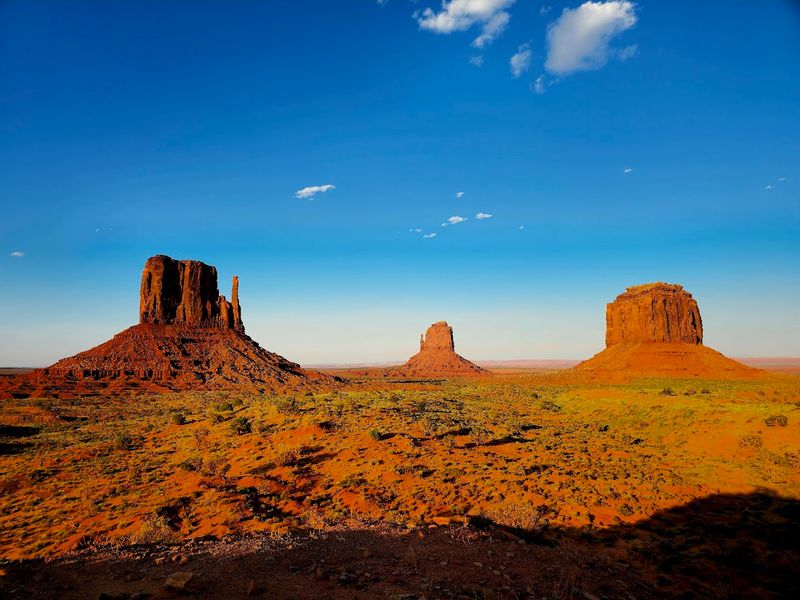
If a landscape could have a film career, Monument Valley would be a Hollywood legend. John Ford used these iconic red rock formations as the backdrop for countless classic Westerns, and the valley has appeared in everything from Forrest Gump to countless car commercials.
The Mittens, two symmetrical buttes with thin rock spires resembling thumbs, are among the most photographed formations in the American West.
The valley sits within the Navajo Nation Tribal Park, and visiting means entering sovereign Navajo land. Guided tours led by Navajo locals offer a richer, more culturally meaningful experience than simply driving through.
The guides share stories, history, and perspectives that no guidebook can fully capture. Respecting the land and its people is not just encouraged — it is essential.
The formations are sandstone buttes and mesas left behind after millions of years of erosion stripped away the surrounding rock. They rise up to 1,000 feet from the valley floor, turning deep shades of red and orange as the sun moves across the sky.
Sunrise and sunset are the golden hours here — literally. The light transforms the formations into something that looks almost too dramatic to be natural.
Camping under the stars here is an experience that stays with you for a very long time.



