Ireland has a way of making you feel like you accidentally walked onto a film set. The landscapes here are so dramatic, so wildly beautiful, that even a cloudy Tuesday can feel like a scene worth remembering.
From towering sea cliffs to ancient glacial valleys, the country packs an almost unfair amount of natural wonder into one small island. Whether you are planning your first trip or your fifth, these 15 places will make Ireland feel every bit as spectacular as you hoped.
Cliffs of Moher, County Clare
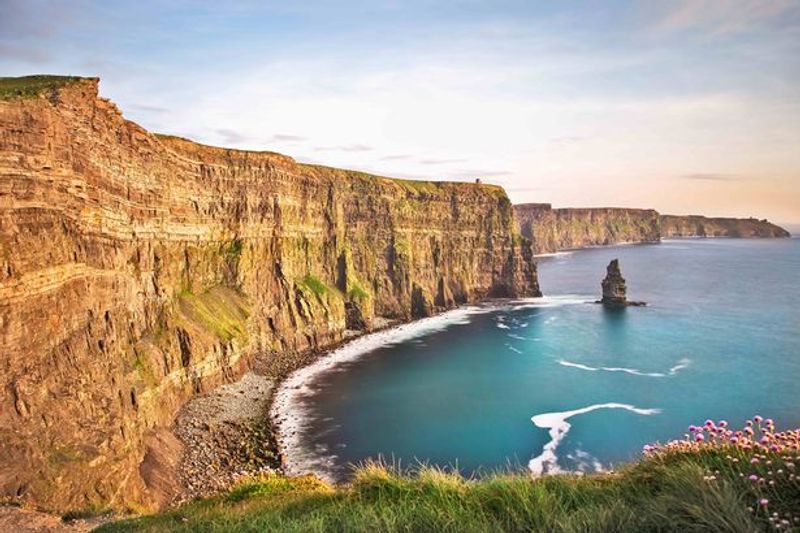
Standing at the edge of the Cliffs of Moher feels less like sightseeing and more like staring into the opening credits of an epic film. The sheer rock walls rise straight out of the Atlantic, and the ocean below looks impossibly far down.
It is one of those places where every photo you take looks professionally edited.
The scale is what gets you. The cliffs stretch for about 8 km along the Clare coastline, and the light changes constantly, giving the whole scene a theatrical quality.
Atlantic winds can shift fast, so always check conditions before heading out.
The official visitor experience is open year-round, with closures only on December 24, 25, and 26. Stay behind the barriers, wear layers, and bring a camera with good storage.
You will use every single gigabyte.
Giant’s Causeway, County Antrim
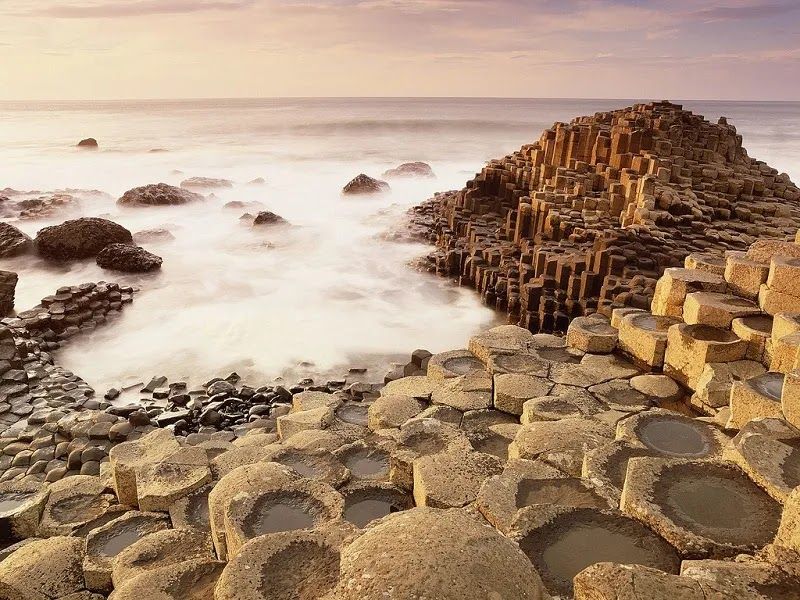
About 60 million years ago, a volcanic eruption cooled so perfectly that it left behind roughly 40,000 hexagonal basalt columns. The result looks less like geology and more like a floor designed by a very ambitious architect.
Honestly, nature was showing off.
The columns sit at the foot of dramatic cliffs along the Antrim coast, and waves roll through the dark rock in a way that feels genuinely mythical. The UNESCO World Heritage Site status is well earned.
Walking across the stones, you half expect a giant to appear and ask for directions.
Pedestrian access to the stones is free, which is a rare win. The visitor centre and parking come with charges, so plan accordingly.
This is one of those stops that works in any weather, though moody skies honestly make it look even better.
Sliabh Liag, County Donegal
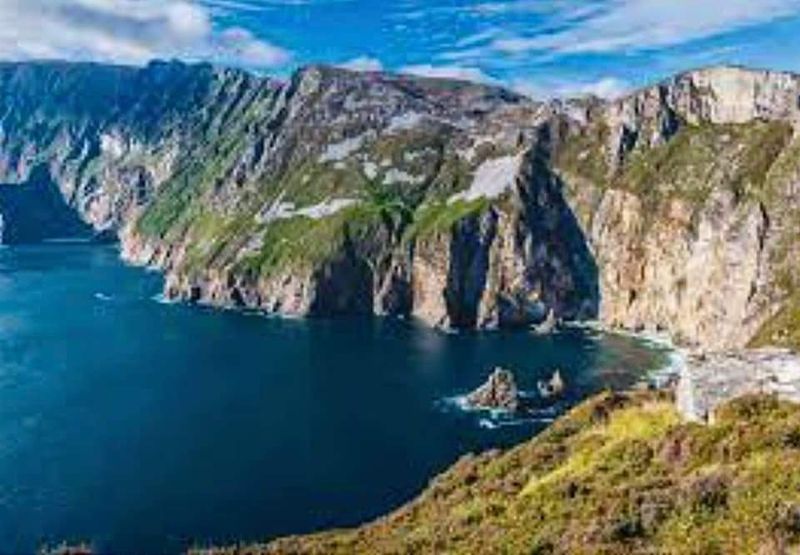
Sliabh Liag does not get the same fame as the Cliffs of Moher, and honestly, that works in your favor. The cliffs here are among the highest sea cliffs in Europe, and the crowds are much thinner.
Sometimes being second on the list means you get the place almost to yourself.
The road in feels rugged and remote in the best way. Once you reach the viewpoint, you get sweeping views over the Atlantic, the Sligo Mountains, and Donegal Bay all at once.
Photographs genuinely struggle to capture the scale.
Discover Ireland lists the visitor centre and cliff experience as fully operational. Wear proper footwear because the terrain is uneven and the wind has strong opinions about where you should stand.
Donegal has a habit of making visitors question why they did not come sooner.
The Burren, County Clare
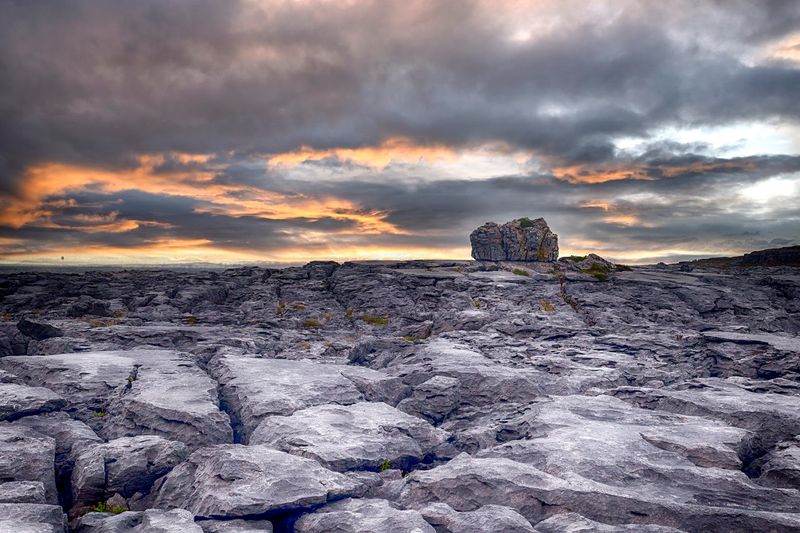
The Burren looks like Ireland forgot to put the grass down. Pale limestone stretches across the landscape in cracked slabs, ancient and almost lunar, with wildflowers somehow thriving in the gaps between rocks.
It is the kind of place that makes you stop and wonder how anything grows there at all.
The quiet drama here is different from the coast. There are no crashing waves or towering cliffs, just this vast, strange, prehistoric-feeling terrain that has been sitting here for millions of years.
Rare plants like spring gentian bloom between the stones, making the whole thing feel like a secret garden nobody told anyone about.
The wider area includes Burren National Park and a UNESCO Global Geopark. It rewards slow exploration.
Bring good walking shoes, take your time, and resist the urge to rush. The Burren is not a place that rewards hurrying.
Killarney National Park, County Kerry
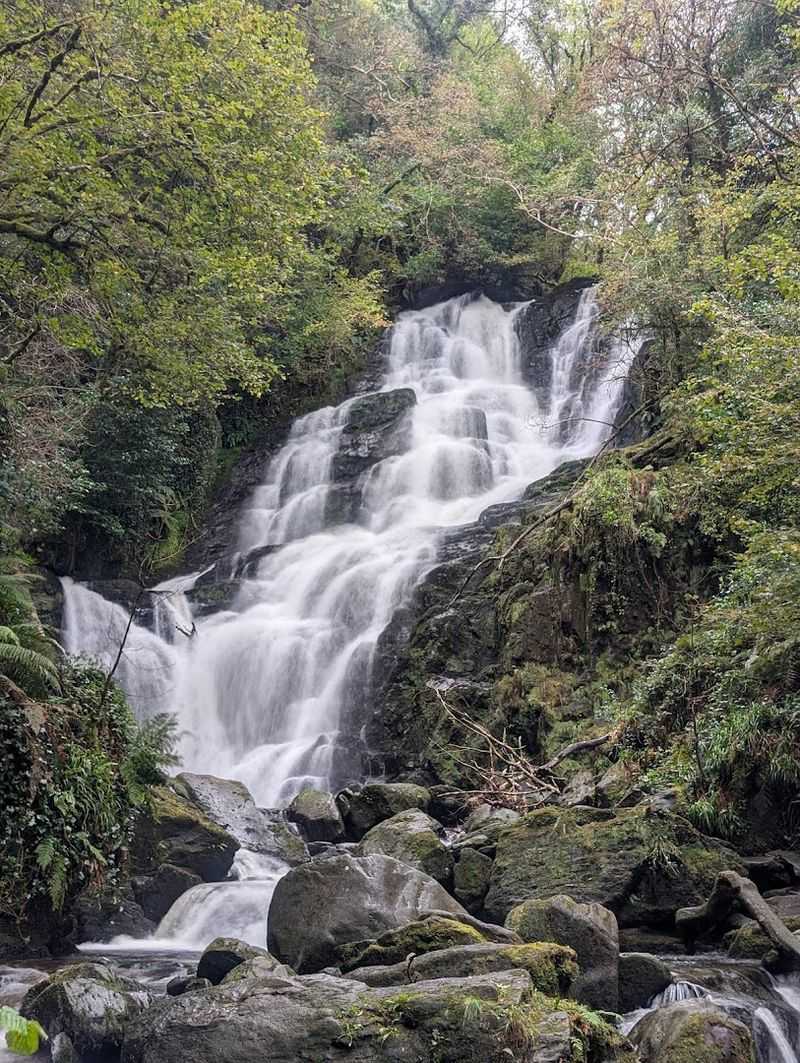
Killarney National Park is the kind of place that makes you feel slightly smug for being there. Over 10,000 hectares of lakes, mountains, native oak woods, and open scenery spread out in every direction, and red deer wander through it all like they own the place.
They basically do.
The Lakes of Killarney add a whole extra layer of beauty. Lough Leane, Muckross Lake, wooded islands, and mountain reflections on the water make even a short walk feel like a scene from a period drama.
Kerry light has a way of making everything look golden.
Walking routes range from easy lakeside paths to longer mountain trails, so there is something for every level. The park is free to enter, which feels almost too generous.
Spend at least a full day here. Half a day will leave you wishing you had planned better.
Torc Waterfall and Muckross Lake, County Kerry
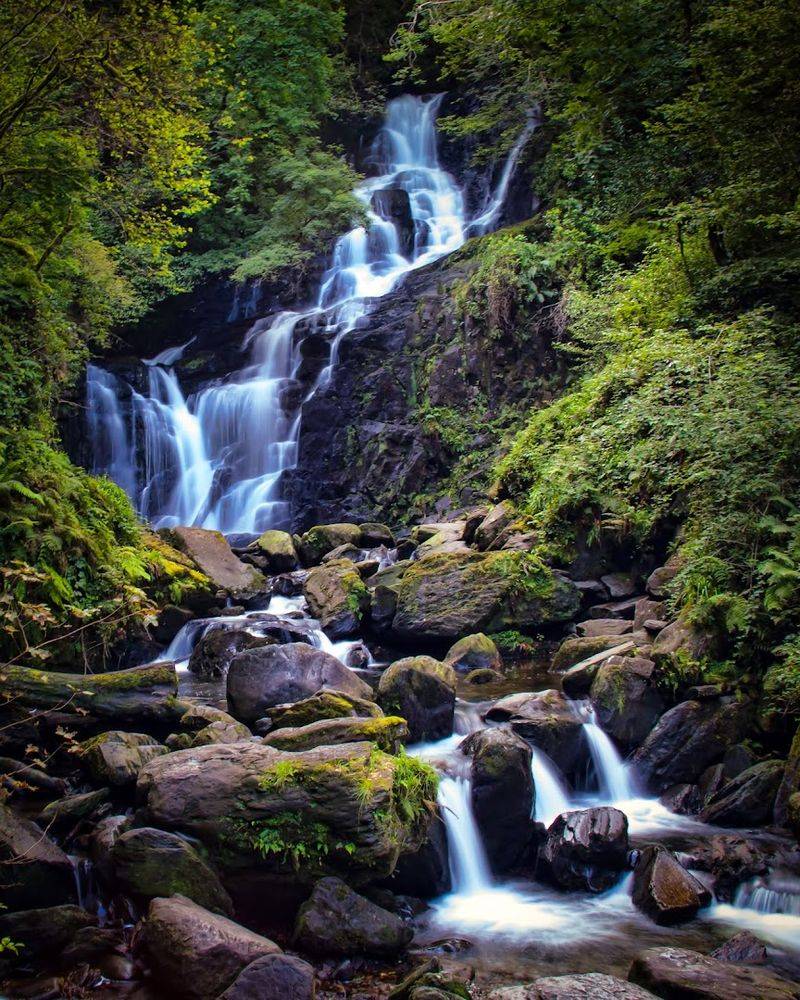
Torc Waterfall has a theatrical flair that feels almost unfair. The Owengarriff River drops dramatically into Muckross Lake through a mossy, wooded setting that looks like it was designed specifically for a fantasy film.
I half expected a wizard to walk out from behind a tree.
The walk to the waterfall from the main road takes about 10 minutes, which makes it one of the most rewarding short detours in Kerry. The surrounding woodland is dense and green, and the sound of the rushing water carries before you even see it.
Layers work here because the forest keeps things cool even in summer.
Adding Torc to a Muckross Lake loop makes for a satisfying half-day walk without needing serious hiking gear. It is beautiful in every season, but autumn turns the surrounding trees into something genuinely spectacular.
Pack a raincoat just in case.
Glendalough, County Wicklow
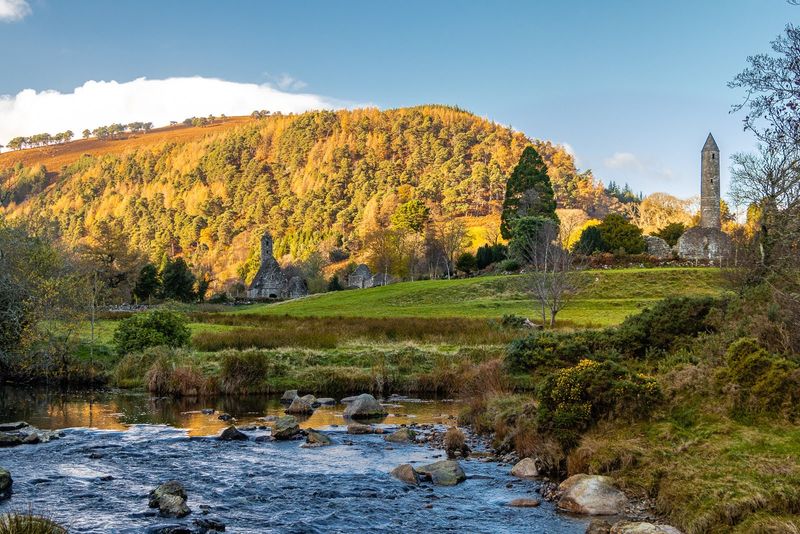
Glendalough translates as Valley of Two Lakes, which is accurate but undersells it considerably. You also get ancient monastic ruins, mountain trails, dense woodland, and the kind of moody mist that makes everything look like a historical epic.
The round tower alone is worth the trip.
The valley was carved by glaciers thousands of years ago, and it shows. The shape of the hills, the position of the lakes, and the way the light moves through the valley in the morning all feel deliberate, like the landscape was arranged rather than formed.
Spinc Ridge offers elevated views that properly show off the whole scene.
The visitor centre is open and well set up for first-timers. Short looped walks suit families, while longer ridge trails reward those who want a real workout.
Arrive early on weekends to beat the crowds, especially during summer months.
Wicklow Mountains National Park, County Wicklow
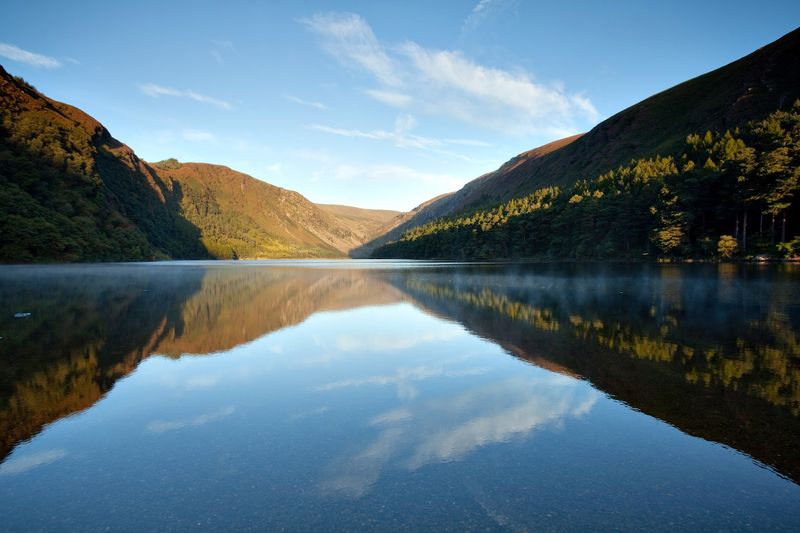
Just over an hour from Dublin, the Wicklow Mountains feel like a different world entirely. More than 20,000 hectares of open uplands, heather moorland, glacial lakes, and forested valleys sit waiting while the city carries on behind you.
The transition is almost comically fast.
The scenery here has that particular Irish quality of looking slightly unreal, especially under a dramatic sky. Wide open roads cut through the hills, the valleys dip and rise in all directions, and the whole landscape has a cinematic softness that photographers chase from dawn to dusk.
Military Road, which runs through the heart of the park, is one of the great drives in the country.
Trails range from gentle riverside strolls to serious hill walks, so the park works for most fitness levels. Waterproof layers are non-negotiable up here.
The weather changes faster than your plans, and the mountains always win that argument.
Connemara National Park and Diamond Hill, County Galway
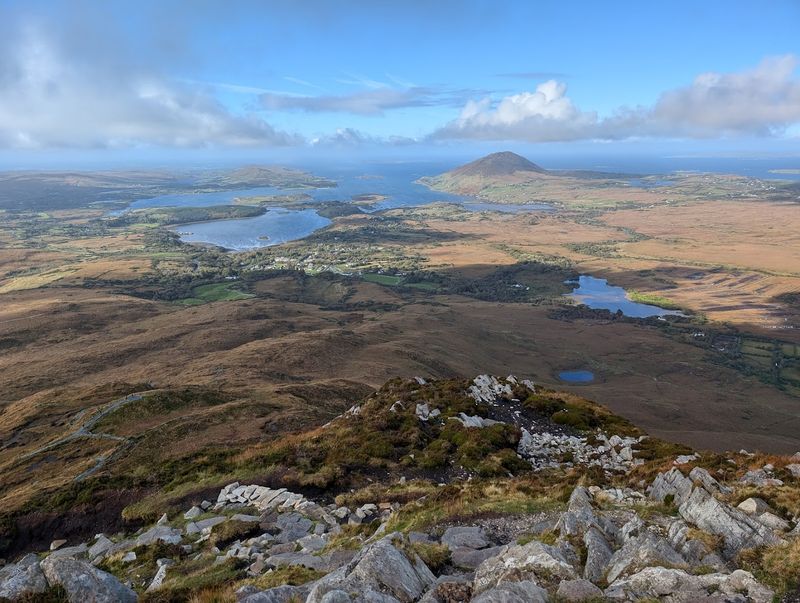
Connemara National Park covers around 3,000 hectares of bogs, grasslands, woodlands, and mountain terrain, and it somehow manages to look completely different from every angle. The Twelve Bens sit in the background of almost every view, jagged and dramatic, like mountains that take themselves very seriously.
Diamond Hill is the standout hike. The 6.2 km loop climbs to a 400 m summit and delivers views toward Inishturk, Inishbofin, Ballynakill Harbour, and the Tully Mountains on a clear day.
That is a lot of Ireland in one eyeful. The path is well marked and manageable for most reasonably fit walkers.
The park visitor centre is a good starting point with maps and trail information. Start early to get the summit to yourself for at least a few minutes.
Wind picks up quickly at the top, so bring an extra layer even when the lower path feels warm.
Keem Bay, Achill Island, County Mayo
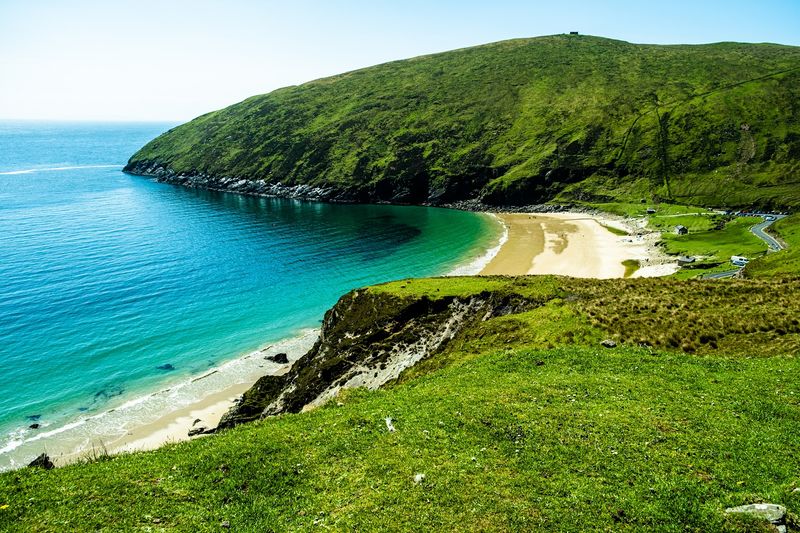
Keem Bay looks photoshopped. A crescent of sand sits tucked between Benmore cliffs and Croaghaun Mountain on Achill Island, with Atlantic water that turns genuinely turquoise on a bright day.
The first time I drove down the cliff road toward it, I genuinely pulled over just to stare.
The road down to the bay is part of the experience. It winds along the cliff edge with views that keep getting better, and arriving at the beach after that drive feels like a proper reward.
The bay is sheltered enough to swim in during summer, though the Atlantic temperature will test your commitment.
Achill Island is connected to the mainland by a bridge, so no ferries are needed. Take care near the cliff edges around the bay because the drops are serious and the ground can be uneven.
Beautiful places deserve a little caution.
Croagh Patrick, County Mayo
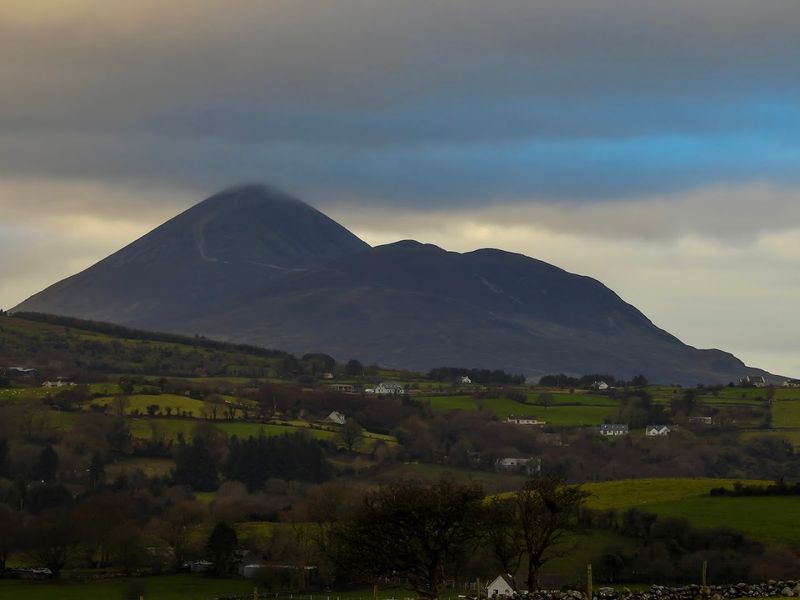
Croagh Patrick has presence. The 765 m quartzite peak rises above Clew Bay near Westport in a near-perfect cone shape, and it commands the landscape in a way that makes you notice it from miles away.
It has been a pilgrimage site since at least the 5th century, linked to St Patrick himself.
Whether you climb it or simply pull over on the road below and stare, the mountain delivers. The summit views over Clew Bay and its hundreds of islands are genuinely spectacular on a clear day.
The upper section is steep and rocky, so proper hiking boots are essential rather than optional.
Check the weather forecast before heading up because conditions on the summit can shift quickly. The traditional barefoot pilgrimage on Reek Sunday in late July draws thousands of climbers.
For everyone else, any dry day with good visibility is worth the effort.
Downpatrick Head and Dún Briste, County Mayo
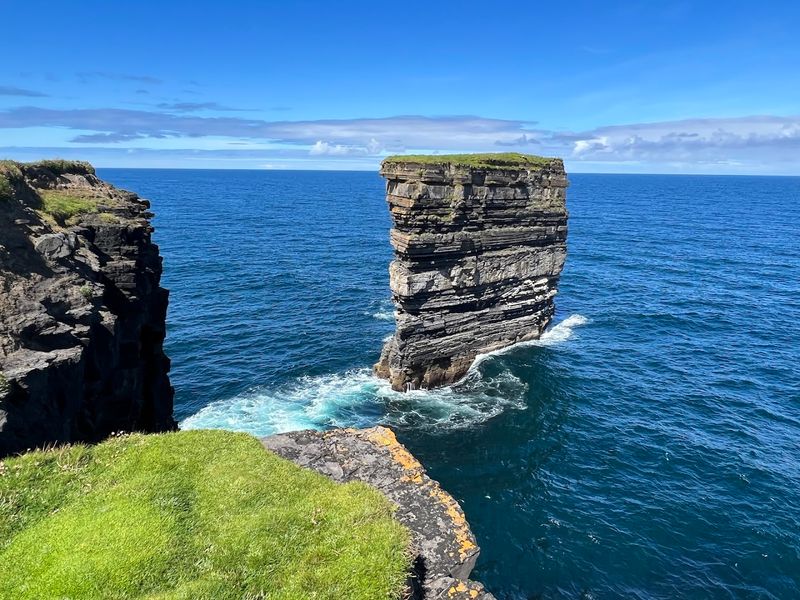
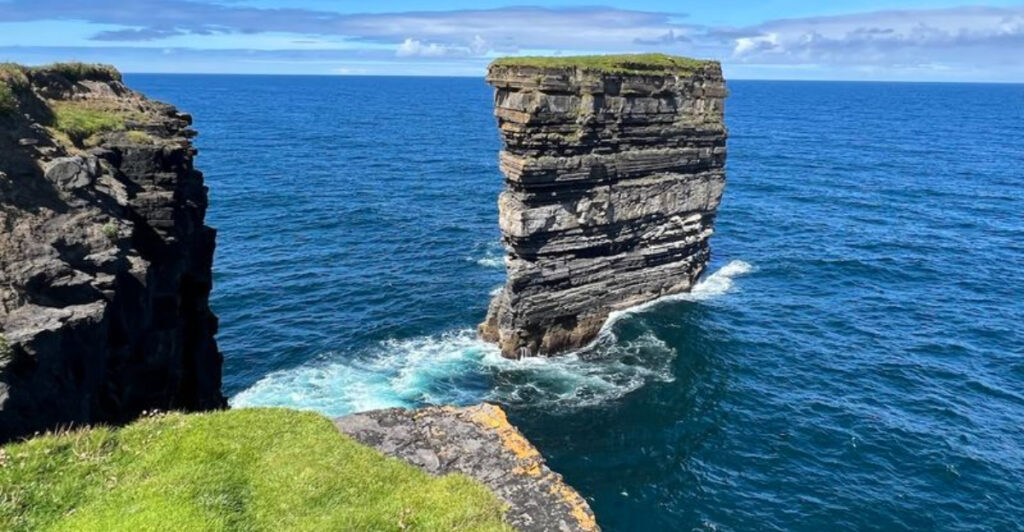
Dún Briste is the kind of geological feature that makes you reconsider what rock is capable of. This sea stack broke away from the mainland cliffs centuries ago and has been standing alone in the Atlantic ever since, completely vertical, completely defiant, and completely photogenic.
Downpatrick Head sits about 5 km north of Ballycastle village and delivers sweeping coastal views that include the Staggs of Broadhaven alongside the famous stack. The clifftop is wide and grassy, and the whole scene has a raw, end-of-the-world quality that makes it one of Mayo’s most underrated coastal stops.
This is not a heavily commercialized attraction, which is a big part of its appeal. The views are wide, the skies tend toward dramatic, and the wind arrives with genuine enthusiasm.
Stay well back from cliff edges because the drops here are serious. Big skies and big waves reward the careful visitor.
Glenveagh National Park, County Donegal
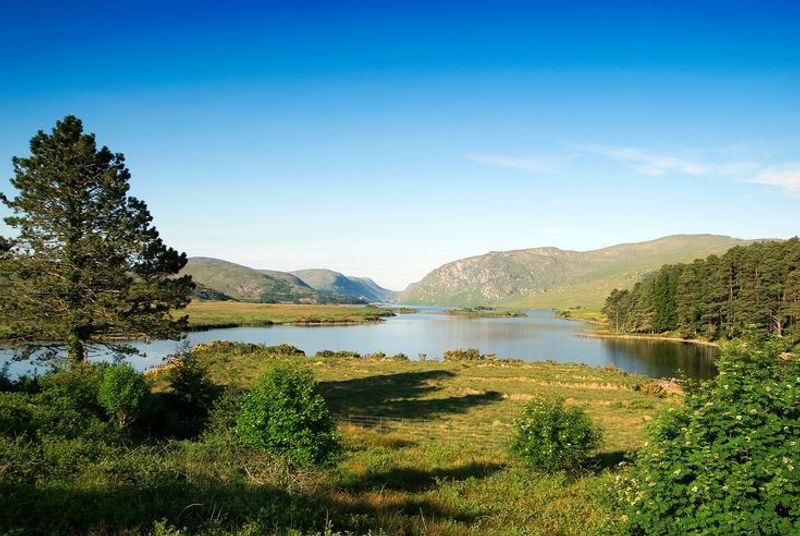
Glenveagh is what happens when mountains, lakes, native woodland, and a castle all agree to share the same postcode. The most northerly of Ireland’s six national parks covers a vast, wild stretch of Donegal that feels genuinely remote even on a busy day.
The castle sitting on the lakeshore is a very pleasant bonus.
Lough Beagh runs through the heart of the park and gives the whole landscape a calm, reflective quality that balances the surrounding wildness. The native oak woodland along the valley adds texture and color, especially in autumn when the whole place turns amber and gold.
Discover Ireland describes it as one of the most magical places in Donegal, which is high praise in a county that is already full of strong contenders. The park is free to enter, and walking routes vary in length and difficulty.
Red deer roam freely throughout, and spotting them is almost guaranteed.
Powerscourt Waterfall, County Wicklow
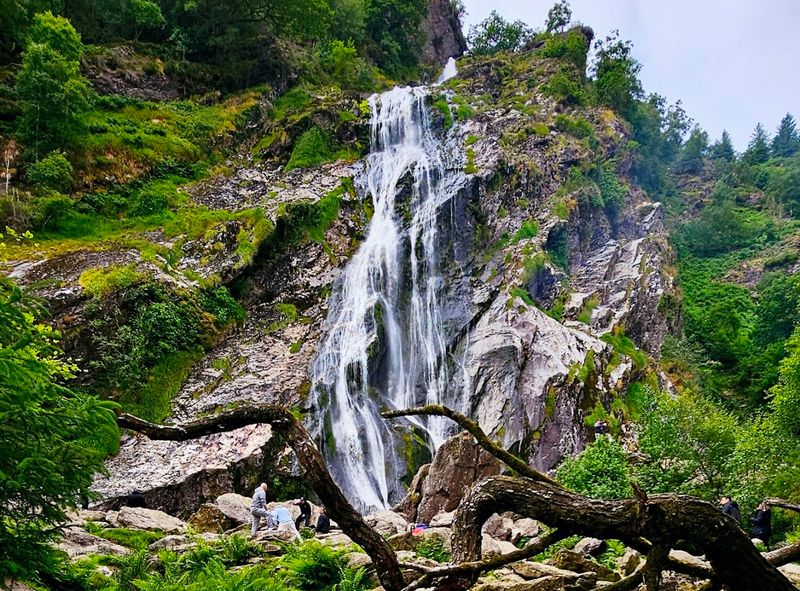
At 121 m, Powerscourt Waterfall is the tallest in Ireland, and it does not waste the title. The water drops in a single dramatic cascade into a rocky pool below, surrounded by beech, oak, larch, pine, and giant redwoods that frame the whole scene like a natural amphitheater.
It has been pulling in visitors for over 200 years, and the appeal has not faded.
The setting is what makes it feel cinematic. The woodland is dense and varied, the sound of the fall carries through the trees before you see it, and the mountain backdrop adds scale.
On a sunny day, light filters through the canopy and hits the water in a way that feels genuinely theatrical.
Powerscourt Waterfall has its own opening hours as part of a managed attraction, so check the official website before visiting. It sits near Enniskerry in the Wicklow foothills, making it an easy day trip from Dublin.
Slea Head, Dingle Peninsula, County Kerry
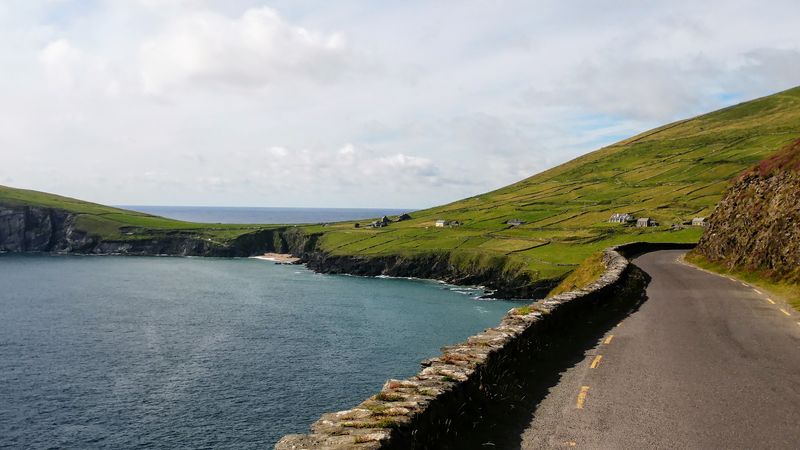
Slea Head is where the Dingle Peninsula runs out of land and decides to be spectacular about it. The roughly 48 km drive loops around the westernmost tip of the peninsula, delivering cliffs, beaches, ancient stone structures, small villages, and Atlantic island views in a near-constant sequence.
It is the closest thing Ireland has to a highlight reel in road trip form.
The Blasket Islands sit offshore and look like something from another era entirely. On clear days, the islands appear close enough to swim to, though the Atlantic has strong feelings about that idea.
The route passes through some of the finest Irish-speaking areas in the country.
No car? Cycling the route is genuinely popular, and guided bus options also exist for those who prefer to let someone else handle the winding roads.
Start early to catch the morning light on the cliffs. Kerry sunsets over the Atlantic at Slea Head are completely worth staying for.
Share this story