Portugal is small on the map but absolutely massive when it comes to natural beauty. From volcanic crater lakes in the Azores to golden sea caves in the Algarve, the country packs an almost unfair amount of stunning scenery into one place.
I still remember standing at the edge of a cliff in Lagos, wondering if the view in front of me was real or a screensaver. Whether you love mountains, oceans, caves, or forests, Portugal has a natural wonder with your name on it.
Berlengas Archipelago
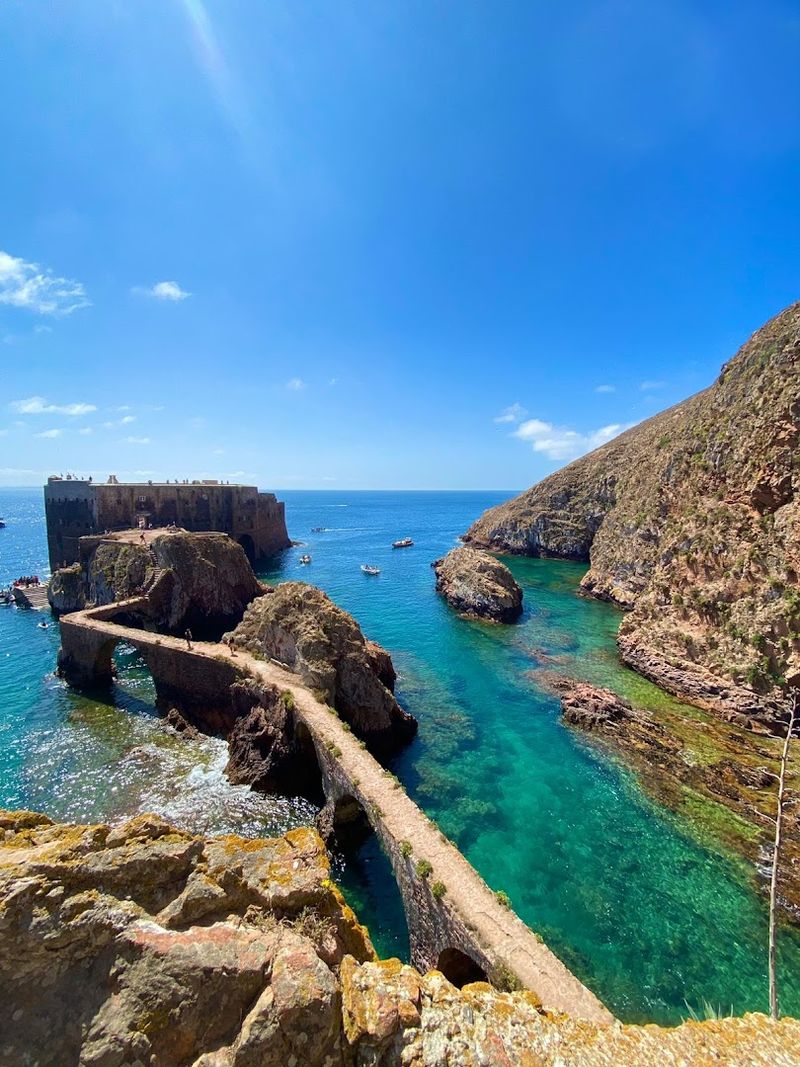
Ten kilometers off the coast of Peniche sits a place that feels like it forgot to stay connected to the mainland. The Berlengas Archipelago is a protected natural reserve surrounded by clear Atlantic water, dramatic cliffs, and more seabirds than you can count.
The Fort of Sao Joao Baptista looks like it was built by someone who wanted a castle but ran out of land.
The main island, Berlenga Grande, offers walking trails, small beaches, and boat trips through the sea caves. Because it is a nature reserve, the crowds stay manageable and the wildlife stays wild.
That combination is increasingly rare in popular tourist spots.
Boats run from Peniche mostly in warmer months, and the Atlantic can get choppy. Plan ahead, check the weather, and pick a calm day.
When conditions cooperate, the Berlengas deliver one of the most genuinely remote-feeling island experiences in all of Portugal.
Benagil Cave, Algarve
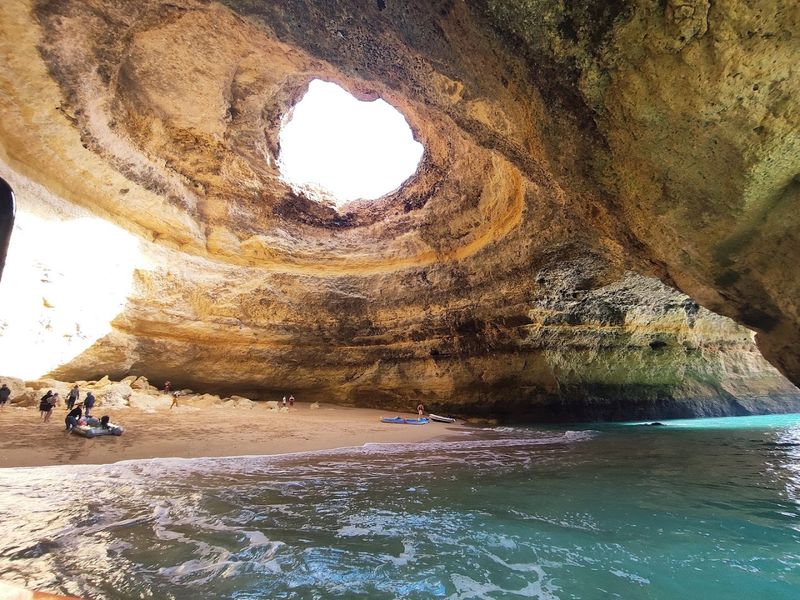
Benagil Cave has appeared on so many travel feeds that people sometimes assume the photos are edited. They are not.
The cave is genuinely that dramatic: a domed golden ceiling, a natural skylight punching through the rock, and two sea-facing openings that flood the interior with light.
Getting there is the tricky part. Swimming to the cave is not allowed, and boats cannot land on the sand inside.
Licensed kayak, paddleboard, or boat tours are the responsible way to visit, and the rules exist for good reasons. Overcrowding and safety concerns led to the current regulations.
Even with restrictions, Benagil is absolutely worth it. The surrounding Algarve coastline is spectacular on its own, with arches, hidden coves, and turquoise water that make the whole trip feel worthwhile.
Think of the cave as the headline act and the coastline as a supporting cast that nearly steals the show.
Praia da Marinha, Algarve
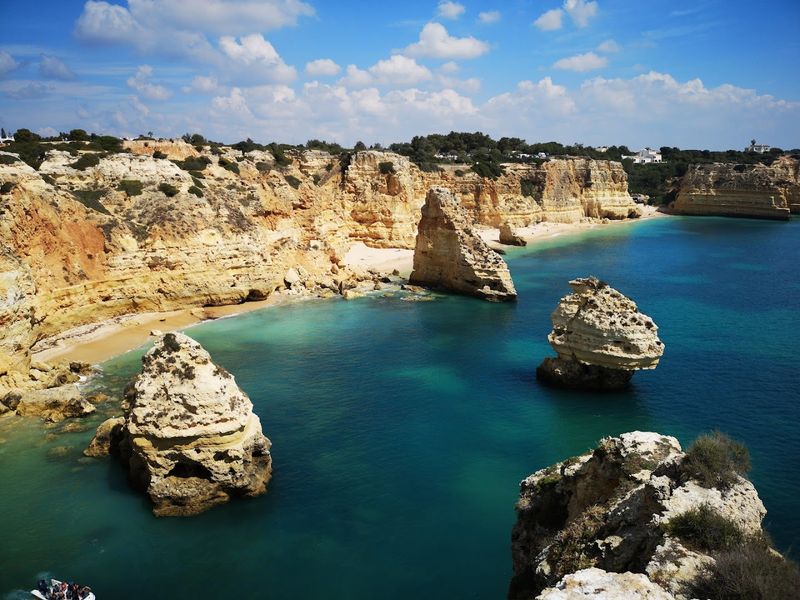
Praia da Marinha is what happens when millions of years of erosion decide to show off. The honey-colored cliffs, natural arches, and sea stacks here are so perfectly sculpted that the beach looks more like a geology museum than a swimming spot.
The water below them glows in a shade of blue-green that no filter could improve.
The view from the clifftops above the beach is genuinely jaw-dropping. From up there, you can trace the full shape of the coastline and understand how wind and water carved it into something this theatrical.
The famous heart-shaped rock view has made this stretch a photographer magnet, but the whole area earns the attention.
Getting down to the sand requires a long staircase, so pack comfortable shoes and a little patience. The effort pays off completely.
For one of the most iconic natural scenes in southern Portugal, Praia da Marinha is hard to argue with.
Ponta da Piedade, Lagos
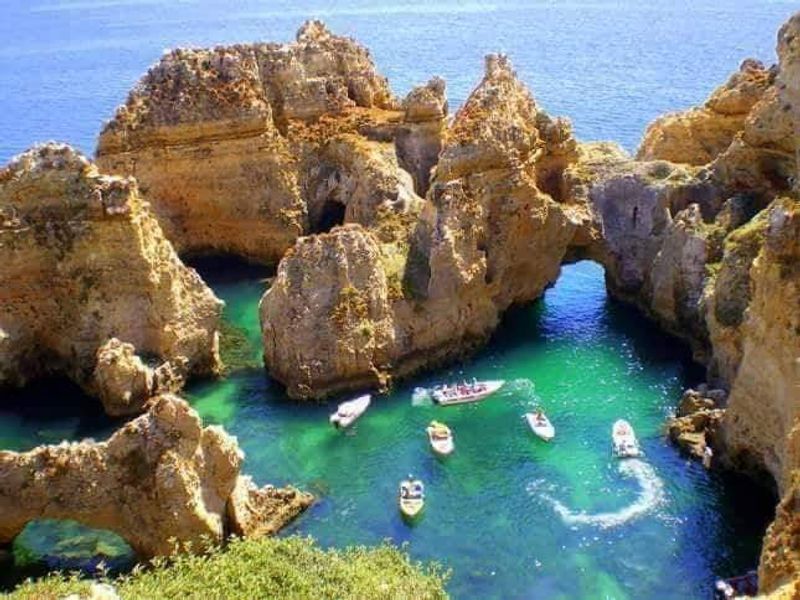
Ponta da Piedade is the Algarve’s most theatrical stretch of coastline, and it knows it. Golden cliffs, sea pillars, grottoes, arches, and hidden coves crowd together near Lagos in a formation so dramatic it almost feels staged.
The rock turns warm shades of orange and amber when the light hits it right.
Clifftop paths offer great views, but the classic experience is from the water. Small boat trips weave through narrow passages and into caves that are simply invisible from above.
The color contrast between the warm rock and the deep blue-green sea below is one of those sights that stays with you.
Morning and late afternoon are the best times to visit. The light softens, the crowds thin, and the whole place takes on a different mood.
Whether you see it from above or from a boat, Ponta da Piedade is one of those places that makes you question why you ever go anywhere else.
Ria Formosa Natural Park, Algarve
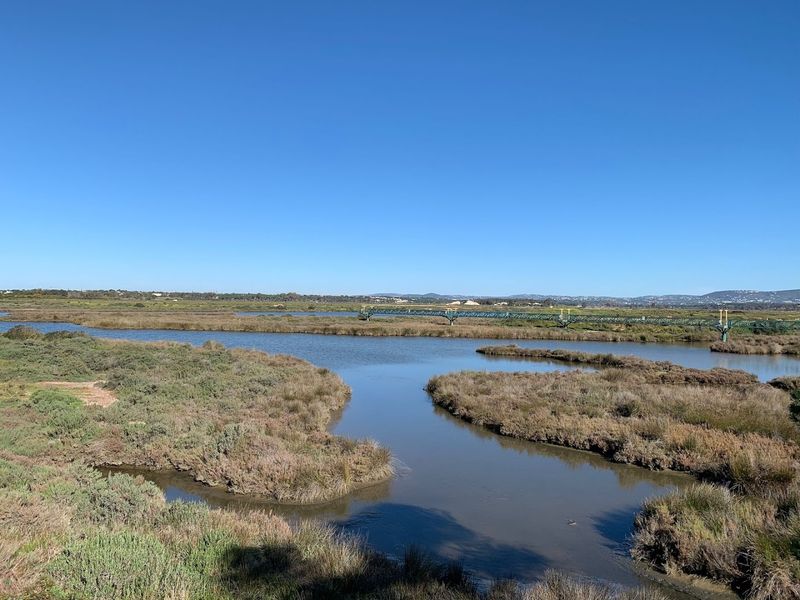
Not every natural wonder needs to hit you over the head with drama. Ria Formosa is the Algarve’s quieter masterpiece: 60 kilometers of channels, lagoons, marshes, sandbanks, and barrier islands that change with every tide.
It is the kind of place where slowing down is not a suggestion but a requirement.
This protected wetland is one of Portugal’s most important wildlife areas, particularly for birds. Flamingos, herons, and migratory species pass through regularly, making it a solid destination for birdwatchers and anyone who appreciates a landscape that feels genuinely alive.
Boat trips through the channels are the most popular way to explore.
The beauty here is subtle rather than showy. Light shifts across the water, birds lift from the marshes in groups, and the sea and land seem to negotiate their boundaries with every passing hour.
For travelers who find peace in wide, quiet landscapes, Ria Formosa is one of southern Portugal’s richest rewards.
Peneda-Gerês National Park
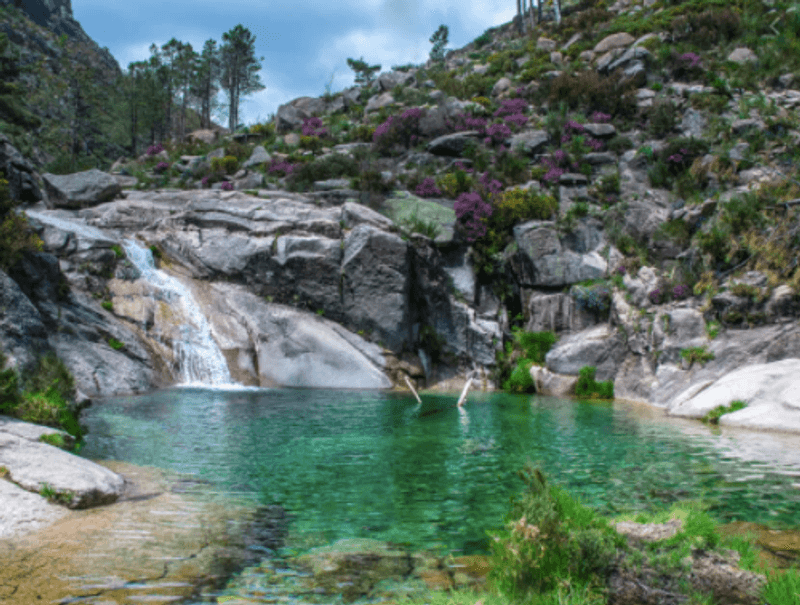
Portugal’s only national park is hiding in the far north, and it is keeping some excellent secrets. Peneda-Geres is a world of granite mountains, ancient oak forests, cascading waterfalls, wild horses, and stone villages that look like they stopped updating their aesthetic sometime in the medieval period.
In the best possible way.
Hikers come for trails like Tahiti Waterfall and routes around Pedra Bela viewpoint, but the real draw is the overall atmosphere. This is Portugal without the beach postcards: green, rugged, and wonderfully uncrowded.
The combination of wild scenery and traditional mountain life gives the park a character that is genuinely hard to find elsewhere.
Freshwater swimming spots are scattered throughout the park, and the villages of Soajo and Lindoso are worth a slow wander. For travelers who want to swap sunscreen for hiking boots and trade the coast for cool mountain air, Peneda-Geres delivers every single time.
Lagoa das Sete Cidades, São Miguel, Azores
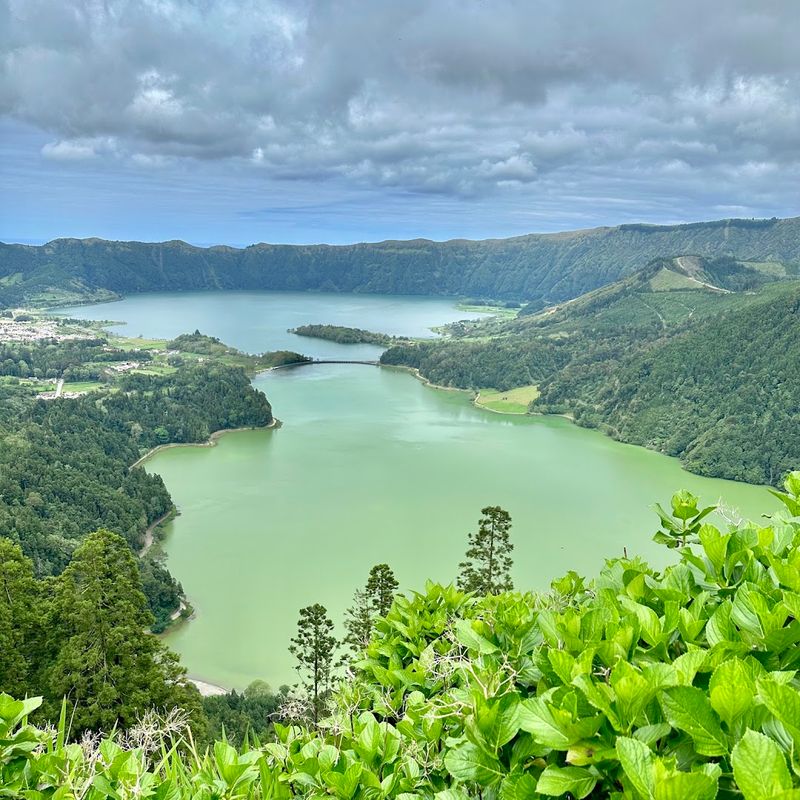
There is a local legend that says the two lakes of Sete Cidades got their colors from the tears of a princess and a shepherd: one blue, one green. Scientists have a different explanation, but the legend is more fun.
Either way, standing at Vista do Rei and looking down into this massive volcanic crater is one of those moments that stops conversation completely.
On a clear day, the scene is almost surreal: steep green walls, calm twin lakes, rolling clouds, and a tiny village tucked into the crater floor like a toy town. On a misty day, the crater fills with fog and the whole thing becomes moody and cinematic in a completely different way.
Sete Cidades rewards more than a quick viewpoint stop. Walking trails around the crater rim and lakeside paths let you explore from different angles.
Getting down into the village to look back up at the crater walls is an experience worth the extra effort.
Lagoa do Fogo, São Miguel, Azores
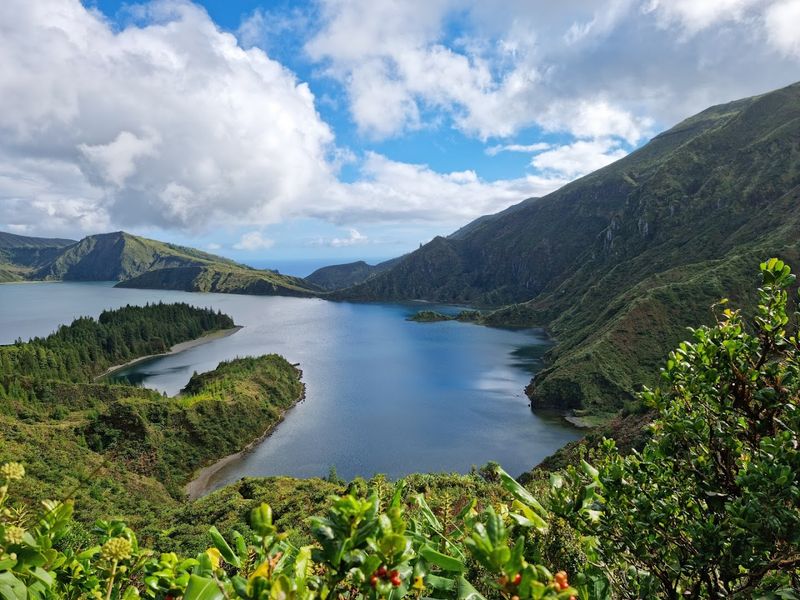
Lagoa do Fogo translates to Lake of Fire, which is an excellent name for a lake that sits inside an ancient volcanic crater high in the mountains of Sao Miguel. The drama of the name is matched by the landscape: steep slopes, protected scenery, and a lake that appears and disappears depending on what the clouds feel like doing that day.
Unlike Sete Cidades, there is no village sitting beside it. That absence gives Lagoa do Fogo a wilder, less settled quality.
Mist rolls over the ridges without warning, and the mood can flip from mysterious to breathtaking in minutes. Patience is genuinely useful here.
For travelers who love landscapes with personality, this lake has plenty. The volcanic character of the Azores feels most concentrated at places like this: raw, unpredictable, and completely indifferent to your schedule.
Show up, wait for a cloud gap, and let the lake reveal itself on its own terms.
Algar do Carvão, Terceira, Azores
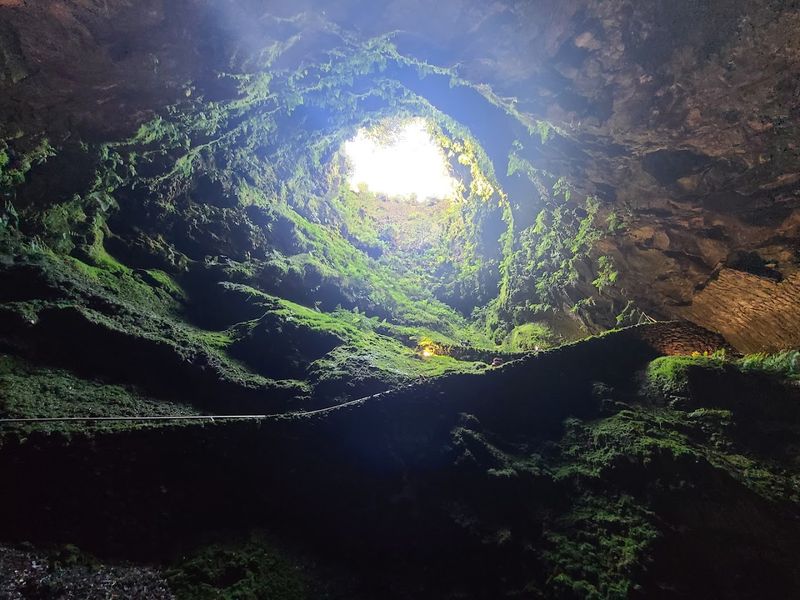
Most caves form slowly through limestone and water. Algar do Carvao skipped that process entirely and went straight to being a volcanic chimney.
Located on Terceira Island, this ancient lava tube lets visitors descend into the Earth’s interior and stand inside a space that once channeled molten rock. That fact alone makes it worth the trip.
The interior is green, damp, and genuinely otherworldly. Mossy walls, volcanic rock formations, and an underground lagoon create an atmosphere that is hard to compare to anything else.
Natural light filters through the opening above, giving the upper section a cathedral-like glow before the deeper sections turn darker and stranger.
Opening hours can be limited and have changed after construction-related closures, so checking the official schedule before visiting is essential. When it is accessible, Algar do Carvao is one of the most memorable underground experiences in the Azores.
Nothing else on the island quite prepares you for it.
Grutas de Mira de Aire
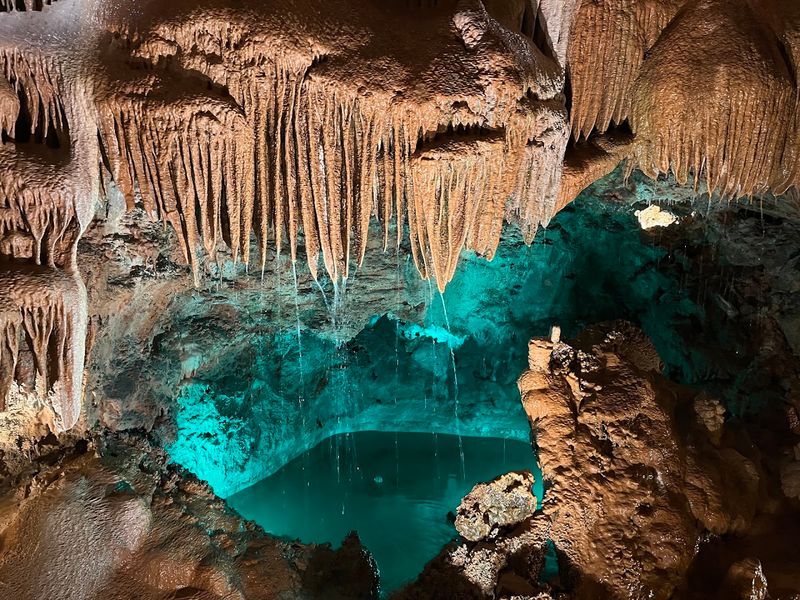
Discovered in 1947 by workers who were probably not expecting their day to go quite like that, the Mira de Aire Caves turned out to be one of mainland Portugal’s most spectacular underground surprises. The cave system descends deep below the surface, and the formations inside have been growing for around 150 million years.
That is a geological timeline that makes human history feel like a footnote.
Walking through the chambers feels like moving through a natural sculpture gallery. Stalactites hang from above, stalagmites push up from below, and the lighting installed throughout the cave highlights the formations in ways that make the whole thing feel theatrical without being tacky.
The caves are well developed for visitors, with safe walkways and guided routes. For families or travelers who want an accessible underground experience on the mainland, Mira de Aire is one of the strongest options going.
The scale of the formations alone makes it genuinely hard to forget.
Ponta de São Lourenço, Madeira
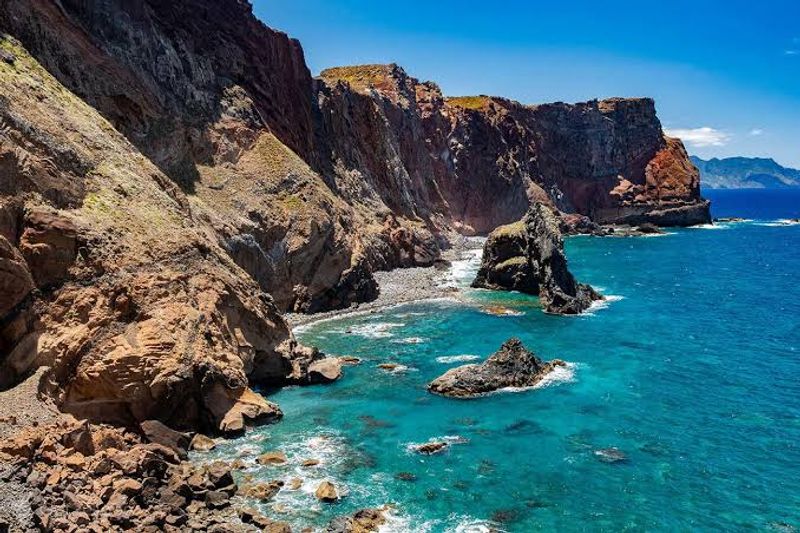
Madeira has a reputation for lush green forests and misty levada walks, which makes the eastern tip of the island feel like a plot twist. Ponta de Sao Lourenco is dry, windswept, volcanic, and rust-colored, with sharp cliffs dropping straight into deep blue Atlantic water.
It looks like it belongs on a completely different island.
The hiking trail here is one of Madeira’s most rewarding. It follows the spine of the peninsula with sea views on both sides, wildflowers clinging to the exposed rock, and waves crashing far below.
On a clear day, the contrast between the warm rust-colored rock and the deep blue sea is genuinely striking.
Ponta de Sao Lourenco is a useful reminder that Madeira is not a one-note destination. Beyond the green mountains and famous gardens, there is raw volcanic coastline shaped by salt, wind, and time.
The hike is moderate in difficulty and absolutely worth every step.
Madeira Natural Park
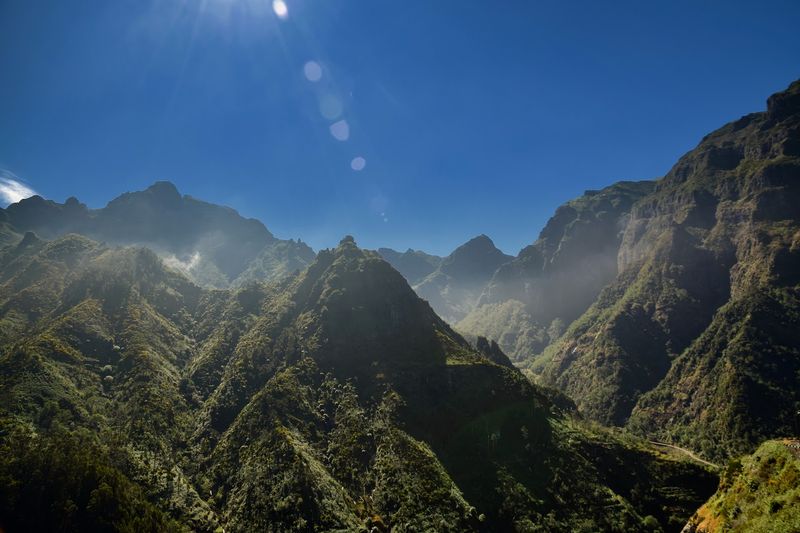
Madeira Natural Park covers a huge portion of the island and protects some of its most extraordinary landscapes. At its heart is the Laurisilva forest, a UNESCO World Heritage laurel forest that has survived since before the last ice age.
Walking through it feels less like hiking and more like trespassing through prehistory.
Levada walks are the most popular way to explore the park. Routes like Levada do Caldeirao Verde and Levada das 25 Fontes pass through misty trees, alongside waterfalls, and above valleys that drop away dramatically.
The variety packed into one island is genuinely impressive.
What makes Madeira Natural Park special is the range. A single trip can take you from cloud forest to volcanic ridgelines, from quiet mossy paths to wide mountain panoramas.
The park rewards slow exploration more than rushed ticking-off. Pack a rain jacket, wear good shoes, and give yourself more time than you think you need.
Douro Internacional Natural Park
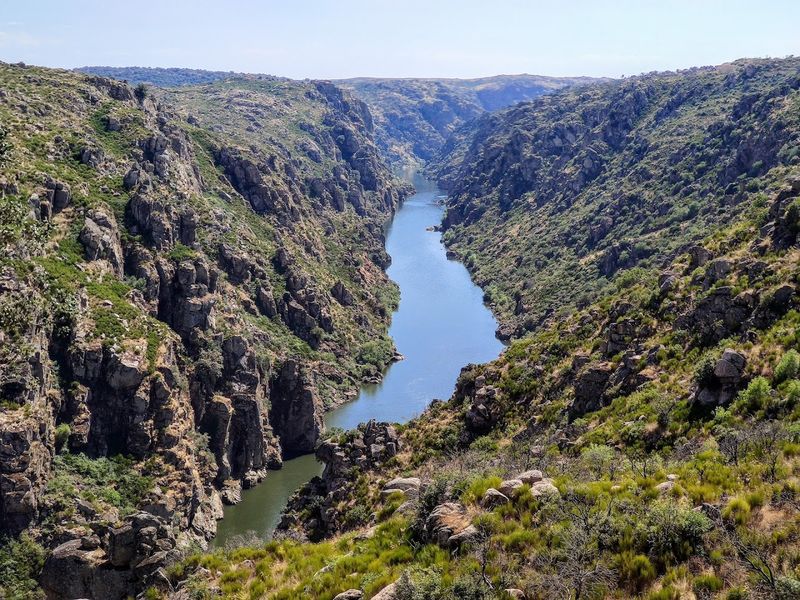
Most people associate the Douro with terraced vineyards and wine estates, which is fair enough. But head northeast toward the Spanish border and the river transforms into something far wilder.
Douro Internacional Natural Park is where the Douro cuts through deep gorges and steep escarpments, creating canyon scenery that feels a long way from the nearest wine tasting.
The cliffs here are home to important birdlife, including griffon vultures and eagle species that use the thermal currents rising from the ravines. For birdwatchers, this is one of northern Portugal’s most rewarding destinations.
For everyone else, the raw river scenery and dramatic viewpoints are reason enough to visit.
Small villages, walking routes, and riverside areas make the park worth a proper half-day or full-day exploration. It is quieter and less visited than the famous wine valleys to the west, which is honestly a big part of its appeal.
Sometimes the best natural wonders are the ones the crowds have not found yet.
Arouca Geopark and Paiva Walkways
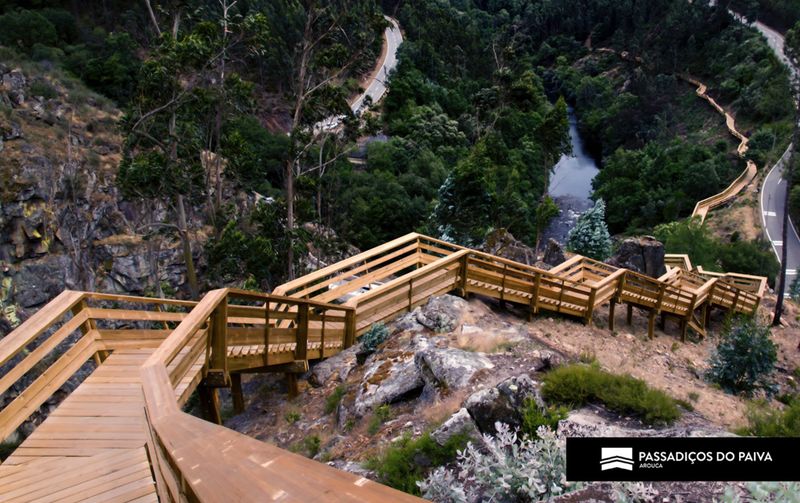
Arouca Geopark is the kind of place that makes geology genuinely exciting, which is no small achievement. This UNESCO-recognized geopark in northern Portugal is packed with fossils, unusual rock formations, and over 40 geosites spread across a landscape that looks like it was designed by someone with a flair for the dramatic.
The Paiva Walkways are the highlight for most visitors: an 8-kilometer wooden boardwalk that follows the Paiva River through rapids, cliffs, quartz formations, and forested slopes. The path is scenic from start to finish.
Nearby, the 516 Arouca suspension bridge hangs above the valley at a height that rearranges your relationship with solid ground.
Reservations are usually required for both the walkways and the bridge, so planning ahead is not optional here. For travelers who want geology, dramatic river scenery, and a mild adrenaline hit all in one visit, Arouca is one of Portugal’s most satisfying outdoor destinations.
Worth every bit of the planning.
Vila Franca do Campo Islet, São Miguel, Azores
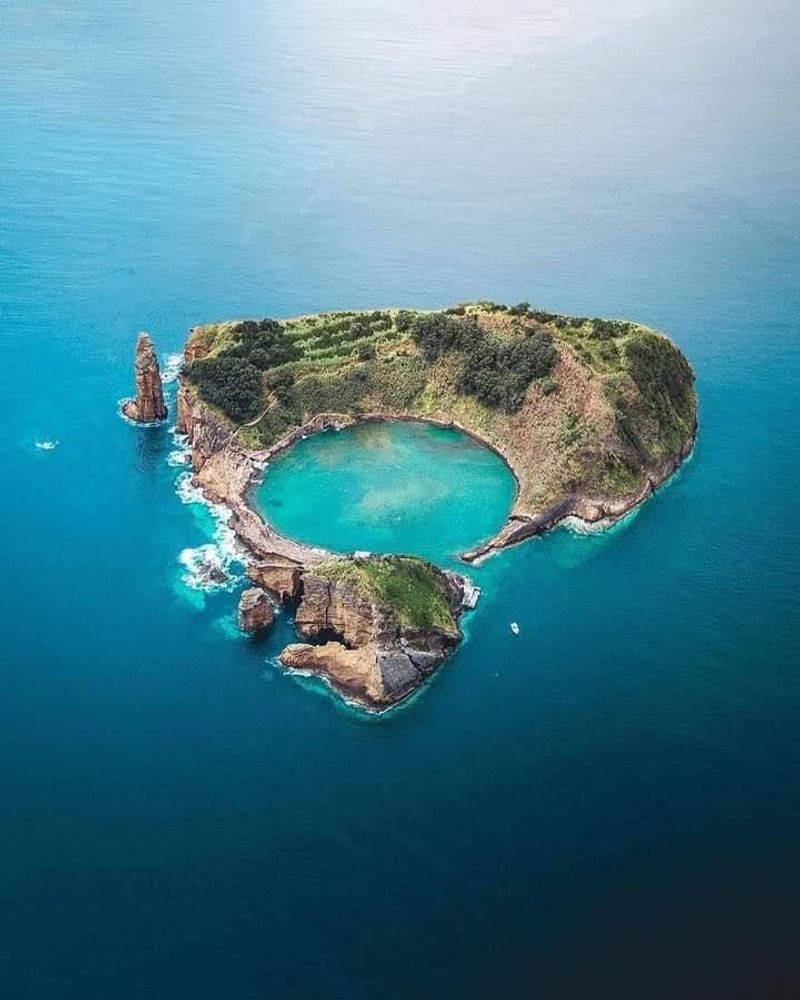
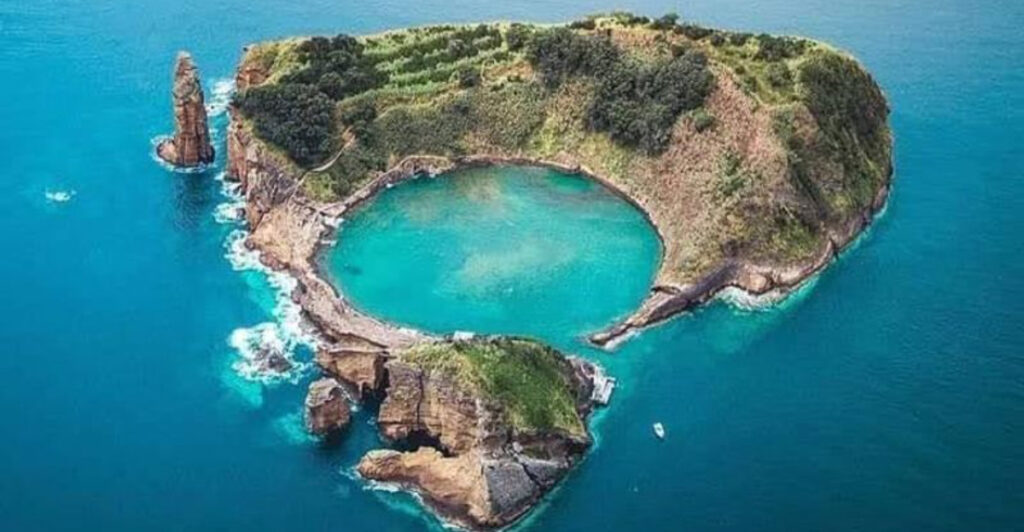
From above, the Islet of Vila Franca do Campo looks like the Atlantic Ocean tried to build a swimming pool and got surprisingly close. This small volcanic islet just off Sao Miguel sits in the ocean like a broken ring of rock, with a calm natural lagoon inside that is protected from the open sea.
It is one of the most distinctive coastal shapes in the entire Azores archipelago.
The inner lagoon is noticeably calmer than the ocean outside, which makes it a popular summer swimming destination when boat access is operating. Visits are seasonal and controlled to protect the fragile environment, which is exactly the right approach for a place this unique.
Getting there requires a short boat ride from shore, which adds to the feeling that you are reaching somewhere genuinely special. Part island, part volcanic crater, part natural pool: Vila Franca do Campo Islet is the kind of place that earns its spot on every Azores itinerary without breaking a sweat.
Share this story