Some places carry the weight of history in their walls, and America’s most storied hotels are proof of that. From colonial inns where Revolutionary War soldiers once slept to grand Gilded Age resorts that defined American luxury, these properties are living museums you can actually check into.
Sleeping in rooms once occupied by presidents, authors, and legends adds a thrill no ordinary hotel can match. Pack your bags, because history has never had such comfortable beds.
Beekman Arms & Delamater Inn, Rhinebeck, New York
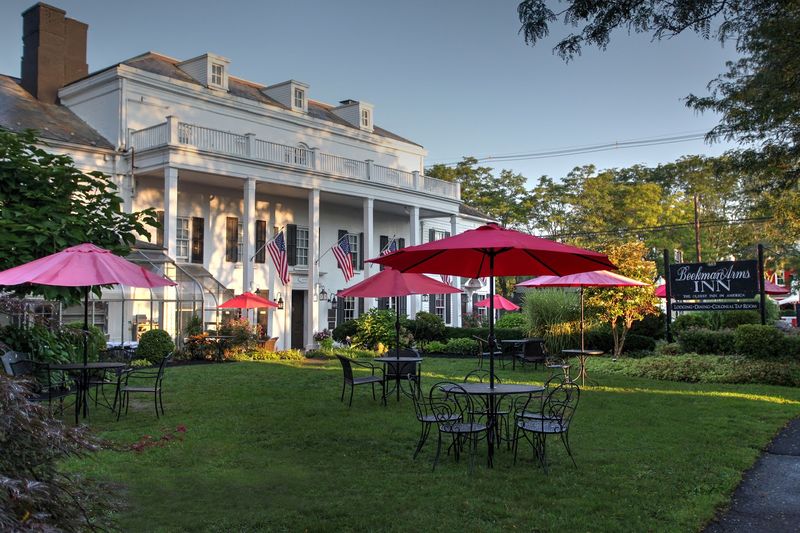
George Washington slept here, and honestly, that alone should be enough to book your room. The Beekman Arms, dating back to 1766, holds the impressive title of America’s oldest continuously operating inn.
That means it has been welcoming guests for over 250 years without a single break for renovations long enough to close the doors permanently.
Located in the charming Hudson Valley town of Rhinebeck, this inn feels like stepping into an oil painting of early America. Low wooden beams, stone fireplaces, and creaking floorboards set the scene beautifully.
The Delamater Inn next door adds Victorian-era charm to the mix, offering guests more room options in equally historic surroundings.
Revolutionary War figures passed through regularly, making conversations around the fireplace here historically significant in ways most restaurants simply cannot claim. Today, the inn pairs that deep historical identity with comfortable modern amenities.
Rhinebeck itself is a wonderfully walkable town full of independent shops and restaurants. Staying at the Beekman Arms turns a weekend getaway into a genuinely memorable journey through American colonial history.
Concord’s Colonial Inn, Concord, Massachusetts
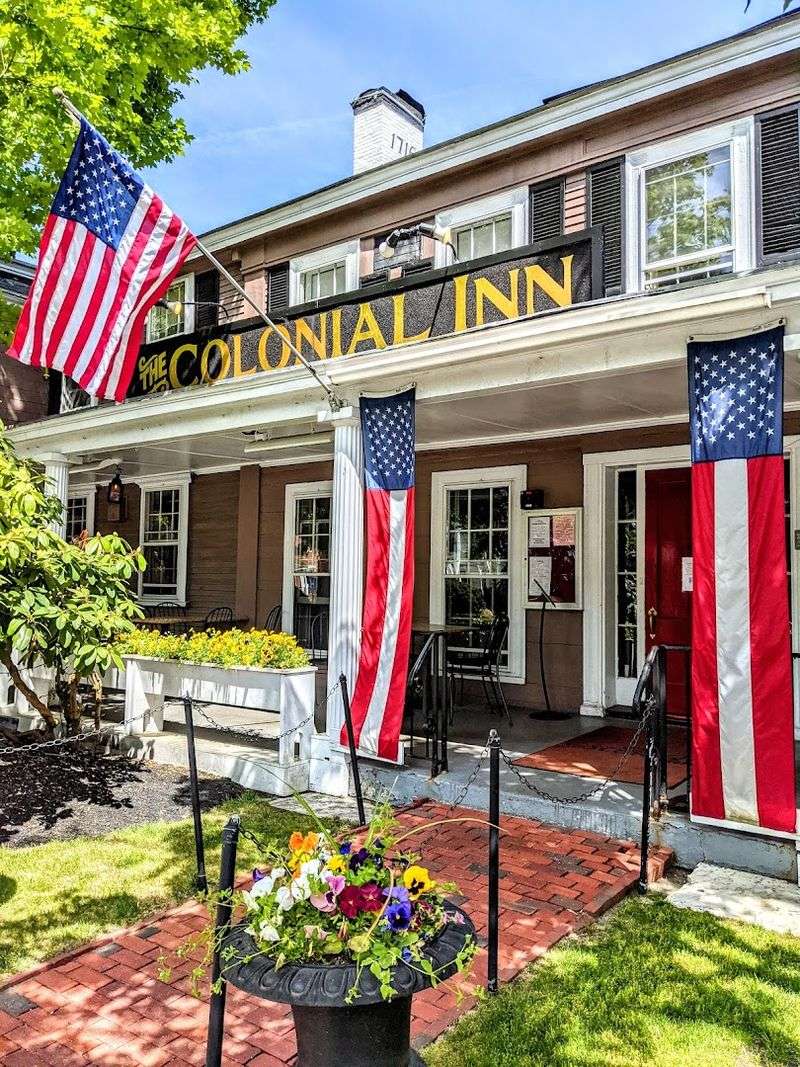
Henry David Thoreau once called this neighborhood home, which tells you something about the kind of town Concord really is. Originally built in 1716, Concord’s Colonial Inn began its life as a private residence before serving as a Revolutionary War storehouse for supplies and ammunition.
History practically seeps through the floorboards here.
The inn sits directly across from the historic Concord town square, putting guests within easy walking distance of the Old North Bridge, where the famous “shot heard round the world” was fired. Waking up in this location feels less like a hotel stay and more like a living history lesson with excellent breakfast options nearby.
Thoreau’s family connections to the property add a literary layer that bookworms will appreciate. The inn has been hosting travelers continuously for centuries, evolving thoughtfully while preserving its colonial bones.
Exposed beams, period-appropriate furnishings, and a genuinely warm New England atmosphere make it a standout destination. Whether you visit for the Revolutionary War history, the literary connections, or simply the charm of one of America’s most beautiful small towns, this inn delivers on every front.
Omni Parker House, Boston, Massachusetts
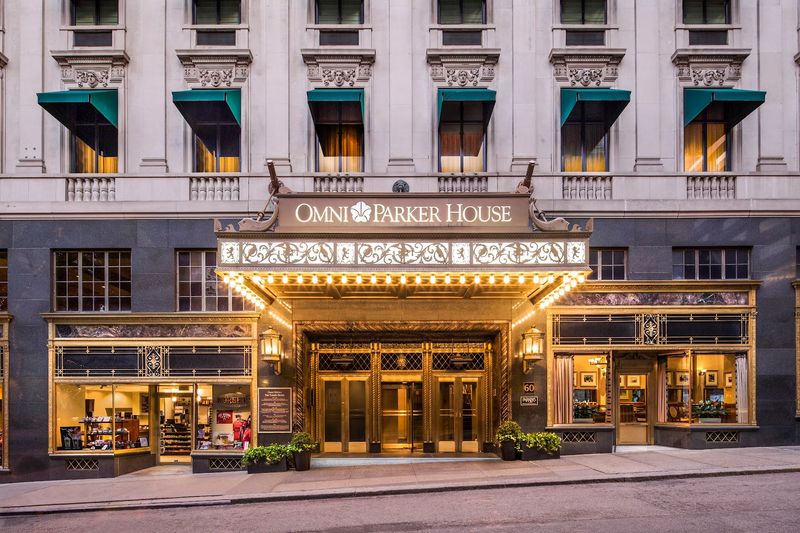
The Parker House didn’t just host history, it helped create it. Opened in 1855, this Boston landmark is where Charles Dickens gave his first American reading of “A Christmas Carol” and where Ralph Waldo Emerson gathered regularly with the Saturday Club.
Literary greatness practically lived here on a monthly basis.
Beyond its famous guest list, the Omni Parker House claims credit for two beloved American staples: the Boston Cream Pie and the Parker House dinner roll. Both were invented in the hotel’s kitchen and went on to conquer the nation’s dessert tables and breadbaskets forever.
That is a culinary legacy few hotels anywhere in the world can match.
The hotel also has a fascinating political footnote. Malcolm X and Ho Chi Minh both worked here as young men before becoming globally significant figures.
John F. Kennedy announced his congressional candidacy here too, adding presidential history to an already remarkable story.
Today, the Omni Parker House blends its storied past with polished modern hospitality in the heart of downtown Boston. Guests enjoy a location steps from the Freedom Trail, making it the perfect base for exploring one of America’s most historically rich cities.
The Greenbrier, White Sulphur Springs, West Virginia
Underneath the elegant ballrooms and championship golf courses of The Greenbrier lies one of America’s most jaw-dropping secrets. For decades, a massive underground bunker was hidden beneath the resort, designed to shelter all of Congress in the event of a nuclear attack.
It stayed classified until 1992, which means guests were unknowingly sleeping above a Cold War survival facility.
The resort’s history stretches back to 1778, when travelers first arrived seeking the mineral springs believed to have healing properties. Presidents from James Monroe to Dwight Eisenhower visited over the centuries, cementing The Greenbrier’s status as America’s grand resort destination.
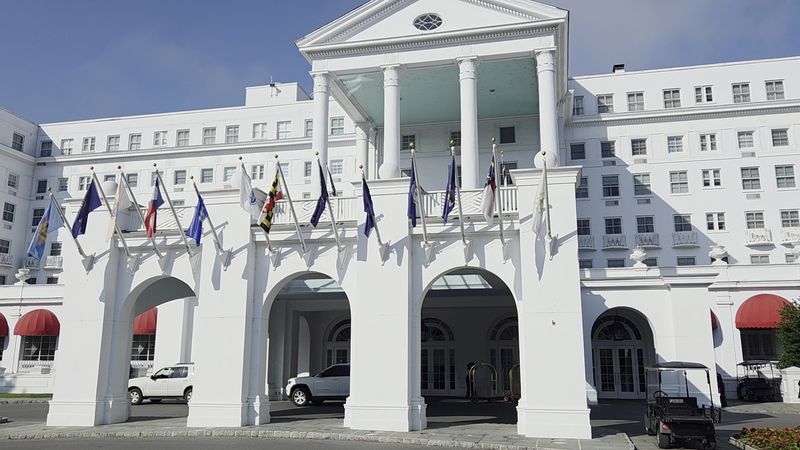
The white-columned facade and manicured grounds still project that same sense of timeless American grandeur.
Today, The Greenbrier offers an almost overwhelming range of activities including golf, spa treatments, falconry, and guided tours of the famous bunker itself. The bunker tour alone is worth the trip for history lovers curious about Cold War-era American planning.
Guest rooms are decorated in bold, colorful patterns that became a signature of legendary designer Dorothy Draper. Staying here feels like a full immersion in American history, luxury, and just a dash of Cold War drama.
The Driskill, Austin, Texas
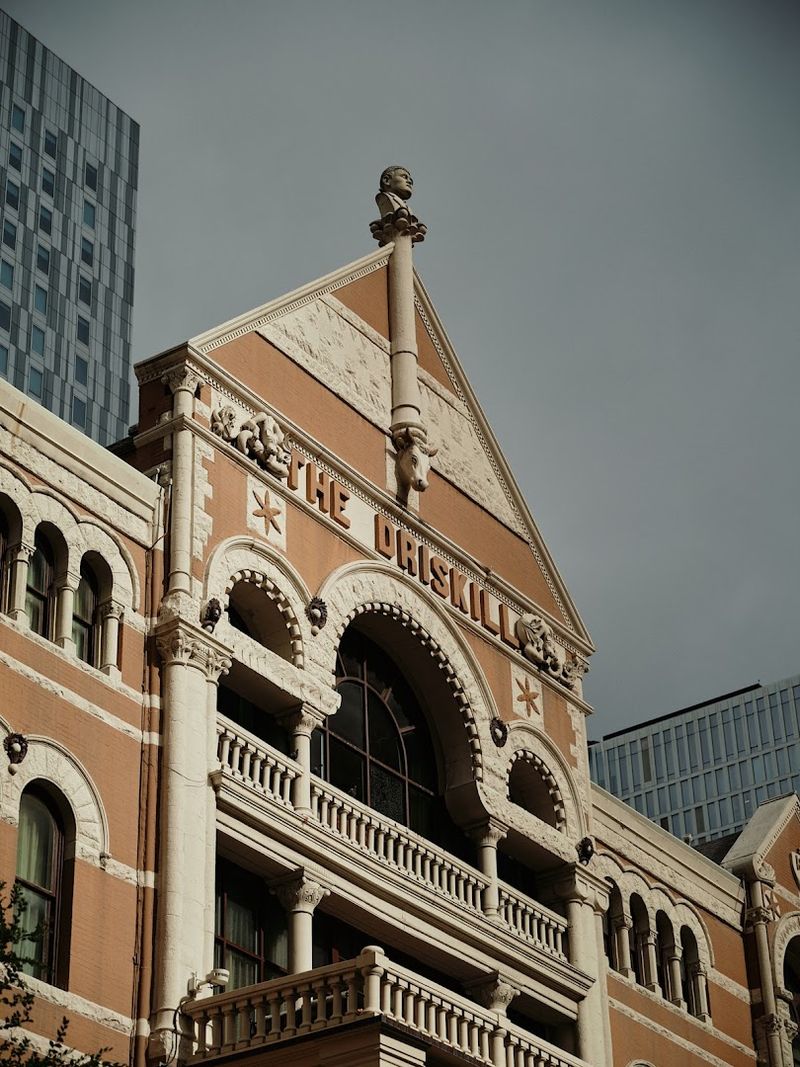
Colonel Jesse Driskill built this hotel in 1886 as a bold statement of Texas pride, and nearly 140 years later, it still commands downtown Austin’s attention. The Romanesque-style architecture features elaborate stonework, sweeping arches, and longhorn cattle heads carved into the facade, because this is Texas and subtlety was never part of the plan.
Lyndon B. Johnson had a deep personal connection to this hotel.
He watched election returns here on multiple occasions, and it is said he proposed to Lady Bird Johnson at The Driskill too. The hotel’s bar, still operating today, carries that LBJ legacy with pride and a well-stocked whiskey selection.
The Driskill is also known as one of Texas’s most haunted hotels, with reported ghost sightings adding an extra layer of intrigue for adventurous guests. Stories involve a young girl who supposedly haunts the fourth floor and the spirit of Colonel Driskill himself.
Whether you believe in ghosts or not, the atmosphere is undeniably dramatic. Austin has transformed around this landmark over the decades, but The Driskill remains the city’s anchor, reminding everyone that before the tech boom and the live music scene, Texas had serious style.
Casa Monica Resort & Spa, St. Augustine, Florida
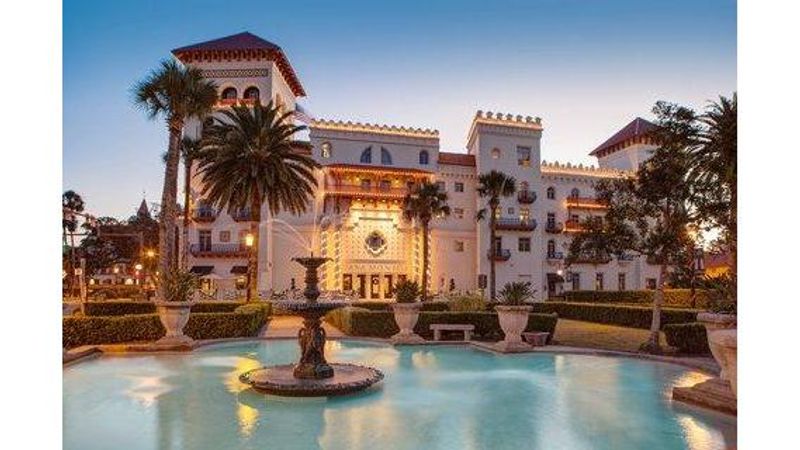
St. Augustine is already the oldest continuously inhabited European-founded city in America, so it makes perfect sense that one of its grandest hotels looks like it belongs in a Spanish fairy tale. Casa Monica opened in 1888, designed in a flamboyant Moorish Revival style featuring turrets, arched doorways, and enough ornamental detail to keep your camera busy for hours.
The hotel’s original owner, Franklin Smith, built it as a showcase of exotic architectural ambition. Henry Flagler, the railroad magnate who was busy transforming Florida into a tourist destination, purchased it just three months after it opened.
Flagler’s influence on Florida’s development was enormous, and Casa Monica was one of his prized properties.
After closing during the Great Depression, the hotel sat dormant for decades before a spectacular restoration brought it back to life in 1999. Today it operates as part of the Kessler Collection and feels as lavish as ever.
The spa, rooftop pool, and beautifully appointed rooms make it a genuinely luxurious stay. Guests are also perfectly positioned to explore St. Augustine’s cobblestone streets, colonial fortresses, and remarkable concentration of history that makes this Florida city unlike any other in the state.
Congress Hall, Cape May, New Jersey
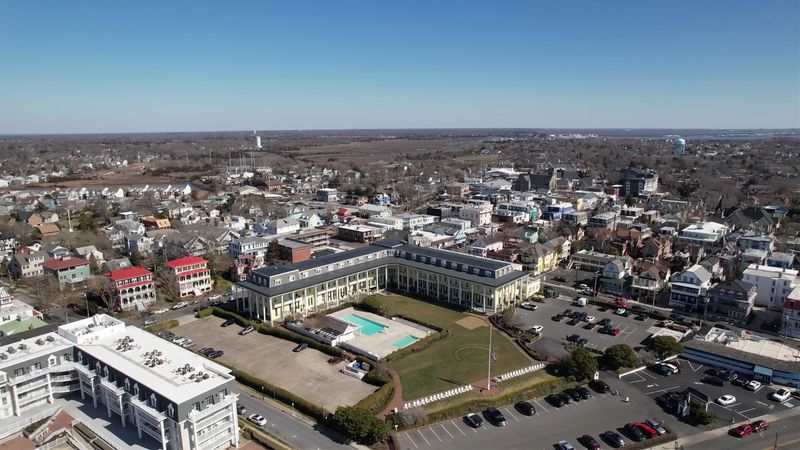
President Benjamin Harrison liked Cape May so much that Congress Hall earned the nickname “Summer White House” during his administration. That kind of presidential endorsement has a way of sticking around, and Congress Hall has been trading on its distinguished reputation ever since.
The bright yellow exterior and sweeping porches lined with rocking chairs make it look like summer itself decided to build a hotel.
Cape May is a remarkably well-preserved Victorian seaside town, and Congress Hall fits right in as one of its grandest landmarks. The hotel has welcomed guests since the early nineteenth century, making it one of the oldest seaside resorts in the entire country.
Presidents from James Buchanan to Harrison used it as a warm-weather escape from Washington’s brutal summer heat.
A major restoration in the early 2000s brought Congress Hall back to its full glory without stripping away any of the Victorian charm that makes it special. The ballroom, the grand dining room, and the beautifully landscaped grounds all reflect careful attention to historical authenticity.
Beach access is just steps away, and Cape May’s famous Victorian architecture surrounds you in every direction. For a combination of American history and genuine seaside relaxation, Congress Hall is genuinely hard to beat.
The Palmer House Hilton, Chicago, Illinois
Potter Palmer built his first hotel in 1870 as a wedding gift to his wife, Bertha, which is arguably the most extravagant romantic gesture in Chicago history. When a fire destroyed it just thirteen days after opening, Palmer rebuilt it even grander, pioneering innovations that would define modern hotel standards.
In-room telephones, electric lighting, and elevators all debuted here before most hotels had even heard of such things.
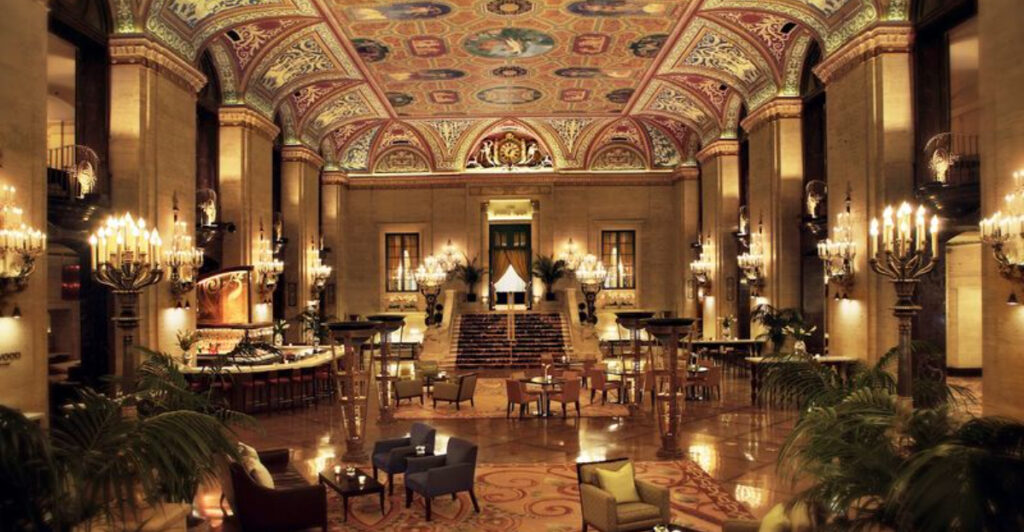
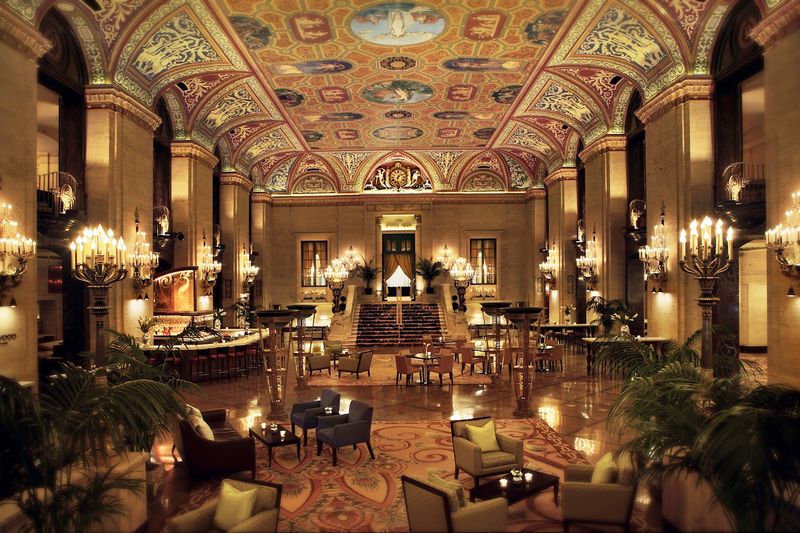
The lobby ceiling is one of Chicago’s genuine artistic treasures, covered in elaborate painted murals and framed by gilded ornamental detail that takes your breath away on first sight. Guests have been stopping mid-stride to stare upward since the nineteenth century, and the impulse has not faded.
The sheer scale of the space communicates ambition in the most visually stunning way possible.
Mark Twain, Oscar Wilde, and every American president from Ulysses S. Grant onward have been guests at the Palmer House at various points in its history.
The hotel’s brownie recipe, developed for the 1893 World’s Columbian Exposition held nearby, is another delicious historical footnote. Today the Palmer House Hilton continues operating in the heart of the Loop, offering guests a genuine connection to Chicago’s most glamorous era wrapped in modern comfort.
The Breakers, Palm Beach, Florida
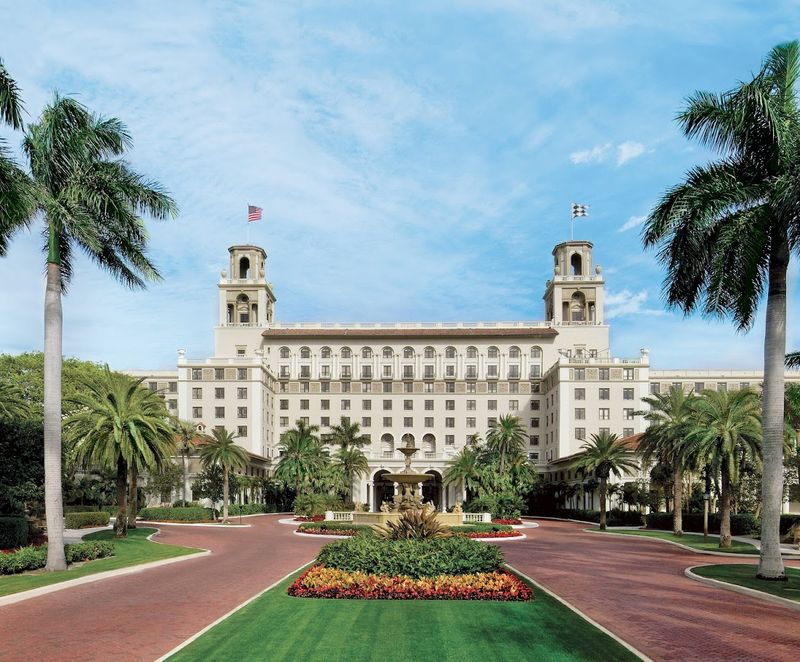
Railroad magnate Henry Flagler opened The Breakers in 1896, and it immediately became the crown jewel of his ambitious plan to transform Florida’s east coast into a destination for America’s wealthiest travelers. The current building, modeled after the Villa Medici in Rome, opened in 1926 after two earlier structures burned down.
Third time turned out to be a spectacular charm.
What makes The Breakers genuinely unusual among grand American hotels is that it remains privately owned by the Flagler family’s descendants to this day. That continuity of ownership has helped maintain standards and historical integrity in ways that corporate hotel chains often struggle to replicate.
The attention to detail here reflects generations of family pride rather than quarterly profit reports.
The Gilded Age atmosphere is real and tangible throughout the property. Painted ceilings, Venetian chandeliers, and miles of ocean views create an experience that feels genuinely timeless.
Two championship golf courses, a spectacular spa, and direct beach access round out the offerings. Afternoon tea in the Circle dining room is a Palm Beach tradition worth experiencing.
Guests who stay at The Breakers are not just booking a room, they are participating in a living piece of American luxury history that has endured for over a century.
Old Faithful Inn, Yellowstone National Park, Wyoming
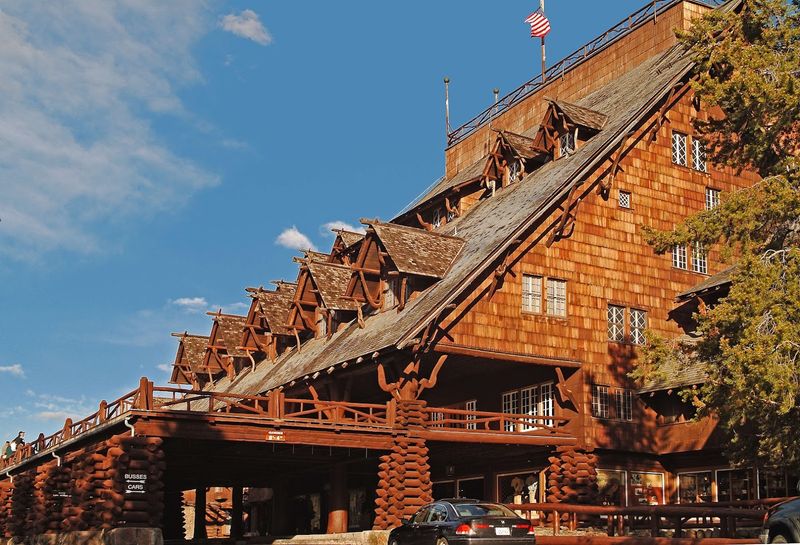
Architect Robert Reamer designed Old Faithful Inn in 1904 using local logs and stone, creating a building so perfectly suited to its surroundings that it looks like Yellowstone grew it rather than humans built it. The lobby rises seven stories to a log-framed ceiling, with a massive volcanic rhyolite fireplace at the center that weighs approximately 500 tons.
That is not a fireplace, that is a geological statement.
Perched just steps from Old Faithful geyser, the inn offers viewing of eruptions directly from its upper-deck balconies. Watching one of the world’s most famous natural wonders from the comfort of a historic porch with a warm drink in hand is an experience that genuinely earns the word unforgettable.
The geyser erupts roughly every 90 minutes, so you will not have to wait long.
Old Faithful Inn is considered one of the finest examples of National Park Rustic architecture in the United States. It was designated a National Historic Landmark in 1987, recognizing its architectural and cultural significance.
Rooms range from cozy historic options without private baths to more modern accommodations in newer wings. Booking early is absolutely essential since the inn fills up months in advance during peak summer season.
This is Yellowstone’s most beloved address.
Murphys Historic Hotel, Murphys, California
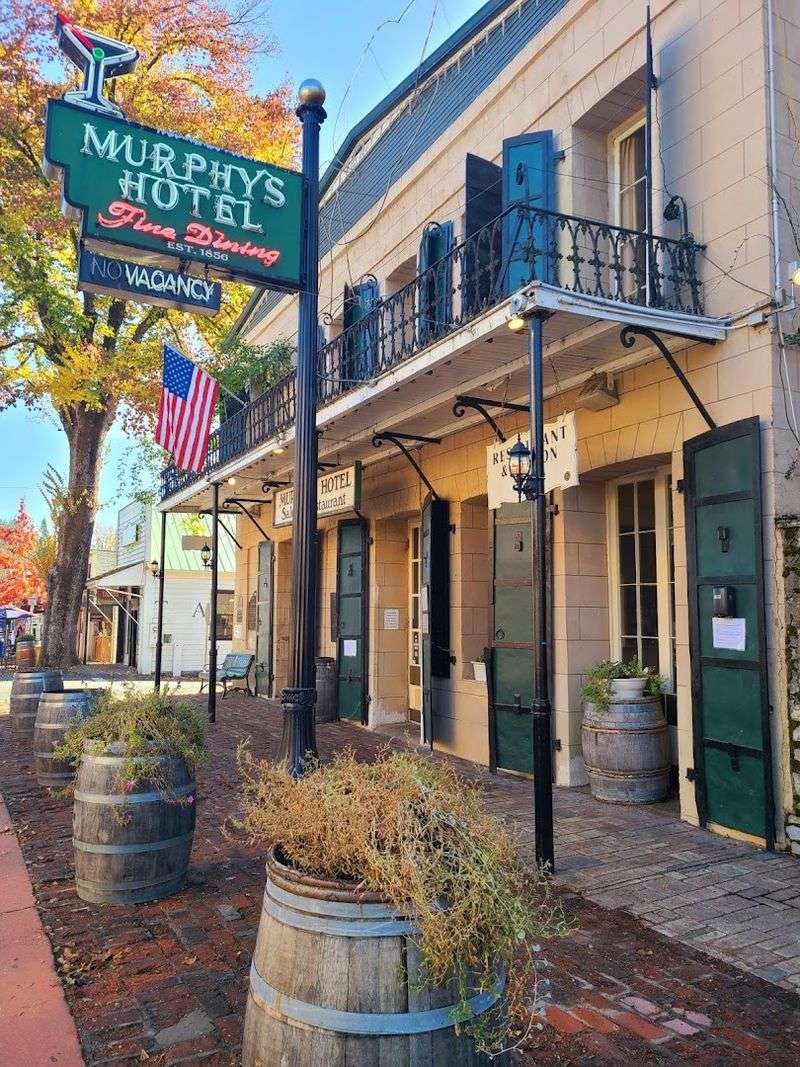
During the California Gold Rush, Murphys was one of the most happening towns in the entire state, drawing fortune hunters, gamblers, and adventurers from around the world. The Murphys Historic Hotel opened in 1856 right in the middle of all that excitement, quickly becoming the social hub of a town that had more ambition than it knew what to do with.
The guest register reads like a who’s who of nineteenth-century American notables. Ulysses S.
Grant, Mark Twain, and even the notorious Black Bart all passed through these doors. The hotel kept a register of famous guests that has become a fascinating historical document in its own right.
Not many small-town California hotels can claim both a future president and a legendary stagecoach robber among their clientele.
Murphys itself is now a charming wine country destination in the Sierra Nevada foothills, surrounded by boutique wineries and Gold Rush-era architecture. The hotel still operates with its original bones intact, offering a genuine connection to California’s most dramatic historical chapter.
The saloon downstairs is a lively gathering spot where locals and visitors mix easily. Staying here means waking up in a building that witnessed the wild, chaotic, gold-dusted birth of modern California.
That is a rare and wonderful thing.
The Capital Hotel, Little Rock, Arkansas
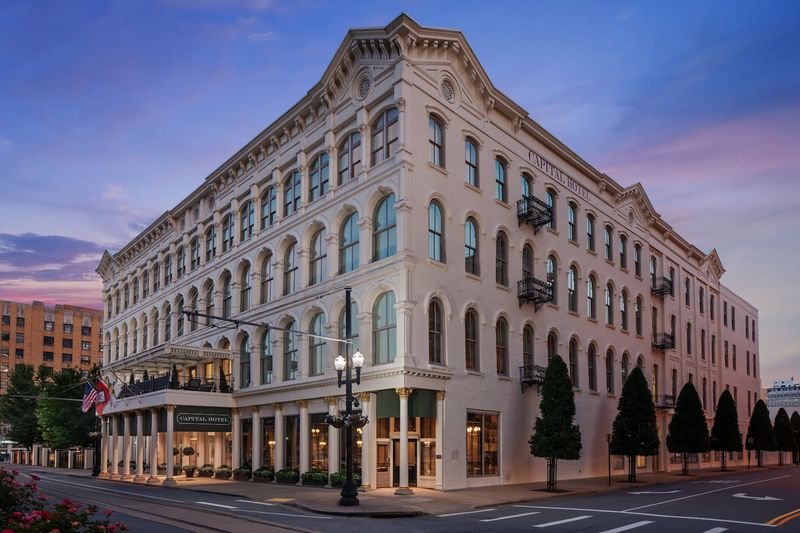
The Capital Hotel came close to being demolished in the 1970s, which would have been one of Arkansas’s greatest architectural losses. Instead, a passionate restoration effort saved the 1877 landmark and returned it to a level of grandeur that silences the doubters completely.
The building’s stunning cast-iron facade, one of the finest examples in the entire South, now gleams again as intended.
Ulysses S. Grant stayed here during his presidency, and the hotel served as headquarters for Union Army officers during Reconstruction.
Its location in the heart of Little Rock placed it at the center of Arkansas political and social life for generations. Governors, senators, and business leaders conducted affairs of great consequence within these walls over more than a century of continuous history.
The restoration preserved original details while adding modern luxuries that make a stay genuinely comfortable rather than merely atmospheric. The Ashley’s restaurant inside the hotel has earned a reputation as one of Little Rock’s finest dining experiences, drawing both hotel guests and locals with equal enthusiasm.
The bar program is equally impressive. For travelers who appreciate Southern hospitality at its most polished and historically grounded, The Capital Hotel delivers something that newer properties simply cannot manufacture: authenticity earned over nearly 150 years of continuous Arkansas history.
Dearborn Inn, Dearborn, Michigan
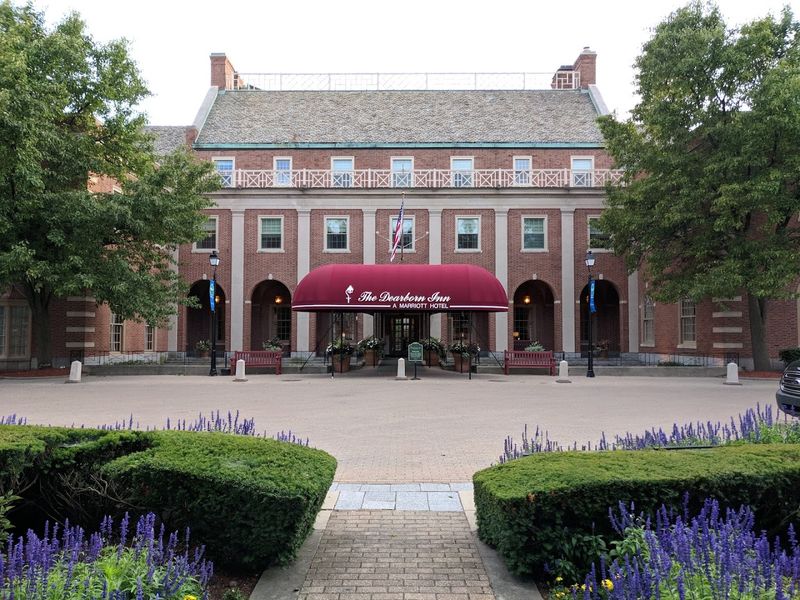
Henry Ford built the Dearborn Inn in 1931 for a very practical reason: he needed somewhere to put the pilots flying into his nearby airport. In doing so, he accidentally created one of America’s first true airport hotels and one of Michigan’s most enduring historic landmarks.
Ford being Ford, he did not just build a functional building, he built something genuinely beautiful.
The Colonial Revival architecture reflects Ford’s deep admiration for American history, a passion he expressed even more dramatically through the nearby Greenfield Village museum complex. Walt Disney, Ronald Reagan, and Eleanor Roosevelt all stayed at the Dearborn Inn at various points, drawn by its reputation for comfort and its proximity to Ford’s famous historical attractions.
A charming collection of replica colonial cottages on the grounds adds a whimsical touch, offering accommodations modeled after the homes of Patrick Henry, Edgar Allan Poe, and other American historical figures. Staying in a replica Poe cottage on a stormy Michigan night has an undeniable literary atmosphere.
The inn is now part of the Marriott portfolio but has maintained its historic character thoughtfully. Greenfield Village and the Henry Ford Museum are walking distance away, making the Dearborn Inn the natural home base for one of America’s most fascinating historical destinations outside of the major coastal cities.
The Ellis Hotel, Atlanta, Georgia
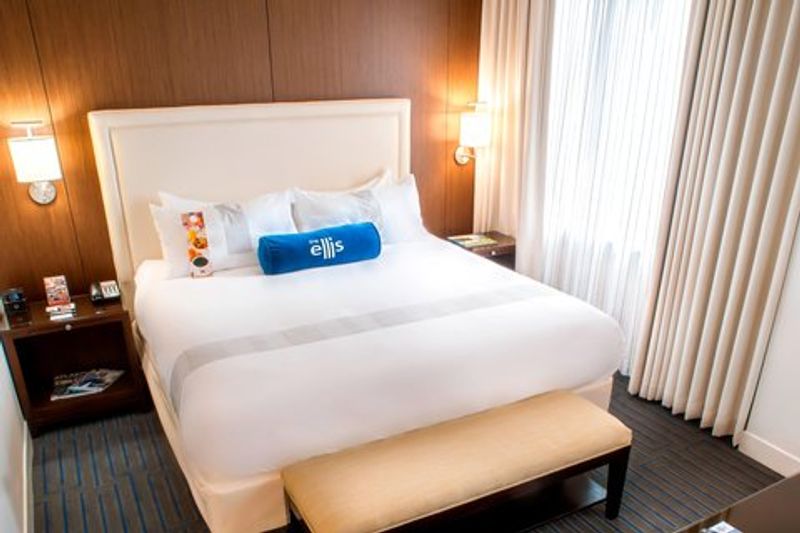
Originally opened as the Winecoff Hotel in 1913, this downtown Atlanta property carries a complicated and sobering historical legacy alongside its architectural significance. The building was advertised as fireproof at the time of its opening, a claim that was tragically disproven in 1946 when a catastrophic fire killed 119 people in what remains one of America’s deadliest hotel fires.
That disaster directly led to major improvements in national hotel fire safety codes.
The building survived and eventually underwent a sensitive renovation that transformed it into The Ellis Hotel, a boutique property that honors its complex past while providing a genuinely comfortable modern experience. The historic terra cotta facade and early twentieth-century architectural bones were carefully preserved throughout the process.
Atlanta’s downtown location puts guests close to Centennial Olympic Park, the Georgia Aquarium, and the National Center for Civil and Human Rights.
The Ellis leans into its history honestly rather than papering over difficult chapters, which gives the property an unusual depth of character. Thoughtful touches throughout the hotel acknowledge both the building’s grandeur and its tragedy.
For history-minded travelers who appreciate complexity in their landmark stays, The Ellis offers something genuinely rare: a property that treats its past with honesty and respect. Atlanta’s story is told here in brick, stone, and memory.
The Stoneleigh, Dallas, Texas
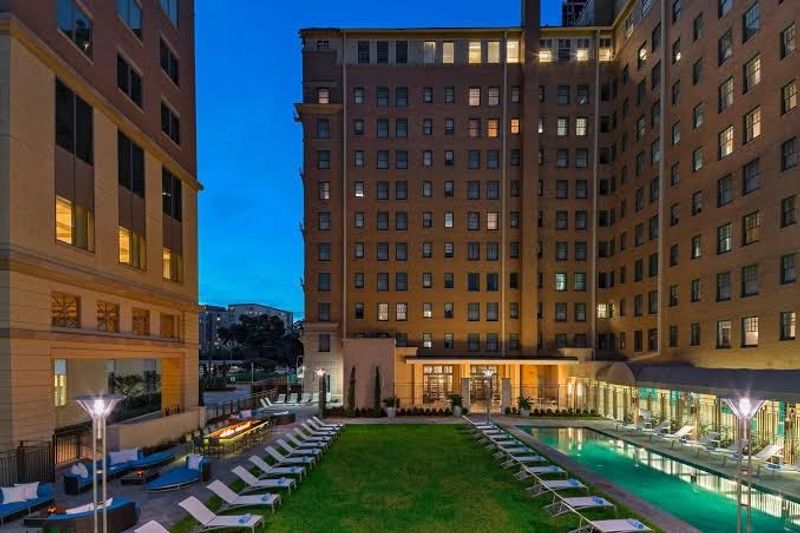
Dallas has reinvented itself many times over the past century, but The Stoneleigh has stayed put through all of it, anchoring the Uptown neighborhood since 1923 with the quiet confidence of a building that knows exactly what it is. The hotel’s brick exterior and Art Deco sensibility have weathered decades of surrounding development without losing an ounce of their original dignity.
A recent major restoration brought The Stoneleigh back to peak condition while preserving every historically significant detail the architects could protect. Original terrazzo floors, period-appropriate fixtures, and carefully restored architectural ornament make the interior feel like a love letter to 1920s Dallas glamour.
The restoration team clearly understood that the goal was preservation first and modernization second.
The Stoneleigh Bar has a loyal following among Dallas locals who appreciate a well-made cocktail in surroundings that predate most of the city’s current skyline by several decades. The hotel’s Uptown location puts guests within easy reach of the Katy Trail, the Dallas Arts District, and some of the city’s best restaurants.
Rooms balance historic atmosphere with contemporary comfort in a way that feels effortless rather than forced. For travelers who find cookie-cutter hotel chains exhausting, The Stoneleigh offers exactly the kind of character-rich alternative that makes a trip to Dallas genuinely memorable.
Share this story