Long before highways and airports connected the world, city walls were the ultimate form of protection. Built from stone, brick, and centuries of determination, these fortifications kept communities safe and shaped the way people lived.
Today, some of those ancient walls still stand tall, offering a rare window into history that you can actually walk through. From Europe to Asia, these 15 walled cities are among the best-preserved on the planet.
1. Dubrovnik, Croatia
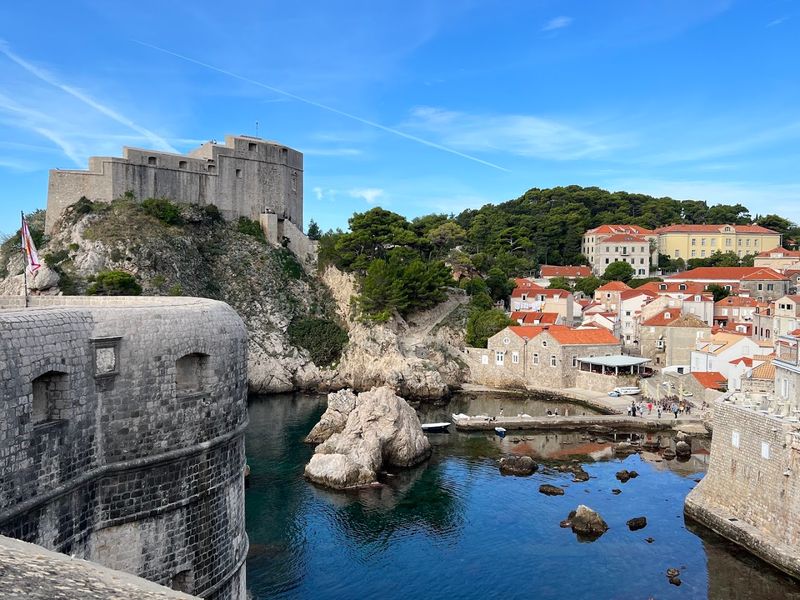
Few cities in the world can match the jaw-dropping beauty of Dubrovnik. Perched along the sparkling Adriatic Sea, this Croatian gem is surrounded by massive limestone walls that have stood for over 1,000 years.
Walking the full circuit of the walls takes about two hours and rewards you with sweeping views of terracotta rooftops and glittering blue water below.
The walls stretch nearly two kilometers and reach up to 25 meters high in some sections. Dubrovnik earned the nickname “Pearl of the Adriatic” for good reason.
Its Old Town was declared a UNESCO World Heritage Site in 1979 and has been carefully restored after earthquake damage in 1667 and conflict in the 1990s.
Visitors flock here year-round, but spring and early autumn offer the most comfortable weather for exploring. If medieval architecture and seaside charm sound appealing, Dubrovnik absolutely delivers on both counts.
2. Carcassonne, France
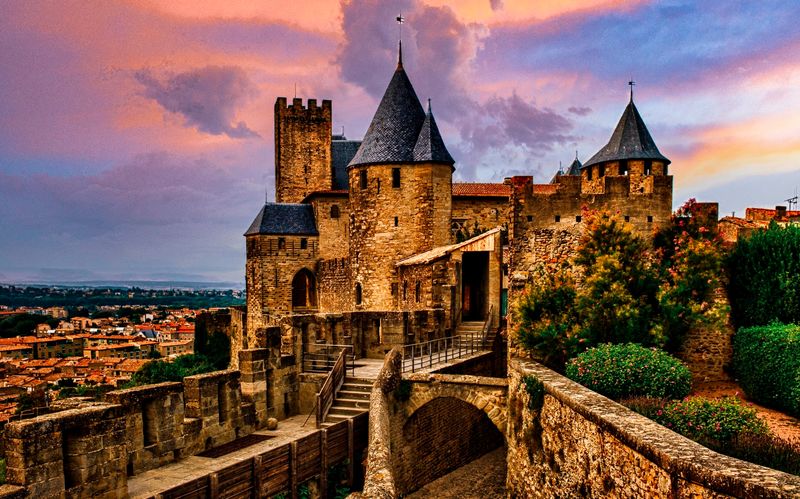
Stepping into Carcassonne feels like stepping straight into a fairy tale. This medieval fortress city in southern France boasts one of the most complete double-ring defensive wall systems anywhere in Europe.
The outer and inner walls together contain 52 towers, making this place look like something straight out of a storybook.
Carcassonne has been continuously inhabited for over 2,500 years, with Roman, Visigoth, and medieval influences all layered into its stones. The city fell into disrepair during the 19th century but was famously restored by French architect Eugene Viollet-le-Duc, whose work saved it for future generations.
Some historians debate parts of the restoration, but the results are undeniably stunning.
Listed as a UNESCO World Heritage Site since 1997, Carcassonne attracts millions of visitors annually. The summer festival season fills its cobblestone streets with music, theater, and fireworks that light up the ancient walls in spectacular fashion.
3. Avila, Spain
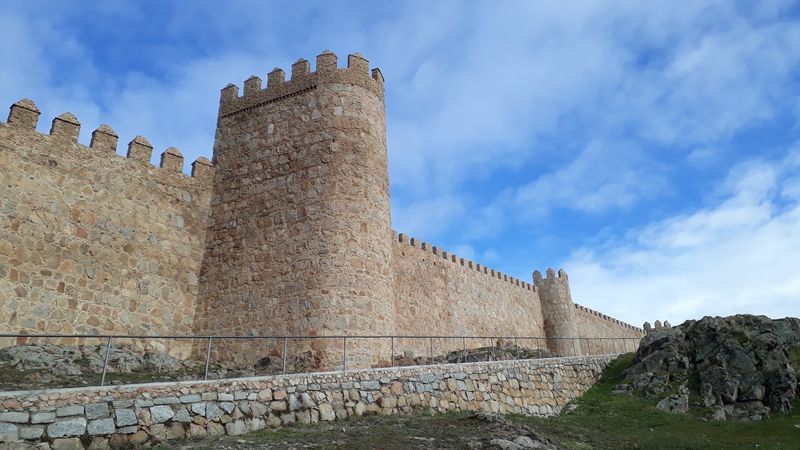
Avila wears its medieval armor better than almost any other city in Spain. The walls encircling this high-altitude city on the Castilian plateau are remarkably complete, stretching for 2.5 kilometers with 88 towers and nine gates still intact.
Construction began in the 11th century, and the craftsmanship has held up impressively well across nearly 1,000 years.
Standing at roughly 1,130 meters above sea level, Avila is also one of the highest provincial capitals in all of Spain. The walls were built partly to protect Christian settlers during the Reconquista, the long campaign to reclaim the Iberian Peninsula.
Today, visitors can walk along the top of the walls and look out over a landscape that has changed remarkably little over the centuries.
Avila is also the birthplace of Saint Teresa of Avila, a beloved 16th-century mystic and writer. UNESCO recognized the Old Town and its walls as a World Heritage Site back in 1985.
4. Mdina, Malta
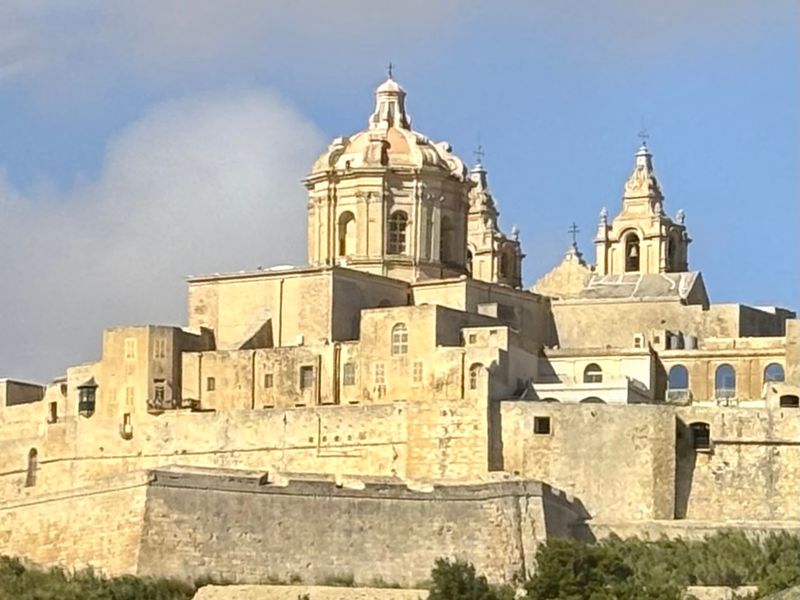
Known locally as the “Silent City,” Mdina is one of Europe’s oldest and most atmospheric walled towns. Perched on a hilltop in the heart of Malta, this tiny fortified city is home to fewer than 300 permanent residents, which means the narrow limestone streets stay wonderfully quiet even as visitors wander through.
The hush inside the walls feels almost sacred.
Mdina served as Malta’s capital for centuries before that role shifted to Valletta in the 16th century. Its walls date back to the medieval period, though earlier fortifications from the Arab and Roman eras helped shape the layout.
The architecture blends Norman, Arab, and Baroque styles in a way that feels completely unique to this island nation.
Visiting at dusk is especially magical. The golden limestone glows warm in the fading light, and the city seems to belong to another era entirely.
Game of Thrones fans may recognize it as King’s Landing in early episodes.
5. Rothenburg ob der Tauber, Germany
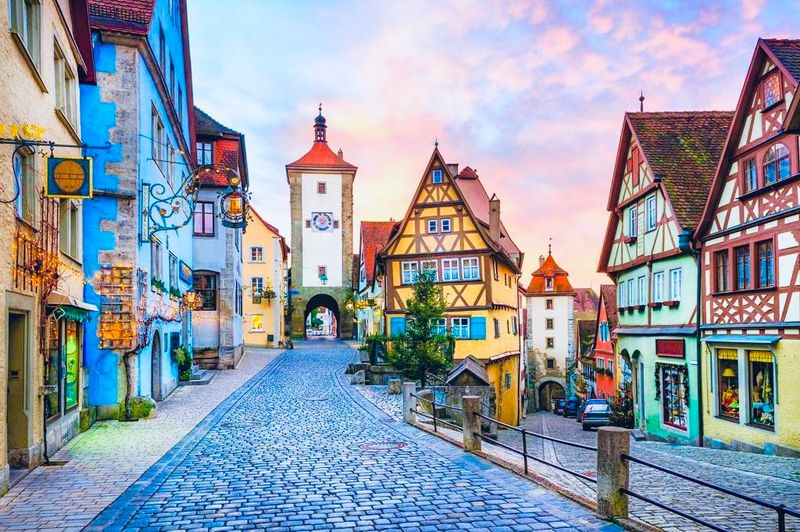
Rothenburg ob der Tauber looks like it was frozen in time sometime around the 15th century, and that is actually not far from the truth. This Bavarian market town in southern Germany survived World War II with its medieval core largely intact, which is nothing short of remarkable given how much of Germany was rebuilt after the war.
The town walls stretch for nearly three kilometers and are among the best-preserved in all of Germany. Visitors can walk along the covered wall walkway, which offers charming views of the crooked half-timbered houses below.
The Christmas market held here each December is considered one of the most beautiful in Europe, drawing visitors from around the world.
Rothenburg’s name literally means “Red Fortress above the Tauber River.” The Tauber Valley below the old town walls adds a lush, green backdrop that makes the whole scene feel almost too picturesque to be real. It is the kind of place that makes you want to slow down.
6. York, England
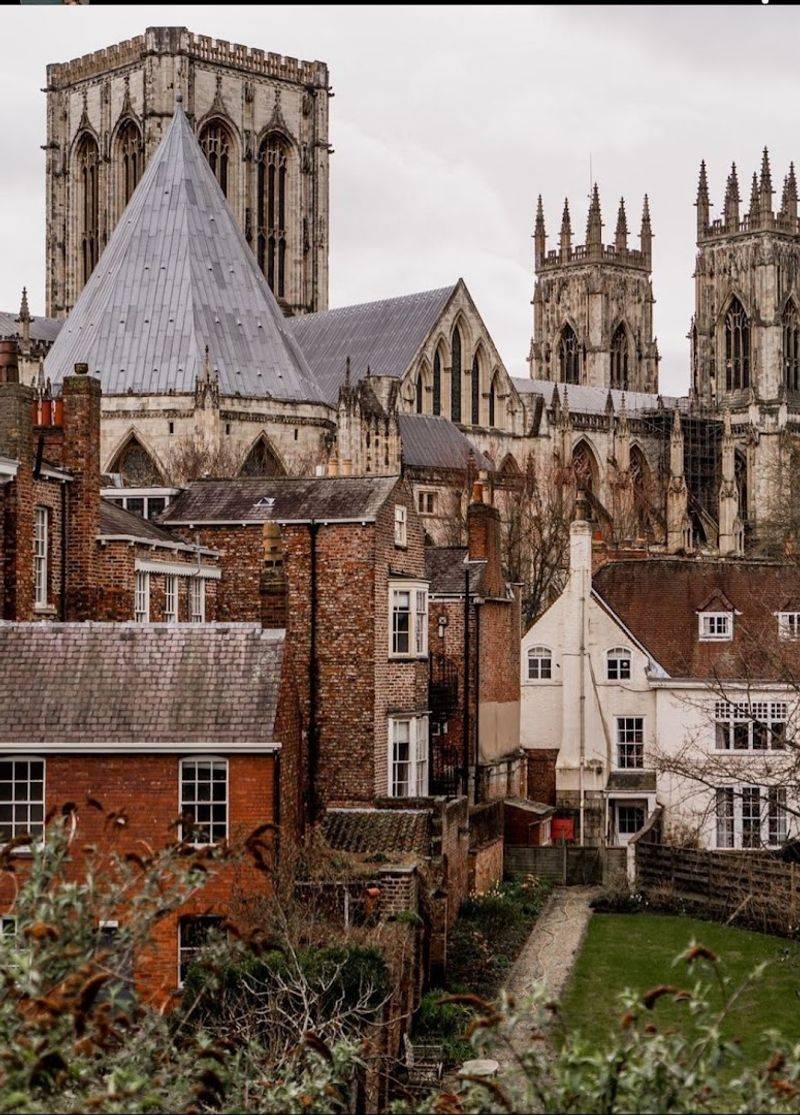
York may be England’s greatest living history lesson. The city walls here are the longest and most complete ancient Roman walls still standing in the United Kingdom, stretching for about three miles around the old city center.
Romans called this place Eboracum when they founded it around 71 AD, and layers of history have been building up ever since.
Walking the walls is completely free and takes roughly two hours at a comfortable pace. Along the way, you pass medieval gatehouses called “bars,” including Micklegate Bar, where the heads of traitors were once displayed.
That bit of dark history adds a certain edge to what is otherwise a very pleasant stroll.
Inside the walls, the narrow streets called “snickelways” twist between ancient buildings and independent shops. The magnificent York Minster cathedral rises above everything, visible from miles around.
York has something for every kind of traveler, from Viking history at the Jorvik Centre to excellent tea rooms on every corner.
7. Lucca, Italy
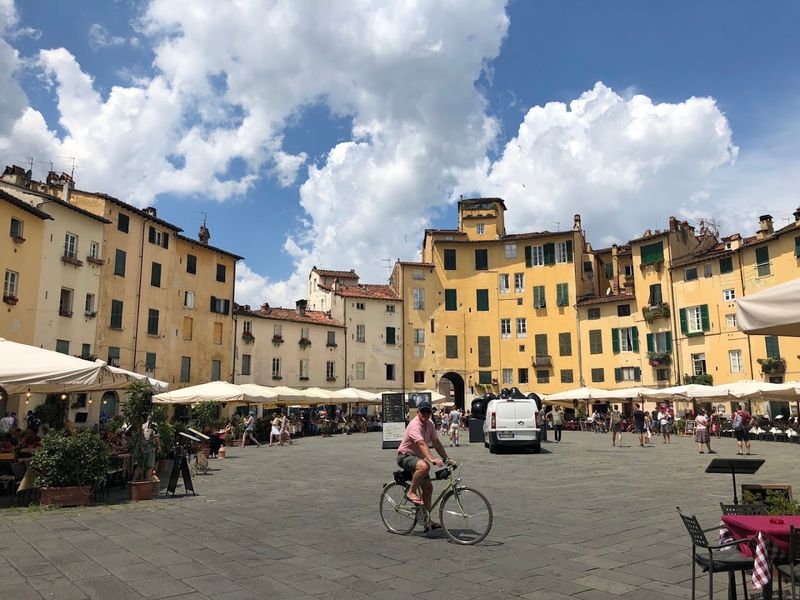
Lucca has a trick up its sleeve that no other walled city in the world can quite match. The Renaissance-era walls surrounding this Tuscan city are so wide and solid that the entire top has been transformed into a public park.
Today, locals jog, cycle, and stroll along the 4.2-kilometer tree-lined promenade as casually as if they were in a city garden.
The walls were built between 1513 and 1645, and they were so well constructed that they never actually had to be used in battle. Lucca remained an independent republic until Napoleon arrived in 1805, and the walls stood as a symbol of that independence throughout.
When a flood threatened the city in 1812, the walls even helped hold back the water.
Inside the walls, Lucca is a joy to explore on foot or by rented bicycle. Piazzas, Romanesque churches, and excellent restaurants fill the compact historic center.
Lucca is often overlooked in favor of Florence and Siena, which makes it feel refreshingly unhurried.
8. Pingyao, China
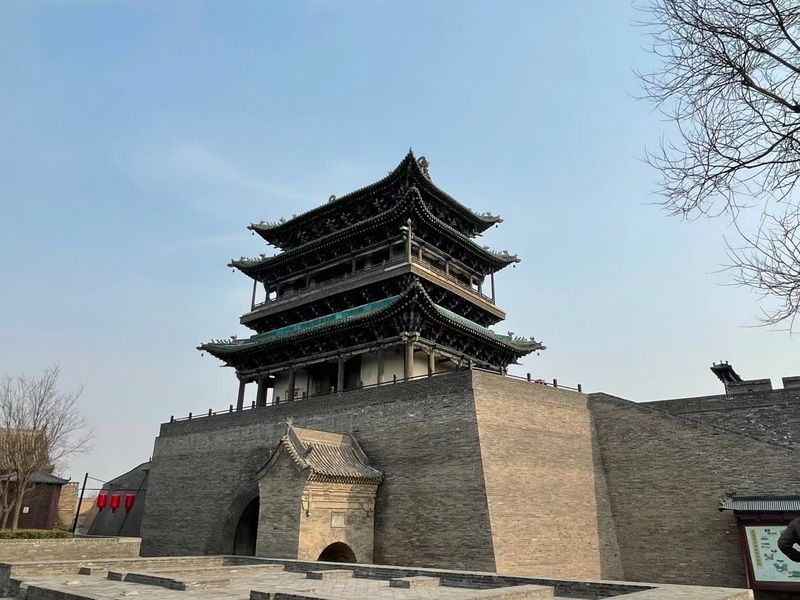
Pingyao is one of the best-preserved ancient cities in all of China, and its walls are a big part of why. Built during the Ming Dynasty around 1370, the rectangular wall circuit stretches for 6.4 kilometers and stands up to 10 meters tall.
The city inside looks much as it did centuries ago, with traditional courtyard homes and historic merchant buildings lining the streets.
During the Qing Dynasty, Pingyao became one of the most important financial centers in China. The world’s first draft bank, Rishengchang, was founded here in 1823 and helped merchants transfer money safely across the country without carrying heavy silver coins.
That financial legacy is still celebrated in local museums today.
UNESCO added Pingyao to its World Heritage list in 1997, recognizing the city as an exceptional example of a well-preserved Han Chinese city. Visiting feels genuinely immersive, especially in the early morning before tour groups arrive and the old streets settle into a calm, timeless quiet.
9. Kotor, Montenegro
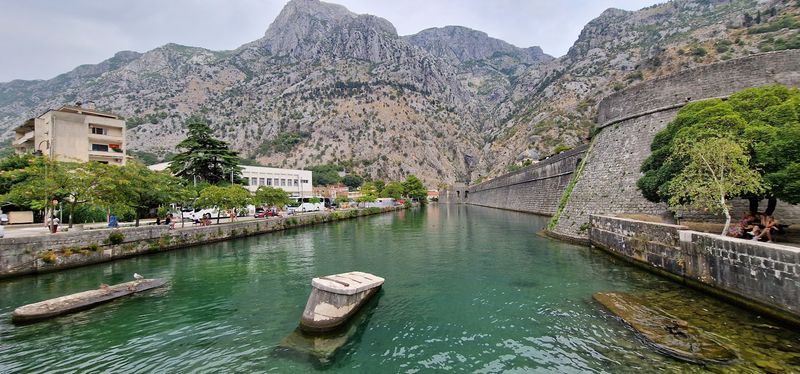
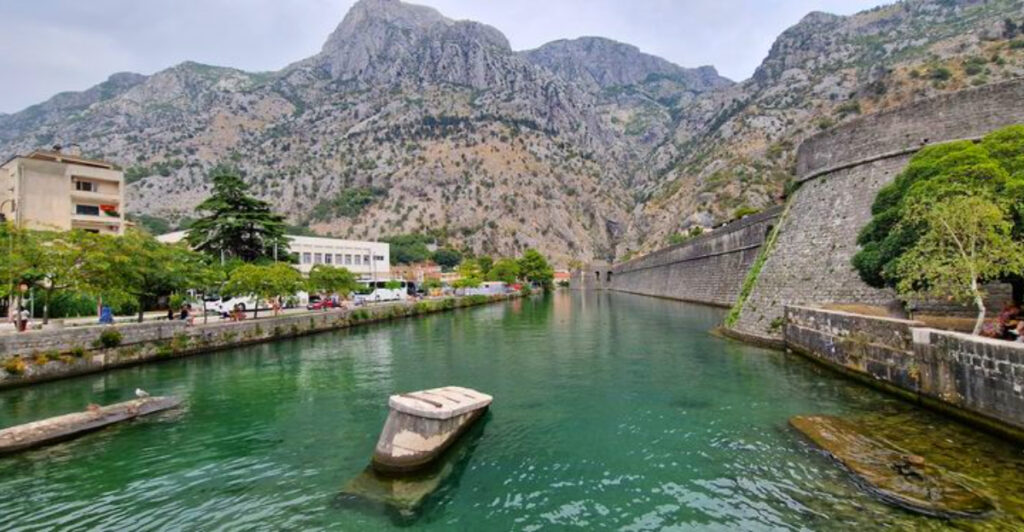
Nature and history collide in the most dramatic way possible at Kotor. This Adriatic city sits at the end of a deep bay surrounded by towering limestone mountains, and its medieval walls actually climb straight up the rocky cliffs behind the town.
The walls snake upward for nearly 4.5 kilometers, rising to a fortress perched 260 meters above the city.
Kotor has been inhabited since ancient times and passed through the hands of the Romans, Byzantines, Serbs, and Venetians before becoming part of modern Montenegro. The Venetians in particular left a strong architectural mark, and the old town is filled with elegant squares, Baroque churches, and stone palaces.
The Cathedral of Saint Tryphon, built in 1166, is one of the most beautiful Romanesque churches in the Adriatic region.
UNESCO recognized Kotor as a World Heritage Site in 1979. Hiking the walls to the fortress above rewards the effort with panoramic views over the bay that are genuinely hard to forget.
10. Obidos, Portugal
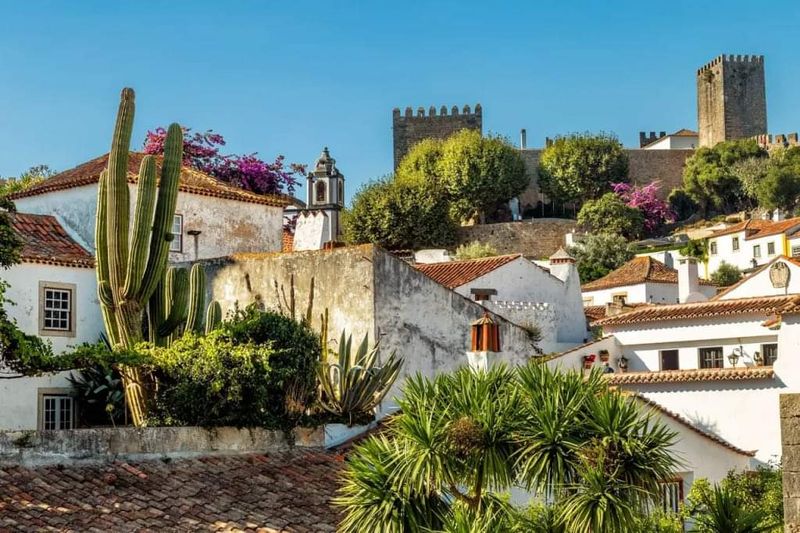
Obidos is the kind of small walled town that makes you want to cancel your return flight and stay forever. Tucked into the rolling hills of central Portugal, this perfectly preserved medieval village is encircled by 14th-century walls that visitors can walk along for sweeping views of whitewashed houses decorated with bright purple and yellow flowers.
The whole place is barely 1 kilometer across.
Portuguese kings once gifted Obidos to their queens as a wedding present, a tradition that began in 1282 when King Afonso II gave the town to his wife, Queen Urraca. That romantic history still hangs pleasantly in the air as you wander the narrow cobblestone lanes.
The local specialty is ginja, a sour cherry liqueur traditionally served in a tiny chocolate cup.
The town hosts a famous Medieval Market each summer, filling the streets with knights, jesters, and artisan crafts. Despite its small size, Obidos packs an enormous amount of charm into every corner and courtyard.
11. Xi’an, China
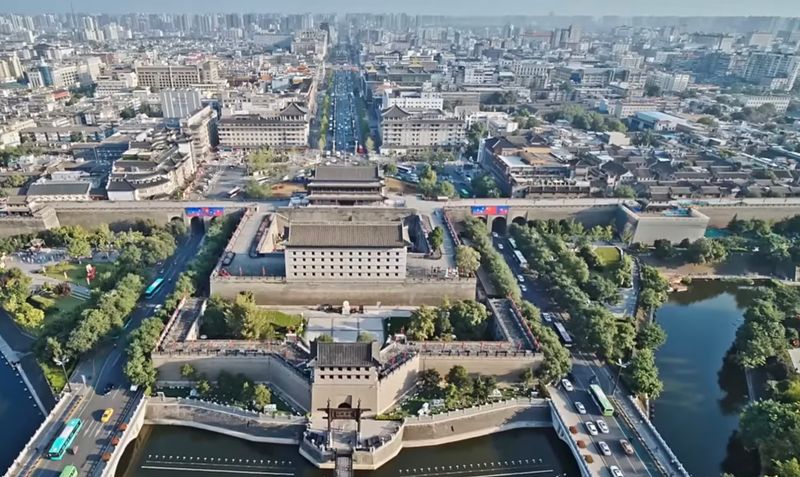
Xi’an is home to one of the largest and most complete ancient city walls anywhere on Earth. Built during the early Ming Dynasty between 1370 and 1378, the rectangular wall measures 13.7 kilometers in total length, stands 12 meters tall, and is wide enough at the top for two cars to drive side by side.
That is not a metaphor; people actually rent bicycles and ride along the top.
As the eastern terminus of the ancient Silk Road, Xi’an was once one of the most powerful cities in the world. Emperors ruled here, armies marched through these gates, and merchants arrived from as far away as Persia and Rome.
The famous Terracotta Army, discovered nearby in 1974, was built to guard the tomb of Emperor Qin Shi Huang.
Today, the walls are beautifully lit at night and surrounded by a wide public park. Cycling the full circuit takes about two hours and offers a completely different perspective on a city that has been at the heart of Chinese civilization for millennia.
12. Jerusalem Old City, Israel and Palestinian Territories
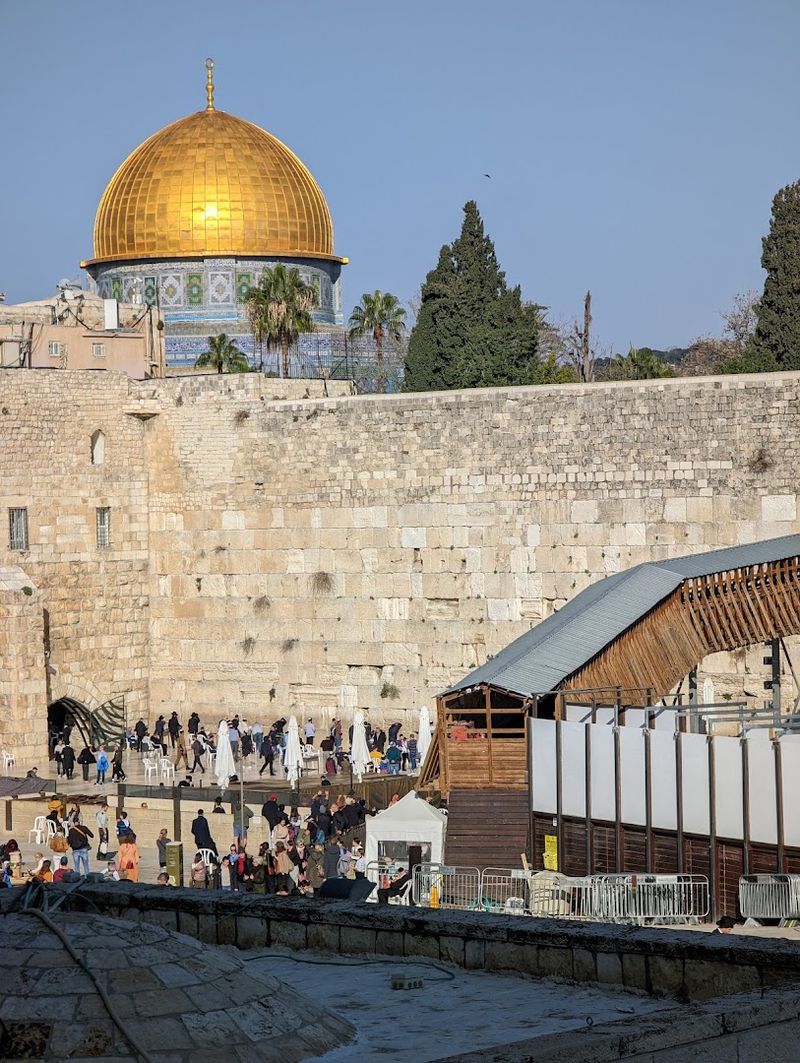
No walled city on this list carries more historical and spiritual weight than Jerusalem. The current walls surrounding the Old City were built by Ottoman Sultan Suleiman the Magnificent between 1535 and 1541, but the site itself has been fortified for at least 3,000 years.
Inside these stones, the histories of Judaism, Christianity, and Islam intersect in ways found nowhere else on the planet.
The Old City is divided into four quarters: the Jewish Quarter, Muslim Quarter, Christian Quarter, and Armenian Quarter. Each has its own character, markets, and places of worship.
The Western Wall, the Church of the Holy Sepulchre, and the Al-Aqsa Mosque all sit within walking distance of each other inside these ancient walls.
UNESCO inscribed Jerusalem on its World Heritage List in 1981. Walking the Ramparts Walk along the top of the walls gives visitors a remarkable perspective on the city’s layered geography and the extraordinary density of sacred history packed into just one square kilometer.
13. Dalt Vila (Ibiza Old Town), Spain
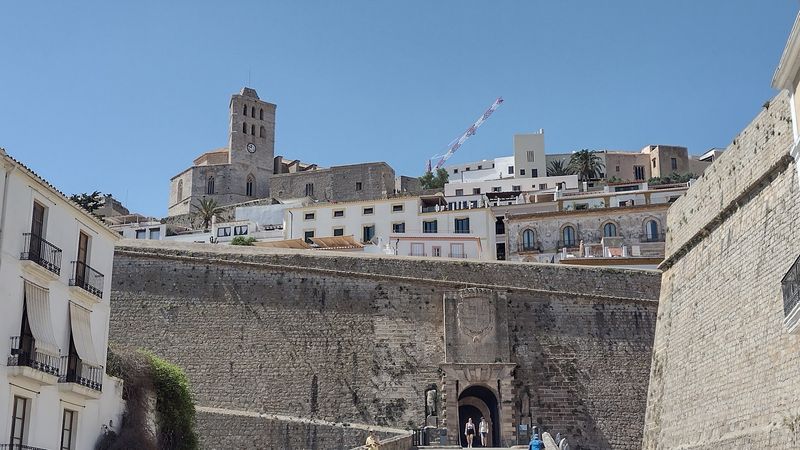
Most people think of Ibiza as a party island, and while the beaches and clubs are certainly there, the island also hides one of the finest Renaissance walled cities in the Mediterranean. Dalt Vila, meaning simply “Upper Town” in Catalan, rises dramatically above Ibiza Town’s harbor on a rocky hill, its massive stone walls dating back to the 16th century when the Spanish Crown ordered their construction.
The walls were built using a cutting-edge Renaissance military design intended to withstand cannon fire, a major concern in the era of expanding European navies. Seven bastions anchor the circuit, and the main entrance through the Portal de ses Taules is framed by Roman sculptures discovered nearby.
Inside, the streets climb steeply toward a cathedral that has stood in various forms since the 13th century.
UNESCO recognized Dalt Vila as a World Heritage Site in 1999, noting its outstanding example of Renaissance fortification. The views from the cathedral terrace over the harbor and surrounding sea make the uphill climb completely worthwhile.
14. Quebec City, Canada
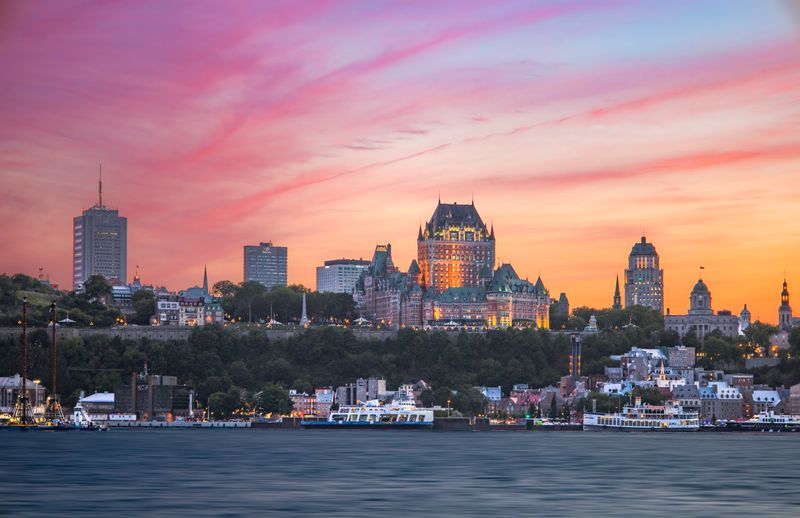
Quebec City holds a distinction no other city in North America can claim: it is the only city north of Mexico that still has its original fortification walls largely intact. The walls date back to the French colonial period and were later reinforced by the British after they took control of the city in 1759.
The result is a remarkable layering of French and British military history in one compact, walkable space.
The fortifications stretch for 4.6 kilometers around Old Quebec, a neighborhood so well preserved that it genuinely feels like a piece of Europe dropped into the Canadian landscape. The towering Chateau Frontenac hotel, built in 1893, dominates the skyline and has become one of the most photographed hotels in the world.
Cobblestone streets, French signage, and sidewalk cafes complete the European atmosphere.
UNESCO designated Old Quebec a World Heritage Site in 1985. Winter here brings a famous carnival with ice sculptures and toboggan runs, while summer fills the streets with festivals, outdoor concerts, and the warm scent of fresh crepes.
15. Nordlingen, Germany
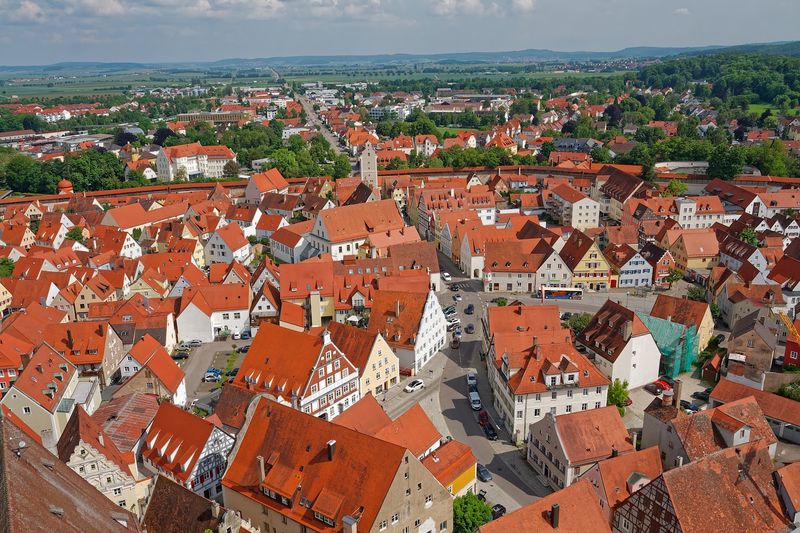
Nordlingen is the only city in Germany where the complete medieval town wall still forms an unbroken ring around the entire old town. That circular shape is no accident.
The city was built inside a giant meteor crater formed about 15 million years ago, and the nearly perfect roundness of the crater naturally guided the layout of the streets and walls. The wall stretches for 2.7 kilometers and has five gates and 16 towers.
Here is a fun detail that most visitors miss: the stone used to build the town’s famous St. George’s Church contains millions of tiny diamonds created by the enormous heat and pressure of the original meteor impact. They are too small to be of commercial value, but the fact that an entire church is technically studded with diamonds is a remarkable piece of geological trivia.
Climbing the church tower, known locally as “Daniel,” gives the best view of the circular wall layout. The surrounding Ries crater landscape was even used by NASA to train Apollo astronauts before their moon missions.
Share this story