Some restaurants are just restaurants. But a real old-school diner is something else entirely.
It is a counter stool, a heavy coffee mug, a short-order cook working fast, and a menu that has not needed to change in decades because it was already right. Across the country, a handful of these places have survived long enough to become part of American food history, and they are still open, still serving, and still worth every mile it takes to get there.
Whether you are a road tripper, a breakfast loyalist, or someone who just misses the feeling of a place that does not try too hard, this list was built for you. These 15 diners represent the best of what old-school American eating looks like, from a 15-seat Maine lunch car to a canyon-side Utah comfort spot to a Miami Beach dining car with a backstory that spans three states.
Miss Worcester Diner, Worcester, Massachusetts
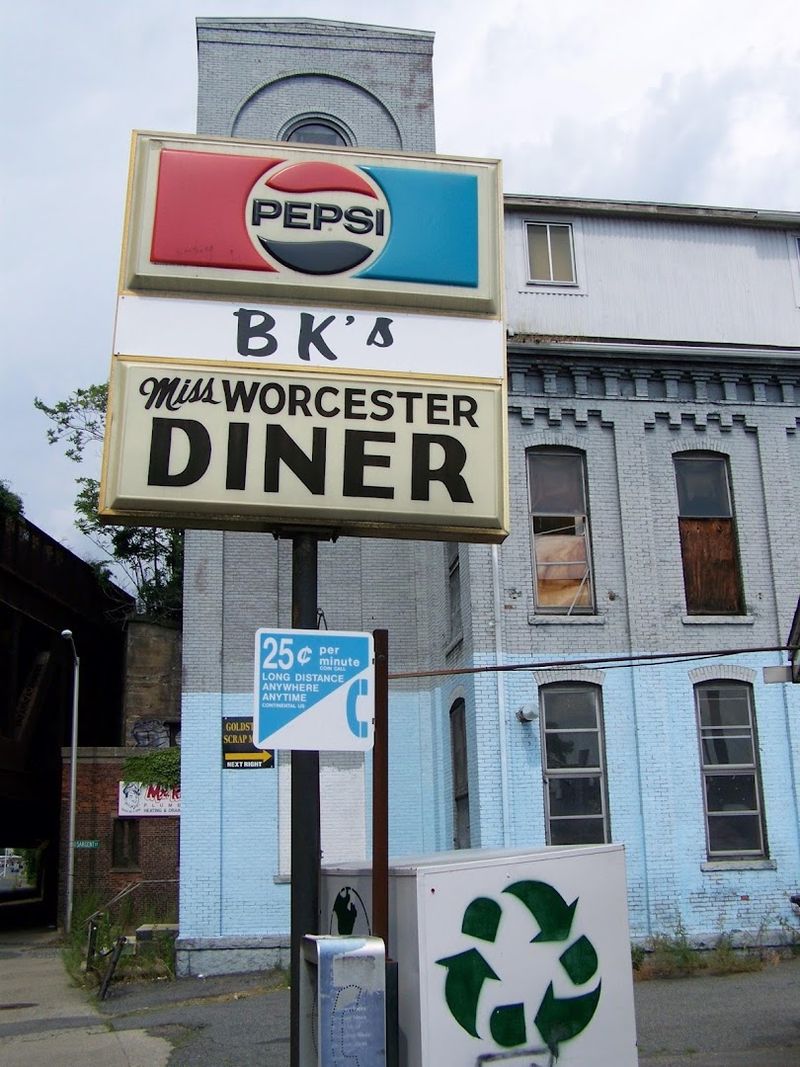
Worcester, Massachusetts has a legitimate claim to being the diner capital of America, and Miss Worcester Diner is one of the city’s most enduring examples of that legacy. The restaurant sits at 300 Southbridge Street and still runs on the classic breakfast-and-lunch schedule that defines the old-school diner rhythm.
Weekday hours generally open at 5 a.m., which tells you everything about who this place was built for. Morning workers, early risers, and people who believe a proper day starts with eggs and coffee at a real counter are the core audience here.
The diner car itself is a genuine piece of Worcester history, and the city’s connection to diner manufacturing gives the whole experience an extra layer of meaning. Worcester was once home to several diner manufacturers, and eating at Miss Worcester feels like sitting inside that history.
Pancakes taste a little better when the building they are served in has a story worth knowing.
Modern Diner, Pawtucket, Rhode Island
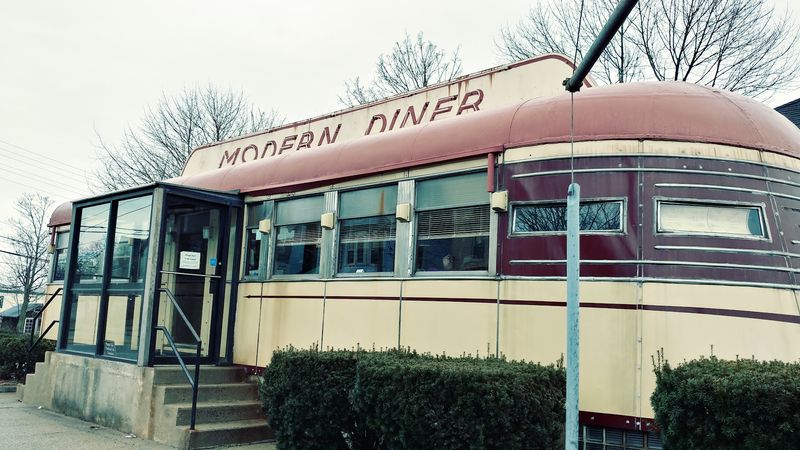
Historic credentials do not get much stronger than this. Modern Diner in Pawtucket holds the distinction of being the first diner in the United States accepted onto the National Register of Historic Places.
That alone sets it apart from nearly every other counter in the country.
The building is a Sterling Streamliner, a specific style of dining car with a curved, aerodynamic body that makes it immediately recognizable to anyone who follows diner architecture. It still operates at 364 East Avenue with daily hours from 7 a.m. to 1 p.m., keeping its schedule as classic as its design.
Rhode Island food culture has its own distinct personality, and Modern Diner reflects that regional identity while also fitting into the broader American diner story. For anyone who cares about the history of how Americans eat, this Pawtucket stop offers something most restaurants simply cannot provide: a meal inside a federally recognized piece of culinary heritage.
Lexington Candy Shop, New York City, New York
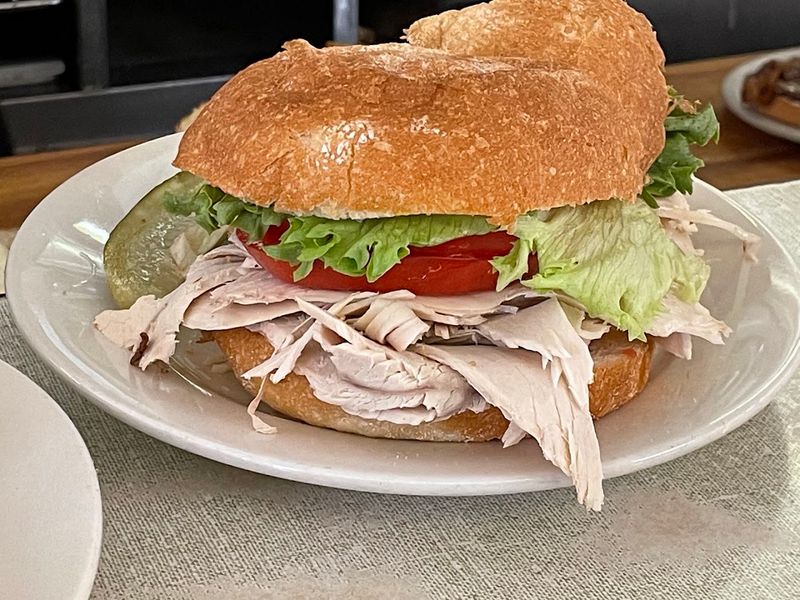
Founded in 1925, Lexington Candy Shop on the Upper East Side of Manhattan is not a candy store. It is a luncheonette and soda fountain that has outlasted nearly every other establishment of its kind in New York City.
The fact that it still operates as a neighborhood fixture nearly a century after opening is genuinely remarkable.
The menu covers fresh-squeezed drinks, milkshakes, burgers, sandwiches, pancakes, and French toast. None of that is revolutionary on paper, but in a city where restaurants open and close at a relentless pace, the consistency here feels almost radical.
NYC Tourism lists it as open for breakfast, brunch, and lunch, with hours varying by day. Counter seating is the main experience, and the room itself still carries the look and feel of mid-century New York.
For visitors who want to understand what the city’s neighborhood eating culture looked like before everything went upscale, this is one of the clearest windows still available.
Palace Diner, Biddeford, Maine
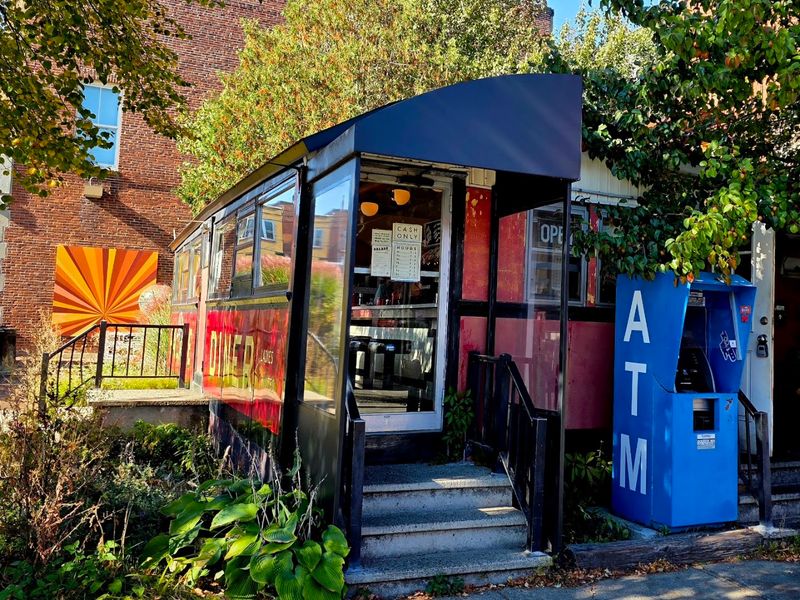
Maine’s oldest diner fits inside a vintage dining car with just 15 counter seats, and that tight space is not a drawback. It is the whole point.
Palace Diner in Biddeford strips the diner experience down to its most essential form: a short menu, a working grill, good coffee, and no room for distraction.
The restaurant opens daily at 7 a.m. and closes at 2 p.m., which means breakfast and lunch are the only meals on offer. That limitation is also what keeps it focused.
Every plate that comes off that grill gets real attention because there is nowhere to hide in a 15-seat dining car.
Biddeford itself has become a destination town in southern Maine, and Palace Diner fits naturally into that character. If you are planning a morning in the area, this is the kind of stop you build the rest of the day around.
Plan to arrive early because the seats fill fast.
Lou Mitchell’s, Chicago, Illinois
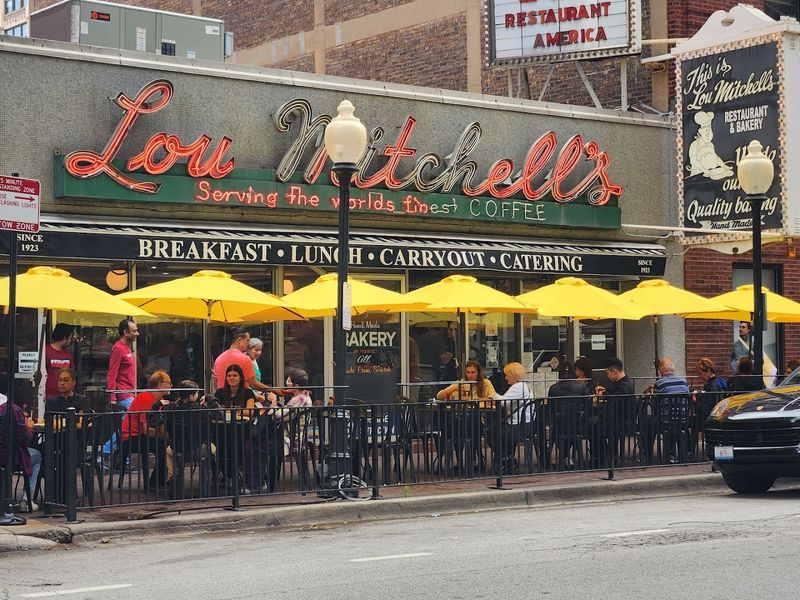
A Chicago institution since 1923, Lou Mitchell’s sits near the start of Route 66, which gives it a mythic quality that goes beyond a simple breakfast spot. This is the kind of place road-trip culture was built around, and it has been feeding travelers and locals alike for more than a century.
The menu covers coffee, pancakes, omelets, burgers, and homemade diner staples for breakfast and lunch. An Allrecipes feature highlighted the restaurant’s long-running reputation for warm service, donut holes, homemade bread, and rich coffee that regulars come back for again and again.
Multigenerational loyalty is a big part of what defines Lou Mitchell’s. Families who ate here decades ago bring their own kids and grandkids now.
That kind of continuity is rare in any city, but especially in Chicago, where the food scene is always shifting. This spot holds its ground by simply staying good at what it has always done well.
Frank’s Diner, Kenosha, Wisconsin
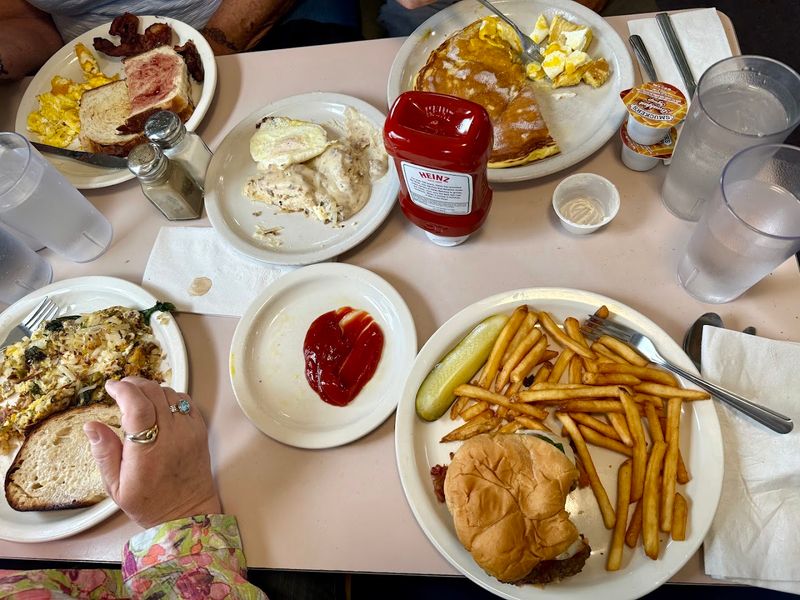
Frank’s Diner has been flipping eggs in Kenosha since 1926, and it has never seemed particularly interested in softening its edges for a wider audience. That directness is a feature, not a flaw.
The diner runs on attitude, big plates, and a no-frills breakfast energy that feels increasingly rare.
The signature item is the Garbage Plate, a loaded combination of eggs, hash browns, peppers, onions, meat, and cheese that puts everything on one plate and makes no apologies for it. It is messy, filling, and exactly the kind of dish that earns a diner its reputation.
Frank’s is still operating at 508 58th Street in Kenosha, keeping its address and its approach largely unchanged. Wisconsin diner culture tends to reward places that stay true to their original identity, and Frank’s has done exactly that for nearly a century.
If you want a diner experience that feels lived-in and unvarnished, Kenosha is the right stop.
White Manna, Hackensack, New Jersey
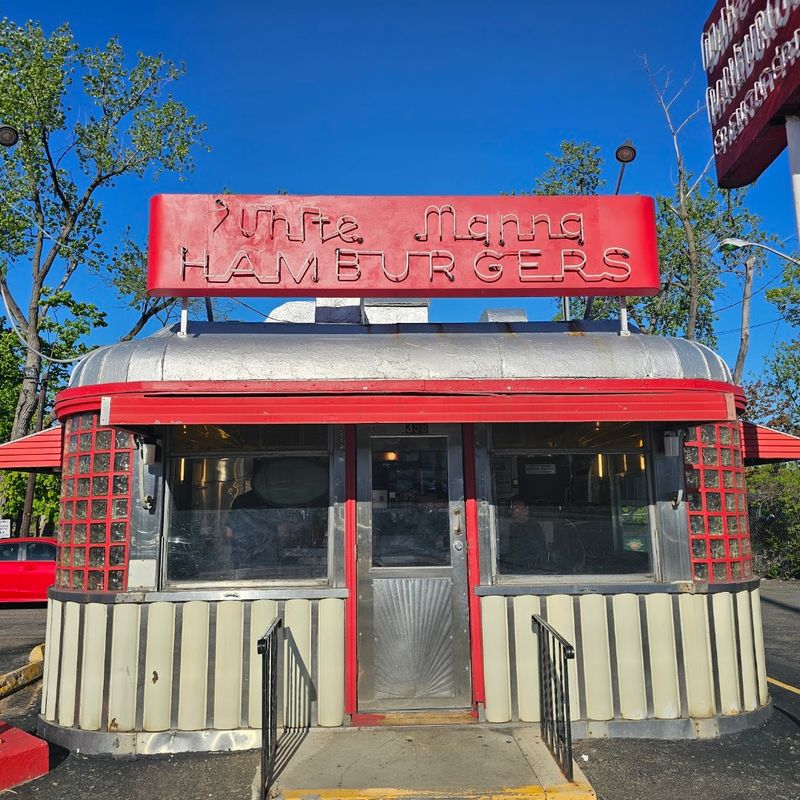
White Manna traces its origins back to the 1939 World’s Fair, which makes its founding story one of the most interesting in American diner history. After the fair, the operation moved to Hackensack in 1946, and it has been serving sliders from that same small, shiny building ever since.
The menu here is intentionally simple. You come for the burgers, cooked with onions on a well-seasoned grill, served from a counter that has seen generations of New Jersey regulars.
There is no sprawling menu to work through. The focus is narrow, and that focus is exactly what makes it work.
Dinerville lists White Manna as currently open, and its status as one of the state’s most distinctive diner experiences remains firmly intact. For a state with a serious diner identity, that is a meaningful position to hold.
The building itself is part of the draw, a compact, rounded structure that looks like it belongs in a different era entirely.
Summit Diner, Summit, New Jersey
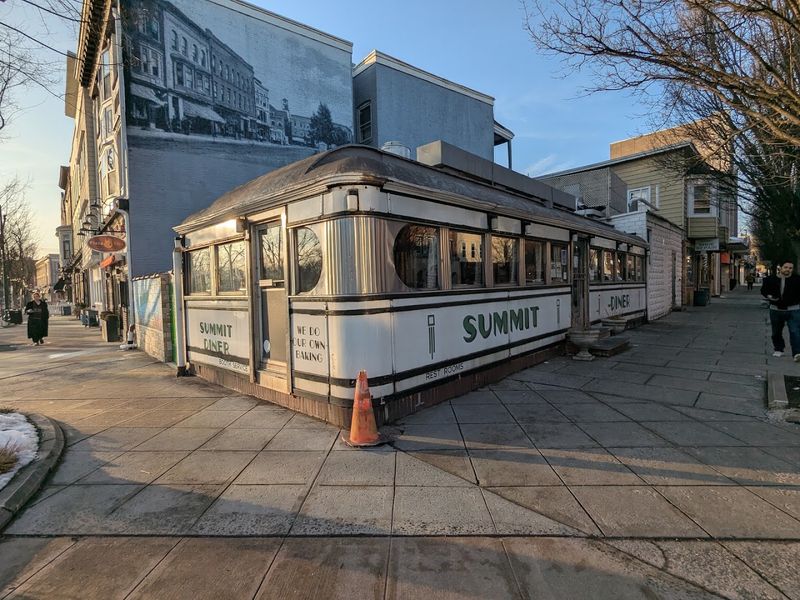
Across from the Summit train station sits one of New Jersey’s most storied diners, and its location is no accident. Summit Diner has been part of the commuter and local fabric of this town since the original railroad car diner opened in 1939, with the family ownership stretching back to 1928.
A 2025 Business Insider profile highlighted the diner’s original interior details, including mahogany wood trim and Italian marble countertops. Those are not the kinds of features most diners can claim, and they give the Summit Diner an interior that matches its exterior character in ways that feel genuinely special.
The train-station setting adds a layer of context that most breakfast spots simply do not have. This is a place that has been feeding commuters, locals, and weekend visitors for decades, and the rhythm of the room reflects that.
Counter seating, classic diner food, and a room full of people who clearly know exactly where they are going.
Ruth’s Diner, Salt Lake City, Utah
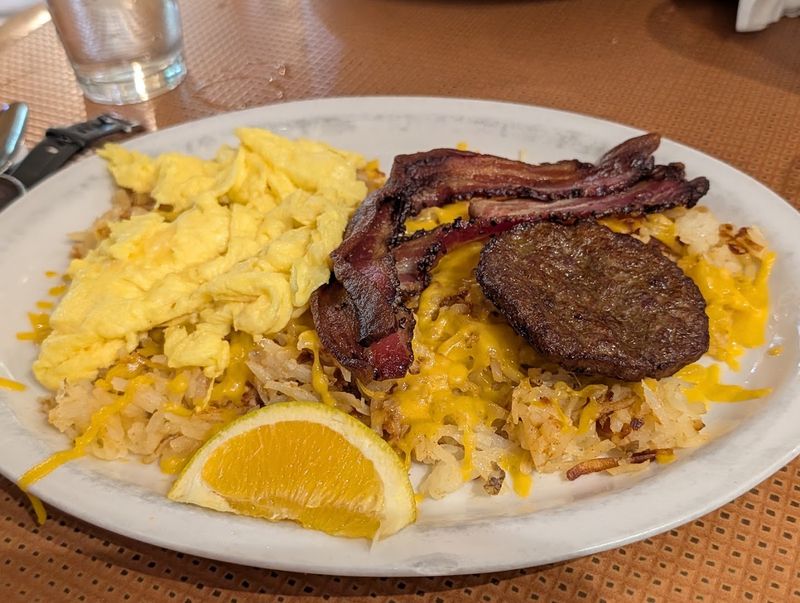
Ruth’s Diner started as Ruth’s Hamburgers in downtown Salt Lake City in 1930, which puts it squarely in the early era of American diner culture. Today it operates at 4160 Emigration Canyon Road, just minutes from downtown, in a setting that immediately separates it from the average city-corner breakfast spot.
Canyon scenery and Utah history give this diner a backdrop that most comfort-food restaurants can only imagine. The drive out Emigration Canyon is short but scenic, and arriving at a classic American diner after that approach makes the meal feel earned in a way that parking-lot diners rarely deliver.
The menu carries the comfort-food DNA you expect from a place with this much history: hearty breakfasts, familiar lunch plates, and the kind of food that does not ask too much of the person eating it. Ruth’s proves clearly that old-school diner culture is not limited to the Northeast, and Utah has been doing it right for nearly a century.
The Apple Pan, Los Angeles, California
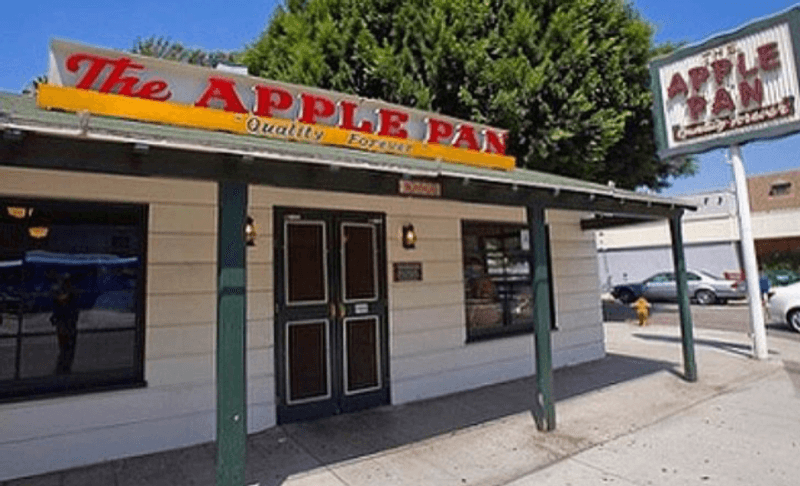
Opened in 1947, The Apple Pan operates from a small building in Los Angeles with a U-shaped counter and exactly 26 seats. In a city famous for reinventing itself constantly, this place has spent decades doing the opposite, and it has built a loyal following because of it.
The menu centers on the hickory burger, apple pie, and a focused list of diner staples that has not expanded dramatically since the restaurant opened. Current hours run from late morning into the evening, which gives it a longer daily window than many classic diner operations.
What makes The Apple Pan stand out in Los Angeles is not just the food but the stubbornness of its identity. There are no pages of options, no seasonal specials rotating through a chalkboard, and no redesigned interior chasing a new aesthetic.
It is tighter and more purposeful than that. In a sprawling, ever-changing city, that kind of commitment to simplicity is its own form of statement.
11th Street Diner, Miami Beach, Florida
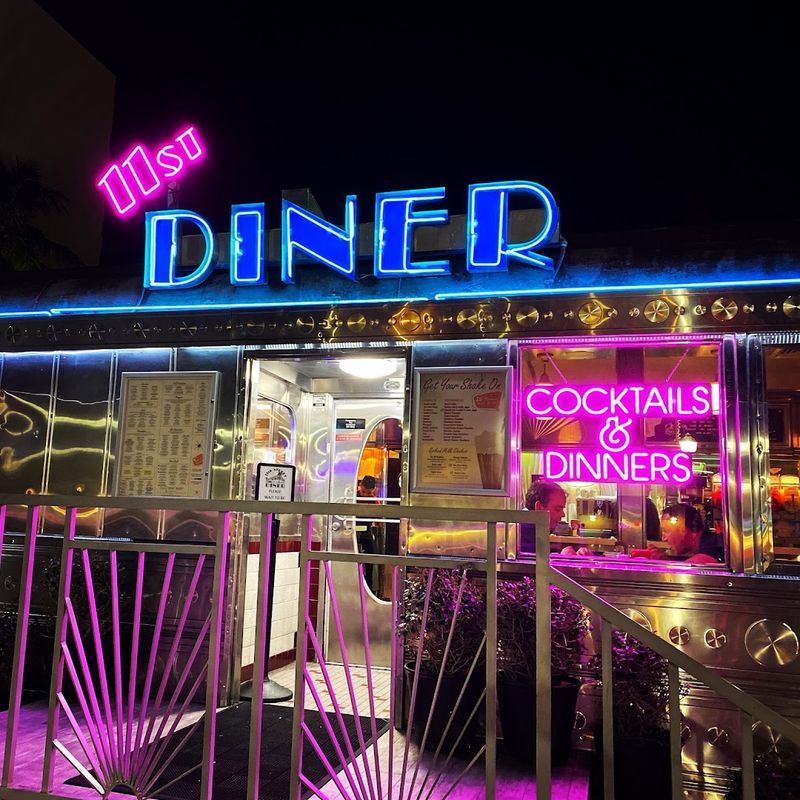
The dining car that houses 11th Street Diner was built in 1948 by the Paramount Dining Car Company in Haledon, New Jersey. It first operated in Wilkes-Barre, Pennsylvania before making its way to Miami Beach, where it now sits inside the Art Deco District.
That travel history gives the building a genuinely layered backstory.
The menu covers burgers, fries, milkshakes, and all-day breakfast, which fits naturally into the diner format. The contact page lists long daily hours, including 24-hour service on Fridays and Saturdays, making it one of the few old-school diner experiences in the country that runs through the night on weekends.
The contrast between the classic chrome diner car and the surrounding Art Deco architecture of Miami Beach creates a visual combination that is hard to find anywhere else. The neighborhood gives it a setting that feels cinematic without trying.
For anyone visiting South Beach, this is a breakfast or late-night stop with real American diner history baked into its walls.
Brent’s Drugs, Jackson, Mississippi
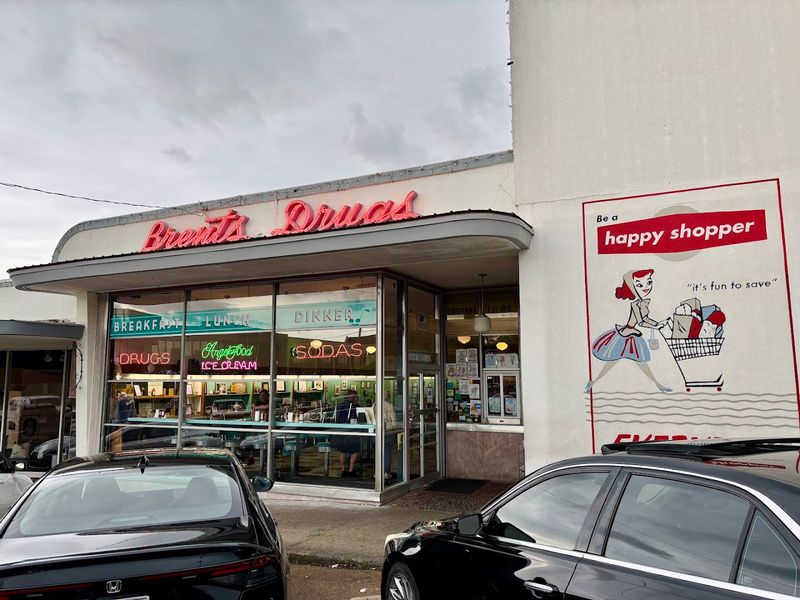
Brent’s Drugs has been Fondren’s original soda fountain and diner since 1946, and its turquoise interior and neon signage have made it one of the most visually distinctive diner experiences in the South. The look is not accidental.
It is a preserved aesthetic that connects the restaurant directly to its mid-century roots.
Visit Jackson notes that Brent’s appeared in the film The Help, which brought national attention to a place that Jackson locals had already known for generations. That kind of cultural recognition adds a layer of significance to a breakfast stop that already had plenty going for it.
Current hours show the diner operating through the week with extended Friday and Saturday hours and a Sunday brunch-style schedule. The menu follows classic soda fountain and diner traditions, with the setting doing as much work as the food in creating a memorable experience.
In Mississippi, where food and history are almost always intertwined, Brent’s Drugs earns its place on any serious diner list.
Blue Benn Diner, Bennington, Vermont
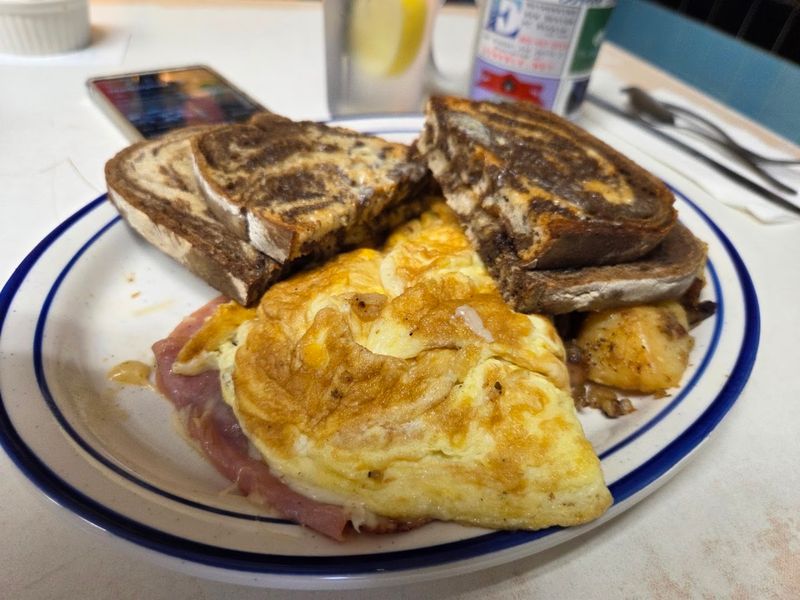
Blue Benn Diner is a 1957 Silk City diner car, which immediately gives it architectural credibility among diner enthusiasts. Located at 314 North Street in Bennington, it carries the look and feel of a genuine mid-century diner without relying on nostalgia as a gimmick.
The building is the real thing.
The official site describes the menu as going beyond standard diner fare while still honoring the classic diner-car format. That balance between tradition and a slightly expanded approach is part of what keeps Blue Benn relevant to a range of visitors, from strict diner purists to casual breakfast seekers passing through Vermont.
Hours run Tuesday through Sunday, with Monday closed, so planning ahead matters for anyone making a special trip. Bennington itself is a worthwhile Vermont destination, and Blue Benn fits naturally into a day spent exploring the town.
For road trippers moving through the Green Mountains, this is the kind of counter stop that turns a functional meal break into something genuinely worth remembering.
Phillips Avenue Diner, Sioux Falls, South Dakota
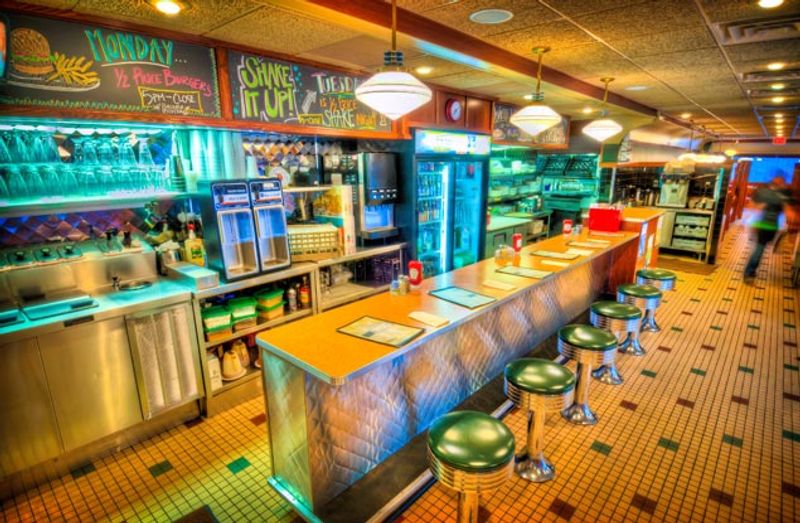
Phillips Avenue Diner started as a silver Airstream trailer that, according to its own official description, wanted to be a vintage restaurant. That origin story is quirky and specific in exactly the right way.
It gives the place a personality before you even walk through the door.
Now located at 121 South Phillips Avenue in the heart of downtown Sioux Falls, the diner serves all-day breakfast and classic diner fare with regular operating hours. It is a strong example of how old-school diner style can take root in a modern downtown corridor without feeling out of place or forced.
South Dakota does not always come up in conversations about American diner culture, and that is part of what makes this stop interesting. Phillips Avenue Diner brings the counter-and-malt-shop feeling to a city that has its own distinct Midwest identity.
For travelers cutting through the region, this is the kind of breakfast stop that shifts a routine highway break into a meal with actual character behind it.
Original Market Diner, Dallas, Texas
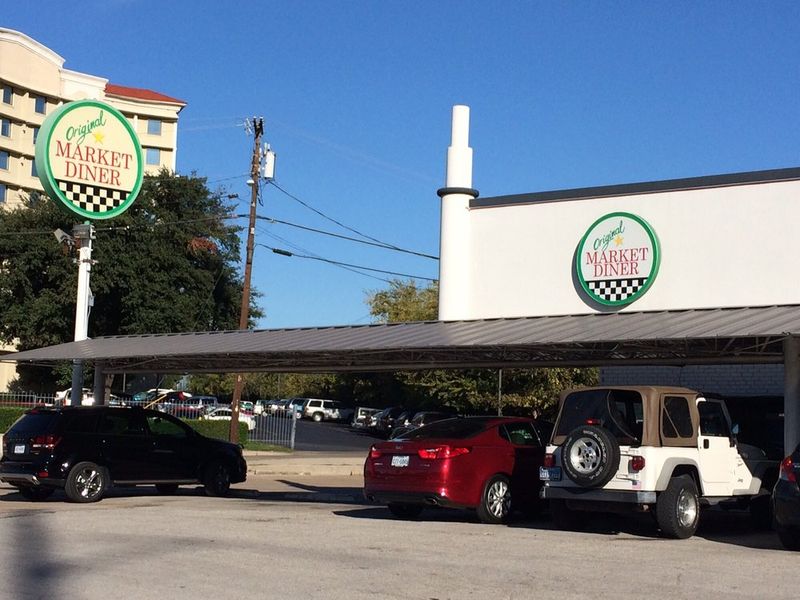
Dallas has a classic diner in the form of Original Market Diner, which has been operating at 4434 Harry Hines Boulevard since 1976. That founding year puts it on the younger end of this list, but the diner’s no-fuss identity and consistent operation over nearly five decades earn it a legitimate place among American old-school institutions.
The official site describes it as Dallas’ classic diner, and the daily breakfast-and-lunch hours reflect that straightforward positioning. Early opens, hearty food, and a local following built over generations are the pillars that keep a place like this going in a city that has seen enormous growth and change around it.
Texas does not have as many original railroad-car diners as the Northeast, but diner culture in the state has its own character. Original Market Diner represents that Texas version: unpretentious, reliable, and built for people who want a real meal at a real counter without any performance attached to it.
That is exactly what a diner is supposed to be.
Share this story