
Long before science explained the world around us, people turned to superstitions to make sense of bad luck, illness, and misfortune. These beliefs were passed down through generations and taken seriously by everyday people, from farmers to kings.
Some of these superstitions are still recognized today, even if most of us no longer follow them. Looking back at these old beliefs gives us a fascinating glimpse into how our ancestors understood the world.
1. Breaking a Mirror Brings Seven Years of Bad Luck
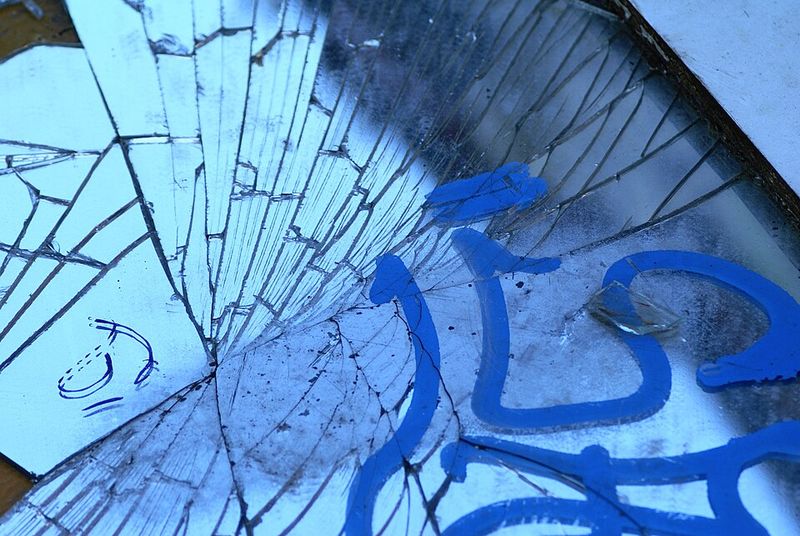
Ancient Romans had a fascinating reason for fearing broken mirrors. They believed mirrors held a piece of a person’s soul, so cracking one meant damaging the spirit itself.
That spiritual injury, they thought, would take seven years to fully heal.
The number seven was considered significant in Roman culture, tied to cycles of health and renewal. Beyond the soul theory, mirrors were once expensive and rare, so breaking one was also a serious practical loss.
The superstition helped discourage carelessness.
Even today, many people feel a small jolt of unease when a mirror breaks. Some still toss the broken pieces over their left shoulder or bury them in the ground to “break” the curse.
Whether or not you believe it, the superstition has survived for thousands of years, which says something remarkable about how deeply it was once trusted.
2. Black Cats Are Omens of Misfortune

Few superstitions have stuck around as stubbornly as the fear of black cats crossing your path. In medieval Europe, black cats became closely linked with witchcraft.
Many people believed they were companions to witches, or even witches themselves who had transformed into feline form.
Church authorities sometimes encouraged this fear, which led to widespread mistrust of black cats during the Middle Ages. Ironically, in ancient Egypt, all cats were considered sacred and lucky.
The same animal meant completely different things depending on where and when you lived.
Today, black cats are beloved pets, but animal shelters still report that they are adopted less frequently than other cats, possibly due to lingering cultural bias. The superstition has faded, but it has not fully disappeared.
Their mysterious appearance and quiet movement at night made them easy targets for fearful imaginations in earlier centuries.
3. Walking Under a Ladder Invites Bad Luck

A ladder leaning against a wall naturally forms a triangle with the ground. To many ancient cultures, that triangle was a sacred shape, sometimes representing the Holy Trinity in Christian tradition.
Passing through it was seen as breaking something holy and inviting punishment.
Earlier Egyptian beliefs also connected triangles with the pyramids and divine order, making it disrespectful to disturb that shape. On a more practical level, walking under a ladder genuinely could get you hit by a falling tool or bucket, so the warning made real-world sense too.
To undo the bad luck of accidentally walking under one, some traditions suggested crossing your fingers until you saw a dog, or spitting three times through the rungs. The superstition blended spiritual meaning with common sense in a way that made it feel completely logical to people at the time.
Many still avoid ladders today.
4. Knocking on Wood Prevents Misfortune

You have probably said something like “knock on wood” without thinking twice about it. But this phrase has ancient roots that go back thousands of years.
Many early cultures, including Celtic and Norse peoples, believed that trees were home to powerful spirits and gods.
Touching or knocking on a tree was a way to call upon those spirits for protection or to say thank you for good fortune. Some historians also connect the practice to early Christian traditions, where touching wood symbolized the wooden cross.
The exact origin is debated, but the habit spread across many cultures.
Today it functions more as a playful ritual than a serious belief, but people still do it constantly. Saying something good is happening and then quickly knocking on wood feels almost automatic.
That kind of deeply ingrained habit shows just how powerfully old superstitions can embed themselves into everyday language and behavior over centuries.
5. Opening an Umbrella Indoors Brings Trouble

Opening an umbrella inside a home might seem harmless, but generations of people treated it as a serious mistake. One popular explanation traces this belief to ancient Egypt, where parasols and canopies were used to honor the sun god.
Opening one indoors was considered an insult to that deity, as if you were blocking divine light in a place where it did not belong.
A more practical explanation comes from 18th-century England, when early umbrellas had stiff metal spokes that could spring open violently. Opening one indoors risked injuring someone or knocking over fragile objects.
The superstition may have started as a sensible safety warning that gradually took on a more supernatural meaning.
Either way, the belief spread widely and became a firm household rule in many families. Some people still feel slightly uncomfortable opening an umbrella indoors, even if they cannot explain exactly why.
Old habits have a way of outlasting the reasons behind them.
6. Friday the 13th Is Unlucky
Few dates carry as much cultural weight as Friday the 13th. The fear of this day combines two separate old beliefs that eventually merged into one powerful superstition.
The number 13 has long been considered unlucky in Western culture, partly because it follows 12, which was seen as a number of completeness.
Fridays were also viewed with suspicion in Christian tradition, as Jesus was believed to have been crucified on a Friday. When the two fears combined, the result was a day that made many people genuinely anxious.
The specific phrase “Friday the 13th” became widely used in the early 20th century.
The fear even has an official name: paraskevidekatriaphobia. Studies have suggested that some people avoid travel, business decisions, and major activities on this date.
Whether the day is truly unlucky or not, its reputation has made it one of the most well-known superstitions in the modern world.
7. A Bird Flying Into the House Foretells Death

Imagine sitting quietly at home when a bird suddenly flies through an open window. For centuries, many people across Europe would have taken that as a deeply alarming sign.
Birds were widely seen as messengers between the living world and the spirit world, so an unexpected indoor visit felt like a warning from beyond.
Different birds carried different meanings. A robin indoors was especially feared in some English traditions, while a sparrow was considered an omen of death in others.
The type of bird and the direction it flew could all affect how the omen was interpreted.
Historians believe this superstition likely grew from the simple fact that birds rarely enter homes on purpose, making the event feel strange and unnatural. When something unusual happened and a death followed shortly after, people connected the two.
Over time, the pattern became a firm belief that was passed down through generations without question.
8. Spilling Salt Brings Bad Luck

Salt was not always something you could buy cheaply at a grocery store. For much of human history, it was a rare and precious commodity used to preserve food, pay workers, and seal agreements.
The word “salary” actually comes from the Latin word for salt, showing just how valuable it once was.
Spilling salt was therefore seen as a serious waste and a sign of carelessness or bad fortune ahead. Some connected the belief to Leonardo da Vinci’s famous painting of the Last Supper, where Judas appears to have knocked over a salt shaker.
This linked spilled salt with betrayal and disaster.
The traditional remedy was to immediately throw a pinch of salt over your left shoulder, which was believed to blind any evil spirits lurking behind you. Even now, many people reflexively toss salt over their shoulder after a spill without fully knowing why.
The habit has simply stuck around.
9. The Evil Eye Can Cause Harm
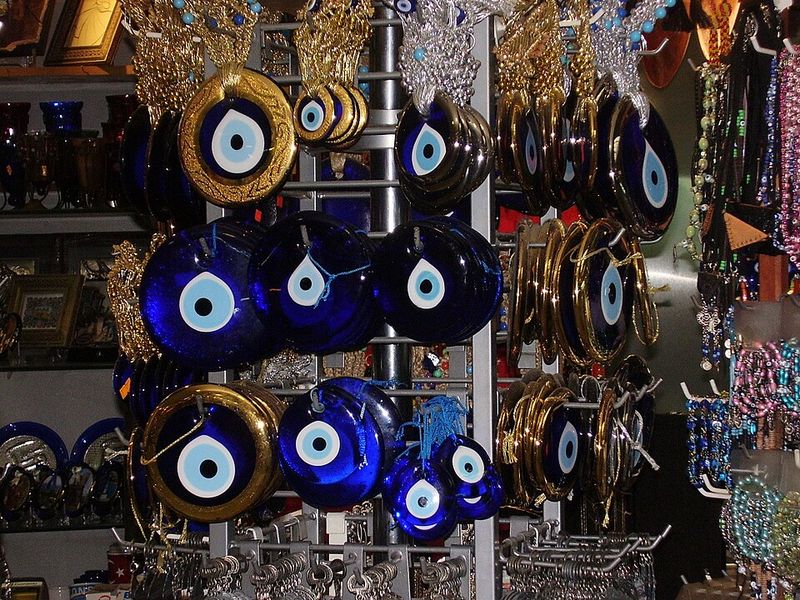
The belief in the evil eye is one of the oldest and most widespread superstitions in human history. Found across the Mediterranean, Middle East, South Asia, and Latin America, the core idea is simple: a jealous or malicious glance from another person can cause real harm to the target, including illness, bad luck, or even death.
The look does not have to be intentional. Even an admiring stare from someone filled with envy was thought to carry dangerous energy.
Babies and young children were considered especially vulnerable, which is why protective amulets were often placed in nurseries or worn by infants.
The famous blue eye-shaped amulet, known as the nazar, is still widely used today in Turkey, Greece, and surrounding regions. People hang them in homes, wear them as jewelry, and attach them to cars.
For millions of people, the evil eye is not just an old story but a daily reality.
10. Witches Could Spoil Milk and Crops
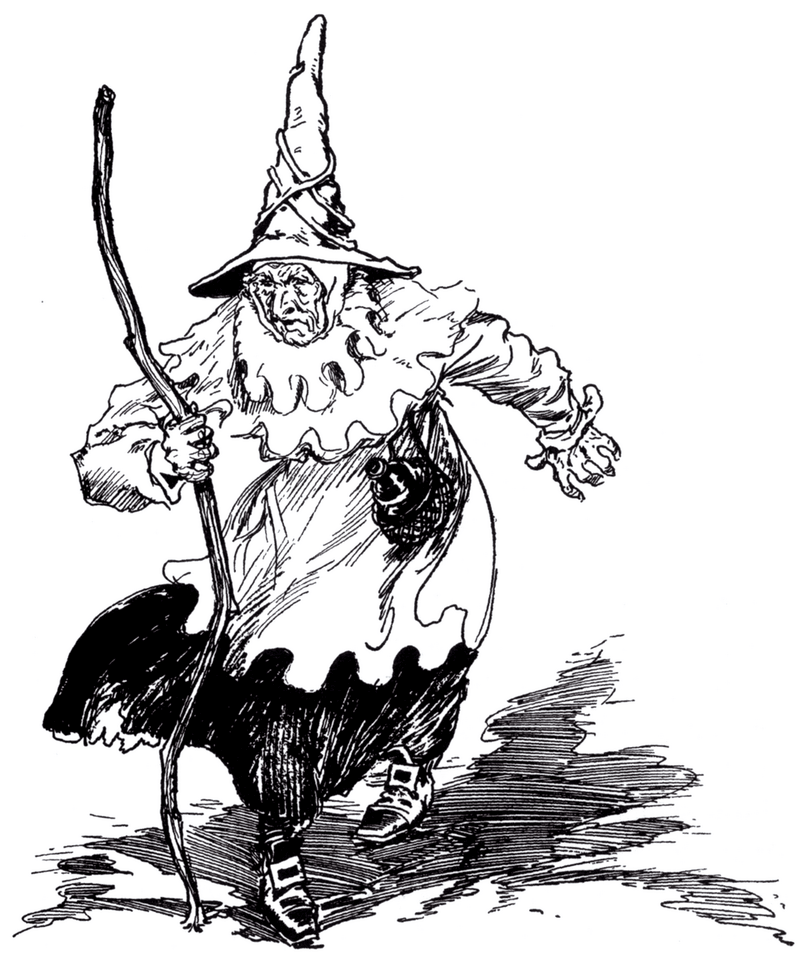
Before people understood bacteria, weather patterns, or plant diseases, a ruined harvest or a cow that stopped producing milk was deeply mysterious and frightening. For farming families who depended entirely on their crops and livestock to survive, unexplained failures felt like something far worse than bad luck.
Blaming witchcraft provided an explanation that made sense within the worldview of the time. A neighbor’s jealousy, a muttered curse, or a secret ritual could supposedly destroy a season’s worth of work overnight.
This belief was especially strong in rural England, Scotland, and colonial America.
Suspected witches were sometimes tried and punished based on little more than a spoiled dairy batch or a dying animal. The superstition had very real and tragic consequences for those accused.
Looking back, most of these events had straightforward natural causes, but without scientific knowledge, supernatural explanations felt both reasonable and necessary to frightened communities.
11. Owls Predict Death

Owls have always had an air of mystery about them. They fly silently through the darkness, call out in haunting tones, and seem to watch everything with an unblinking stare.
It is no surprise that many cultures throughout history decided they must be connected to death or the supernatural.
In ancient Rome, the deaths of Julius Caesar and Augustus were said to have been foretold by the hoot of an owl. Many Native American traditions also viewed owls as messengers from the spirit world.
In parts of Africa and the Middle East, hearing an owl at night was considered a direct warning that someone nearby would soon die.
Owls are actually beneficial birds that help control rodent populations, but their nocturnal habits made them easy to fear. The combination of silence, darkness, and a piercing gaze gave them an otherworldly reputation that no amount of scientific understanding has fully erased from popular culture.
12. Horseshoes Bring Good Fortune

Walk into an old farmhouse and you might still spot a horseshoe nailed above the front door. This tradition goes back centuries and is rooted in the belief that iron had magical properties.
Many ancient cultures thought iron could repel evil spirits, fairies, and other supernatural threats that might enter a home.
The horseshoe shape itself added extra meaning. Its curved form was associated with the crescent moon, which held protective symbolism in many traditions.
The debate over which direction to hang it has never been fully settled. Some say open end up holds the luck inside like a cup, while others say open end down lets the luck pour down onto everyone who enters.
Horseshoes were also associated with blacksmiths, who were considered powerful figures capable of working with fire and metal. That combination of sacred materials and skilled craft made the horseshoe feel like a genuinely powerful charm worth keeping close to home.
13. Comets Signal Disaster

For most of human history, the sudden appearance of a bright comet in the night sky was not a cause for wonder but for terror. Unlike the predictable movements of stars and planets, comets appeared without warning, blazed across the sky, and then vanished.
That unpredictability made them feel like messages from a higher power.
The appearance of Halley’s Comet in 1066 was recorded in the Bayeux Tapestry and was widely seen as a sign foretelling the Norman Conquest of England. When rulers died or wars broke out shortly after a comet appeared, the connection seemed undeniable to people at the time.
Historians have noted that comets were so feared that some rulers reportedly went into hiding when one appeared. Today we understand comets as frozen bodies of rock and ice traveling through the solar system on predictable orbits.
But for centuries, their arrival meant one thing: something terrible was coming.
14. Birthmarks Reveal Events from a Past Life

Birthmarks have puzzled people for thousands of years. Without any medical explanation for why some babies are born with unusual marks on their skin, many cultures turned to spiritual or mystical reasoning.
One of the most enduring ideas was that birthmarks were scars or imprints carried over from a previous life.
In some South Asian and African traditions, families would carefully examine a newborn’s birthmarks and compare them to marks on recently deceased relatives, believing the child might be that person reborn. A mark in a specific location was thought to correspond to a wound, an event, or a strong emotion from the soul’s past existence.
Some researchers studying reincarnation claims have documented cases where children described past lives that seemed to match their birthmark locations with historical records. Whether or not those accounts are convincing, the idea that our bodies carry stories from before our birth remains one of the more poetic and enduring superstitions ever recorded.
15. A Rabbit’s Foot Brings Luck
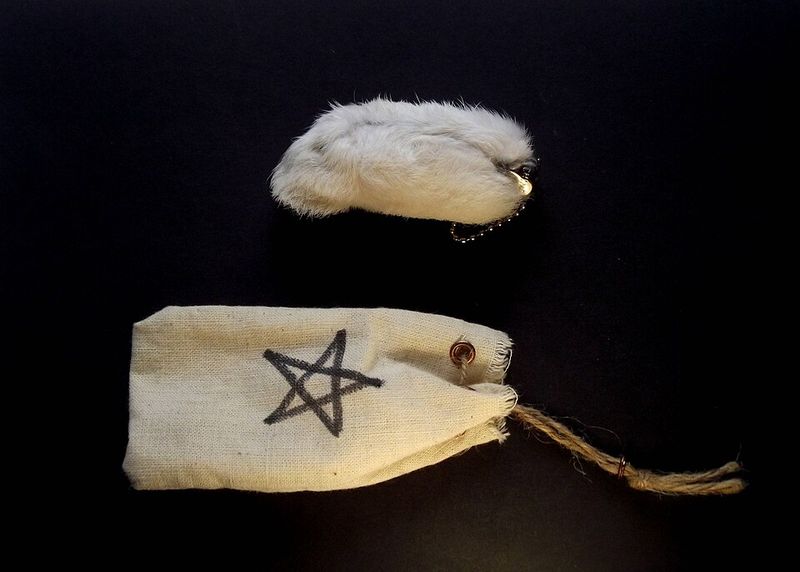
Carrying a rabbit’s foot as a lucky charm became one of the most recognizable superstitions in American culture, but its roots go back much further. The belief likely originated in Celtic traditions in Britain, where rabbits were thought to be magical creatures because they lived underground, close to the spirits of the earth.
Not just any rabbit’s foot would do, though. Tradition held that it had to be the left hind foot, taken from a rabbit caught in a cemetery under specific moon conditions.
The more precise the ritual, the stronger the charm was believed to be. These specific rules gave the superstition a sense of seriousness and structure.
By the late 19th and early 20th centuries, rabbit’s foot charms were being mass-produced and sold across the United States. Athletes, gamblers, and travelers carried them for confidence and comfort.
Today they are less common, but they remain a recognizable symbol of the human desire to hold onto something that feels lucky.
Share this story