Europe is filled with unforgettable cities, but some of its most memorable destinations are the smaller towns that have preserved their unique character for centuries. Whether perched on cliffs, hidden among vineyards, surrounded by fjords, or built from volcanic stone, these towns offer experiences you simply won’t find anywhere else.
From fairy-tale rooftops in Italy to medieval citadels in Romania, each place on this list has something truly special to offer. Pack your bags and get ready to discover the towns that most tourists overlook but every traveler should see.
Alberobello, Italy
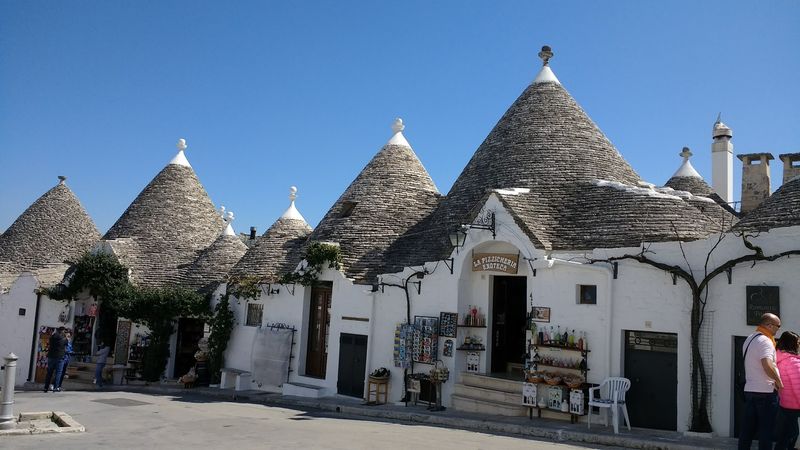
Walking through Alberobello feels like stepping into a storybook that nobody told you existed. This small town in southern Italy is famous for its trulli, ancient whitewashed limestone houses topped with cone-shaped stone roofs.
There is nothing quite like them anywhere else on the planet.
The trulli date back to the 14th century, and locals built them without mortar so they could be quickly dismantled to avoid taxation. That clever construction trick became the foundation of a UNESCO World Heritage Site.
Today, over 1,500 trulli still stand in the town’s historic Rione Monti district.
Many trulli have been converted into shops, restaurants, and guesthouses, so you can actually sleep inside one. The best time to visit is in the early morning before crowds arrive, when the white rooftops glow softly in the sunlight.
Alberobello sits in the Puglia region, making it easy to combine with other southern Italian destinations like Matera or Lecce. This is the kind of town that makes you double-check your photos because they look too magical to be real.
Motovun, Croatia
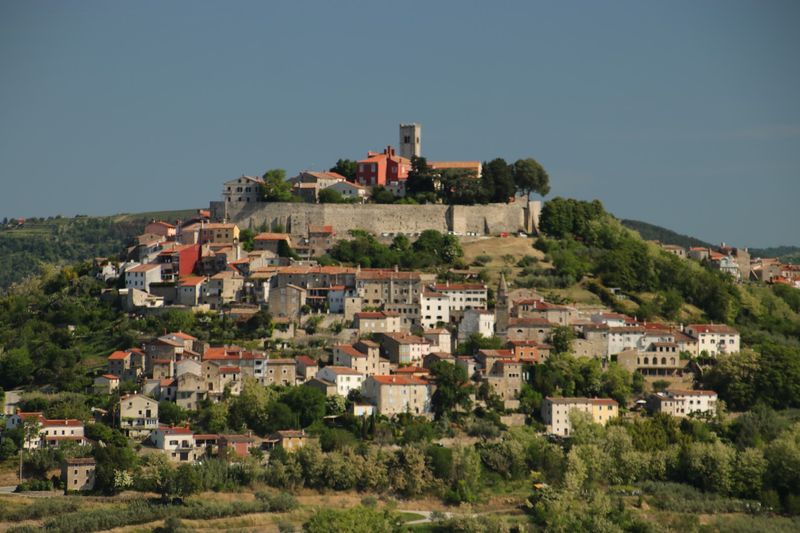
Perched high on a forested hilltop in the heart of Istria, Motovun is the kind of place that makes you feel like you have discovered a secret. The drive up alone is an experience, winding through valleys thick with oak trees hiding one of Europe’s most prized culinary treasures: truffles.
Yes, the surrounding forests produce some of the finest truffles in the world.
Once you pass through the medieval gates, the town opens up into a charming maze of cobbled streets, Renaissance buildings, and panoramic views that stretch across the Mirna River valley. The ancient walls that circle the town are completely walkable, offering a stunning 360-degree view at every turn.
Motovun hosts a beloved international film festival each summer, drawing visitors who mix cinema with wine and truffles in a setting that feels almost surreal. The local Malvazija wine pairs perfectly with truffle pasta at one of the small restaurants tucked along the main street.
Fewer than 500 people live here year-round, which means the atmosphere stays refreshingly unhurried. Motovun rewards slow travelers who actually stop to look around.
Hallstatt, Austria
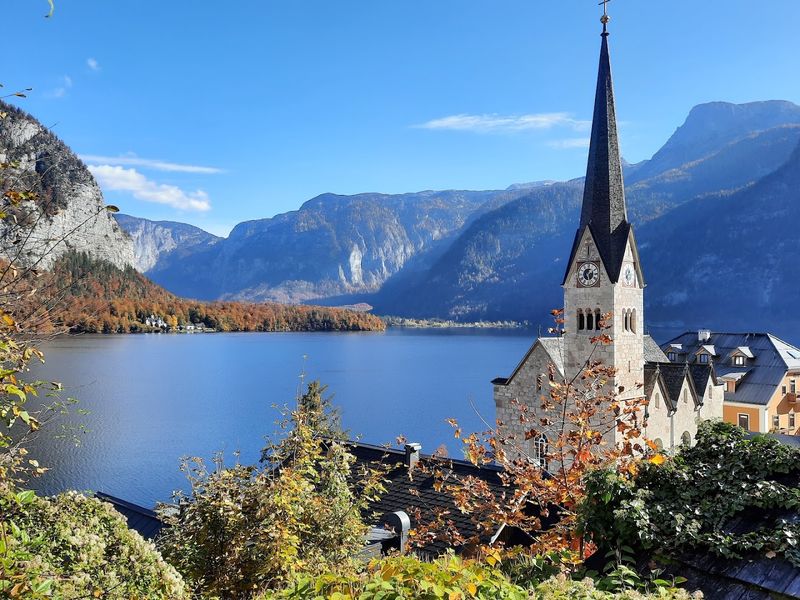
There is a reason China built an entire replica of Hallstatt in Guangdong Province. This tiny Austrian village, wedged between a towering mountain and a glassy alpine lake, is so breathtakingly beautiful that people literally could not leave it alone.
The original, thankfully, is still very much worth visiting.
Hallstatt has been inhabited for over 7,000 years, making it one of the oldest settlements in Europe. The town gave its name to an entire era of European prehistory called the Hallstatt culture, thanks to the ancient salt mines that made this community wealthy long before tourism existed.
You can still tour those mines today, sliding down miners’ chutes just like workers did centuries ago.
The lakeside promenade is lined with pastel-colored houses that seem to float above the water, and the reflection on calm mornings is genuinely jaw-dropping. Arrive before 9 a.m. to experience the town without the tour groups that flood in by midday.
The nearby Dachstein Ice Caves add another layer of wonder to any visit. Hallstatt is small enough to explore in a day but meaningful enough to stay longer.
Giethoorn, Netherlands
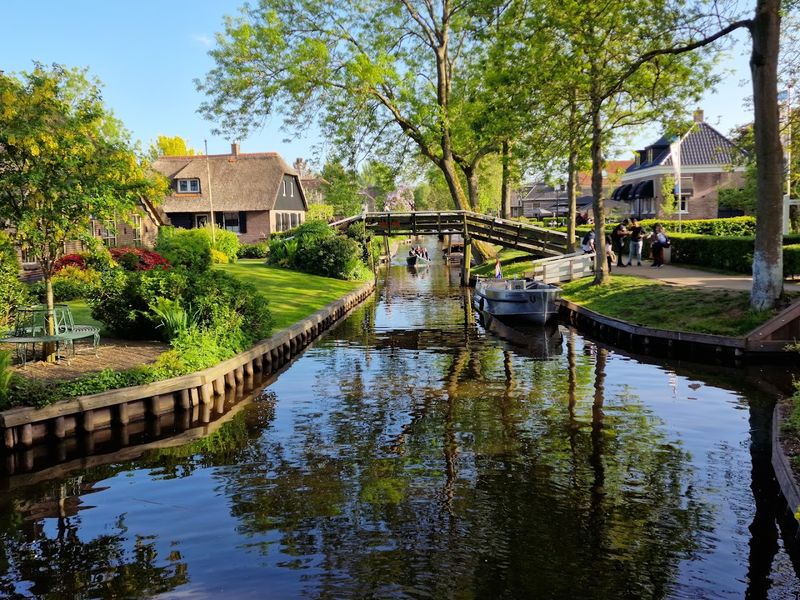
Forget roads. In Giethoorn, the main highway is a canal.
This extraordinary Dutch village in the Overijssel province has almost no paved streets in its historic center, meaning the best way to get around is by hopping into a small electric boat called a whisper boat. The nickname says it all: this place is wonderfully, almost impossibly quiet.
The village was founded in the 13th century by a group of religious refugees who discovered goat horns buried in the peat, giving the town its name, which roughly translates to goat horns. Over time, locals dug canals to transport peat, accidentally creating one of the most scenic water networks in Europe.
Around 180 wooden bridges now connect the different parts of the village.
Thatched-roof farmhouses sit directly on the water’s edge, surrounded by wild reeds and flowering gardens that bloom brilliantly in spring. Renting a boat is easy and requires no license for the electric versions, making it accessible for everyone.
The village gets busy on summer weekends, so a weekday visit is highly recommended. Giethoorn proves that sometimes the most extraordinary places are the ones built entirely by accident.
Cesky Krumlov, Czechia
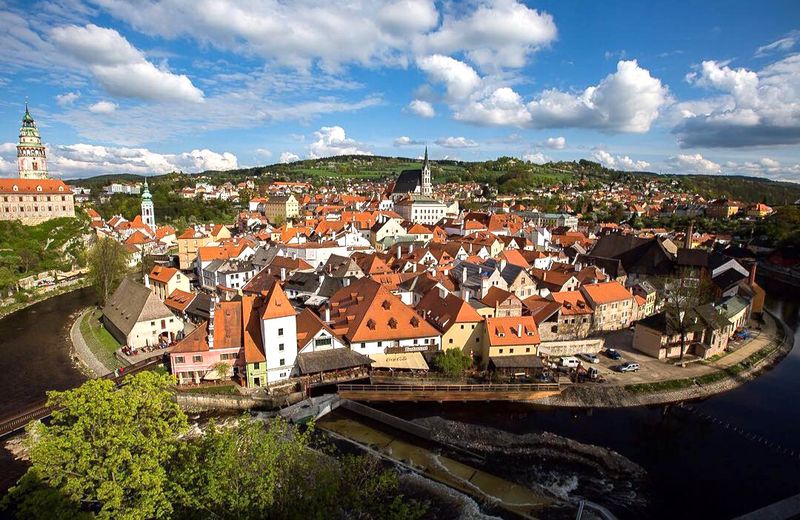
Wrapped inside a dramatic horseshoe bend of the Vltava River, Cesky Krumlov looks like it was designed by someone who wanted to create the perfect medieval town and somehow succeeded. The massive castle that towers above the red-roofed buildings is the second largest in Bohemia, and it has been watching over this town since the 13th century.
The old town below the castle is a UNESCO World Heritage Site, filled with Renaissance and Baroque architecture that survived both World Wars largely intact. Winding cobblestone lanes connect small squares, independent bookshops, and cozy wine bars in a layout that rewards aimless wandering.
Getting lost here is not a problem; it is the whole point.
The castle complex includes a Baroque theater with original stage machinery still in working condition, a rarity anywhere in the world. In summer, the town hosts outdoor performances and classical music events inside the castle gardens.
Cesky Krumlov is just a two-hour bus ride from Prague, making it an easy and highly worthwhile day trip. That said, staying overnight lets you experience the town after the day crowds thin out, revealing a much quieter and more atmospheric side.
Meteora (Kalambaka), Greece
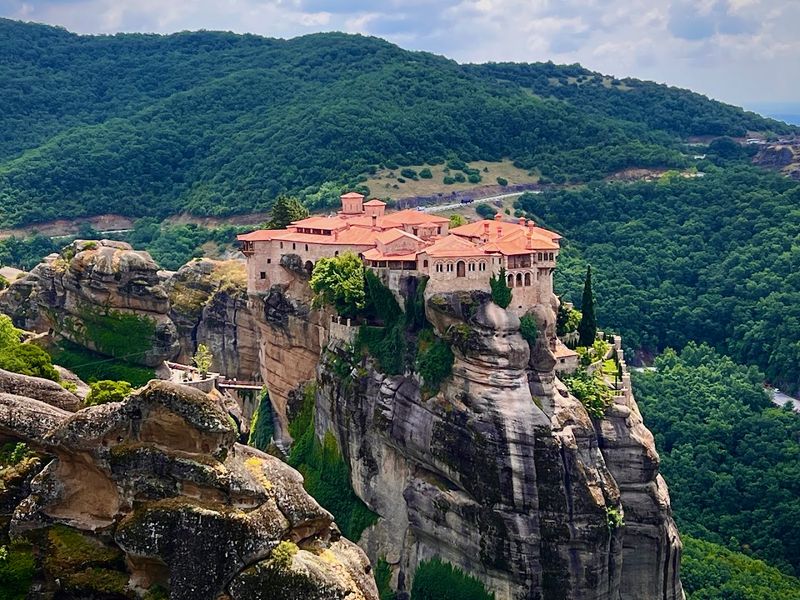
Seeing Meteora for the first time genuinely makes people stop mid-sentence. The sight of centuries-old monasteries sitting on top of sheer sandstone pillars rising hundreds of meters from the valley floor is one of those experiences that simply does not translate well into photographs, no matter how hard you try.
The town of Kalambaka sits at the base of these formations and serves as the main base for exploring Meteora. There are six active monasteries still open to visitors today, down from a peak of 24 during the 14th and 15th centuries.
Monks originally reached them using rope ladders and nets, which were only replaced with carved steps in the 20th century.
Sunrise and sunset are the most magical times to visit, when the light hits the rock formations and turns everything golden. Modest dress is required to enter the monasteries, so bring a scarf or long skirt if needed.
The area also has excellent hiking trails that wind between the pillars and offer views that no road can provide. Meteora was used as a filming location for the James Bond film For Your Eyes Only, and it is easy to understand why.
Few places on Earth feel this otherworldly.
Dinant, Belgium
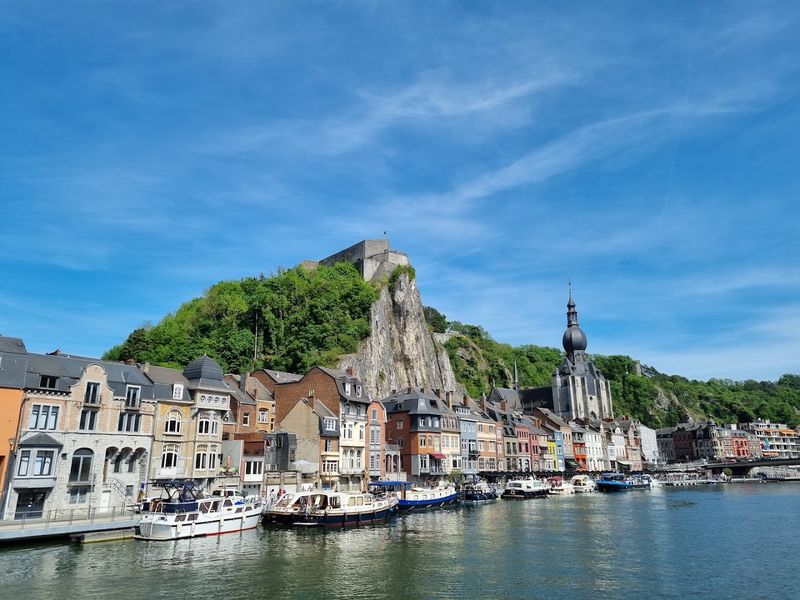
Squeezed dramatically between a sheer limestone cliff and the wide Meuse River, Dinant has one of the most striking silhouettes of any small town in Europe. The onion-shaped dome of the Collegiate Church of Notre-Dame presses right up against the rock face as if the cliff itself is trying to push it into the river.
Perched 100 meters above on the cliff is the Citadel of Dinant, accessible by cable car or a punishing 408-step staircase for the more adventurous. The views from the top are absolutely worth either option.
The citadel has a long military history and now houses a fascinating weapons museum covering conflicts from the Middle Ages through both World Wars.
Dinant also holds the surprising distinction of being the birthplace of Adolphe Sax, the Belgian inventor who created the saxophone in 1846. Giant saxophone sculptures now decorate the town’s main bridge in his honor, which gives the whole place a slightly playful edge.
The town is also known for couques de Dinant, rock-hard spiced biscuits that have been made here for over 600 years. Dinant is compact, walkable, and genuinely full of personality, making it one of Belgium’s most underrated stops.
Kotor, Montenegro
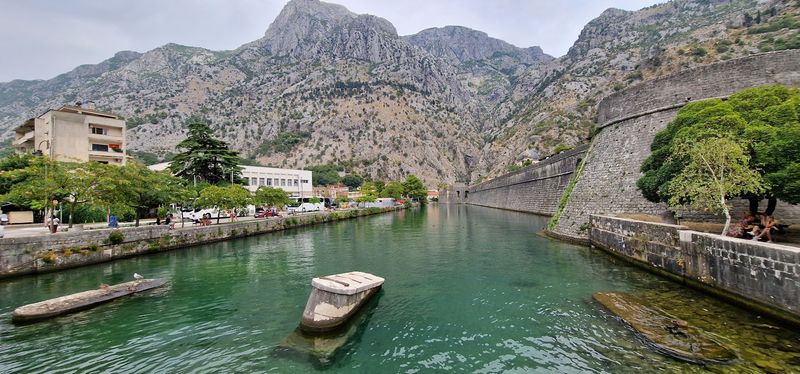
Kotor is the town that makes people reconsider everything they thought they knew about the Balkans. Tucked inside a deep, fjord-like bay surrounded by jagged limestone mountains, this compact walled city looks like Venice decided to relocate somewhere far more dramatic and never looked back.
The old town is encircled by medieval walls that stretch nearly five kilometers and climb all the way up the mountain behind the city. Hiking to the fortress at the top takes about an hour and delivers one of the most rewarding views in all of southern Europe.
The bay shimmering below, framed by mountain peaks, is genuinely breathtaking.
Inside the walls, the streets are a maze of Venetian palaces, Romanesque churches, and small squares where cats lounge in patches of sunlight. Kotor is famously a cat town, with hundreds of free-roaming cats considered part of the city’s identity and even celebrated in a local cat museum.
The town is a UNESCO World Heritage Site and a popular cruise ship stop, so mornings before 10 a.m. are the best time to explore without the crowds. Montenegro may be small, but Kotor alone makes the entire country worth visiting.
Tubingen, Germany
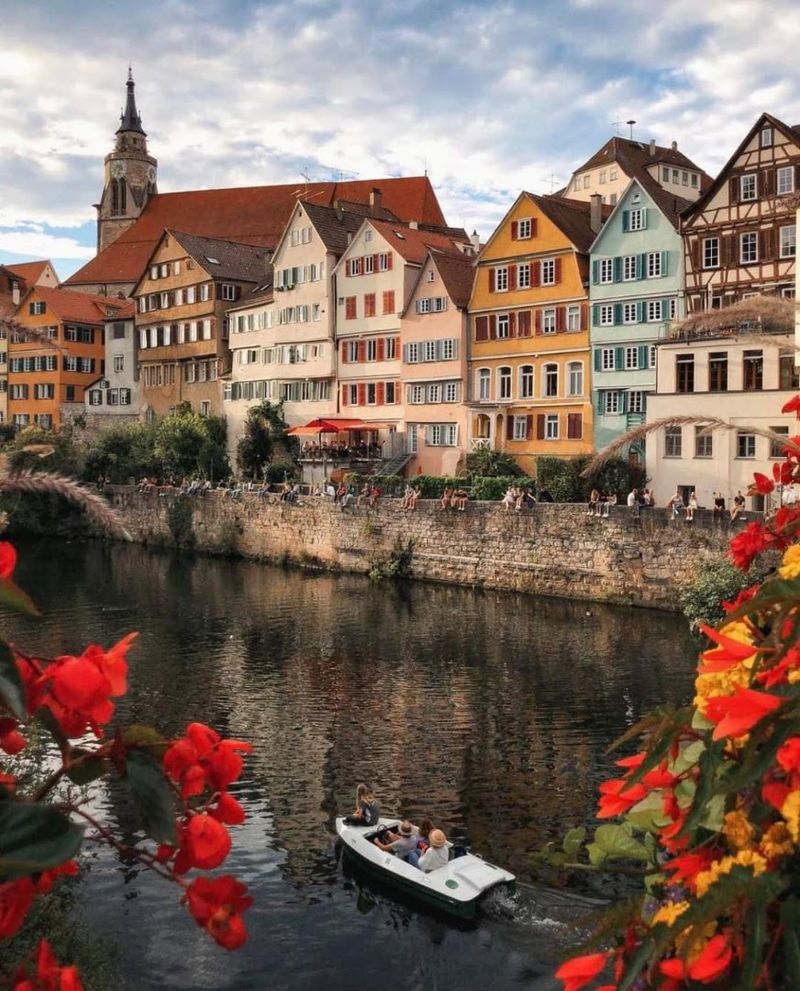
Not many towns can claim that both Kepler and Hegel studied within their walls, but Tubingen wears its intellectual history lightly and with considerable charm. This university town in Baden-Wurttemberg has been shaping German thought since 1477, yet it never feels stuffy or museum-like.
The students keep things very much alive.
The Neckar River curves through the center of town, and one of the most beloved local traditions is punting on flat-bottomed boats called Stocherkahne. Student teams race these boats every year in a chaotic and highly entertaining competition that draws crowds from across the region.
Watching a punt race is one of those only-in-Tubingen moments that guidebooks rarely capture well.
The old town climbs steeply from the riverbank up to Hohentubingen Castle, passing rows of brilliantly colored half-timbered houses that lean at charming angles over narrow lanes. The Holderlin Tower, where the poet Friedrich Holderlin lived for 36 years, sits right on the riverbank and is open to visitors.
Tubingen has a lively cafe culture, excellent bookshops, and a weekly market that fills the main square with local produce and flowers. It is the kind of place that feels genuinely lived-in and all the better for it.
Rovinj, Croatia
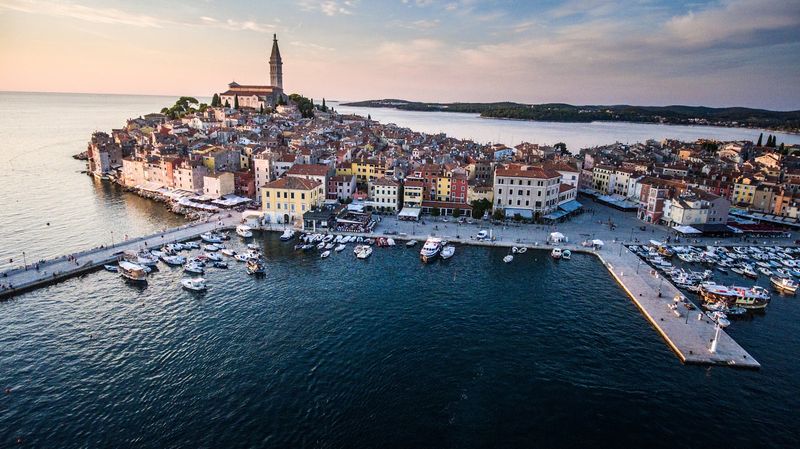
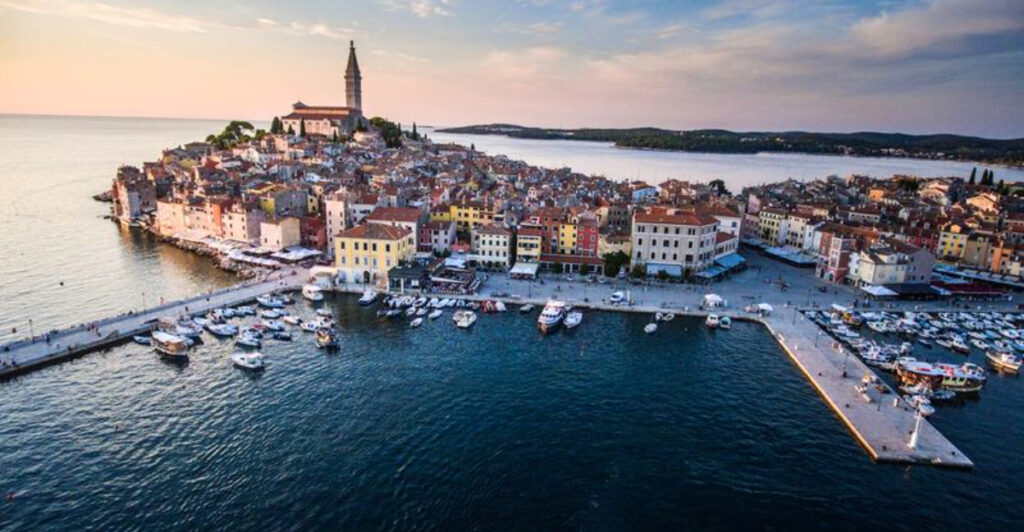
On a clear evening in Rovinj, the hilltop church of Saint Euphemia glows orange above a cluster of pastel-colored buildings tumbling toward the Adriatic Sea, and the whole scene looks almost too picturesque to be real. This is one of those towns where you take a photo, look at it, and immediately want to move there permanently.
Rovinj was under Venetian rule for nearly 400 years, and that influence is visible everywhere, from the stone campanile to the narrow lanes so tight that neighbors can shake hands from their windows. The old town sits on a peninsula, meaning the sea is never far away no matter which direction you wander.
The harbor is still working, with fishing boats heading out before dawn each morning alongside tourist vessels and sailing yachts. Fresh seafood is a serious business here, and the waterfront restaurants serve grilled fish that was swimming just hours before.
The nearby Rovinj archipelago, a cluster of small islands, is perfect for a day trip by kayak or boat. Rovinj is busiest in July and August, but shoulder season visits in May or September offer warm weather, calmer streets, and noticeably lower prices.
It is the Croatia that postcards were invented for.
Obidos, Portugal
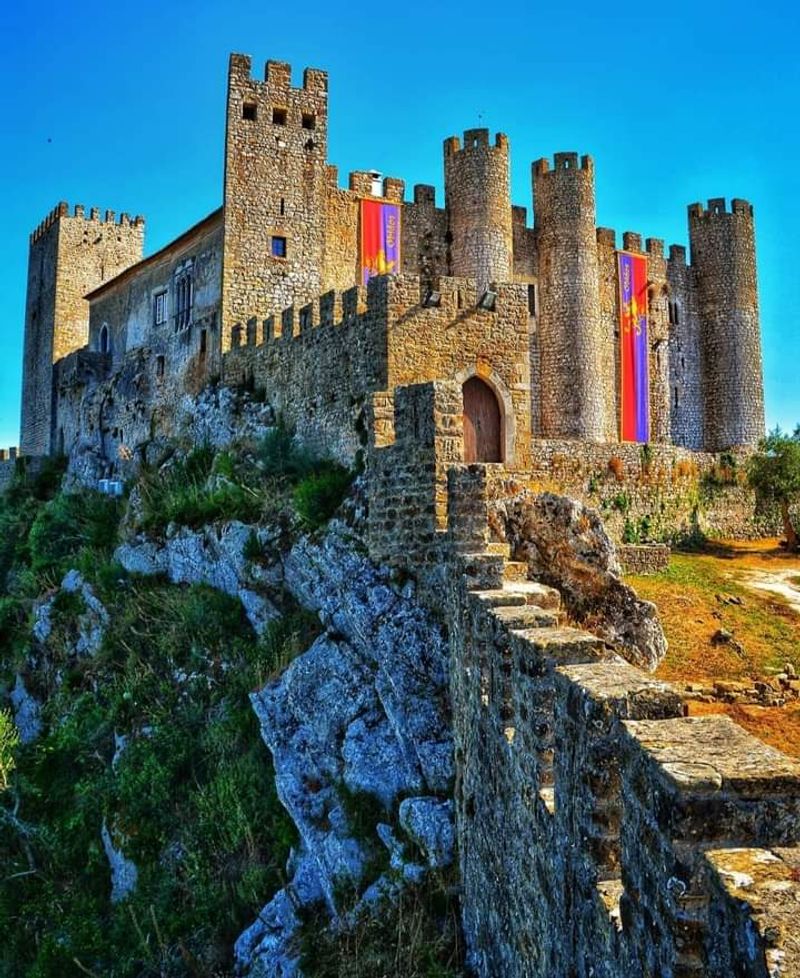
Every August, Obidos transforms into a full medieval market, with jousting knights, wandering jesters, and roasted meats filling the cobbled lanes inside its ancient walls. But even on an ordinary Tuesday in November, this tiny Portuguese town is extraordinary.
The walls alone are worth the trip.
The medieval walls that encircle Obidos are almost completely intact and entirely walkable, offering a narrow rampart path with views over terracotta rooftops and the surrounding Estremadura countryside. The town was traditionally gifted by Portuguese kings to their queens as a wedding present, a tradition that began in 1282 and continued for centuries, which explains why so much of it was lovingly maintained.
Inside the walls, whitewashed houses trimmed with blue and yellow tiles line lanes so narrow they feel personal. The town is also famous for Ginjinha, a cherry liqueur served in tiny edible chocolate cups that have become one of Portugal’s most delightful snacks.
Independent shops sell handmade ceramics, lace, and local jams. Obidos is just an hour north of Lisbon by bus, making it an easy and rewarding day trip.
The town also hosts a chocolate festival and a book fair each year, giving visitors multiple good reasons to return in different seasons.
Sighisoara, Romania
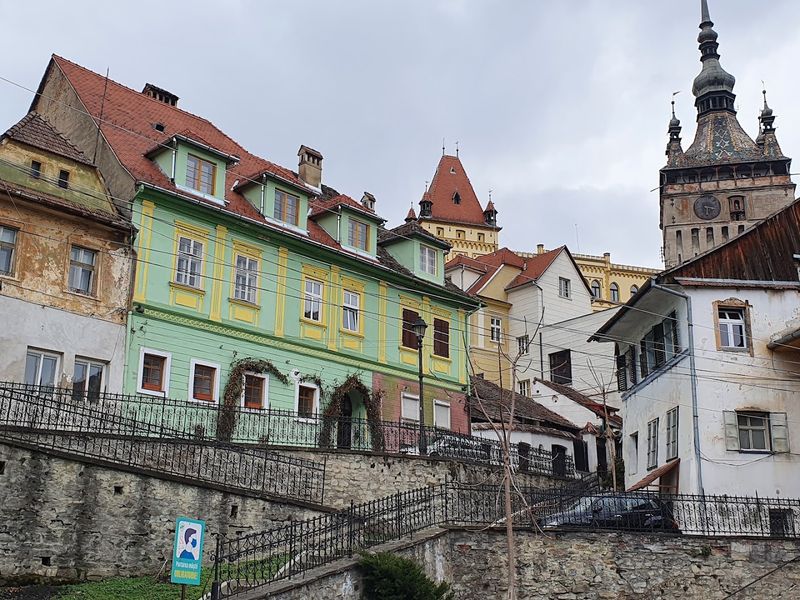
Sighisoara is the only continuously inhabited medieval citadel in Europe, which means real people live, work, and go about their daily lives inside walls that have stood since the 12th century. That fact alone makes it extraordinary, but the town’s story gets considerably more dramatic from there.
This is the birthplace of Vlad III, better known to the world as Vlad the Impaler, the 15th-century ruler who inspired Bram Stoker’s Dracula. His birth house still stands on the main square and now operates as a restaurant, which is either deeply atmospheric or slightly unsettling depending on your perspective.
The nine defensive towers that ring the citadel were each maintained by different guilds, giving them names like the Ropemakers’ Tower and the Tinsmiths’ Tower.
The cobbled lanes wind up to a hilltop church connected by a covered wooden staircase of 175 steps, built in 1642 to protect schoolchildren from the rain and snow during winter. The staircase is still used today.
Sighisoara sits in the heart of Transylvania, surrounded by Saxon villages, rolling hills, and some of the most unspoiled countryside in all of Europe. It is haunting, colorful, and completely unforgettable in equal measure.
Fiskardo, Greece
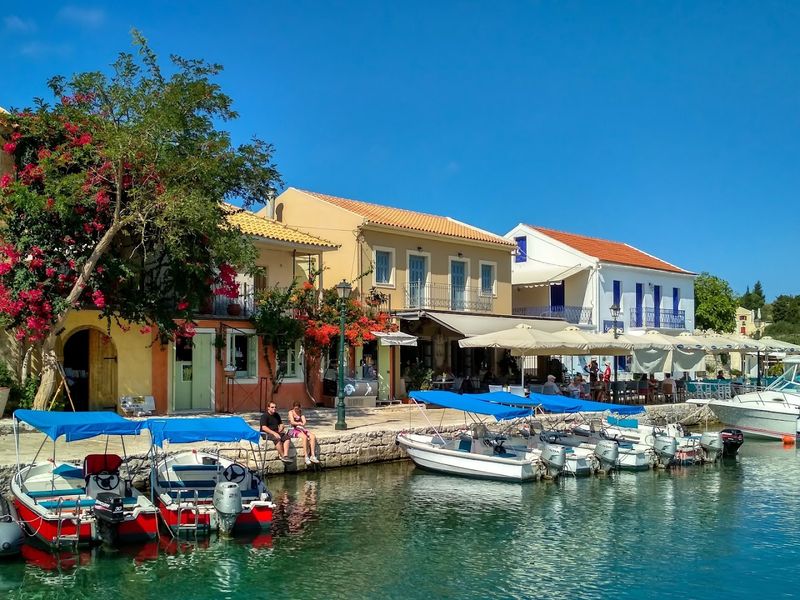
In 1953, a catastrophic earthquake devastated the Greek island of Kefalonia, destroying nearly every building on the island. Fiskardo, sitting at the northern tip, was the only village that survived almost entirely intact.
That geological luck preserved something genuinely rare: a complete collection of elegant Venetian architecture in a Greek island setting.
The harbor is small and perfectly formed, with traditional wooden boats and sleek yachts bobbing side by side in water so clear you can count the pebbles on the bottom. Pastel-colored Venetian houses line the waterfront, their reflections shimmering in the afternoon light.
The surrounding hills are covered in cypress trees and wild herbs that scent the air with every breeze.
Fiskardo has a handful of excellent seafood restaurants right on the harbor, where grilled octopus and fresh lobster pasta are the undisputed stars of the menu. The village is small enough to explore in an hour, but the kind of place where hours turn into days without any effort.
Nearby beaches like Emblisi and Foki are short walks away and consistently rank among the best on the island. Kefalonia itself is less crowded than Santorini or Mykonos, making Fiskardo a wonderfully relaxed alternative to the usual Greek island circuit.
Monsaraz, Portugal
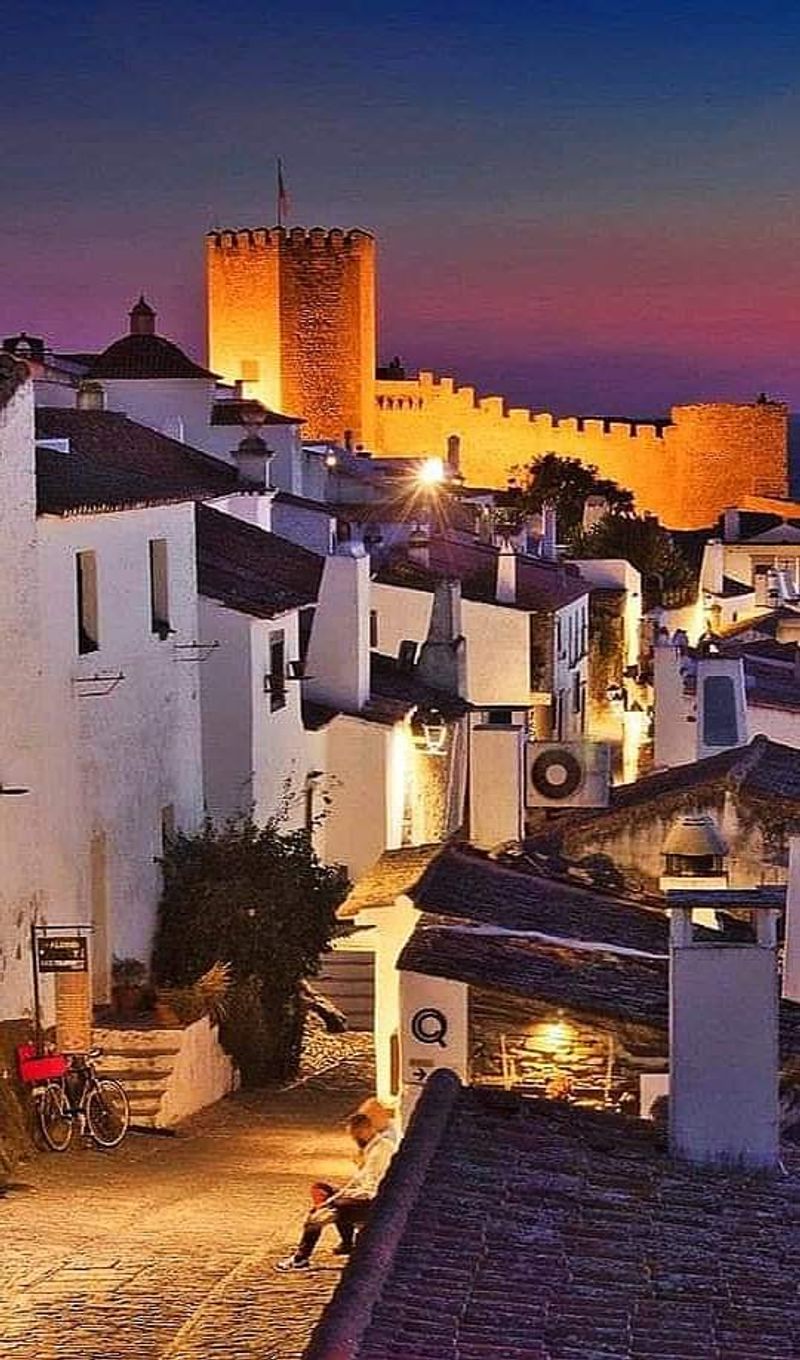
Standing at the edge of Monsaraz’s ancient walls and looking out over the endless Alentejo plains feels like standing at the edge of the world in the best possible way. The silence here is the kind you can actually feel, broken only by the wind and the occasional distant church bell.
This place moves at its own unhurried pace, and you quickly adapt to it.
Monsaraz sits on a narrow ridge 342 meters above the plains, its whitewashed houses and medieval castle perfectly preserved inside walls that have kept the same shape for centuries. The village has only one main street, which makes navigation wonderfully simple.
Artisan shops selling hand-painted ceramics, cork products, and local wines are tucked between private homes and a tiny bullring that is still occasionally used.
The Alqueva reservoir, one of the largest artificial lakes in Western Europe, sits just below the village and offers boat trips, kayaking, and some of the darkest skies in Portugal for stargazing. Monsaraz is officially designated a Starlight Tourism Destination, meaning light pollution is strictly controlled in the area.
Alentejo wines produced nearby are among the boldest and most complex in Portugal. This is a town for travelers who want to slow down and actually feel somewhere, rather than simply pass through it.
Perouges, France
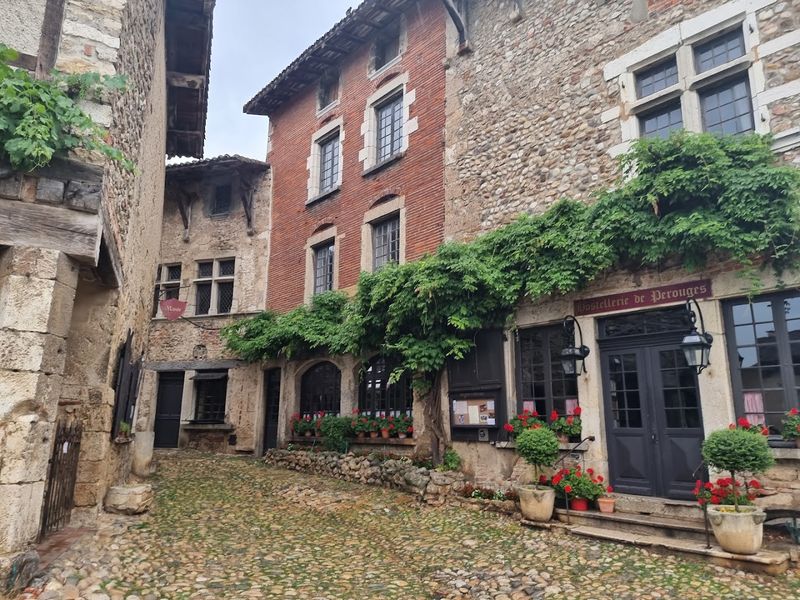
Just 35 kilometers from Lyon, Perouges sits in a state of near-perfect medieval suspension, as though the 15th century simply forgot to leave. Film directors noticed this a long time ago.
The Three Musketeers, Monsieur Vincent, and several other productions have used these streets as a ready-made medieval set, and it is genuinely difficult to spot anything that breaks the illusion.
The village is enclosed by double ramparts and entered through a fortified gate that opens onto a central square dominated by a centuries-old lime tree. The tree has been standing since 1792 and was planted to celebrate the French Revolution, making it one of the more politically significant pieces of greenery in France.
The surrounding lanes are paved with original medieval cobblestones, flanked by honey-colored stone houses draped in ivy.
Perouges is famous for its galette, a flat sugared pastry made with local butter that has been sold in the village square for generations. Eating one warm from the bakery while wandering the lanes is one of those small travel pleasures that stays with you long after the trip ends.
The village has only around 80 permanent residents, giving it an intimate, almost frozen quality. Perouges is proof that the most extraordinary places are sometimes hiding in plain sight, just off a motorway exit near a major city.
Share this story