 Unearth The Voyage
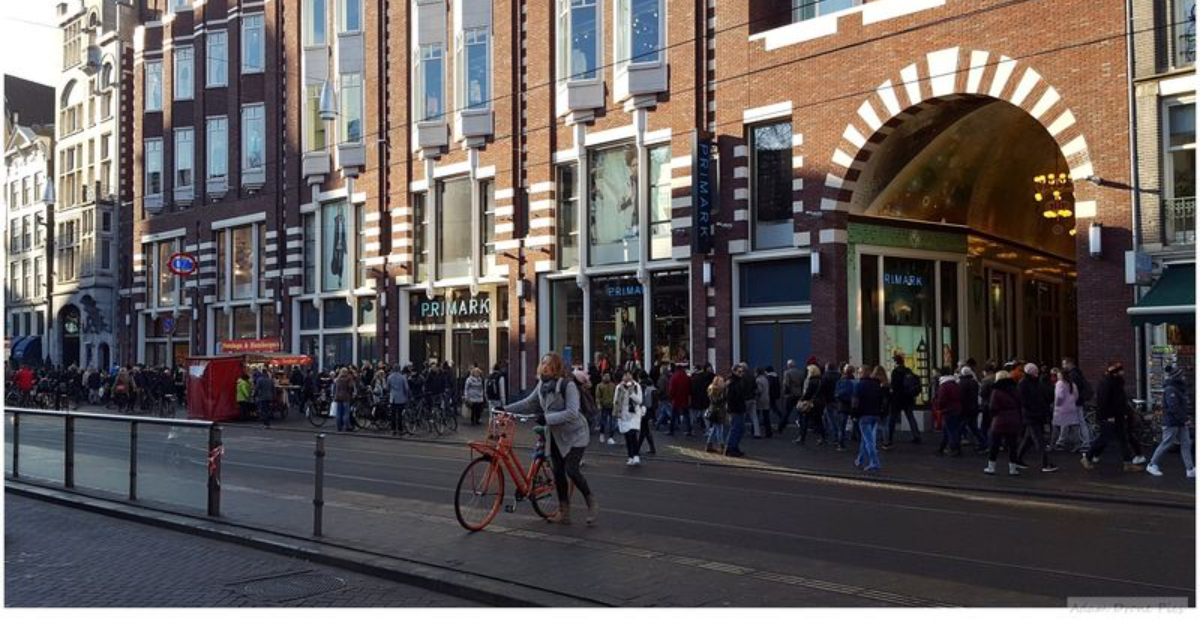
Europe is packed with bucket-list moments that look incredible in photos but can leave your wallet empty and your enthusiasm drained. Every year, millions of travelers shell out serious cash for experiences that simply don’t live up to the hype.
From overcrowded viewpoints to overpriced café seats, the gap between expectation and reality can be pretty wide. Before you book your next European adventure, take a look at what might not be worth your time or money.
1. Paying for a Gondola Ride in Venice
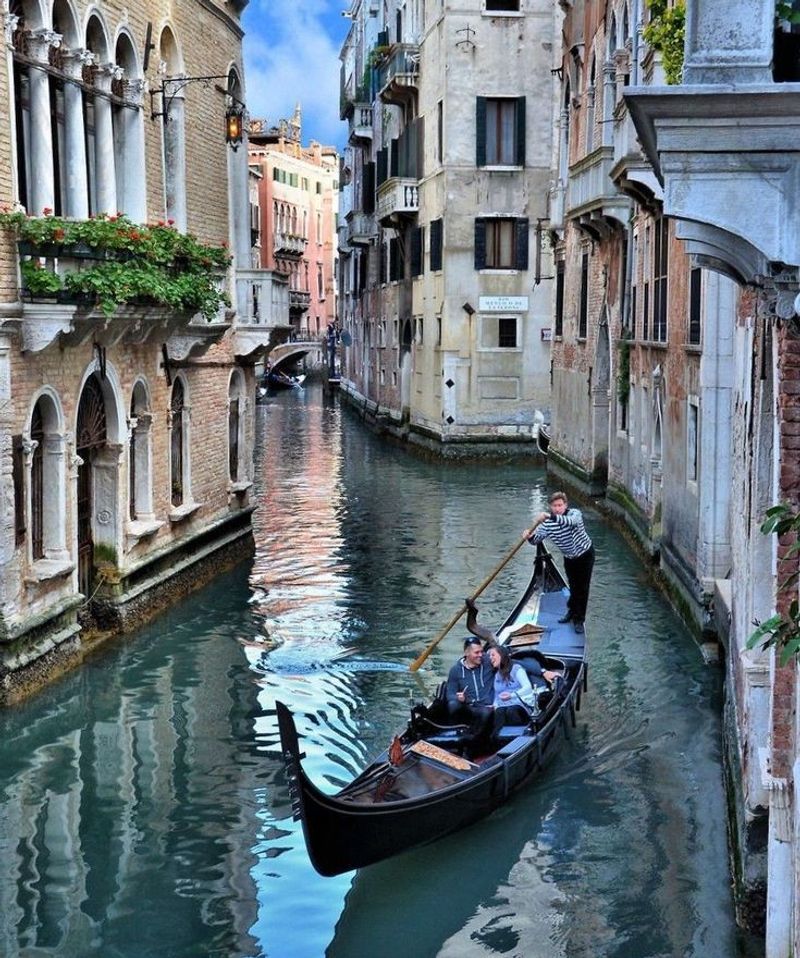
Gondola rides in Venice sound like pure romance, but the reality is often a very different story. Prices regularly hit €80 or more for a ride that lasts about 30 to 40 minutes.
That’s a lot of euros for a slow float past crowded waterways while surrounded by dozens of other gondolas doing the exact same thing.
The canals in peak season are genuinely packed. You’re not gliding peacefully through a quiet, cinematic Venice – you’re navigating tourist traffic on water.
The gondolier may or may not sing, and the backdrop, while beautiful, is shared with hundreds of smartphone cameras.
Here’s what savvy travelers do instead: hop on a traghetto, the traditional standing gondola used by locals, for just €2. It crosses the Grand Canal and gives you a taste of gondola culture without the tourist markup.
Alternatively, explore Venice’s quieter neighborhoods like Cannaregio or Castello on foot. The city’s magic doesn’t live on the gondola – it lives in the alleyways, the bridges, and the local bacari where a glass of wine costs less than a euro.
Save the gondola splurge for a truly quiet, off-season visit.
2. Standing in Long Queues for the Eiffel Tower View
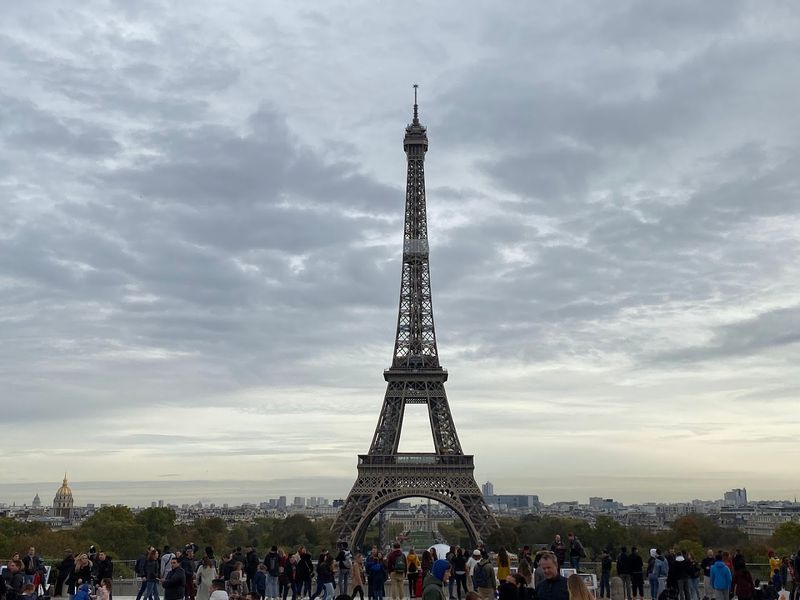
Waiting two to three hours in a shuffling line just to ride an elevator is nobody’s idea of a good time, but that’s exactly what peak-season Eiffel Tower visits often look like. Even with pre-booked tickets, security lines and elevator queues can eat up a huge chunk of your Paris day.
The view from the top is genuinely stunning, no argument there. But here’s the twist – Paris has several equally spectacular viewpoints that cost a fraction of the price and involve zero waiting.
The rooftop of Galeries Lafayette is free. The Arc de Triomphe offers a panoramic view that’s arguably more interesting.
Montmartre’s Sacré-Coeur gives you the whole city spread below without the corporate ticket queue.
The Eiffel Tower is iconic, and seeing it in person is absolutely worthwhile. The mistake is spending half your Paris trip standing in line for it.
Book the earliest available slot online, arrive before the crowds, and skip the summit in favor of the second floor, which has shorter waits and still delivers a jaw-dropping view. Better yet, admire the tower lit up at night from the Trocadéro – completely free and genuinely breathtaking.
3. Seeing the Mona Lisa at the Louvre
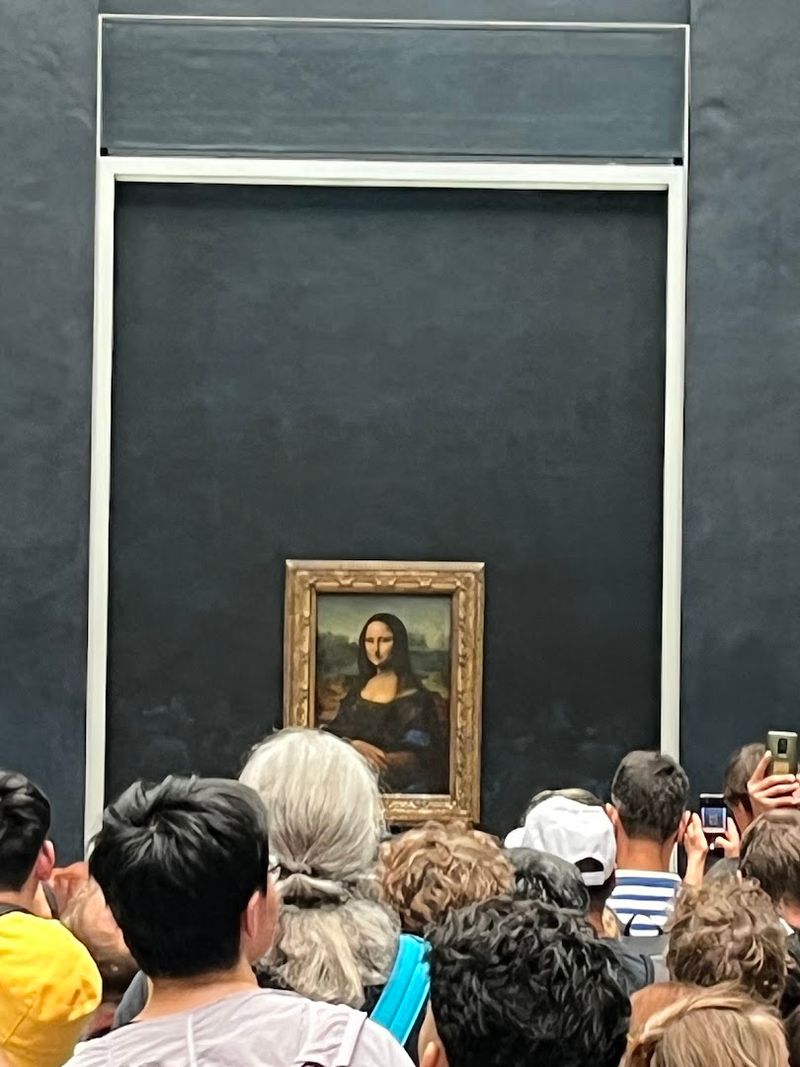
Brace yourself: the Mona Lisa is smaller than most people’s laptop screens. At roughly 77 x 53 centimeters, it hangs behind bulletproof glass, roped off at a distance, in a room so packed with visitors that you’ll be lucky to get within ten meters of it.
Most people spend about 15 seconds actually looking at it.
The painting is undeniably important art history, but the experience of seeing it is almost universally underwhelming. You’ll mostly see the backs of heads and a forest of raised phones.
Travel forums are full of tourists admitting they felt let down after years of anticipation.
The real treasure of the Louvre is everywhere else. The Winged Victory of Samothrace is enormous, dramatic, and usually has breathing room around it.
The Dutch and Flemish masters wing is world-class and rarely crowded. Vermeer, Rembrandt, and dozens of other masterpieces sit quietly waiting while the Mona Lisa crowd surges.
If you do want to see her, arrive right when the museum opens, go straight to the Denon Wing, and spend the rest of your visit exploring rooms that actually let you stop, breathe, and appreciate the art.
4. Overpriced Cafés and Souvenir Zones in Paris Center
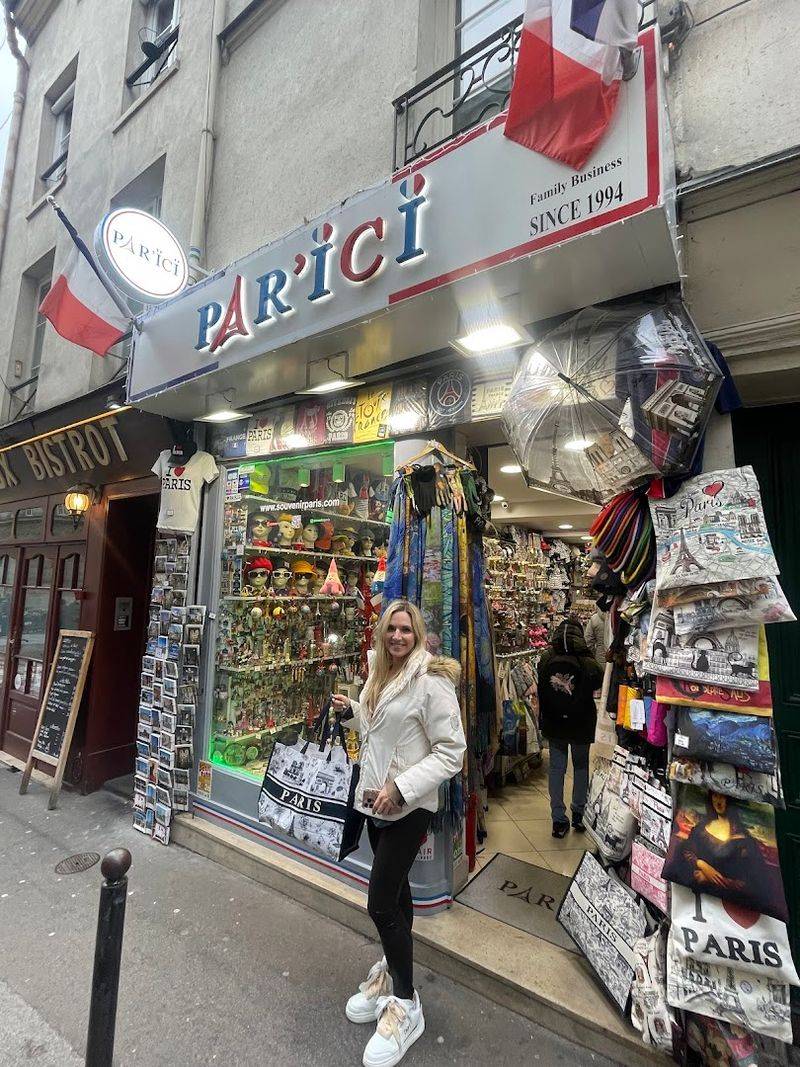
A simple café au lait near the Champs-Élysées can cost €8 or more. A croque-monsieur near Notre-Dame?
Easily €15. Paris has a well-earned reputation for style, but the tourist zones around its most famous sights have quietly become some of the most expensive dining traps in Europe.
The formula is straightforward: high foot traffic plus impatient tourists equals restaurants that don’t need to try very hard. Menus near major landmarks are often mediocre, overpriced, and designed to turn tables fast rather than deliver a genuine Parisian meal.
Souvenir shops in these zones follow the same logic – mass-produced Eiffel Tower keychains at five times the price you’d find elsewhere.
Walking just two or three blocks away from the main tourist drag changes everything. Local boulangeries sell fresh sandwiches for under €5.
Neighborhood bistros offer a proper plat du jour with wine for around €15. The Latin Quarter, Marais, and Belleville neighborhoods all have authentic, affordable food that the guidebooks sometimes overlook.
Paris rewards the curious traveler who’s willing to wander. The city’s real culinary soul isn’t sitting next to a tour group – it’s tucked down a quiet side street with a handwritten menu in the window.
5. Walking the Dubrovnik City Walls in Summer
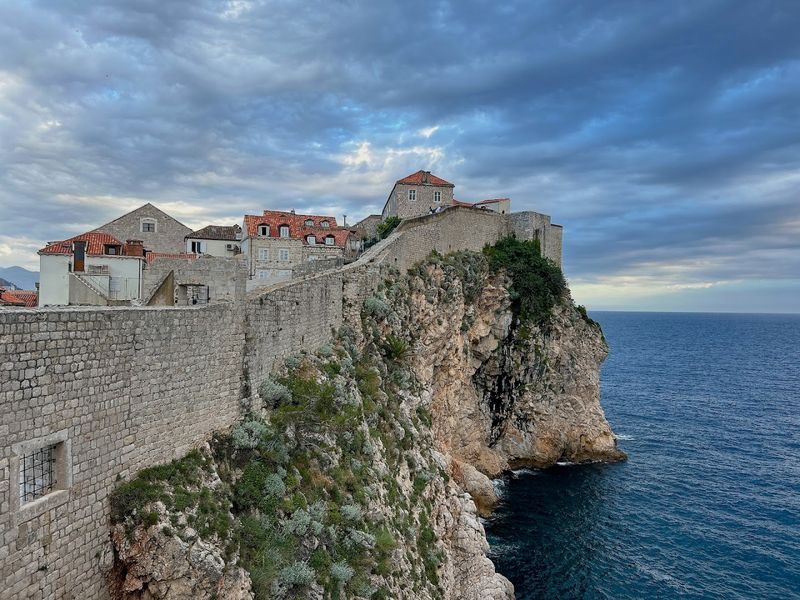
Dubrovnik’s city walls are genuinely one of the most photogenic sights in all of Europe, wrapping around the old town with sweeping views of the Adriatic. But visiting in July or August transforms what should be a leisurely stroll into something closer to a slow-moving, sweat-soaked shuffle.
Tickets now cost €35 per person, and the walls themselves are narrow in sections, meaning you’re essentially stuck in a single-file tourist parade with no shade and very little room to stop and breathe. Temperatures regularly exceed 35°C in peak summer, and the exposed stone radiates heat like an oven.
Several travelers have reported feeling dizzy or unwell on the walk.
The walls are absolutely worth seeing – just not in the height of summer at midday. Go in May, early June, or September when crowds thin and the heat is manageable.
If summer is your only option, arrive right at opening time (8am) before the cruise ship crowds flood in. The views of the terracotta rooftops and the blue Adriatic are stunning and deserve to be savored slowly, not rushed through in a sweaty single-file line.
The experience is genuinely magical when the timing is right.
6. Santorini’s Sunset Spots During Peak Season
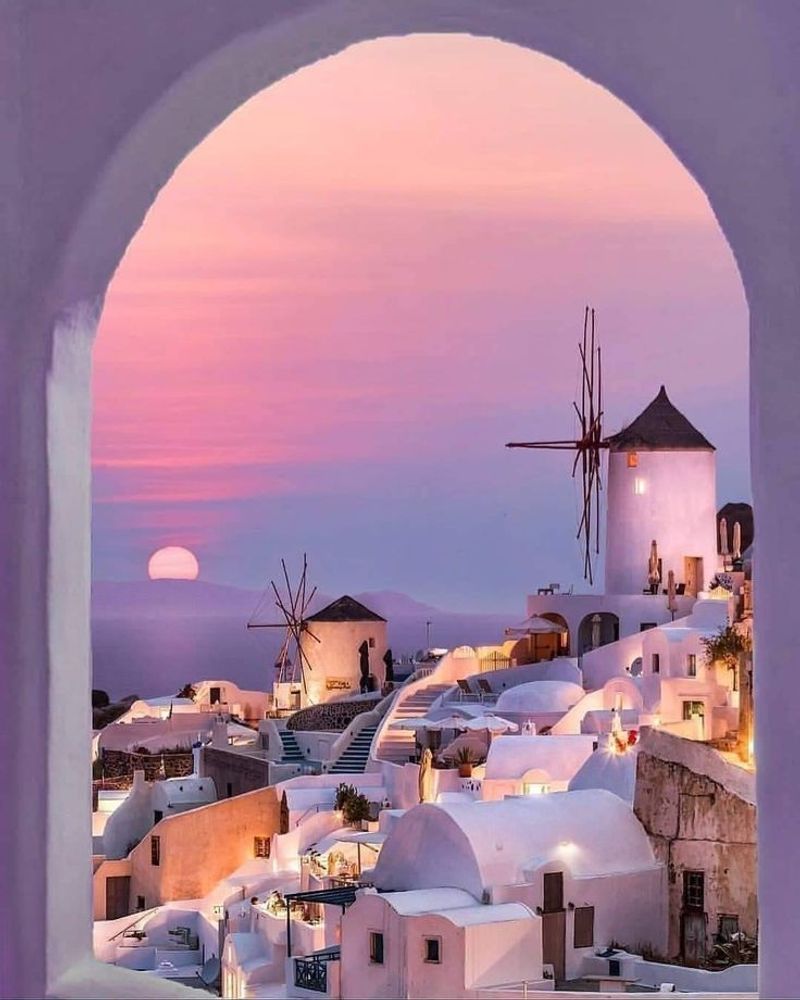
Oia’s sunset is one of the most photographed moments in all of travel media. The white-washed buildings, the blue domes, the golden light – it’s genuinely beautiful.
It’s also genuinely mobbed from June through August, with thousands of visitors competing for the same narrow clifftop viewpoint every single evening.
Getting a clear view often means arriving two hours early and standing in an increasingly dense crowd while overpriced cocktails are sold nearby. A basic drink at a sunset-view bar can run €20 or more.
The atmosphere, rather than romantic, often feels tense – photographers jostling, tour groups blocking sightlines, and the ever-present sound of camera shutters firing in rapid succession.
Santorini is still beautiful, but the sunset experience has become a performance rather than a moment. Locals and repeat visitors tend to watch from quieter spots like Imerovigli or the caldera path between villages, which offer equally stunning views with a fraction of the crowd.
Visiting in shoulder season – late April, May, or October – also transforms the island entirely. The sunsets are the same.
The chaos is not. If the iconic Oia view is on your list, go early, stay patient, and keep expectations realistic about the crowd situation.
7. The Leaning Tower of Pisa Selfie Zone

Somewhere along the way, the Leaning Tower of Pisa stopped being a medieval architectural wonder and became a giant selfie prop. The Field of Miracles outside the tower is now a carefully choreographed chaos of tourists doing the exact same outstretched-hand photo pose, while vendors weave through the crowds selling knock-off bags and miniature towers.
Climbing the tower costs around €18, and the lean is less dramatic in person than photos suggest. The surrounding area – Pisa’s city center – is largely ignored by visitors who arrive, photograph the tower, and leave within two hours.
That means the actual city, which has lovely cafés, a beautiful riverside, and far fewer crowds, goes unseen.
Pisa is worth a quick stop on a longer Tuscany trip, but it probably shouldn’t anchor an entire travel day. If you do visit, skip the tower climb and just enjoy the exterior view, which is free from the surrounding lawns.
Then spend the rest of your time exploring the riverbank along the Arno or having lunch in a local trattoria away from the tourist zone. The tower will still lean without you holding it up, and Pisa has more to offer than most visitors ever discover.
8. Overpriced Cruises and Tours Around Iconic European Lakes
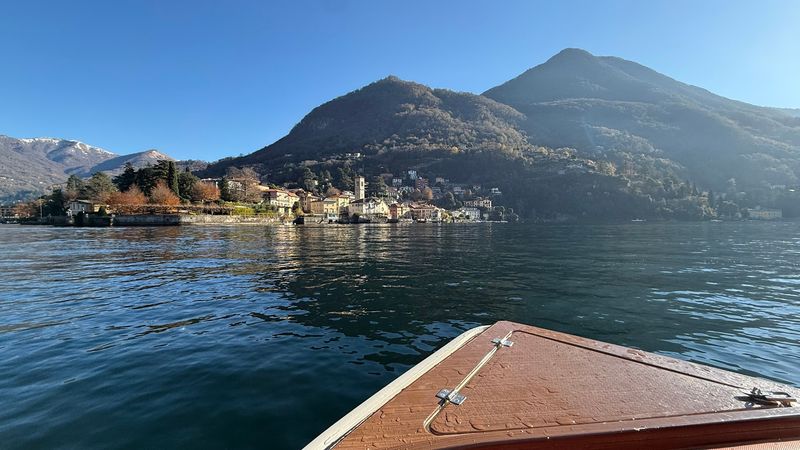
Lake Como, Lake Lucerne, the Austrian Salzkammergut – European lake tours look absolutely dreamy in brochures. The reality of package boat tours is often a rushed 90-minute circuit with a pre-recorded commentary, a brief stop at one viewpoint, and a price tag that makes your eyes water.
Many organized lake cruises charge €40 to €80 per person for an experience that gives you limited time on shore and very little flexibility. You’re essentially paying a premium to be shepherded past beautiful scenery without actually getting to experience it.
The famous lakeside villages – Bellagio, Varenna, Hallstatt – deserve hours of wandering, not a 20-minute photo stop.
The smarter move is using public ferry services, which cover the same routes at a fraction of the cost and let you hop on and off at your own pace. Lake Como’s public ferry system costs just a few euros per leg and stops at every major village.
You choose when to linger and when to move on. Renting a bike along a lakeside path or simply sitting at a village café watching the water is often more memorable than any guided boat tour.
The lake isn’t going anywhere – take your time with it.
9. Prague’s Old Town Square During Midsummer
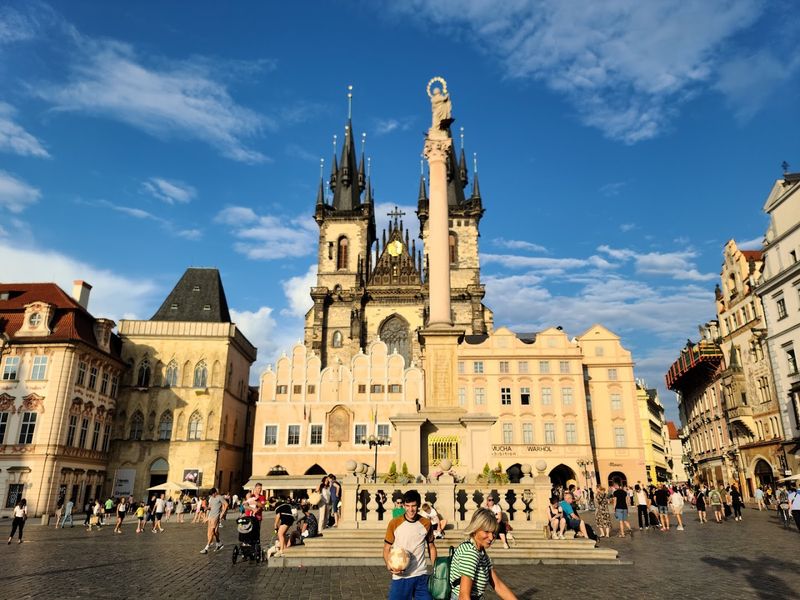
Prague’s Old Town Square is undeniably beautiful – the Gothic architecture, the Astronomical Clock, the baroque church facades. But visiting in July or August means sharing all of that beauty with what feels like half the tourist population of Europe, all crammed into one cobblestone square.
Restaurant prices in the square are among the highest in Prague, and the quality rarely matches. A beer that costs 50 Czech crowns (about €2) in a local pub near Vinohrady can cost four times that amount at a square-adjacent tourist restaurant.
Pickpockets are active, the noise level is constant, and the atmosphere feels more like a theme park than a medieval city center.
Prague genuinely rewards exploration beyond its famous center. The Vinohrady and Zizkov neighborhoods have incredible local bars, authentic Czech food, and almost no tourist crowds.
Vysehrad fortress offers panoramic views of the city and a peaceful atmosphere that Old Town Square simply can’t deliver in summer. Even within the historic center, mornings before 9am are a completely different experience – quiet, photogenic, and far less stressful.
Prague is one of Europe’s most beautiful cities; it just needs to be approached with a bit of strategy to truly enjoy it.
10. Budapest Thermal Baths at Peak Daytime
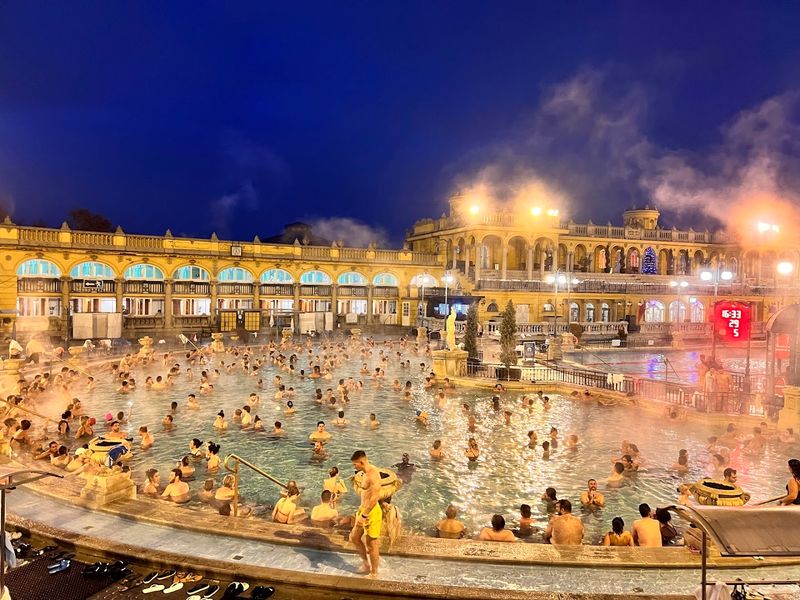
Budapest’s thermal baths are a genuine highlight of the city – soaking in naturally heated mineral water inside a stunning neo-baroque building is a pretty special experience. The Széchenyi and Gellért baths are architectural showpieces as much as they are wellness destinations.
However, showing up at noon on a Saturday in August is a very different experience from what the brochure suggests.
Peak daytime hours bring enormous crowds, long waits for lockers, and outdoor pools so packed that finding a spot to actually float comfortably becomes a challenge. The relaxing spa atmosphere evaporates quickly when you’re shoulder-to-shoulder with several hundred other tourists.
Prices have also climbed steadily in recent years, with entry fees at the major baths now hitting €25 or more.
Locals have a simple solution: go early or go late. Arriving right at opening time – usually 6am or 7am for most baths – means calm pools, available lockers, and an atmosphere that actually feels restorative.
Weekday evenings are similarly peaceful. The Lukács Baths are also a local favorite that sees fewer tourists than Széchenyi, with lower prices and a more authentic atmosphere.
The thermal bath experience in Budapest is genuinely wonderful – it just requires a bit of timing to get it right.
11. Barcelona Gothic Quarter in High Season
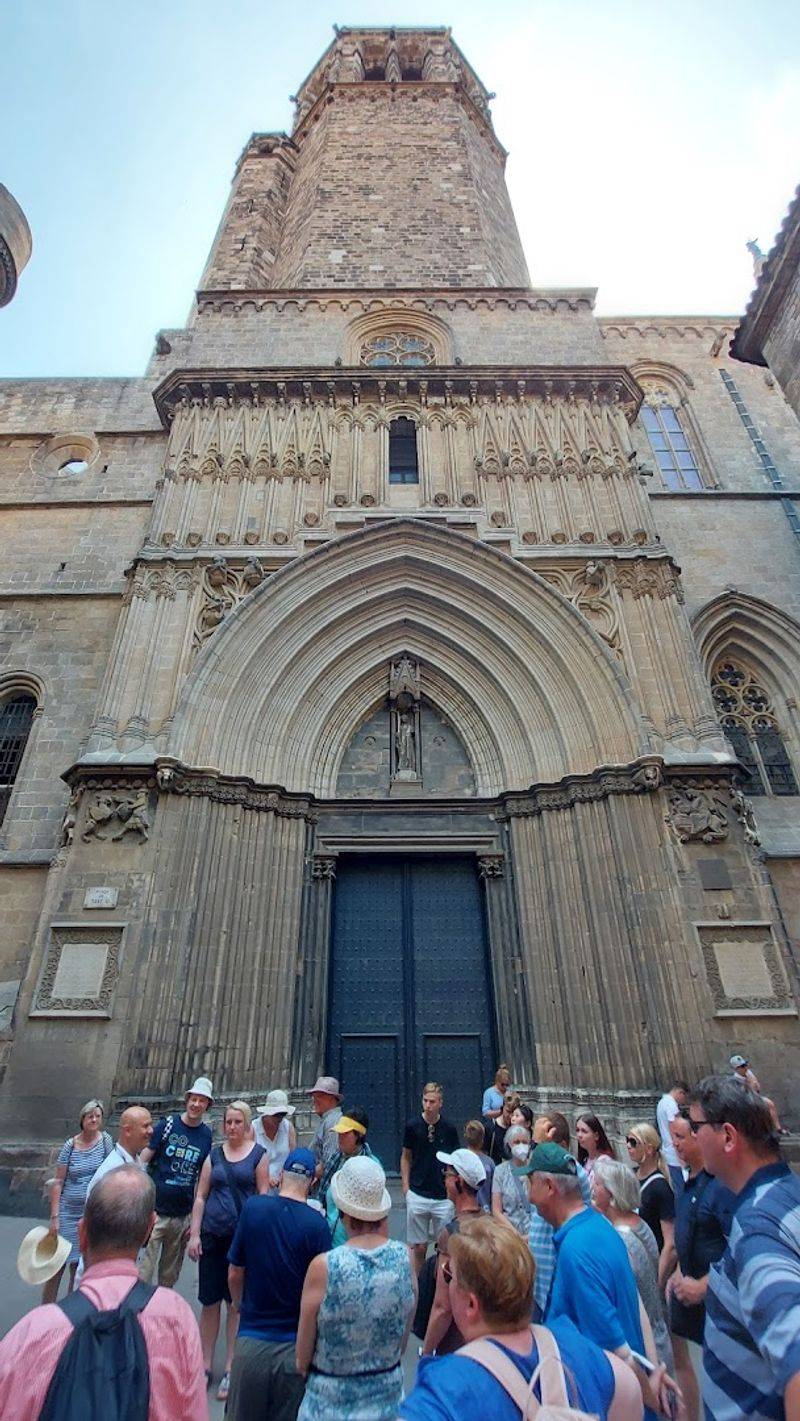
Barcelona’s Gothic Quarter has some of the most atmospheric medieval streets in Southern Europe – ancient Roman foundations, narrow winding alleys, centuries-old churches tucked between tapas bars. It sounds perfect.
In July and August, those same charming narrow streets become barely navigable rivers of slow-moving tour groups.
The neighborhood has seen significant pushback from locals in recent years. Residents have protested overtourism loudly and publicly, with graffiti directed at tourists appearing on walls and community groups campaigning to limit visitor numbers.
Rents have skyrocketed, longtime residents have been pushed out, and many of the authentic local businesses have been replaced by souvenir shops and overpriced sangria bars catering exclusively to visitors.
The Gothic Quarter still has genuine magic, but it requires effort to find it. Side streets away from Las Ramblas and Carrer del Bisbe are quieter and more rewarding.
Visiting in the early morning – before 9am -gives you those atmospheric alleyways largely to yourself. The El Born and Gràcia neighborhoods offer a more balanced Barcelona experience with local bars, independent shops, and residents who actually live there year-round.
Barcelona is a brilliant city with far more personality than its tourist epicenter suggests, and most of that personality lives outside the Gothic Quarter’s busiest blocks.
12. Rome’s Center Tourist Restaurants Near Major Attractions
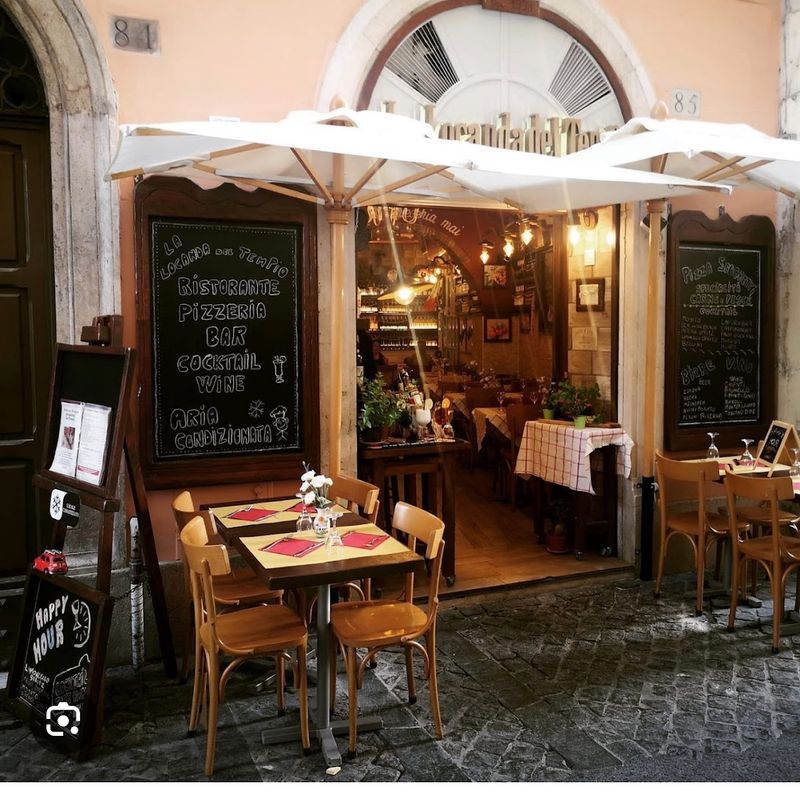
Rome has some of the best food in the world, which makes it genuinely painful that so many visitors end up eating mediocre pasta from laminated picture menus steps away from the Colosseum or Trevi Fountain. Tourist-zone restaurants near major Roman attractions have elevated the art of charging maximum price for minimum effort.
Carbonara made with cream (a Roman culinary crime), watery cacio e pepe, and limp supplì are staples of the tourist trap restaurant circuit. Prices near the major sights can run 30 to 50 percent higher than what you’d pay just a few streets away.
Aggressive touts outside some restaurants add another layer of discomfort to the experience.
The fix is almost embarrassingly simple: walk. Rome’s best trattorias are rarely on the main tourist drag.
The Testaccio neighborhood is considered by many locals to be the true heart of Roman cuisine – unpretentious, affordable, and genuinely delicious. Trastevere has great options if you avoid the most photographed piazzas.
Even near the Vatican, ducking into a side street dramatically improves your dining odds. A good rule of thumb: if the menu has photos and someone outside is actively inviting you in, keep walking.
Rome’s real food is waiting just around the corner.
13. Busy Market Streets in Amsterdam (e.g., Damrak)
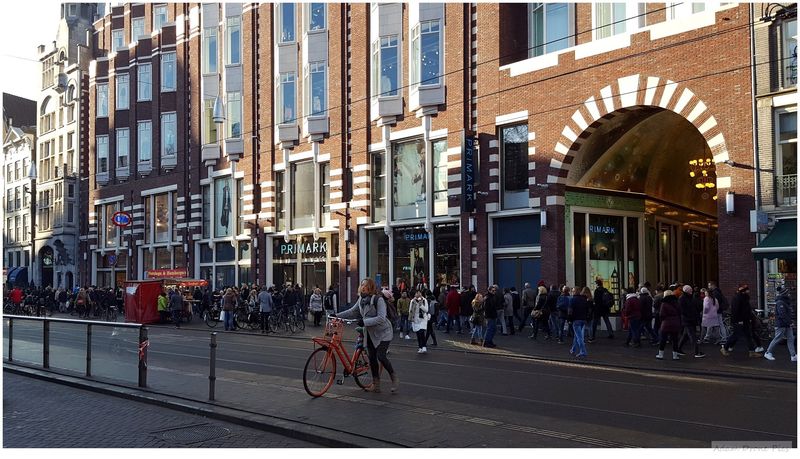
Amsterdam’s Damrak and the streets immediately surrounding Centraal Station are a masterclass in tourist retail: souvenir shops selling mass-produced wooden clogs, overpriced stroopwafels in branded tins, and cannabis-themed merchandise that has very little to do with actual Dutch culture. It’s busy, it’s loud, and it’s expensive for what you get.
Many visitors spend their first hours in Amsterdam wandering this central corridor and come away feeling like the city is a bit of a tourist factory. That impression is understandable but completely unfair to the rest of Amsterdam, which is genuinely one of Europe’s most livable and interesting cities.
The problem is that Damrak and the surrounding streets actively discourage exploration beyond them.
Locals point new visitors firmly toward neighborhoods like De Pijp, Jordaan, and Noord. De Pijp has the Albert Cuyp Market, which is a real working market with affordable food and local products rather than tourist trinkets.
Jordaan’s canal streets are quieter, prettier, and lined with independent shops and brown cafés. Amsterdam Noord, across the IJ waterway via a free ferry, has a thriving creative scene with almost no tourist crowds.
The real Amsterdam is an easy walk or tram ride from the central chaos – and it’s worth every step to get there.
14. Overbooked Bus Tours Through Historic European Capitals
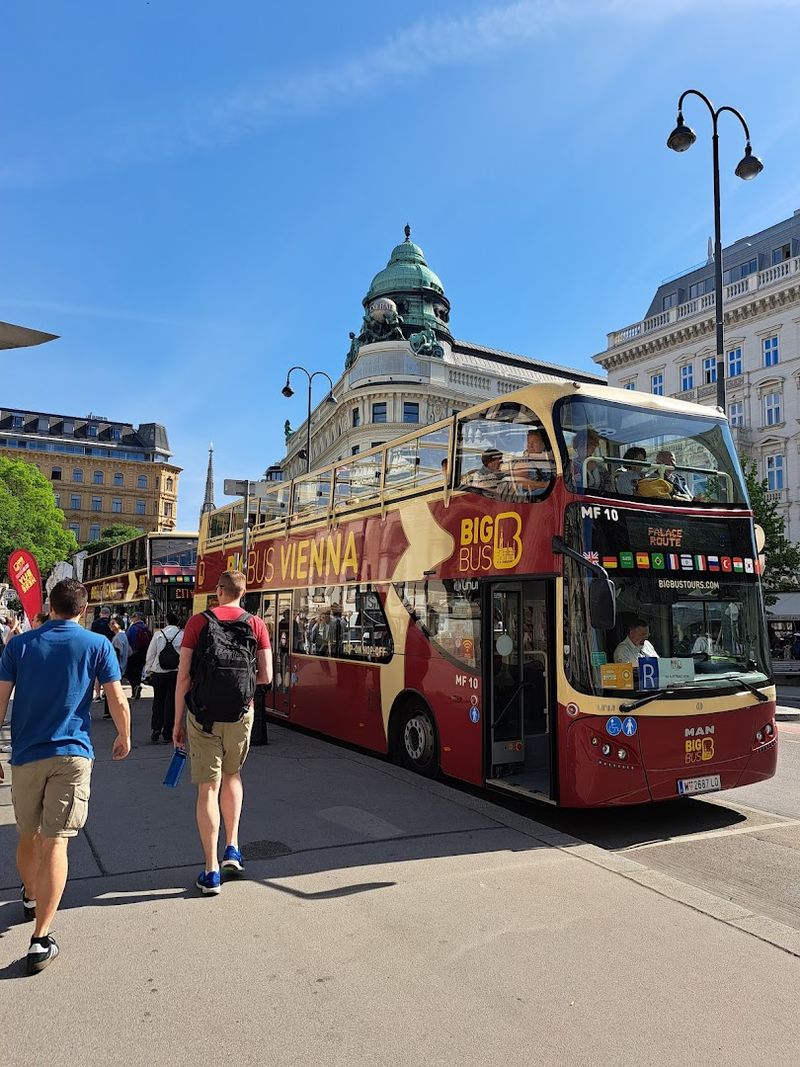
Hop-on hop-off bus tours are sold as the ultimate efficient way to see a European capital. The promise: a comfortable seat, recorded commentary, and a circuit of all the major sights.
The reality, especially in summer, is often a packed double-decker with standing room only, audio guides that cut out mid-sentence, and buses so delayed between stops that hopping off and on becomes genuinely stressful.
The bigger issue is what these tours don’t give you: time. A typical bus tour rolls past dozens of landmarks at traffic speed, with stop intervals that rarely allow more than 15 or 20 minutes at each location.
You end up seeing everything and experiencing nothing. For the price – often €30 to €50 per person – you could cover the same ground more effectively with a transit day pass and a good map.
Most European capitals have excellent public transport that costs a fraction of the tour price and lets you move at your own pace. Rome’s metro and tram network is cheap and efficient.
Vienna’s U-Bahn is spotless and comprehensive. Berlin’s public transit is legendary for its reliability.
Walking between sights – actually walking, stopping when something catches your eye – is how most memorable travel moments happen. No bus schedule required.
15. Tourist-Only Photo Stops in Hallstatt (Austria)
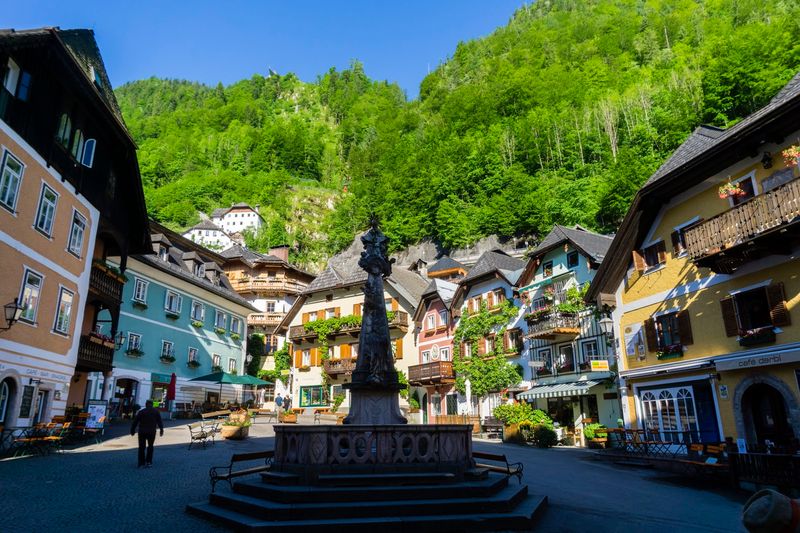
Hallstatt went viral, and it hasn’t fully recovered. The image – a cluster of colorful alpine houses reflected in a glassy lake, framed by dramatic mountain peaks – spread across social media and travel blogs until this tiny Austrian village became one of the most visited places in the country.
The population of Hallstatt is around 800 people. On a busy summer day, it receives up to 10,000 visitors.
The experience for most day-trippers is a familiar loop: arrive by tour bus, photograph the postcard viewpoint, buy a souvenir, leave within two hours. The village’s narrow lanes become genuinely difficult to navigate, local residents have spoken openly about the stress of mass tourism on their community, and the authentic alpine atmosphere that made Hallstatt appealing in the first place has been significantly diluted.
The Salzkammergut region surrounding Hallstatt has dozens of equally beautiful villages that remain almost unknown to international tourists. Grundlsee, Altaussee, and St. Wolfgang offer the same alpine lake scenery with a fraction of the visitors and a much more genuine local atmosphere.
If Hallstatt is non-negotiable for you, arrive early on a weekday, stay overnight to experience it after the day-trippers leave, and the village genuinely transforms into something quieter and more special than the daytime chaos suggests.



