Scotland has a way of making you forget whatever you planned to do that day. One wrong turn and suddenly you are standing in front of a rock pinnacle the size of a building, or a beach that looks borrowed from a Caribbean postcard.
This country does not need filters or tourist spin because the landscapes do all the talking. These 15 places prove that Scotland’s greatest attraction has always been hiding in plain sight.
The Old Man of Storr, Isle of Skye
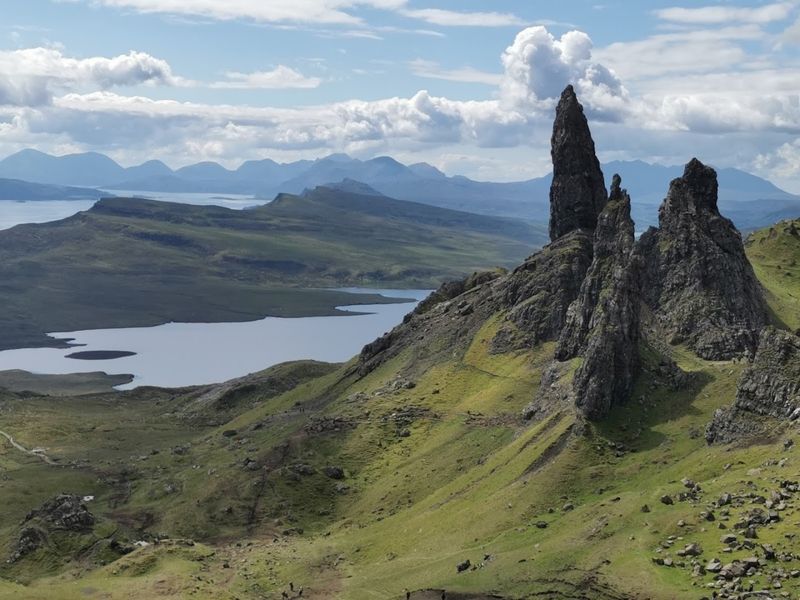
Nobody warned me that the Old Man of Storr would make me feel genuinely small. This ancient rock pinnacle towers over the Trotternish ridge like it has been there since the world forgot to clean up after itself.
It is one of Scotland’s most recognized geological landmarks, and for good reason.
The walk up is not just a trail. The land tilts, the rock formations sharpen, and the sea views keep unfolding behind you like a slow reveal.
The Highland Council manages this as a major visitor attraction, so facilities are in place, but the wild feeling stays intact.
Go early in the morning if you can manage it. The quiet changes the whole experience.
Without the crowd noise, the scale of the place lands differently, and you start to understand why photographers come back here in every season, chasing the same view over and over again.
The Quiraing, Isle of Skye
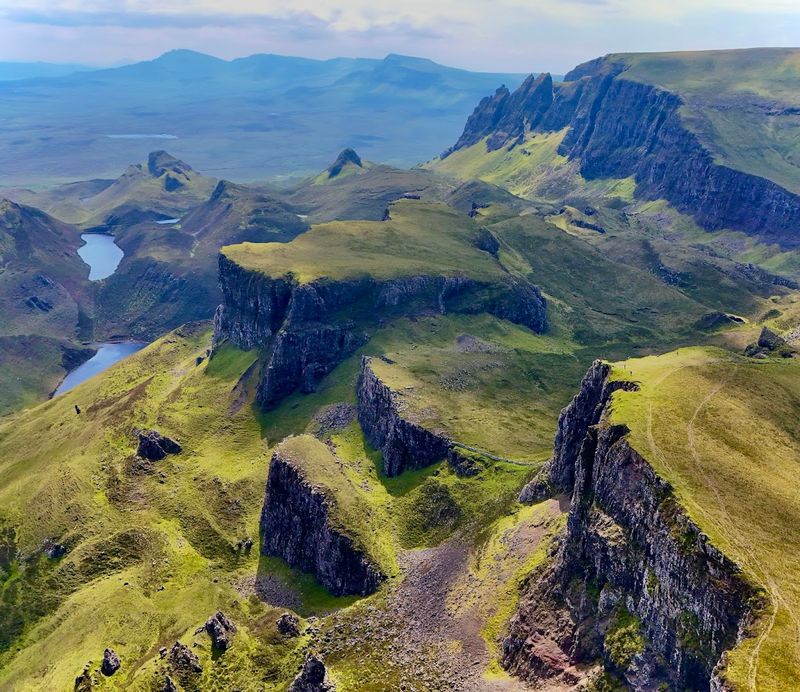
The Quiraing looks like the earth had a disagreement with itself and never fully resolved it. This vast landslip landscape on Skye’s Trotternish Peninsula is made up of cliffs, ridges, slopes, and rock forms that seem too dramatic to be real.
It is the kind of place that makes your camera feel inadequate.
The walking guide describes it as a 6.8 km loop from the car park, taking roughly two hours without stops. That said, the path feels less like a route and more like an ongoing argument with gravity.
Every bend offers something stranger than the last.
Even if you skip the full loop and just take in the viewpoint, you will not feel shortchanged. The land here looks folded, broken, and somehow alive.
Wear proper footwear, check the weather before you go, and give yourself more time than you think you need.
The Fairy Pools, Isle of Skye
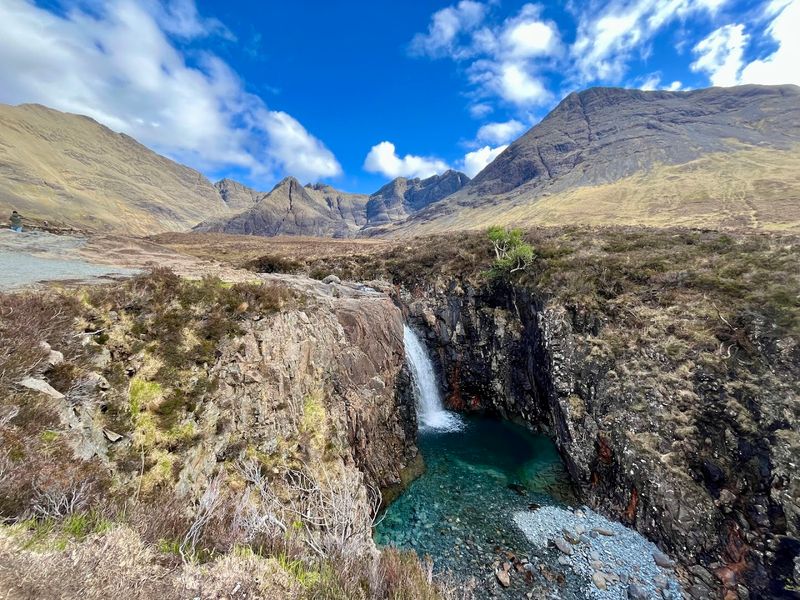
The name sounds gentle, but the Fairy Pools are not playing around. Formed along tributaries of the River Brittle beneath the Black Cuillin mountains, these clear rock pools and cascading waterfalls sit in one of the most dramatic mountain settings in Scotland.
Most people arrive expecting something pretty and postcard-sized. What they get instead is cold water, dark rock, towering mountain walls, and weather that can flip the whole scene silver in under five minutes.
That contrast is exactly what makes it memorable.
Visitor guides list this among Skye’s best-known natural attractions, and the crowds in peak season reflect that. Solid footwear is essential because the ground is uneven and wet in most conditions.
Go prepared, not overdressed for a garden stroll. The Fairy Pools reward people who treat them with the same respect you would give any proper mountain landscape, which is exactly what they are.
Glencoe National Nature Reserve
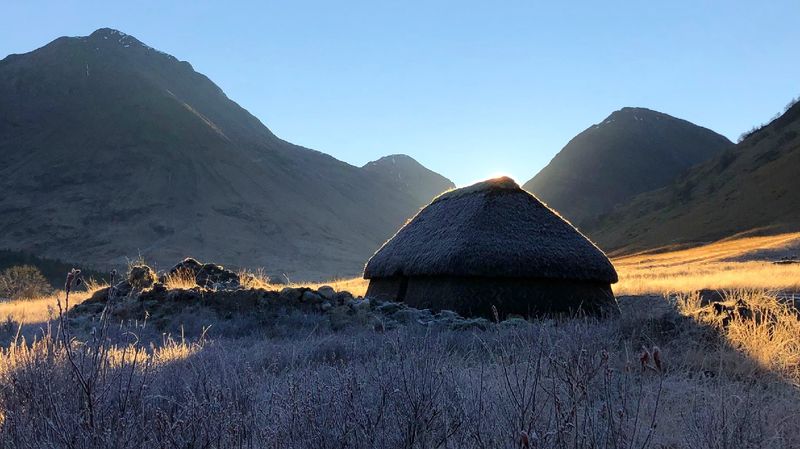
Glencoe is cinematic before you even know its history, and once you learn the history, it becomes something heavier. The National Trust for Scotland has managed this landscape since 1935, maintaining over 37 miles of footpaths through one of Scotland’s most powerful mountain environments.
The Three Sisters are the famous shot, and yes, they deliver every time. But Glencoe’s real force is cumulative.
It is in the way the glen narrows around you, the way clouds drag low across the slopes, and the way every single pull-off reveals a different version of the same ancient drama.
First-timers often make the mistake of driving straight through. Stop.
Get out. Walk even a short section of trail.
The scale only registers properly on foot, and the shift from car window to open air is the difference between watching a film and being inside one. Glencoe does not need the legend.
The landscape is enough.
Ben Nevis, Fort William
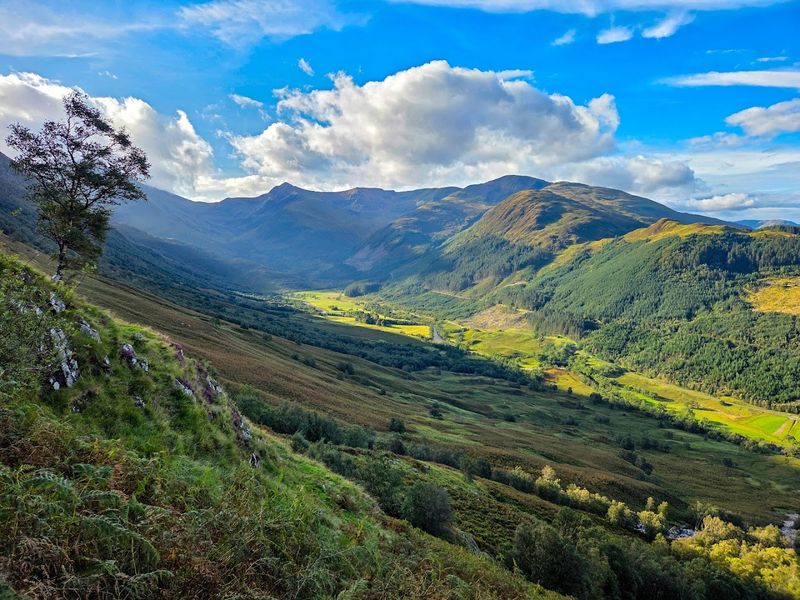
At 1,345 metres, Ben Nevis is the highest point in the British Isles, and it carries that title without apology. VisitScotland notes that two main walking routes lead to the summit, but both require fitness, proper kit, navigation skills, and serious respect for conditions, especially in winter.
Here is the thing though: you do not have to summit it. From Glen Nevis or Fort William, the mountain dominates the skyline and the imagination equally.
Standing at its base and looking up is its own kind of experience. The mountain simply will not let you ignore it.
For experienced walkers, the summit climb is a genuine bucket-list moment. For everyone else, the lower paths through Glen Nevis offer beautiful walking with the mountain always present above.
Either way, Ben Nevis earns its reputation without any marketing help. It is just a very large, very Scottish mountain doing exactly what it has always done.
Loch Lomond and The Trossachs National Park
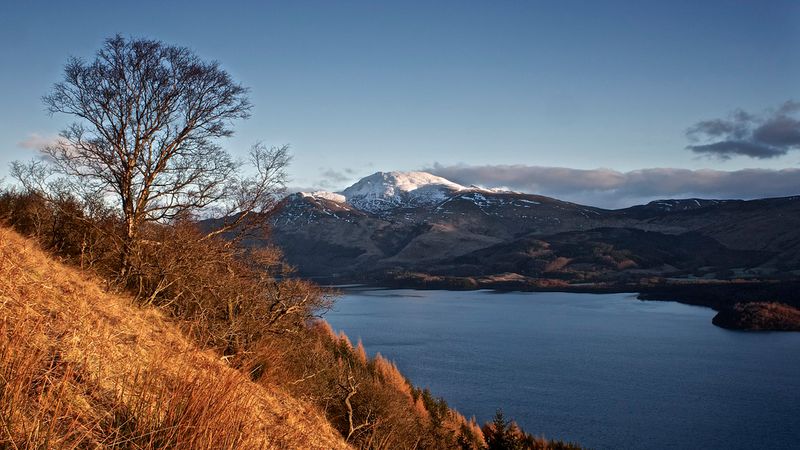
Loch Lomond and The Trossachs National Park is the kind of place that makes you wonder why you ever left. Lochs, forests, glens, mountains, and island habitats all packed into one of Scotland’s most accessible wild-feeling landscapes.
The park authority calls it iconic, and for once that word is not an overstatement.
The mistake most visitors make is treating it like a highlight reel. Racing from viewpoint to viewpoint means missing the actual experience.
Walk a shoreline near Balmaha, follow a quiet trail into the hills, and let the landscape shift at its own pace from gentle to genuinely grand.
VisitScotland highlights Loch Lomond as a world-famous destination, and the crowds around the main spots confirm that reputation. But the park is large enough to absorb them.
Head slightly off the main road and you will find a quieter version of the same remarkable scenery waiting without a queue.
Cairngorms National Park
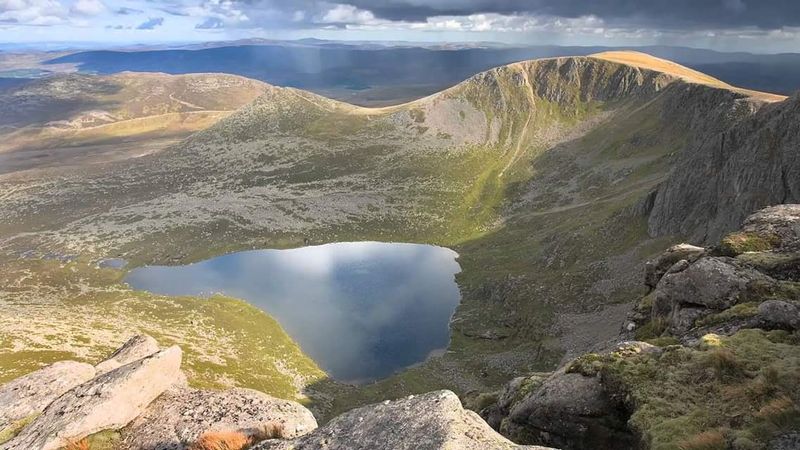
The Cairngorms is the UK’s largest national park, and it has absolutely no interest in fitting into a single afternoon. The official park site reports that roughly a quarter of the UK’s rare and endangered species live here, across plateaus, ancient pinewoods, rivers, and lochs that feel more like a small country than a day trip destination.
One hour it feels alpine. The next it feels like a soft Highland afternoon.
VisitCairngorms lists walking, cycling, watersports, snowsports, and wildlife watching among the options, and that list is not padding. This place genuinely offers all of it.
Visitors should check current fire-safety rules and responsible access guidance, especially during dry months when conditions on the plateau can change fast. The Cairngorms rewards those who give it proper time.
Pick one area, go deep, and resist the urge to tick every trail. The park does not reward rushing, but it absolutely rewards patience.
Staffa and Fingal’s Cave, Inner Hebrides
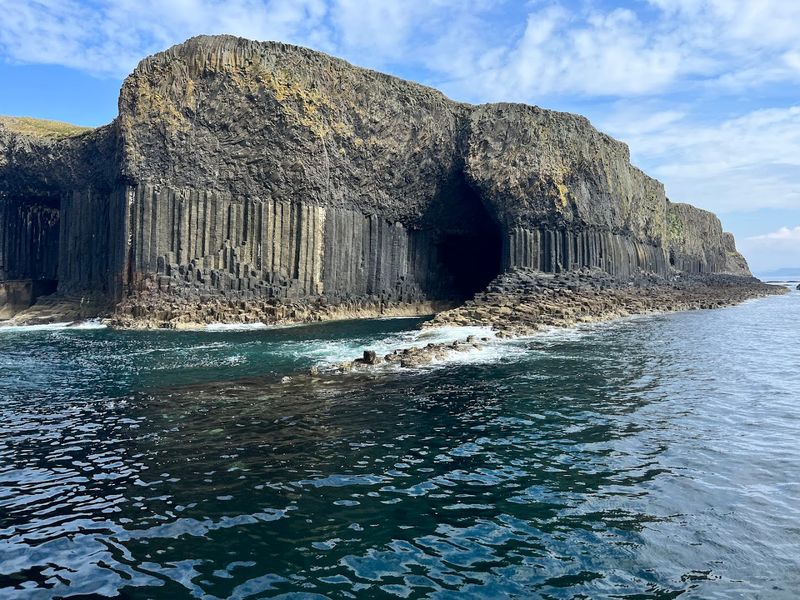
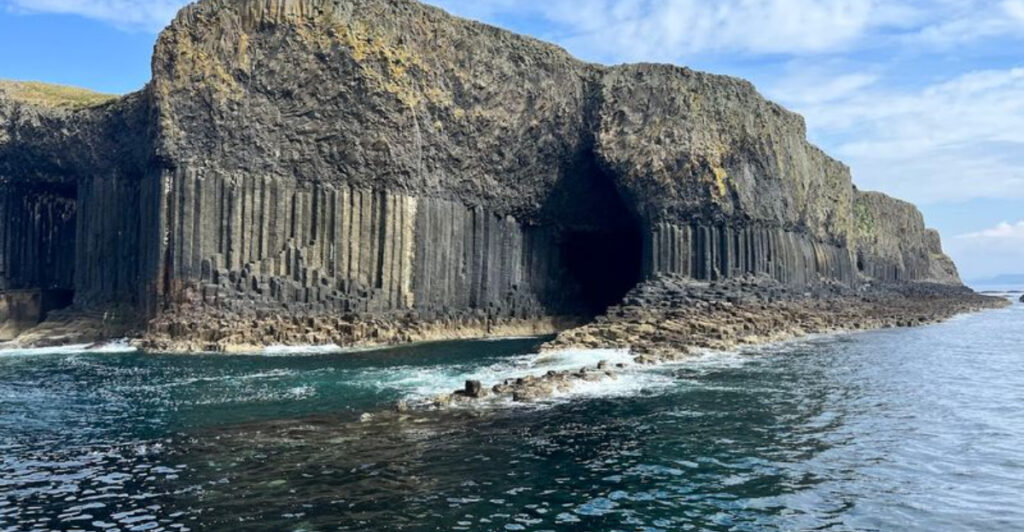
Staffa looks like someone tried to build a cathedral and ran out of budget halfway through, so they just left the columns and let the sea finish the job. The National Trust for Scotland manages the island, which became a National Nature Reserve in 2001 and is home to volcanic basalt columns, puffins, black guillemots, eiders, fulmars, and the famous Fingal’s Cave.
Getting there usually means a boat trip, and landings depend entirely on sea conditions. That unpredictability is not a flaw.
It is part of what makes Staffa feel earned rather than packaged.
You are not visiting a polished attraction. You are crossing open water to reach a wild island shaped by fire, waves, and a few million years of geological stubbornness.
Composers have written music inspired by this cave. Standing inside it, that feels completely reasonable.
Check boat operator schedules in advance and always have a backup plan.
Corrieshalloch Gorge, Wester Ross
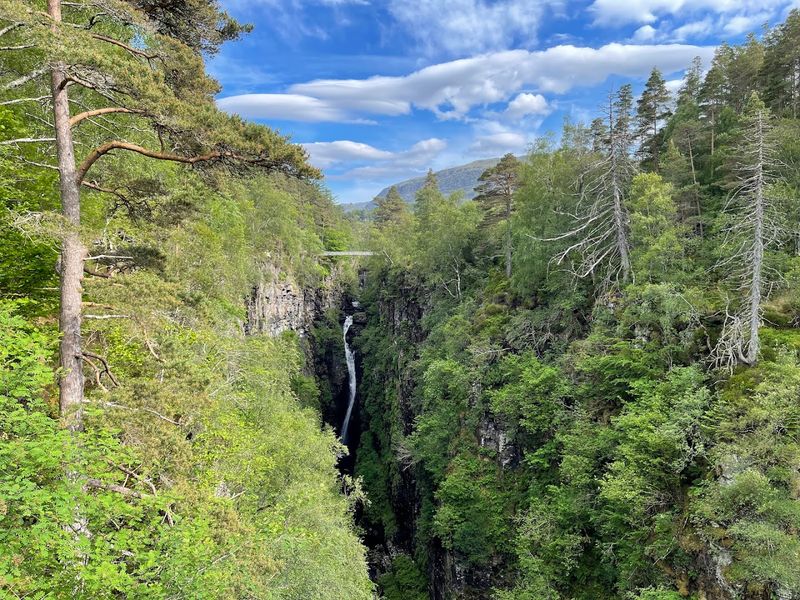
Corrieshalloch Gorge is proof that Scotland does not need to be wide open to be dramatic. This mile-long canyon in Wester Ross drops the River Droma through a deep, narrow ravine that looks like the earth simply split apart one day and kept going.
The National Trust for Scotland manages the site with a Gateway to Nature Centre, short trails, a suspension bridge, and a viewing platform. The setup is practical and well-maintained, but the gorge itself needs no infrastructure to impress.
It does that entirely on its own terms.
The sound arrives before the view does. Standing on the suspension bridge above the drop, the scale becomes very personal very quickly.
This is not Scotland’s biggest landscape, but it is one of its most concentrated. It rewards a short stop even on a busy driving day, and the viewing platform alone is worth the detour from the main road.
Luskentyre Beach, Isle of Harris
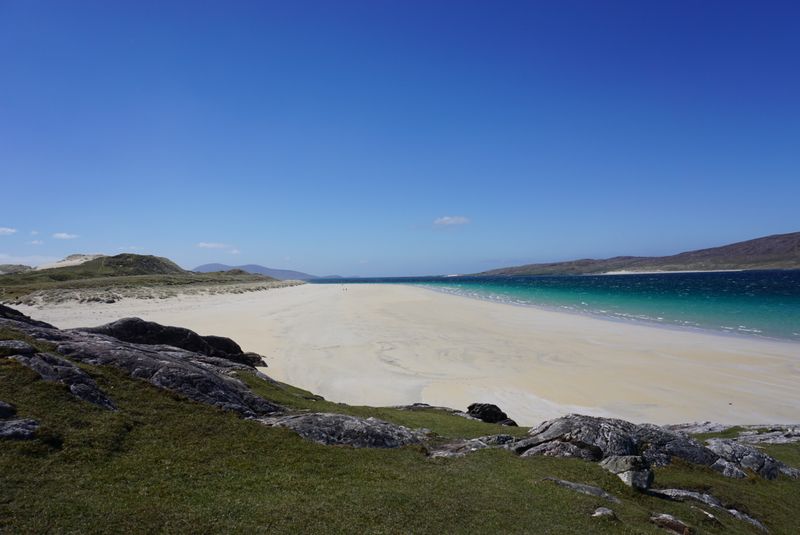
Luskentyre Beach has a habit of making people stop mid-sentence. Visit Outer Hebrides describes it as the largest and most spectacular of the Harris beaches, and the pale sand combined with turquoise water makes it look almost tropical until a proper Atlantic wind shows up to restore context.
The beach is not static. It shifts with tide and light, so the experience changes depending entirely on when you arrive.
At low tide, the space expands into something enormous. At other times, the colors deepen and the ocean feels much closer and considerably less polite.
I drove past the first turnoff because I assumed the view from the road was as good as it got. It was not.
Walk out onto the sand and the scale changes completely. There are no facilities directly on the beach, so bring what you need.
The reward for that small inconvenience is one of the finest stretches of coastline in the British Isles.
Smoo Cave, Durness
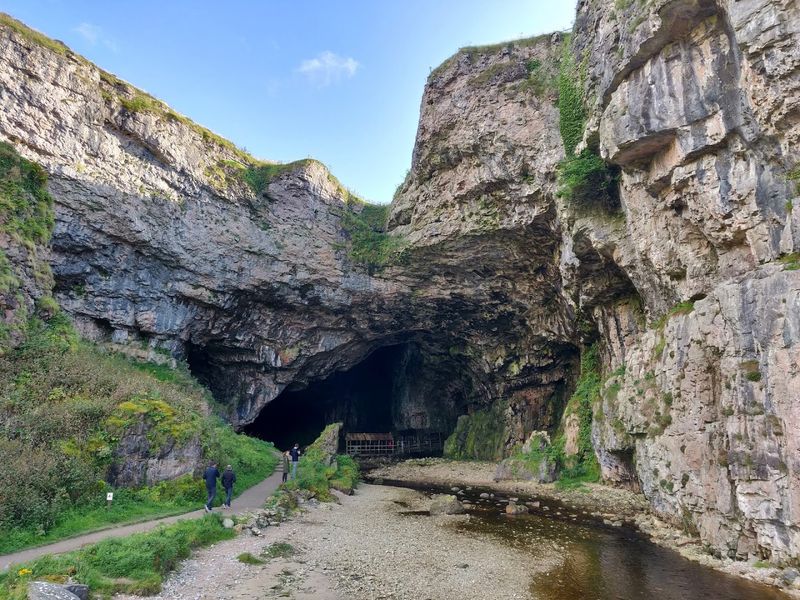
Smoo Cave sits on Scotland’s far north coast like a geological curveball. It combines sea-cave scale with a freshwater element inside, where a waterfall drops through the ceiling into a dark inner chamber.
That combination is genuinely unusual and worth the stop even if you are just passing through Durness.
Public access to the main cave area is available by walkway without needing to book anything. Deeper boat tours run seasonally and depend on weather, so check conditions before building your schedule around one.
The main chamber alone is impressive enough to justify the visit.
Walking into the entrance feels less like entering a cave and more like stepping into something that geology built entirely for its own reasons. The arch overhead is enormous.
The sound of water changes as you move further in. It is not a long experience, but it is a memorable one, and the surrounding Durness coastline makes the detour completely worthwhile.
Beinn Eighe and Loch Maree Islands National Nature Reserve
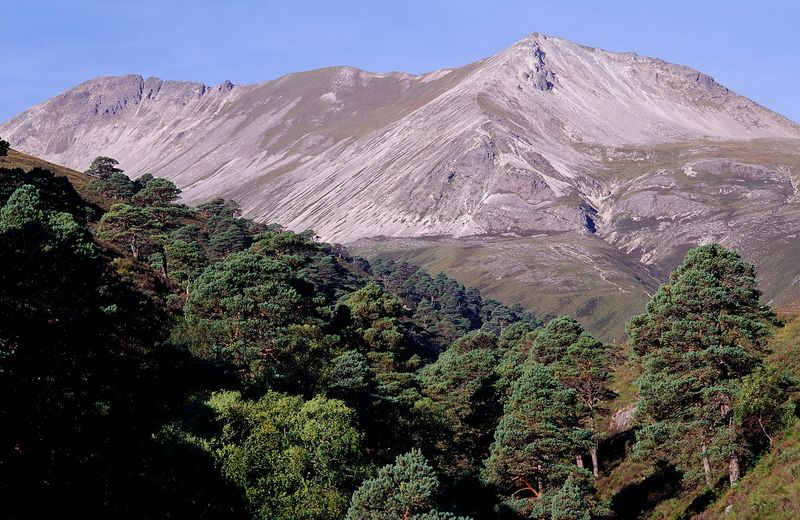
Britain’s oldest National Nature Reserve has been doing its thing quietly since 1951, which is exactly the kind of confidence that comes with age. NatureScot reports that Beinn Eighe stretches across 48 square kilometres from loch-side to mountain top, with main visitor access near Kinlochewe at the south-east end of Loch Maree.
This is not a place that announces itself loudly. Ancient pinewoods, mountain slopes, loch views, and a sense of ecological depth that takes a little time to register.
It is ideal for travelers who want Scotland to feel less like a checklist and more like a living, breathing landscape with a long memory.
The trails here are well-marked and varied enough to suit different fitness levels. Wildlife sightings are common, and the combination of old-growth trees and open mountain is genuinely striking.
Beinn Eighe rewards those who slow down and pay attention rather than those chasing the next big view.
St Abb’s Head National Nature Reserve
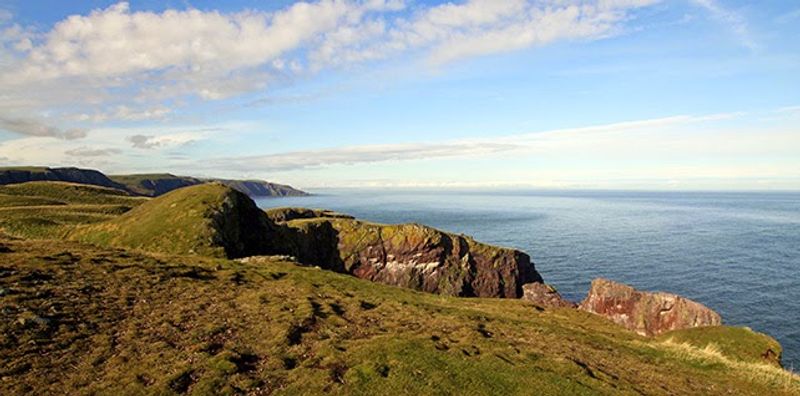
St Abb’s Head is the kind of place that reminds you Scotland’s southeast coast is not just a road to somewhere else. This cliff-top nature reserve is known for rugged coastal scenery, strikingly clear water, seabird colonies, and walking trails that offer big views without requiring a mountain boot budget.
The National Trust for Scotland highlights the dramatic cliffs, Mire Loch, geology, a nature centre, and three trails including the Discovery Trail and the Lighthouse Loop. In summer, the seabirds bring the cliff faces alive in a way that is genuinely noisy and brilliant.
In rougher weather, the whole headland sharpens considerably.
It feels remote without being difficult to reach, which is a combination Scotland does not always offer. Divers also rate the waters around St Abb’s Head among the best in the UK for visibility.
Whether you walk the cliffs or watch the sea, the reserve delivers far more than its modest profile suggests.
Sandwood Bay, Sutherland
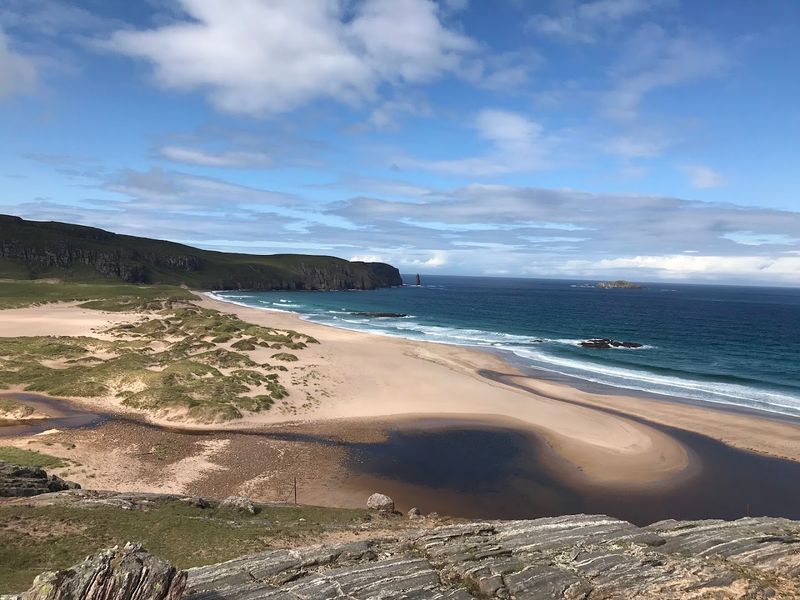
Sandwood Bay does not make things easy for you, and that is entirely the point. The John Muir Trust calls it the jewel in the crown of the estate, and reaching it requires a moorland walk that keeps the beach genuinely remote.
No car park views here. You earn this one.
The sea stack Am Buachaille stands offshore like a bouncer who never went home. Behind the beach, dunes and cliffs frame the Atlantic in a way that feels completely unmanaged and all the better for it.
Walking guides confirm the approach on foot is the only real option, and the trail is part of the experience rather than an obstacle to it.
I have met people who called it the best beach in Scotland without hesitation. The solitude, the scale, the sense that ordinary travel machinery cannot reach this place.
Sandwood Bay is a reminder that the best things sometimes require a bit of effort to find.
Loch Ness and the Great Glen
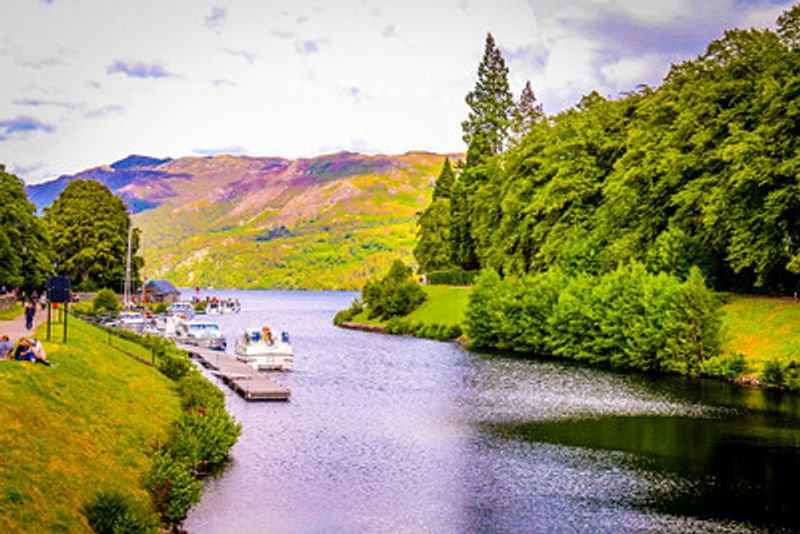
Forget the monster for a moment. Loch Ness is a genuinely impressive body of water sitting inside the Great Glen, a dramatic fault-line landscape of deep water, steep wooded edges, and long Highland views that stretch further than feels reasonable.
VisitScotland includes it among Scotland’s major places to go, with maps, tours, and visitor guidance available for planning.
The trick most visitors miss is treating Loch Ness as landscape rather than folklore. The busiest stops around the main visitor centres are fine, but the real experience is found slightly away from them.
Find a quieter viewpoint, walk a section of the Great Glen Way, or just sit by the water without a gift shop in sight.
The loch becomes less of a myth and more of a vast, dark, atmospheric presence once the crowds thin out. Scotland has many lochs, but Loch Ness has a particular weight to it that has nothing to do with legends and everything to do with geology.
Share this story