 Unearth The Voyage
Across the United States, the promise of steady work and a better life is fading in many communities. Factory closures, automation, and the decline of once-thriving industries have left entire regions struggling to survive.
From coal towns in Appalachia to rust belt cities and rural counties, millions of Americans find themselves trapped in places where good jobs have vanished and opportunities for upward mobility are scarce.
1. Mississippi Delta (Mississippi)
Cotton fields once promised prosperity, but today the Mississippi Delta tells a different story. Generations of families have watched factories shut down and farms mechanize, leaving fewer and fewer ways to earn a living.
Young people grow up knowing that good jobs are rare and that staying in their hometowns often means accepting poverty.
Manufacturing plants that employed hundreds have relocated overseas or closed entirely. Agricultural work, which used to support whole communities, now requires fewer workers thanks to modern machinery.
The jobs that remain typically pay minimum wage or just above it, making it nearly impossible for families to save money or build wealth.
Education and healthcare systems struggle with limited funding, which makes it harder for the next generation to break the cycle. Many talented young adults leave for cities like Memphis or Jackson, draining the region of potential leaders and innovators.
Those who stay often work multiple part-time jobs just to make ends meet.
Without major investment in new industries or job training programs, the Delta faces a bleak future. The gap between rich and poor continues to widen, and the American dream of working hard to achieve success feels more like a distant memory than a realistic goal for most residents.
2. Appalachia (especially rural West Virginia)
Coal built entire communities in the mountains of West Virginia, providing stable careers for generations. Miners earned good wages, bought homes, and sent their kids to college.
But as coal mines closed one after another, those communities lost their economic foundation almost overnight.
The collapse happened gradually at first, then accelerated as natural gas and renewable energy became cheaper alternatives. Thousands of miners found themselves unemployed with skills that had little value outside the coal industry.
Retraining programs exist but often require travel to distant cities or learning entirely new trades, which many older workers find impossible.
Small towns that once bustled with activity now have boarded-up storefronts and shrinking populations. The young people who can afford to leave do so, searching for opportunities in places like Charlotte or Pittsburgh.
Those who remain face limited job options, often in retail or service positions that pay a fraction of what coal mining once did.
Opioid addiction has devastated many families, adding another layer of crisis to the economic collapse. Healthcare facilities are scarce, and mental health services are almost nonexistent in some counties.
The dream of a stable, middle-class life through hard work feels impossible when the work itself has disappeared.
3. Many Southern Rural Counties
Research shows a troubling pattern across the rural South: children born into low-income families now earn less than their parents did at the same age. This reversal of the traditional American promise represents a fundamental breakdown in economic opportunity.
Counties from Georgia to Louisiana share this disturbing trend.
Agricultural consolidation means fewer family farms and more corporate operations that employ minimal labor. Small manufacturers that once anchored local economies have moved production to countries with cheaper labor costs.
What remains are service jobs at gas stations, dollar stores, and fast-food restaurants that rarely offer full-time hours or benefits.
Schools in these counties struggle with outdated facilities and teacher shortages, making it difficult to prepare students for modern careers. Internet access remains spotty in many areas, cutting residents off from online job opportunities and remote work possibilities.
Without reliable transportation, even jobs in nearby towns become unreachable for many families.
Local governments face shrinking tax bases as businesses close and populations decline. This means fewer public services, deteriorating roads, and reduced support for those most in need.
The cycle of poverty becomes self-reinforcing, with each generation finding it harder to climb the economic ladder than the one before.
4. Baker County, Florida
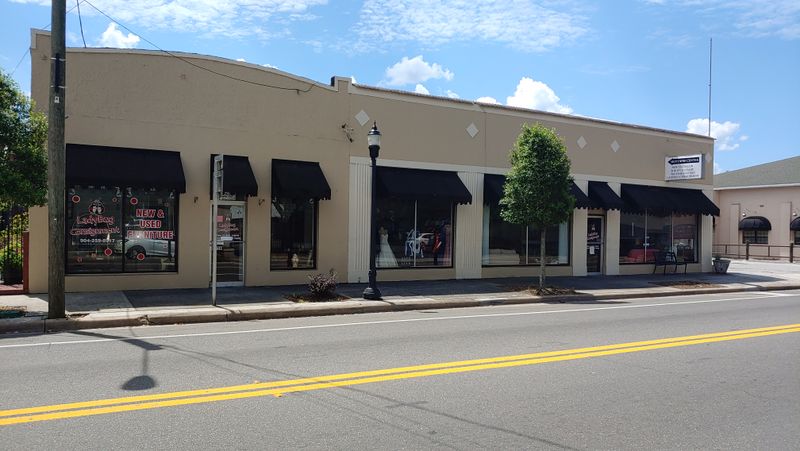
Located between Jacksonville and Lake City, Baker County exemplifies how economic opportunity can vanish even near larger cities. Data reveals that young adults from lower-income backgrounds in this county earn significantly less than previous generations, a stark reversal of expected progress.
The county’s economy relies heavily on agriculture and a state prison, neither of which provides enough jobs for everyone.
Many residents commute to Jacksonville for work, spending hours each day and significant money on gas. Those without reliable transportation find themselves stuck with limited local options.
The county lacks diverse industries, making it vulnerable when any single employer cuts jobs or closes.
Education outcomes lag behind state averages, with many students leaving high school unprepared for college or technical careers. The nearest community college requires a lengthy commute, putting higher education out of reach for families without extra vehicles or flexible schedules.
This educational gap perpetuates the cycle of low-wage work.
Housing remains relatively affordable compared to Jacksonville, but wages are so low that even cheap rent consumes most family budgets. Healthcare access is limited, with residents often delaying medical care due to cost.
The American work dream requires not just effort but opportunity, and in Baker County, opportunities continue to shrink rather than grow.
5. Carbon County, Utah

Coal mining shaped Carbon County’s identity and economy for over a century. The mines provided excellent wages and benefits, allowing workers without college degrees to achieve solid middle-class lives.
But as coal declined nationwide, Carbon County’s economic foundation crumbled, leaving residents scrambling for alternatives that simply do not exist in sufficient numbers.
The county’s remote location makes attracting new industries difficult. Companies looking to relocate prefer areas with major airports, universities, and larger populations.
Carbon County has none of these advantages, leaving it dependent on tourism and a few remaining mining operations that employ far fewer people than before.
Young people face a harsh choice: stay in the community they love with limited prospects, or leave family and friends behind to seek opportunities elsewhere. Many choose to leave, draining the county of educated young adults who might otherwise start businesses or bring new ideas.
The population is aging, and fewer children attend local schools each year.
Efforts to diversify the economy have had mixed results. Some outdoor recreation businesses have started, but these typically offer seasonal, low-wage jobs rather than year-round careers.
The gap between what mining jobs paid and what new jobs offer represents a devastating drop in living standards for many families.
6. Campbell County, Wyoming

Campbell County sits atop some of the richest coal deposits in America, yet its economy is collapsing as the nation shifts away from coal power. Gillette, the county’s largest city, once boasted some of the highest median incomes in the country thanks to mining jobs that paid six figures.
Those days are ending rapidly as power plants close and demand plummets.
The boom-and-bust cycle is not new to Wyoming, but this bust feels different because coal is unlikely to return. Workers who invested in homes during good times now find themselves underwater on mortgages as property values fall.
Businesses that thrived serving miners are closing, creating a ripple effect throughout the local economy.
Retraining programs exist, but they cannot replace thousands of high-paying jobs with equally good alternatives. Wind energy offers some employment, but those jobs pay less and require different skills.
Many workers in their forties and fifties feel trapped, too young to retire but too experienced in coal to easily switch careers.
The county’s population is declining as families move to places with more diverse economies. Schools are consolidating, and tax revenues are falling, forcing cuts to public services.
Campbell County’s struggle illustrates how communities built around single industries face existential threats when those industries fade.
7. Springfield, Ohio
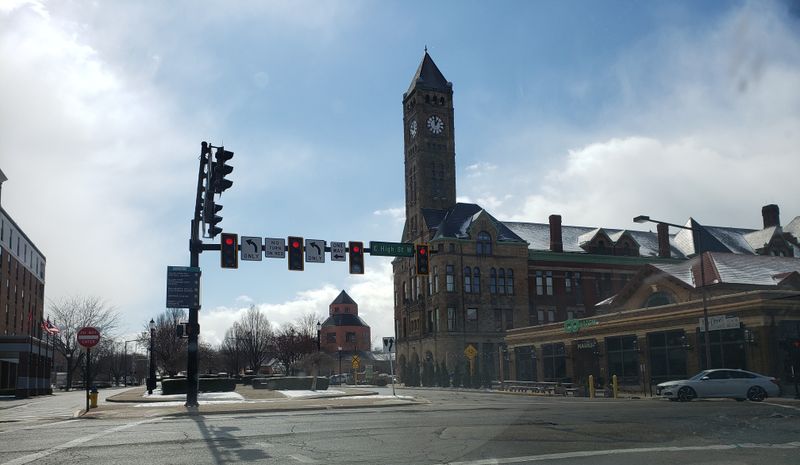
Springfield once hummed with factory activity, producing everything from farm equipment to automotive parts. Workers could graduate high school, get hired at a plant, and earn enough to buy a house and raise a family comfortably.
That world has vanished as factories closed or moved production overseas, taking tens of thousands of jobs with them.
The city’s population peaked decades ago and has been declining ever since. Empty factories sit as rusting reminders of better times.
Downtown storefronts stand vacant, and entire neighborhoods show signs of abandonment and decay. The tax base has shrunk so much that the city struggles to maintain basic services like street repairs and adequate police coverage.
Median household income has dropped significantly when adjusted for inflation. The jobs that remain tend to be in healthcare, retail, or warehouses, and most pay far less than manufacturing jobs did.
Many residents work multiple part-time positions without benefits, constantly juggling schedules and struggling to make rent.
Efforts to revitalize the city have had limited success. Some new businesses have arrived, but not enough to replace what was lost.
Young people with ambition and education leave for Columbus or Cincinnati, further weakening the community’s potential for recovery. Springfield represents countless American cities where the industrial foundation collapsed, leaving residents without clear paths to prosperity.
8. Detroit, Michigan
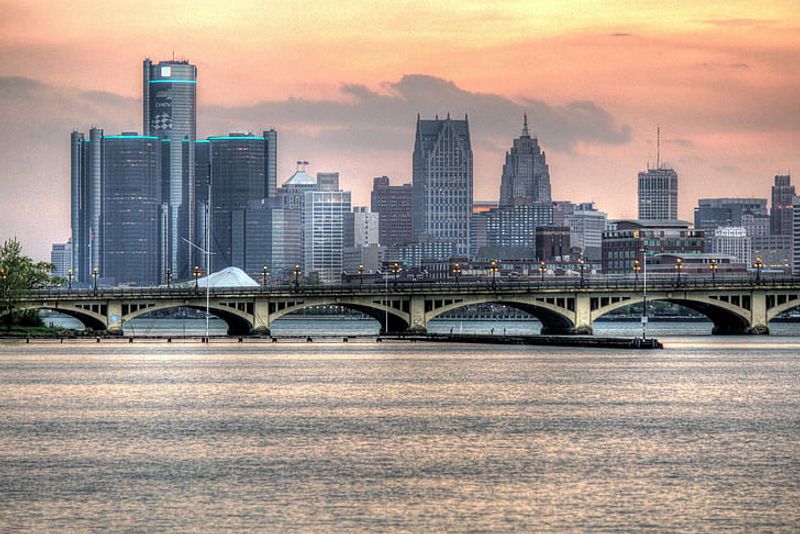
Detroit’s rise and fall mirrors the story of American manufacturing itself. Once the fourth-largest city in the nation, Detroit was synonymous with automotive innovation and middle-class prosperity.
Assembly line workers earned generous wages, bought homes in thriving neighborhoods, and believed their children would do even better. That belief proved tragically wrong.
As automakers automated production and moved plants to other states and countries, Detroit hemorrhaged jobs and population. The city filed for bankruptcy in 2013, the largest municipal bankruptcy in American history.
Entire neighborhoods were abandoned, with houses selling for less than used cars. Crime soared as unemployment became chronic and hopelessness spread.
Recent years have brought some revival to downtown and a few select neighborhoods, but vast areas remain desperately poor. The unemployment rate stays stubbornly high, especially for African American residents who face systemic barriers to the few good jobs that exist.
Many Detroiters work in the gig economy or informal sector, with no job security or benefits.
The city’s schools have struggled with funding and performance, making it difficult for young people to acquire skills for modern careers. Public transportation is inadequate, making it hard to reach suburban jobs without a car.
Detroit’s comeback story is real but limited, with most residents still locked out of economic opportunity and the American dream feeling increasingly out of reach.
9. Parts of the Rust Belt (e.g., Cleveland, Buffalo)
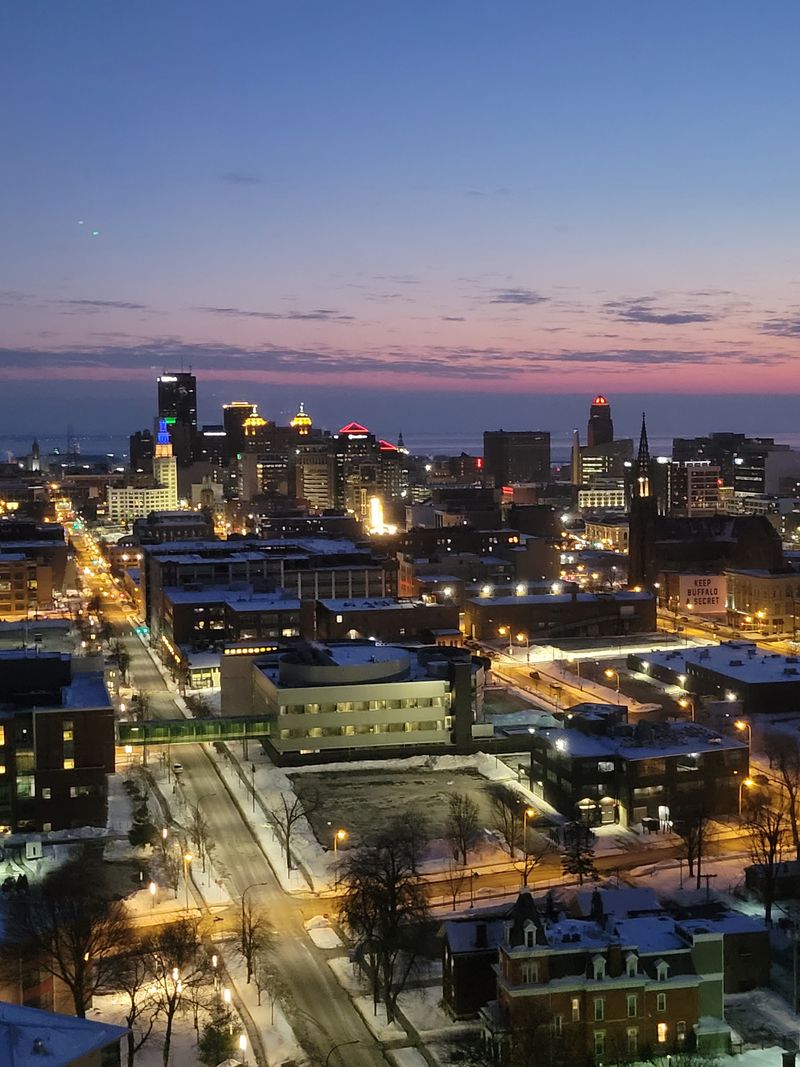
Cleveland and Buffalo represent a broader pattern across the Rust Belt: cities that built their identities around manufacturing and now struggle to find new economic purposes. Steel mills, automotive plants, and other heavy industries provided stable employment for generations before globalization and automation rendered many of these facilities obsolete.
The jobs left, but the people largely stayed, creating concentrated poverty in once-prosperous areas.
Both cities have lost more than half their peak populations as residents moved to Sun Belt states seeking better opportunities. The people who remain tend to be those with the fewest resources to relocate: the elderly, the poor, and those tied to the area by family obligations.
Neighborhoods that once housed thriving middle-class families now show block after block of vacant lots and boarded-up homes.
Education systems struggle with reduced funding and student populations that face significant challenges outside school. Many young people grow up seeing few examples of career success in their immediate communities.
The lack of role models and networks makes it harder to imagine paths to prosperity, even for talented and motivated individuals.
Some areas within these cities are gentrifying, bringing new investment and residents, but this often displaces longtime residents rather than helping them. The gap between revitalized districts and struggling neighborhoods grows wider, creating two separate realities within the same city limits.
10. Rural Nonmetro Areas Across the U.S.
Federal research paints a clear picture: rural areas outside metropolitan regions have suffered the most from economic transformation over the past few decades. Automation eliminated many agricultural jobs, globalization moved manufacturing overseas, and the digital economy favors urban centers with high-speed internet and educated workforces.
Small-town America has been left behind in ways that statistics only partially capture.
These communities face a vicious cycle. Young people leave for college or jobs in cities and rarely return, draining rural areas of talent and energy.
Local businesses close due to lack of customers, reducing services and employment options. Schools consolidate, hospitals shut down, and remaining residents grow older and poorer with each passing year.
The jobs that exist in rural nonmetro areas increasingly offer low wages and no benefits. Retail and fast-food positions have replaced factory and farm jobs that once paid middle-class wages.
Many rural workers must choose between part-time work close to home or long commutes to distant cities, spending hours and significant money on transportation.
Broadband access remains limited in many rural areas, cutting residents off from remote work opportunities and online education. This digital divide makes it nearly impossible for rural communities to attract new businesses or allow residents to participate in the modern economy.
Without major policy changes and investment, rural America’s economic decline will likely continue.
11. Counties with Low Upward Mobility

Groundbreaking research has identified specific counties where children born into poverty have virtually no chance of reaching the middle class. These counties, concentrated in the Southeast and rural West, show a complete breakdown of the American promise that hard work leads to success.
Growing up poor in these places almost guarantees staying poor, regardless of individual effort or talent.
Several factors combine to trap residents in poverty across generations. Poor schools fail to prepare students for college or technical careers.
Lack of job diversity means limited options for employment. Inadequate transportation makes it difficult to access opportunities that do exist.
Social networks remain limited to others in similar circumstances, providing few connections to better jobs or opportunities.
Health outcomes in these counties lag far behind national averages, with residents suffering higher rates of chronic disease, disability, and early death. Medical care is often scarce and expensive, forcing families to choose between treatment and other necessities.
Poor health makes it harder to work consistently, creating another barrier to economic advancement.
The concentration of poverty creates neighborhoods where crime and social problems become normalized. Children grow up seeing few examples of conventional success, making it difficult to imagine different futures for themselves.
Breaking free requires not just individual determination but resources and support that these communities simply do not provide.
12. Small Industrial Towns Losing Jobs
Across the Midwest and South, small towns built around single factories or industries face existential crises as those employers close or downsize. A textile mill in North Carolina, a steel plant in Indiana, a paper mill in Wisconsin, all told similar stories of communities losing their economic anchors.
These towns offered stability for generations: you could graduate high school, get hired at the plant, and work there for forty years with good pay and benefits.
When the anchor employer closes, the entire local economy collapses like dominoes falling. Suppliers and service businesses that depended on factory workers lose customers and shut down.
Restaurants, stores, and other retail establishments follow. Property values plummet as people leave, and those who remain find their homes worth a fraction of what they paid.
Replacement jobs, when they exist at all, pay far less than the lost manufacturing positions. A worker who earned twenty-five dollars per hour with benefits at a factory might find only retail jobs paying ten dollars per hour without benefits.
This represents a catastrophic decline in living standards that ripples through families and communities.
Local governments lose tax revenue just when residents need more support services. Infrastructure deteriorates, schools struggle, and social problems intensify.
Some towns manage to attract new employers, but many simply fade away, becoming ghost towns or retirement communities for those too old or poor to leave.
13. Inner-City Neighborhoods With Concentrated Poverty
Major cities contain neighborhoods where poverty has become so concentrated that escape seems nearly impossible. These areas, often predominantly African American or Latino, suffer from decades of disinvestment, discrimination, and economic neglect.
Unemployment rates far exceed city and national averages, and the jobs that exist typically offer poverty wages without paths to advancement.
Schools in these neighborhoods struggle with limited resources, high teacher turnover, and student populations dealing with trauma and instability. Educational outcomes lag dramatically behind suburban schools, making it difficult for young people to qualify for college or skilled trades.
The achievement gap starts in early childhood and widens with each passing year.
Crime and violence create additional barriers to opportunity. Businesses avoid opening in high-crime areas, limiting both shopping options and local employment.
Residents face daily stress and danger that affects mental health and makes it difficult to focus on long-term goals. Many talented individuals never reach their potential because they must focus on immediate survival.
Public transportation often connects these neighborhoods poorly to job centers in suburbs or other parts of the city. Without cars, residents find it difficult or impossible to access better employment opportunities.
The combination of poor education, limited jobs, inadequate transportation, and concentrated social problems creates an environment where upward mobility becomes statistically rare rather than the expected outcome of hard work.
14. Areas With High Automation Risk
Economists have mapped which American communities face the greatest risk from automation and artificial intelligence. These places, typically smaller cities and manufacturing towns, have economies dominated by routine jobs that technology can easily replace.
Truck drivers, factory workers, retail cashiers, and office clerks all face significant displacement risk in coming years, and communities where these jobs are concentrated will suffer accordingly.
The automation wave differs from previous economic transitions because it is happening faster and affecting a broader range of occupations. Self-checkout kiosks replace cashiers, algorithms replace office workers, and robots replace assembly line workers.
Unlike past transitions, the new jobs being created often require advanced education and tend to cluster in major cities rather than the communities losing jobs.
Workers in high-automation-risk areas often lack the resources to retrain for emerging careers. Community colleges may not offer relevant programs, or workers cannot afford to stop working long enough to complete training.
Online education requires reliable internet access that many rural and poor communities still lack. The skills gap becomes a chasm that most workers cannot cross.
Local leaders in these communities struggle to prepare for a future that seems to offer few good options. Attracting new employers requires infrastructure and workforce capabilities that may not exist.
The American work dream depends on available work, and in high-automation-risk areas, the work itself is disappearing with no clear replacement in sight.
15. Regions Where Income Mobility Has Fallen Sharply
Perhaps most troubling are the regions where income mobility has not just stagnated but actually reversed. In these counties, primarily scattered across the South and rural West, people born into low-income families now earn less at age thirty than their parents did at the same age, even after adjusting for inflation.
This represents a fundamental failure of the American economic system to provide opportunity and advancement.
Multiple factors contribute to this collapse in mobility. Local industries that provided middle-class jobs have disappeared without replacement.
Education systems have deteriorated as funding declined and talented teachers left for better opportunities elsewhere. Healthcare access has worsened, leaving residents sicker and less able to work consistently.
Social support systems have frayed as communities became poorer and tax bases shrank.
The psychological impact of declining mobility cannot be overstated. Growing up knowing that you will likely be poorer than your parents, regardless of your efforts, destroys hope and motivation.
Young people in these regions often struggle with depression, substance abuse, and a sense of futility that becomes self-fulfilling. The optimism that once defined American culture has given way to resignation and anger.
Reversing this trend would require massive investment in education, infrastructure, healthcare, and economic development. Without such investment, these regions will likely continue their downward spiral, with each generation finding fewer opportunities than the one before.
The American work dream is not just fading in these places but actively collapsing.



