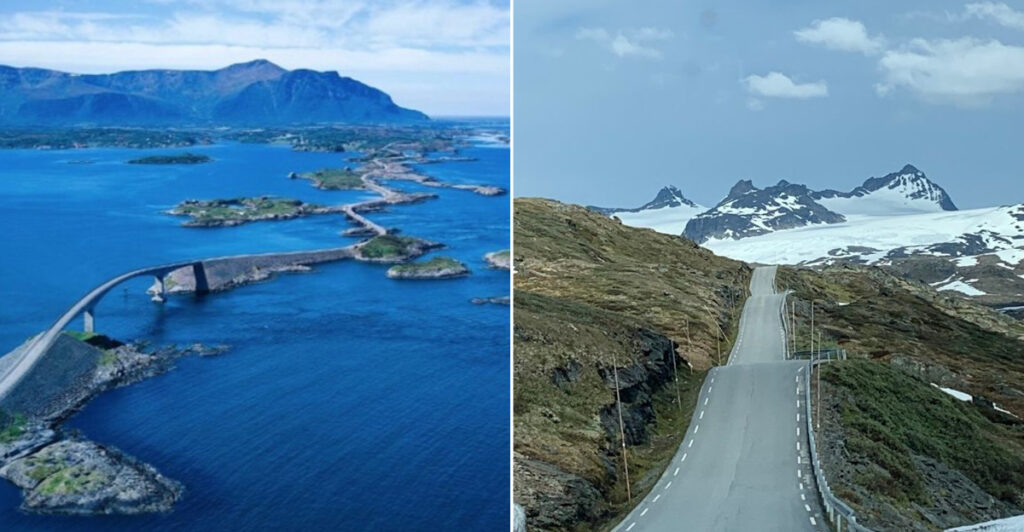
Norway has a way of making you forget you are just driving from one place to another. The roads here are so stunning that the journey becomes the whole point of the trip.
From Arctic coastlines to mountain passes that touch the clouds, Norway’s 18 official scenic routes are some of the most breathtaking stretches of pavement on the planet. Pack snacks, charge your camera, and get ready for roads that will make you pull over every five minutes.
Varanger: Where the Arctic Gets Personal
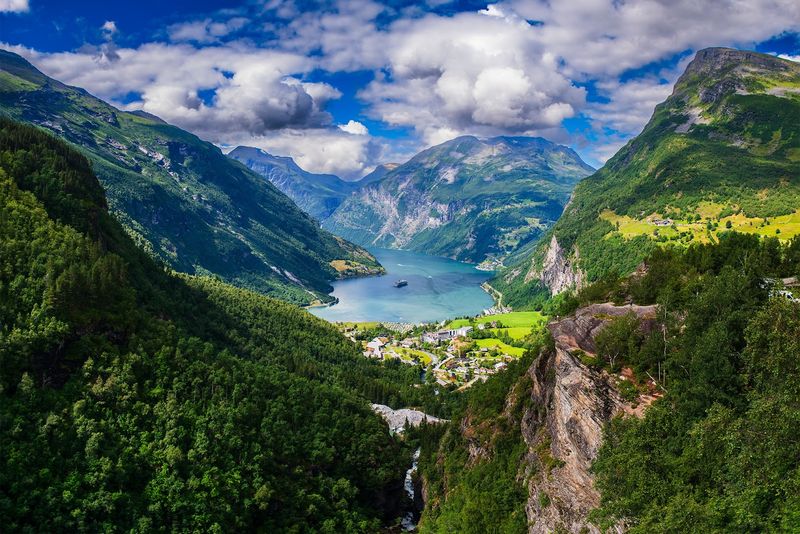
At the very edge of Europe, Varanger is the kind of road that makes you feel like you have driven off the map. This 160-kilometer route runs from Varangerbotn to Hamningberg, cutting through birch woods, marshland, and rugged Arctic cliffs.
The landscape shifts from hour to hour, and the light up here has a quality you will not find anywhere else. Reindeer wander across the road like they own the place, which, honestly, they kind of do.
Rare birdlife is another bonus for anyone who enjoys a good roadside surprise.
The stretch toward Hamningberg gets narrow and lunar-like in the best possible way. Take it slow between Svartnes and Hamningberg, especially if you are not used to single-track roads with attitude.
Stop often, breathe the Arctic air, and let the silence do the heavy lifting. This is not a drive you rush.
It is a drive you remember for years.
Havøysund: The Road That Goes Almost Nowhere (Gloriously)
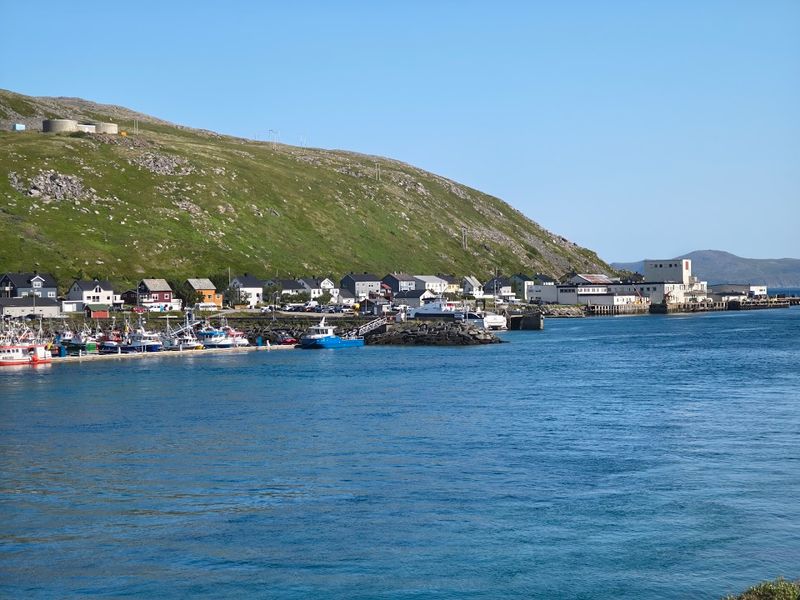
Some roads end at a busy city. Havøysund ends at a small fishing village in the far north of Finnmark, and that is precisely what makes it special.
The 67-kilometer route from Kokelv to Havøysund is not trying to impress you with waterfalls or hairpin drama.
Its beauty is quieter and rawer. Open sea, rough weather, rocky outcrops, sea eagles circling overhead, and reindeer doing their usual unbothered thing.
I drove this route on a grey afternoon and felt genuinely far from the rest of the world, which is not always easy to achieve.
This is a road for people who find comfort in remote places. The feeling of distance here is real, and the landscape keeps getting more stripped back the farther north you go.
When the road runs out, you are in Havøysund, which is charming, windswept, and worth the journey. Sometimes the destination earns its keep after all.
Senja: Norway Packed Into One Island
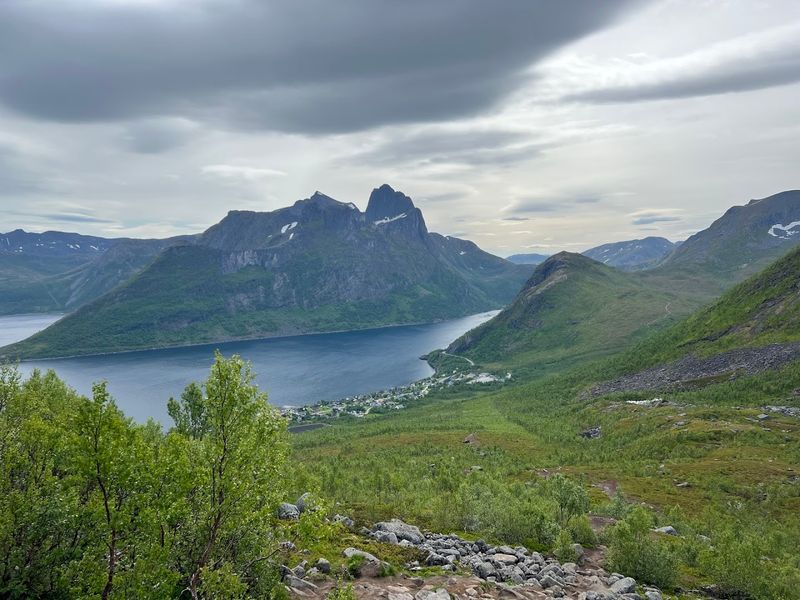
People call Senja “Norway in miniature,” and after driving the 102-kilometer scenic route along its west coast, you will understand why that nickname is not an exaggeration. Mountains, fjords, fishing villages, and open ocean all show up within the same stretch of road.
The scenery keeps shifting in a way that never gets old. One moment the road feels wide and coastal, the next it turns inward toward sharp peaks and narrow fjord water.
The viewpoint at Bergsbotn is genuinely jaw-dropping, and Tungeneset delivers rocky coastal drama at its finest.
Even the in-between bits feel like postcards. Senja is less crowded than Lofoten, which means you actually get to enjoy the viewpoints without elbowing strangers for a spot.
If you only drive one island route in Norway, make it this one. It packs an unreasonable amount of beauty into a single day on the road.
Andøya: Windswept, Wild, and Worth Every Kilometer
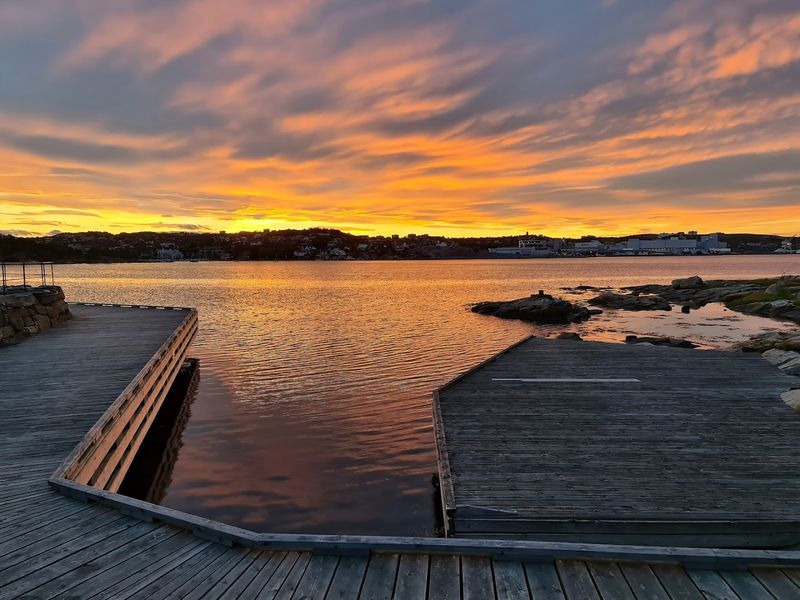
Short does not mean boring. At 58 kilometers, Andøya is one of the smaller official scenic routes, but it punches well above its weight in terms of raw coastal atmosphere.
The road runs through a landscape fully exposed to the Norwegian Sea, and the weather makes sure you know it.
Fishing villages, open beaches, and wide horizons give this drive a wild northern energy that feels completely different from the fjord routes farther south. Bleik is the standout stop, a tiny fishing village sitting right at the edge of the ocean with a beach that looks almost tropical except for the temperature.
This is the perfect choice if you want coastal drama without committing to a full-day marathon drive. The scenery is open, windswept, and honest.
No crowds, no theme-park polish, just a road, the sea, and a sky that goes on forever. Northern Norway coastal driving at its most straightforward and satisfying.
Lofoten: The Drive Everyone Talks About (For Good Reason)
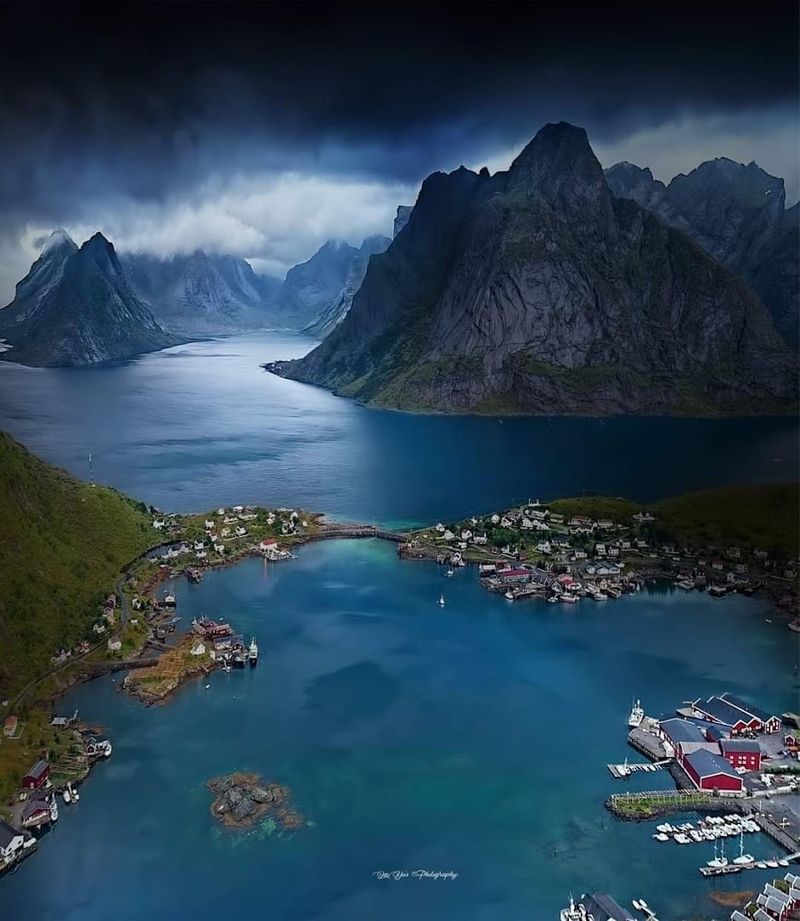
Lofoten has appeared on more travel bucket lists than almost any other destination in Norway, and the 230-kilometer scenic route is the reason why. Jagged peaks rise straight out of the ocean, fishing villages cling to rocky shores, and bridges connect islands in a way that feels slightly unreal.
The trick with Lofoten is to slow down. This road gets busy in summer, and rushing it means missing the whole point.
Rambergstranda beach, the viewpoints around Eggum, and the villages near the western end of the archipelago reward the patient driver with scenery that feels genuinely cinematic.
I spent three days on this route once, which felt both excessive and not nearly enough. The light changes dramatically throughout the day, especially in midsummer when the sun barely sets.
Whether you are here for photography, fishing, or just staring out of the car window, Lofoten delivers every single time.
Helgelandskysten: A Road Trip and a Sea Trip in One
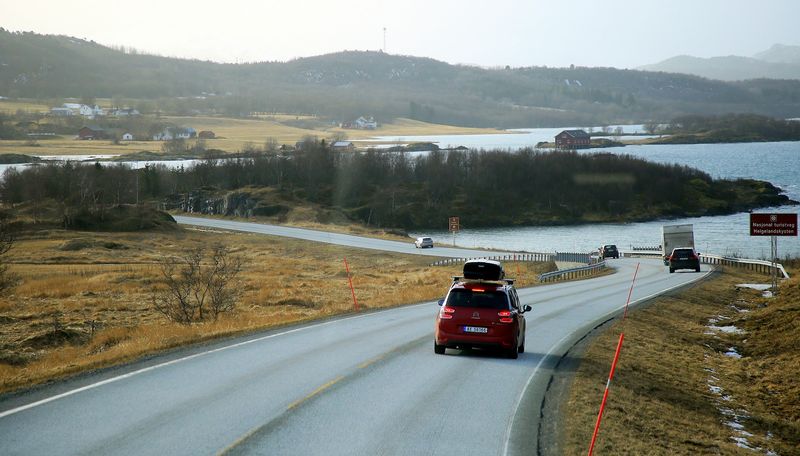
At 433 kilometers, Helgelandskysten is the longest route on this list, and it comes with a bonus: six ferry crossings. That means your road trip becomes part sea journey, which is honestly a great deal for the price of a tank of fuel and a few ferry tickets.
The official route runs as an alternative to the E6, and it is a much more interesting alternative at that. Views of the open ocean, a scattered archipelago, glaciers in the distance, and the famous Seven Sisters mountain range all feature along the way.
Torghatten, the mountain with a hole through it caused by ancient sea erosion, is one of those sights that genuinely stops you in your tracks. Ureddplassen rest stop also offers some of the best coastal views in Norway with zero effort required.
This is a route for slow travelers who want the whole coastal Norway experience, not just the highlight reel.
Atlanterhavsvegen: Driving Across the Sea (Almost)
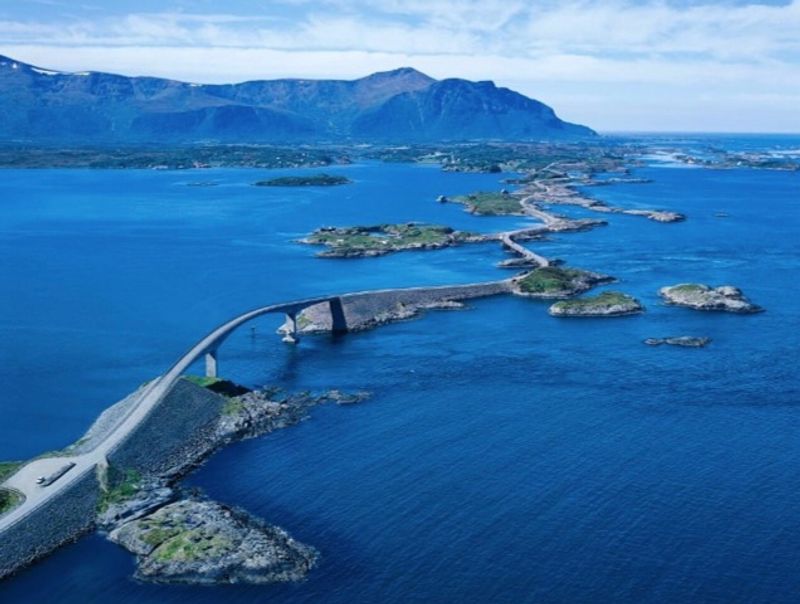
Only 36 kilometers long, the Atlantic Road has no business being this famous. And yet here we are.
The bridges curve between tiny islets and reefs across Hustadvika Bay in a way that genuinely makes you feel like you are driving across the open ocean.
Stormy weather turns this drive into something almost theatrical. Waves crash over the road barriers, the sky turns dramatic shades of grey, and the whole experience feels like a scene from a film about brave Norwegians doing brave things.
Calm days have their own appeal too, with low islands, fishing spots, and clean Atlantic views.
The official Scenic Routes page calls it “the road across the sea,” and that is not false advertising. At just 36 kilometers, it is short enough to combine with other western Norway routes.
But it is memorable enough to stand completely on its own. Few roads in the world deliver this much drama per kilometer.
Geiranger to Trollstigen: Norway’s Greatest Hits Route
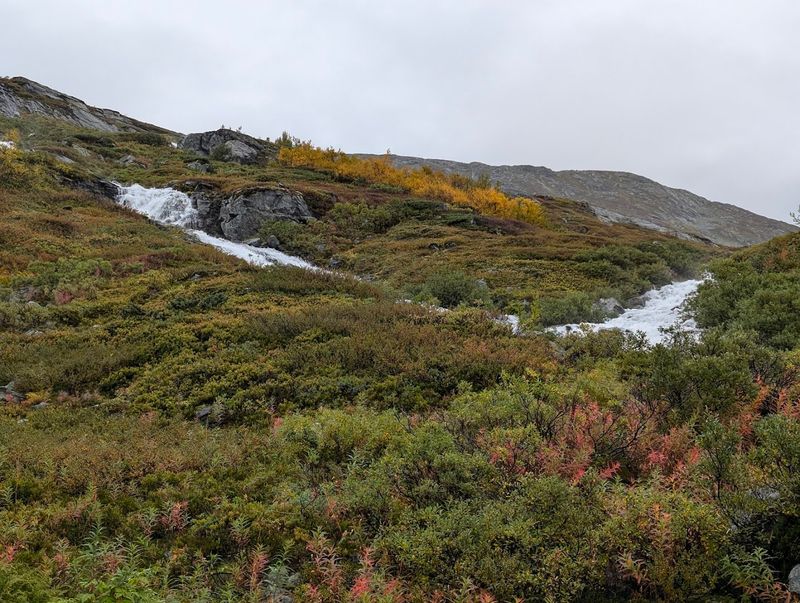
Norway has many great drives, but Geiranger to Trollstigen is the one that tends to make people audibly gasp while gripping the steering wheel. The 104-kilometer route includes a ferry and packs in fjord views, waterfalls, and the legendary eleven hairpin bends of Trollstigen.
The view from Ørnesvingen down to Geirangerfjord is one of those sights that makes every travel photo look like it was edited too much, except it really looks like that. Trollstigen is narrow, winding, and has a maximum bus length limit of 13.3 meters, which tells you everything you need to know about the road’s personality.
The route typically opens in late April, though temporary closures can still happen in bad weather. Check conditions before heading out, especially early in the season.
Large vehicles need to pay close attention to the restrictions. For everyone else, this is simply one of the most thrilling legal drives available in Europe.
Rondane: Mountain Scenery Without the Chaos
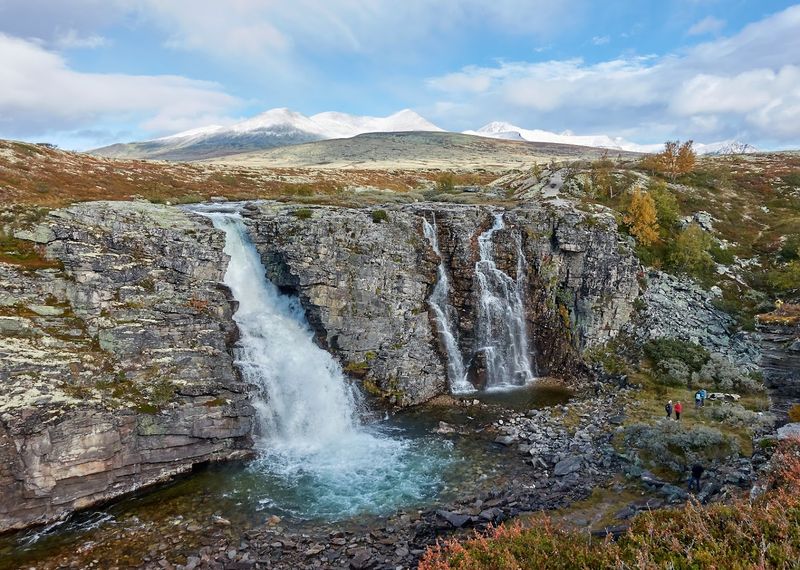
Not every great Norwegian road comes with hairpin bends and white-knuckle moments. Rondane proves that mountain beauty can be spacious, calm, and deeply satisfying without any drama.
The 75-kilometer route travels through the borderland between high peaks and old cultural landscapes.
The mountains here are rounded and ancient-looking, shaped by glaciers over thousands of years. Sohlbergplassen viewpoint is one of the highlights, offering a wide open view across the valley that has been painted, photographed, and admired by visitors for generations.
The area inspired the artist Harald Sohlberg, and once you see it, you understand why.
This is a wonderful road for anyone who wants Norwegian mountain scenery without fighting tour bus traffic on every bend. The pace is gentler, the crowds are thinner, and the landscape rewards the kind of slow, thoughtful driving that most people forget to do.
Rondane is the road for people who actually stop to look around.
Sognefjellet: Norway’s Highest Mountain Pass
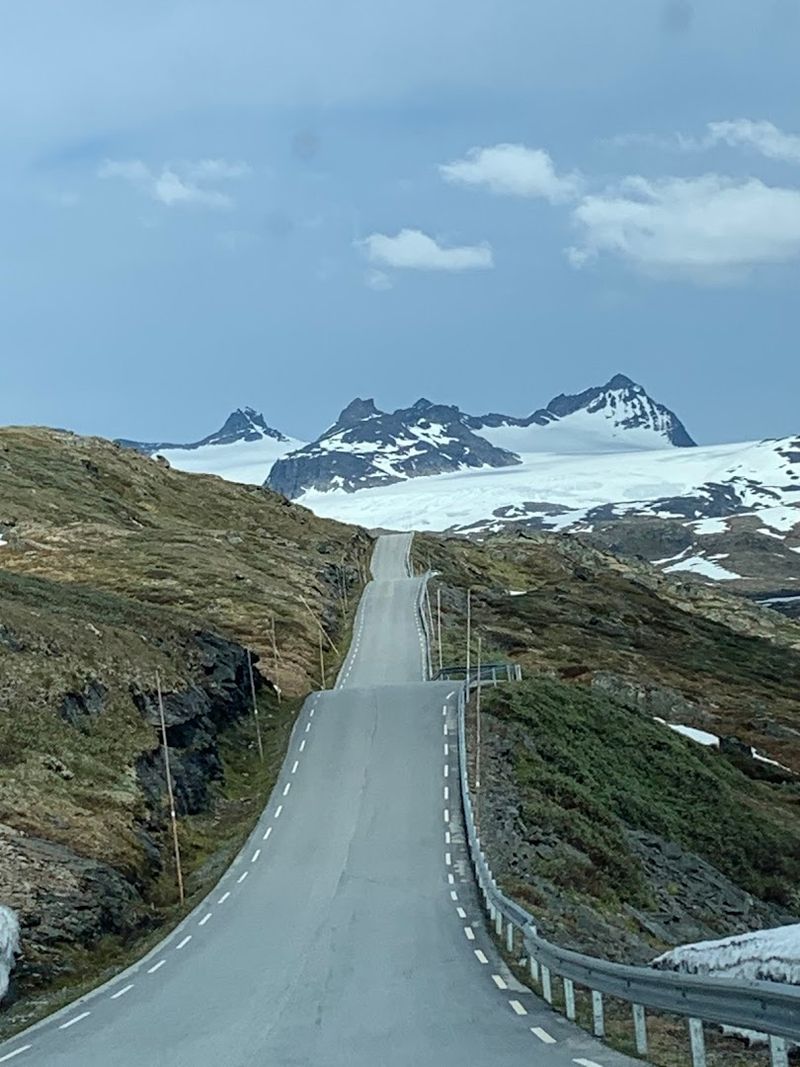
Sognefjellet holds the title of the highest mountain pass road in Northern Europe, topping out at 1,434 meters above sea level, and it earns that title with style. The 108-kilometer route between Lom and Gaupne is a genuine road of contrasts from start to finish.
It begins with green valleys and traditional Norwegian farmsteads, then climbs steadily into bare, windswept mountain terrain where snow can linger well into summer. The descent toward the inner Sognefjord is one of the most dramatic transitions on any Norwegian road.
The route typically opens in early April, though night closures and weather-related shutdowns can still happen after opening. Always check conditions before heading up, especially early in the season.
On a clear day, the views from the high plateau are the kind that make you want to pull over, get out of the car, and just stand there for a while doing absolutely nothing.
Valdresflye: Sky-High and Loving It
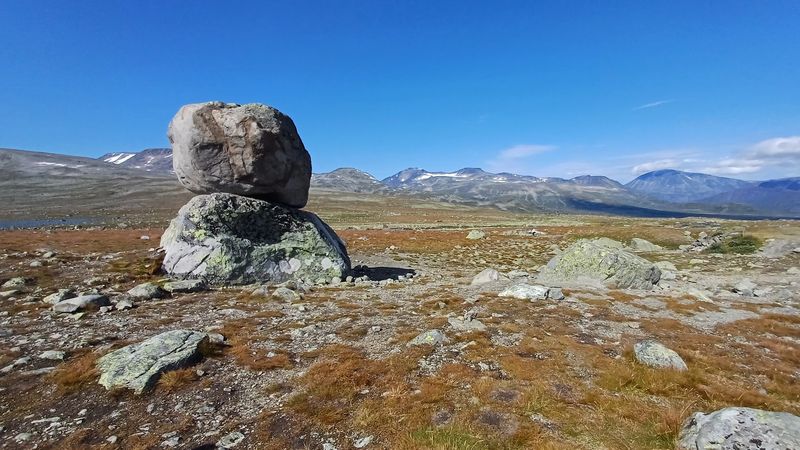
Valdresflye sits at 1,389 meters above sea level, which means for most of this 49-kilometer route, you are driving above the treeline with nothing blocking the view in any direction. The feeling of openness up here is genuinely hard to describe without sounding dramatic.
The route runs between Hindsæter and Garli with a detour toward Gjende, the famous lake at the gateway to Jotunheimen National Park. On a clear day, the panoramic views stretch across mountains and plateaus in a way that makes the whole world feel very big and very quiet.
The road opened for the 2026 season on March 30, and like most high mountain routes in Norway, it can still close temporarily in bad weather after opening. Conditions up here change fast, so a quick check of traffic information before setting out is always a smart move.
When the weather cooperates, Valdresflye is one of the most airy and uplifting drives in the country.
Gaularfjellet: The Waterfall Road Nobody Talks About Enough
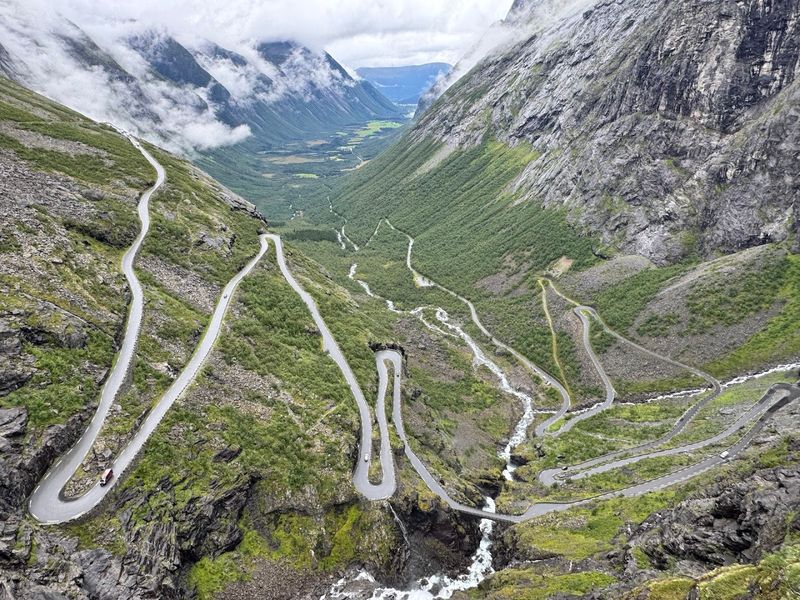
Gaularfjellet calls itself “the realm of falling waters,” and that is one of the more honest pieces of tourist marketing in Norway. The 114-kilometer route from the Sognefjord area toward Fosseheimen passes waterfalls at almost every turn, tucked into valleys and dropping off cliff edges with quiet confidence.
The Utsikten viewpoint is the crown jewel of this drive, offering a sweeping look over the valley below that genuinely stops conversation mid-sentence. The route also passes through Balestrand, a charming fjord-side town that has been attracting visitors since the Victorian era.
This road works well as a peaceful alternative to the busier western Norway routes. It is scenic without feeling like a theme park, and that is a quality worth seeking out.
Waterfalls, quiet fjord scenery, and protected waterways make Gaularfjellet feel like a well-kept secret, even though it absolutely should not be by now.
Hardanger: Four Seasons in One Drive
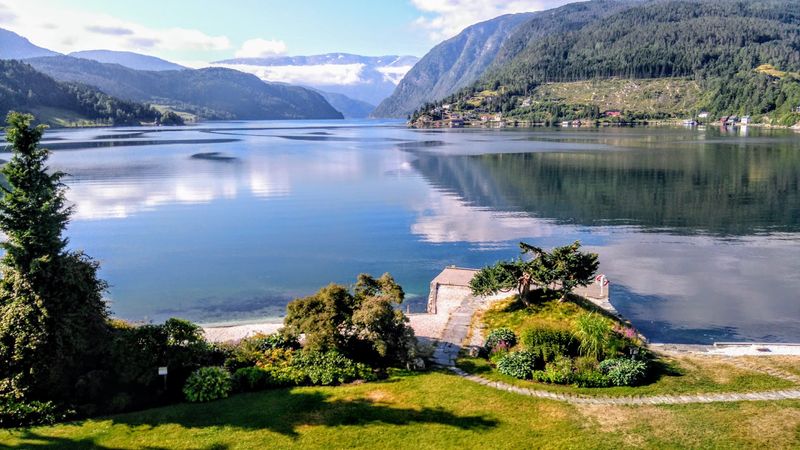
The Hardanger scenic route is 158 kilometers long, includes two ferries, and passes through one of Norway’s most beloved tourism regions. Mountains, fjords, waterfalls, glaciers, and fruit orchards all share the same stretch of road, which sounds like too much but somehow works perfectly.
In spring, the flowering fruit trees along the Hardangerfjord create one of the most photographed scenes in the country. In summer, waterfalls like Låtefossen and Skjervsfossen are thundering and dramatic.
In autumn, the farms and mountain slopes turn warm shades of red and gold.
The route also passes Hardanger Bridge, which is one of the longest suspension bridges in the world, and the town of Odda, which sits at the end of the fjord like a full stop at the end of a very long and beautiful sentence. Few drives in Norway offer this much variety across different seasons.
Hardanger rewards return visits generously.
Hardangervidda: From Plateau to Fjord in One Go
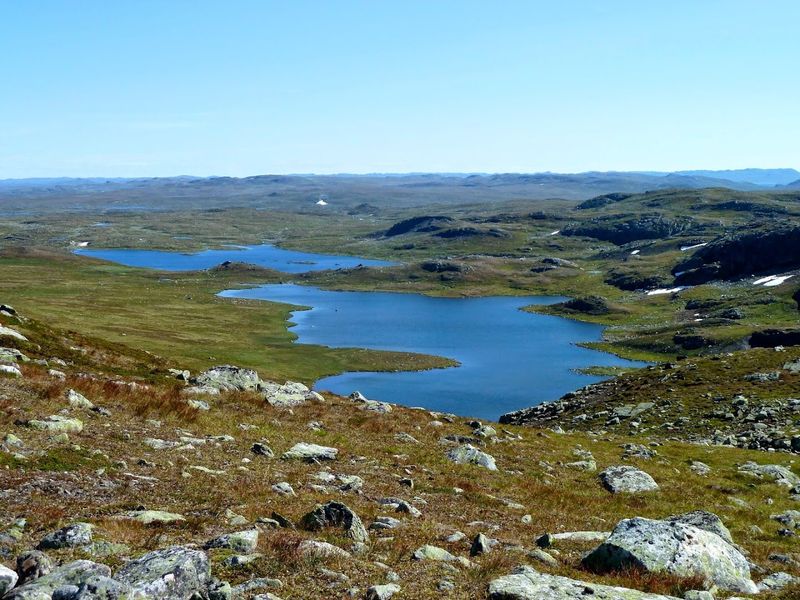
Few drives in Norway offer such a stark and satisfying contrast as Hardangervidda. The 67-kilometer route takes you from a vast, open mountain plateau straight down into the lush fjordscapes of western Norway, and the transition happens fast enough to feel almost theatrical.
The plateau section feels remote and elemental, with wide open terrain, glacial lakes, and a sky that takes up most of the view. Then the road begins its descent into Eidfjord, and suddenly there are waterfalls, including the famous Vøringsfossen, dropping over cliff edges into the valley far below.
Because the road crosses high mountain terrain, conditions can shift quickly and unexpectedly. Checking traffic information before setting out is genuinely useful here, not just a polite suggestion.
On a good day, Hardangervidda delivers one of the most dramatic landscape transitions available on a Norwegian road, and the drive into Måbødalen at the end is a proper visual reward for making the trip.
Jæren: The Flat, Breezy Road That Steals Your Heart
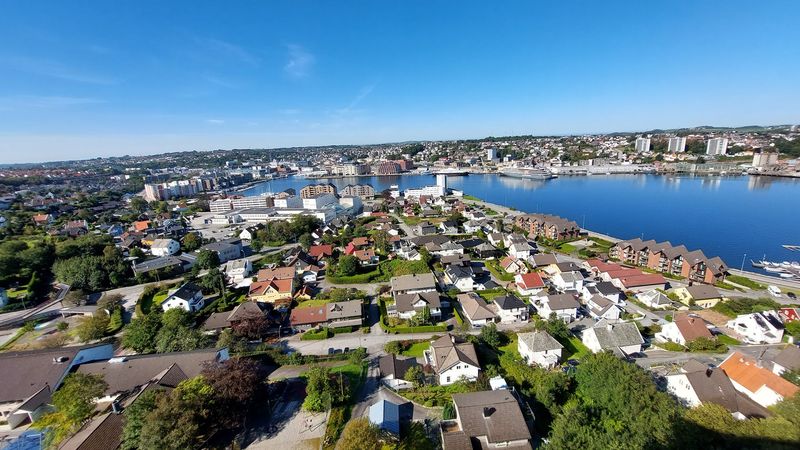
Every list needs a wildcard, and Jæren is it. While everyone else is fighting for viewpoints on mountain passes, Jæren offers 130 kilometers of coastal flatness, wide skies, long beaches, and stone fences that have been standing since before anyone thought to build a scenic route through here.
The official description says “the sky is high” on this route, and that is genuinely the best way to put it. There are no peaks blocking the horizon, no fjord walls closing in.
Just open farmland, North Sea beaches, lighthouses, and the kind of breezy coastal energy that clears your head properly.
Jæren is a softer kind of beautiful, and that softness is the whole point. The idyllic coastal towns along the way are worth stopping in, and the beaches are long enough to walk off whatever stress you brought with you.
It is the Norwegian road trip that nobody expected to love and then absolutely did.
Share this story