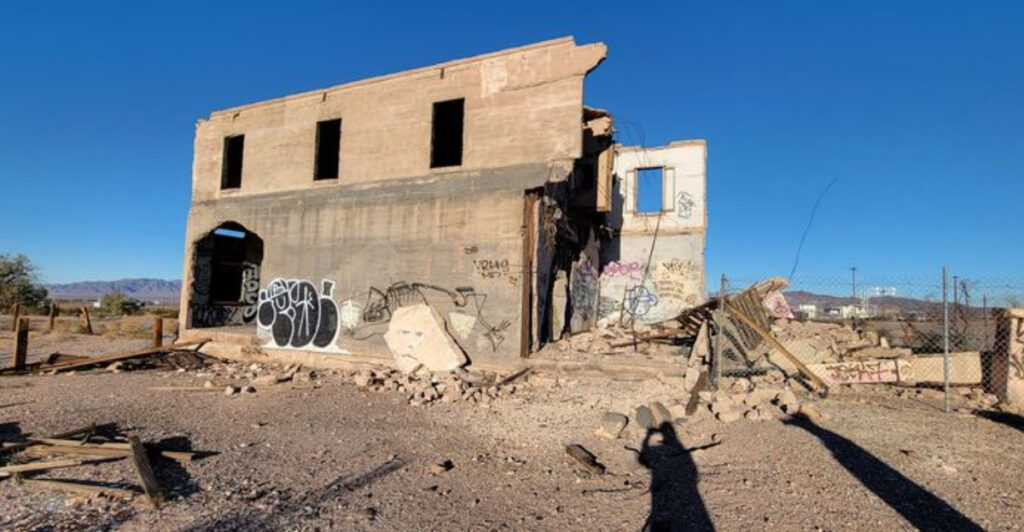
Route 66 has always been more than just a road. It is a 2,400-mile time capsule stretching from Chicago to Santa Monica, dotted with towns that refuse to be forgotten.
Some are buzzing with tourists, some are barely breathing, and a few are just a sign and a memory. I drove parts of this legendary highway last summer, and what surprised me most was how much history is still stubbornly standing out there.
Glenrio, Texas/New Mexico
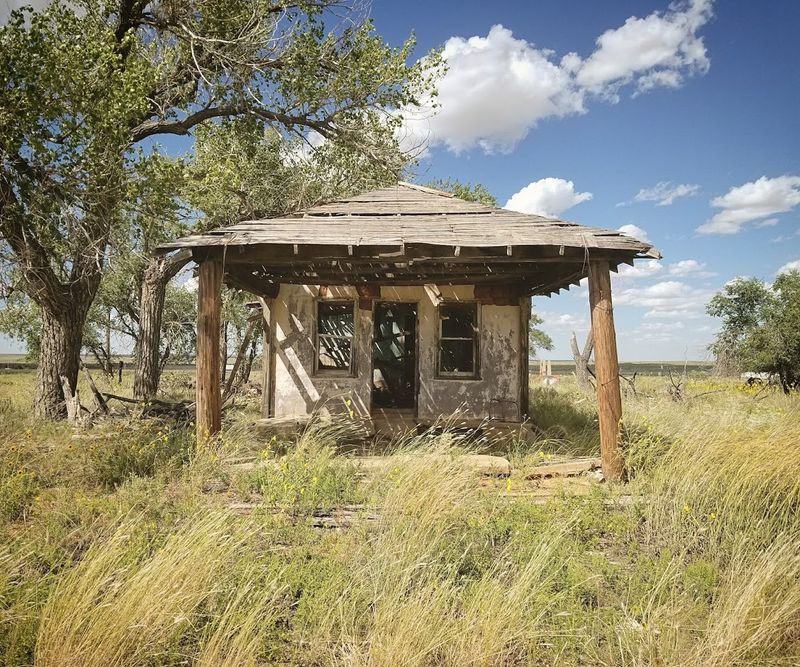
Glenrio does not just sit on a state line; it sits on the edge of time itself. This tiny ghost town straddles the Texas-New Mexico border, and the National Park Service considers it one of the best-preserved mid-century ghost towns on the entire route.
That is a serious endorsement for a place that no longer has a single open business.
Old motels, crumbling service stations, and original Route 66 pavement are still visible here. Some buildings are on private property, so this is very much a look-but-do-not-wander kind of stop.
Bring a camera, keep your distance, and respect the signs.
What makes Glenrio special is exactly what it has not become. No gift shop, no admission fee, no staged nostalgia.
Just the real thing, slowly weathering in the desert wind. If you want raw, unfiltered Route 66 history, Glenrio delivers it without any polish whatsoever.
Amboy, California
Roy’s Motel and Cafe in Amboy might be the most photographed sign on all of Route 66. That giant retro neon sign rising out of the Mojave Desert looks like something a movie director ordered, but it is completely real and has been standing since the 1940s.
Amboy gets called a ghost town a lot, but that label is not quite fair. The gas station still pumps fuel, souvenirs are available, and the desert atmosphere alone is worth the detour.
The motel rooms are not renting out like a Holiday Inn, but the spirit of the place is very much alive.
Ongoing efforts to preserve Amboy for Route 66 travelers show that people genuinely care about keeping this dot on the map relevant. Stop here, grab a souvenir, fill your tank, and take about forty photos of that sign.
You will not regret a single one.
Oatman, Arizona
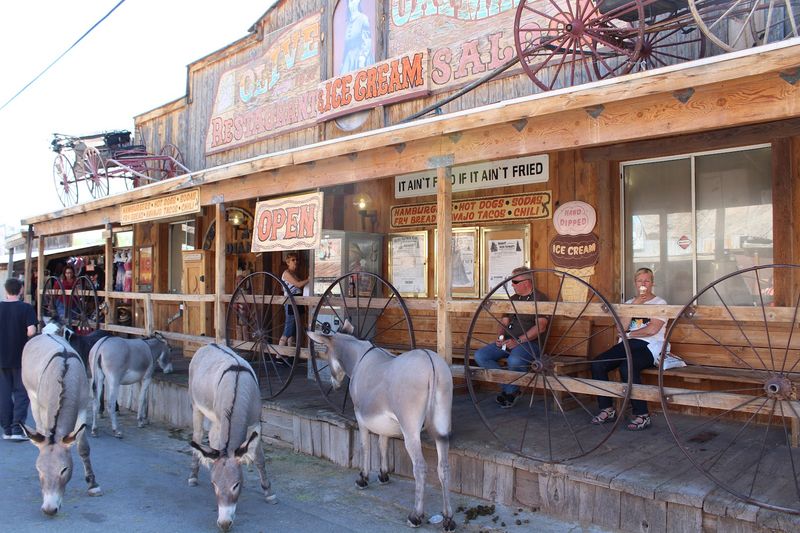
Wild burros roaming the main street is not something most towns put in their tourism brochure, but Oatman is not most towns. These friendly descendants of old mining pack animals have basically taken over downtown, and nobody seems to mind one bit.
Oatman started as a gold mining camp in the early 1900s and eventually reinvented itself as a Route 66 destination instead of quietly disappearing. That was a smart move.
Today it has saloons, a restaurant, a coffee shop, historic buildings, and daily Old West-style gunfight shows that draw crowds from across the country.
I picked up a bag of carrots at a gas station nearby just to feed the burros, and honestly it was the highlight of my whole trip. Oatman proves that a town does not have to be stuck in the past to honor it.
Sometimes the best preservation strategy is just having a great time.
Two Guns, Arizona
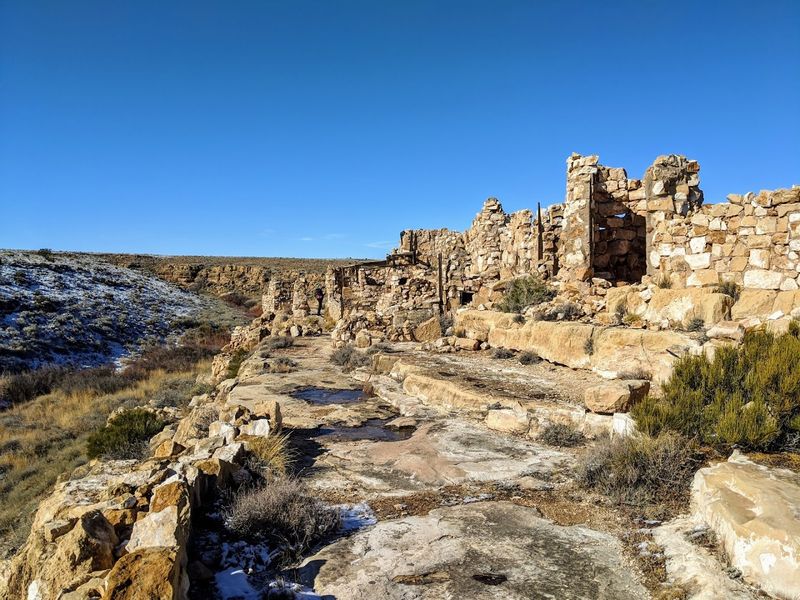
Two Guns has one of the most unsettling histories on Route 66, and that is saying something for a highway full of colorful characters. This Arizona ghost town was once home to a zoo, a murder, a land dispute, and a man who called himself Harry Miller but also went by Two Gun Miller.
It is a lot for one small patch of desert.
What remains today are crumbling stone walls, abandoned structures, and the ghostly outline of what was once a roadside attraction that capitalized on a nearby Apache massacre site. Route 66 guides still list it as a must-see ruin, and they are right, as long as visitors treat it with respect.
Two Guns is not polished, ticketed, or sanitized for tourist comfort. It is raw, slightly eerie, and genuinely fascinating.
Pull over carefully, stay aware of unstable structures, and appreciate the strange, complicated story baked into every broken wall.
Bagdad, California
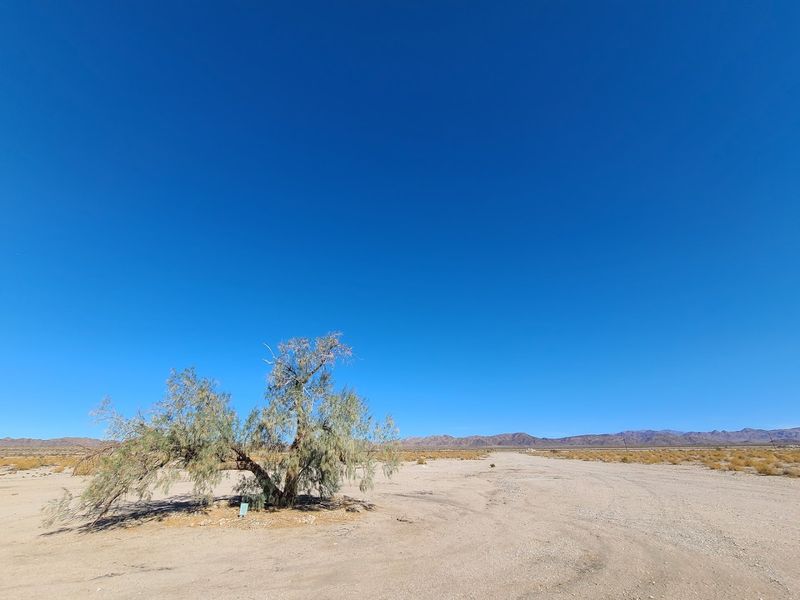
Bagdad, California holds a record nobody wanted: it once recorded 767 consecutive days without rain. The town eventually vanished too, as if the desert finally won the argument.
Today, a lone tree is reportedly all that marks the former town site along the old Route 66 alignment in the Mojave.
Worth clarifying: the famous Bagdad Cafe that appears in movies and postcards is not actually in the vanished town of Bagdad. That beloved landmark is located in Newberry Springs, about 40 miles away, and has its own separate and cheerful story involving a reopening after pandemic-era closure.
The real Bagdad townsite is more of a pilgrimage for serious Route 66 historians than a casual roadside stop. There are no services, no restrooms, and no Instagram-ready backdrops beyond the relentless desert.
But knowing a whole community once existed here, and then simply did not, is quietly haunting in the best possible way.
Texola, Oklahoma
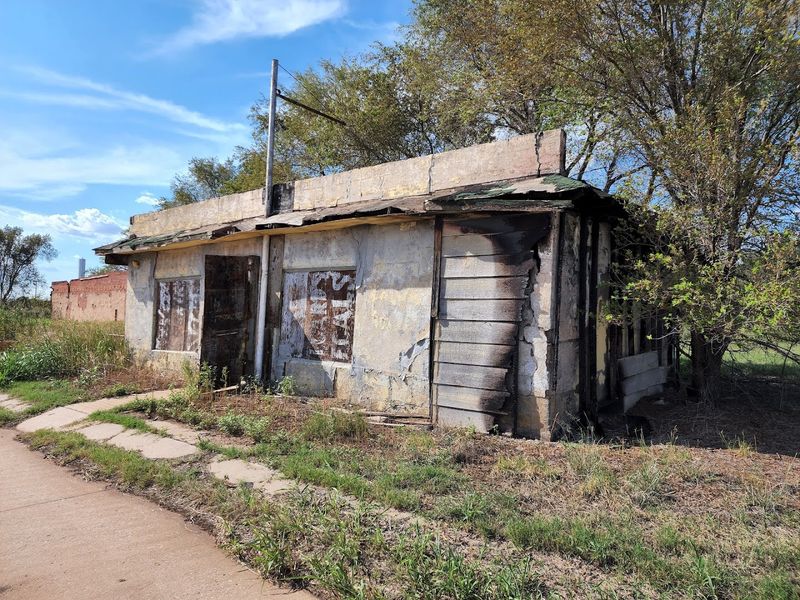
Texola is the kind of town that makes you slow down without even planning to. Sitting right on the Oklahoma-Texas border, it hovers somewhere between ghost town and living community, and that in-between status is exactly what makes it interesting.
Route 66 guides describe Texola as almost a ghost town, which feels accurate. The tiny historic jail is still standing, the old Magnolia Service Station keeps its faded dignity, and the derelict buildings along the main drag look like a set designer carefully arranged them for maximum atmosphere.
Population estimates put Texola at under 50 residents, which means the town is technically alive but operating at a whisper. For Route 66 travelers, that is actually a feature rather than a bug.
You can walk around, take photos, and experience something genuinely quiet and forgotten without fighting tour buses for space. Texola rewards the curious and the patient in equal measure.
Ludlow, California
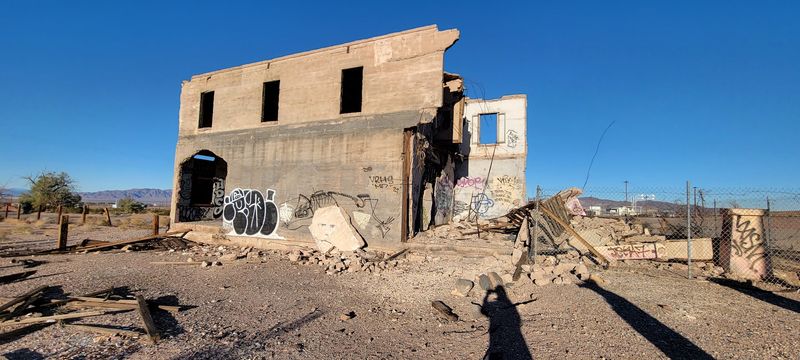
Ludlow gets unfairly lumped in with the ghost towns, but this scrappy Mojave Desert stop is still very much in the game. The Ludlow Cafe is real, the Ludlow Motel is real, and the post office is real.
That is more infrastructure than a lot of Route 66 towns can claim these days.
Yes, some older structures have crumbled and a few businesses have closed over the years. But Ludlow is better described as a desert survivor than a casualty.
Travelers crossing the Mojave on old Route 66 have been stopping here for fuel, food, and a cold drink since the highway’s glory days.
The town sits near Interstate 40, which means it still catches enough traffic to stay relevant. Ruins and working businesses exist side by side here, which creates a uniquely layered Route 66 experience.
Ludlow is proof that not every small town on this highway quietly gave up and went home.
Erick, Oklahoma
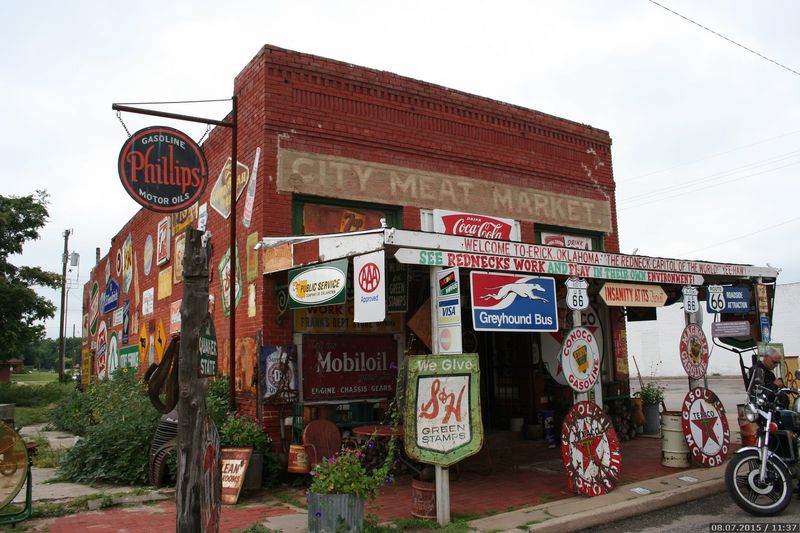
Erick, Oklahoma has a secret weapon: it is the birthplace of Roger Miller, the man who wrote King of the Road. That song is basically Route 66 in three minutes, which makes Erick a deeply appropriate stop on the Mother Road.
The Roger Miller Museum is currently closed, so do not plan your whole visit around it. What Erick does offer is a collection of vibrant murals, small-town Oklahoma character, and that particular brand of faded-but-proud Route 66 energy that is genuinely hard to manufacture.
Erick is not a ghost town and should not be treated as one. People live here, local pride runs deep, and the murals tell stories worth reading slowly.
Think of it as a town that has seen better commercial days but has not lost its identity. Route 66 gave Erick its story, and Erick is clearly not done telling it yet.
Peach Springs, Arizona
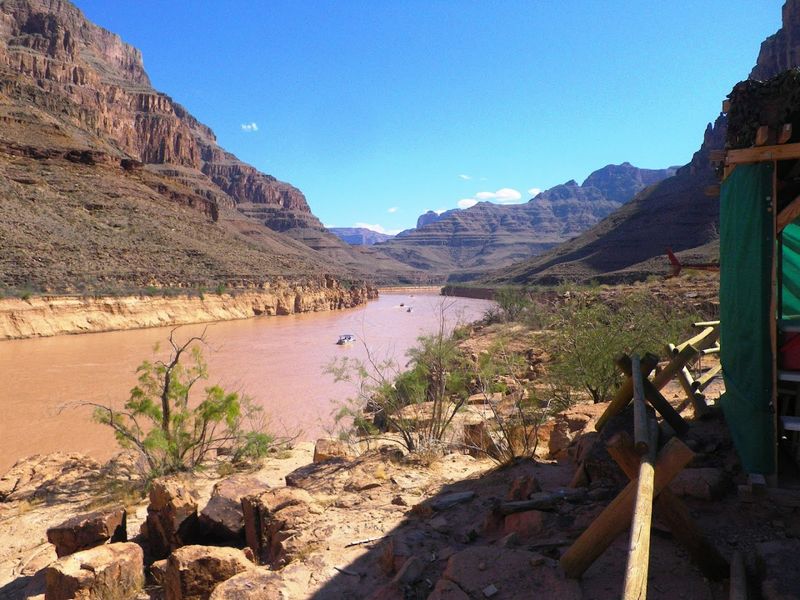
Peach Springs is one of the most underrated stops on Route 66, mostly because people speed past it on the way to something flashier. That is their loss.
This is the capital of the Hualapai Nation and the gateway to Grand Canyon West, which means it carries serious cultural and geographic weight.
Visit Arizona promotes Peach Springs as a Route 66 stop with access to outdoor adventures and Hualapai heritage experiences. The town is quieter than Oatman or Williams, but quiet does not mean empty.
An active community lives and works here, and the history tied to this land runs far deeper than any roadside diner sign.
Travelers who stop in Peach Springs often find that slowing down pays off. The connection to the Grand Canyon, the Hualapai culture, and the genuine small-town feel make this a stop that sticks with you.
Some of the best Route 66 memories come from the places you almost skipped.
Ash Fork, Arizona
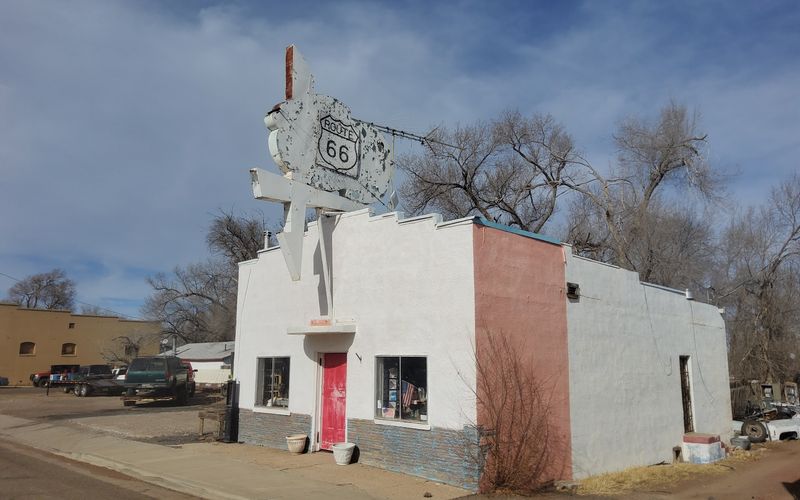
Ash Fork calls itself the Flagstone Capital of the World, and the town is not being modest. Millions of square feet of sandstone flagging have been shipped from this area to patios, walkways, and public spaces across the country.
It is a surprisingly big claim for a small Arizona town.
Beyond the flagstone fame, Ash Fork has museums, murals, railroad history, and a Route 66 presence that keeps history buffs happy. Some older businesses have closed over the years, but the town itself is very much alive and functioning as a real community.
What I find charming about Ash Fork is that it does not oversell itself. There is no giant theme park version of its history, just genuine small-town character with a railroad backbone and a Route 66 soul.
Stop at the Ash Fork Route 66 Museum if it is open, and take a close look at those flagstone walls. They really are everywhere.
Essex, California
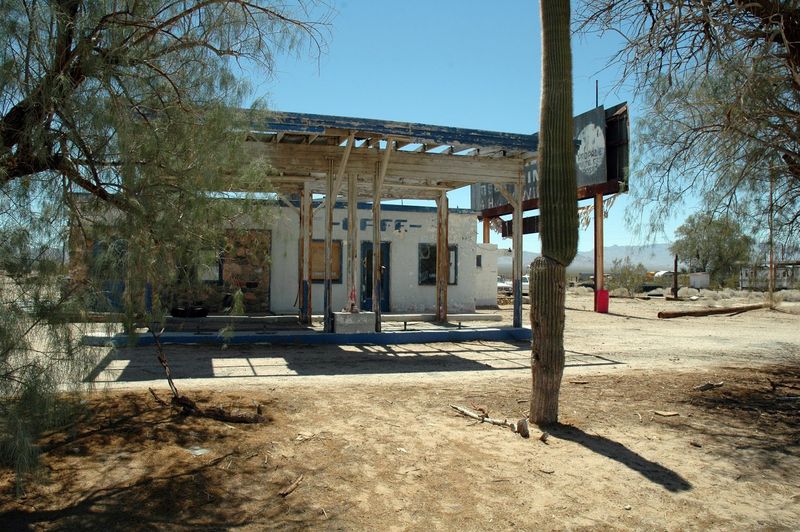
Essex is the Mojave Desert doing what the Mojave does best: reclaiming things. This California ghost town has ruins of the old post office, the Wayside Cafe, a market, a service station, and a water well, all slowly returning to the desert that never really let go.
Unlike Ludlow or Amboy, Essex does not have active businesses keeping the lights on. It is genuinely abandoned, which makes it a compelling stop for people who want to see what Route 66 looks like when nobody is tending the flame anymore.
The bones of the old community are still visible, and they tell a clear story about how these small desert towns lived and died alongside the highway.
Essex is not a place to show up expecting services. Bring water, bring fuel, and bring a healthy appreciation for ruins.
The Mojave is unforgiving, and Essex is honest proof of exactly that. Sometimes a ghost town earns its name fair and square.
Newkirk, New Mexico
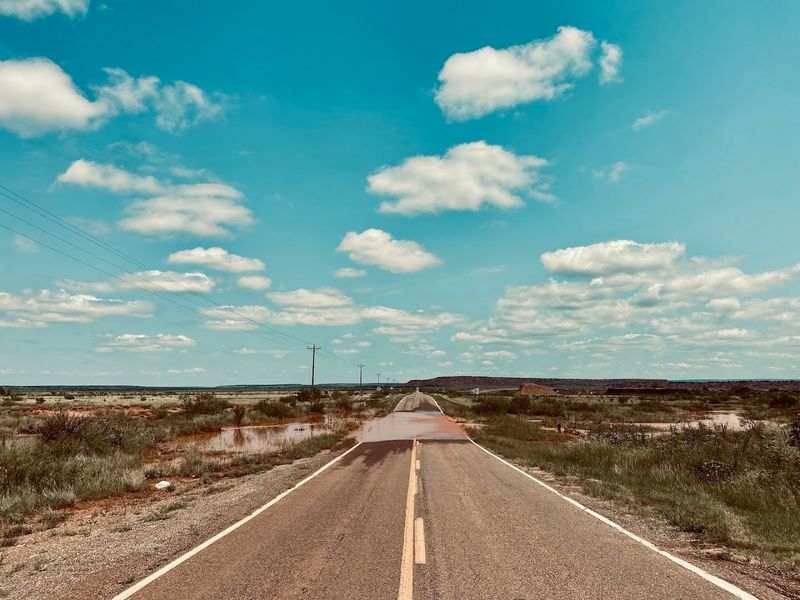
Newkirk sits in that particular New Mexico silence that feels older than the highway itself. This tiny village on the Mother Road has not fully vanished, but it has clearly seen its busiest days come and go.
Abandoned service stations, old crumbling buildings, and ruins from a more prosperous era are the main attractions here.
Route 66 sources describe Newkirk as a nearly forgotten rural village, which is accurate without being unfair. Visitors are not going to find open diners or gift shops.
What they will find is a beautifully quiet stretch of original Route 66 alignment with real historical remains that have not been touched up for tourism.
For fans of the Mother Road who prefer their history unvarnished, Newkirk is a genuine find. The emptiness is part of the point.
Standing on old Route 66 pavement with nothing but wind and ruins around you is an experience that no amount of roadside kitsch can replicate or replace.
Endee, New Mexico
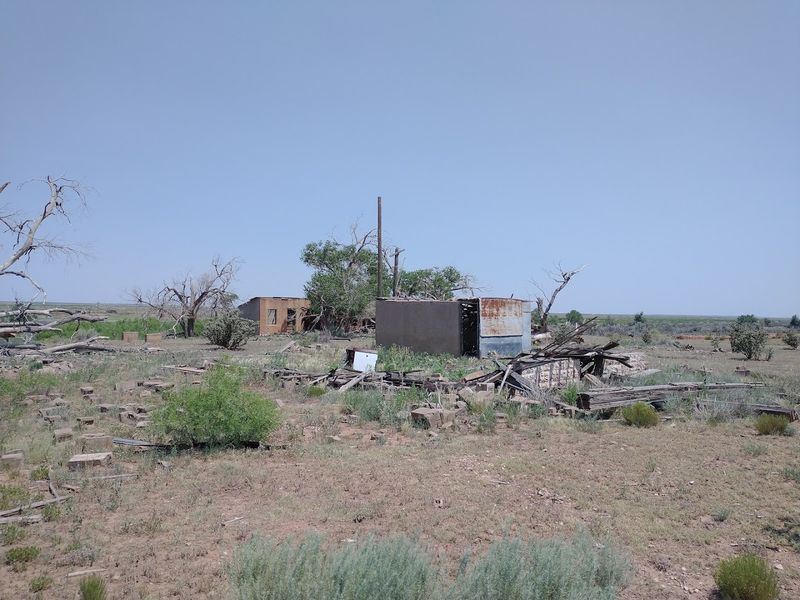
Endee, New Mexico is so quiet that even the ghosts seem to have moved on. Located near the Texas border on the original Route 66 alignment, Endee is about as close to completely gone as a town can get while still having a name on a map.
The main remains include an abandoned motel, a faded sign reading Modern Restrooms that now reads as unintentional comedy, and a few old wooden bridges along the historic alignment. There are no services, no businesses, and no reason to stop unless you are specifically chasing Route 66 history in its most stripped-down form.
That said, the old wooden bridges are genuinely worth seeing for hardcore enthusiasts. They are rare surviving examples of early Route 66 infrastructure, and they will not last forever.
Endee is a reminder that preservation on this highway is a race against time, weather, and the slow patience of the desert floor.
Conway, Texas
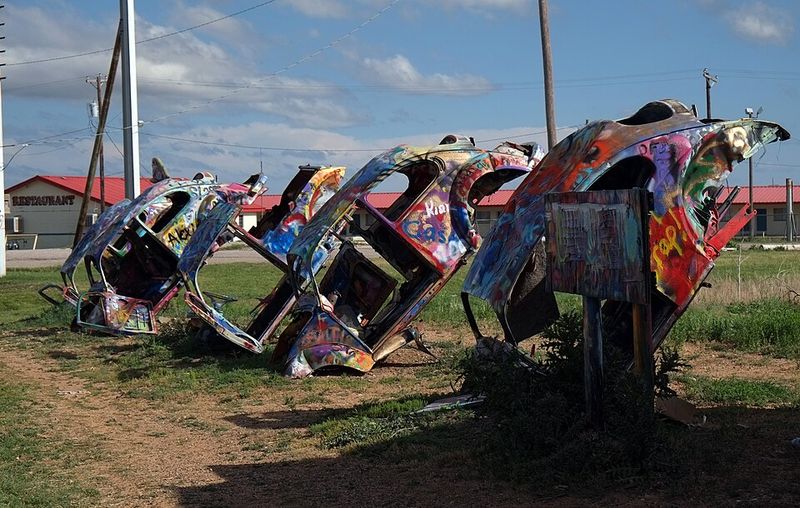
Conway, Texas may be tiny, but it punches well above its weight thanks to one gloriously weird roadside attraction: the Bug Ranch. Half-buried Volkswagen Beetles stick nose-first out of the Texas Panhandle ground, covered in spray paint and attitude, looking like the world’s most chaotic parking lot.
The Bug Ranch, officially also known as Slug Bug Ranch, was created in the 1990s as a playful nod to the more famous Cadillac Ranch near Amarillo. It works completely.
Travelers pull over, grab a can of spray paint, add their mark, and drive away grinning. That is a Route 66 experience in its purest form.
Conway itself is quiet, but calling it a nothing-left stop would be doing it a disservice. The Bug Ranch gives travelers a genuine, visible, participatory reason to stop.
Not every town needs a museum or a diner to matter on Route 66. Sometimes all you need is five buried Beetles and a good sense of humor.
Santa Rosa, New Mexico
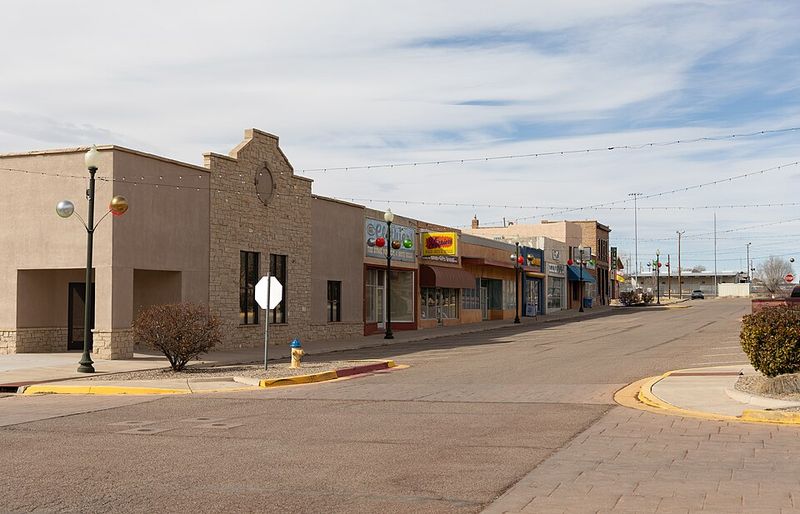
Santa Rosa is proof that a Route 66 town can honor its past without becoming a museum piece. This New Mexico gem has lodging, restaurants, the Route 66 Auto Museum with regular hours, and the famous Blue Hole, a strikingly clear natural pool that draws swimmers and scuba divers from across the region.
New Mexico tourism actively promotes Santa Rosa for Route 66 history, swimming, fishing, and outdoor activities. That is not the profile of a forgotten town.
Santa Rosa is thriving by doing what smart Route 66 towns do: blending nostalgia with genuine reasons to visit today, not just reasons to remember yesterday.
The Auto Museum alone is worth a stop, with its collection of classic cars and Route 66 memorabilia presented with real care and local pride. Santa Rosa earns its place on this list not as a cautionary tale but as a success story.
Some towns hold on to their past by living in it. Santa Rosa holds on by building on top of it.
Share this story