 Unearth The Voyage
Some places are so beautiful that your camera just gives up trying. These 15 scenic viewpoints around the world are the kind of spots that stop you mid-step and make you question whether you accidentally walked into a screensaver.
From fjord cliffs in Norway to pagoda-framed peaks in Japan, each one delivers a view so good it feels almost unfair. Pack your wide-angle lens and maybe a snack, because these spots deserve your full attention.
Tunnel View – Yosemite National Park, California, USA
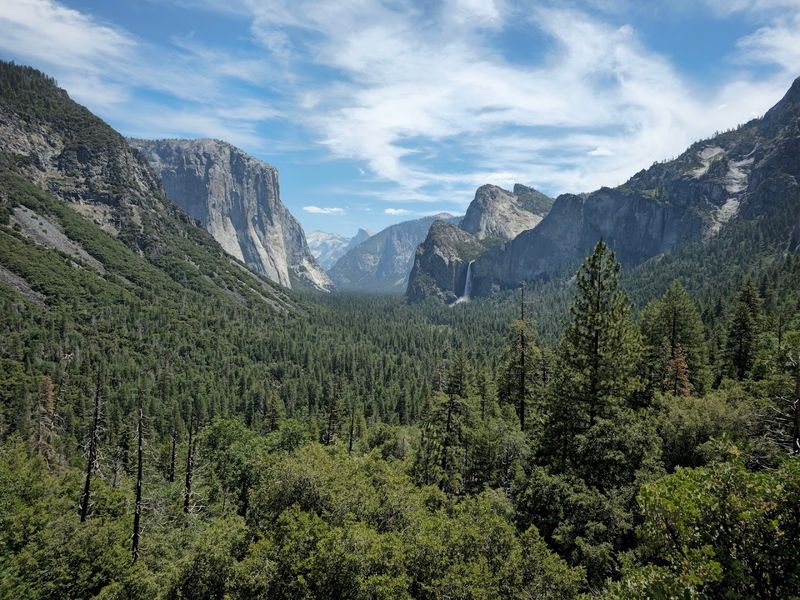
Nobody warns you that driving through a tunnel and suddenly facing Yosemite Valley is basically visual whiplash. El Capitan stands on your left like a bouncer who never smiles.
Half Dome looms dead center, and Bridalveil Fall drops gracefully on the right.
The first time I stood here, I genuinely forgot to breathe for a solid five seconds. This viewpoint works in every season.
Winter brings snow-dusted granite, spring fills the valley with waterfalls, and autumn turns the floor golden.
Arrive early to snag parking before the crowds roll in. Tunnel View has a proper pullout with plenty of room to stand and stare.
Photographers camp here before sunrise for that soft pink light hitting the granite walls. Honestly, even a quick phone snapshot looks like a professional shot.
The valley just does the work for you.
Mesa Arch – Canyonlands National Park, Utah, USA
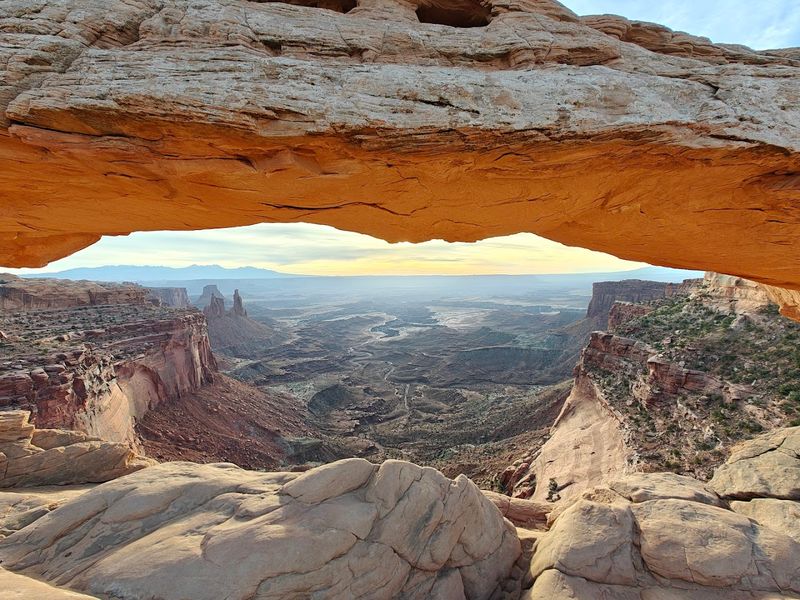
Sunrise at Mesa Arch is basically a nature-made light show, and the ticket is free. The arch sits right on the mesa edge, and at dawn, the underside glows an almost unreal shade of orange as light bounces off the canyon walls below.
The hike to reach it is barely half a mile, which means even late risers have no excuse. Photographers line up like it is concert general admission, tripods and elbows everywhere.
Get there early if you want a front-row spot.
The arch itself frames a jaw-dropping canyon view that stretches to distant peaks. Canyonlands does not get the same tourist traffic as nearby Arches or Zion, so it still feels a little wild and underrated.
Mesa Arch is the park’s showstopper moment. Come for the arch, stay for the entire park because Canyonlands rewards every extra mile you put in.
Mather Point – Grand Canyon South Rim, Arizona, USA
The Grand Canyon does not ease you in gently. Mather Point basically grabs you by the collar and says, look at this.
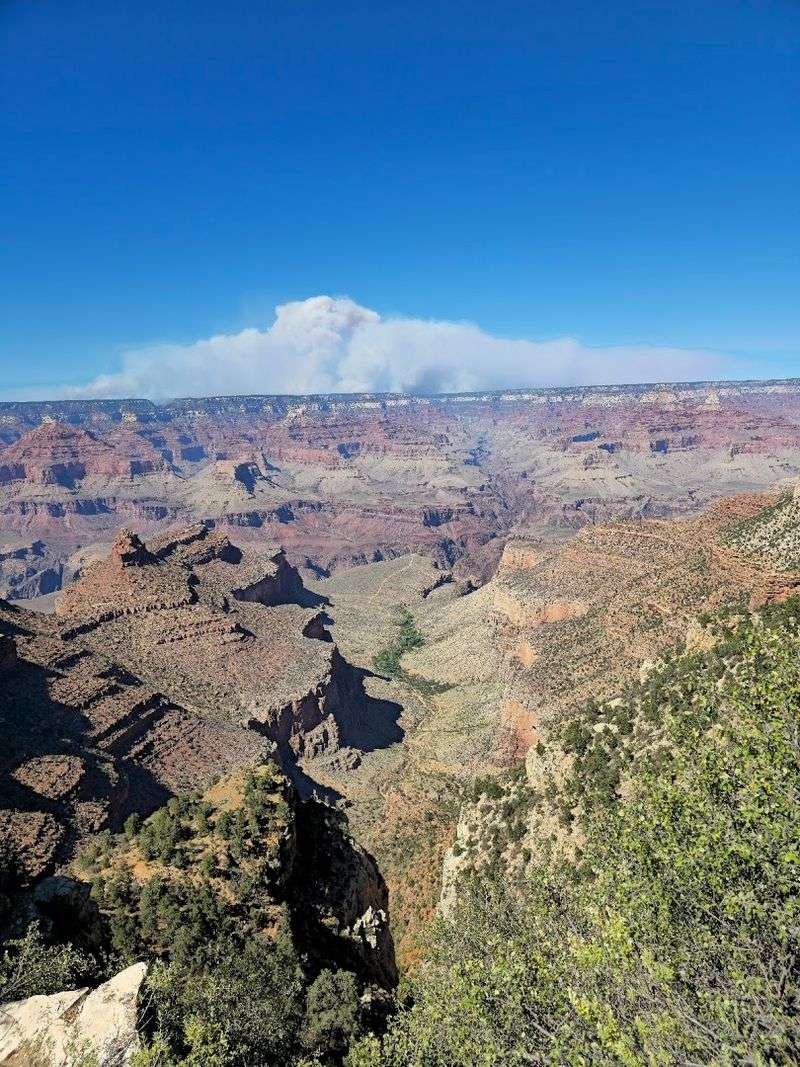
It is the first major overlook most visitors hit after entering the South Rim, and the view is enormous in every direction.
Layer after layer of red, orange, and purple rock drops down over a mile to the canyon floor. Even people who have seen a hundred photos of this place still stop and go completely quiet when they arrive in person.
That silence is telling.
Mather Point has paved paths, safety railings, and clear signage, making it very accessible. Early morning visits reward you with soft light and thinner crowds.
Sunset is equally stunning but expect company. A fun fact worth sharing: the canyon took around five to six million years to form.
That makes your commute complaints seem pretty small by comparison.
Horseshoe Bend Overlook – Glen Canyon National Recreation Area, Arizona, USA
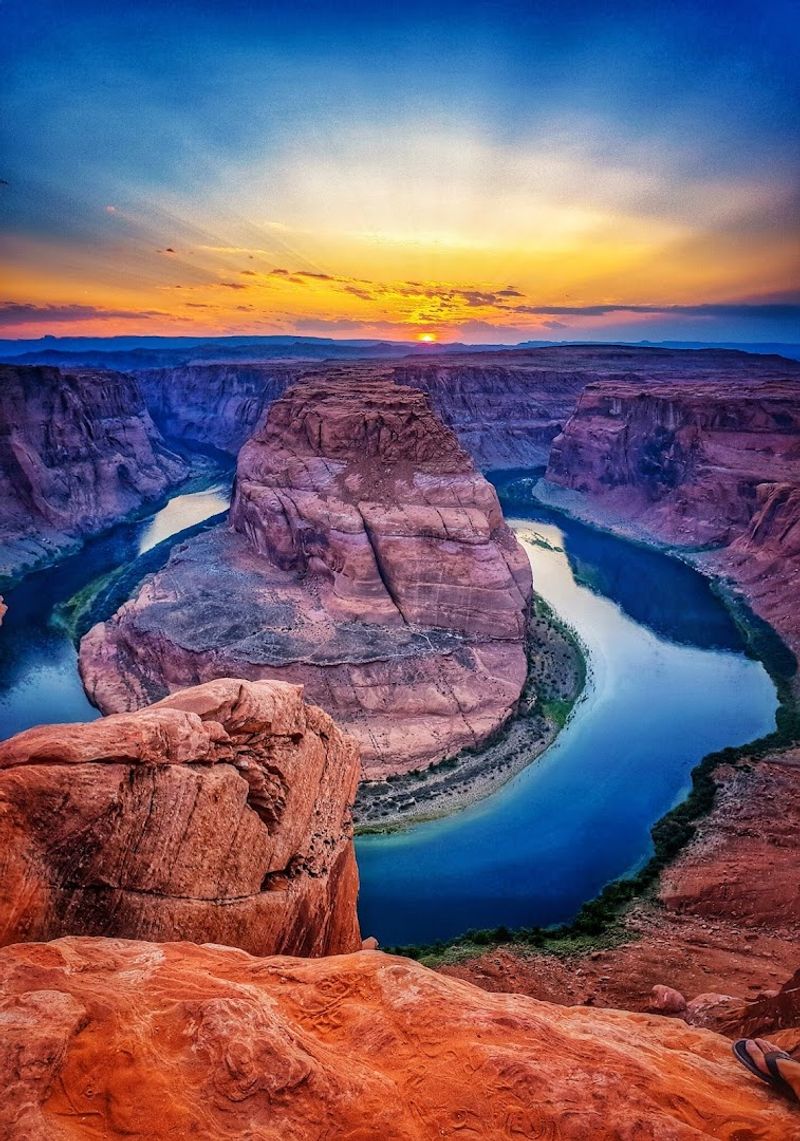
Standing at the edge of Horseshoe Bend feels like the Earth decided to show off. The Colorado River curves nearly 270 degrees around a massive sandstone formation, and you are looking straight down at it from about 1,000 feet up.
The hike from the parking lot is about 1.5 miles round trip, mostly flat, but that last stretch near the edge has zero railing. Keep your phone in your pocket and your knees slightly bent.
Heights are not for everyone, and this one is genuinely vertiginous.
The best light hits in the late afternoon when the sandstone turns deep amber and the river below takes on a glassy teal color. Sunrise works well too if you prefer cooler temperatures and fewer selfie sticks in your frame.
Entry now requires a small fee, but the view is worth every cent. This one belongs on every Southwest road trip without question.
Surprise Corner – Banff, Alberta, Canada
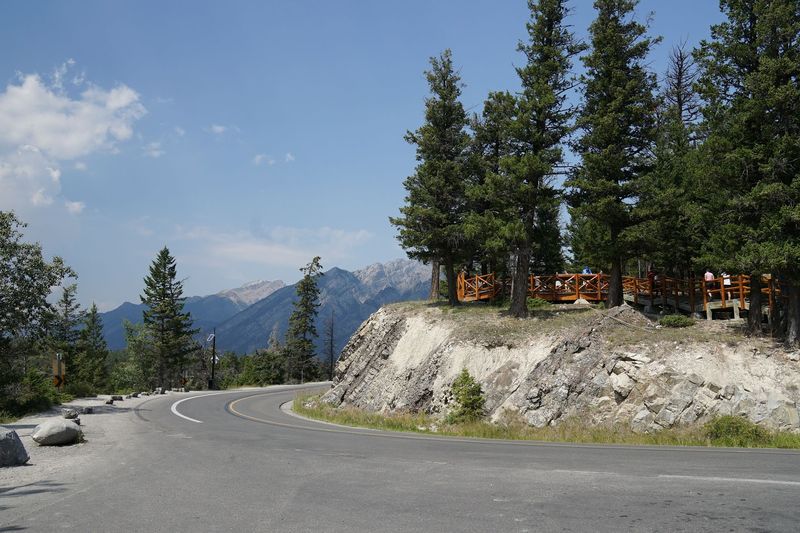
The name is not just clever marketing. Surprise Corner genuinely catches you off guard every single time, even when you know it is coming.
You walk a short trail from downtown Banff, round a bend, and suddenly the Fairmont Banff Springs Hotel appears below you like a castle that got lost on its way to Europe.
The Bow River snakes through the valley, pine trees blanket the slopes, and the Rocky Mountains frame the whole scene. It is almost aggressively picturesque.
Autumn is particularly wild here when the larches turn yellow and the valley glows.
The viewpoint is a short, easy walk from town, making it a no-excuses stop. Morning visits offer calm light and quieter crowds.
The hotel below, built in 1888, looks like it belongs in a fairy tale rather than a national park. Bring a warm layer because Banff mornings are cool even in summer, and lingering here is basically mandatory.
Rockpile Viewpoint – Moraine Lake, Banff National Park, Canada
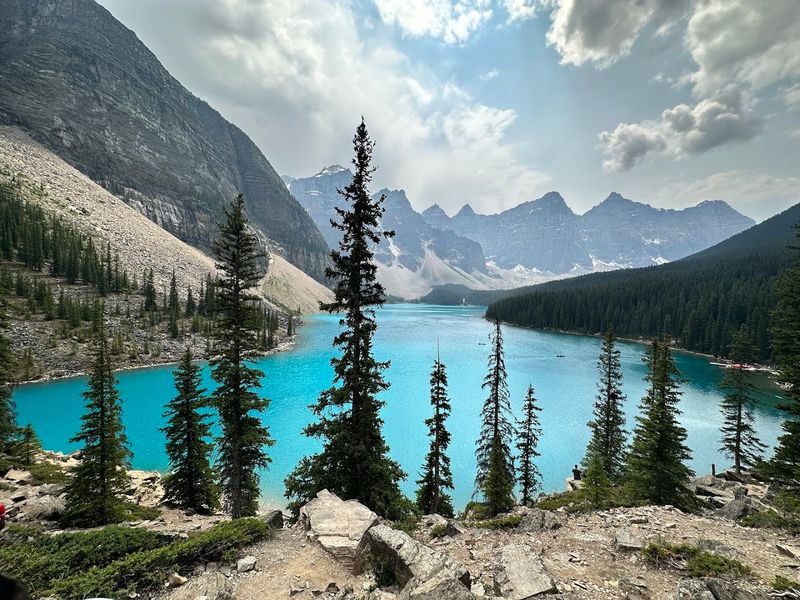
Moraine Lake’s turquoise color is so vivid that people often assume the photos have been edited. They have not.
Glacial rock flour suspended in the water catches light in a way that produces that electric blue-green shade, and the Rockpile viewpoint puts it all on full display.
The climb up the Rockpile takes about five minutes. The payoff is the classic Valley of the Ten Peaks backdrop stretching behind the lake.
This view once appeared on the Canadian twenty-dollar bill, earning it the nickname the Twenty Dollar View.
Getting here now requires a shuttle reservation or early arrival because the road fills up fast. Worth every logistical headache.
Late spring and early summer bring the most vivid water color as snowmelt peaks. Bring layers since the lake sits at elevation and wind comes quickly.
Honestly, no filter needed here. The lake does all the heavy lifting on its own.
Gornergrat – Zermatt, Switzerland
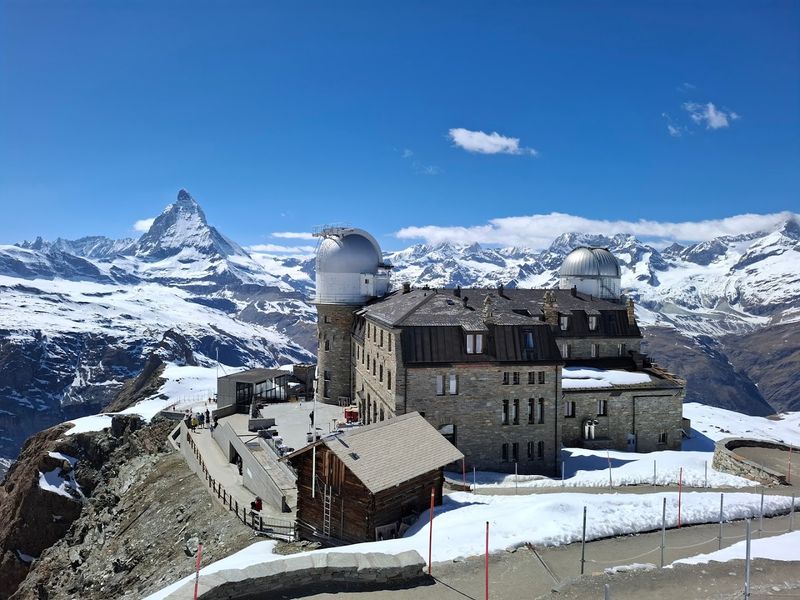
Riding the Gornergrat railway feels like being slowly launched into the sky by a very polite Swiss engineer. The rack-and-pinion train climbs over 3,000 meters above Zermatt, and the views get more ridiculous with every switchback.
At the top, the Matterhorn stands front and center, one of the most distinctive mountain shapes on the planet. Around it, 29 other peaks over 4,000 meters crowd the horizon.
The Gorner Glacier spreads below like a slow-motion frozen river.
The railway runs year-round, which means this view is accessible in winter too, when the whole scene turns into a snow globe. Summer visitors can combine the ride with hiking trails that wind between the peaks.
Zermatt itself is car-free, so the air at the summit is crisp and clean. Dress warmly regardless of season.
At that altitude, even August can throw a cold surprise your way without any warning.
Preikestolen (Pulpit Rock) – Lysefjord, Norway
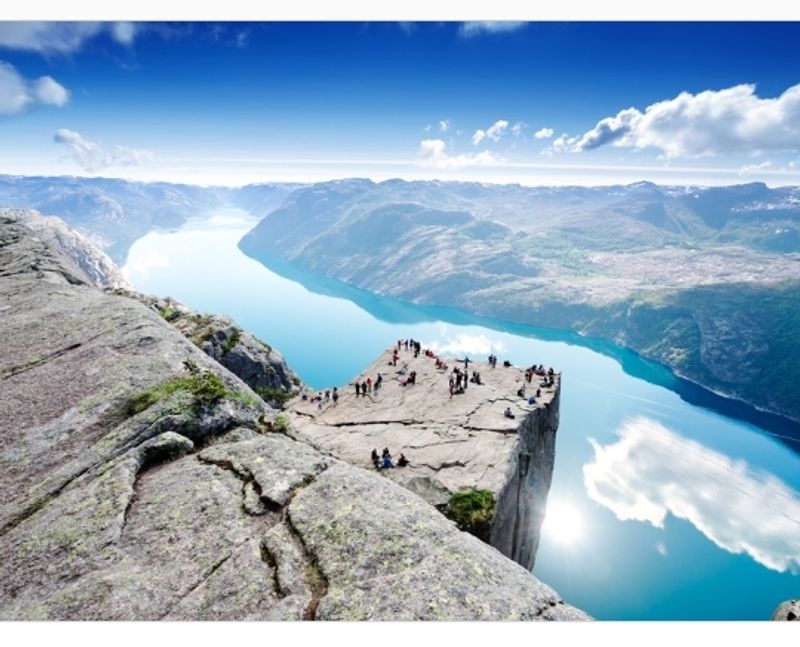
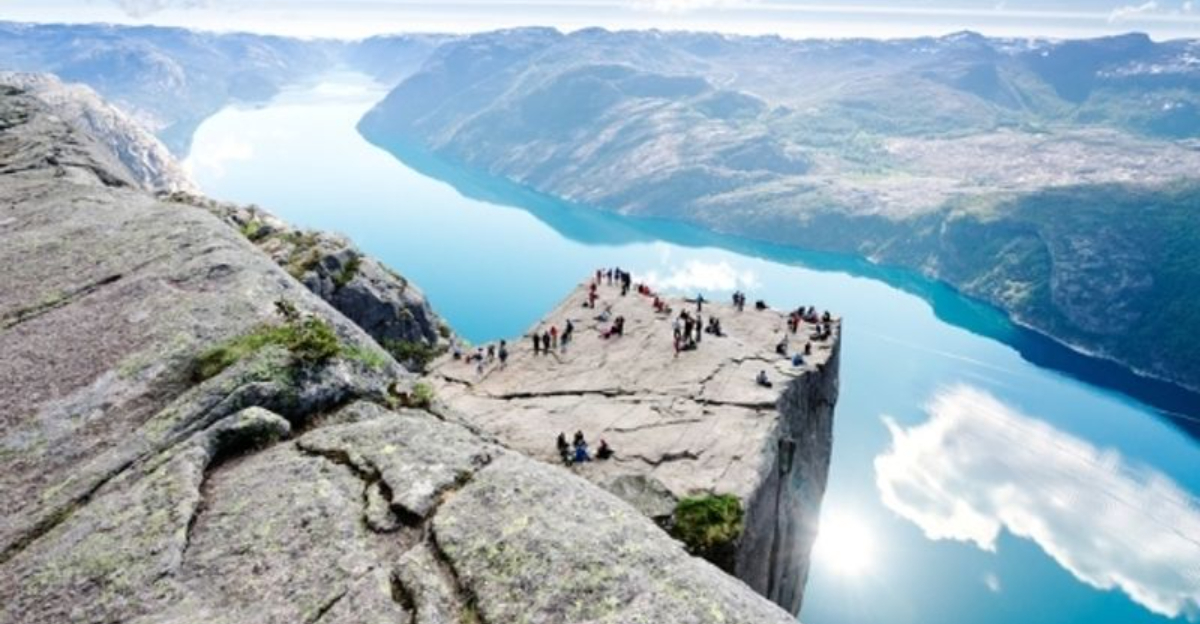
Pulpit Rock has one of the most dramatic setups in all of Europe. A perfectly flat, rectangular rock plateau juts out over Lysefjord at roughly 604 meters above the water.
There are no railings. There is no safety net.
Just you, the edge, and a very long way down.
The hike to reach it takes about two hours each way, with some steep and rocky sections. It is challenging but manageable for most reasonably fit people.
The trail rewards you with fjord views the entire way up, so the journey is half the point.
Summer brings the best conditions and the longest daylight hours. Norway’s midnight sun means you can hike here at 10 PM and still have full light, which is genuinely surreal.
The fjord below is a deep, still blue, and the surrounding cliffs make the whole scene feel ancient and massive. This is one viewpoint that earns every step it demands.
Echo Point (Three Sisters Lookout) – Blue Mountains, Australia
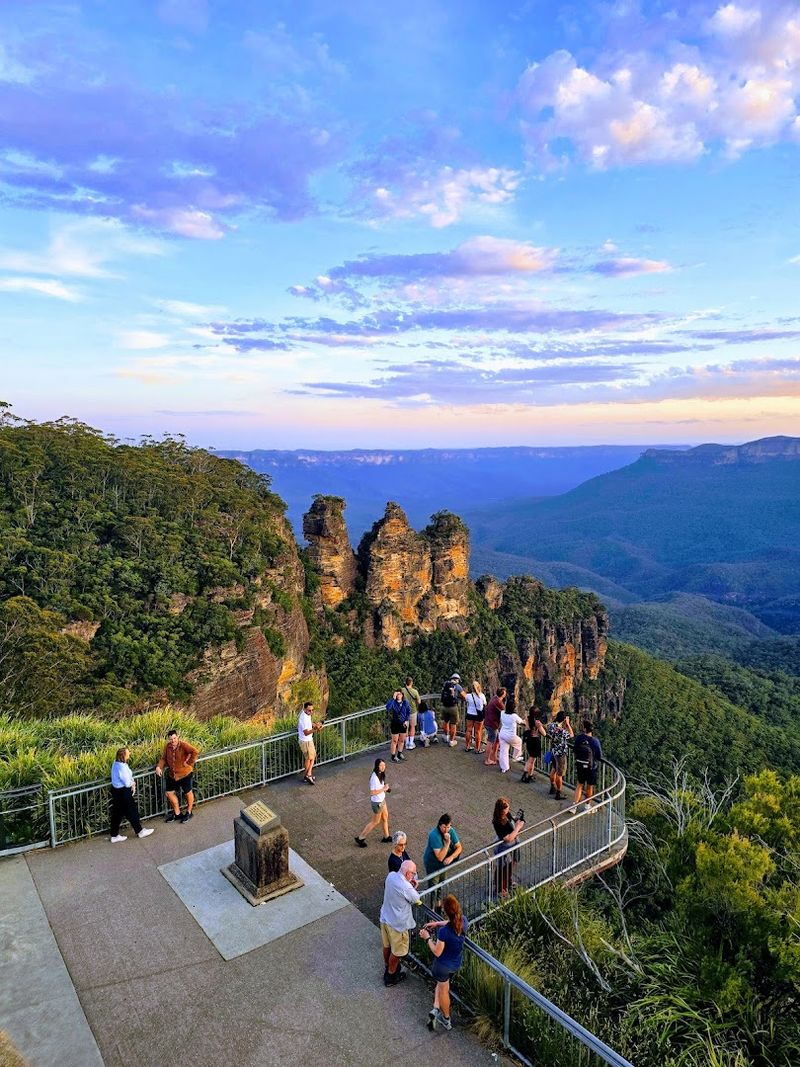
The Blue Mountains actually look blue. That haze is not pollution or artistic license.
It comes from fine droplets of eucalyptus oil released by the dense forest below, which scatter light and give the valley its signature blue tint. Science doing its best work.
Echo Point sits right in the town of Katoomba, which means zero hiking is required to reach one of Australia’s most famous views. The Three Sisters rock formation rises dramatically from the Jamison Valley floor, and the lookout platform puts you face-to-face with all three.
The viewing area is wide, accessible, and open year-round. Early mornings bring mist rolling through the valley, which adds a moody layer to the scenery.
Sunset turns the sandstone formation a warm orange. If you want more than just the lookout, the Giant Stairway trail drops you right into the valley for a closer look.
The Blue Mountains are only two hours west of Sydney, making this a very doable day trip.
Arthur’s Seat Summit – Edinburgh, Scotland
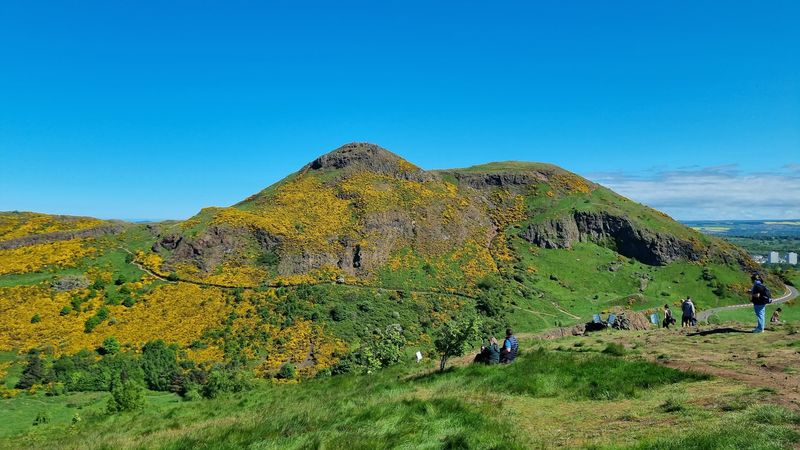
Arthur’s Seat is an extinct volcano sitting right in the middle of Edinburgh, which is either a geological gift or the city’s way of keeping its residents fit. Either way, the summit view is spectacular.
The hike takes about 45 minutes from Holyrood Palace and the terrain is grassy and exposed.
From the top, you get the full Edinburgh panorama. The castle sits on its own rocky perch to the west, the Firth of Forth glitters to the north, and the city spreads out in every direction like a map you actually want to read.
Wind is almost guaranteed at the summit, so bring a jacket regardless of what the forecast says. Edinburgh weather has its own agenda.
The hill is free to climb and open year-round. Clear days offer views stretching to the Highlands.
This is one of those rare viewpoints where the city and the wild sit side by side without either one winning.
Mirador de San Nicolás – Granada, Spain
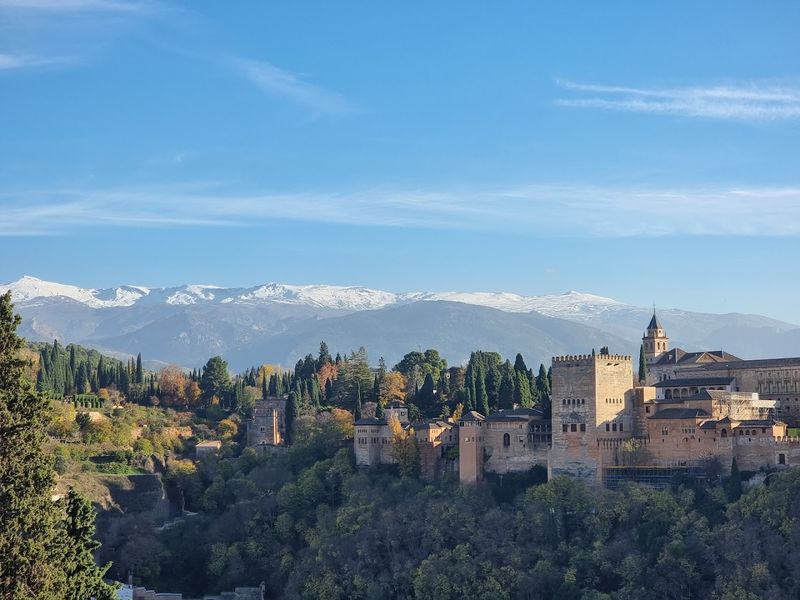
There is a reason every travel photographer eventually ends up at Mirador de San Nicolás with a coffee and a very smug expression. The view across the Darro valley puts the Alhambra and the snow-capped Sierra Nevada in the same frame, and the result is almost unfairly beautiful.
Located in the Albaicin neighborhood, the viewpoint is a lively square with street musicians, vendors, and visitors from everywhere. The atmosphere is festive and relaxed.
Sunset is the main event, when the Alhambra’s stone walls turn deep gold and the mountains behind go purple.
Getting there involves navigating narrow, winding uphill streets, which is part of the charm. Taxis and tuk-tuks can help if the climb feels daunting.
The Alhambra itself dates back to the 13th century and is one of the best-preserved Moorish palaces in the world. Seeing it from this distance, framed by mountains and sky, gives you a perspective that a guided tour simply cannot replicate.
Mirador del Río – Lanzarote, Canary Islands, Spain
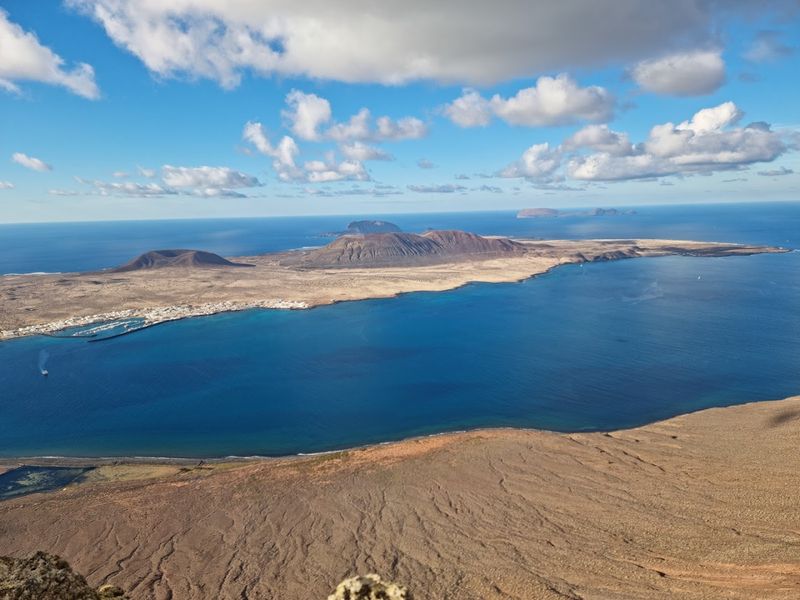
César Manrique was an artist and architect from Lanzarote who believed buildings should work with the landscape, not fight it. Mirador del Río is his masterpiece.
Carved into the cliff face at the island’s northern tip, the viewpoint building is almost invisible from the outside and breathtaking from within.
Step inside the curved glass windows and you are looking straight down at the El Rio strait and the island of La Graciosa floating below. The water is a deep, vivid blue.
The volcanic cliffs drop sharply. The whole scene looks painted.
The interior has a small cafe, which means you can drink coffee while staring at one of the Atlantic’s most dramatic views. Lanzarote is a UNESCO Biosphere Reserve, and Manrique’s fingerprints are all over the island’s design philosophy.
This viewpoint is worth the drive to the north. The road there winds through volcanic fields and lava plains, which is a pretty solid warm-up act for the main event.
Piazzale Michelangelo – Florence, Italy
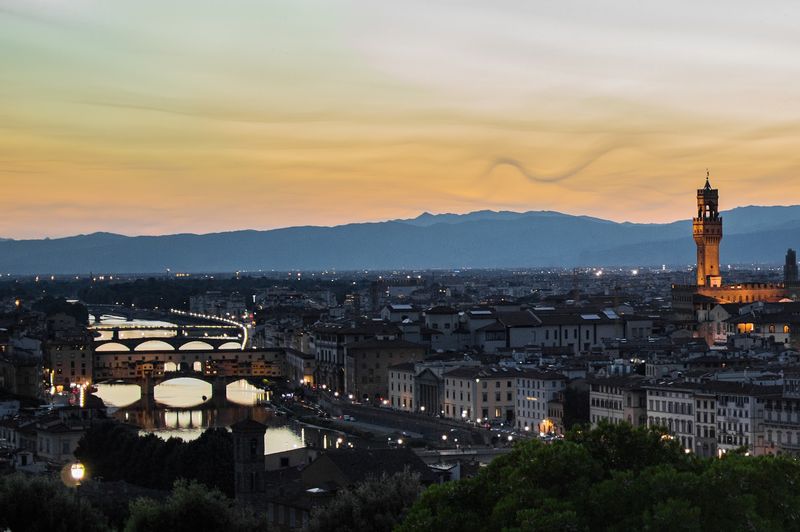
Florence has the good sense to put its best viewing terrace on a hillside south of the river, where the entire historic center arranges itself perfectly for your viewing pleasure. Piazzale Michelangelo is that terrace, and the view is exactly what every Florence postcard promises.
Brunelleschi’s dome dominates the skyline, the Arno River curves below, and the Ponte Vecchio sits like a jewel in the middle of it all. Sunset from here is legendary.
The terracotta rooftops glow warm amber, and the hills behind the city turn soft green.
The square is a 20-minute walk uphill from the city center, or a short bus ride if your legs have already done enough cobblestone duty. There is a bronze copy of Michelangelo’s David standing in the center of the piazza, which feels appropriately dramatic.
Bring a gelato from one of the nearby spots and find a wall to lean against. This is the kind of view you sit with slowly.
Oia Castle Viewpoint – Santorini, Greece
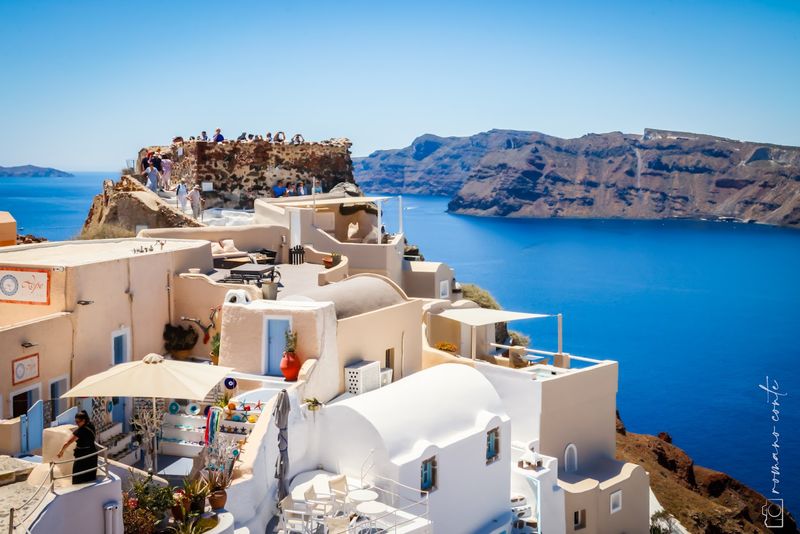
Santorini’s sunset crowds are a real phenomenon. People start claiming their spot at the Oia Castle viewpoint hours before the sun even thinks about going down.
The reason is simple: this is one of the most photographed sunsets on the planet, and it delivers every single time.
The caldera drops steeply below the village, and from the castle ruins you can see the entire arc of the volcanic crater filled with deep blue Aegean water. Whitewashed buildings cascade down the cliffs, blue domes pop against the sky, and windmills stand at the edge like they are posing.
Oia itself is worth exploring beyond the viewpoint. The village has excellent restaurants, galleries, and shops tucked into the cliffside.
Book accommodation early if you want to stay in Oia because it fills up fast. The viewpoint is free and accessible on foot from the main village path.
Come early, grab a spot, and let the sunset do what it does best.
Chureito Pagoda Viewpoint (Arakurayama Sengen Park) – Yamanashi, Japan
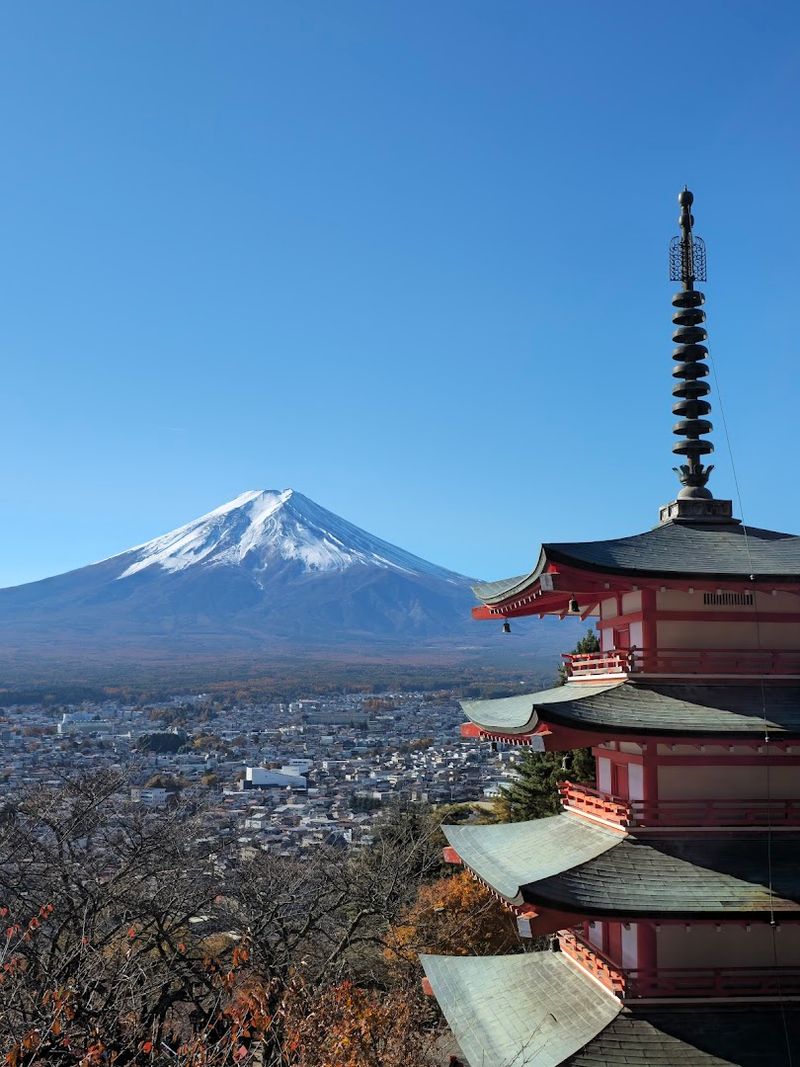
Japan has many beautiful views, but the Chureito Pagoda shot is the one that lives rent-free in everyone’s head. A five-story red pagoda in the foreground, Mount Fuji rising perfectly centered behind it, cherry blossoms framing the whole composition in spring.
It is almost too good.
Reaching the viewpoint requires climbing 398 stone steps from the base of Arakurayama Sengen Park. It takes about 20 minutes and the steps are uneven, so wear proper shoes.
The effort is completely worth it. At the top, the pagoda and Fuji align in a way that feels deliberately staged by the universe.
Cherry blossom season in late March to early April is peak time and the crowds reflect that. Autumn brings colorful foliage as a solid alternative.
The pagoda was built in 1963 as a peace memorial, which adds a meaningful layer to its beauty. Fujiyoshida City sits below, and the whole scene from the top steps is one of Japan’s most iconic and rewarding compositions.



