Scotland is home to some of the most jaw-dropping castles on the planet, and not just the polished, tourist-brochure kind. Many of them sit on clifftops, float on islands, or rise from ancient rock like they grew there naturally.
I visited my first Scottish castle on a drizzly October morning and left completely convinced that history had a pulse. Whether you love ghost stories, royal drama, or just seriously impressive stonework, this list has something to keep you hooked.
Eilean Donan Castle
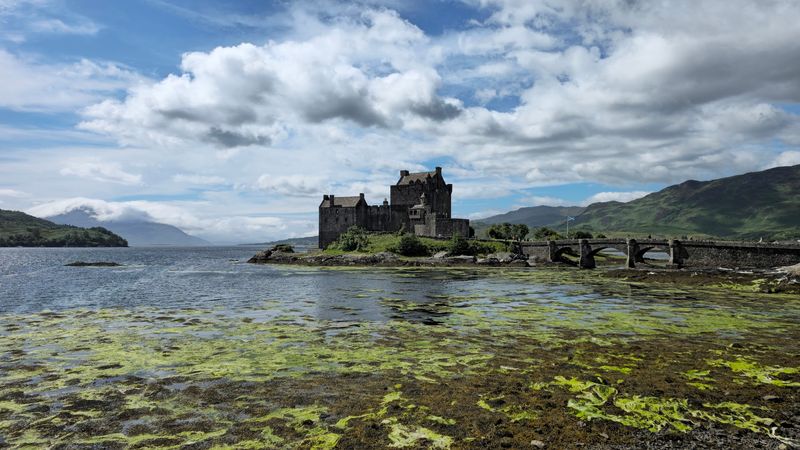
Few castles on Earth look this photogenic without even trying. Eilean Donan sits on a tiny island near Dornie, connected to the mainland by a stone bridge, with mountains and shimmering lochs surrounding it on every side.
It almost looks like someone sketched it from a dream and then built it anyway.
On a cloudy Highland day, the whole scene seems to hover between water, stone, and sky in a way that genuinely stops you mid-step. The castle is a real working visitor site, not just a backdrop.
Tickets are bought on the day, and seasonal opening hours apply, so check before you go.
Inside, there are exhibitions that dig into the castle’s turbulent history, including battles, clan politics, and a dramatic reconstruction after it was blown up in 1719. Yes, blown up.
Eilean Donan is absolutely more than just a pretty face on a postcard.
Dunnottar Castle
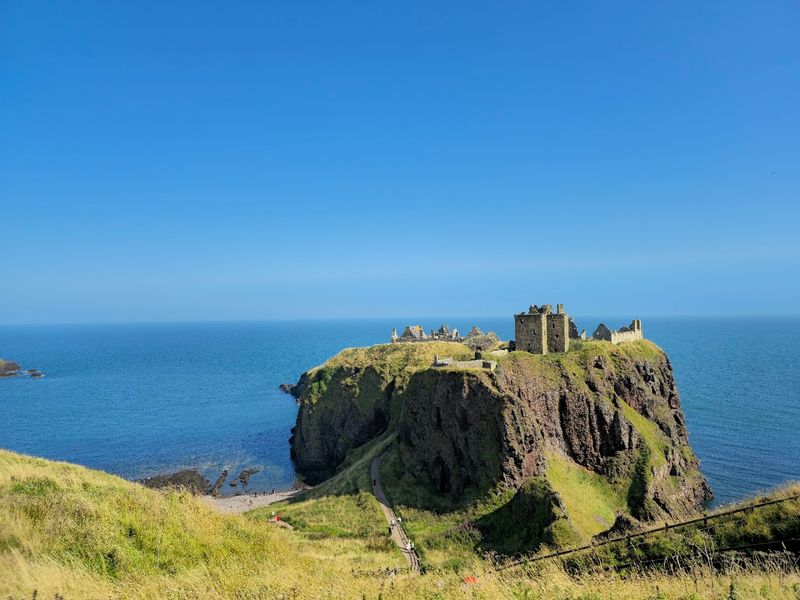
Dunnottar hits differently before you even reach the entrance. The ruins cling to a rocky headland near Stonehaven, with sheer cliffs dropping straight into the North Sea on nearly every side.
It looks less like a castle and more like the land itself decided to grow one.
Getting there requires a walk down and then back up a steep path, which honestly adds to the whole experience. By the time you reach the ruins, you feel like you have earned the view.
The sea stretches out endlessly, and the wind makes sure you know it.
Dunnottar is open year-round with seasonal hours, though it can close at short notice during bad weather, which is very on-brand for a place this dramatically exposed. The castle once held the Scottish Crown Jewels during a siege, hiding them from Cromwell’s army.
That detail alone makes the climb worth it.
Edinburgh Castle
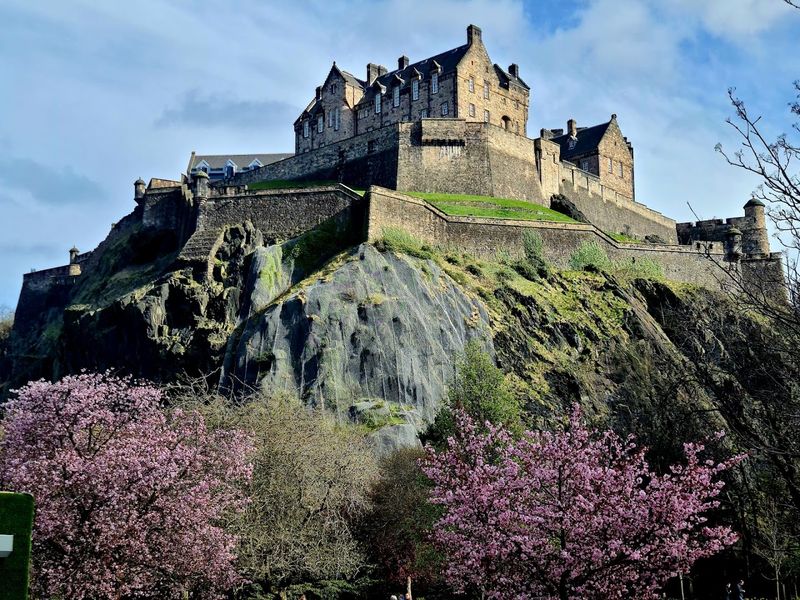
Edinburgh Castle earns its fame every single day. Sitting on top of Castle Rock, it dominates the city below like it owns the place, which, historically speaking, it basically did.
It is part of a UNESCO World Heritage Site, and walking up the Royal Mile toward it never gets old.
Inside, visitors can see the Honours of Scotland, the ancient Mons Meg cannon, St Margaret’s Chapel, the Great Hall, and catch the famous One o’Clock Gun going off. That last one startled me completely the first time, despite knowing it was coming.
Even with the crowds, Edinburgh Castle manages to feel genuinely magical. The views from the battlements stretch across the whole city, and when rain clouds roll in and darken the walls, the whole place takes on a properly atmospheric, slightly gothic quality.
Busy? Yes.
Worth it? Absolutely every time.
Stirling Castle
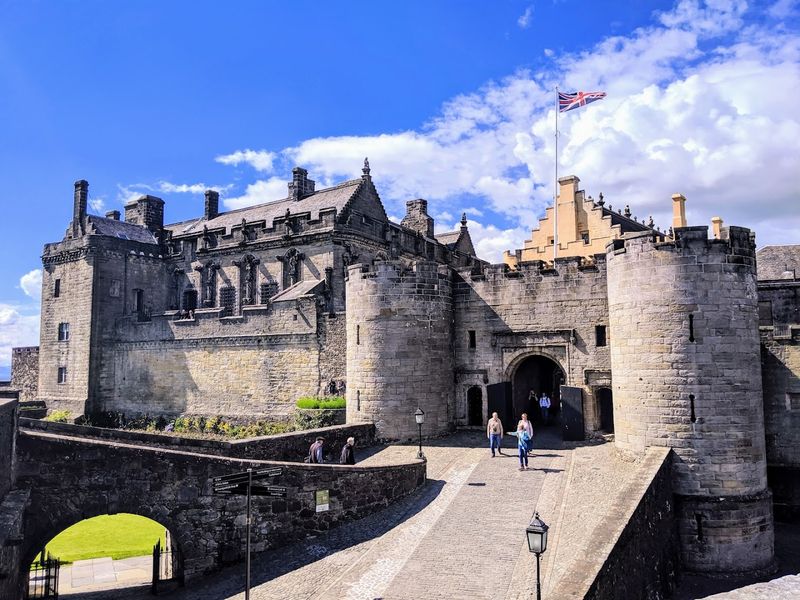
Stirling Castle has a royal confidence that sets it apart from Scotland’s more ruined, windswept fortresses. Perched on a volcanic crag, it overlooks some of the most historically significant land in Scotland, including the site of the Battle of Bannockburn just a short distance away.
Historic Environment Scotland describes it as home to the Royal Palace and the childhood home of Mary Queen of Scots, which is a pretty extraordinary combination. The Great Hall is one of the finest medieval buildings in Scotland and was recently restored to its original golden lime-washed exterior, which looks striking against a blue sky.
The magic here comes from the sheer weight of history packed into one place. Kings were crowned here.
Wars were decided here. Mary herself grew up within these walls.
Stirling is not just a castle you visit; it is a castle that makes you feel the past pressing right up against the present.
Urquhart Castle
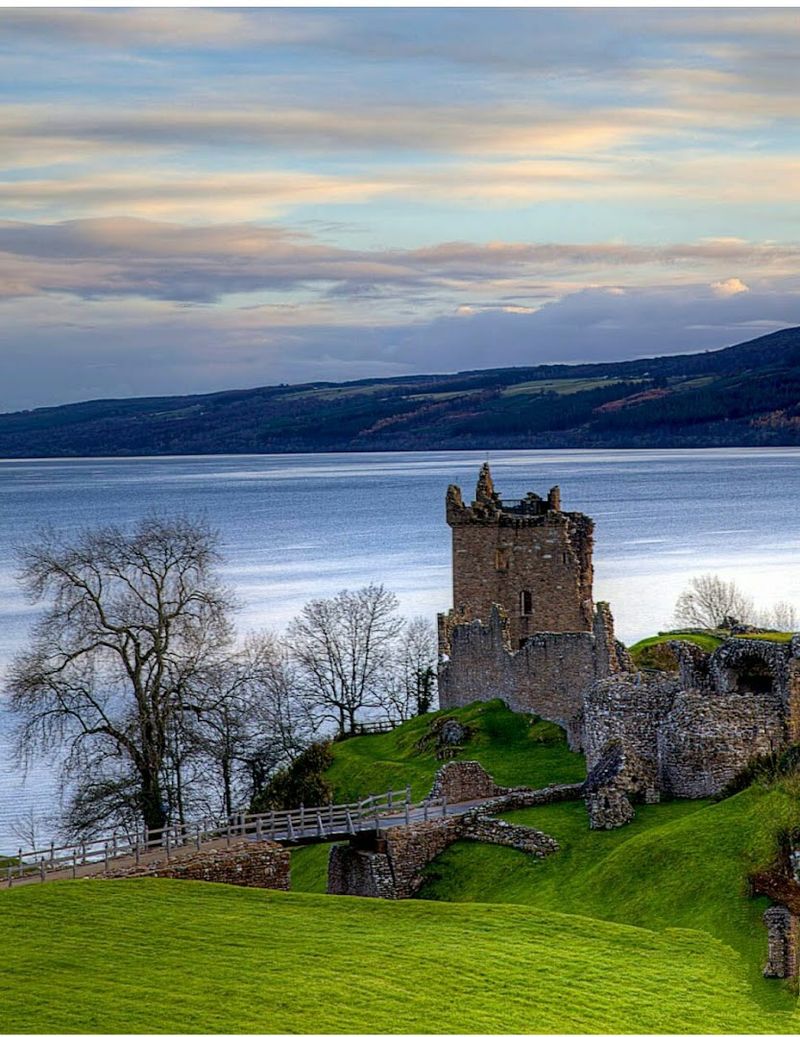
Right, let us get the obvious out of the way: yes, Urquhart Castle sits beside Loch Ness. Yes, that does make every visit slightly more exciting than it would otherwise be.
You are technically standing in monster territory, and no amount of rationality fully switches that off.
The castle itself is genuinely impressive even without the loch-based mythology. Visitors can explore the Grant Tower, check out medieval artefacts, and get up close to a full-sized trebuchet, which is a catapult for anyone who skipped that history lesson.
Historic Environment Scotland manages the site, and the views across the loch are spectacular in any weather.
The ruins feel raw and honest in a way that fully intact castles sometimes do not. Walls have crumbled, towers have fallen, and yet the whole structure still commands its rocky promontory with authority.
Add the loch, the mist, and the faint possibility of a sea monster, and Urquhart is unmissable.
Culzean Castle
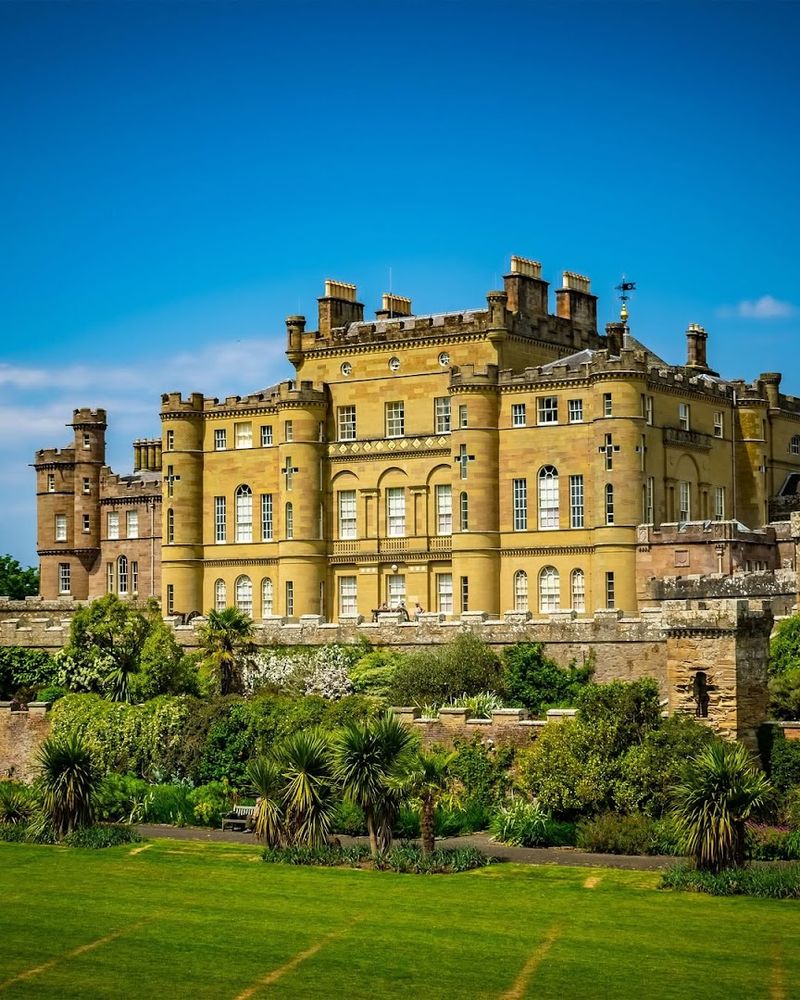
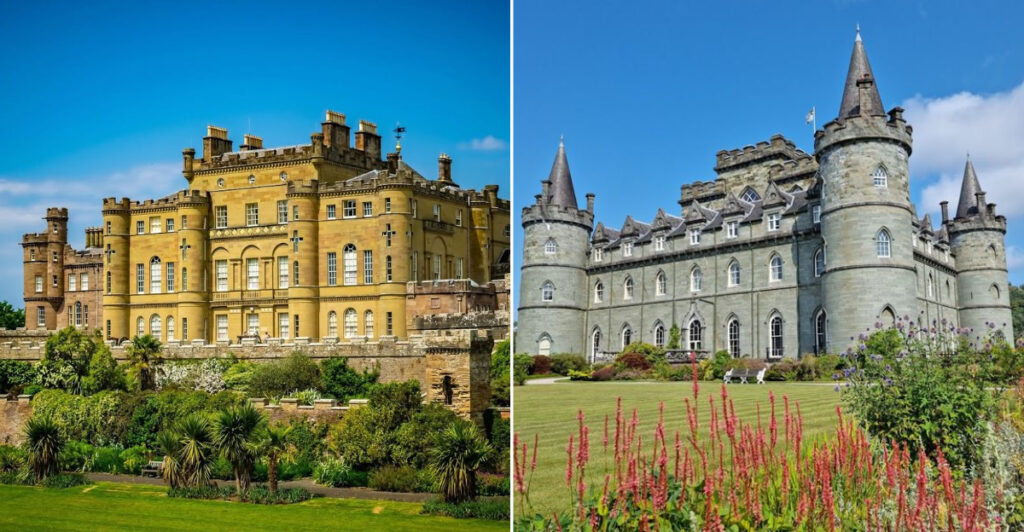
Culzean Castle is the kind of place that makes you want to dramatically sweep through its front doors in period costume. Designed by Robert Adam and perched on Ayrshire cliffs above the Firth of Clyde, it combines architectural elegance with genuinely wild coastal scenery in a way that feels almost unfair.
The National Trust for Scotland manages the castle and surrounding country park, which includes a walled garden, woodland walks, follies, and sea views that stretch across to the Isle of Arran on a clear day. There are cafes and play areas too, so it works brilliantly for families.
What makes Culzean feel magical rather than just grand is the contrast between the polished interiors and the rugged cliffside setting. One moment you are admiring an oval staircase; the next you are watching waves crash below.
Few castles manage that balance so effortlessly. Culzean is a proper all-day destination, not a quick stop.
Craigievar Castle
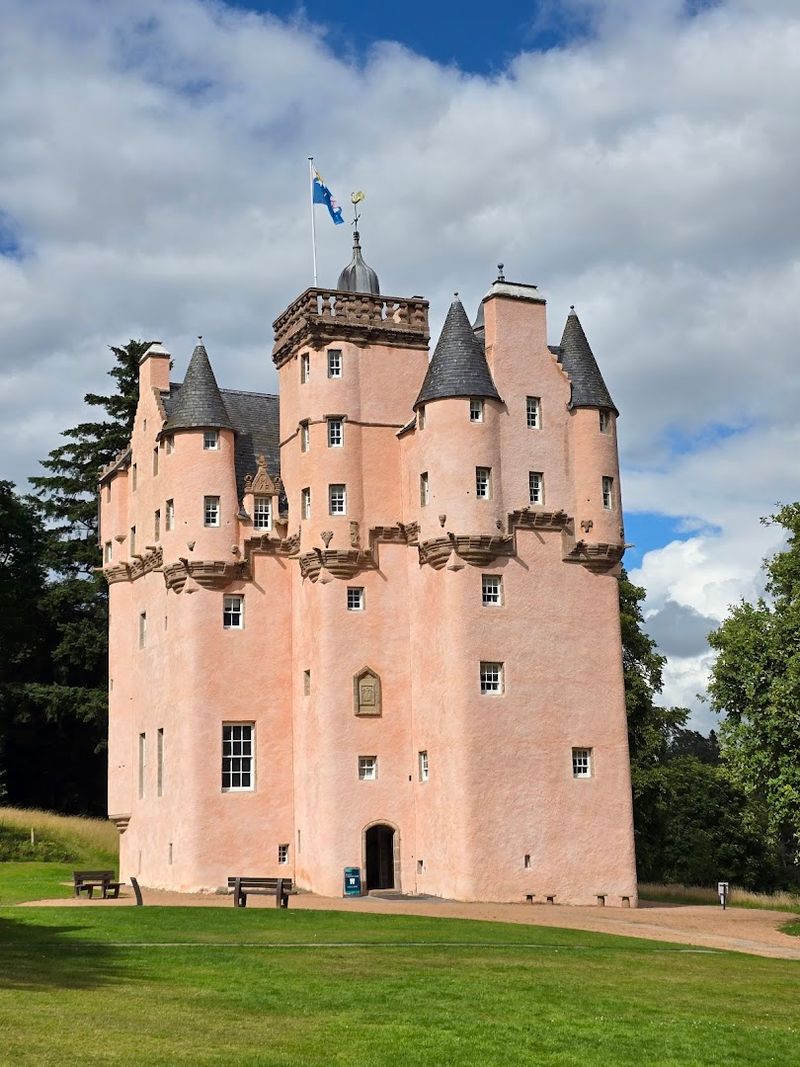
Craigievar Castle is genuinely pink. Not blush, not salmon, not dusty rose.
Actually pink. Standing in the Aberdeenshire countryside, this tower house looks like someone built a fairytale and forgot to add a dragon.
It is one of the most visually distinctive buildings in all of Scotland.
The National Trust for Scotland says the tower was begun around 1576 and completed around 1626. It was recently restored through the “Pink Again” project, which is possibly the best-named heritage project in Scottish history.
The restoration work brought the exterior back to its original, vivid color.
Beyond the color, Craigievar is one of Scotland’s best-preserved tower houses, which means the interior still has original features that most castles lost centuries ago. The turrets, the corbelling, and the countryside setting give it a delicate, almost dreamlike quality.
It is the castle equivalent of finding out something wonderful is also extremely well-made. Absolutely worth the detour.
Glamis Castle
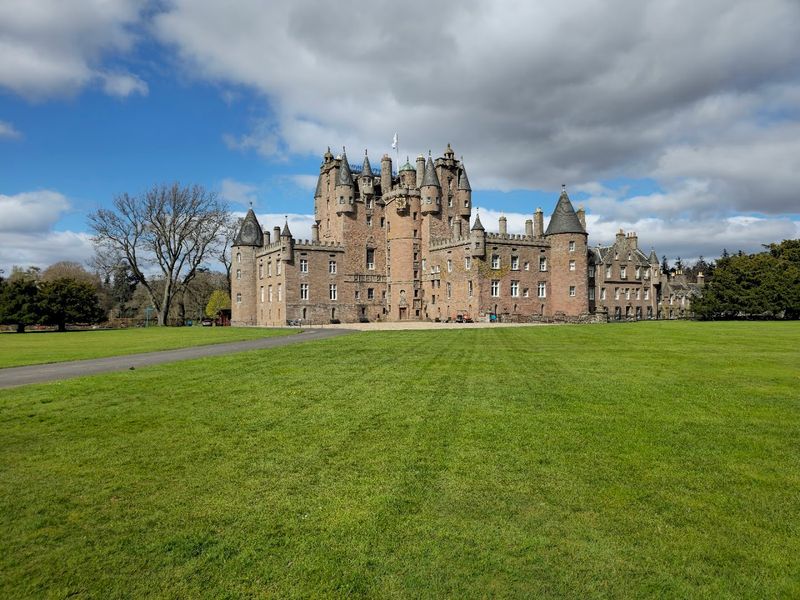
Glamis Castle has a particular atmosphere that is hard to shake once you have felt it. The towers rise above the Angus countryside in a way that feels simultaneously grand and slightly unsettling, like the building is watching you back.
That is not an accident; Glamis has centuries of stories layered into its walls.
The castle is famously connected to the royal family and has a long, complicated family history tied to the Earls of Strathmore. The 2026 open season runs from 20 March to 31 October, with the castle, gardens, and grounds open daily from 10am to 5pm, so there is plenty of time to explore properly.
Shakespeare set Macbeth partly here, which tells you something about the mood of the place. Legends of secret rooms, a hidden monster, and restless ghosts have followed Glamis for generations.
Whether or not you believe any of it, the atmosphere makes every single story feel plausible. Glamis is not just visited; it is experienced.
Inveraray Castle
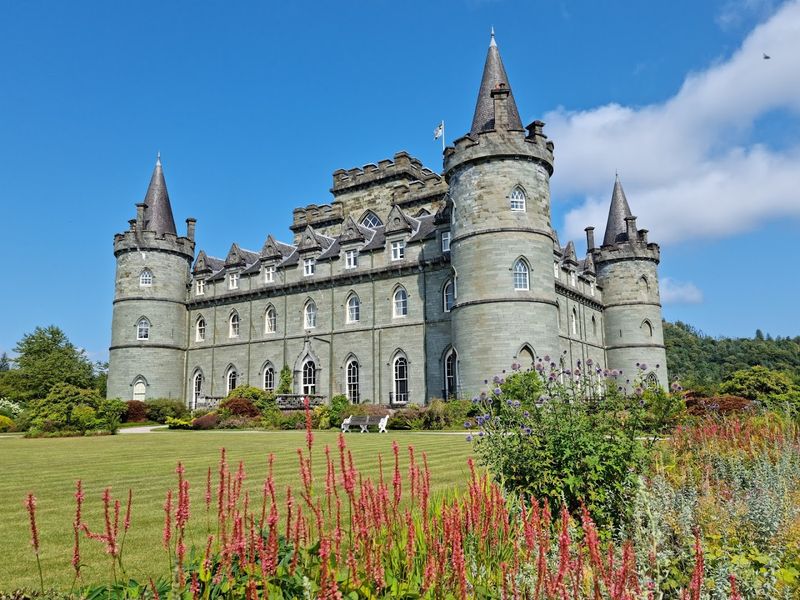
Inveraray Castle looks like someone took a gothic novel and turned it into architecture. The grey-blue turrets rise beside Loch Fyne in Argyll, and the whole composition is so perfectly dramatic that it regularly appears in film and television productions.
Downton Abbey fans will recognize it immediately.
The castle remains a family home connected to the Campbell clan and Scottish history, which gives it a warmth that purely museum-style castles sometimes lack. The official tour covers three floors of interiors, including rooms filled with weapons, portraits, and historic furnishings that feel genuinely lived-in rather than staged.
The lochside setting is what pushes Inveraray from impressive to magical. Surrounded by wooded hills and reflected in the water on calm days, it earns its place on every Scottish castle list without argument.
The combination of gothic architecture, Highland scenery, and real family history makes it one of the most complete castle experiences in Scotland. Book ahead if you can.
Dunrobin Castle
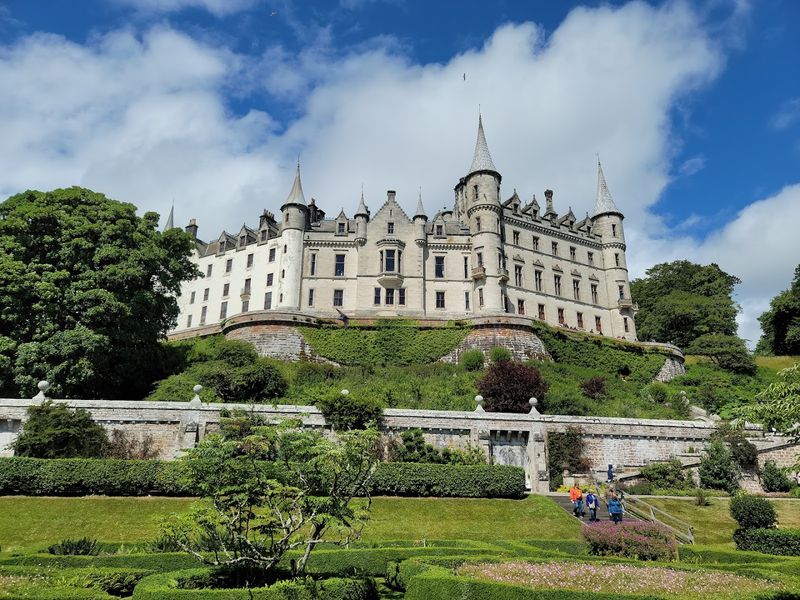
Dunrobin Castle does not look like it belongs in the Scottish Highlands. With its conical turrets, formal French-style gardens, and gleaming facade, it looks like it was shipped in from the Loire Valley and nobody questioned it.
That unexpected elegance is exactly what makes it so memorable.
It is the most northerly of Scotland’s great houses and the largest in the Northern Highlands, dating back to the early 1300s. For 2026, Dunrobin opens from 1 April to 31 October, with tickets covering the castle, museum, and beautifully maintained gardens.
The museum alone is worth the trip, housing a genuinely eclectic collection of artifacts.
The gardens are laid out in terraces that drop toward the North Sea coast, which creates a view that is both refined and wildly dramatic at the same time. Dunrobin manages to be elegant and remote simultaneously, which is a rare trick.
If you make it this far north, do not skip it under any circumstances.
Floors Castle
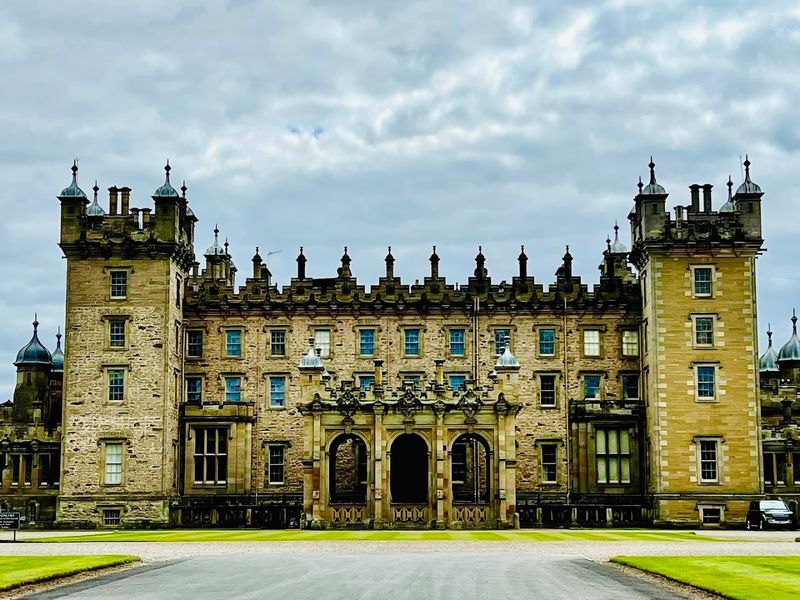
Floors Castle is Scotland’s largest inhabited castle, which is a title that comes with a certain responsibility to look impressive. It absolutely delivers.
Sitting near Kelso in the Scottish Borders, it overlooks the River Tweed with the kind of quiet confidence that only centuries of habitation can produce.
The official site confirms that the castle, grounds, courtyard cafe, gift shop, and main gates open from 1 May 2026 until the end of September. The Duke of Roxburghe still lives here, which means the whole estate has a genuinely lived-in quality rather than a preserved-in-amber museum feel.
The magic of Floors is softer than the cliff castles and ruined fortresses. This is a place of riverside walks, woodland paths, formal gardens, and stately architecture that rewards a slow, unhurried visit.
There is no dramatic siege history or ghostly legend competing for attention here, just genuine grandeur delivered with impressive consistency. Sometimes that is exactly what you need.
Balmoral Castle
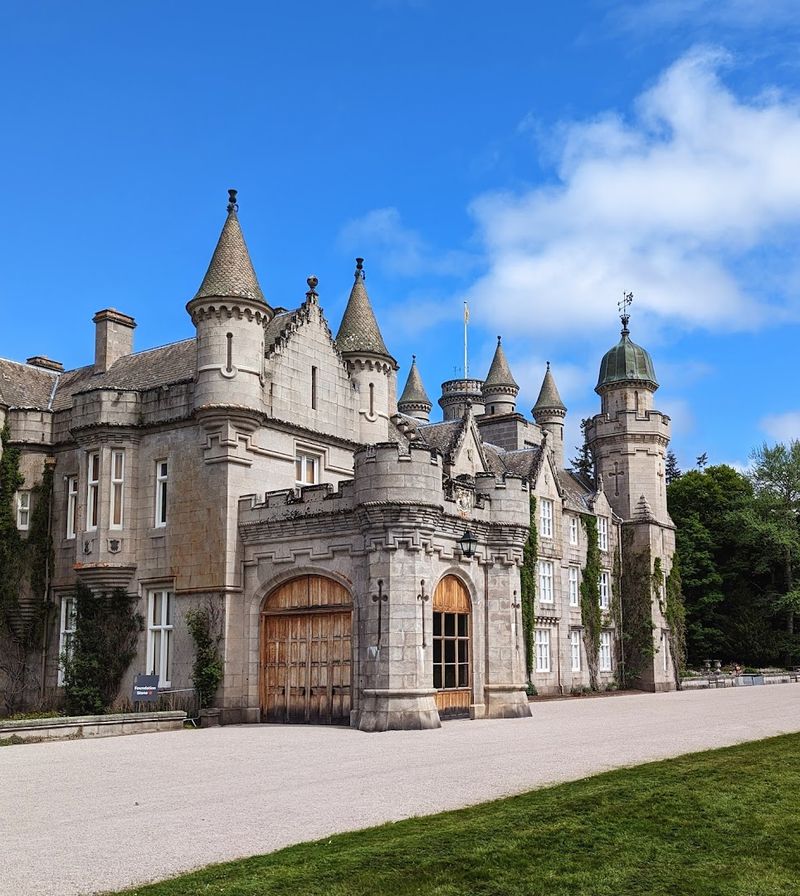
Balmoral carries a very specific kind of magic that comes entirely from context. This is the royal family’s private Highland retreat, tucked into Royal Deeside with Cairngorm mountains on every side and ancient pine forests stretching in every direction.
Even knowing that, arriving still feels like a genuine occasion.
The full private residence is not open to the general public, but the grounds, gardens, gift shop, restaurant, and the Ballroom Exhibition are open daily until 9 August 2026, with general admission including castle ballroom access. That is more than enough to get a proper sense of the estate and its royal atmosphere.
Queen Victoria fell in love with Balmoral in 1848, and the royal family has returned every summer since. Walking the same paths through the same forests, with the same mountain air and the same river running through the estate, connects you to that long continuity in a quietly powerful way.
Balmoral is peaceful, regal, and genuinely special.
Crathes Castle
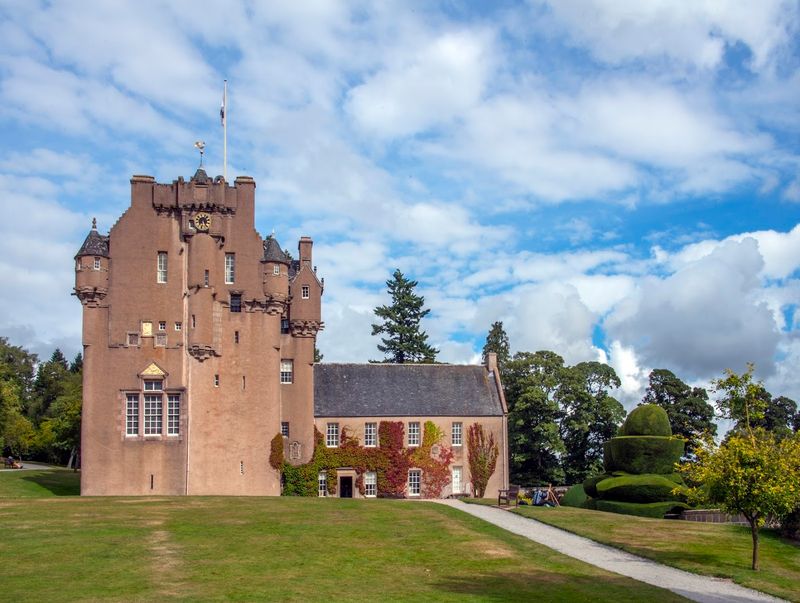
Crathes Castle is one of those places that rewards visitors who pay attention to the details. The tower house itself is a classic Scottish baronial beauty, rising above gardens that have been developed and refined over centuries into something genuinely extraordinary.
The yew hedges alone are over 300 years old.
The Burnett family connection to this land goes back to 1323, when Robert the Bruce granted them the estate. That is a staggering amount of continuous history for one family and one patch of Aberdeenshire countryside.
The National Trust for Scotland now manages the property and keeps it open all year round, making it their only north-east historic property with year-round access.
The ghost story is a bonus. The Green Lady is said to haunt the Pink Room, appearing most often near the fireplace.
Nobody agrees on who she was, which somehow makes the legend more unsettling rather than less. Crathes earns its place on this list through history, beauty, and a ghost who has impeccable taste in rooms.
Drum Castle
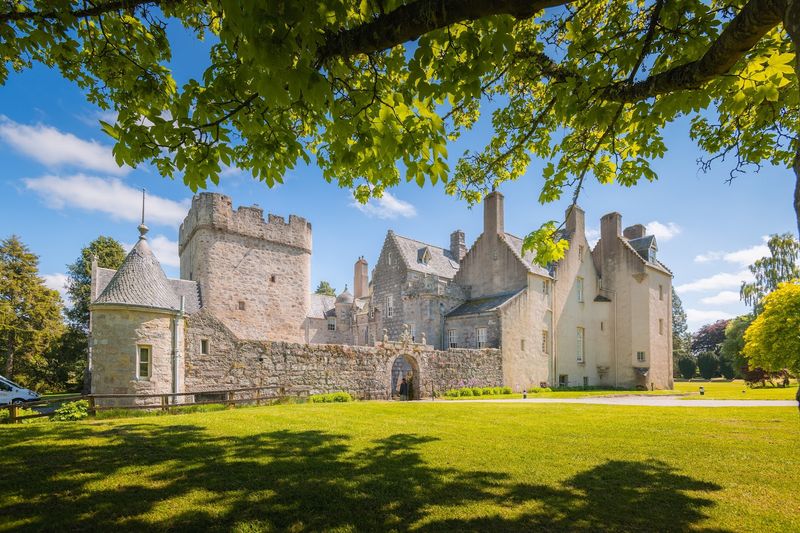
Drum Castle is three things at once: a medieval tower, a later mansion house, and one of the oldest surviving tower houses in Scotland. That combination sounds like it should feel confused, but it actually works beautifully.
Each era of construction adds a layer rather than competing with the ones around it.
The Royal Forest and Tower of Drum were given to the Irvine family by Robert the Bruce in 1323, the same year he was handing out land to the Burnetts at Crathes. Apparently 1323 was a very productive year for Robert.
The ancient oak woodland surrounding the castle is one of Scotland’s oldest remnants of the original Caledonian Forest.
Entry to the castle is by guided tours throughout the day, with last entry at 3.15pm, so timing matters. The historic rose garden is a particular highlight, with varieties that date back centuries.
Drum rewards visitors who take their time and let the layers of history settle around them properly. It is quietly brilliant.
Blair Castle
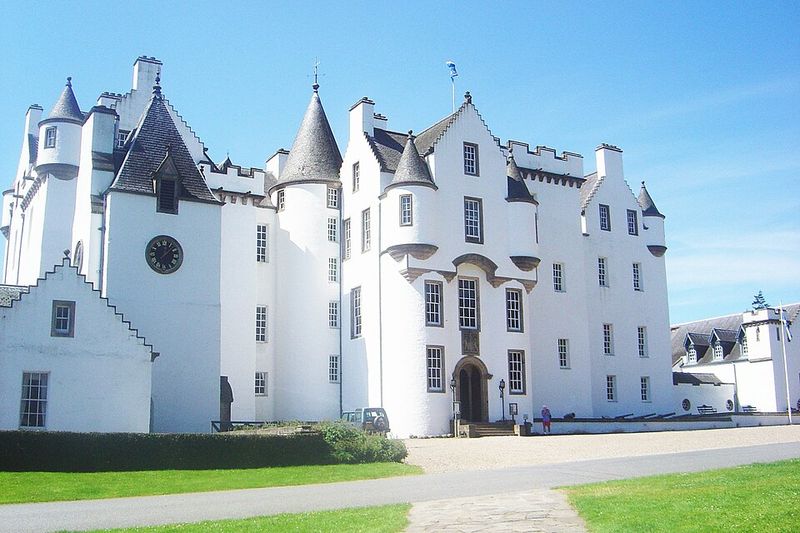
Blair Castle is the only castle on this list that is genuinely white, and that detail matters more than you might expect. Gleaming against the Highland Perthshire landscape near Blair Atholl, it looks bright and welcoming rather than brooding, which is a refreshing change of pace after all the dark stone and dramatic cliffs.
Atholl Estates manages the visitor experience, and Historic Houses lists regular opening as daily from 10am to 5pm, with last entry at 3.45pm. Specific 2026 event dates may involve early closures, so checking the schedule before visiting is genuinely worth the two minutes it takes.
Blair also has the distinction of housing Europe’s only remaining private army, the Atholl Highlanders, which is a fact so wonderfully Scottish that it deserves to be said loudly. The gardens, the mountain backdrop, and the long history make this one of Scotland’s most complete and accessible castle experiences.
Magical does not always mean mysterious. Sometimes it just means genuinely, unmistakably magnificent.
Share this story