Some waterfalls don’t just trickle down a cliff — they absolutely hurl themselves off the edge of the world. While most people picture Niagara Falls when they think of jaw-dropping water, the truly tallest waterfalls on Earth are hiding in remote jungles, mountain ranges, and sea cliffs that most tourists never reach.
These record-breaking giants plunge hundreds of meters, sometimes vanishing into mist before even hitting the ground. Get ready to discover fifteen of the most breathtaking, sky-high waterfalls ever recorded on the planet.
Angel Falls — Venezuela
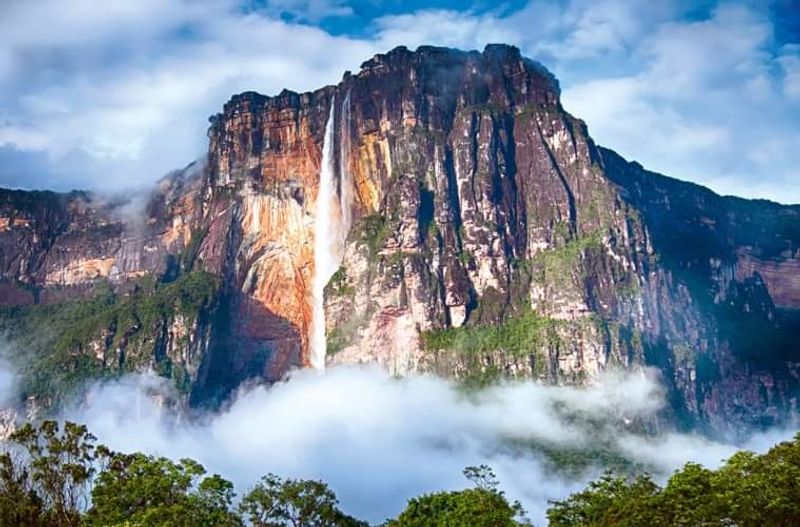
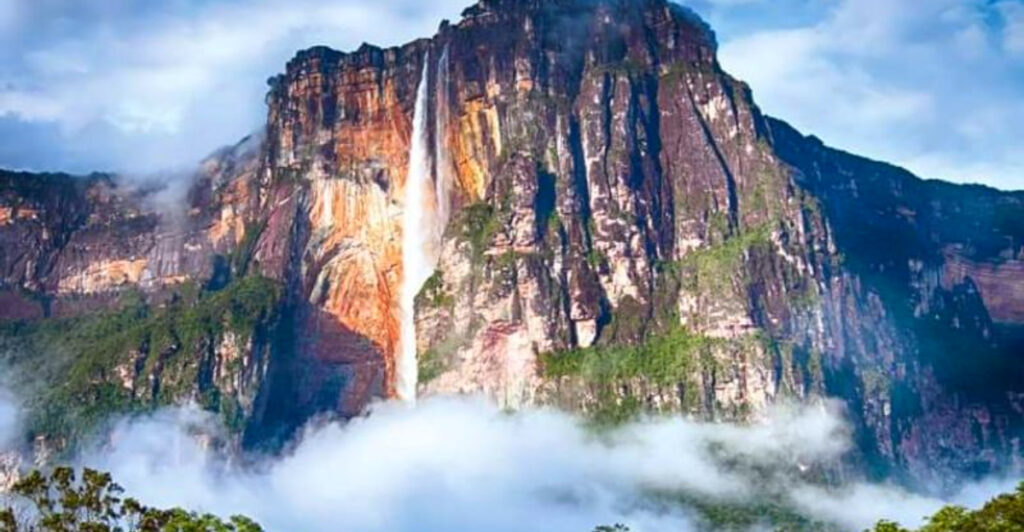
Falling nearly a kilometer from the top of a flat-topped mountain, Angel Falls is the kind of place that makes you question whether you’re still on Earth. Located in Venezuela’s Canaima National Park, it plunges a jaw-dropping 979 meters from the summit of Auyan-tepui.
That’s almost three times the height of the Empire State Building.
The waterfall was named after Jimmie Angel, an American aviator who flew over it in 1933 and brought it to international attention. Local Indigenous people had known about it for centuries, calling it Kerepakupai Vena, meaning “waterfall of the deepest place.” The name carries a poetry that perfectly matches the scenery.
Here’s the wild part: the water falls so far that much of it turns into a fine mist before ever reaching the ground. Visiting requires a boat trip through jungle rivers and a hike through cloud forest.
It’s remote, it’s rugged, and it’s completely unforgettable.
Tugela Falls — South Africa
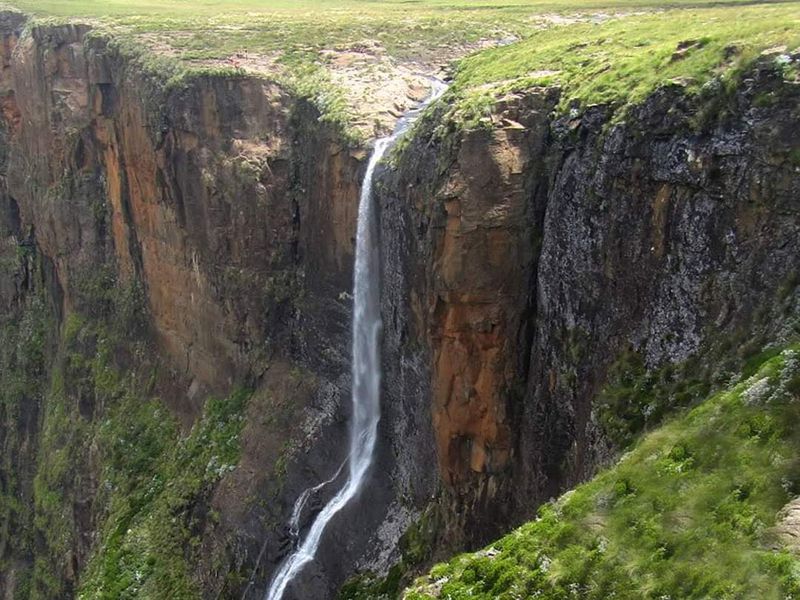
Standing at the edge of South Africa’s Drakensberg escarpment, Tugela Falls sends water cascading down five separate drops for a combined height of 948 meters. Some researchers have argued it deserves the title of world’s tallest waterfall, making it Angel Falls’ most serious rival on the record books.
The journey to see Tugela Falls is an adventure in itself. Hikers can tackle the Tugela Gorge Trail or climb to the top of the Amphitheatre, one of the most dramatic cliff faces in Africa.
From the summit, you can actually look down onto the falls as they disappear into the gorge far below.
During winter months, the waterfall sometimes partially freezes into spectacular icicle formations along the cliff face. The name Tugela comes from the Zulu word meaning “startling” or “sudden,” which feels entirely appropriate once you catch your first glimpse.
Few natural sights in Africa match the raw scale of this towering, multi-tiered giant.
Tres Hermanas Falls — Peru
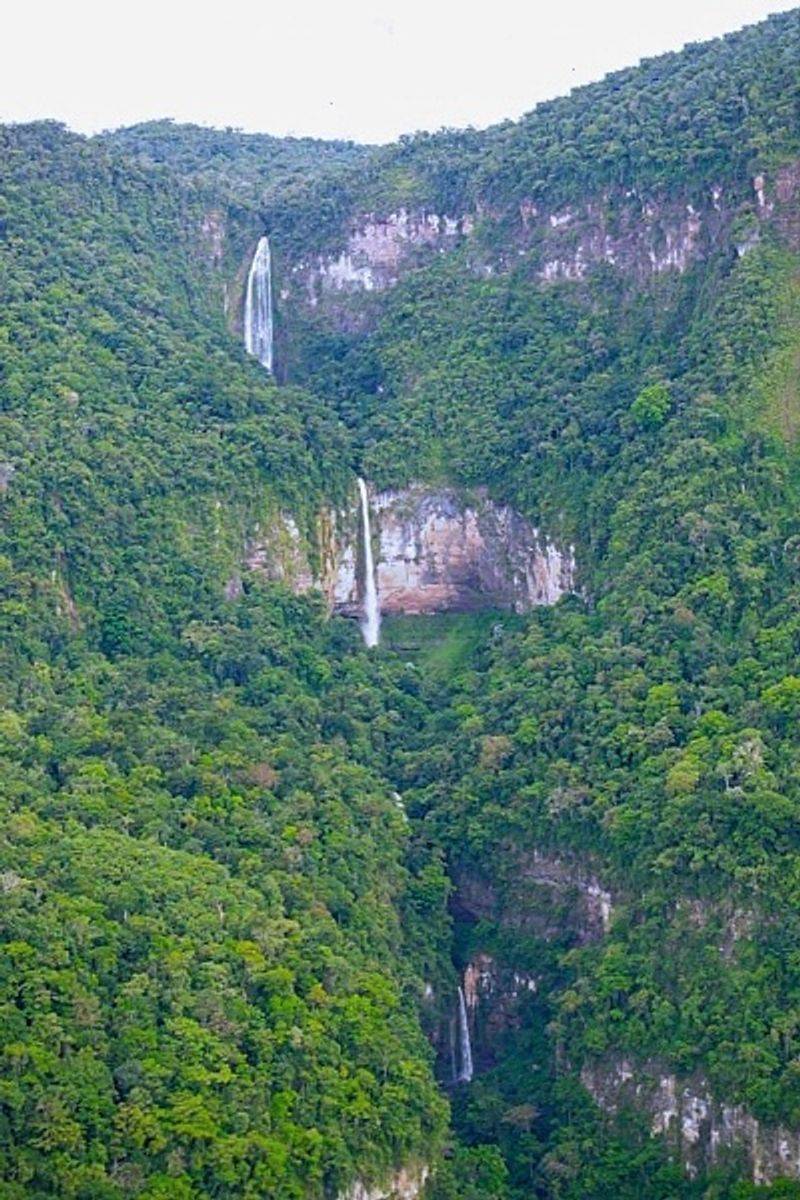
Three sisters, one massive drop. Tres Hermanas Falls, which translates to “Three Sisters Falls,” tumbles approximately 914 meters through cloud-covered jungle terrain in the Ayacucho region of Peru.
It ranks as one of the tallest waterfalls in the entire world, yet most people have never heard of it.
The falls are split into three distinct tiers, each one crashing down through thick vegetation before feeding into the next. Getting there requires serious commitment — think remote trails, dense rainforest, and no tourist infrastructure to speak of.
That’s exactly why it remains one of South America’s best-kept natural secrets.
Scientists and explorers have had a surprisingly difficult time measuring Tres Hermanas accurately because of how remote and jungle-covered the terrain is. Different surveys have produced slightly different numbers over the years.
What everyone agrees on, though, is that the scale of this waterfall is genuinely extraordinary. Seeing it in person means earning it, and that makes the reward feel all the sweeter.
Oloʻupena Falls — Molokaʻi, Hawaii
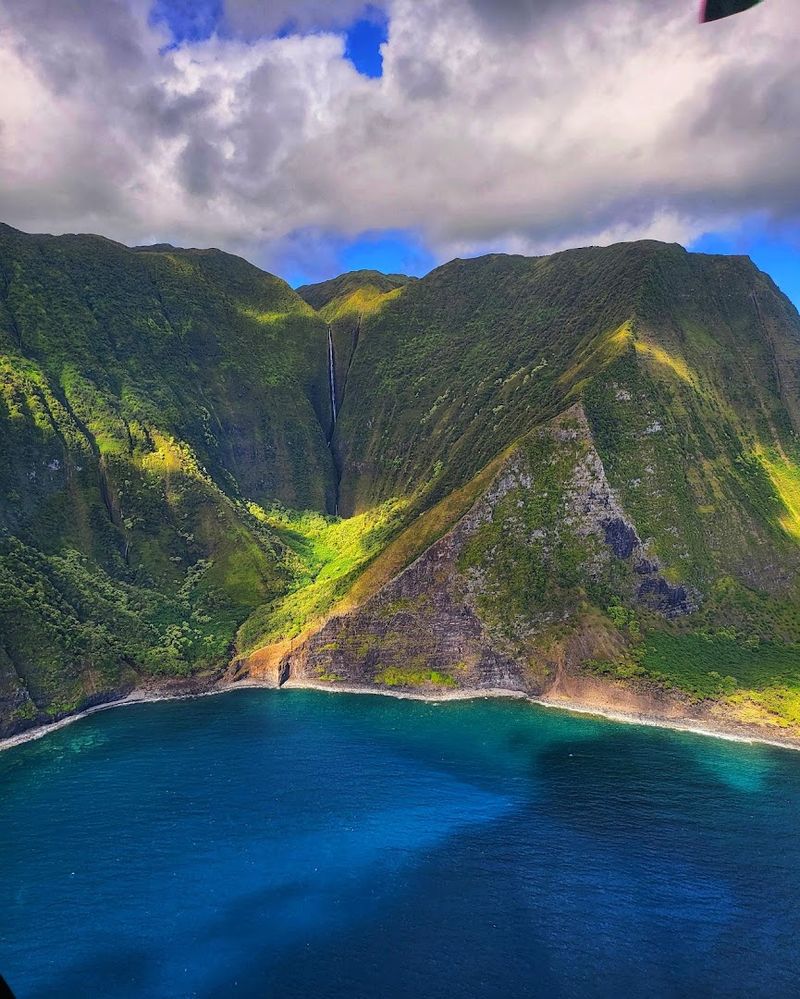
Perched on the edge of the world’s tallest sea cliffs, Oloʻupena Falls drops a staggering 900 meters straight down into the ocean on Hawaii’s Molokai island. You can’t hike to it, drive to it, or even really walk near it.
The only practical ways to witness it are from a helicopter or a boat bobbing in the ocean below.
The cliffs of Molokai’s north shore are so steep and so tall that they’ve been officially recognized as some of the highest coastal cliffs on Earth. Oloʻupena threads down through cracks and ledges in these volcanic walls like a silver ribbon that seems to have no beginning or end.
Rainfall on the plateau above keeps it flowing year-round.
Helicopter tours over the north shore of Molokai are among Hawaii’s most spectacular experiences, and Oloʻupena is a major reason why. Seeing the waterfall from the air, framed by the deep blue Pacific and the lush green cliffs, is genuinely one of those moments that sticks with you long after the trip is over.
Yumbilla Falls — Peru
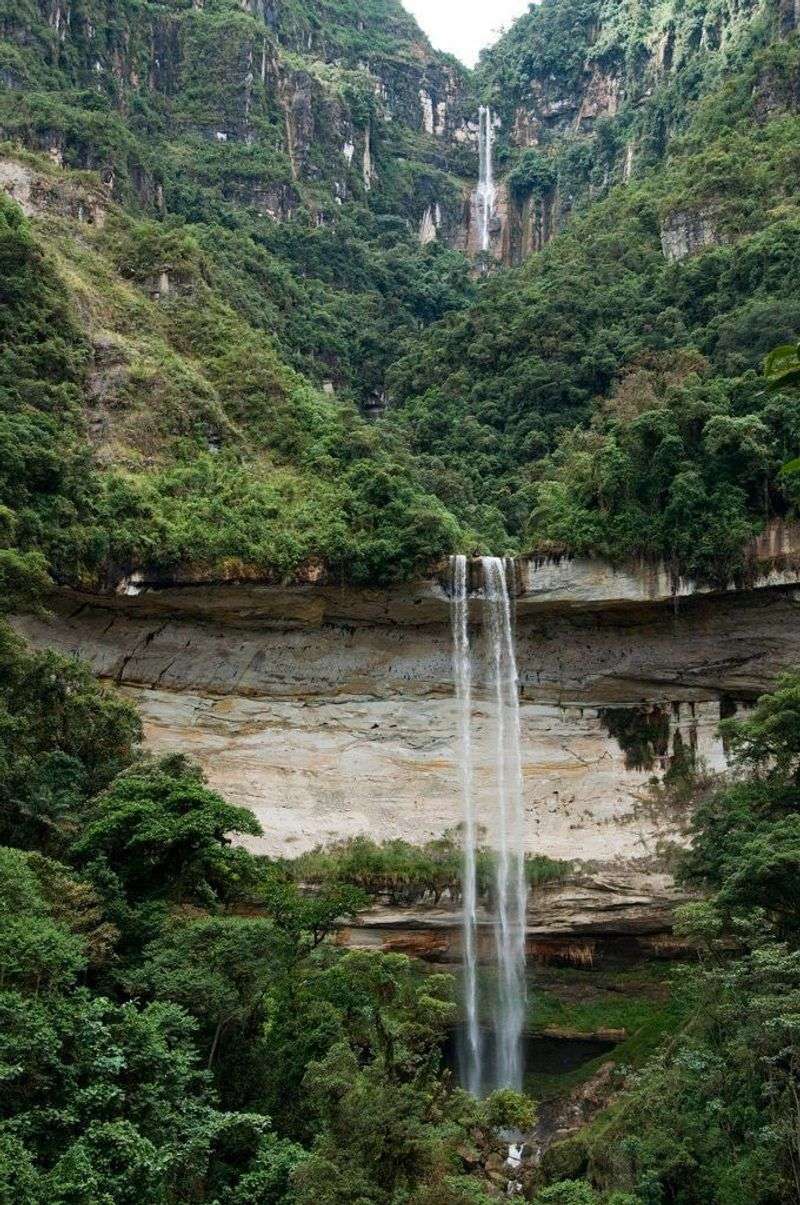
For most of history, Yumbilla Falls was just a local secret tucked deep in Peru’s Amazonas region. It wasn’t until the early 2000s that the Peruvian government officially measured and documented its height at approximately 896 meters, suddenly catapulting it into the top five tallest waterfalls ever recorded.
The waterfall flows in four distinct sections through thick cloud forest, each cascade feeding into the next as the water makes its long journey downward. Surrounding vegetation is so dense that the full height of Yumbilla is almost impossible to see from a single vantage point.
You have to piece together the picture as you hike.
A trail now leads visitors through the forest toward the falls, and small communities nearby have started welcoming eco-tourists who make the effort to visit. The experience is raw, muddy, and completely worth it.
Yumbilla proves that the age of discovery isn’t over — sometimes the world’s most extraordinary places are simply waiting for someone to measure them properly and tell the story.
Skorga — Norway
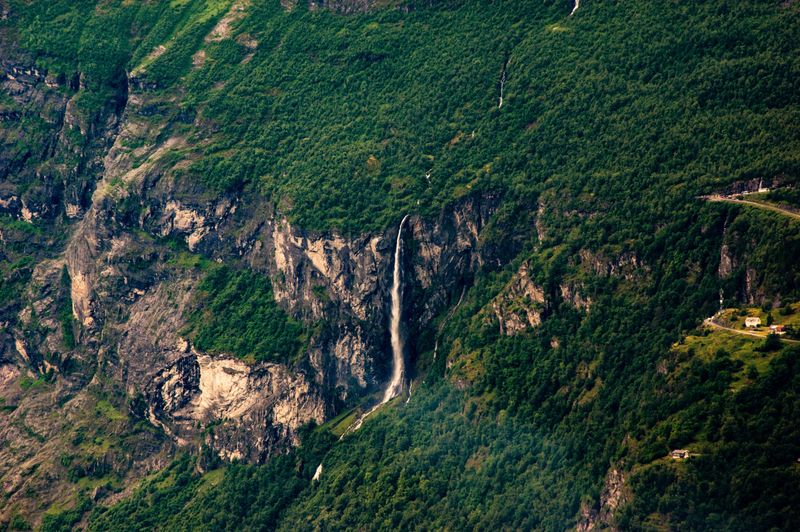
Norway is basically the overachiever of the waterfall world, and Skorga is one of the reasons why. This dramatic cascade drops roughly 875 meters down a steep mountainside in the Romsdalen valley, making it one of the tallest waterfalls in all of Europe.
And somehow, it still flies under the radar compared to Norway’s more famous falls.
The landscape surrounding Skorga looks like something from a fantasy novel. Towering rock walls, green valley floors, and rivers of glacial meltwater define the scenery in every direction.
Skorga threads down through this terrain with a kind of effortless elegance that feels almost theatrical.
Spring is the best time to visit, when snowmelt from the surrounding peaks floods the waterfall with extra water and pushes its flow to an impressive peak. Norway’s fjord roads wind through the region, making Skorga accessible by car during warmer months.
Visitors who pull over and take the time to spot it among the cliffs are rewarded with one of the most underrated waterfall views in Scandinavia.
Balåifossen — Norway
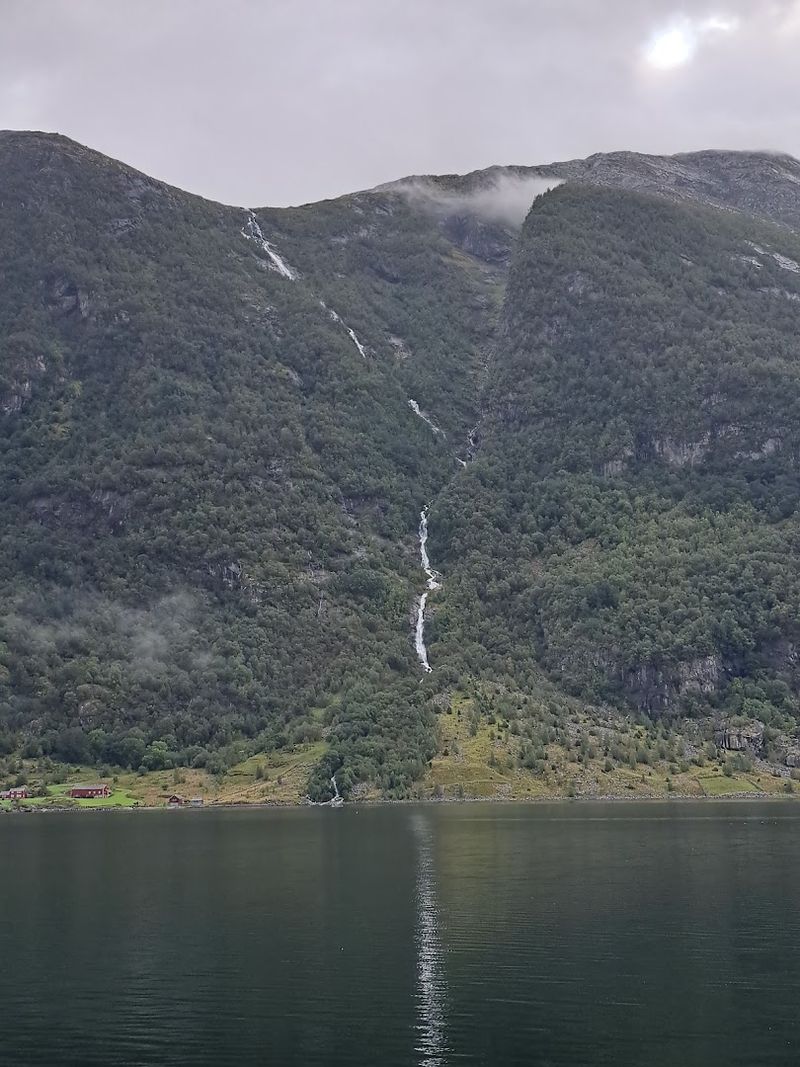
Snowmelt season in western Norway turns Balåifossen into something almost theatrical. Fed by winter snow piling up on the mountains above, this waterfall surges to its most powerful state in late spring and early summer, dropping around 850 meters through some of Norway’s most rugged terrain.
Balåifossen sits in the Hardanger region, an area already famous for its spectacular fjords and dramatic mountain scenery. The waterfall adds another layer of natural drama to a landscape that barely needs any help in that department.
Locals and travelers who time their visit right are treated to a roaring, thundering display that shakes the ground nearby.
Outside of peak snowmelt season, the waterfall becomes slimmer and quieter, but it never fully disappears. Even at low flow, the sheer height of the drop is enough to make it visually striking against the dark rock face.
Balåifossen is a reminder that Norway’s natural wonders aren’t limited to its most famous fjords — sometimes the best views require a little extra effort to reach.
Vinnufossen — Norway
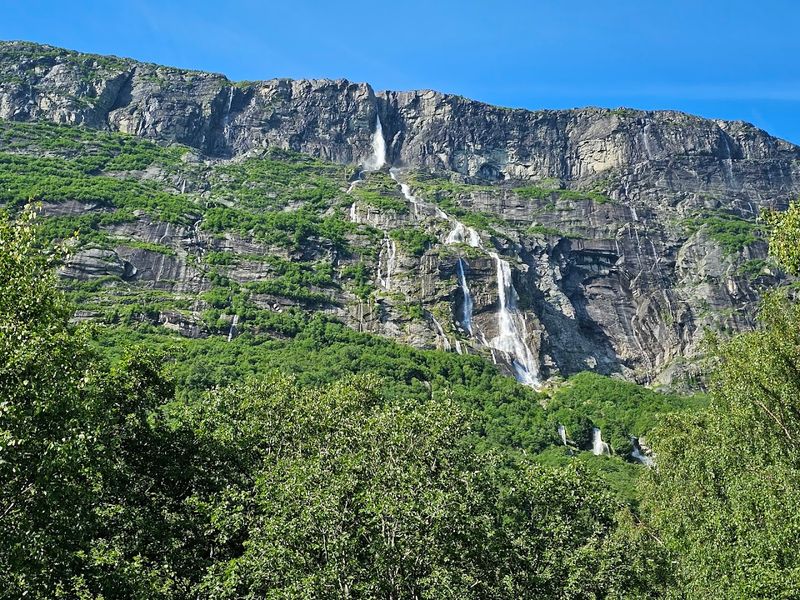
Glacier-powered and genuinely massive, Vinnufossen is often called the tallest waterfall in Europe. It drops approximately 845 meters down a steep mountain face in Norway’s Sunndalen valley, fed directly by the Vinnufonna glacier perched high above.
When the glacier melts in summer, Vinnufossen absolutely roars.
The view from the valley floor is spectacular. White water streaks down a dark, nearly vertical rock face while snow-capped peaks frame the scene above.
The surrounding valley is green and peaceful, which makes the raw power of the waterfall feel even more dramatic by contrast.
Visiting in July or August gives you the best combination of full water flow and accessible roads. The E14 highway passes through the valley, putting Vinnufossen within reach of road-trippers exploring Norway’s interior.
One important travel tip: bring binoculars. The full height of the waterfall is so extreme that details at the top can be hard to appreciate with the naked eye alone.
The glacier feeding it is also slowly shrinking due to climate change, making every visit feel a little more precious.
Mattenbachfall — Switzerland
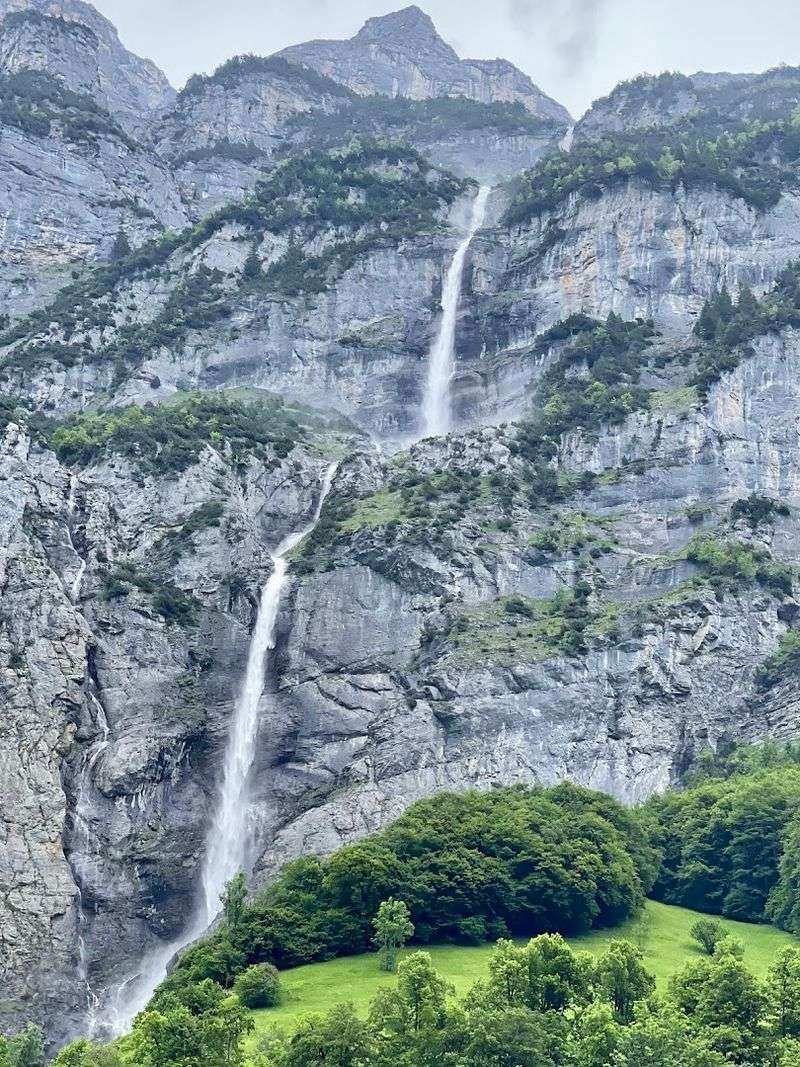
Switzerland’s Lauterbrunnen Valley has earned a reputation as one of the most waterfall-packed places on Earth, and Mattenbachfall is one of its crown jewels. Dropping roughly 840 meters through steep alpine cliffs, it’s one of the tallest waterfalls in the entire country and one of the most visually stunning.
The valley itself is carved so deeply into the Swiss Alps that its walls rise nearly vertically on both sides, creating a dramatic natural channel that funnels waterfalls from every direction. Mattenbachfall threads down one of these sheer walls with a graceful, slender profile that catches the light beautifully in the afternoon sun.
Lauterbrunnen is accessible by train from Interlaken, making it one of the more visitor-friendly entries on this list. The town at the valley floor offers hiking trails, cable cars, and stunning viewpoints that let you appreciate the waterfalls from multiple angles.
Mattenbachfall is best seen during late spring when alpine snowmelt pushes extra water down from the peaks. The combination of Swiss precision in the scenery and raw natural power in the falls is genuinely hard to beat.
Puʻukaʻoku Falls — Molokaʻi, Hawaii
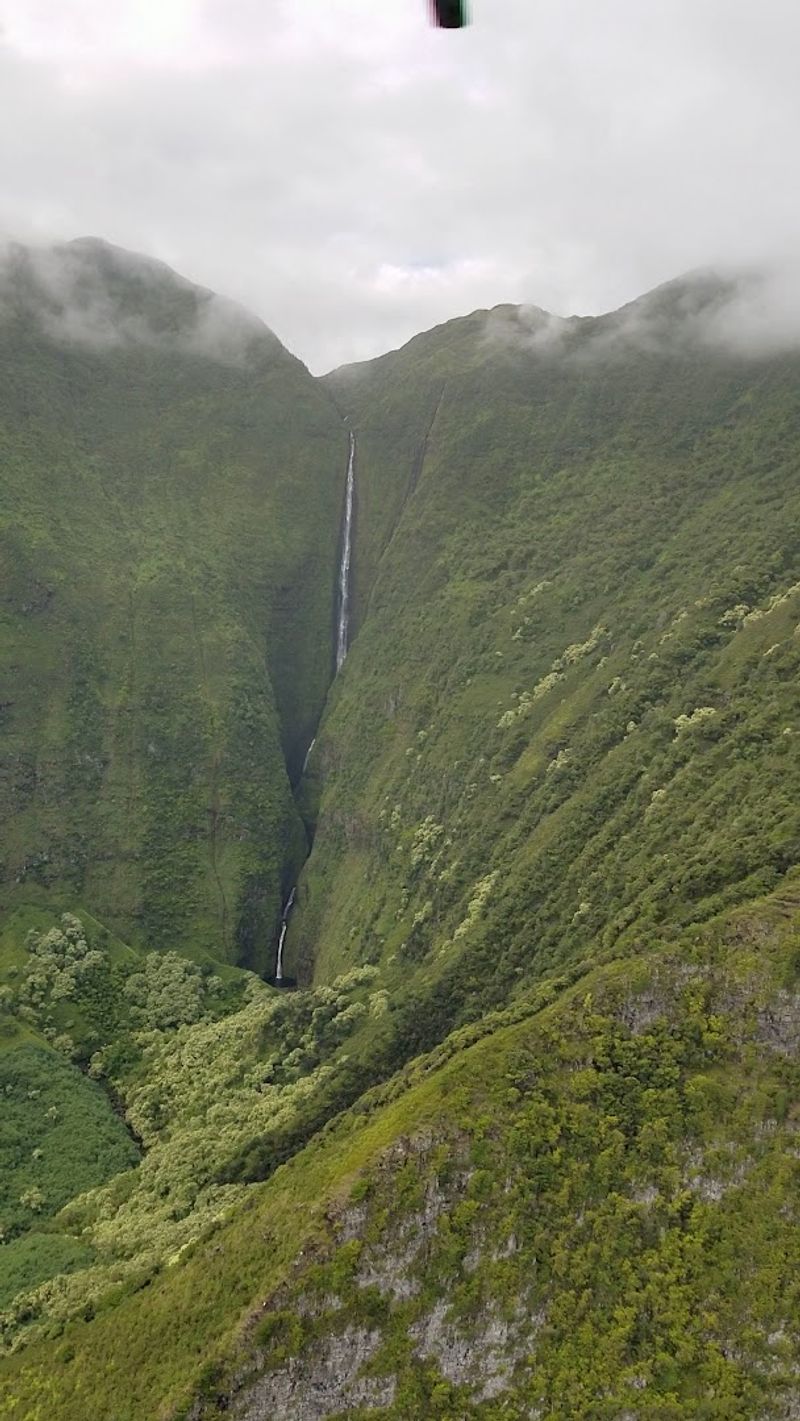
Right next door to Oloʻupena on Molokai’s wild north shore, Puukaoku Falls drops a remarkable 840 meters down the same jaw-dropping coastal cliffs. Two record-breaking waterfalls on the same stretch of coastline — Hawaii doesn’t do things halfway.
Like its neighbor, Puukaoku is completely inaccessible by land. The cliffs are too steep, the terrain too unstable, and the jungle too thick to allow any traditional hiking approach.
Helicopter tours that swing along the north shore offer the clearest views, giving passengers a bird’s-eye perspective that reveals the full, staggering height of the falls.
The waterfall tends to run strongest after heavy rainfall soaks the plateau above the cliffs. Hawaii’s north shore receives some of the wettest weather in the entire state, so there’s rarely a shortage of water feeding these coastal giants.
Seeing both Puukaoku and Oloʻupena on the same helicopter flight is an experience that genuinely defies easy description. The combination of ocean, cliffs, and falling water creates a scene that looks more like a painting than real life.
James Bruce Falls — British Columbia, Canada
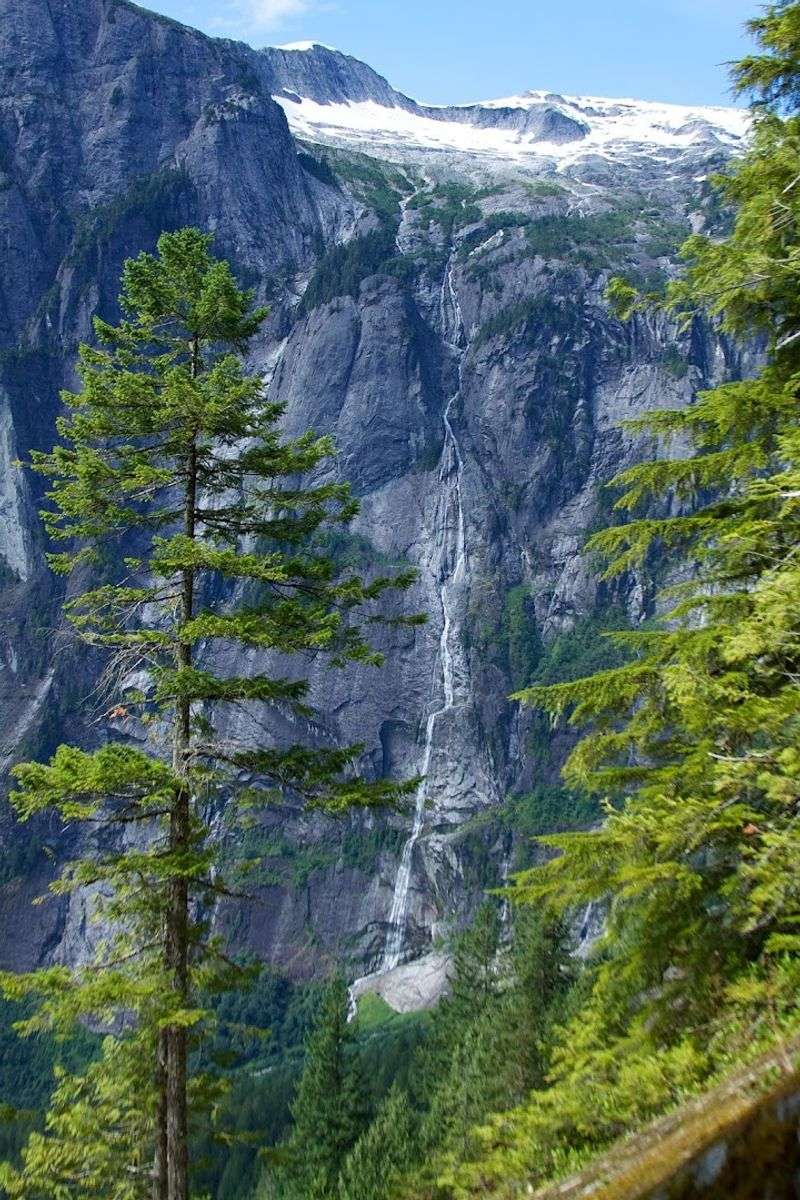
Canada’s tallest waterfall doesn’t get nearly enough attention, and James Bruce Falls is overdue for its moment in the spotlight. Plunging roughly 840 meters beside Princess Louisa Inlet in British Columbia, it crashes down a sheer granite cliff face surrounded by some of the most untouched coastal wilderness in North America.
Princess Louisa Inlet itself is considered one of the most beautiful fjord-like inlets on the Pacific coast. Boaters and kayakers who make the journey through Malibu Rapids into the inlet are rewarded with towering cliff walls, dense rainforest, and the thundering presence of James Bruce Falls at the far end.
The waterfall feeds directly into the inlet’s calm waters.
Access is primarily by boat or floatplane, which keeps visitor numbers low and the atmosphere genuinely wild. The surrounding mountains receive enormous amounts of rainfall and snowfall, ensuring the waterfall runs powerfully for most of the year.
For adventurous travelers who want a Canadian wilderness experience that feels completely off the tourist trail, Princess Louisa Inlet and James Bruce Falls deliver something extraordinary and deeply memorable.
Browne Falls — New Zealand
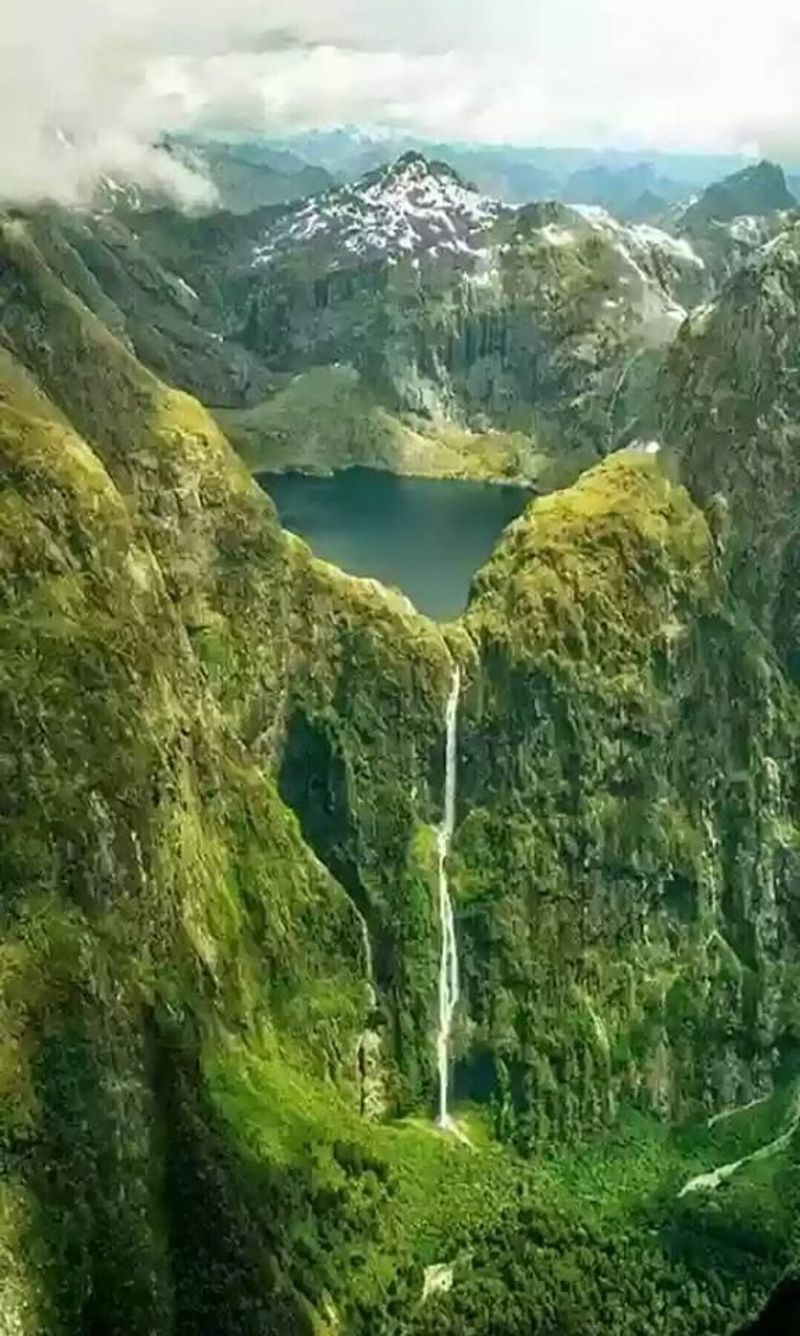
Fiordland National Park in New Zealand is already one of the most dramatic landscapes on the planet, and Browne Falls adds another layer of wonder to the mix. Dropping approximately 836 meters down a remote mountain face, it’s one of the tallest waterfalls in the Southern Hemisphere and one of the least visited.
Getting to Browne Falls requires either a boat trip through Doubtful Sound or a very serious backcountry hike. Most visitors catch a glimpse from the water, watching the waterfall thread down the cliffs above while seals bask on rocks nearby.
The combination of wildlife, fjord scenery, and falling water is almost overwhelming in the best possible way.
New Zealand’s Fiordland receives among the highest rainfall totals of any place on Earth, which keeps Browne Falls running at impressive volume throughout the year. Even during drier spells, the waterfall maintains a strong flow thanks to the sheer amount of precipitation the region absorbs.
Travelers who make the effort to visit Doubtful Sound consistently rate it as one of New Zealand’s most rewarding and humbling natural experiences.
Strupenfossen — Norway
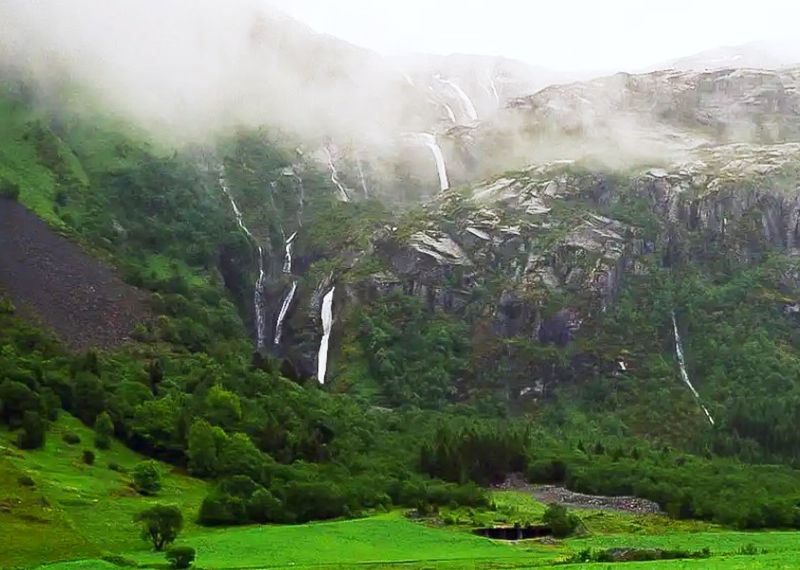
Western Norway keeps delivering, and Strupenfossen is yet more proof. Descending around 820 meters through a steep glacier-carved valley, this waterfall is fed by seasonal snowmelt and occasional glacier runoff from the mountains above.
Spring transforms it into a thundering white column that dominates the surrounding valley walls.
The name Strupenfossen roughly translates to something like “the throat falls” in Norwegian, which captures the way the water squeezes through a narrow channel before plunging downward. That funneling effect gives the waterfall an intense, concentrated power during high-flow periods that makes it feel almost alive.
Norway’s extensive network of scenic roads and hiking trails makes Strupenfossen reachable for visitors willing to put in a bit of legwork. The surrounding landscape features the classic elements of Norwegian fjord country: steep cliffs, valley floors carpeted in green, and rivers running cold and clear with glacial water.
Strupenfossen rewards patient travelers who seek it out with a view that feels genuinely earned. It’s one of those waterfalls that reminds you how much natural wonder still exists off the well-worn tourist path.
Ramnefjellsfossen — Norway
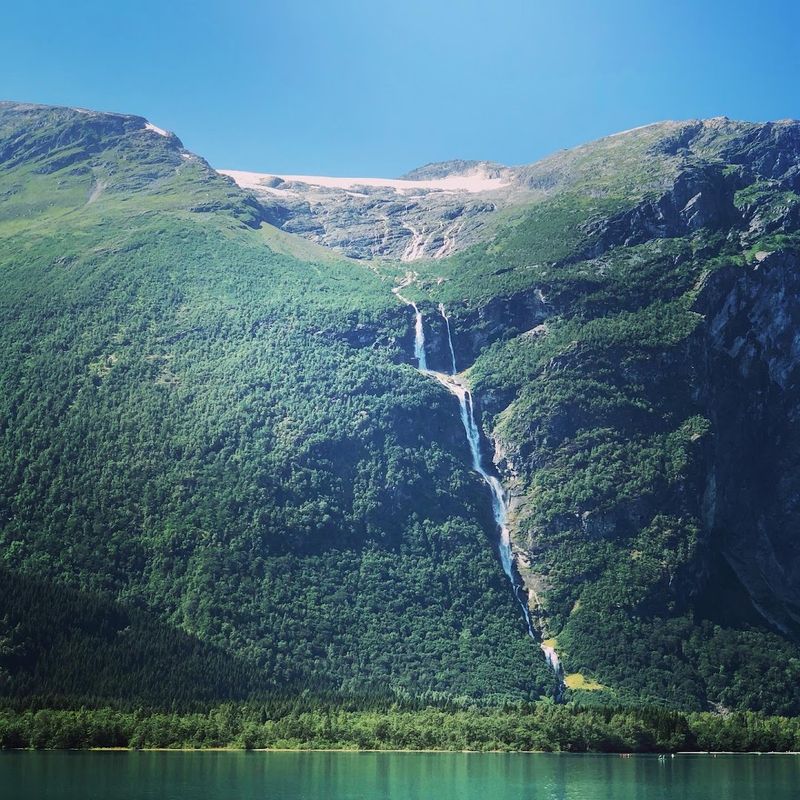
Narrow, elegant, and absolutely enormous, Ramnefjellsfossen sends a ribbon of water plunging approximately 818 meters beside the beautiful Nordfjord region of western Norway. From certain viewpoints, it looks almost impossibly thin against the dark rock face — like someone drew a white pencil line from the top of the mountain to the bottom.
The Nordfjord area is already a destination worth visiting on its own merits. Glaciers, fjords, and mountain villages combine to create a region that feels both wild and welcoming.
Ramnefjellsfossen adds a vertical exclamation point to scenery that’s already doing plenty of heavy lifting.
The waterfall is most impressive during late spring and early summer when snowmelt from the surrounding peaks pushes maximum water through its narrow channel. At peak flow, the slender appearance disappears and Ramnefjellsfossen becomes a proper roaring cascade.
Photography enthusiasts love the contrast between the white water and the dark, almost black rock face that frames it. Norway’s western fjords have no shortage of waterfalls, but Ramnefjellsfossen has a particular visual drama that makes it stand out even in very competitive company.
Gocta Cataracts — Peru
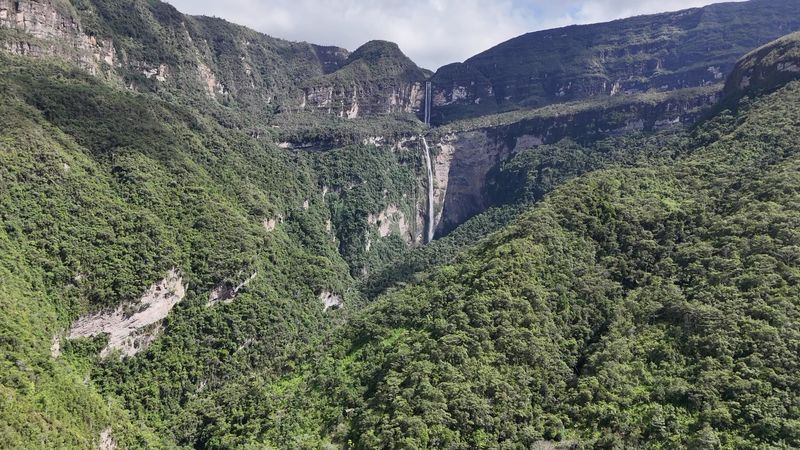
Here’s a story that sounds made up but absolutely isn’t. Gocta Cataracts, a two-tiered waterfall dropping roughly 771 meters through cloud forest in Peru’s Amazonas region, was known to local communities for generations but remained largely undocumented by the outside world until a German explorer brought it to international attention in 2005.
Once the news spread, Gocta quickly became one of Peru’s most talked-about natural attractions. Peruvian authorities confirmed its extraordinary height, and travel publications around the world scrambled to feature it.
Suddenly, a waterfall that locals had lived beside for centuries was on bucket lists worldwide.
A well-maintained trail now leads visitors from the village of Cocachimba through cloud forest to a viewpoint near the base of the falls. The hike takes a few hours each way and passes through landscapes filled with orchids, hummingbirds, and dramatic mountain scenery.
Gocta rewards every step of the effort with a finale that genuinely stuns first-time visitors. The mist rising from the base creates an almost mystical atmosphere that turns the whole experience into something closer to a dream than a hike.
Share this story