Some places on Earth are so high, so exposed, or so dramatically perched above the ground that even the bravest travelers feel their knees go weak. Whether you’re standing on a glass floor hundreds of meters in the air or dangling your legs over a sheer cliff, these spots test your nerves like nothing else.
From mountain ledges in Norway to glass walkways in China, the world is full of jaw-dropping locations that make your stomach drop right along with the view. If heights make your heart race, this list is definitely one to read with both feet firmly on the ground.
1. Tianmen Mountain Skywalk, Zhangjiajie, China
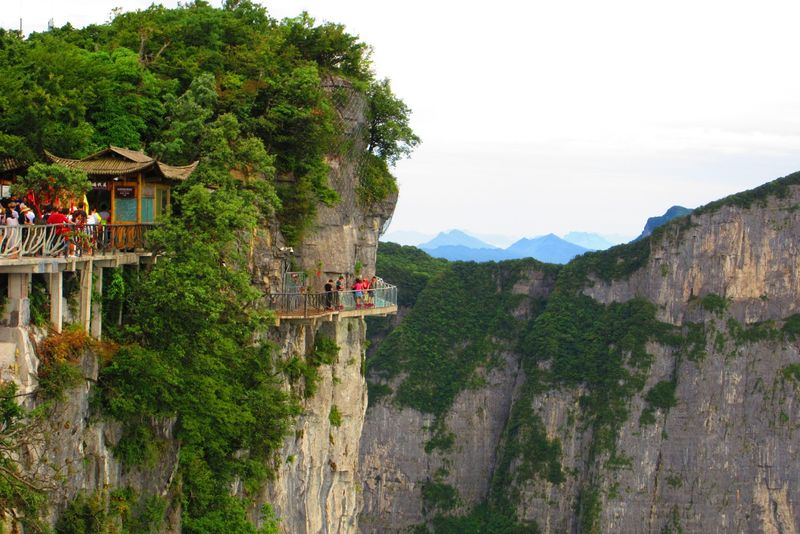
Hugging the edge of a sheer cliff face over 1,400 meters above sea level, the Tianmen Mountain Skywalk in Zhangjiajie is the kind of place that makes your palms sweat before you even take a step. The glass-bottomed walkway is bolted directly into the rock, stretching along the mountainside with nothing but open sky and a dizzying drop below your feet.
The mountain itself inspired the floating peaks in the movie Avatar, so you already know the scenery is out of this world. Visitors must wear special shoe covers to protect the glass panels, which only adds to the surreal experience of walking on what feels like thin air.
Fog often rolls in around the cliffs, making the whole scene feel dreamlike and eerie. If you can manage the nerves, the views from up here are genuinely unforgettable.
2. Grand Canyon Skywalk, Arizona, United States
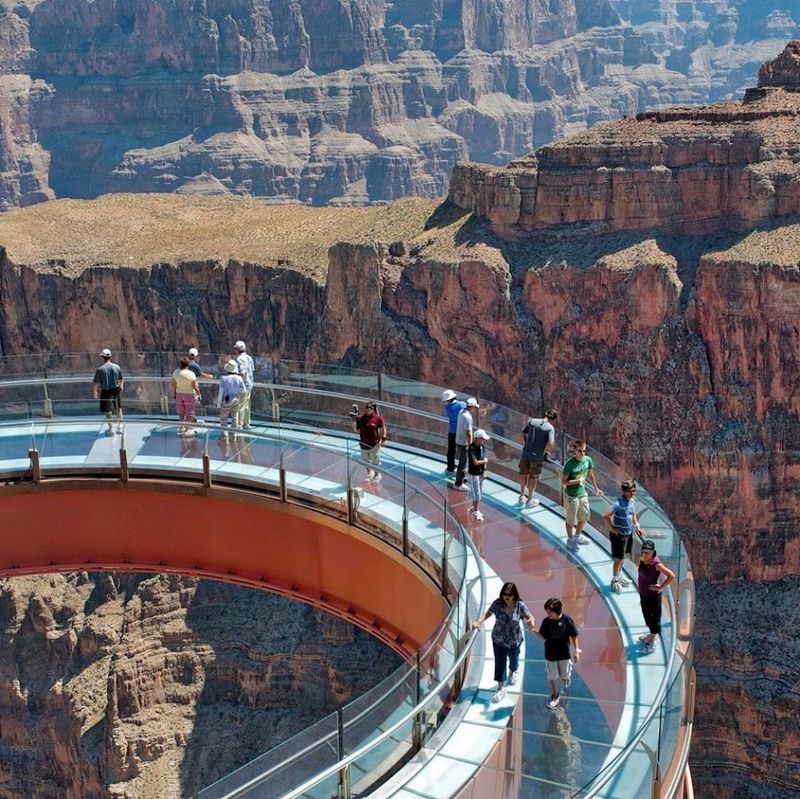
Jutting out 21 meters beyond the rim of the Grand Canyon and hovering roughly 1,200 meters above the canyon floor, the Grand Canyon Skywalk is an engineering marvel that doubles as a serious nerve test. The horseshoe-shaped glass bridge is transparent from every angle, including directly beneath your feet, which means the full depth of the canyon is always visible.
Built on the Hualapai Tribal Nation’s land in western Arizona, the skywalk opened in 2007 and has welcomed millions of visitors since. The structure is engineered to hold the weight of 71 fully loaded Boeing 737 aircraft, so safety is absolutely not a concern, even if your stomach disagrees.
Cameras are not allowed on the walkway itself, which honestly might be a relief since it forces you to simply stand there and face the drop. Few experiences compare to it.
3. Trolltunga, Vestland, Norway
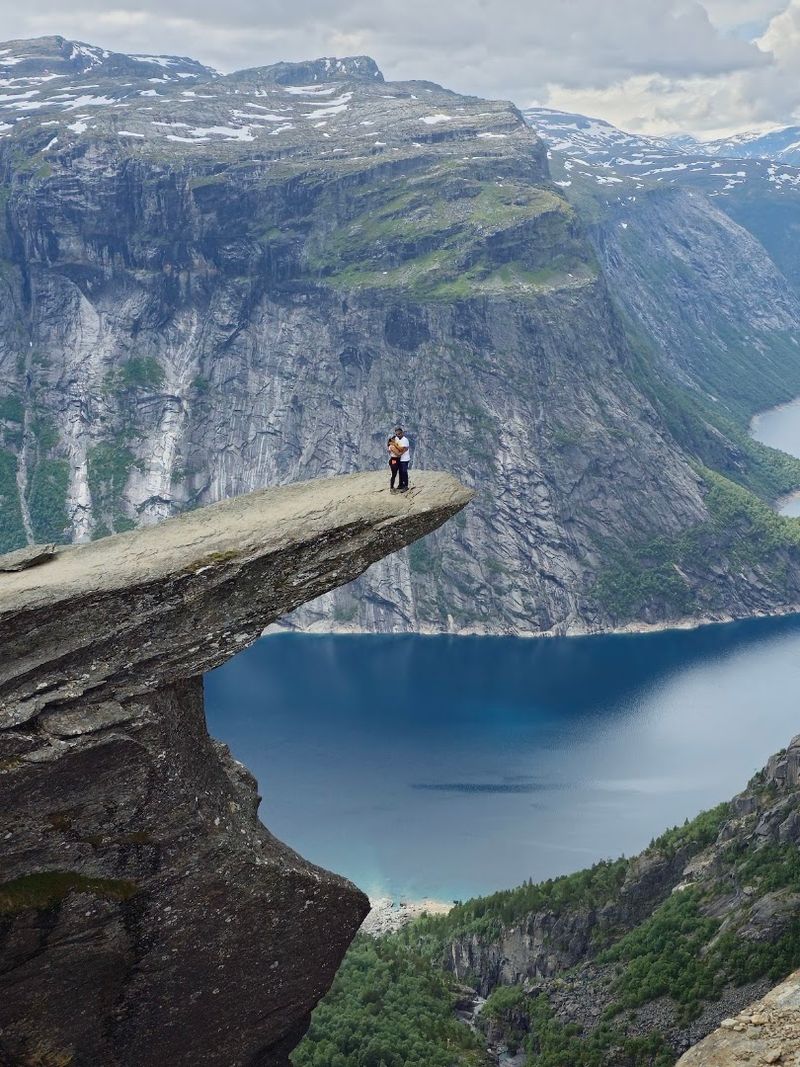
Trolltunga, which translates to “Troll’s Tongue” in Norwegian, is a thin slab of rock that juts horizontally out of a mountainside about 700 meters above Lake Ringedalsvatnet. The formation looks almost impossibly dramatic, like nature deliberately designed a diving board for giants.
Getting there requires a demanding hike of roughly 22 to 28 kilometers round trip, depending on your starting point, with significant elevation gain that takes most hikers between eight and twelve hours to complete. The reward at the end is one of the most photographed rock ledges on the planet, where visitors line up to pose with nothing but sky and fjord behind them.
There are no safety rails or barriers at Trolltunga, which is both thrilling and sobering. Going during summer months is strongly recommended, as winter conditions make the trail genuinely dangerous and often inaccessible without proper mountaineering gear.
4. Cliffs of Moher, County Clare, Ireland
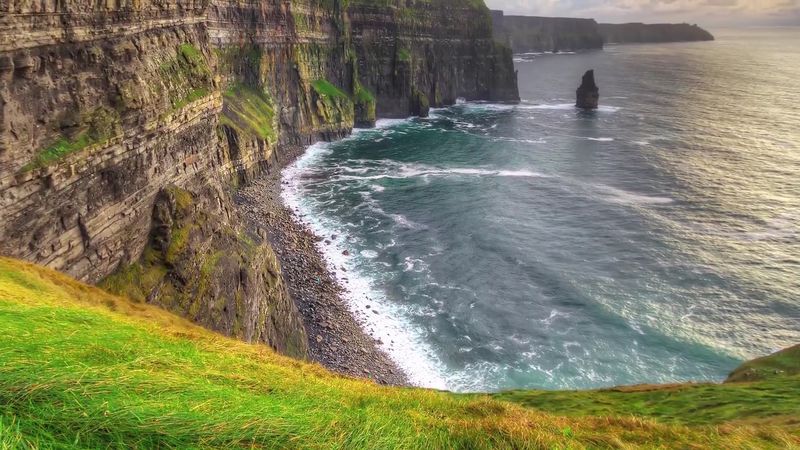
Rising up to 214 meters straight out of the Atlantic Ocean along Ireland’s wild western coast, the Cliffs of Moher are both breathtakingly beautiful and quietly terrifying. On a clear day, you can see the Aran Islands, Galway Bay, and even the mountains of Connemara from the top, but the real sensation comes from peering straight down at the churning ocean below.
The cliffs stretch for about eight kilometers and attract around 1.5 million visitors every year, making them one of Ireland’s most visited natural landmarks. While official paths and barriers exist in many spots, some visitors venture beyond the marked trails to get closer to the edge, which park rangers strongly discourage.
Winds here can be ferocious and unpredictable, so standing near the edge on a gusty day adds a very real sense of danger to the experience. The raw power of the place is genuinely humbling.
5. Preikestolen (Pulpit Rock), Rogaland, Norway
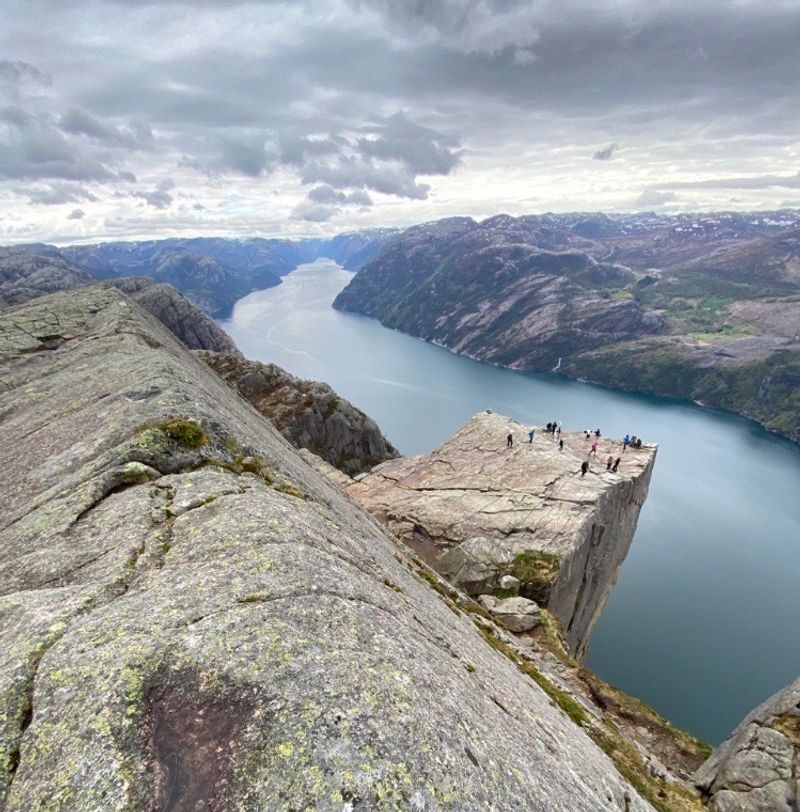
Preikestolen, or Pulpit Rock, is a nearly perfectly flat plateau of rock that sits 604 meters directly above the Lysefjord in southwestern Norway. The flat top measures roughly 25 by 25 meters, which sounds generous until you realize the edges drop straight down with absolutely nothing to catch you.
The hike to reach it takes about two hours each way and covers moderately challenging terrain, making it accessible to most reasonably fit travelers. Once you arrive, the view of the fjord below is extraordinary, and on a calm day the water looks like a dark blue mirror stretching between steep canyon walls.
What makes Pulpit Rock especially nerve-wracking is how many people sit right at the edge, dangling their legs casually over a 600-meter drop. There are no fences or railings anywhere on the plateau.
If you are comfortable with open heights and trust your balance, the experience is one Norway’s finest outdoor rewards.
6. Huayna Picchu, Cusco Region, Peru
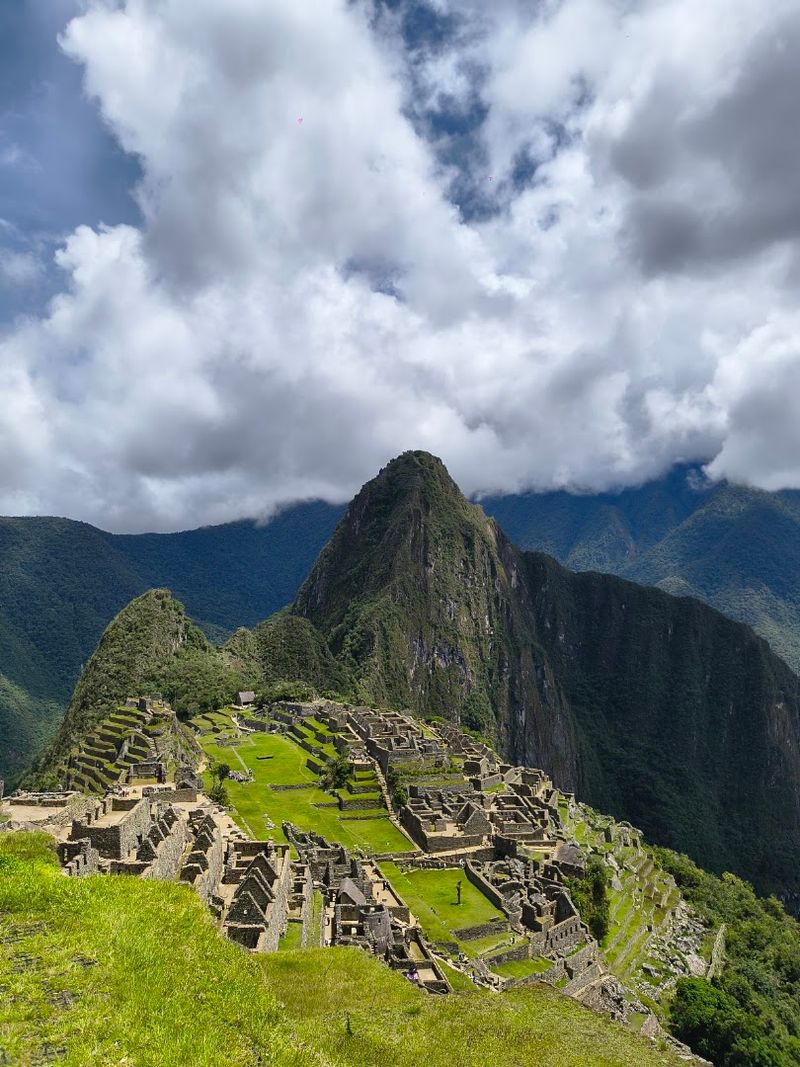
Looming directly behind the iconic ruins of Machu Picchu, Huayna Picchu is the steep, dramatic peak that appears in nearly every famous photograph of the ancient Inca site. Climbing it, however, is a completely different experience from simply admiring it in a picture.
The trail to the summit rises about 360 meters above Machu Picchu over a very short horizontal distance, meaning the ascent is brutally steep. Narrow stone steps cut by the Incas themselves wind up exposed ridges with sheer drops on both sides, and in some places hikers must hold onto metal cables or use handholds carved into the rock to keep moving forward.
Access is limited to around 400 visitors per day, so booking tickets months in advance is essential. The summit rewards those who make it with a spectacular bird’s-eye view of the entire Machu Picchu complex and the winding Urubamba River valley far below.
7. Aiguille du Midi Skywalk (Step into the Void), Chamonix, France
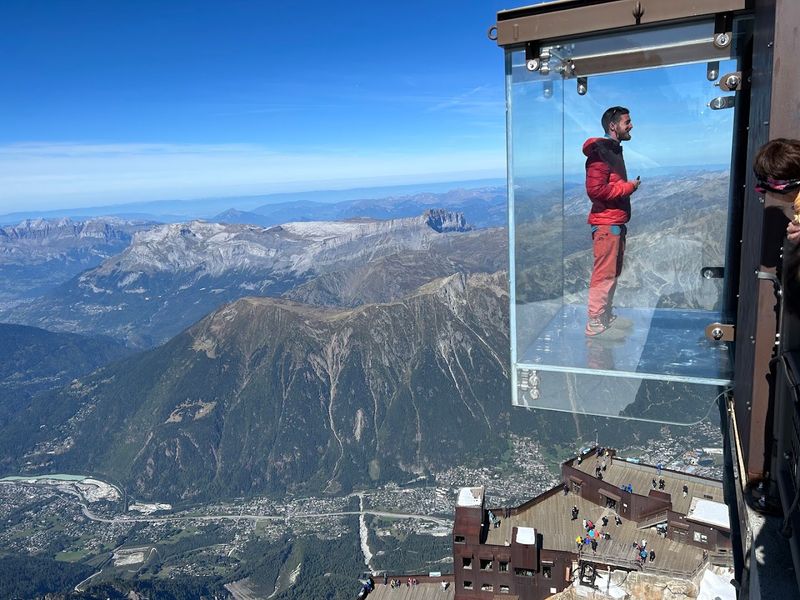
At 3,842 meters above sea level, the Aiguille du Midi is one of the most accessible extreme-altitude spots in all of Europe, reached by a cable car from the valley town of Chamonix. At the top, a glass-enclosed cube juts out from the platform, and stepping inside it is called “Step into the Void” for very good reason.
The glass box surrounds visitors on all sides, including the floor, creating the sensation of floating in midair above a nearly 3,000-meter drop to the glacier below. Even seasoned mountaineers have admitted that the installation triggers genuine vertigo and disorientation.
The surrounding views of Mont Blanc and the French, Swiss, and Italian Alps are extraordinary, but most visitors find it hard to focus on scenery when their body is screaming that they are about to fall. The installation is only open seasonally, so checking dates before planning a trip is a must.
8. CN Tower EdgeWalk, Toronto, Canada
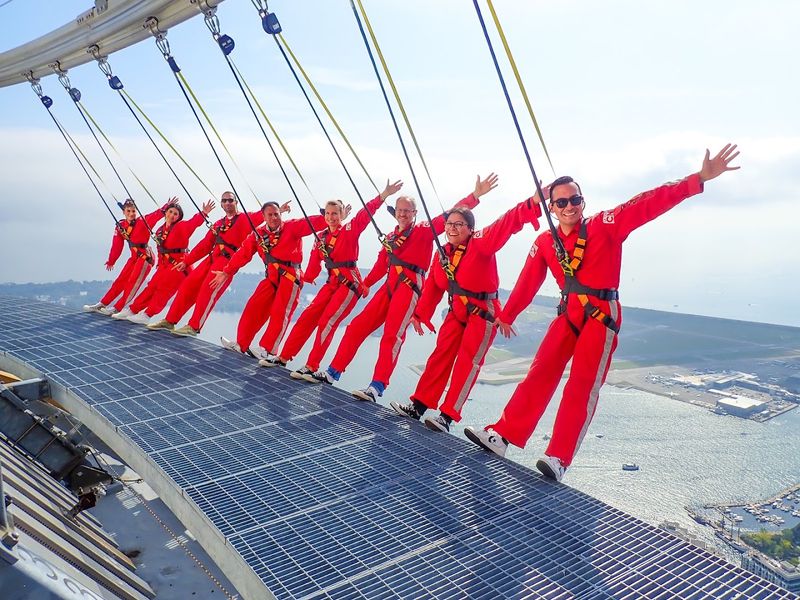
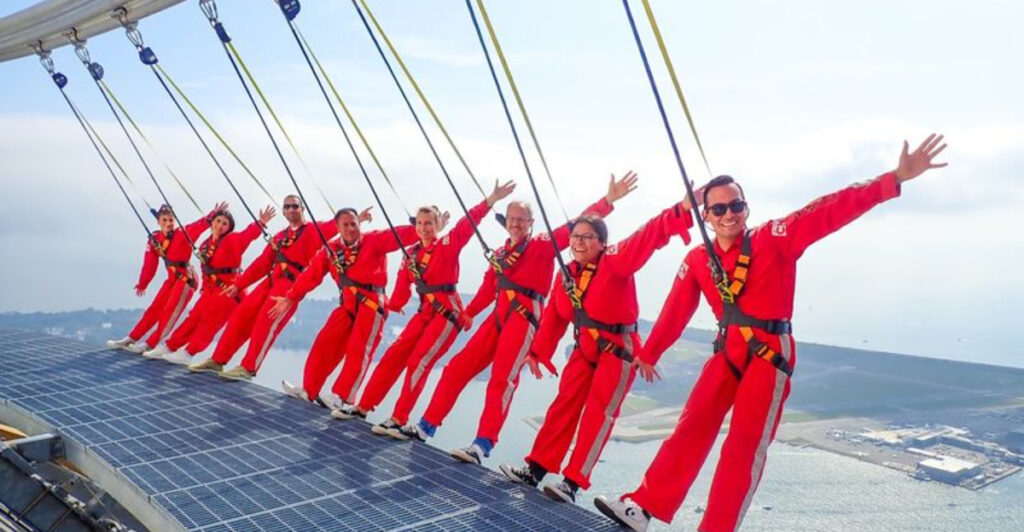
Walking along the outer edge of one of the world’s most recognizable towers while strapped into a harness and leaning forward over the city below is exactly what the CN Tower EdgeWalk offers, and it is not for the faint of heart. Participants walk around the full circumference of the tower’s main pod at a height of 356 meters above the streets of Toronto.
The experience lasts about 90 minutes including preparation and safety briefing, with about 30 minutes spent actually outside on the edge. Guides encourage participants to lean back on their harnesses so their feet are on the ledge and their body is angled out over the open air, with nothing below them but the city grid and Lake Ontario.
No cameras or personal items are allowed outside, but professional photos and videos are taken throughout. Weather can affect availability, so flexible scheduling is a smart move when booking.
9. Sky Bridge 721, Dolni Morava, Czech Republic
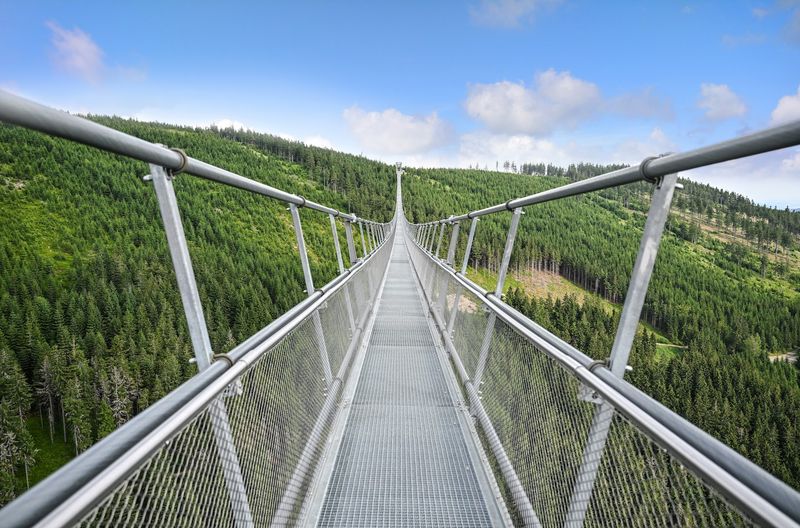
Opened in 2022, Sky Bridge 721 in the Czech Republic immediately claimed the title of the world’s longest pedestrian suspension bridge, stretching an impressive 721 meters between two mountain ridges in the Jeseniky region near Dolni Morava. The bridge hangs about 95 meters above the valley floor at its highest point, swaying gently as people walk across.
Unlike solid platforms or glass walkways, a suspension bridge adds a whole new layer of unease because it moves. Every step you take sends a subtle ripple through the structure, and the open metal grating underfoot means you can see straight down to the forest below the entire time.
The surrounding landscape of rolling forested hills is genuinely lovely, which makes the crossing feel a bit less terrifying once you settle into a rhythm. A nearby observation tower also offers panoramic mountain views for those who want to keep their feet on something solid.
10. Langkawi Sky Bridge, Langkawi, Malaysia
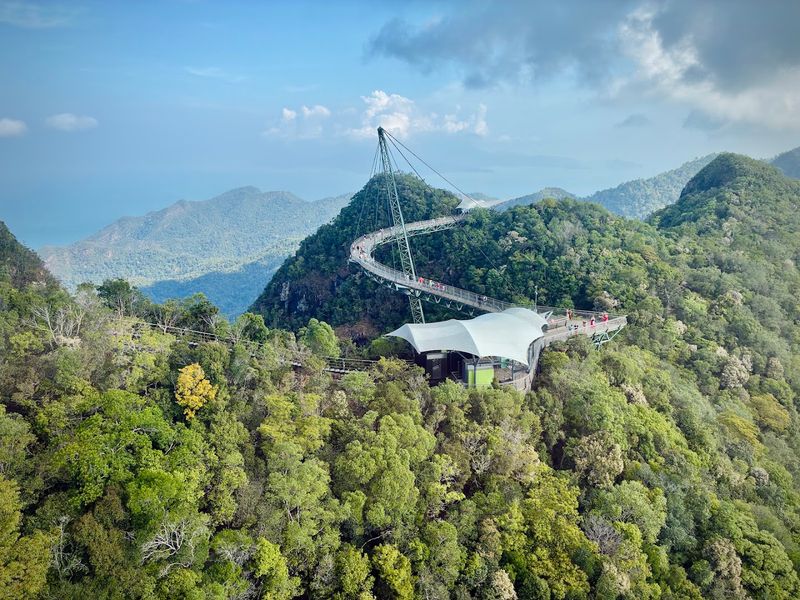
Curving gently through the mist above the rainforest canopy of Gunung Mat Cincang, the Langkawi Sky Bridge is one of Southeast Asia’s most dramatic pedestrian crossings. The bridge stretches 125 meters and is suspended about 700 meters above sea level, supported by a single pylon and cables that fan out in a distinctive curved arc.
Reaching the bridge requires a cable car ride up the mountain, which itself offers stunning views of the jungle and the Andaman Sea. Once on the bridge, the combination of height, the swaying underfoot, and the occasional cloud drifting through creates a genuinely surreal atmosphere that is hard to replicate anywhere else.
The bridge is sometimes closed due to weather or maintenance, so checking ahead before visiting is a good idea. Early morning visits tend to offer clearer skies and fewer crowds, giving you more time to soak in the extraordinary scenery without feeling rushed.
11. Devil’s Pool, Victoria Falls, Zambia and Zimbabwe
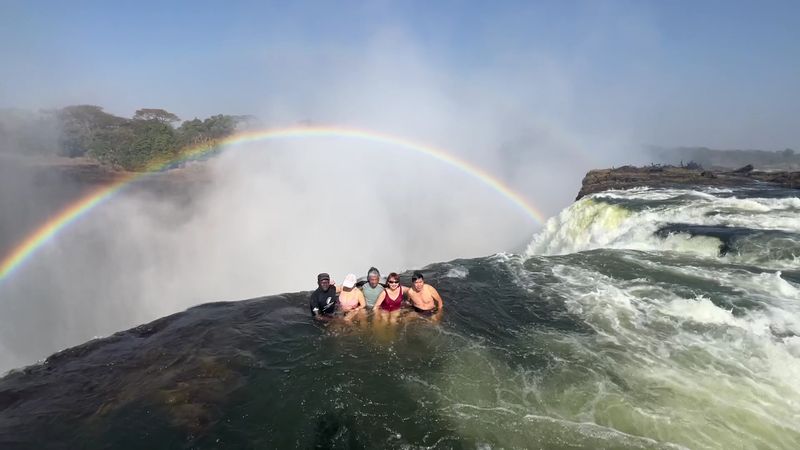
Sitting in a natural rock pool at the very lip of one of the world’s largest waterfalls while the water roars past you and plunges over 100 meters into the gorge below is the kind of experience that sounds completely unhinged, yet thousands of people do it every year. Devil’s Pool sits at the edge of Victoria Falls on Livingstone Island in Zambia, accessible only during the dry season from roughly August to January.
A natural rock barrier forms the pool, preventing swimmers from being swept over the falls, but the margin feels uncomfortably slim when you are peering over the edge at the sheer drop below. Guides accompany every group and the activity is considered safe when conditions are right, though it is absolutely not recommended during high water season.
The rush of sitting at the edge of one of Africa’s most powerful natural wonders is something visitors consistently describe as one of the most exhilarating moments of their lives.
12. The Ledge at Skydeck Chicago, Illinois, United States
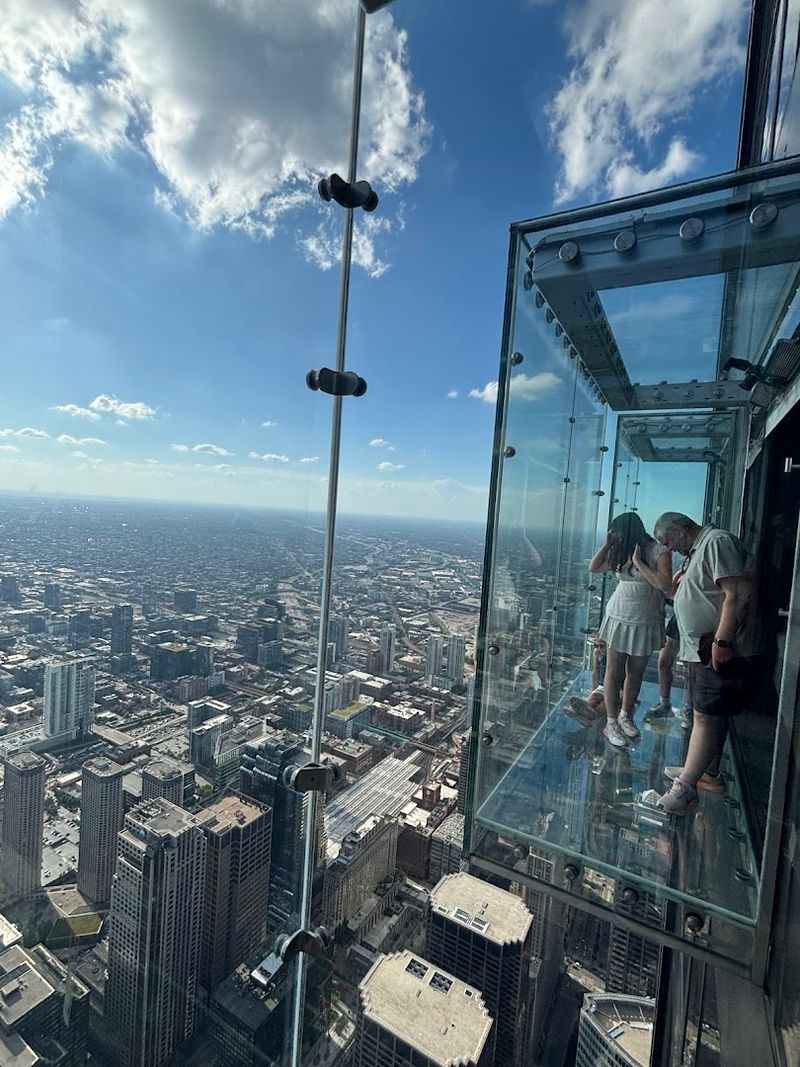
On the 103rd floor of what was once the world’s tallest building, The Ledge at Skydeck Chicago extends four glass boxes out from the side of Willis Tower, each one projecting about 1.3 meters beyond the building’s edge. Standing inside one of these boxes puts you 412 meters above the streets of Chicago with nothing but glass separating you from open air.
The glass panels can hold up to 10,000 pounds, and the installation has been thoroughly tested for safety, but knowing that does not always stop the legs from shaking. On a clear day, you can see four states from up here: Illinois, Indiana, Wisconsin, and Michigan.
The Ledge has become one of Chicago’s most iconic tourist experiences since it opened in 2009. Many visitors crouch down, lie flat, or press their faces against the glass floor, fully committing to the vertigo-inducing experience that the attraction promises.
13. Trift Bridge, Gadmen, Switzerland
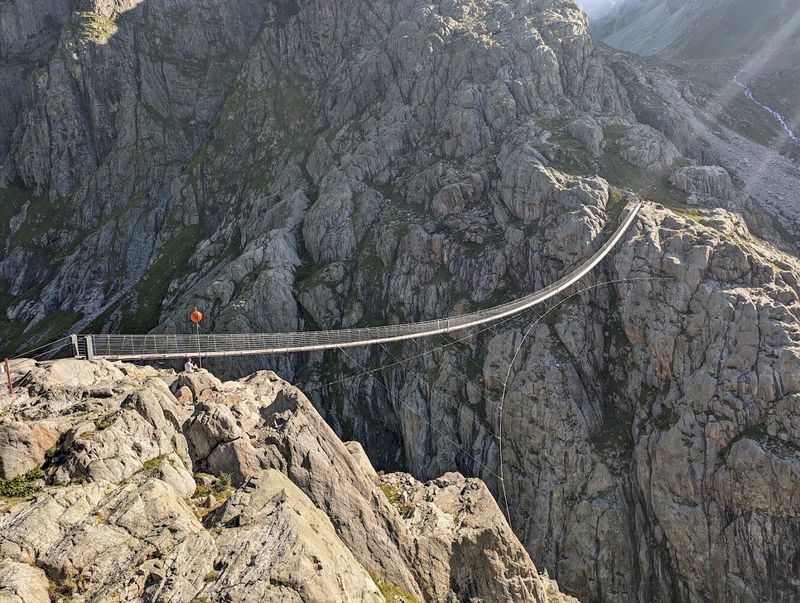
Deep in the Swiss Alps near the village of Gadmen, the Trift Bridge is one of the longest and highest pedestrian suspension bridges in the Alps, stretching 170 meters across a dramatic glacial gorge. Below the bridge, the turquoise waters of Lake Trift shimmer between steep rocky walls, and the surrounding peaks of the Bernese Oberland rise in every direction.
Reaching the bridge involves either a cable car ride and a roughly 45-minute hike, or a longer trail for those who prefer to earn the experience on foot. The bridge itself sways noticeably as you walk across it, and the open mesh underfoot gives a very clear view of the considerable drop below.
What makes Trift especially memorable is its setting. The combination of glacial scenery, roaring meltwater streams, and raw alpine wilderness gives the crossing a sense of real remoteness that more famous bridges simply cannot match.
It feels genuinely adventurous.
14. Royal Gorge Bridge, Colorado, United States
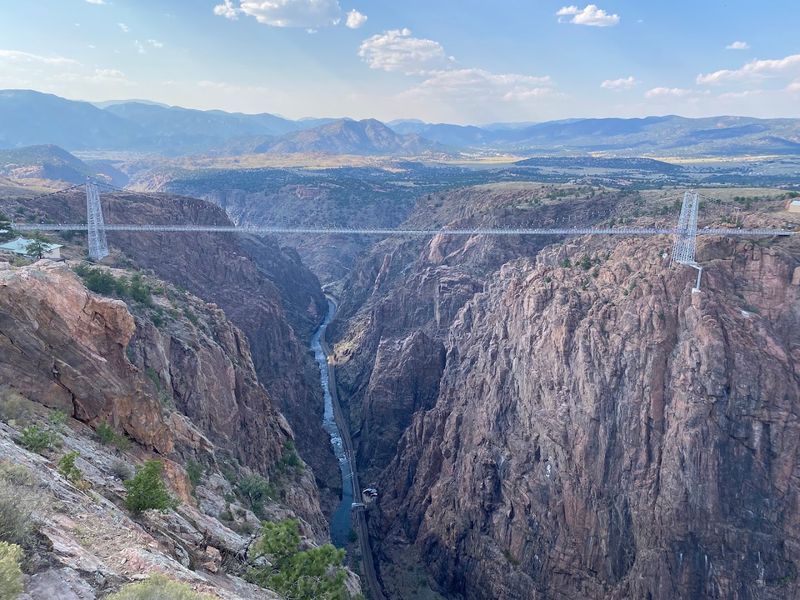
For nearly a century after it opened in 1929, the Royal Gorge Bridge held the title of the world’s highest suspension bridge, and even today it remains an impressively nerve-rattling place to stand. The bridge stretches 384 meters across the Royal Gorge near Canon City, Colorado, hanging about 291 meters above the Arkansas River below.
Unlike many high bridges that offer wide panoramic views, the Royal Gorge is narrow and enclosed by towering canyon walls on both sides, which creates a different kind of vertigo. The sense of being squeezed between enormous rock faces while dangling above a river adds a claustrophobic intensity that open-air heights do not.
The surrounding Royal Gorge Resort offers zip lines, gondola rides, and a via ferrata course, making it a full destination for thrill-seekers. Walking the bridge itself remains the centerpiece, and looking down through the wooden deck planks at the river is a genuinely stomach-dropping moment.
15. Dachstein Skywalk (Stairway to Nothingness), Ramsau am Dachstein, Austria
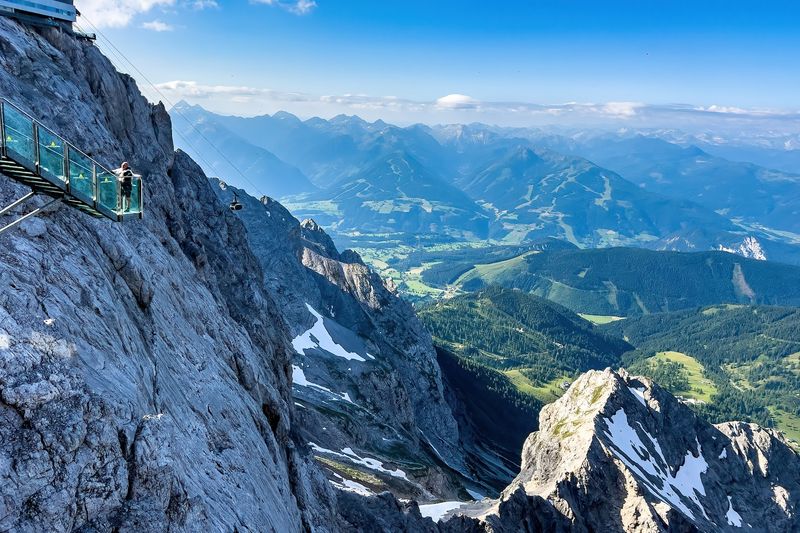
Perched at 2,700 meters on the Dachstein glacier plateau in Austria, the Skywalk platform known as the Stairway to Nothingness is a glass-floored viewing deck that seems to float above the entire Austrian Alps. The name alone hints at what visitors experience when they step out onto the transparent surface and look down at the sheer mountain face dropping away beneath their feet.
A cable car from Ramsau am Dachstein carries visitors up to the glacier, where ice caves, a suspension bridge, and the Skywalk itself all await. The glass platform is designed to give an unobstructed 360-degree view of the surrounding peaks, glaciers, and valleys, stretching as far as six countries on the clearest days.
Even visitors who consider themselves comfortable with heights report feeling a rush of anxiety when they first step onto the glass floor and realize how much empty space lies between them and the world below. The experience is both beautiful and deeply unsettling in the best possible way.
Share this story