 Unearth The Voyage
Sometimes the best travel experiences happen far from the big cities, in places where time seems to slow down and every corner tells a story. Spring is the ideal season to explore small towns, when flowers bloom, temperatures turn pleasant, and crowds are still manageable.
Whether you love medieval history, mountain scenery, or lakeside charm, there is a small town somewhere in Europe just waiting to surprise you. Pack your bags early, because these 15 destinations are about to make your 2026 travel bucket list a lot more exciting.
Hallstatt, Austria
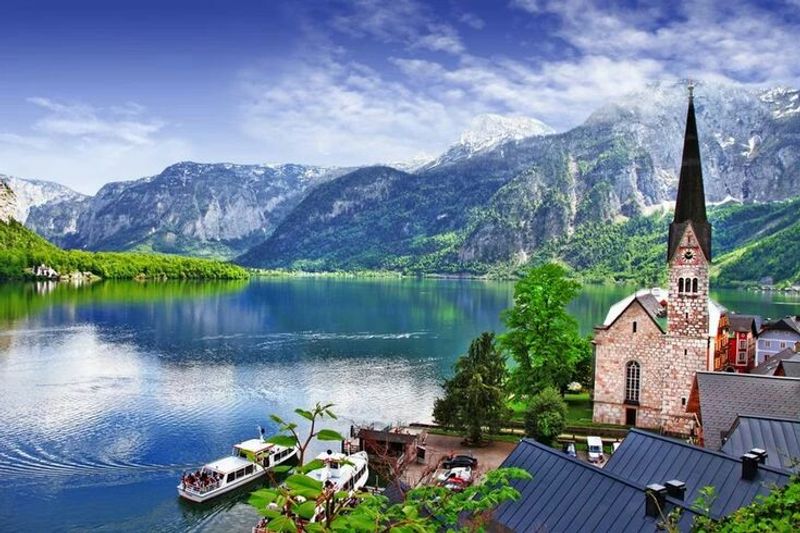
Hallstatt sits quietly between a glassy lake and towering Alpine peaks, looking so perfect it barely seems real. Every spring, the snow retreats just enough to let wildflowers take over the hillsides, and the pastel-colored houses begin reflecting in the still water below.
It is the kind of place that makes you stop mid-step just to take it all in.
Visiting before summer is a smart move. The streets stay calm, the café terraces fill slowly, and you can actually hear birdsong instead of tourist chatter.
Ancient salt mines nearby offer a fascinating underground adventure, and lakeside walking paths wind gently through the scenery without demanding much effort.
Spring mornings here carry a crisp, clean air that feels genuinely refreshing. Grab a coffee, find a bench by the water, and watch mist roll off the lake as the Alps glow behind it.
Hallstatt has been a UNESCO World Heritage Site since 1997, and once you visit, you will completely understand why. Few places on Earth combine history, nature, and sheer visual beauty quite this effortlessly.
Colmar, France
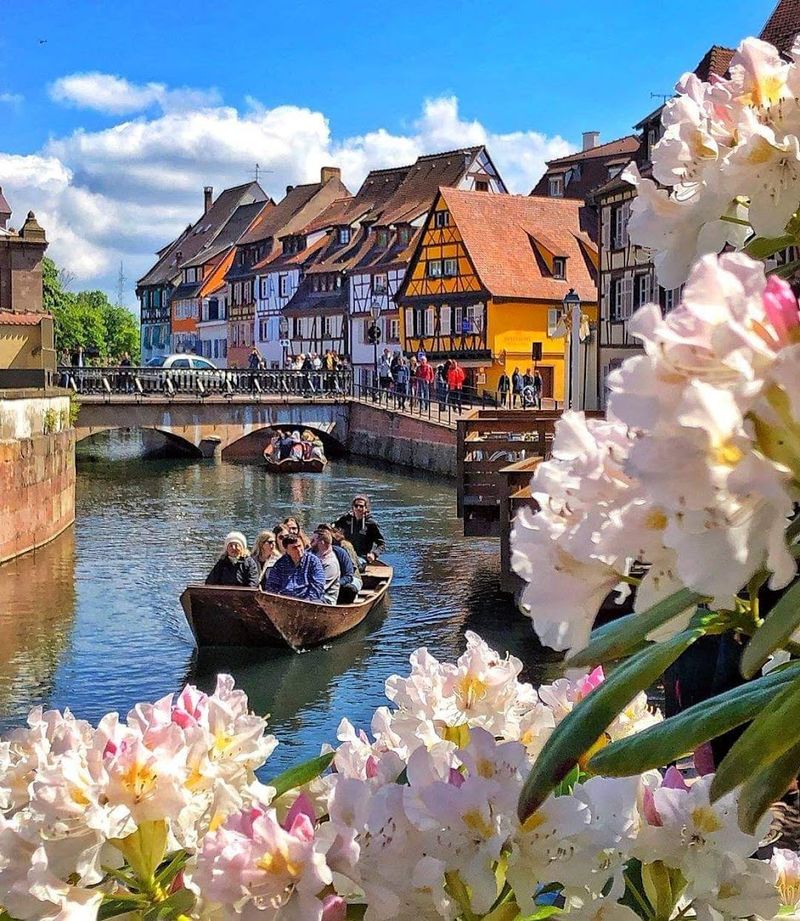
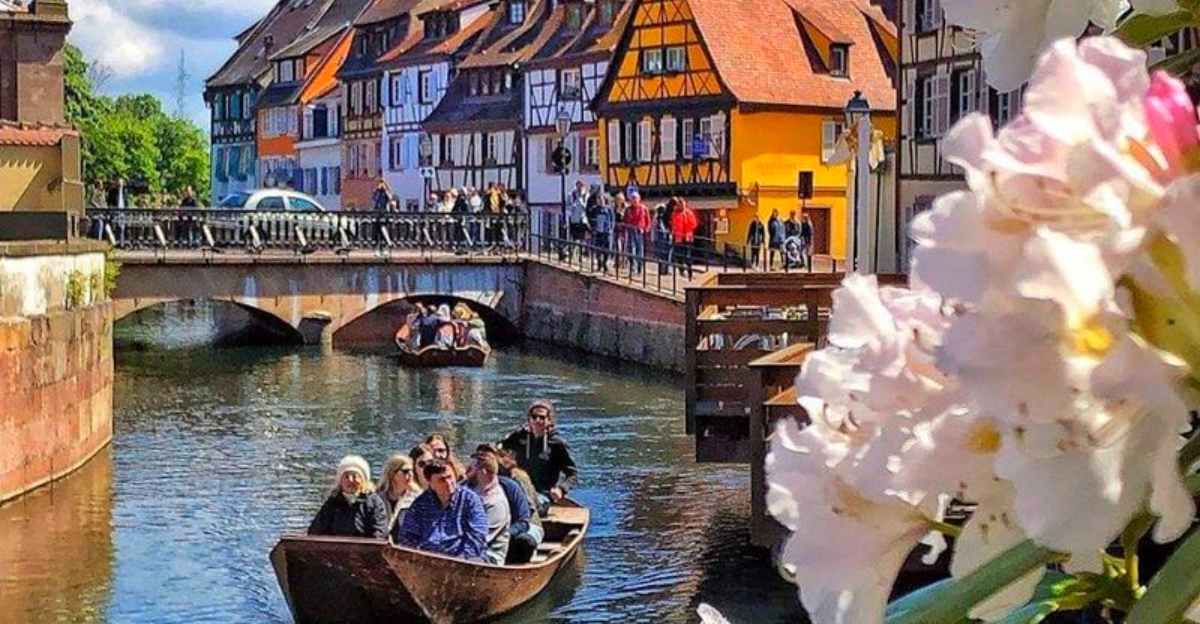
Flower boxes bursting with color, canals lined with candy-colored houses, and the faint smell of Alsatian wine drifting through the air — welcome to Colmar. This northeastern French town earns its nickname “Little Venice” every single spring, when blooms transform its already gorgeous streets into something almost impossibly charming.
Walking through the old town feels unhurried and easy. Boutiques, bakeries, and wine bars fill the narrow lanes, and the mild spring temperatures make lingering outside genuinely enjoyable.
A canal boat ride through the Petite Venise district gives you a completely different perspective on the architecture.
Colmar also sits right in the heart of Alsace wine country, so pairing your sightseeing with local Riesling or Pinot Gris is practically mandatory. The town is compact enough to explore on foot in a couple of days, yet rich enough in detail that you will keep discovering new corners.
History buffs will appreciate the Unterlinden Museum, home to the famous Isenheim Altarpiece. Romantic, relaxed, and refreshingly free of pretension, Colmar rewards visitors who simply slow down and pay attention to the small, beautiful things around every turn.
Český Krumlov, Czech Republic
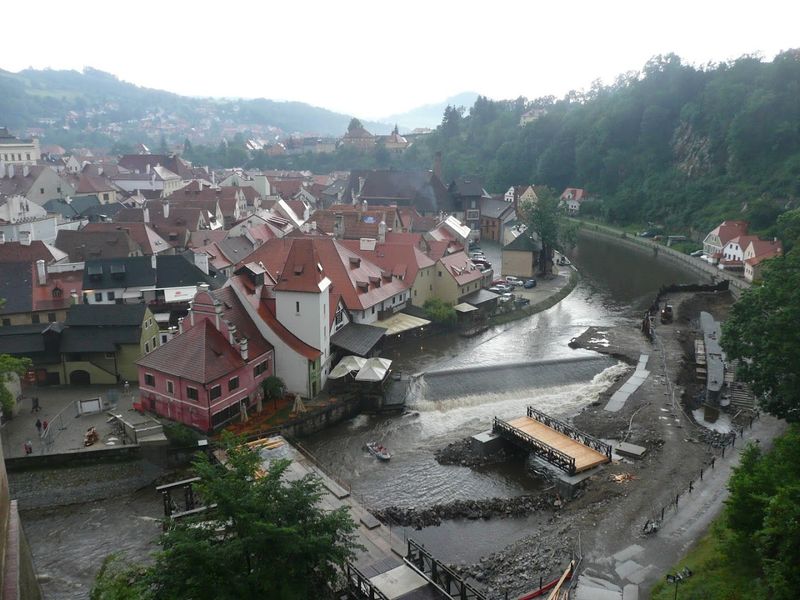
Few towns in Europe pull off the “medieval time capsule” look quite as convincingly as Český Krumlov. The town curls around a dramatic bend in the Vltava River, and its enormous castle looms above everything like a proud, ancient guardian.
In spring, the surrounding hills turn a vivid green that makes the red rooftops pop even harder against the sky.
Outdoor café culture kicks back into gear as soon as temperatures climb, and the cobblestone streets fill with a relaxed energy that never tips into overwhelming. History lovers will have a field day exploring the castle complex, which includes a Baroque theater and beautifully maintained gardens that bloom spectacularly in April and May.
Photographers especially love this town because every alleyway offers a new angle worth capturing. The soft spring light hits the stone facades in ways that make even a quick phone snapshot look professional. Český Krumlov became a UNESCO World Heritage Site in 1992, and its preservation is genuinely impressive.
Affordable by Western European standards, it offers exceptional value without sacrificing beauty or authenticity. If you want old-world Europe without fighting enormous tourist crowds, this town belongs at the very top of your list.
Giethoorn, Netherlands
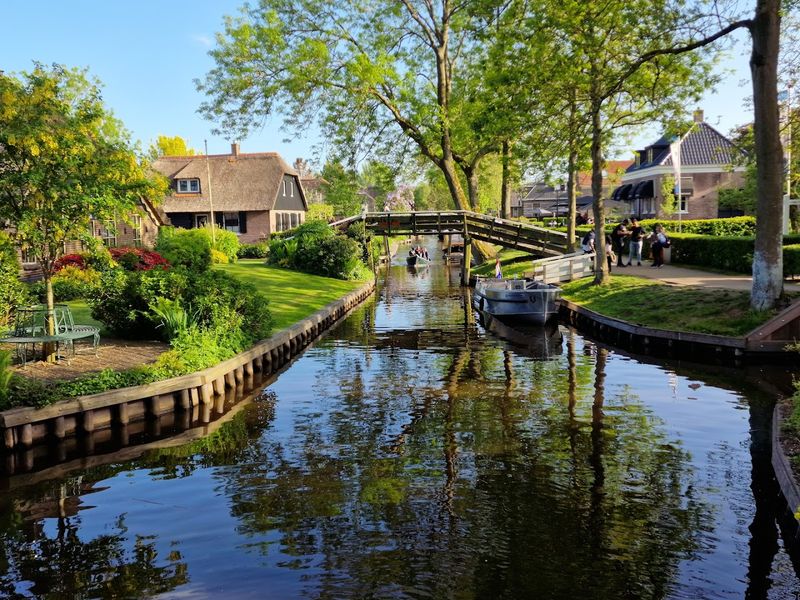
Cars are not welcome here, and honestly, that is the best thing about Giethoorn. This Dutch village replaced roads with canals centuries ago, and today visitors navigate its waterways by small electric boat, creating a silence that feels almost surreal in our loud, engine-powered world.
Spring turns the whole place into a living garden.
Thatched-roof cottages sit tucked behind wildly blooming gardens, their reflections wobbling gently in the canal water below. Renting a whisper boat and drifting through the narrow channels is the main activity here, and it never gets old.
You can stop at waterside restaurants, peek into gardens, or simply float without any particular destination in mind.
Giethoorn is located in the Overijssel province, a region that does not get nearly enough travel attention. The surrounding Weerribben-Wieden National Park offers gorgeous wetland scenery perfect for cycling and birdwatching.
Spring brings nesting birds, blooming reeds, and a freshness to the air that makes every breath feel like a small luxury. The village stays quieter in spring than during peak summer months, meaning you get all the charm with a fraction of the crowds.
It is genuinely one of Europe’s most unique and underappreciated experiences.
Sintra, Portugal
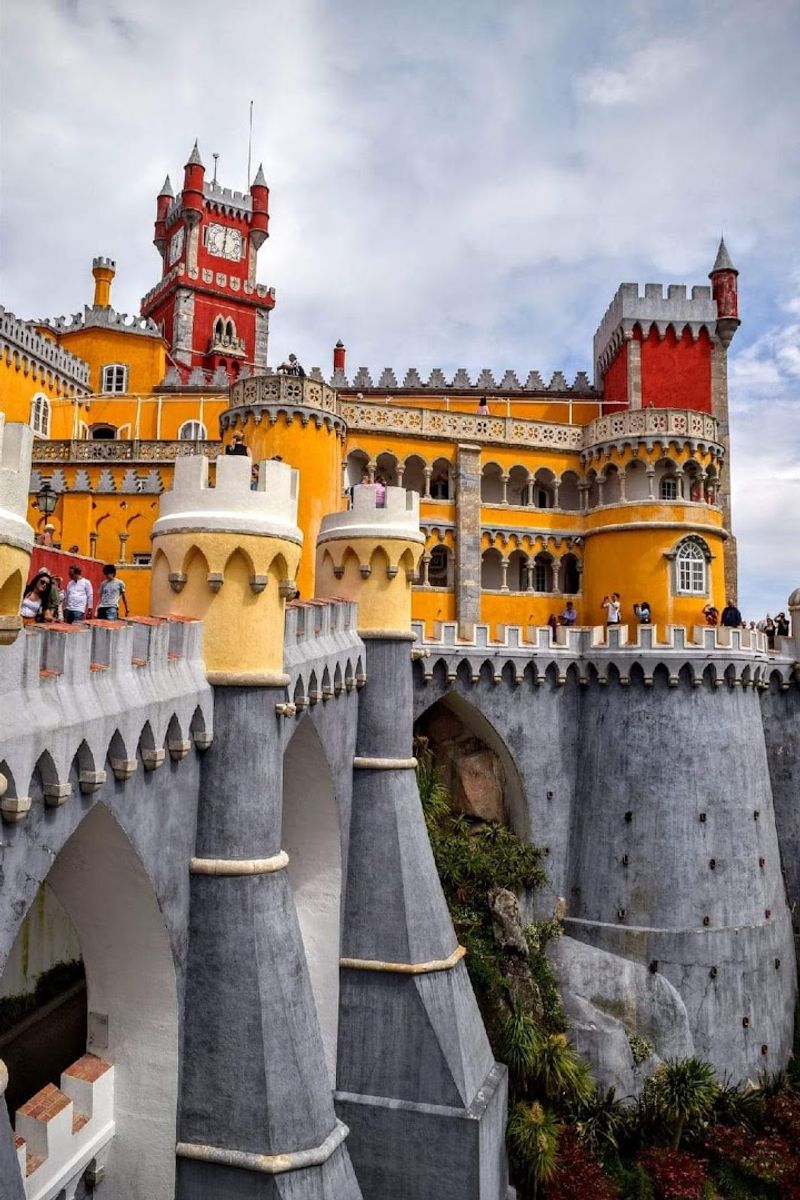
Sintra does not just have palaces — it has palaces perched on misty hilltops, hidden inside ancient forests, and tucked behind cascading gardens. The whole town feels like a fantasy novel brought to life, and spring is the chapter where everything turns lush, green, and slightly magical.
Pena Palace alone, with its wild mix of colors and architectural styles, is worth the entire trip.
Cooler spring temperatures make hiking between the various palaces and castles far more comfortable than the hot summer months. The Moorish Castle and Quinta da Regaleira both reward visitors with incredible views and fascinating history.
Sintra sits just 40 minutes from Lisbon by train, making it an easy day trip or a worthy overnight stay.
The town itself has a charming historic center with pastry shops selling travesseiros, a flaky almond pastry that locals treat as a point of serious local pride. Spring crowds are noticeably lighter than summer, so you can actually enjoy the scenery without constantly navigating large tour groups.
Sintra joined the UNESCO World Heritage list in 1995, recognized for its unique cultural landscape. Mysterious, romantic, and completely one-of-a-kind, it earns its reputation as one of Europe’s most extraordinary small-town destinations without any argument.
Bled, Slovenia
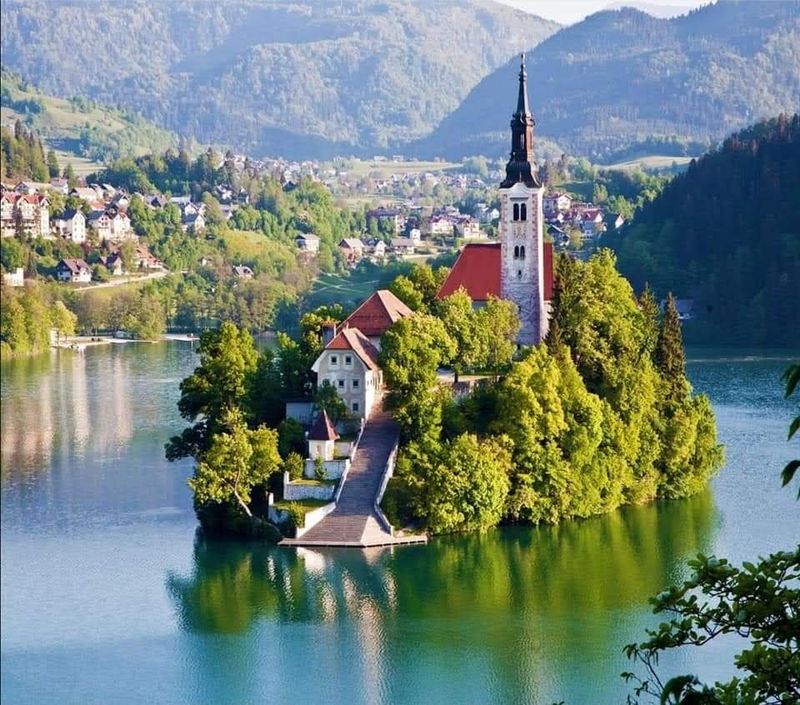
There is a tiny church sitting on an island in the middle of a turquoise lake, with a medieval castle clinging to a cliff above it — and yes, this place is completely real. Lake Bled in Slovenia looks like a desktop wallpaper that someone forgot to tell was actually a functioning town.
Spring strips away the winter quiet and replaces it with birdsong, blooming chestnut trees, and water that shifts between blue and green depending on the light.
Rowing a traditional pletna boat out to the island is one of those experiences that sounds touristy but turns out to be genuinely lovely. The Church of the Assumption sits at the top of 99 stone steps, and ringing its bell is said to grant a wish.
Whether or not that works, the view from the top absolutely delivers.
Hikers will appreciate the trail up to Ojstrica viewpoint, which offers the classic postcard shot of the lake and island together. The surrounding Julian Alps provide a dramatic backdrop that intensifies as spring greenery fills the slopes.
Bled remains one of Europe’s best-kept mainstream secrets — well known enough to have great infrastructure, yet still small enough to feel personal and genuinely charming on every visit.
Rothenburg ob der Tauber, Germany
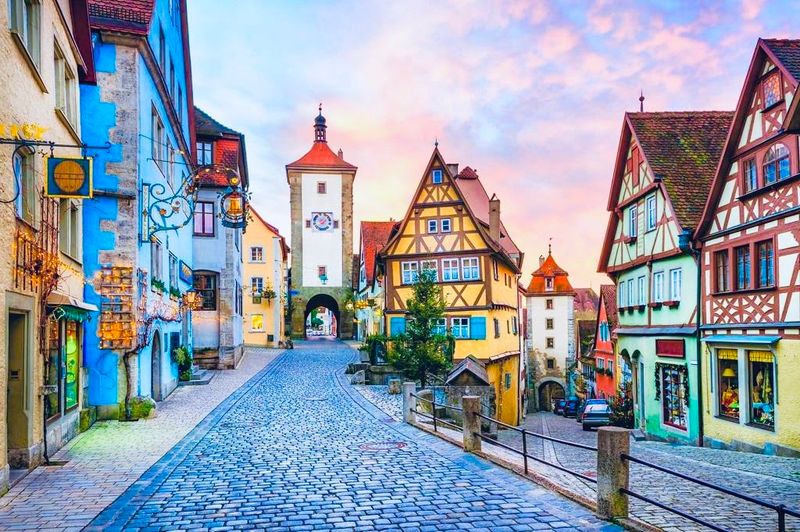
Walking through Rothenburg ob der Tauber feels like accidentally stepping into the set of a Brothers Grimm fairy tale — except the gingerbread is real and absolutely worth eating. This walled medieval town in Bavaria has preserved its 15th-century character so thoroughly that it regularly leaves first-time visitors speechless.
Spring softens its stone streets with flower boxes and budding trees, adding color to an already storybook setting.
The town walls are fully walkable, offering elevated views over red-roofed houses and the surrounding Tauber Valley. Spring is an ideal time to make that walk, when the countryside below turns green and the air carries that clean post-winter freshness.
The Kriminalmuseum, dedicated to medieval justice and punishment, is a surprisingly entertaining stop for curious visitors.
Rothenburg is also home to the Christmas Museum, which stays open year-round and feels wonderfully out of season during a spring visit. Schneeballen, a traditional fried pastry dusted with powdered sugar, is impossible to resist from the bakery windows.
The town is compact, walkable, and endlessly photogenic from nearly every angle. Arriving early in the morning before day-trippers flood in gives you the rare pleasure of having these ancient streets almost entirely to yourself.
Gimmelwald, Switzerland
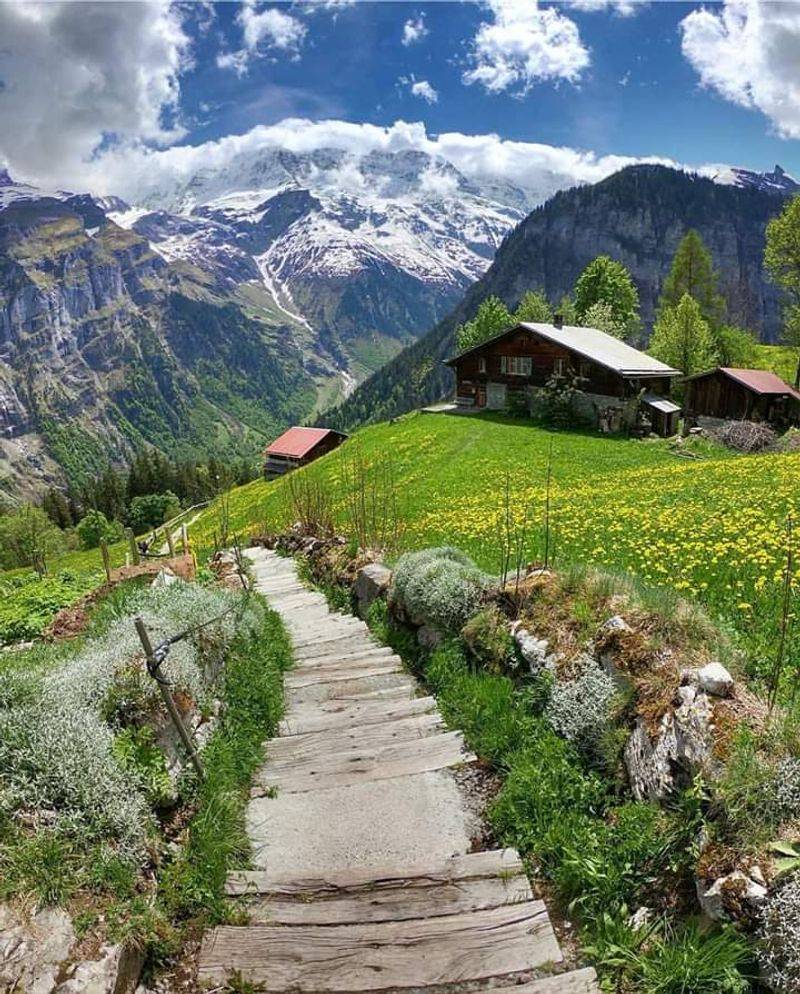
Getting to Gimmelwald requires a cable car ride up a steep Swiss mountainside, and that journey alone tells you this is not a place for people who prefer convenience over beauty. Tucked into the Bernese Oberland at around 1,370 meters elevation, this tiny village has no traffic, no chain hotels, and absolutely no shortage of jaw-dropping mountain scenery.
Spring arrives here a little later than in the valleys below, making May and June particularly spectacular.
Wildflowers carpet the meadows as snow retreats up the peaks, creating the kind of scenery that makes hikers stop every few minutes just to look around. Trails connect Gimmelwald to neighboring Mürren and Lauterbrunnen, offering routes for every fitness level.
The sound of cowbells drifting across the hillside is a genuine and deeply pleasant experience.
Accommodations here are simple, mostly family-run guesthouses that feel authentically Swiss rather than polished for tourism. Prices are more reasonable than nearby resort towns, which makes the experience feel even better.
Gimmelwald has resisted development intentionally, keeping its car-free, unhurried character intact. Travelers who visit often describe it as one of the most genuinely peaceful places they have ever been.
That reputation, earned honestly, keeps drawing people back spring after spring.
Bruges, Belgium
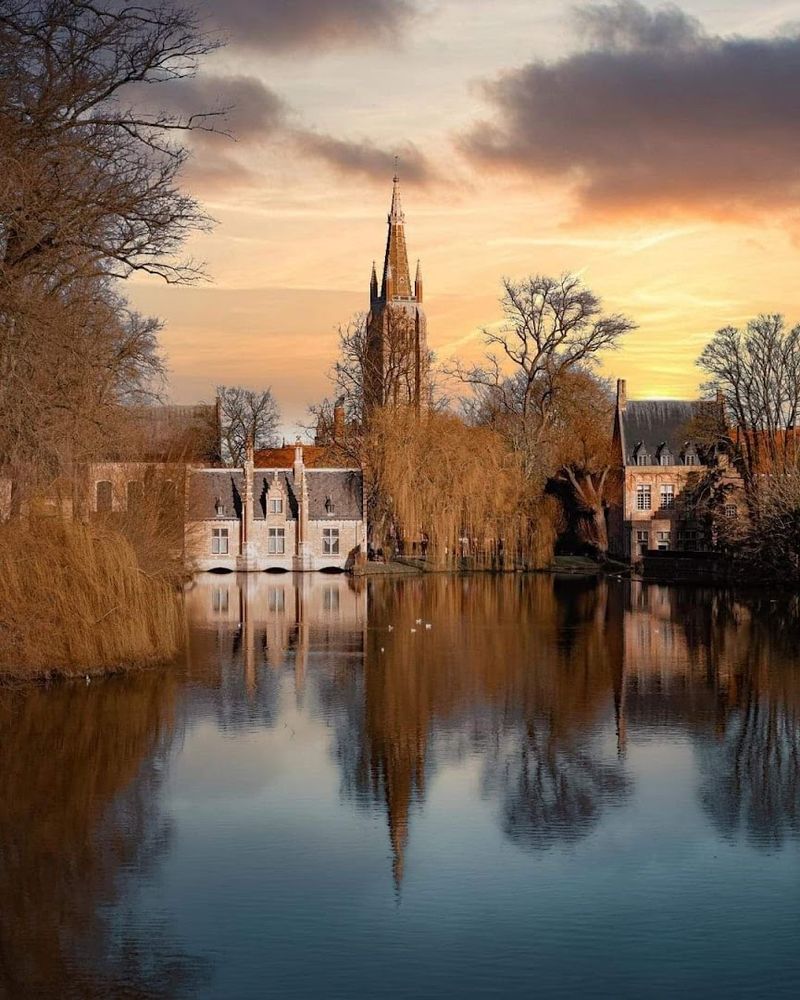
Chocolate shops on every corner, canals threading between Gothic towers, and horse-drawn carriages clip-clopping over cobblestones — Bruges is unapologetically romantic, and it knows it. Belgium’s best-preserved medieval city transforms beautifully in spring, when blooming trees line the canal banks and the city shakes off its winter quietness.
The whole place glows in the soft April light.
Boat tours through the canals are a classic Bruges experience, and spring offers them without the long summer queues. The Markt square, flanked by colorful guild houses and the famous Belfry tower, is a great starting point for any exploration.
Climbing the Belfry’s 366 steps rewards you with panoramic views across the rooftops and surrounding Flemish countryside.
Belgian beer culture is alive and well here, with dozens of specialty bars serving local brews that pair wonderfully with hearty Flemish stews. The Groeningemuseum houses an impressive collection of Flemish Primitive paintings, offering a rainy-day option that never disappoints.
Bruges is compact enough to explore entirely on foot or by rented bicycle, which adds a wonderfully unhurried pace to any visit. Spring weekdays are especially quiet, giving the city a calm, almost private feeling that summer visitors rarely get to enjoy.
Annecy, France
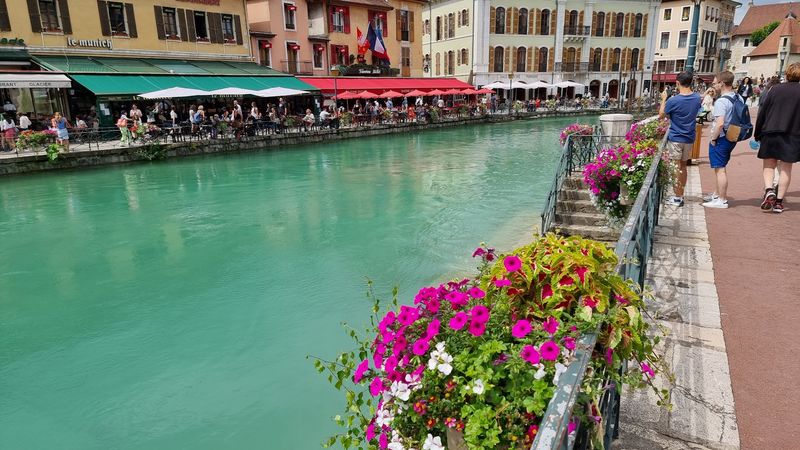
Annecy has earned the nickname “Venice of the Alps,” but honestly, it deserves its own title entirely — because nothing else in Europe quite matches this combination of glacial lake, mountain backdrop, and pastel canal town. Spring turns the lake a brilliant turquoise, the surrounding peaks stay snow-dusted just long enough to look dramatic, and the flower-covered Pont des Amours bridge becomes genuinely irresistible for photographs.
The lakeside cycling path stretches for kilometers and fills up with joggers, cyclists, and families as soon as the weather warms. Paddleboarding and kayaking on the lake start up in April, offering a refreshing way to appreciate those mountain views from water level.
The old town’s covered arcades and canal-side restaurants make for slow, satisfying afternoon wandering.
Annecy is located in the Haute-Savoie region of France, meaning the local food scene leans heavily on mountain specialties like tartiflette and raclette — hearty, cheesy dishes that still feel appropriate on cool spring evenings. The weekly market fills the old town with fresh produce, local cheeses, and flowers every Tuesday, Friday, and Sunday.
Fewer crowds in spring mean shorter waits, better photos, and a far more relaxed version of one of France’s most beautiful towns.
Portree, Scotland
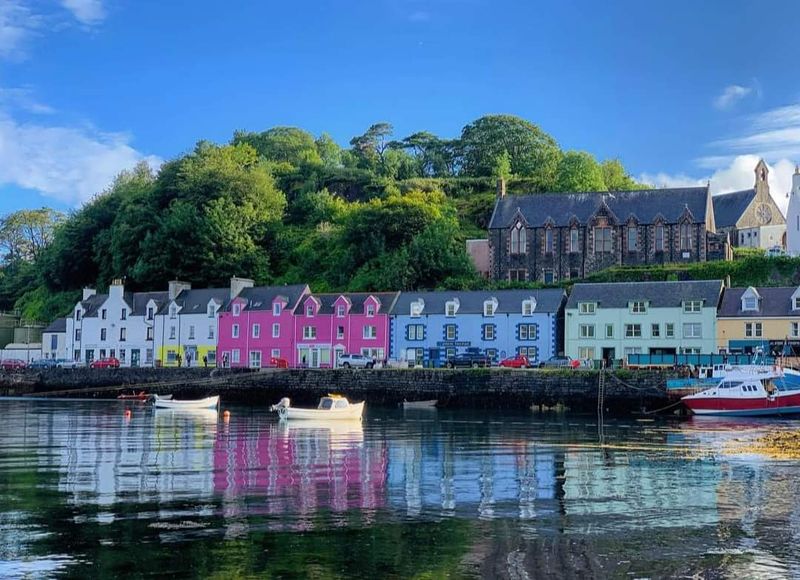
Portree’s harbor is painted in shades of red, yellow, blue, and pink, and on a calm spring morning, those colors reflect perfectly in the still water below — it is one of Scotland’s most photographed scenes, and for very good reason. The capital of the Isle of Skye, Portree serves as the ideal base for exploring one of Britain’s most dramatic landscapes.
Spring brings longer daylight hours and a freshness to the air that makes every hike feel rewarding.
The Old Man of Storr, a towering rock formation just north of town, is best tackled in spring before summer hiking traffic builds up. The Quiraing, another extraordinary geological feature on the Trotternish Ridge, offers a surreal landscape of cliffs, pinnacles, and hidden plateaus that looks especially striking under moody spring skies.
Wildlife enthusiasts will appreciate the chance to spot red deer, golden eagles, and harbor seals.
Portree itself is small but well-equipped, with cozy pubs, seafood restaurants serving freshly caught langoustines, and independent shops selling Harris Tweed and local crafts. The surrounding scenery changes mood constantly with the weather, shifting from golden and sunny to dramatically stormy within hours.
That unpredictability is not a downside — it is exactly what makes the Isle of Skye so addictively beautiful and endlessly worth revisiting.
Sirmione, Italy
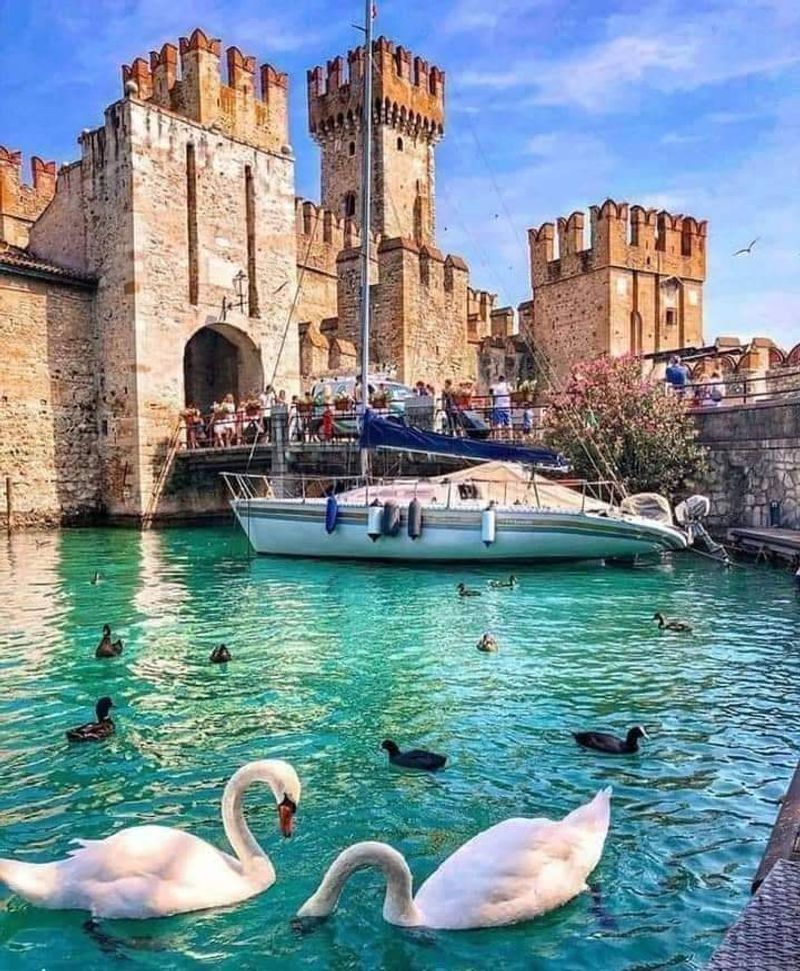
Sirmione occupies a long, narrow peninsula jutting into Lake Garda, surrounded by water on three sides and crowned by a perfectly preserved 13th-century castle that rises directly from the lake. It sounds dramatic because it genuinely is.
Spring strips away the winter quiet and brings back the flower stalls, open terraces, and gentle lake breezes that make this one of northern Italy’s most enchanting stops.
The Scaligero Castle is the first thing most visitors encounter, and walking through its towers and battlements while overlooking turquoise water is a strong start to any trip. Beyond the castle, the peninsula’s narrow streets wind past lemon trees, geranium-draped balconies, and tiny shops selling locally produced olive oil.
The Roman ruins of Grotte di Catullo at the peninsula’s tip offer a fascinating layer of ancient history.
Sirmione is also known for its thermal springs, and several spa facilities offer treatments using the naturally warm sulphurous water — an unexpectedly luxurious bonus. Lake Garda’s mild microclimate means spring arrives earlier here than much of northern Italy, with temperatures comfortable enough for lakeside strolls by late March.
Fewer visitors in spring mean you can actually browse those tiny shops and enjoy a lakeside aperitivo without competing for space. Genuinely special, genuinely relaxed.
Oia, Santorini, Greece
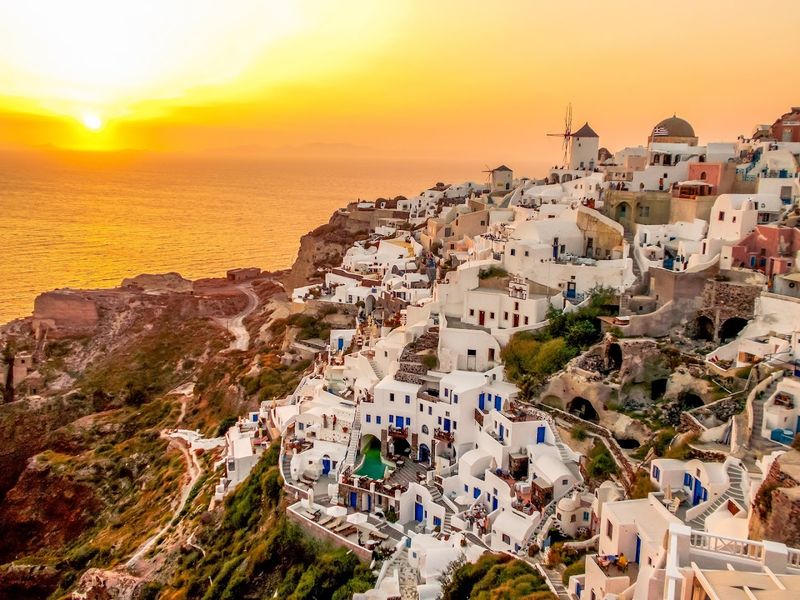
Santorini in spring is a completely different island from the one buried under summer selfie sticks and cruise ship crowds. Oia, the island’s most iconic village, sits perched on the northern tip of the caldera, its white cubic houses and blue domes stacked dramatically above a 300-meter volcanic cliff drop.
April and May offer that picture-perfect scenery with actual breathing room between you and the next visitor.
Bougainvillea begins blooming in early spring, adding splashes of hot pink and purple against all that white and blue. The famous Oia sunset, genuinely one of the most spectacular in the world, can be watched from a quiet spot without the summer-season scramble for position.
Local tavernas are relaxed and welcoming, and prices are noticeably lower than peak season.
Exploring the caldera rim trail between Fira and Oia on foot takes about three hours and rewards hikers with constant views over the volcanic landscape and Aegean Sea. Akrotiri, the remarkably preserved Bronze Age settlement buried by a volcanic eruption around 1600 BCE, is one of the most significant archaeological sites in the Mediterranean.
Spring temperatures hover around a pleasant 18 to 22 degrees Celsius — warm enough to enjoy outdoor dining every evening without needing more than a light jacket.
Kotor, Montenegro
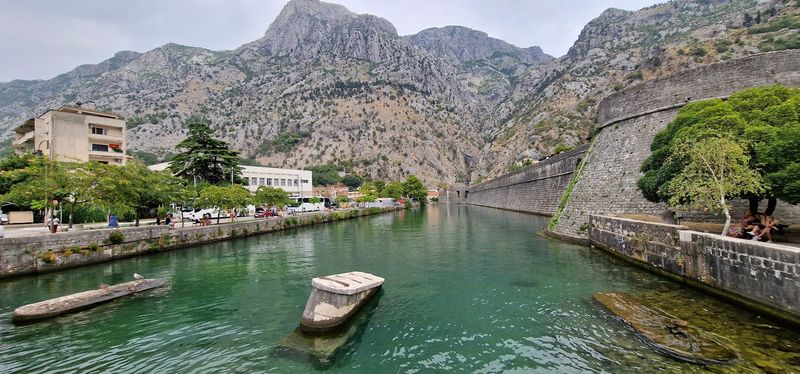
Kotor sits at the end of the deepest fjord-like bay in Southern Europe, hemmed in by limestone mountains so steep and close that the town feels like it was placed there by someone with a very theatrical sense of geography. The medieval old town is enclosed by 4.5 kilometers of ancient walls, and the whole ensemble — mountains, bay, fortress, and terracotta rooftops — creates a view that consistently stops travelers in their tracks.
Spring is the sweet spot for visiting. Temperatures sit comfortably between 15 and 20 degrees Celsius, the surrounding hills are brilliantly green, and the bay waters begin to clear after winter.
Climbing the fortress walls above the town takes about 20 to 30 minutes and delivers panoramic views of the bay that feel wildly disproportionate to the effort required.
Inside the old town, narrow lanes connect Romanesque churches, small museums, and local restaurants serving Adriatic seafood at very reasonable prices. Kotor’s famous feral cats have been part of the town’s identity for centuries, and a small cat museum celebrates their role in local culture.
Montenegro as a whole remains one of Europe’s most affordable and least crowded destinations, making Kotor an exceptional value for travelers who want dramatic scenery, real history, and an authentic atmosphere without the premium price tag.
Srebrenik, Bosnia and Herzegovina
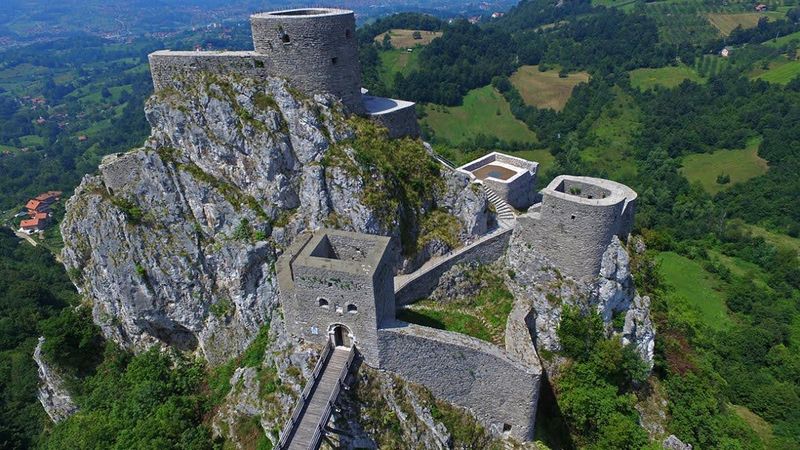
Most travelers have never heard of Srebrenik, which is precisely what makes it so worth visiting. This small town in northeastern Bosnia and Herzegovina sits beneath one of the best-preserved medieval fortresses in the entire Balkans, a dramatic stone stronghold perched on a sheer rocky outcrop that has been guarding the valley below since at least the 14th century.
Spring surrounds the whole scene in vivid green, making it look like something from a fantasy novel.
The fortress is remarkably intact and freely accessible, which means you can explore its towers, walls, and inner courtyards without tour groups or timed entry tickets. Views from the top stretch across forested hills and the Tinja River valley, offering a quiet, unhurried perspective on a landscape that feels entirely off the beaten path.
Wildflowers bloom across the hillside paths leading up to the entrance in April and May.
The town below has a relaxed, genuine character that tourist-heavy destinations often lose. Local cafés serve thick Bosnian coffee alongside homemade sweets, and conversations with residents tend to be warm and welcoming.
Bosnia and Herzegovina remains one of Europe’s most affordable countries, so your travel budget stretches noticeably further here. For travelers craving authentic history, real natural beauty, and zero pretension, Srebrenik is the kind of discovery that makes the whole trip worthwhile.



