Not every great adventure requires blisters, trail mix, and a walking stick. Some of the most breathtaking scenery in America is just a short stroll from a parking lot or a seat on a scenic drive.
Whether you’re traveling with young kids, older relatives, or simply prefer sightseeing over sweating, these national parks deliver jaw-dropping beauty without demanding much from your legs. Pack the sunscreen, grab your camera, and get ready to be seriously impressed.
Yellowstone National Park, Wyoming
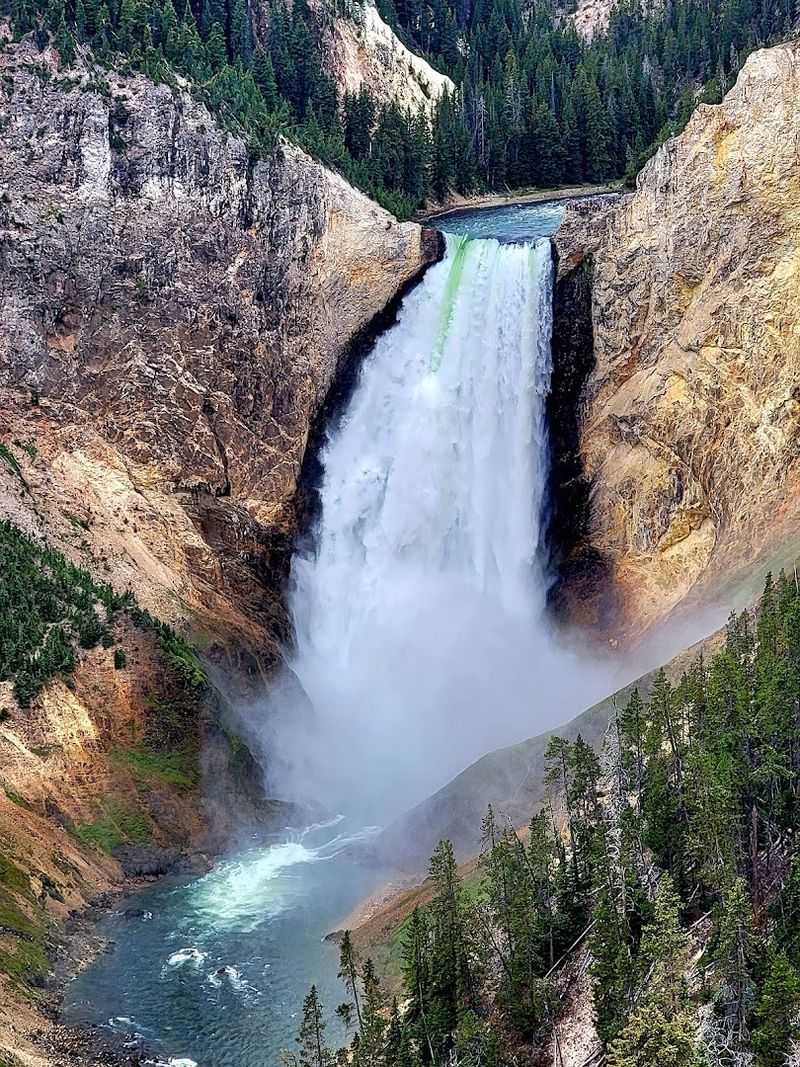
Old Faithful doesn’t care if you’re wearing hiking boots or flip-flops. It erupts on schedule regardless, and you can watch the whole show from a comfortable boardwalk just steps from the parking area.
Yellowstone is basically the overachiever of national parks.
The park’s road network is so well-designed that you can spend days driving between geothermal pools, wildlife hotspots, and jaw-dropping canyon overlooks without breaking a real sweat. Grand Prismatic Spring alone is worth the trip, and the viewing area is an easy walk from the lot.
Bison sightings are practically guaranteed from your car window. The park’s seasonal facilities open throughout the year, making it a flexible destination any time you visit.
Yellowstone proves that nature’s greatest spectacles don’t always require effort, just a full tank of gas and a good pair of sunglasses.
Grand Canyon National Park, Arizona
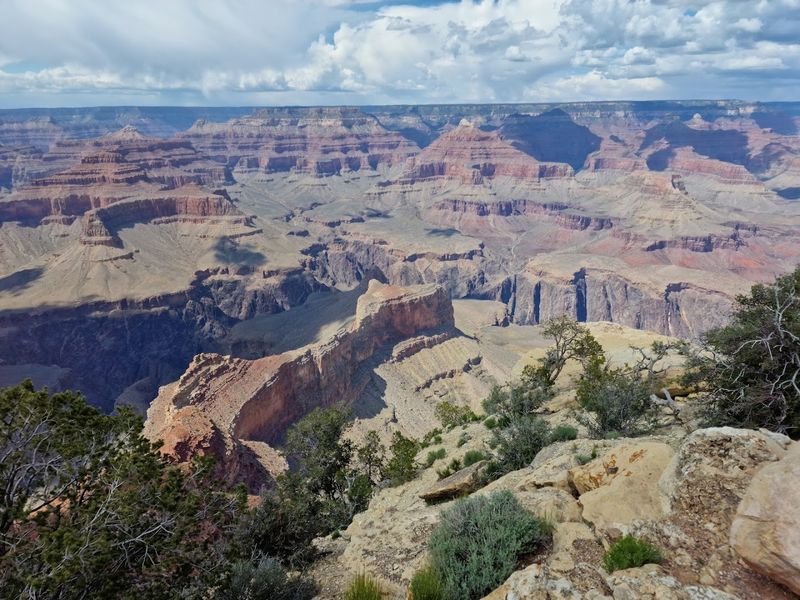
Standing at the rim of the Grand Canyon for the first time is genuinely disorienting. Your brain just refuses to process how something this enormous actually exists.
The good news? You don’t have to hike down into it to feel that way.
The South Rim is loaded with overlooks accessible by car and free shuttle bus. Mather Point, Yavapai Point, and Desert View all deliver staggering panoramas with barely any walking required.
Some spots are literally a few steps from where the shuttle drops you off.
Rangers host free talks at various overlooks throughout the day, adding real depth to what you’re seeing. The South Rim stays open year-round, making it one of the most reliably accessible parks in the country.
Honestly, the hardest part of visiting the Grand Canyon might just be deciding which overlook to photograph first.
Acadia National Park, Bar Harbor, Maine
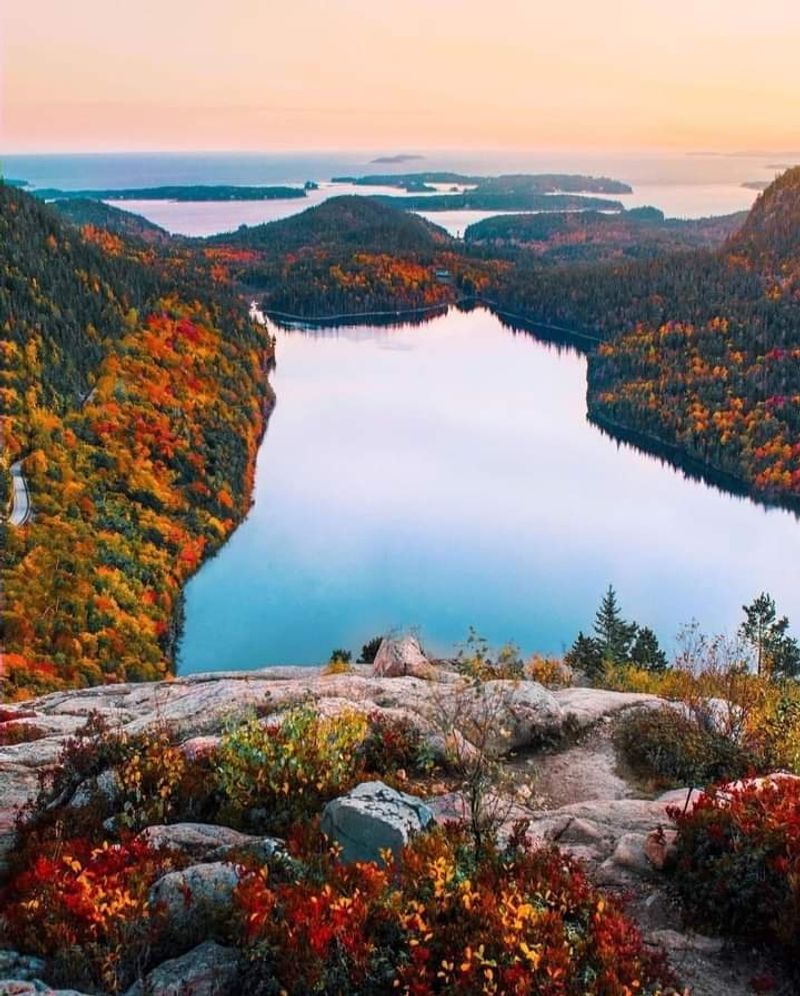
Acadia is the kind of place that makes you feel like you’ve accidentally wandered into a painting. Rocky coastlines, dense forests, and ocean views collide in ways that feel almost unreasonably beautiful.
The famous Park Loop Road is the backbone of the non-hiking experience here, winding past Thunder Hole, Sand Beach, and some of the most dramatic coastal scenery on the East Coast. You can cover the highlights in a single day without ever lacing up a trail shoe.
Cadillac Mountain is the real showstopper. Drive to the summit and you’re standing at one of the first places in the United States to catch the sunrise.
I did this on a foggy October morning and it was still one of the most memorable moments of any trip I’ve taken. Acadia rewards the curious traveler, not just the athletic one.
Zion National Park, Springdale, Utah
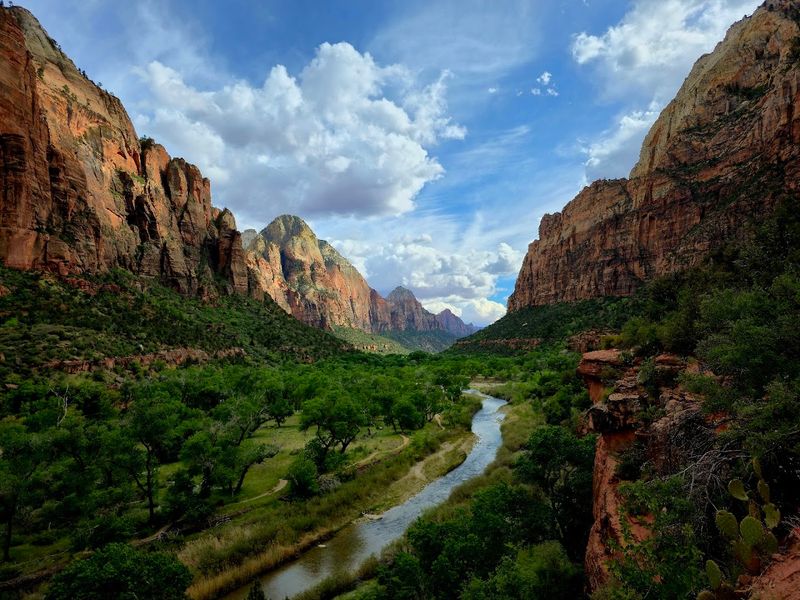
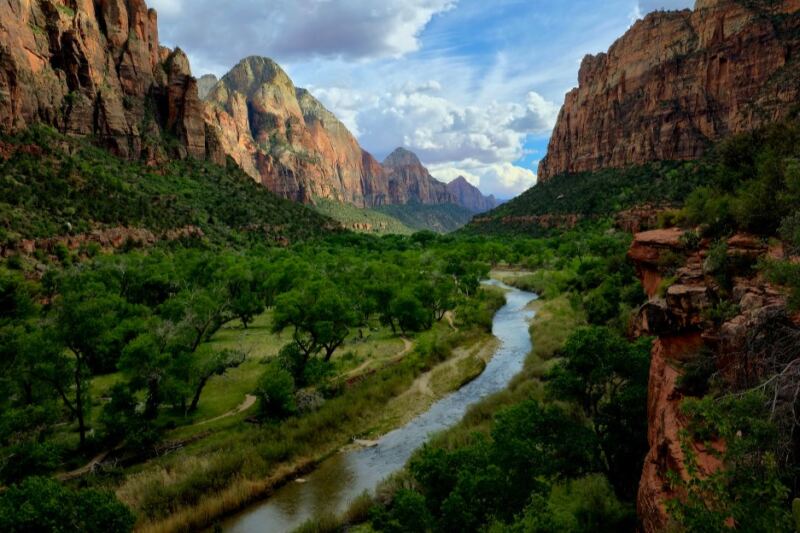
Zion has a reputation for serious hikes like Angels Landing, but most visitors don’t realize how much the park gives away for free, no effort required. The canyon walls are so tall and so vivid that simply riding the park shuttle feels like a cinematic experience.
The free shuttle system runs through Zion Canyon and drops passengers at multiple stops, each offering its own spectacular view. The Zion Canyon Scenic Drive is flanked by towering sandstone cliffs in shades of red, orange, and white that look almost too dramatic to be real.
The Riverside Walk at the Temple of Sinawava is paved, flat, and runs right alongside the Virgin River. It’s one of the most stunning easy walks in any national park.
Even if you never attempt a real trail, Zion will leave you completely convinced you visited one of America’s greatest natural treasures.
Yosemite National Park, California
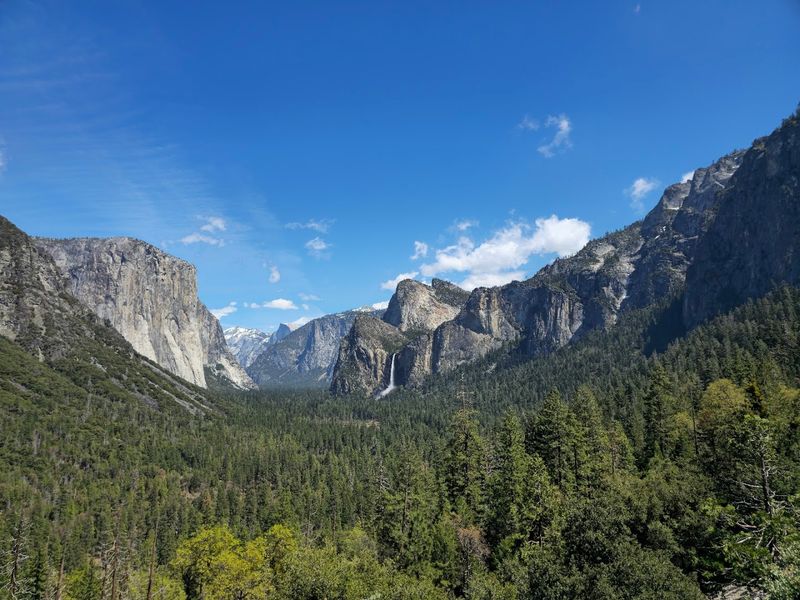
Tunnel View might be the most famous parking lot view in the entire country. You pull through the tunnel, the valley opens up, and suddenly El Capitan, Half Dome, and Bridalveil Fall are all lined up like they’re posing for a photo.
It’s genuinely absurd how good it looks.
Yosemite Valley is packed with easy walks, scenic pullouts, and viewpoints that showcase the park’s biggest landmarks without requiring any serious elevation gain. The Valley Floor Loop is mostly flat and gives you incredible access to meadows and river views.
As of 2026, Yosemite no longer requires entry reservations, which makes spontaneous visits a real option again. Giant sequoias at Mariposa Grove can be reached via a short shuttle ride.
Yosemite is one of those parks that somehow exceeds expectations every single time, no matter how many photos you’ve already seen of it.
Great Smoky Mountains National Park, Gatlinburg, Tennessee
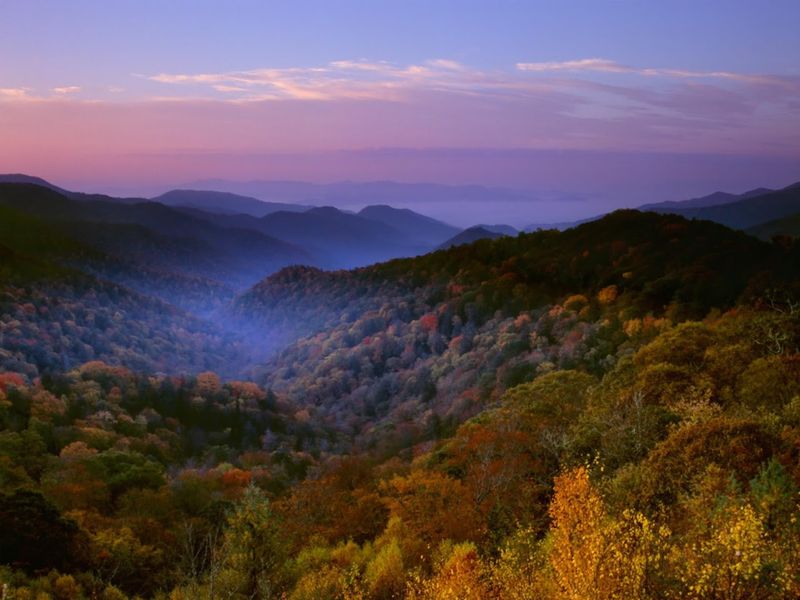
The Smokies earned the title of America’s most visited national park for good reason. There’s something for absolutely everyone here, and most of it doesn’t require a trail map or a pair of hiking poles.
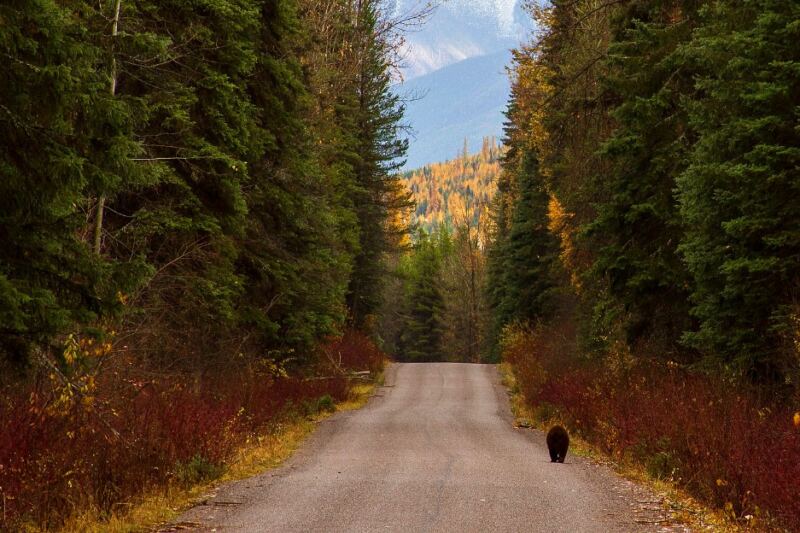
Newfound Gap Road cuts right through the heart of the park, climbing to over 5,000 feet with pullouts offering sweeping mountain views the whole way. Cades Cove Loop Road is a completely different experience, a slow, wildlife-rich drive through a historic valley where deer, black bears, and wild turkeys show up regularly.
The park is free to enter, which is genuinely rare for a place this spectacular. Historic cabins, old mills, and churches are scattered throughout and accessible with minimal walking.
Whether you’re chasing mountain mist or a black bear sighting from the comfort of your car, the Smokies deliver without asking much in return.
Bryce Canyon National Park, Bryce, Utah
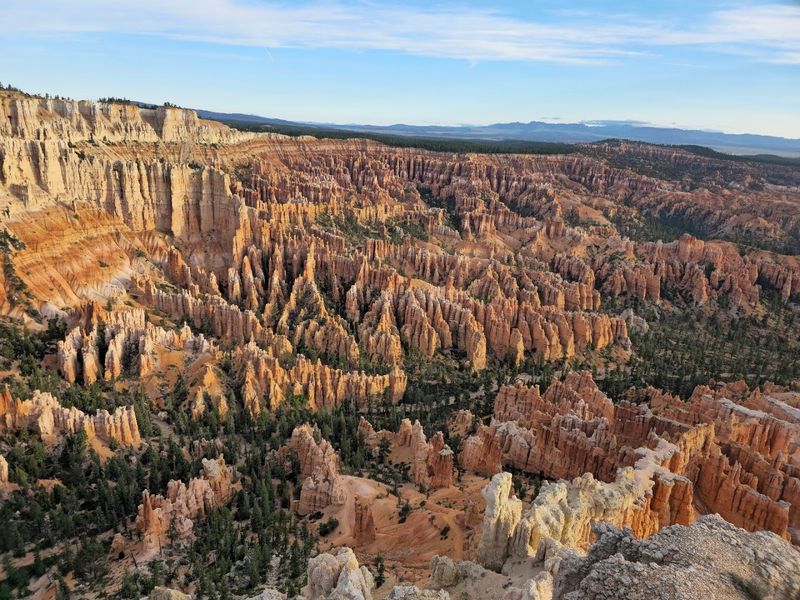
Bryce Canyon looks like someone took a giant scoop of orange sherbet and froze it into thousands of spiky towers. The hoodoos here are unlike anything else on earth, and the best part is you can see them all without hiking down into the canyon.
The main park road connects a series of overlooks, each offering a slightly different angle on the same spectacular landscape. Sunrise Point and Sunset Point are the most popular stops, and both require only a short, flat walk from the parking area.
The views are honestly better from the rim anyway.
Bryce sits at over 8,000 feet in elevation, which means even summer visits stay surprisingly cool. Stargazing here is world-class thanks to minimal light pollution.
A fun fact: Bryce Canyon is technically not a canyon at all, it’s an amphitheater carved by frost and erosion. Nature loves a good plot twist.
Everglades National Park, Homestead, Florida

The Everglades is the only place in the world where alligators and crocodiles live side by side, and you can see both without ever strapping on a hiking boot. That’s a pretty compelling sales pitch right there.
Tram tours at Shark Valley are a wildly popular way to cover the park’s interior, and the narrated commentary makes wildlife spotting feel like a guided safari. Boardwalks at Anhinga Trail and Gumbo Limbo Trail put you face to face with herons, anhingas, and yes, plenty of gators.
Boat tours through the mangrove tunnels add a completely different dimension to the visit. The park also has scenic drives where wildlife viewing from your car is practically guaranteed.
The Everglades rewards patience over athleticism. Slow down, look carefully at the water’s edge, and something will almost certainly be staring back at you.
Arches National Park, Moab, Utah
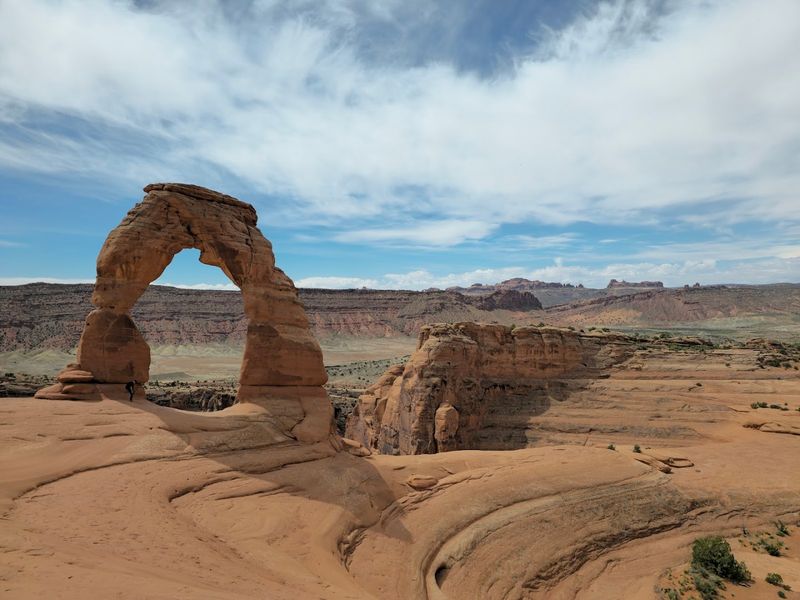
More than 2,000 natural stone arches sit inside this one park. That number sounds made up, but it’s completely real.
Arches National Park packs an almost reckless amount of geological drama into a relatively compact area.
The main park road runs 18 miles through the heart of the park, with overlooks and short walks branching off at regular intervals. Balanced Rock is visible right from a pullout and looks exactly as precarious as it sounds.
The Windows Section offers two massive arches side by side with a short, easy walk between them.
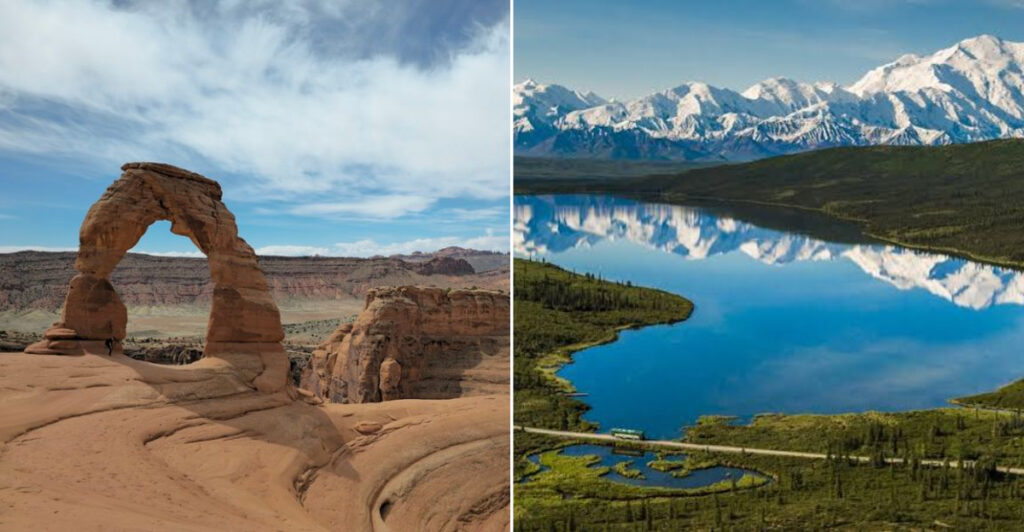
Delicate Arch requires a moderate hike, but the view from the lower viewpoint is still genuinely impressive and requires almost no effort. As of 2026, Arches is not using a timed-entry reservation system, so planning is refreshingly simple.
Come early in the morning for the best light and the smallest crowds.
Rocky Mountain National Park, Estes Park, Colorado
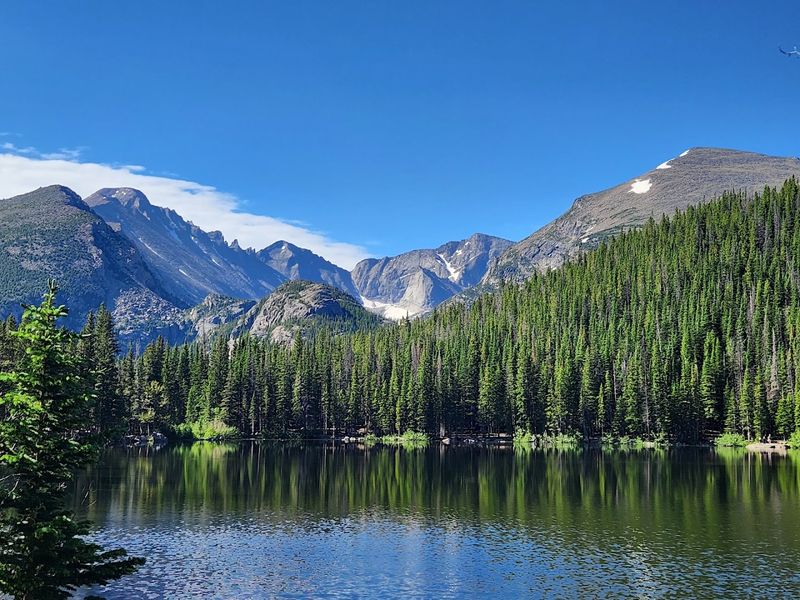
Trail Ridge Road climbs to 12,183 feet above sea level, making it one of the highest paved roads in all of North America. You’re essentially driving through the sky, and the views are exactly as ridiculous as that sounds.
Elk are practically park residents here. During fall, bull elk bugle loudly along the roadsides, and watching them from a pullout is one of those wildlife moments that sticks with you for years.
Moose sightings near Kawuneeche Valley are also common for patient observers.
Many of the park’s overlooks sit just a few steps from parking areas, putting alpine tundra, glacial lakes, and snowcapped peaks within easy reach of any visitor. The Alpine Visitor Center near the road’s highest point is worth a stop for its exhibits and panoramic deck.
Rocky Mountain delivers mountain majesty without demanding mountain legs.
Glacier National Park, West Glacier, Montana
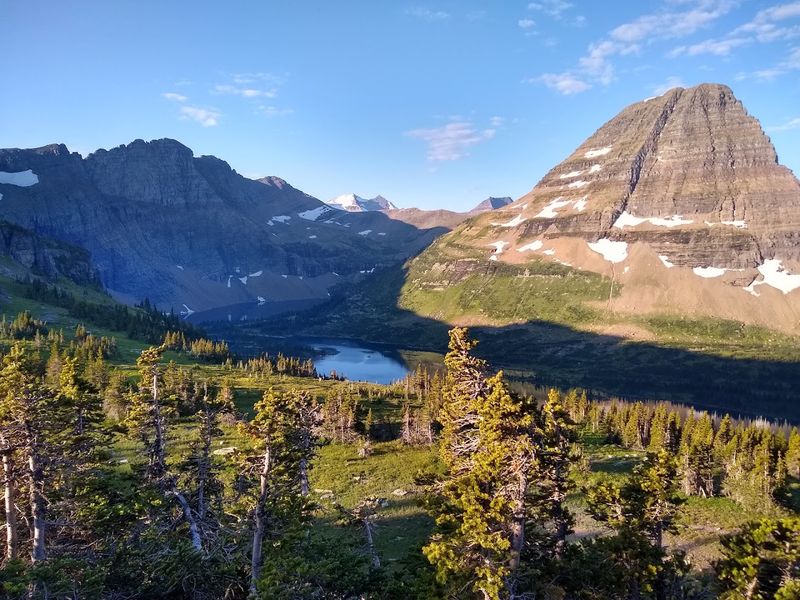
Going-to-the-Sun Road is frequently called one of the most beautiful drives in the world, and after seeing it, you won’t argue. The road cuts through the heart of Glacier, passing waterfalls, hanging valleys, and peaks that look like they belong on a movie poster.
Pullouts are frequent and generous, letting you stop as often as you like without disrupting traffic. Logan Pass, the road’s highest point, has a visitor center and short boardwalk trails with views of wildflower meadows and mountain goats.
The goats are extremely unbothered by tourists, which is delightful.
The park remains operational in 2026, though some areas have modified access rules, so checking ahead is smart. Boat tours on Lake McDonald and St. Mary Lake offer another effortless way to experience the scenery.
Glacier is proof that a road trip and a world-class nature experience can be exactly the same thing.
Olympic National Park, Port Angeles, Washington
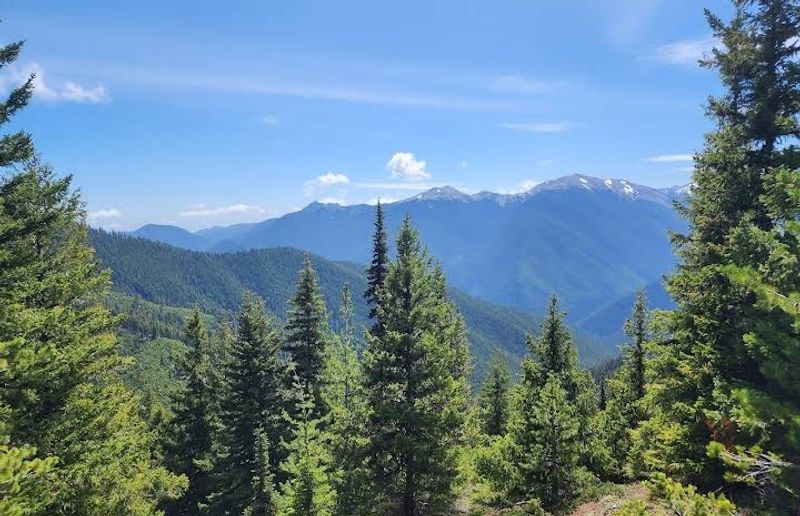
Three ecosystems in one park sounds like a geography textbook boast, but Olympic actually delivers. Mountains, temperate rainforest, and wild Pacific coastline all exist within the same park boundary, which is genuinely kind of wild.
Hurricane Ridge is the mountain highlight and is fully accessible by road. The views from the ridge stretch across the Olympic Mountains and down to the Strait of Juan de Fuca on a clear day.
Deer wander the parking area like they own the place, which, technically, they do.
Rialto Beach and Ruby Beach on the coast are reached by short, flat walks from roadside parking areas. The Hoh Rain Forest has paved and easy walking trails through ancient moss-draped trees that feel like another planet entirely.
Lake Crescent is a stunning glacially carved lake you can admire from the road or from a lakeside lodge with a cup of coffee. Olympic is wonderfully weird in the best way.
Capitol Reef National Park, Torrey, Utah
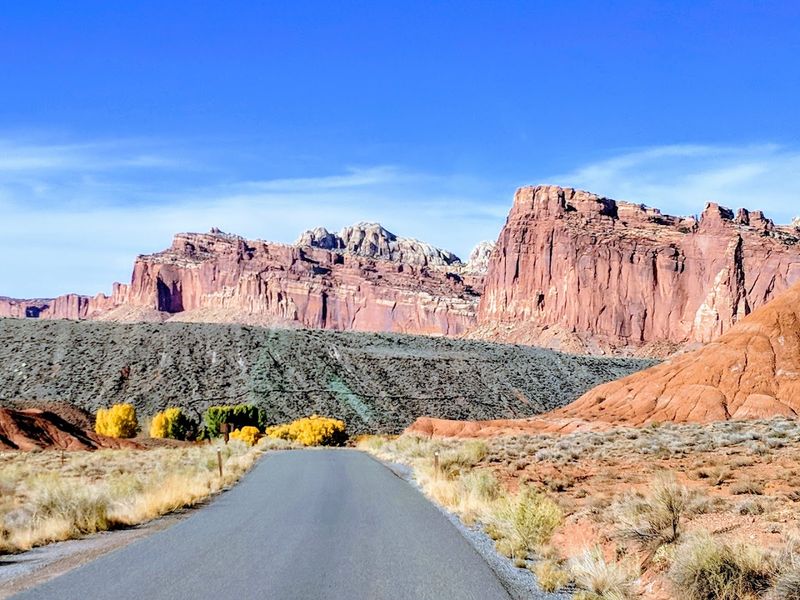
Capitol Reef is Utah’s best-kept secret, and fans of the park would probably prefer it stayed that way. The crowds that swarm Zion and Arches largely skip this one, which means you get equally stunning scenery with a fraction of the chaos.
The Scenic Drive takes you deep into the Waterpocket Fold, a 100-mile wrinkle in the earth’s crust that creates some of the most dramatic and colorful rock formations in the Southwest. Petroglyphs left by the Fremont people are visible from a roadside pullout, no trail required.
The park also contains a historic pioneer orchard where, in season, visitors can pick and eat fruit right from the trees. That’s not something you find at many national parks.
Capitol Reef rewards travelers who take the road less traveled, literally. The Scenic Drive is the main event here, and it does not disappoint.
Shenandoah National Park, Luray, Virginia
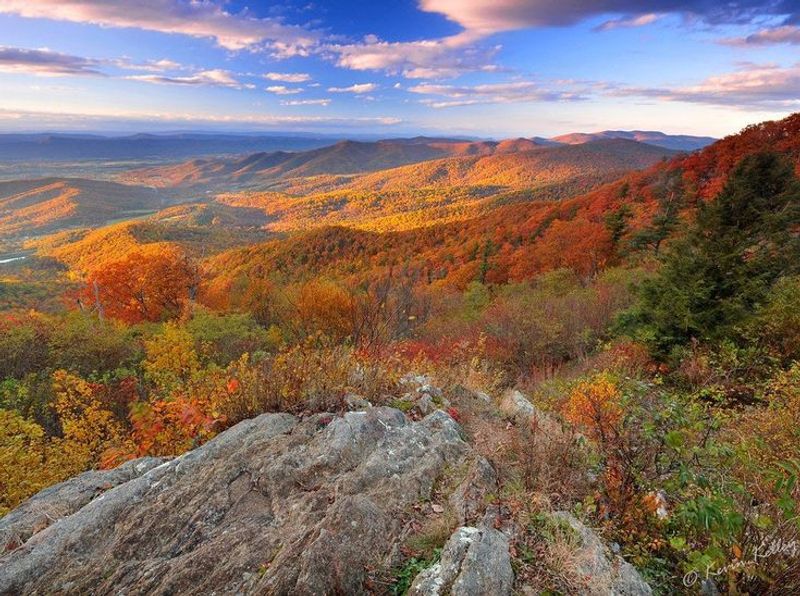
Skyline Drive is one of those roads that makes you want to drive it very, very slowly. Stretching 105 miles along the spine of the Blue Ridge Mountains, it offers 75 named overlooks and enough scenery to fill a week’s worth of postcards.
Fall is the obvious peak season here, when the forest turns every shade of orange, red, and gold simultaneously. But honestly, Shenandoah is stunning in every season.
Spring brings wildflowers, summer delivers lush green canopies, and winter offers clear views through bare trees that you simply can’t get in warmer months.
White-tailed deer are so common along Skyline Drive that slowing down for them becomes a routine part of the drive. Visitor centers at both ends of the road provide great orientation and ranger programs.
A full day on Skyline Drive, stopping at overlooks and eating a picnic lunch, is one of the most satisfying park experiences on the East Coast.
Denali National Park, Denali Park, Alaska
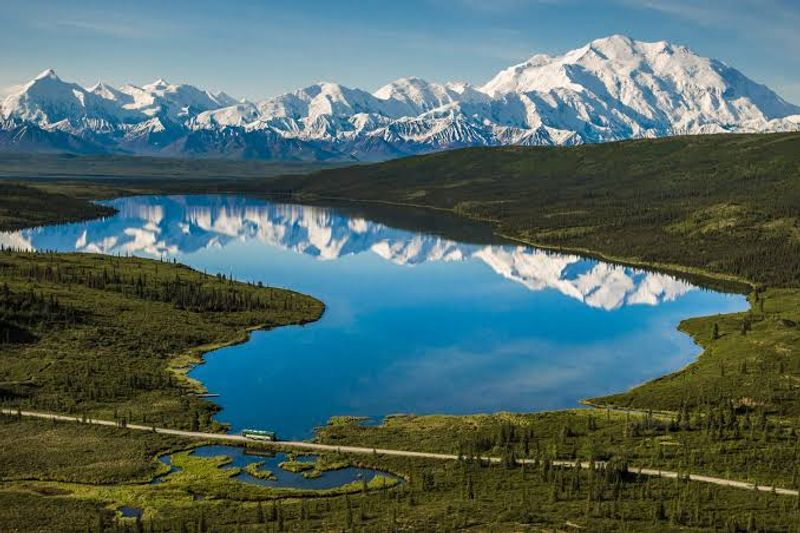
At 20,310 feet, Denali is the tallest mountain in North America, and on a clear day, seeing it from the park road is a full-stop moment. Your jaw drops.
Your camera comes out. You forget whatever you were talking about.
Most visitors experience the park almost entirely from a bus, which is actually the intended way to explore it. Narrated tour buses venture deep into the park’s single road, offering guided wildlife commentary as bears, moose, wolves, and caribou appear along the route.
It’s an honest-to-goodness wildlife safari in Alaska.
Portions of the park road remain affected by the ongoing Pretty Rocks landslide, but visitor services, tours, and the park’s most rewarding experiences continue operating normally. The Denali Visitor Center near the park entrance has excellent exhibits and is an easy starting point.
Alaska’s crown jewel is surprisingly welcoming to travelers who prefer their adventures from a comfortable seat.
Share this story