Erling Haaland grew up in a country that most people only know from dramatic photos of fjords and northern lights. But Norway is far more layered than those images suggest.
From quiet football towns in the southwest to Arctic islands near the top of the world, this Scandinavian nation has a personality that is easy to admire and surprisingly easy to explore. Whether you follow Haaland’s career or simply want to understand the place that shaped him, these 15 facts and destinations give you a real look at what Norway is all about.
Bryne Is The Small Norwegian Town That Helped Shape Erling Haaland
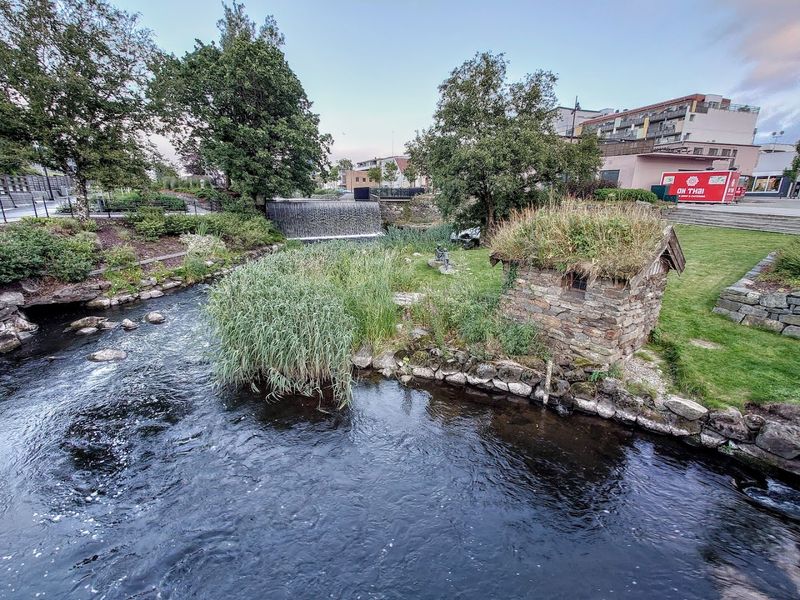
Long before Erling Haaland was filling stadiums across Europe, he was a kid kicking a ball around a small town called Bryne, in the Jæren region of southwestern Norway. Manchester City notes that Haaland joined his hometown club before the age of ten, which tells you a lot about how early his football life began.
Visit Norway recognizes Bryne and the surrounding area as the hometown landscape of one of the sport’s biggest current stars.
Bryne is not a major tourist city, and that is exactly what makes it worth knowing about. The town sits among coastal farmland, quiet streets, and a local football culture that clearly runs deep.
For fans who want to understand where Haaland’s drive came from, Bryne offers a grounded, honest picture of Norwegian small-town life.
It is the kind of place that reminds you that world-class talent does not always come from the biggest cities.
Oslo Shows Norway’s Modern Side With Art, Architecture, And Fjord Views
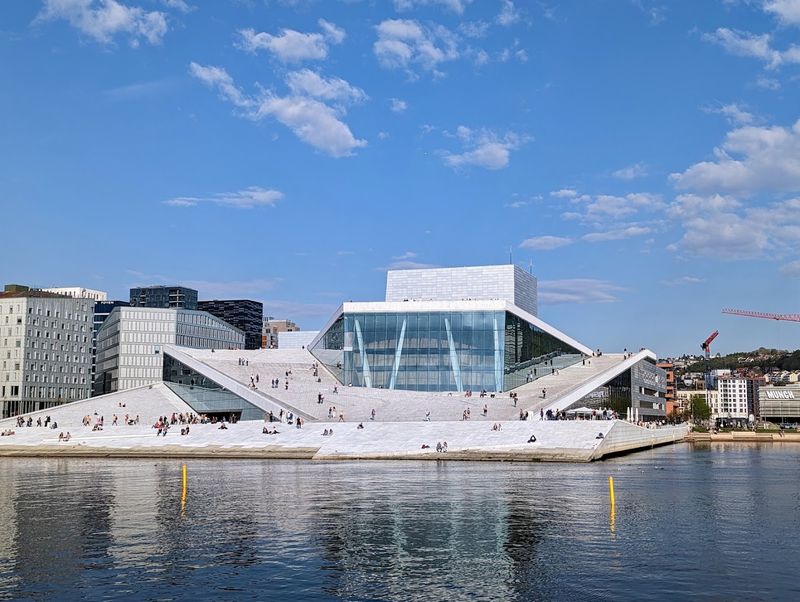
Norway’s capital city surprises a lot of first-time visitors who expect only mountains and fishing boats. Oslo is a genuinely modern Nordic city with waterfront architecture, walkable neighborhoods, major museums, and direct access to the Oslofjord.
The MUNCH museum operates with regular weekly hours, and the National Museum covers art, design, and architecture across multiple centuries under one impressive roof.
What makes Oslo worth including in any Norway overview is how well it balances the urban and the natural. Floating saunas sit in the harbor.
Public spaces along the waterfront are part of everyday life for residents, not just tourist attractions. You can walk between cultural landmarks and fjord views without needing a car.
Oslo proves that Norway is not only wild landscapes and dramatic cliffs. It is also a capital city with real cultural depth, and it makes a logical first stop for anyone visiting the country for the first time.
Bergen’s Bryggen Is One Of Norway’s Most Famous Historic Waterfronts
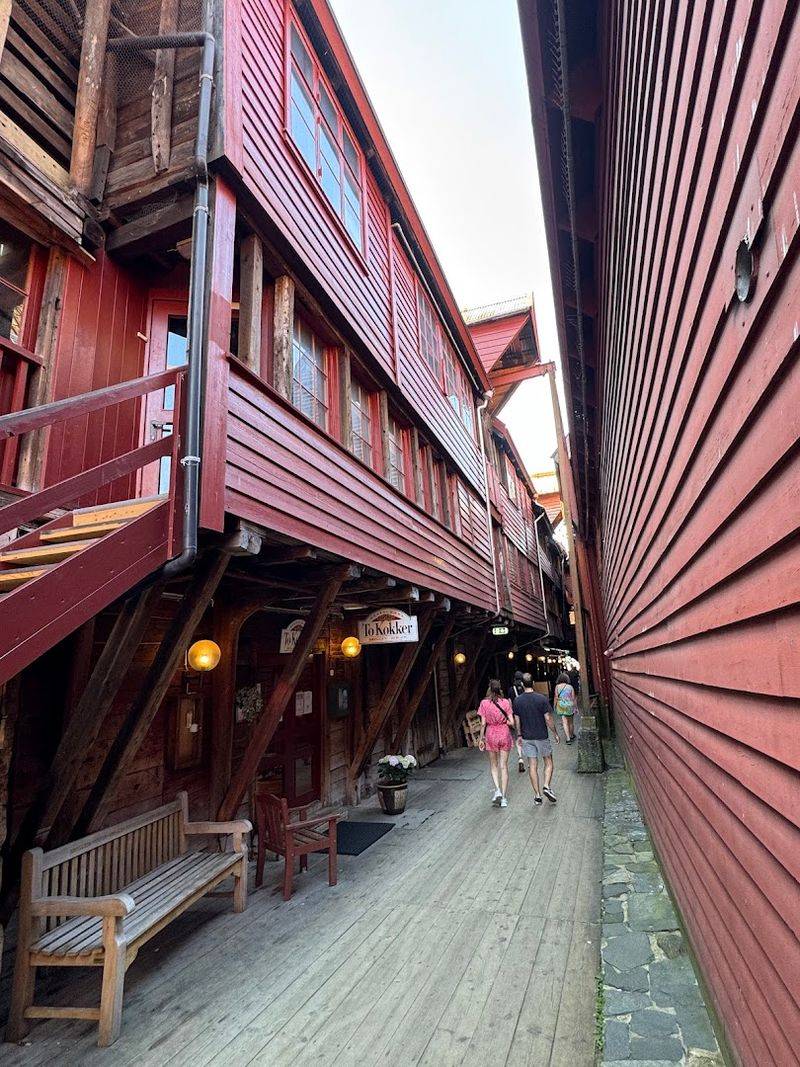
Bergen has a look that is completely its own. The city sits between seven mountains, and its famous Bryggen wharf is made up of old wooden buildings painted in reds, yellows, and oranges that have lined the harbor for centuries.
Visit Bergen promotes Bryggen as a UNESCO World Heritage site, and Visit Norway positions Bergen as a key gateway for fjord tours and cruises heading into western Norway.
The city has a reputation for rain, and locals seem to take that as a point of pride rather than a complaint. That maritime atmosphere actually fits Bergen well, because the whole place is tied to Norway’s seafaring and trading history in a way that feels lived-in rather than staged.
For travelers who want a Norwegian city that looks unmistakably Norwegian, Bergen delivers that feeling quickly. Bryggen is photogenic at any time of year, and the surrounding mountains give the city a scale that Oslo simply does not have.
Geirangerfjord Is One Of The Landscapes People Imagine When They Think Of Norway
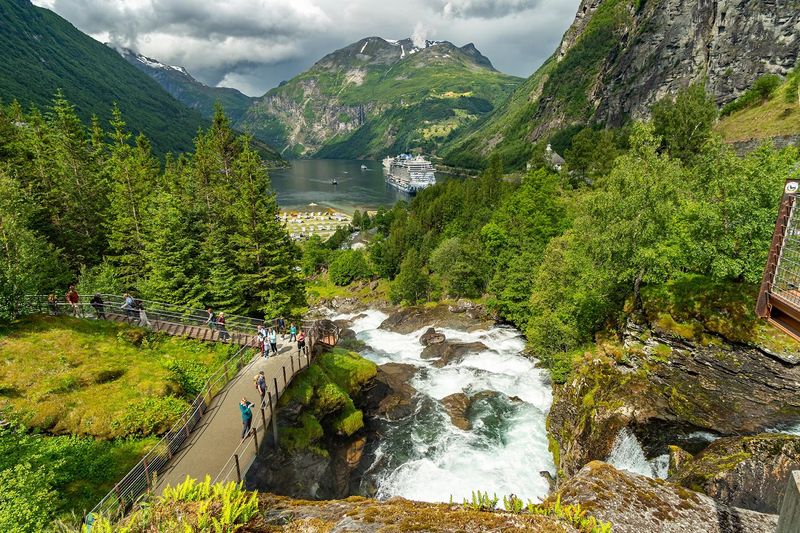
If you close your eyes and picture Norway, there is a good chance you are picturing something that looks like Geirangerfjord. Steep cliffs drop straight into deep blue water.
Waterfalls thread down the rock faces. Tiny settlements cling to ledges that seem almost unreachable.
It is the kind of scenery that photographs cannot fully communicate.
Geirangerfjord is part of the West Norwegian Fjords UNESCO World Heritage listing, shared with Nærøyfjord. UNESCO describes these fjords as among the world’s longest and deepest, and among the most scenically outstanding fjord landscapes anywhere on earth.
Norway’s Best currently offers a one-hour fjord cruise experience through Geirangerfjord for visitors who want to see the landscape from the water.
Getting out on the fjord rather than viewing it only from above changes how you understand the scale of the place. The cliffs look even taller from a boat, and the waterfalls sound louder than they appear in any travel image.
Nærøyfjord Is One Of Europe’s Most Dramatic Fjord Journeys
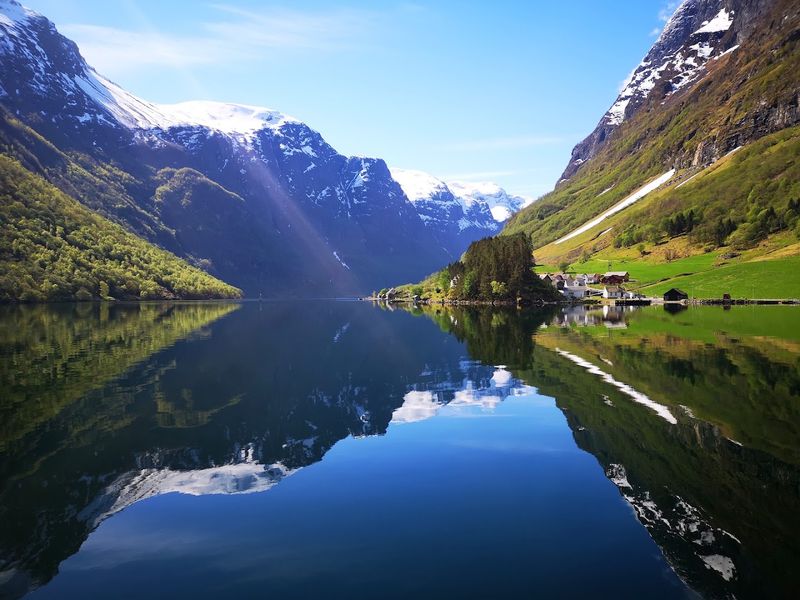
Nærøyfjord holds a different kind of drama compared to its more famous neighbor. Where Geirangerfjord feels wide and grand, Nærøyfjord is narrow, almost enclosed, with mountain walls that rise so steeply on both sides that the sky above you becomes a thin strip of light.
Visit Norway describes the boat trip through Nærøyfjord as one of Europe’s most dramatic fjord journeys.
A year-round sightseeing boat route runs between Gudvangen, Aurland, and Flåm, and Norway’s Best currently sells a two-hour fjord cruise between Gudvangen and Flåm for travelers who want a bookable option. That practical detail matters, because it means this is not just a landscape to admire from a lookout.
You can actually travel through it on the water.
For a listicle about Norway, Nærøyfjord earns its place because it gives readers a specific, accessible way to experience the fjords rather than simply staring at them from a parking area.
The Flåm Railway Turns Norway’s Mountains Into A Train Ride
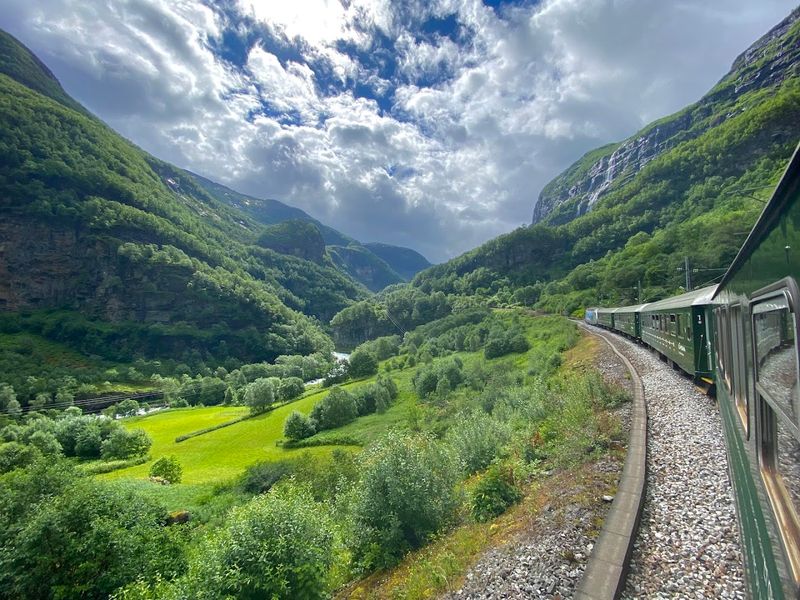
Not every Norway experience requires hiking boots and a high fitness level. The Flåm Railway offers some of the country’s most dramatic mountain scenery from the comfort of a train seat, and that accessibility is a big part of what makes it so consistently popular.
The official railway site describes it as a unique journey between fjord and mountain, and the experience runs all year round.
Norway’s Best currently offers a two-hour return journey on the railway through fjord and mountain scenery, which makes planning straightforward. The route covers a significant elevation change over a short distance, passing waterfalls and steep valley walls that would take serious effort to reach on foot.
For families, older travelers, or anyone who simply wants the view without the physical demand, the Flåm Railway is one of Norway’s most genuinely accessible bucket-list experiences. It fits naturally into a broader fjord itinerary that could also include Nærøyfjord or Geirangerfjord.
Preikestolen Is The Cliff View That Made Norway Famous Online
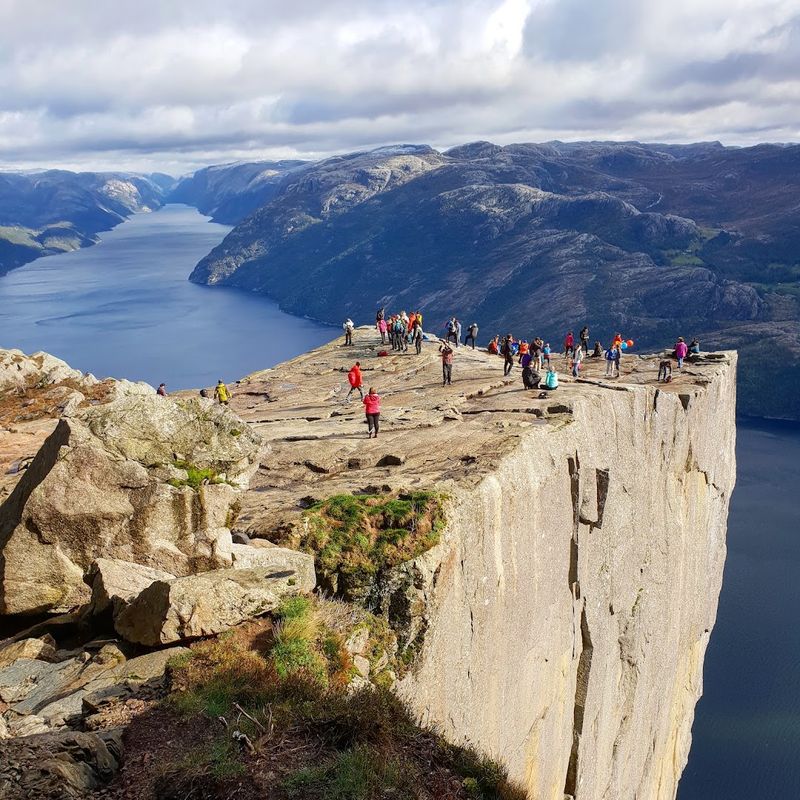
Preikestolen, known internationally as Pulpit Rock, is the kind of viewpoint that stops conversations. The flat-topped cliff sits 604 meters above Lysefjord in the Ryfylke region, and the view from the edge is exactly as striking as every photo suggests.
The official Preikestolen organization maintains the hiking trail and manages parking at the site.
Getting there requires a hike, and the trail is not always easy depending on conditions. Weather in the Norwegian mountains can shift quickly, and responsible travel matters here more than at most destinations.
The official site recommends checking mountain conditions before heading out, which is practical advice worth passing along to any reader planning the trip.
What Preikestolen adds to a Norway article is an adventurous angle that does not require inventing any hype. The cliff genuinely earns its reputation.
For Haaland fans visiting the Stavanger and Rogaland region, Preikestolen sits in the same general area as Bryne, making it a natural pairing on any southwestern Norway itinerary.
Trolltunga Is Norway’s Famous Troll’s Tongue Rock Formation
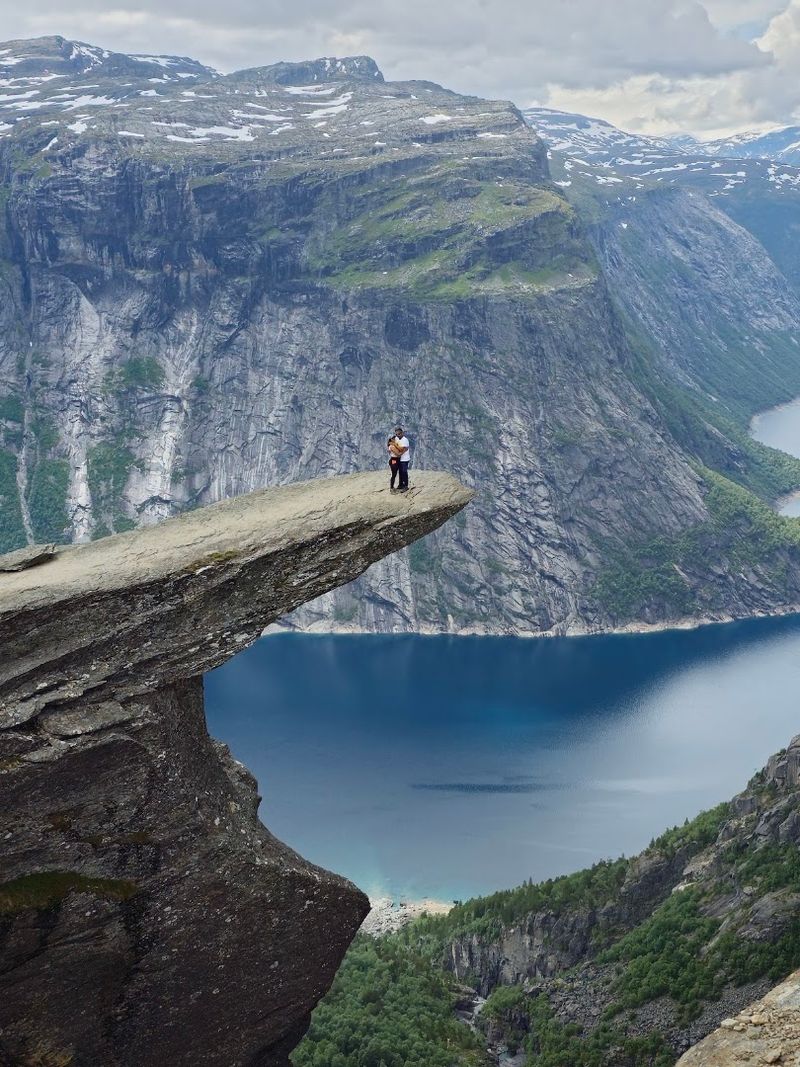
Trolltunga translates to Troll’s Tongue, and the rock formation earns that name. A horizontal shelf of rock juts out dramatically above a mountain lake at 1,180 meters above sea level, and the view from the tip is one of Norway’s most photographed moments.
The official Trolltunga site is direct about what the hike involves: it is long, demanding, and takes between seven and twelve hours depending on the starting point.
Experienced hikers can tackle the route independently during the summer season, which runs from June 1 through September 30. Outside that window, the official site recommends guided hikes because of changing mountain conditions.
That honesty is worth repeating for any reader who assumes Trolltunga is a quick afternoon outing.
What makes this a strong listicle entry is not just the visual payoff but the planning it requires. Trolltunga rewards preparation, and knowing that upfront makes the experience far safer and more enjoyable for everyone who attempts it.
Lofoten Looks Like A Fishing Village Dream At The Edge Of The Arctic
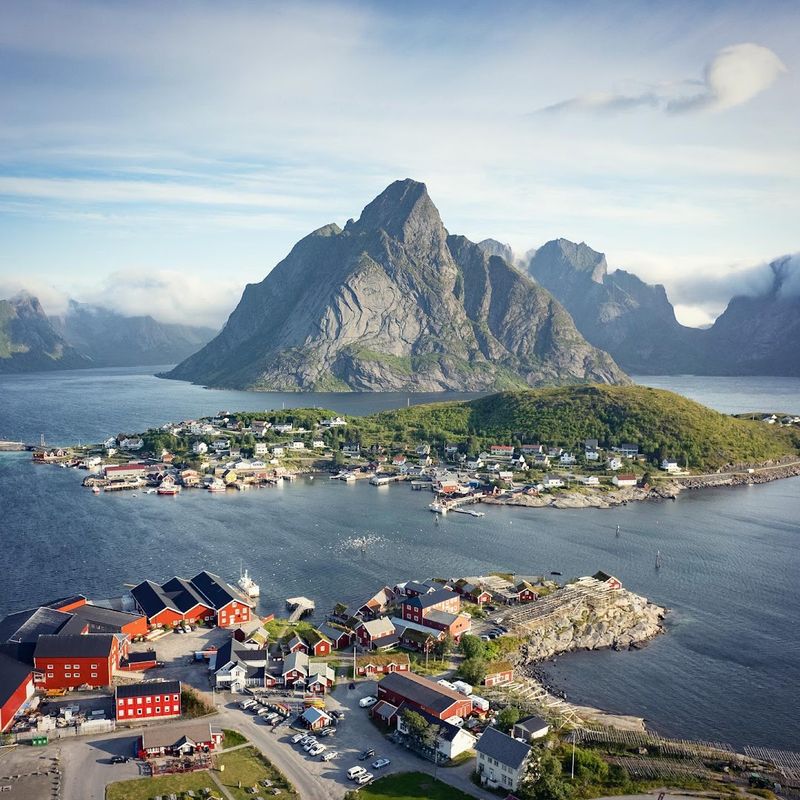
Few places in Norway look quite like Lofoten. The islands sit above the Arctic Circle, and the combination of jagged mountain peaks, small fishing villages, and sandy beaches is genuinely striking.
Visit Lofoten, the official travel guide, describes the islands as a destination for activities, experiences, accommodation, museums, food, and four-season travel, which tells you this is not a one-note destination.
Getting there is more straightforward than the remote setting suggests. Visit Norway notes that travelers can reach Lofoten through regional airports and ferry or road connections from Bodø and Evenes.
That means Lofoten is accessible without requiring a major expedition, which matters for readers who might otherwise assume the islands are too far off the beaten path.
Lofoten works especially well for travelers who want small villages, mountain backdrops, fresh seafood, and the feeling of being genuinely far from urban life. It also happens to be one of the better places in Norway to see the northern lights during winter months.
Tromsø Is One Of Norway’s Best Northern Lights Cities
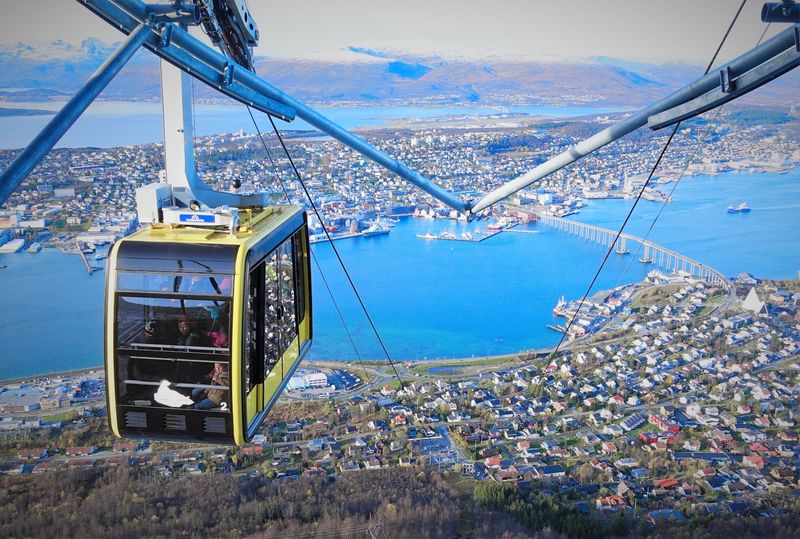
Tromsø sits well above the Arctic Circle, which makes it one of Norway’s most reliable cities for seeing the northern lights between late autumn and early spring. But the city has plenty to offer even when the aurora is not visible.
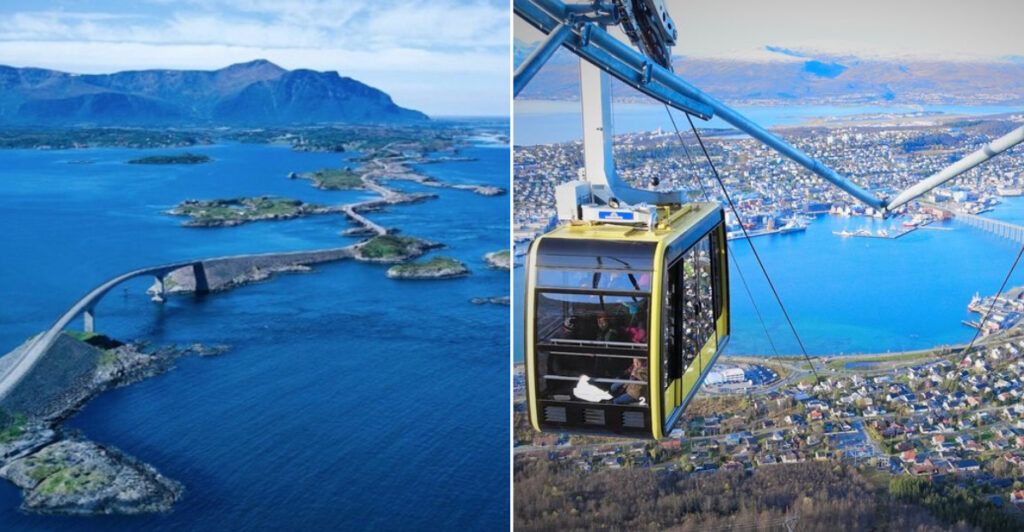
Fjellheisen, the Tromsø cable car, takes visitors from Tromsdalen up to Storsteinen at 421 meters above sea level in just four minutes, delivering panoramic views of the city, the surrounding fjords, and the mountains beyond.
The cable car’s official page lists operating hours from 9:00 to 24:00, which means the late evening window is perfect for aurora viewing from a high vantage point. That combination of easy access and dramatic scenery makes Tromsø one of the more practical Arctic city experiences in Norway.
For readers who want an Arctic adventure without needing specialist equipment or remote logistics, Tromsø offers a solid entry point. The city has restaurants, museums, and infrastructure that make an Arctic trip feel manageable rather than overwhelming.
North Cape Hall Takes Visitors To The Top Of Europe
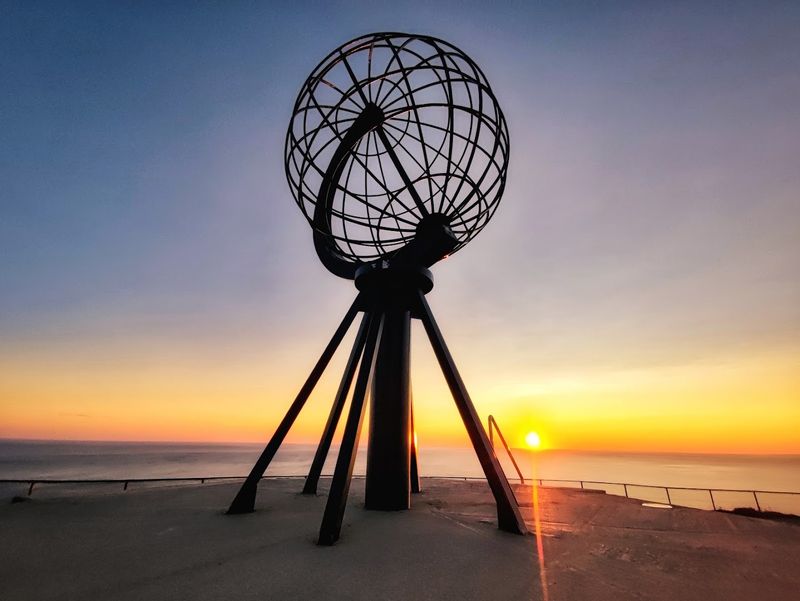
Standing at North Cape feels like reaching a genuine edge of the world. The visitor center, Nordkapphallen, sits at 71 degrees north on a cliff above the Arctic Ocean, and the official site describes it as a place with exhibitions, food, drinks, and Arctic views.
The official opening-hours page confirms that North Cape Hall is open every day of the year, though hours change by season.
The famous globe sculpture at the cliff’s edge has become one of Norway’s most recognized landmarks, partly because it communicates the location so clearly. There is no ambiguity about where you are standing when you see it.
The midnight sun in summer and the polar night in winter give the site a completely different character depending on when you visit.
North Cape is a long way from Bryne and Oslo, but that distance is part of the point. Norway stretches far, and North Cape is the symbolic reminder of just how far north this country actually reaches.
Svalbard Shows Norway’s Wild High Arctic Side
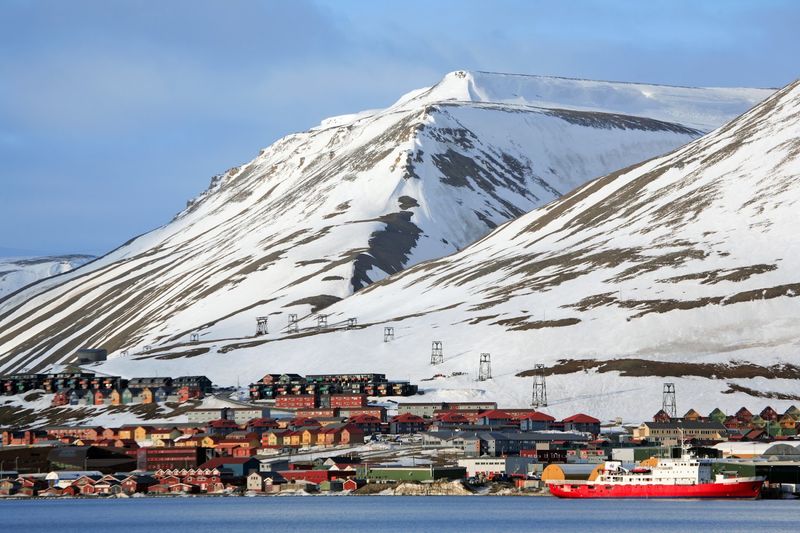
Svalbard is not part of mainland Norway, but it is firmly part of the Kingdom of Norway, and it represents the country’s most extreme Arctic territory. Visit Svalbard describes it as the true Arctic, with year-round High Arctic experiences that include tundra, glaciers, dramatic mountains, extreme light variations between seasons, and wildlife that ranges from polar bears to reindeer and seabirds.
The official visitor information also emphasizes that travelers need to understand weather conditions, safety guidelines, and responsible travel rules before arriving. That is not a small detail.
Svalbard requires real preparation, and most wildlife excursions operate through organized guided trips for safety reasons.
What Svalbard adds to a Norway article is a sense of scale. The country goes from a quiet football town like Bryne in the southwest all the way to an Arctic archipelago near 78 degrees north.
That range is genuinely remarkable, and Svalbard is the clearest proof of how much geographic territory Norway actually covers.
The Fram Museum Tells Norway’s Polar Exploration Story
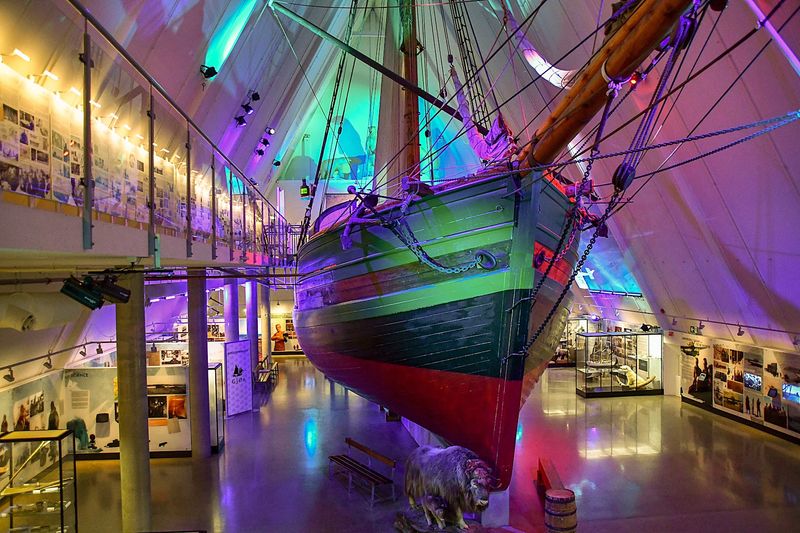
Norway has a deep connection to polar exploration, and the Fram Museum in Oslo is one of the best places to understand that history. The museum is built around the Fram itself, the actual ship used in Norwegian polar expeditions to both the Arctic and Antarctic.
The official visitor page confirms the museum is open every day, all year, which makes it a reliable stop for any Oslo itinerary.
The Fram holds the record for sailing further north and further south than any other wooden vessel in history. That fact alone gives the museum a strong hook.
Visitors can board the ship and walk through its interior, which communicates the scale and the conditions of those expeditions in a way that reading about them never quite does.
For families and history readers especially, the Fram Museum offers something concrete and tangible. While the Viking Ship Museum remains temporarily closed for renovation, the Fram Museum is a currently operating alternative that delivers real historical depth.
Vigeland Park Is Oslo’s Always-Open Outdoor Sculpture Landmark
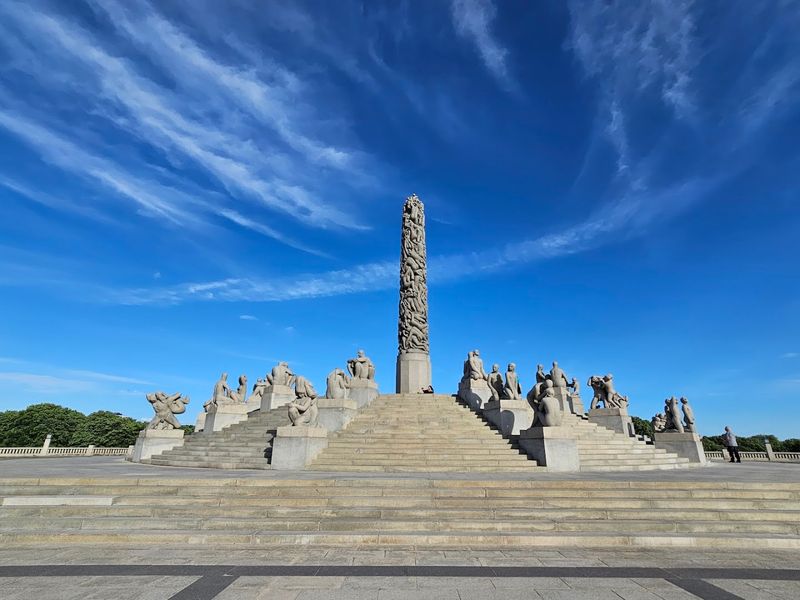
Gustav Vigeland spent decades creating the sculptures that fill Vigeland Park in Oslo, and the result is one of the most unusual public spaces in any European capital. The park contains more than 200 bronze, granite, and cast iron sculptures, all created by a single artist.
The official Vigeland Museum and Park site lists the park as always open, which means there is no ticket to buy and no closing time to worry about.
The Monolith, a towering column carved from a single block of granite and covered in intertwined human figures, is the park’s centerpiece. It took workers fourteen years to carve based on Vigeland’s model.
The surrounding sculptures cover themes of human life, relationships, and aging in a way that feels philosophical without being difficult to appreciate.
Vigeland Park works well as a free, walkable addition to any Oslo day. It also proves that Norway’s cultural identity goes well beyond its natural scenery, which is a point worth making in any article about the country.
The Atlantic Road Turns A Norwegian Drive Into A Coastal Adventure
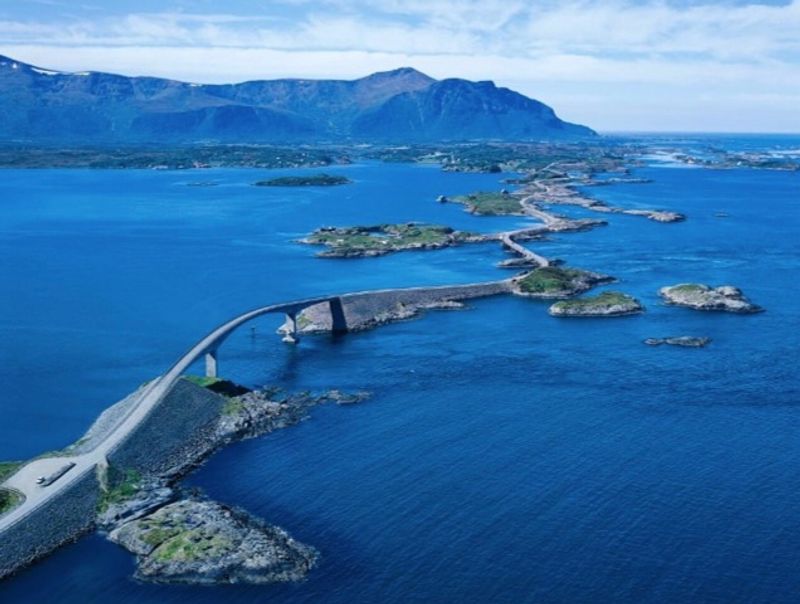
The Atlantic Road, known in Norwegian as Atlanterhavsvegen, is the kind of drive that makes you slow down on purpose. Visit Norway describes it as a National Scenic Route in the northwest and notes that it is frequently named one of the most beautiful and impressive roads in the world.
A separate Visit Norway listing adds that the road opened in 1989, is toll free, and runs between Bud and Kristiansund along a stretch of coastal scenery filled with bridges, islands, and open ocean views.
The road crosses eight bridges over a series of small islands and skerries, and during stormy weather the waves crashing over the roadway have become an attraction in their own right. Clear days offer a completely different experience, with calm water and wide coastal views that stretch to the horizon.
As a closing item for a Norway article, the Atlantic Road works well because it gives readers a road-trip angle. No fjord cruise ticket required.
Just a car, a coastal route, and one of Norway’s most visually rewarding drives.
Share this story