 Unearth The Voyage
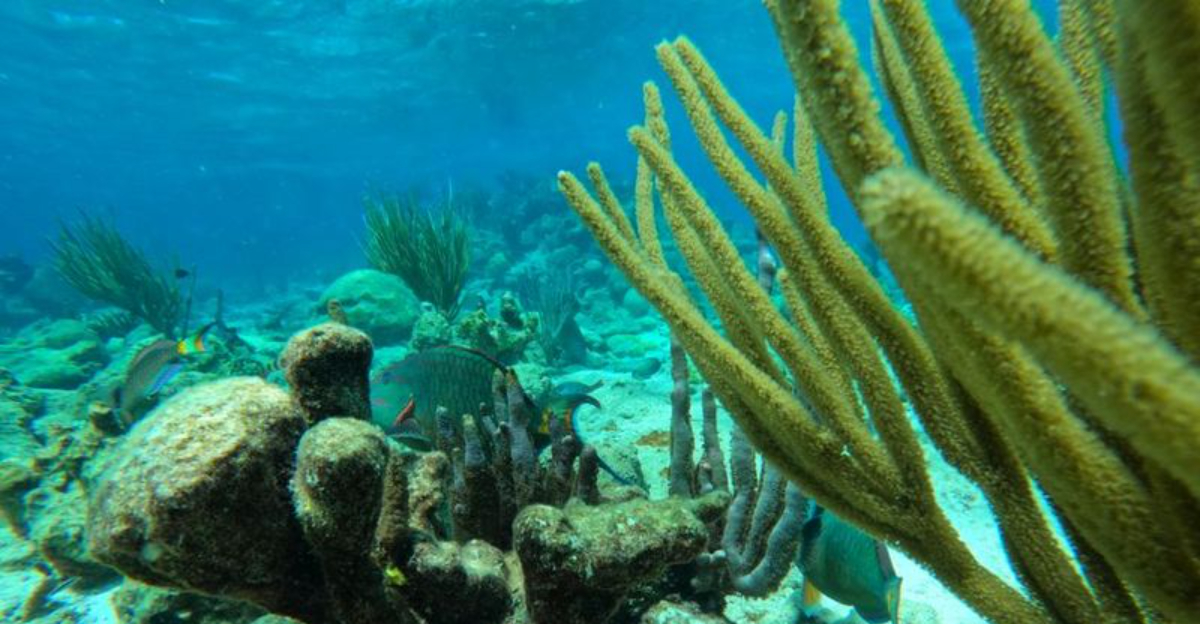
Some of the most breathtaking underwater worlds on the planet are hiding right here in the United States. From Hawaii’s coral-packed bays to Florida’s crystal-clear springs, there’s no shortage of jaw-dropping spots to strap on a mask and explore.
Whether you’re a first-timer or a seasoned snorkeler, these destinations promise views that’ll make you forget you’re even holding your breath. Pack your fins — the water is calling.
Hanauma Bay — Oʻahu, Hawaii
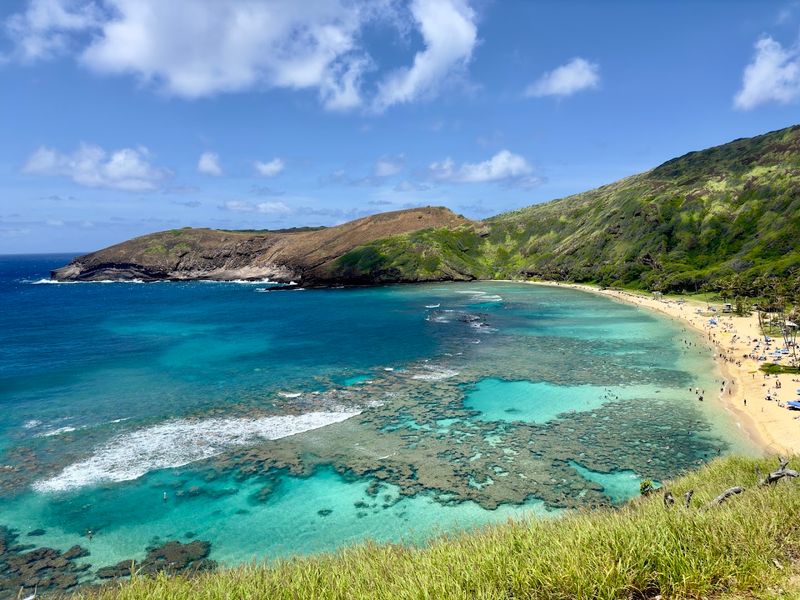
Every local on Oʻahu has a Hanauma Bay story, and most of them start with the words “I couldn’t believe what I was seeing.” This protected marine embayment on the southeast coast of Oʻahu is shaped like a crescent and cradled by ancient volcanic walls. The setting alone earns it a spot on every must-visit list.
The water here is a shade of emerald green that almost looks fake in photos — but it’s completely real. Coral gardens stretch out beneath the surface, packed with parrotfish, butterflyfish, and the occasional sea turtle drifting past like it owns the place.
Visibility is often excellent, making it easy for beginners to spot marine life without even trying hard.
Conservation rules limit daily visitors, so the reef stays healthy and the water stays clear. You’ll need to watch an educational video before entering the water, which is a small price for such a stunning experience.
Arrive early to snag a good spot, because word has gotten out about how spectacular this bay truly is. Snorkeling here feels less like a hobby and more like stepping inside a living aquarium.
John Pennekamp Coral Reef State Park — Florida Keys
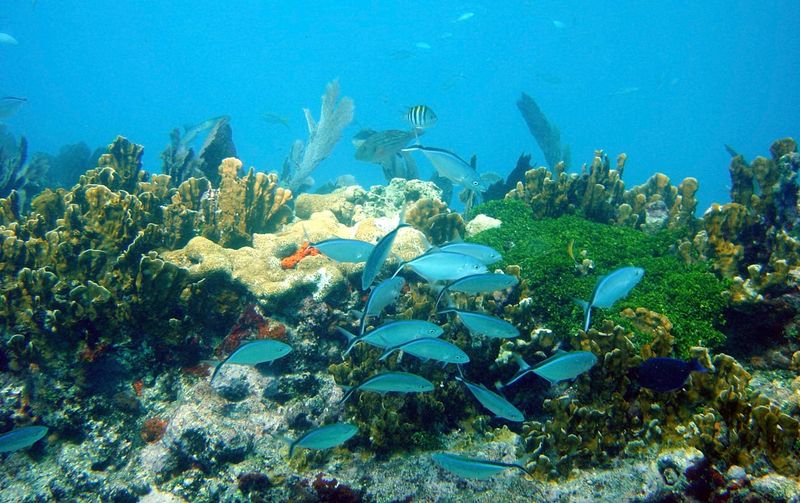
Fun fact: John Pennekamp Coral Reef State Park was the very first undersea park established in the entire United States, opening back in 1963. That legacy of protection shows every time you slip beneath the surface near Key Largo.
The reefs here look like they’ve been curated by someone with exceptional taste in marine life.
Shallow reef formations make this spot incredibly snorkeler-friendly. Schools of tropical fish dart through brain coral and elkhorn formations, while sea turtles cruise past at their own unhurried pace.
The water clarity is consistently impressive, letting you see everything without straining your eyes through murky water.
The biggest crowd-pleaser? The Christ of the Abyss statue — a nine-foot bronze figure standing on the seafloor with arms raised toward the surface.
Snorkelers can float above it and peer down at this striking underwater landmark that’s been there since 1965. It’s equal parts eerie and awe-inspiring.
Boat tours run regularly from the park, and gear rentals are available on-site, making this one of the easiest reef snorkeling experiences you can have without booking a flight to the tropics. Truly a Florida Keys gem.
Dry Tortugas National Park — Florida
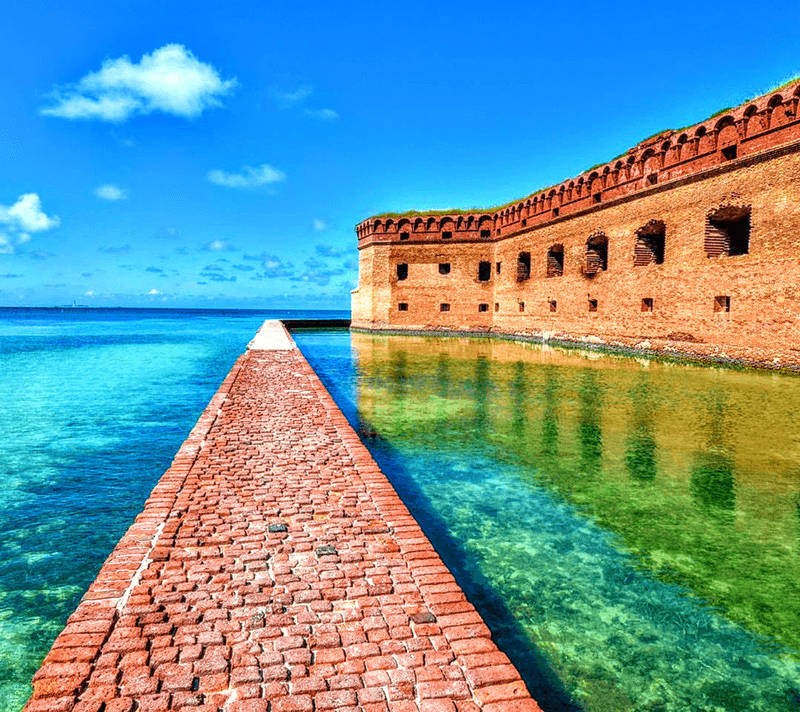
Getting to Dry Tortugas National Park takes a little effort — you’ll need a ferry or seaplane — but the moment you see that impossible shade of blue water surrounding Fort Jefferson, you’ll stop caring about the journey entirely. This remote national park sits about 70 miles west of Key West, and the isolation is exactly what keeps the water so pristine.
Snorkeling directly around Fort Jefferson’s moat walls is one of the more surreal experiences available in U.S. waters. Tropical fish weave through the brickwork of a 19th-century Civil War-era fort while rays glide across sandy patches below.
Historic shipwrecks scattered nearby add an adventurous twist to the underwater exploration.
The coral gardens surrounding the islands host a remarkable variety of marine life, including hawksbill sea turtles, nurse sharks, and vibrant reef fish. Visibility frequently stretches beyond 60 feet, giving snorkelers a wide, clear window into this thriving ecosystem.
Camping overnight on the island means you can snorkel at sunrise when the water is calmest and the light hits the reef in the most magical way possible. Dry Tortugas rewards those willing to make the trip with experiences that are genuinely hard to top.
Key Largo & The Florida Keys Reef Tract — Florida
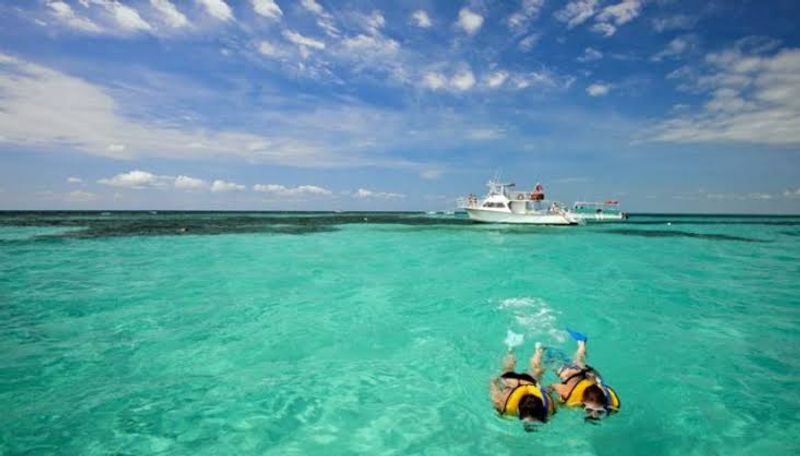
Stretching over 120 miles along Florida’s southern edge, the Florida Keys Reef Tract holds the title of the largest barrier reef in the continental United States. That’s not a small distinction — this reef system is a living, breathing underwater world unlike anything else on the East Coast.
Key Largo sits right at the northern gateway to all of it.
Coral walls draped in sea fans, brain coral formations the size of small cars, and seagrass beds sheltering juvenile fish create a layered, endlessly interesting underwater landscape. Snorkelers who take guided boat tours get access to the most spectacular sections of the reef, where visibility and marine diversity are at their peak.
Spotted eagle rays and loggerhead sea turtles regularly make appearances.
The variety of snorkeling spots here is hard to match. Some locations offer calm, shallow reef tops perfect for relaxed paddling, while others feature deeper coral formations for more adventurous explorers.
Several outfitters in Key Largo offer half-day and full-day snorkeling tours, many departing from John Pennekamp State Park. The combination of accessibility, biodiversity, and sheer underwater beauty makes the Florida Keys Reef Tract one of the most rewarding snorkeling regions anywhere in the country.
Plan to stay more than one day.
Molokini Crater — Maui, Hawaii
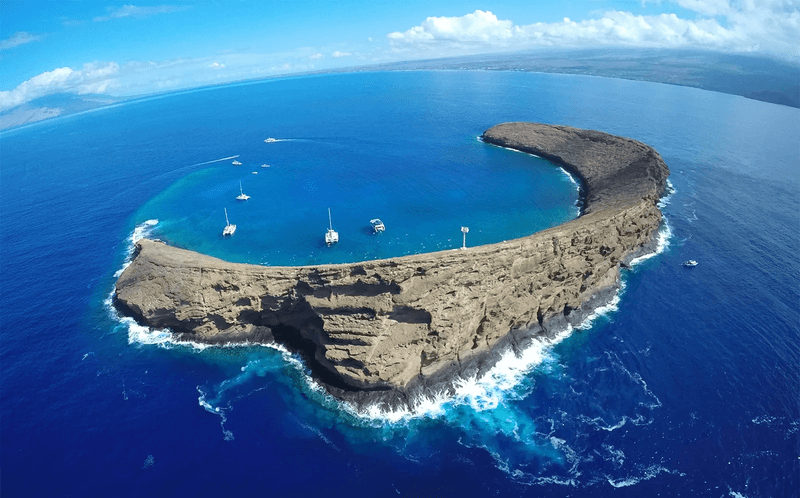
Molokini Crater is basically a natural snorkeling stadium built by a volcano. The crescent-shaped rim of this partially submerged crater juts out of the ocean about three miles off Maui’s southwest coast, forming a sheltered lagoon with some of the clearest water in all of Hawaii.
Visibility regularly exceeds 100 feet on calm days.
The inside of the crater is protected from open-ocean currents, which means calmer water and easier snorkeling for all skill levels. Vivid coral formations blanket the crater walls, and the fish life here is extraordinary — over 250 species have been recorded in and around Molokini.
Hawaiian cleaner wrasses, moorish idols, and triggerfish are just a few of the regulars you’ll encounter.
Since Molokini is a state marine life conservation district, fishing is prohibited and the ecosystem has remained impressively healthy. Most visitors reach the crater by boat tour departing from Maalaea Harbor, with early morning trips offering the calmest conditions and best visibility.
Some tours also include the chance to snorkel along the outside of the crater wall, where pelagic fish and even white-tip reef sharks occasionally patrol. Molokini consistently ranks among Hawaii’s top snorkeling experiences — and the rankings are well-earned.
Hideaway Beach (Pali Ke Kua) — Kauai, Hawaii
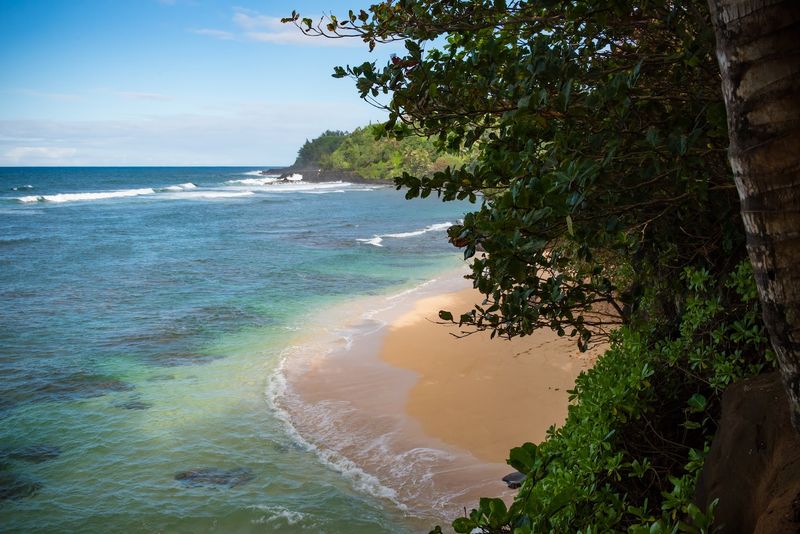
You actually have to earn Hideaway Beach — the access path involves a steep trail down dramatic sea cliffs, and that little obstacle keeps the crowds thin and the experience wonderfully intimate. Tucked beneath Kauai’s rugged north shore near Princeville, this spot rewards the effort with some of the most scenic snorkeling on the island.
The coral reef just offshore is healthy and packed with activity. Reef fish dart through formations while sea turtles surface for air before gliding back down with remarkable calm.
The water is typically clear and shallow near shore, making it approachable for snorkelers who prefer to stay close to the beach while still seeing plenty of action below.
Conditions here are best during summer months when the north shore swells die down and the water settles into a glassy, inviting calm. Winter swells can make the water rough and snorkeling unsafe, so checking surf reports before heading down that trail is genuinely important.
The dramatic green cliffs rising above the beach create an almost theatrical backdrop that makes every photo look professionally staged. Locals know this spot well, which is a pretty reliable endorsement.
If you’re visiting Kauai and want a snorkeling experience that feels discovered rather than packaged, Hideaway Beach delivers exactly that.
Poʻipū Beach Park — Kauai, Hawaii
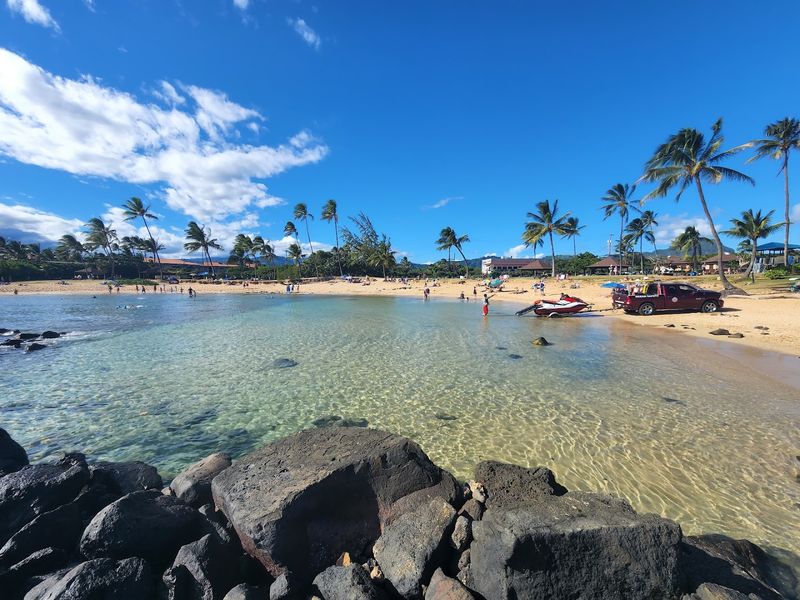
Kauai’s south shore gets more sunshine than anywhere else on the island, and Poʻipū Beach Park takes full advantage of that fact. The water here is warm, reliably calm, and so clear you can spot fish from the shoreline before you even put your mask on.
It’s the kind of beach that makes you want to cancel your afternoon plans indefinitely.
The reef just offshore is accessible directly from the beach — no boat required. Snorkelers regularly encounter Hawaiian green sea turtles resting on the sandy bottom or nibbling algae off the rocks, which is always a highlight.
Tropical fish including wrasses, surgeonfish, and goatfish cruise through the coral formations in impressive numbers.
Poʻipū also happens to be one of the most family-friendly snorkeling spots on Kauai. The entry is gradual, the currents are manageable, and the marine life shows up reliably rather than requiring you to search.
The beach itself is well-maintained with restrooms, showers, and gear rental options nearby. One amusing local detail: Hawaiian monk seals occasionally haul out on the sand here, and park rangers rope off the area to give them space.
Sharing the beach with an endangered seal while planning your next snorkel session is a pretty uniquely Kauai kind of afternoon.
La Jolla Cove — California
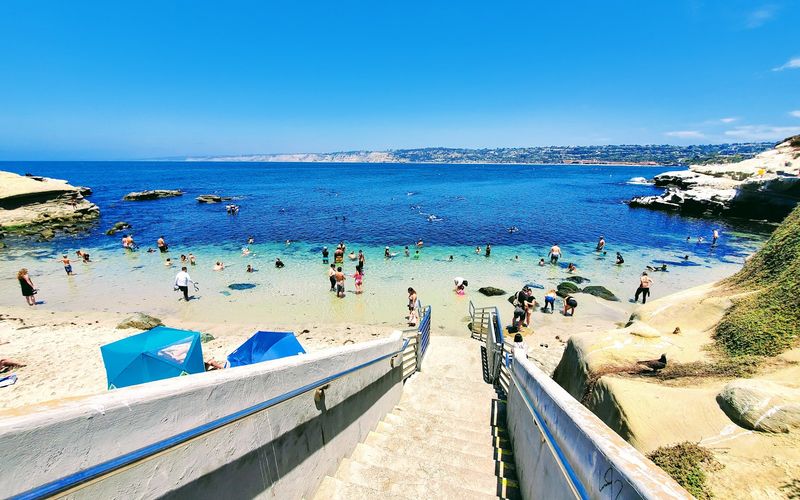
There’s a particular moment at La Jolla Cove when a California sea lion zips past your mask at full speed and you realize this is absolutely nothing like snorkeling anywhere else. Nestled inside the San Diego-La Jolla Underwater Park Ecological Reserve, this protected cove has been a marine sanctuary since 1971, and the wildlife acts like it knows it’s safe here.
The garibaldi fish — California’s official state marine fish — are impossible to miss. Their brilliant orange color practically glows against the kelp and rocky formations below.
Leopard sharks rest calmly on sandy patches, and bright purple sea urchins cluster in rocky crevices throughout the cove. The underwater scenery has a distinctly Pacific character that feels completely different from tropical reef snorkeling.
Water temperatures are cooler than Hawaii or Florida, typically ranging from the upper 50s to low 70s Fahrenheit depending on the season. A thin wetsuit makes the experience significantly more comfortable and extends your time in the water.
The cove entrance involves some rocky terrain, so water shoes are a smart call. Summer months bring better visibility and calmer conditions.
La Jolla Cove manages to be genuinely wild while sitting minutes from one of San Diego’s busiest tourist areas — a combination that never gets old.
Lover’s Cove — Catalina Island, California
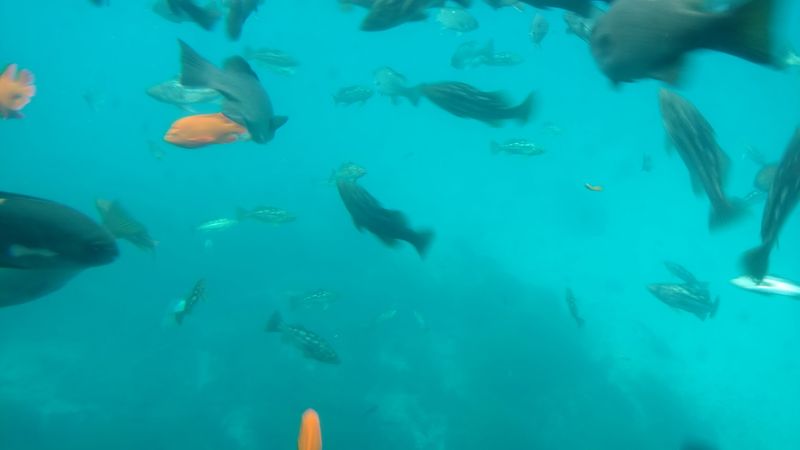
Catalina Island sits just 22 miles off the California coast, but the moment you slip into the water at Lover’s Cove, it feels like a completely different world. Part of the protected Catalina Underwater Park, this cove has been a no-fishing zone since 1965, and the marine life density reflects decades of undisturbed growth.
The fish here are so used to snorkelers that some will practically swim into your hands.
The kelp forest is the real showstopper. Towering strands of giant kelp rise from the rocky seafloor and sway in slow, hypnotic patterns with the current, filtering sunlight into golden beams that illuminate the water column.
Garibaldi, sheephead, and calico bass weave through the kelp in a constant, choreographed flow that’s endlessly watchable.
The cove’s protected position keeps the water relatively calm and clear, with visibility often reaching 30 to 40 feet on good days. Water temperatures here are cool — wetsuits are recommended for most of the year.
Catalina Island is reachable by ferry from Long Beach, San Pedro, or Dana Point, with multiple daily departures. The ferry ride itself is part of the fun, often accompanied by dolphins bow-riding alongside the boat.
Lover’s Cove is a Pacific snorkeling experience that absolutely punches above its weight.
Biscayne National Park — Florida
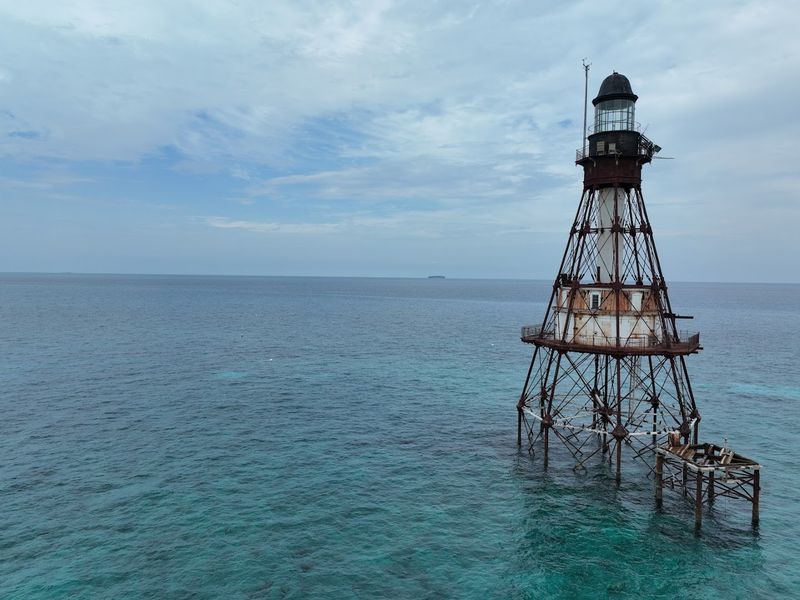
Most people don’t realize that just 21 miles south of downtown Miami lies one of America’s most impressive marine parks. Biscayne National Park protects part of the world’s third-largest coral reef system, along with mangrove shorelines, historic shipwrecks, and some seriously blue water that looks more Caribbean than South Florida.
The Maritime Heritage Trail connects several historic shipwrecks that snorkelers can explore with underwater plaques marking points of interest along the way. Coral formations shelter queen angelfish, French grunts, and parrotfish in vivid abundance.
The reef system here is genuinely thriving compared to many heavily trafficked reef systems, partly because reaching the best spots requires a boat and some planning.
The park’s visitor center is located in Homestead, and most snorkeling tours depart from Convoy Point. National Park Service-authorized concessionaires offer guided snorkeling tours that take care of the logistics and bring you to the best reef sections.
Elliott Key and Adams Key offer additional snorkeling spots for those exploring by private boat. Summer months offer the warmest, calmest conditions, but the reefs are worth visiting year-round.
Biscayne proves that extraordinary underwater scenery doesn’t require a long-haul flight — sometimes it’s hiding just past the edge of a major city, waiting for you to notice it.
Crystal River — Florida
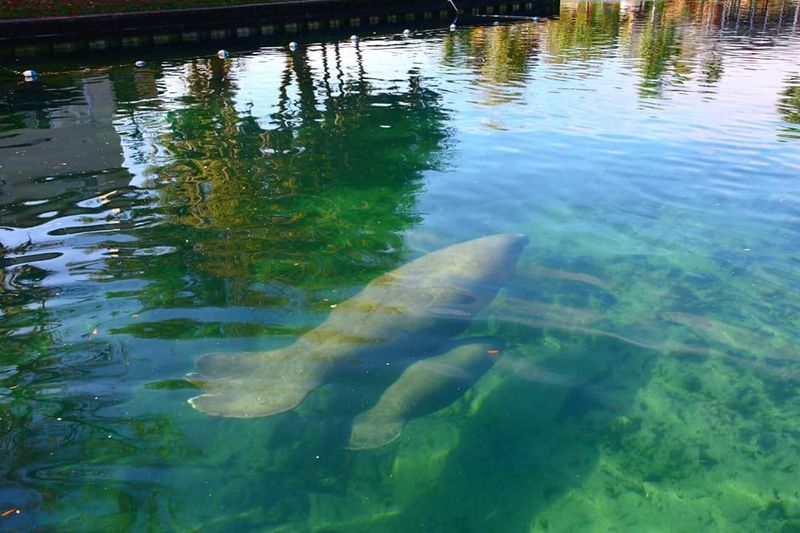
Nowhere else in the United States can you legally and responsibly snorkel alongside wild manatees in their natural habitat — and Crystal River, Florida, is exactly where that remarkable experience happens. Fed by natural springs that maintain a constant 72-degree temperature, these waters attract hundreds of West Indian manatees every winter seeking warmth from the chilly Gulf waters outside.
The spring-fed clarity of Crystal River is something else entirely. Visibility in the spring areas can reach 30 feet or more, giving snorkelers an unobstructed view of these massive, slow-moving animals as they rest on the sandy bottom or drift lazily through the water.
Watching a manatee that weighs over 1,000 pounds move with such effortless grace is genuinely humbling.
Responsible snorkeling guidelines here are taken seriously. Swimmers are required to maintain a passive, non-chasing approach and are not permitted to touch the manatees.
Guided eco-tours operating from Crystal River are the best way to experience this encounter safely and legally, with naturalist guides helping you spot manatees while keeping interactions stress-free for the animals. The peak season runs from November through March when manatee numbers are highest.
Crystal River offers something no tropical reef can — a freshwater snorkeling experience so unusual that it feels genuinely unlike anything else on this list.
Buck Island Reef National Monument — U.S. Virgin Islands
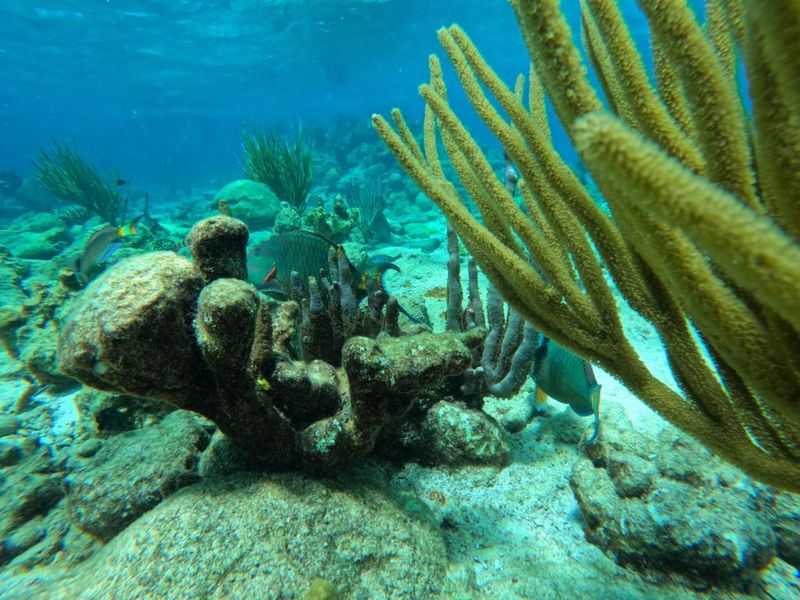
Off the northeastern coast of St. Croix, Buck Island Reef National Monument protects one of the finest examples of elkhorn coral reef ecosystems in the entire Caribbean — and it sits squarely within U.S. territory. The monument was established by President Kennedy in 1961, and the reef has been carefully protected ever since.
That long history of conservation shows in the reef’s remarkable health.
The underwater snorkel trail is one of the monument’s signature features. Marked signs guide snorkelers through a section of reef teeming with hawksbill sea turtles, spotted eagle rays, and dozens of tropical fish species that pop against the white sandy bottom and vivid coral formations.
The trail makes the experience accessible and educational without feeling like a theme park attraction.
Buck Island is reachable only by boat from Christiansted or Green Cay Marina on St. Croix, with authorized charter operators running regular tours. The boat ride takes about 30 minutes and the surrounding water views are spectacular on their own.
Snorkeling conditions are typically excellent, with calm, clear Caribbean water and a reef that rewards slow, attentive exploration. Whether you’re floating above the trail or free-exploring the outer reef sections, Buck Island delivers the kind of snorkeling that earns a permanent place in your memory.
Worth every bit of the effort to get there.
Coki Beach — St. Thomas, U.S. Virgin Islands
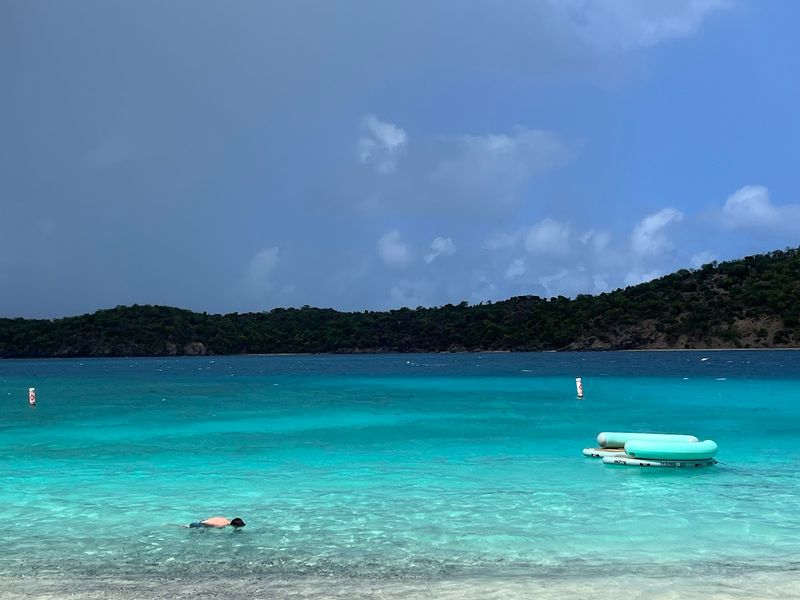
Ask any snorkeling-obsessed traveler about Coki Beach and watch their face light up immediately. Located on the northeastern coast of St. Thomas, this compact beach offers shore snorkeling that starts the moment you wade in — no boat, no tour, no planning required.
The reef begins just feet from the water’s edge, and the fish show up reliably like clockwork.
Sergeant majors, blue tangs, and queen parrotfish are among the regulars patrolling the shallow rocky reef. The water is warm, clear, and shallow enough that even nervous beginners feel completely comfortable exploring.
Sea turtles make occasional appearances, and when one glides past your mask in that unhurried way they have, it never stops being thrilling no matter how many times it happens.
Coki Beach is located adjacent to Coral World Ocean Park, making it easy to combine a snorkeling session with a visit to the marine exhibits nearby. Gear rental is available right on the beach, so showing up empty-handed is totally fine.
The beach itself can get busy on cruise ship days, so arriving early or on a weekday gives you a more relaxed experience. The combination of accessibility, reliable marine life, and warm Caribbean water makes Coki Beach one of the most satisfying snorkeling stops in the U.S.
Virgin Islands — no advance planning required.
Block Island — Rhode Island
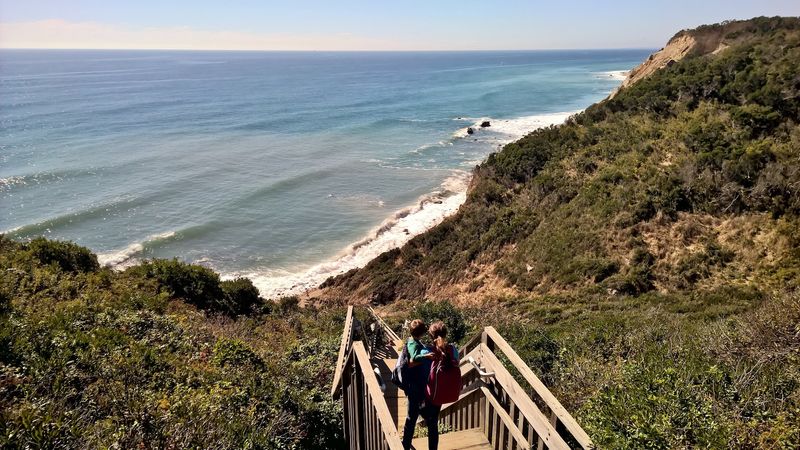
Block Island doesn’t fit the typical snorkeling postcard — there’s no palm tree, no parrotfish, no coral in the tropical sense — but what it offers is a genuinely surprising underwater world that catches most visitors completely off guard. Sitting about 13 miles off the Rhode Island coast, this small island has water clarity that rivals destinations far more famous for snorkeling.
Rocky reefs and underwater boulders draped in colorful algae, sea stars, and anemones create a distinctly New England underwater aesthetic. Tautog, cunner, and black sea bass are common sightings, along with spider crabs tucked into rocky crevices and lobsters occasionally spotted in deeper spots near the reef edges.
The biodiversity here is different from tropical reefs but no less interesting once you start paying attention.
Water temperatures peak in late summer around 68 to 72 degrees, which is the ideal window for comfortable snorkeling without a thick wetsuit. The island’s most popular snorkeling spots include the areas around the Southeast Light and the rocky sections near Crescent Beach.
Block Island is accessible by ferry from Point Judith, Rhode Island, or New London, Connecticut. The island’s laid-back, unhurried vibe pairs perfectly with snorkeling — nobody here is rushing anywhere.
Sometimes the most unexpected destinations leave the most lasting impressions, and Block Island is exactly that kind of place.
Port Aransas Jetties — Texas Gulf Coast
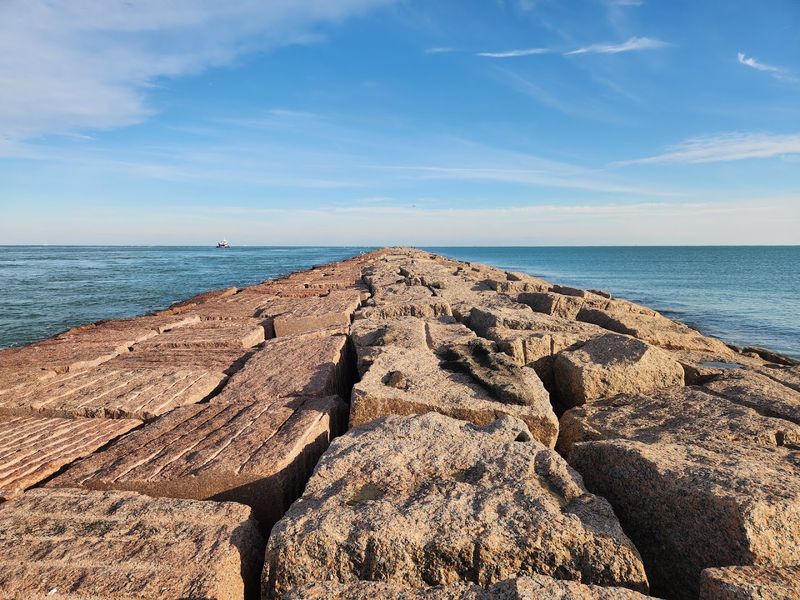
Texas isn’t usually the first state that comes to mind for snorkeling, which is exactly what makes Port Aransas such a pleasant surprise. The jetties flanking the Corpus Christi Ship Channel create sheltered pockets of calm, reasonably clear water that attract a surprisingly diverse collection of marine life — and most people drive right past without ever knowing what’s lurking below.
The granite jetty rocks are covered in barnacles, mussels, and encrusting organisms that form the foundation of a productive mini-ecosystem. Atlantic spadefish, sheepshead, and red snapper cruise along the rock faces, while blue crabs scuttle across the sandy bottom between the jetty structures.
Green sea turtles are spotted here with satisfying regularity, particularly during warmer months.
Visibility in the Gulf of Mexico is not always predictable — calm conditions after a dry stretch offer the best water clarity, while strong winds or recent rain can cloud things up. Checking conditions before heading out is a smart habit at Port Aransas.
The north and south jetties are both accessible from shore, making this a budget-friendly snorkeling option with zero boat fees required. Summer is prime season when water temperatures climb into the upper 80s and Gulf conditions settle into their most cooperative state.
Port Aransas proves that memorable snorkeling experiences don’t always require turquoise water or a passport — sometimes they just require knowing where to look.



