If you love watching wildlife up close, the United States has some incredible spots where nature puts on a real show. From massive flocks of migratory birds to grazing bison and swimming manatees, these places offer front-row seats to some of the most amazing animal encounters in the country.
Wildlife observatories and elevated platforms make it easier to spot animals without disturbing them. Whether you are a seasoned birder or just starting out, these 15 destinations are worth adding to your bucket list.
1. Bear River Migratory Bird Refuge, Brigham City, Utah
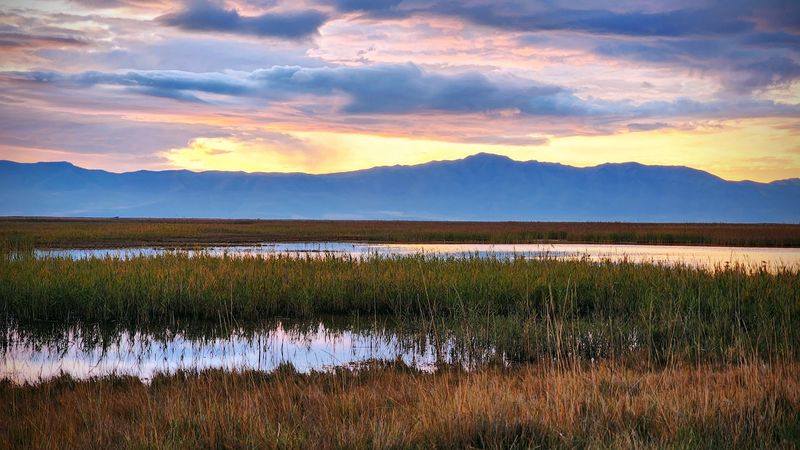
Every autumn, something almost unbelievable happens at Bear River Migratory Bird Refuge. Millions of birds descend on the wetlands near Brigham City, Utah, turning the sky into a living mosaic of wings and calls.
Tundra swans, white-faced ibis, and American avocets are just a few of the 230-plus species that pass through each year.
The refuge features a 12-mile auto tour route with multiple observation towers and pullouts along the way. Visitors can stop, step out, and scan the marshes with binoculars for as long as they like.
The towers provide elevated sightlines that cut through the tall marsh grasses, giving you a clear view of the action below.
Spring and fall migrations are the most exciting times to visit. The refuge is free to enter and open year-round, making it one of Utah’s most accessible and rewarding wildlife watching destinations for all ages.
2. Ding Darling National Wildlife Refuge, Sanibel, Florida
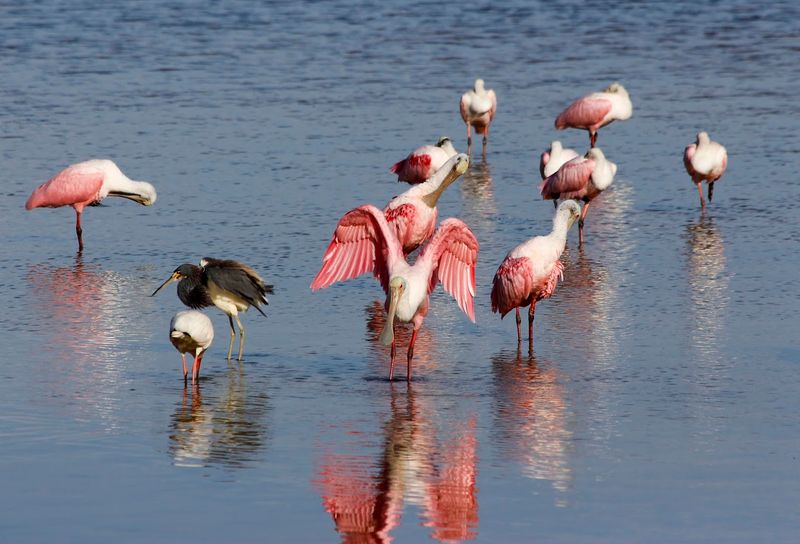
Sanibel Island hides one of Florida’s most beloved wildlife treasures behind a curtain of mangroves and salt marshes. J.N.
Ding Darling National Wildlife Refuge draws over a million visitors each year, and it is easy to understand why once you spot a roseate spoonbill gliding just a few feet overhead.
The Wildlife Drive winds 4 miles through the refuge, offering regular stops at boardwalks and observation towers. From these elevated platforms, alligators, bobcats, ospreys, and dozens of wading bird species are regularly spotted.
Early mornings during low tide tend to offer the best sightings.
Named after a Pulitzer Prize-winning cartoonist and conservationist, the refuge has been protecting this coastal habitat since 1945. Guided tram tours are available for those who prefer a narrated experience.
Bring sunscreen and a camera because the wildlife here rarely disappoints, especially between October and April.
3. Bosque del Apache National Wildlife Refuge, San Antonio, New Mexico
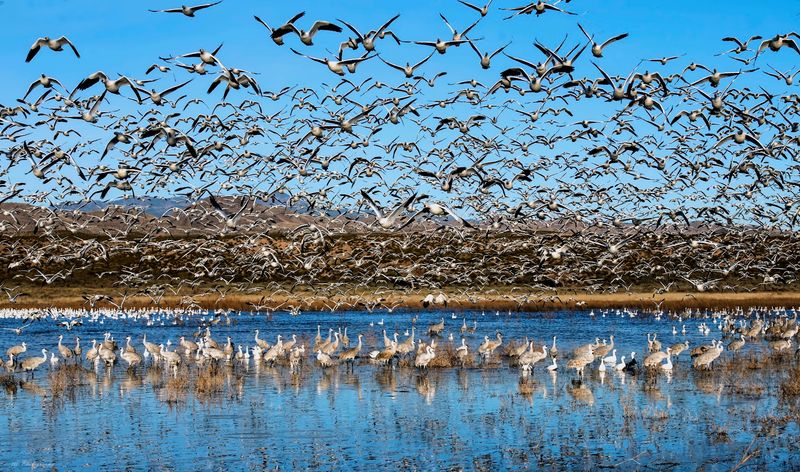
Picture standing on an observation platform just before sunrise as tens of thousands of sandhill cranes erupt into the sky all at once. That is exactly what happens at Bosque del Apache National Wildlife Refuge every November during the Festival of the Cranes.
The sound alone is something visitors never forget.
Located along the Rio Grande in central New Mexico, this refuge attracts massive flocks of snow geese, Canada geese, and sandhill cranes each winter. Numerous viewing platforms and pullouts are scattered throughout the 57,000-acre property, giving birders and photographers plenty of options to find their perfect shot.
The annual Festival of the Cranes brings thousands of nature enthusiasts to the area for guided tours, photography workshops, and wildlife talks. The refuge is open year-round, but November through February is peak season.
Admission is covered by the America the Beautiful pass or a small daily fee.
4. Great Dismal Swamp National Wildlife Refuge, Suffolk, Virginia
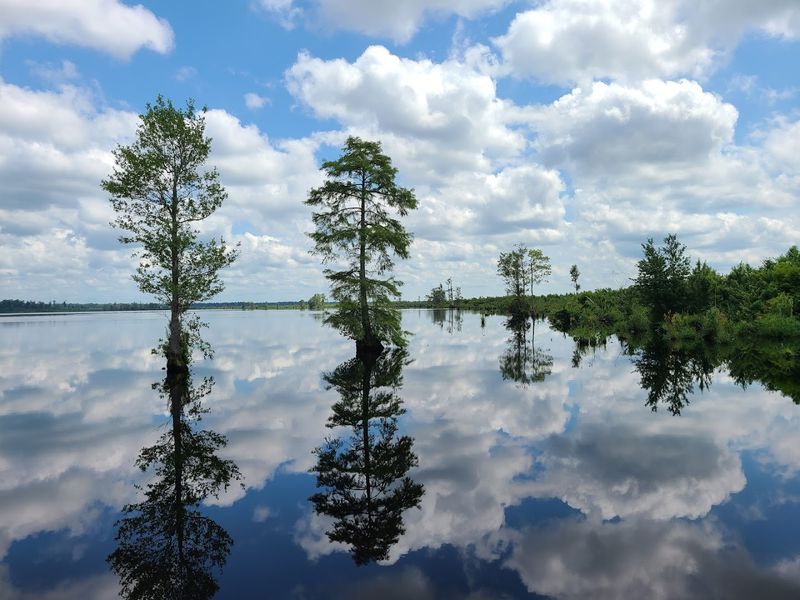
The name might sound a little intimidating, but the Great Dismal Swamp is actually one of the most fascinating and ecologically rich places in the eastern United States. Covering over 112,000 acres across Virginia and North Carolina, this ancient swamp is home to black bears, river otters, bobcats, and more than 200 bird species.
Wildlife observation decks positioned throughout the refuge offer elevated views into the dense forest and wetland habitat below. Black bears are commonly spotted here, especially during early morning hours when they are most active.
The swamp’s remoteness means wildlife encounters feel genuinely wild and unscripted.
Hiking and biking trails wind through the property, leading visitors to Lake Drummond, one of only two natural lakes in Virginia. The refuge is free to visit and open year-round.
Spring brings spectacular wildflower blooms and nesting songbirds, making it a favorite stop for birders traveling the East Coast.
5. Jocelyn Nungaray National Wildlife Refuge, Anahuac, Texas
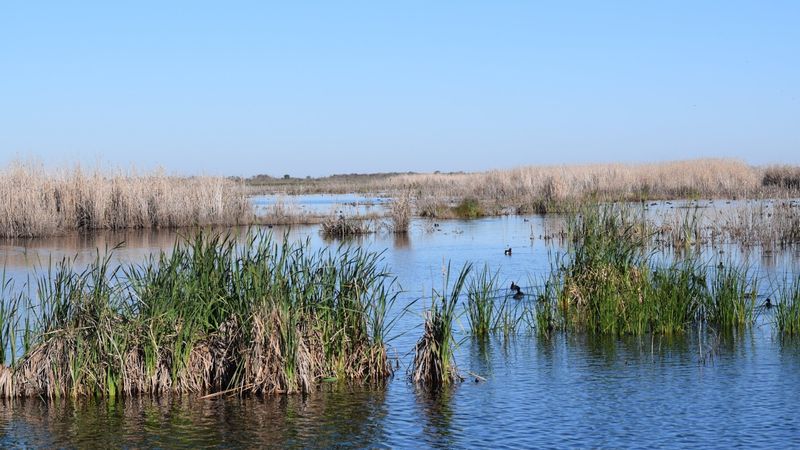
Texas birders have a saying: if you want shorebirds, go to Anahuac. Situated along the upper Texas Gulf Coast, Jocelyn Nungaray National Wildlife Refuge is a world-class destination for wildlife watching, with alligators so plentiful that spotting dozens in a single afternoon is completely normal.
Elevated observation towers throughout the refuge look out over miles of coastal prairie and freshwater marsh. During spring migration, the skies fill with raptors, shorebirds, and warblers moving north.
Mottled ducks, roseate spoonbills, and white-tailed hawks are year-round residents that add even more variety to any visit.
The refuge is part of the Great Texas Coastal Birding Trail, linking it to dozens of other premier birding sites along the Gulf Coast. Entry is free, and the roads are generally accessible to standard vehicles.
Visiting at dawn or dusk gives the best chance of spotting alligators basking along the edges of the marsh channels.
6. J.N. Ding Darling Wildlife Society Observation Tower, Sanibel, Florida
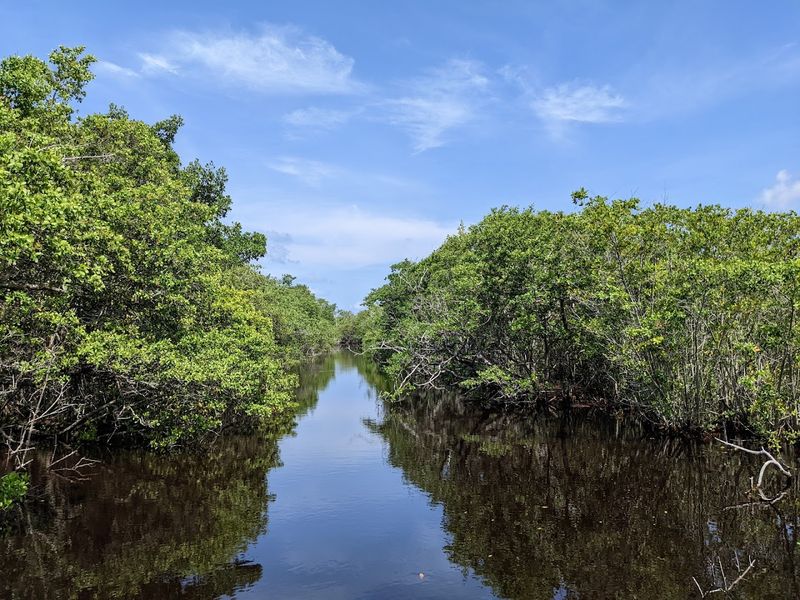
Not far from the main Wildlife Drive, the J.N. Ding Darling Wildlife Society operates a dedicated observation tower that gives visitors an even higher vantage point over the surrounding estuary.
Standing at the top, you can see across the full expanse of mangrove channels, tidal flats, and open water that make this refuge so productive for wildlife.
From this elevated position, great blue herons, snowy egrets, and roseate spoonbills are almost always visible below. On lucky days, visitors have spotted bottlenose dolphins cruising through the nearby channels.
The tower is one of Florida’s most photographed wildlife viewing structures thanks to its stunning backdrop.
The Wildlife Society hosts educational programs and guided tours that often include stops at the tower. It is especially popular during the winter months when snowbirds and migratory species both arrive in large numbers.
Bring a zoom lens and arrive early for the calmest light and most active wildlife behavior.
7. Horicon Marsh State Wildlife Area, Mayville, Wisconsin
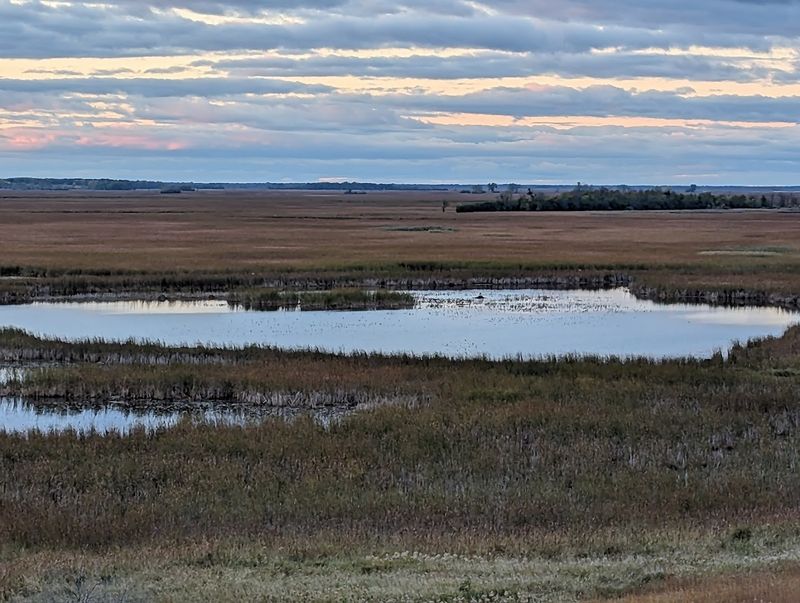
Horicon Marsh holds a remarkable title: it is the largest freshwater cattail marsh in the United States. Spanning over 32,000 acres in east-central Wisconsin, this incredible wetland serves as a critical stopover for hundreds of thousands of Canada geese during their fall migration south.
Observation towers and boardwalks are positioned at key points around the marsh, offering visitors unobstructed views over the vast sea of cattails and open water. In October, the sky above Horicon can literally turn dark with geese, a spectacle that draws wildlife photographers from across the country.
Beyond geese, the marsh supports sandhill cranes, trumpeter swans, great blue herons, and a wide variety of ducks throughout the year. The state wildlife area and adjoining national wildlife refuge together offer dozens of miles of trails.
Admission is free, and the visitor center provides maps and seasonal wildlife updates to help plan your visit.
8. Magee Marsh Wildlife Area, Oak Harbor, Ohio
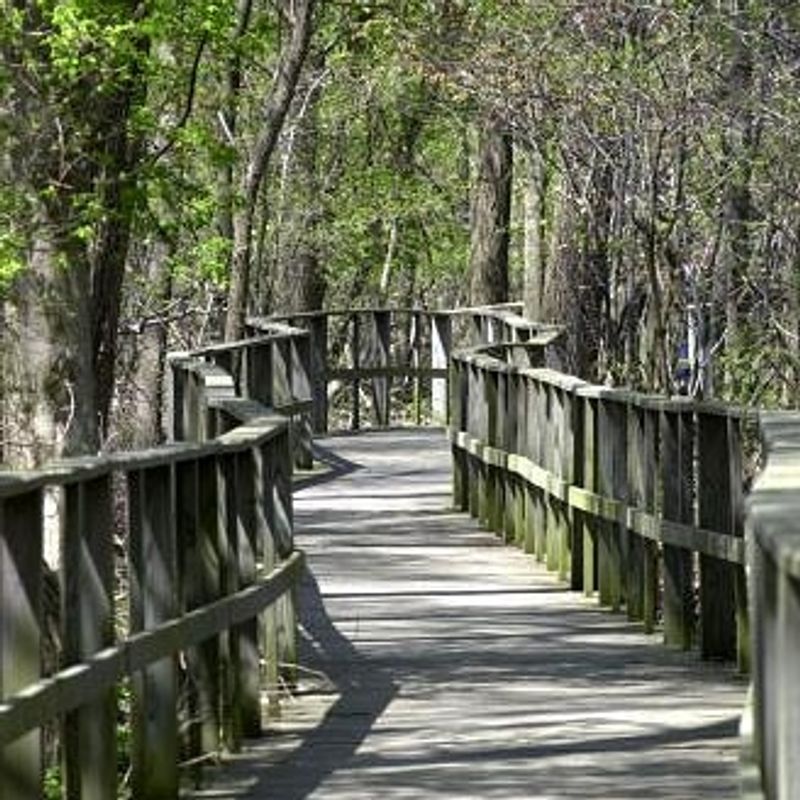
Ask any serious birder about Magee Marsh in May and watch their eyes light up. Located along the southern shore of Lake Erie in northern Ohio, this narrow strip of woodland becomes one of the most bird-dense places on the entire continent during spring migration.
Warblers, vireos, and flycatchers pile up here before crossing the lake, putting on a show that has earned Magee the nickname Warbler Capital of the World.
The famous Magee Marsh Boardwalk stretches nearly a mile through the trees, placing visitors just inches away from birds too tired from their overnight flights to be shy. During the Biggest Week in American Birding festival held each May, tens of thousands of visitors descend on the area.
The boardwalk is free and open to the public. Arrive early on calm mornings for the highest concentration of birds.
Species counts of 30 or more warbler species in a single day are not uncommon during peak migration weeks.
9. National Elk Refuge, Jackson, Wyoming
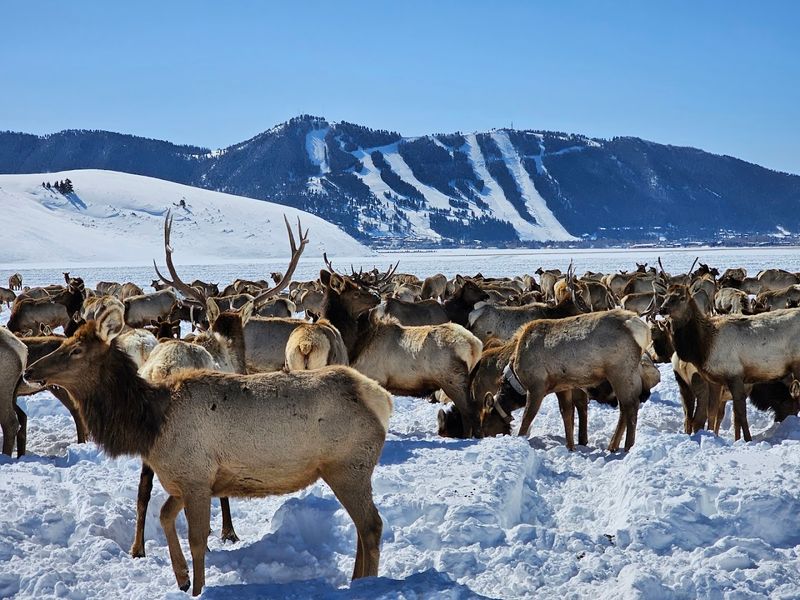
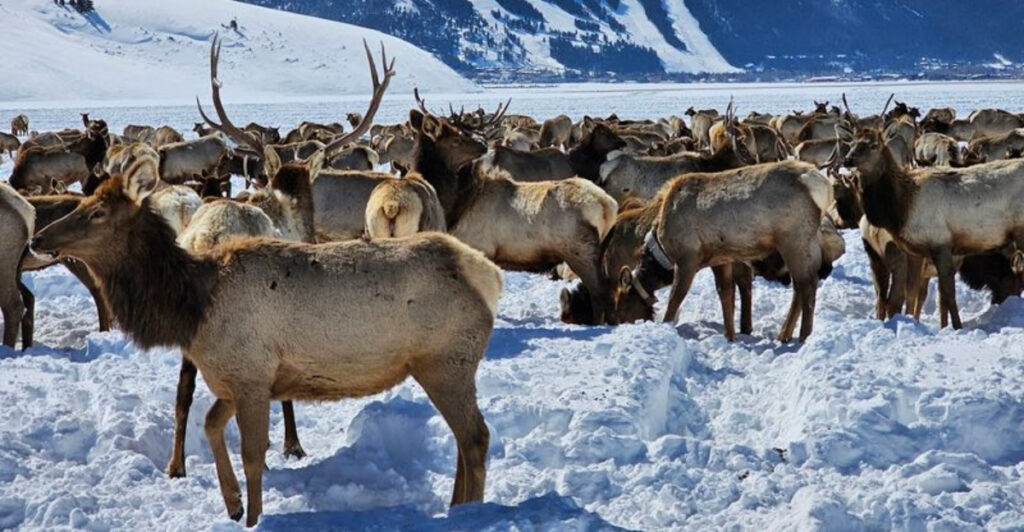
Every winter, one of North America’s most dramatic wildlife gatherings unfolds just outside the town of Jackson, Wyoming. Up to 11,000 elk migrate down from the surrounding mountains to spend the cold months on the National Elk Refuge, creating a scene that feels almost prehistoric in its scale.
Designated wildlife overlooks along the refuge boundary give visitors elevated views over the flat valley floor where the elk congregate. Horse-drawn sleigh rides operated by the refuge take visitors right into the middle of the herd, offering an up-close experience unlike anything else in the country.
The refuge is open year-round, but winter is undeniably the star season. Bison, coyotes, bald eagles, and trumpeter swans are also regularly spotted on the property.
The nearby National Museum of Wildlife Art sits on a ridge overlooking the refuge, making it easy to combine a cultural visit with outstanding wildlife watching in a single afternoon.
10. Custer State Park Wildlife Loop, Custer, South Dakota
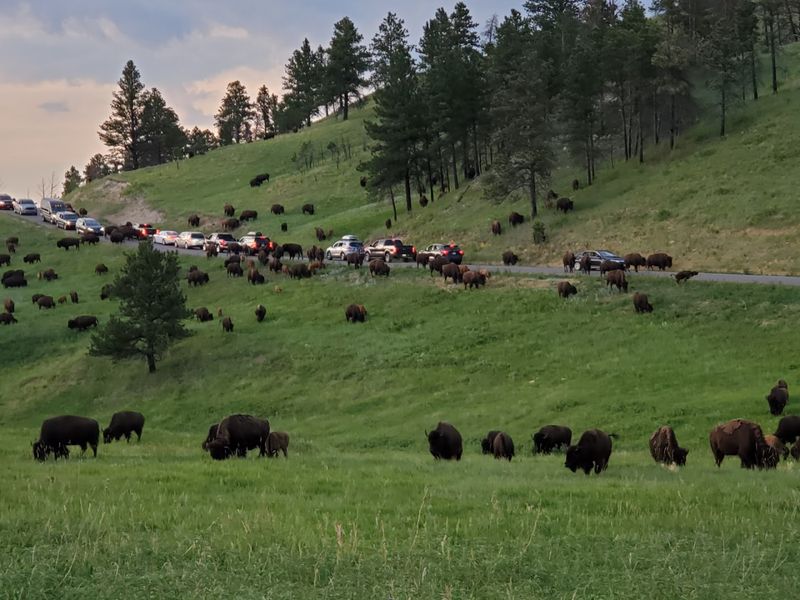
Few wildlife drives in America match the raw, open-range excitement of the 18-mile Wildlife Loop Road inside Custer State Park. Home to one of the largest publicly owned bison herds in the world, the park puts you face to face with animals that once roamed the Great Plains by the tens of millions.
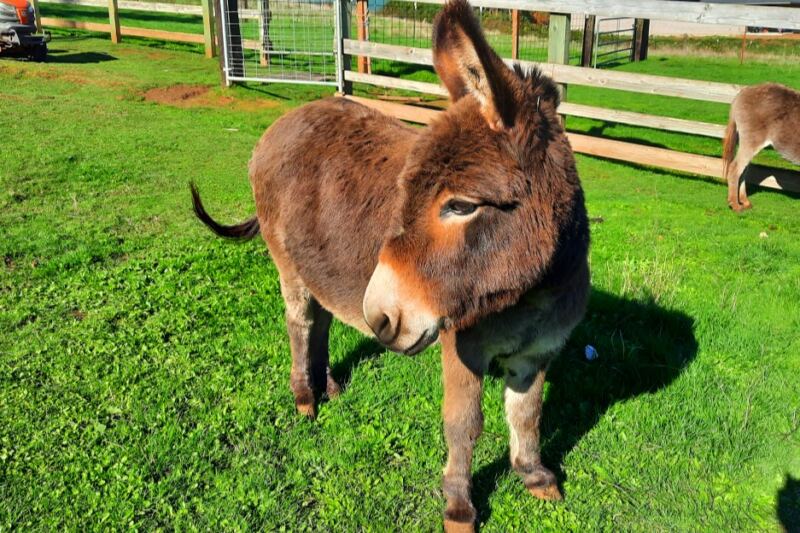
Scenic overlooks and pullout areas along the loop give visitors elevated sightlines across the rolling prairie and pine-covered hills. Beyond the famous bison, the park is home to pronghorn antelope, bighorn sheep, mountain goats, coyotes, and the endearing resident burros that wander up to cars looking for snacks.
The annual Buffalo Roundup held each September brings the entire herd together in a thundering spectacle that draws thousands of spectators to the hillside viewing areas. Daily admission fees apply for entering the park.
Early morning and late afternoon drives consistently produce the best wildlife sightings throughout the year.
11. Merritt Island National Wildlife Refuge, Titusville, Florida
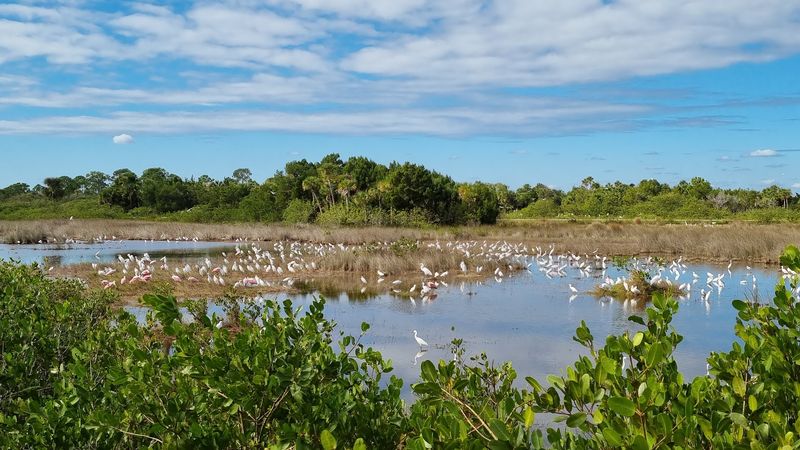
Sharing a fence line with NASA’s Kennedy Space Center, Merritt Island National Wildlife Refuge is one of the most unique wildlife destinations in the United States. The combination of space history and extraordinary biodiversity makes it unlike anywhere else on the planet.
Over 1,500 species of plants, animals, and birds have been documented here.
Observation platforms along the Black Point Wildlife Drive look out over impoundments teeming with alligators, manatees, roseate spoonbills, and bald eagles. On clear days, you can see launch infrastructure rising above the tree line while herons fish in the shallows just below your feet.
The refuge is free to enter and open year-round. Winter months bring spectacular concentrations of waterfowl and wading birds to the impoundments.
The visitor center offers exhibits on both the wildlife refuge and its fascinating coexistence with one of America’s most active space launch facilities, making it a rewarding stop for families and nature enthusiasts alike.
12. Necedah National Wildlife Refuge, Necedah, Wisconsin
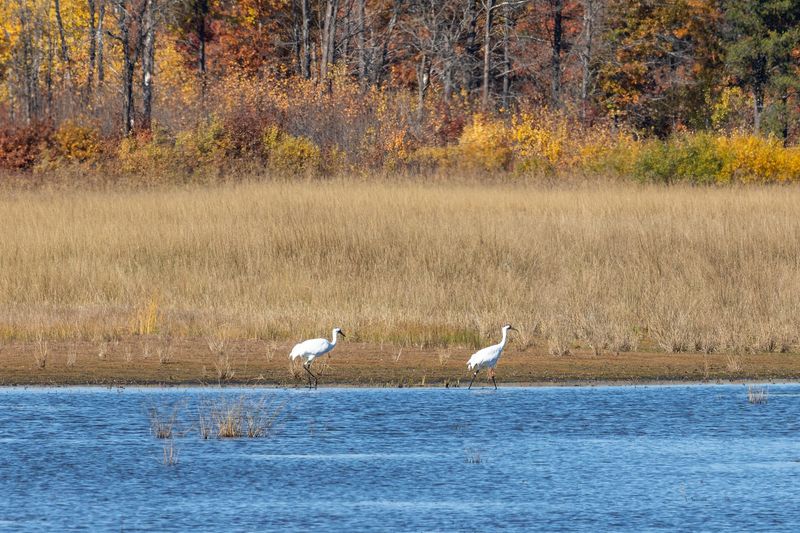
Whooping cranes are among the rarest birds in North America, and Necedah National Wildlife Refuge in central Wisconsin has played a crucial role in bringing them back from the edge of extinction. The refuge served as the release site for captive-raised whooping cranes as part of an ambitious reintroduction program that used ultralight aircraft to teach the birds their migration routes.
A dedicated observation tower at the refuge gives visitors elevated views over the open wetlands and sedge meadows where these magnificent white birds feed and rest. Sandhill cranes, bald eagles, and timber wolves are also regularly spotted from the tower during morning and evening hours.
The surrounding pine barrens and peatlands create a hauntingly beautiful landscape that feels genuinely remote despite being accessible by car. The refuge is free to visit, and the observation tower is open year-round.
Spring and fall offer the best chances of spotting whooping cranes before and after migration.
13. Ridgefield National Wildlife Refuge, Ridgefield, Washington
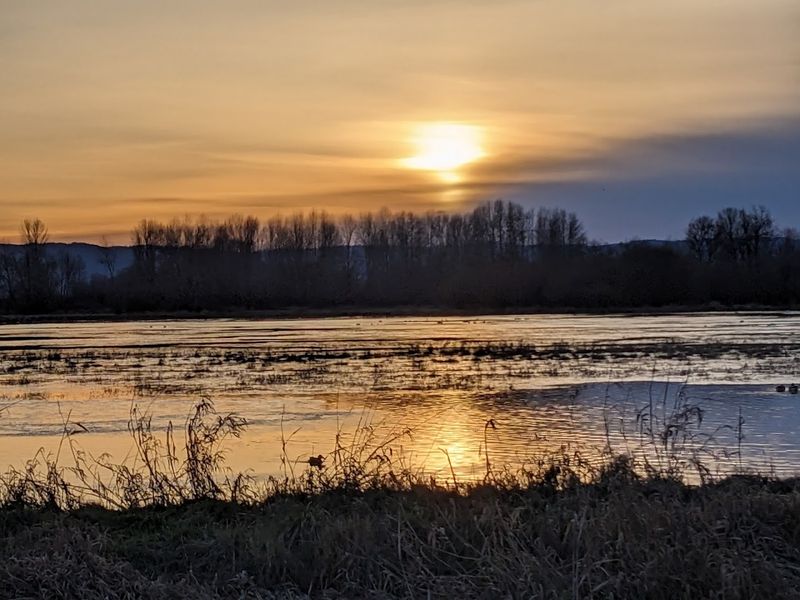
Just 20 minutes north of Portland, Oregon, Ridgefield National Wildlife Refuge feels like a secret that the Pacific Northwest has been keeping to itself. The refuge protects a patchwork of wetlands, grasslands, and riparian forest along the Columbia River that supports an impressive variety of wildlife throughout the year.
Bird blinds and observation decks are placed at strategic points along the 4.2-mile auto tour route, giving visitors sheltered spots to watch wildlife without being seen. Tundra swans, sandhill cranes, bald eagles, and great blue herons are all commonly spotted from these structures during fall and winter months.
The River S Unit features a separate trail system open to hikers and cyclists, offering a more active way to explore the refuge. Entry requires a federal recreation pass or small daily fee.
The combination of easy access, free wildlife viewing infrastructure, and proximity to a major city makes Ridgefield one of the most underrated wildlife refuges in the Pacific Northwest.
14. Bombay Hook National Wildlife Refuge, Smyrna, Delaware
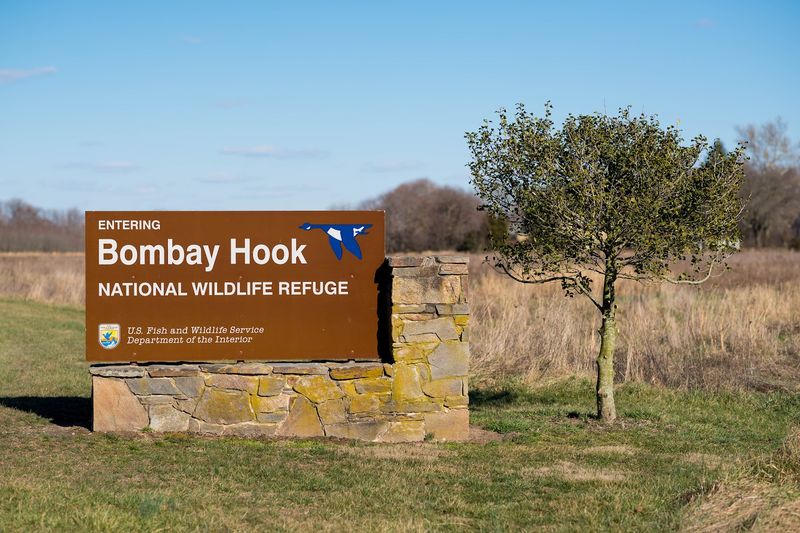
Delaware may be the country’s second smallest state, but Bombay Hook National Wildlife Refuge punches well above its weight when it comes to wildlife watching. Established in 1937, this refuge protects over 16,000 acres of tidal salt marsh, freshwater impoundments, and upland forest along Delaware Bay, one of the most important migratory corridors on the Atlantic Flyway.
Five elevated observation towers are scattered along the 12-mile wildlife drive, each offering sweeping views over the surrounding tidal marshes and impoundments. During fall migration, snow geese and Canada geese arrive in numbers so large that the sound carries for miles.
Great blue herons, bald eagles, and shorebirds are present throughout much of the year.
The refuge is open daily from sunrise to sunset, and the entrance fee is modest. Fall and spring migrations are the most spectacular times to visit, though winter bald eagle sightings from the towers are a consistent highlight that keeps visitors returning year after year.
15. Prime Hook National Wildlife Refuge, Milton, Delaware
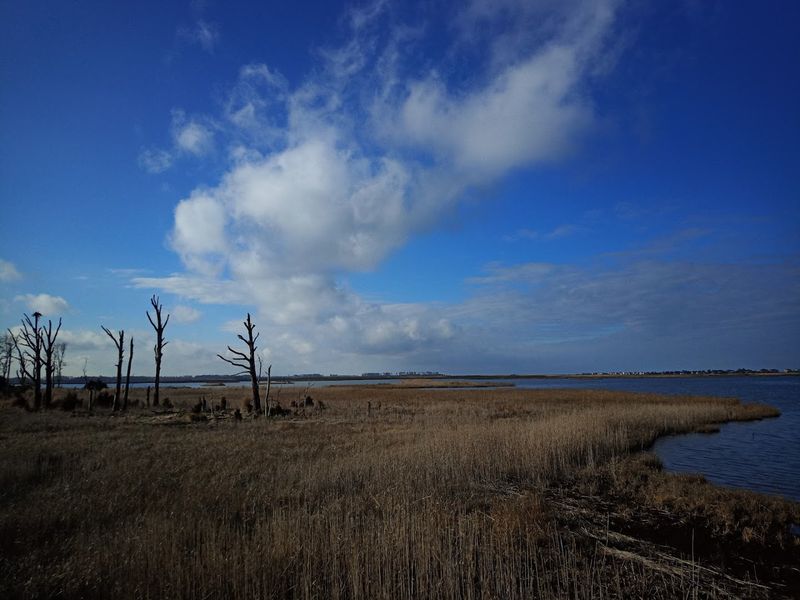
Prime Hook National Wildlife Refuge sits quietly along Delaware Bay, offering one of the Mid-Atlantic’s most rewarding and uncrowded wildlife watching experiences. After extensive storm damage from Hurricane Sandy in 2012, the refuge underwent a major restoration project that converted former impoundments back into open wetlands, dramatically improving habitat quality for migratory birds.
Observation platforms positioned throughout the restored marsh areas give visitors clear sightlines over the shallow water where waterfowl, shorebirds, and wading birds congregate in large numbers. Bald eagles are a regular sight here, often perching in dead snags near the water’s edge.
Red foxes and white-tailed deer are frequently spotted along the upland trails.
The refuge is free to enter and features several short hiking trails in addition to the viewing platforms. May brings one of nature’s great spectacles when horseshoe crabs spawn along the nearby Delaware Bay beaches, drawing thousands of migrating shorebirds that spill over into the refuge’s wetlands.
Share this story