 Unearth The Voyage
Every great band has a frontman who gets all the glory, but behind every legendary sound is someone working just as hard in the shadows. These musicians wrote the riffs, laid down the grooves, and crafted the arrangements that made their bands unforgettable.
Without them, some of the most iconic songs in history might never have existed. Get ready to meet the musicians who deserve a whole lot more credit than they usually get.
1. John Deacon – Queen
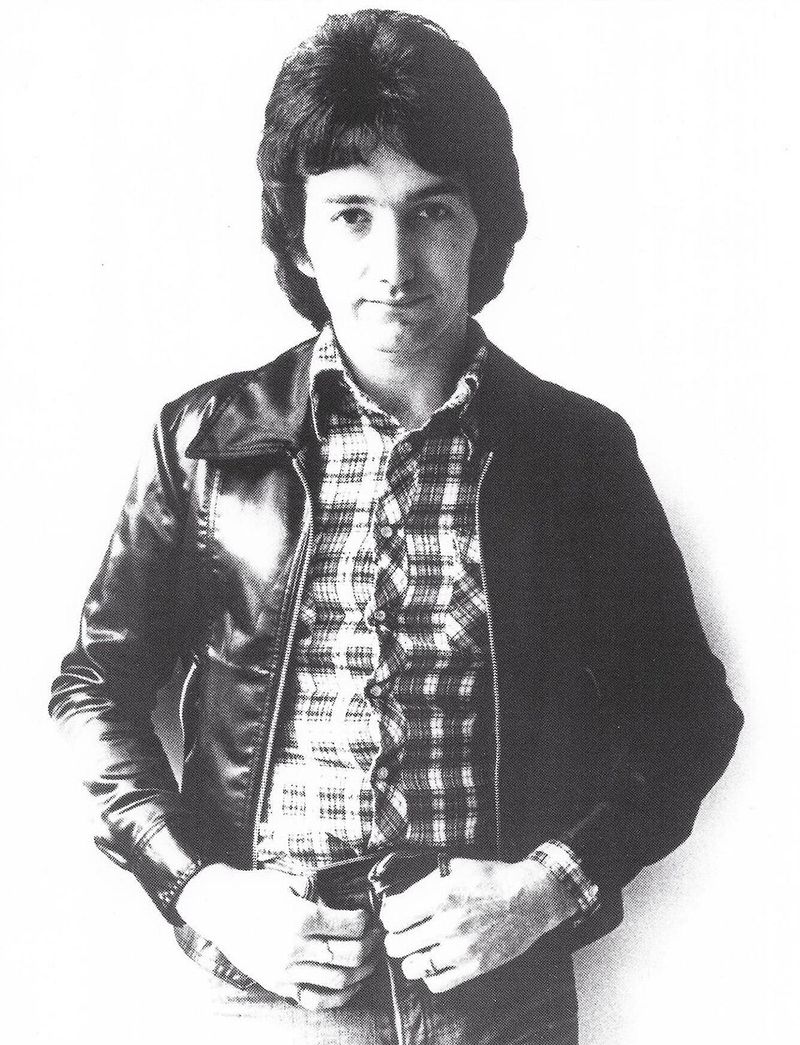
Most people think of Freddie Mercury when they think of Queen, and that makes total sense. But John Deacon quietly wrote two of the band’s biggest hits: “Another One Bites the Dust” and “You’re My Best Friend.” Both songs became massive radio staples that defined Queen’s crossover appeal.
Deacon was the calm, steady force in a band full of big personalities. He rarely gave interviews and preferred to let the music speak for itself.
His bass lines were deceptively simple but incredibly effective, locking in perfectly with Roger Taylor’s drumming.
After Freddie Mercury passed away in 1991, Deacon stepped away from the music industry entirely. He has not performed publicly since 1997.
His choice to walk away quietly actually says a lot about his character. He was never in it for the fame.
2. Geezer Butler – Black Sabbath
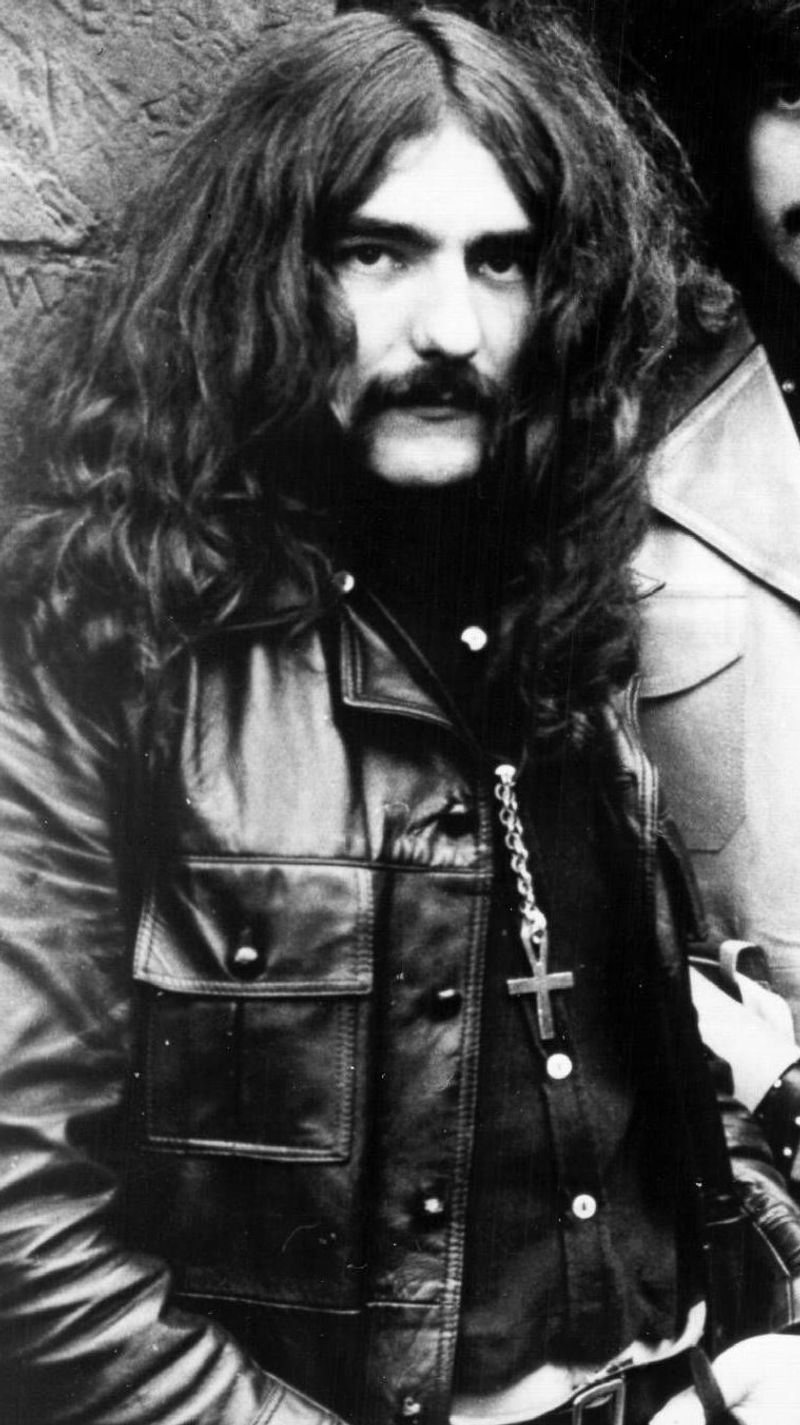
Black Sabbath invented heavy metal, and Geezer Butler is a huge reason why. As the band’s primary lyricist, he wrote the dark, haunting words that gave songs like “Iron Man” and “War Pigs” their chilling power.
Ozzy Osbourne sang them, but Butler dreamed them up.
Butler has spoken openly about being fascinated by the occult and dark philosophy in his younger years. That obsession poured directly into the band’s early lyrics, creating a mood that no other rock band had captured before.
His bass playing matched that darkness perfectly, heavy and thunderous.
Despite being one of the most influential bassists in rock history, Butler rarely gets top billing in metal conversations. Guitarists Tony Iommi and Ozzy tend to dominate the spotlight.
But ask any serious metal musician, and they will tell you Butler was essential to everything Sabbath built.
3. Mike Campbell – Tom Petty and The Heartbreakers
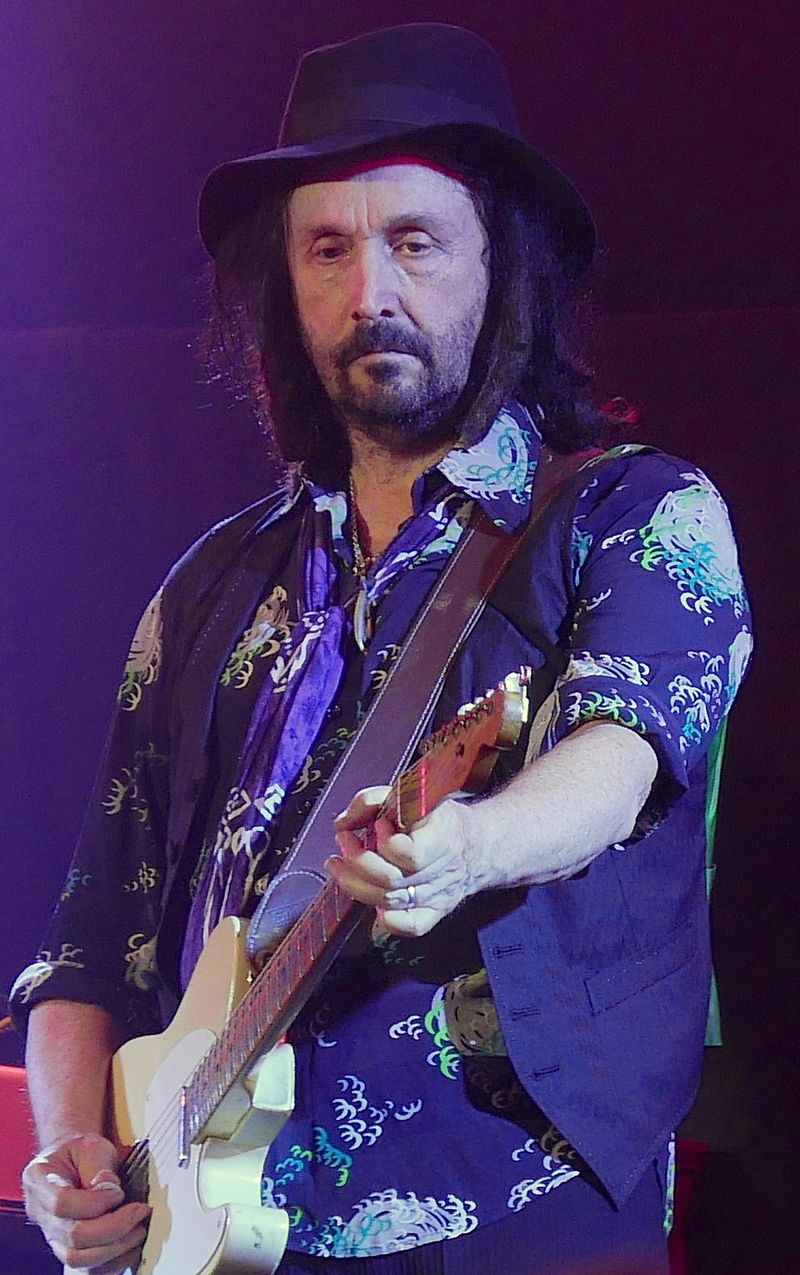
Tom Petty was the face and voice of The Heartbreakers, but Mike Campbell was the guy who helped build the songs from the ground up. Campbell co-wrote classics like “Refugee,” “Runnin’ Down a Dream,” and “I Need to Know.” His guitar work gave the band its gritty, timeless edge.
Campbell has described his songwriting relationship with Petty as deeply intuitive. The two could sit together and finish a song in an afternoon, trading ideas back and forth almost effortlessly.
That chemistry is rare, and it showed up in every record they made together.
Beyond The Heartbreakers, Campbell has played on sessions for artists like Bob Dylan and Stevie Nicks. His versatility as a guitarist is remarkable.
Even after Petty’s passing in 2017, Campbell has continued performing and recording, carrying forward the musical legacy they built together over four decades.
4. Roy Bittan – E Street Band

Nicknamed “The Professor,” Roy Bittan earned that title by being one of the most technically gifted pianists in rock music. His keyboard work on Bruce Springsteen albums like “Born to Run” and “Darkness on the Edge of Town” helped define what those records sound like emotionally.
Without Bittan, those songs would feel completely different.
Bittan joined the E Street Band in 1974 and has been one of its most consistent members ever since. His classical training gave him a range that most rock pianists simply do not have.
He could go from delicate and tender to full-on thunderous within a single song.
Outside the E Street Band, Bittan has worked as a session musician and producer with artists including Meat Loaf, whose “Bat Out of Hell” album features his unmistakable piano playing. His fingerprints are all over several decades of rock history.
5. John Paul Jones – Led Zeppelin

Led Zeppelin had one of the most famous guitarists in history in Jimmy Page, but John Paul Jones was the secret weapon holding everything together. He wrote the iconic bass riff for “Black Dog,” arranged the orchestration for “Kashmir,” and played keyboards, mandolin, and more across the band’s catalog.
His range was extraordinary.
Jones came from a background in session work and orchestral arranging before joining Zeppelin. That experience gave him a musical vocabulary that went far beyond what most rock musicians could access.
He understood how to build a song structurally, not just play along with it.
Robert Plant and Jimmy Page are usually the names people remember from Led Zeppelin. But musicians who have studied the band closely tend to point to Jones as the most technically accomplished member.
His contributions were foundational, not decorative. Zeppelin simply would not have sounded the same without him.
6. Charlie Watts – The Rolling Stones
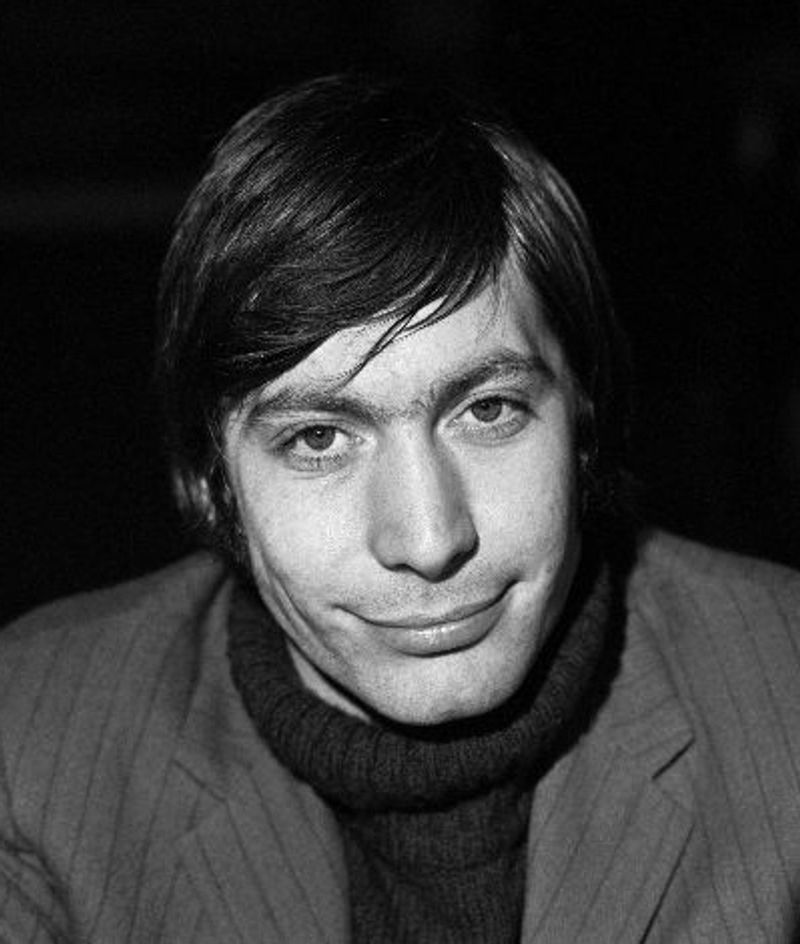
Charlie Watts was the opposite of a flashy drummer, and that was exactly the point. While Keith Richards and Mick Jagger commanded the spotlight, Watts sat quietly at his kit and delivered one of the most reliable grooves in rock history.
His restraint was actually his greatest strength.
Watts came from a jazz background, which gave him a feel for rhythm that was slightly behind the beat in the best possible way. That laid-back swing is a huge part of what makes Rolling Stones songs feel so loose and cool.
Many drummers have tried to copy it, and most fall short.
He rarely spoke in interviews about drumming technique, preferring to let the recordings do the talking. Watts passed away in 2021, and the tributes that poured in from fellow musicians revealed just how deeply respected he was.
His understated brilliance was the heartbeat of one of rock’s greatest bands.
7. Kim Deal – Pixies

The Pixies helped invent the quiet-loud-quiet dynamic that bands like Nirvana would later make famous, and Kim Deal was a crucial part of that formula. Her bass lines were melodic and punchy, cutting through the band’s wall of noise in a way that gave the songs breathing room.
Her harmonies with Frank Black added a haunting, dreamy quality.
Deal has talked about her contributions to the Pixies being somewhat minimized over the years, even within the band itself. Despite that tension, her fingerprints are all over the band’s classic albums like “Surfer Rosa” and “Doolittle.” Songs like “Gigantic,” which she wrote solo, became fan favorites.
After leaving the Pixies, she found continued success with The Breeders, a band she co-founded. “Cannonball” became an alternative radio hit in the early 1990s. Deal proved that her talent was never dependent on any single group or collaborator.
8. Malcolm Young – AC/DC

Angus Young is the one dancing around on stage in a schoolboy uniform, but his brother Malcolm was the rhythmic engine powering every AC/DC song. Malcolm’s rhythm guitar playing was so tight and precise that it became the foundation everything else was built on.
His right hand was essentially a machine.
Malcolm co-wrote nearly every major AC/DC song, including “Back in Black” and “Highway to Hell.” He was the band’s main decision-maker behind the scenes, known for his strong opinions about direction and sound. Other band members have said that Malcolm’s approval was the final word on almost everything.
He was diagnosed with dementia in 2014 and passed away in 2017. The band released a tribute statement calling him the “driving force” behind AC/DC.
That phrase does not get used lightly. Malcolm Young was the reason AC/DC sounded like AC/DC, every single night.
9. Bill Wyman – The Rolling Stones
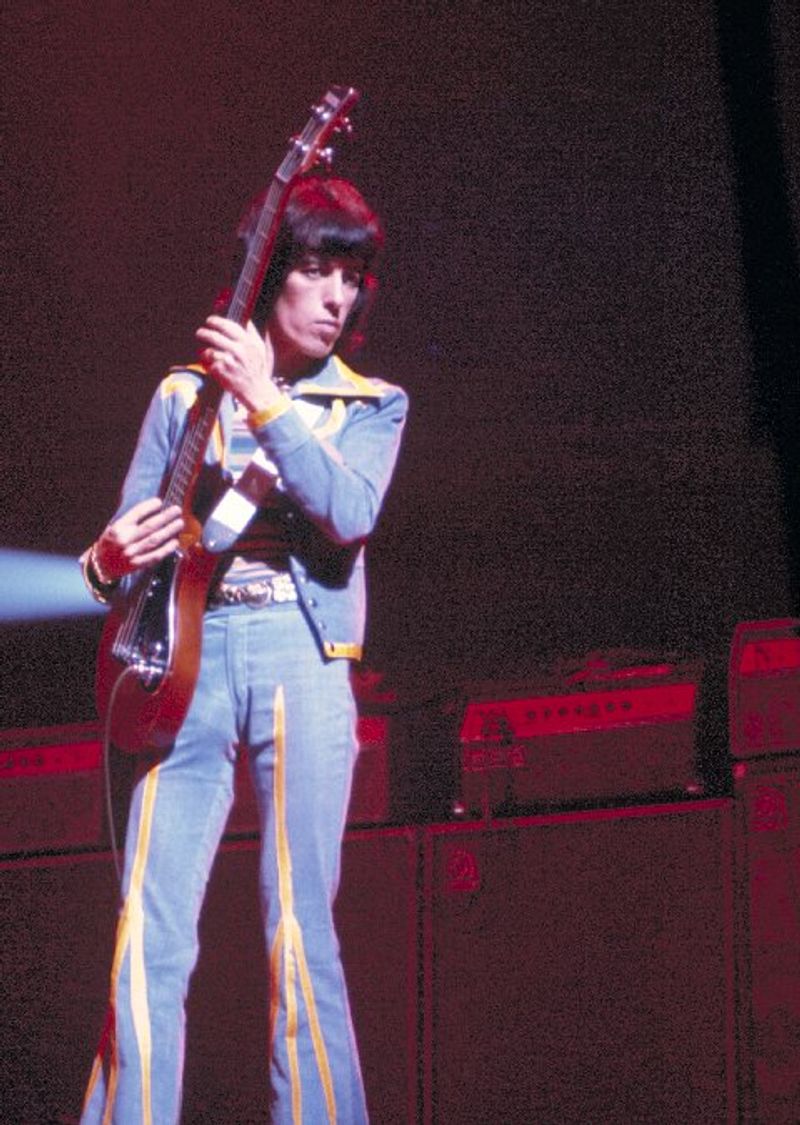
Before Charlie Watts gets all the credit for keeping the Stones grounded, it is worth noting that Bill Wyman was doing the same thing on bass for over three decades. Wyman joined the band in 1962 and stayed until 1993, providing a rock-solid low end that gave the band’s music its physical weight.
His style was minimal but purposeful.
Wyman had a habit of standing completely still on stage while the rest of the band moved around wildly. That stillness was intentional.
He believed the music should do the talking, not the performer. That philosophy kept him somewhat invisible even to longtime fans.
He was also the band’s unofficial archivist, keeping detailed diaries and photographs throughout his years with the Stones. His historical documentation of the band’s early years has proven invaluable to music historians.
Wyman understood the importance of what they were doing long before most people did.
10. Stone Gossard – Pearl Jam
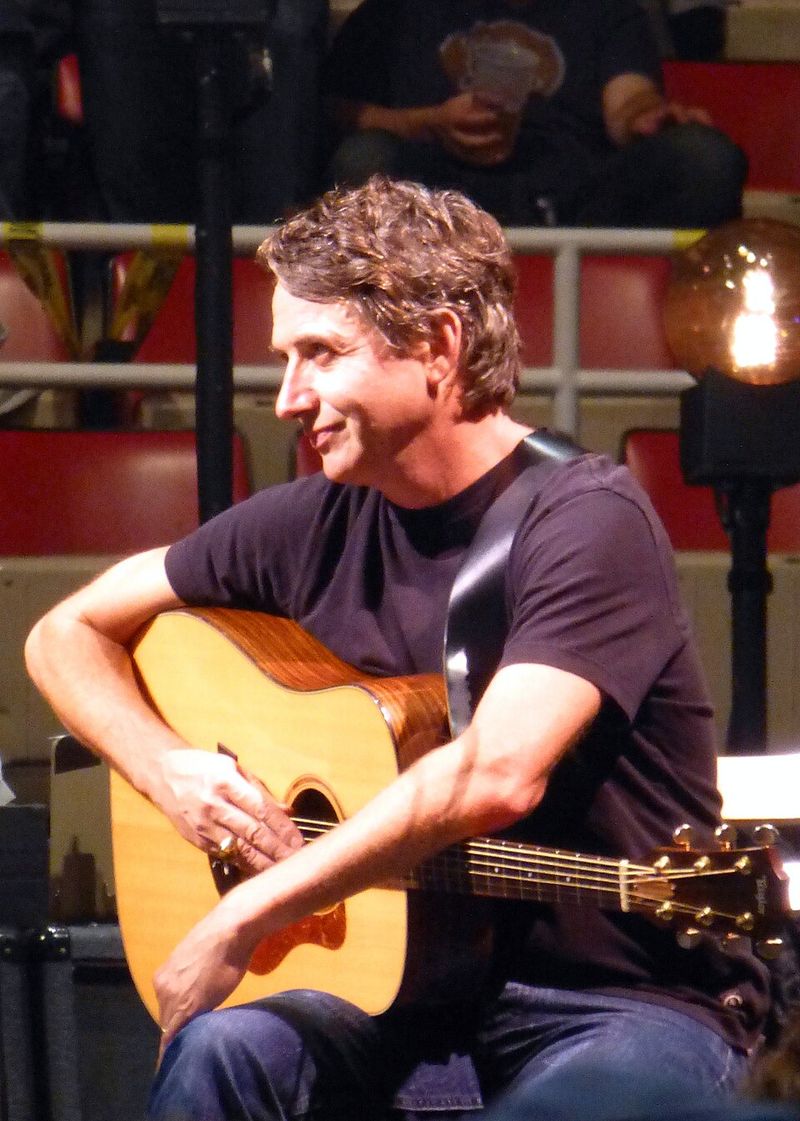
Pearl Jam’s story starts before Eddie Vedder even joined the band. Stone Gossard and Jeff Ament were already building something powerful in Seattle, playing together in Green River and Mother Love Bone.
When those bands dissolved, Gossard wrote the demo tape that eventually attracted Vedder’s attention. Without that tape, Pearl Jam might not exist.
Gossard wrote the music for several of the band’s most beloved songs, including “Alive” and “Even Flow.” His rhythm guitar playing gave the band a dense, crunchy texture that became part of the grunge blueprint. He worked quietly while Mike McCready handled the flashier lead guitar parts.
He has also been involved in side projects over the years, including Brad, a band with a much mellower sound than Pearl Jam. That range shows how musically curious Gossard has always been.
His contributions to Pearl Jam are foundational, even if his name rarely leads the conversation.
11. Ringo Starr – The Beatles
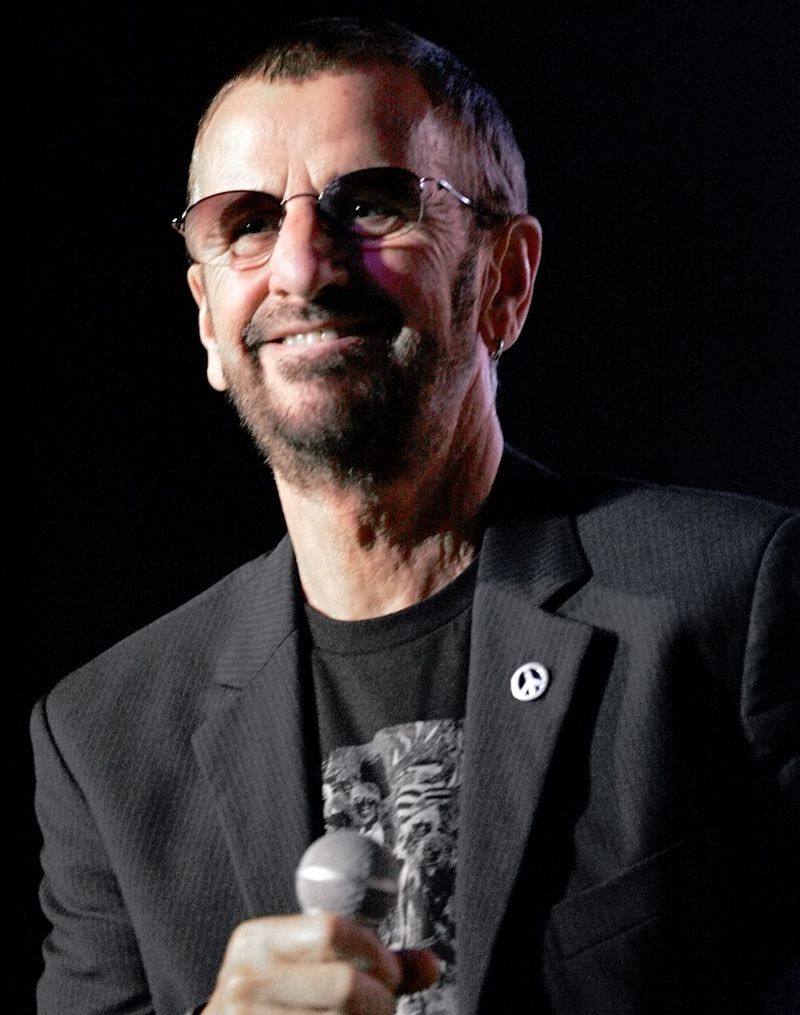
For years, jokes about Ringo Starr being “the worst Beatle” circulated in music circles. But here is the thing: nearly every professional drummer who has studied his work disagrees completely.
Ringo had an instinct for knowing exactly what a song needed and then delivering it without ego or excess.
His drum fills on songs like “Come Together” and his groove on “Rain” are considered masterclasses in feel-based drumming. He played for the song, not for himself.
That kind of musical selflessness is actually very difficult to pull off consistently, and Ringo did it on some of the most-analyzed recordings in history.
John Lennon himself once said that Ringo was the best drummer he had ever worked with. Paul McCartney has repeatedly defended Ringo’s musical contributions in interviews.
The joke was never fair, and the music itself is the best argument against it. Ringo deserves enormous credit.
12. Andy Rourke – The Smiths
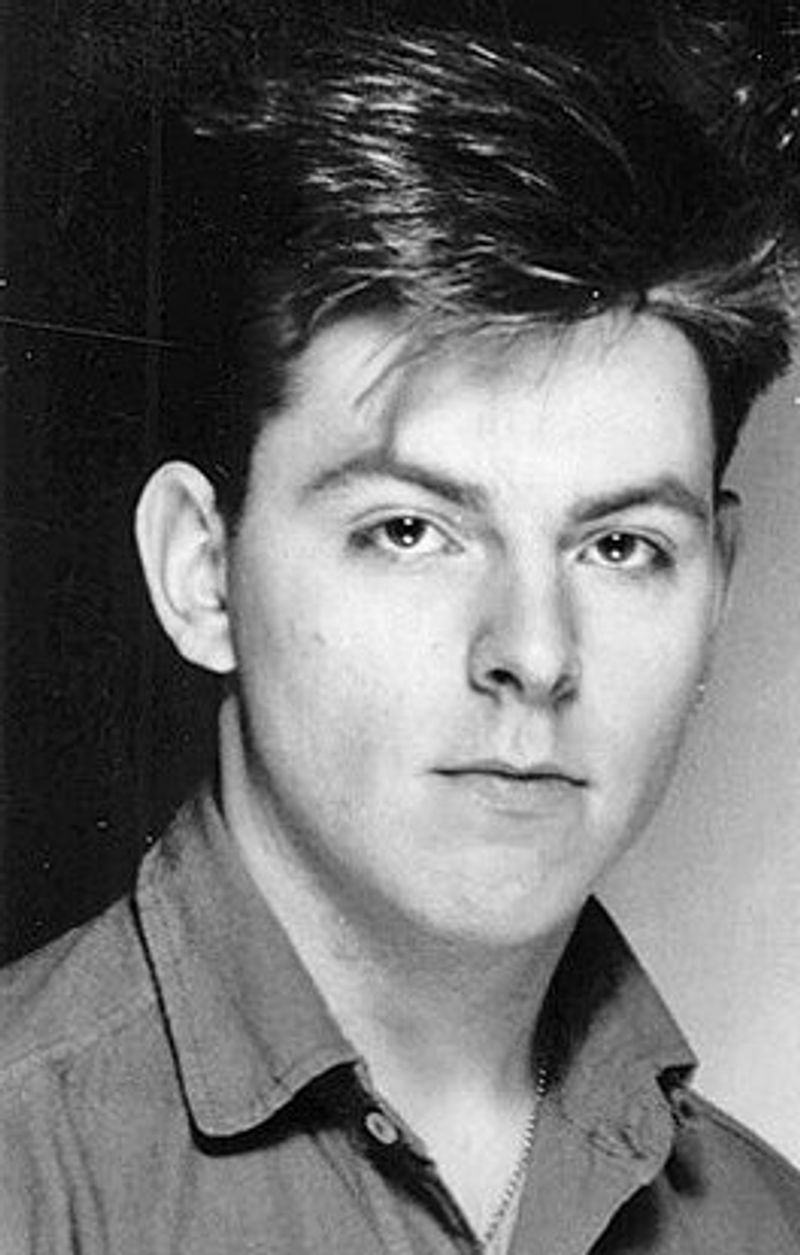
The Smiths are often discussed as a band built on Morrissey’s lyrics and Johnny Marr’s guitar playing. That framing, while understandable, leaves out Andy Rourke, whose bass lines were some of the most melodic and emotionally rich in 1980s British music.
His work on “This Charming Man” is practically a bass tutorial in pop hooks.
Rourke and Marr grew up together and had a musical bond that went back to childhood. That familiarity gave their playing a natural ease that is hard to fake.
Rourke seemed to know instinctively where Marr’s guitar was going and met it perfectly every time.
He struggled with drug addiction during his time with the band, which added turbulence to an already complicated dynamic. Despite those challenges, his playing remained consistently excellent.
Rourke passed away in 2023, and the tributes from fans and fellow musicians highlighted just how deeply his bass lines had touched people over the decades.
13. Christine McVie – Fleetwood Mac
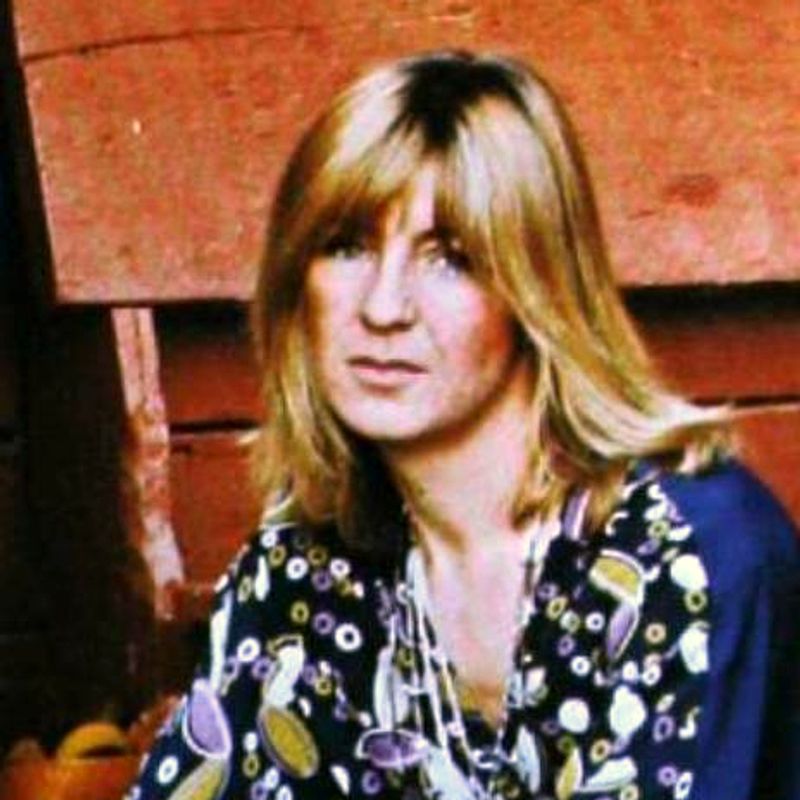
Fleetwood Mac’s “Rumours” is one of the best-selling albums of all time, and Christine McVie wrote several of its most beloved moments. “Don’t Stop,” “You Make Loving Fun,” and “Say You Love Me” all came from her pen. Those are not filler tracks.
They are cornerstones of the record.
McVie had a warmth in her voice and songwriting that balanced out the more intense emotional energy coming from Stevie Nicks and Lindsey Buckingham. Her songs tended to feel hopeful and melodically generous.
That contrast gave the album its emotional range and helped it connect with such a wide audience.
She briefly left the band in 1998 and returned in 2014, and the reunion was celebrated by fans worldwide. Her 2022 album with Buckingham showed she had lost none of her songwriting sharpness.
McVie passed away later that year, leaving behind a catalog that will endure for generations.
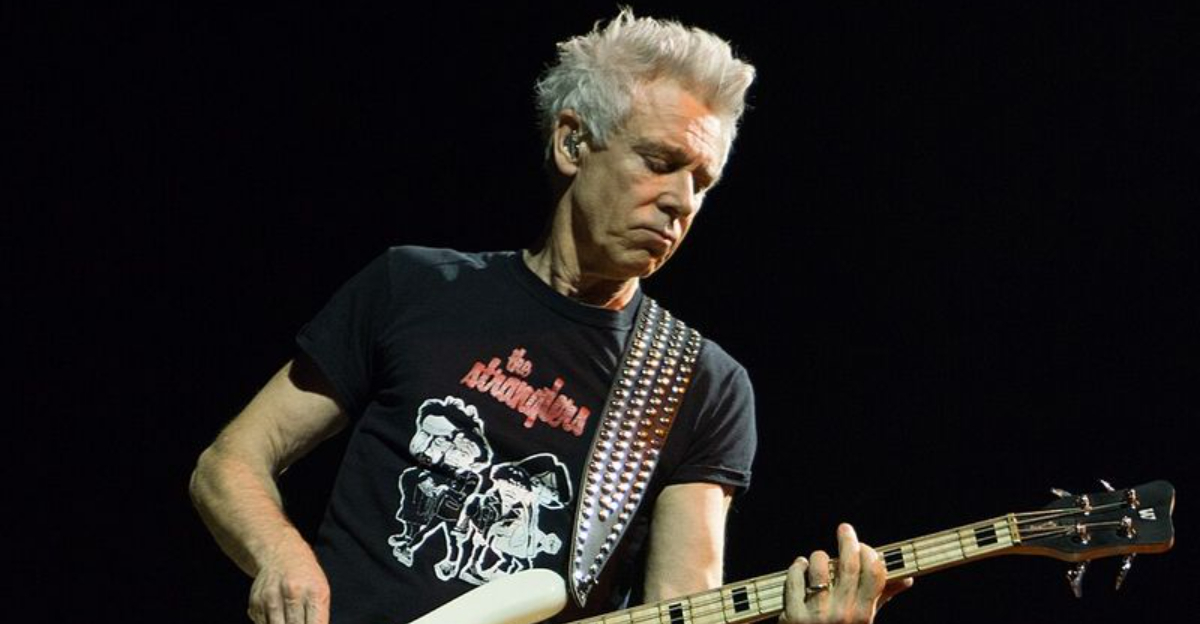
14. Adam Clayton – U2
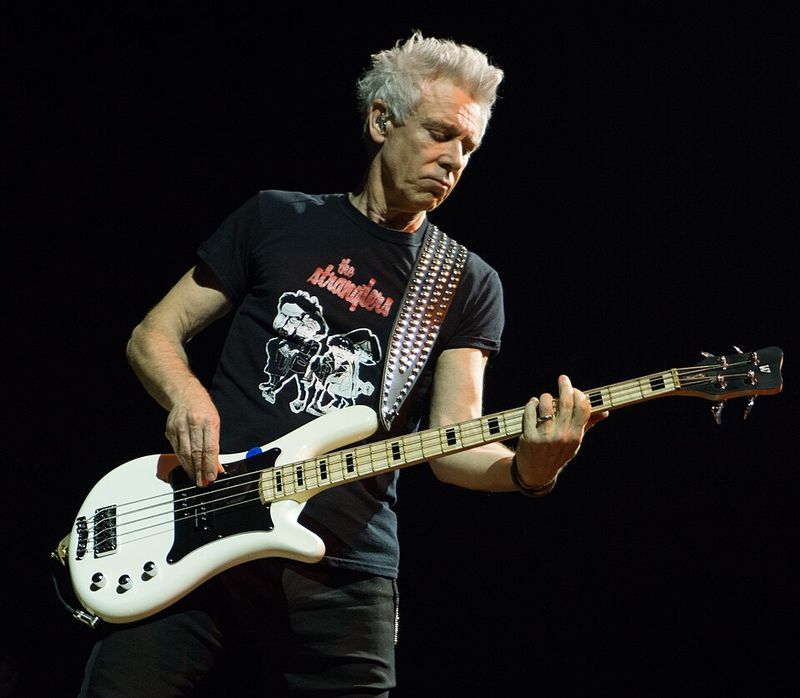
U2 built their sound on the interplay between The Edge’s guitar effects and Bono’s soaring vocals, but Adam Clayton’s bass was the thread holding the whole thing together. His minimalist approach gave songs like “With or Without You” and “One” their emotional spaciousness.
Less was genuinely more in his hands.
Clayton was actually the first member of U2 to be contacted about forming the band, even before Bono. He helped recruit the others and served as an early social glue for the group.
His role in the band’s formation is often overlooked in favor of stories about Bono’s ambition or The Edge’s sonic experiments.
He has spoken candidly in interviews about his personal struggles, including a period of heavy drinking in the 1990s. His recovery and continued commitment to the band showed real resilience.
Clayton’s steady presence, both musically and personally, helped keep U2 together through decades of enormous pressure and change.
15. Nick Mason – Pink Floyd
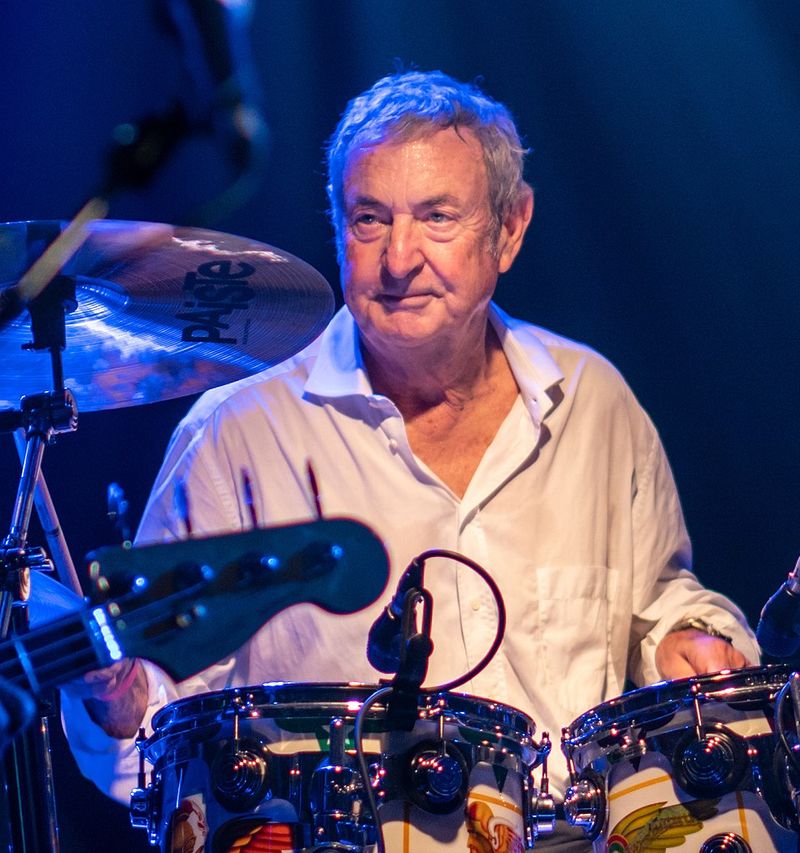
Here is a fact that says everything: Nick Mason is the only member who appeared on every single Pink Floyd album. Not Roger Waters, not David Gilmour, not Syd Barrett.
Mason was there from the very beginning and stayed through every lineup change, creative upheaval, and internal battle the band ever faced.
His drumming style was never about speed or technical flash. Instead, Mason focused on texture and atmosphere, which fit perfectly with Pink Floyd’s expansive, cinematic sound.
His work on tracks like “Time” and “Money” showed how a drummer could serve an album’s mood rather than just keeping the beat.
Mason has been the most publicly active former member in recent years, touring with his group Saucerful of Secrets and performing early Pink Floyd material. He also wrote a detailed memoir about the band’s history.
His dedication to preserving and celebrating that legacy speaks to how much it all means to him.



