 Unearth The Voyage
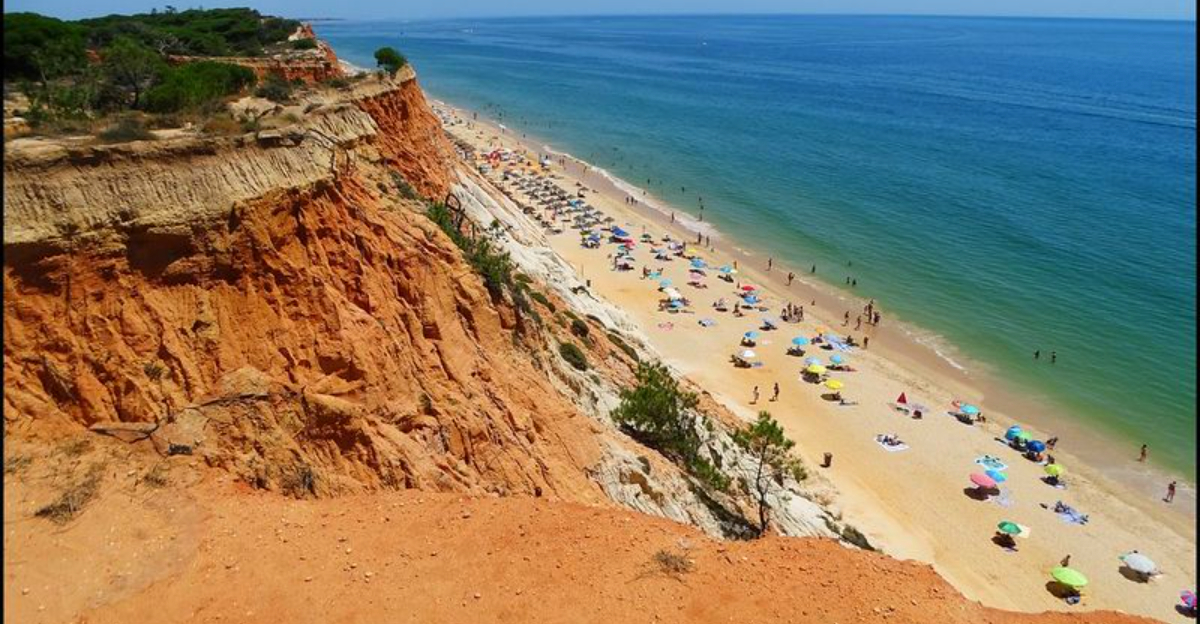
Golden beaches that run for miles. Cliffs that drop straight into turquoise water.
And sunshine that seems to show up almost every day. No wonder the Algarve gets compared to California.
Portugal’s southern coast serves up surf breaks, easygoing beach towns, dramatic seaside trails, and seafood worth planning a whole day around. These experiences capture the exact spots and moments that make the Algarve feel like California’s coastal cousin, just with a distinctly European edge.
1. Explore Praia da Marinha – Iconic Cliffside Beach
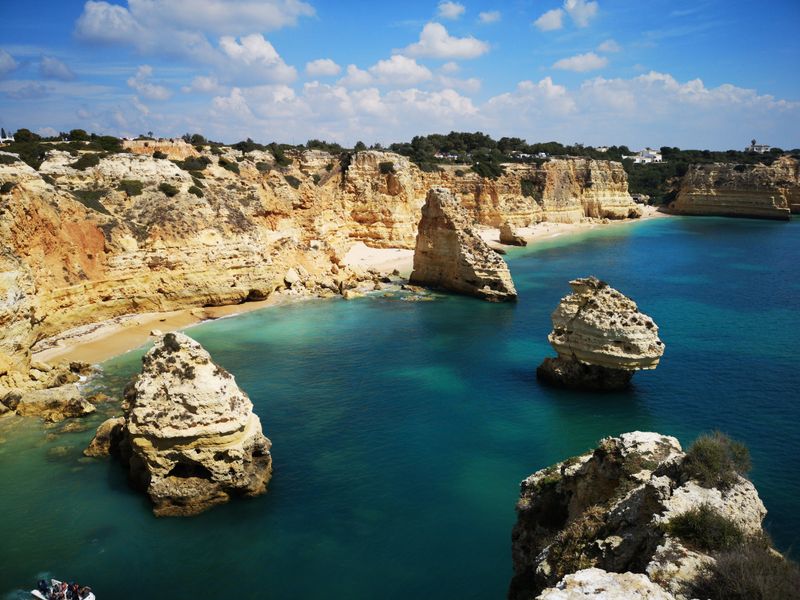
Golden cliffs tower above water so blue it looks Photoshopped, but I promise it’s real. Praia da Marinha consistently ranks among Europe’s most beautiful beaches, and one glance tells you why.
The rock formations here look like nature’s sculpture garden. Arches carved by centuries of waves frame perfect photo ops at every turn.
You’ll want to arrive early because this spot gets crowded faster than a food truck at lunchtime.
Steep stairs lead down from the parking area, so pack light and wear decent shoes. Once you hit the sand, claim your spot and prepare to do absolutely nothing productive for hours.
Swimming here feels like entering a giant natural pool. The water stays relatively calm thanks to the protective cliffs.
Snorkeling reveals fish darting between rocks, adding entertainment beyond sunbathing.
Sunset transforms the cliffs into glowing orange masterpieces. Photographers camp out with tripods, but honestly, your phone will capture magic here.
Just remember to actually enjoy the view instead of living through your screen.
The beach lacks facilities, so bring snacks and water. That rustic vibe is part of the charm though.
Sometimes the best beaches are the ones that haven’t been turned into tourist theme parks.
2. Kayak or Boat Tour to the Benagil Sea Cave
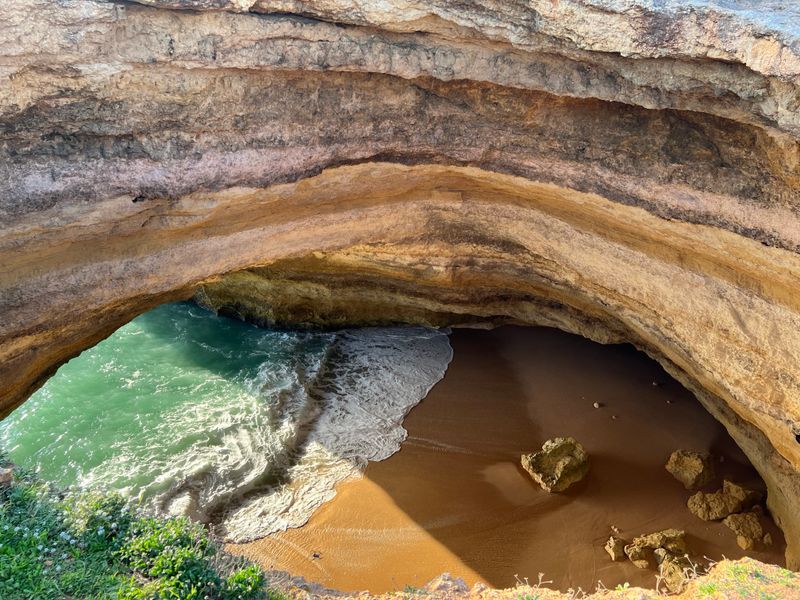
Paddling into Benagil Cave feels like discovering a secret cathedral built by the ocean itself. A circular skylight punches through the dome, flooding the interior with golden light that would make any Instagram filter jealous.
You’ve got two ways in: kayak or boat tour. Kayaking offers freedom and arm workout bonuses, while boats provide shade and zero chance of capsizing.
I chose kayak and regretted nothing except maybe skipping arm day at the gym.
The cave sits about 150 meters from Benagil Beach, so it’s a manageable paddle even for beginners. Waves can get frisky though, so check conditions before committing.
Nobody wants their cave adventure turning into an unplanned swimming lesson.
Inside, the acoustics are wild. Every splash echoes like nature’s sound system.
A small beach inside lets you land and gawk properly at the geological wonder surrounding you.
Tours book up faster than concert tickets in summer. Reserve ahead or risk standing on the beach watching others live your dream.
Early morning visits mean fewer crowds and better light for photos.
The cave appears on every Algarve highlight reel for good reason. It delivers that jaw-drop moment you traveled for, proving some tourist traps actually deserve the hype.
3. Visit Ponta da Piedade
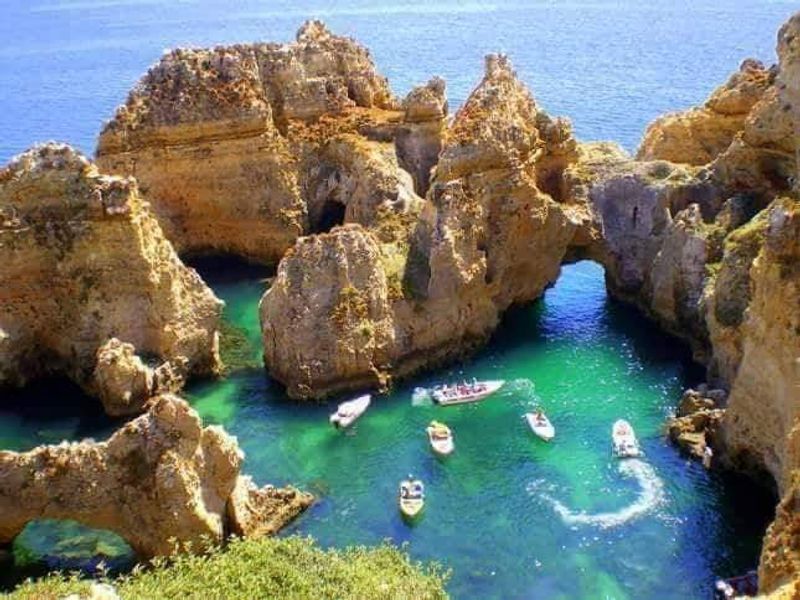
Mother Nature went absolutely bonkers with the landscape design at Ponta da Piedade. Limestone towers rise from emerald water like something from a fantasy movie, except you can actually climb around them.
Walking trails hug the cliff edge, offering ridiculous views at every bend. Wooden walkways and staircases zigzag down toward sea level, bringing you face-to-face with the rock formations.
Vertigo sufferers might want to stick to the upper paths.
Boat tours weave through grottoes and tunnels carved beneath the cliffs. Guides navigate tight squeezes that’ll have you ducking and gasping.
The perspective from water level reveals details you’d miss from above.
Sunrise here paints the rocks in shades of pink and orange that seem too vibrant to be real. Photographers arrive in the dark to claim prime spots.
Even non-morning people admit the early wake-up pays off.
The lighthouse stands sentinel at the point, though it’s the supporting cast of rocks that steals the show. Bring binoculars and you might spot dolphins playing in the distance.
Summer brings crowds, but the sheer scale of the area means you can still find quiet corners. Winter offers solitude and dramatic waves, though swimming becomes less appealing when the Atlantic remembers it’s an ocean.
4. Sunbathe at Praia da Falésia
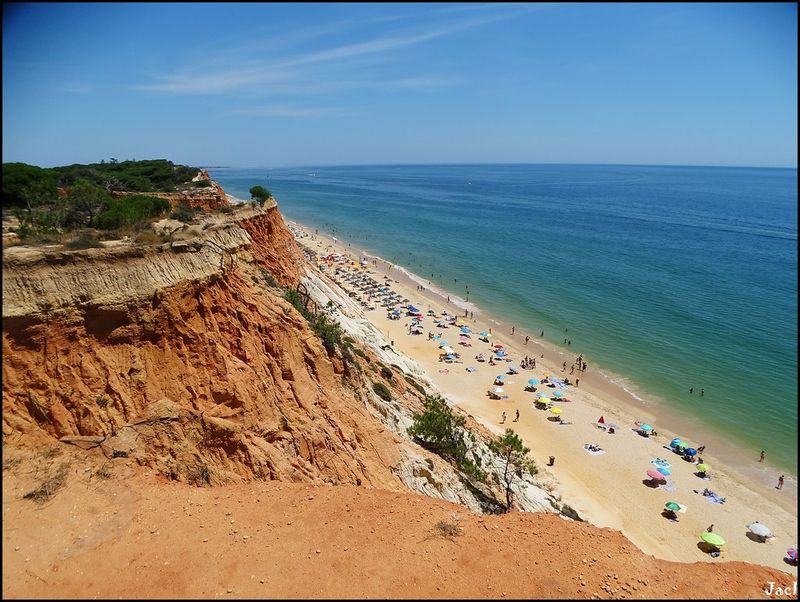
Red cliffs striped like a geological layer cake back this six-kilometer stretch of perfection. Praia da Falésia gives you room to breathe, literally—even in peak season you can find your own patch of sand.
The cliff colors shift throughout the day as sunlight hits different angles. Morning light makes them glow soft pink, while afternoon sun intensifies the rust and orange tones.
It’s like watching a very slow, very beautiful mood ring.
Beach bars dot the sand at regular intervals, serving cold drinks and grilled fish. You can walk for an hour and still find civilization when hunger strikes.
That balance between wild and convenient hits just right.
Families love the gentle slope into the water here. Kids can wade safely while parents actually relax instead of playing lifeguard.
The sand quality deserves mention too—fine and golden, not the coarse stuff that attacks your towel.
Sunset walks along the waterline become addictive. The cliffs catch fire with color as the sun drops, creating that golden hour photographers obsess over.
Bring a camera or just soak it in; both approaches work.
Parking fills up by mid-morning in summer, so arrive early or prepare to walk from distant lots. That minor inconvenience keeps the beach from turning into a sardine can though, so maybe it’s a blessing.
5. Discover Ria Formosa Natural Park
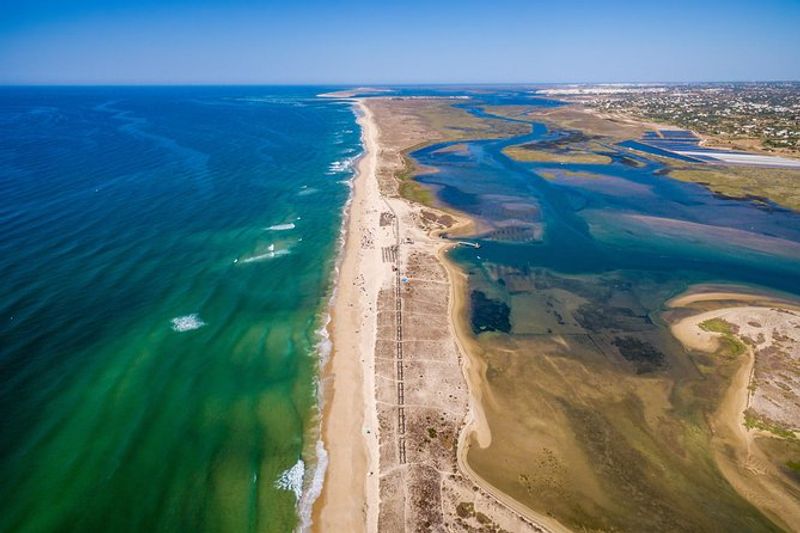
Barrier islands, salt marshes, and lagoons create a watery maze that feels worlds away from the tourist beaches. Ria Formosa Natural Park protects 18,000 hectares of coastal wetlands that birds, fish, and nature nerds absolutely adore.
Boat tours navigate the channels between islands, passing traditional fishing operations and oyster farms. Guides point out flamingos, spoonbills, and other species with names that sound made up.
Binoculars transform from dorky accessory to essential gear here.
The park stretches from Quinta do Lago to Manta Rota, offering multiple access points. Each entrance reveals different ecosystems and wildlife.
You could spend days exploring and still not see everything.
Deserted beaches on the barrier islands deliver that castaway fantasy without the survival drama. Ferry services run regularly, so you’re never actually stranded.
Pack a picnic and claim your temporary island kingdom.
Birdwatching peaks during migration seasons when thousands of species use the park as a pit stop. Even non-birders find themselves impressed by the sheer variety of wings and beaks passing through.
Local restaurants near the park serve seafood so fresh it was probably swimming that morning. Clams, oysters, and octopus feature heavily on menus, all harvested from these protected waters.
Supporting the local fishing economy while eating incredibly well? That’s a win-win situation.
6. Take a Ferry to Armona Island
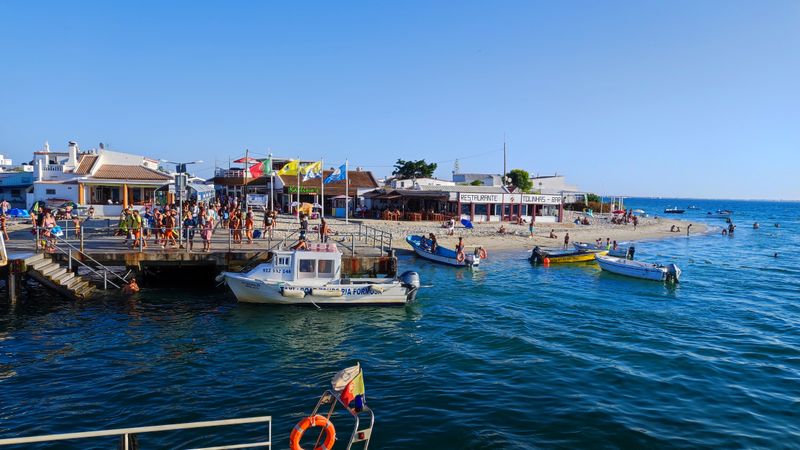
A 15-minute ferry ride from Olhão drops you onto an island where cars don’t exist and stress evaporates. Armona Island operates on beach time, meaning clocks become decorative rather than functional.
White sand beaches stretch endlessly in both directions from the ferry dock. Pick left or right based on absolutely nothing because both options deliver paradise.
The Atlantic side offers waves, while the lagoon side provides calm waters perfect for kids.
Wooden walkways connect the small village to the beaches, passing through dunes and pine trees. The island’s permanent population of around 50 residents swells with day-trippers in summer, but it never feels crowded.
Space is Armona’s superpower.
Beach bars serve grilled sardines and cold beer with your toes in the sand. Service runs on island time too, so don’t rush.
You came here to slow down anyway.
Swimming in the clear water reveals small fish investigating your legs. The seabed stays sandy and shallow for ages, making it ideal for nervous swimmers.
Strong swimmers can venture further out where the water deepens dramatically.
The last ferry back leaves early evening, so check schedules unless you fancy an unplanned island sleepover. A few guesthouses exist for those who decide one day isn’t enough.
Honestly, they’re probably onto something.
7. Visit Silves Castle & Historic Town
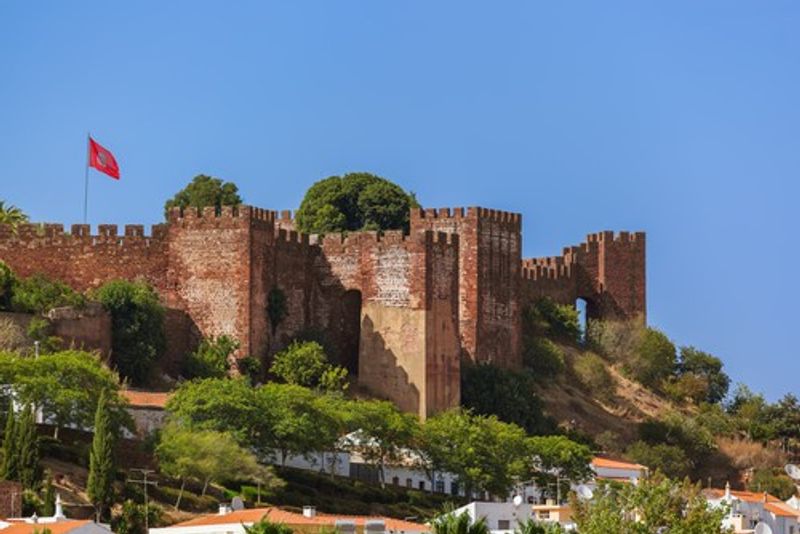
Red sandstone walls rise above orange groves, looking exactly like a castle should but rarely does in real life. Silves Castle dominated this region when Moors ruled southern Portugal, and those fortifications still impress centuries later.
Walking the ramparts provides 360-degree views over terracotta roofs and agricultural valleys. You can spot the coast in the distance on clear days.
The strategic importance of this hilltop position becomes instantly obvious from up here.
Inside the walls, archaeology reveals layers of history. Cisterns still hold water, proving medieval engineering wasn’t all about looking intimidating.
Information panels explain the castle’s evolution without being boring, which deserves recognition.
The town below the castle deserves exploration too. Narrow streets wind past whitewashed houses and cafés serving traditional pastries.
Silves feels authentically Portuguese rather than tourist-polished, which makes it refreshingly real.
The cathedral near the castle dates back to the 13th century and showcases Gothic architecture. It’s smaller than famous European cathedrals but no less beautiful.
Sometimes intimate beats grandiose.
Summer temperatures in Silves climb higher than coastal areas, so visit in morning or late afternoon. The castle offers little shade, making sunscreen and water non-negotiable.
History is great, but heatstroke ruins the experience fast.
8. Taste Algarve Wines on Vineyard Tours
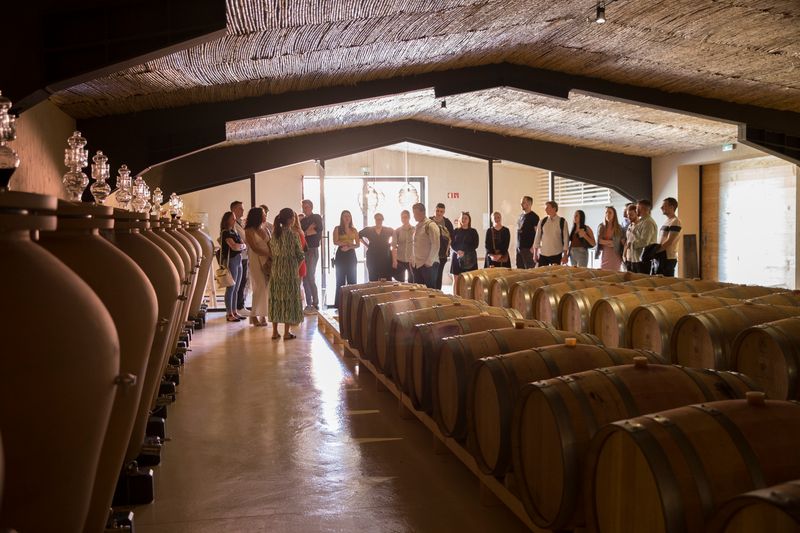
Turns out the Algarve grows more than just tourists and oranges. Local vineyards produce wines that surprise people who assume Portugal stops at Port and Vinho Verde.
Quinta dos Vales near Estômbar combines art with viticulture, featuring sculpture gardens between the vines. Tours end with tastings that prove their wines compete with fancier regions.
The rosé especially deserves attention, crisp and perfect for hot afternoons.
Quinta da Tôr focuses on organic practices and indigenous grape varieties. Their reds show depth and character that challenge assumptions about southern Portuguese wines.
Guides explain the terroir without getting pretentious, which wine tours don’t always manage.
Most estates require reservations, so plan ahead rather than showing up hopefully. Tours typically include vineyard walks, cellar visits, and multi-wine tastings.
Some offer food pairings featuring local cheeses and charcuterie.
The wine route connects multiple estates across the region, letting you design your own boozy adventure. Designated drivers become heroes on these excursions.
Alternatively, some tour companies handle transportation between vineyards, removing the guilt from that extra tasting.
Harvest season in September brings special energy to the estates. Some offer grape-stomping experiences that feel touristy but remain genuinely fun.
Your purple-stained feet make excellent conversation starters back home.
9. Wander the Charming Streets of Lagos Old Town
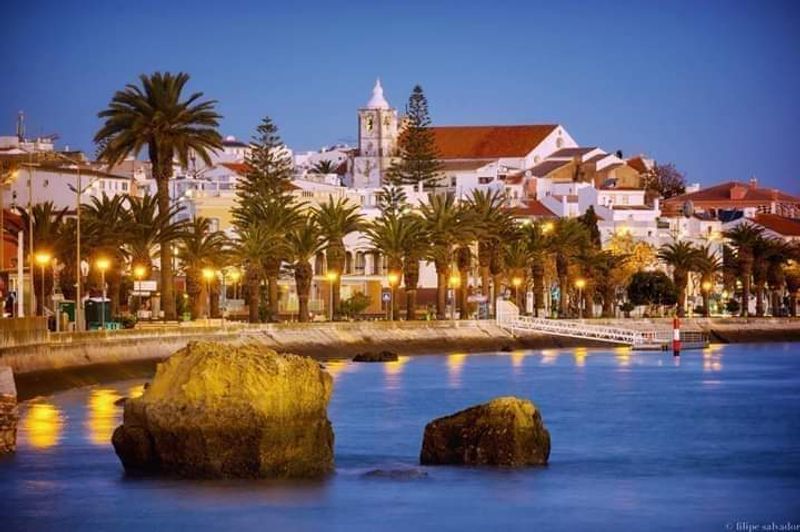
Cobblestones lead you through a maze of history, restaurants, and shops that somehow avoid feeling like a tourist trap. Lagos Old Town maintains its soul despite welcoming visitors by the thousands.
The Igreja de Santo António dazzles with gilded baroque interior that seems excessive until you’re standing inside it. Then excessive becomes exactly right.
The attached museum displays religious art and archaeological finds worth the small admission fee.
Praça Infante Dom Henrique serves as the town’s living room where locals and tourists mix naturally. Cafés ring the square, offering prime people-watching real estate.
Order a bica and settle in for the show.
Street art adds contemporary flair to ancient walls throughout the old town. Some pieces comment on tourism and gentrification with sharp wit.
Portugal’s street art scene rivals any in Europe, and Lagos contributes quality work.
Restaurants pack the narrow lanes, ranging from traditional tascas to modern fusion spots. The seafood cataplana—a copper pot stew—appears on most menus and rarely disappoints.
Reservations help during peak season unless you enjoy standing hopefully outside full restaurants.
Shopping here leans toward artisan crafts rather than mass-produced souvenirs. Ceramics, leather goods, and cork products make better mementos than another magnet.
Supporting local craftspeople beats funding factories in distant countries.
10. Spot Dolphins on a Marine Tour
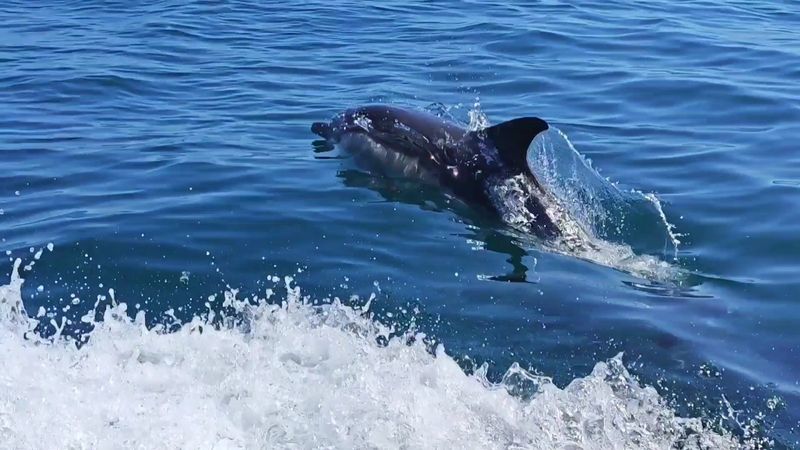
Wild dolphins arc through the water like they’re showing off, which they probably are. Marine tours off the Algarve coast encounter these playful mammals regularly enough that operators confidently promise sightings.
Common dolphins and bottlenose dolphins both frequent these waters. Tours typically last two to three hours, cruising along the coast while crew members scan for telltale fins and splashes.
Binoculars get passed around frantically when a pod appears.
Responsible operators maintain distance and follow guidelines that protect the animals. Boats don’t chase or surround pods, letting dolphins approach if curious.
Sometimes they surf the boat’s wake, putting on shows nobody requested but everyone appreciates.
The ocean out here shows different moods than beach waters. Swells rise and fall in mesmerizing patterns.
Seasickness happens, so take preventive measures if you’re prone. Missing dolphins because you’re hanging over the rail would be tragic.
Some tours combine dolphin watching with cave exploration or snorkeling stops. Those extended trips provide more value but require more time.
Choose based on your schedule and attention span.
Seeing dolphins in captivity versus wild presents no comparison. These animals own the ocean, living full dolphin lives.
That freedom makes every leap and dive more meaningful. Tours that respect that deserve your money over exploitative attractions.
11. Visit the Farol do Cabo de São Vicente
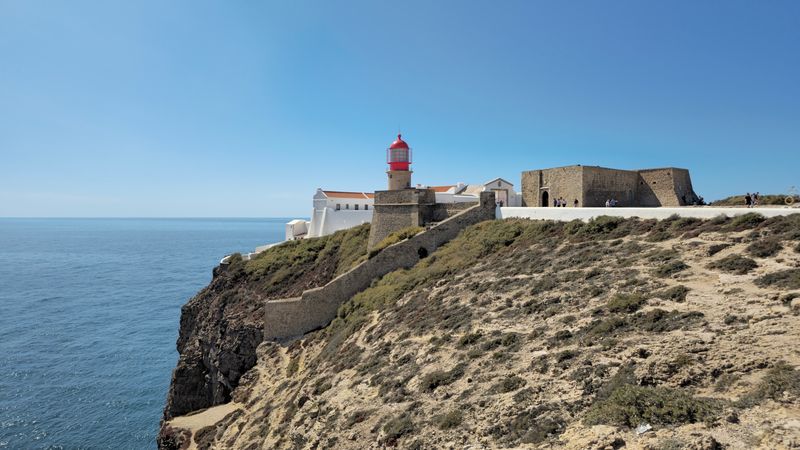
Stand at the southwestern corner of continental Europe where land surrenders to endless Atlantic. Cabo de São Vicente lighthouse marks this dramatic meeting point with appropriate gravitas.
Ancient sailors considered this the edge of the known world. You can understand why when wind whips across the clifftops and waves assault rocks 75 meters below.
The raw power of nature on display here humbles even the most jaded travelers.
The lighthouse itself dates to 1904, replacing earlier versions destroyed by earthquakes and raids. Its beam reaches 60 kilometers out to sea, guiding ships through waters that have claimed countless vessels.
Maritime history soaks every stone here.
Sunset draws crowds who gather to watch the sun sink into the ocean. It’s touristy and clichéd and absolutely worth doing.
Some moments earn their popularity honestly.
A small museum inside the lighthouse complex explains the cape’s nautical significance. Exhibits cover navigation history and local ecosystems without requiring hours of your day.
Quick but informative hits the sweet spot.
The surrounding area offers hiking trails along cliff edges with views that make your heart race and palms sweat. Fencing exists in some spots but not everywhere, so watch your step.
Becoming a cautionary tale isn’t the souvenir you want.
12. Explore Mercado de Olhão
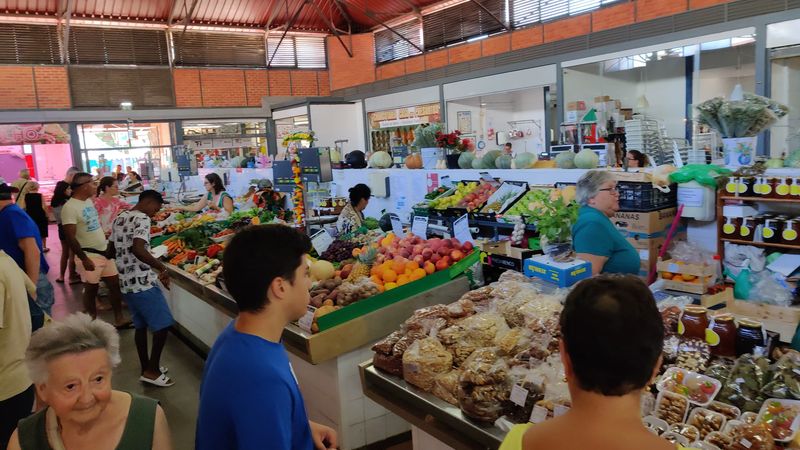
Fish stare at you from ice beds while vendors shout prices and banter flies in rapid Portuguese. Mercado de Olhão operates as a real working market where locals shop, not a sanitized tourist attraction pretending to be authentic.
The twin red-brick buildings house seafood on one side and produce on the other. Architecture nerds appreciate the neo-classical design, but most people focus on the incredible array of ocean creatures displayed like edible art.
Octopus, squid, clams, razor clams, barnacles, and fish species you’ve never heard of create a seafood education. Vendors will explain what everything is and how to cook it if you ask.
Their passion for seafood borders on religious.
The produce hall explodes with color and scent. Tomatoes, peppers, figs, and oranges pile high in photogenic abundance.
Prices beat supermarkets, and quality exceeds them by miles. Shopping here supports local farmers directly.
Small restaurants surrounding the market serve breakfast and lunch to vendors and savvy visitors. The food is simple, cheap, and ridiculously good.
Order whatever the person next to you is eating; you can’t go wrong.
Saturday mornings bring the biggest crowds and fullest stalls. Arrive early for the best selection and to experience the market at peak energy.
By afternoon, vendors start packing up, and the magic fades.
13. Hike the Seven Hanging Valleys Trail
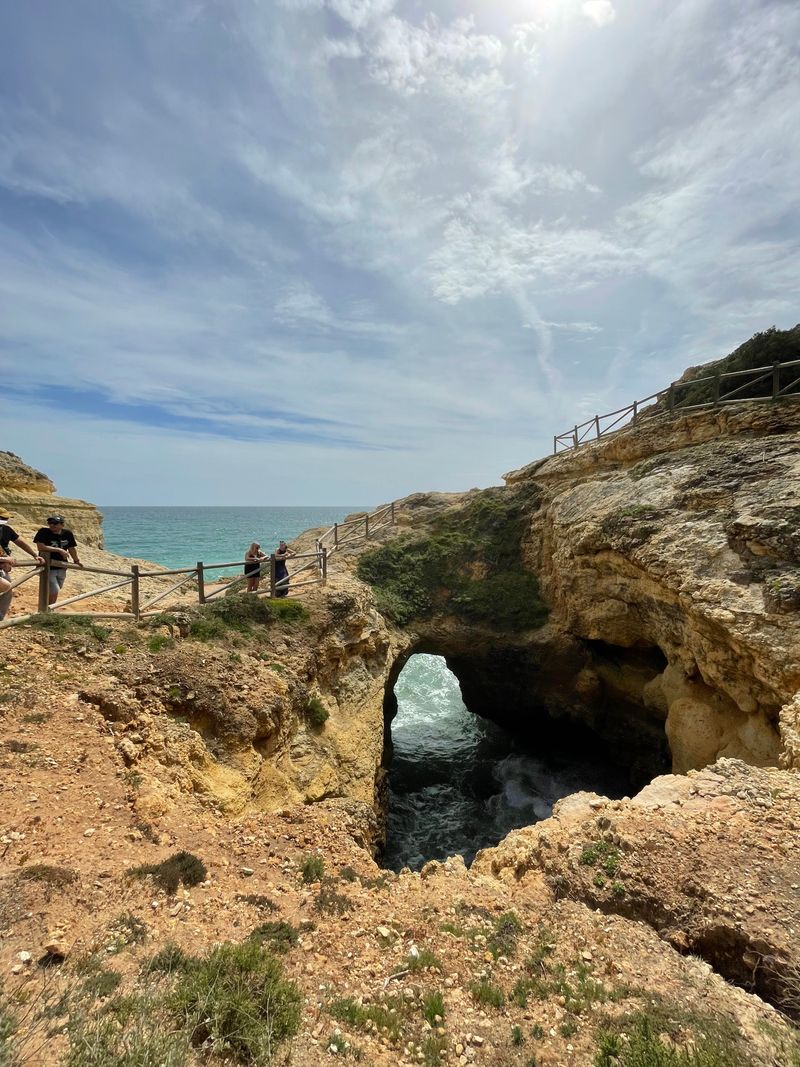
Cliff-edge paths deliver knockout coastal views for six kilometers between Praia da Marinha and Praia de Vale Centianes. The Seven Hanging Valleys Trail ranks among Europe’s best coastal walks, and that’s not marketing hype.
The route passes viewpoints over hidden beaches, sea caves, and rock formations that look sculpted by obsessive artists. Each bend reveals another postcard scene.
Camera batteries die quickly here.
Difficulty levels out at moderate, with some steep sections and uneven terrain. Proper footwear matters more than fitness level.
Flip-flops will betray you when the path gets rocky.
Spring wildflowers carpet the cliffs in color, adding extra visual treats to already stunning scenery. Summer heat makes early morning starts essential unless you enjoy hiking in an oven.
Water and sun protection aren’t suggestions; they’re survival gear.
The trail can be walked in either direction or as a there-and-back route. Starting from Carvoeiro allows for post-hike refreshments in town.
Strategic planning of logistics beats winging it when you’re tired and thirsty.
Erosion occasionally closes sections, so check current conditions before setting out. Alternative routes exist, but they might miss some highlights.
The trail remains popular for good reason, so expect company during peak seasons. Solo contemplation requires off-season timing or very early starts.
14. Relax at Praia da Rocha
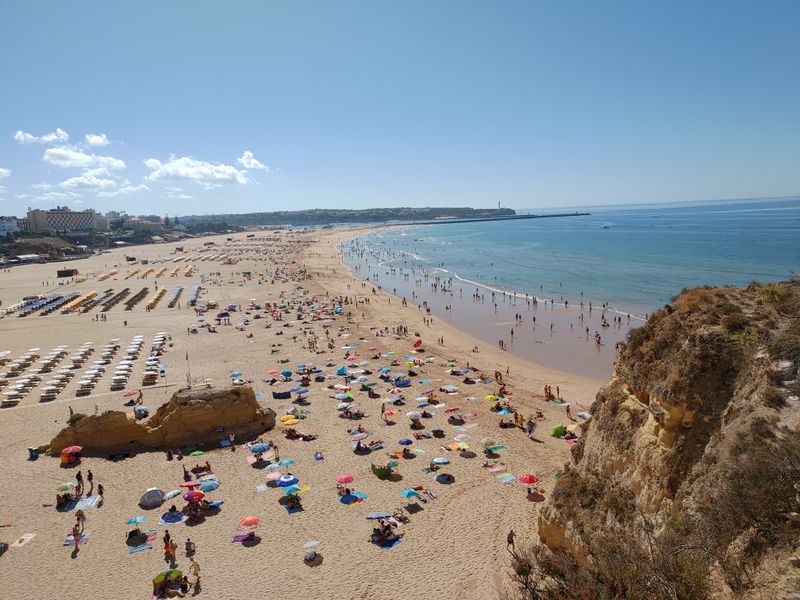
Wide sands and dramatic rock stacks make Praia da Rocha one of the Algarve’s most popular beaches. That popularity comes with crowds, but the beach handles them better than smaller alternatives.
Rock formations rising from the sand create natural sculptures that beg to be climbed and photographed. Kids treat them like playground equipment while adults appreciate the geological artistry.
Everyone wins.
The promenade backing the beach buzzes with restaurants, bars, and shops. You can grab lunch without leaving beach proximity, which matters when you’re sandy and half-dressed.
Convenience has value.
Water sports operators offer jet skiing, parasailing, and banana boat rides for those who find simple beach lounging insufficient. Adrenaline junkies and families seeking variety appreciate the options.
Others ignore them successfully.
Beach bars provide music, drinks, and social scenes that extend well past sunset. Praia da Rocha parties harder than quieter beaches, attracting crowds who consider nightlife part of the beach experience.
If you prefer peaceful sunset contemplation, this might not be your spot.
Parking challenges arise daily in summer as everyone competes for limited spaces. Public transport or taxis eliminate that stress.
The beach itself offers enough space that crowding rarely becomes oppressive except on peak weekends. Choose your timing wisely.
15. Enjoy Faro’s Old Town & Marina
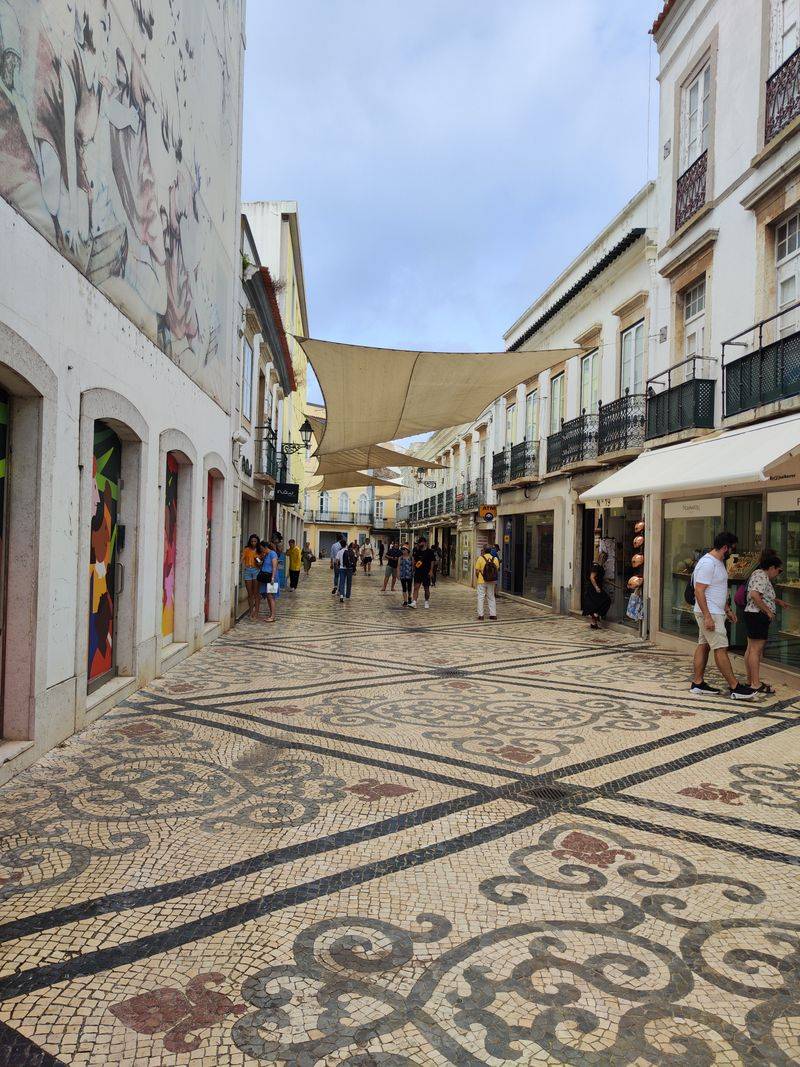
Most tourists speed through Faro to reach beach towns, missing a charming walled old town that rewards exploration. Their loss becomes your gain when you actually stop and look around.
The Arco da Vila gate leads into the historic center where time slowed down and forgot to speed back up. Cobbled streets, orange trees, and buildings painted in soft pastels create postcard scenes without trying.
Authenticity beats manufactured charm every time.
Faro Cathedral dominates the main square, its tower offering panoramic views over the city and Ria Formosa beyond. Climbing the narrow stairs earns you perspective literally and figuratively.
The views justify the effort and entrance fee.
The marina area contrasts the old town’s historical vibe with modern restaurants and waterfront walkways. Yachts bob in the harbor while people stroll and dine with water views.
Both neighborhoods work together to show Faro’s full personality.
Museums scattered through the old town cover archaeology, maritime history, and regional ethnography. None require marathon visits, making them perfect for culture doses between meals.
The municipal museum’s Roman mosaics alone justify the stop.
Restaurants here serve locals more than tourists, keeping prices reasonable and quality high. Fresh seafood dominates menus, prepared traditionally rather than fusion-fancy.
Sometimes simple done well beats complicated done adequately.



