 Unearth The Voyage
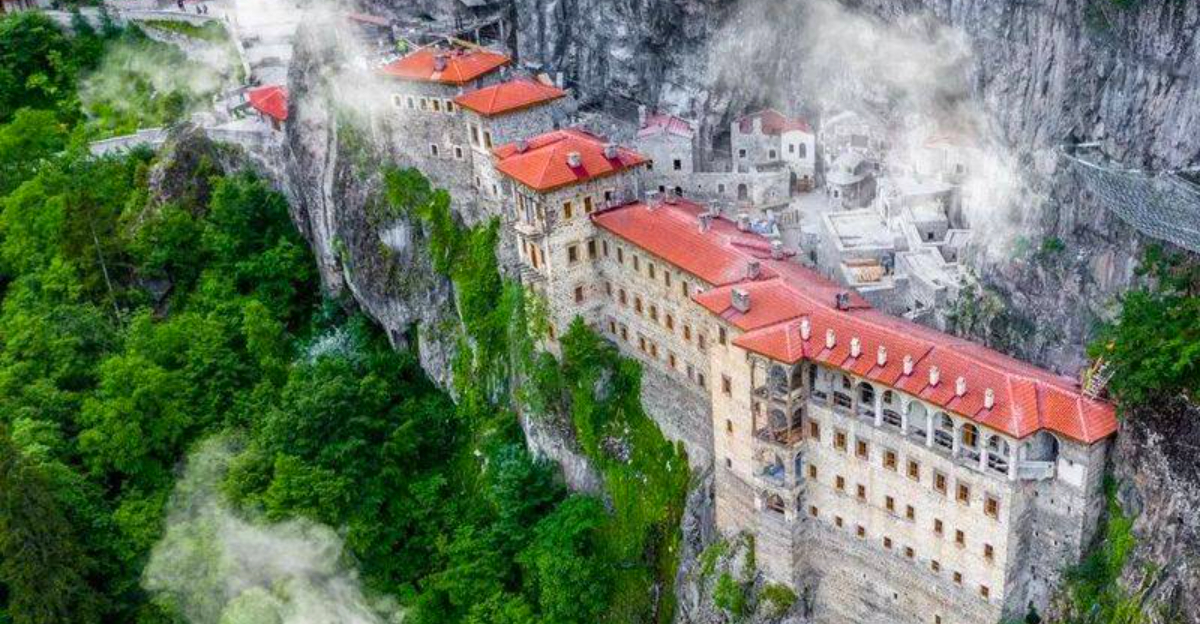
Turkey is a country where ancient history meets stunning natural beauty, and nowhere is this more obvious than in its incredible landmarks. From towering mosques to underground cities, each site tells a unique story that has shaped civilizations for thousands of years.
Whether you’re fascinated by Roman ruins, Byzantine architecture, or breathtaking landscapes, Turkey offers experiences that will stay with you forever.
Hagia Sophia — Istanbul
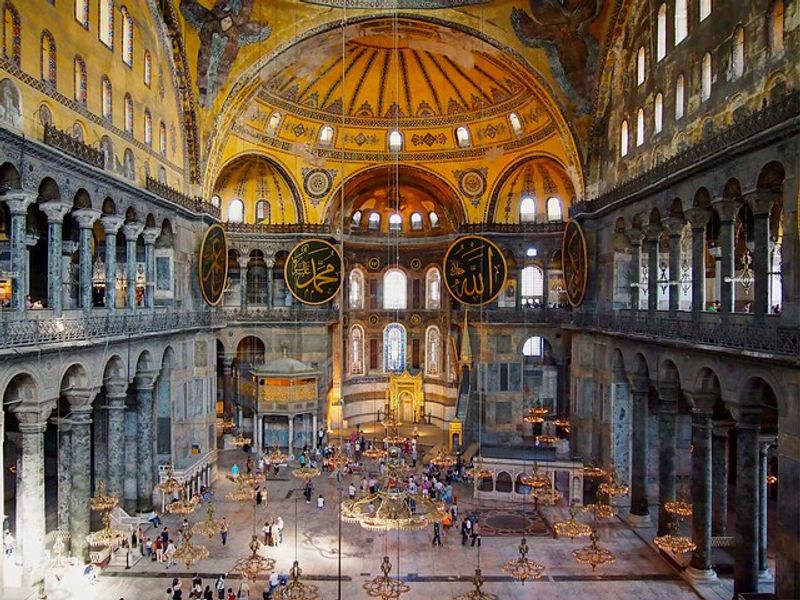
Walking into Hagia Sophia feels like stepping through time itself. Originally constructed in 537 AD under Emperor Justinian, this architectural marvel served as a Christian cathedral for nearly a thousand years before the Ottomans transformed it into a mosque in 1453.
Today, it stands as a museum and cultural monument that showcases the best of both empires.
The interior is absolutely breathtaking, with its enormous dome appearing to float 180 feet above the marble floors. Golden mosaics depicting religious scenes shimmer alongside Islamic calligraphy, creating a unique blend that you won’t find anywhere else.
The sheer scale of the building makes you feel tiny, yet the intricate details draw your eyes to every corner.
Visitors often spend hours here, mesmerized by the play of light through ancient windows and the echoes of centuries past. The upper galleries offer stunning views of the main hall and are worth the climb.
Whether you’re a history enthusiast or simply appreciate beautiful buildings, Hagia Sophia delivers an unforgettable experience that perfectly captures Istanbul’s role as a bridge between East and West.
Blue Mosque (Sultan Ahmed Mosque) — Istanbul
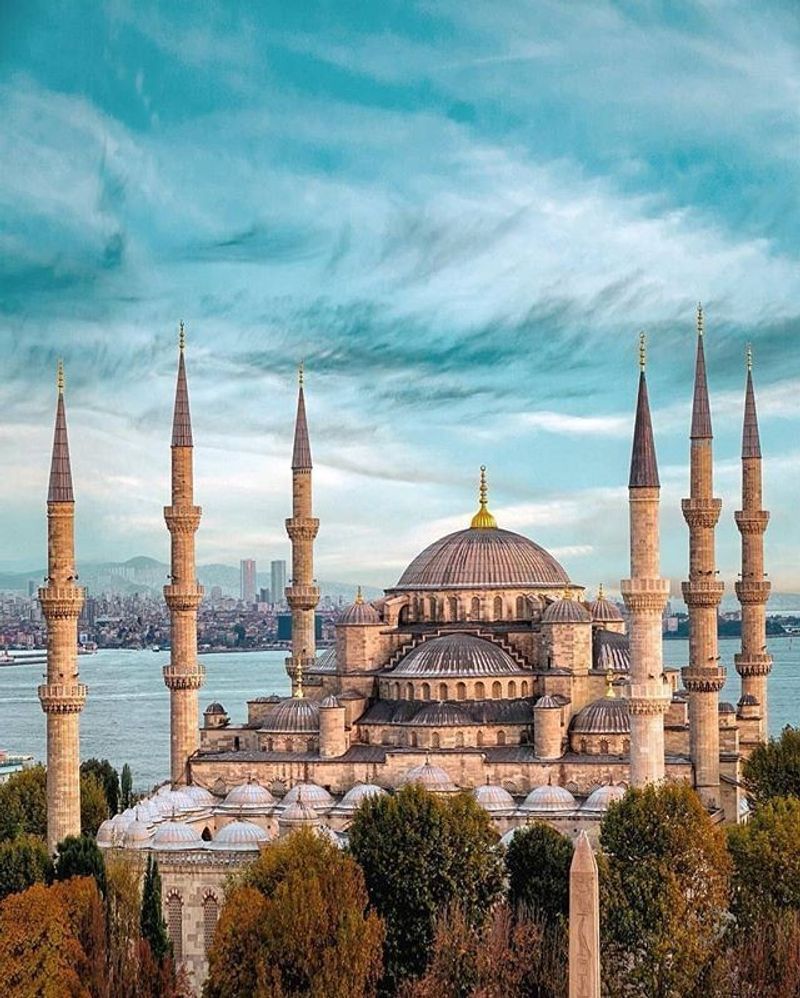
Sultan Ahmed I wanted to build something spectacular, and he definitely succeeded. Completed in 1616, the Blue Mosque earned its nickname from the stunning blue Iznik tiles that cover its interior walls—more than 20,000 of them creating intricate floral and geometric patterns.
The effect is like standing inside a jewel box where every surface seems to glow.
What really sets this mosque apart is its six minarets, which caused quite a scandal when it was built. Only Mecca’s mosque was supposed to have that many, so Sultan Ahmed had to fund a seventh minaret there to smooth things over.
The courtyard is equally impressive, with a central fountain surrounded by colonnades that create a peaceful atmosphere despite the crowds.
Since it’s still an active mosque, visitors need to dress modestly and visit outside prayer times. Remove your shoes before entering, and women should bring a scarf to cover their hair.
The interior’s 260 windows flood the space with natural light, making those blue tiles practically sparkle. Early morning visits offer the best chance to appreciate the mosque’s beauty without battling tour groups.
Topkapi Palace — Istanbul
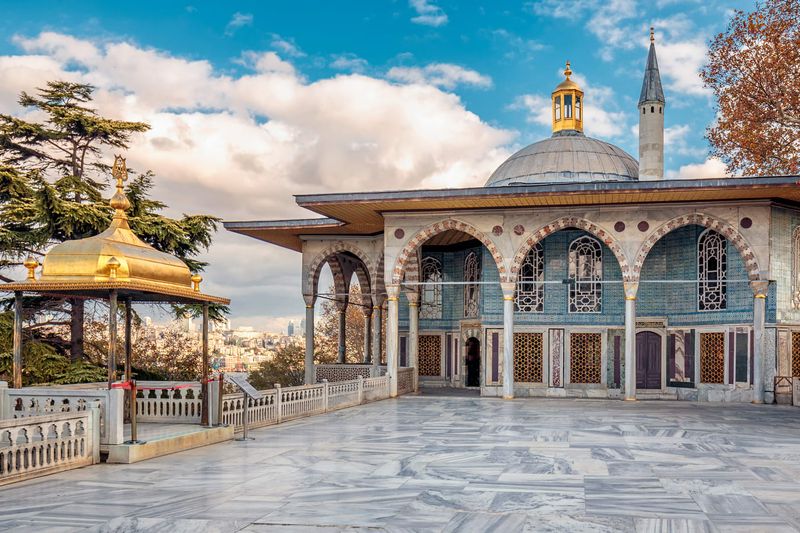
For nearly four centuries, Topkapi Palace served as the headquarters of Ottoman power, where sultans ruled an empire stretching across three continents. Built shortly after Constantinople’s conquest in 1453, this sprawling complex covers 173 acres and contains everything from treasure chambers to imperial kitchens.
Each courtyard reveals another layer of palace life, from public ceremonies to the private world of the harem.
The Treasury section alone could keep you occupied for hours, displaying emerald-encrusted daggers, throne chairs covered in gold, and the famous 86-carat Spoonmaker’s Diamond. The Harem, where the sultan’s family lived, features over 400 rooms decorated with exquisite tiles and mother-of-pearl inlays.
Don’t miss the Baghdad Kiosk, with its stunning views over the Bosphorus and Golden Horn.
Comfortable shoes are essential because you’ll be doing lots of walking on marble and cobblestone paths. The palace gardens offer shady spots to rest while taking in panoramic water views.
Audio guides provide fascinating stories about palace intrigue, daily routines, and the powerful sultans who shaped history from these very rooms.
Grand Bazaar — Istanbul
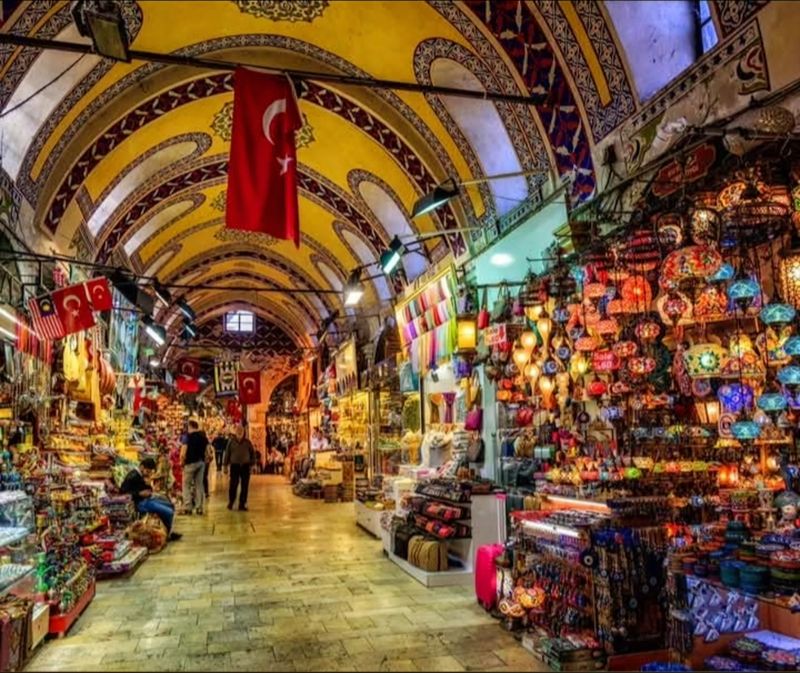
Get ready for sensory overload in the best possible way. The Grand Bazaar has been Istanbul’s shopping heart since 1461, and wandering its 61 covered streets feels like entering a labyrinth where every turn reveals something unexpected.
Over 4,000 shops crowd into this massive complex, selling everything imaginable—hand-knotted carpets, glittering jewelry, aromatic spices, painted ceramics, leather goods, and lanterns that cast rainbow patterns.
Bargaining isn’t just expected here; it’s part of the experience. Shopkeepers will offer you apple tea while you negotiate prices, turning transactions into social interactions.
The bazaar’s architecture deserves attention too, with its painted vaulted ceilings and ornate fountains tucked into corners. Some shops have been run by the same families for generations, and they’re happy to share stories about their crafts.
Arrive early to beat the crowds and bring cash, as many vendors prefer it. Keep your belongings secure in the busy lanes, and don’t feel pressured to buy—window shopping is perfectly acceptable.
The bazaar’s sheer size means you’ll probably get lost, but that’s part of the adventure. Save energy for exploring the nearby Spice Bazaar too.
Ephesus — Near Selçuk
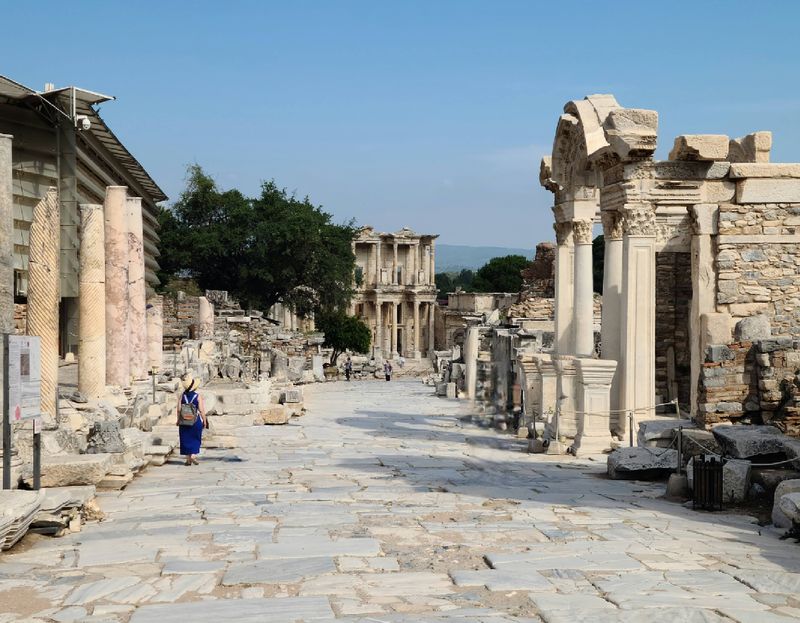
Ephesus once ranked among the greatest cities of the Roman Empire, home to 250,000 people who walked the same marble streets you can explore today. The preservation here is remarkable—you can still see grooves worn into stone roads by countless chariot wheels and ancient advertisements carved into walkways.
This wasn’t just any city; it was a major trade hub and cultural center where philosophy, commerce, and daily life flourished.
The Library of Celsus steals the show with its reconstructed two-story facade, originally holding 12,000 scrolls. Nearby, the Great Theatre could seat 25,000 spectators and still hosts occasional concerts with incredible acoustics.
Terraced houses reveal how wealthy Romans lived, with colorful frescoes and intricate mosaics covering walls and floors. Even the public toilets are fascinating, showing the social nature of Roman bathroom breaks.
Summer temperatures can be brutal, so bring water, sunscreen, and a hat. The site covers a large area requiring comfortable walking shoes and at least three hours to see the highlights.
Hiring a guide really enhances the experience, as they bring the ruins to life with stories that textbooks miss completely.
Pamukkale & Hierapolis — Denizli Province
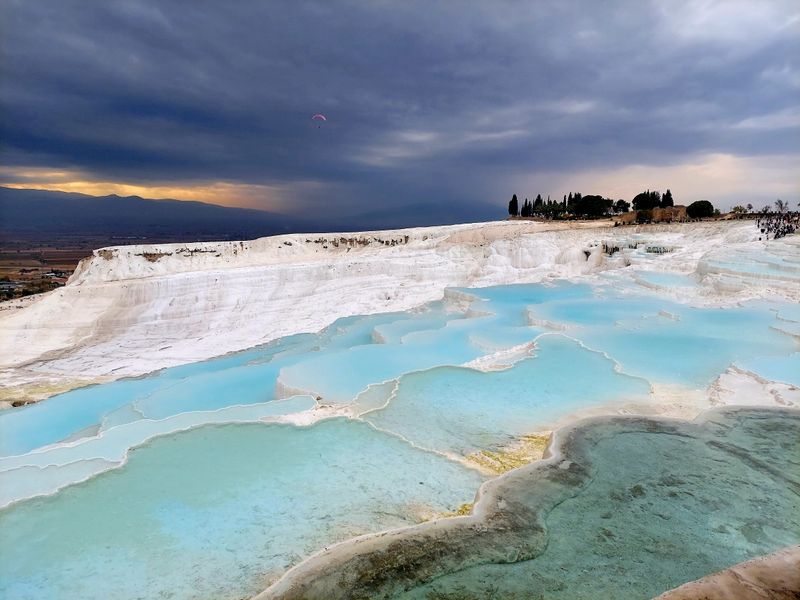
Mother Nature created something truly magical at Pamukkale, where calcium-rich thermal waters have formed brilliant white terraces over thousands of years. The name means “cotton castle” in Turkish, and that description fits perfectly—the formations look like frozen waterfalls or fluffy clouds solidified into stone.
Warm mineral water flows down these terraces, creating shallow pools where you can wade barefoot while taking in views across the valley below.
Perched above the terraces sits Hierapolis, an ancient spa city where Romans came to soak in the healing waters. You can still swim in the Antique Pool, where submerged columns from a collapsed temple create an otherworldly swimming experience.
The city’s well-preserved theatre, necropolis, and bath complexes show how seriously ancient people took their relaxation time.
Visit during late afternoon when the crowds thin and the setting sun turns the white formations golden. You’ll need to remove your shoes to walk on the terraces, protecting the delicate formations from damage.
The water ranges from ankle to knee-deep in most pools. Bring a swimsuit if you want to experience the Antique Pool, and plan for a full day to properly explore both natural and archaeological wonders.
Göreme Open-Air Museum — Cappadocia
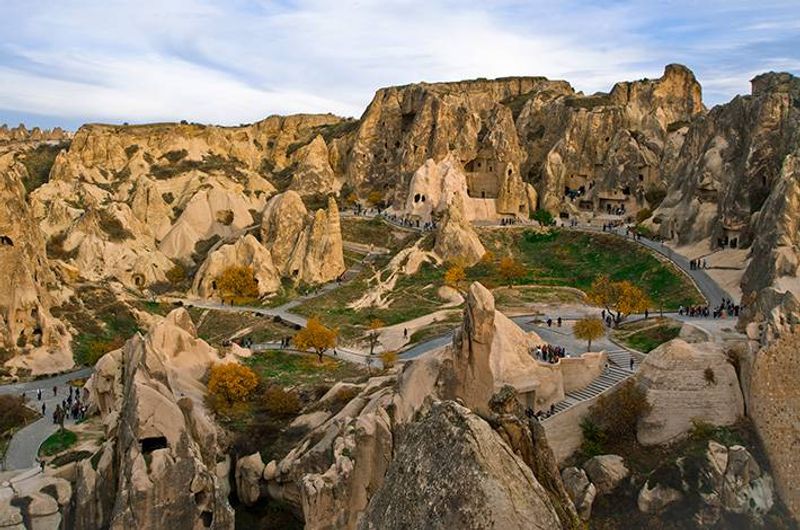
Cappadocia’s landscape looks like something from a fantasy novel, and the Göreme Open-Air Museum showcases the ingenious way early Christians adapted to this surreal environment. Between the 4th and 13th centuries, monks carved entire monasteries into the soft volcanic rock, creating elaborate complexes with churches, dining halls, and living quarters.
The rock’s texture made carving relatively easy, but the structures have lasted for centuries.
What makes this place truly special are the Byzantine frescoes covering church walls and ceilings. Despite their age, many retain vivid colors depicting biblical scenes and saints.
The Dark Church (Karanlık Kilise) preserves the best examples because limited light protected the pigments from fading. Each church has its own character, from simple single-room chapels to multi-level complexes with connecting tunnels.
The museum gets packed with tour groups between 10 AM and 2 PM, so early or late visits offer better experiences. Photography is forbidden inside the churches to protect the frescoes, so take mental snapshots instead.
The surrounding area has hundreds of similar cave structures worth exploring, and hot air balloon rides at sunrise provide spectacular aerial views of this unique landscape that looks like nowhere else on Earth.
Mount Nemrut — Adıyaman Province
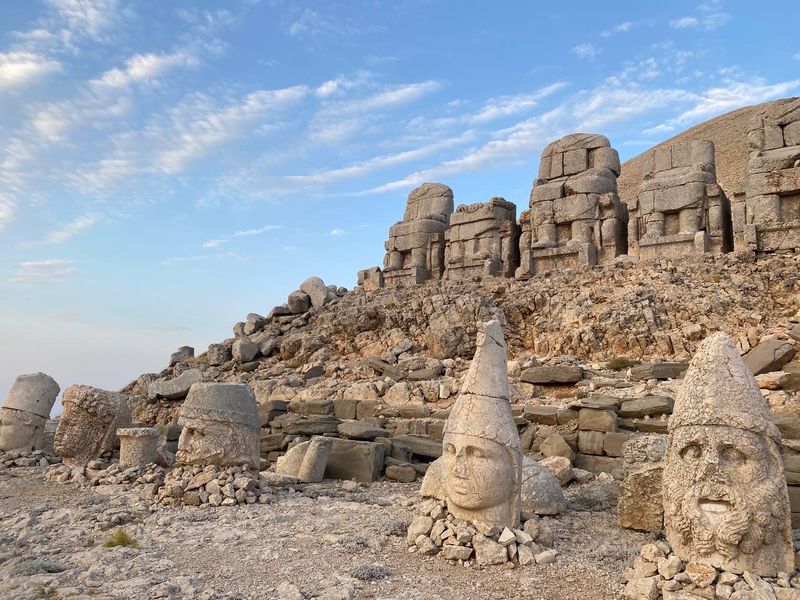
King Antiochus I had quite an ego, and Mount Nemrut stands as his monument to himself. Around 62 BC, he ordered massive statues built atop this 7,000-foot mountain, depicting himself alongside various gods in a bold claim of divine ancestry.
Earthquakes have toppled the statues, leaving enormous stone heads scattered across the summit like pieces of a giant’s chess set. Each head stands about six feet tall, their weathered features still showing remarkable detail.
The site’s remote location adds to its mystique—getting there requires a winding mountain drive followed by a steep climb. Most visitors make the trek for sunrise or sunset when the light transforms the ancient stone faces and surrounding peaks into something truly magical.
The western and eastern terraces each feature different arrangements of statues, with the tomb mound rising between them.
Dress warmly because mountain temperatures drop significantly, even in summer. The climb to the summit takes about 30 minutes on a rocky path, so proper footwear is essential.
Most people visit on organized tours from nearby towns since public transportation is limited. The journey feels like an adventure, and standing among these colossal heads while watching the sun paint the sky creates memories that photographs can’t quite capture.
Sumela Monastery — Trabzon Province
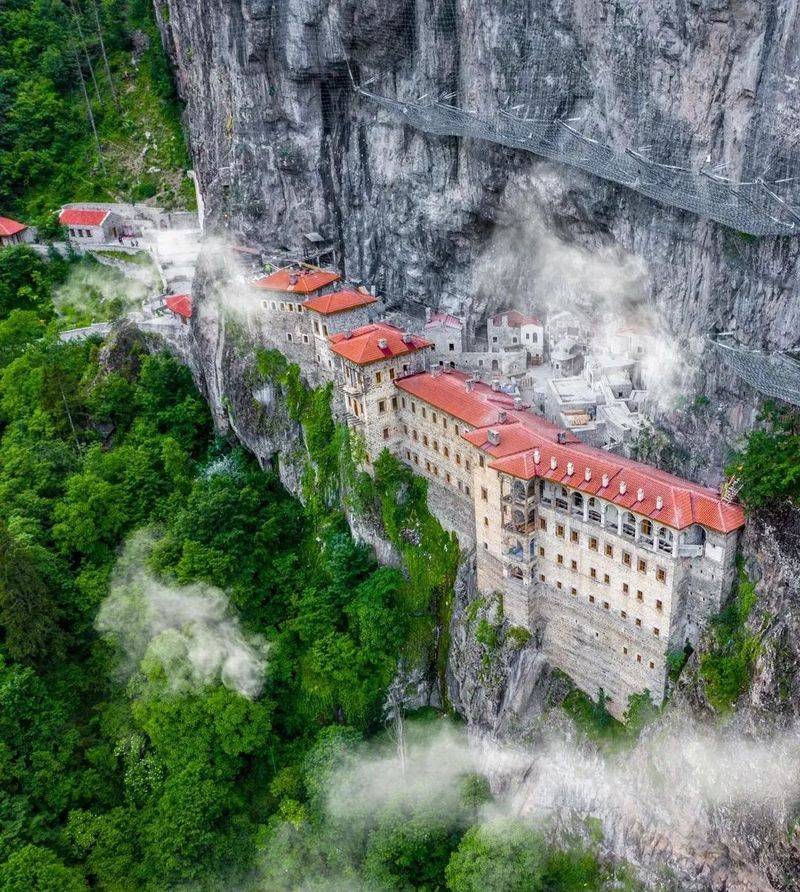
Perched impossibly on a cliff 4,000 feet above sea level, Sumela Monastery looks like it defies gravity. Legend says two Greek monks founded it in 386 AD after the Virgin Mary appeared in their dreams, directing them to this exact spot.
Over centuries, the monastery expanded into a complex of chapels, kitchens, student rooms, and a library—all carved into or built against the vertical rock face of Altındere Valley.
The location provided natural protection from invaders while offering monks a place for quiet contemplation. Frescoes covering the rock church walls depict biblical stories, though many suffered damage over the years.
The monastery’s precarious position means accessing it involves climbing stairs and walking narrow paths with dramatic drop-offs, but the views make every step worthwhile. Dense forests surround the site, adding to its mystical atmosphere.
Recent restoration work has made the monastery safer to visit, though some areas remain closed. The approach involves a steep uphill walk or shuttle ride, followed by more stairs.
Wear good shoes with grip, and don’t attempt the visit in poor weather. The Black Sea region gets significant rainfall, so checking forecasts helps.
Despite the physical effort required, standing on those ancient balconies looking across the valley creates an experience that’s genuinely awe-inspiring.
Derinkuyu Underground City — Cappadocia
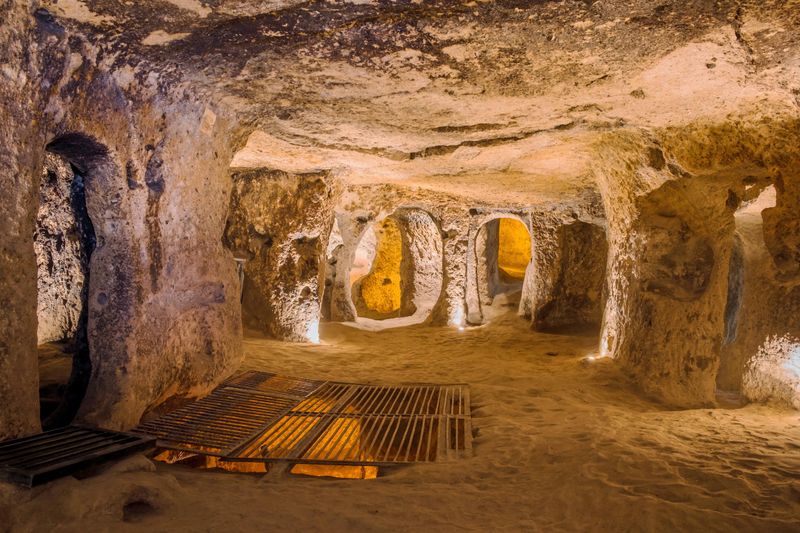
Imagine carving an entire city underground, complete with living quarters, stables, churches, and wine cellars. That’s exactly what ancient inhabitants of Cappadocia did at Derinkuyu, creating a subterranean refuge that extends at least eight levels deep and could shelter up to 20,000 people.
The soft volcanic rock made excavation possible, but the engineering required to ensure proper ventilation and water distribution was incredibly sophisticated for its time.
Walking through the narrow passages feels like exploring an ant farm built for humans. Massive circular stone doors could seal off sections, protecting residents from invaders who never suspected a thriving community existed beneath their feet.
Ventilation shafts stretch down over 180 feet, ensuring fresh air reached the deepest levels. Some passages are so narrow you’ll need to duck or turn sideways, adding to the adventure.
Only about 10% of the city is open to visitors, but that’s plenty to grasp the scale and ingenuity involved. The tunnels stay cool year-round—a relief from Cappadocia’s summer heat but chilly in winter.
People with claustrophobia might struggle with the confined spaces, though the route is well-lit and clearly marked. Guides provide context that makes the experience much richer, explaining how families actually lived in this underground maze.
Troy — Çanakkale Province
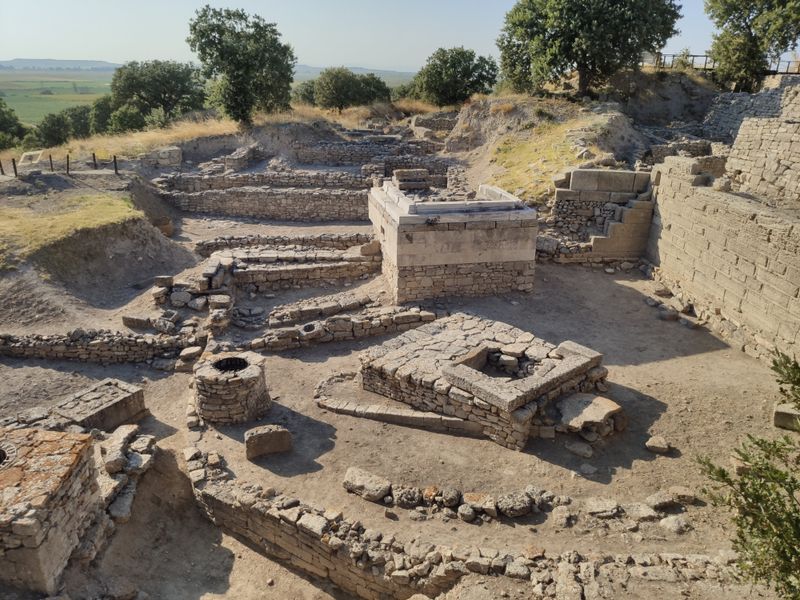
Homer’s epic poems brought Troy legendary status, but for centuries people debated whether the city actually existed. Heinrich Schliemann proved the skeptics wrong in the 1870s when he uncovered not just one city, but nine layers of settlements stacked atop each other, spanning from 3000 BC to Roman times.
Each civilization built on the ruins of the previous one, creating an archaeological layer cake that tells thousands of years of human history.
The site requires imagination since most structures exist only as foundations and partial walls. Informative signs help you understand what you’re looking at, explaining how each area functioned.
The replica wooden horse near the entrance delights kids and provides the obligatory photo opportunity. Roman Troy, the uppermost layer, shows the best preservation with its theater and council chamber.
Troy doesn’t have the immediate visual impact of places like Ephesus, but its historical significance makes it compelling. A museum near the site displays artifacts and models showing how the city looked during different periods.
The windy hillside location offers views across the Trojan plain to the Dardanelles. Combine your visit with nearby Gallipoli battlefields for a full day exploring different chapters of history in this strategically important region.
Basilica Cistern — Istanbul
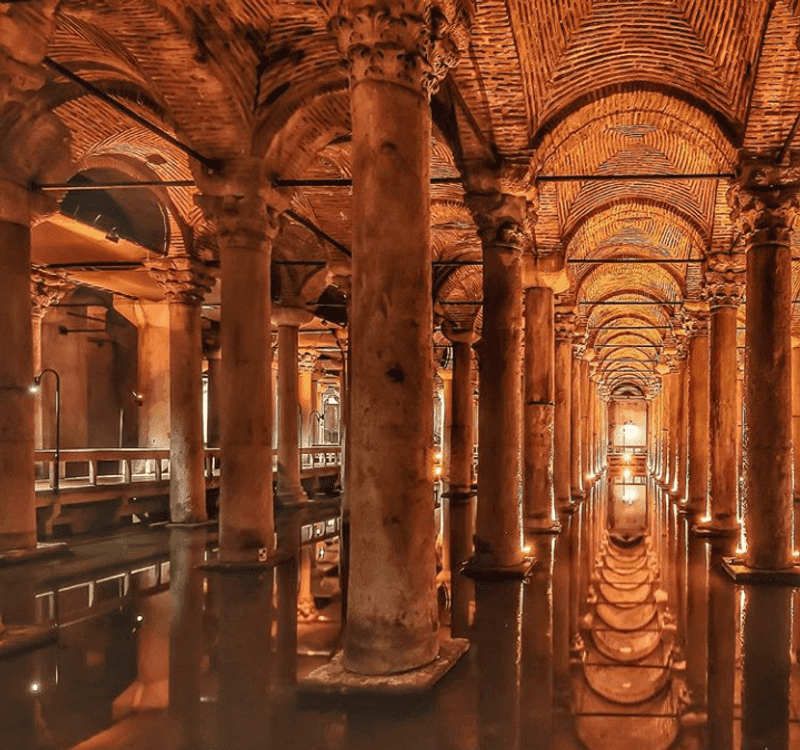
Descending into the Basilica Cistern feels like entering a mysterious underground palace. Built in 532 AD to store water for the Great Palace, this massive reservoir features 336 marble columns rising from shallow water, creating endless reflections in the dim lighting.
The atmosphere is almost magical, with classical music playing and the sound of water dripping echoing through the cavernous space.
The cistern’s most famous features are two Medusa head column bases—one sideways, one upside-down. Nobody knows exactly why they were positioned this way, though theories range from practical construction needs to deliberate disrespect toward pagan symbols.
The columns themselves were recycled from various ancient buildings, each with different styles of capitals and carvings. Walkways let you explore the space while staying dry, though the humidity is noticeable.
This underground wonder stayed forgotten for centuries until locals noticed they could lower buckets through their basement floors and pull up fresh water. Some even caught fish down there.
Today it’s one of Istanbul’s most atmospheric attractions, offering cool relief from summer heat. The lighting changes periodically, transforming the space’s mood.
Visit early to avoid crowds, and bring a camera capable of low-light photography to capture the surreal beauty of this Byzantine engineering masterpiece.
Bodrum Castle — Muğla Province
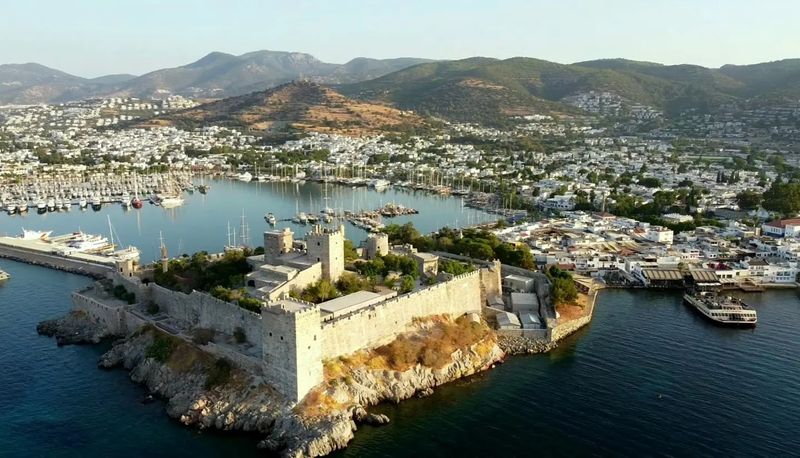
Knights Hospitaller built this imposing fortress between 1402 and 1522, using stones from the nearby Mausoleum of Halicarnassus—one of the Seven Wonders of the Ancient World. The castle’s five towers each represented a different nationality within the order: English, French, German, Italian, and Spanish.
Each group decorated their tower distinctively, and you can still spot coats of arms and inscriptions carved into the walls.
Today the castle houses the Museum of Underwater Archaeology, one of the world’s finest collections of ancient shipwrecks and maritime artifacts. The exhibits showcase treasures recovered from Bronze Age vessels, including the oldest known shipwreck, along with amphoras, glass, jewelry, and even food remains that provide glimpses into ancient trade routes.
The castle’s various halls and towers make exploring feel like a treasure hunt.
Climbing the ramparts rewards you with spectacular views over Bodrum’s twin bays, where turquoise water contrasts with white buildings cascading down hillsides. The castle grounds include peaceful gardens perfect for resting between exhibits.
Summer evenings sometimes feature concerts in the courtyard, combining history with entertainment. Allow several hours to properly explore both the castle architecture and museum collections, and bring water since you’ll be doing considerable climbing between levels.
Galata Tower — Istanbul
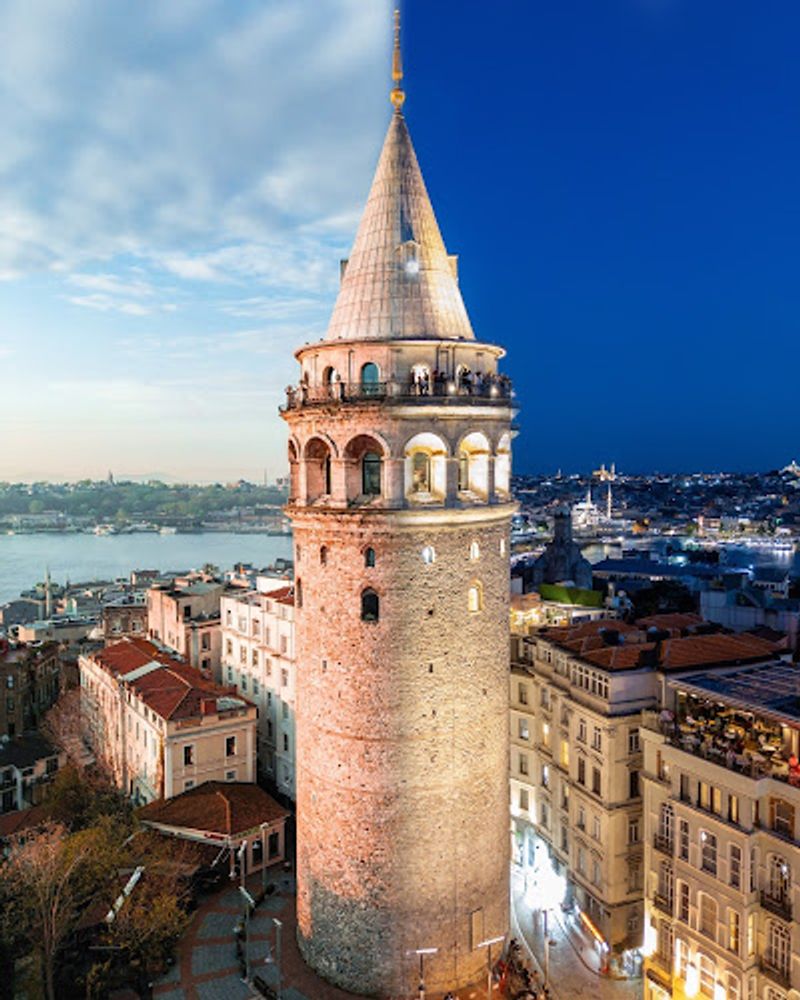
Built by Genoese colonists in 1348, Galata Tower has watched over Istanbul for more than six centuries. The 220-foot stone cylinder dominates the Beyoglu district skyline, its distinctive conical cap visible from across the city.
Over the years it’s served as a watchtower, prison, and even a launch pad for an early flight experiment in 1638 when Hezarfen Ahmed Celebi supposedly strapped on artificial wings and glided across the Bosphorus.
The main attraction is the observation deck near the top, reached by elevator and a final flight of stairs. From there, you get 360-degree views encompassing the Golden Horn, Bosphorus, Sea of Marmara, and both the European and Asian sides of Istanbul.
Watching ferries cross the water, minarets piercing the skyline, and the city sprawling in every direction helps you grasp Istanbul’s incredible geography and scale.
Lines can be long during peak season, so arriving right when it opens or near closing time helps avoid waits. The narrow observation deck gets crowded, making photography challenging when busy.
A restaurant occupies the floor below the deck, though most visitors skip it in favor of the view. Evening visits offer spectacular sunset and twilight perspectives as the city lights begin twinkling.
The surrounding Galata neighborhood is worth exploring too, full of quirky shops and cafes.
Çamlıca Mosque — Istanbul
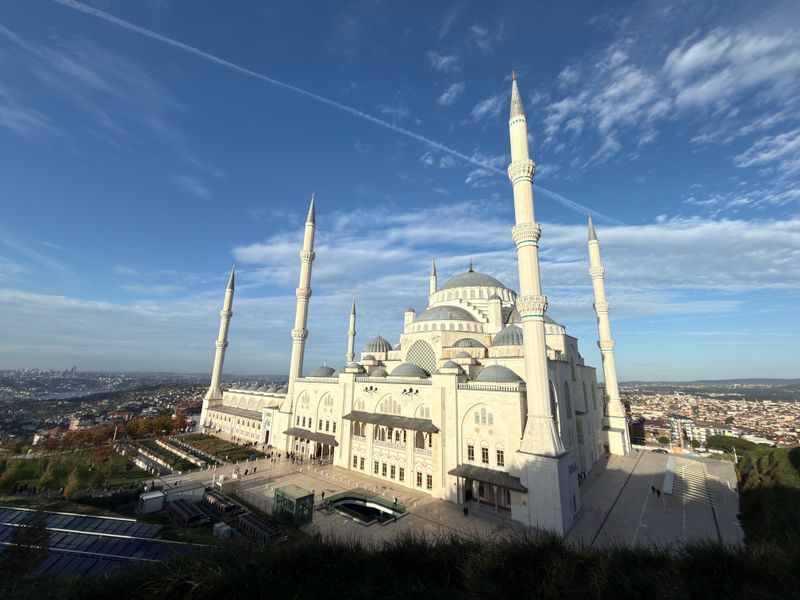
Completed in 2019, Çamlıca Mosque represents Turkey’s largest mosque project and showcases how traditional Ottoman architectural principles can be interpreted through contemporary design. Sitting atop Çamlıca Hill on Istanbul’s Asian side, it dominates the skyline with six towering minarets and a central dome that rises 236 feet high.
The scale is impressive—the main prayer hall accommodates 63,000 worshippers, while the complex includes an art gallery, library, museum, and conference halls.
The mosque’s design incorporates classical Ottoman elements like cascading domes and slender minarets while using modern construction techniques and materials. Interior decorations feature traditional Turkish arts including calligraphy, tile work, and stone carving executed by master craftsmen.
The spacious courtyards and surrounding gardens provide peaceful areas for reflection, while the hilltop location ensures stunning views across the Bosphorus to the European side of the city.
Unlike some of Istanbul’s historic mosques where tourists can feel intrusive, Çamlıca was designed to welcome visitors of all backgrounds. The facilities are immaculate and modern, including elevators and accessible pathways.
Modest dress is required, and women should bring headscarves. The mosque is particularly beautiful when illuminated at night, visible from miles away.
Visiting here alongside historic Ottoman mosques provides interesting perspective on how Turkish Islamic architecture continues evolving while honoring centuries-old traditions.



