 Unearth The Voyage
Japan is the kind of place where you can visit a poop museum in the morning and soak next to wild monkeys in the afternoon. The country has a remarkable talent for turning the ordinary into something wonderfully strange.
From abandoned ghost islands to art-covered hills, Japan keeps throwing curveballs at every traveler. Whether you are a first-timer or a seasoned Japan fan, these 15 unusual attractions will make you rethink everything you thought you knew about this country.
Ghibli Park, Aichi
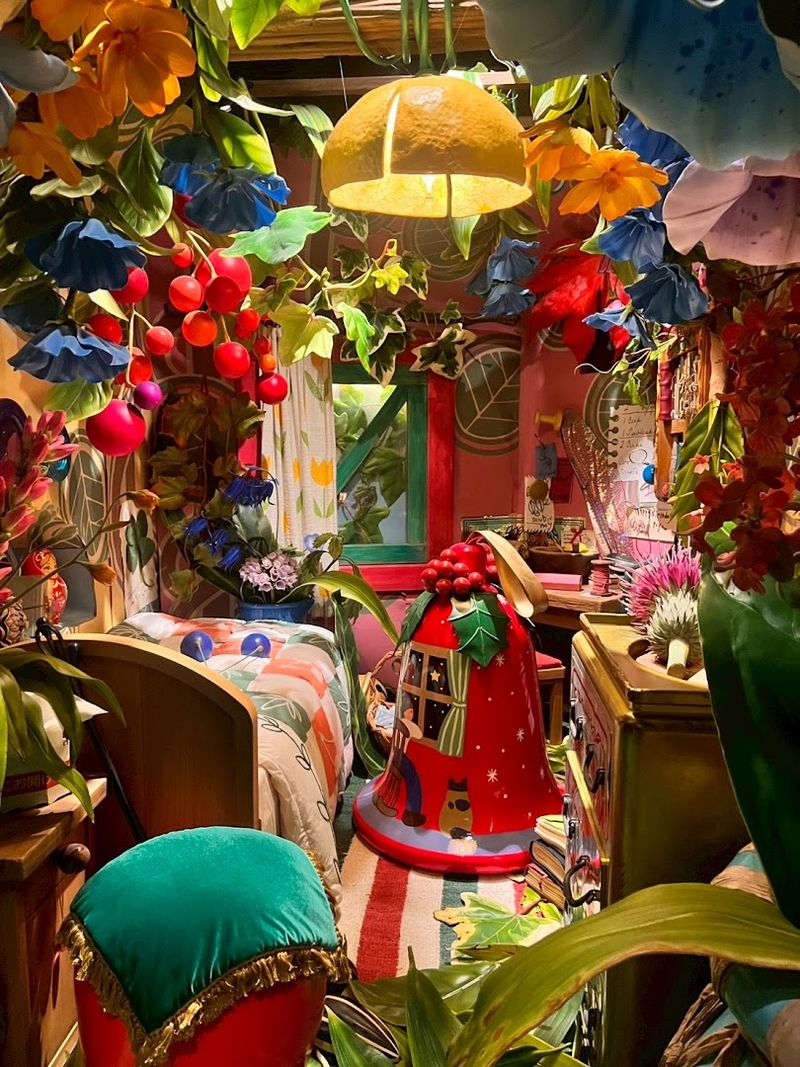
Walking into Ghibli Park feels less like entering a theme park and more like accidentally falling into a film reel. Spread across Expo 2005 Aichi Commemorative Park, this place brings the worlds of Studio Ghibli to life through themed areas rather than roller coasters.
No screaming drops here, just pure atmosphere.
What makes Ghibli Park genuinely special is its commitment to mood over spectacle. The design team clearly understood that fans do not need thrill rides.
They need to feel like they actually live inside the movies they love.
Tickets are reservation-based, so spontaneous visits are not really an option. Plan ahead, book early, and show up ready to walk slowly and take everything in.
I visited on a quiet weekday and still spent hours just wandering. The attention to detail in every corner is extraordinary.
This is not a place to rush through.
Oya History Museum, Tochigi
Most museums sit above ground. The Oya History Museum decided that was far too conventional.
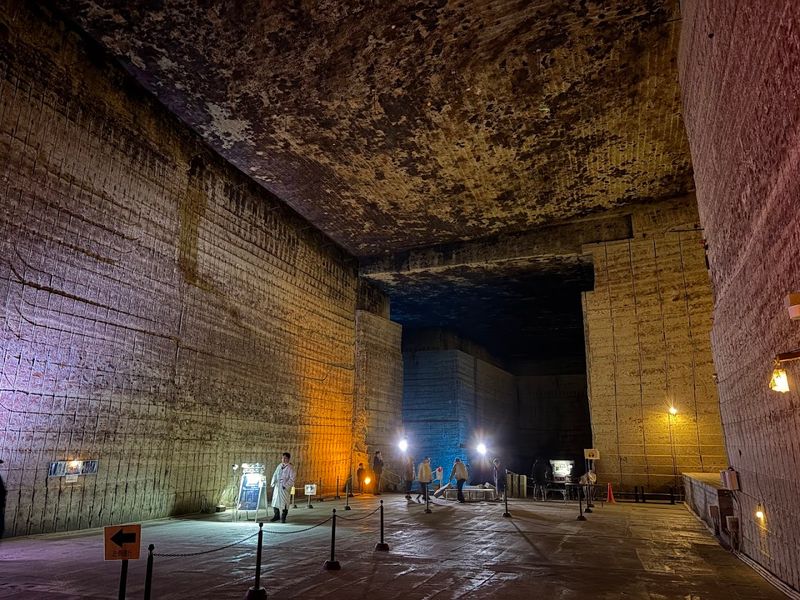
Carved into a former stone quarry outside Utsunomiya, this underground space is so enormous it genuinely stops people mid-sentence when they first walk in.
The quarry produced Oya stone for centuries, and workers left behind a cathedral-sized hollow that now doubles as one of Japan’s most dramatic indoor spaces. The scale is hard to process at first.
Your eyes keep adjusting, expecting a ceiling that never quite arrives.
Beyond the sheer size, the museum offers real historical context about the stone-cutting industry that shaped the region. Exhibitions, art installations, and events are regularly held inside the cavern, giving it a living, breathing quality.
Check the official site for current programming before visiting. The museum is operating normally, and it rewards visitors who take their time exploring every shadowy corner of this underground giant.
Aogashima, Tokyo
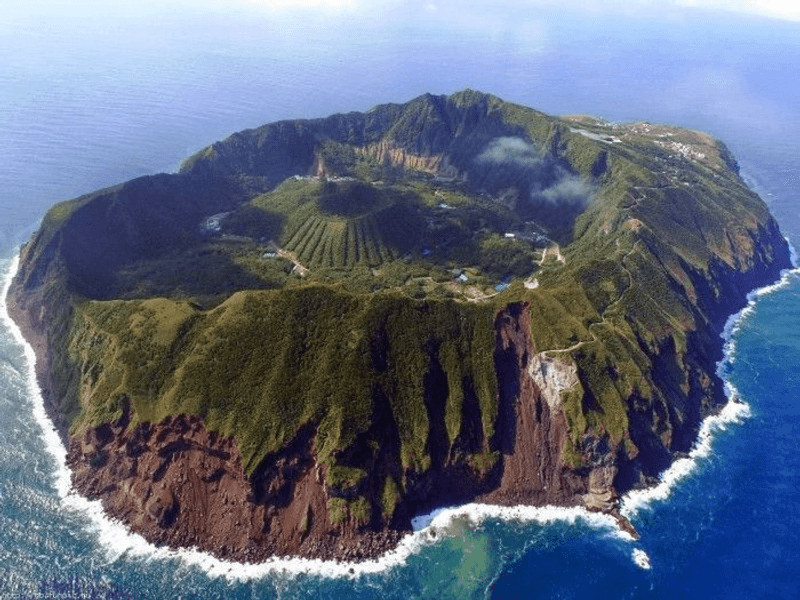
Technically part of Tokyo, Aogashima looks nothing like the city that claims it. This remote island sits roughly 358 kilometers south of the mainland and features a double-caldera landscape so dramatic it seems borrowed from a science fiction set.
Getting there is genuinely challenging. Helicopter seats are limited, ferry schedules are weather-dependent, and the island’s own village website politely but firmly warns travelers to secure lodging before arriving.
That warning alone tells you everything about how small this place really is.
Around 170 people live on Aogashima full-time, making it one of the least-populated inhabited islands in Japan. The community has a geothermal sauna and a small distillery producing local shochu.
Visitors who make the effort are rewarded with landscapes that feel completely removed from modern life. Few places in Japan offer this level of genuine remoteness.
The journey itself becomes part of the experience.
Unko Museum, Tokyo
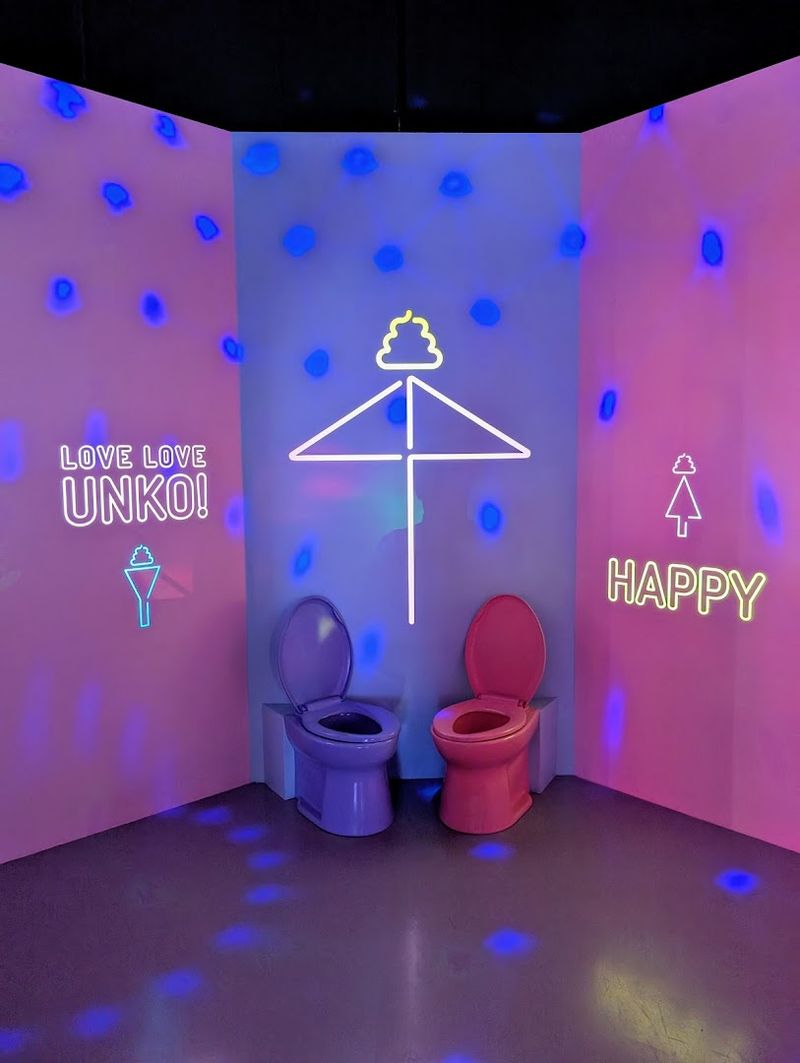
Only Japan could turn poop into a tourist attraction and make it genuinely charming. The Unko Museum is a brightly colored entertainment space built entirely around the concept of kawaii poop humor, and it commits to the bit with full enthusiasm.
Interactive exhibits let visitors look, touch, photograph, and play. The whole place leans hard into absurdity, and somehow that sincerity makes it work.
A friend dragged me in expecting five minutes of laughs. We stayed for nearly an hour.
This is not a children’s museum that adults tolerate. Adults are very much the target audience, and the design reflects that.
The photography opportunities alone justify the entry price for anyone who enjoys collecting unusual travel stories. It sounds fake until you see the official website, and even then it takes a moment to fully believe.
Japan really does have a poop museum, and it is genuinely, unironically fun.
Cup Noodles Museum Yokohama
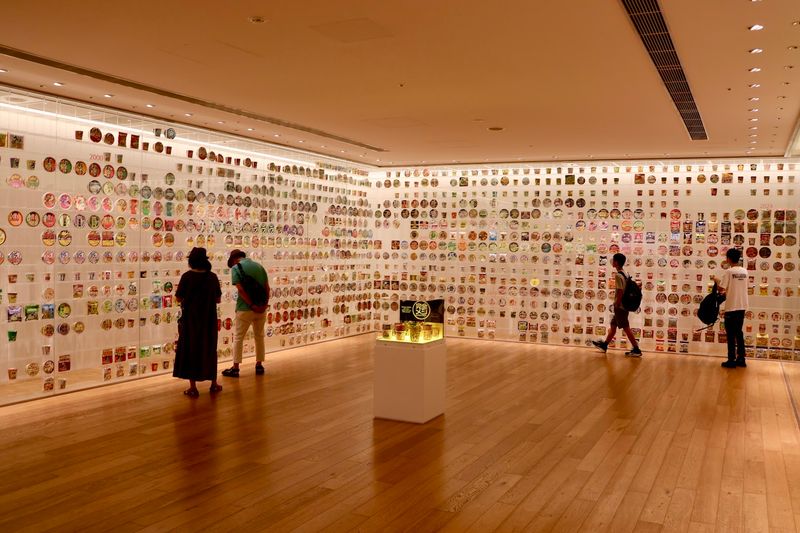
Momofuku Ando invented Chicken Ramen in 1958 and changed the eating habits of an entire planet. Yokohama’s Cup Noodles Museum pays tribute to that achievement in a way that is far more entertaining than a simple food history lesson deserves to be.
The highlight for most visitors is the hands-on workshop where you design your own cup noodle packaging and choose your own ingredients. It sounds gimmicky until you are actually standing there, genuinely excited about your soup flavor choices.
The creative freedom is oddly thrilling.
Beyond the workshop, the museum traces the full history of instant noodles through well-designed exhibits that cover invention, global spread, and cultural impact. There is also a full-scale replica of the tiny shed where Ando developed his world-changing recipe.
The museum manages to be educational, interactive, and fun without ever feeling like it is trying too hard. Yokohama is lucky to have it.
teamLab Borderless, Tokyo
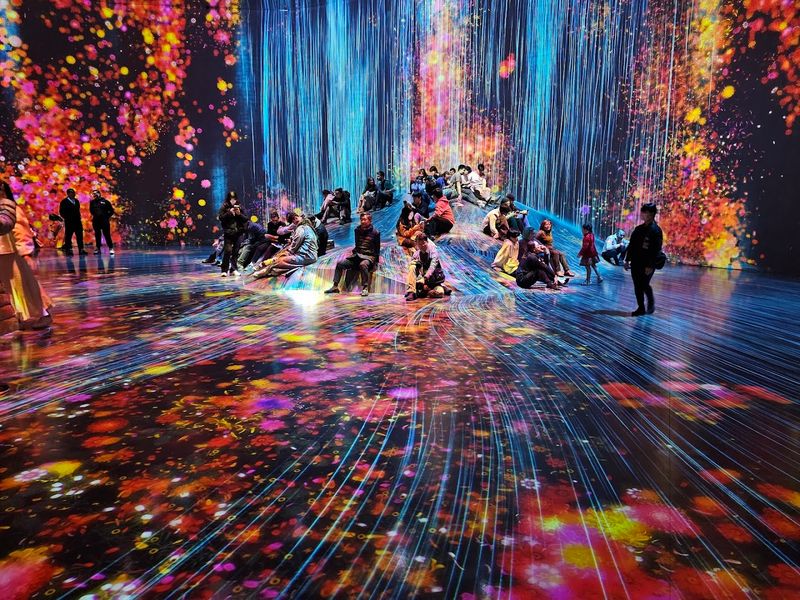
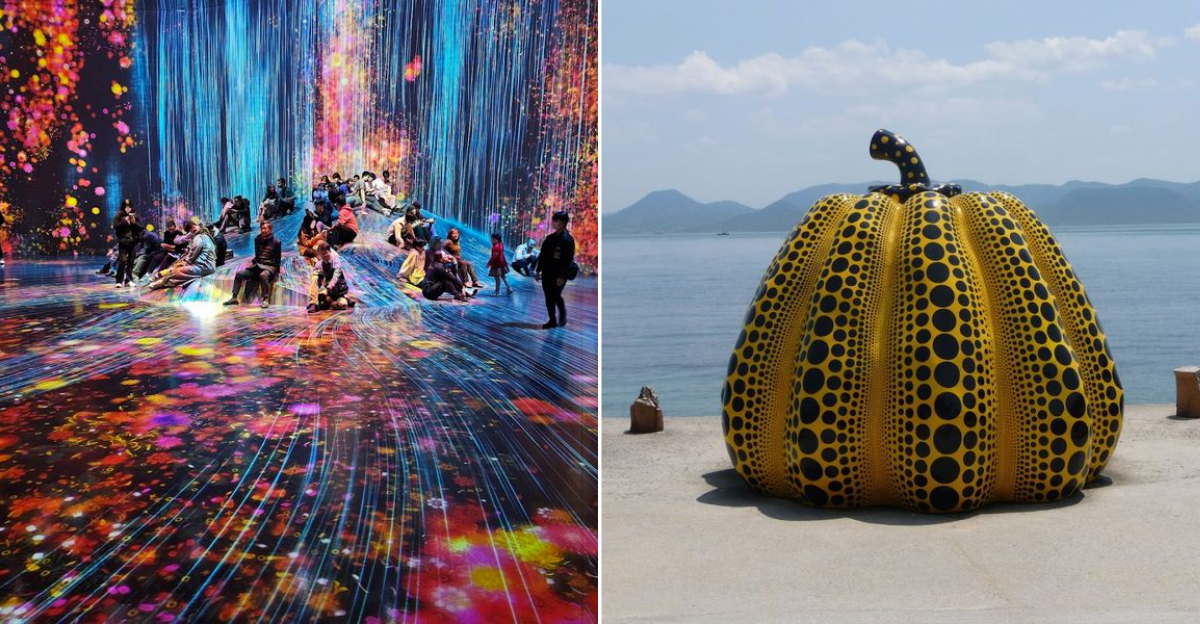
A museum without a map sounds like a logistical nightmare. teamLab Borderless turns that concept into something genuinely disorienting in the best possible way. Digital artworks move between rooms, bleed through walls, and merge with each other in ways that make the space feel alive.
The original Odaiba location closed and a new version opened in Azabudai Hills in 2024. It is worth double-checking the current address before heading out, because more than one visitor has shown up at the wrong spot and been very confused.
Once inside, your sense of spatial logic quietly dissolves. Rooms lead into other rooms in unexpected ways, and artworks respond to your movement.
I spent a solid twenty minutes in one room before realizing I had completely lost my group. That sounds stressful but somehow felt like the whole point. teamLab Borderless earns its name every single visit.
Tashirojima, Miyagi
Cats run Tashirojima. The humans are just staff.
This small island in Miyagi Prefecture became famous for its large feline population, which far outnumbers the island’s human residents and operates with a confidence that suggests they know exactly who is in charge.
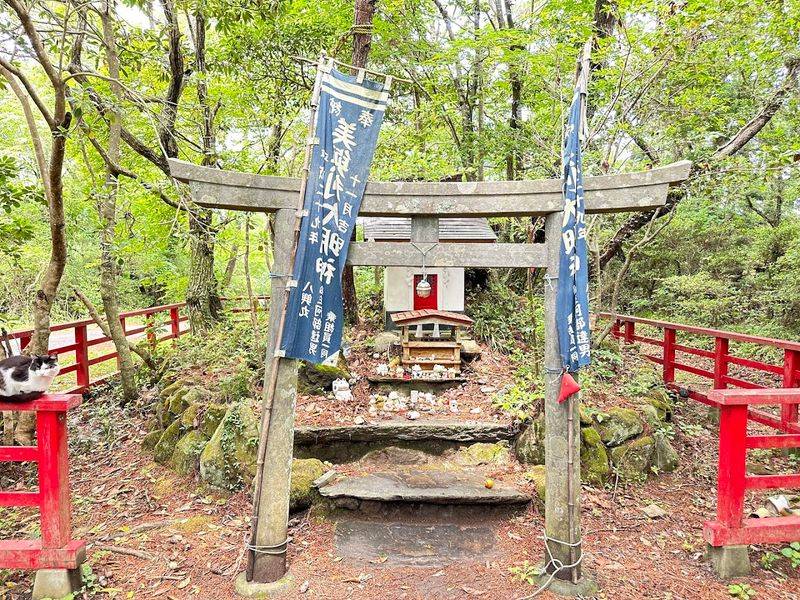
The cats arrived centuries ago when silk farmers kept them to protect silkworm crops from mice. Over time, the fishing community adopted a reverence for cats, even building a small cat shrine on the island.
That tradition stuck, and the cats never left.
JNTO also notes the island’s manga-themed campground, which features cat-shaped cabins that somehow manage to be both ridiculous and completely charming. Day trips are possible from Ishinomaki, though overnight stays let you experience the island at its quietest and most surreal.
Tashirojima is the kind of place that makes you question your entire life plan and seriously consider moving to a cat island.
Okunoshima, Hiroshima
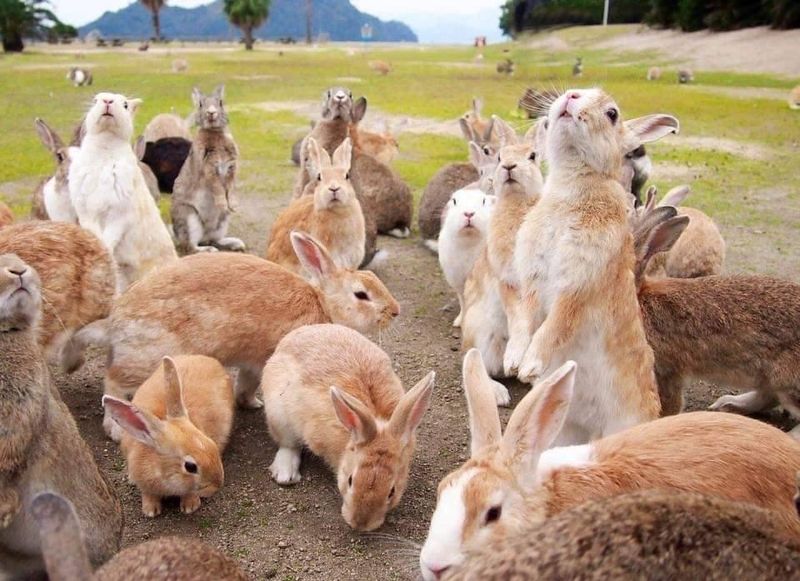
Okunoshima has two very different stories running at the same time, and both are worth knowing. On the surface, it is a small island overrun with friendly rabbits that sprint toward visitors hoping for snacks.
It is chaotic, adorable, and deeply photogenic.
Underneath that fluffy exterior sits a much darker chapter. During World War II, Okunoshima was used as a secret poison gas production facility.
The island was even removed from maps to hide its purpose. A small museum on the island documents this history honestly and soberly.
The contrast between the island’s wartime past and its current rabbit-filled cheerfulness is genuinely strange to sit with. Most visitors arrive for the rabbits and leave thinking about history.
That unexpected emotional shift makes Okunoshima more memorable than a simple animal encounter. Bring rabbit-safe pellets for feeding, check the ferry schedule from Mihara or Tadanoumi, and prepare to have very conflicted feelings.
Hashima (Gunkanjima), Nagasaki
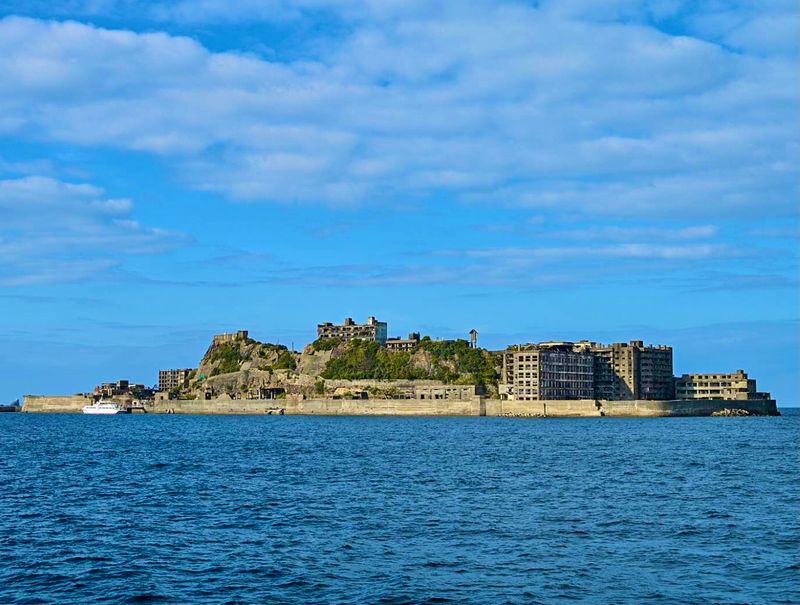
From a distance, Hashima Island looks like a battleship sitting still in the water. Up close, it looks like a city that time simply forgot to keep running.
Rows of crumbling concrete apartment buildings, rusted staircases, and empty streets give Gunkanjima its ghostly reputation.
The island was once one of the most densely populated places on Earth, housing coal miners and their families during Japan’s industrial boom. At its peak in the 1950s, around 5,000 people lived on this tiny rock.
When the coal ran out in 1974, everyone left within three months.
Today, you can only visit via an organized tour from Nagasaki Port, which actually adds to the drama. Standing at the viewing platforms while a guide explains the island’s history makes the whole experience feel properly cinematic.
Gunkanjima was designated a UNESCO World Heritage Site in 2015, cementing its status as one of Japan’s most haunting and fascinating places to visit.
The Hells of Beppu, Oita
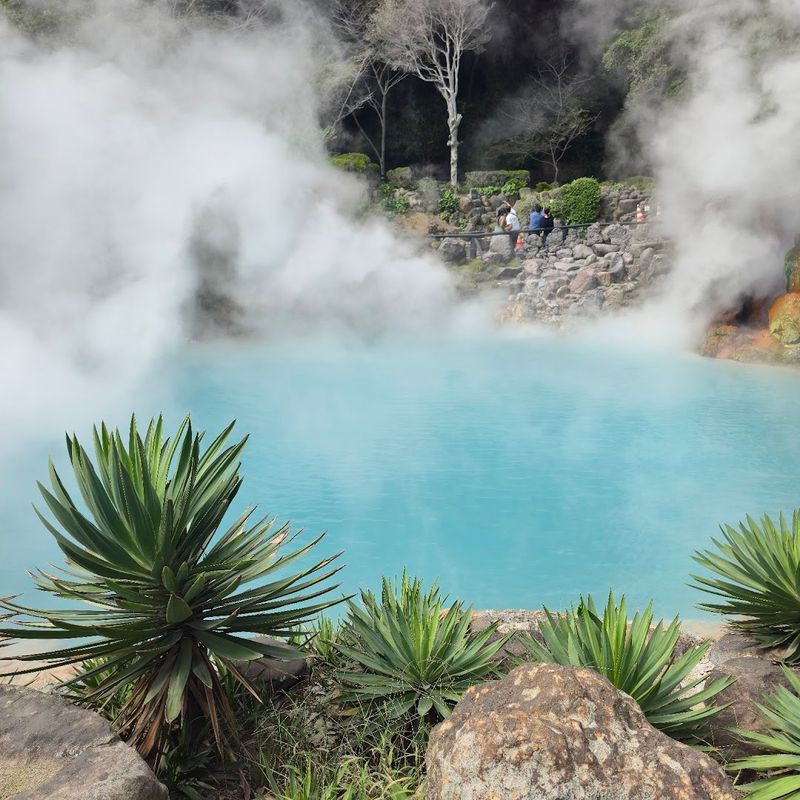
Beppu produces more geothermal hot spring water than almost anywhere else on the planet, and the city has turned its most extreme springs into a sightseeing circuit called the Hells. These are not relaxing soaks.
They are violently steaming, vividly colored natural pools that earned their infernal nickname for very obvious reasons.
There are seven major Hells, each with a distinct personality. Umi Jigoku is a stunning cobalt blue.
Chinoike Jigoku is blood red. Tatsumaki Jigoku features a geyser that erupts on a regular schedule.
Each one is genuinely different from the last, which keeps the circuit interesting throughout.
Entry is sold as a combination ticket covering multiple sites, making it easy to plan the day. The area around the Hells also has markets, foot baths, and restaurants serving eggs and puddings steamed using geothermal heat.
Beppu has fully committed to its volcanic identity, and the Hells are the most theatrical expression of that commitment.
Jigokudani Snow Monkey Park, Nagano
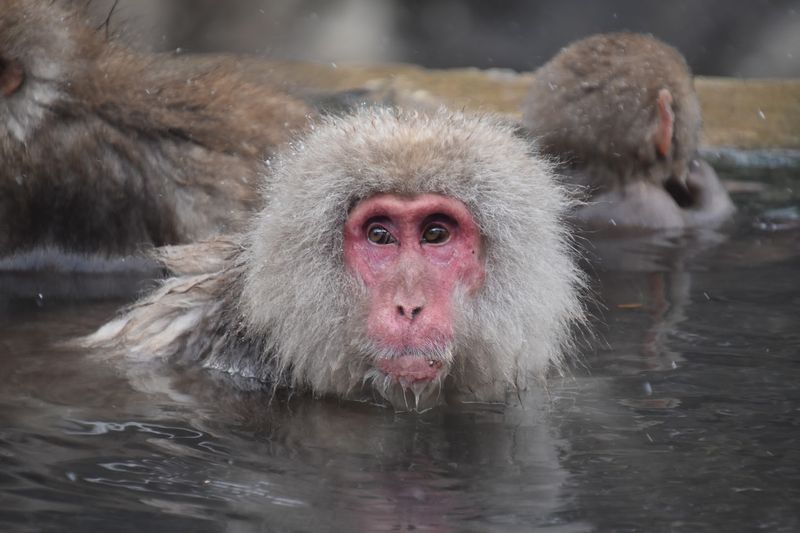
Japanese macaques soaking in hot springs while snow falls around them is one of those sights that looks too perfectly composed to be real. Jigokudani Snow Monkey Park in Nagano makes it completely real, and it has been drawing visitors from around the world since the 1960s.
The name Jigokudani translates to Hell Valley, which feels a bit harsh given how peaceful the scene actually is. The macaques discovered the hot springs on their own and simply started using them.
The park was built around their habit rather than the other way around.
The official park notes that monkeys are wild and may not appear every single day. Winter through early spring is peak season, but visits outside those months can still be rewarding.
The walk through the forest to reach the park is part of the experience. No cars are allowed on the final stretch, which keeps the approach wonderfully quiet and natural.
Zao Fox Village, Miyagi
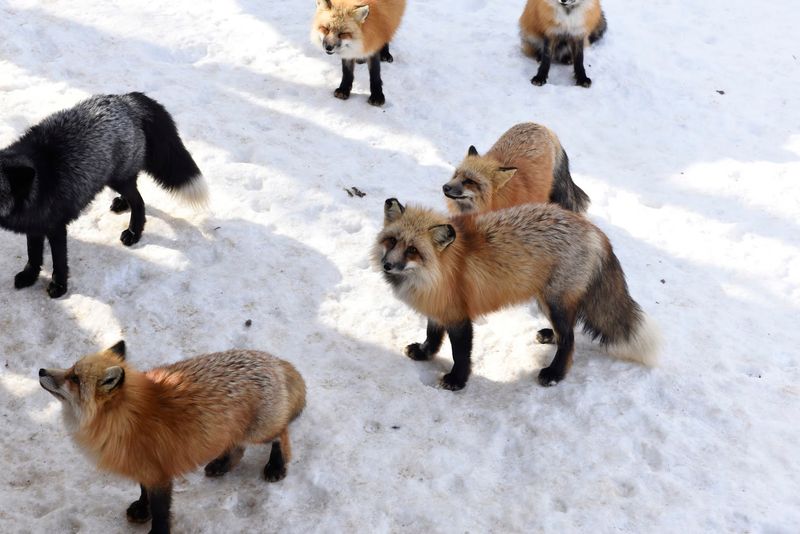
Six species of fox roam freely across Zao Fox Village, and they are completely unbothered by the humans gawking at them. This hillside attraction in Miyagi Prefecture has built a reputation as one of Japan’s most talked-about animal experiences, and the foxes themselves seem entirely unimpressed by their own fame.
The village currently houses over 100 foxes, ranging from the common red fox to rare black and platinum varieties. Visitors can walk through the enclosure and observe them up close, though picking them up requires a separate paid session and protective gloves provided on-site.
Both JNTO and the official village site confirm this place is very much real, because yes, people do ask. The village is located near Shiroishi City and takes about an hour from Sendai by a combination of train and bus or taxi.
Arrive early on weekdays to avoid crowds. The foxes are most active in cooler morning temperatures, which is a useful tip worth remembering.
Naoshima, Kagawa
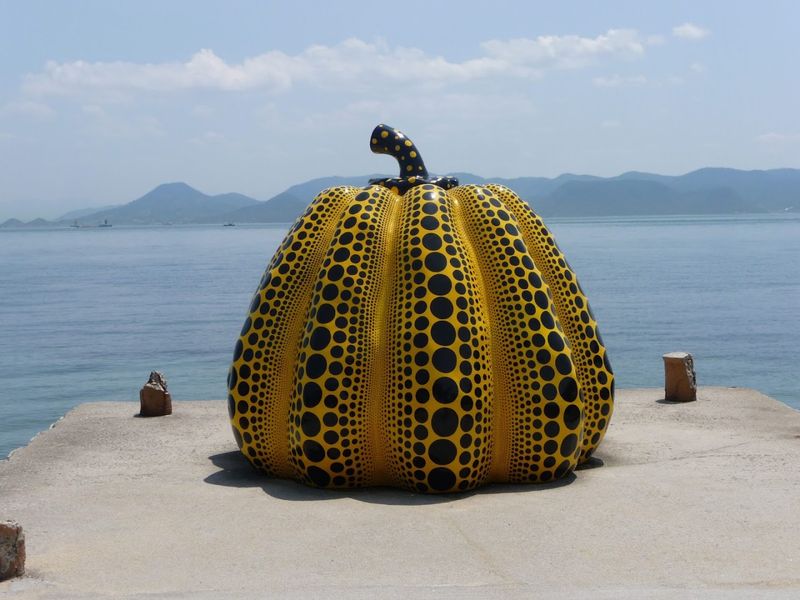
Naoshima is not just an island with a few museums scattered around. The entire place operates as a living artwork, where architecture, landscape, and contemporary art are woven together across the island and its neighbors Teshima and Inujima.
The Benesse Art Site project transformed a once-declining fishing community into a global art destination.
Tadao Ando designed several of the key buildings here, including the Chichu Art Museum, which is built almost entirely underground. The museum houses a permanent collection that includes Claude Monet’s Water Lilies in a space specifically designed for natural light.
That combination alone is worth the ferry ride.
Yayoi Kusama’s yellow pumpkin sculpture on the pier has become one of Japan’s most photographed outdoor artworks. Naoshima rewards slow travel.
Rent a bicycle, spend two days, and resist the urge to rush between sites. The island’s quiet pace is itself part of what makes the whole experience feel so unexpectedly affecting.
Nagoro Scarecrow Village, Tokushima
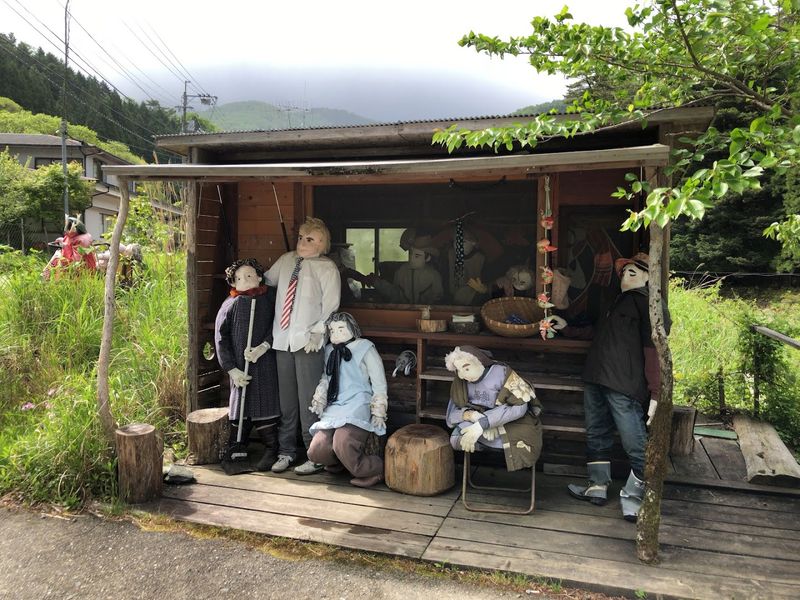
Nagoro has a population of around 30 people and several hundred scarecrows. The ratio is not a typo.
Artist Tsukimi Ayano began making life-sized stuffed figures to replace neighbors who had passed away or moved to the city, and the project grew into something that is equal parts folk art and quiet memorial.
The figures appear everywhere: sitting at bus stops, working in fields, perched in classroom chairs. Each one is based on a real former resident, made with care and dressed in actual clothing.
Walking through Nagoro feels like moving through a very still, very strange community frozen in time.
The village sits deep in the Iya Valley of Tokushima Prefecture, one of Japan’s most rural and scenic regions. Getting there requires a car or a very committed bus journey.
The remoteness is part of the point. Nagoro does not try to be a tourist attraction.
It just happens to be one of the most quietly unforgettable places in the entire country.
Kamo Aquarium, Yamagata
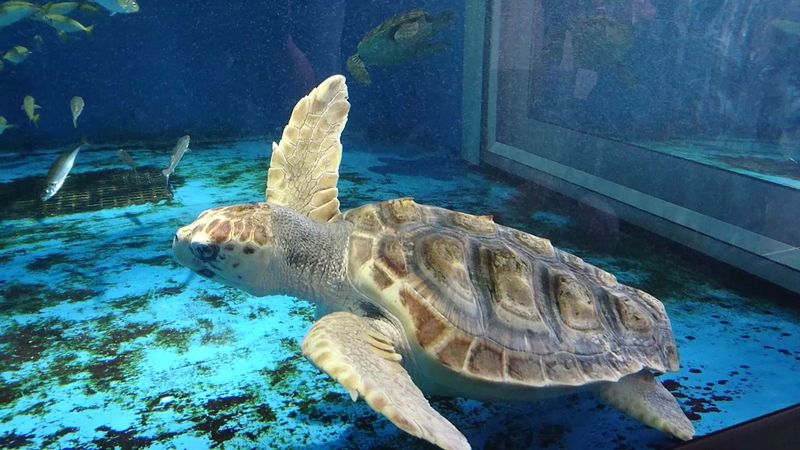
Kamo Aquarium in Tsuruoka, Yamagata, holds the world record for the largest jellyfish display on the planet. JNTO confirms the collection spans dozens of species, all housed in illuminated tanks that turn the entire aquarium into something closer to an art gallery than a standard fish exhibit.
The aquarium nearly closed in the early 2000s due to low visitor numbers. Then the director decided to go all-in on jellyfish, a species the aquarium could successfully breed in large numbers.
That gamble paid off spectacularly. Visitor numbers surged, and Kamo became internationally famous almost overnight.
The centerpiece is a massive circular tank called the Clione Room, filled with hundreds of jellyfish drifting through blue-lit water. It is genuinely hypnotic to stand in front of.
Beyond jellyfish, the aquarium also features local sea life from the Sea of Japan. Tsuruoka is a worthwhile stop on any Tohoku itinerary, and Kamo Aquarium is the reason most people make the detour.



