Most travel bucket lists look the same: the Eiffel Tower, the Colosseum, Times Square. But some of the world’s most unforgettable places never make those lists, and that’s exactly what makes them special.
I’ve always believed the weird, the eerie, and the downright bizarre leave a deeper impression than any famous skyline ever could. These 15 stops prove that the road less traveled is almost always the more interesting one.
Karni Mata Temple (The Rat Temple) – Deshnoke, India
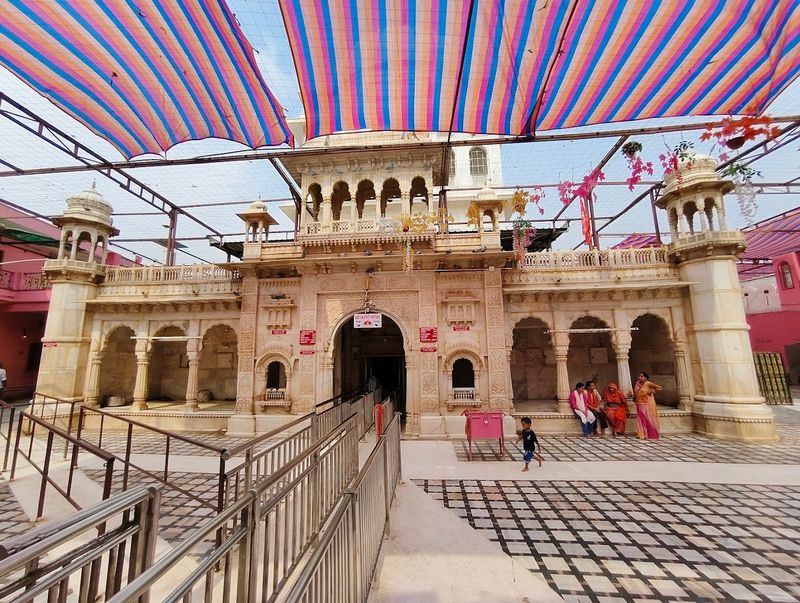
Stepping barefoot onto a marble floor covered in thousands of scurrying rats is not something most travel brochures prepare you for. Welcome to Karni Mata Temple, where over 20,000 rats are considered sacred and treated like royalty.
Locals call them “kabbas,” and harming one is seriously bad news.
The temple is dedicated to the Hindu mystic Karni Mata, and legend says the rats are reincarnated holy men. Spotting a rare white rat among the crowd is considered especially lucky.
Visitors line up daily, offerings in hand, hoping for that white-rat sighting.
The experience is genuinely unlike anything else on earth. I’ll admit my first instinct was to stand on a chair, but the atmosphere of calm devotion around me made it oddly peaceful.
Go with an open mind, leave your shoes at the entrance, and watch where you step.
Darvaza Gas Crater (The Door to Hell) – Turkmenistan
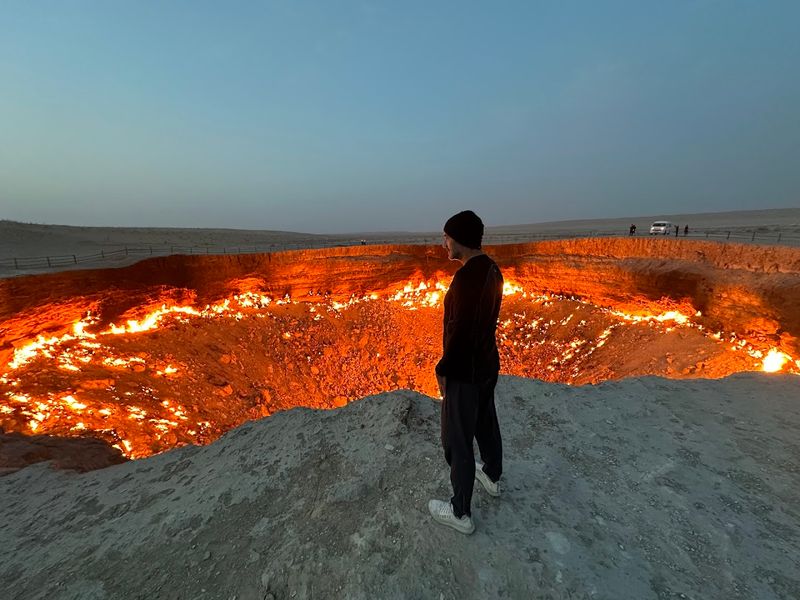
Soviet geologists accidentally created one of the world’s most dramatic landmarks back in 1971, and it has been on fire ever since. The Darvaza Gas Crater, nicknamed “The Door to Hell,” is a 230-foot-wide burning pit in the middle of the Karakum Desert.
Nobody planned it. Nobody can quite agree on how to stop it.
At night, the glow is visible from miles away. Guided tours make the trek across the desert to camp near the crater’s edge, where the heat is intense and the view is genuinely jaw-dropping.
It’s one of those places that photos simply cannot do justice.
Turkmenistan isn’t the easiest country to visit, requiring advance visas and organized tours. But travelers who make the effort consistently call it one of their most unforgettable experiences.
Sometimes the most inconvenient destinations deliver the biggest payoffs.
Catacombs of Paris – France
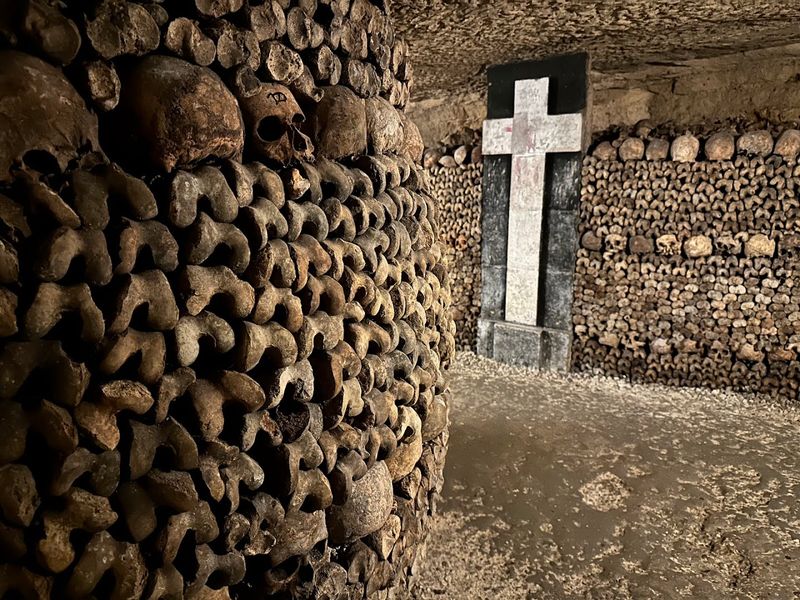
About 60 feet below the streets of Paris, six million people rest in carefully arranged silence. The Catacombs were created in the late 18th century to solve a rather pressing problem: the city’s cemeteries were overflowing.
Bones were transferred underground and, somewhat remarkably, arranged into art.
Skull-lined walls stretch through winding tunnels for nearly two miles of official tour route. The bones aren’t just stacked randomly.
They form deliberate patterns, crosses, and decorative arrangements that are equal parts eerie and oddly beautiful. It’s history, architecture, and the macabre all in one underground package.
Book tickets well in advance because the Catacombs sell out fast. The temperature underground stays around 57 degrees year-round, so bring a jacket even in summer.
Fair warning: some visitors find the experience genuinely unsettling. Others leave feeling strangely moved.
Either way, you won’t stop thinking about it for days.
Wieliczka Salt Mine – Poland
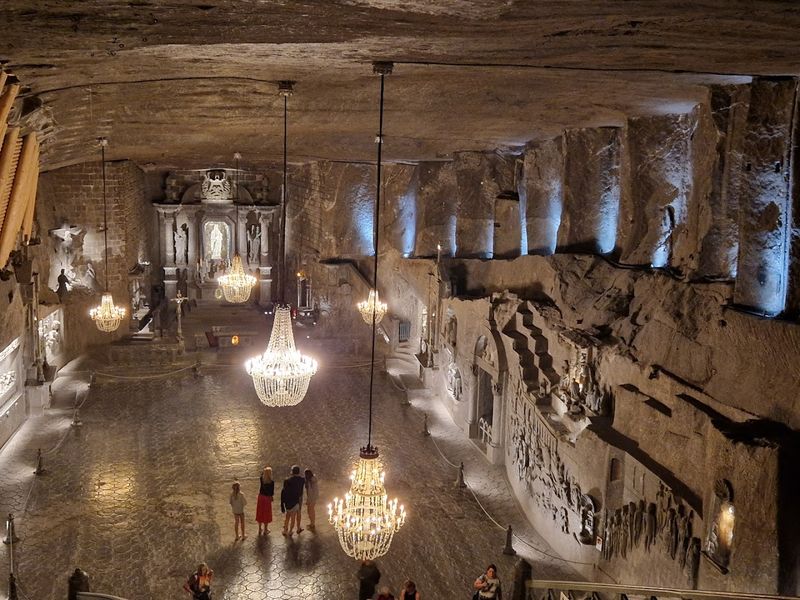
Everything in the Wieliczka Salt Mine is made of salt. The chandeliers, the sculptures, the chapel altars, even the floor beneath your feet.
Miners carved this underground world over seven centuries, and the result is one of the most jaw-dropping spaces anywhere on the planet.
The St. Kinga’s Chapel sits 330 feet underground and features a fully carved salt relief of Leonardo da Vinci’s Last Supper on the wall. People have actually gotten married down here.
The acoustics alone make it worth the descent.
Wieliczka is just a short drive from Krakow, making it an easy day trip that most visitors rank as the highlight of their entire Poland trip. Tours last about two hours and cover roughly two miles of tunnels.
The mine has been on the UNESCO World Heritage list since 1978, which feels like a massive understatement for what you actually find underground.
Island of the Dolls (Isla de las Muñecas) – Mexico

Hundreds of weathered, eyeless dolls stare down from the trees of a small island in the canals of Xochimilco, and yes, it is exactly as unsettling as it sounds. Julian Santana Barrera began hanging dolls in the 1950s to honor the spirit of a girl he believed had drowned nearby.
The collection grew for over 50 years.
Julian passed away in 2001, reportedly found in the same canal where the girl had drowned. The dolls remain, rotting and faded, their plastic faces cracked by decades of sun and rain.
Locals say the island feels alive, though not in a comforting way.
Boat tours from Xochimilco’s canal docks make the trip regularly. Most visitors go during the day, though some brave souls book evening tours.
The combination of folk legend, genuine history, and genuinely creepy visuals makes this one of Mexico’s most talked-about alternative attractions. Go before dark.
Or don’t. Your call.
St. Patrick’s Purgatory – Ireland
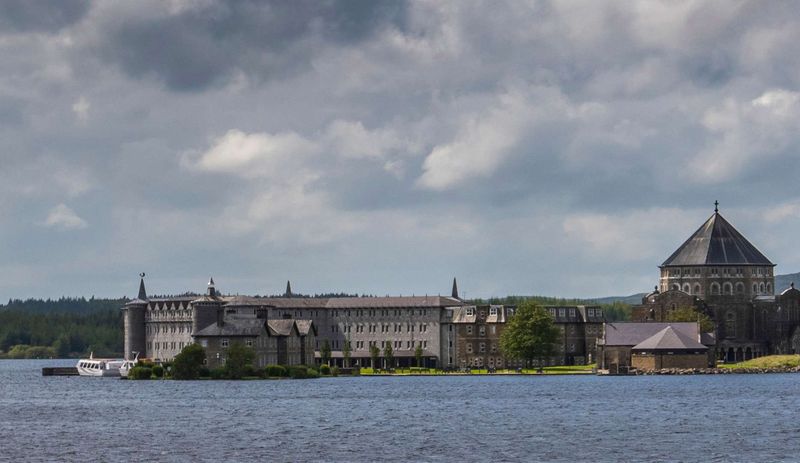
For over 1,500 years, pilgrims have been making their way to a tiny island in a lake in County Donegal for one of Christianity’s most demanding pilgrimages. St. Patrick’s Purgatory on Station Island is not a casual sightseeing trip.
It involves three days of fasting, sleep deprivation, and walking barefoot on sharp stone beds.
The pilgrimage season runs from June through August, and thousands of people complete it every year entirely by choice. There are no luxury hotel options nearby.
The point is the discomfort. Participants say the experience creates a kind of mental clarity that’s hard to find anywhere else.
Even non-religious visitors find the island deeply atmospheric. The grey stone basilica rising from the dark lake water on a cloudy Irish morning is genuinely striking.
As someone who values a comfortable bed, I respect the pilgrims enormously while quietly keeping my shoes on.
Aokigahara Forest – Japan
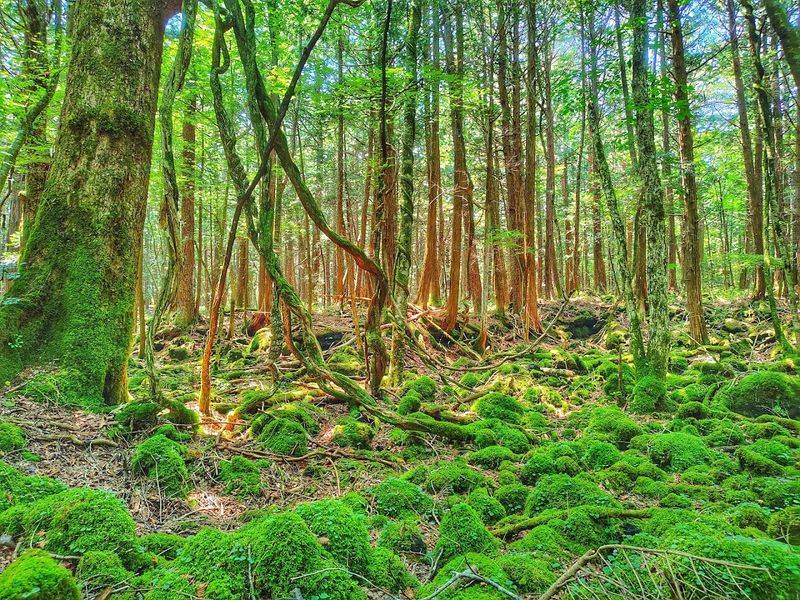
The trees in Aokigahara grow so densely that compasses reportedly malfunction inside the forest, thanks to magnetic iron deposits in the volcanic rock beneath. Known as the Sea of Trees, this ancient woodland spreads across the base of Mount Fuji and has one of the most unusual landscapes in all of Japan.
The lava-formed ground creates a chaotic tangle of roots and caves that makes navigation genuinely tricky. Trails are marked with tape by hikers who know better than to trust their instincts here.
The silence is notable, as the dense canopy absorbs sound in an almost unnatural way.
Aokigahara has a complicated reputation that goes beyond its geography, but the forest itself is a remarkable natural space with real ecological and geological significance. Guided tours are available and recommended.
The Ice Cave and Wind Cave at the forest’s edge are excellent starting points for visitors who want context before heading deeper in.
Coober Pedy Underground Town – Australia
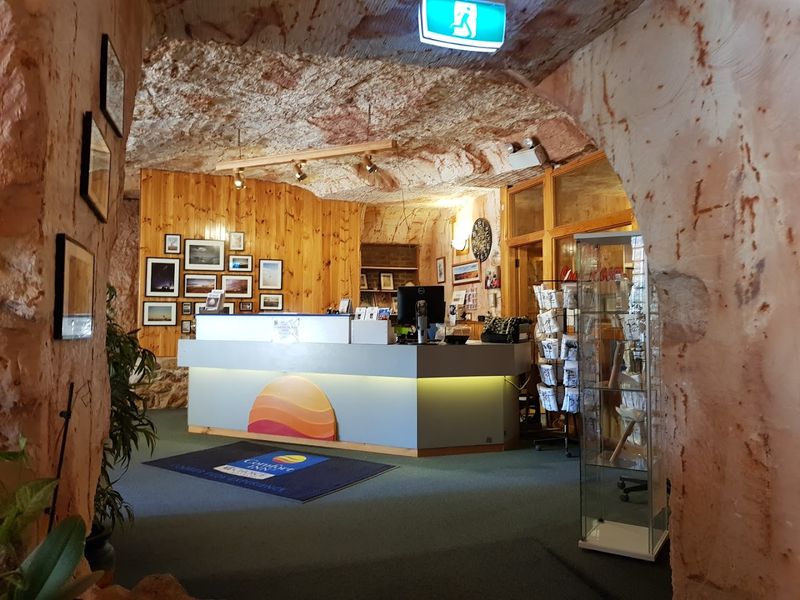
When the surface temperature regularly hits 120 degrees Fahrenheit, going underground starts looking pretty smart. Coober Pedy in South Australia solved the desert heat problem by simply moving the whole town below ground.
Homes, churches, hotels, and shops are all carved directly into the sandstone hills.
The town produces around 70 percent of the world’s opals, which is how it earned its nickname as the opal capital of the world. Mining has been going on here since 1915, and the landscape above ground looks like the surface of Mars.
Many visitors say it feels like a film set, which makes sense since several movies have actually been shot here.
Underground accommodations are available for tourists, and staying in a dugout hotel is genuinely one of the coolest sleep experiences available in Australia. The constant underground temperature of around 75 degrees makes for surprisingly comfortable nights, even when the desert outside is absolutely merciless.
The Living Root Bridges – Meghalaya, India
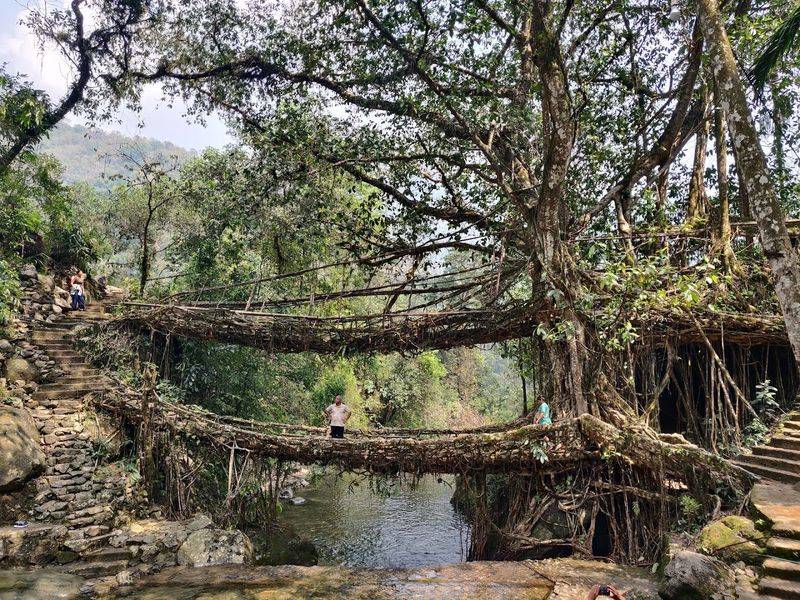
Nature built these bridges, but humans guided them. The Khasi people of Meghalaya have been training rubber tree roots across rivers and streams for generations, creating functional crossings that grow stronger with every passing decade.
The oldest ones are estimated to be over 500 years old.
The process takes between 10 and 15 years to complete a single bridge. Builders use hollow betel nut trunks to direct the roots, then allow them to grow, intertwine, and eventually fuse into a solid structure.
The bridges actually strengthen over time rather than deteriorating. That’s genuinely remarkable engineering by anyone’s standards.
The most famous example is the double-decker root bridge near Nongriat village, which requires a two-hour hike down roughly 3,000 steps to reach. Every step is worth it.
Meghalaya is one of the wettest places on earth, so pack rain gear, wear good shoes, and budget a full day for the trek.
Sedlec Ossuary (Bone Church) – Czech Republic
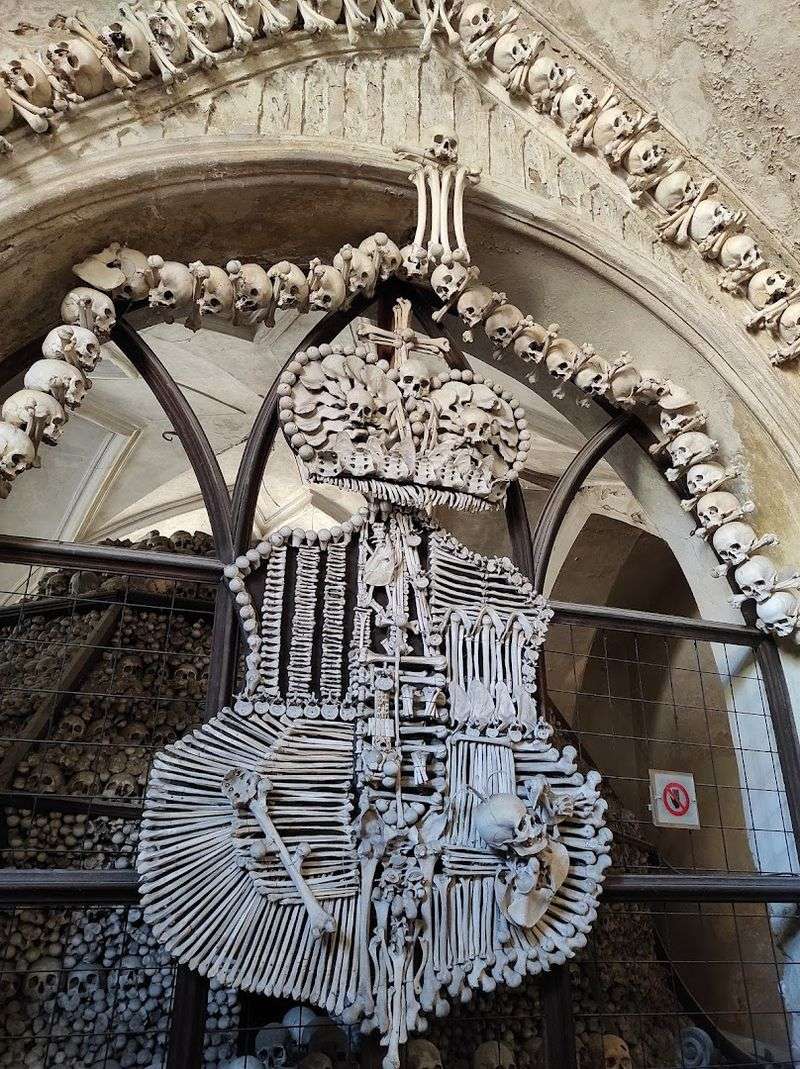
A chandelier made from every bone in the human body hangs from the ceiling of a small Gothic chapel in the Czech town of Kutna Hora. Sedlec Ossuary contains the artistically arranged bones of between 40,000 and 70,000 people, and it is one of the most genuinely extraordinary spaces in all of Europe.
The bones were collected following the Black Death and the Hussite Wars, and a half-blind monk began stacking them in the 1400s. A woodcarver named Frantisek Rint was hired in 1870 to organize the collection.
His solution was to turn the entire chapel into a work of art using human remains. Job done, one supposes.
Kutna Hora is about an hour from Prague by train, making it a very doable day trip. The ossuary is small and fills up quickly, so arriving early is wise.
It’s one of those places that makes you feel genuinely thoughtful about mortality, history, and the sheer creativity of the human spirit.
Fly Geyser – Nevada, United States
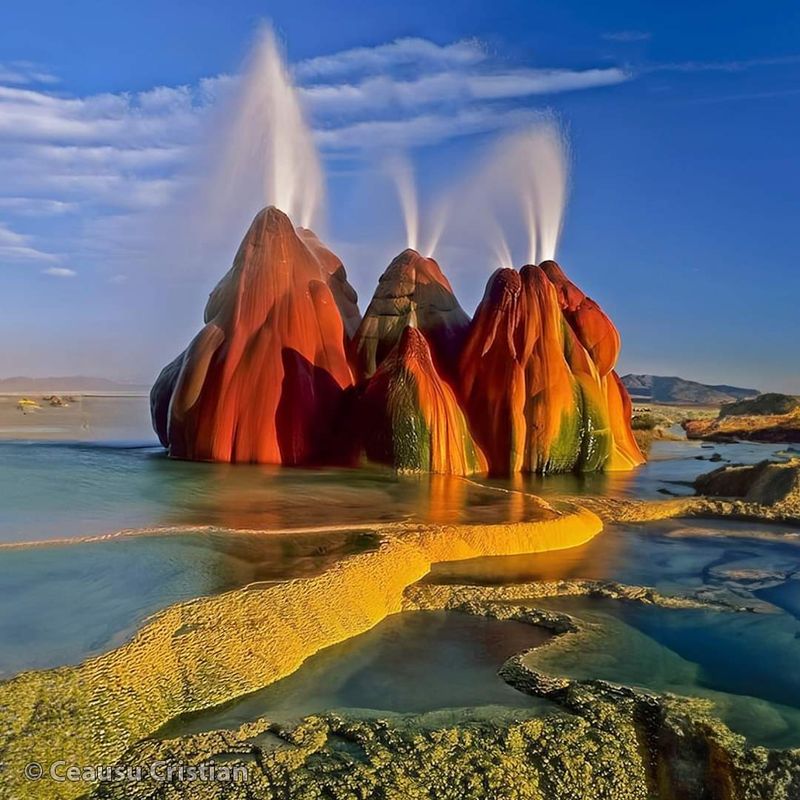
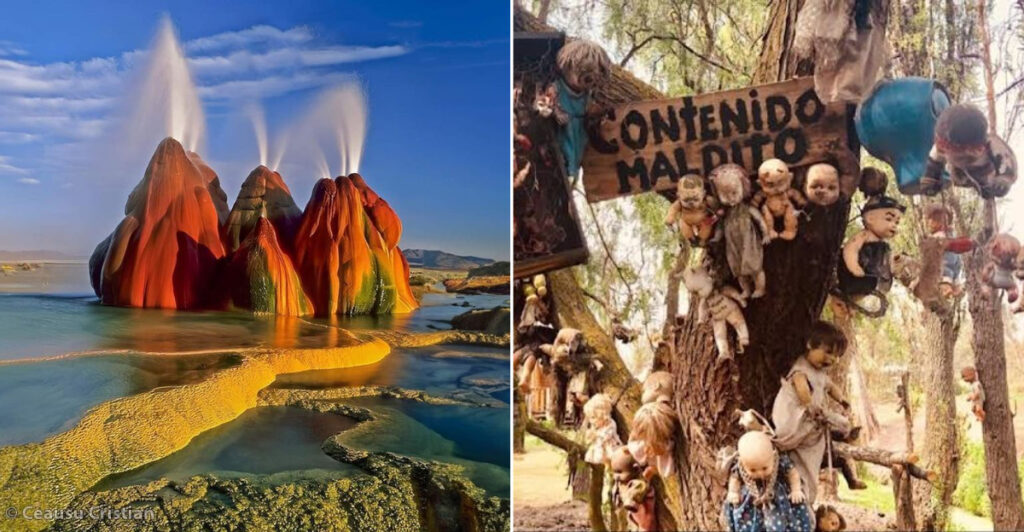
A drilling accident in 1964 created one of the most visually spectacular landforms in North America, and for decades almost nobody knew it existed. Fly Geyser sits on private land in the Nevada desert and was hidden from public view until the Burning Man organization purchased the property in 2016 and began offering limited tours.
The geyser constantly sprays water from multiple vents, and the mineral-rich water has built up a series of colorful terraced mounds over the decades. The vivid reds, oranges, and greens come from thermophilic algae thriving in the geothermal heat.
It genuinely looks like a prop from a science fiction film.
Tours are limited and book up fast, so planning ahead is essential. The surrounding landscape, part of the Black Rock Desert, adds to the otherworldly atmosphere.
This is one of those rare places where an accident produced something far more interesting than anything intentional could have managed.
Spotted Lake – British Columbia, Canada
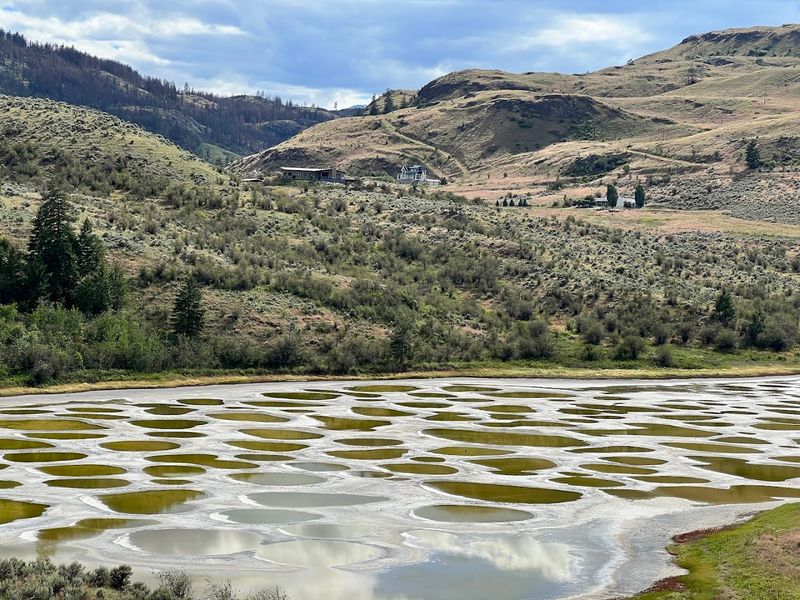
Every summer, most of British Columbia’s Spotted Lake evaporates, leaving behind hundreds of circular mineral pools that turn the landscape into what looks like a giant polka-dot painting. Each circle is a different color, ranging from pale yellow to vivid green to deep blue, depending on its mineral content.
The lake, known as Kliluk to the Okanagan Nation, has been considered sacred for centuries. Its waters were used medicinally by Indigenous communities, and the minerals were reportedly harvested during World War One for ammunition production.
The history here is as layered as the minerals themselves.
The lake sits just off Highway 3 near Osoyoos, and the best viewing spot is from the roadside pullout. Visitors cannot walk on the lake bed itself, as it remains protected Indigenous land.
Summer is the only time the distinctive spots appear, so timing your visit between July and September is essential for the full effect.
Tunnel of Love – Ukraine
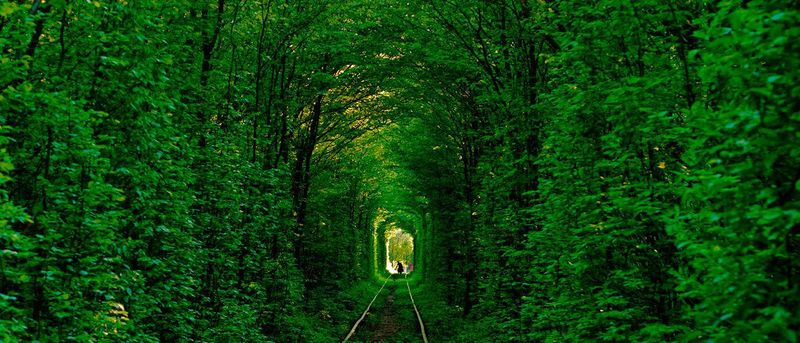
Three kilometers of railway track near the town of Klevan in Ukraine are completely enclosed by a dense canopy of trees that have grown together overhead, forming a natural green tunnel. The Tunnel of Love, as it has been known for years, looks like something out of a fairy tale, and photographers have been flocking here for decades.
A train still runs through the tunnel three times a day to deliver wood to a local factory. Visitors walk the tracks between train schedules, which adds a mildly thrilling edge to the romantic atmosphere.
Local legend says couples who walk through it while making a wish will have that wish granted.
The tunnel is most photogenic in late spring and early summer when the foliage is at its fullest and greenest. Klevan is accessible from Rivne, about 20 miles away.
It’s one of those rare places that actually looks better in person than in the thousands of photos already circulating online.
The Crooked Forest – Poland
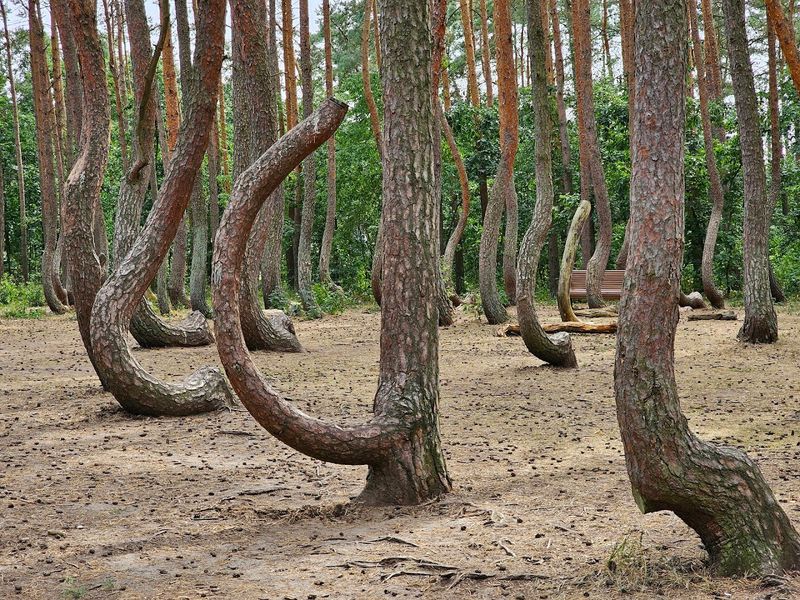
About 400 pine trees near the town of Gryfino in western Poland grow in a way that defies easy explanation. Each tree curves sharply at its base, bending nearly 90 degrees northward before straightening up again.
They all curve in the same direction. Nobody knows why, and that mystery is a big part of the appeal.
The trees were likely planted around 1930, and the leading theory is that some kind of human technique was applied to shape them, possibly for use in furniture or boat building. But the war interrupted everything, and whoever planted them never returned to harvest them.
The secret left with them.
The Crooked Forest sits within a larger pine plantation, making the contrast between the twisted grove and the normal trees around it even more striking. Getting there requires a short drive from Szczecin.
No entrance fee, no crowds on most days, just a genuinely puzzling patch of trees that keeps researchers guessing after nearly a century.
Lake Natron – Tanzania
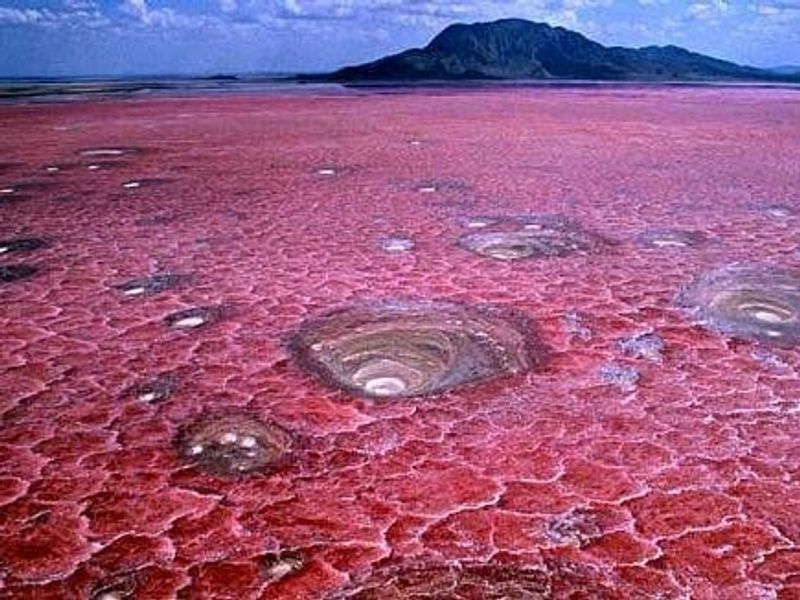
Lake Natron in northern Tanzania is one of the harshest environments on the African continent, with water so alkaline it can cause chemical burns on unprotected skin. The lake’s striking red and orange coloring comes from salt-loving microorganisms called haloarchaea that thrive in the extreme conditions.
It looks absolutely otherworldly from above.
Remarkably, around 75 percent of the world’s lesser flamingos are born here. The caustic water that repels most predators makes it a perfect nesting ground.
The flamingos have evolved to handle conditions that would destroy most other living things. That’s either impressive or terrifying, depending on your perspective.
Visiting Lake Natron is an adventure in logistics. The area is remote, roads are rough, and the dry season between June and October is the recommended window.
Guided tours from Arusha are the most practical option. The surrounding landscape, sitting within the East African Rift Valley, offers dramatic volcanic scenery that makes the journey worthwhile on its own.
Share this story