 Unearth The Voyage
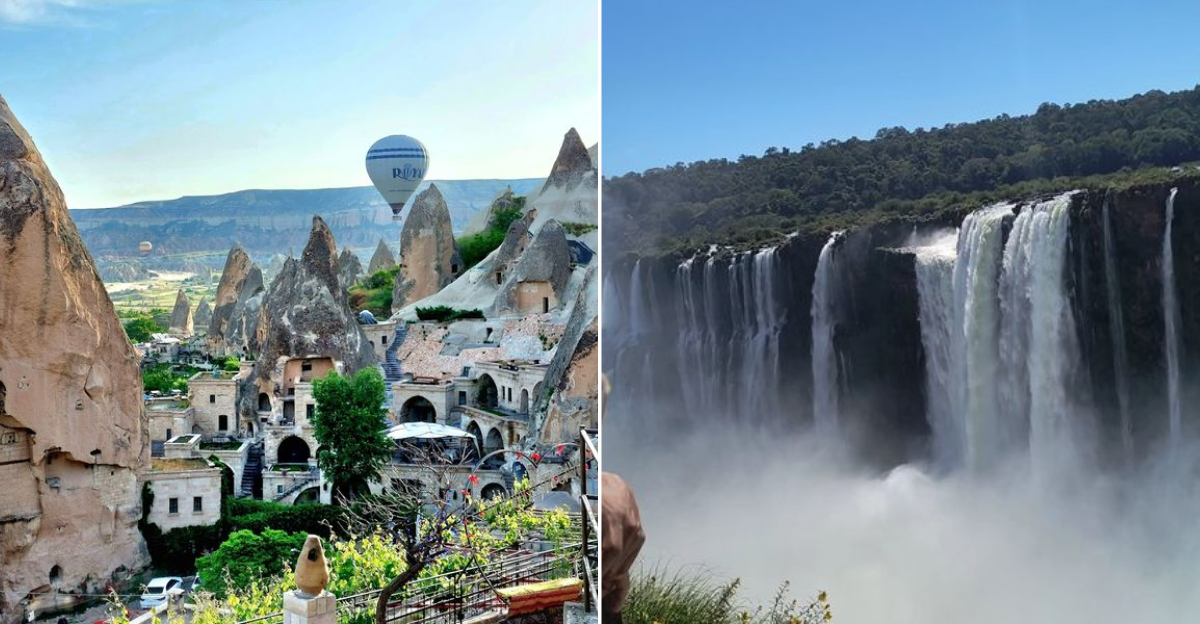
Some places on Earth look so strange and stunning that your brain just refuses to accept they’re real. From glowing caves in New Zealand to rainbow-colored mountains in China, our planet is hiding jaw-dropping secrets in every corner.
I still remember scrolling through photos of Cappadocia for the first time and genuinely thinking someone had used photo editing software. These 15 destinations will make you question everything you thought you knew about what’s possible in nature.
Giant’s Causeway – County Antrim, Northern Ireland
About 40,000 perfectly hexagonal rock columns line the coast of Northern Ireland, and no, a mathematician did not build them. The Giant’s Causeway formed around 50 to 60 million years ago from volcanic lava that cooled and cracked into these impossibly tidy shapes.
Local legend, however, insists a giant named Finn McCool built the path to Scotland to fight a rival giant across the sea.
The site is a UNESCO World Heritage Site and one of Ireland’s most visited attractions. You can walk right across the columns, which feels weirdly satisfying underfoot.
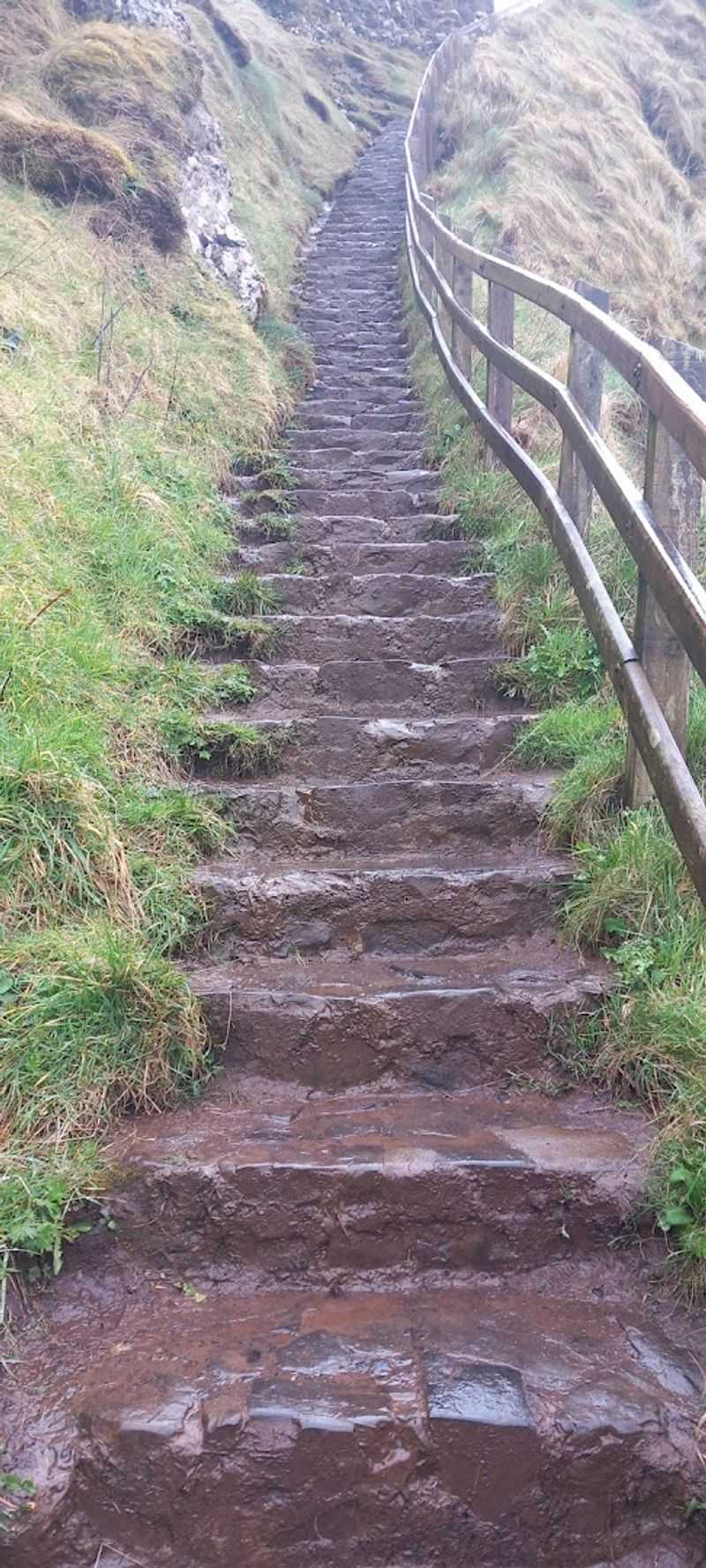
Wear sturdy shoes because the rocks get slippery when wet, and they are almost always wet in Ireland.
The visitor center nearby gives great context on the geology and the folklore. Go early in the morning to avoid crowds and catch that moody, cinematic light that makes every photo look like a movie poster.
This place rewards patience.
Pamukkale – Denizli Province, Turkey
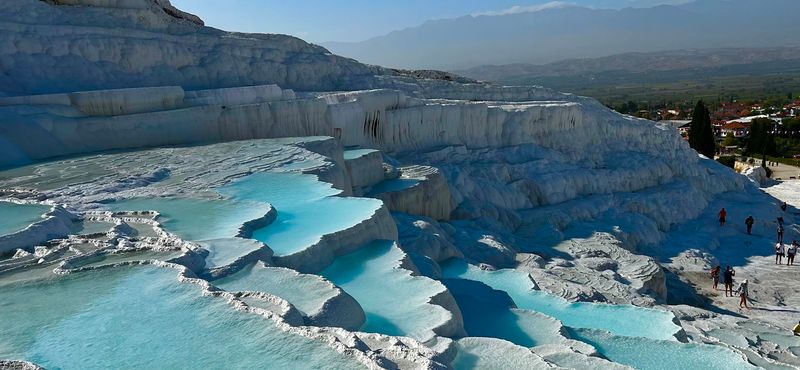
Pamukkale literally means “cotton castle” in Turkish, and the moment you see it, you completely understand why. Thousands of years of calcium-rich thermal water flowing down the hillside have created a series of blindingly white terraces that look like something a movie director dreamed up for a fantasy film.
The water temperature hovers around 35 degrees Celsius, making it a natural hot tub with an absurd view.
You must remove your shoes before walking on the terraces to protect the fragile white calcium surface. The barefoot walk is part of the experience, and the warm water trickling over your feet is genuinely delightful.
Just above the terraces sit the ruins of the ancient city of Hierapolis, so you get history and a spa day in one trip.
Visiting at sunset turns the white terraces shades of pink and gold. It is one of those rare places that looks even better in person than in photos.
Waitomo Glowworm Caves – Waitomo, New Zealand
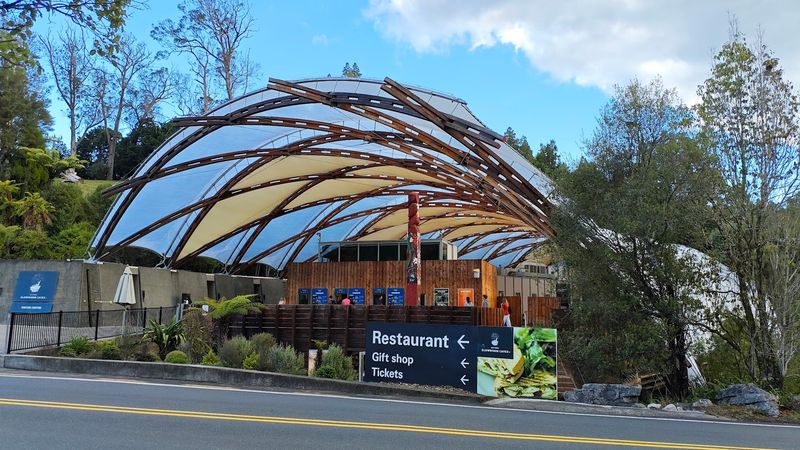
Floating silently through a pitch-black cave on a boat while thousands of tiny glowing creatures light up the ceiling above you is genuinely one of the wildest experiences on Earth. The Waitomo Glowworm Caves in New Zealand are home to Arachnocampa luminosa, a species of glowworm found nowhere else in the world.
These tiny creatures use their blue-green glow to attract prey, so what looks magical is actually a very clever trap.
The caves formed over 30 million years ago, and the guided boat tours take you through the most spectacular chambers without disturbing the ecosystem. Photography without flash is allowed in some sections, but honestly, putting the camera down and just looking up is the better choice.
Tours run year-round and book out fast, especially in peak summer months. Booking at least a few weeks in advance is strongly recommended.
The whole experience lasts about 45 minutes and feels like nothing else on the planet.
Wadi Rum – Aqaba Governorate, Jordan
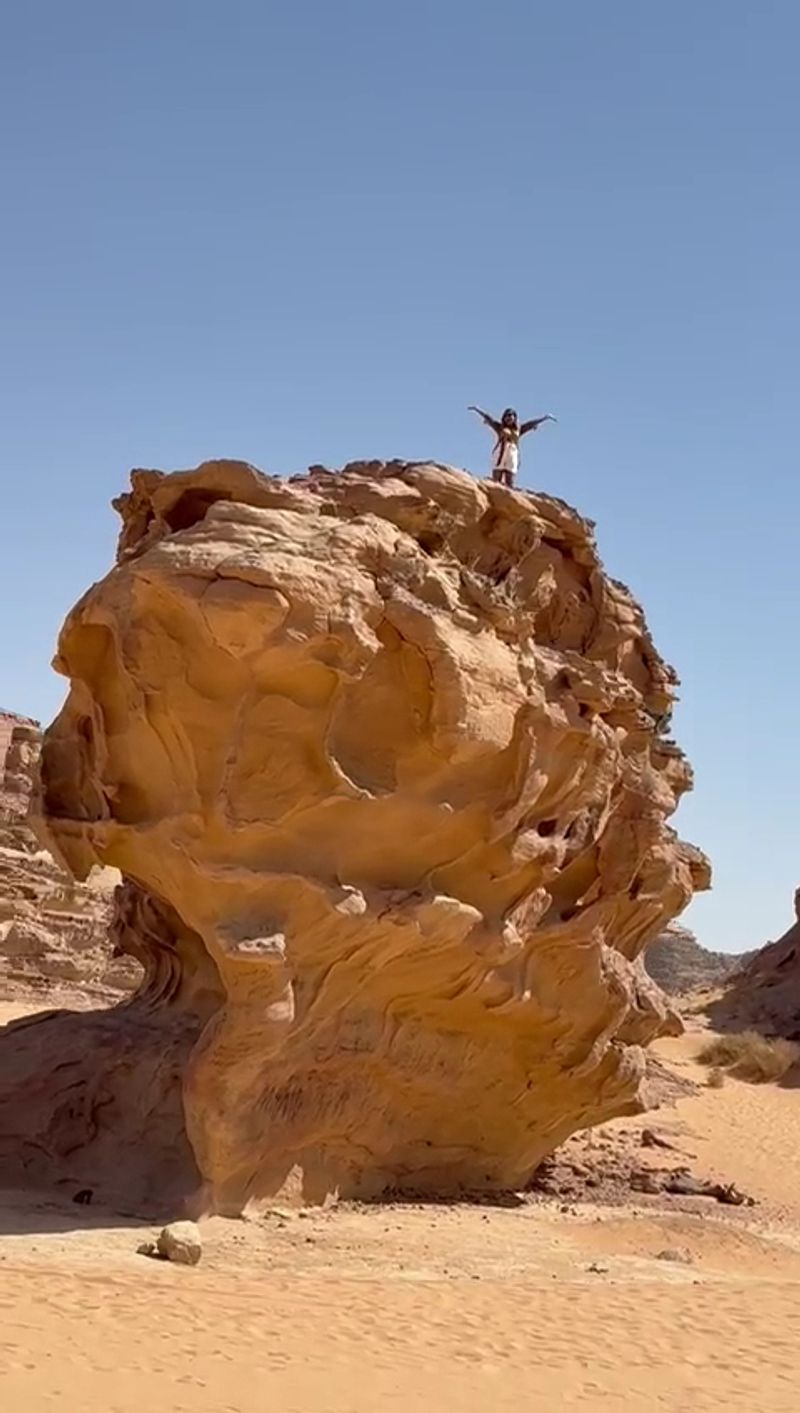
Wadi Rum has been the stand-in for Mars in multiple Hollywood films, and once you get there, you stop questioning why. The landscape is a deep, rusty red, the rock formations are enormous and alien-looking, and the silence is so complete it almost has a sound of its own.
This protected desert wilderness in southern Jordan covers over 700 square kilometers of pure drama.
Bedouin guides lead jeep tours, camel rides, and overnight camping experiences in the desert. Sleeping under the stars here is genuinely extraordinary since the lack of light pollution makes the Milky Way look close enough to touch.
I once stayed in a bubble tent here, and waking up to those red cliffs at sunrise is something I still think about regularly.
The area is also a UNESCO World Heritage Site, recognized for both its natural beauty and its ancient rock inscriptions. Jordan’s Petra is just a short drive away, making this a perfect double destination.
Antelope Canyon – Arizona, United States
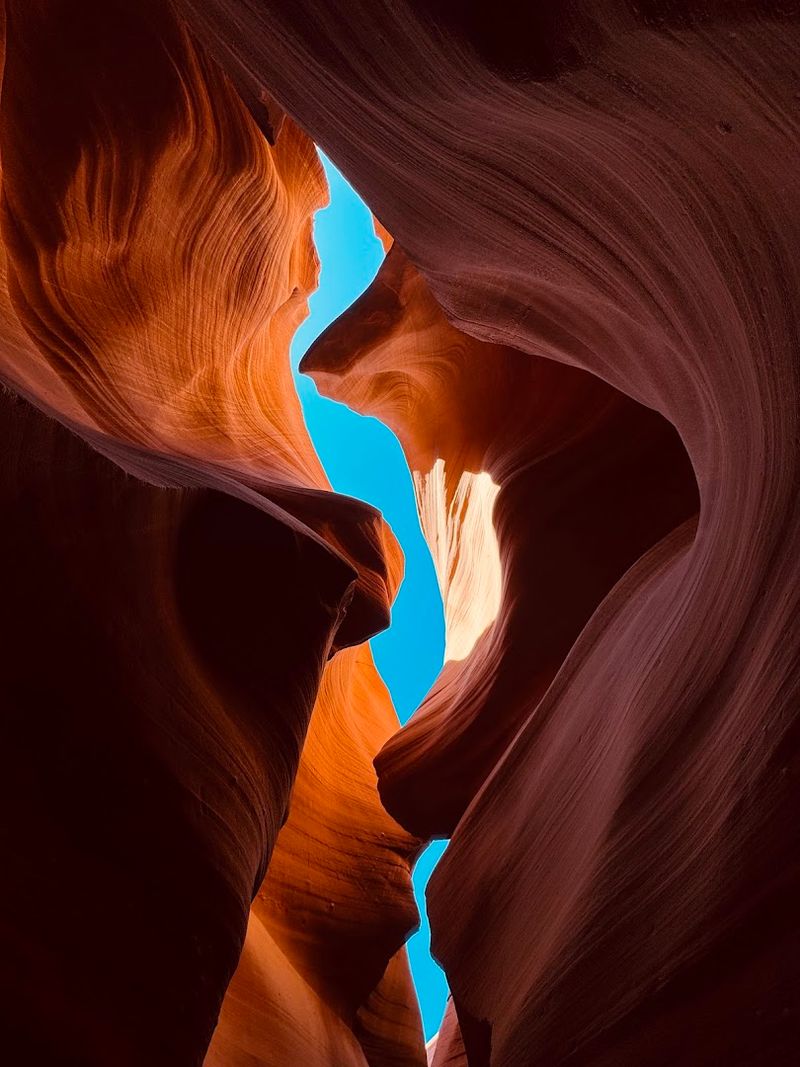
Antelope Canyon is the most photographed slot canyon in the American Southwest, and every single photo still manages to look fake. The Navajo name for the upper section translates to “the place where water runs through rocks,” which tells you exactly how these swirling, sculpted walls were formed over centuries of flash flooding.
The colors shift from deep orange to purple to gold depending on the time of day and the angle of light.
Access is only permitted through licensed Navajo-guided tours, which is both a cultural requirement and honestly a practical necessity since the canyon is a maze. The best light shafts appear around midday in summer, so timing your visit matters a lot.
Tours fill up weeks in advance during peak season.
Upper Antelope Canyon is more famous, but Lower Antelope Canyon offers a more adventurous experience with ladders and tighter passages. Both are spectacular.
Bring a wide-angle lens if you shoot photography.
White Sands National Park – New Mexico, United States
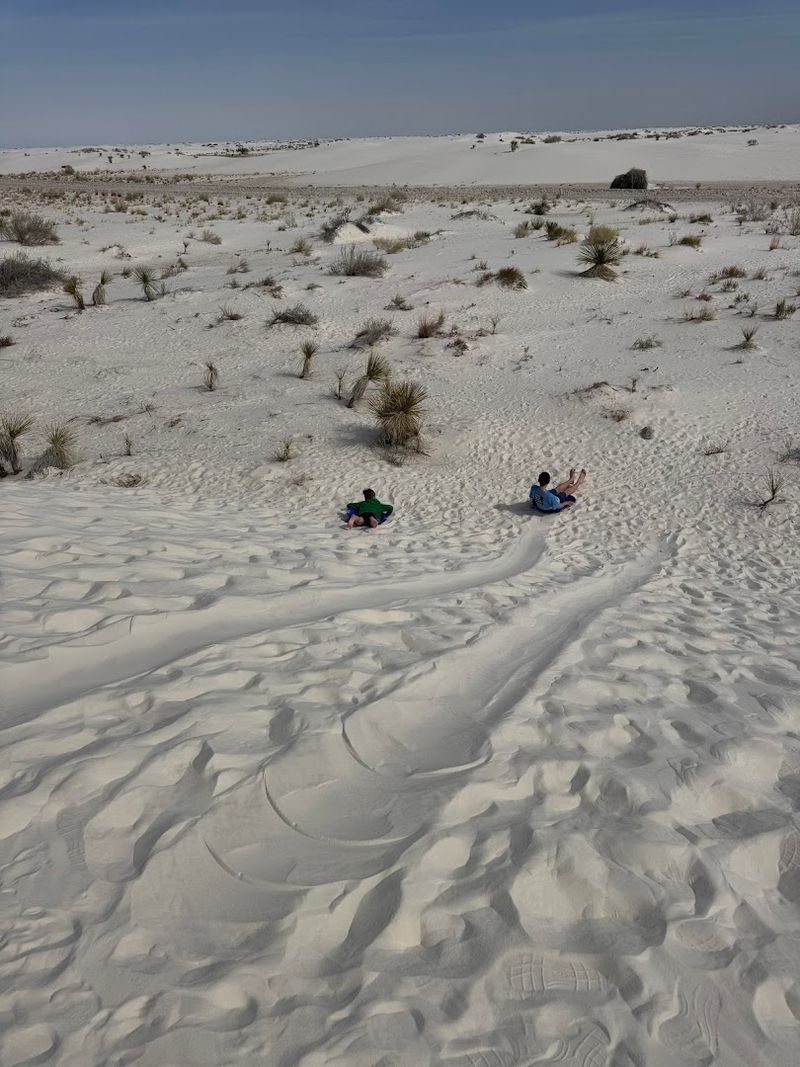
White Sands National Park sits in the Tularosa Basin of New Mexico and holds the world’s largest gypsum dune field, covering around 275 square miles of blinding white sand. Unlike regular desert sand, gypsum does not absorb heat, which means you can walk barefoot on these dunes even in the middle of summer without burning your feet.
That fact alone makes it worth the trip.
The dunes are constantly shifting and reshaping themselves, so the landscape literally looks different every time you visit. Sledding down the dunes on plastic discs is a wildly popular activity and rental sleds are available at the visitor center.
Sunset here turns everything a soft pink and lavender that photographers absolutely lose their minds over.
The park occasionally closes for military testing from a nearby base, so checking the schedule before you visit is a smart move. Bring plenty of water since the desert heat is no joke even when the sand feels cool.
Grand Prismatic Spring – Yellowstone National Park, Wyoming, United States
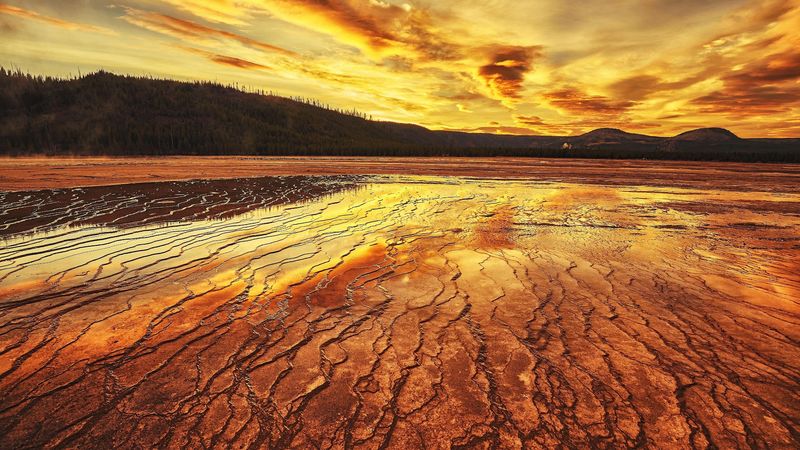
The Grand Prismatic Spring is the largest hot spring in the United States and the third largest in the world, stretching about 370 feet across. The rainbow rings surrounding the brilliant blue center are not a trick of light or a filter.
They are created by different species of heat-loving bacteria called thermophiles, each thriving at slightly different temperatures. The closer to the scalding center, the fewer bacteria survive, leaving the middle a deep, otherworldly blue.
Viewing it from the boardwalk at ground level gives you a close-up experience, but the full rainbow effect only becomes visible from above. A short hike up the Fairy Falls Trail leads to an overlook that delivers the classic aerial view seen in every travel magazine.
The overlook is free and absolutely worth the extra steps.
Steam often obscures the view in cooler months, so late summer tends to offer the clearest conditions. Yellowstone overall is worth at least three or four days to explore properly.
Plitvice Lakes National Park – Croatia
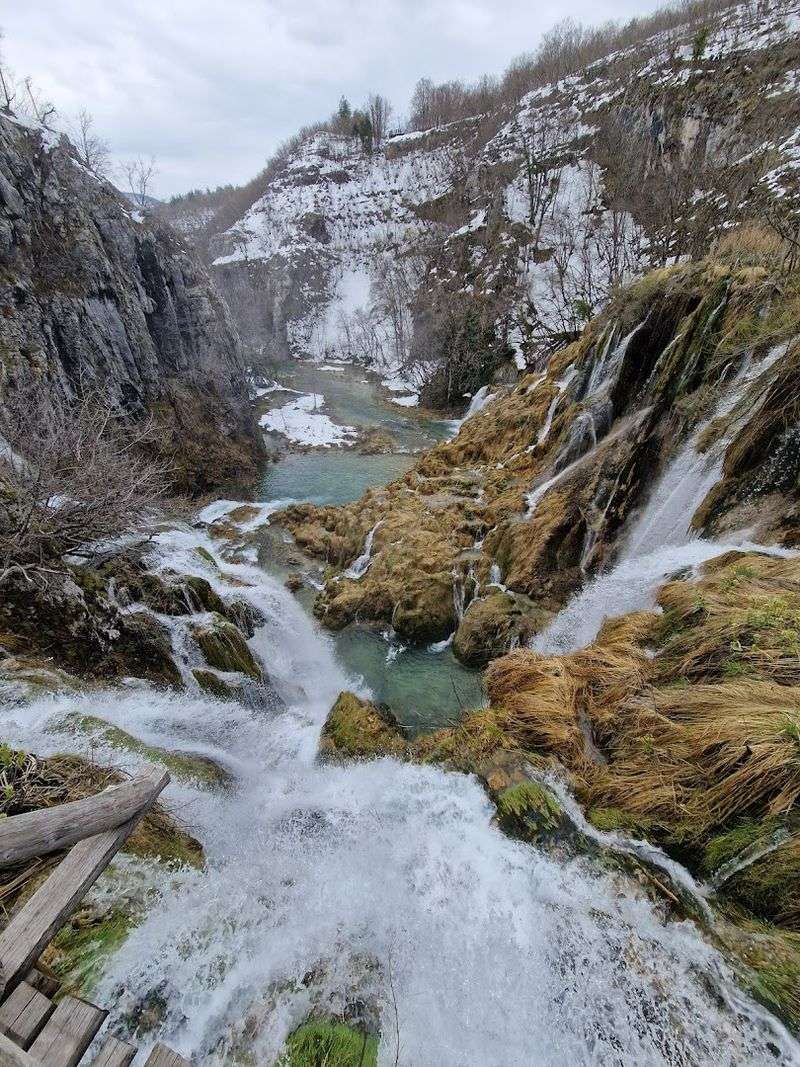
Croatia’s Plitvice Lakes National Park contains 16 terraced lakes connected by a chain of waterfalls, and the water is so clear and so impossibly turquoise that first-time visitors genuinely stop and stare in disbelief. The color comes from the minerals, algae, and microorganisms in the water, which shift the hue from emerald green to vivid blue depending on the season and light.
No filters required whatsoever.
Wooden boardwalks run directly over and alongside the water, so you walk inches above the surface through the middle of this aquatic wonderland. Swimming is not permitted, which protects the delicate ecosystem that creates those famous colors.
The park is a UNESCO World Heritage Site and Croatia’s most visited national attraction.
Spring and early autumn are the best times to visit for manageable crowds and peak foliage color. Summer gets very busy, and timed entry tickets are now required.
Book ahead to avoid a long wait at the gate on arrival day.
Göreme and Cappadocia – Nevşehir Province, Turkey
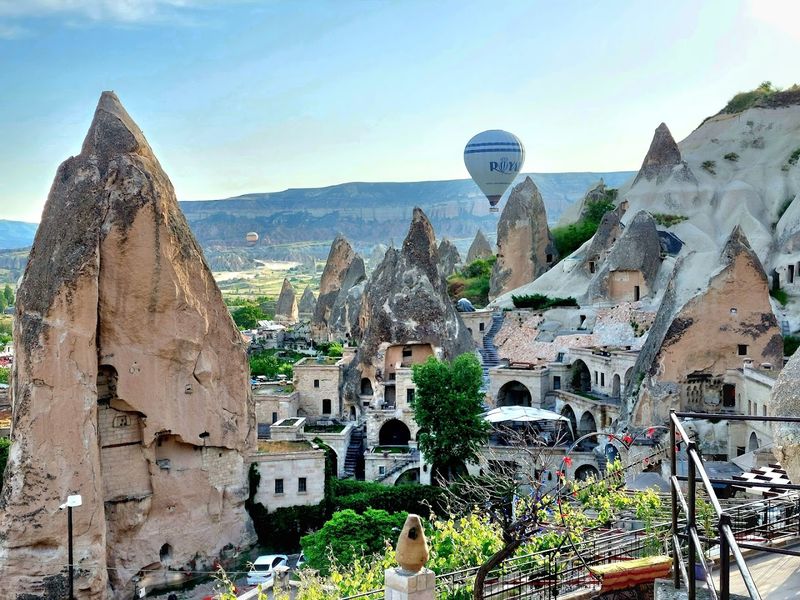
Cappadocia looks like someone took a regular landscape and replaced all the mountains with giant mushrooms. These tall, pointy rock formations called fairy chimneys were carved by millions of years of volcanic eruptions and wind erosion, and early inhabitants literally hollowed them out to use as homes.
Some of those cave dwellings are now boutique hotels, which is arguably the coolest accommodation upgrade in travel history.
The hot air balloon rides at sunrise are the signature Cappadocia experience, and they are popular for good reason. Floating above those fairy chimneys in the early morning light while dozens of other colorful balloons drift around you is a genuinely spectacular sight.
Prices run around 150 to 250 US dollars per person and are worth every cent.
The Goreme Open Air Museum is an essential stop, showcasing ancient rock-cut churches filled with Byzantine frescoes. The underground cities of Derinkuyu and Kaymakli are equally fascinating and take exploration to a completely different level, literally underground.
Lençóis Maranhenses National Park – Maranhão, Brazil
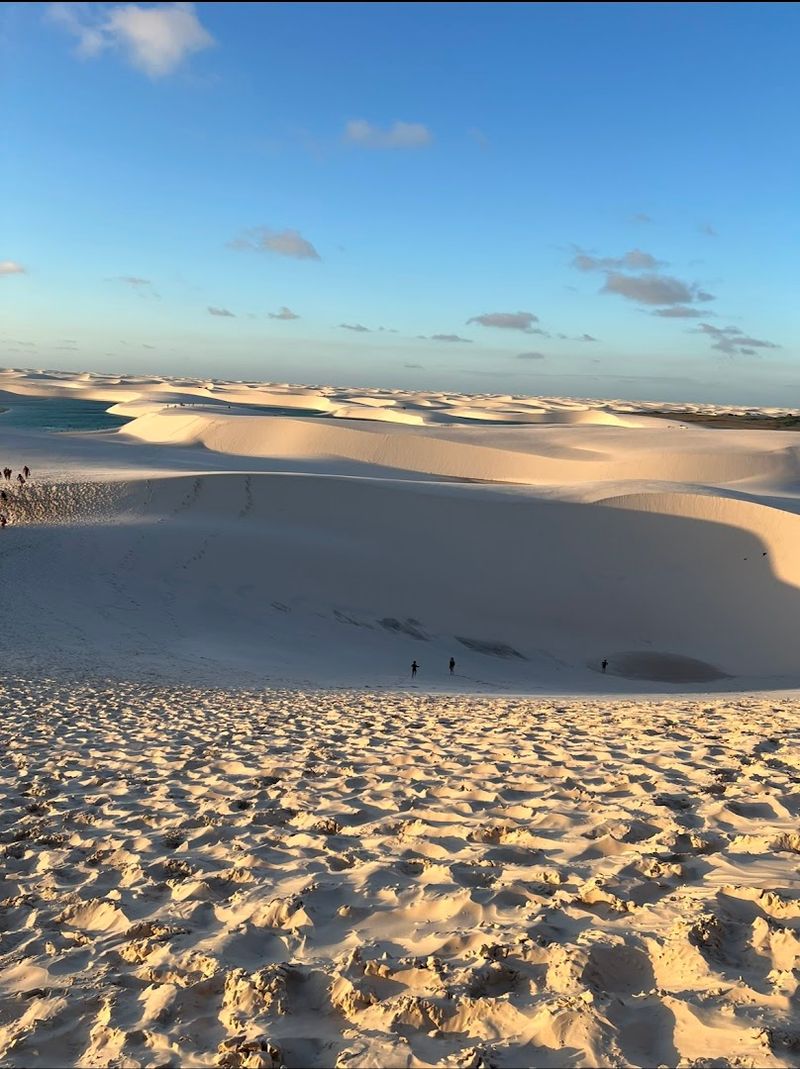
Lençóis Maranhenses is a desert full of lakes, which sounds like a contradiction but is completely real. Every rainy season, freshwater collects between enormous white sand dunes, creating hundreds of crystal-clear blue and green lagoons scattered across the landscape.
By the dry season, many disappear. The whole cycle repeats every year like the world’s most dramatic magic trick.
The park covers about 1,550 square kilometers in northeastern Brazil and is genuinely remote. Getting there requires some commitment, usually flying into São Luís and then taking a long drive or a small plane to the entrance.
Guides are strongly recommended since the dunes shift constantly and getting disoriented is easy.
The best time to visit is between July and September when the lagoons are full and at their most photogenic. Swimming in the lagoons is allowed and the water is refreshingly cool.
Some lagoons are shallow enough for wading, while others are deep enough for a proper swim. It is one of the most unusual landscapes in the entire world.
Iguazú Falls – Misiones Province, Argentina
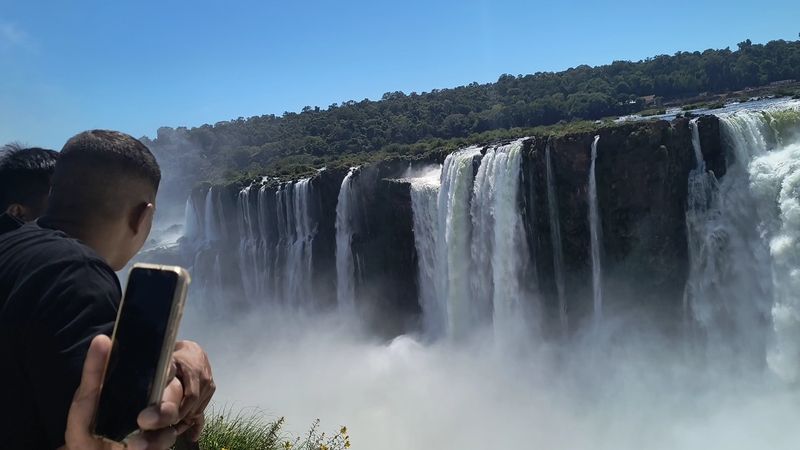
Eleanor Roosevelt reportedly visited Niagara Falls and said, “Poor Niagara.” That story may be apocryphal, but the sentiment is understandable once you have stood at Iguazú Falls. Stretching nearly two miles wide across the Argentina-Brazil border, Iguazú is made up of around 275 individual falls, with the centerpiece being a thunderous horseshoe-shaped drop called the Devil’s Throat.
The Argentine side offers the most immersive experience, with walkways that take you directly above and alongside the falls. You will get completely soaked and you will not care even slightly.
The Brazilian side gives you a broader panoramic view, and many travelers do both sides in two days.
The surrounding subtropical rainforest is home to coatis, toucans, and giant butterflies that land on you without invitation. The spray from the falls keeps the air fresh and the vegetation absurdly lush.
This is one of the few places where the reality exceeds even the most enthusiastic travel blog description.
Mount Bromo – East Java, Indonesia
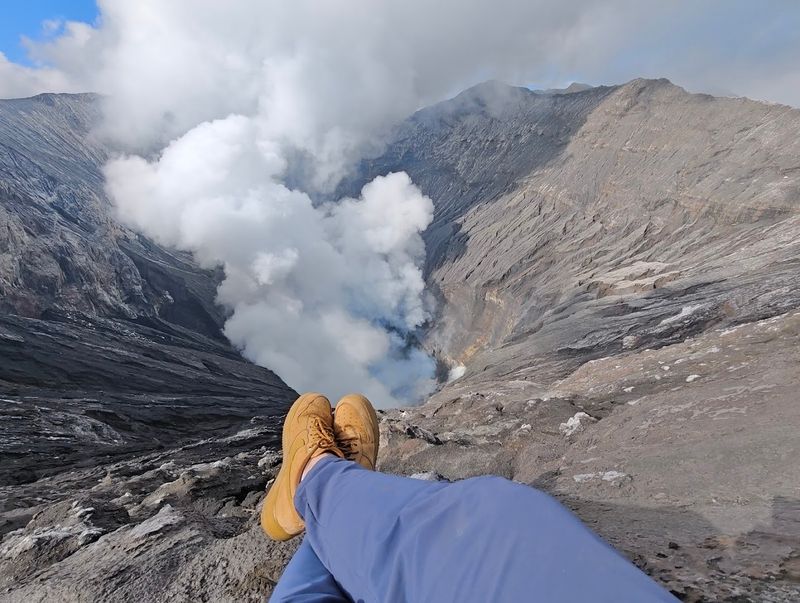
Mount Bromo is an active volcano that sits inside a vast caldera filled with a sea of volcanic sand, and it smokes casually like it has absolutely nothing to prove. Located in the Bromo Tengger Semeru National Park in East Java, it is one of Indonesia’s most iconic landscapes and one of the most dramatic sunrise viewpoints anywhere on Earth.
The local Tengger people consider Bromo sacred and hold an annual festival where offerings are thrown into the crater.
Most visitors wake up at 3 a.m. to reach the viewpoint at Penanjakan before sunrise. It is cold, dark, and a bit chaotic with jeeps and tourists, but the moment the light hits that smoking crater against a pink sky, every early alarm is completely forgiven.
From the viewpoint, you can see Bromo, the sand sea, and the towering Mount Semeru all at once.
After sunrise, you can hike or ride a horse across the sand sea to Bromo’s rim. The sulfur smell is strong near the top, so a mask is a smart addition to your daypack.
Chocolate Hills – Bohol, Philippines
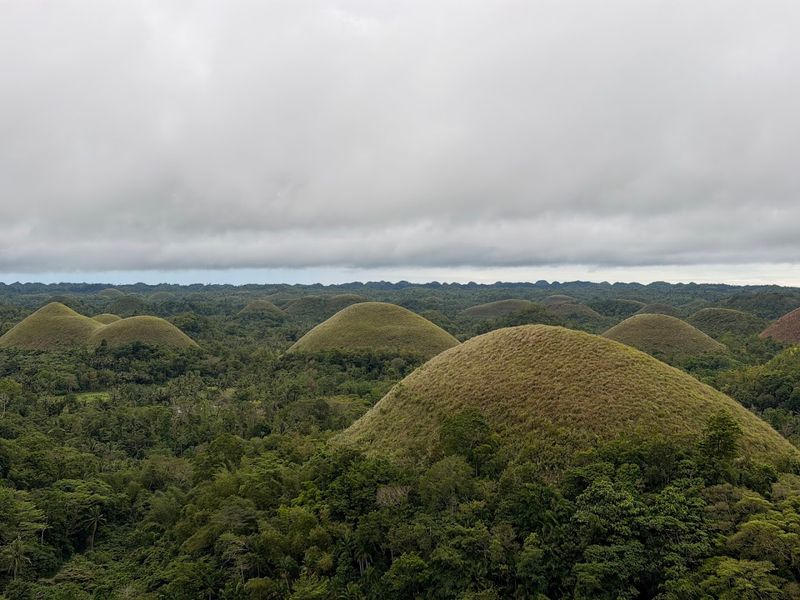
There are over 1,200 nearly perfectly cone-shaped hills spread across the island of Bohol in the Philippines, and during the dry season they turn a rich brown color, earning them the name Chocolate Hills. The geological origin involves ancient coral reefs that were lifted by tectonic activity and then shaped by rain and erosion over millions of years.
Nature apparently has a very good sense of humor.
The most popular viewing spot is the observation deck at Carmen, which gives you an elevated panoramic view of the hills rolling into the distance in every direction. Sunrise and sunset visits are worth the early start or late stay since the light turns everything golden and dramatic.
The surrounding area of Bohol is also home to the Philippine tarsier, one of the world’s smallest primates.
Bohol is easy to reach by ferry or short flight from Cebu. Renting a scooter or hiring a driver for the day is the most flexible way to combine the Chocolate Hills with other nearby highlights like the Loboc River.
Sossusvlei and Deadvlei – Namib-Naukluft National Park, Namibia
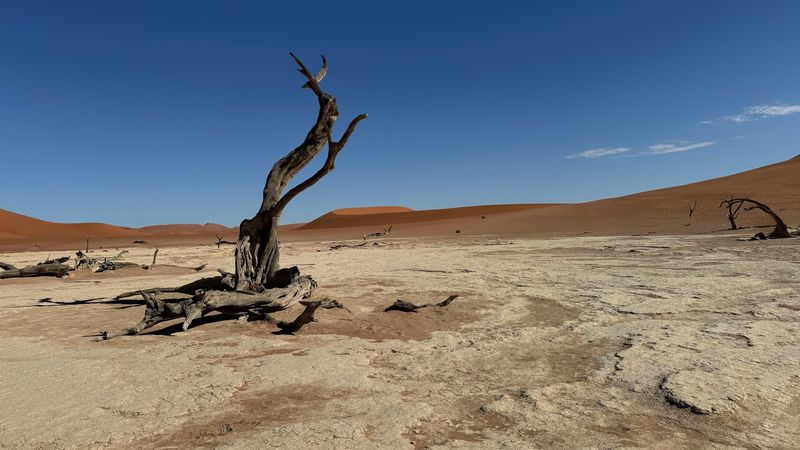
Deadvlei is a white clay pan inside Namibia’s Namib Desert where dead camel thorn trees have been standing for over 900 years, preserved by the extreme dryness rather than rotting away. The contrast of jet-black dead trees against the brilliant white clay floor and the towering orange dunes behind them creates one of the most visually striking landscapes on the planet.
Photographers have called it one of the most photogenic places on Earth, and they are not wrong.
Getting to Deadvlei requires a 4×4 vehicle to reach the Sossusvlei parking area, followed by a 1-kilometer walk across deep sand. The walk is manageable but the heat is intense, so starting before sunrise is essential.
The famous Big Daddy dune next to Deadvlei is one of the tallest in the world and takes about an hour to climb.
The Namib Desert is also the world’s oldest desert, estimated at around 55 to 80 million years old. That detail somehow makes standing inside it feel even more significant.
Zhangye Colorful Hills – Gansu, China
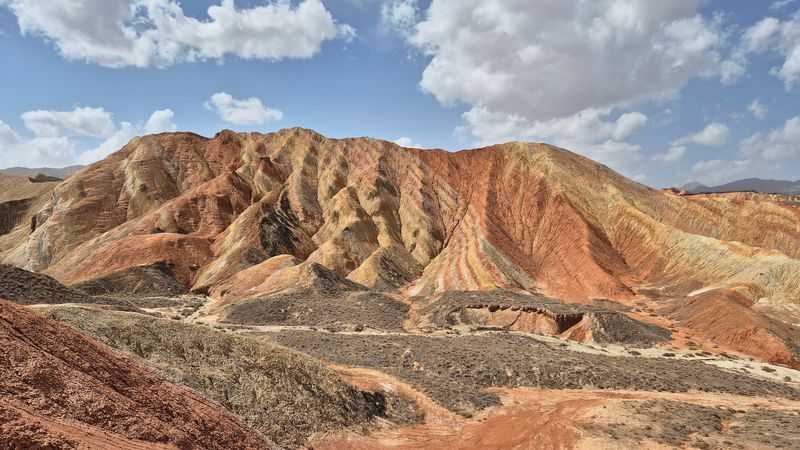
The Zhangye Danxia Colorful Hills in Gansu Province look like a painter went completely rogue on a massive canvas. The striped layers of red, orange, yellow, teal, and purple were created by different mineral deposits in sandstone over 24 million years, then folded and tilted by tectonic movement.
The result is a hillside that genuinely looks like it was color-blocked by someone with extraordinary ambition and zero restraint.
The site is part of the Zhangye National Geopark and has multiple viewing platforms that give you elevated angles over the most colorful sections. The best light for photography is during golden hour, roughly an hour after sunrise or before sunset, when the colors deepen dramatically.
Midday light washes things out considerably.
Zhangye is accessible by high-speed rail from Lanzhou or Xian, making it a solid addition to a broader China itinerary. The park is open year-round, but summer afternoons bring heavy tourist traffic.
Going on a weekday makes a noticeable difference in the experience.



