 Unearth The Voyage
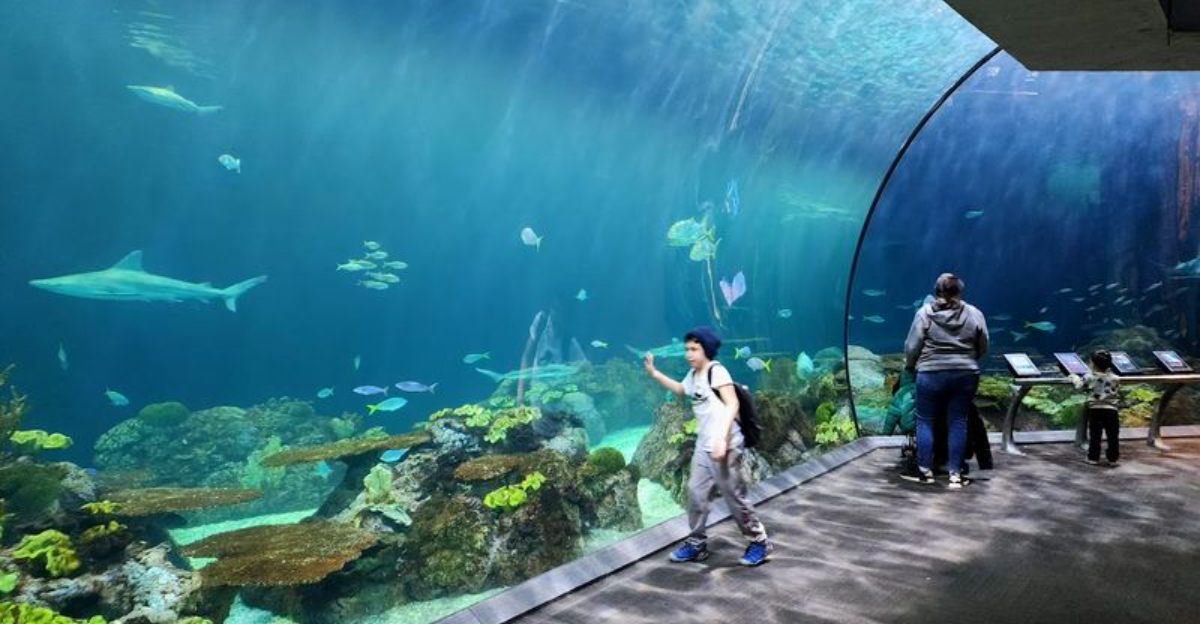
Some aquariums are so massive that standing in front of their tanks feels like peering through a window into the actual ocean. These incredible facilities house millions of liters of water, sheltering whale sharks, manta rays, and thousands of other marine species under one roof.
From China to the United States, the world’s largest aquarium tanks are engineering marvels that combine science, conservation, and jaw-dropping spectacle. If you love the ocean but can’t always get to it, these places bring the deep sea straight to you.
SeaWorld Abu Dhabi, UAE
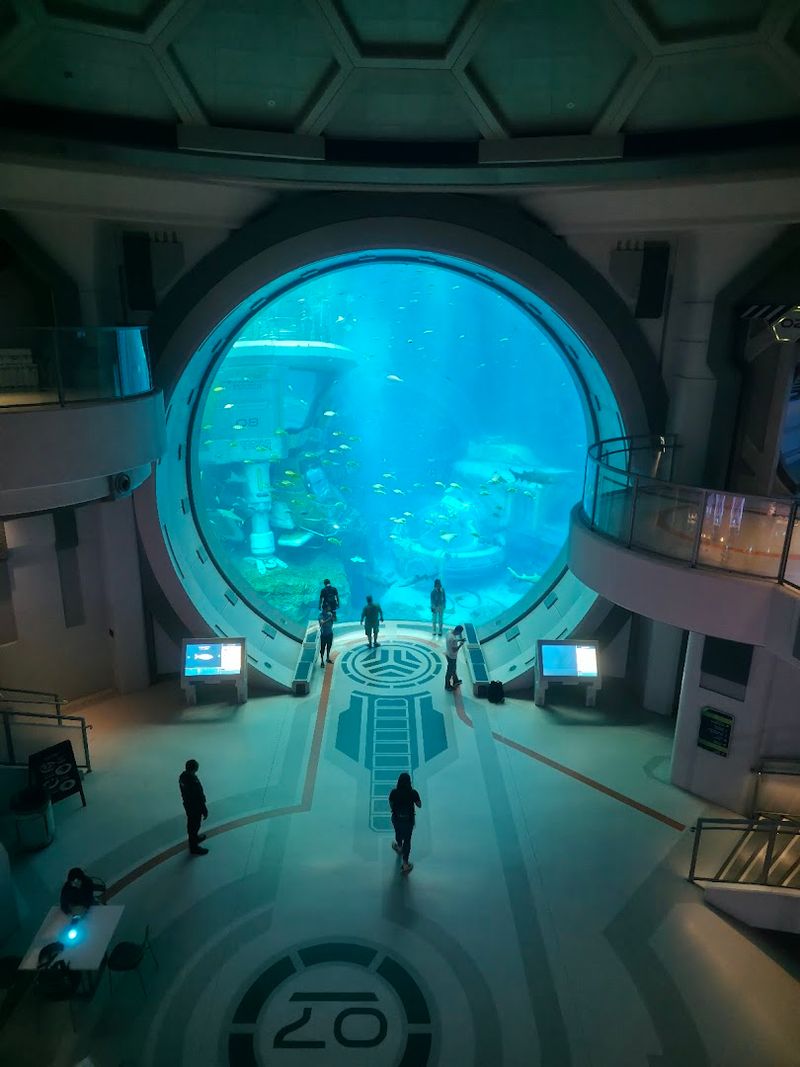
SeaWorld Abu Dhabi is not your average theme park add-on — this place was built from the ground up to be one of the most ambitious marine facilities on the planet. Its main exhibit holds around 25 million liters, a figure that puts most rival aquariums firmly in second place.
The sheer scale hits you the moment you walk through the entrance.
Spread across multiple floors, the facility recreates distinct ocean zones, from shallow reef environments to open-water habitats that stretch far beyond what the eye can easily process. Large schools of fish move through the tank in sweeping formations, and the viewing areas are wide enough that you never feel crowded.
Every angle offers something new.
What sets this aquarium apart beyond its size is the thoughtful design philosophy behind it. Conservation messaging is woven into every exhibit, making each visit as educational as it is entertaining.
The blend of cutting-edge architecture and genuine marine science gives SeaWorld Abu Dhabi a credibility that few entertainment-focused facilities manage to achieve. It is a bold statement about what the future of aquariums can look like when ambition meets real purpose.
Chimelong Ocean Kingdom, China
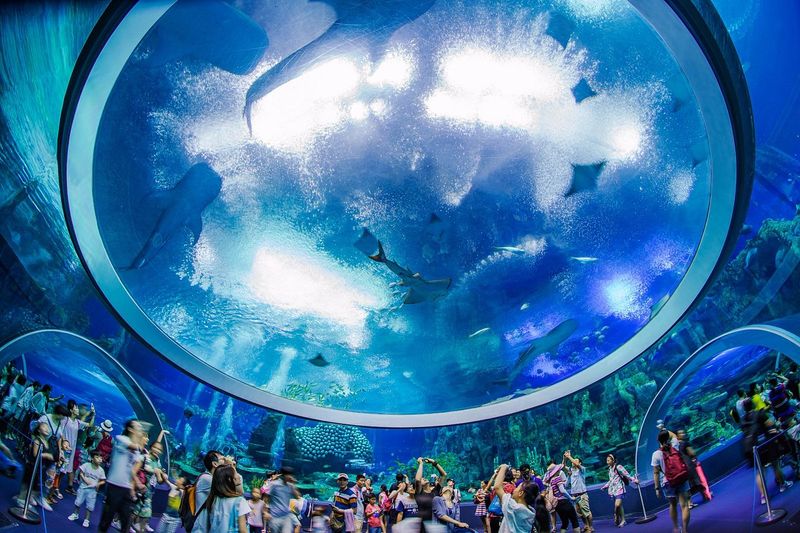
Before Chimelong Spaceship stole the crown, Chimelong Ocean Kingdom was the undisputed champion of aquarium size — and it is still an absolute heavyweight. Its main tank holds over 22 million liters, and the facility continues to rank among the most visited aquariums anywhere in the world.
Records or not, this place delivers.
The viewing dome is one of the most photographed features in any aquarium globally. Visitors lie on their backs beneath a curved acrylic ceiling while whale sharks and manta rays glide silently overhead.
It is the kind of experience that makes grown adults go completely quiet.
Wide acrylic panels throughout the complex offer unobstructed views across the full depth of the tank, giving you the feeling of floating alongside the animals rather than watching from the outside. The facility is massive enough that a single day barely covers everything.
Fun fact: when it opened in 2014, it broke four separate Guinness World Records simultaneously. Chimelong Ocean Kingdom proved that aquariums could be genuinely world-class attractions, and it pushed every other facility on the planet to think bigger, bolder, and far more creatively about what a tank can truly be.
S.E.A. Aquarium, Singapore
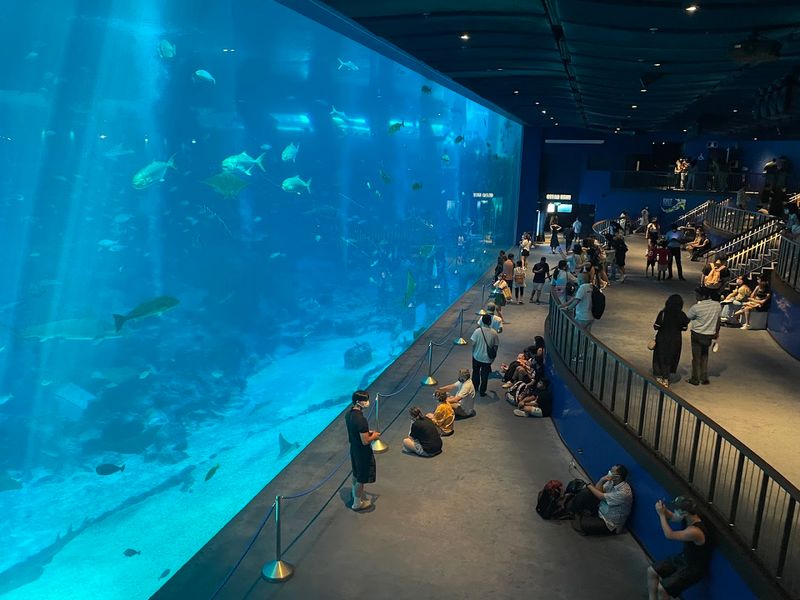
Standing in front of the Open Ocean viewing panel at S.E.A. Aquarium feels like the wall between you and the Pacific just disappeared.
The tank holds more than 18 million liters of saltwater and houses over 100,000 marine animals across hundreds of species. It is one of the most jaw-dropping single exhibits anywhere on Earth.
The viewing panel itself is one of the largest ever installed in any public aquarium, stretching wide and tall enough to fill your entire field of vision. Hammerhead sharks, manta rays, and enormous schools of fish pass by in a constant, hypnotic procession.
Visitors tend to linger here far longer than they planned.
S.E.A. Aquarium sits on Sentosa Island within Resorts World, making it easy to combine with other attractions during a Singapore trip.
The facility also runs active research and conservation programs, adding real substance behind the spectacle. What makes this aquarium genuinely special is how effortlessly it balances entertainment with education.
You leave knowing more about ocean ecosystems than when you arrived, and somehow that knowledge makes the whole experience feel even more worth the visit than the stunning visuals alone already did.
L’Oceanogràfic, Spain
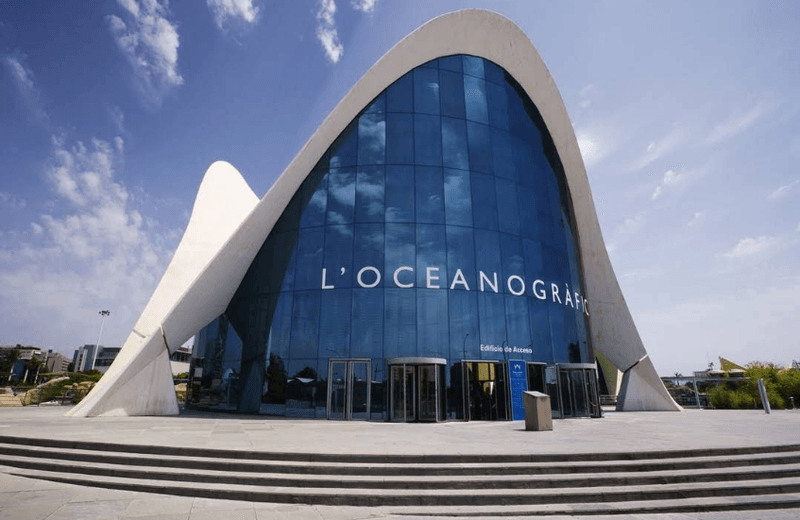
Valencia’s L’Oceanogràfic wears two hats impressively well — it is both the largest aquarium in Europe and one of the most architecturally stunning buildings you will ever step inside. Designed by Felix Candela, the structure itself looks like something that belongs underwater.
The main tank holds around 7 million liters, and the surrounding complex covers multiple distinct ocean ecosystems.
Arctic habitats sit alongside Mediterranean zones, tropical reefs, and even a mangrove environment. The variety means every corridor leads to something completely different from the last.
Beluga whales, sharks, rays, and penguins all share the same building without it ever feeling chaotic or overwhelming.
L’Oceanogràfic is part of Valencia’s celebrated City of Arts and Sciences complex, which means visiting it also puts you in one of Europe’s most visually impressive cultural districts. The aquarium runs serious conservation and breeding programs, giving its exhibits genuine scientific weight beyond pure spectacle.
Families with kids will find the pacing and layout particularly well-suited to keeping younger visitors engaged throughout. Whether you are there for the architecture, the marine life, or simply a spectacular afternoon out, this aquarium consistently delivers more than most visitors actually expect it to.
Georgia Aquarium, USA
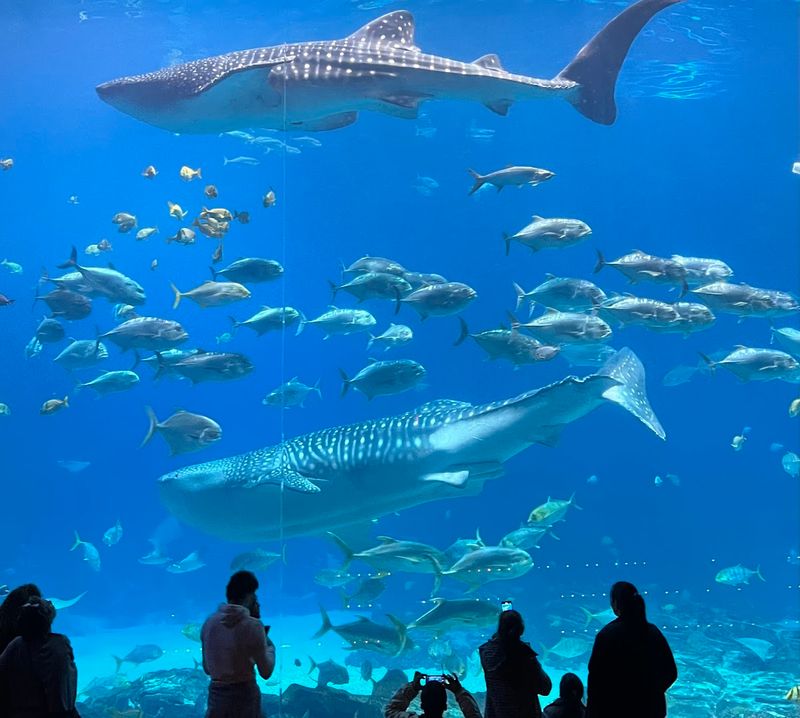
For years, Georgia Aquarium in Atlanta held the title of the world’s largest aquarium, and even now it remains one of the most impressive marine facilities ever built. Its Ocean Voyager tank holds over 6 million gallons — roughly 24 million liters — of saltwater.
That is enough water to fill about 36 Olympic swimming pools, if you were curious.
Whale sharks live here, which already puts Georgia Aquarium in a very exclusive club. Only a handful of facilities worldwide have ever successfully housed these gentle giants, and Georgia Aquarium has managed it for years.
Manta rays, enormous schools of fish, and a walk-through underwater tunnel round out an experience that genuinely earns its reputation.
The aquarium sits in the heart of downtown Atlanta, making it surprisingly accessible for a facility of this scale. Beyond the main tank, exhibits cover everything from cold-water habitats to tropical reefs, beluga whales, and African penguins.
The Georgia Aquarium also invests heavily in marine research and conservation partnerships, lending real credibility to every exhibit. Visiting feels less like a day out and more like a genuine encounter with the ocean, complete with the kind of scale that stays with you long after you leave.
Port of Nagoya Public Aquarium, Japan
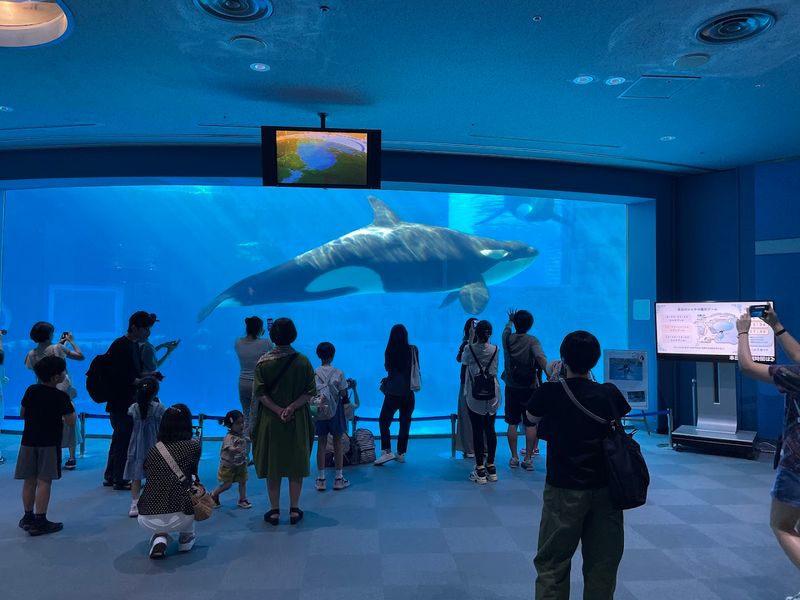
Japan takes aquariums seriously, and Port of Nagoya Public Aquarium is proof that the country does not do anything halfway. The main tank stretches to over 13 million liters, built specifically to accommodate large marine mammals and give them space that mirrors natural ocean conditions.
The scale is immediately obvious from the moment you enter the main hall.
Killer whales and beluga whales are among the headline residents, with performances and feeding sessions drawing large crowds throughout the day. But beyond the showmanship, the facility places strong emphasis on marine education and conservation research.
The two goals coexist here without one undermining the other.
The aquarium sits right at the port, which adds a fitting nautical atmosphere to the whole experience. Multiple levels of viewing platforms let you observe the main tank from different heights, offering perspectives that single-level viewing simply cannot match.
Dedicated zones cover everything from Antarctic ecosystems to deep-sea environments found in the Pacific. What makes Nagoya’s aquarium stand out among Japan’s already impressive lineup is the combination of genuine scientific commitment and the kind of crowd-pleasing spectacle that makes it equally enjoyable for marine biologists and excited ten-year-olds visiting on a school trip.
Moscow Oceanarium (Moskvarium), Russia
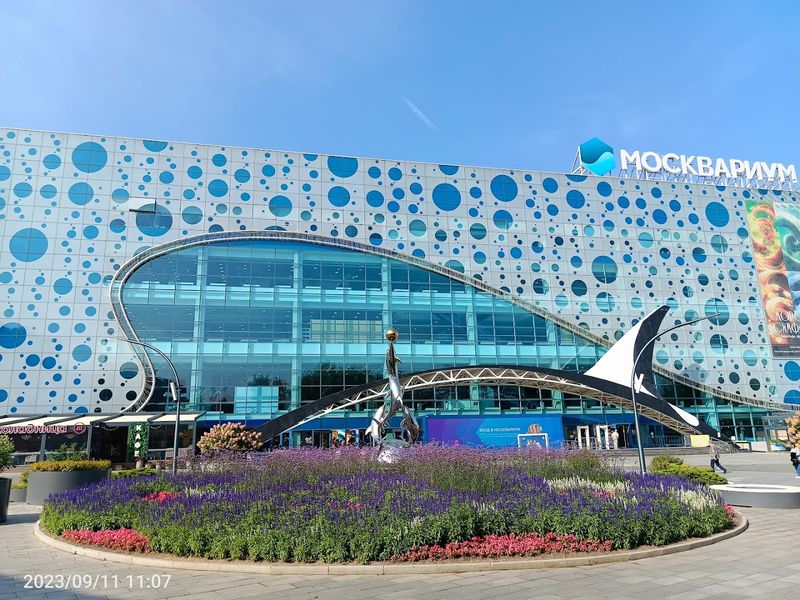
Tucked inside a massive entertainment complex on VDNKh in Moscow, the Moskvarium is the kind of place that surprises you with its ambition. The main tank holds around 3.7 million liters, but the total water capacity across the entire facility is significantly larger when you factor in all the supporting exhibits and performance pools.
It is a serious operation dressed up in flashy packaging.
Beluga whale shows draw some of the biggest crowds, with performances staged in a purpose-built arena that seats a substantial audience. The blend of entertainment and exhibition gives Moskvarium a hybrid identity that sits somewhere between traditional aquarium and marine theater.
Somehow, it works.
Beyond the performances, the facility houses species from wildly different ecosystems — tropical reefs, cold Atlantic waters, and freshwater river environments all appear within the same building. The variety keeps the experience moving at a satisfying pace, and there is always something new around the next corner.
Moskvarium also runs educational programs for school groups, which speaks to its broader mission beyond entertainment. For visitors to Moscow looking for something genuinely different from the usual cultural itinerary, this aquarium offers a surprisingly rich and immersive afternoon that goes far beyond what most people expect from a landlocked city.
The Seas with Nemo & Friends, USA
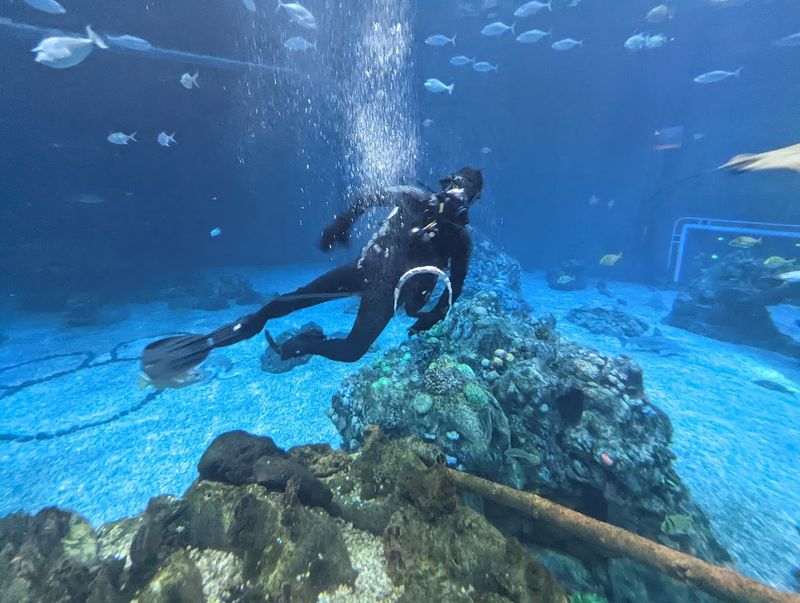
Hidden inside EPCOT at Walt Disney World, The Seas with Nemo and Friends quietly houses one of the largest saltwater tanks in the United States — and most guests have no idea. The tank holds over 5.7 million gallons of seawater, making it a genuine record-holder that just happens to share a building with a theme park ride.
The combination is wonderfully bizarre.
When it opened in 1986, it was the largest man-made saltwater environment on the planet. Decades later, it still impresses.
Sea turtles, manatees, dolphins, sharks, and thousands of reef fish call this tank home, all living alongside the occasional backdrop of an animated clownfish making his rounds.
The Nemo-themed ride component is delightful for kids, but the real draw for aquarium enthusiasts is the Living Seas exhibit that wraps around the main tank. Viewing areas let you observe the animals calmly, away from the ride queue energy.
The facility also conducts genuine marine research and has been involved in sea turtle rehabilitation programs for years. It is one of the best examples anywhere of serious marine conservation wearing a Mickey Mouse hat — and somehow pulling it off with complete sincerity and remarkable scientific credibility.
Aqua Planet Jeju, South Korea
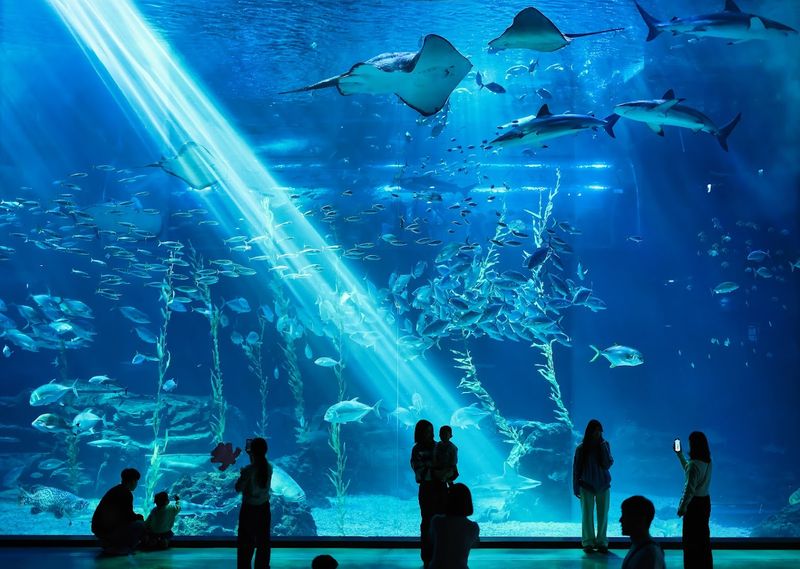
Jeju Island is already one of South Korea’s most spectacular destinations, and Aqua Planet Jeju gives it yet another reason to be on every traveler’s list. The main tank replicates open-ocean conditions with a scale and clarity that makes the surrounding water feel genuinely boundless.
Millions of gallons support hundreds of species across multiple interconnected habitats.
Beluga whales are among the most popular residents, drawing visitors who line up specifically to watch them move through the water with that unmistakable, almost playful grace. The viewing panels are positioned at multiple heights and angles, so no matter where you stand, you have a compelling perspective on whatever is swimming past.
The design encourages exploration rather than passive observation.
Educational exhibits run alongside the main tank experiences, covering topics like ocean conservation, marine biodiversity, and the specific ecosystems surrounding Jeju Island itself. Live performances featuring marine animals add an entertainment layer that families find particularly appealing.
What makes Aqua Planet Jeju memorable beyond the obvious spectacle is how well it connects the exhibits to the local environment. Jeju’s waters are genuinely rich and biodiverse, and the aquarium reflects that identity with a regional pride that gives every exhibit a meaningful sense of place and purpose.
Osaka Aquarium Kaiyukan, Japan
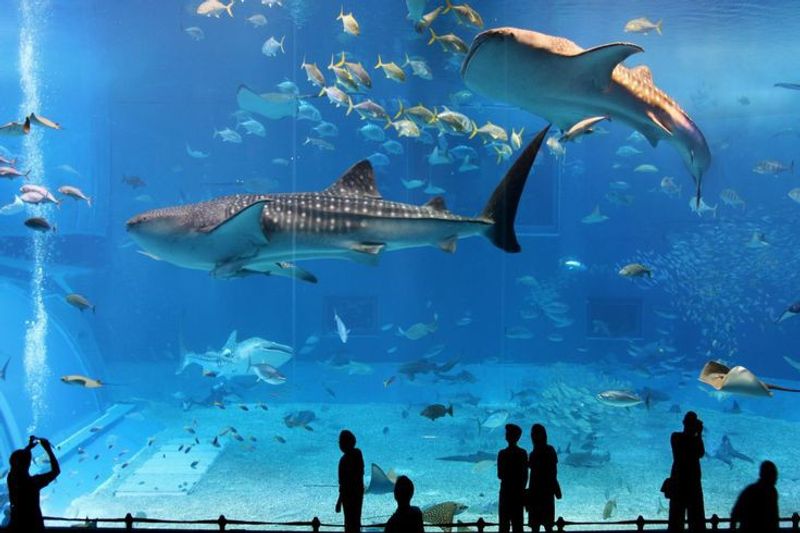
Kaiyukan has a design trick that most aquariums never even attempt — its main Pacific Ocean tank spirals through eight floors, so you experience the same body of water from completely different depths as you walk down. A whale shark passes your eye level on floor seven, then reappears far below you on floor two.
It is genuinely thrilling every single time.
The central tank is enormous, representing the Pacific Ocean with a scale that earns that ambitious label. Giant sunfish, whale sharks, and schools of smaller fish coexist in a single environment that feels alive in a way that smaller, compartmentalized exhibits simply cannot replicate.
The multi-level approach gives the whole experience a narrative arc.
Osaka Aquarium Kaiyukan opened in 1990 and has remained one of Japan’s most beloved aquariums ever since, which is impressive in a country with exceptionally high competition. Fourteen different tanks represent ecosystems from the Pacific Rim, including Antarctica, the Great Barrier Reef, and the Aleutian Islands.
The attention to ecological accuracy sets Kaiyukan apart from facilities that prioritize spectacle over substance. Visiting feels like taking a slow, meditative journey through some of the world’s most important ocean environments, all contained within a single beautifully designed building.
Okinawa Churaumi Aquarium, Japan
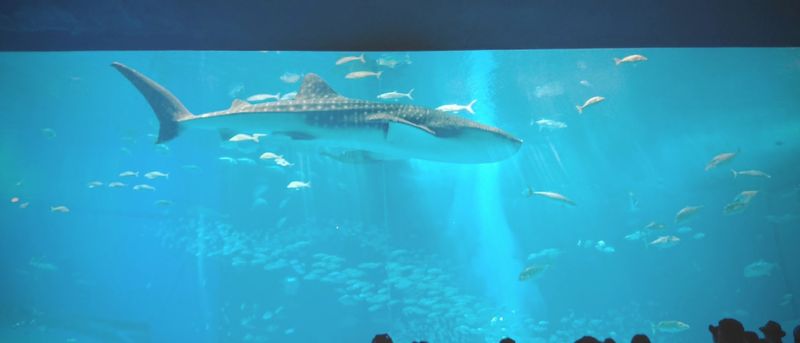
There is a moment when you first walk into the Kuroshio Sea exhibit at Okinawa Churaumi Aquarium when your brain genuinely struggles to process what it is seeing. The viewing panel measures 8.2 meters tall and 22.5 meters wide, making it one of the largest single acrylic panels ever manufactured.
The tank behind it holds over 7,500 cubic meters of water.
Whale sharks and manta rays were first successfully kept here in conditions that allowed them to truly thrive, and Churaumi earned global recognition for those achievements. For a period, this was the largest aquarium tank in the world, and it held that record with considerable grace.
The facility still draws visitors from every corner of the planet.
Churaumi sits within Ocean Expo Park in northern Okinawa, surrounded by tropical gardens and additional marine exhibits that make it a full day destination rather than a quick stop. The surrounding Okinawan environment — warm, coral-rich waters just outside — gives the aquarium a living context that few landlocked facilities can claim.
Everything about the experience feels connected to a real, breathing ocean ecosystem just beyond the walls. That connection between the exhibits inside and the living reef outside is what makes Churaumi genuinely unforgettable.
Nausicaá Centre National de la Mer, France
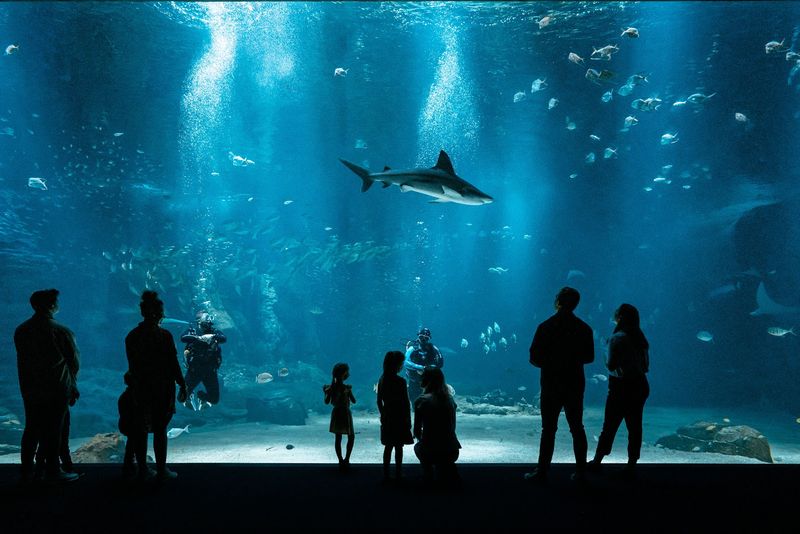
France does not get enough credit in aquarium conversations, but Nausicaá in Boulogne-sur-Mer is quietly one of Europe’s most impressive marine facilities. After a major expansion, its open ocean tank now holds around 10 million liters, making it a genuine heavyweight in the continental rankings.
The expansion also transformed Nausicaá into the largest aquarium in Europe by total water volume.
The open ocean tank focuses on pelagic species — the creatures that spend their lives in the open water column rather than near reefs or the seafloor. Sharks, rays, and large schooling fish move through the exhibit in patterns that feel genuinely wild.
The design mimics open-sea conditions more convincingly than most comparable facilities manage to achieve.
Nausicaá has always positioned itself as a center for ocean advocacy rather than pure entertainment, and that ethos shapes every exhibit throughout the building. Displays cover climate change, overfishing, plastic pollution, and the broader health of the world’s oceans with a directness that feels urgent rather than preachy.
The coastal location on the English Channel adds an atmospheric layer that indoor city aquariums cannot replicate. Walking out after a visit and seeing the actual sea right there reinforces every message the exhibits worked to deliver throughout your time inside.
Dubai Aquarium & Underwater Zoo, UAE
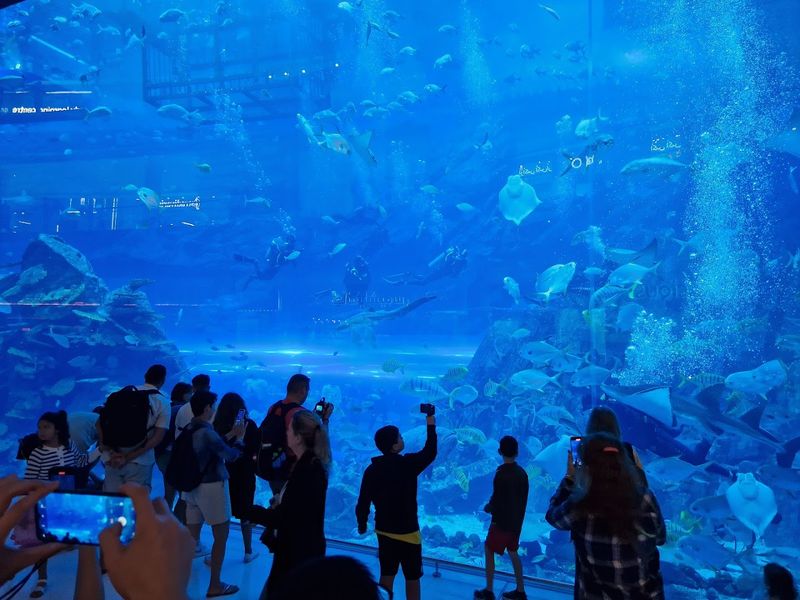
Most shopping malls have a food court. Dubai Mall has a 10-million-liter aquarium built directly into its ground floor, visible to anyone walking past the shops.
The Dubai Aquarium and Underwater Zoo might be the only major aquarium in the world where you can watch tiger sharks while carrying shopping bags, which is either absurd or brilliant — possibly both.
The main viewing panel is one of the largest acrylic panels ever installed anywhere, stretching wide enough to stop foot traffic in its tracks. Inside, over 33,000 aquatic animals represent 140 different species.
The walk-through tunnel takes you directly beneath rays, sharks, and enormous groupers moving overhead in slow, unhurried circles.
Despite being landlocked inside a retail complex, the experience never feels diminished by its surroundings. The sheer scale of the tank creates genuine immersion, and the underwater zoo section adds layers of exotic freshwater and terrestrial species that extend the visit well beyond the main exhibit.
Cage snorkeling and glass-bottom boat rides are available for visitors who want to get even closer to the action. Dubai Aquarium proves convincingly that extraordinary marine experiences do not require a coastal location — just enough ambition, engineering skill, and absolutely no shortage of square footage to work with.
Shedd Aquarium, USA
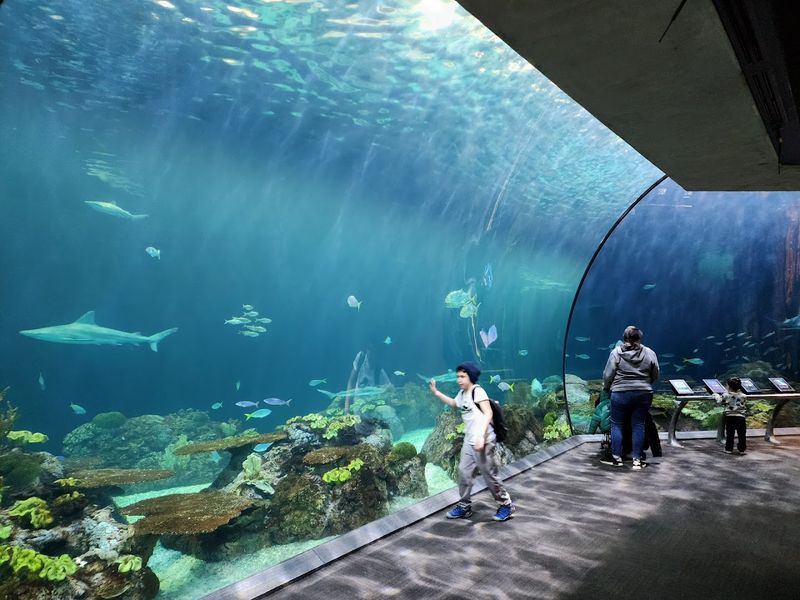
Shedd Aquarium has been making Chicago residents fall in love with the ocean since 1930, which makes it one of the most enduring aquarium institutions in the entire world. What started as a pioneering freshwater and marine facility has grown into a multi-million-gallon complex that spans everything from Pacific coral reefs to beluga whale habitats.
The history here runs as deep as the tanks themselves.
The Caribbean Reef exhibit is a particular highlight, featuring a circular tank teeming with sharks, rays, and tropical fish that circle the viewing area in a mesmerizing, unbroken flow. The tank’s design puts visitors at the center of the action rather than looking in from the side, which creates an unusually intimate connection with the marine life.
It is an older design concept that still holds up beautifully.
Shedd’s commitment to conservation and animal rescue programs gives the aquarium a moral backbone that goes beyond its impressive water volumes. The facility has rehabilitated injured marine mammals and runs active research partnerships with universities and ocean organizations.
Its location on the Museum Campus along Lake Michigan — with the actual lake visible just outside — creates a fitting geographical context. Shedd Aquarium is living proof that longevity and excellence are not mutually exclusive, especially when you keep investing in both the animals and the science behind them.



