 Unearth The Voyage
Some places on Earth are so extraordinary that the whole world agrees they must be protected forever. UNESCO’s World Heritage Sites are exactly that — locations so stunning, historic, or unique that they belong to all of humanity.
From ancient ruins to wild natural landscapes, these spots have been inspiring travelers, dreamers, and explorers for centuries. Get ready to discover 15 places that will make you want to pack your bags immediately.
Machu Picchu — Peru
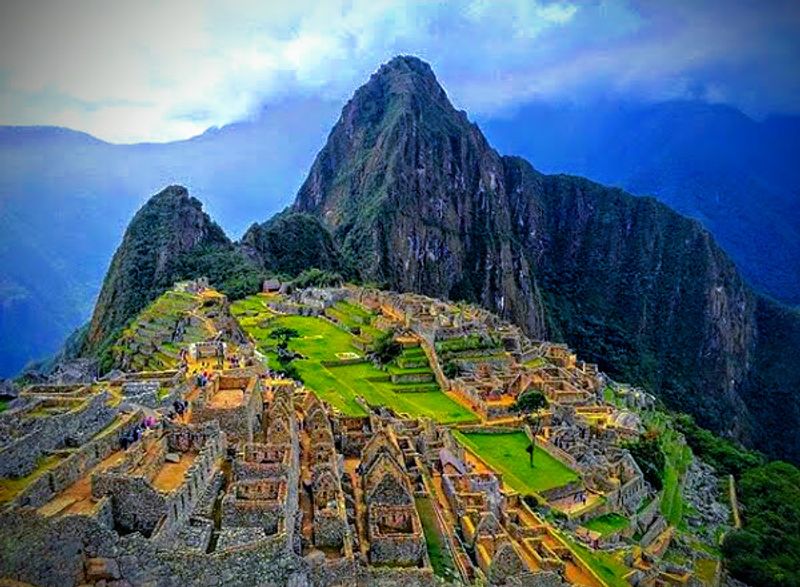
Perched at 2,430 meters above sea level, Machu Picchu was built without a single wheel or iron tool — and yet it has stood for over 500 years. The Incas somehow carved terraces, temples, and homes from solid mountain rock with jaw-dropping precision.
Engineers today still scratch their heads trying to figure out exactly how they pulled it off.
The city was abandoned and hidden from the outside world until 1911, when explorer Hiram Bingham stumbled upon it. That sense of discovery still hits every visitor who rounds the Sun Gate and sees the ruins emerge from the mist below.
It feels less like a tourist site and more like finding a secret.
Wildlife roams freely here — llamas wander the terraces like they own the place, which honestly, they kind of do. The surrounding cloud forest adds a mystical layer of fog that rolls in and out throughout the day.
No photograph fully captures the feeling of standing there. You simply have to go and let the mountains speak for themselves.
Great Wall of China — China
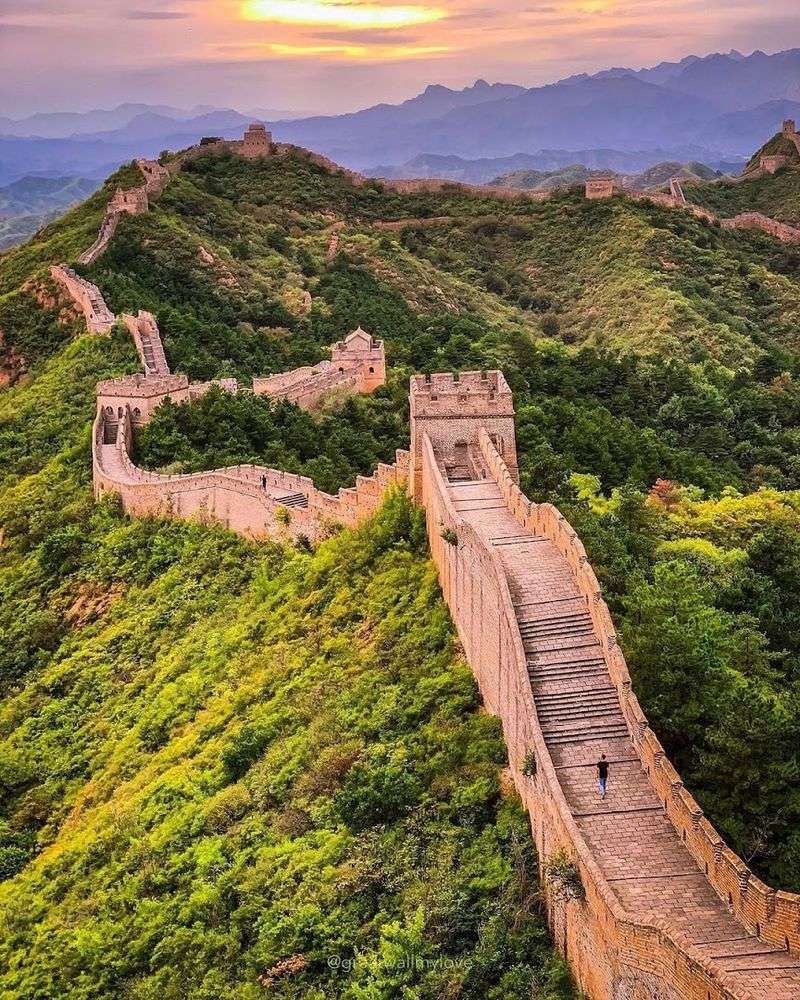
Imagine a wall so long it could wrap around the Earth’s equator more than once — that’s the Great Wall of China, stretching over 20,000 kilometers across mountains, deserts, and valleys. Construction began as far back as the 7th century BC, with millions of workers — many of them soldiers and prisoners — spending their lives building it.
The sheer human effort behind every stone is staggering.
Walking along a restored section like Mutianyu or Badaling, you immediately feel the weight of history beneath your feet. The watchtowers rise every few hundred meters, once used to send smoke signals warning of approaching enemies.
Standing in one, you can almost hear the echoes of ancient soldiers keeping watch over the horizon.
Here’s a fun fact worth sharing: contrary to popular legend, the Great Wall is NOT visible from space with the naked eye — astronauts confirmed it. But that takes nothing away from its magnificence on the ground.
Sections of the wall wind dramatically over steep ridges, creating one of the most photogenic landscapes imaginable. Whether you visit in summer green or winter snow, the Great Wall delivers every single time.
Pyramids of Giza — Egypt
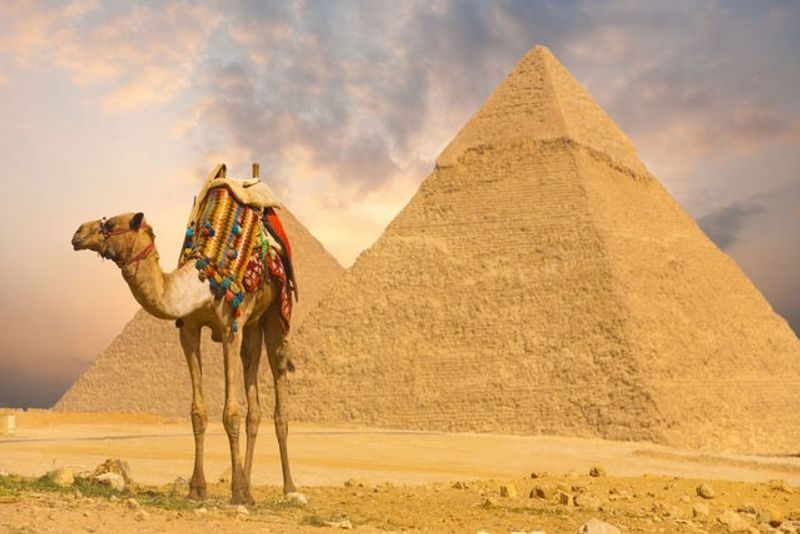
Built over 4,500 years ago without cranes, computers, or modern machinery, the Pyramids of Giza are arguably the most mind-blowing construction project in human history. The Great Pyramid of Khufu held the title of the world’s tallest structure for nearly 3,800 years.
Let that sink in for a second.
Each pyramid was designed as a royal tomb, packed with treasures and elaborate chambers meant to guide pharaohs into the afterlife. The precision is almost unreal — the Great Pyramid’s base is level to within just 2.1 centimeters.
Ancient Egyptians achieved this accuracy without laser technology or GPS. Honestly, it’s humbling.
The Sphinx crouches nearby, gazing eternally eastward with an expression that seems to say, “I’ve seen empires rise and fall, and I’m not impressed.” Camel rides around the site are touristy but genuinely fun, offering a perspective that photos can’t quite match. Visiting at sunrise, when the golden light hits the limestone and the desert air is still cool, is something travelers describe as life-changing.
The pyramids don’t just impress — they make you rethink everything you thought you knew about ancient human capability.
Taj Mahal — India
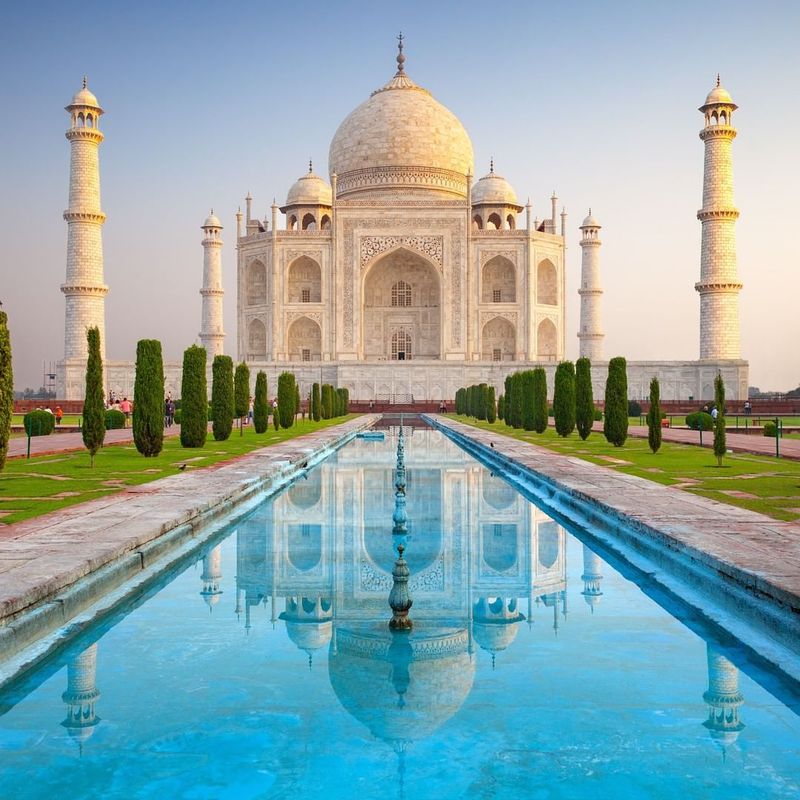
Emperor Shah Jahan built the Taj Mahal as a monument to his beloved wife Mumtaz Mahal, who died in 1631. Grief, it turns out, can produce extraordinary things.
Over 20,000 workers and 1,000 elephants were used to construct this masterpiece over 22 years, and the result is widely considered the most beautiful building on Earth.
The white marble isn’t just pretty — it’s practically magical. At sunrise, it glows a soft pink.
At midday, it blazes brilliant white. In moonlight, it shimmers silver.
The building literally changes personality throughout the day, which explains why visitors keep returning at different hours just to catch a new look.
The symmetry is so precise it almost feels mathematical rather than artistic — yet it radiates warmth and emotion. Semi-precious stones like lapis lazuli, jade, and turquoise are inlaid into the marble in floral patterns so detailed they look painted rather than carved.
Millions of visitors arrive each year, and yet somehow the Taj Mahal manages to feel deeply personal. Standing before it, whether you know the love story or not, something in the design reaches straight into your chest and squeezes gently.
Acropolis of Athens — Greece
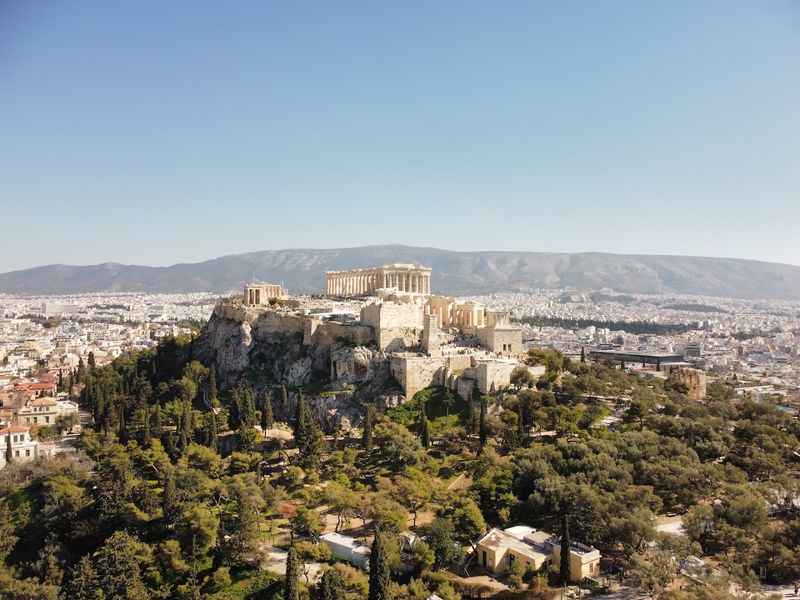
Few views in the world pack as much historical punch as looking up at the Acropolis from the streets of Athens. Rising 150 meters above the city, this rocky hilltop has been sacred ground for over 3,000 years.
Long before the Parthenon was built, ancient Athenians were already gathering here for religious rituals and community gatherings.
The Parthenon, dedicated to the goddess Athena, was completed in 432 BC and remains the defining symbol of ancient Greek civilization. Its columns follow a subtle optical illusion — they’re not perfectly straight but slightly curved, tricking the human eye into seeing them as perfectly upright.
The ancient Greeks were basically masters of visual psychology, centuries before the concept had a name.
Visiting today, you’ll share the hilltop with tourists from every corner of the globe, yet the atmosphere stays remarkably powerful. The Acropolis Museum nearby houses original friezes and sculptures with fascinating explanations of what daily life in ancient Athens actually looked like.
Democracy, philosophy, theater, and the Olympic Games all trace roots back to this city and this hill. Standing here feels less like sightseeing and more like touching the very foundation of Western civilization with your own hands.
Petra — Jordan
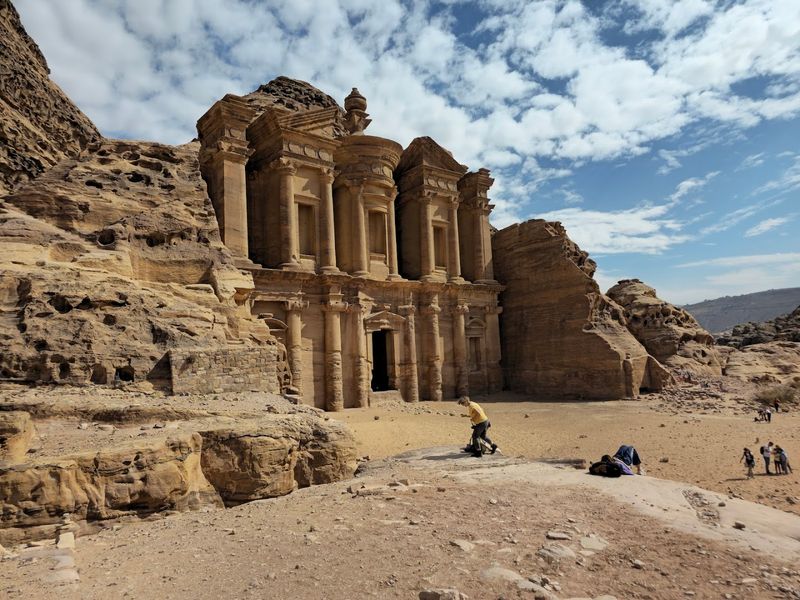
Walking through the narrow, winding canyon called the Siq — with towering rose-red cliffs pressing in from both sides — and then suddenly emerging to face the Treasury carved directly into the rock face is one of travel’s great dramatic reveals. Petra was the capital of the Nabataean Kingdom around 300 BC, a civilization of brilliant traders who turned a desert canyon into a thriving city of 30,000 people.
The Treasury, or Al-Khazneh, is the most photographed structure, but Petra is far larger than most visitors expect. Temples, tombs, colonnaded streets, and even a Roman amphitheater are hidden throughout the valley.
Exploring beyond the main trail feels genuinely adventurous — like you might turn a corner and find something no one else has seen yet.
At night, Petra by Candlelight transforms the site into something almost otherworldly. Hundreds of candles light the path through the Siq, and Bedouin music echoes softly off the canyon walls.
The Nabataeans also engineered an incredibly sophisticated water system that collected and stored rainwater across the desert landscape. A civilization that mastered both beauty and survival in such a harsh environment deserves every bit of wonder it still commands today.
Angkor — Cambodia
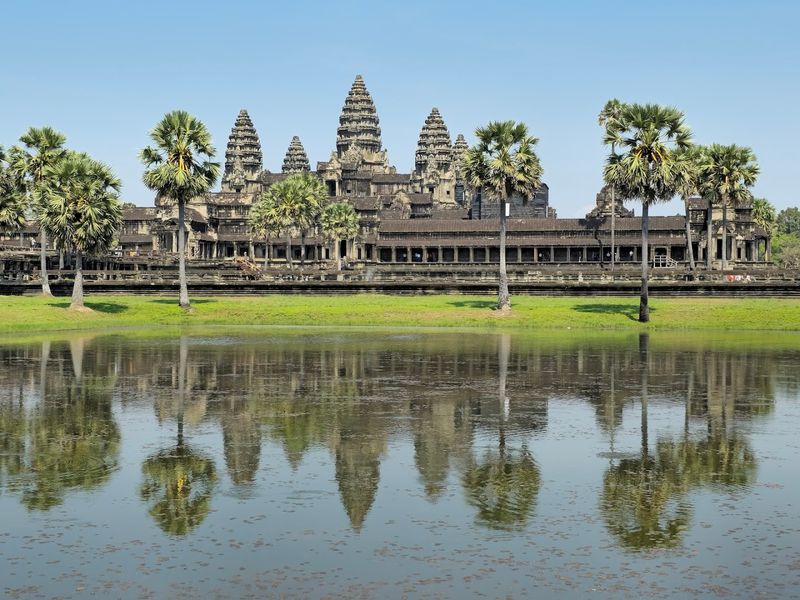
At sunrise, Angkor Wat’s five towers reflect perfectly in the long pool that stretches before its entrance — it’s the kind of image that stops your breath before your brain even processes what you’re seeing. Built in the 12th century by King Suryavarman II, Angkor Wat covers about 400 acres, making it the largest religious monument ever constructed on Earth.
That record hasn’t been broken in 900 years.
The temple walls are covered in nearly 1,000 square meters of bas-relief carvings depicting Hindu mythology, royal ceremonies, and epic battles. Running your fingers along the stone — if you could, which you shouldn’t — would feel like reading a history book written in sculpture.
Every inch was intentional, every scene meaningful to the people who carved it.
Beyond Angkor Wat, the wider Angkor Archaeological Park contains over 1,000 temples spread across the jungle. Ta Prohm temple, where enormous tree roots snake over ancient stones, gives a vivid sense of how nature relentlessly reclaims what humans build.
The Khmer Empire that created all of this was once Southeast Asia’s most powerful civilization. Wandering through Angkor today, it’s impossible not to feel both amazed by what they achieved and quietly humbled by how completely it all fell away.
Galápagos Islands — Ecuador

Charles Darwin sailed to the Galápagos Islands in 1835 and came back with an idea that changed science forever. The unique animals he observed here — finches with differently shaped beaks, giant tortoises, marine iguanas — helped him develop the theory of evolution.
Not bad for a group of volcanic islands sitting 1,000 kilometers off the coast of Ecuador.
What makes the Galápagos genuinely astonishing is how fearless the wildlife is. Blue-footed boobies will waddle right past your feet.
Sea lions nap on park benches. Giant tortoises amble along at their own unhurried pace, completely unbothered by the humans watching them.
The animals here never learned to fear people, and that creates wildlife encounters unlike anything else on the planet.
The islands were among the very first sites added to UNESCO’s World Heritage List in 1978, which says everything about their global importance. Strict visitor regulations keep the ecosystem intact — you must stay on marked trails and travel with certified guides.
Snorkeling alongside sea turtles and playful sea lions in crystal-clear water is a highlight that no wildlife documentary fully prepares you for. The Galápagos don’t just show you nature — they remind you that humans are just one small part of a much bigger, wilder story.
Historic Centre of Rome — Italy
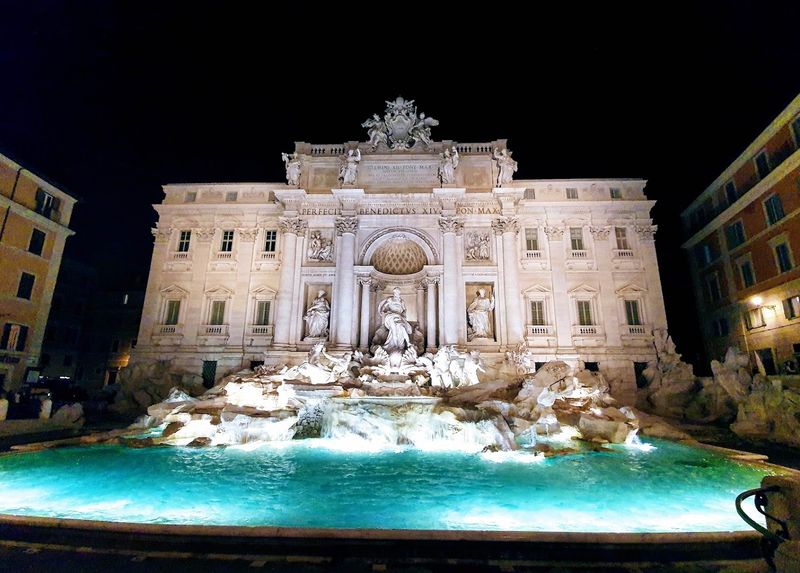
Rome is the only city on Earth where you can grab a morning espresso steps from a 2,000-year-old temple, pass a medieval church on your lunch walk, and toss a coin into a baroque fountain before dinner. The historic center packs more layers of civilization into one walkable area than almost anywhere else in the world.
It’s less a city and more an open-air time machine.
The Colosseum alone could fill a full day of exploration. Built between 70 and 80 AD, it once held up to 80,000 spectators watching gladiator battles, animal hunts, and public spectacles.
The engineering was so advanced that the arena could be flooded for mock naval battles. Ancient Romans really committed to their entertainment.
The Pantheon, completed around 125 AD, still has the world’s largest unreinforced concrete dome — and its oculus, a circular hole at the very top, lets in a beam of light that moves across the interior throughout the day like a giant sundial. Wandering Rome’s cobblestone streets without a rigid plan is actually the best strategy.
Every wrong turn tends to reveal a hidden piazza, a centuries-old fountain, or a church packed with Renaissance masterpieces. Rome rewards the curious traveler endlessly.
Mont-Saint-Michel — France
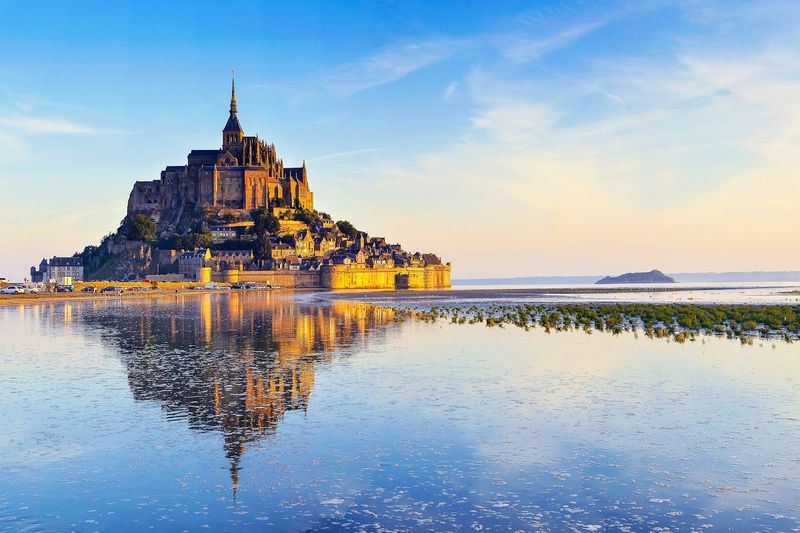
Twice a day, the tides around Mont-Saint-Michel shift so dramatically that the island transforms from a peninsula surrounded by sand flats into a rocky outcrop encircled by rushing water. This tidal phenomenon is one of the most powerful in Europe, and it’s what makes Mont-Saint-Michel feel less like a real place and more like something conjured from a fairy tale.
The abbey at the top has been a pilgrimage destination since the 8th century, when, according to legend, Archangel Michael appeared to a local bishop and instructed him to build a church on the rock. Medieval pilgrims crossed the dangerous tidal flats on foot to reach it, guided by monks.
Some didn’t make it — the quicksand and rushing tides claimed lives, adding a dark edge to the site’s spiritual reputation.
Today, a causeway connects the island to the mainland, making the visit far safer but no less dramatic. The village inside the walls is tiny, winding, and steep — cobblestone streets lead upward past small shops and restaurants toward the abbey at the summit.
Visiting at high tide, when the sea surrounds the walls and the abbey crown reflects in the water, is one of France’s most iconic and unforgettable visual experiences.
Serengeti National Park — Tanzania
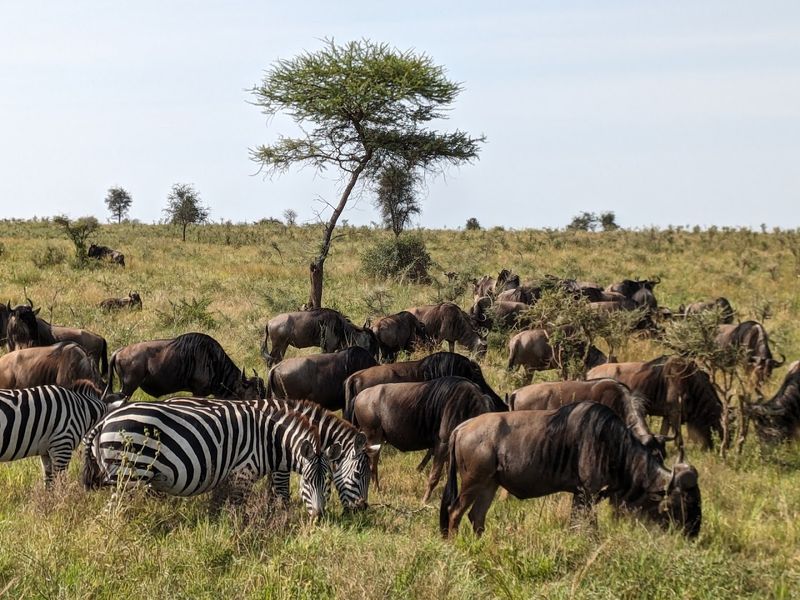
Every year, roughly 1.5 million wildebeest, 400,000 zebras, and 200,000 gazelles thunder across the Serengeti in what naturalists call the Greatest Show on Earth. The Great Migration follows the rains in a circular route, and witnessing a river crossing — where thousands of animals plunge into crocodile-filled water — is one of those experiences that rewires your brain permanently.
The Serengeti covers nearly 15,000 square kilometers of open savanna, woodland, and grassland in northern Tanzania. It’s home to the Big Five — lion, leopard, elephant, rhino, and buffalo — along with cheetahs, giraffes, hippos, and hundreds of bird species.
Watching a cheetah sprint across the plains at 100 kilometers per hour, or observing a pride of lions lounging in the golden afternoon light, feels surreal even when it’s happening right in front of you.
The name Serengeti comes from the Maasai word “Siringet,” meaning “endless plains” — and from a hot air balloon drifting above the landscape at dawn, endless is exactly what it feels like. Conservation efforts here have kept the ecosystem remarkably intact, allowing the migration to continue as it has for millions of years.
The Serengeti is proof that some things on this planet are still wild and free.
Yellowstone National Park — USA
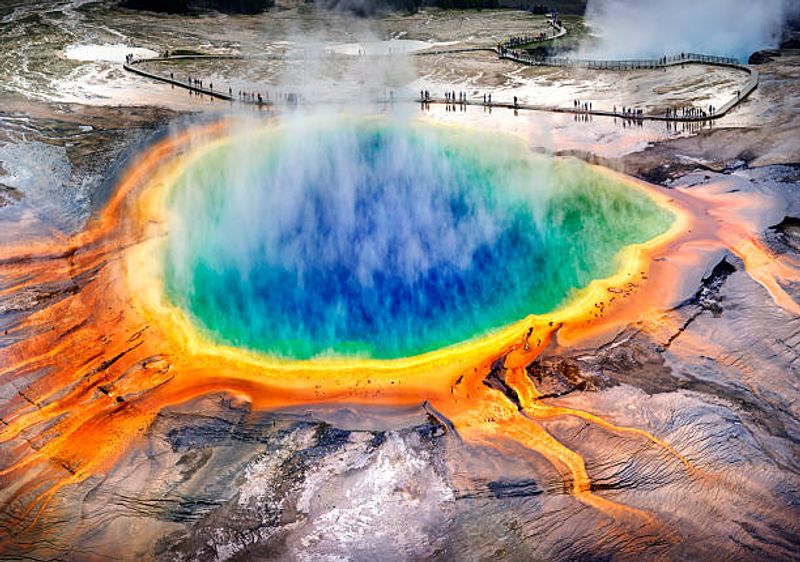
Yellowstone sits on top of one of the largest active supervolcanoes on Earth — which means the colorful hot springs, erupting geysers, and bubbling mud pots you see aren’t just scenic attractions. They’re signs that the ground beneath your feet is very much alive.
Established in 1872, Yellowstone became the world’s first national park, setting a conservation precedent that countries around the globe eventually followed.
Old Faithful is the park’s most famous geyser, erupting roughly every 90 minutes to send a column of boiling water up to 56 meters into the air. It’s been doing this reliably for centuries, which is why rangers can predict eruption times with impressive accuracy.
Crowds gather on the wooden boardwalk before each eruption, and the collective gasp when it finally blows is genuinely charming.
The Grand Prismatic Spring is another showstopper — a massive hot spring ringed in vivid bands of orange, yellow, green, and blue, caused by heat-loving microorganisms called thermophiles. The colors are most vivid from above, so hiking to a nearby overlook is well worth the extra steps.
Bison herds roam freely throughout the park, often causing traffic jams on the roads. Yellowstone’s combination of geothermal drama and abundant wildlife makes it unlike any other place in North America.
Stonehenge — United Kingdom
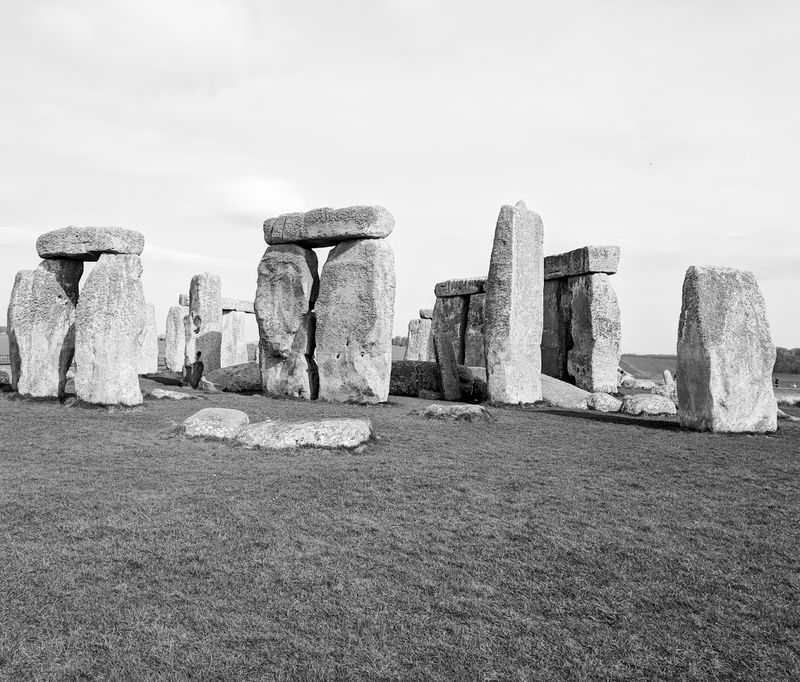
Nobody actually knows why Stonehenge was built — and that mystery is precisely what makes it so endlessly captivating. Theories range from ancient astronomical observatory to ceremonial burial site to healing sanctuary.
Archaeologists keep finding new evidence that reshapes the story, but a definitive answer remains frustratingly out of reach. For a circle of rocks, Stonehenge generates a remarkable amount of scientific debate.
Construction began around 3000 BC, with the iconic standing stones — some weighing up to 25 tons — added between 2500 and 2000 BC. The bluestones in the inner circle were transported from Wales, over 200 kilometers away, using methods that researchers are still actively testing and arguing about.
Moving a 4-ton stone across mountains and rivers without modern equipment is the kind of problem that makes engineers genuinely uncomfortable.
At the summer solstice, the rising sun aligns perfectly with the Heel Stone at the entrance, flooding the monument with light in a way that feels deliberately theatrical. Thousands of people gather each year for this event, mixing modern celebration with ancient mystery.
Walking the path around the stones — you can’t walk among them during regular visits — still creates an undeniable atmosphere of quiet awe. Stonehenge doesn’t need explanations.
The not-knowing is part of the magic.
Kyoto’s Historic Monuments — Japan
Kyoto served as Japan’s imperial capital for over a thousand years, and the city wears that history with extraordinary grace. Seventeen UNESCO-listed properties are packed into one city — including temples, shrines, and the former imperial palace — which means you could spend a week exploring and still feel like you’ve only scratched the surface.
Kyoto is the kind of place that rewards slow, unhurried attention.
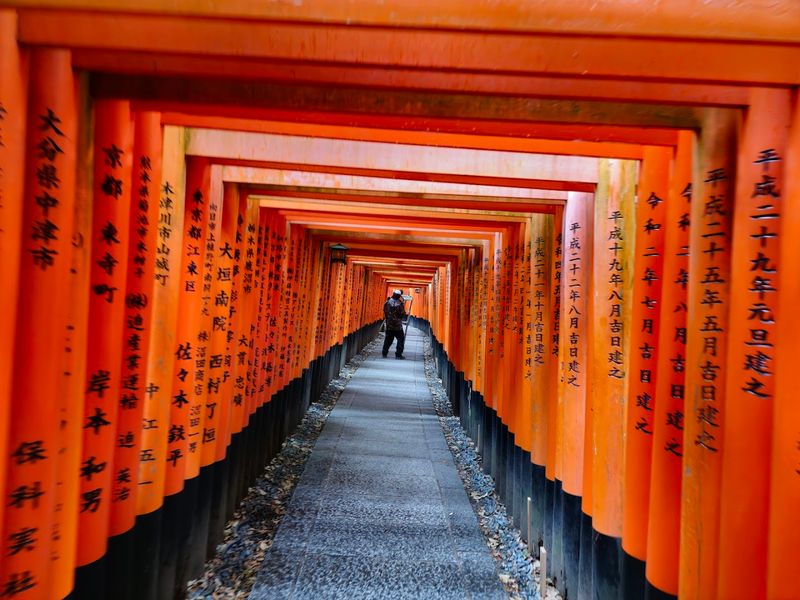
The Fushimi Inari shrine is perhaps the most visually striking — thousands of bright vermilion torii gates wind up a forested mountain for four kilometers, creating a tunnel of color that feels almost hypnotic to walk through. The gates are donated by businesses and individuals seeking good fortune, and new ones are added regularly.
Each one is inscribed with the donor’s name on the back, a detail most visitors miss entirely.
Kinkaku-ji, the Golden Pavilion, is covered in actual gold leaf and reflects perfectly in the pond below — an image so serene it almost feels too beautiful to be real. In spring, cherry blossoms frame ancient temple rooftops in clouds of pink.
In autumn, maple trees turn the hillside gardens into burning shades of red and gold. Kyoto doesn’t just preserve Japanese culture — it presents it in a way that feels living, breathing, and genuinely timeless.
Iguazú / Iguaçu National Park — Argentina & Brazil
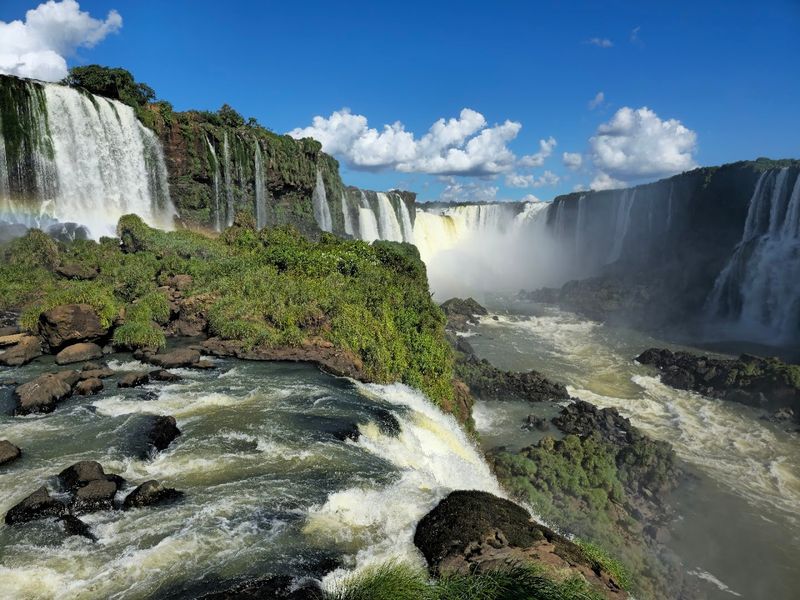
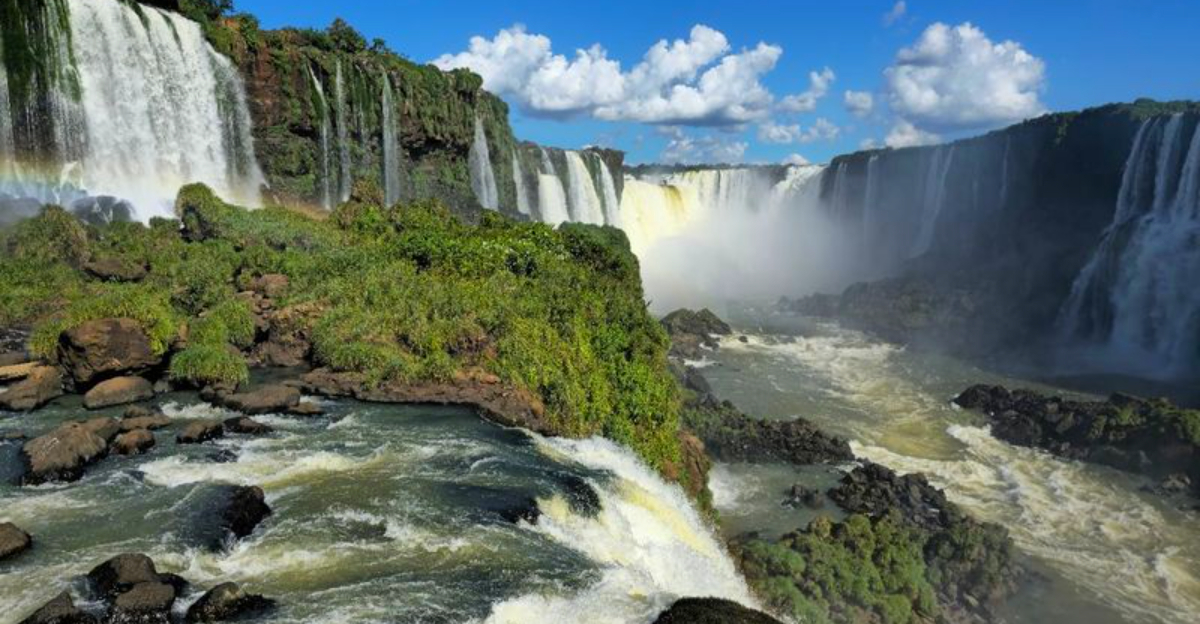
Eleanor Roosevelt reportedly saw Iguazú Falls for the first time and said, “Poor Niagara.” That reaction makes complete sense when you see it. Stretching nearly 3 kilometers wide and dropping up to 82 meters, Iguazú is made up of 275 individual waterfalls — making it wider than Niagara and taller than Victoria Falls.
It is, by almost any measure, the most spectacular waterfall system on Earth.
The falls sit on the border between Argentina and Brazil, and both countries have established national parks to protect the surrounding rainforest. The Argentine side lets you get extremely close — wooden walkways bring you right to the edge of the main cascade, Devil’s Throat, where the roar is so loud you feel it vibrating in your chest.
The Brazilian side offers the sweeping panoramic view that shows the full scale of the system in one jaw-dropping sweep.
Toucans and coatis — raccoon-like animals with long snouts — wander through the park completely unafraid of visitors. The spray from the falls keeps the surrounding jungle permanently lush and intensely green, creating a microclimate all its own.
Boat tours take brave visitors directly beneath the falls for a soaking that people describe as both terrifying and thrilling. Iguazú doesn’t whisper its greatness — it thunders it across two countries simultaneously.



