 Unearth The Voyage
Portugal is packed with ancient towns that seem to have skipped the last few centuries entirely. Cobblestone streets, towering castle walls, and houses draped in flowers make these places feel like real-life time machines.
From hilltop fortresses near the Spanish border to quiet villages tucked into mountain valleys, each town tells its own fascinating story. Whether you are a history lover or just someone who enjoys a seriously good photo opportunity, these medieval gems are absolutely worth exploring.
Óbidos
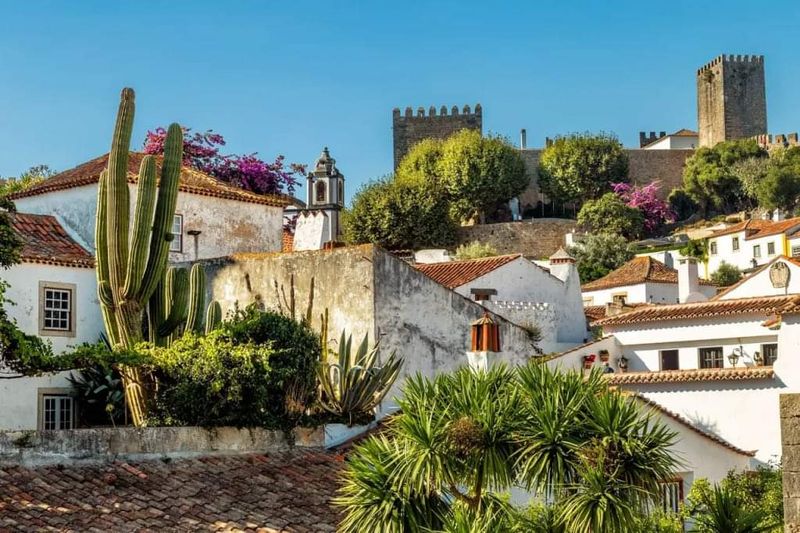
Step through the arched gate of Óbidos and you might genuinely wonder if someone forgot to update the calendar — it still feels like the 14th century in the best possible way. The town’s iconic whitewashed houses are trimmed with bright yellow and blue paint, making every narrow lane look like a postcard come to life.
Flowers spill over stone walls, and the scent of ginjinha, a local cherry liqueur served in chocolate cups, drifts through the air.
Walking along the top of the ancient town walls is one of the most memorable things you can do here. The views stretch over terracotta rooftops and rolling green hills, giving you a real sense of why this hilltop location was so valuable centuries ago.
The castle, now converted into a luxury hotel, anchors the skyline with impressive authority.
Óbidos has a lively calendar of events, including a famous Medieval Market held each summer. Locals dress in costume, musicians fill the streets, and jousting tournaments bring the past roaring back.
Even outside festival season, the town buzzes with a charm that is genuinely hard to find anywhere else in Portugal.
Monsaraz
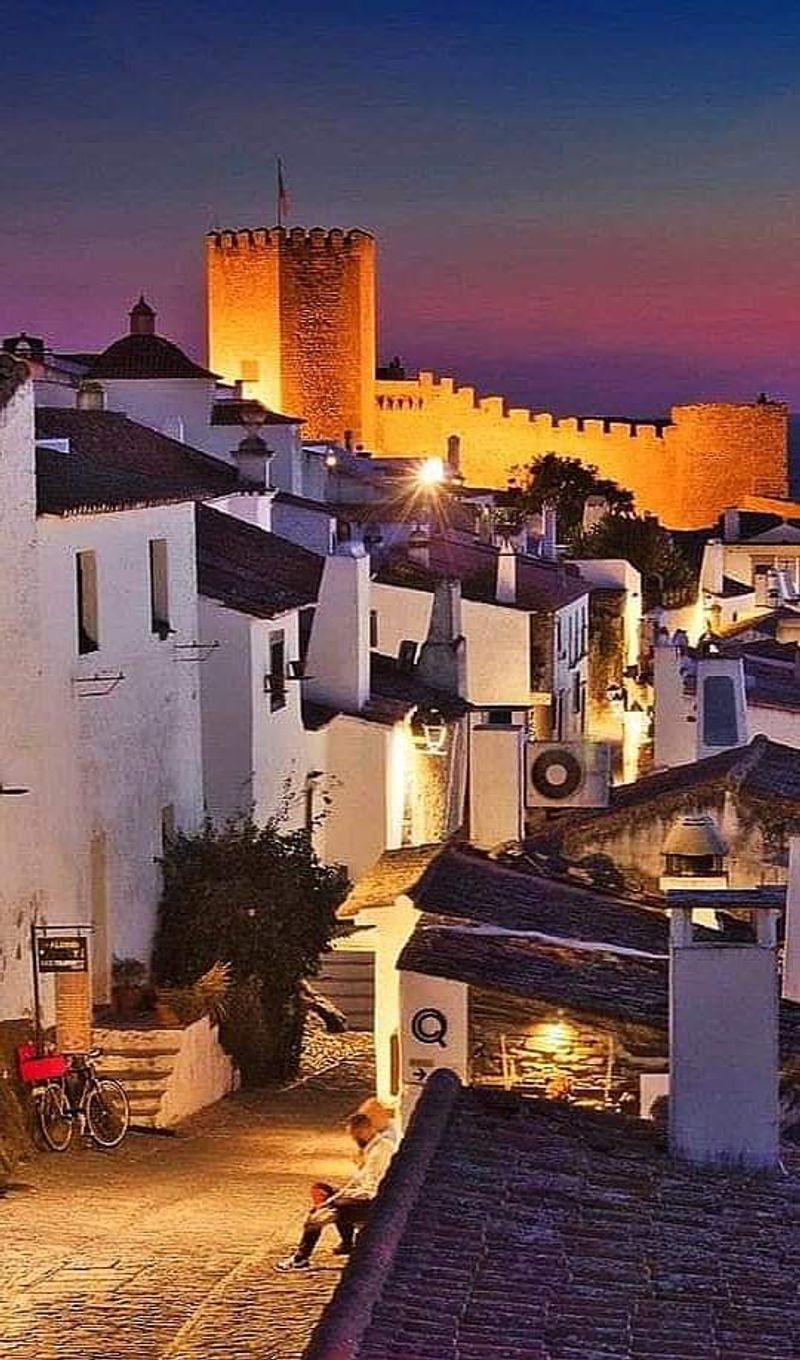
Monsaraz sits so high above the Alentejo plains that on a clear day, you can see all the way to Spain. The village is tiny — only a few hundred people actually live here year-round — but it packs an enormous amount of atmosphere into its compact whitewashed lanes.
The castle at the far end of the village offers some of the most jaw-dropping panoramic views in all of Portugal.
Below the village, the Alqueva Lake shimmers like a mirror, the largest artificial lake in Western Europe. At sunset, the water turns shades of gold and pink that make the whole landscape look almost unreal.
Many visitors come specifically to photograph this view, and honestly, no photograph ever quite does it justice.
The village itself has barely changed in centuries. Ancient stone crosses, small whitewashed churches, and a medieval pillory stand in the main square as quiet reminders of a very different era.
There are no traffic jams here, no shopping malls, and no noise — just the sound of your own footsteps on ancient cobblestones. Monsaraz is the kind of place that slows you down in the very best way.
Marvão
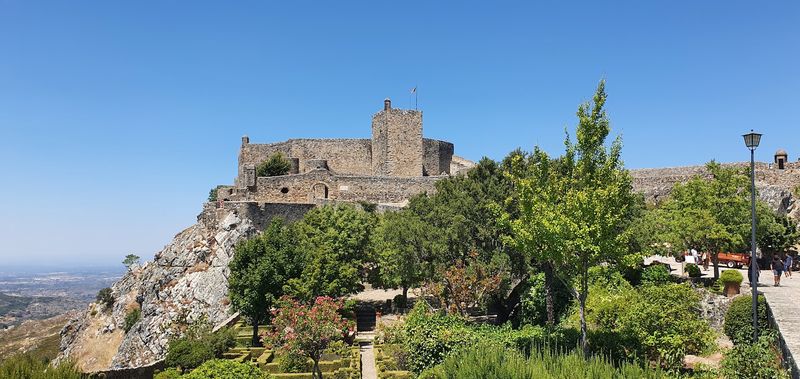
Perched at nearly 900 meters above sea level, Marvão does not ease you in gently — it hits you with a breathtaking view the moment you arrive. The village clings to a narrow rocky ridge near the Spanish border, and the medieval castle at its peak looks like it grew straight out of the mountain.
On windy days, standing on those walls feels wonderfully dramatic.
The entire village sits inside its original medieval fortifications, which are remarkably intact. Wandering the lanes inside the walls, you will find flower-filled gardens, a small museum, and a handful of cozy restaurants serving hearty Alentejo cuisine.
The local wild boar stew is especially worth seeking out after a long morning of exploring.
Because Marvão is slightly off the beaten tourist track, it tends to be quieter than some of Portugal’s more famous historic towns. That quietness is part of its magic.
In the early morning, before the day-trippers arrive, the village feels almost completely private — just you, the ancient stones, and a view that stretches for what feels like half the country. Few places in Portugal feel as genuinely remote or as powerfully medieval as this one.
Sortelha
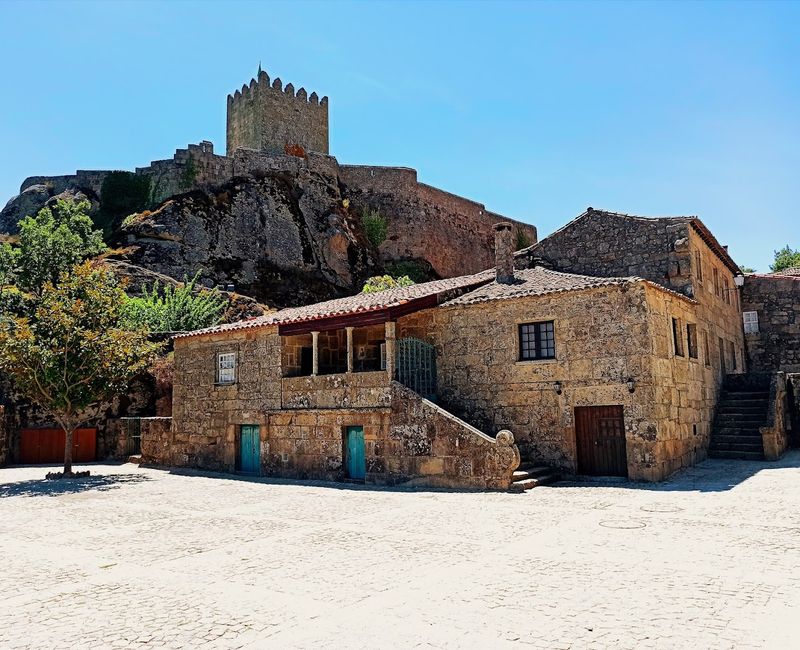
Sortelha looks like it was carved directly out of the granite hillside, because in many ways, it was. The village’s thick stone walls, heavy archways, and rough-hewn houses have barely changed since the 13th century, and the whole place radiates a satisfying sense of raw, unpolished history.
There are no gift shops selling plastic souvenirs here — just honest stone and centuries of silence.
The castle crowning the village is impressively well-preserved, and climbing up to its towers rewards you with wide views across the boulder-strewn countryside. The surrounding landscape is wild and dramatic, full of twisted cork oaks and ancient rock formations that give Sortelha a slightly mysterious quality even on a sunny afternoon.
One of the most charming details of Sortelha is how lived-in it still feels despite its age. A handful of families still call the old village home, and you might hear a dog barking or smell lunch being cooked as you wander the lanes.
A small restaurant just inside the main gate serves local dishes that are simple, filling, and delicious. Sortelha rewards slow exploration — the kind where you have no particular destination and no particular rush.
Piódão
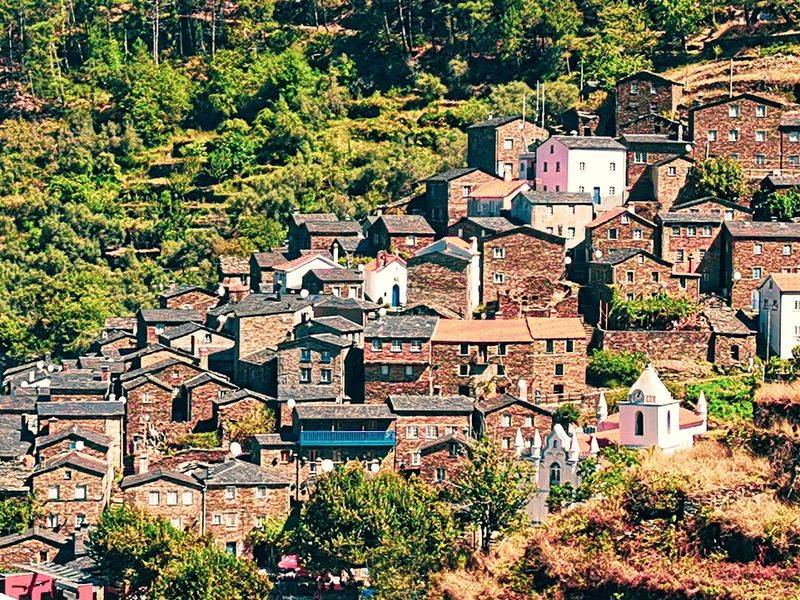
Hidden deep in the Açor mountain range, Piódão is the kind of place that makes you feel like you accidentally stumbled onto a film set. The village’s dark schist houses with their distinctive blue-painted doors and window frames cascade down the steep hillside in neat rows, creating a visual contrast so striking it stops you in your tracks.
Getting here involves winding mountain roads that seem to go nowhere — until suddenly, there it is.
The village has no traffic, no modern buildings, and no noise beyond birdsong and the occasional church bell. Narrow stone pathways connect the houses, and the whole settlement feels suspended in its own quiet dimension.
Piódão is part of Portugal’s Historic Villages network, a group of twelve exceptionally preserved villages recognized for their cultural and architectural significance.
Visiting in the early morning or late evening gives you the best light and the fewest crowds. The surrounding mountains are excellent for hiking, with trails that wind through forests of oak and chestnut.
A small local cafe near the church serves coffee and regional pastries that taste especially good after a long walk. Piódão is not easy to reach, but that difficulty is exactly what keeps it so beautifully unspoiled.
Belmonte
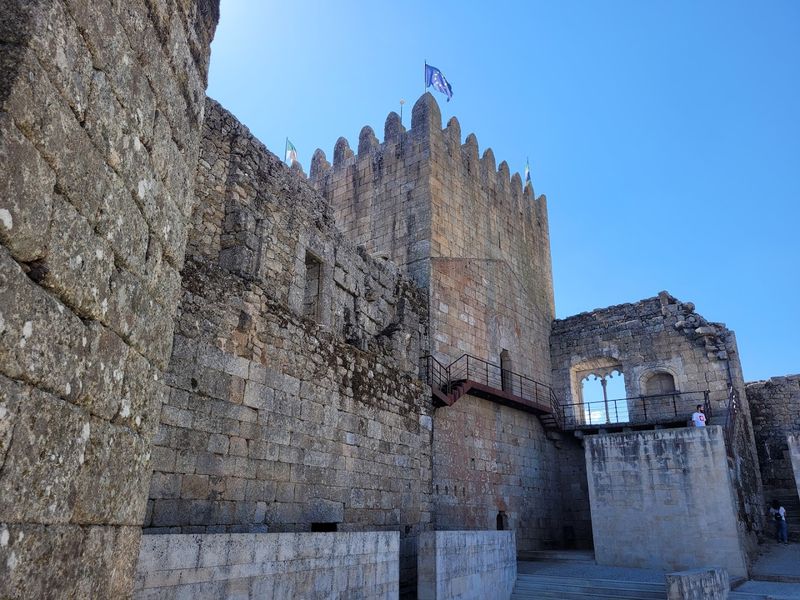
Belmonte carries a remarkable weight of history for such a small town. This is the birthplace of Pedro Álvares Cabral, the Portuguese explorer credited with discovering Brazil in 1500, and the town has not forgotten it — a statue of Cabral stands proudly in the main square, and the local museum dedicates considerable space to his story.
The medieval castle where his family once lived still overlooks the town with quiet authority.
What makes Belmonte especially fascinating is its Jewish heritage. After the Inquisition forced Jewish communities to convert or flee, a group known as the Crypto-Jews continued practicing their faith in secret for over five centuries.
Their remarkable story is told at the excellent Jewish Museum, one of the most moving and thought-provoking museums in Portugal. The medieval synagogue in the old Jewish quarter has been restored and is open to visitors.
Beyond its history, Belmonte is simply a pleasant place to spend a day. The old town is compact and walkable, with views across the Serra da Estrela foothills that are especially beautiful in autumn.
Local restaurants serve honest, hearty food, and the people are genuinely welcoming to visitors who take the time to explore properly.
Castelo de Vide
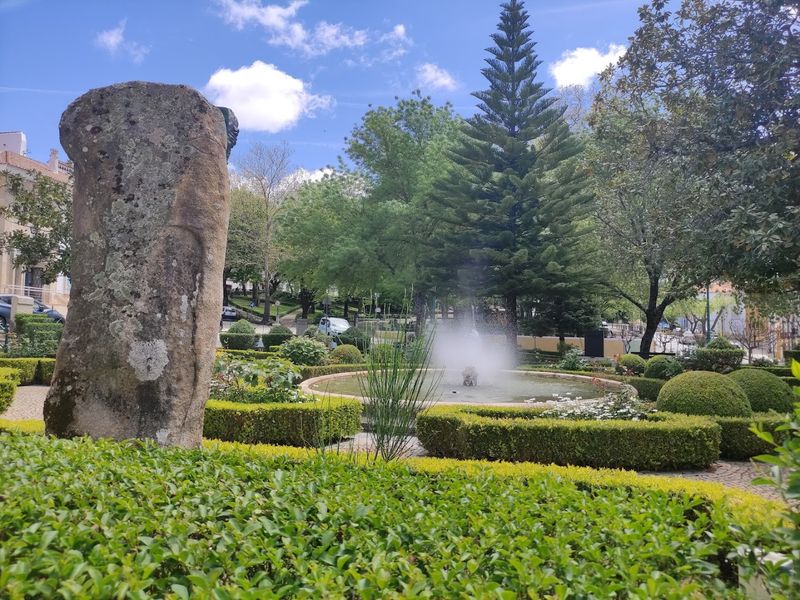
Castelo de Vide has a reputation among Portuguese travelers as one of the prettiest towns in the country, and one afternoon wandering its lanes makes it very easy to understand why. Whitewashed houses trimmed with terracotta roofs climb the hillside in a jumble of charming angles, and the castle at the summit provides a dramatic backdrop to the whole scene.
Flowers cascade from window boxes along virtually every street.
The town’s historic Jewish quarter, known as the Judiaria, is one of the oldest and best-preserved in Portugal. Narrow, winding lanes lead past ancient doorways and a medieval synagogue that dates back to the 13th century — making it one of the oldest synagogues in the Iberian Peninsula.
Walking through this quarter feels like reading a very old book written in stone.
Castelo de Vide is also famous for its natural springs, and the town has a long tradition of producing mineral water. On a hot summer day, stopping at one of the many public fountains for a cold drink of fresh spring water is a simple pleasure that locals have been enjoying for generations.
The surrounding Alentejo countryside, dotted with cork oaks and olive groves, adds another layer of beauty to this already photogenic town.
Marialva
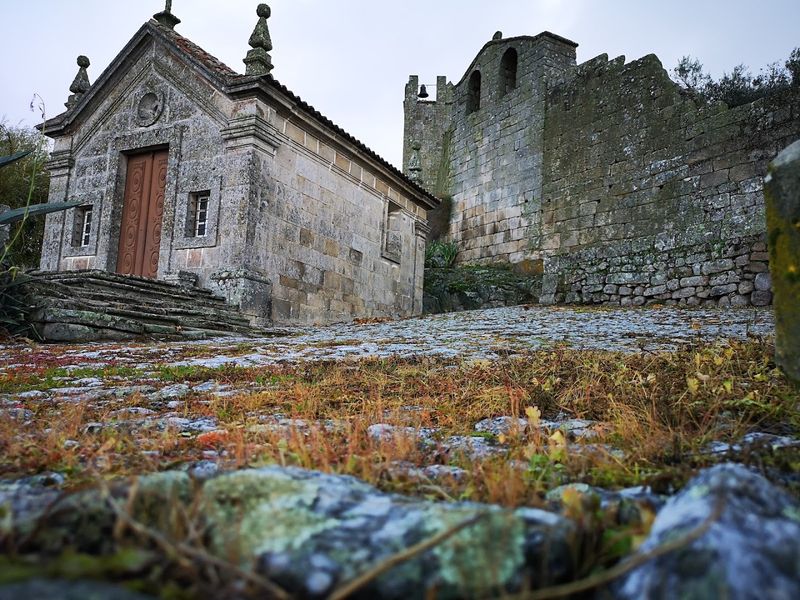
There is something genuinely haunting about Marialva — in the most compelling way possible. The hilltop village is divided into two parts: a living lower town where people go about their daily lives, and an ancient upper town inside medieval walls that has been largely abandoned for centuries.
Walking into the old walled section feels like entering a place that time simply gave up on.
The castle and surrounding fortifications date back to the 12th century, and while many structures inside the walls have crumbled, the ruins that remain are incredibly atmospheric. A Romanesque church, a medieval pillory, and stone house foundations are scattered across the hilltop, all slowly being reclaimed by grass and wildflowers.
On a misty morning, the scene is almost otherworldly.
Despite its ruined appearance, Marialva is not completely deserted — a small community still lives in the lower village, and a few artisan workshops and a restaurant operate within the old walls during the warmer months. The surrounding Douro wine country adds a lush, golden backdrop to the village, especially in autumn when the vineyards turn russet and amber.
Marialva rewards visitors who are willing to slow down and absorb its melancholy beauty at a leisurely pace.
Almeida
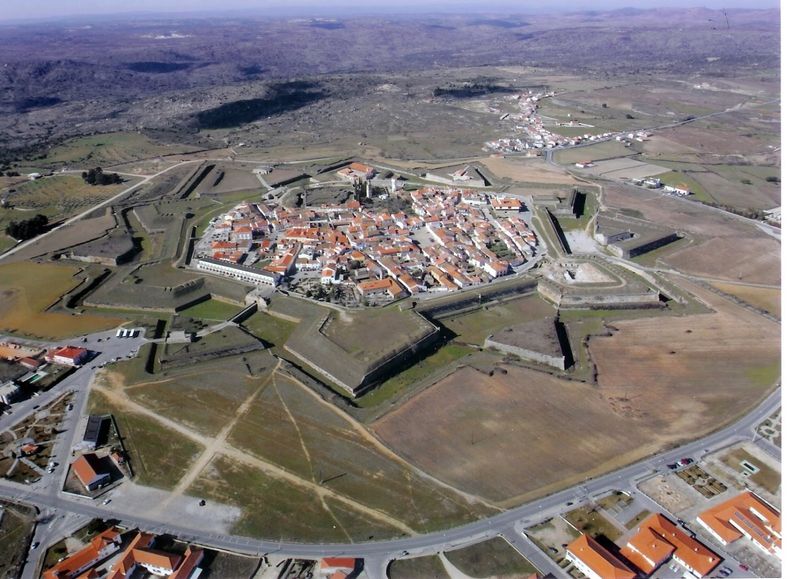
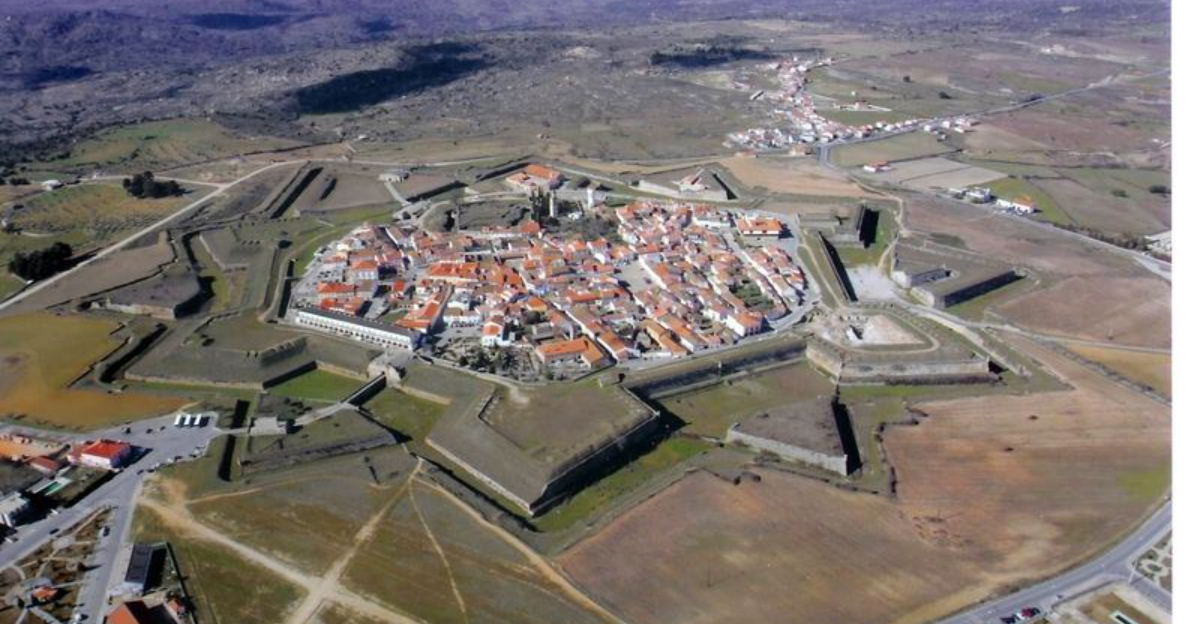
Seen from above, Almeida looks like a giant stone snowflake dropped onto the flat plains of the Beira Alta region. The town is surrounded by an extraordinary star-shaped fortress with twelve pointed bastions designed to deflect cannon fire — a military engineering marvel from the 17th century that still takes your breath away from the air or from a map.
No other town in Portugal looks quite like it.
Walking along the top of the fortress walls gives you a clear sense of the town’s strategic importance during the Peninsular War, when it was a key battleground between Napoleon’s forces and the Anglo-Portuguese alliance. The remains of a gunpowder explosion that devastated part of the fortress in 1810 are still visible today, a sobering reminder of the real human cost of those conflicts.
Inside the walls, Almeida is a quiet and rather charming small town with a handful of cafes, a local museum, and cobblestone streets that are pleasant to wander. The town hosts a lively historical reenactment festival each summer, when soldiers in period costume bring the Napoleonic battles back to life with impressive theatrical flair.
For history enthusiasts and military architecture fans, Almeida is an absolute must-visit destination in Portugal.
Linhares da Beira
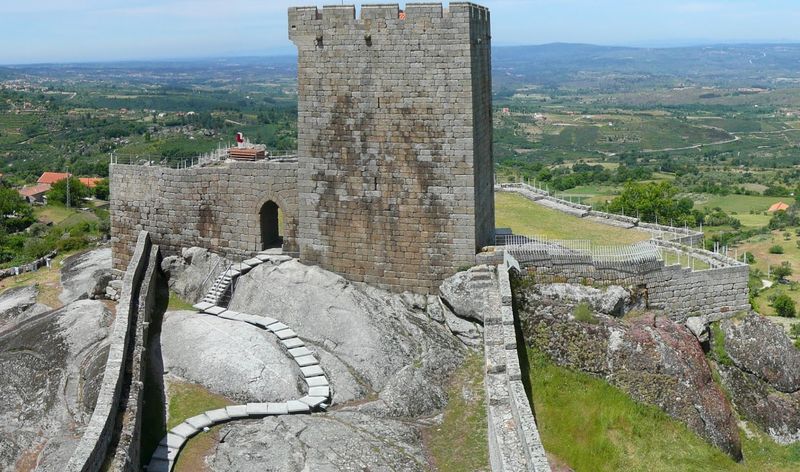
Linhares da Beira might be the only medieval village in Portugal where you can watch paragliders soaring overhead while exploring a 12th-century castle. The village sits at the edge of the Serra da Estrela mountains, and the powerful thermal winds that sweep up from the valleys below make it one of Portugal’s top paragliding destinations.
The combination of ancient stone architecture and colorful gliders against a mountain sky is genuinely spectacular.
The village itself is wonderfully compact and well-preserved. Granite houses line narrow lanes, a Romanesque church anchors the main square, and the twin towers of the medieval castle rise above everything with an air of quiet dominance.
The castle was built on the orders of King Sancho I in the 12th century and played an important role in defending the kingdom’s interior.
Linhares da Beira is part of the Historic Villages of Portugal network, which means it has been officially recognized for the quality of its preservation. Despite this recognition, the village remains refreshingly uncrowded compared to more famous destinations.
A small local restaurant near the castle serves traditional Serra da Estrela dishes, including the region’s famous cured meats and the beloved local sheep’s cheese, which is among the finest in the entire country.
Trancoso
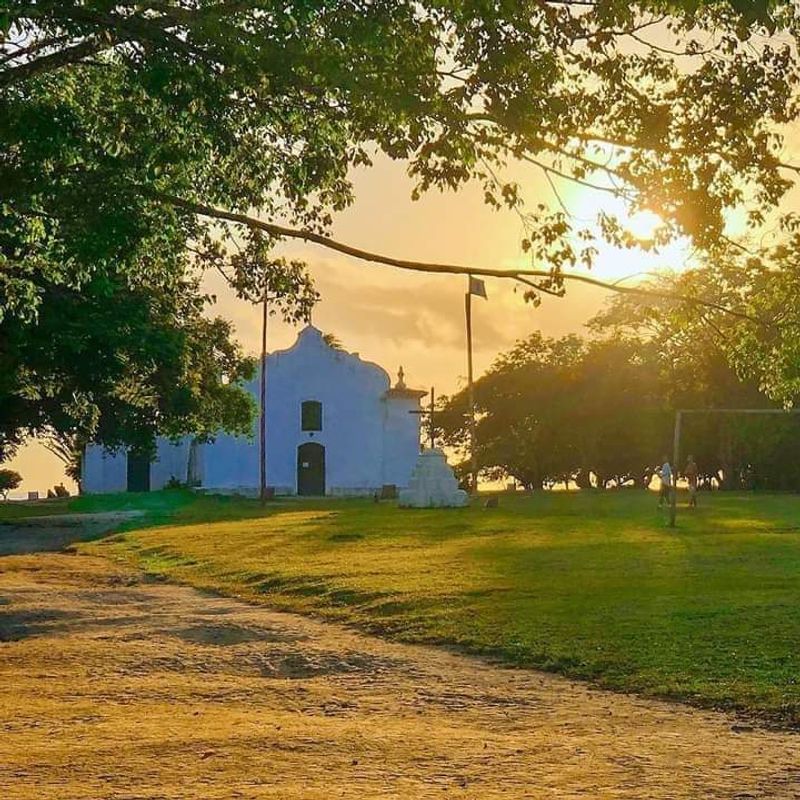
Trancoso punches well above its weight in the historical significance department. This compact fortified town was the site of the famous Battle of Trancoso in 1385, a decisive Portuguese victory that helped secure independence from Castile.
King Dinis I was also married here in 1282, and the town has been celebrating its royal connections ever since with considerable civic pride.
The castle and surrounding walls are impressively intact, and a walk along the ramparts gives great views over the surrounding plateau. Inside the walls, the medieval town features a large central square flanked by historic buildings, arcaded streets, and a striking collection of Manueline doorways that hint at Portugal’s later Age of Discovery prosperity.
The old Jewish quarter adds another layer of historical depth to the town’s already rich story.
Trancoso is also famous in Portuguese culture as the home of Bandarra, a 16th-century shoemaker and poet whose cryptic prophecies influenced generations of believers in Sebastianism — the messianic myth that a lost king would return to restore Portugal’s glory. His cobbler’s workshop still exists in the old town, and locals tell his story with obvious affection.
Trancoso is a town where every corner seems to have a legend attached to it.
Castelo Mendo
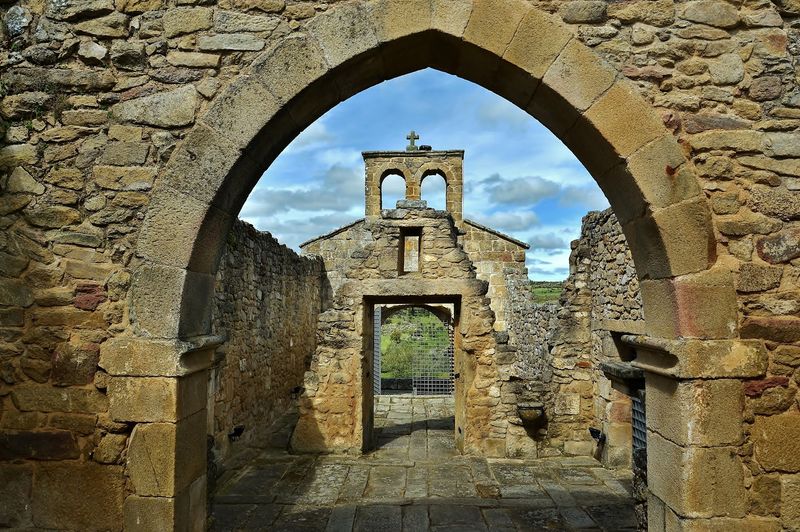
You know a village is genuinely old when its entrance gate is guarded by two ancient granite pig sculptures. Castelo Mendo welcomes visitors with these mysterious stone animals, known locally as berrões, which are believed to be pre-Roman in origin and may have served as fertility symbols for the Celtic tribes who once inhabited this region.
It is a wonderfully quirky detail that sets the tone for the whole visit.
The village sits on a rocky hilltop surrounded by its original medieval walls, most of which are still standing. Inside, the stone houses are largely intact, though many are uninhabited today.
The peaceful emptiness of the lanes gives the village a contemplative quality — it is the kind of place where you find yourself naturally slowing down and paying attention to small details, like a carved coat of arms above a doorway or a wildflower growing from a crack in the wall.
Castelo Mendo is part of the Historic Villages of Portugal network and sits close to the Spanish border in the Beira Alta region. Its remote location means visitor numbers stay low, which is actually one of its greatest charms.
If you want a medieval village experience without the crowds, Castelo Mendo delivers that in abundance with zero compromise on atmosphere or authenticity.
Mértola
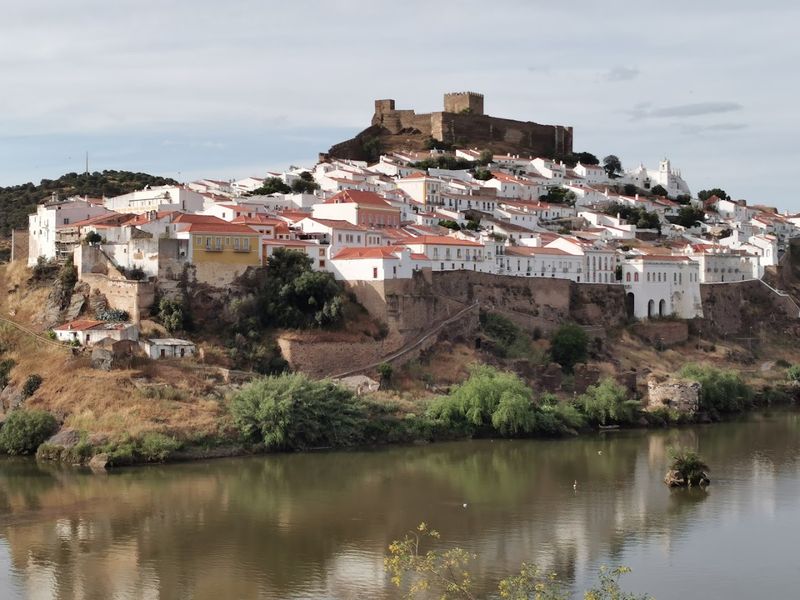
Mértola is the kind of town that archaeology enthusiasts dream about. Layers of civilization are literally stacked on top of each other here — Phoenician, Roman, Moorish, and medieval Portuguese cultures have all left their marks, making Mértola one of the most historically complex towns in the entire country.
The local museum is actually spread across multiple sites throughout the town, each one dedicated to a different era of its long history.
The castle sits dramatically above the confluence of the Guadiana and Oeiras rivers, and the views from its towers over the surrounding Alentejo wilderness are remarkable. The castle’s main church is especially fascinating — it was originally a Moorish mosque, and the mihrab, a prayer niche indicating the direction of Mecca, is still visible inside.
This kind of layered history is rare and genuinely moving.
The town’s whitewashed houses tumble down the hillside to the riverbank in a style that still carries a strong Moorish influence, giving Mértola a visual character unlike any other Portuguese town. The Guadiana River is calm and beautiful here, popular with bird watchers because the surrounding Natural Park is home to rare species including the black stork and the Bonelli’s eagle.
Mértola is history, nature, and beauty rolled into one remarkable package.
Alandroal
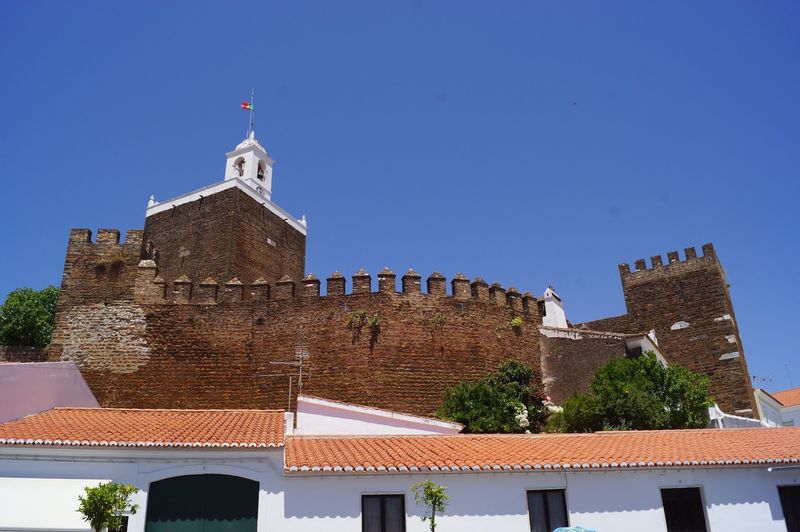
Alandroal is a town that history chose carefully. Positioned in the heart of the Alentejo near the Spanish border, it played a critical role during the Reconquista — the centuries-long campaign to reclaim the Iberian Peninsula from Moorish rule.
The castle was built by the Knights of Avis in the 13th century, and its solid stone walls still communicate a sense of serious defensive purpose that no amount of whitewash could soften.
The town is compact and unhurried, with a central square shaded by old trees and flanked by a whitewashed church that practically glows in the afternoon sun. Narrow streets lead off in various directions, passing old stone houses, a medieval fountain, and a pillar that once served as a public whipping post — a grim reminder of how justice was administered in medieval times.
History here is not always comfortable, but it is always honest.
Alandroal sits on the edge of the Alqueva reservoir, which means the surrounding landscape is beautiful in a wide, open, distinctly Alentejo way. Olive groves, cork oaks, and red earth stretch in every direction.
The town hosts a medieval festival in summer that brings the castle back to life with markets, music, and costumed performances. For a town this size, Alandroal offers a surprisingly rich and rewarding experience.
Estremoz
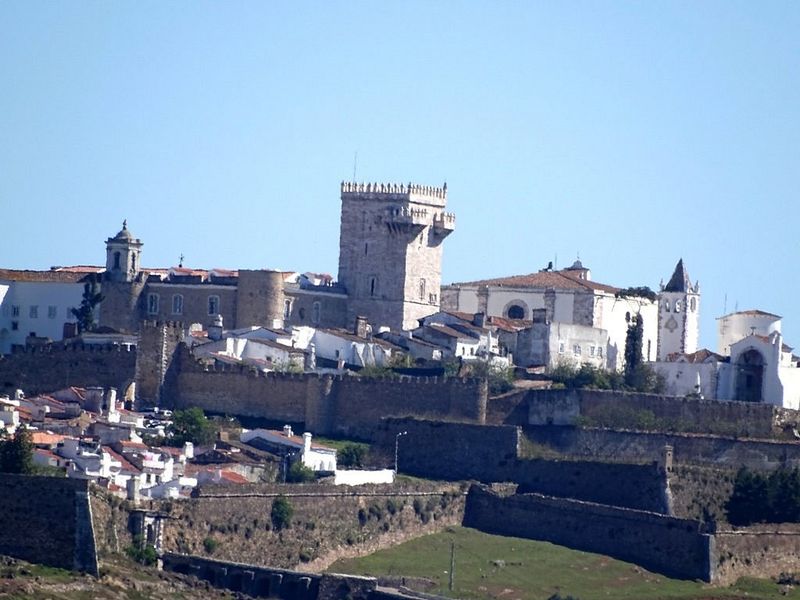
Estremoz is essentially built from marble — and not in a subtle way. The town sits atop one of the richest marble deposits in Europe, and the local stone has been used for everything from castle walls to doorsteps to garden ornaments.
Walking through the upper town, you will notice that even the cobblestones sparkle faintly in the sunlight, giving Estremoz a quietly glamorous quality that sets it apart from other Alentejo towns.
The upper town is dominated by a 13th-century castle and a soaring tower keep that once served as a royal residence. Queen Isabel of Portugal, later canonized as Saint Isabel, died here in 1336, and her memory is honored throughout the town with remarkable devotion.
The castle has been converted into a stunning pousada — a luxury hotel in a historic building — where guests can sleep inside medieval walls with genuinely royal views.
Down in the lower town, the Saturday market is one of the most vibrant in the Alentejo region, drawing farmers, artisans, and food vendors from across the surrounding countryside. The famous Estremoz clay dolls, hand-painted figurines depicting rural life, are sold here and are considered some of the finest examples of Portuguese folk art.
Estremoz is sophisticated, historic, and full of life — a genuinely wonderful place to spend a weekend.



