 Unearth The Voyage
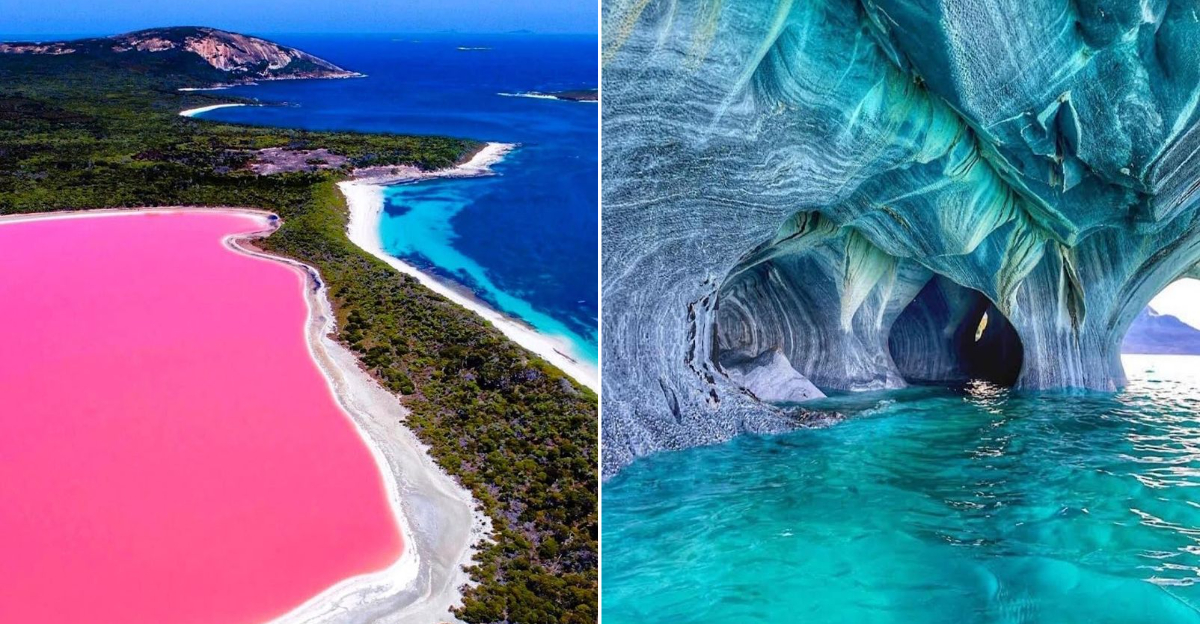
Some places on Earth look so wild and bizarre that your brain refuses to believe they’re real. From pink lakes to blue fire volcanoes, our planet has been quietly showing off for millions of years.
I still remember the first time I saw a photo of Bolivia’s salt flats and genuinely thought someone had edited it. Spoiler: they hadn’t.
These 16 natural wonders are 100% real, totally unfiltered, and absolutely worth knowing about.
Salar de Uyuni’s “Infinite Mirror” (Bolivia)
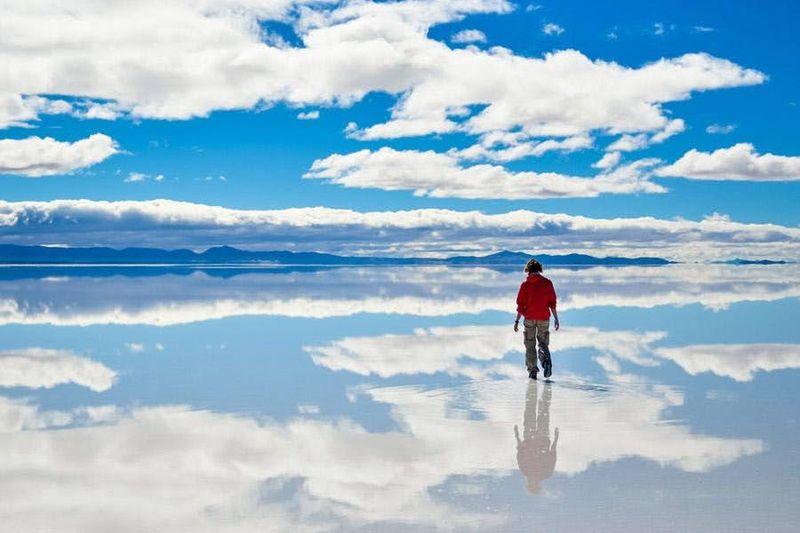
The world’s largest salt flat covers over 10,000 square kilometers, and during the rainy season, it pulls off a trick that genuinely breaks your brain. A thin layer of water turns the entire surface into a perfect mirror.
Sky above, sky below, no horizon in sight.
Standing on it feels like floating in a cloud. Visitors often crouch down to take photos that make them look like they’re walking on the sky.
It’s the most popular optical illusion Bolivia never planned.
The flat formed when prehistoric lakes dried up thousands of years ago, leaving behind a crust of salt up to ten meters thick. It also holds about half the world’s lithium reserves underground.
So yes, it’s beautiful AND it’s basically the world’s largest battery. Bolivia wins.
Giant’s Causeway’s Geometric Stone “Staircase” (Northern Ireland)
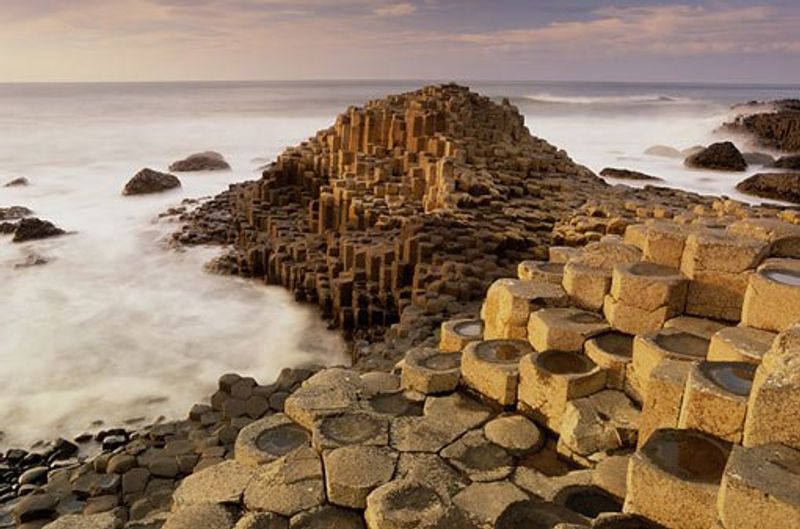
About 40,000 hexagonal basalt columns lock together so perfectly that geologists spent centuries arguing whether humans built them. Spoiler: a volcano did it.
Around 60 million years ago, cooling lava cracked into these eerily regular shapes.
Local legend, of course, has a better story. The giant Finn McCool supposedly built the causeway to fight a Scottish rival across the sea.
Honestly, that version is more fun.
Each column fits snugly against its neighbor like nature’s own puzzle set. The tallest ones reach about 12 meters high.
Walking across them feels slightly illegal, like you’re stepping on something that took too long to make. The site became Northern Ireland’s first UNESCO World Heritage Site in 1986, and it still draws nearly one million visitors a year.
Bring good shoes. The rocks are slippery and the wind has zero sympathy.
Waitomo’s Glowworm “Star Ceiling” (New Zealand)
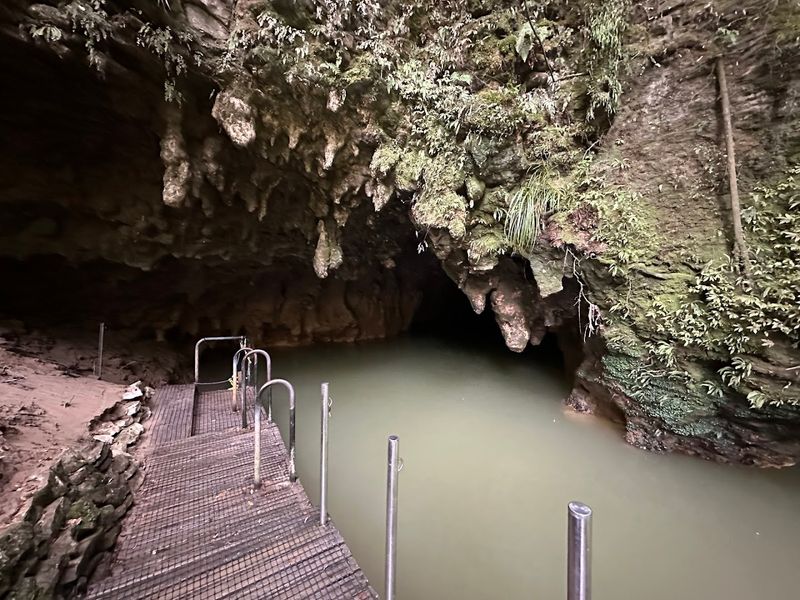
Waitomo’s caves are home to Arachnocampa luminosa, a glowworm species found only in New Zealand. That scientific name sounds intimidating, but the creatures themselves are basically tiny blue LEDs hanging from cave ceilings.
Tourists glide through the caves on silent boats, staring upward at what looks like a galaxy that forgot to stay outside. The glowworms use their light to attract insects into sticky threads they dangle below themselves.
It’s beautiful and also a little sinister.
The caves were officially explored in 1887 by local Maori chief Tane Tinorau and English surveyor Fred Mace. Tane Tinorau eventually took full ownership of the caves, which is a genuinely great outcome.
Today, the Waitomo Glowworm Caves Trust manages the site. Tours run year-round, and the boat ride through the glowworm grotto is about 45 minutes of total, jaw-dropping silence.
Phones away, eyes up.
Antelope Canyon’s Liquid-Looking Sandstone (Arizona, USA)
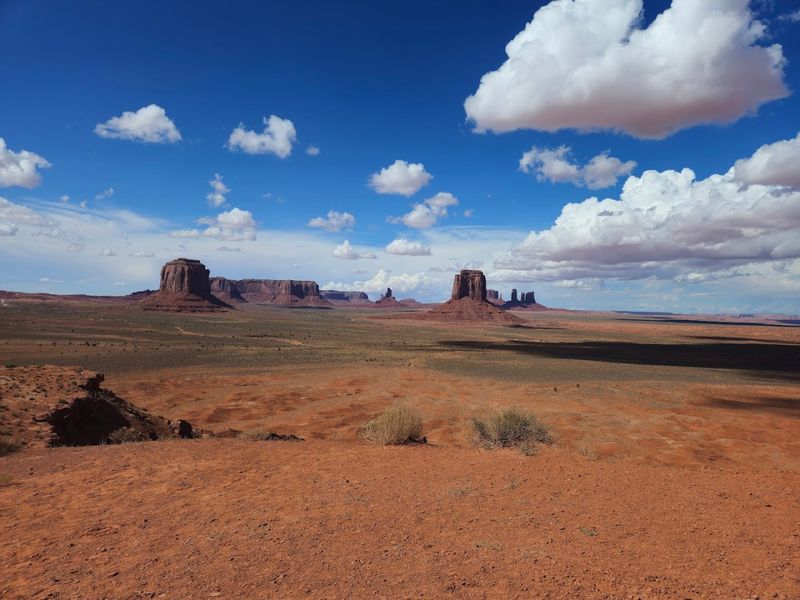
Flash floods carved Antelope Canyon over thousands of years, sculpting sandstone into curves so smooth they look like frozen liquid. The walls ripple and flow in shades of orange, pink, and deep red depending on the time of day.
The light beams are the real showstopper. Around midday in summer, sunlight drops through the narrow opening above and cuts through the dusty air in sharp, photogenic columns.
Photographers book slots months in advance just for that shot.
Antelope Canyon sits on Navajo land near Page, Arizona, and access requires a Navajo-guided tour. There are two sections: Upper Canyon (wider, more accessible) and Lower Canyon (narrower, more dramatic).
I’d pick Lower if you don’t mind tight squeezes and a few ladders. The Navajo name for Upper Canyon translates to “the place where water runs through rocks.” Accurate.
Poetic. Very on brand.
Grand Prismatic Spring’s Rainbow Ring (Wyoming, USA)
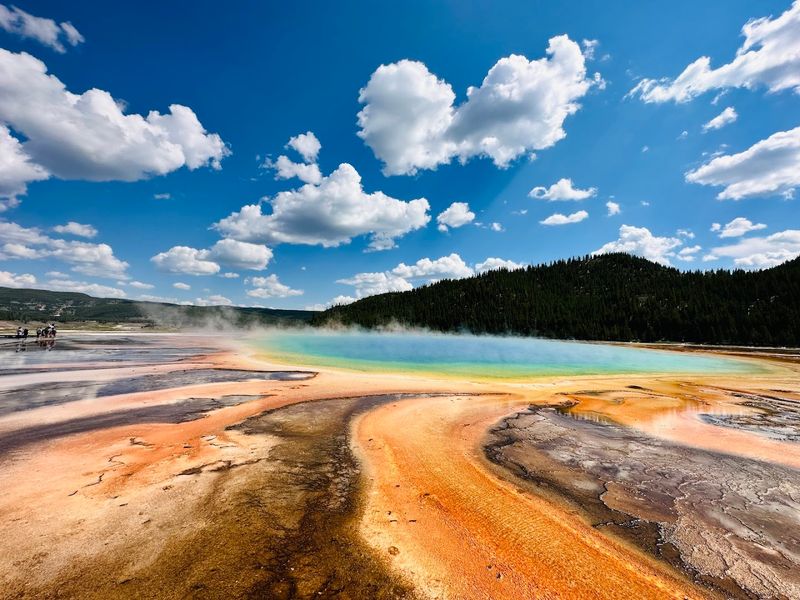
Yellowstone’s Grand Prismatic Spring is the largest hot spring in the United States and the third largest on Earth. At roughly 90 meters wide and 50 meters deep, it’s basically a hot tub for giants with excellent taste in color.
The rainbow rings around the edge aren’t paint or filters. They’re caused by heat-loving microorganisms called thermophiles, which produce different pigments depending on how far they are from the scalding center.
The closer to the middle, the hotter it gets, and the fewer organisms survive there, leaving the center a deep, sterile blue.
The spring releases around 2,000 liters of water per minute at temperatures near 87 degrees Celsius. It was first recorded by European-American explorers in 1839, though Shoshone people knew it long before that.
The best view is from the Fairy Falls Trail overlook, which puts the whole rainbow ring in perfect perspective. Worth every step.
Pamukkale’s “Cotton Castle” Terraces (Turkey)
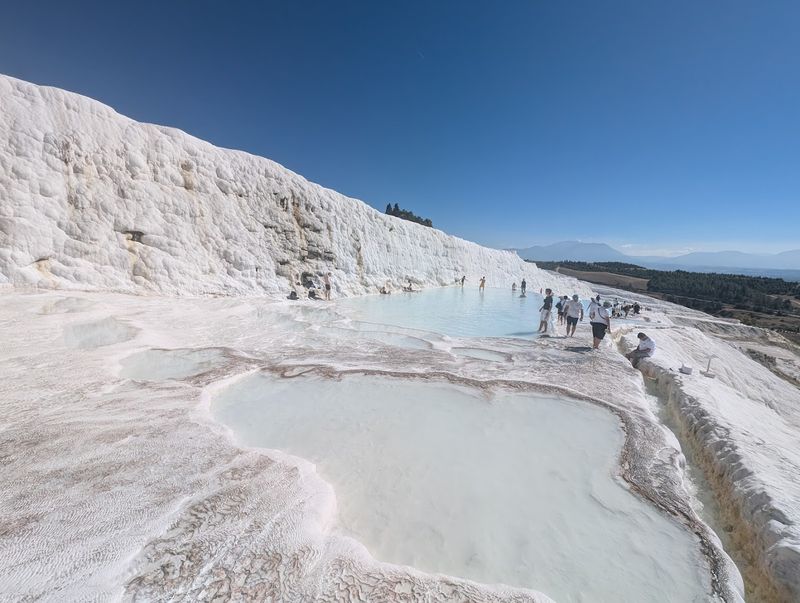
Pamukkale literally means “cotton castle” in Turkish, and once you see it, that name makes complete sense. Calcium-rich thermal waters have been flowing down this hillside for thousands of years, depositing white travertine in layers that look like frozen waterfalls filled with turquoise pools.
The water temperature sits around 35 degrees Celsius, making those pools warm and inviting. Visitors are allowed to walk barefoot through some sections, though shoes must come off to protect the fragile mineral surface.
It’s a weird mix of spa day and geology field trip.
Ancient Greeks built the city of Hierapolis right on top of this wonder, which says a lot about their real estate instincts. The ruins, including a massive necropolis and Roman theater, sit right at the top of the terraces.
Pamukkale became a UNESCO World Heritage Site in 1988. The whole place looks photoshopped, but it is emphatically, stubbornly real.
Wulingyuan’s Forest of Stone Spires (China)
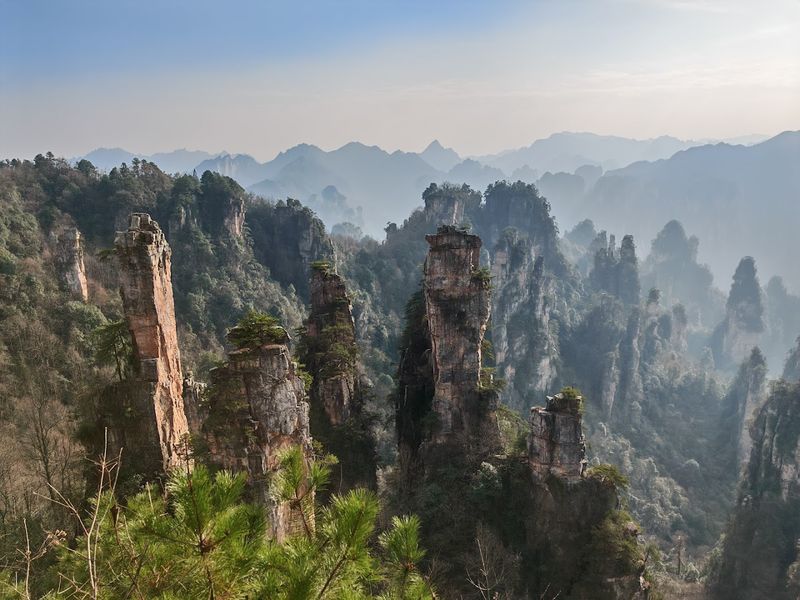
More than 3,000 quartzite sandstone pillars shoot straight up from the forest floor in Wulingyuan, some reaching over 200 meters tall. They’re so dramatic and otherworldly that filmmakers used them as visual inspiration for the floating mountains in Avatar.
Yes, those mountains.
The area covers about 264 square kilometers in Hunan Province and was designated a UNESCO World Heritage Site in 1992. Fog frequently rolls through the valleys between the pillars, which takes the whole scene from “impressive” to “completely unbelievable.”
Erosion over hundreds of millions of years shaped these formations by wearing away softer rock and leaving the harder quartzite standing. Glass-bottomed walkways and cable cars let visitors experience the landscape from terrifying heights.
The Bailong Elevator, the world’s tallest outdoor elevator, runs straight up a cliff face inside the park. It carries visitors 326 meters upward in under two minutes.
Casual.
Lake Hillier’s Pink Water (Western Australia)
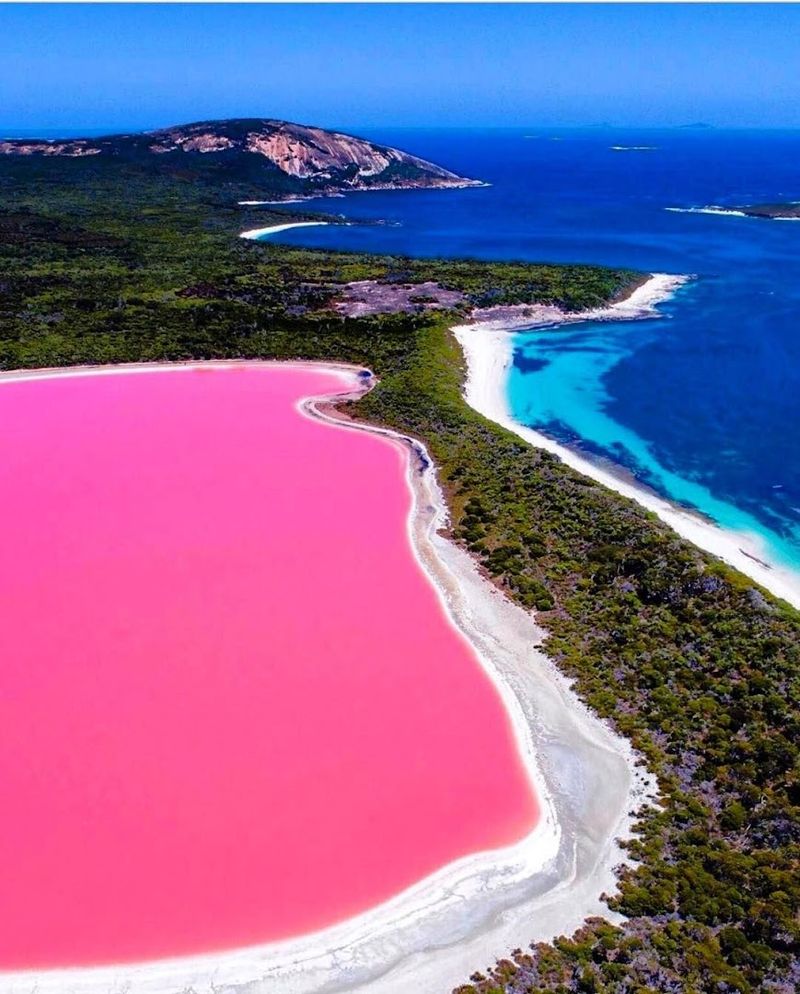
Lake Hillier on Middle Island looks like someone spilled a giant strawberry milkshake and just left it there. The water is a consistent bubblegum pink, and unlike some other pink lakes, it keeps that color even when you scoop it into a glass.
Scientists believe the color comes from a combination of salt-loving microorganisms, including Dunaliella salina algae and halophilic bacteria, which produce red and pink pigments. The lake is about 600 meters long and sits right next to the deep blue Southern Ocean, which makes the color contrast even more absurd from the air.
The lake was first recorded by British navigator Matthew Flinders in 1802, who sent a crew member to investigate. They collected samples and moved on, probably very confused.
Today it’s a protected nature reserve with no public access by land. The best view is from a scenic flight, which is worth every cent of the fuel cost.
Vinicunca (Rainbow Mountain) (Peru)
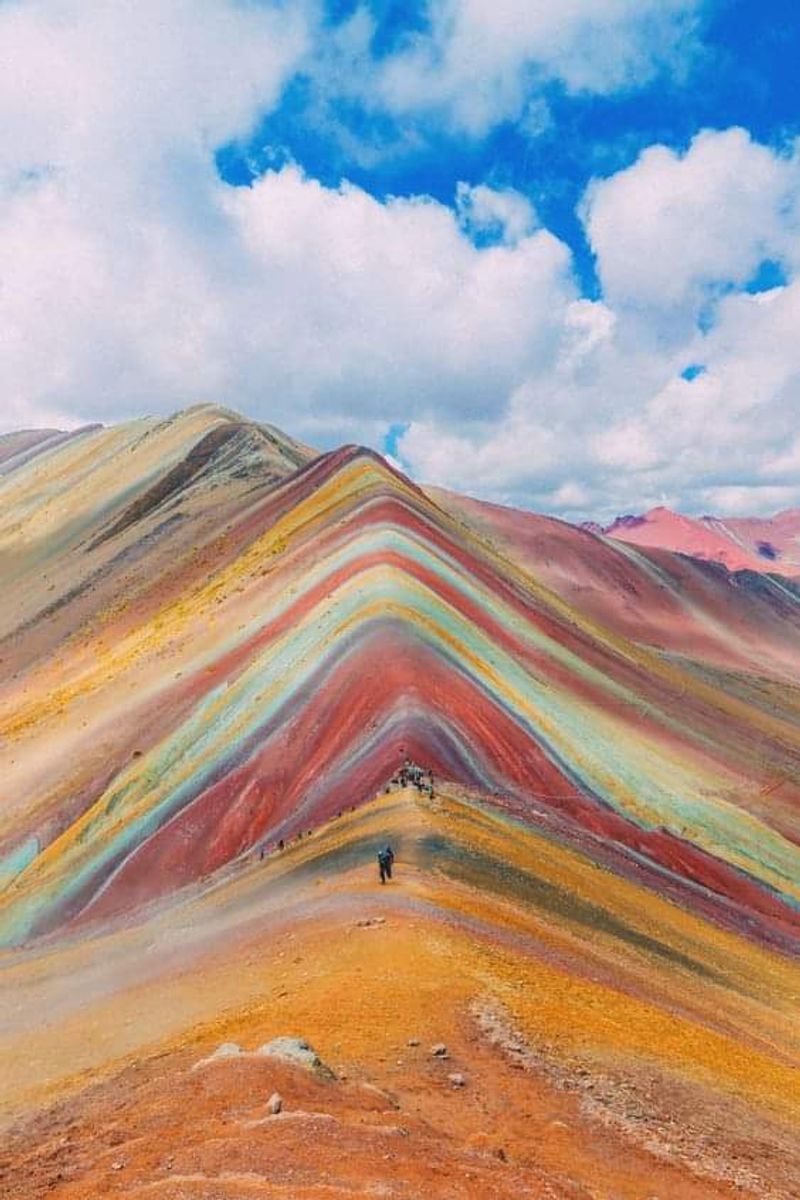
Rainbow Mountain sits at 5,200 meters above sea level in the Peruvian Andes, and the altitude alone is enough to humble most visitors. The colored stripes running across it aren’t painted on.
They’re layers of different minerals, including red from iron oxide, yellow from sulfur, and green from chlorite, exposed by erosion over millions of years.
For most of history, the mountain was buried under glaciers and simply unknown. Climate change melted those glaciers in recent decades, revealing the stripes beneath.
It became a major tourist destination almost overnight after photos went viral around 2015.
The hike to the summit takes about two hours from the nearest trailhead and gains significant elevation fast. Altitude sickness is very real here.
Locals often rent horses for the steepest sections, which is a perfectly reasonable option with zero shame attached. Llamas roam the area freely and absolutely steal every photo.
No complaints.
Lencois Maranhenses’ “Desert” Full of Lagoons (Brazil)
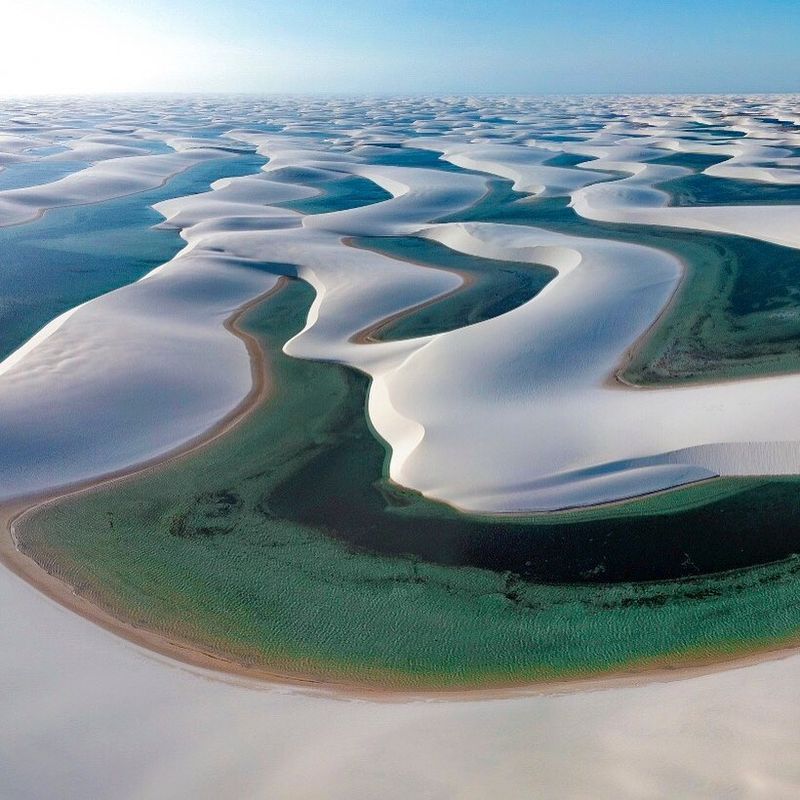
Technically, Lencois Maranhenses is not a desert. It gets too much rainfall to qualify.
But try telling that to the sweeping white dunes that stretch across 1,500 square kilometers of northeastern Brazil. Between June and September, seasonal rains fill the valleys between those dunes with crystal-clear freshwater lagoons.
The result looks completely impossible. Bright turquoise pools sit between towering sand dunes, with no rivers or streams in sight.
The water collects because an impermeable rock layer beneath the sand prevents it from draining. Fish actually migrate into the lagoons during flood season and survive until the water disappears again.
The name translates roughly to “bed sheets of Maranhao,” referring to the white dunes that look like laundry spread across the land. Access requires a four-wheel-drive vehicle and a local guide, which adds to the adventure.
The lagoons peak in July. Plan accordingly, and bring reef-safe sunscreen.
The sun here means business.
Plitvice Lakes’ Ladder of Waterfalls (Croatia)
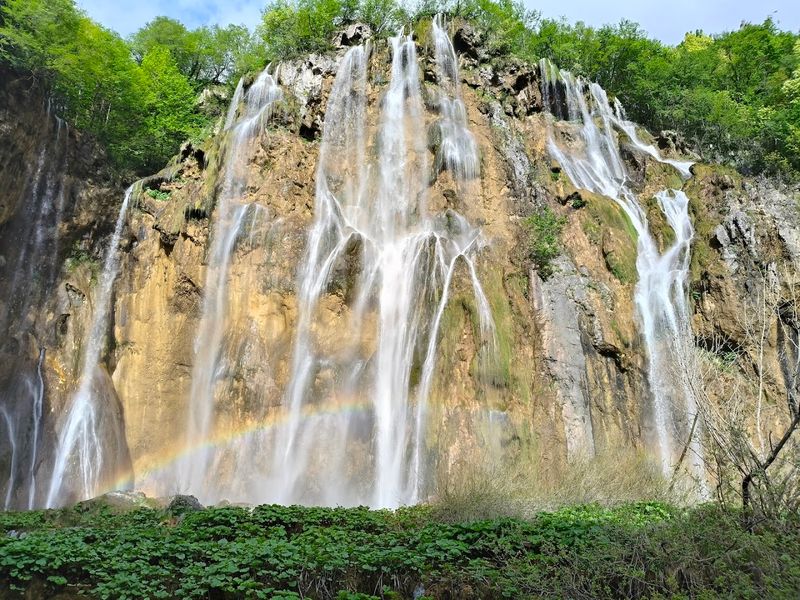
Croatia’s Plitvice Lakes National Park has 16 terraced lakes connected by over 90 waterfalls, all flowing into each other in a cascading chain that looks like nature designed it with a ruler. The water ranges from electric turquoise to deep emerald depending on the minerals and sunlight hitting it at any given moment.
The lakes are built by travertine, a mineral deposited by bacteria and algae that slowly forms natural dams called barriers. Those barriers keep growing, which means the landscape is literally still changing.
Plitvice is a place that builds itself.
The park became Croatia’s first national park in 1949 and a UNESCO World Heritage Site in 1979. Wooden boardwalks run directly over the water and alongside the falls, putting visitors inches from the action.
No swimming is allowed in the lakes, which is a rule that takes real willpower to follow when the water is that color. Worth the restraint.
The Marble Caves’ Swirled Blue-and-White Cathedrals (Chile)
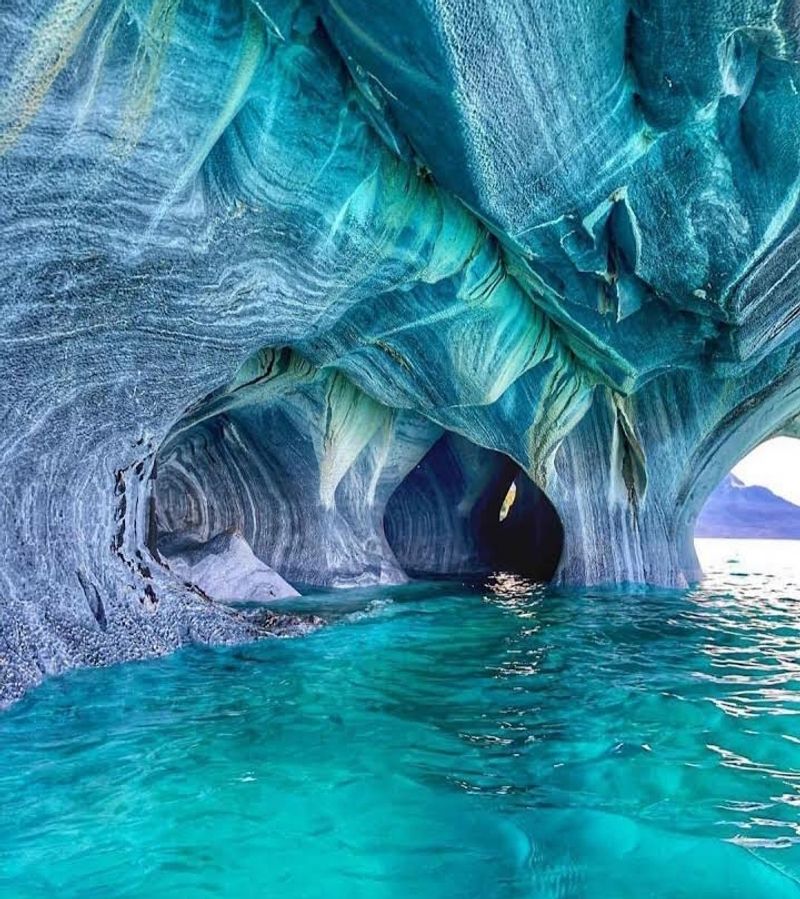
General Carrera Lake sits on the border between Chile and Argentina, and right in the middle of it, a cluster of marble formations has been carved by waves into a series of hollow chambers, arches, and columns. The walls swirl with blue, white, and grey, polished smooth over thousands of years.
The color that reflects off the cave walls depends entirely on the lake’s water level. In spring, snowmelt raises the water and turns everything a deep, glowing turquoise.
In summer, the levels drop and the tones shift. Every visit is technically different from the last.
Access is only by boat from the small town of Puerto Rio Tranquilo on the Chilean side. The caves sit in the middle of a remote Patagonian lake, which means getting there is half the experience.
The marble formations are around 6,000 years old. They’re geologically young, stunningly beautiful, and almost criminally underrated on the global tourism circuit.
Mosquito Bay’s Electric Bioluminescence (Vieques, Puerto Rico)
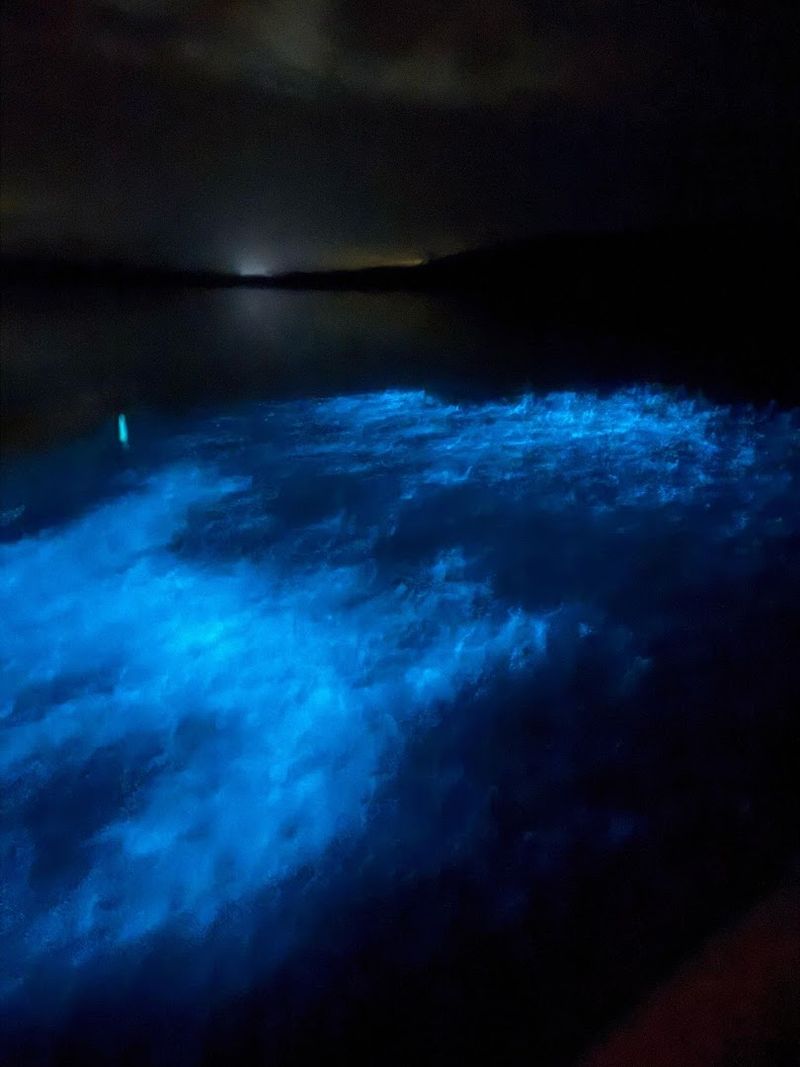
Mosquito Bay holds the Guinness World Record for the brightest bioluminescent bay on Earth. Stir the water with your hand or paddle a kayak through it, and the water flashes electric blue-green like something from a science fiction film.
It’s completely real and completely wild.
The glow comes from microscopic organisms called dinoflagellates, specifically Pyrodinium bahamense. The bay has an unusually high concentration of them, partly because a narrow channel limits water exchange with the ocean, keeping the organisms contained and dense.
Moonless nights produce the most dramatic effect, since ambient light competes with the glow. Motorized boats are banned from the bay to protect the ecosystem, so tours use kayaks or electric vessels.
I went on a kayak tour once and spent more time dangling my arm in the water than actually paddling. Zero regrets.
The bay is on the small island of Vieques, reachable by ferry or short flight from mainland Puerto Rico.
Zhangye Danxia’s “Rainbow Mountains” (China)
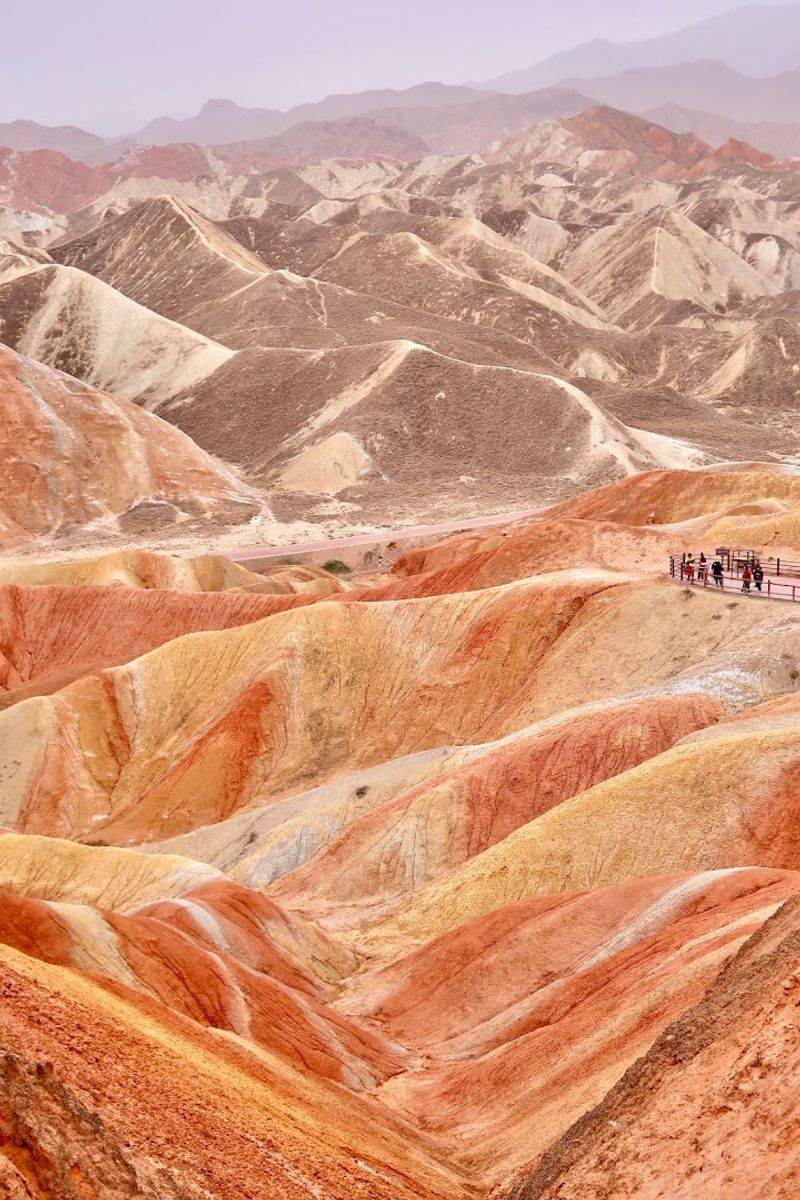
Zhangye Danxia in Gansu Province looks like a painter went completely off-script. Red, orange, yellow, green, and blue rock layers stripe across ridges and cliffs in bands so vivid that first-time visitors frequently assume the photos are edited.
They’re not.
The colors come from different minerals deposited in sandstone and siltstone over 24 million years. Tectonic shifts then folded and tilted those layers, and erosion carved them into the rolling hills and sharp ridges visible today.
It’s millions of years of geology presented as abstract art.
The park covers about 510 square kilometers and was named a UNESCO World Heritage Site in 2010 as part of the China Danxia group. The best viewing times are early morning or late afternoon when sunlight hits the rock at low angles and the colors intensify dramatically.
Wooden viewing platforms are scattered throughout the park. Bring a wide-angle lens.
Your phone camera will work hard and deserve a raise.
Kawah Ijen’s Blue Fire and Acid Lake (Indonesia)
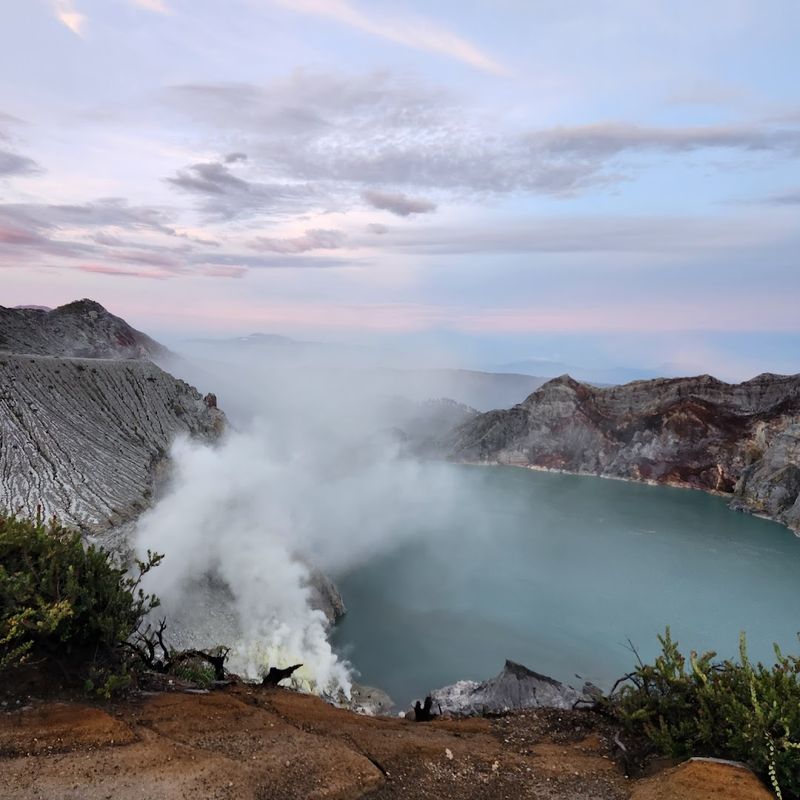
Most volcanoes produce orange or red lava. Kawah Ijen, on the island of Java, produces electric blue fire at night.
Sulfur-rich gases ignite as they hit the air and burn with an eerie blue flame that can reach six meters high. It’s one of the rarest geological phenomena on Earth.
The crater also holds the world’s largest highly acidic lake. The water sits at a pH close to zero, roughly as acidic as battery acid.
It’s a striking turquoise color that makes it look almost inviting. It is not inviting.
Sulfur miners work the crater at night and in the early morning, carrying loads of solid sulfur up the crater walls in baskets. Each load can weigh between 70 and 90 kilograms.
They wear basic masks or damp cloth over their faces. The blue fire is visible only before sunrise.
Hikers who make the early morning climb get both the fire and a sunrise over the crater. Two spectacles, one very early alarm.
Lake Baikal’s Crystal Ice with Frozen Gas Bubbles (Russia)
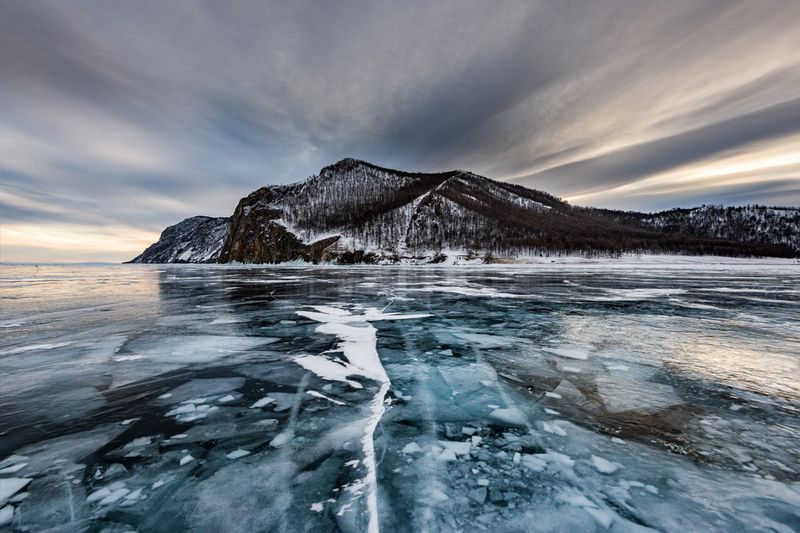
Lake Baikal in Siberia is the world’s oldest and deepest freshwater lake, holding about 20% of Earth’s unfrozen surface fresh water. In winter, it freezes over with ice so clear you can see straight down several meters.
That alone is remarkable. The methane bubbles make it extraordinary.
Methane released from decomposing organic matter on the lake bed rises through the water and freezes mid-journey, creating stacks of white bubble clusters suspended at different depths in the ice. They look like champagne bubbles caught in a photo.
The scientific term for this is “methane seep,” which is far less glamorous than what it produces.
The ice season typically runs from January to April, and the formations are most photogenic in February when the ice is thick and clear. The lake also hosts the Baikal Ice Marathon, a 42-kilometer race run directly across the frozen surface.
Completing a marathon on a lake is a very specific personality trait. Respect to all who attempt it.



