 Unearth The Voyage
Some towns refuse to follow the crowd. While most of the modern world races toward glass facades and fast-food strips, a handful of places have quietly held their ground, keeping cobblestone streets, centuries-old church towers, and family-run shops exactly where they belong.
What makes these towns so magnetic is not just their age, but the fact that daily life inside them still carries real texture and rhythm. A baker still opens at dawn.
A market square still fills with voices on weekday mornings. Church bells still count the hours without anyone asking them to stop.
This list takes you through 16 towns scattered across Europe, Asia, and beyond, each one stubbornly, beautifully itself. Some are famous, some are quietly under the radar, but every single one has managed to hold onto something rare: genuine, unpolished, old-world character that no renovation trend has managed to sand away.
1. Hallstatt, Austria
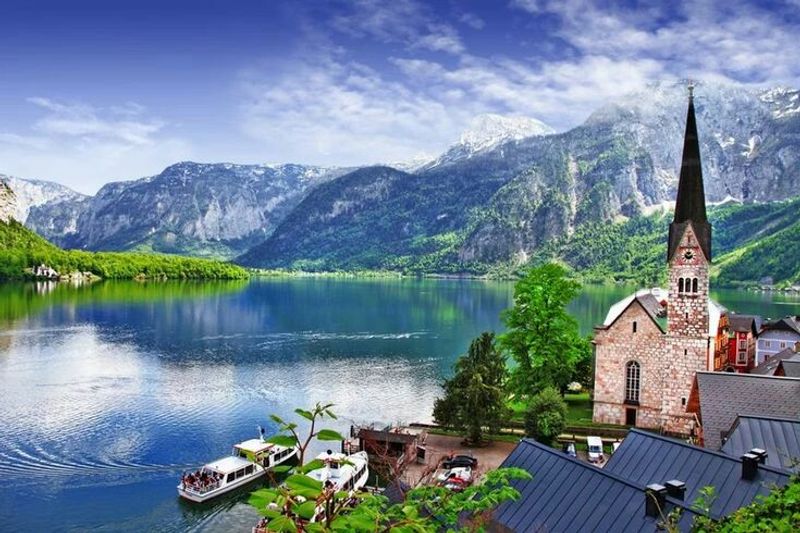
Few places on earth make you stop mid-step and genuinely question whether you have wandered into a painting. Hallstatt clings to the edge of a mirror-still alpine lake in Upper Austria, its pastel houses stacked so tightly against the mountain that some of them are practically carved into the cliff face.
Salt mining gave this town its heartbeat more than 7,000 years ago, making it one of the oldest continuously inhabited settlements in the world. That history is not just in the museum; it is in the narrow lanes, the wooden balconies, and the cemetery with its painted skull tradition that locals still maintain.
Despite the steady stream of visitors, Hallstatt has not turned itself into a theme park. Church spires still rise above the rooftops, local boats still cross the lake, and the market square still belongs to the town more than to any tour group passing through.
2. Rothenburg ob der Tauber, Germany
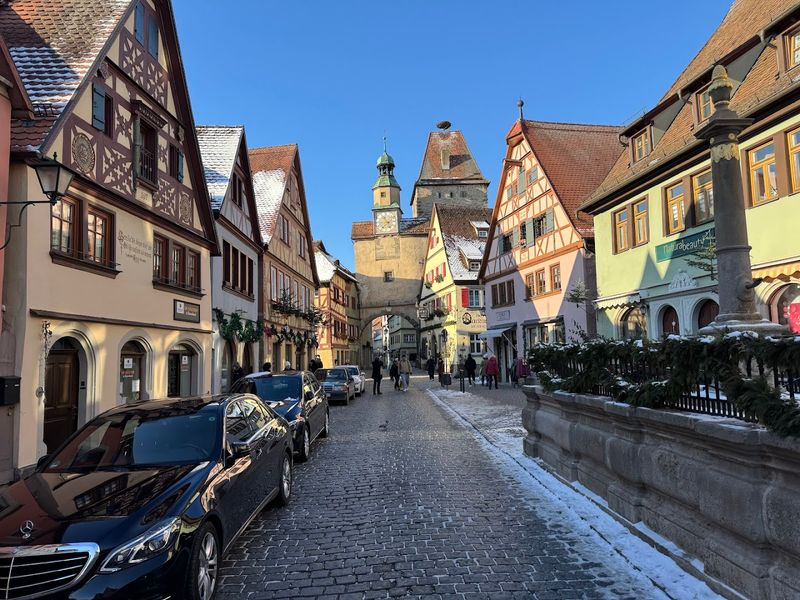
The city walls are still standing, the ramparts are still walkable, and the half-timbered houses still lean over the streets at the same cheerful angles they have for 600 years. Rothenburg ob der Tauber in Bavaria is one of Europe’s best-preserved medieval towns, and it earns that title without any exaggeration.
What makes Rothenburg remarkable is not just the architecture but the sheer completeness of it. The historic center was never bombed flat and rebuilt in a hurry, so the 14th-century street plan remains largely intact.
You can walk from the market square to the town gate without a single modern building interrupting the view.
The Christmas market here has been running for generations, and the gingerbread shops that line the cobbled lanes take their craft seriously. Even outside the holiday season, the town hums with a quiet pride in its own survival through centuries of European upheaval.
3. Colmar, France
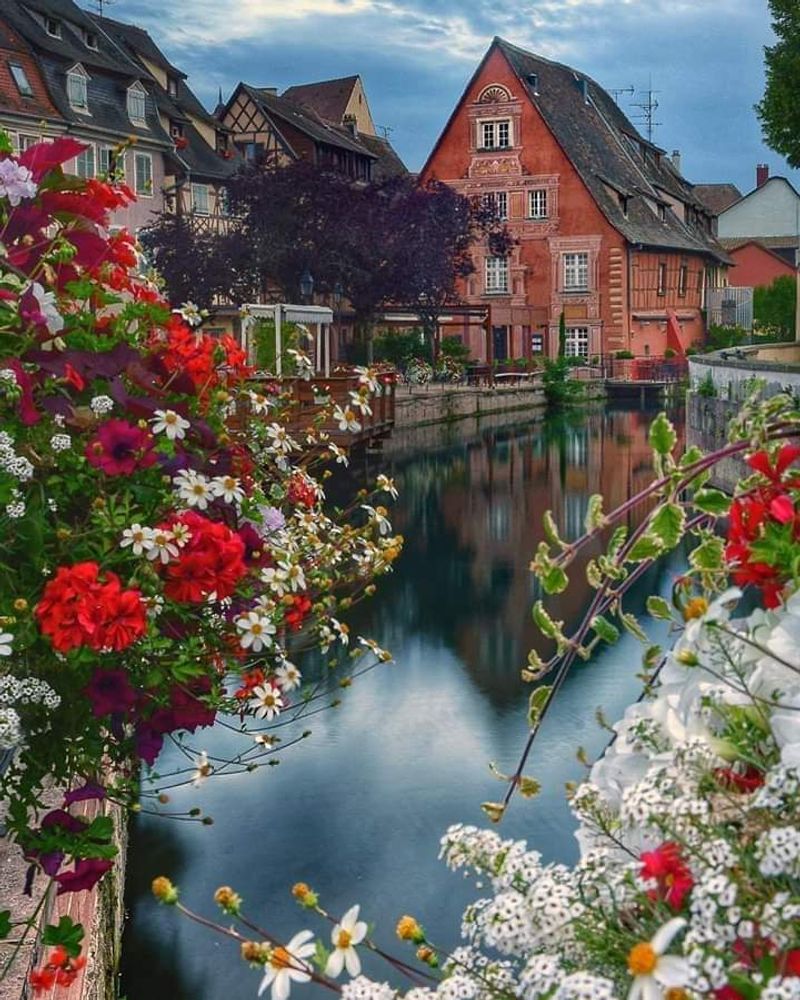
Bright tangerine, sky blue, and dusty rose houses lean over quiet canals in the Alsatian town of Colmar, and the whole scene looks like someone turned up the color saturation on real life. The Little Venice district earns its nickname not through imitation but through its own genuine network of waterways, flower-draped bridges, and centuries-old timber facades.
Colmar sits right on the cultural border between France and Germany, and that blend shows up everywhere: in the street names, in the architecture, and in the food sold at the Saturday morning market. Tarte flambee and choucroute garnie share menus with dishes that feel entirely French, and nobody finds that odd because it has always been this way.
The medieval core is extraordinarily well preserved, with buildings dating back to the 13th century still lining the main squares. Locals cycle past tourists, boulangeries open early, and the pace of the town remains unhurried in a way that feels genuinely earned rather than performed.
4. San Gimignano, Italy
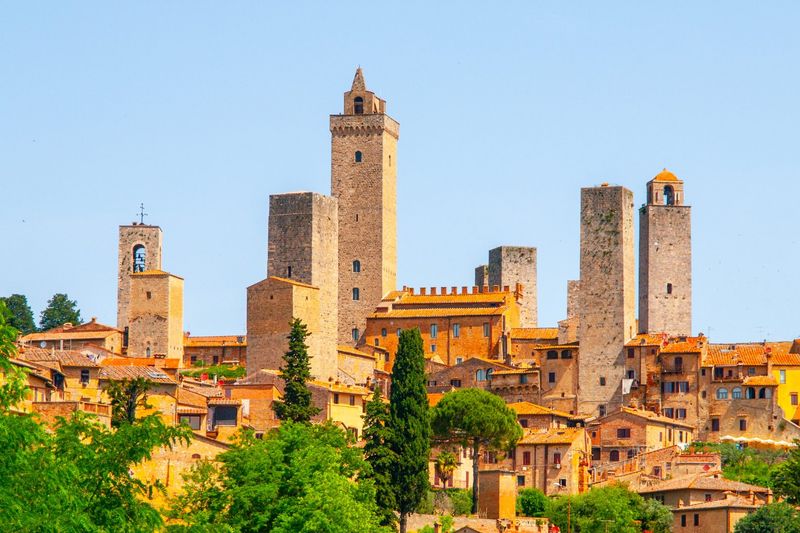
Fourteen stone towers still punch into the Tuscan sky above San Gimignano, the last survivors of a once-competitive skyline where wealthy families raced to build higher than their neighbors. At the town’s medieval peak, there were 72 of them, which gives you a sense of just how fiercely status was measured in the 1300s.
The hilltop location means the views from the town walls are genuinely breathtaking, with vineyards rolling off in every direction and the soft ochre tones of the Sienese countryside filling the horizon. The main piazza still anchors daily life, with the same fountain, the same church, and the same general sense that centuries have passed without anyone feeling the need to fix what was not broken.
Vernaccia di San Gimignano, a crisp local white grape variety, has been cultivated here since the 13th century and remains a point of civic pride. The town’s character is rooted, confident, and refreshingly unbothered by trends.
5. Český Krumlov, Czech Republic
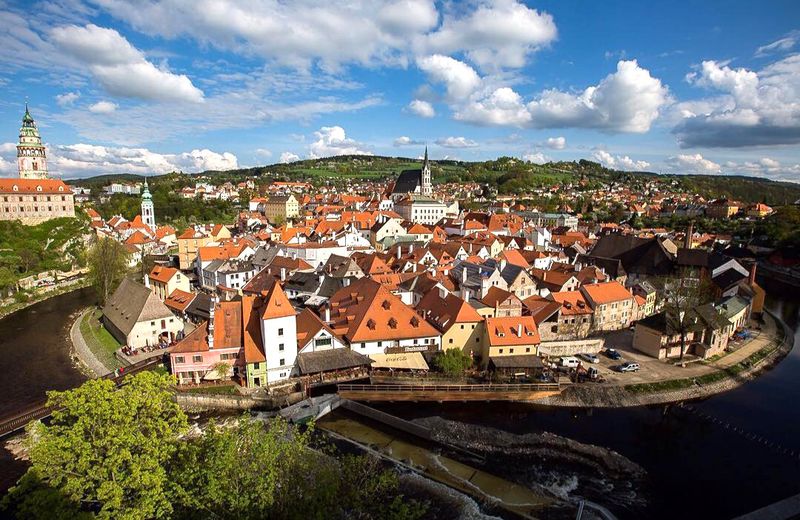
A massive 13th-century castle crowns the hilltop, the Vltava River loops around the town in a tight horseshoe bend, and red-tiled rooftops cascade down toward the water in a scene so composed it barely seems accidental. Cesky Krumlov in southern Bohemia is the kind of place that makes you wonder how it survived centuries of European history with so much of its original fabric intact.
The answer involves a mix of geographic isolation and fortunate timing. The town was largely bypassed by the industrial revolution and heavy wartime destruction, leaving its Renaissance and Baroque facades standing in remarkable condition.
The castle complex alone contains over 300 rooms and one of the best-preserved Baroque theaters in Europe.
What keeps the town from feeling like a museum is the fact that people actually live here. Locals cross the same stone bridges that tourists photograph, and the riverside cafes fill up with both.
Getting wonderfully turned around in the lanes is practically a rite of passage.
6. Bruges, Belgium
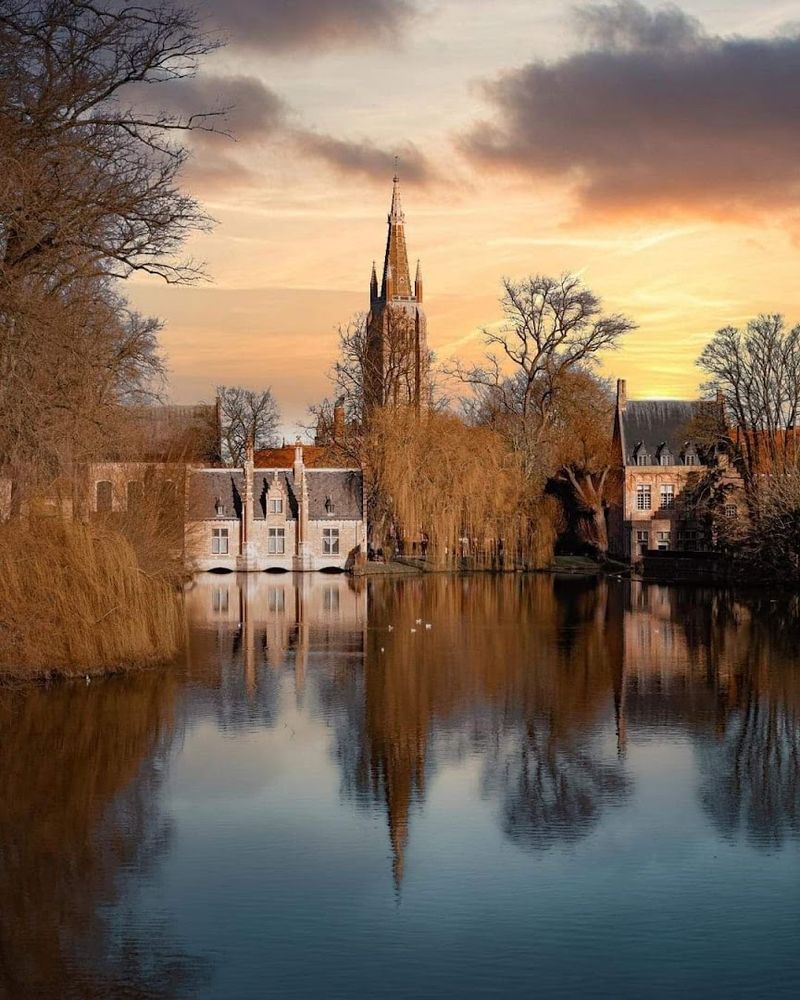
Gothic spires, mirror-still canals, and a central market square that has been the beating heart of this Flemish city since the Middle Ages: Bruges does not try hard to impress, because it has never needed to. The city’s medieval wealth came from textile trade, and the ornate guild houses lining the Markt are the architectural legacy of that prosperity.
Horse-drawn carriages still cross the cobblestones, not as a tourist gimmick but as a genuine part of how the city presents itself. The lace-making tradition, which dates back centuries, survives in small workshops and dedicated museums scattered through the old quarter.
Chocolate boutiques maintain recipes and techniques that have been refined over generations.
What makes Bruges hold up so well against modern comparison is the completeness of its historic center. The canal network, the belfry, the almshouses, and the medieval street plan all survive in a coherent whole that tells the story of a city that knew exactly what it was and never entirely forgot.
7. Gimmelwald, Switzerland
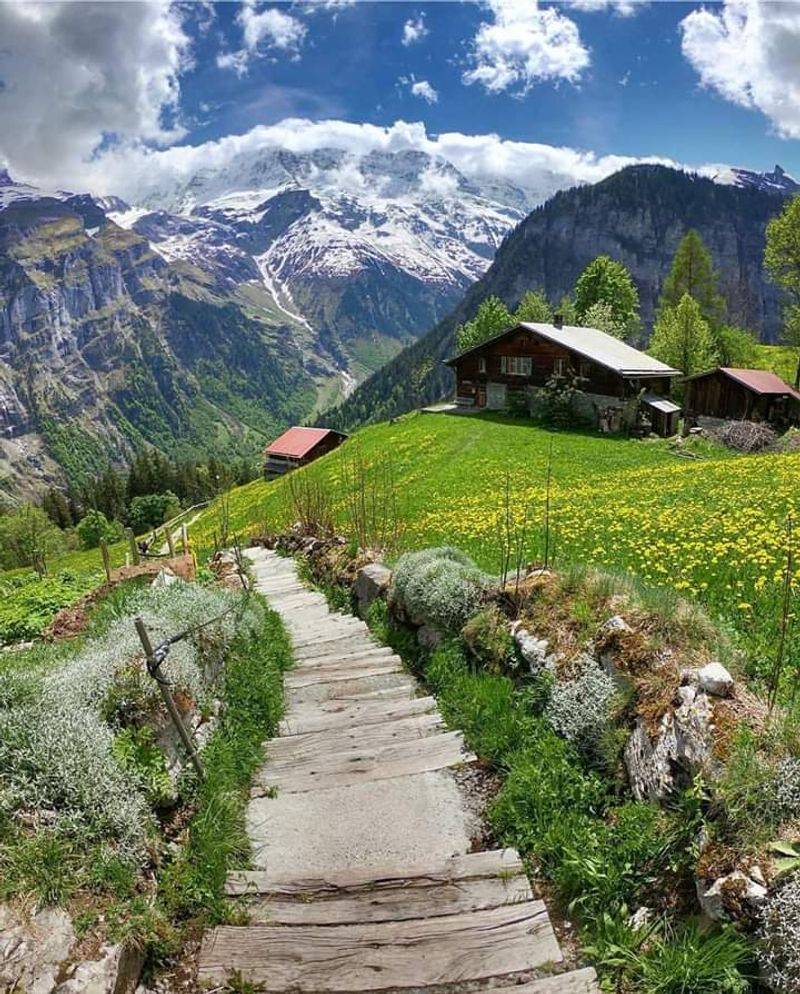
There are no chain hotels here, no shopping centers, and no fast-food signs. Gimmelwald, perched on a cliff edge in the Bernese Oberland, was officially classified as a poor farming village for much of its history, and that designation accidentally protected it from the kind of development that transformed its neighbors.
The village sits above the Lauterbrunnen Valley at around 1,300 meters, accessible only by cable car or a steep footpath. That barrier alone filters out the casual visitor and keeps the population small and the atmosphere genuinely quiet.
Cowbells echo across the meadows in summer, and the hay-drying racks that dot the hillside are still in actual use.
A handful of family-run guesthouses offer simple rooms with views that could make a grown adult emotional. The alpine farming culture here is not staged for visitors; it is simply how the village has always operated.
Gimmelwald is Switzerland before Switzerland became a luxury brand, and it remains stubbornly, wonderfully itself.
8. Mdina, Malta
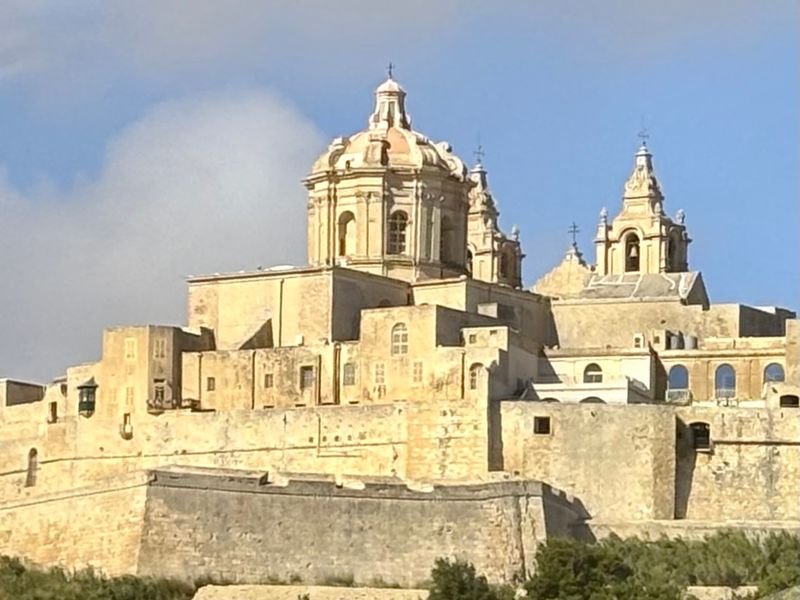
Cars are almost entirely absent from Mdina, and the silence that fills this limestone city on a hilltop in central Malta is the kind that takes a few minutes to fully register. Known as the Silent City, Mdina served as Malta’s capital for centuries before the Knights of St. John shifted power to Valletta in the 16th century, and the town has been quietly content ever since.
The honey-gold limestone that makes up every wall, archway, and cathedral facade glows differently depending on the hour, turning deep amber at sunset and almost white at noon. Baroque palaces line streets barely wide enough for two people to pass comfortably, and most of them are still privately owned by Maltese noble families.
The population inside the walls is famously small, fewer than 300 permanent residents, which means the atmosphere tilts toward contemplative rather than crowded. Ancient chapels sit open and unlocked, and the views from the bastions across the Maltese countryside stretch all the way to the sea on clear days.
9. Reine, Norway
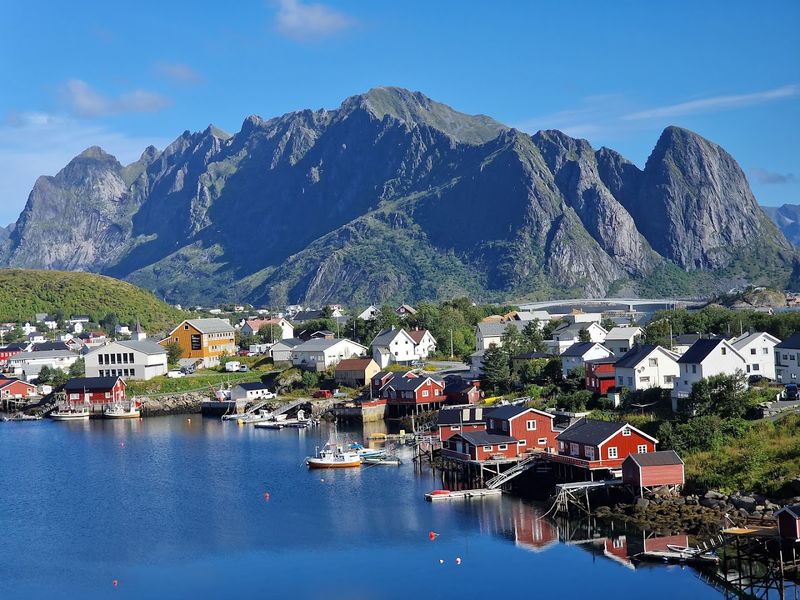
Red wooden fishing cabins called rorbuer line the water’s edge, their reflections wobbling in the dark fjord below, while jagged peaks rise so sharply behind them that the whole scene looks structurally improbable. Reine sits at the southern tip of the Lofoten Islands, north of the Arctic Circle, and it has the kind of raw, elemental beauty that requires no enhancement.
Fishing has defined this village for centuries, and it still does. The drying racks for stockfish, a wind-dried cod that has been exported from this region since the Viking Age, remain a working part of the landscape rather than a heritage display.
The harbor fills with boats in the early morning, and the catch still determines the rhythm of the day.
Reine’s population is small and its infrastructure is modest, but visitors come from around the world for the combination of dramatic scenery and genuine working-village atmosphere. The Northern Lights appear here in winter with a frequency that locals have long stopped finding surprising but visitors never do.
10. Óbidos, Portugal
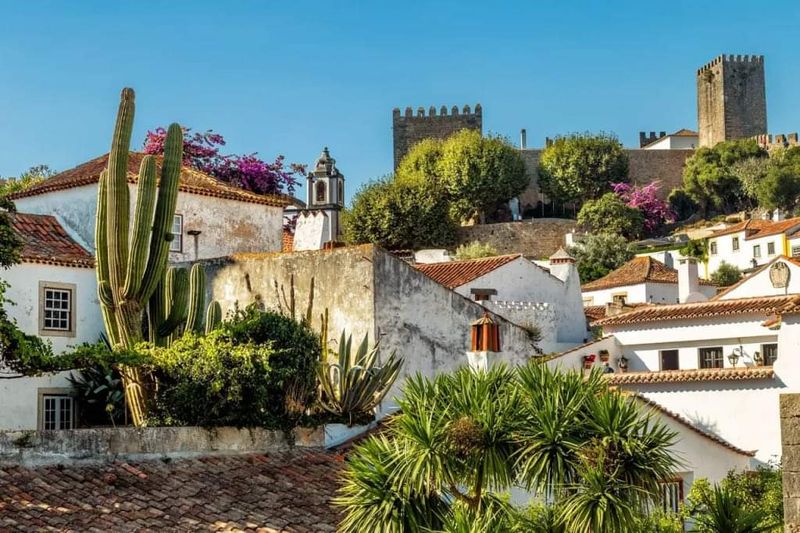
A complete ring of medieval walls still surrounds this small Portuguese town, and you can walk the full circuit along the top of them, looking down at whitewashed houses trimmed with blue and yellow paint on one side and rolling green countryside on the other. Obidos has been enclosed by its walls since the Moors built them in the 8th century, and the town inside has changed surprisingly little in essential character since then.
The main street, Rua Direita, runs straight through the center and is lined with craft shops, small restaurants, and houses whose doorways are framed with bougainvillea so reliably purple it seems almost choreographed. The castle at the far end of town has been converted into a pousada, a historic inn, where guests sleep inside 12th-century walls.
Obidos was traditionally given as a wedding gift from Portuguese kings to their queens, a tradition that started in 1282 and continued for centuries. That royal history left the town remarkably well maintained, and the civic pride it inspired has clearly not faded.
11. Kotor, Montenegro
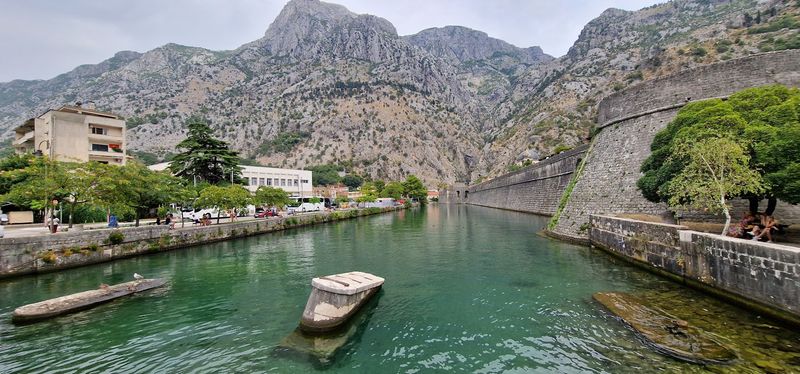
Ancient stone walls climb nearly 1,200 meters up the steep mountain behind Kotor’s Old Town, a feat of medieval engineering so dramatic that first-time visitors tend to just stand and stare at it for a while. The Bay of Kotor, often called the southernmost fjord in Europe, frames the whole scene with a moody Adriatic grandeur that changes color throughout the day.
Inside the walls, Venetian influence is everywhere: in the carved stone doorways, the loggias, the Romanesque churches, and the general sense that someone with excellent architectural taste once had a very strong opinion about how a city should look. Venice controlled Kotor for over four centuries, and the built environment reflects that relationship clearly.
Cats are famously beloved in Kotor, with the city’s feline population practically holding honorary citizenship. There is even a cat museum tucked into the old quarter.
Cruise ships do bring day visitors, but the walled city absorbs them well, and the evenings, when the crowds thin and the lanterns come on, belong entirely to the town.
12. Shirakawa-go, Japan
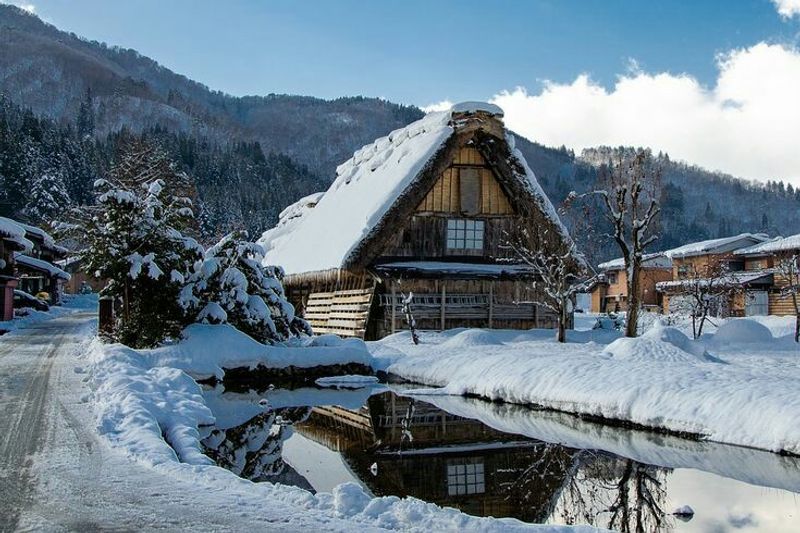
The roofs are the first thing you notice: steep, thick, and triangular, angled precisely to shed the enormous snowfall that blankets this mountain valley each winter. The gasshō-zukuri farmhouses of Shirakawa-go in the Japanese Alps have been built and maintained using the same principles for over 300 years, and the technique has been passed down through generations of farming families who still live in many of them.
The name gasshō-zukuri translates roughly as “hands in prayer,” a reference to the roof shape’s resemblance to Buddhist monks with palms pressed together. The largest farmhouses contain multiple floors used for silkworm cultivation, and the interior beams are held together without a single nail, relying entirely on rope lashing and precise joinery.
UNESCO added the village to its World Heritage list in 1995, recognizing both the architectural tradition and the communal maintenance system called yui, where neighbors help each other re-thatch roofs on a rotating basis. In winter, the snow-covered rooftops create a scene of extraordinary stillness.
13. Bibury, England
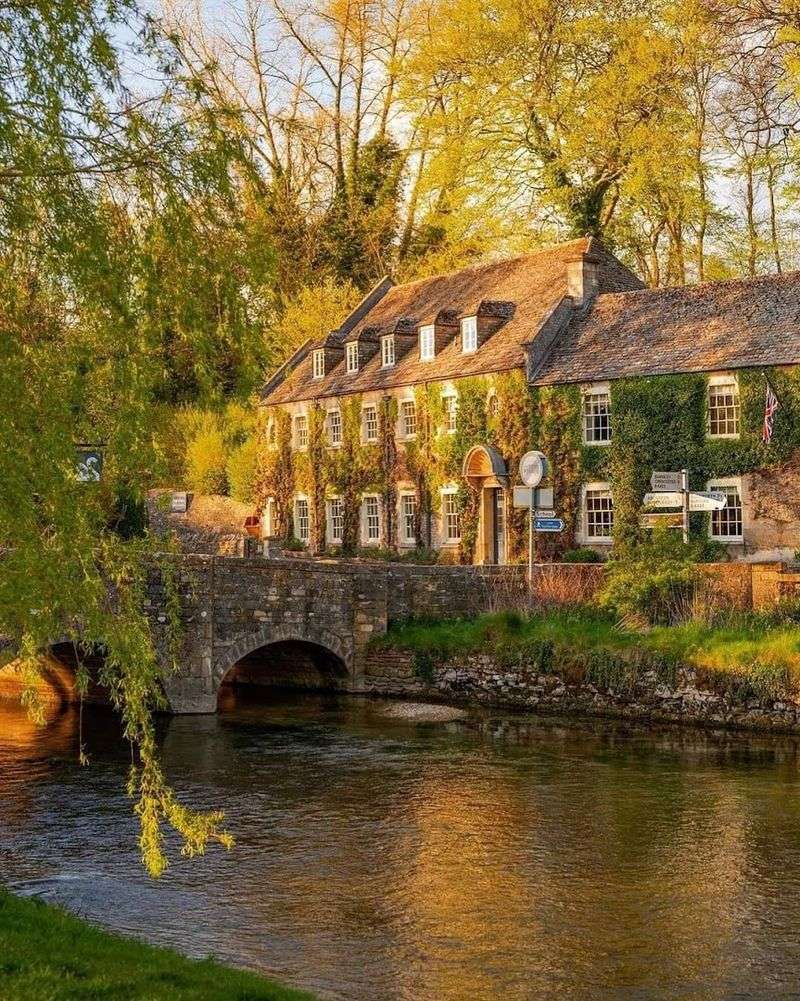
William Morris, the 19th-century designer and preservationist, called Bibury the most beautiful village in England, and the Cotswolds has been quietly riding that endorsement ever since. Arlington Row, a terrace of 17th-century weavers’ cottages built from the local honey-colored limestone, lines the edge of the River Coln and appears on so many postcards that first-time visitors sometimes feel they have already been here.
The golden stone that defines the Cotswolds region takes on a particular warmth in the late afternoon light, turning the whole village a shade of amber that no filter can quite replicate. Mallards wade in the river shallows below the cottages, and the meadow opposite, called Rack Isle, has been a wildfowl reserve for decades.
Bibury has a working trout farm that has operated since 1902, and you can still buy fresh-caught fish to take home. The village pub, the church, and the mill are all still in use, keeping Bibury from tipping into the purely decorative category that threatens towns this photogenic.
14. Alberobello, Italy
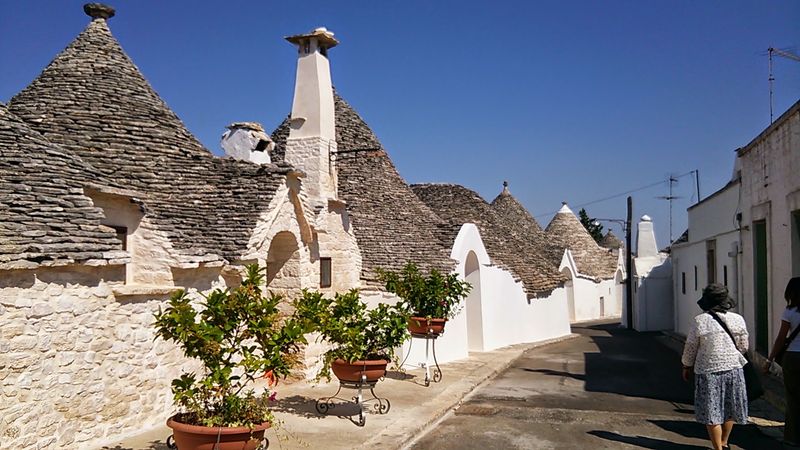
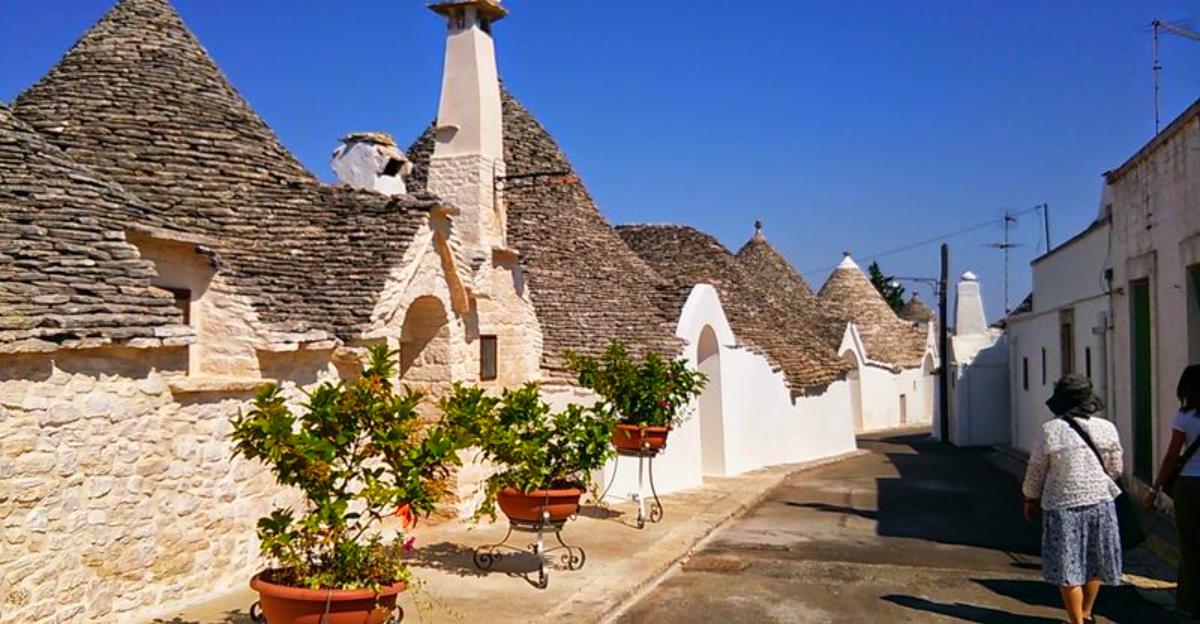
Nowhere else in Europe looks quite like Alberobello. The trulli, those round whitewashed houses topped with dry-stacked conical stone roofs, crowd the hillside streets of this Puglian town in such numbers that the skyline resembles a cluster of stone mushrooms, which is meant entirely as a compliment.
The construction technique is genuinely ancient and deliberately clever: the roofs were built without mortar so they could be quickly dismantled when tax collectors came around, since a completed dwelling was taxable but a pile of stones technically was not. The local landlords apparently found this arrangement very practical.
The trulli that survive today date mostly from the 17th and 18th centuries.
UNESCO recognized the Rione Monti and Aia Piccola districts in 1996, protecting roughly 1,500 trulli in the historic center. Many are still lived in, and others operate as small guesthouses where visitors can sleep under those distinctive conical ceilings.
The symbols painted in white on the roof tips are thought to carry spiritual meaning, though their exact origins remain debated.
15. Trogir, Croatia
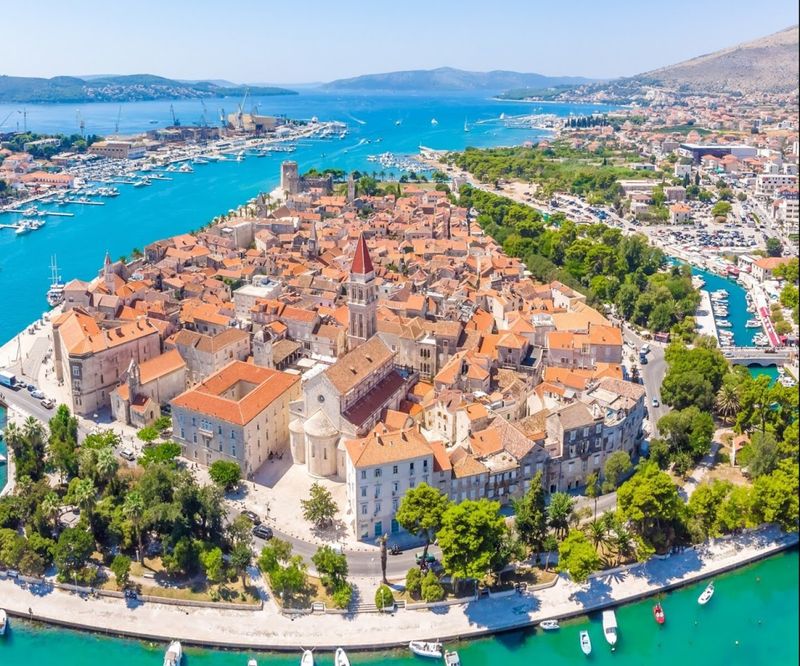
Trogir occupies a tiny island barely 300 meters wide, connected to the mainland and to a larger island by two short bridges, and within that compact space it has managed to stack more than 2,300 years of continuous urban history. Greeks founded it, Romans expanded it, and Venetians left their most visible mark in the form of palaces, loggia arcades, and the ornate Cathedral of St. Lawrence, whose west portal is considered one of the finest examples of Romanesque-Gothic carving in the Adriatic.
The marble streets are polished to a high shine from centuries of foot traffic, and the town plan has changed so little that a medieval navigator could still find their way around using a 13th-century map. The old town walls are largely intact, and the sea laps against their base on the southern side.
Trogir was added to the UNESCO World Heritage list in 1997, recognized for its exceptional continuity of urban fabric. Locals still gather on the Riva promenade each evening as they always have, treating it as a communal living room with a very good view.
16. Pingyao, China
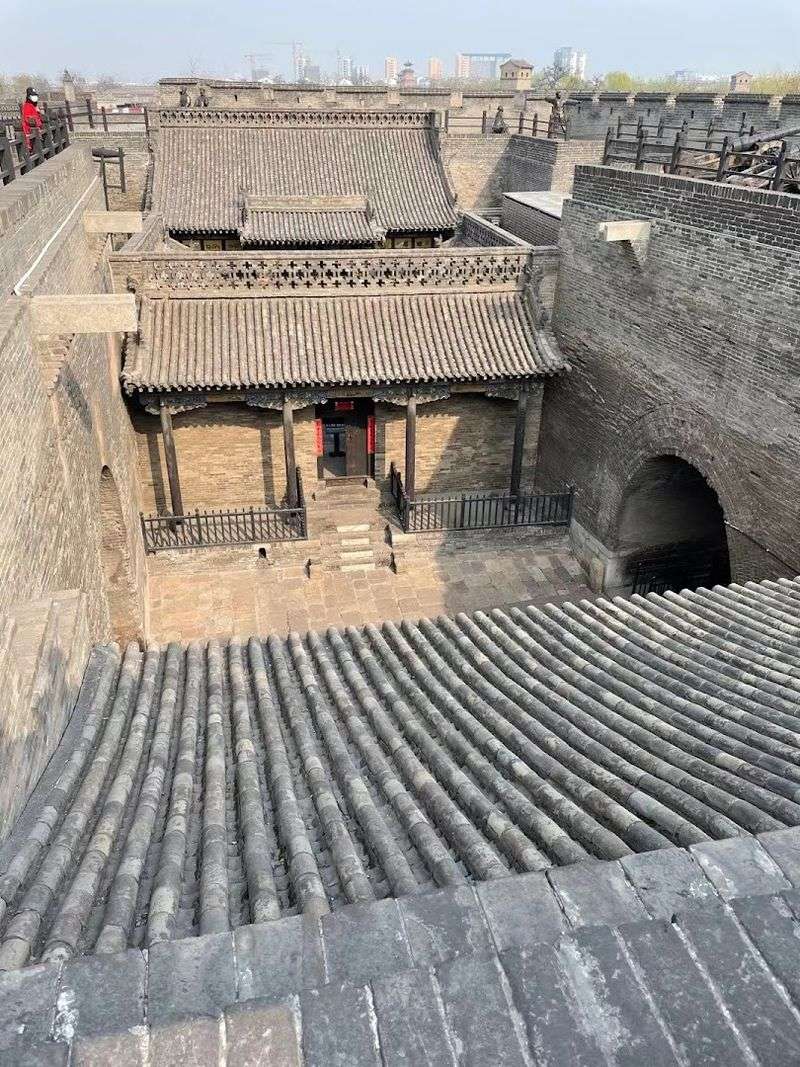
Red lanterns line the stone streets at dusk, casting a warm glow over courtyard homes that have stood since the Ming and Qing dynasties, and the whole scene carries the particular atmosphere of a city that knows it has outlasted empires and is in no rush to change. Pingyao in Shanxi Province is one of the best-preserved ancient cities in China, and its 14th-century city walls, stretching nearly six kilometers in circumference, are still fully intact.
During the Qing dynasty, Pingyao was one of the most important financial centers in China, home to the country’s first draft banks, called piaohao, which operated like early transfer banks for merchants trading across vast distances. The old banking district along the main street preserves many of those original institutions, now open as museums with original ledgers, safes, and furnishings still in place.
The old city contains over 4,000 traditional courtyard residences, many of which are still occupied. Guesthouses operating inside these historic courtyards offer travelers a genuinely immersive experience, waking up inside architecture that has been standing for four centuries.



