 Unearth The Voyage
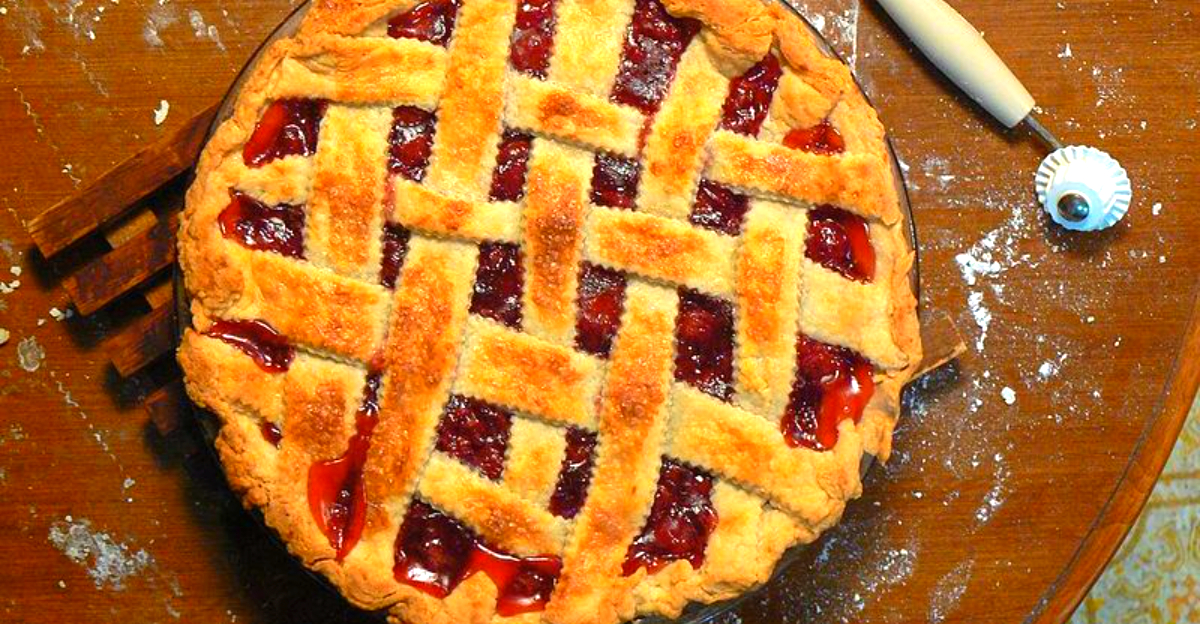
Pie tells a remarkably clear story about how America cooked, traded, and gathered across centuries. From colonial adaptations to wartime substitutions, each slice reflects shifting ingredients, regional identities, and kitchen ingenuity.
You will spot patterns that link farm harvests, new shipping routes, and even appliance trends to the desserts people served at church suppers and holiday tables. Keep reading to see how these classics earned their place and how they quietly shaped everyday ritual.
1. Apple Pie
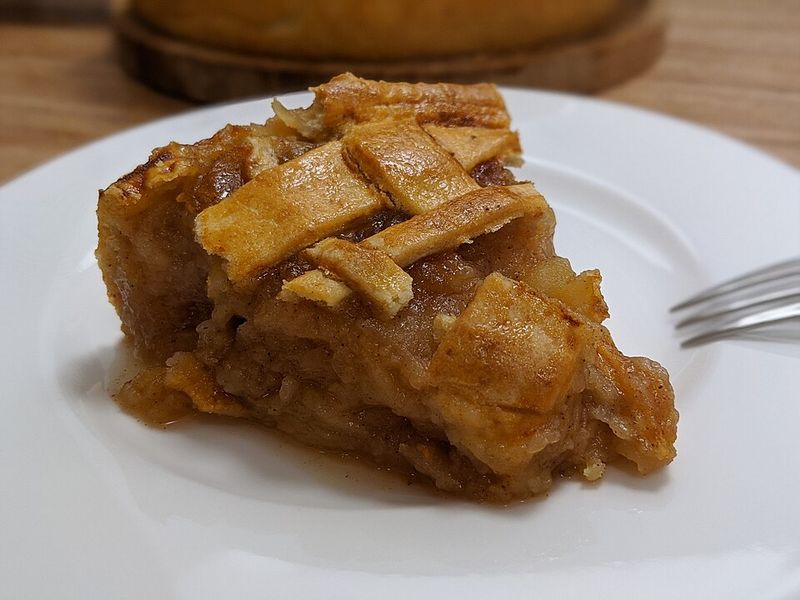
Revolutions and railroads came and went, yet apple pie stayed on the table as a steady marker of domestic life. Colonists planted European apple varieties in the 1600s, then expanded orchards as grafting spread and cider culture grew.
By the late 19th century, improved stoves and standardized pie tins made home baking faster and more consistent.
The filling shifted with access to sugar, from scarce colonial supplies to affordable granulated sugar after Caribbean trade scaled. Cookbooks like Amelia Simmons’s 1796 American Cookery included spiced apple preparations, and later community church compilations cemented regional tweaks.
Cinnamon and nutmeg traveled through global trade, landing in everyday kitchens through pantry staples.
Rail distribution in the 1800s widened flour options, while the invention of shortening in the early 1900s changed crust texture. Diners in the 20th century promoted apple pie as comfort food that matched coffee and quick lunches.
Today you still see lattice tops, crumb versions, or cheddar-paired slices in Northeastern towns, each tracing a line from orchard to oven.
2. Shoofly Pie
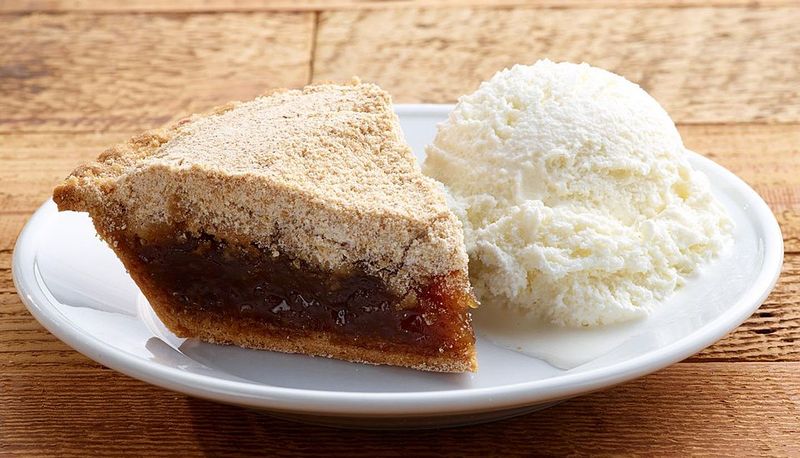
Molasses turned thrift into a signature dessert when Pennsylvania Dutch bakers popularized shoofly pie in the 19th century. The pie’s wet-bottom or dry-bottom styles depended on how the batter set around a deep molasses layer.
Pantry staples like flour, lard, and brown sugar kept budgets predictable for farm families balancing seasons.
Industrial molasses distribution through East Coast ports made sweeteners reliable despite fluctuating cane supplies. Community fundraisers and church socials favored recipes that traveled well and held up on long tables.
Cookbooks from Lancaster County documented crumb ratios, often passing methods by oral instruction alongside written notes.
Home economics classes later standardized oven temperatures and pan sizes, reducing guesswork for new cooks. Coffee pairing became customary because the intense sweetness met a bitter counterpoint at breakfast or after chores.
Today the pie shows up at heritage festivals and roadside markets, signaling a living tradition that never needed fancy garnish to earn fans.
3. Chess Pie
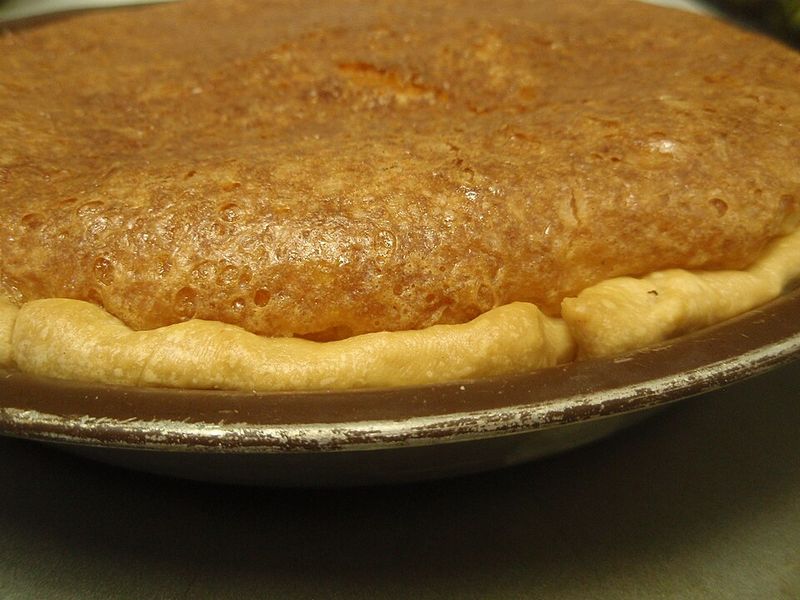
Few recipes stretch a pantry like chess pie, turning eggs, sugar, butter, and cornmeal into a custard that never pretends to be complicated. References appear in 19th century Southern cookbooks, with cornmeal used as a modest thickener that resisted separation.
Vinegar or lemon sometimes joined to balance sweetness and stabilize texture.
Refrigeration improved consistency in the 20th century, yet the method stayed minimal, favoring bowls and a wooden spoon over gadgets. Farm households liked that ingredients were predictable and available year round.
Wartime rationing inspired syrup or evaporated milk substitutions, but the pie retained its signature crackled top.
Bakeries promoted chess as a dependable slice for lunch counters where turnover was high. Community cookbooks swapped proportions while keeping the spirit of efficiency intact.
Serve it cool or at room temperature, and the story reads the same across decades, a dessert built for practicality and pleasure without elaborate technique.
4. Lemon Meringue Pie
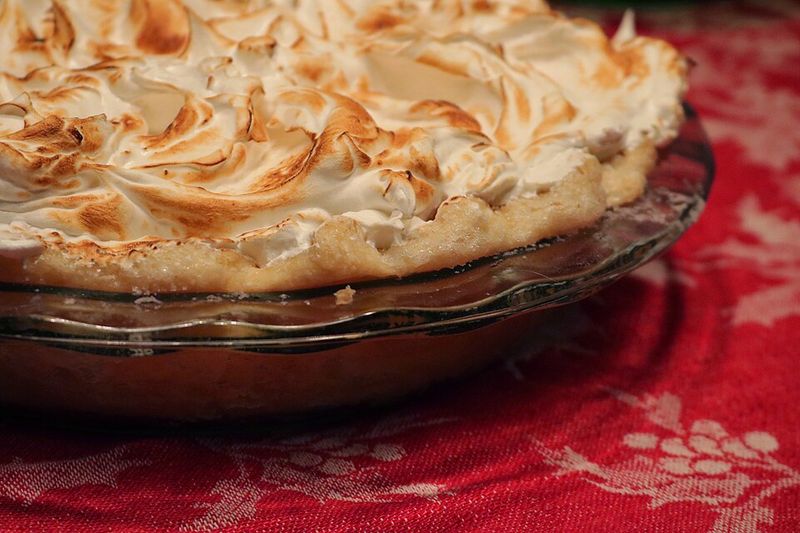
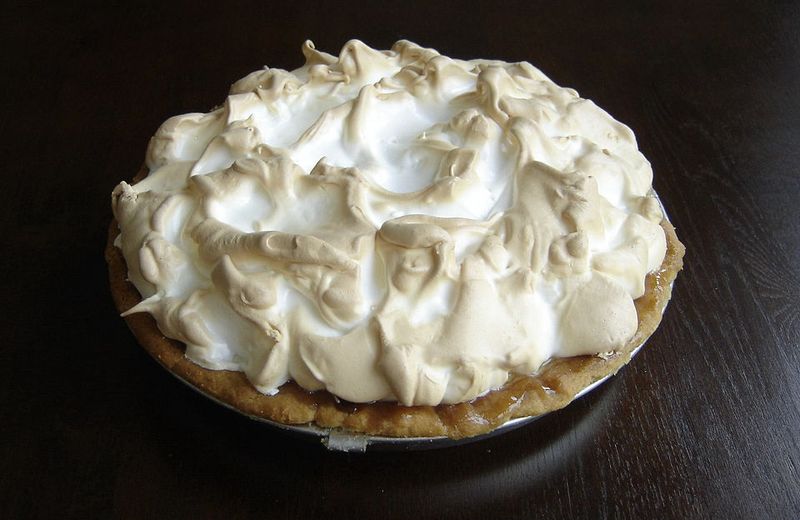
Architecture meets dessert when a bright lemon curd lifts a cloud of meringue like a tidy midcentury skyline. Nineteenth century American cooks adapted earlier lemon custards, then embraced cornstarch as a reliable thickener once it became affordable.
Meringue peaks gained stability with refined sugar and hand whisks, later boosted by electric mixers.
Household guides in the early 1900s taught starch-based curds that cut cleanly for social occasions. Postwar supermarkets expanded access to citrus, widening the pie’s reach beyond coastal markets.
Magazine photos in the 1950s sold those toasted peaks as proof of modern kitchen mastery.
Stovetop precision mattered, so home economics teachers drilled techniques for preventing weeping and shrinkage. Bakers learned to spread meringue over warm filling to seal edges against moisture pockets.
The result delivers a balance that reads like confidence on a plate, tart meets sweet with crisp slices ready for coffee or afternoon company.
5. Pecan Pie
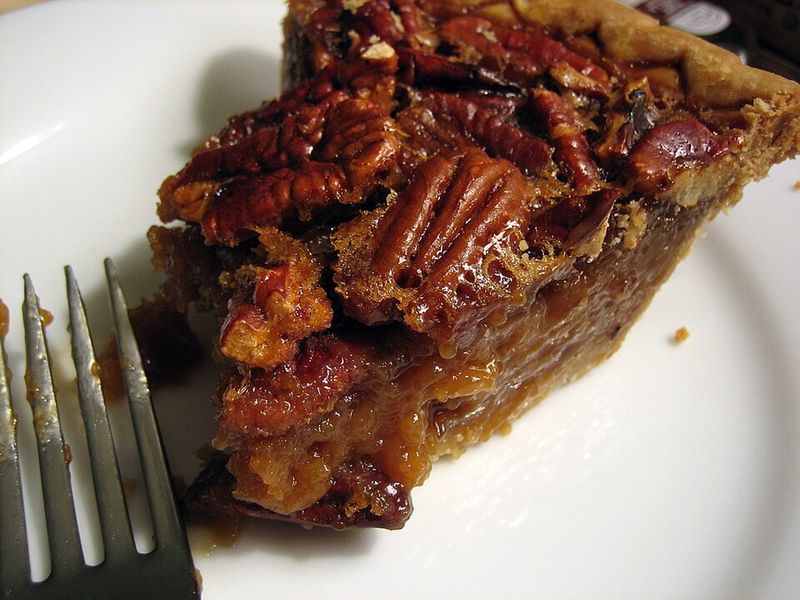
Crunch met syrup in a partnership that made Southern gatherings feel complete by the early 20th century. Pecans, native to North America, traveled into mainstream baking as orchard cultivation expanded after the 1800s.
Karo syrup advertisements in the 1920s popularized a standardized filling that delivered caramel tones with predictable set.
Family recipes varied the nut arrangement, from geometric tops to roughly chopped layers for easier slicing. Corn syrup stabilized sweetness during years when sugar availability shifted.
Holiday menus in community churches relied on pecan pie because it sliced cleanly and held form on long dessert tables.
Modern spins use sorghum or maple, yet the classic version still anchors many November menus. Refrigeration improved storage, and freezer-safe crusts made early preparation practical.
Served plain or with a modest dollop of cream, this pie speaks in a straightforward language of nuts, syrup, and tradition that crosses state lines with ease.
6. Pumpkin Pie
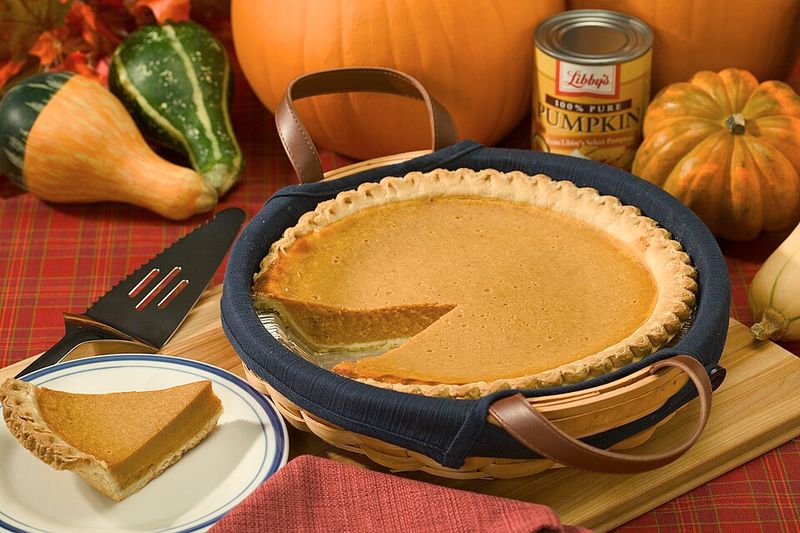
Harvest math turned into dessert when settlers baked spiced squash custards that evolved into the pumpkin pie known today. Native agricultural knowledge informed cultivation, while colonial cooks blended local pumpkins with European pastry techniques.
By the 19th century, canned pumpkin streamlined the process and normalized texture across regions.
Spice blends leaned on trade networks that brought cinnamon, ginger, and clove into ordinary pantries. Thanksgiving menus in the late 1800s cemented pumpkin pie as a holiday expectation, aided by newspaper menus and rail-delivered ingredients.
The rise of temperature controlled ovens reduced curdling and delivered even set.
Midcentury brands published can label recipes that unified measurements for beginners. The custard’s appeal relies on consistency and convenience, especially on crowded cooking days.
You can trace the path from field to factory tin to dining room, a timeline that shows how preservation technology made celebration planning much simpler.
7. Buttermilk Pie
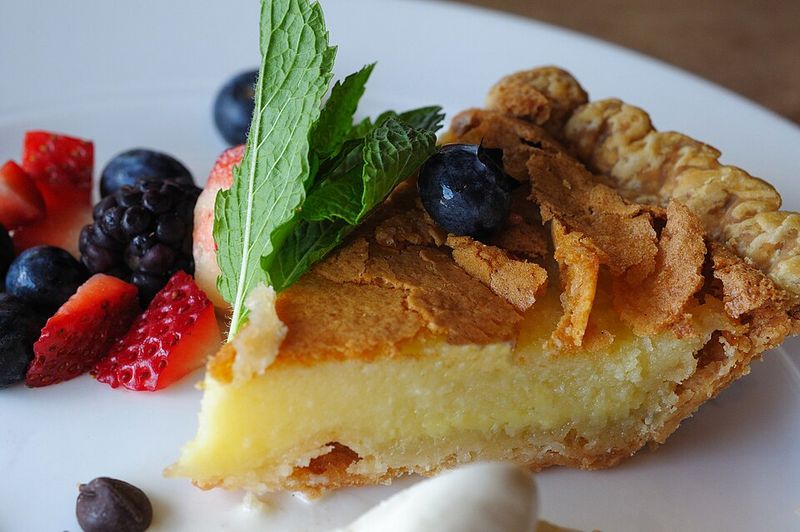
Frugality became delicious when surplus buttermilk turned into a tangy custard that thrifty cooks championed. The pie appears across Southern community cookbooks where dairy economies shaped daily menus.
Acidic buttermilk helped balance sugar while encouraging a gentle set without elaborate techniques or specialty ingredients.
In the early 20th century, home refrigeration stabilized dairy storage, allowing consistent baking schedules. Evaporated milk sometimes stepped in during shortages, yet the flavor signal stayed distinct.
Light cornmeal or flour offered structure, and a quick mix whisk kept equipment needs minimal for busy households.
Church gatherings valued slices that traveled well and tasted fine at room temperature. The top often baked into a faintly caramelized layer that suggested success without decoration.
When you serve it today, the recipe reads like a practical note from an earlier kitchen, proof that resource management can end sweetly.
8. Coconut Cream Pie
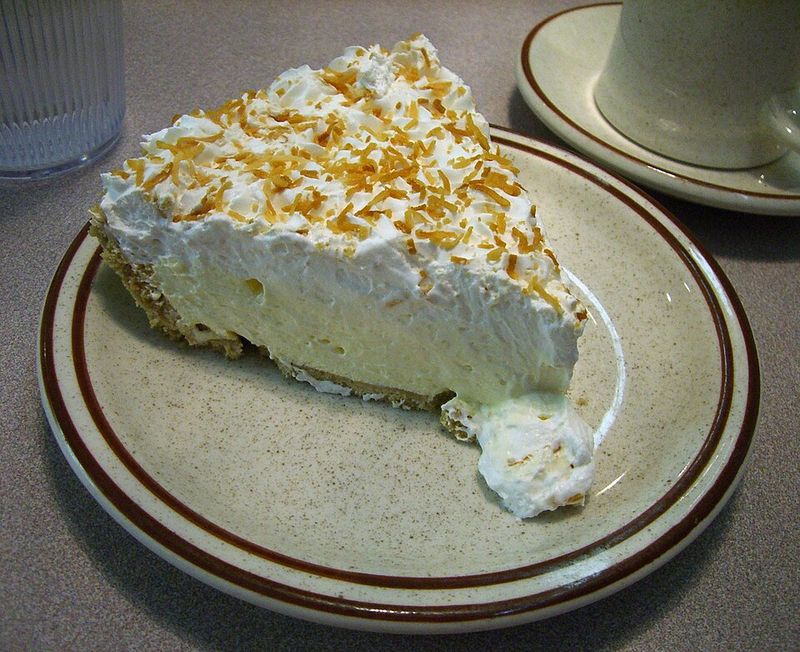
Global trade filled American pie cases with a tropical accent once dried coconut became widely available in the early 1900s. Custard standards shifted from flour to cornstarch thickeners that delivered a smooth slice for diners.
Whipped cream toppings gained popularity as refrigeration spread and heavy cream access improved.
Advertisements in women’s magazines taught home cooks to toast coconut for visual contrast and texture. Prebaked shells prevented soggy bottoms and streamlined assembly for short order counters.
Chain diners leaned on coconut cream as a dependable non fruit option that sold steadily.
Home versions multiplied through recipe cards clipped from brand pamphlets and neighbor swaps. The pie’s cool profile fit warm months and paired neatly with coffee year round.
What began as an exotic pantry item settled into routine comfort, gently reminding you how shipping networks reshape everyday desserts without fanfare.
9. Banana Cream Pie
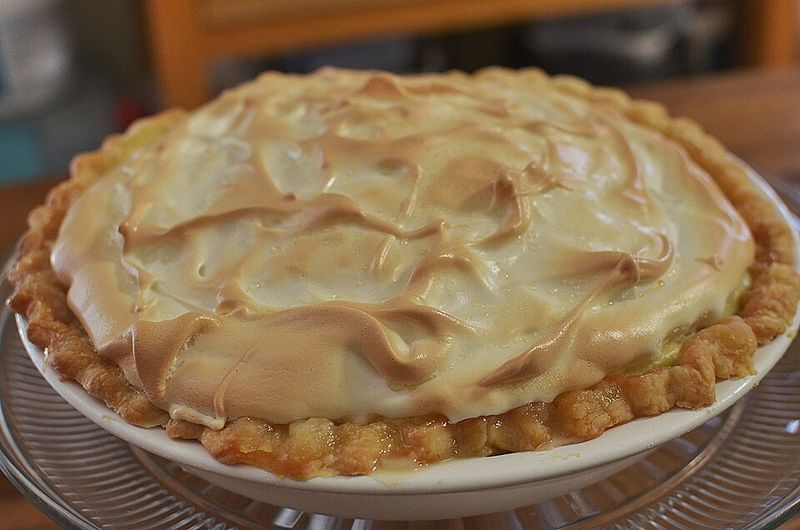
Shipping revolutionized dessert when refrigerated transport moved bananas quickly enough to stock city markets by the late 19th century. Hotels and soda fountains adopted banana cream pie as a showpiece that sliced cleanly and pleased varied palates.
Custard thickened with cornstarch let pastry chefs promise consistency during peak service.
During the 1930s, cafes used display cases to showcase tall whipped cream crowns that signaled freshness. Postwar suburban supermarkets made bananas a routine purchase, locking the pie into family menus.
Crackers or pastry could anchor the crust, with regional habits setting the standard.
Cookbooks encouraged lining the shell with bananas to prevent weeping and to stage a neat cross section. Home cooks relied on instant puddings at times, but careful stovetop methods stayed common for best texture.
The pie’s rise maps directly onto logistics, proof that cold railcars and clever counters can build a classic.
10. Vinegar Pie
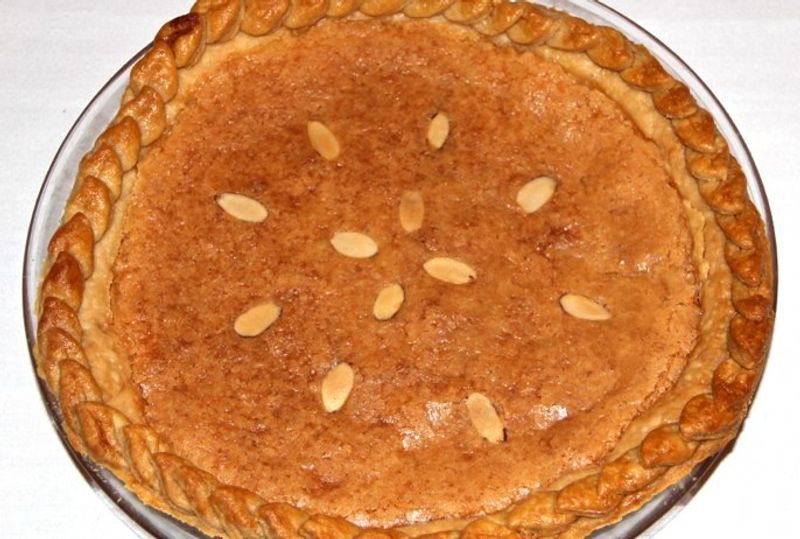
Scarcity sparked invention when vinegar pie stepped in for citrus during lean months on the frontier and in farm kitchens. The acid provided brightness that cut through a sweet custard built from eggs, sugar, and water.
Simple pantry math let cooks deliver dessert without waiting for seasonal fruit or imports.
Newspapers and almanacs printed versions in the late 19th century, sometimes calling it poor man’s pie. The technique relied on steady stirring and controlled heat to avoid curdling.
Flour or cornstarch thickened the mixture so it sliced cleanly after cooling.
As produce distribution improved, vinegar pie receded yet remained in community memory and heritage cookbooks. Today it represents resilience rather than novelty, reminding you how substitution can be precise rather than desperate.
Serve it lightly chilled and you will taste a balanced, almost lemonlike profile built entirely from smart choices.
11. Sugar Cream Pie
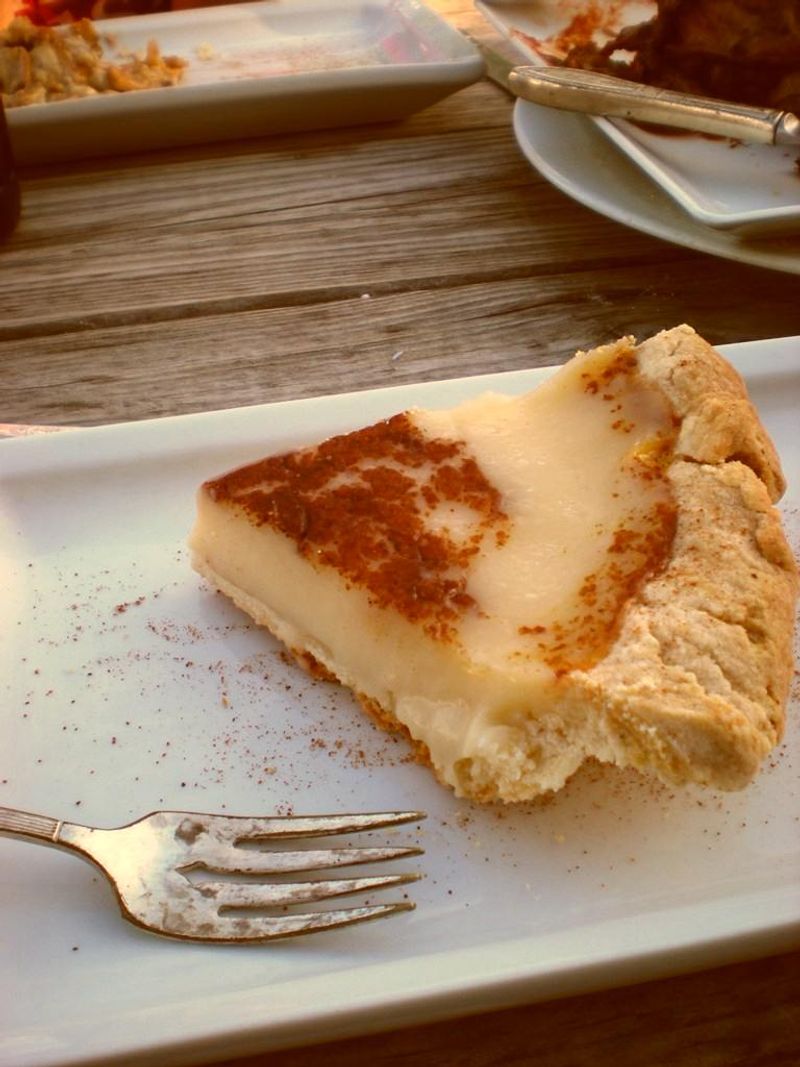
Indiana staked a claim with sugar cream pie, a no egg custard that leans on dairy and sugar for its identity. Records trace recipes to Shaker and Midwestern communities where steady dairy output guided desserts.
The filling cooks gently until bubbles mark thickening, then sets into a silky slice after cooling.
Nutmeg often finishes the top, a nod to spice routes that reached inland grocers by rail. Simplicity made it a fundraiser favorite because ingredients were predictable and inexpensive.
Some families swirl butter and sugar together on the crust before baking to create a caramel note.
State pride helped the pie travel to festivals and cafes that highlight regional fare. Printed church collections from the 20th century preserved ratios even as ovens standardized.
Order a slice today and you will meet a dessert that values steadiness over flair, holding its place with quiet confidence.
12. Mince Pie
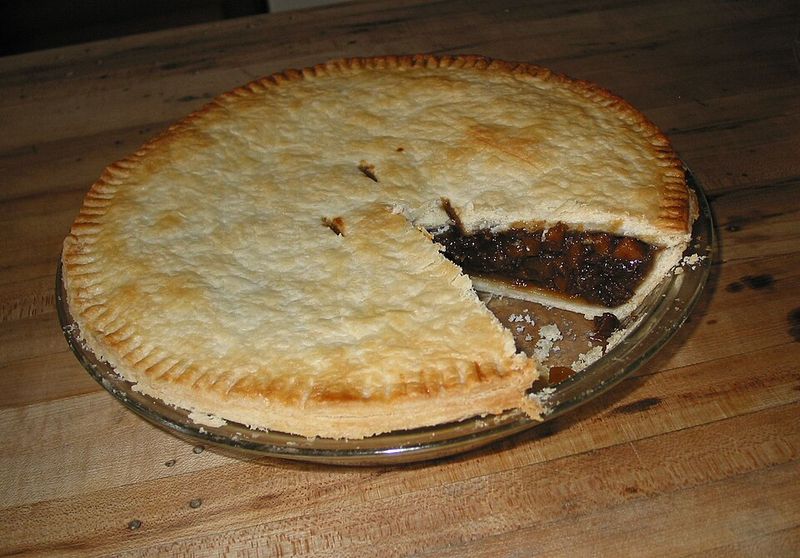
Complexity had a seat at early American holidays when mince pie mixed dried fruit, suet, spices, and sometimes meat. British traditions crossed the Atlantic, then adapted to New World supplies as households preserved ingredients for winter.
Spice blends traveled through long trade chains, placing cloves and allspice beside local apples.
Recipes shifted through the 1800s as meat content decreased and spirits or cider stepped in as preservatives. Commercial mincemeat appeared in tins by the late 19th century, making holiday prep far simpler.
Temperance movements nudged formulas toward alcohol free versions without abandoning the spice core.
By the 20th century, mince pie became a seasonal specialty rather than an everyday dessert. Bakeries produced it mainly for December tables, keeping the association tight.
Slice it and you read a ledger of preservation strategies and shifting tastes across two continents meeting in one crust.
13. Sweet Potato Pie
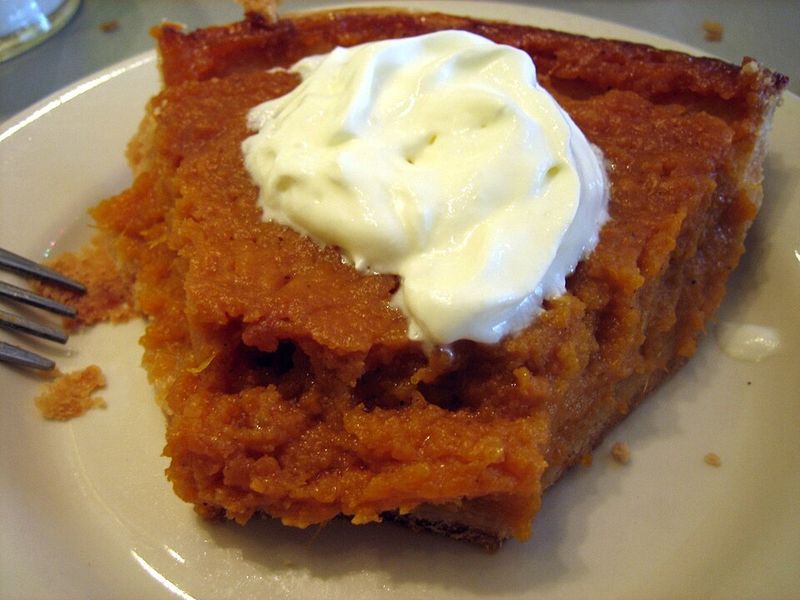
Community memory runs strong in sweet potato pie, which threads through Black Southern cooking and church gatherings with quiet authority. The crop thrives in warm climates and stores well, making it a dependable base.
Recipes blend mashed sweet potatoes with sugar, eggs, and warm spices for a custard that slices neatly.
During the Great Migration, families carried methods north, introducing the pie to new neighborhoods and holiday tables. Newspaper columns and soul food cookbooks documented technique and proportion across decades.
Evaporated milk often appears, reflecting pantry stability and consistent texture.
Bakeries feature it alongside pecan during the fall, signaling a season without limiting it to a single day. Novice bakers appreciate forgiving mixing and a stable bake.
The result is a dessert that articulates place and continuity, proving that everyday crops can produce a celebratory finish people return to year after year.
14. Rhubarb Pie
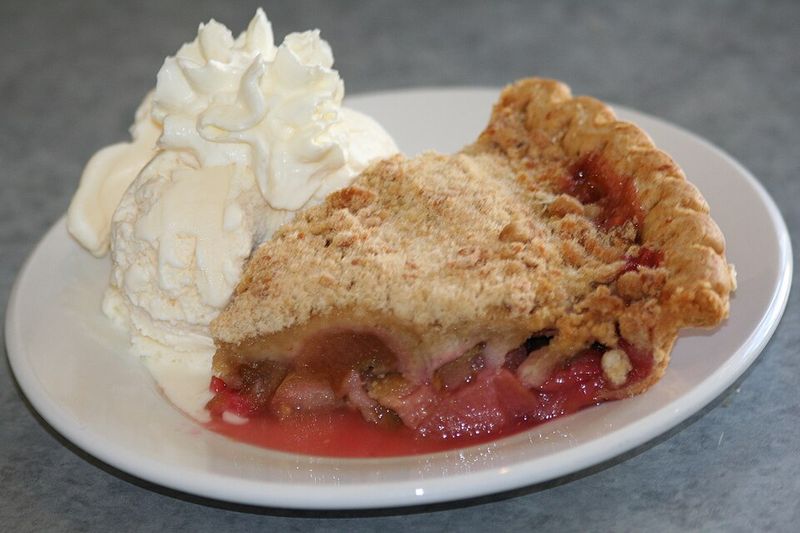
Garden rows dictated dessert choices in northern states, and rhubarb pie made the most of a hardy perennial. Settlers adopted the plant in the 19th century because it tolerated cold and returned consistently.
The tart stalks met sugar in straightforward ratios that respected limited fruit options before summer harvests.
Cookbooks recommended lattice tops or vented crusts to manage moisture and prevent soupy centers. Strawberries joined later when markets improved distribution, giving a balanced profile that sold well at fairs.
The pie’s color and slice stability made it a dependable option at community suppers.
Freezers and canning kept rhubarb available beyond spring, yet the first pies of the season still mark a calendar quietly. Equipment demands remain basic, proving reliability matters more than flair.
When you cut a piece, you taste a garden plan translated into pastry, efficient, seasonal, and satisfying.
15. Cherry Pie
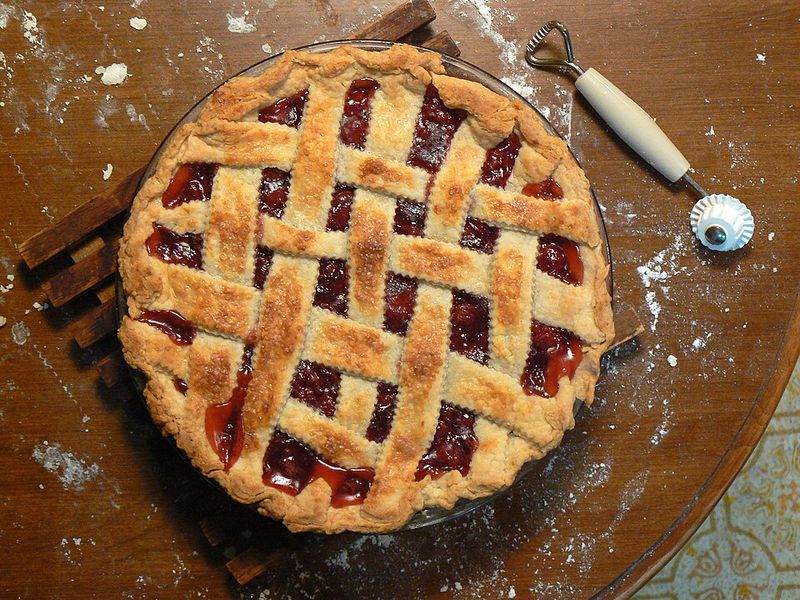
Summer markets turned patriotic calendars into dessert lineups, and cherry pie often took center stage. Sour cherries defined the classic profile, promoted through farm stands and canning guides that taught pitting and preserving.
Lattice tops served utility, venting steam while parading ruby filling for bake sale appeal.
Canners and pressure methods in the early 20th century extended the season, placing cherry pie on shelves well beyond harvest. Regional festivals celebrated local orchards and sponsored contests that codified techniques in community books.
Diner menus kept a dependable slice ready for coffee breaks.
Today frozen fruit keeps logistics simple, but the old rules still help prevent runny centers. Thickener choices moved from flour to cornstarch or tapioca pearls, improving clarity and slice integrity.
The result is a pie that reads summer even in winter, disciplined, bright, and eager to share a plate.
16. Key Lime Pie
Citrus scarcity met creativity in Florida when condensed milk joined tart Key lime juice to set without long bakes. Early 20th century sponge divers and coastal households relied on pantry milk because refrigeration lagged.
Egg yolks reacted with acid to thicken, then brief baking later became common for safety and consistency.
Graham cracker crusts appeared as a convenient base that resisted sogginess and added texture. Tourism promoted the pie as a regional emblem that traveled north through postcards and restaurant menus.
Lime varieties changed over time, yet the formula’s balance kept the identity intact.
Competitions and festivals in the Keys codified style choices like whipped cream versus meringue. Supermarket condensed milk ensured predictable results for home cooks far from Florida.
The pie shows how local conditions, preserved milk, and targeted promotion can create a durable regional classic within a few generations.



